How I Roast 8 oz of Green Coffee Beans with my Behmor 1600 Plus Roaster in Manual Mode
I end up with much more flavorful coffee using this manual technique in my Behmor 1600 Plus (instead of the automatic mode 1-pound roast). Also I find that I get better flavor if I roast an 8-to-9 ounce batch rather than a 16-ounce batch. I actually roast 8.5 ounces, let the roaster cool, then roast another 8.5 ounces, then combine the two roasted batches, well-mixed together, in an airscape coffee canister.
First off, safety first: I always roast my coffee outdoors in my Behmor 1600 Plus, with no extension cord, at any outdoor temperature from about 10 to 90 degrees F. I won't roast indoors and stink up my house, or risk fire. I always roast outdoors. You should, too.
Additional Equipment Required: High-temperature Oven Gloves or BBQ Gloves (mine are these).
Put 8 oz green coffee beans (I buy mine from Sweet Maria's) in the roaster's drum, but don't put the drum in the roaster yet.
Roasting outdoors, put the chaff collector tray into the Behmor roaster but not the drum with the beans.
Push 1#, Start, then P5. This puts your roaster in manual mode, at the highest temperature.
Start a timer, perhaps on your phone, for 6 minutes, and once it goes off, start monitoring (as below) immediately.
This pre-heating phase is to get everything super-hot before putting beans into the roaster. It greatly reduces time it takes the beans to get to roasting temperature, resulting in better flavors.
Push the B key periodically and note the chamber temperature that is displayed. If that temperature ever reaches 330-degrees fahrenheit, the roaster will shut down with an over-temperature error. You want to avoid this since you'd need to wait for cooling and then start over. You want to end the pre-heating phase when the temperature reaches 324-degrees. On my roaster, during 80-degree outdoor temperatures, this takes about 7 minutes, therefore I use a 6-minute timer.
As the temperature gets above 300-degrees, put on your Oven Gloves and have your drum with the beans in it ready to go. When that temperature reaches 324, you want to act as quickly as possible to accomplish these steps
Push Stop on the Behmor
Open the door and pull out the chaff collector tray
Put in the drum filled with beans
Put the chaff collector tray back in
Close the door
Press 1#, Start, P5, D (P5 is the hottest temperature, D is for faster drum rotation)
Look through the window to be sure the drum is turning
Take off your gloves if you'd like
If you press the B key now, you'll probably see the temperature has dropped to 308 or 310. It will drop even further into the 290s as the cold drum and beans absorb a bit more heat, then it will start to rise again.
When the temperature reaches about 310 degrees, I like to quickly press Stop, 1#, Start, P5, D. This starts the internal Behmor timer over again, and allows me to keep roasting at a hotter temperature longer. You can use this trick while preheating the roaster as well. Just be sure to never do this once the exhaust fan has begun running, since the Behmor won't restart until it cools down.
You want to let the chamber temperature reach between 320 and 324, and keep it there until first crack (sounds like popcorn popping). Push your B key frequently (perhaps every 15 seconds) to prevent the temperature from exceeding 324 degrees and triggering the auto-shutoff at 330. You have these means to control the temperature:
The Power duty cycle buttons P1-P5 which control the percentage of time the heating elements are turned on (flipping between the P5, P4 and P3 duty cycles, as needed, is how I control temperature most of the time)
P5: heating elements are on 100% of the time
P4: heating elements are on 75% of the time
P3: heating elements are on 50% of the time
P2: heating elements are on 25% of the time
P1: heating elements are never turned on
If I neglect my duties and approach 330, I press P1 and open the door a bit to let heat escape quickly, then resume P3 or P4 or P5 once the temperature drops.
When first crack begins, I often need to turn the temperature down (perhaps P3) since the beans cracking seem to raise the temperature themselves.
At this point, I start up my bean chiller so it will be ready, and put on my gloves.
I'm told to try and prolong the time between first and second crack to enhance flavor development, so I often leave the duty cycle at P3 until the temperature drops to 300 degrees, then boost it to keep around that range.
About 3 to 5 minutes after first crack was in full force, second crack will begin (it sounds like rice-crispies crackling in milk) and I'll stop the roasting about 10 or 15 seconds into second crack. This roasting level is called Full-City-Plus, and for most beans it's my favorite roast level.
10 or 15 seconds after second crack begins, I push stop, open the door, remove the chaff collector tray, remnove the bean drum, and push Cool on the Behmor to cool off the roaster. I let my Behmor cool with the door open and no tray or drum inside.
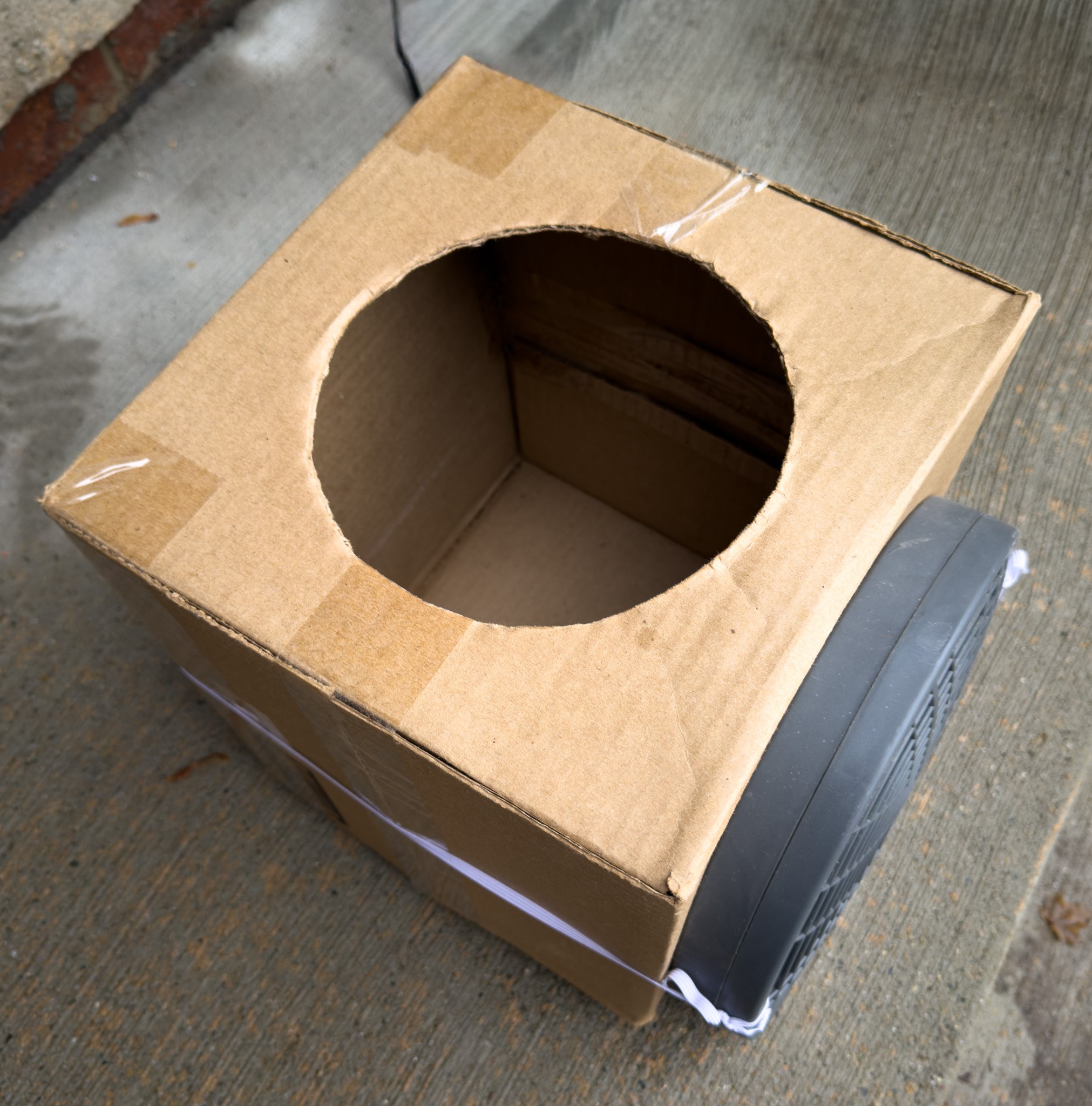
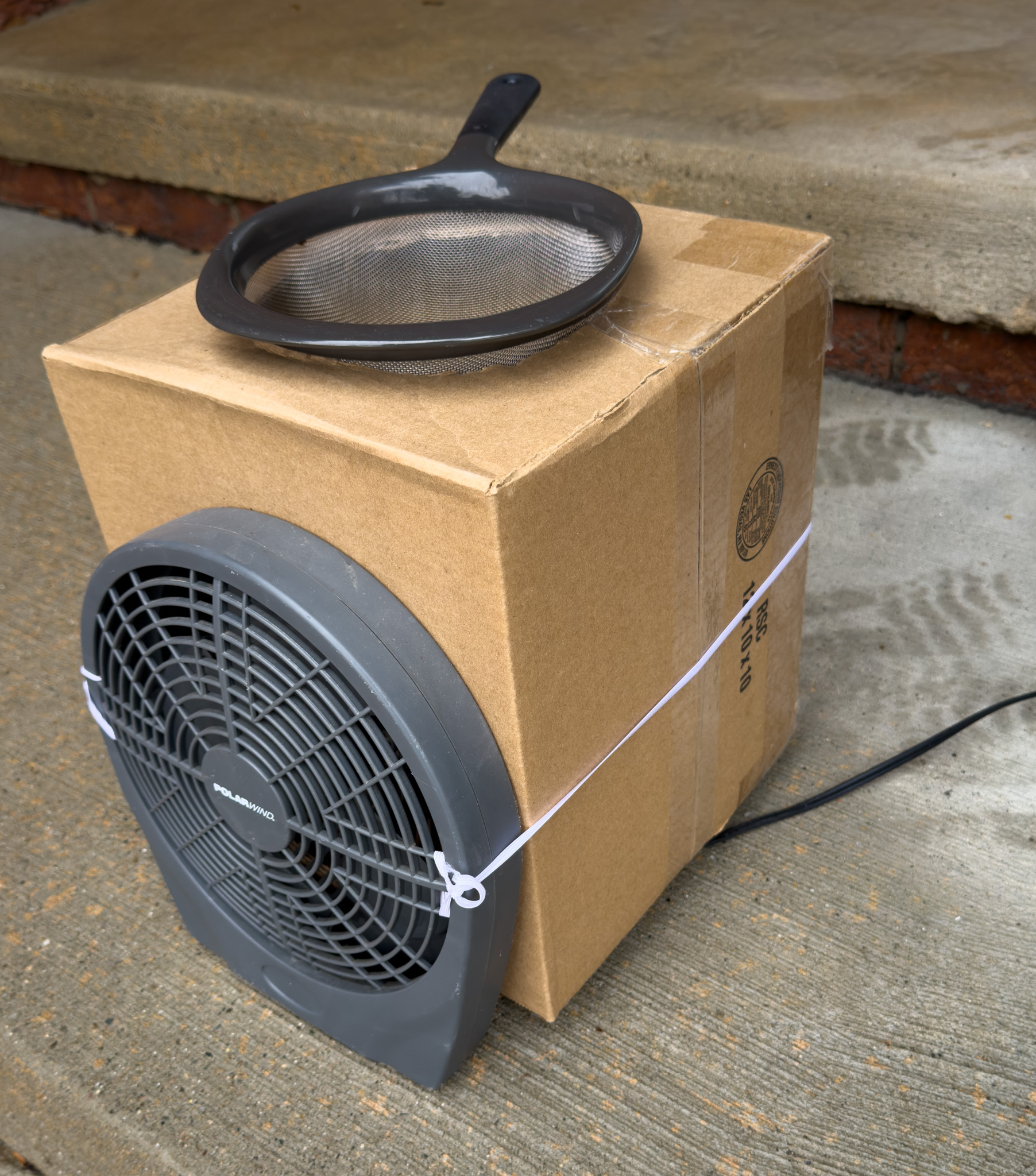
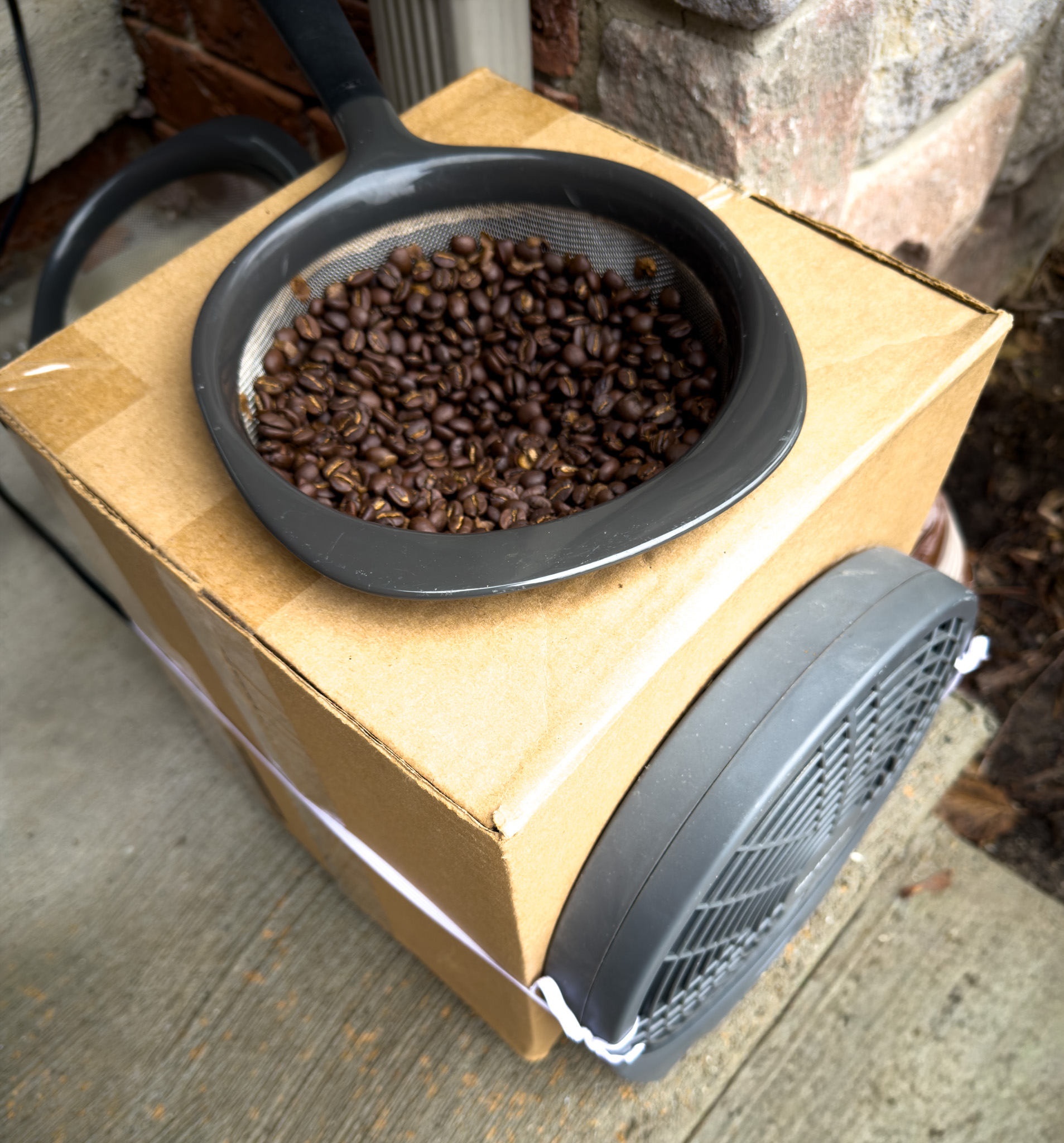
I empty my bean drum into a chiller I made. It's a 12-inch-cube cardboard box, with a large hole in top that a mesh collander fits into (like an OXO Good Grip), and a large hole in one side that a fan fits into. The fan is blowing outward, pulling air in through the beans to cool them off. I spread the beans out within the collander so all air entering the box is forced to go through some of the beans. It takes about 3 or 4 minutes to cool 8-ounces of beans down to room temperature.
Another way to cool the beans is to use two collanders, dropping the beans from one to the other and back, letting the air cool the beans and the wind blow the chaff away. It takes quite a bit longer, and I prefer the quicker chiller since we're told to cool down the beans as quickly as possible. Even after running my chiller, I do this two-collander transfer in front of the fan or in the wind to blow away the chaff.
If instead, you let the beans cool within the Behmor on a cooling cycle, they'll stay hot even longer, leading to a poorer roasted flavor.
After the cooling cycle ends, I brush the chaff out of the roaster, off the collection tray, and off the drum.
I more-thoroughly clean the Behmor every several roasts by spraying Simple Green into it, letting it work for 30 seconds, then wiping it off with a paper towel. I put vinyl gloves on before doing this to avoid getting stinky hands. The manual says to clean especially the right side of the chamber where there are temperature sensors. I also clean the drum and the chaff catcher in this way, and I also remove the grating in front of the heating elements before cleaning (also cleaning that grating). To remove the grating, push the right edge toward the left, pull it out from the chamber holes, then swing that right side toward you and pull the left side out of the holes that constraint it. I didn't originally do such a thorough cleaning job (I didn't remove the grating, and was therefore unable to clean behind it), and lost the ability to roast as many beans as quickly as before. When I began cleaning more thoroughly, I was able to again quickly roast my 8-oz batches. After doing this cleaning, I put all the parts back together in the roaster and press the 1/4 pound button, then Start to burn off the Simple Green residue.
I learned much of this by watching this video, which I recommend to you.