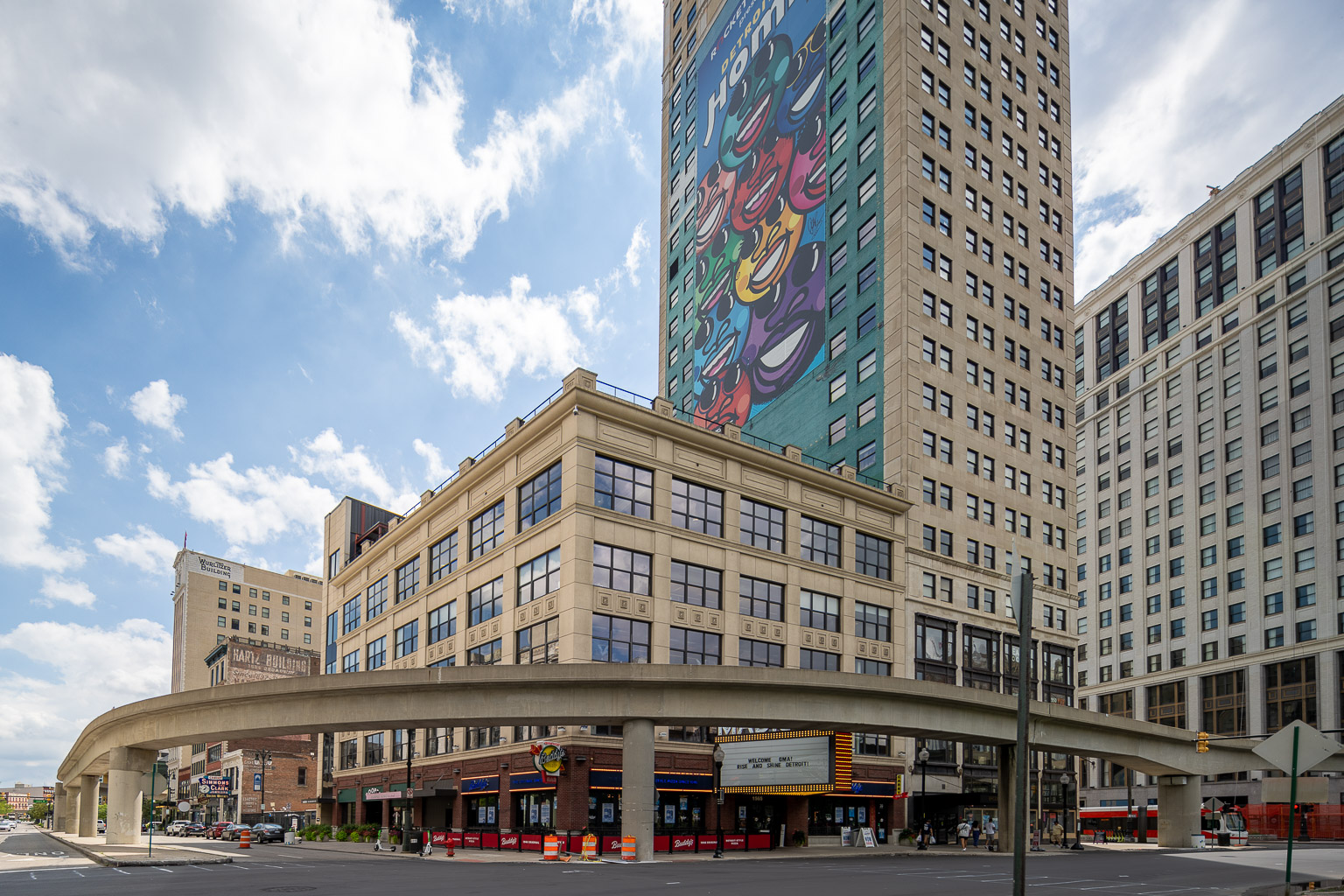
The Broadway Avenue Local Historic District consists of two groups of buildings separated by a non-included block on Broadway Avenue between Witherell and Gratiot Avenue. The southern part consists of both sides of Broadway, from East Grand River to Gratiot Avenue. The northern part consists of the buildings on the west side of Broadway from the 1515 Broadway (the building just north of the Wurlitzer Building) through 1529 Broadway, currently the Detroit Beer Company. I include the Wurlitzer Building and the Madison Building in my photos here even though they are not members of this Local Historic District (the Madison is actually a member of the Grand Circus Park Local Historic District). You can read details about the district and its buildings in the Proposed Broadway Avenue Historic District Report (local copy), which I recommend highly to anyone interested in Detroit's history. A Wikipedia Page also describes the district.
Contents:
- East side of the southern block of Broadway Avenue, from Gratiot to Grand River
- 1308 Broadway, Breitmeyer-Tobin Building
- 1310-14 Broadway, John Breitmeyer’s Sons Building
- 1322 Broadway, MacDiarmid Candy Company Building
- 1326 Broadway, Reckmeyer Building
- 1332-36 Broadway, Michigan Cut Flower Exchange Building
- 1342-46 Broadway, Harvard Square Center, a.k.a. Broadway Exchange Building; a.k.a. American Radiator Building
- 206 E. Grand River, Merchants Building
- West side of the southern block of Broadway Avenue, from Gratiot to Grand River
- East side of the northern block of Broadway Avenue, from John R to Witherell
- West side of the northern block of Broadway Avenue, from John R to Witherell
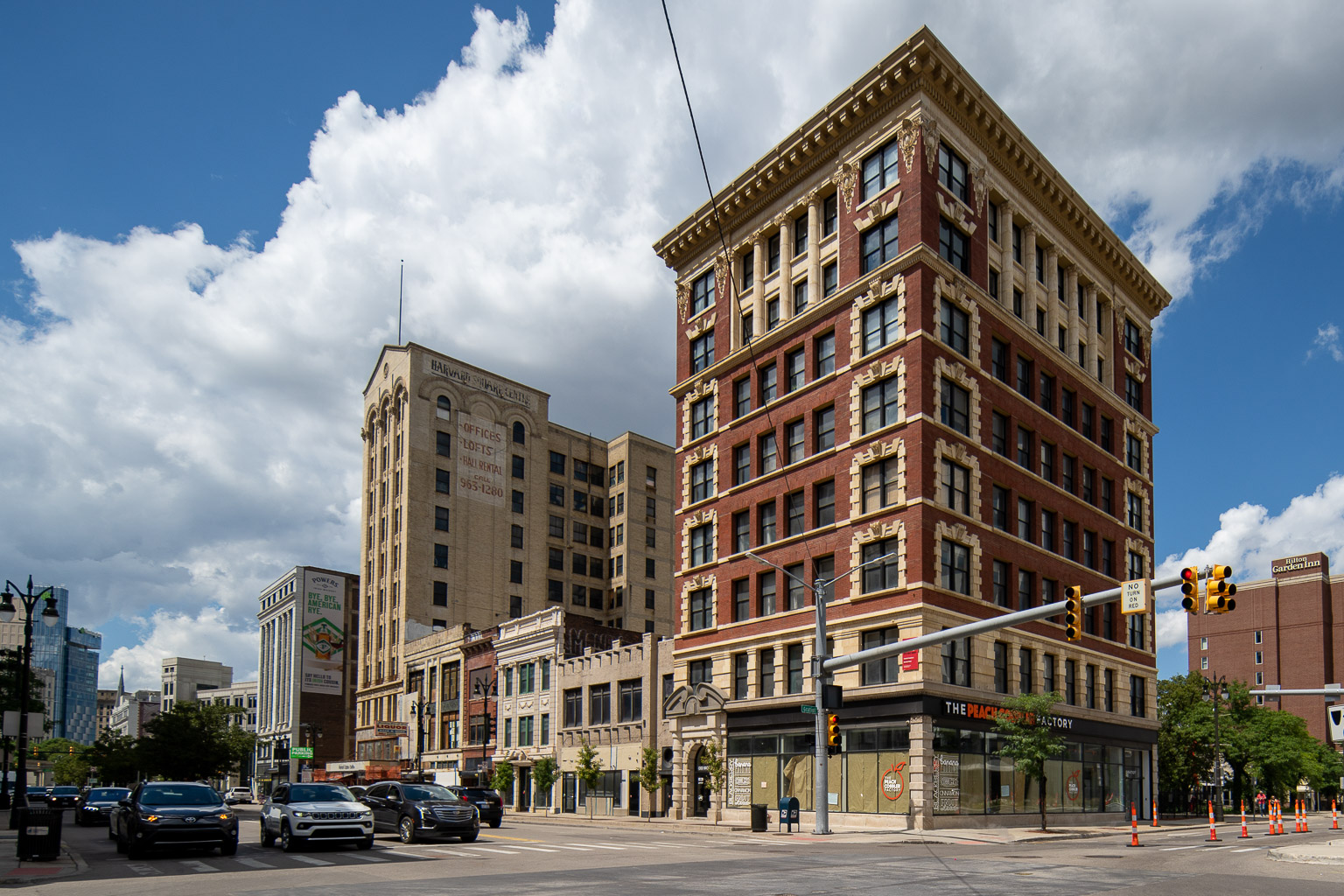
Please read details about the building in the Proposed Breitmeyer-Tobin Building Historic District Final Report (local copy), which I recommend highly to anyone interested in Detroit's history.
My photos of the Breitmeyer-Tobin Building as a whole are below:
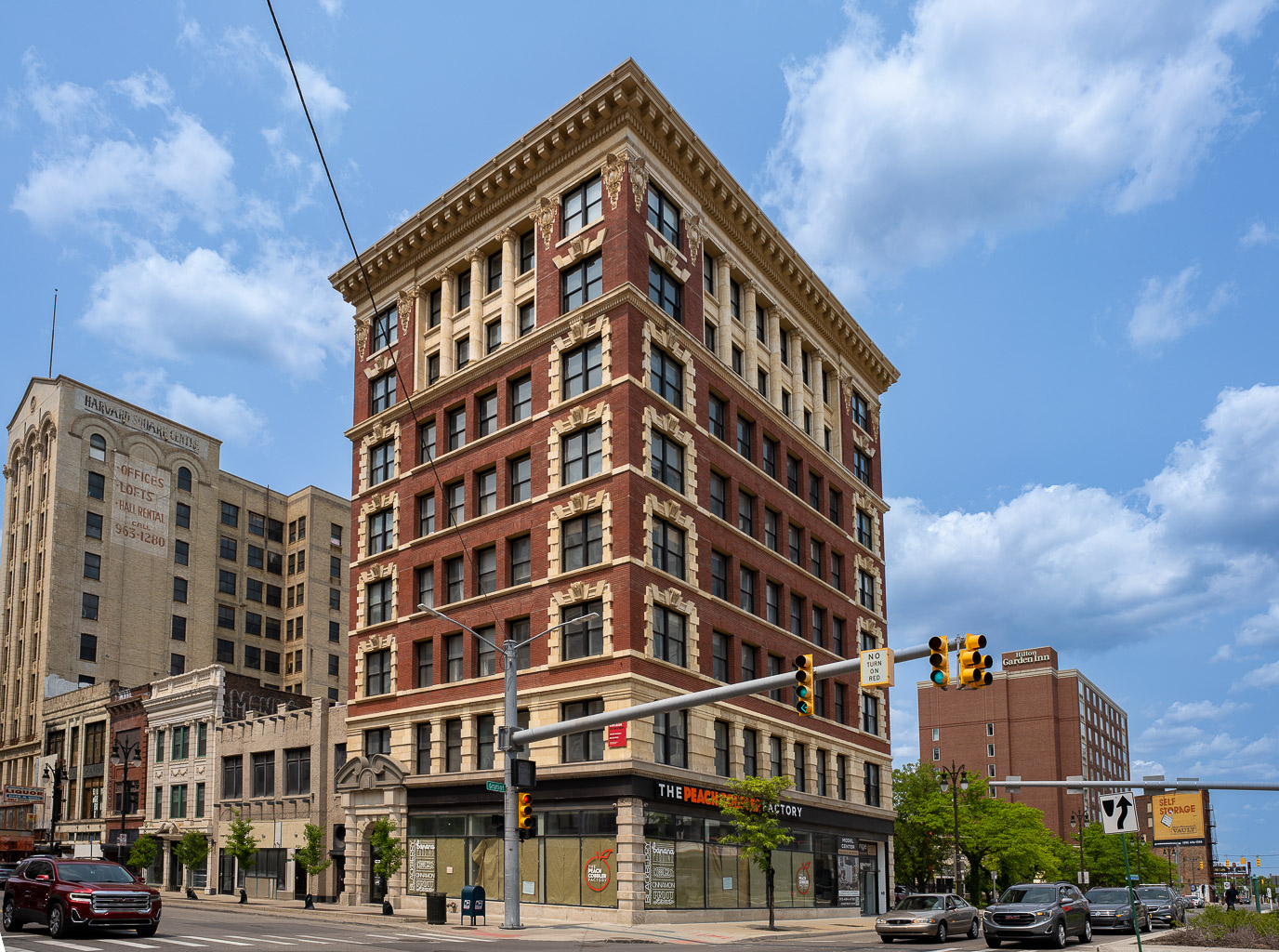
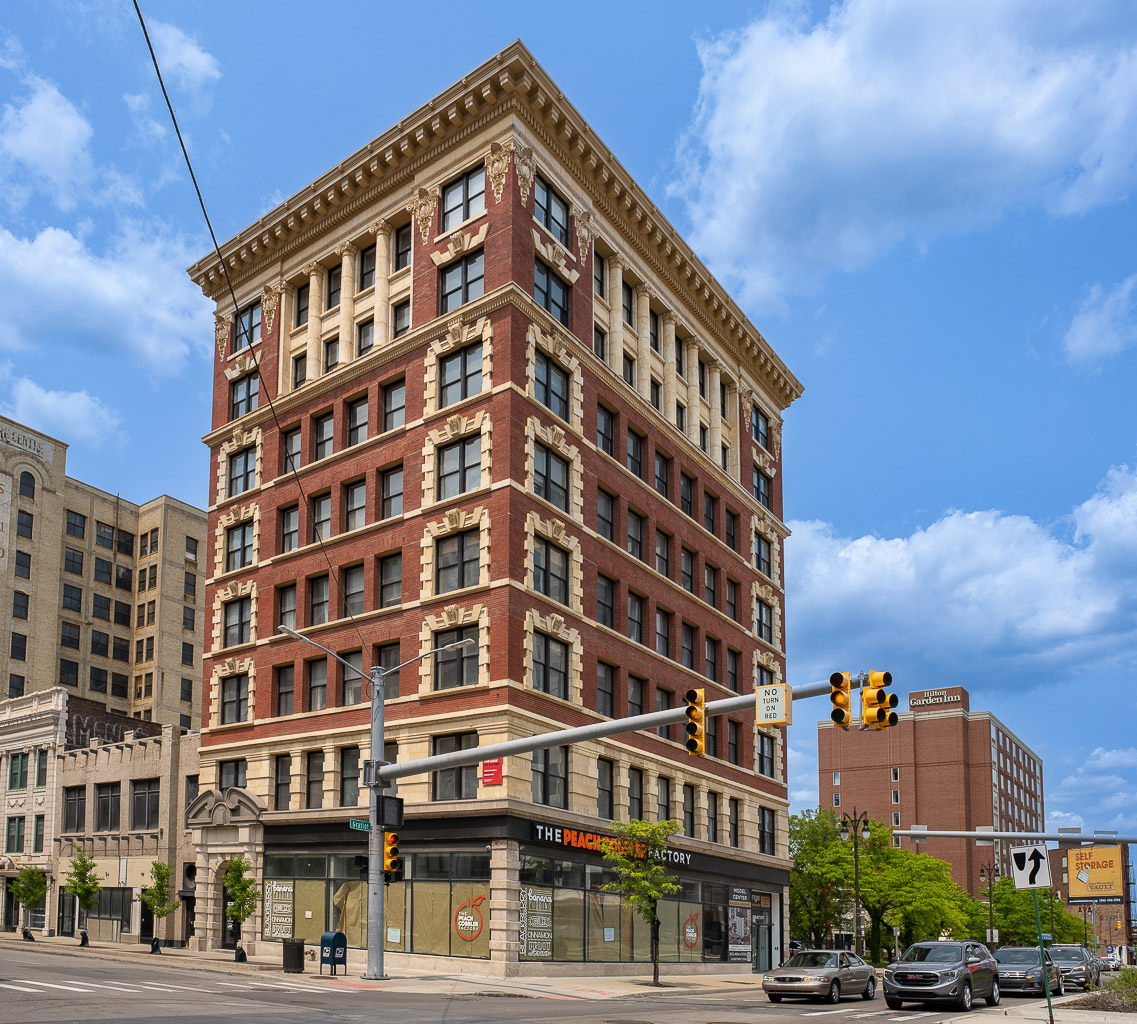
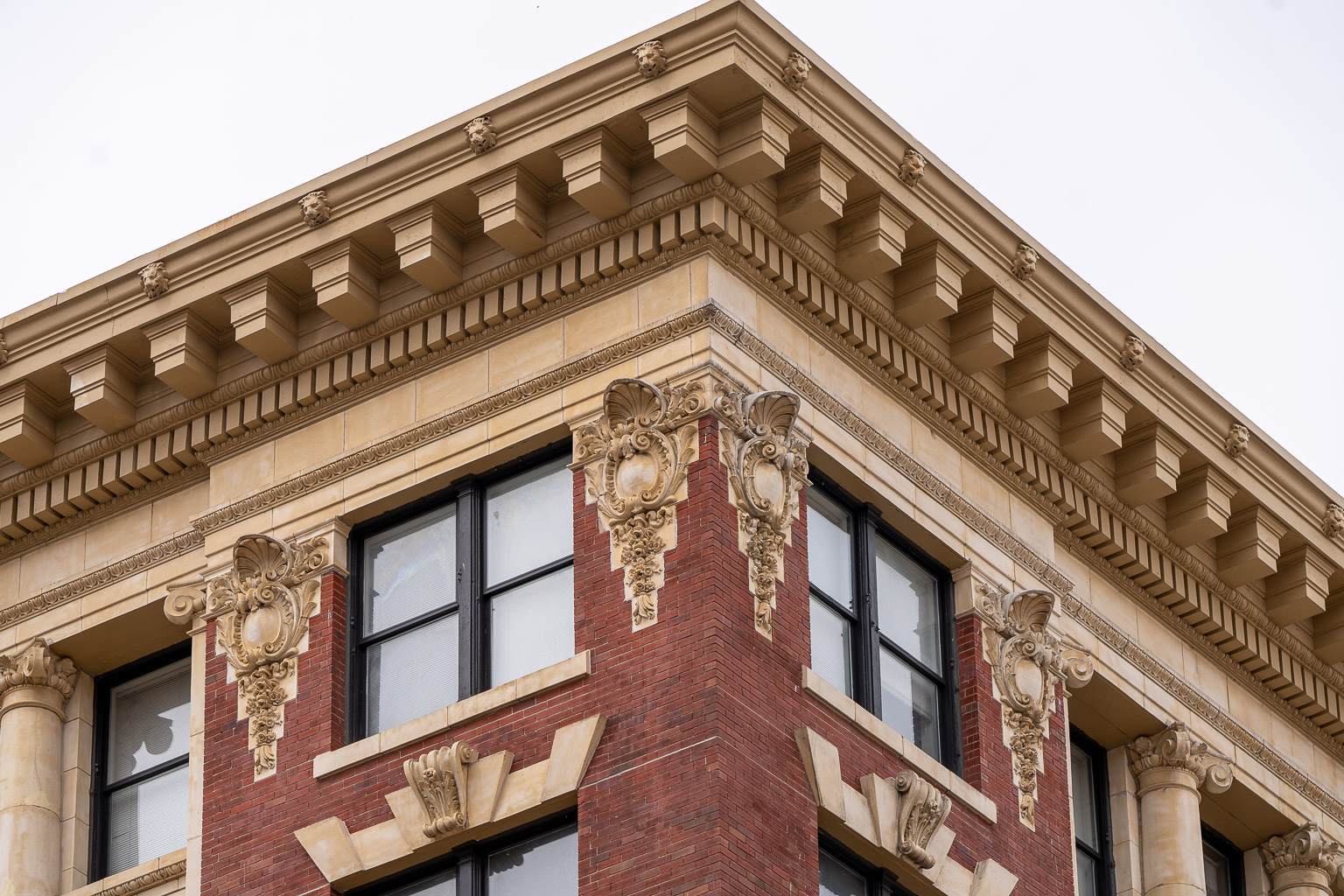
The photos below show details of the Breitmeyer-Tobin Building.
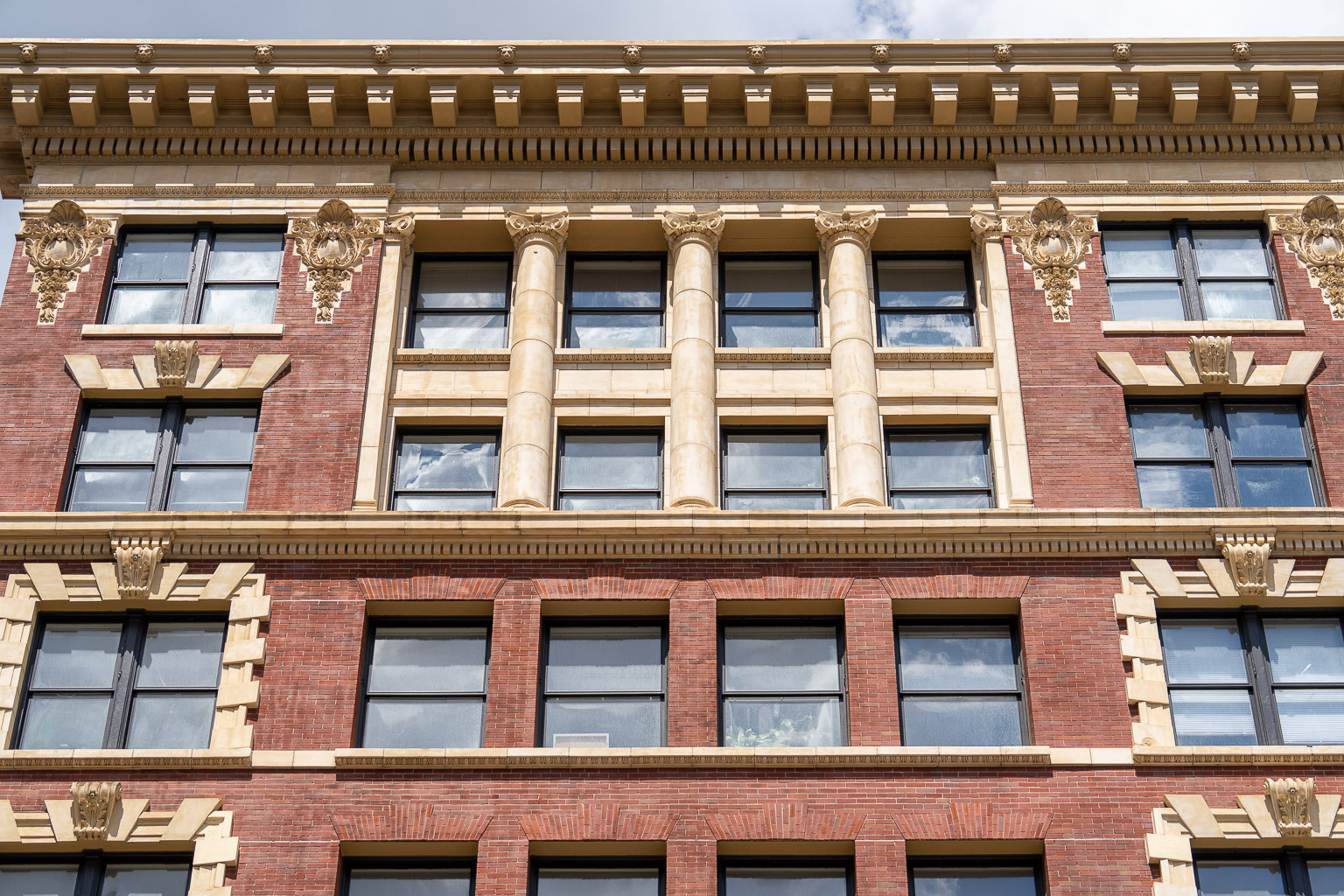
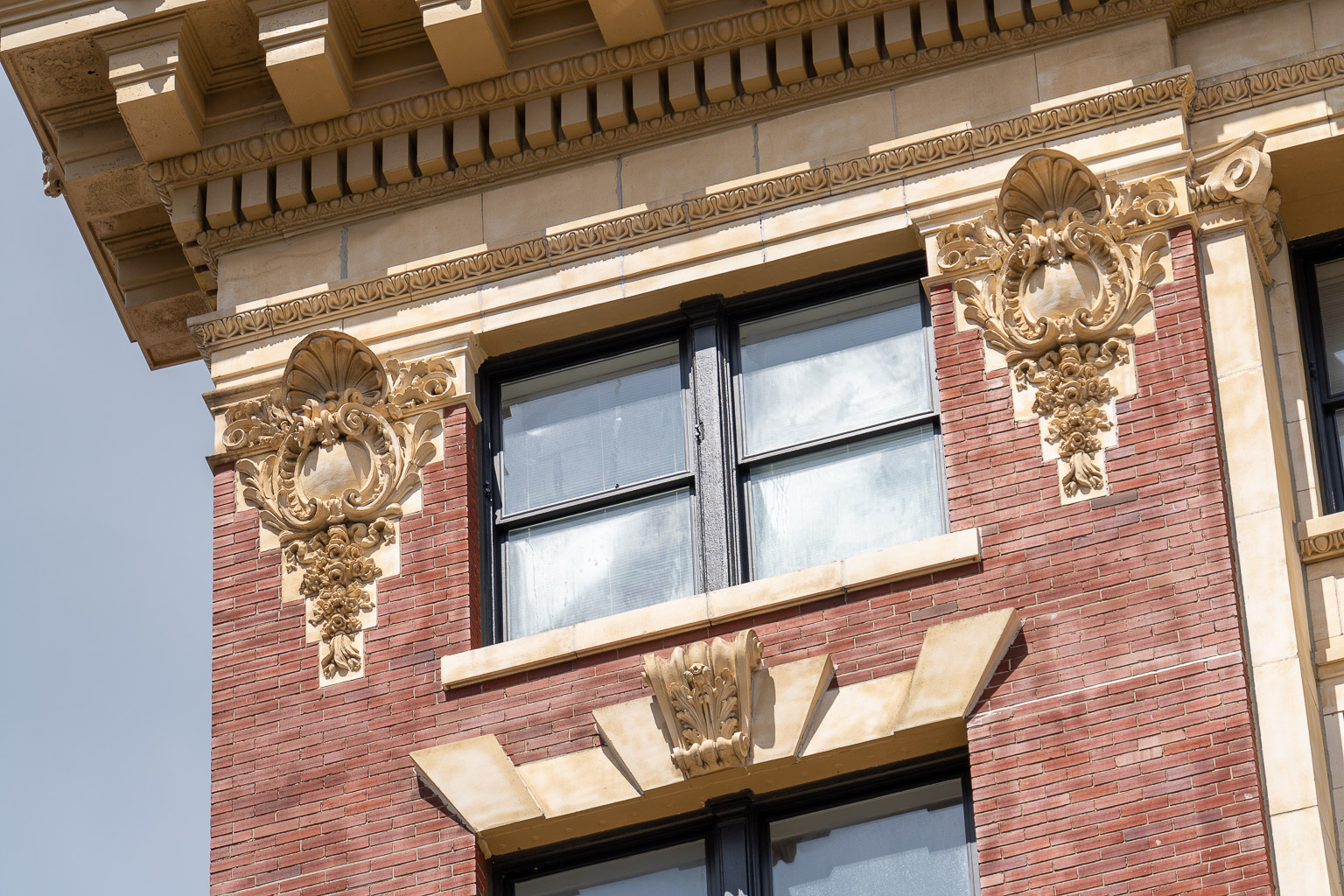
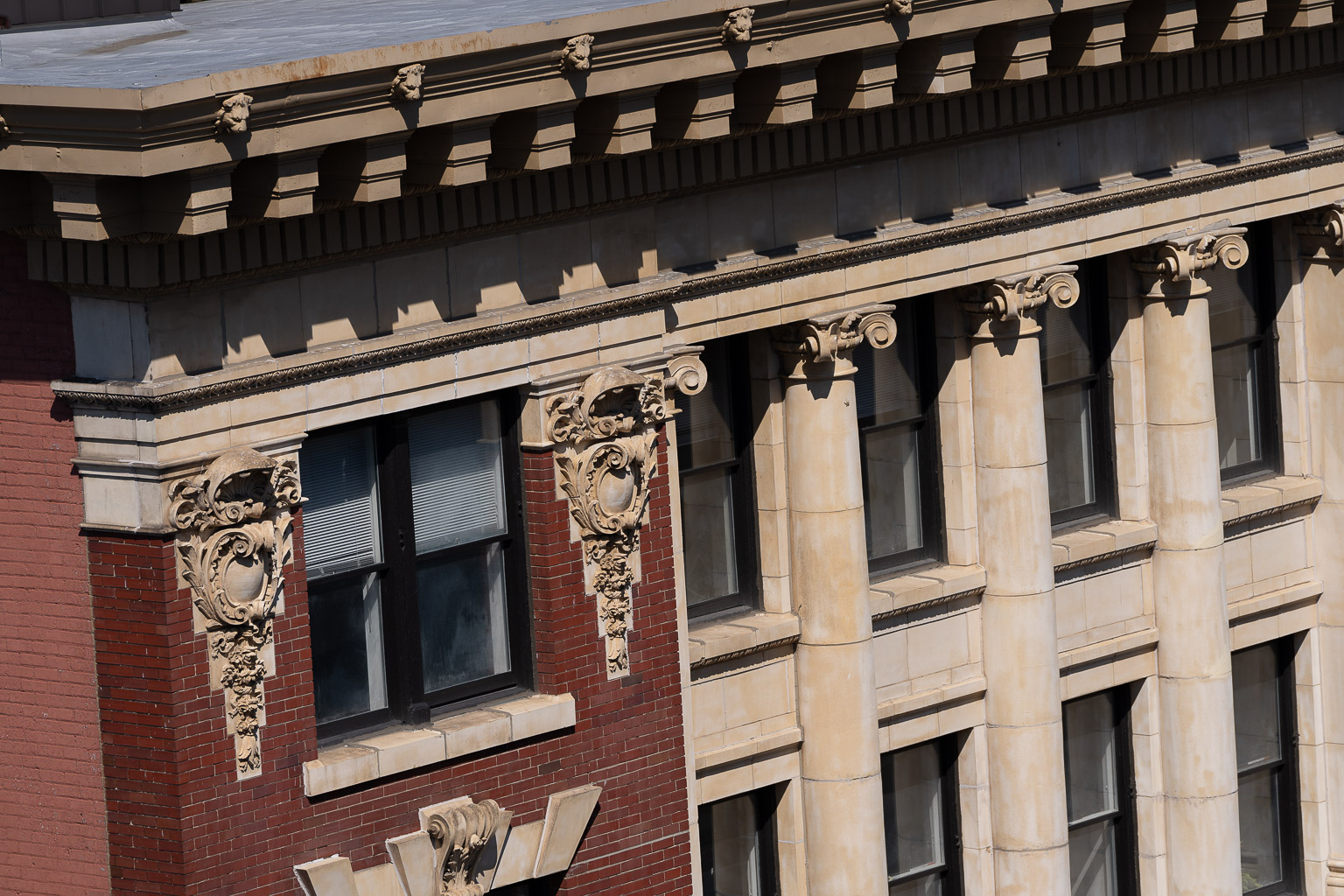
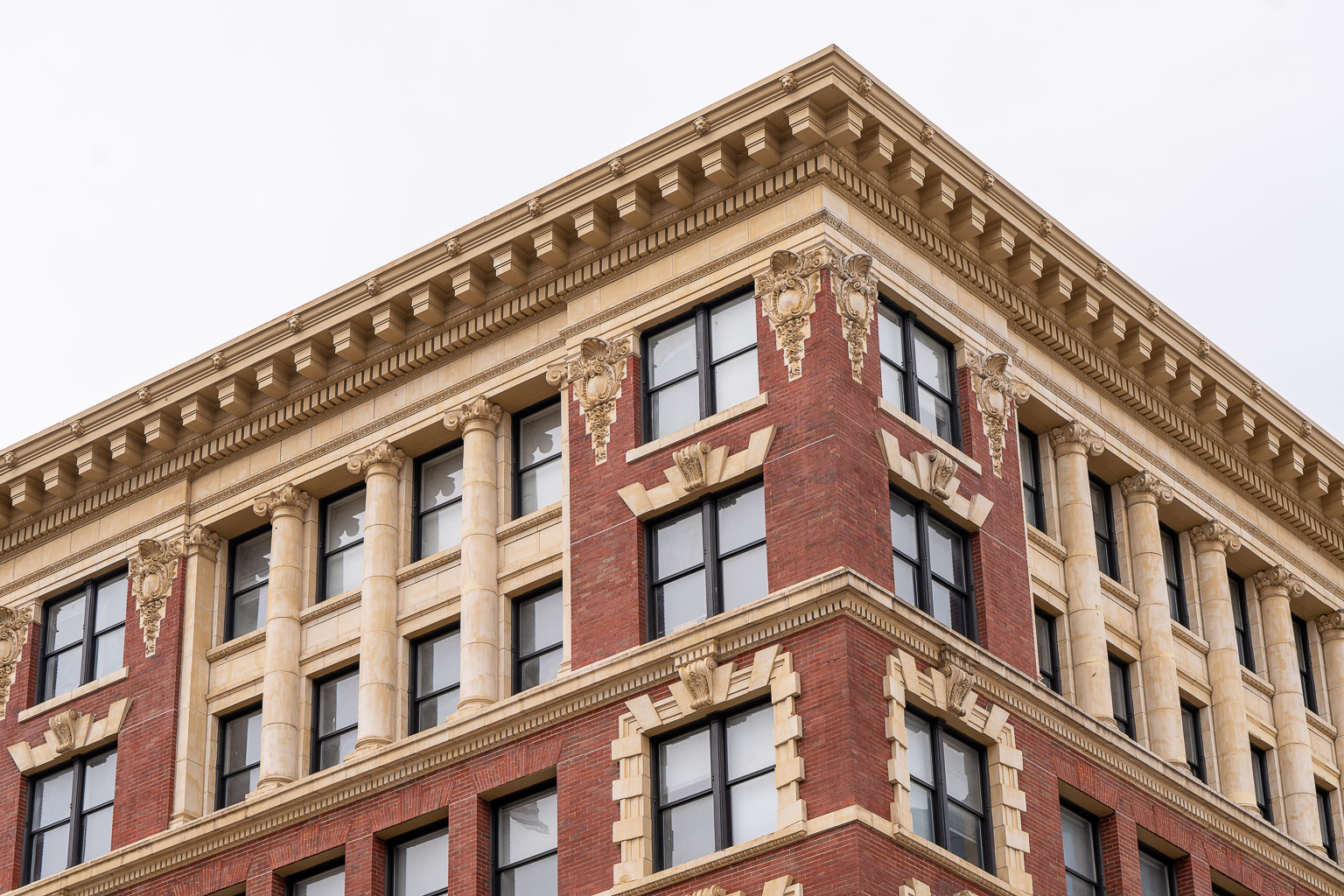
More photos can be seen, and more can be read about this building at HistoricDetroit.org.
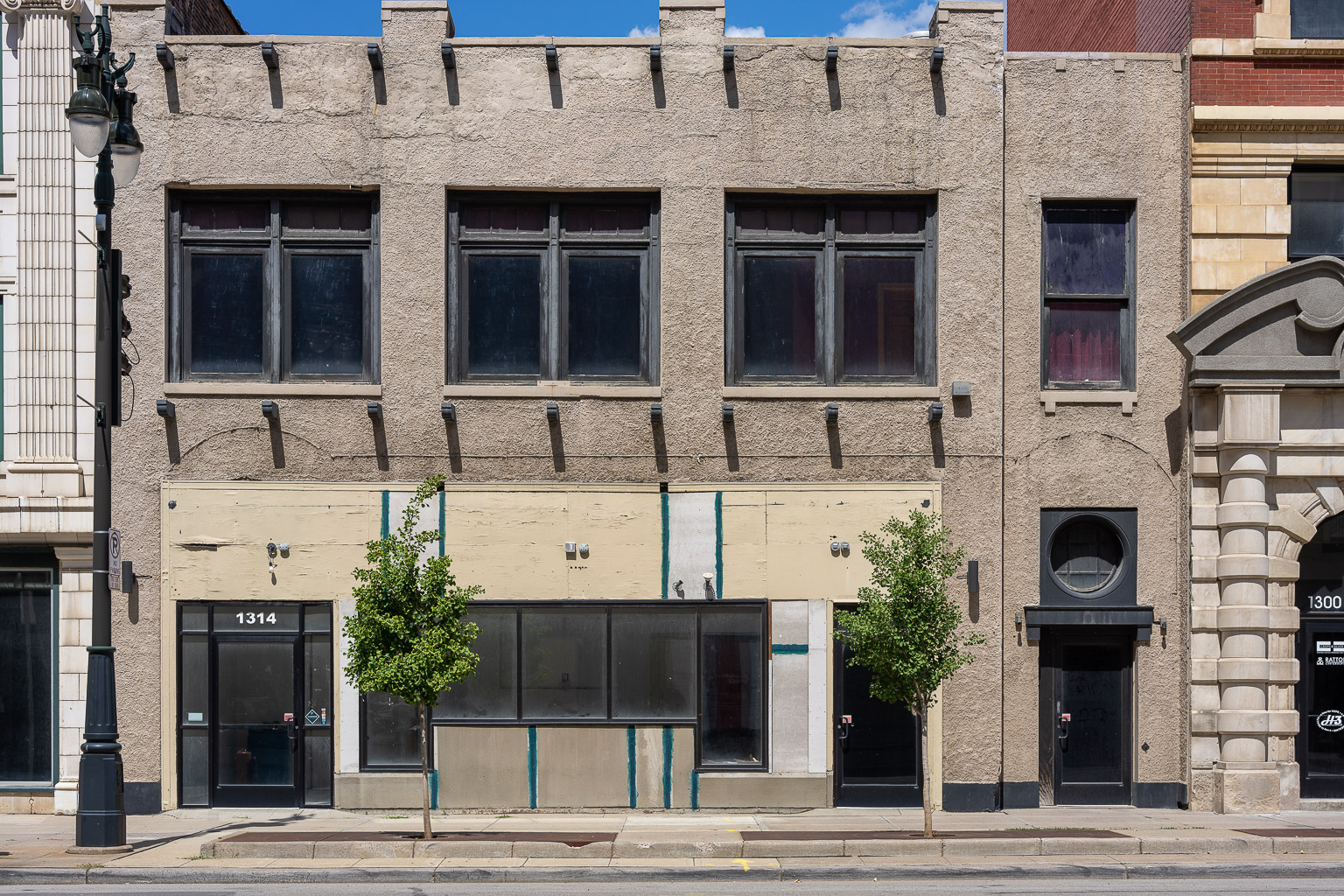
This building originally housed a florist, with a simple stucco facade that originally displayed flower boxes beneath the 2nd story windows and roof line, probably to suggest an Italian villa and garden. The 1st floor was redone in 1929 and the 2nd floor remains partially intact to the original design.
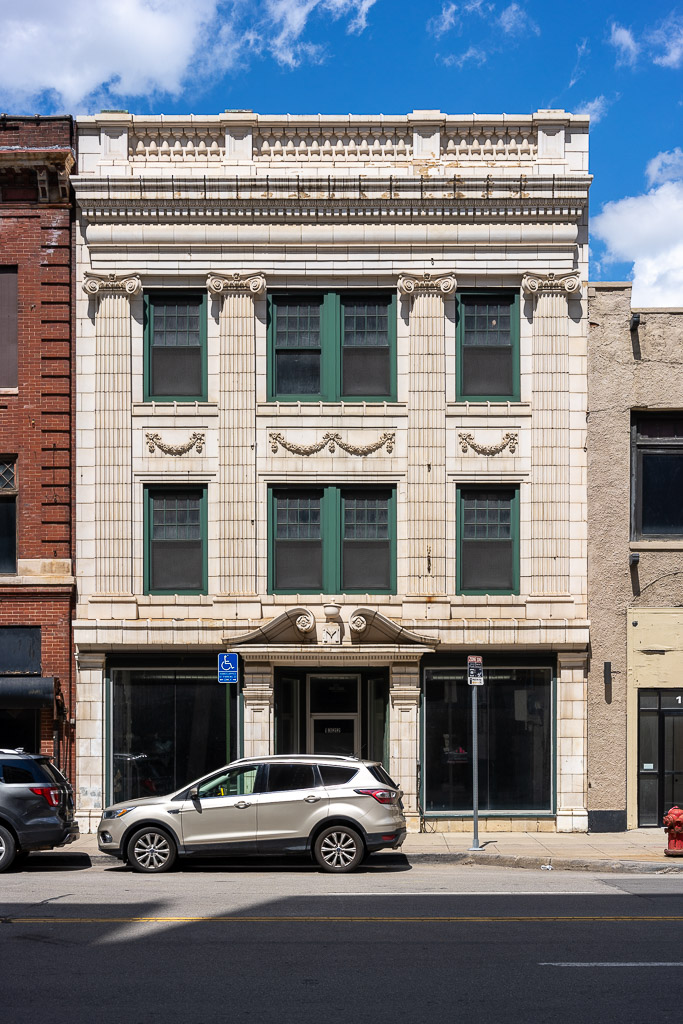
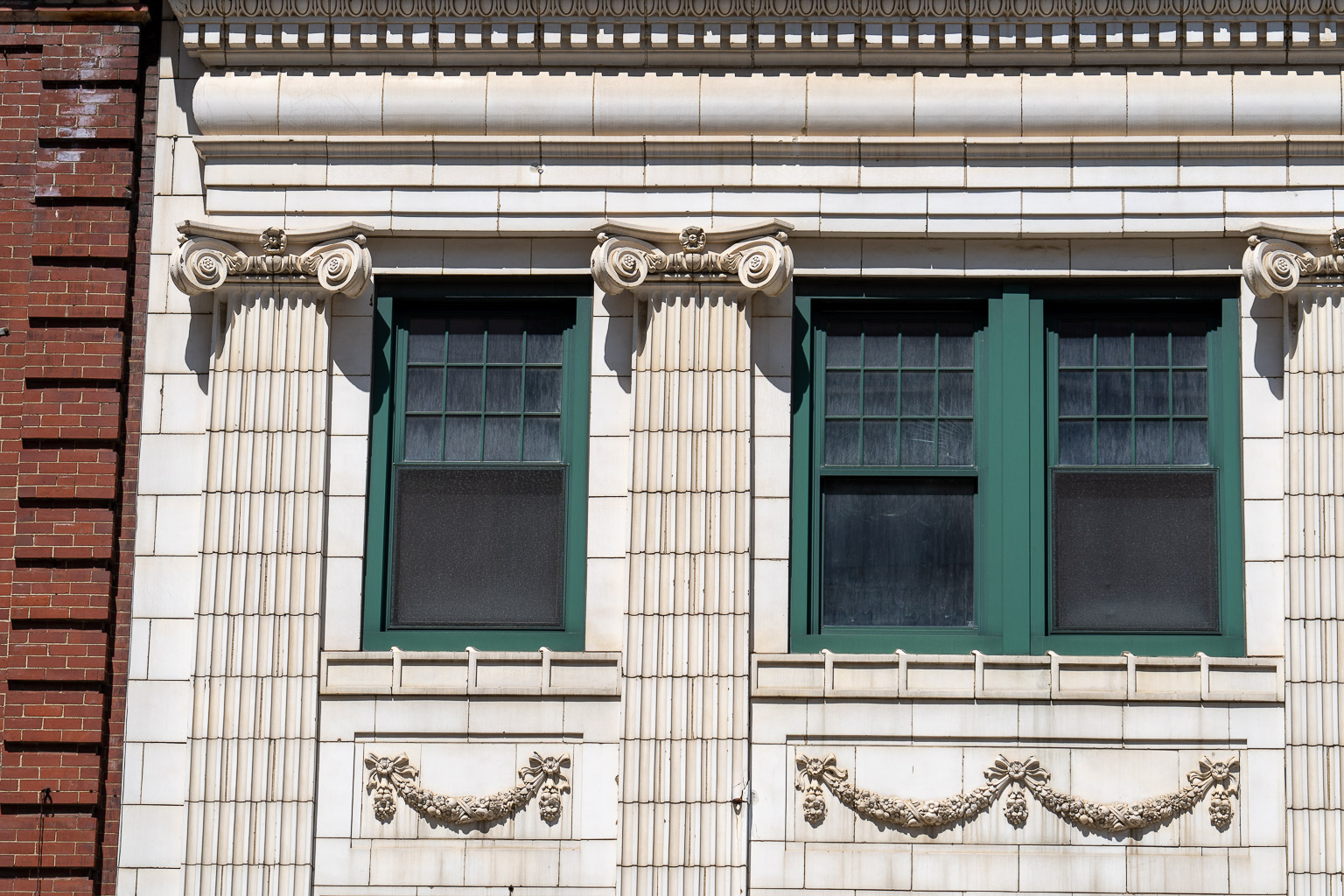
The very neat-looking 3-bay 3-story MacDiarmid Candy Company Building has a white terra-cotta facade with a broken pediment entrance at the center of the ground floor with a large M in the center, presumably for MacDiarmid, and four applied (fake) ionic columns on the 2nd and 3rd floors breaking the facade up into 3 bays.
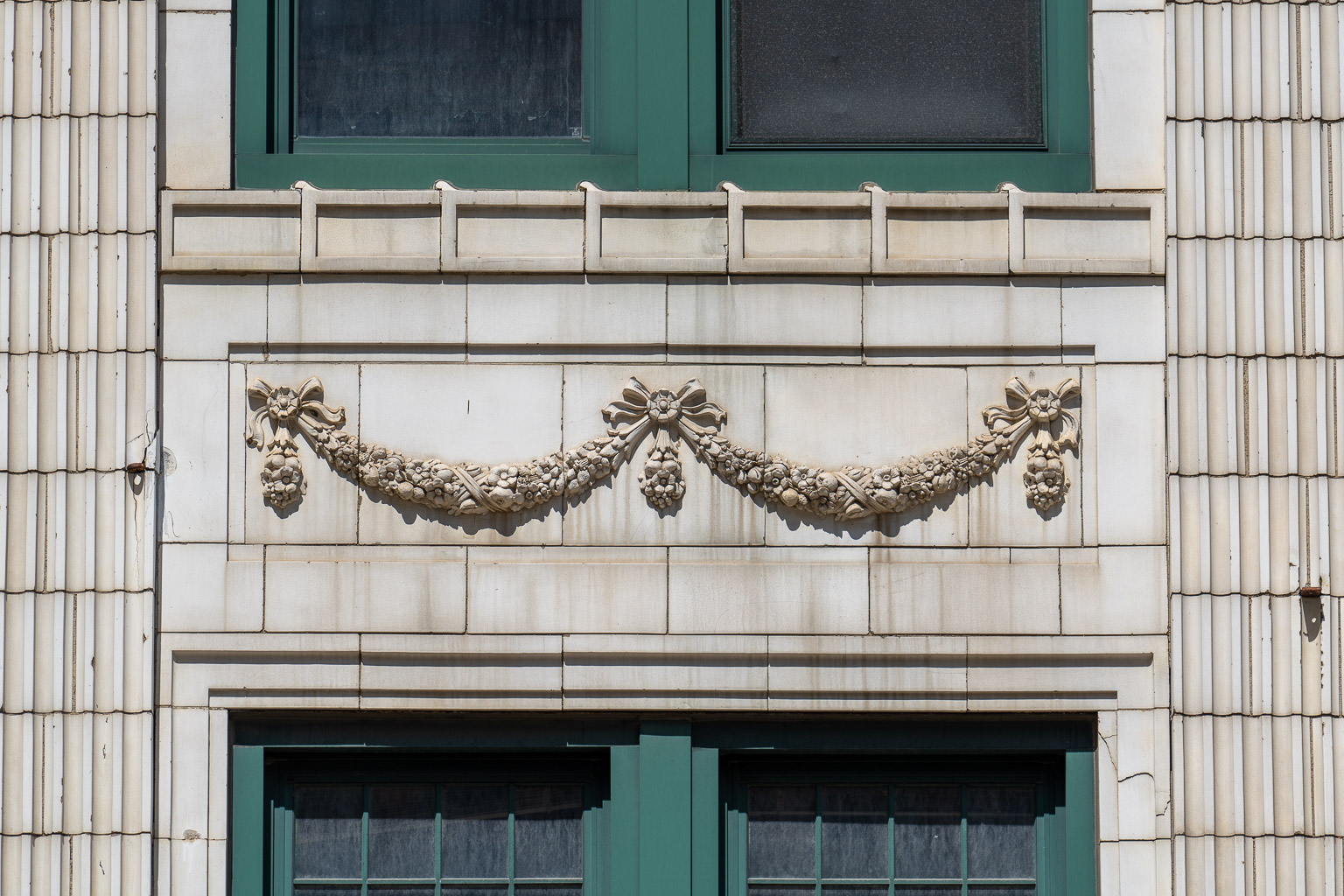
The photos below show details of the MacDiarmid Candy Company Building, such as the swag panels between the 2nd and 3rd floor windows, and the dentils and egg-and-dart mouldings below the cornice.
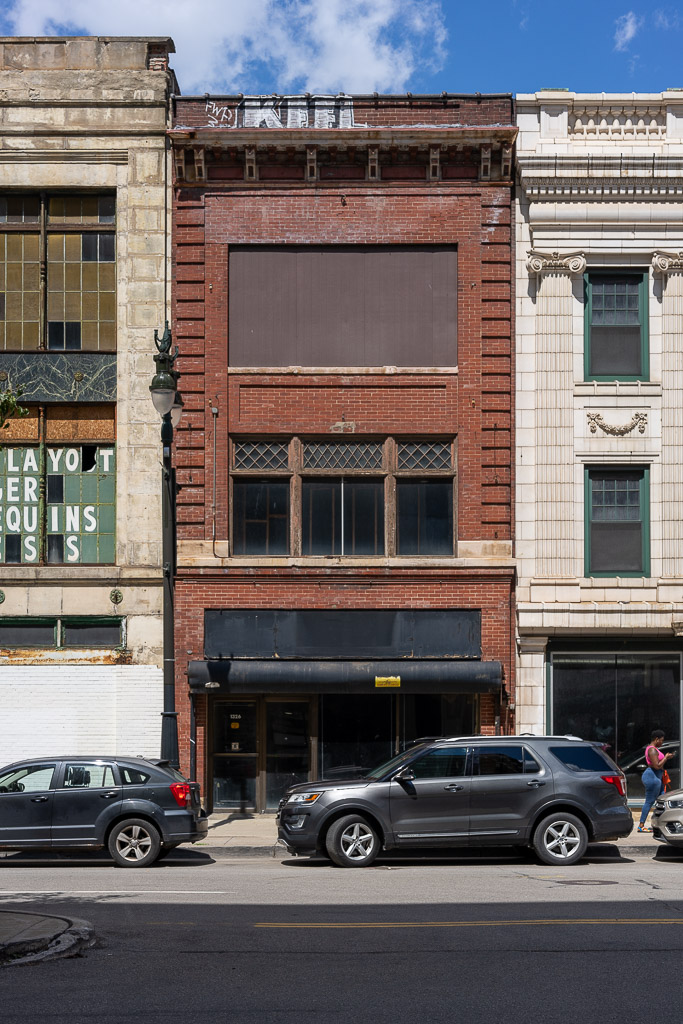
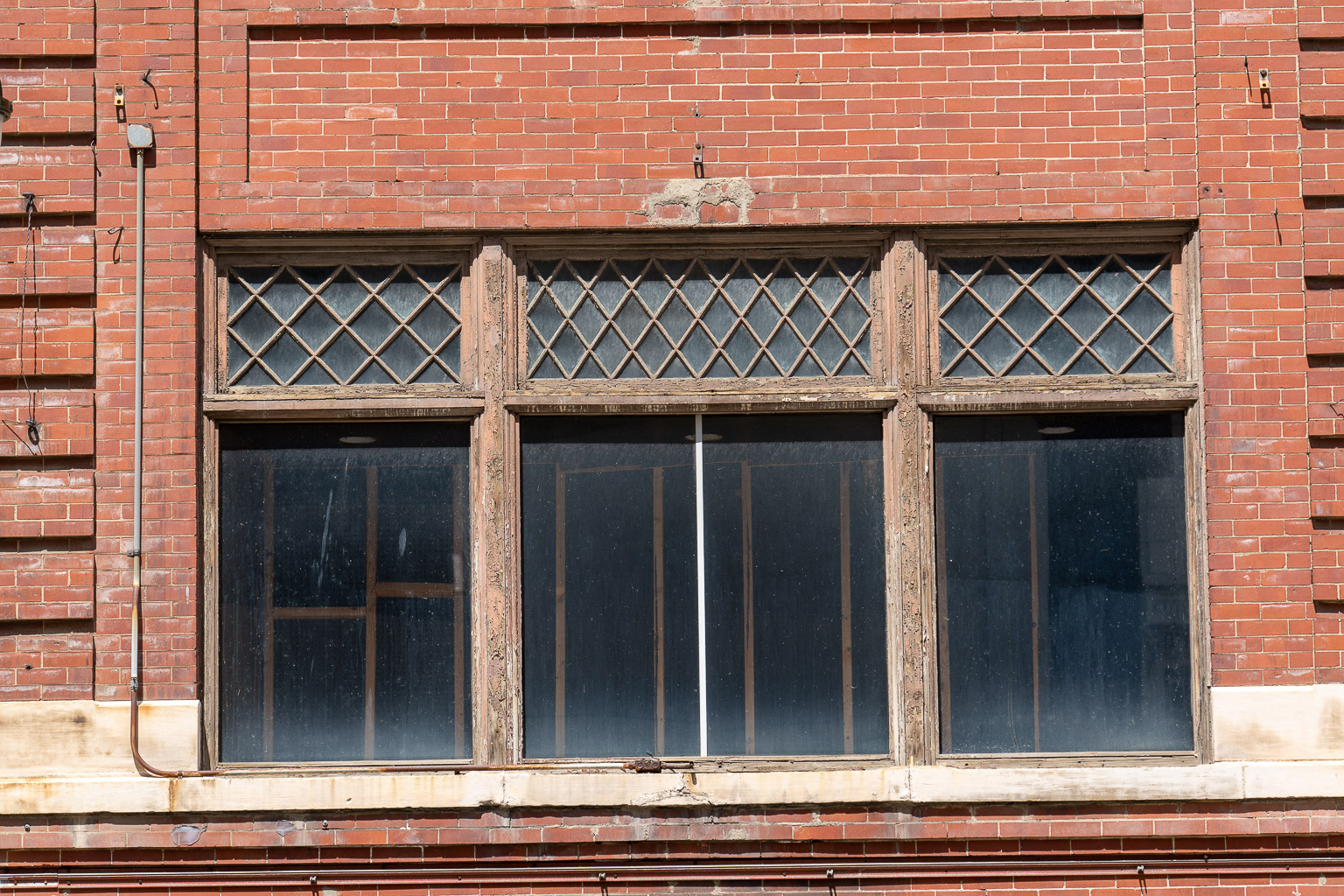
Built as a factory for the furrier, A.W. Reckmeyer, who occupied the house previously on the site, this narrow, three-story brick building features a bracketed cornice with a set of paired brackets at each end. Old photographs show a triple window on the 3rd story, but the openings were boarded up in 1969.
The photos below show details of the Reckmeyer Building, July 2023.
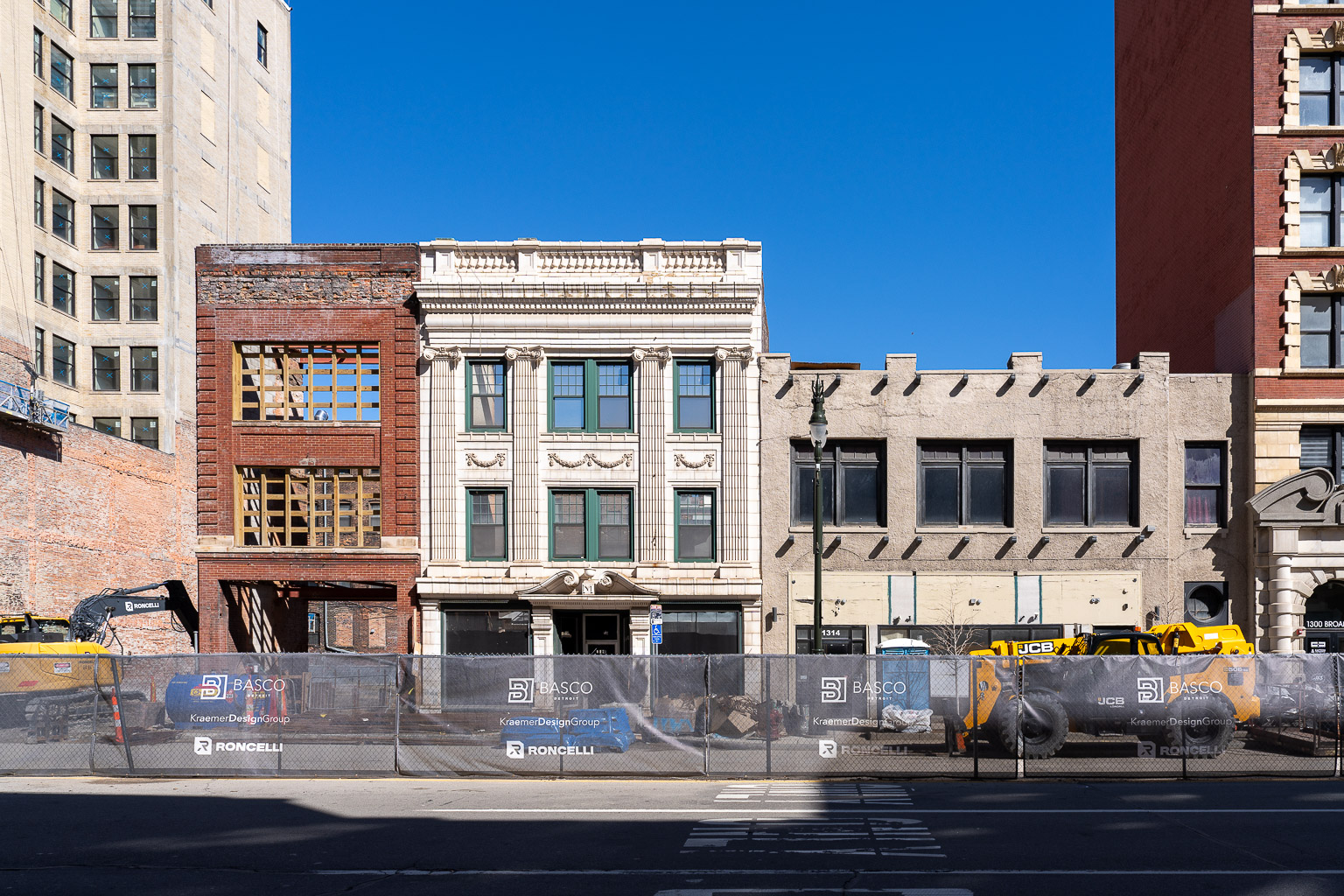
The building is under renovation as of April 2025.
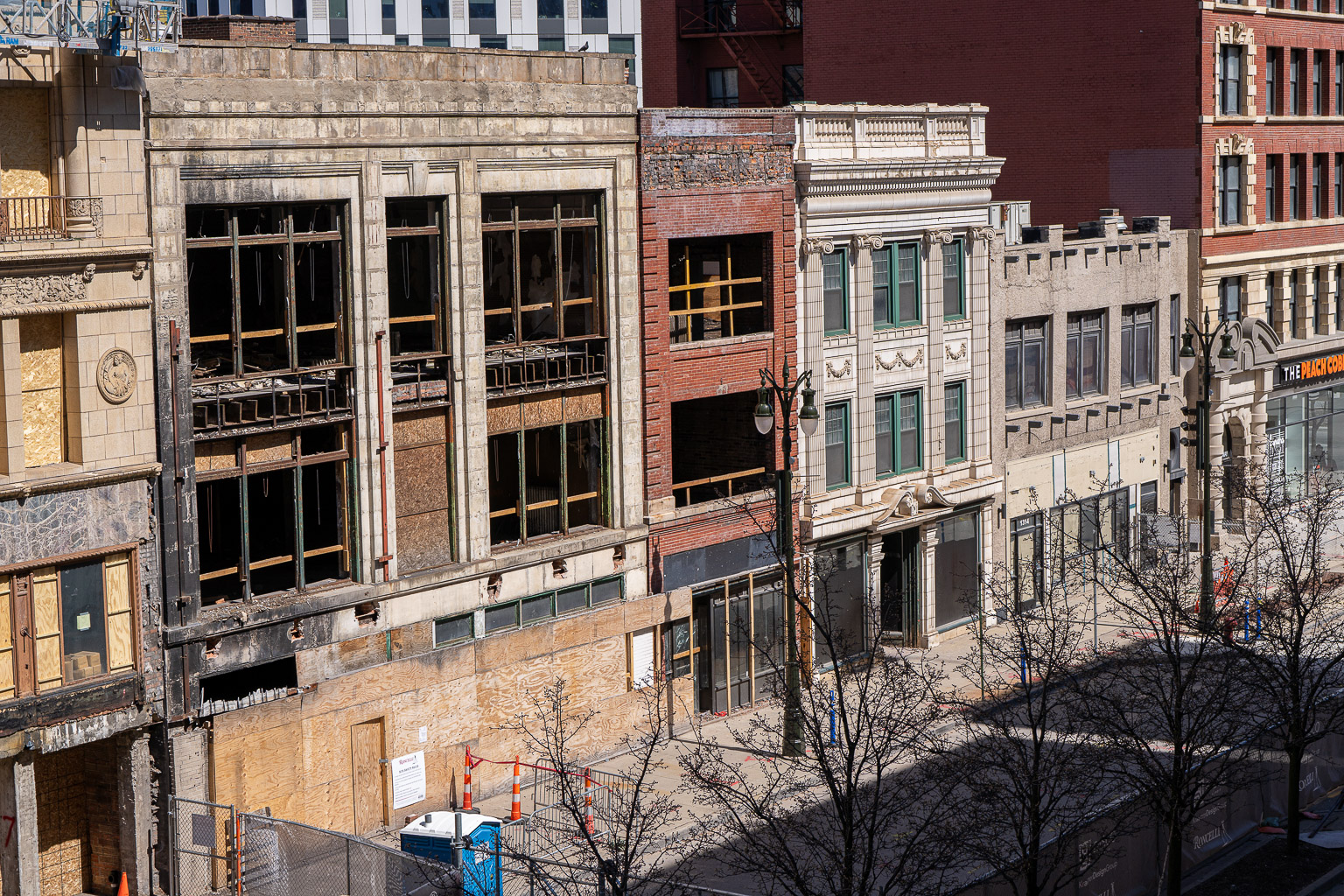
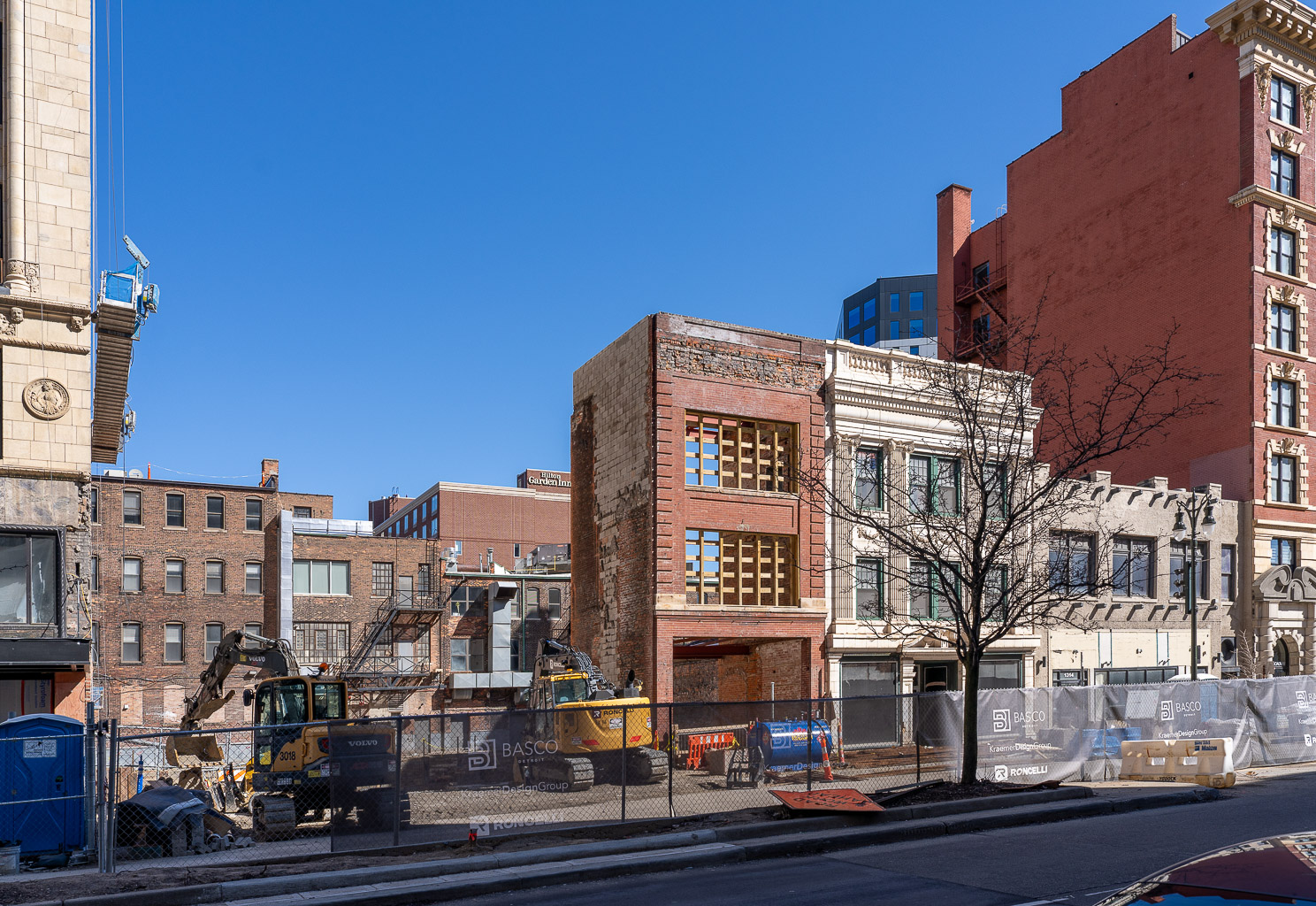
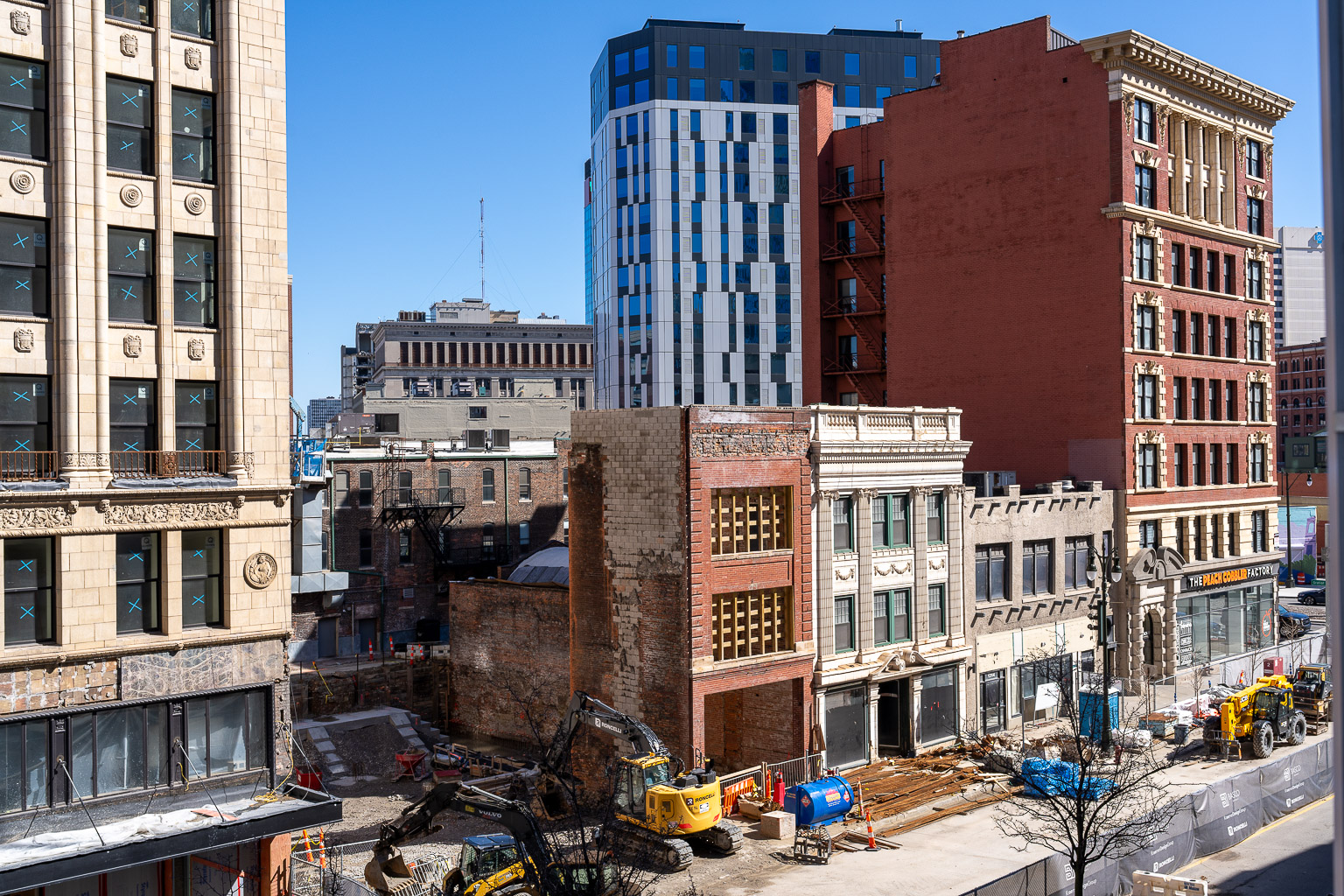
The building is gutted to only an exterior shell as of March 8, 2026.
This building is partially covered-up by a metal skin when I visited (and apparently, also when the city's Historic District Report was written). They note that the original building was renovated or rebuilt in 1923, and subsequently covered by the present metal skin. It is unclear how much of the earlier facade remains in place underneath the metal. I suspect this building replaced the Cut Flower Exchange on Randolph Street which was sold in 1926.
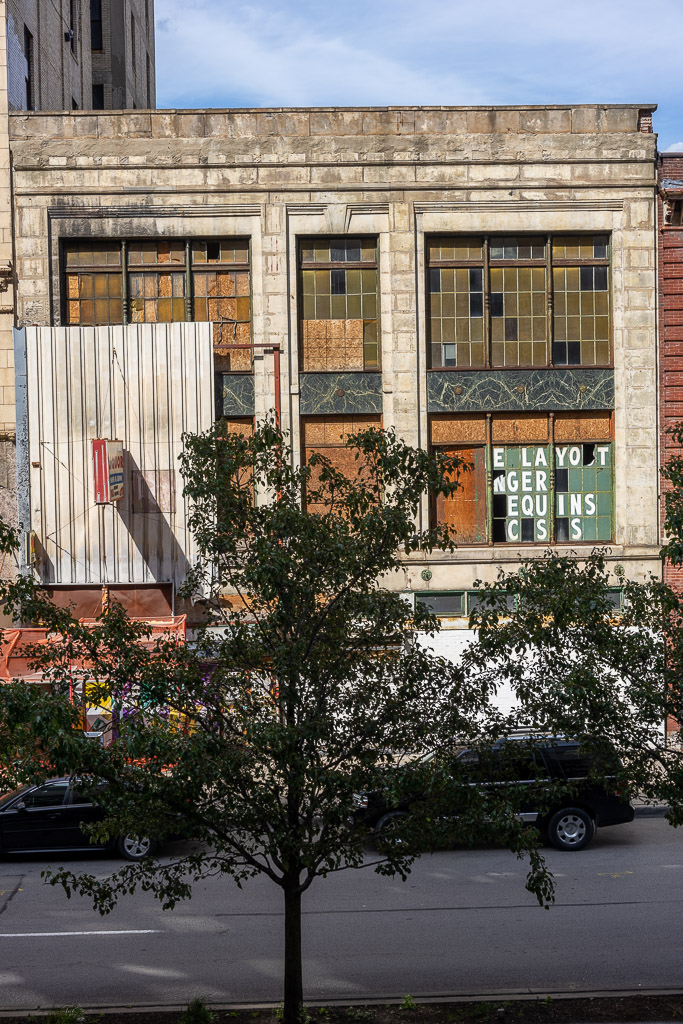
The photos below show details of the Michigan Cut Flower Exchange Building, August 2023.
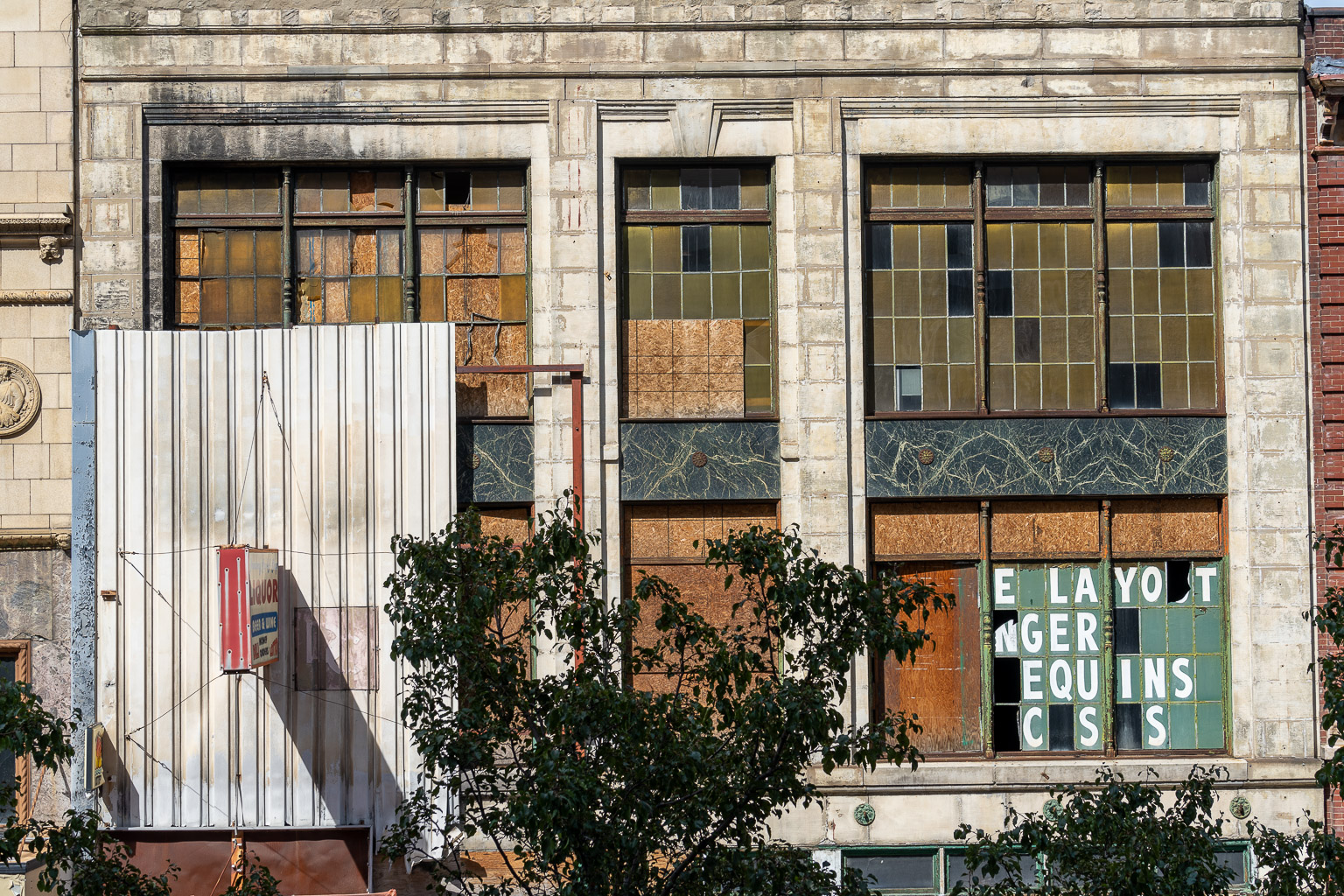
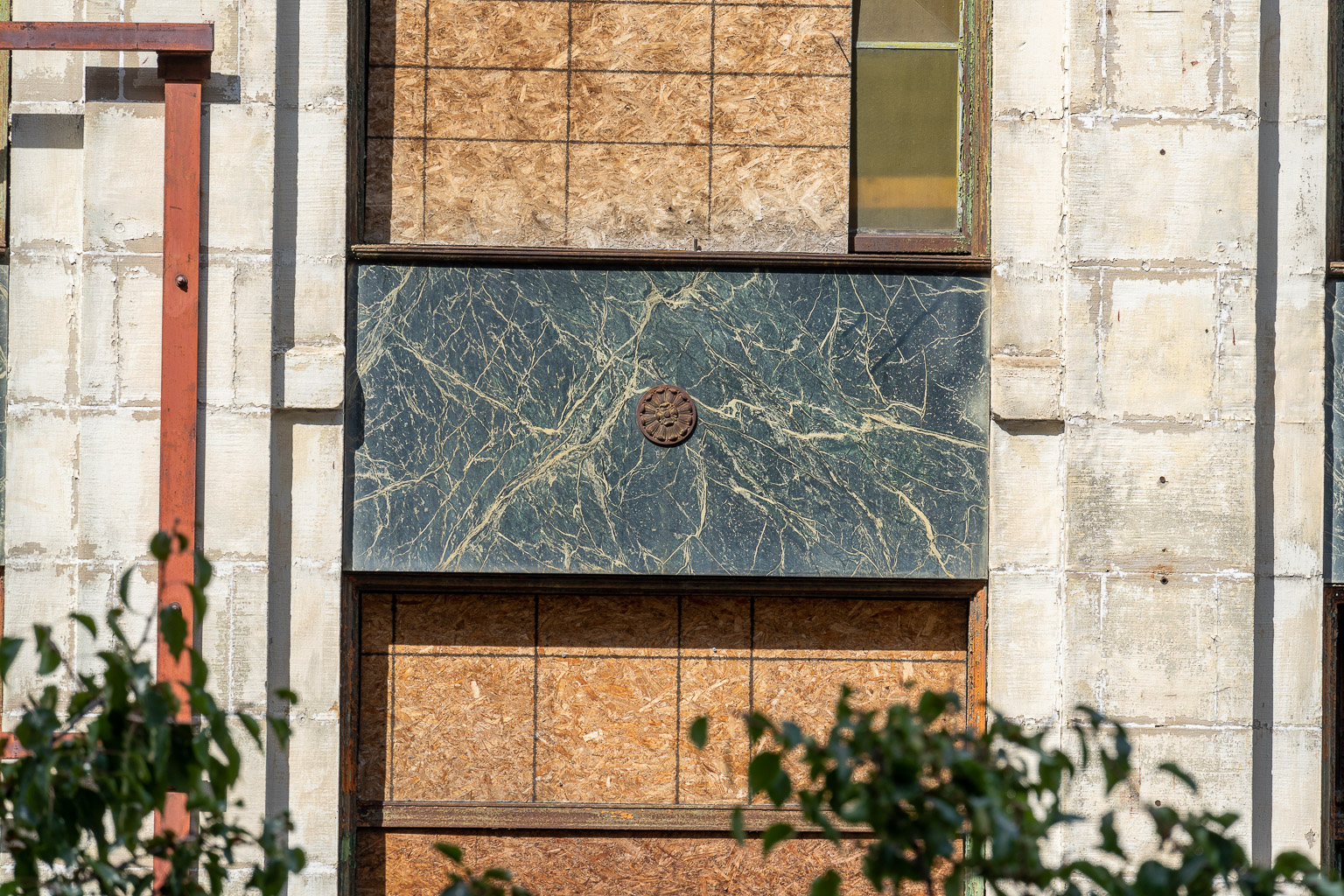
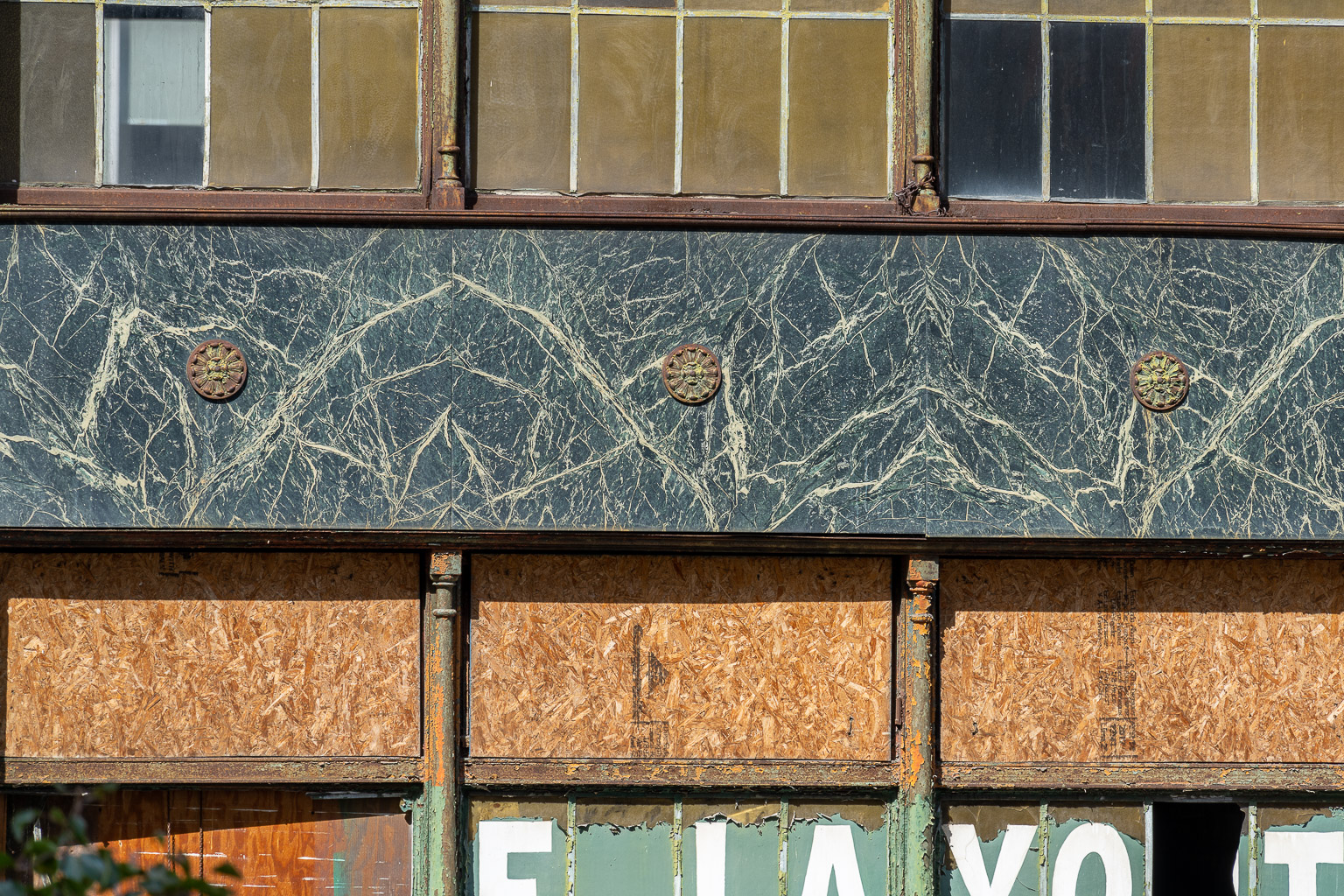
The building is under renovation as of April 2025.
Perhaps "renovation" was the wrong word to use. As of March 8, 2026, the building has been demolished. Apparently there was too much fire damage for the building or its facade to be saved.
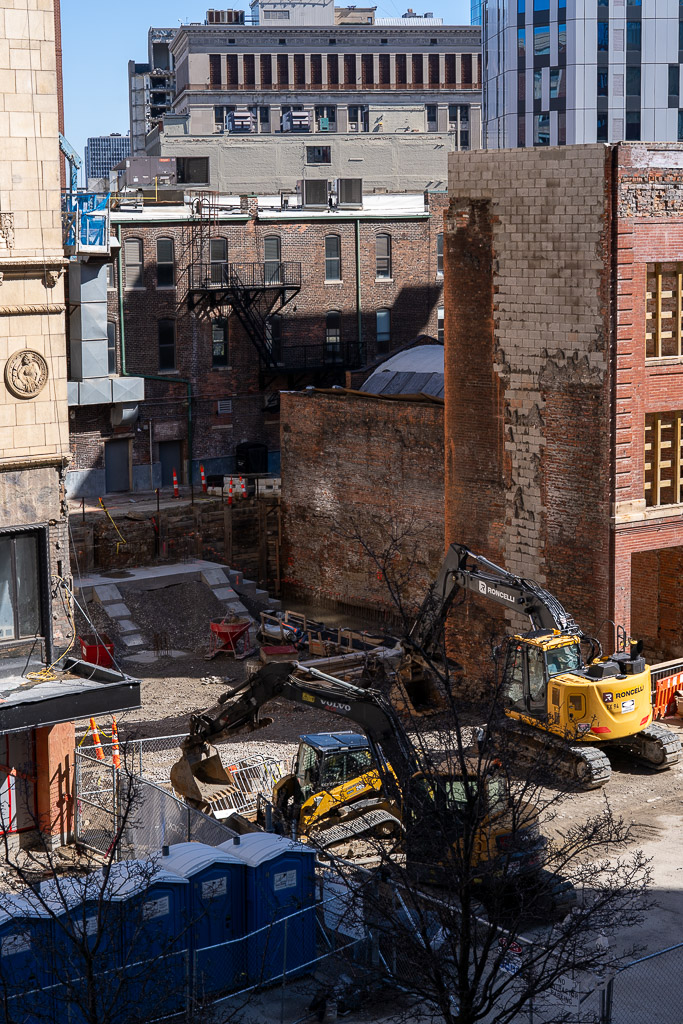
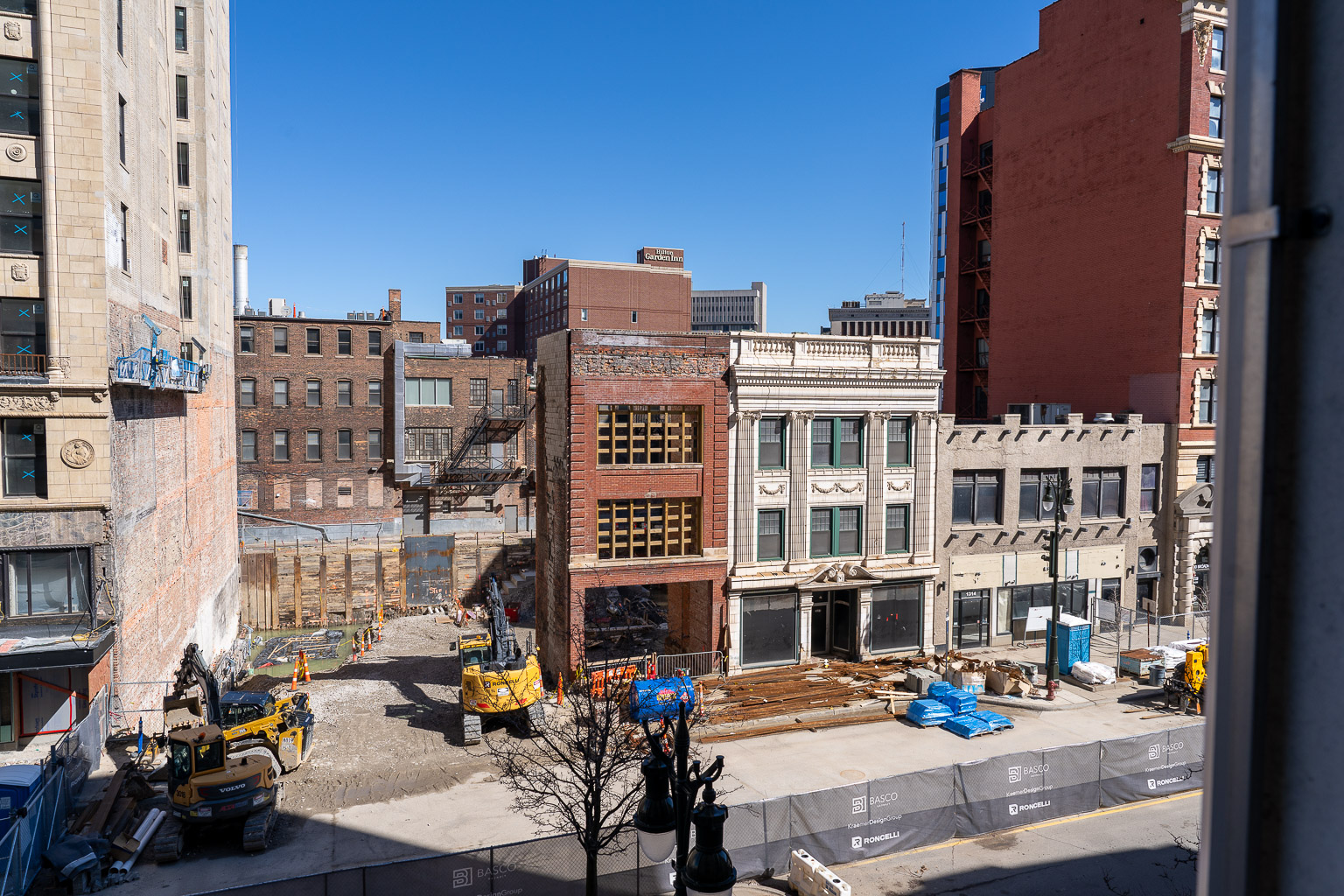
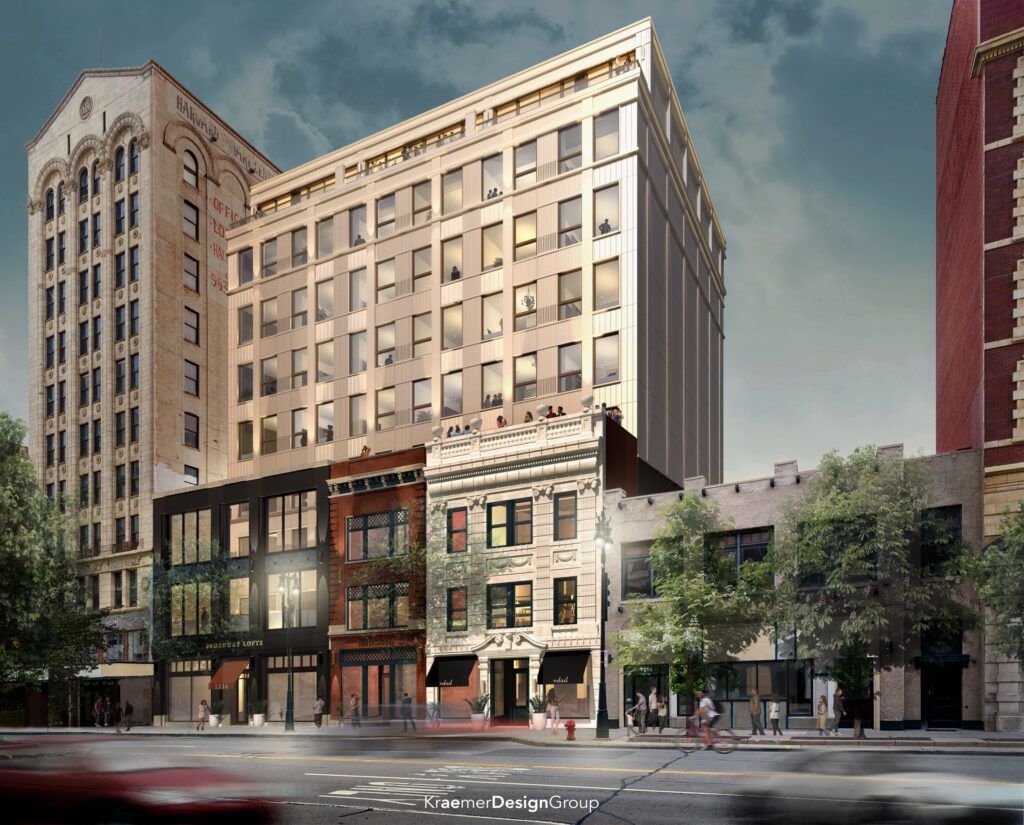
In the last 3 photos above, you can see the large excavated space behind the buildings. This is the site of new construction of The Reckmeyer Residences, 1322-1332 Broadway, a 9-story multi-use multi-family project. It will have 80 units (30 Studio 1 bath, 44 1 bedroom 1 bath, and 6 two bedroom 2 bath units), with ground floor commercial space retaining existing building facades. Keep tuned for construction photos, but a pre-construction rendering is below.
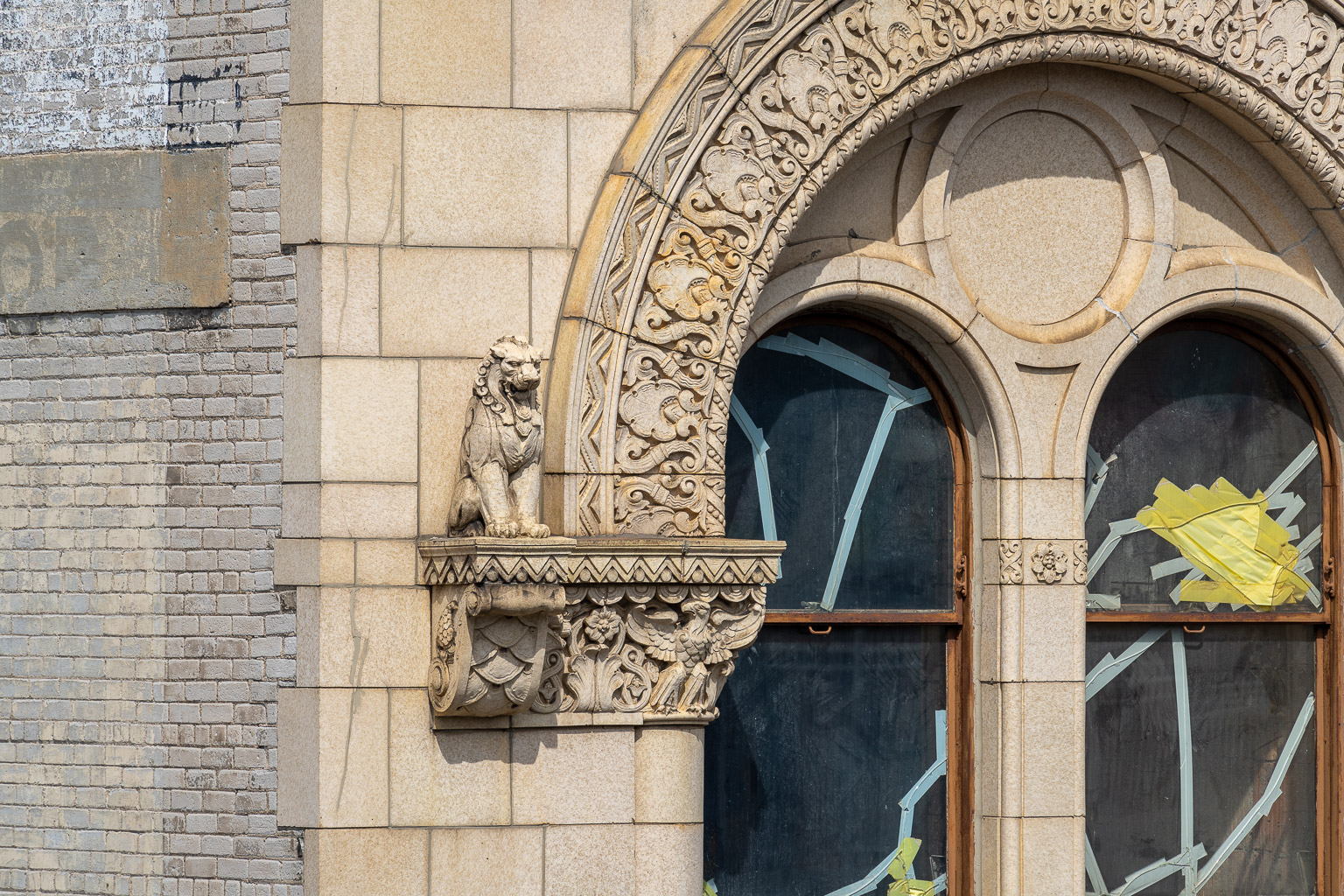
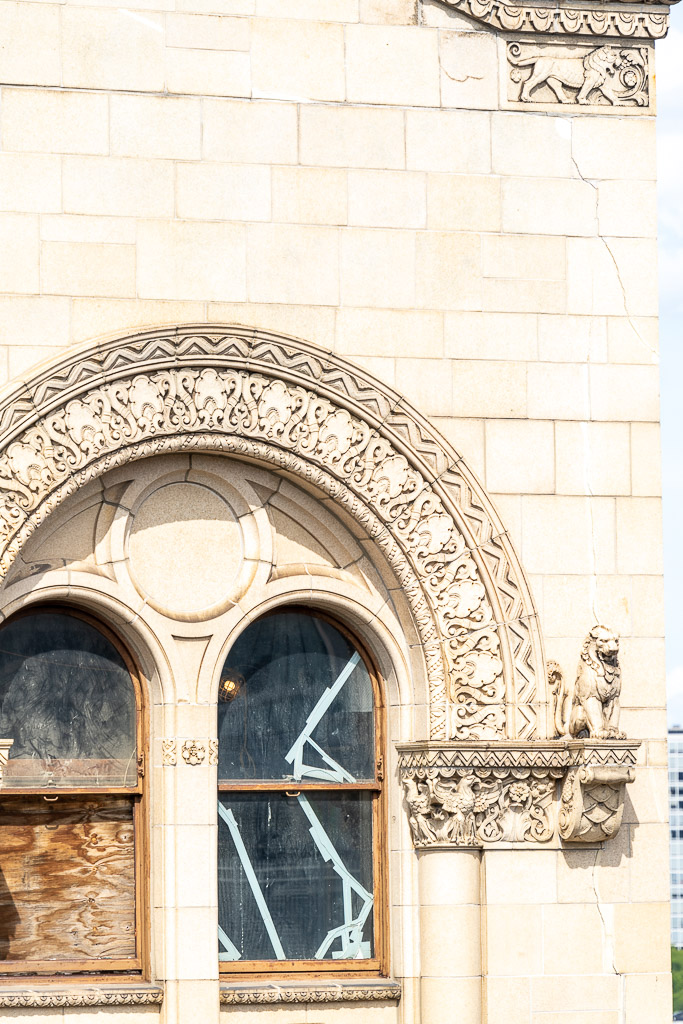
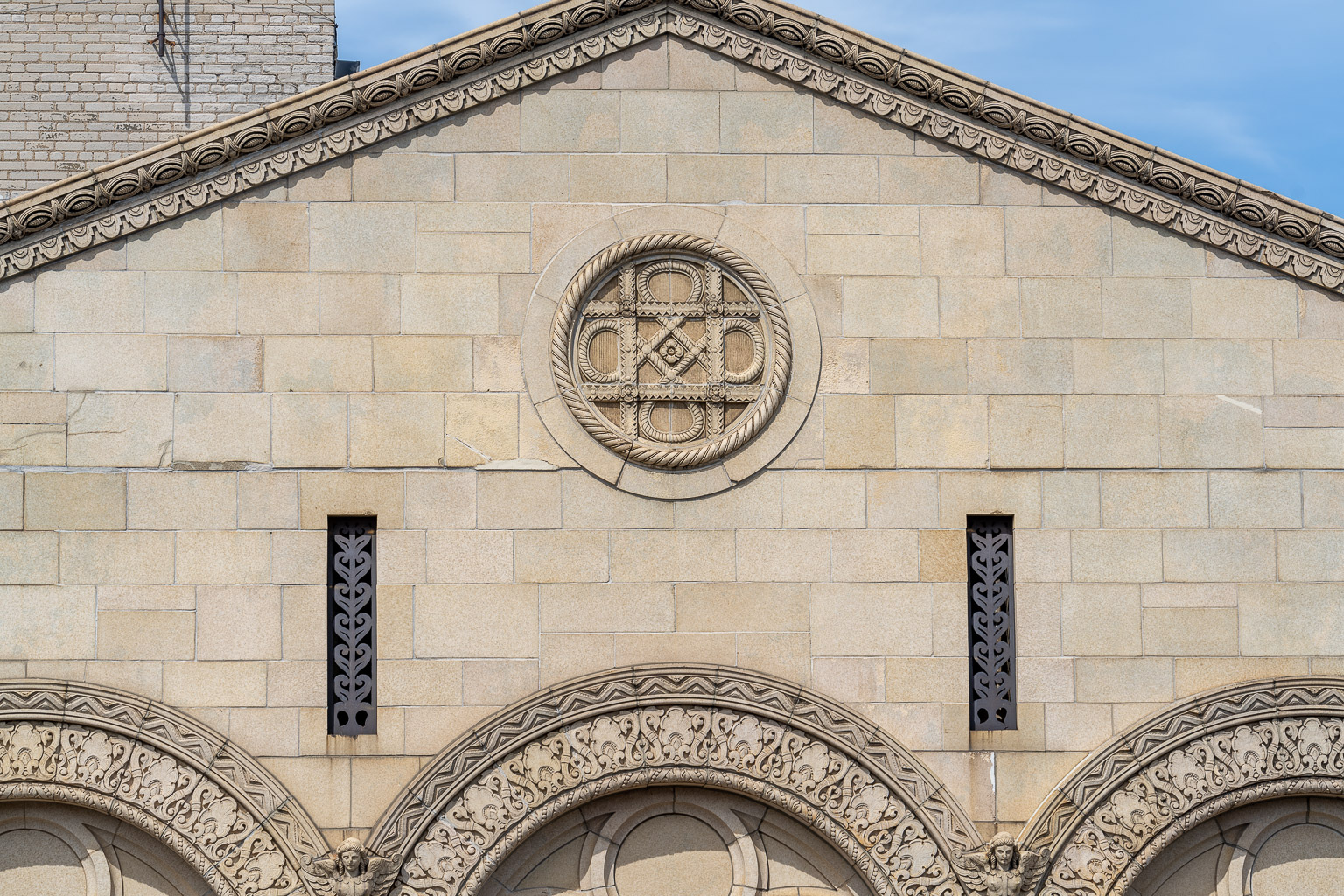
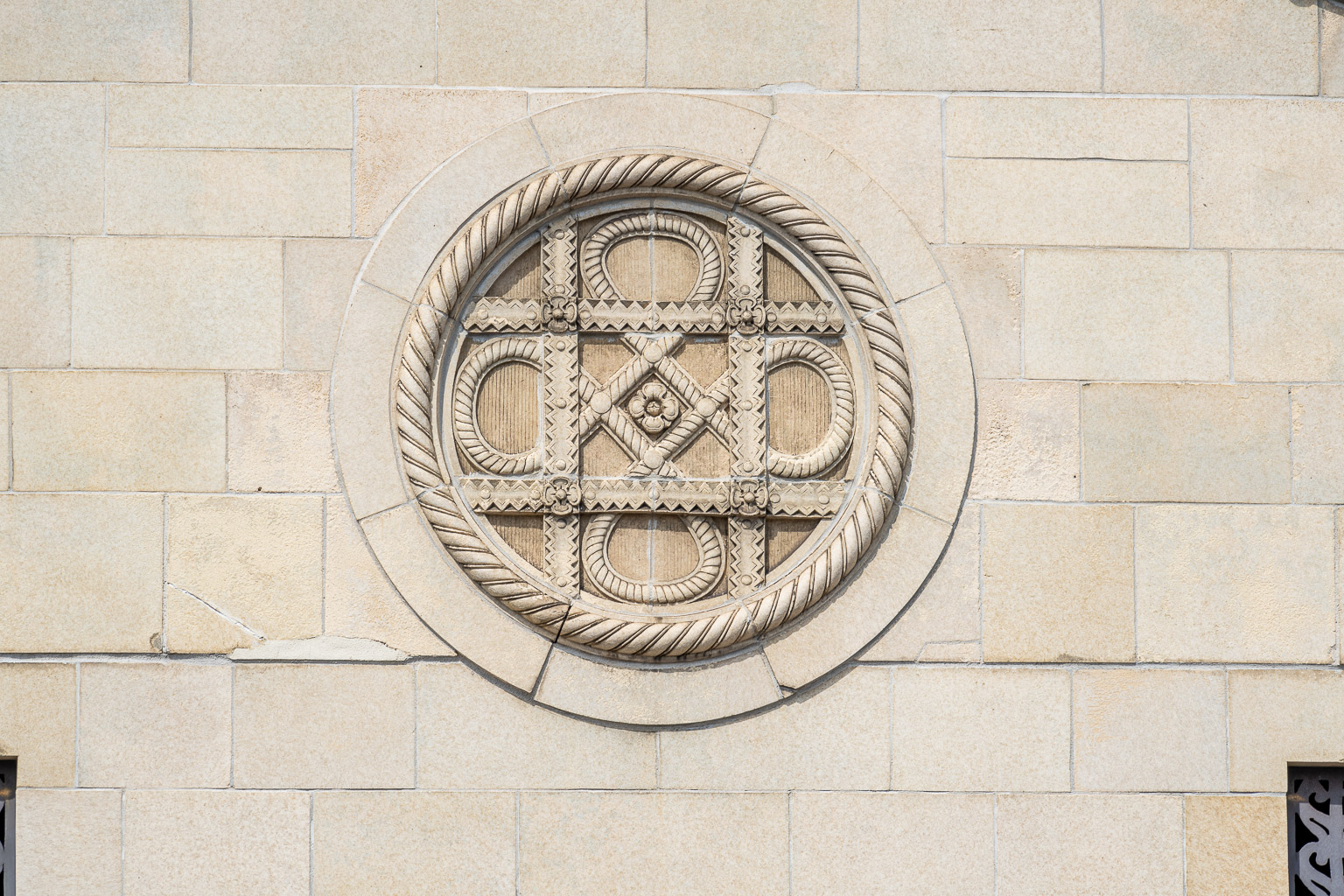
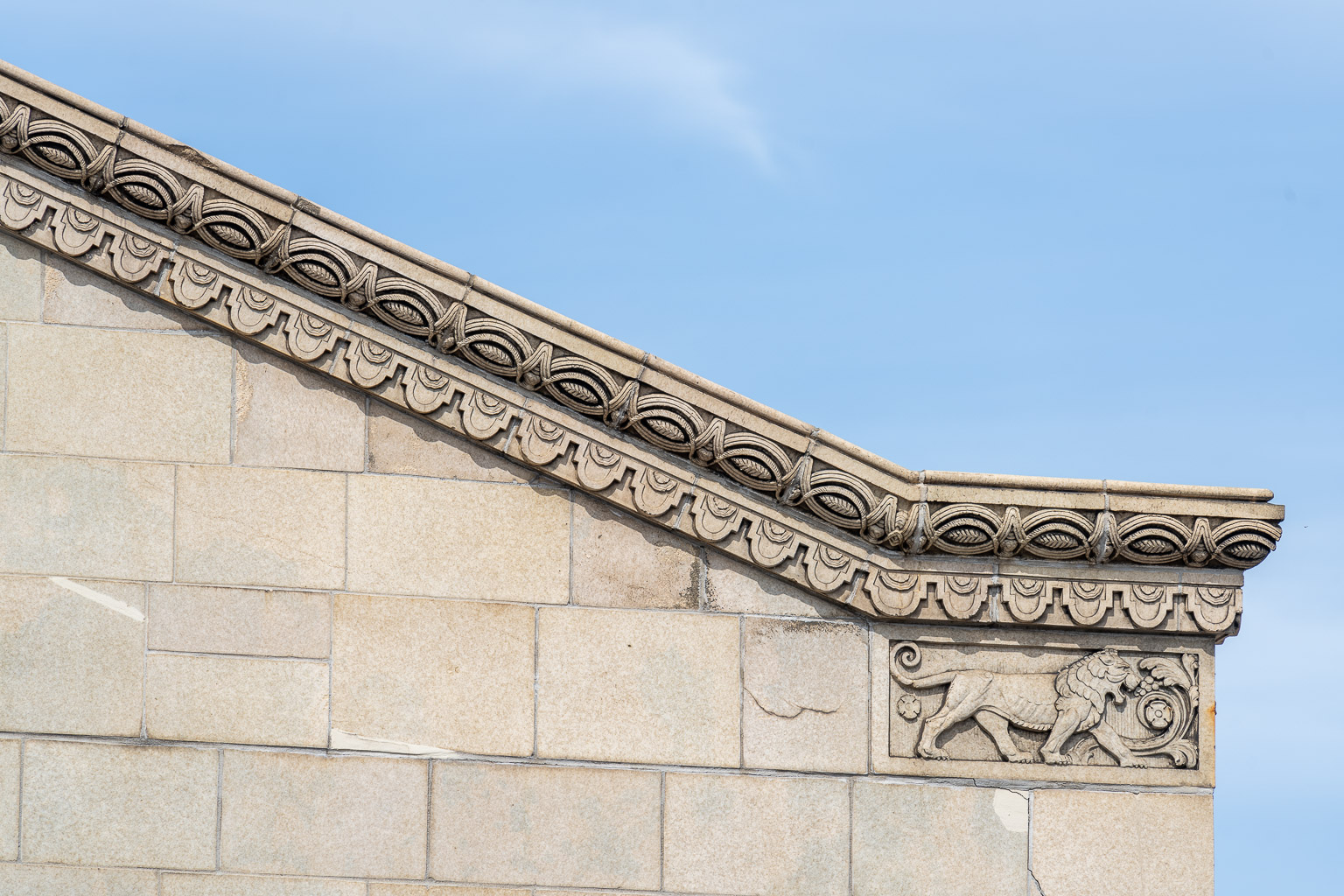
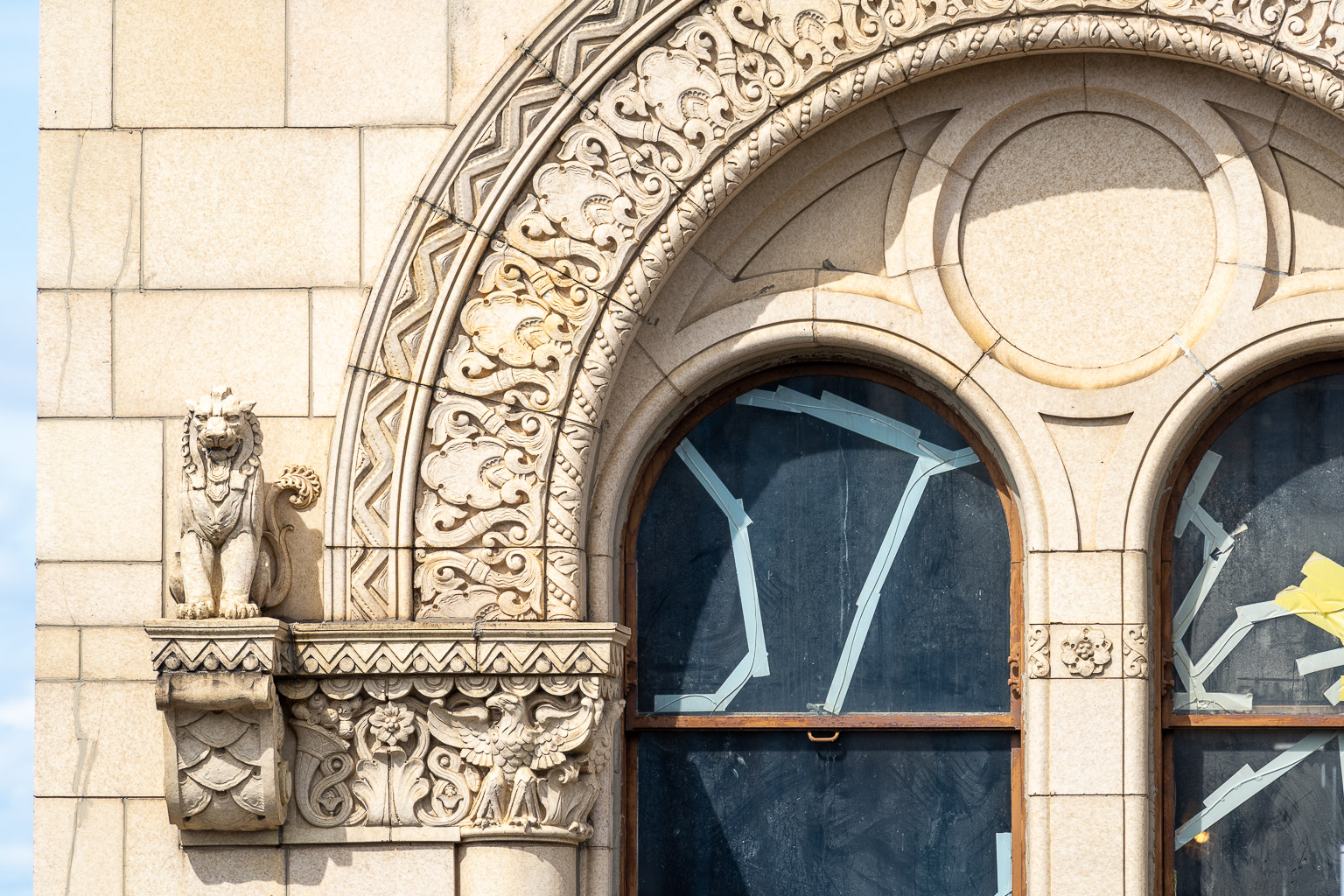
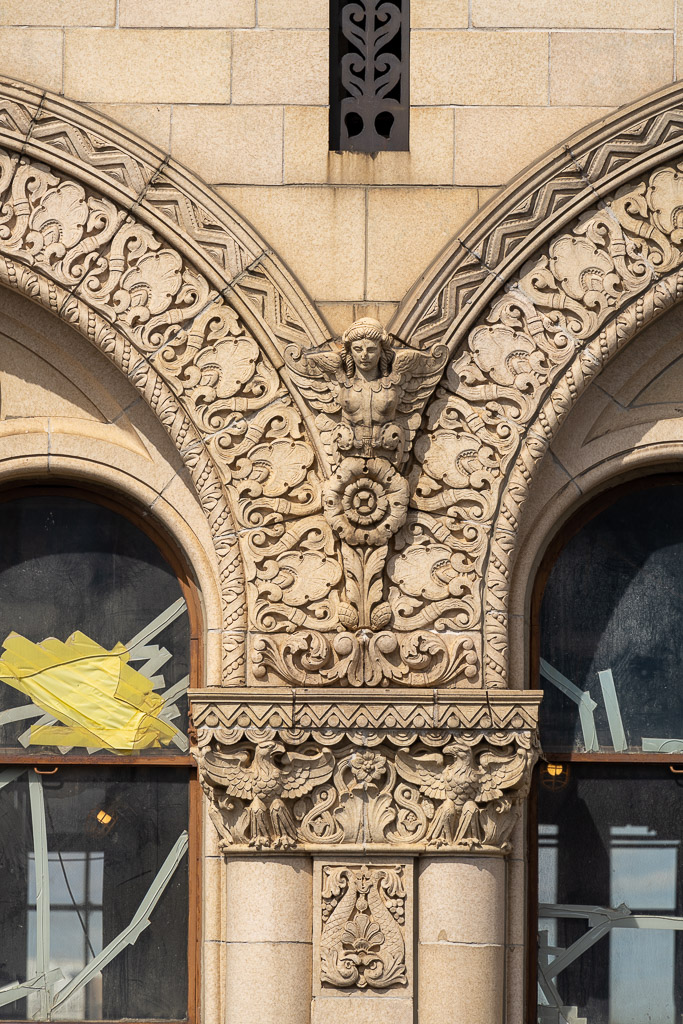
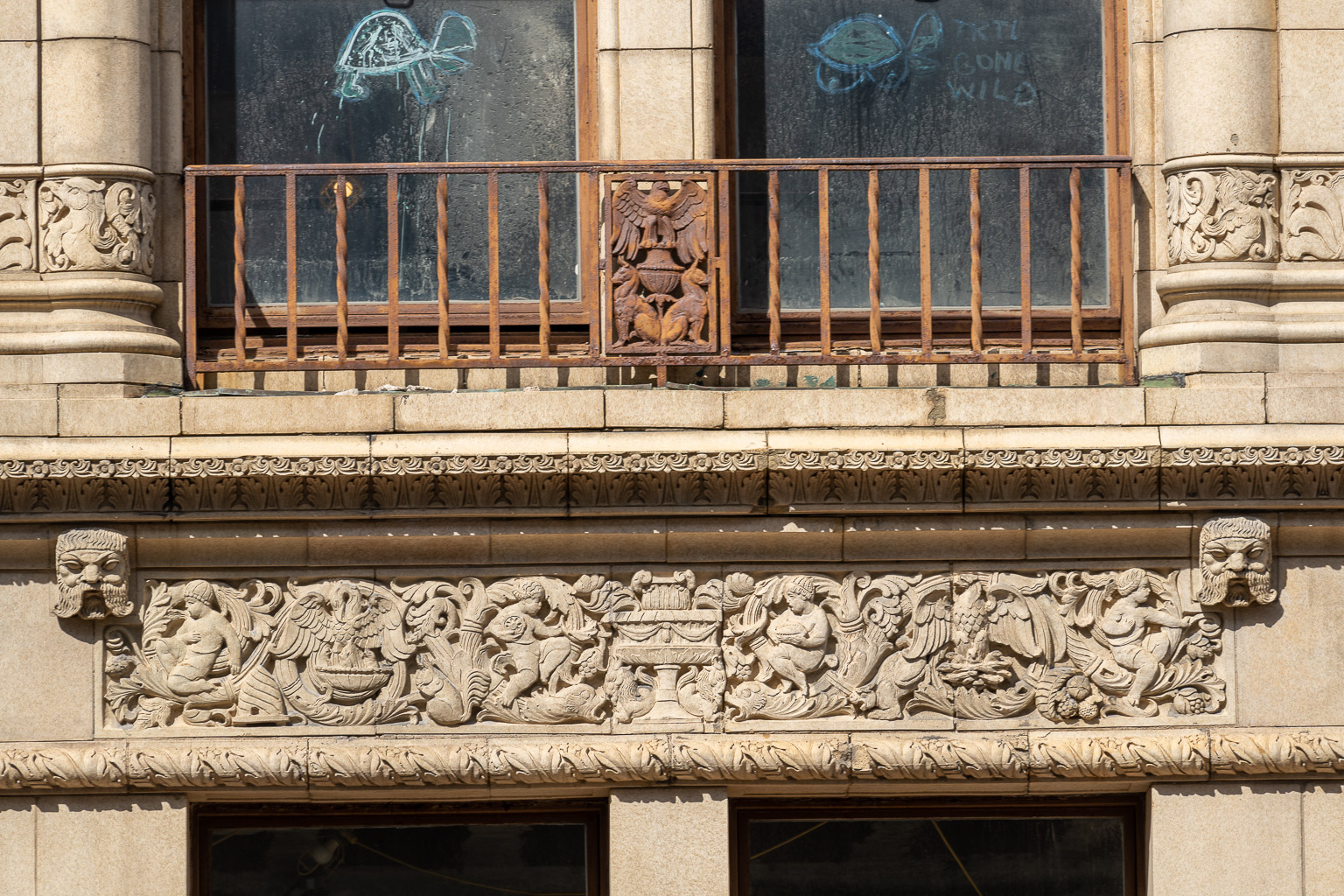
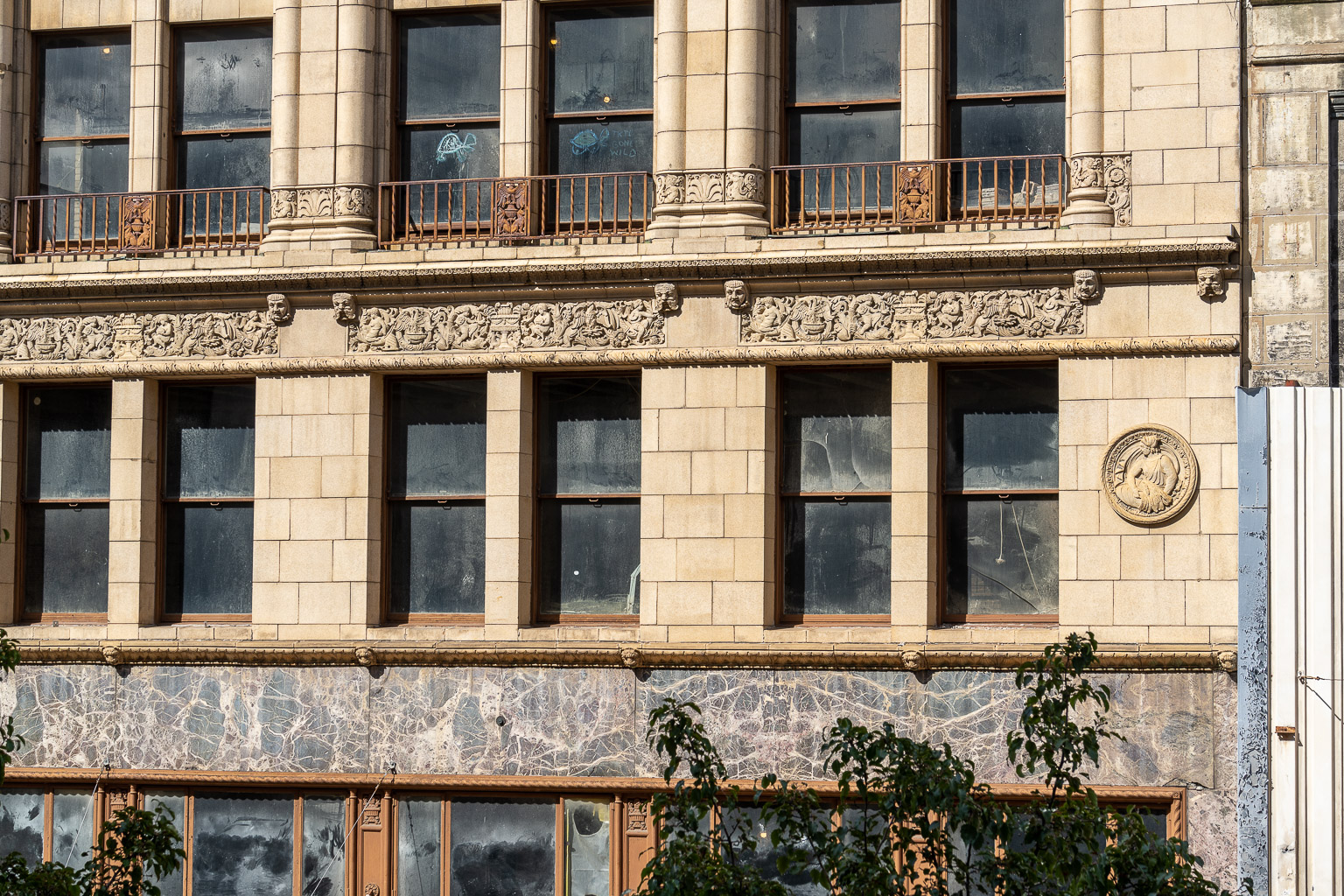
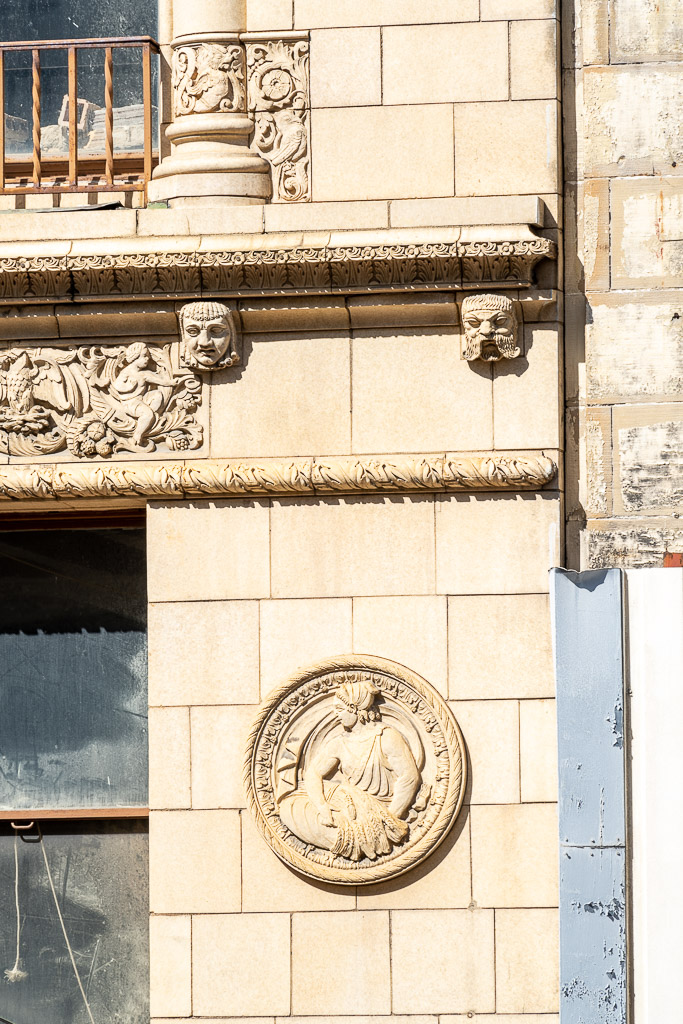
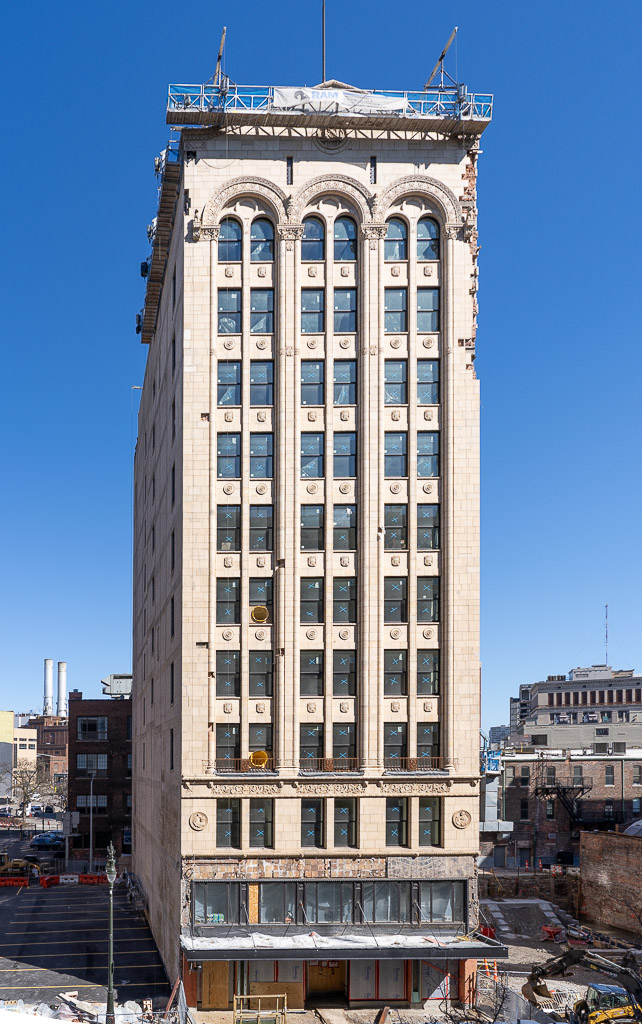
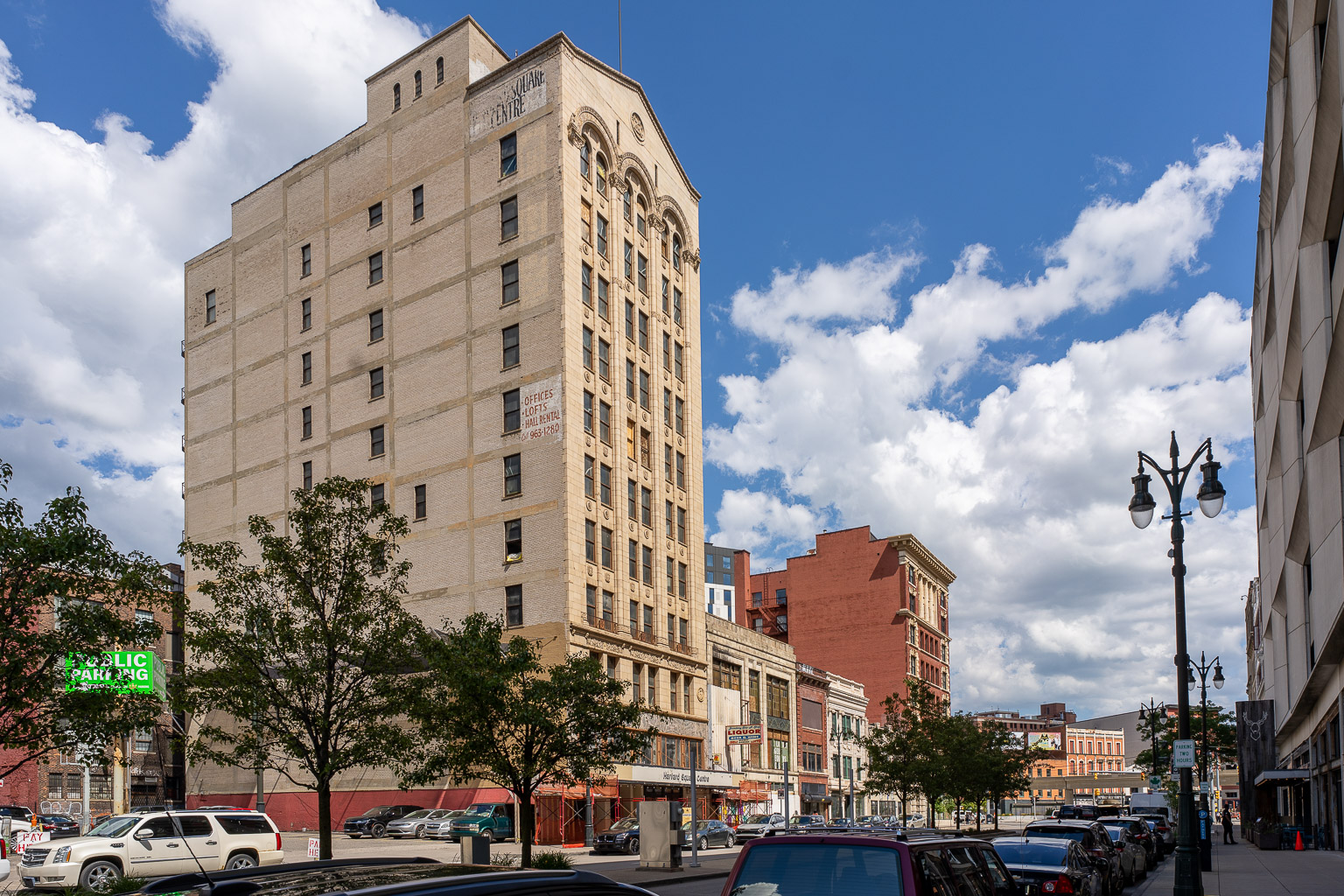
This 11-story gem with an Italian-Romanesque-inspired facade of buff terra-cotta has a concrete and steel frame under the decorative exterior. The street level features mauve-colored marble. Extremely decorative terra-cotta adorns the building, with medallions alternating between each floor, rounded windows on the top floor, with each pair of windows capped by a roundel, then an arch springing off the columns which appear to support the building from the 4th floor up, though they're only decorative features. The building housed the American Radiator Company for quite some time, and is now called the Harvard Square Center.
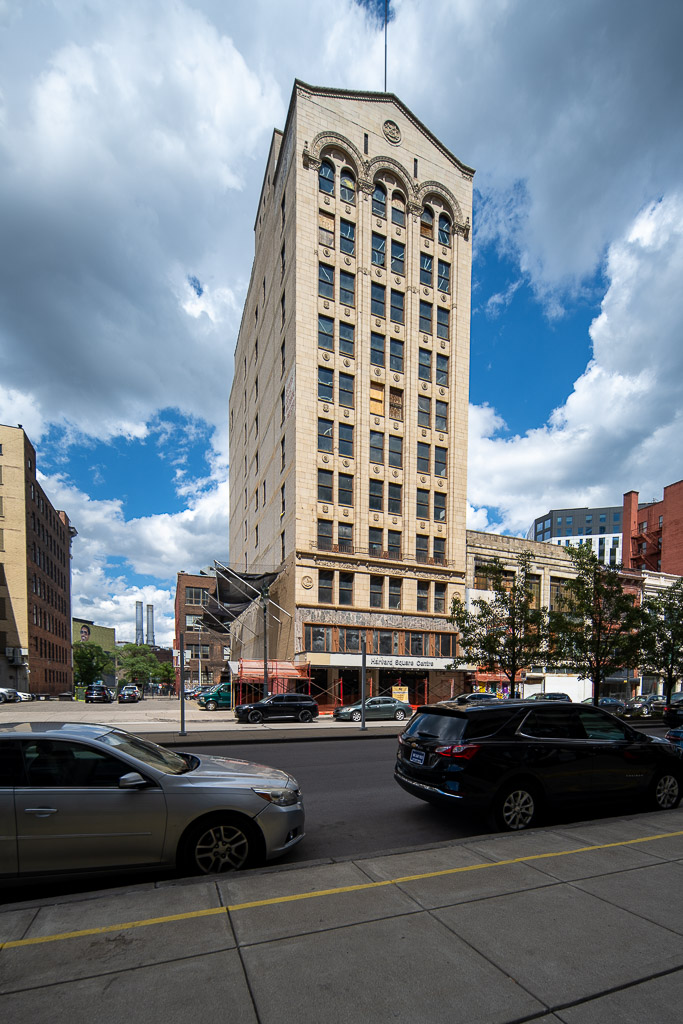
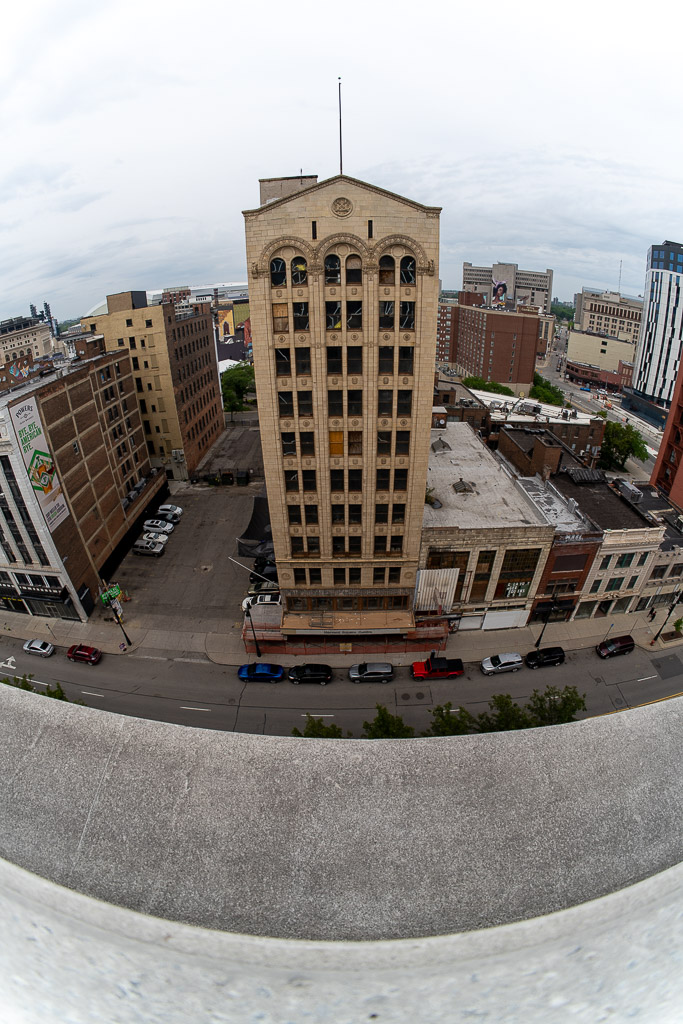
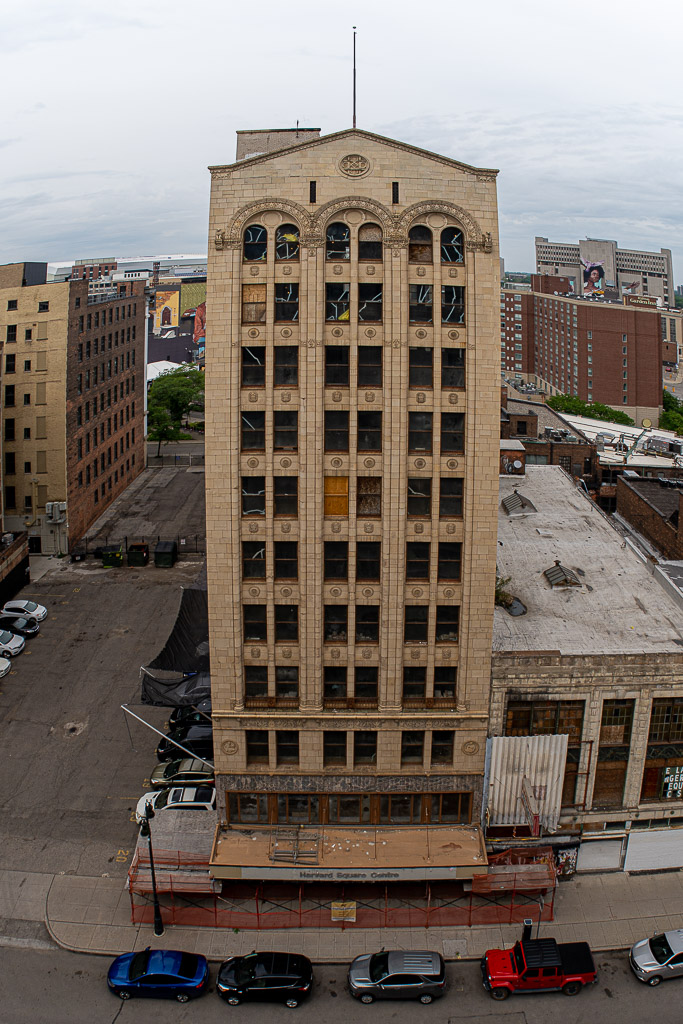
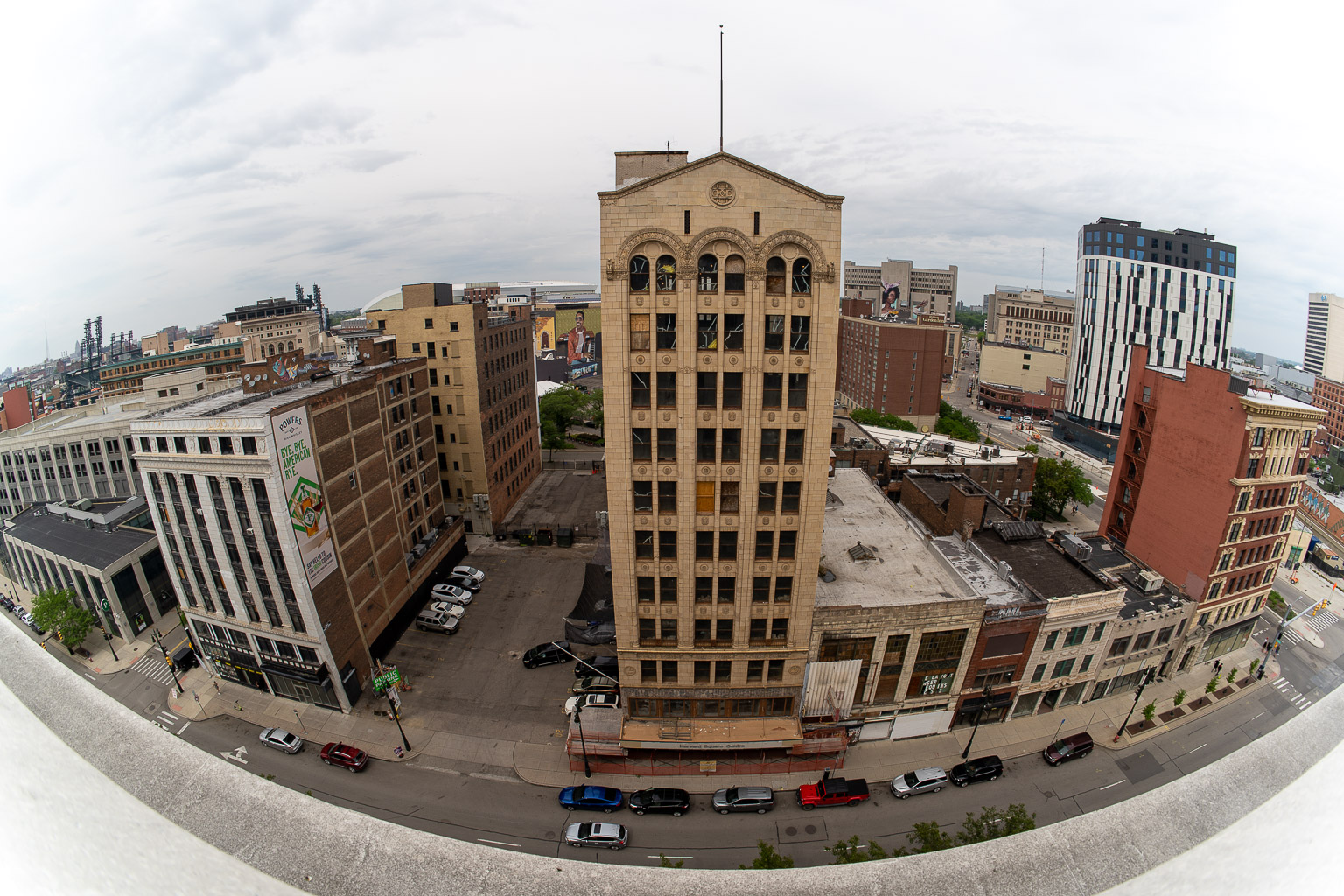
The photos below show details of the Broadway Exchange Building
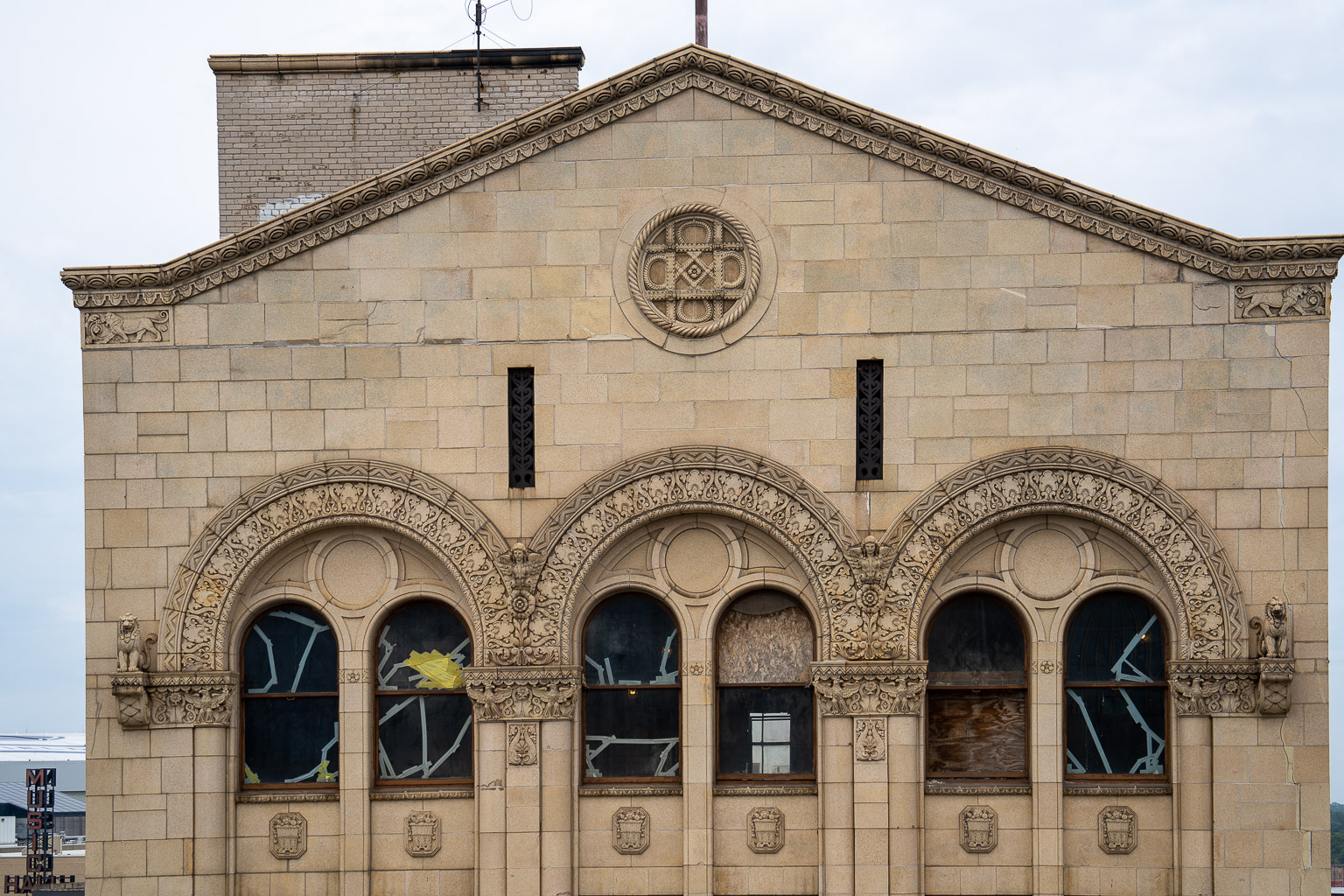
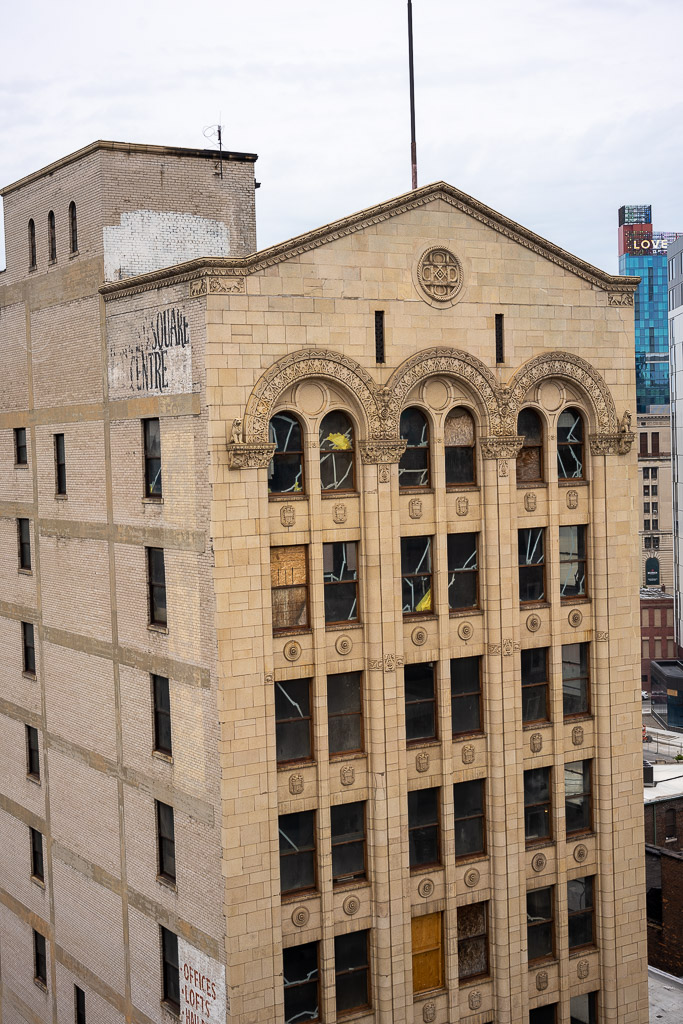
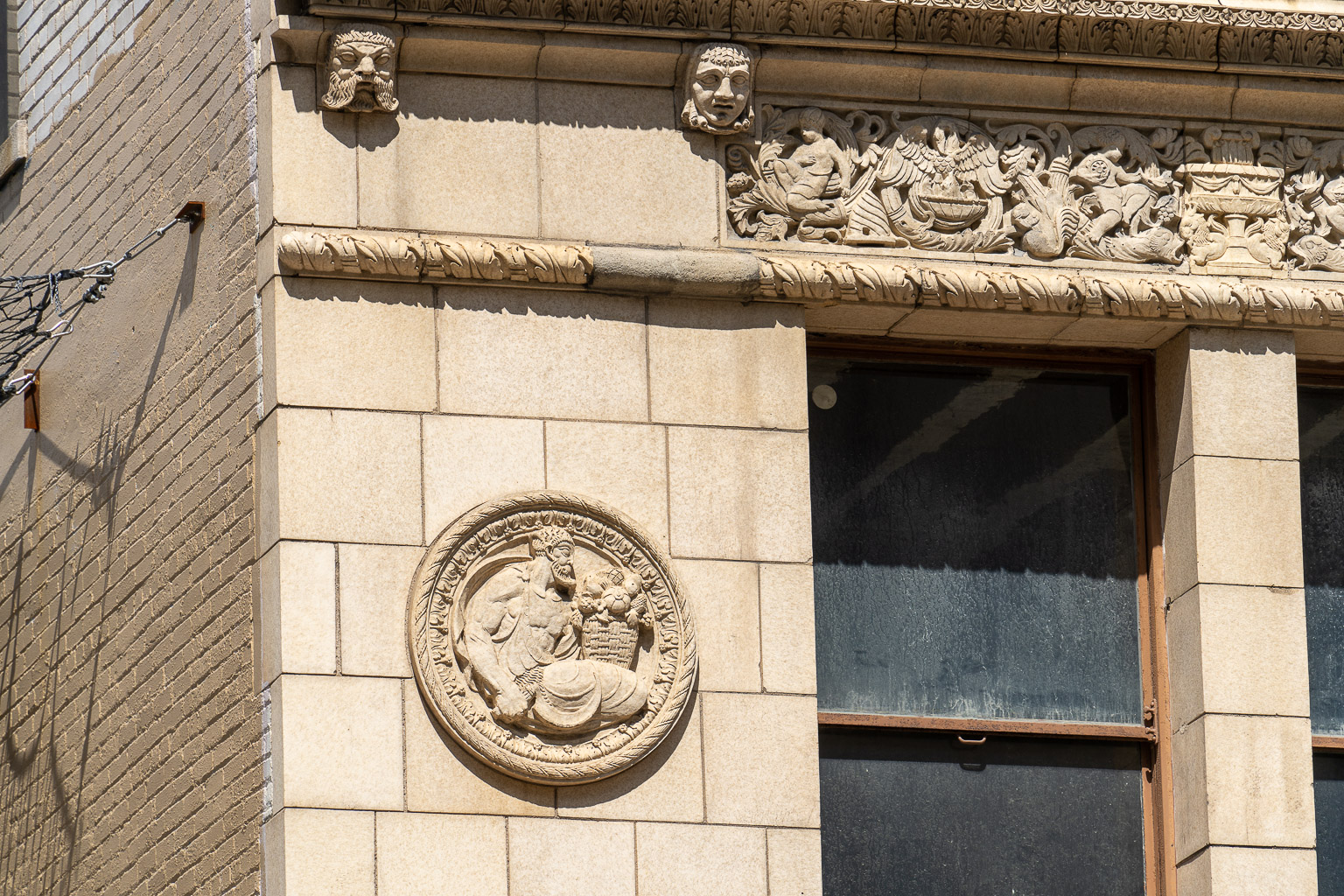
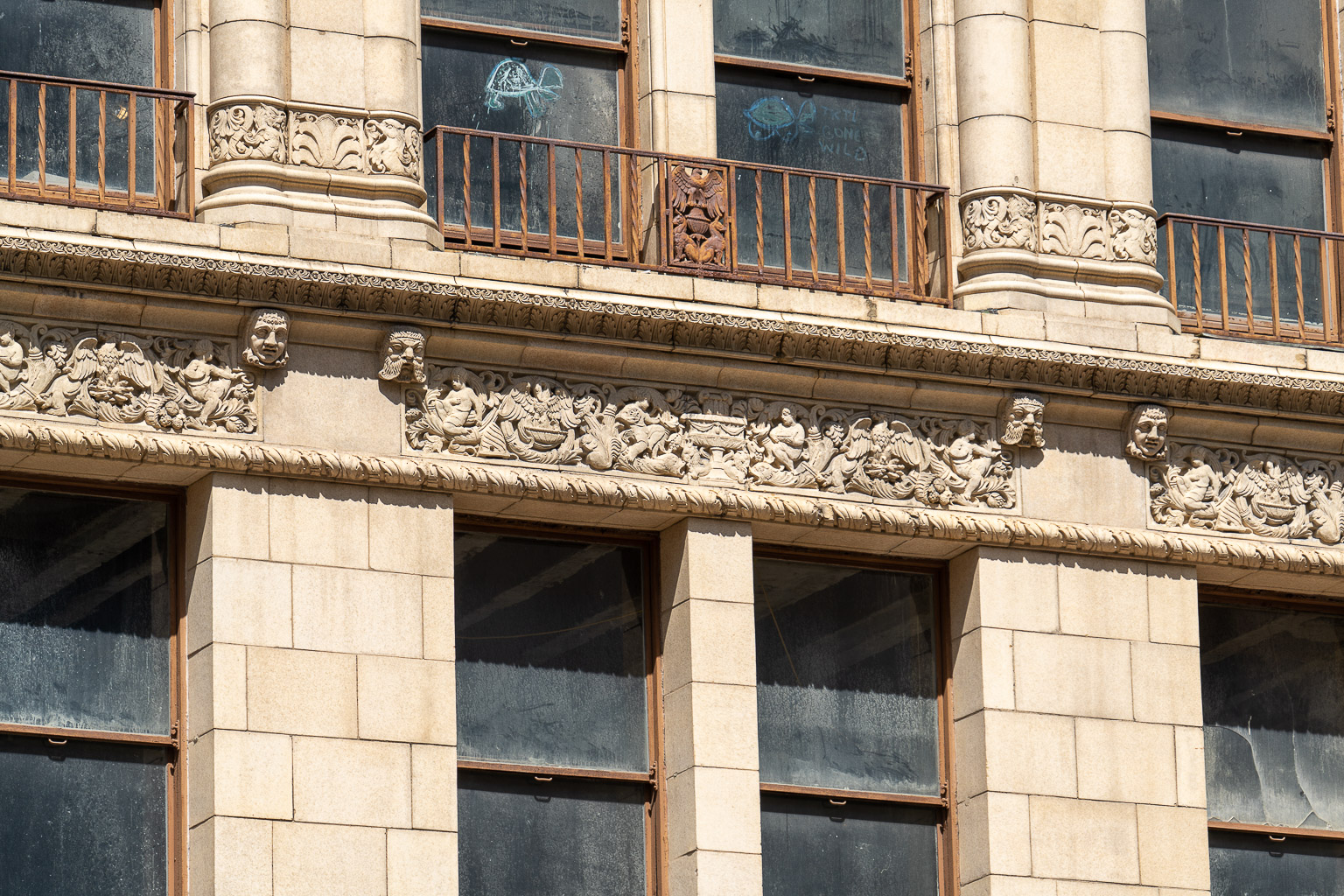
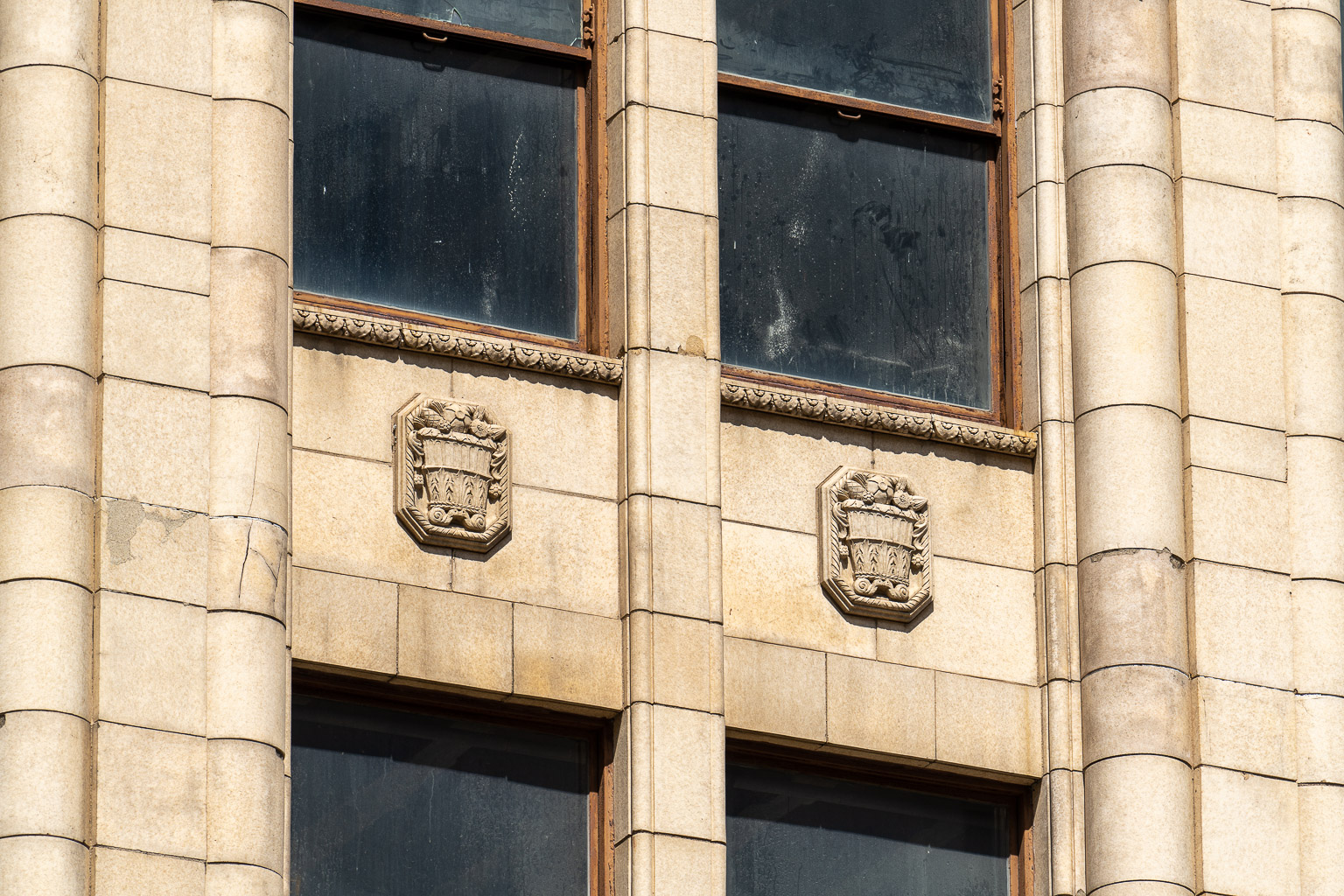
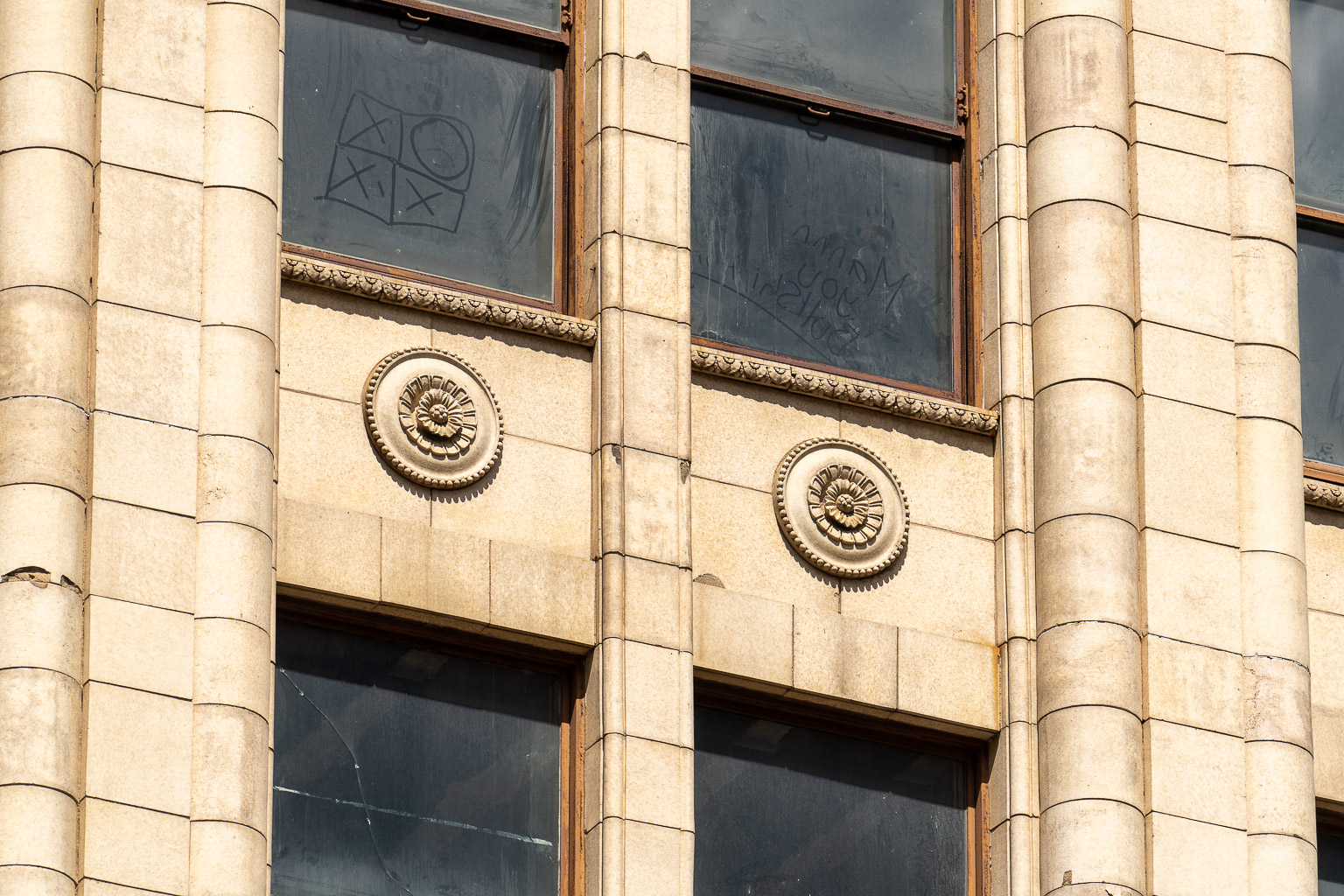
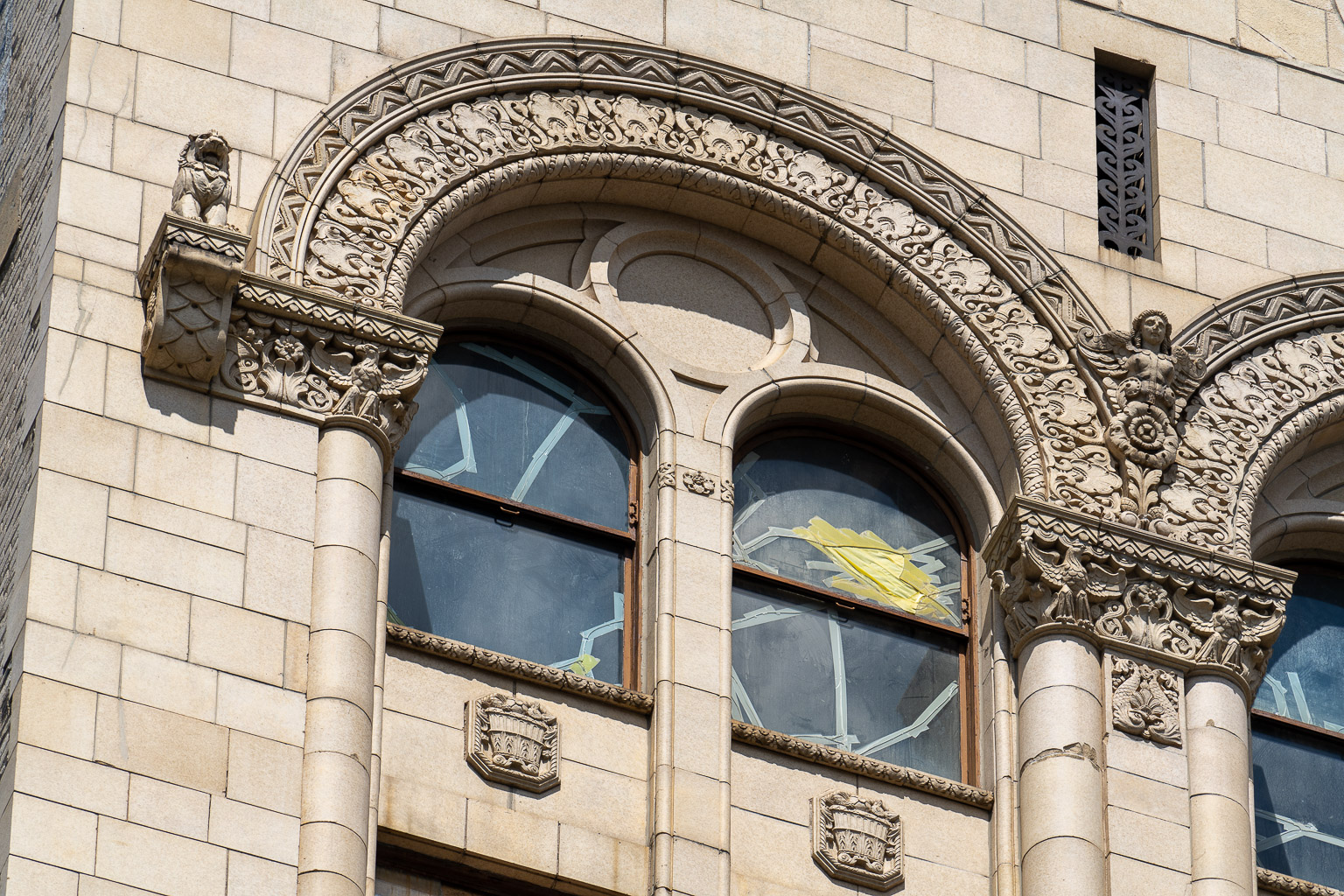
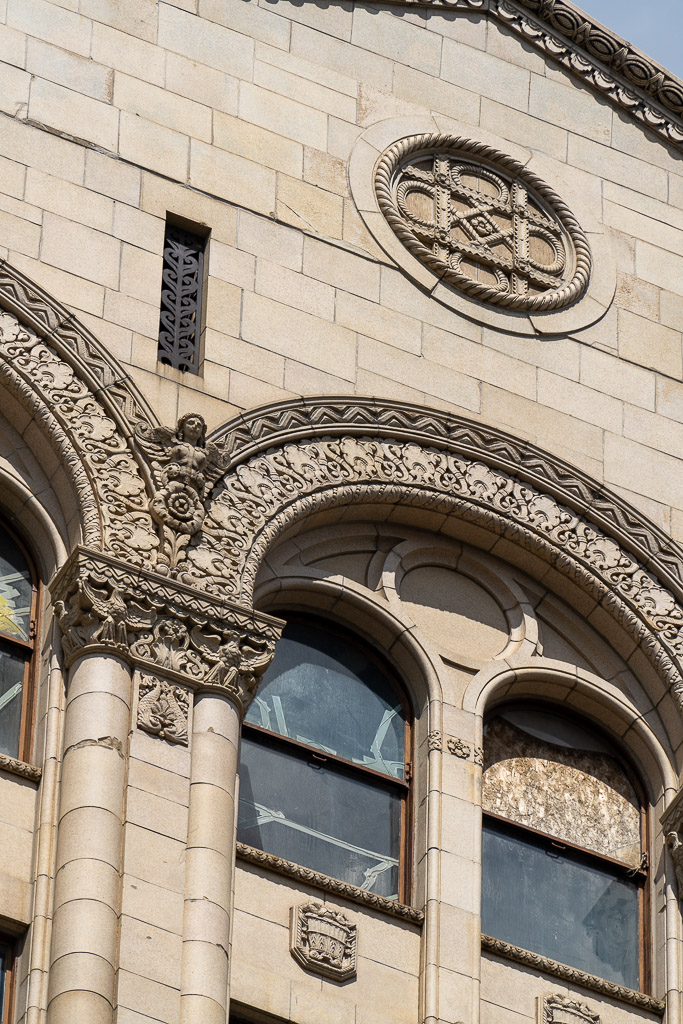
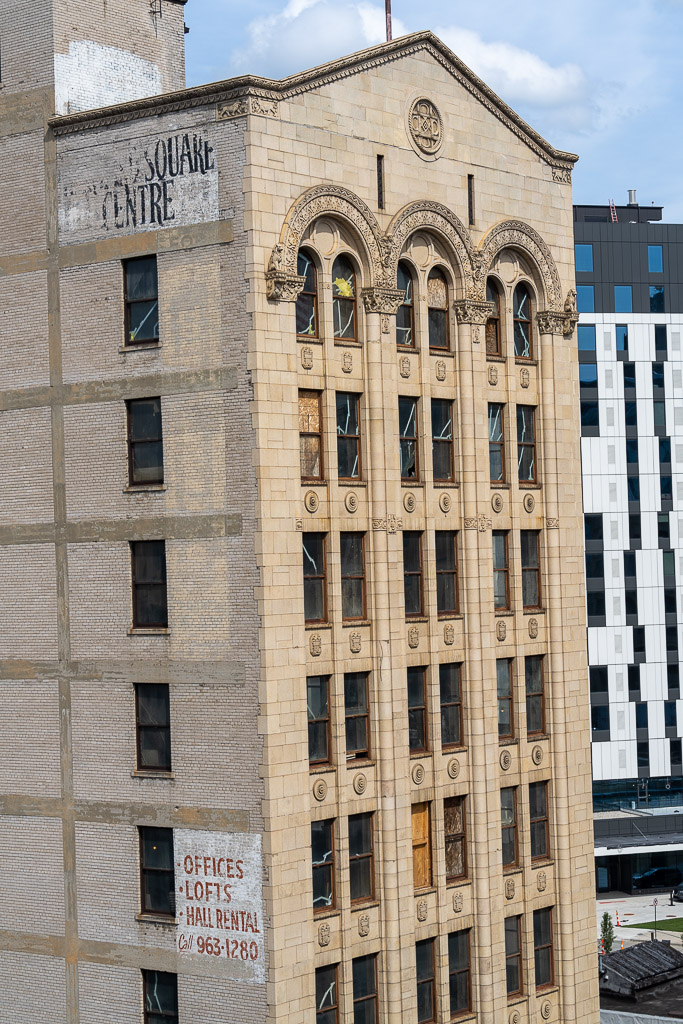
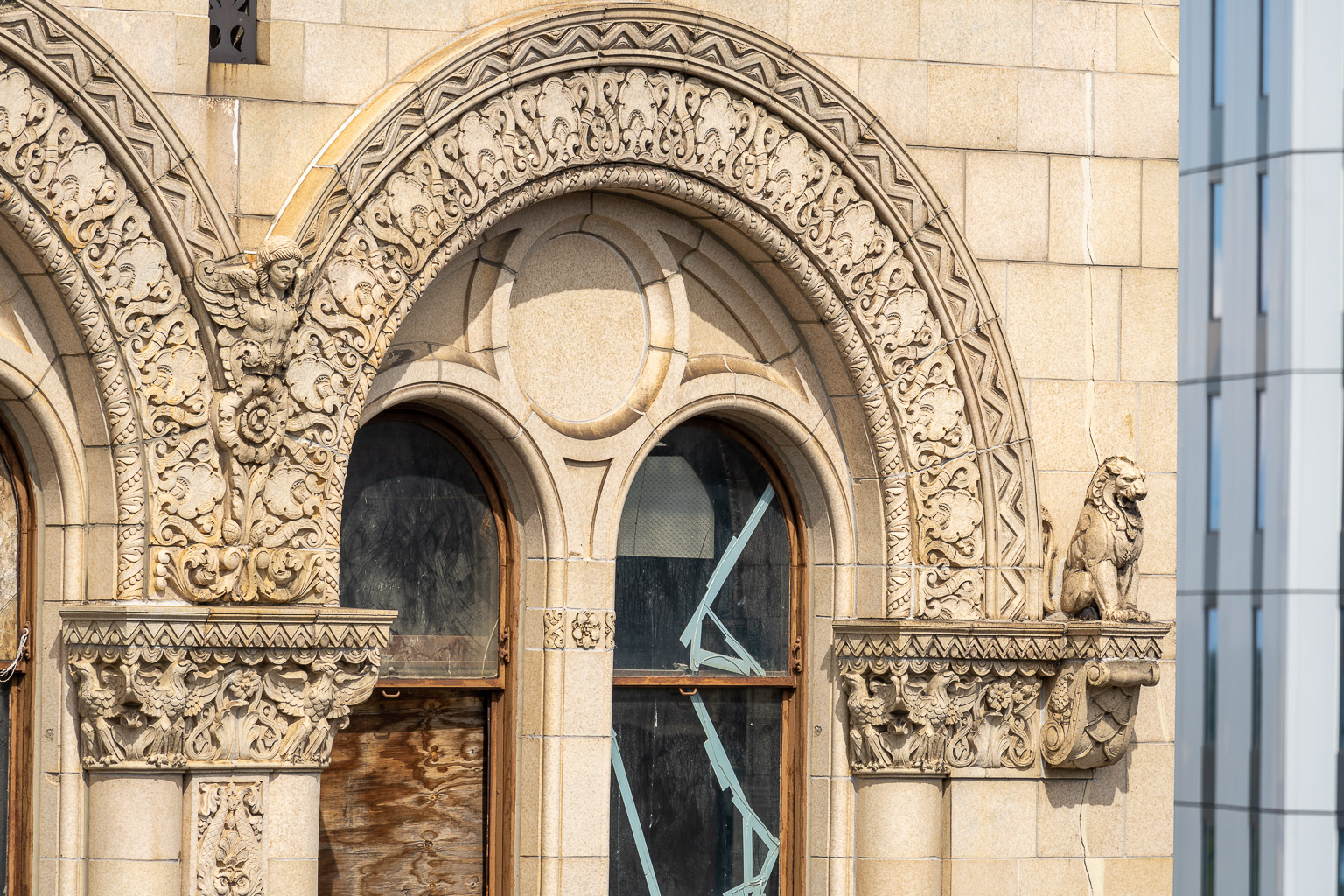
Here's what the building looks like on March 8, 2026. The building next door to the right, the Michigan Cut Flower Exchange Building, has been demolished, and I surely hope the changes to this building were to protect it from that demolition.
More photos and more description of this building can be found at HistoricDetroit.org.
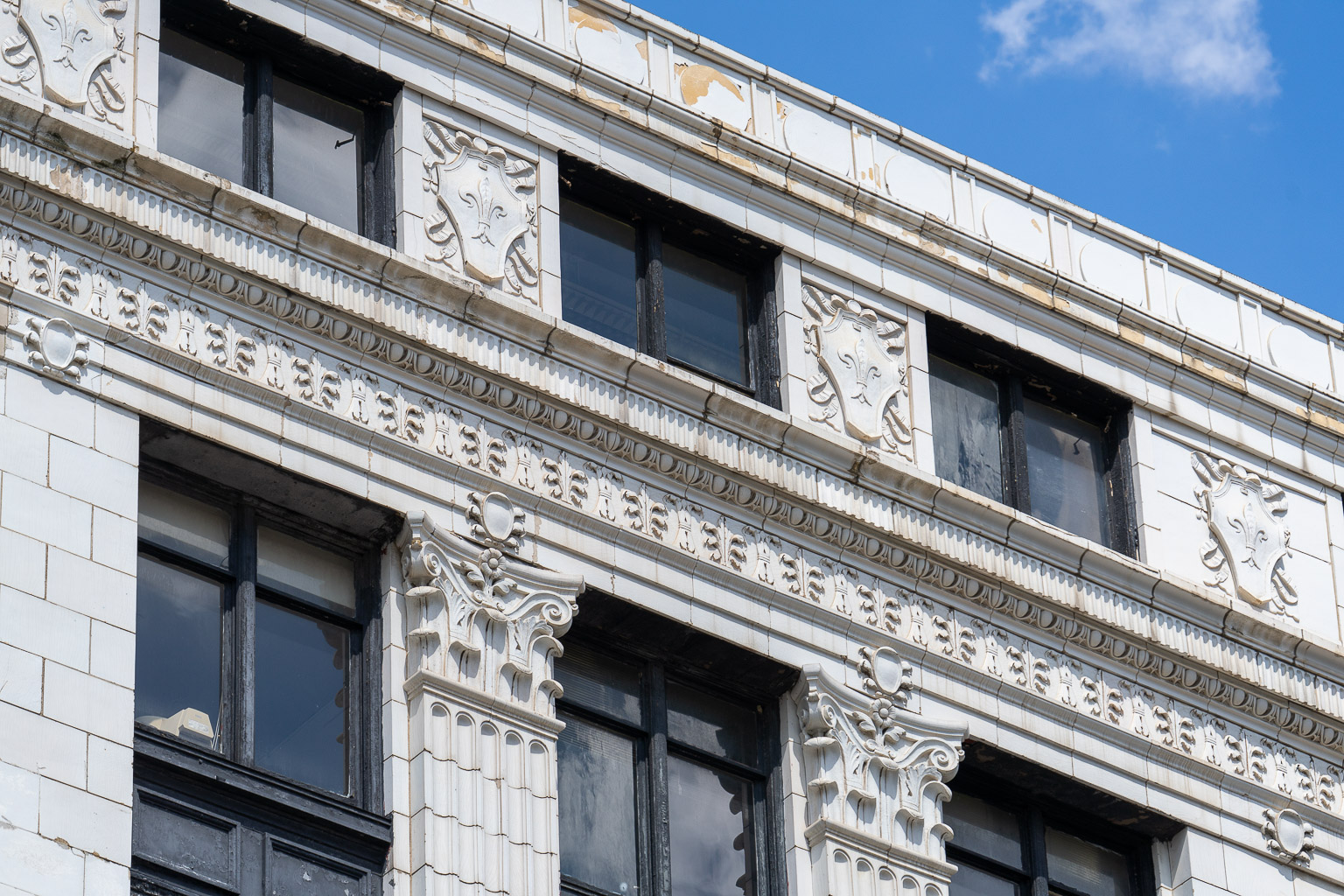
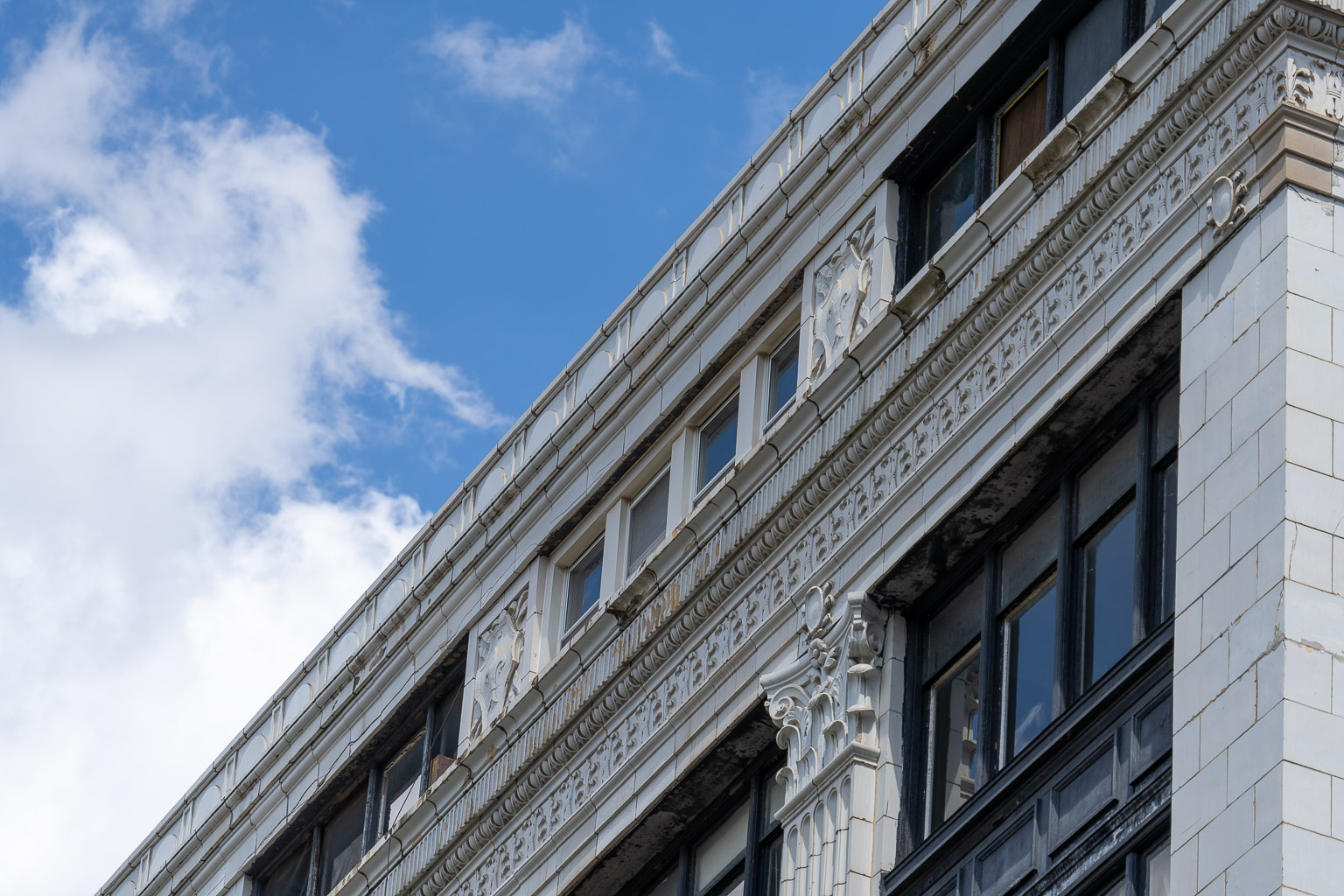
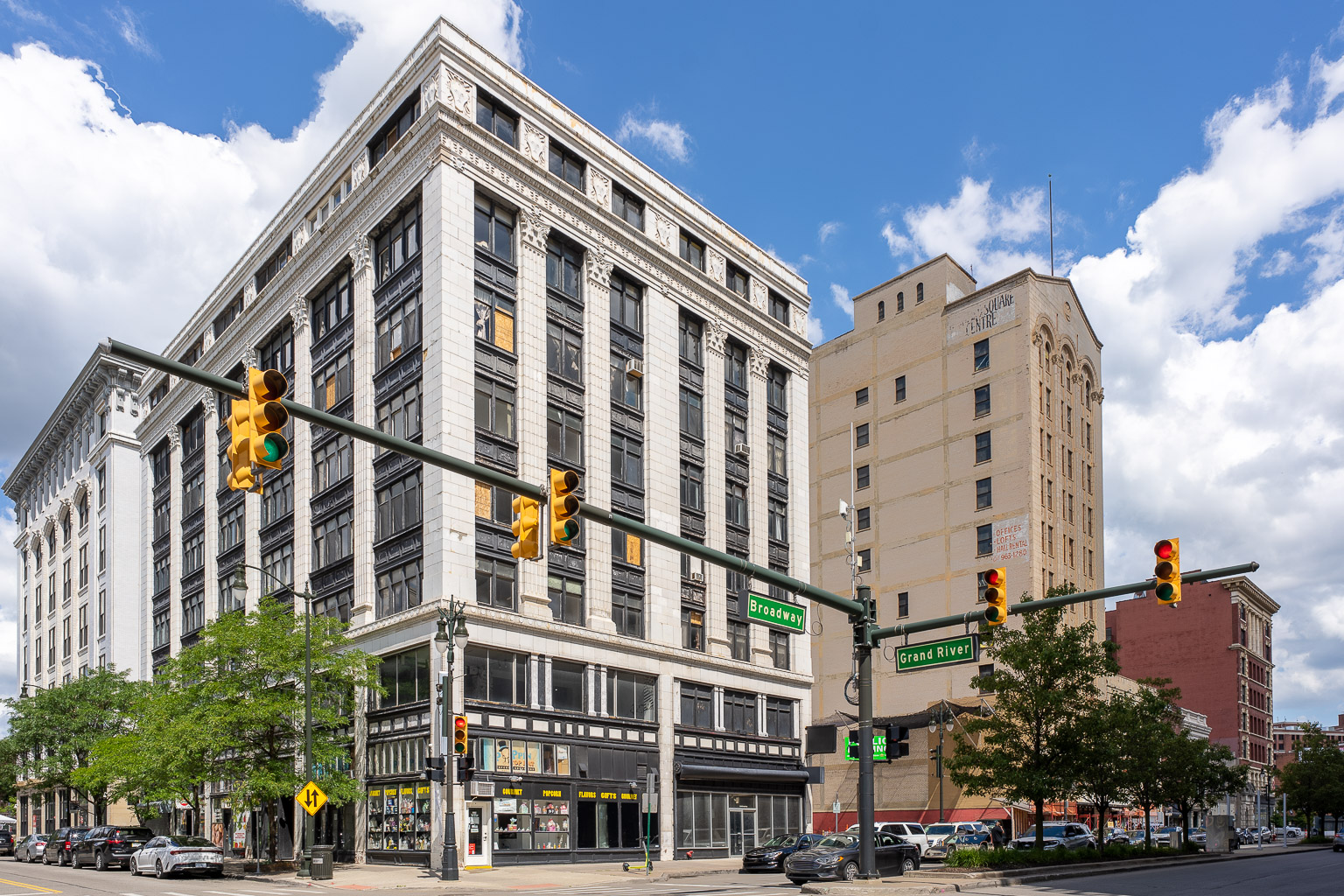
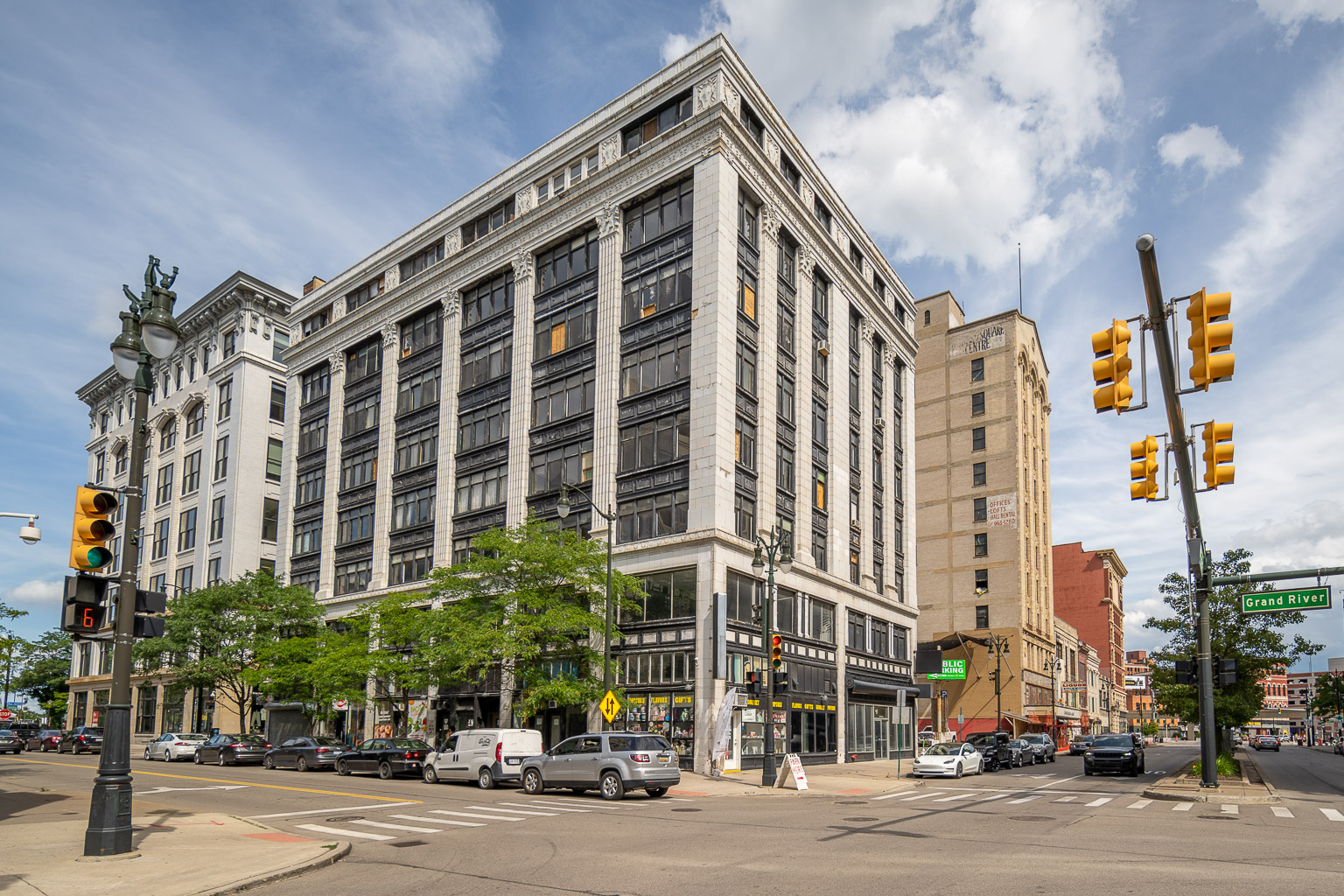
The Merchants Building is an 8-story commercial building of reinforced concrete with a white terra-cotta facade of modernized classical styling on both the Broadway and Grand River Avenue sides. It was built in 1922. Above the two-story base, five-story high multi-window banks flanked by 'fluted' colossal pilasters with Corinthian capitals (undecorated piers mark the corners and center of the Broadway facade) rise to a decorative entablature that, in turn, supports an attic story.
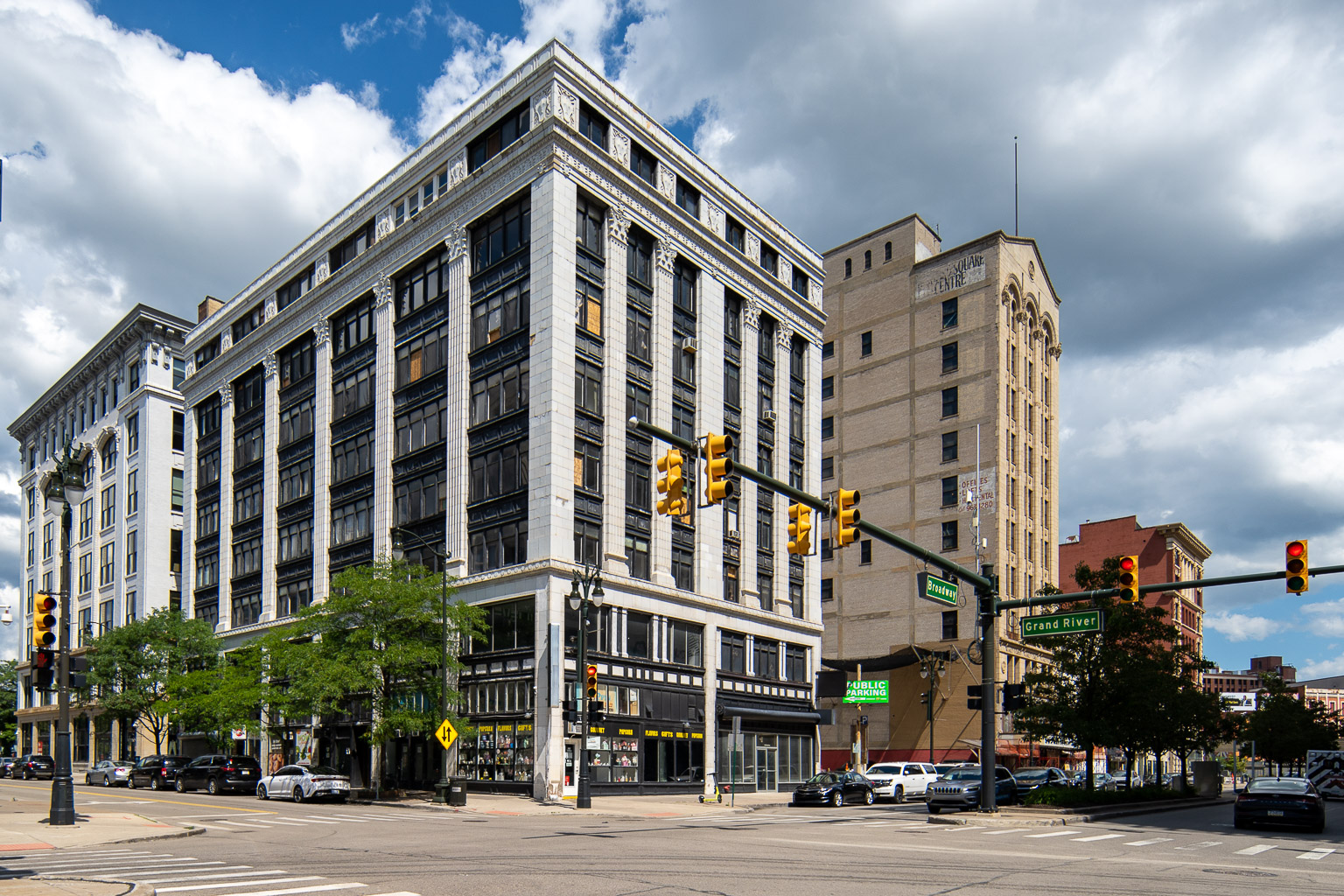
The photos below show details of the Merchants Building.
More photos and more description of this building can be found at HistoricDetroit.org.
And from just north of the Harvard Square Center, where trees no longer block the view of subsequent buildings.
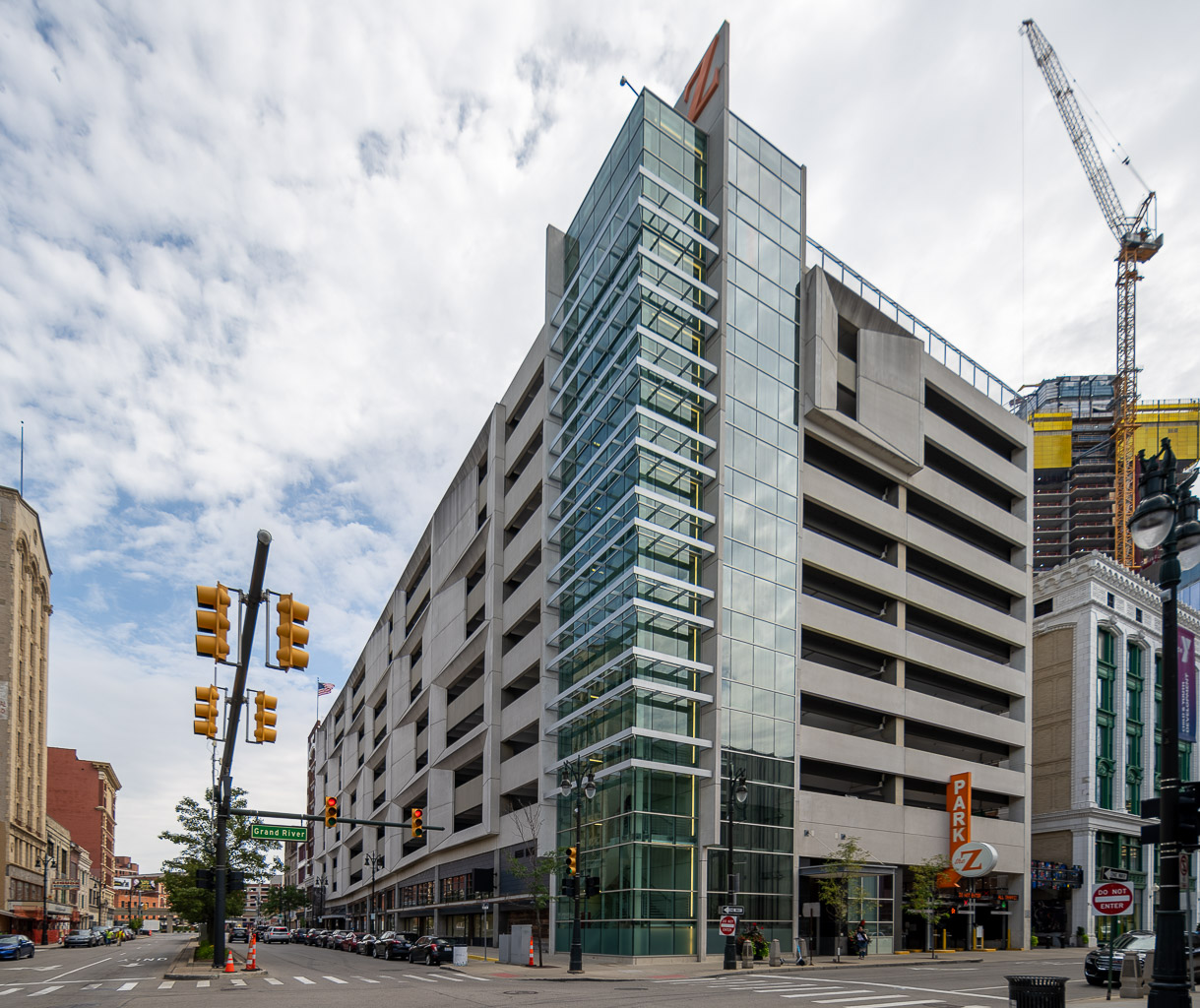
The building at the left edge of the photo is the back side of One Campus Martius, and at the right edge is the Wurlitzer Building with the much taller David Broderick Tower behind it. The four nearest buildings are the buildings which are members of the Broadway Avenue Local Historic District; the parking garage beyond is not a historic building, but rather the Z Park Garage A, with a restaurant/bar on the ground floor of the Broadway side.
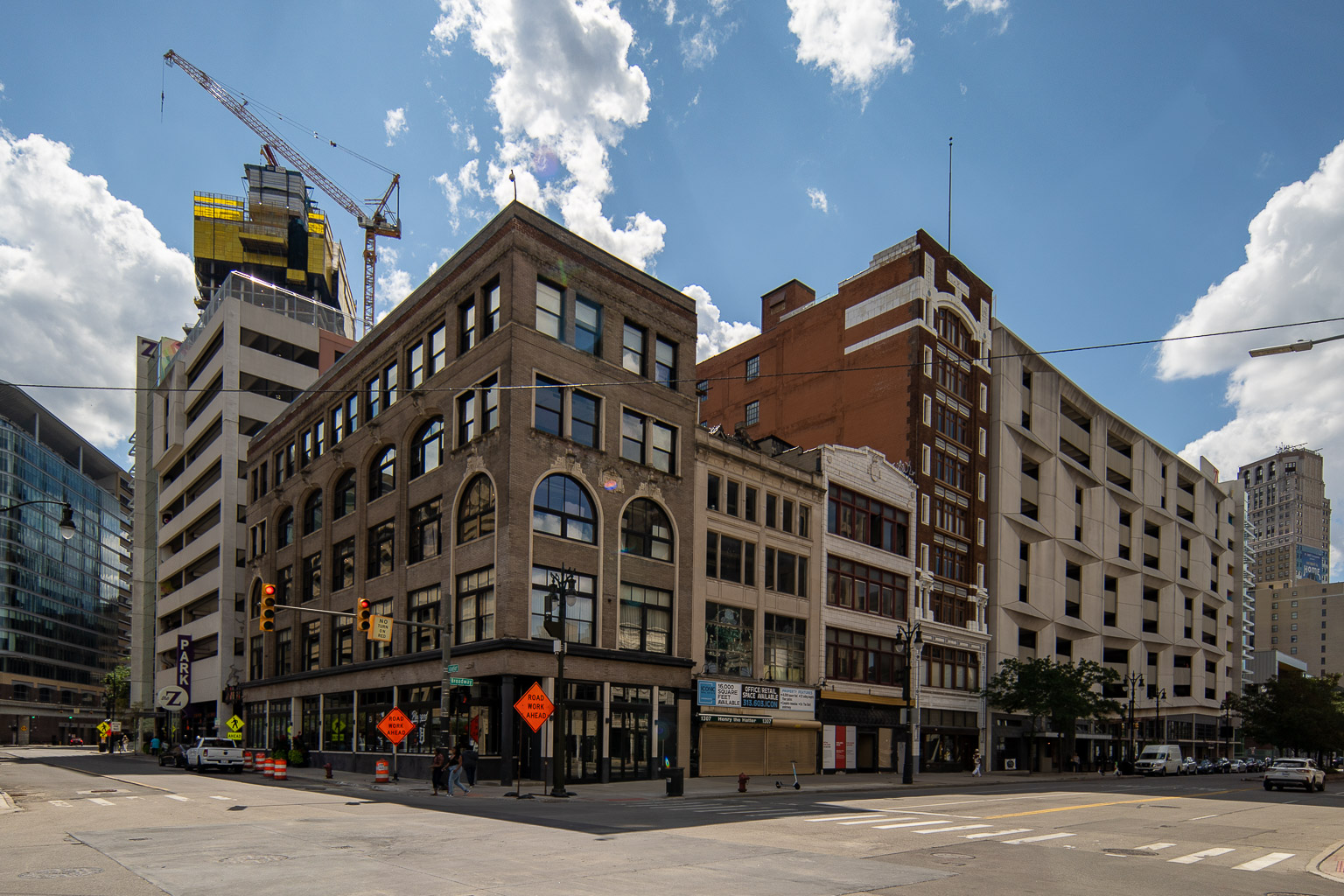
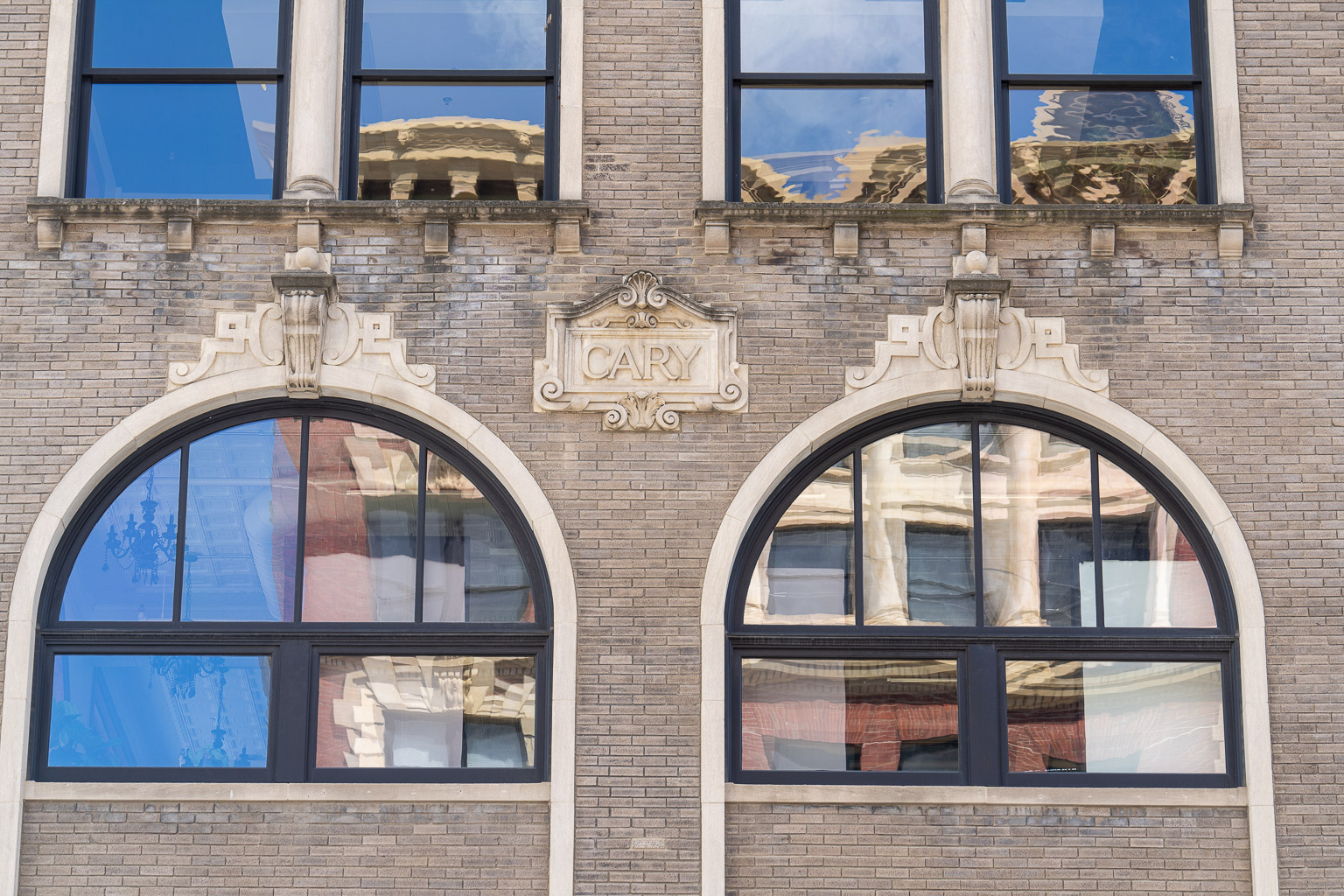
In the 1st photo below, the Cary Building is the one on the left. It is a buff brick 5-story office building with a reinforced concrete frame and buff-colored terra-cotta trim. It has broad, round, segmental-arched and square-headed window openings in its 2nd through 4th story portion and paired square-headed windows in the top floor. In the 4th floor a small ionic column separates the windows on the Broadway facade the the end windows on the Gratiot facade. The recesses and arched windows all display boldly projecting keystones, and between the arched windows on the Broadway facade, a plaque declaring the Cary name is displayed with a shell above it.
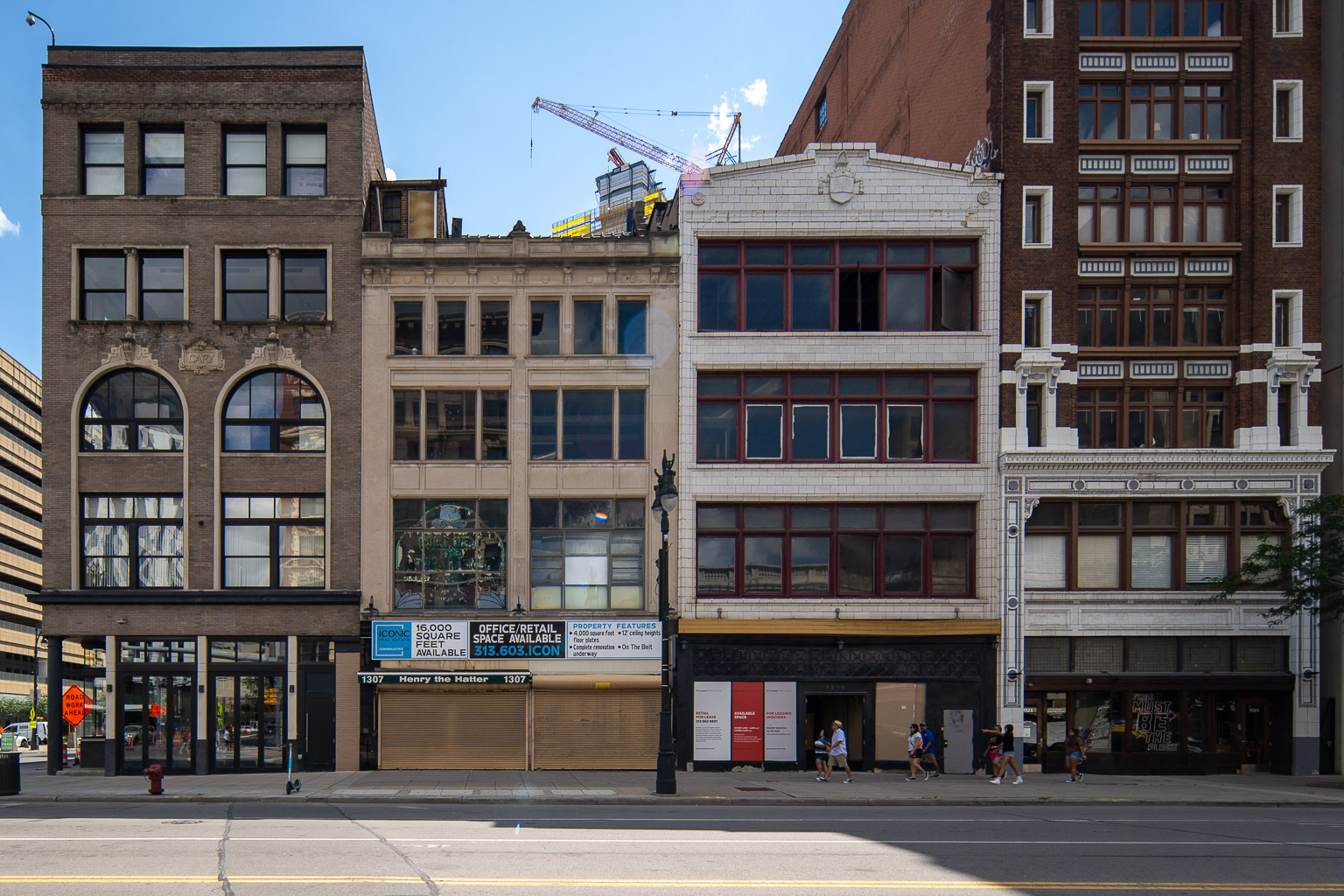
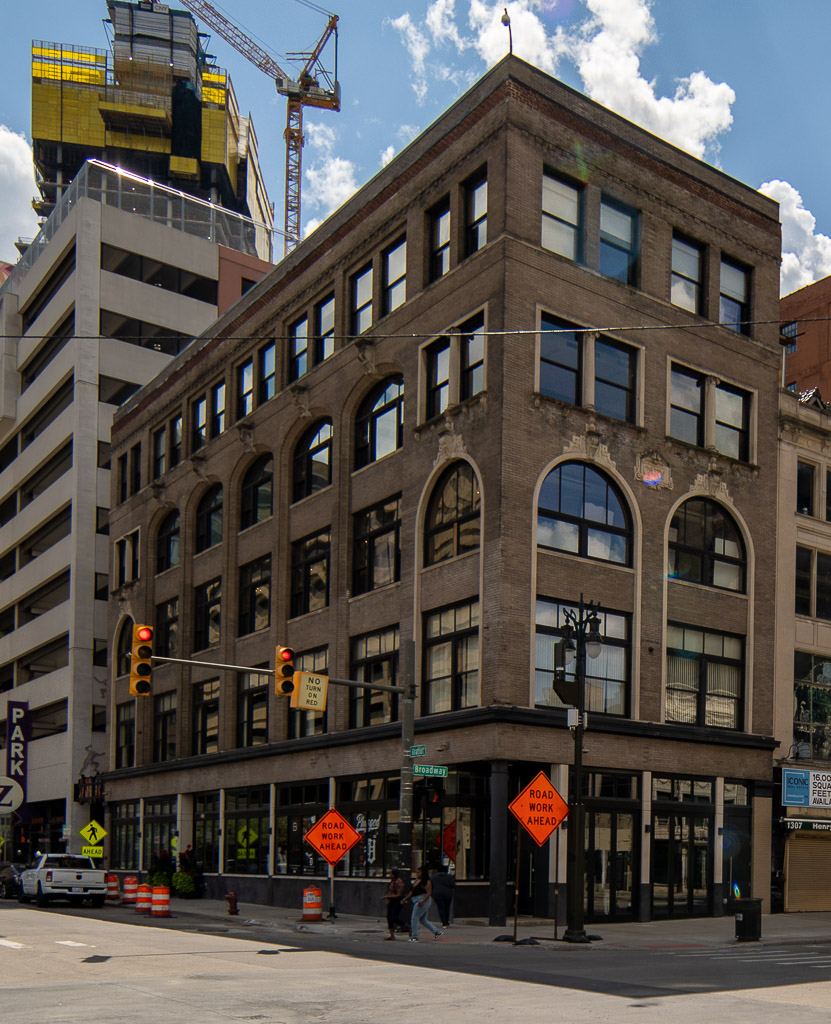
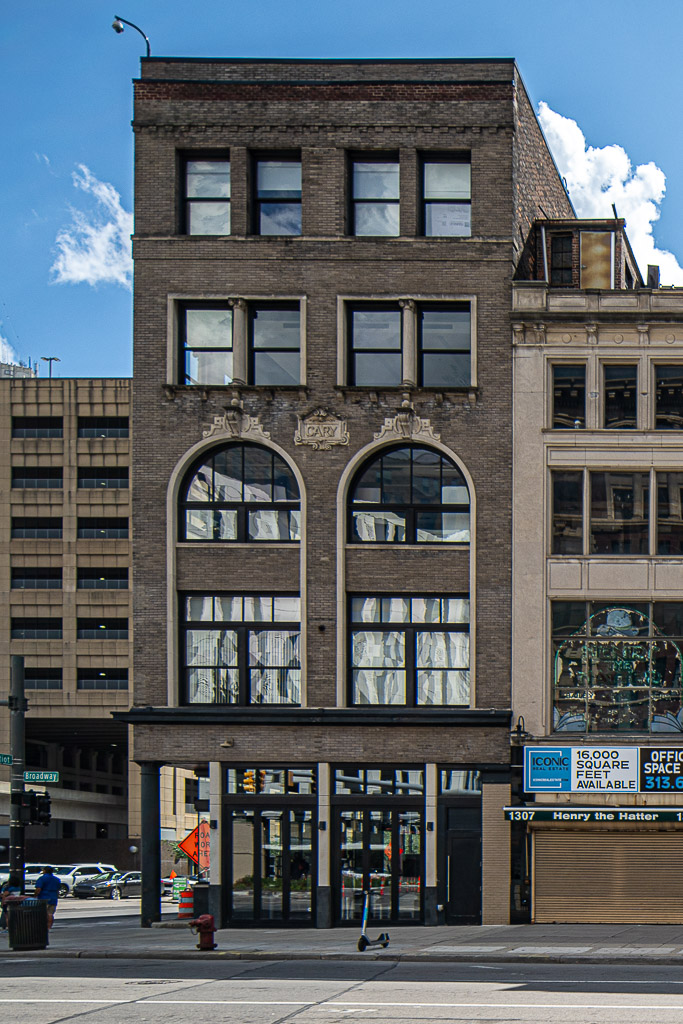
The photos below show details of the Cary Building.
More photos and more description of this building can be found at HistoricDetroit.org.
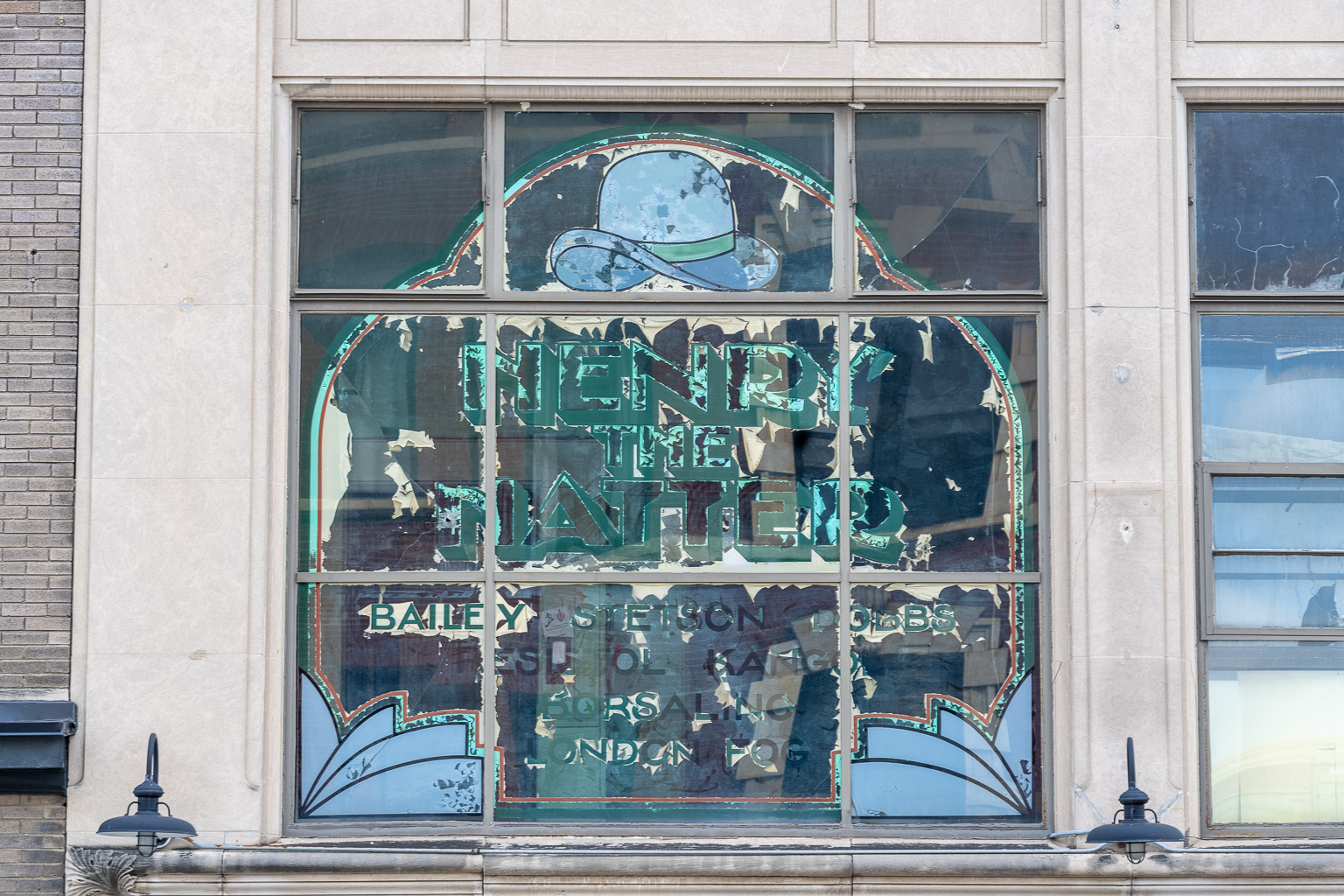
In the photo below, the Standard Trust Company Building is the second from the left. It is a limestone-clad, four-story commercial building, with the lower two stories built in 1907 and the upper two stories added shortly thereafter. The facade above the street level is divided into two bays of 3-part windows. Henry the Hatter moved into the southerly storefront in the mid-1950s, and a sign for that store is still painted on a second-floor window.
The photos below show details of the Standard Trust Company Building.
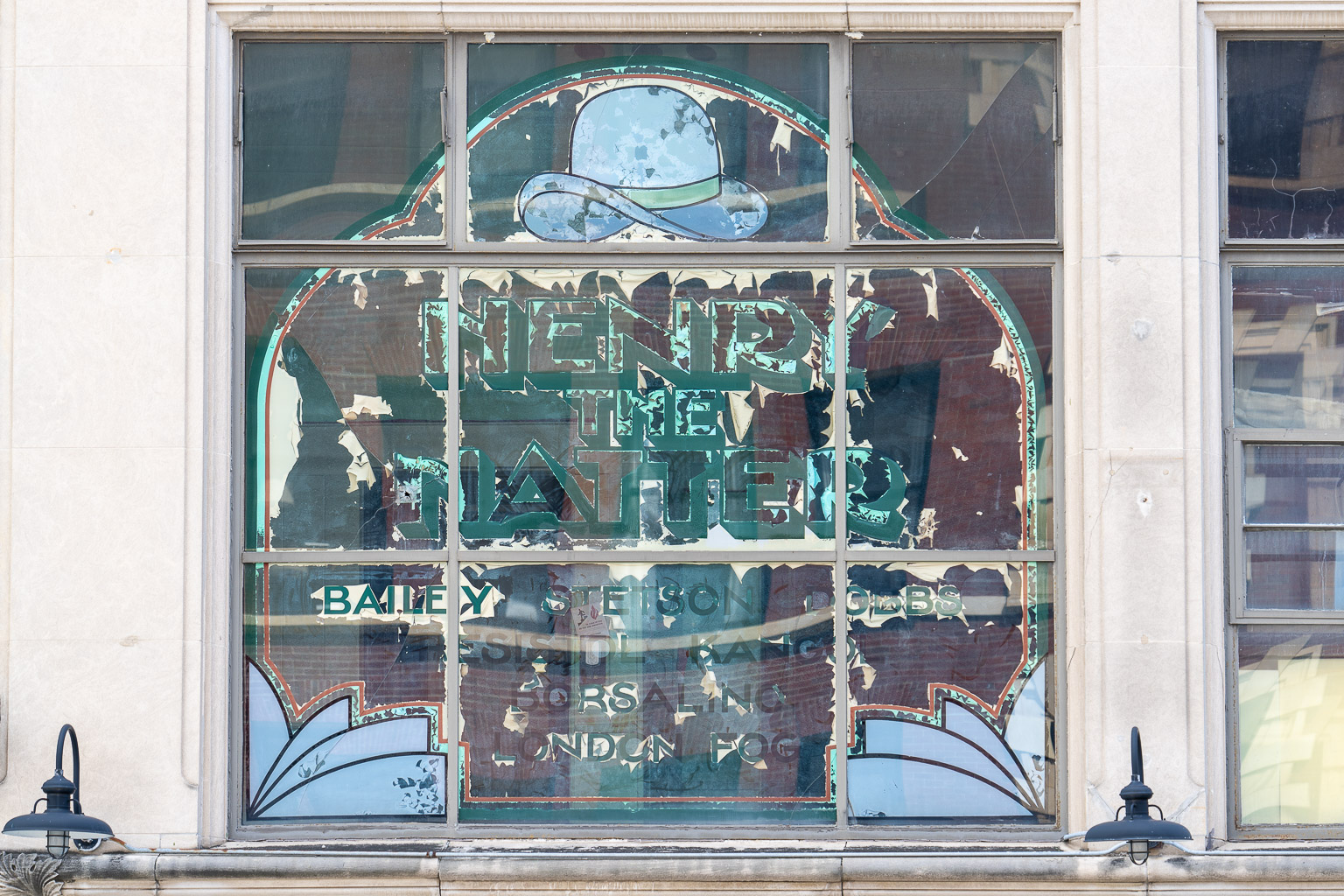
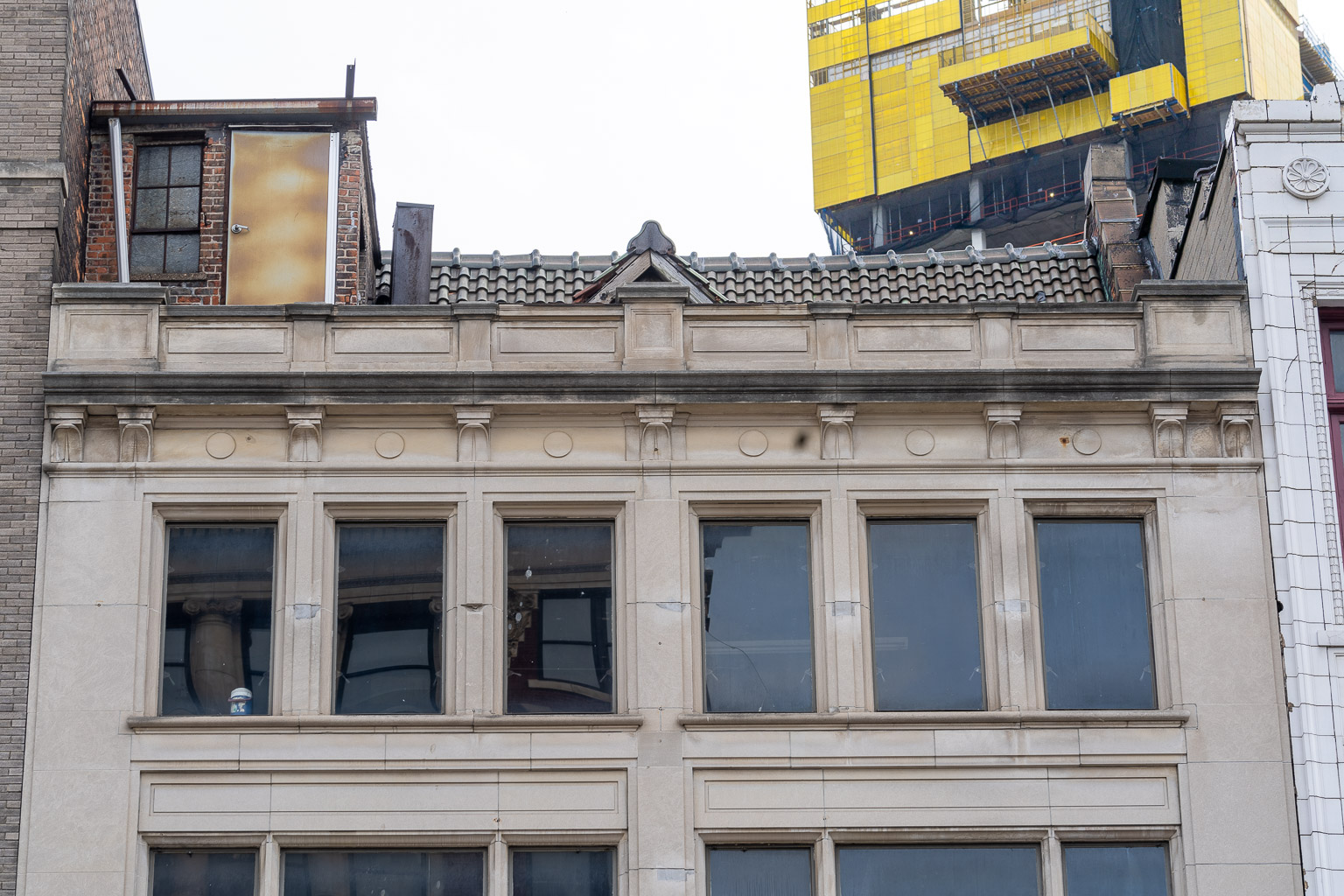
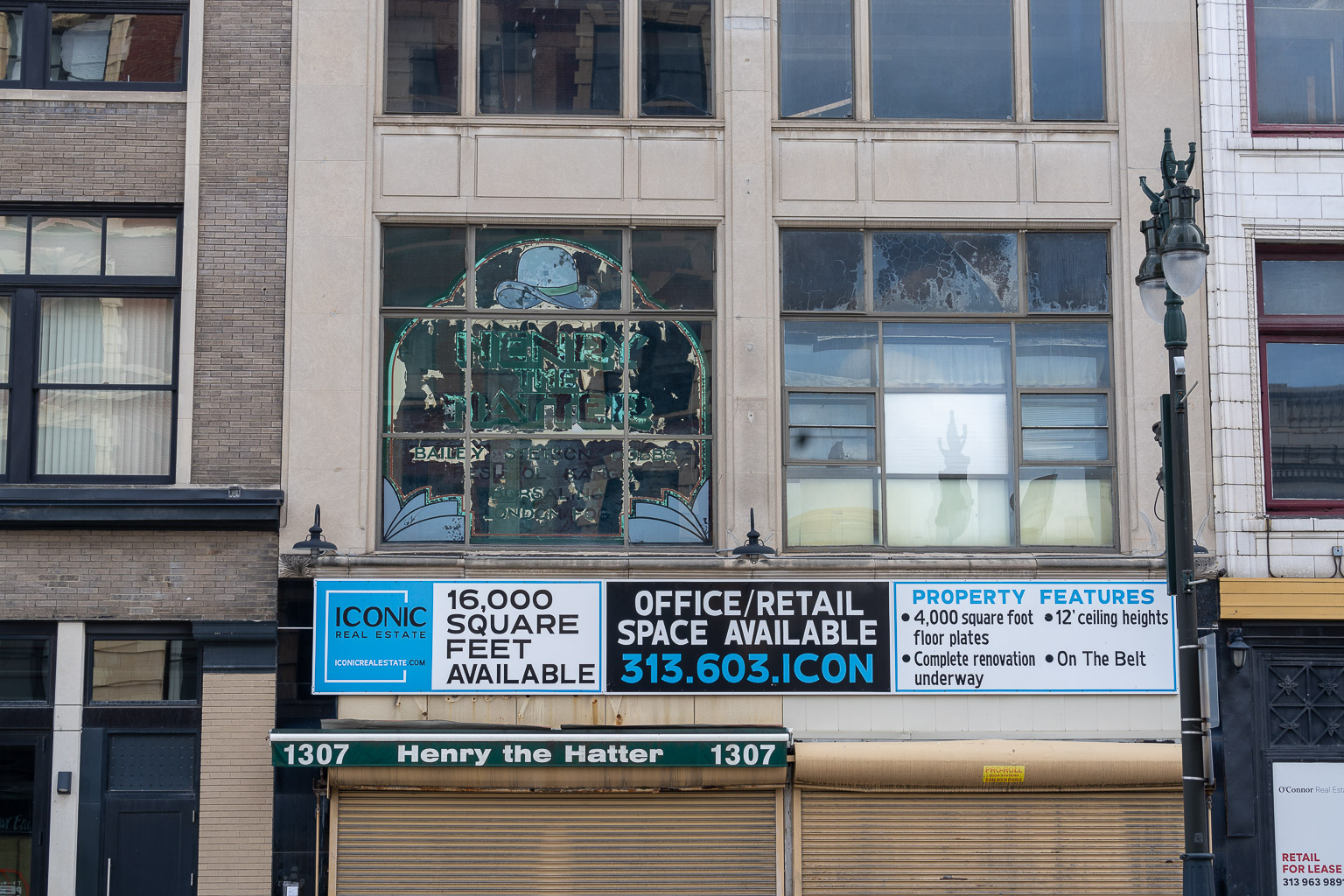
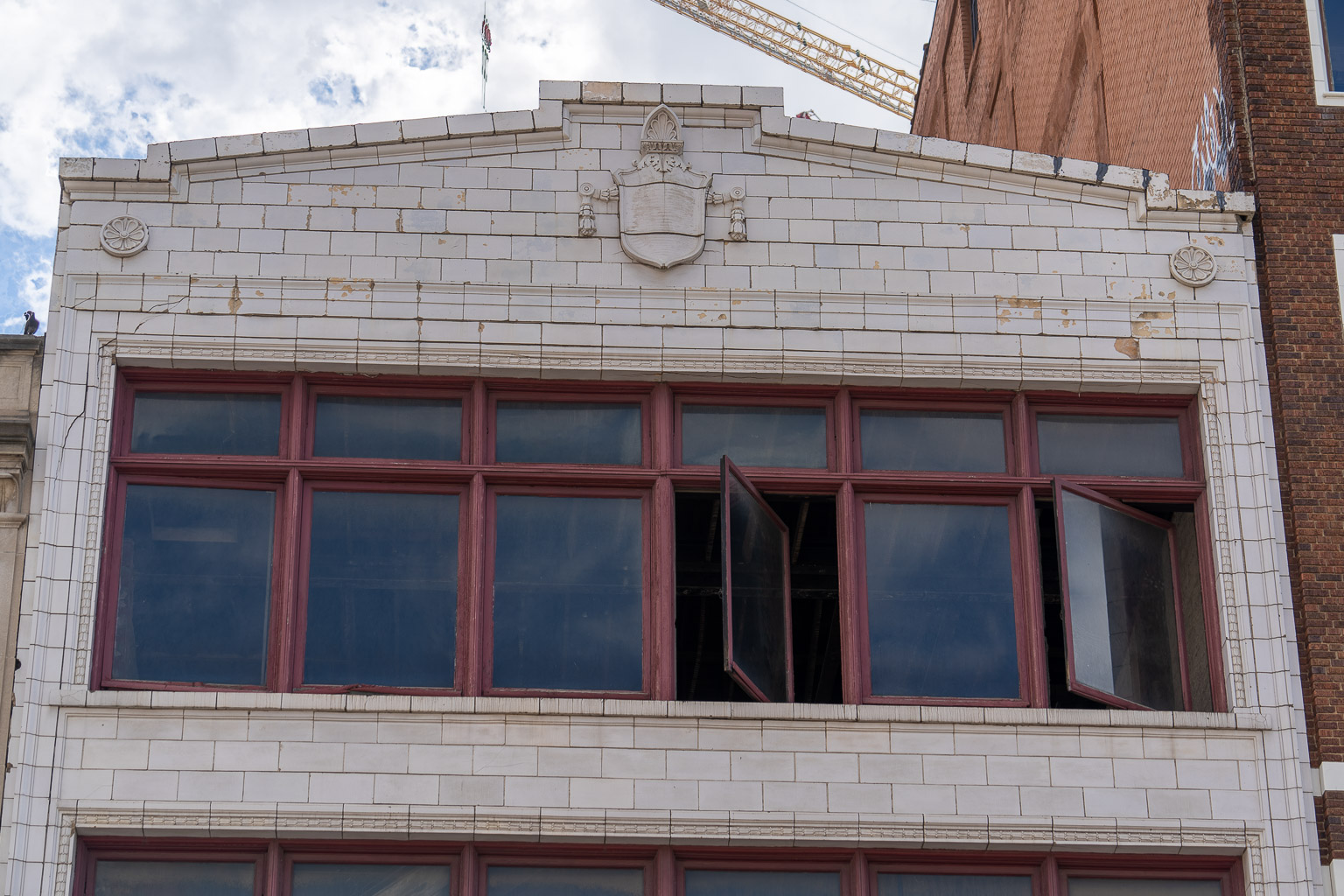
In the photo below, 1313-19 Broadway is the third from the left. It's a white terra cotta commercial style building, originally built as two-stories in 1912 and expanded to four-stories in 1915.
The photos below show details of 1313-19 Broadway.
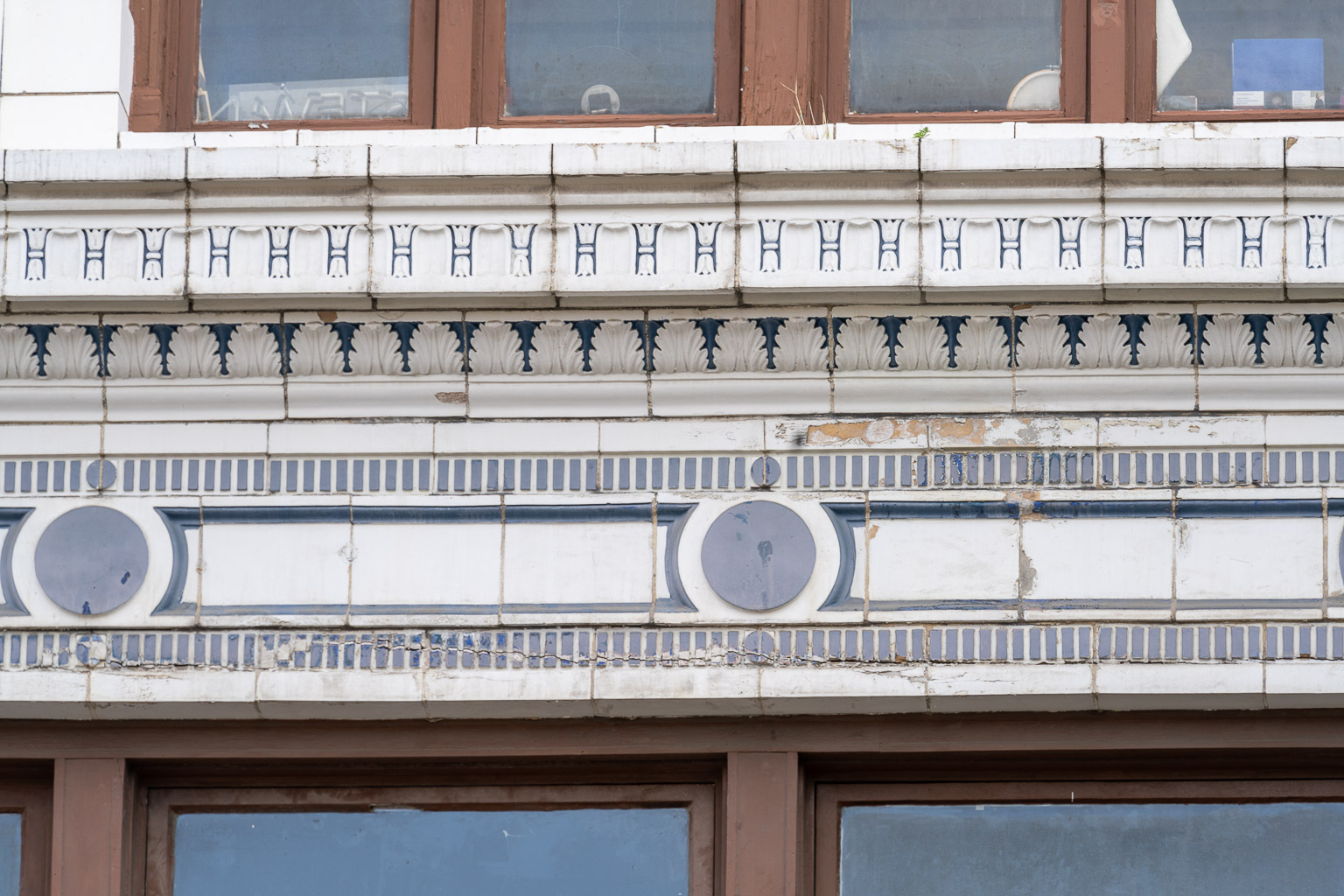
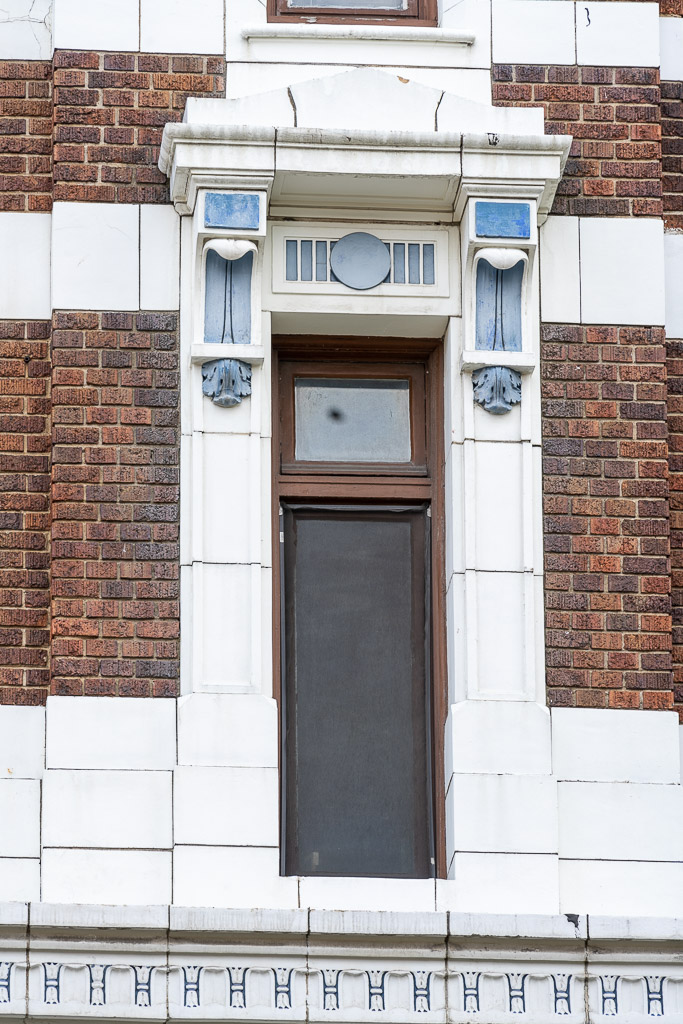
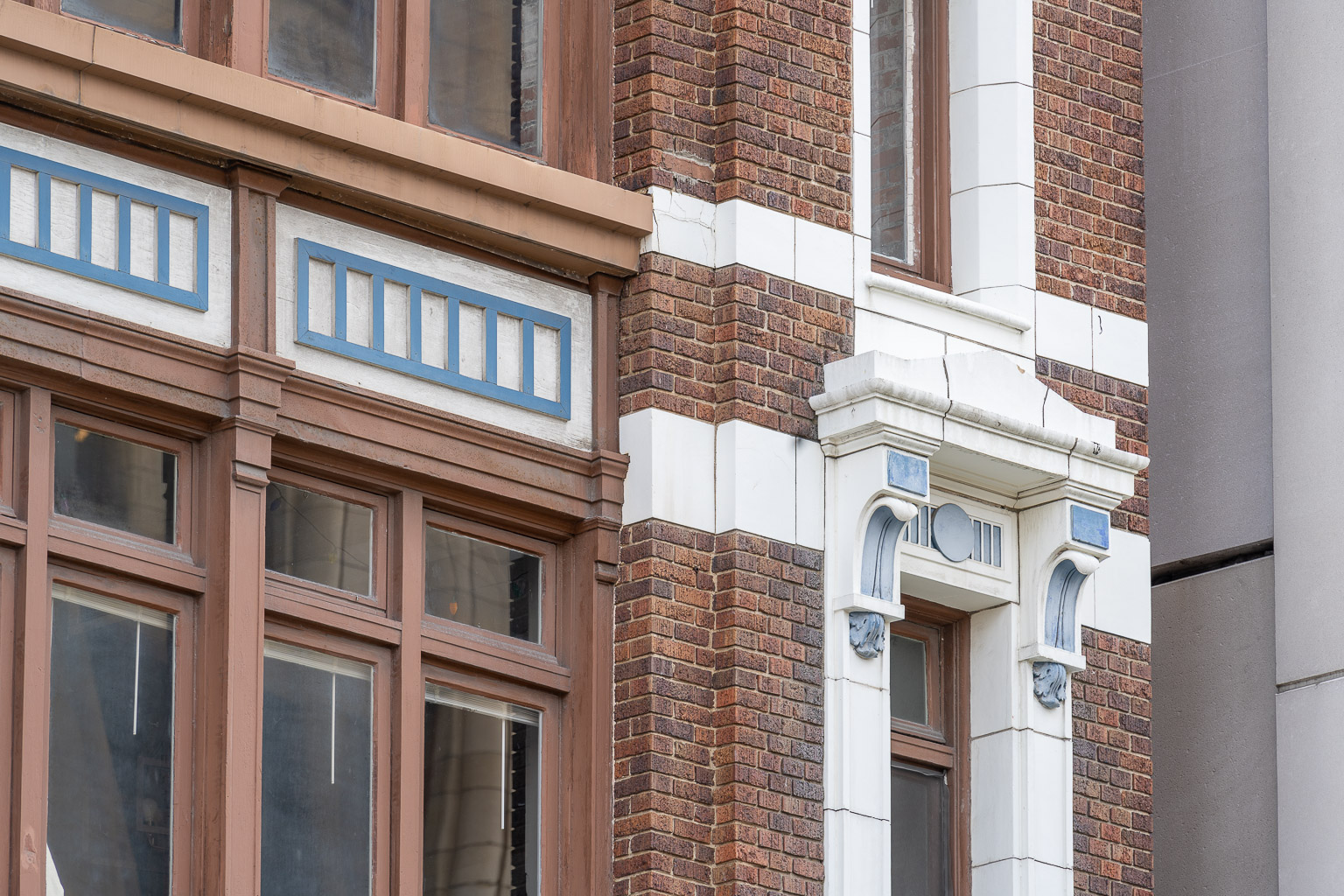
In the 1st photo below, the nine-story Lafer Brothers Building is the one on the right. Built of reinforced concrete and decorated with red brick, cream-colored terra cotta with blue accents, the building is one of the most attractive in this part of the Local Historic District. The lower two-stories are framed in terra-cotta which provide the illusion of supporting the 7 mainly-brick stories above. Decorative terra cotta surrounding the outer windows of the 3rd- through 8th-floor outer windows, giving the illusion of pillars supporting the building. The 9th floor windows are capped with a decorative terra cotta arch connected on each end to flourishes surrounding the end windows. The building was built in 1916, and is now used as residential space.
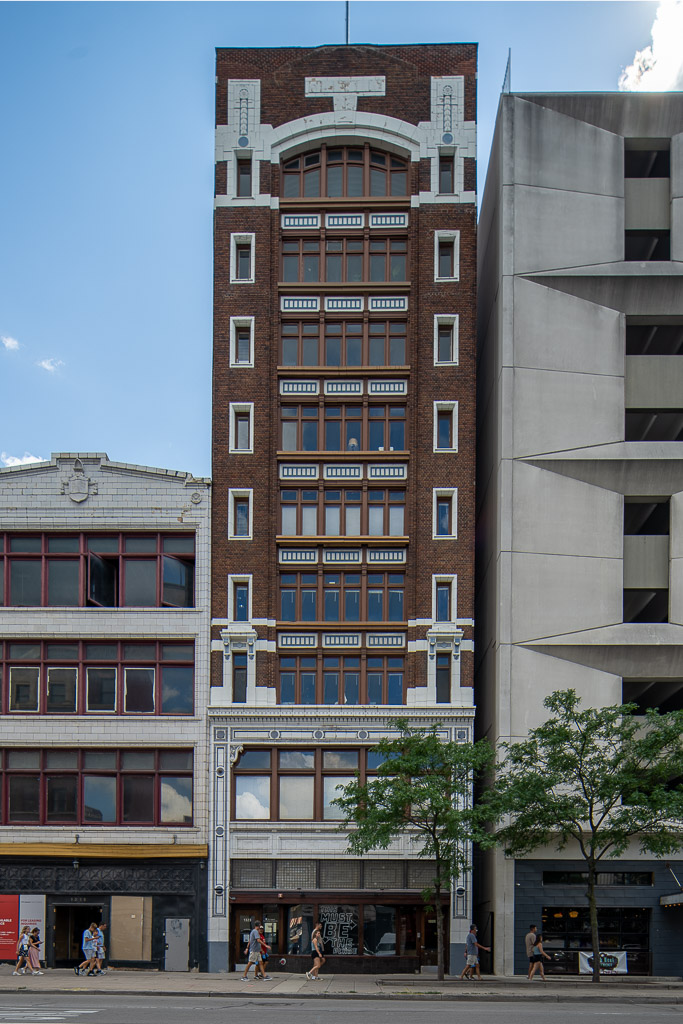
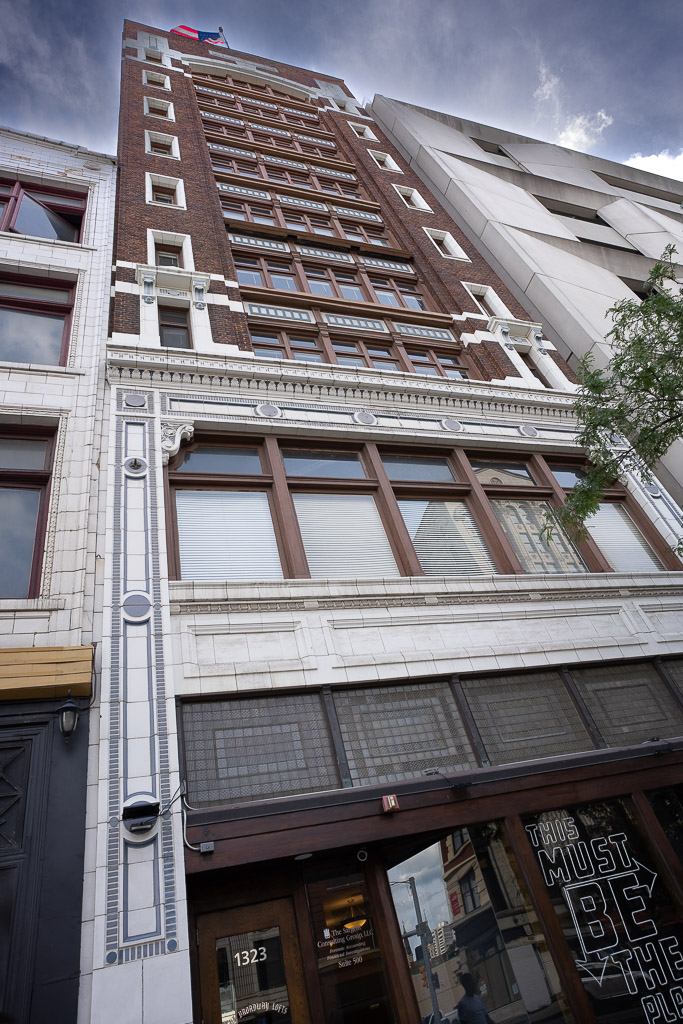
The photos below show details of the Lafer Brothers Building.
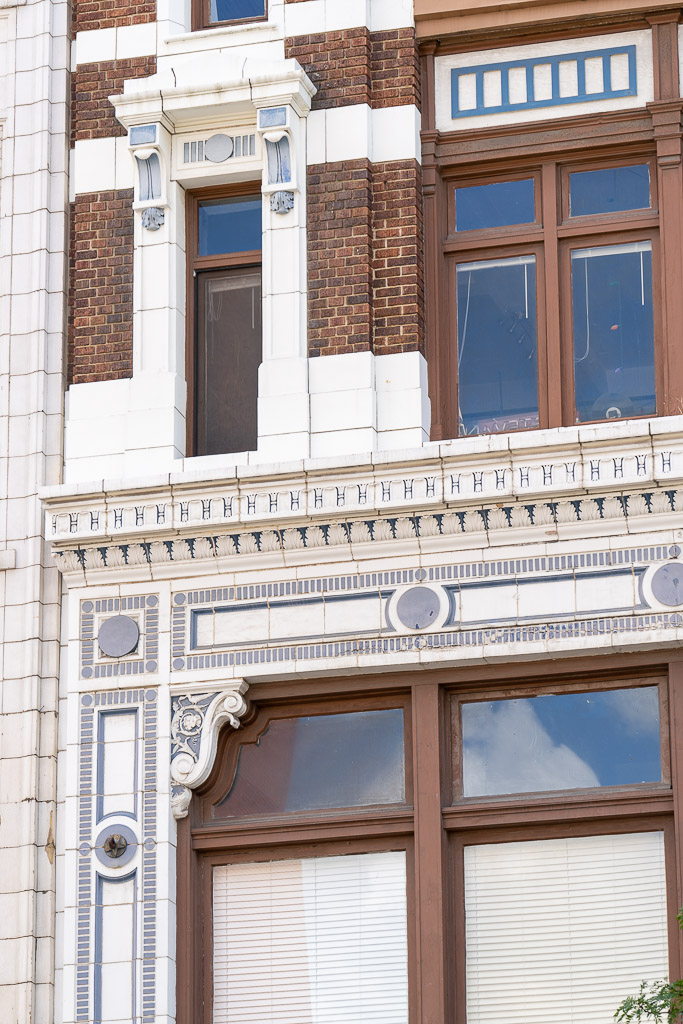
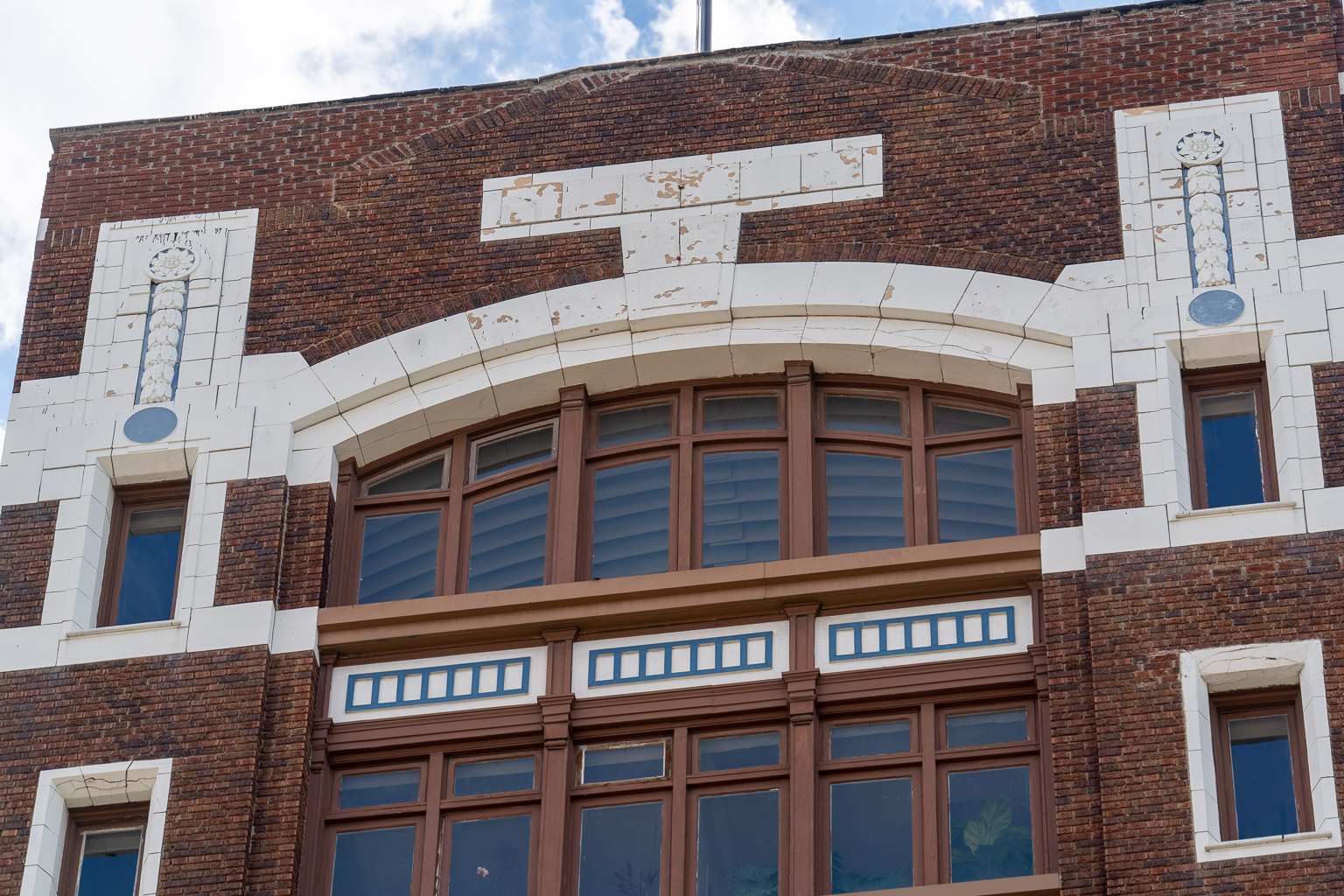
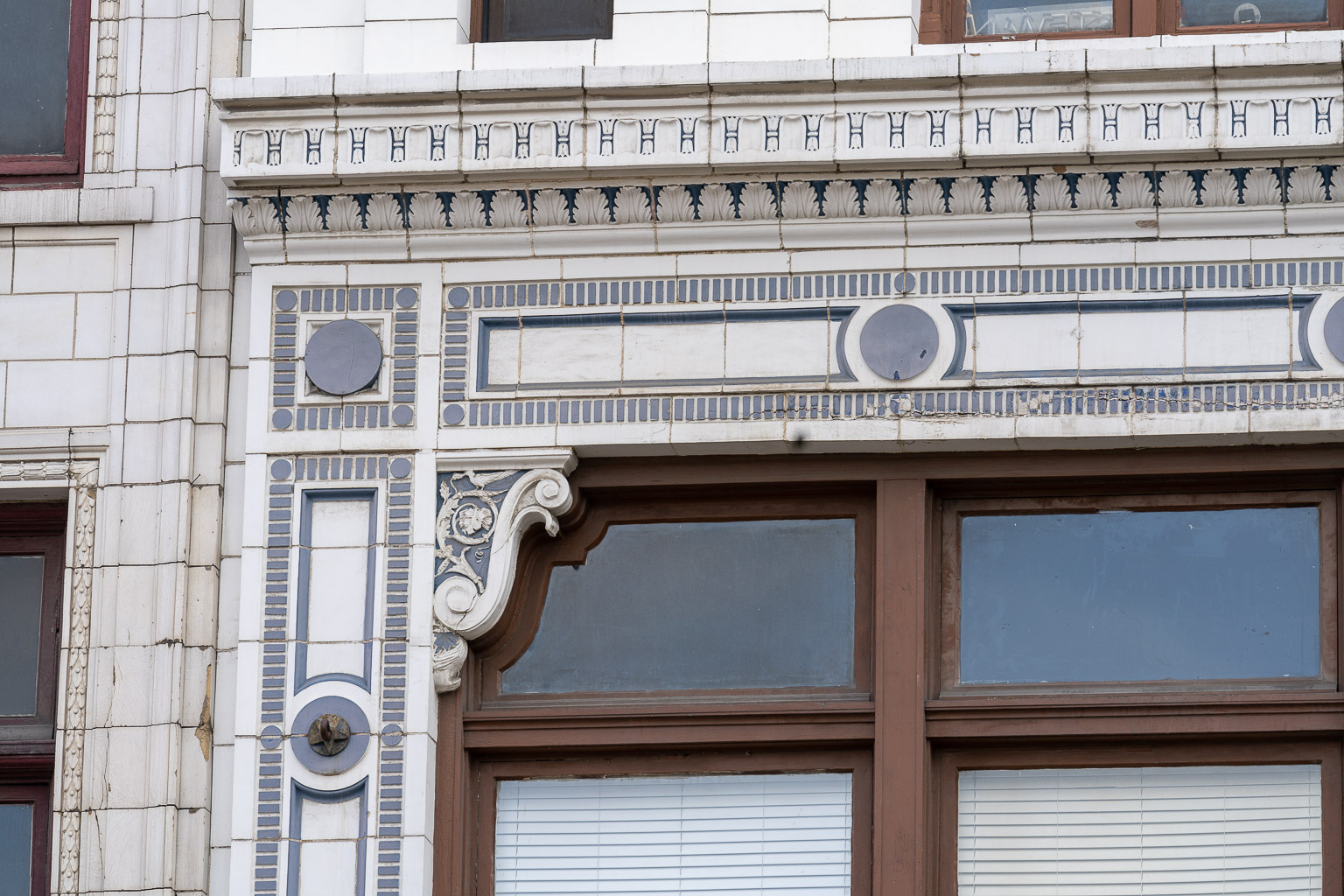
More photos and more description of this building can be found at HistoricDetroit.org.
The next building on the west side of this block of Broadway Avenue is the Z Park Garage A, which is shown massively in the photo below, and is not a historic building, with the buildings we just looked at being a tiny sliver at the left side of the parking garage.
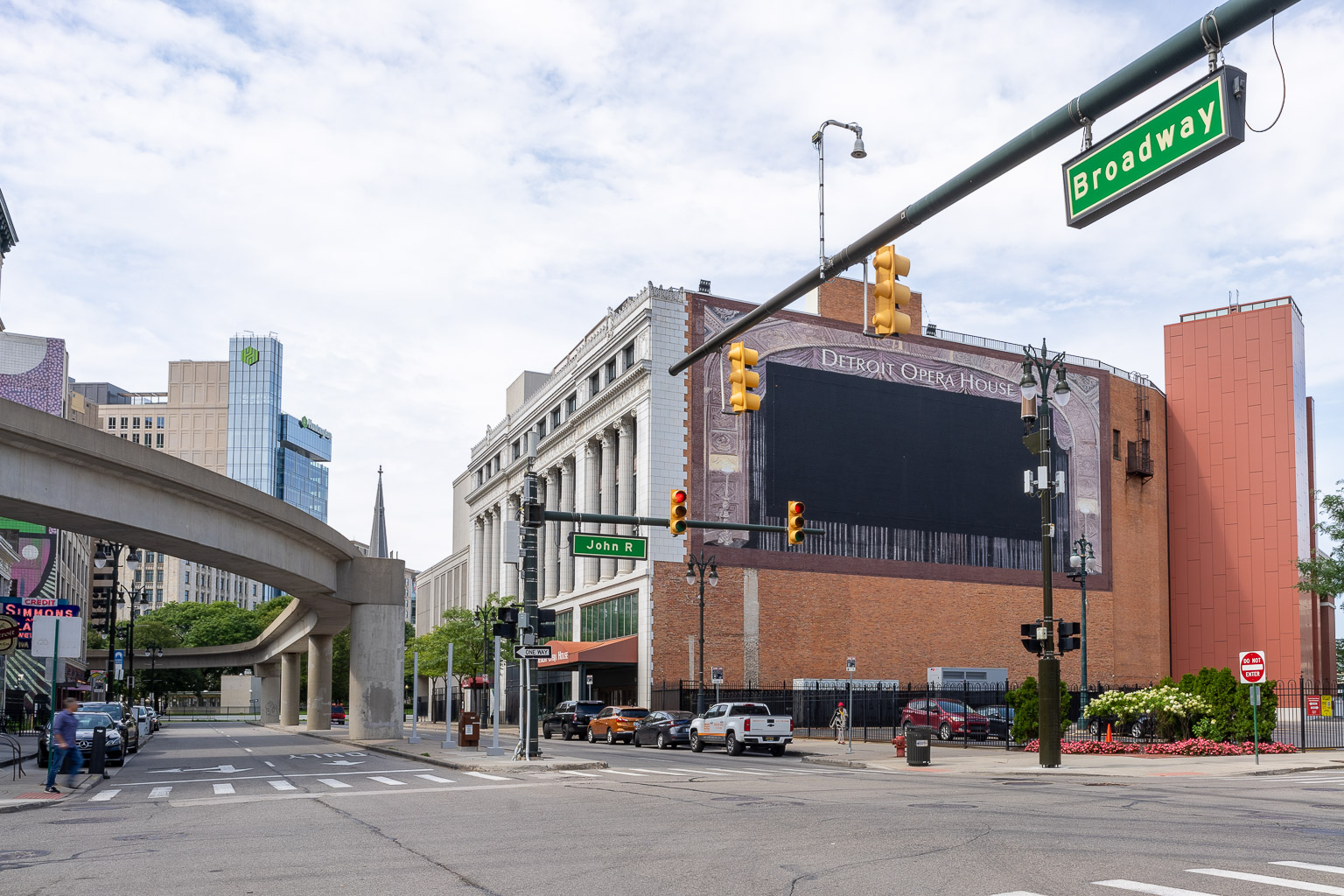
The east side of the northern block of Broadway Avenue contains only the Detroit Opera House, which extends from John R up to Witherell, and from Broadway over to Madison. This building is actually in the Grand Circus Park Local Historic District.
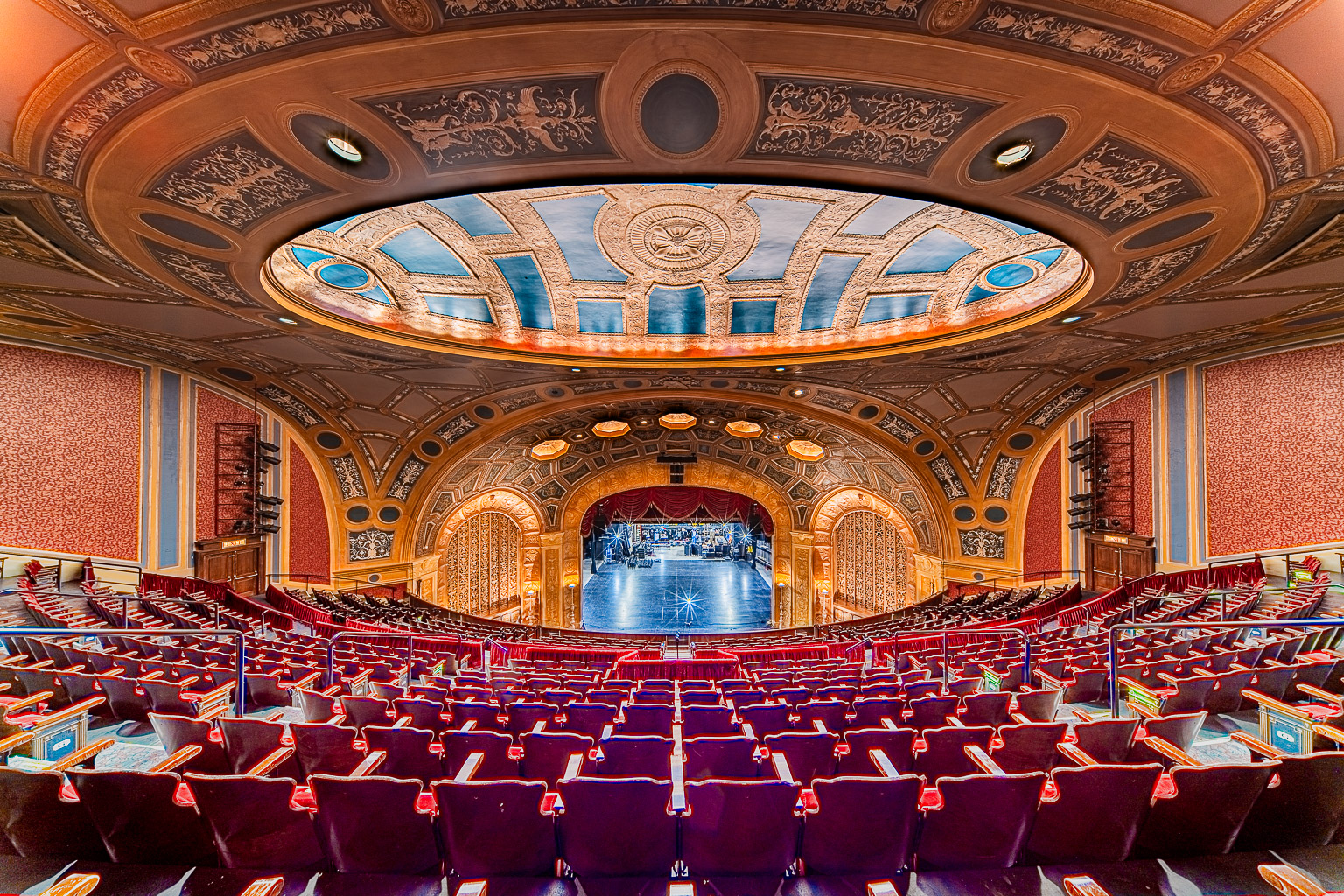
Located on the corners of Broadway and Madison at Grand Circus Park, the Capitol Theater was the first in a series of palatial vaudeville and moving picture houses built in the Grand Circus Park area in the 1920s. Designed by prominent Detroit architect C. Howard Crane, the building was constructed in the style of Europe grand opera houses. The 4,250 seat theater claimed to be the fifth largest in the world when it opened on January 12, 1922. Crane went on to design other theaters in the city. His most notable commissions included the Fox Theater, Gem Theater, and the acoustically perfect Orchestra Hall. His genius for theater design took him to cities around the world.
The Capitol Theater was decorated in the Italian Renaissance style with lavish Tiffany chandeliers, frescoes, brass fixtures, marble stairways and drinking fountains. Rich rose-red Italian damask was used for the main stage curtain and draperies throughout the house. Most of these features are present today in the Detroit Opera House.
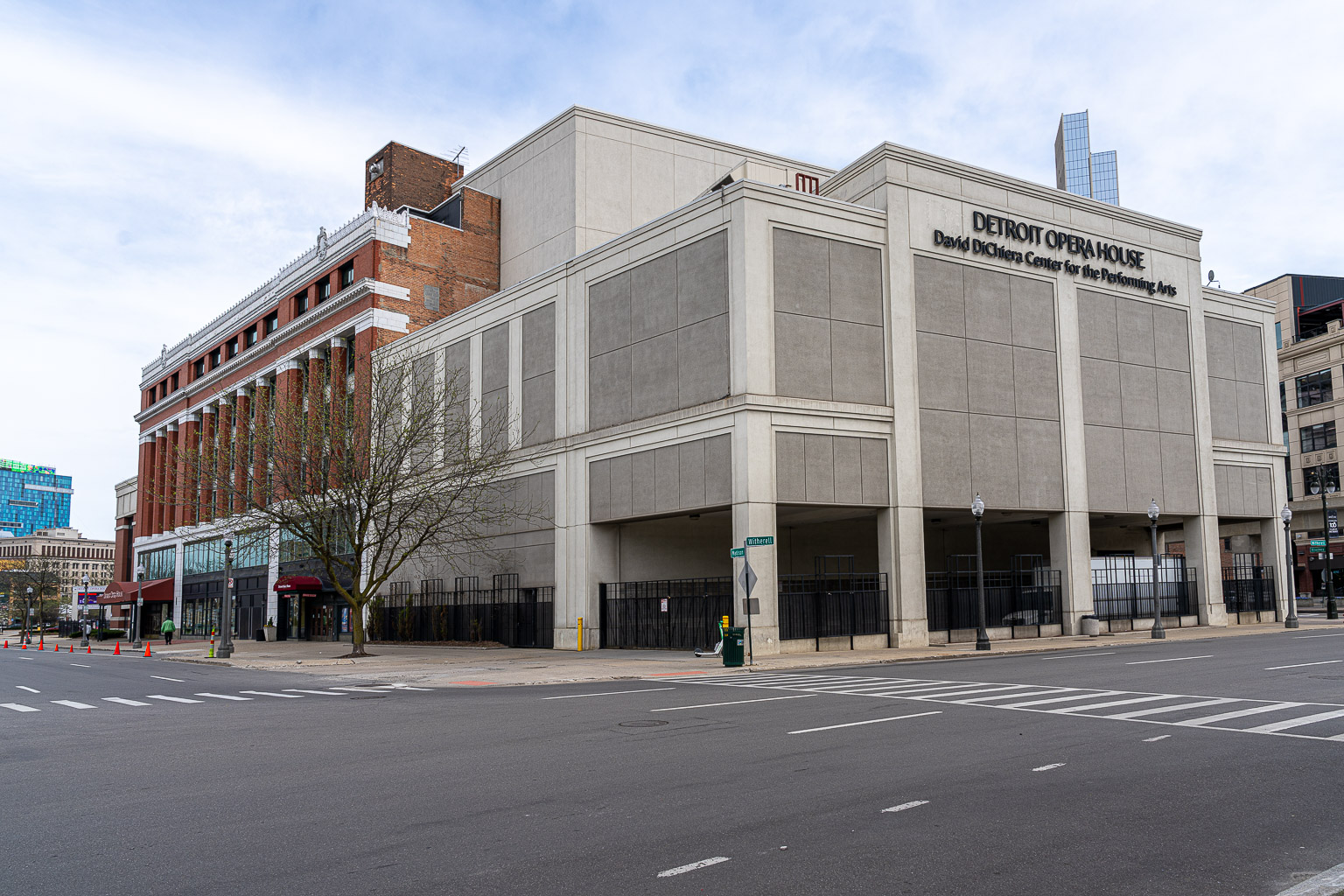
The photos below show the Madison Avenue (north) side of the Detroit Opera House.
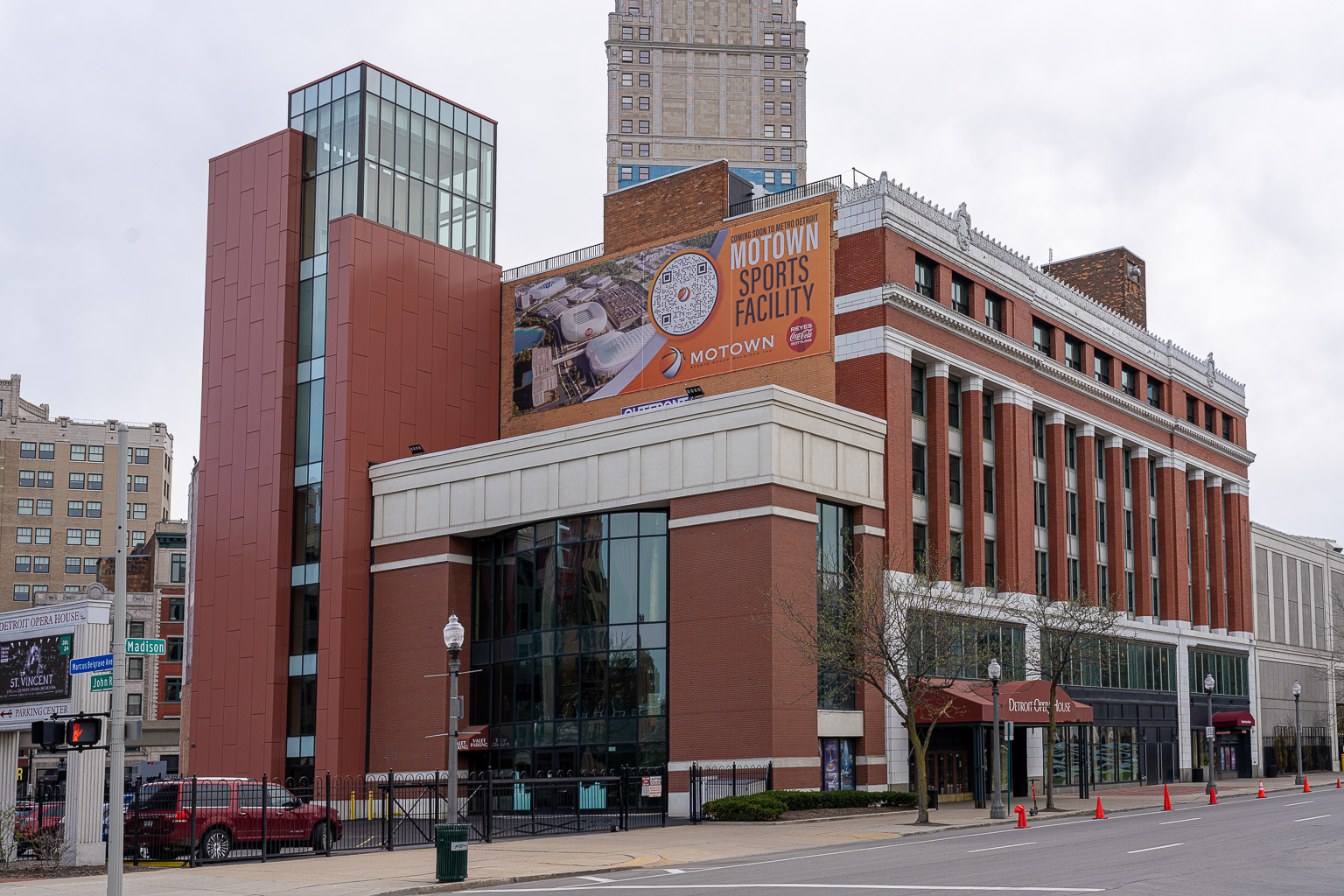
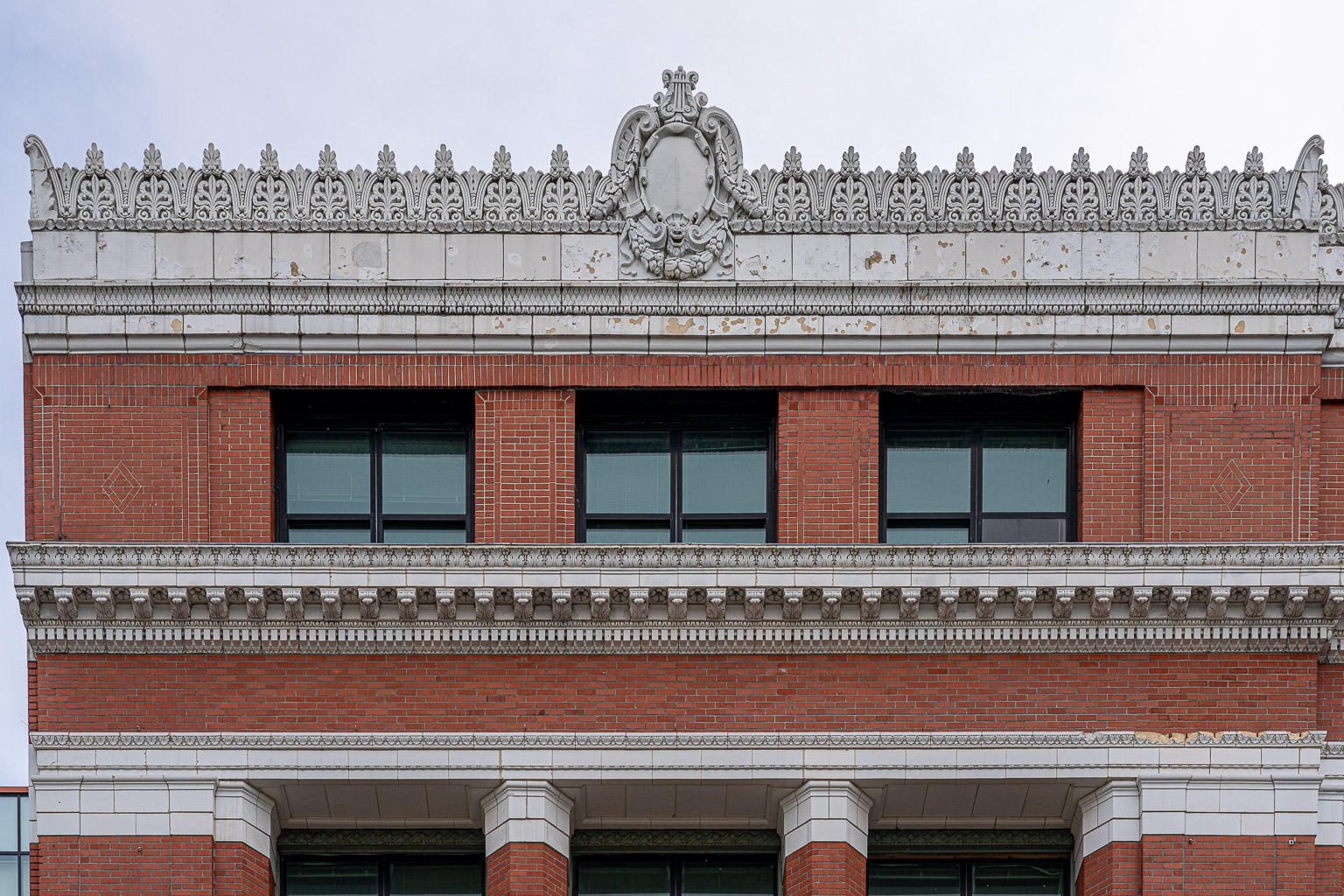
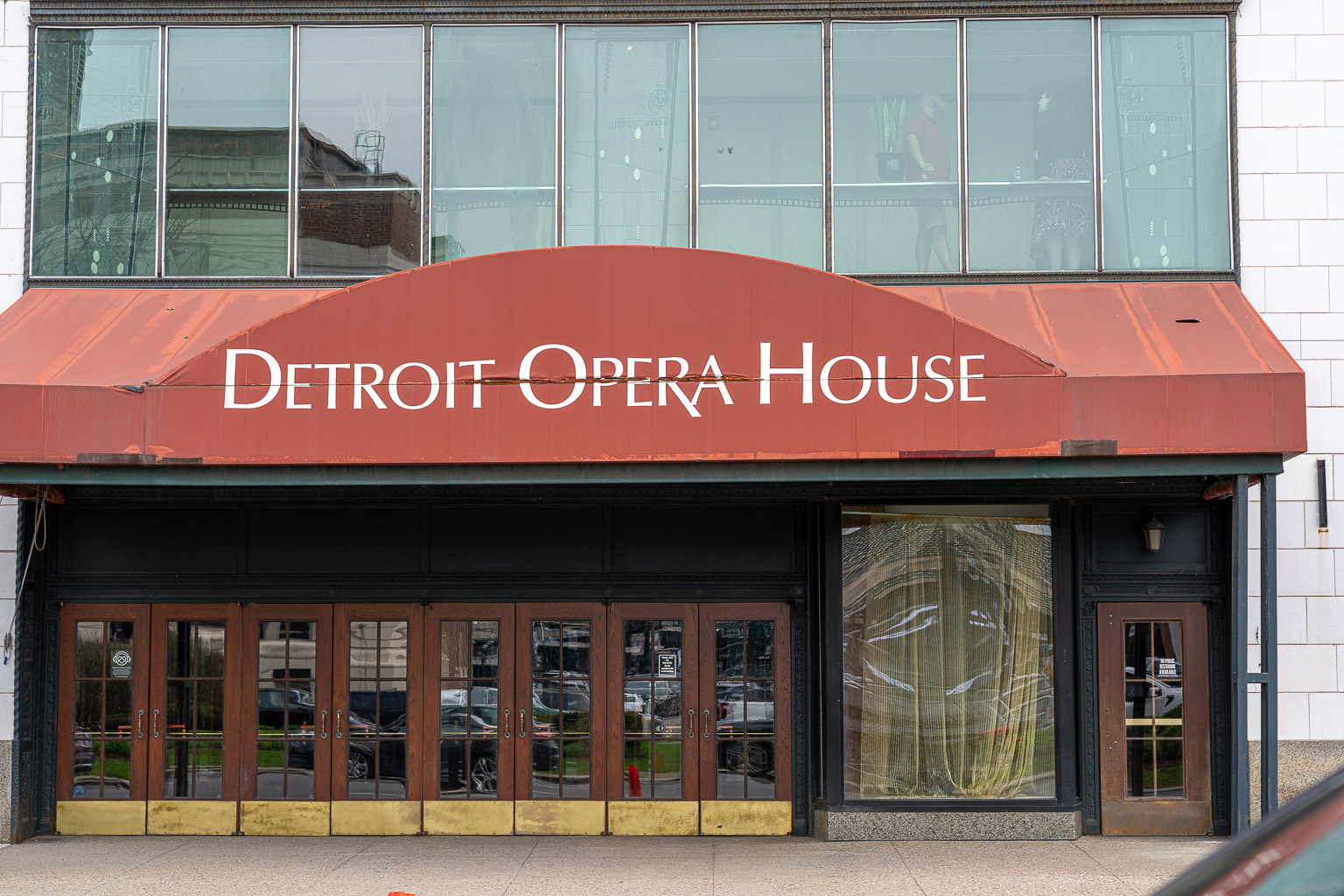
These photos show the Broadway Avenue (south) side of the Detroit Opera House. The ticket office is at the eastern (right) end of the building on this side (3rd photo below), and the most ornate part of the building is also on this side.
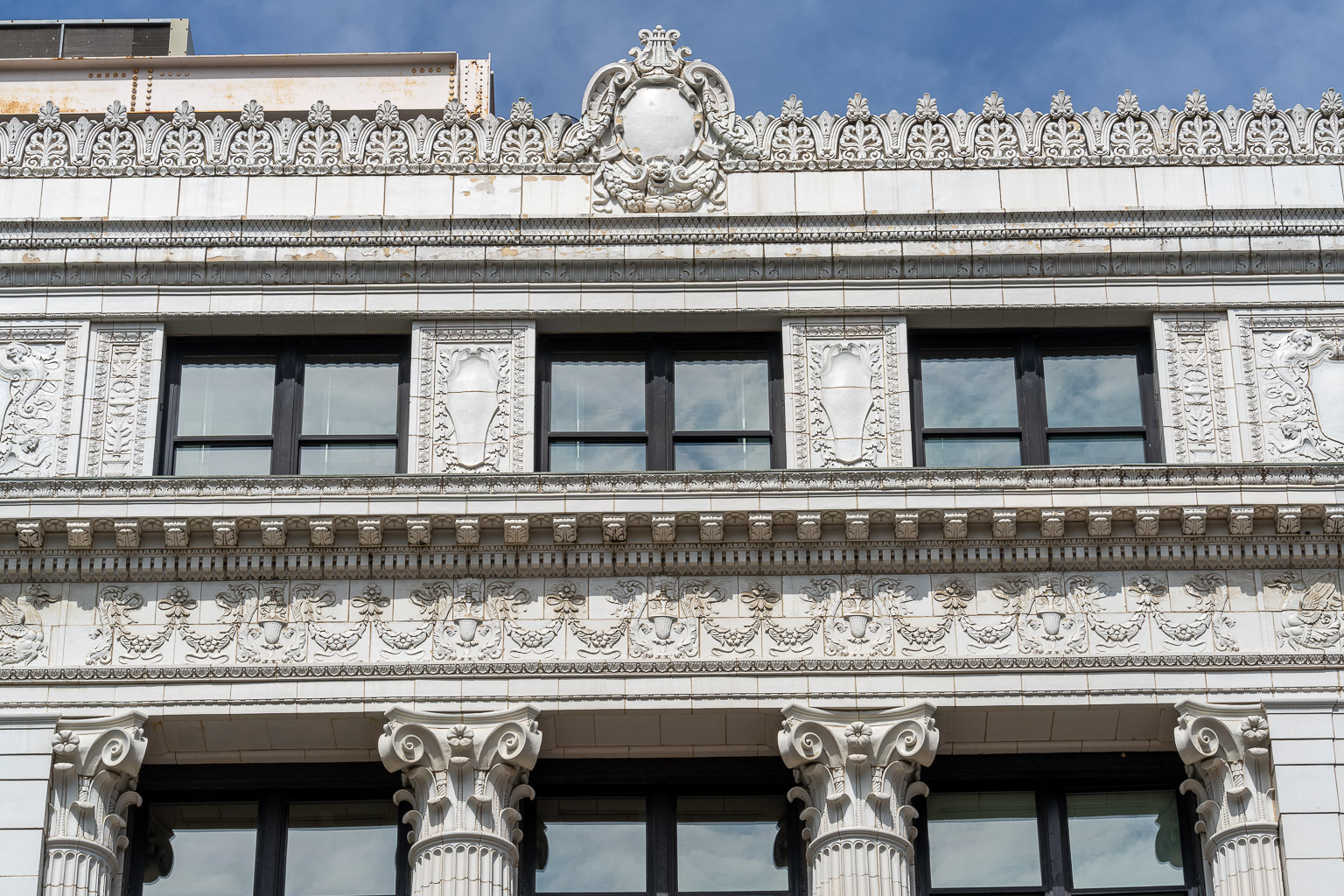
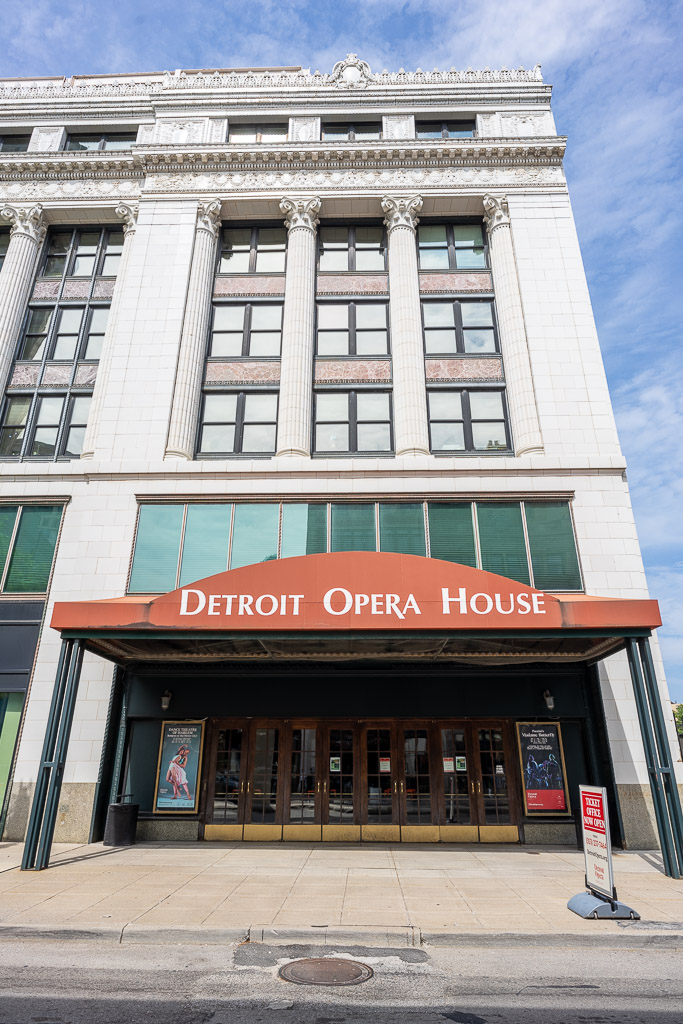
If you enter the ticket office, you're in the ornate Ford Lobby. The Ford Lobby is the primary, ornate entrance to the Detroit Opera House on Broadway Street, featuring a historic stained glass ceiling and a massive chandelier on loan from the Ford Museum. Restored post-1996 with Ford Motor Company funding, it serves as a grand entrance to the venue, which was originally designed in 1922 by C. Howard Crane.
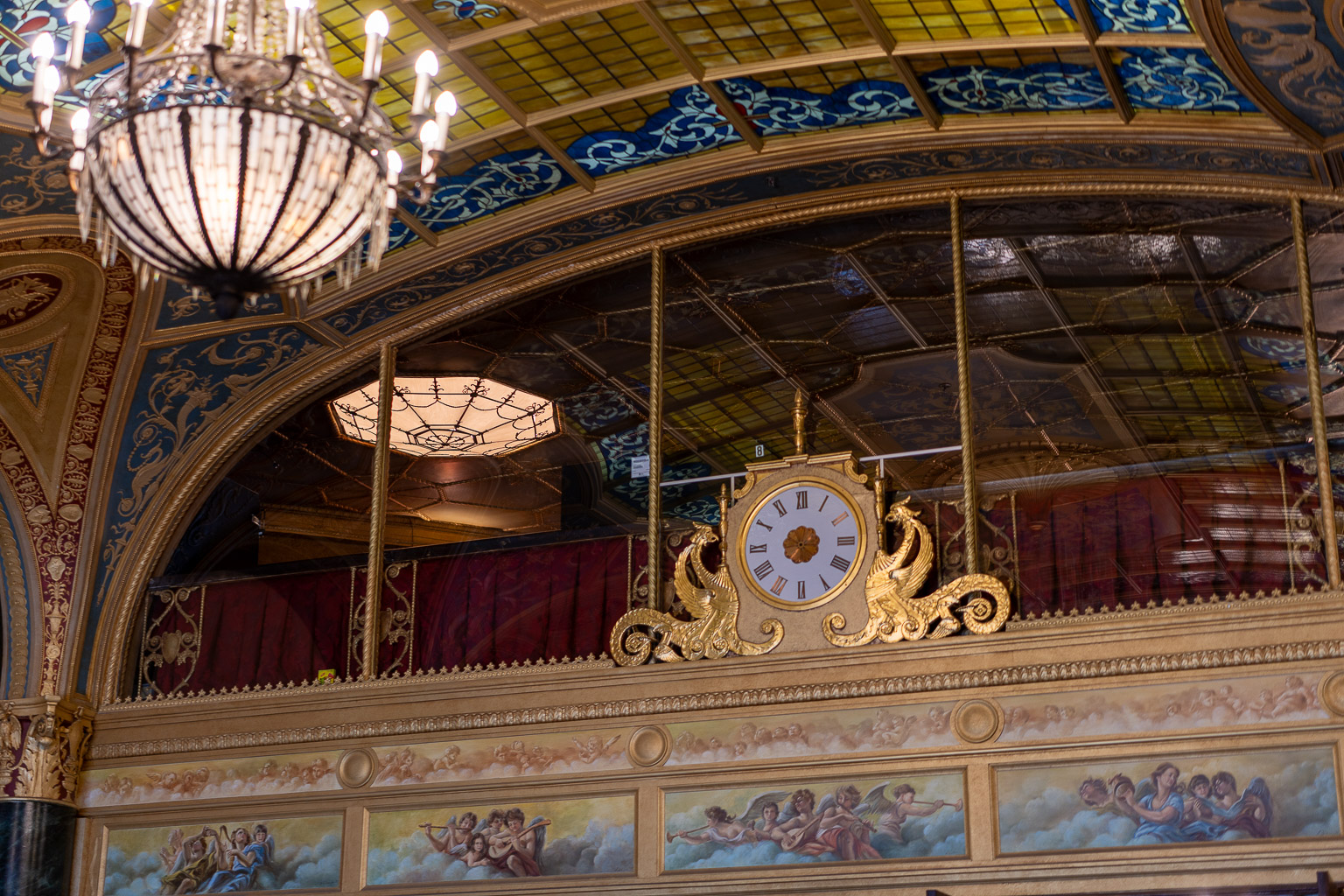
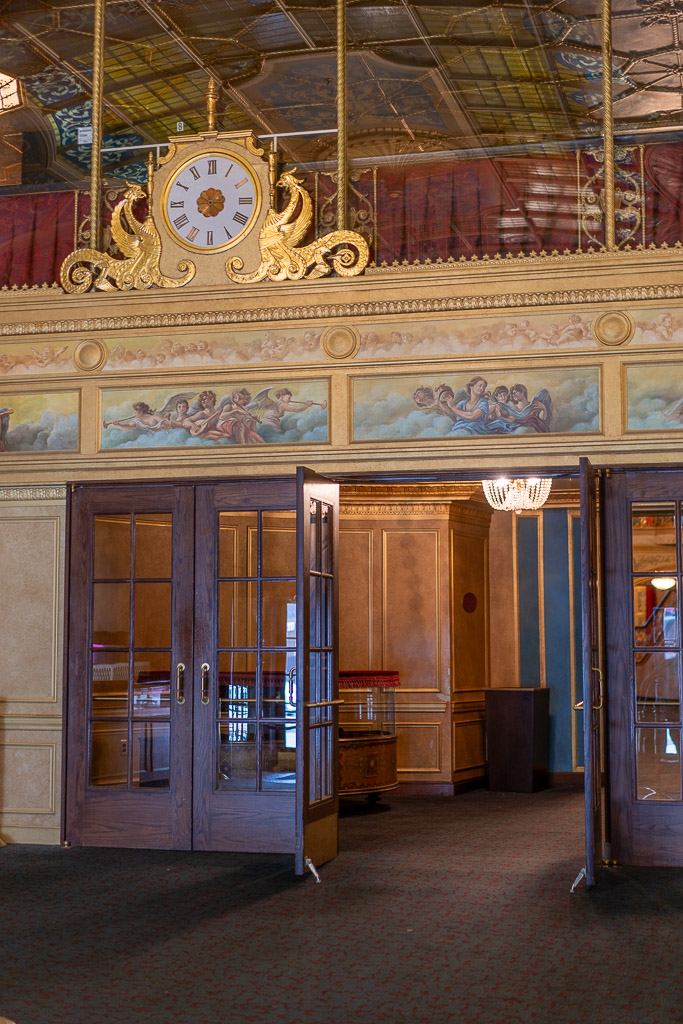
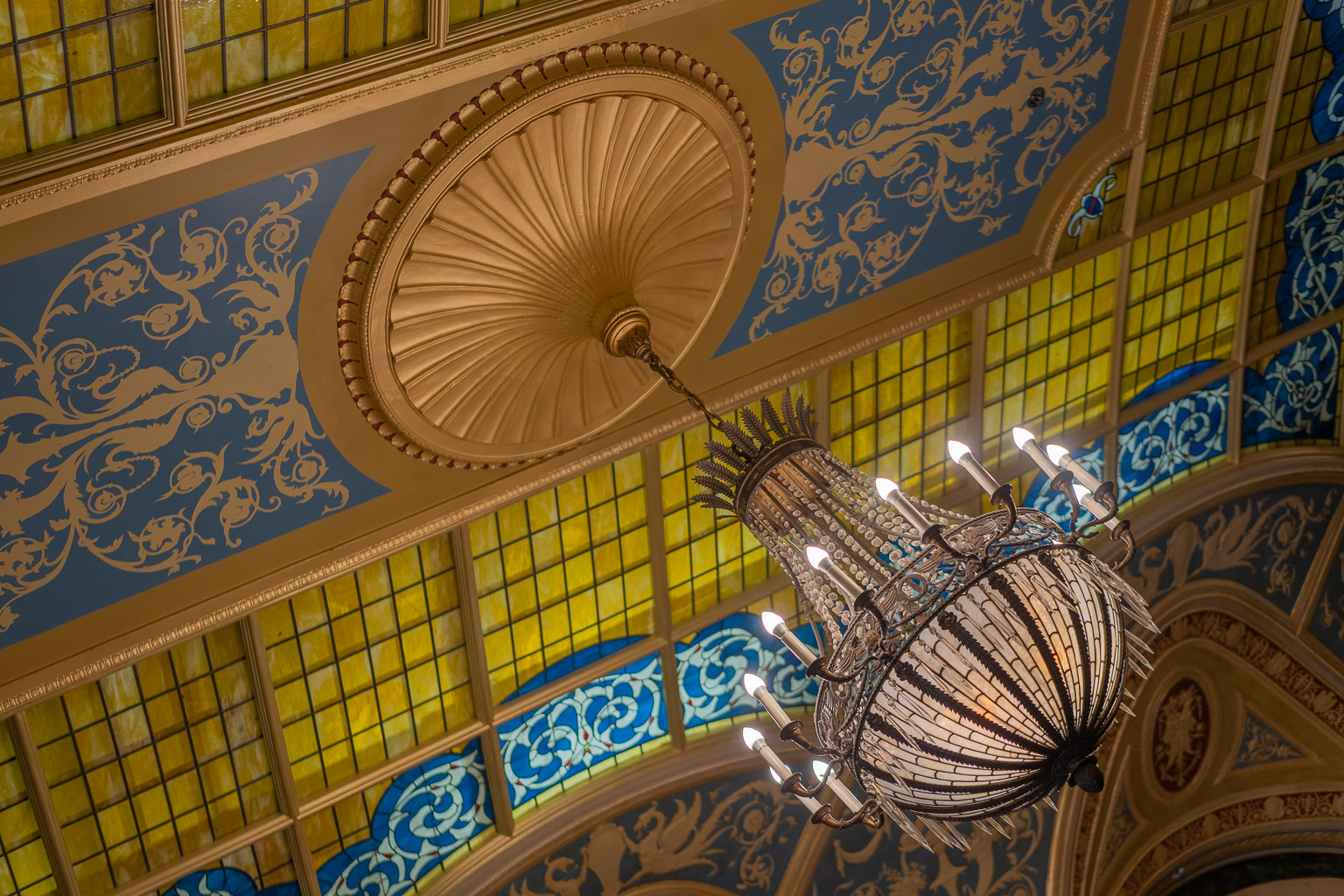
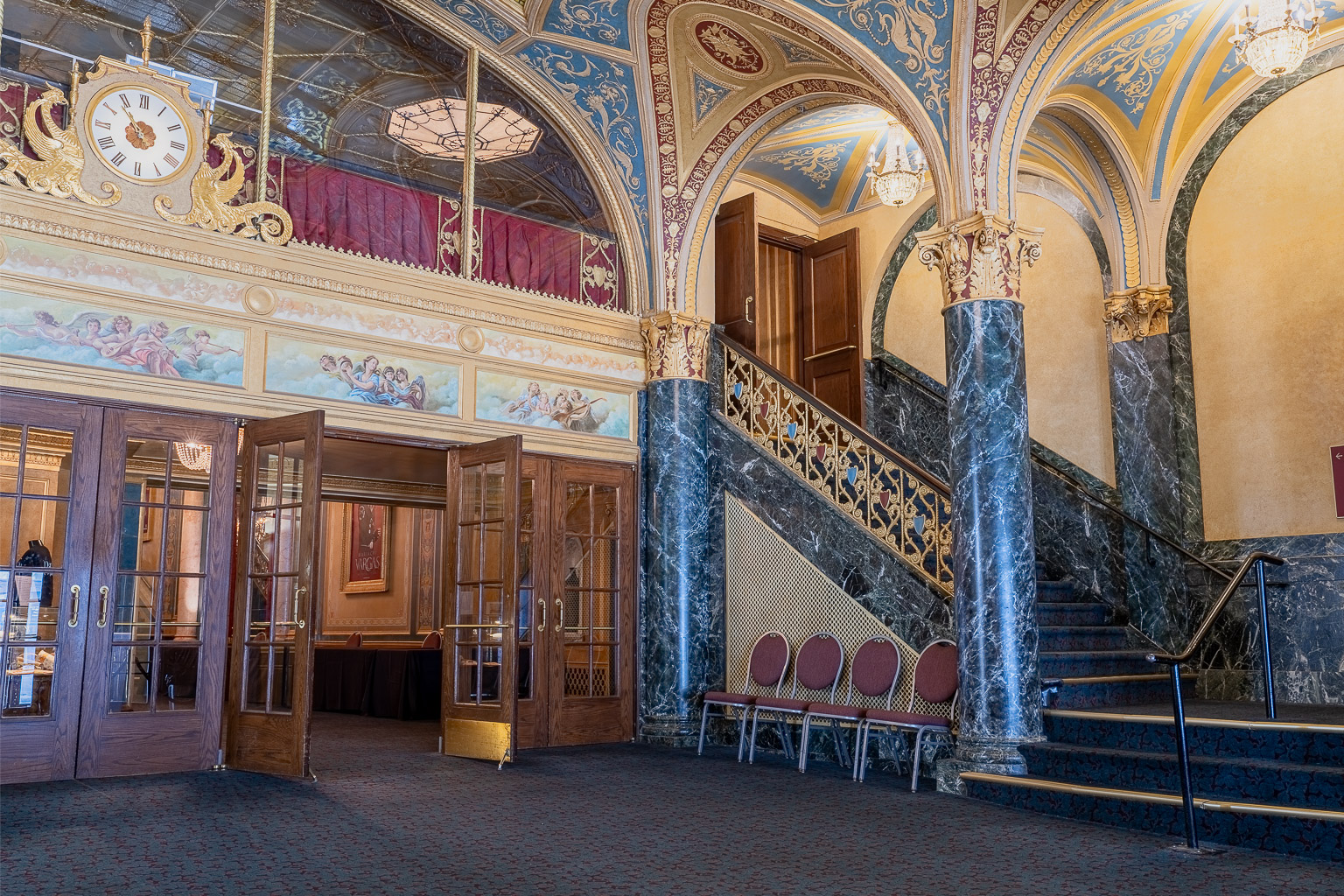
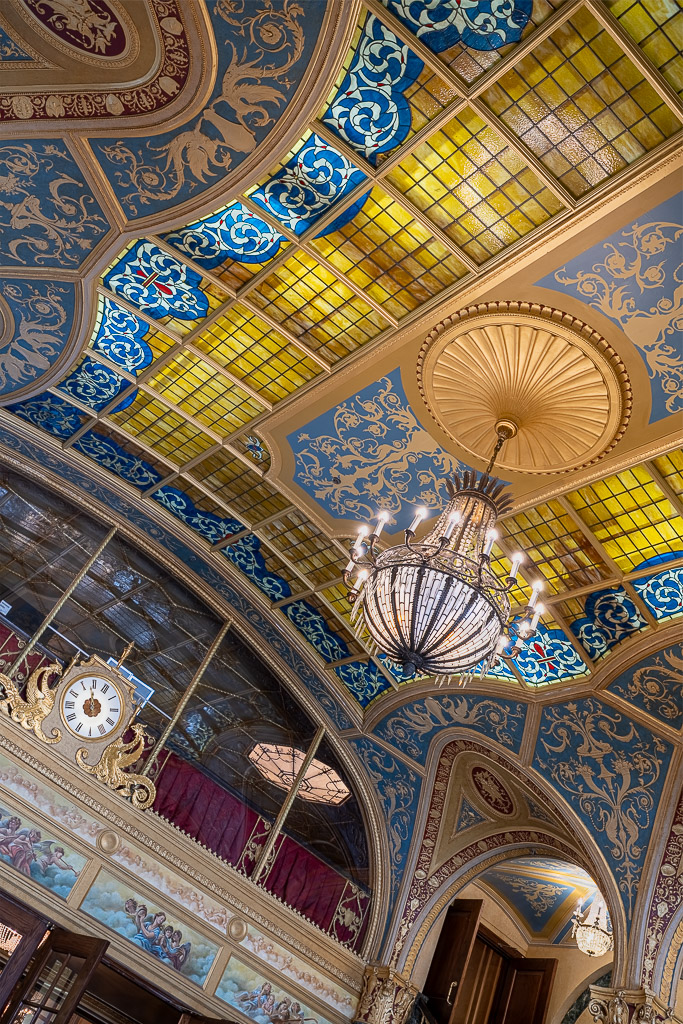
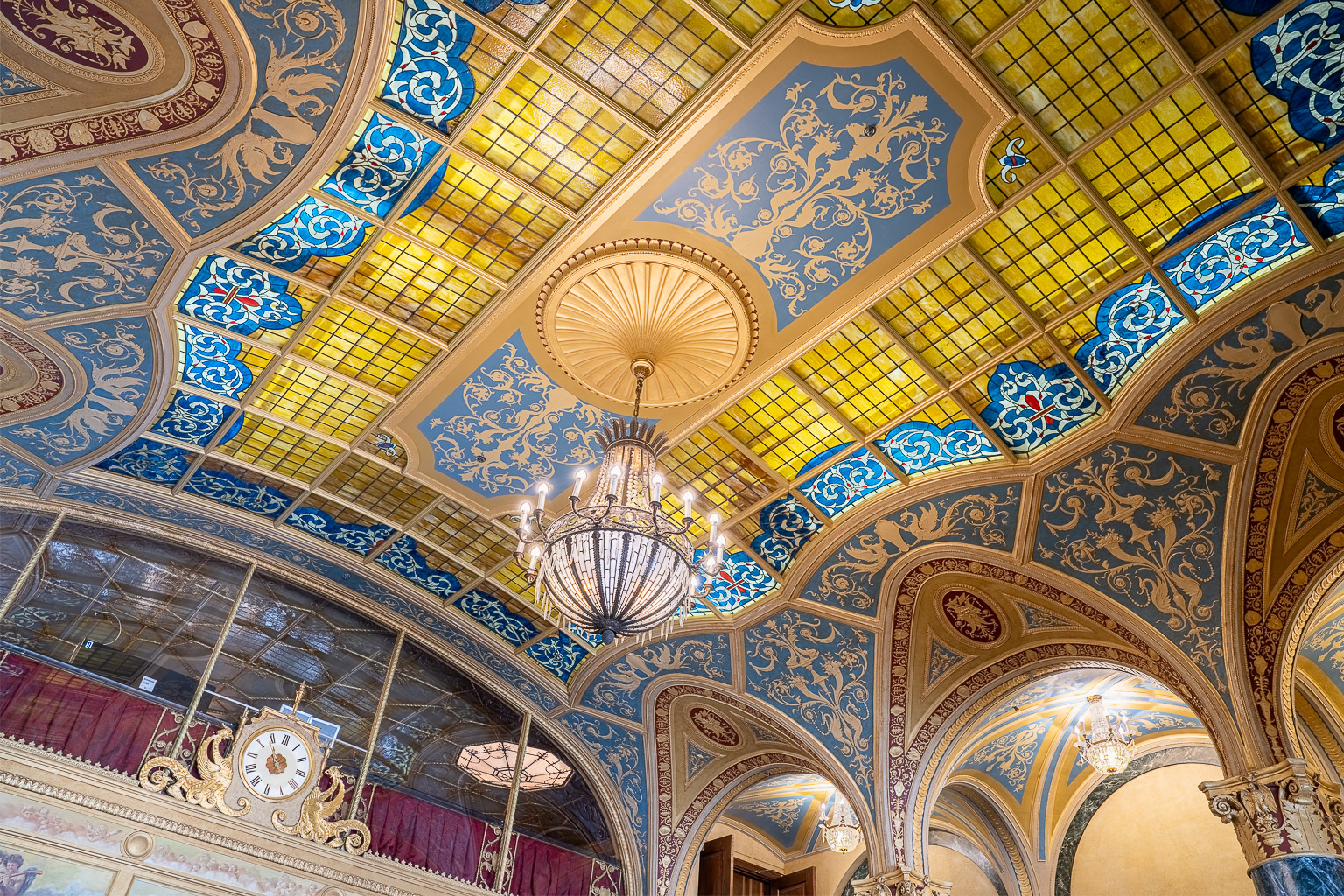
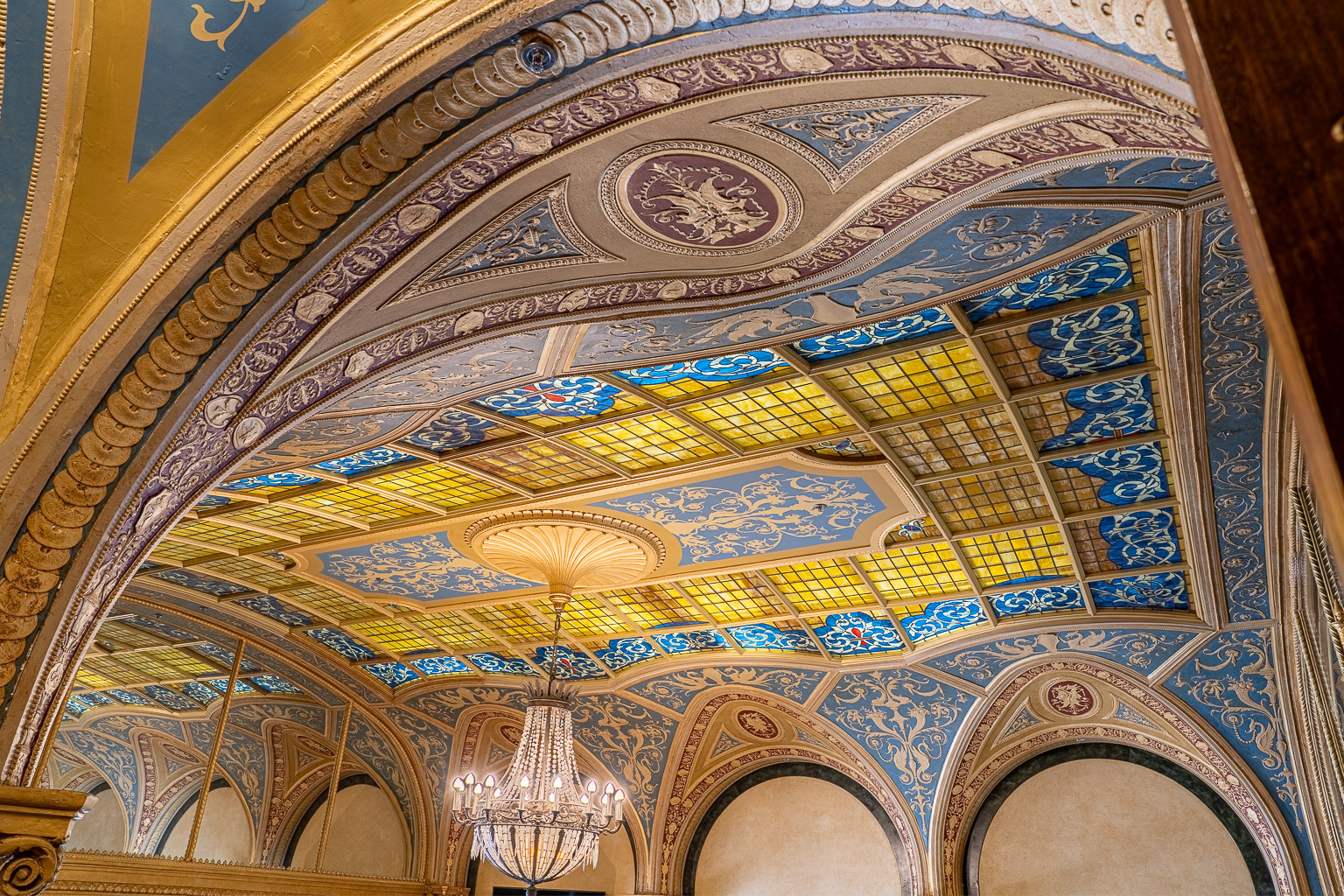
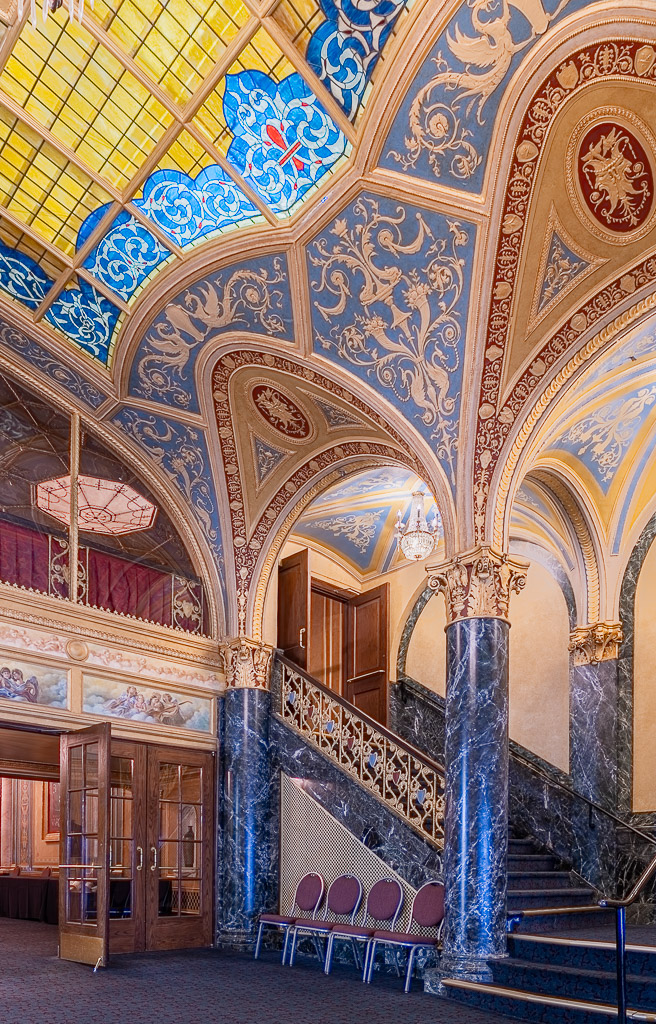
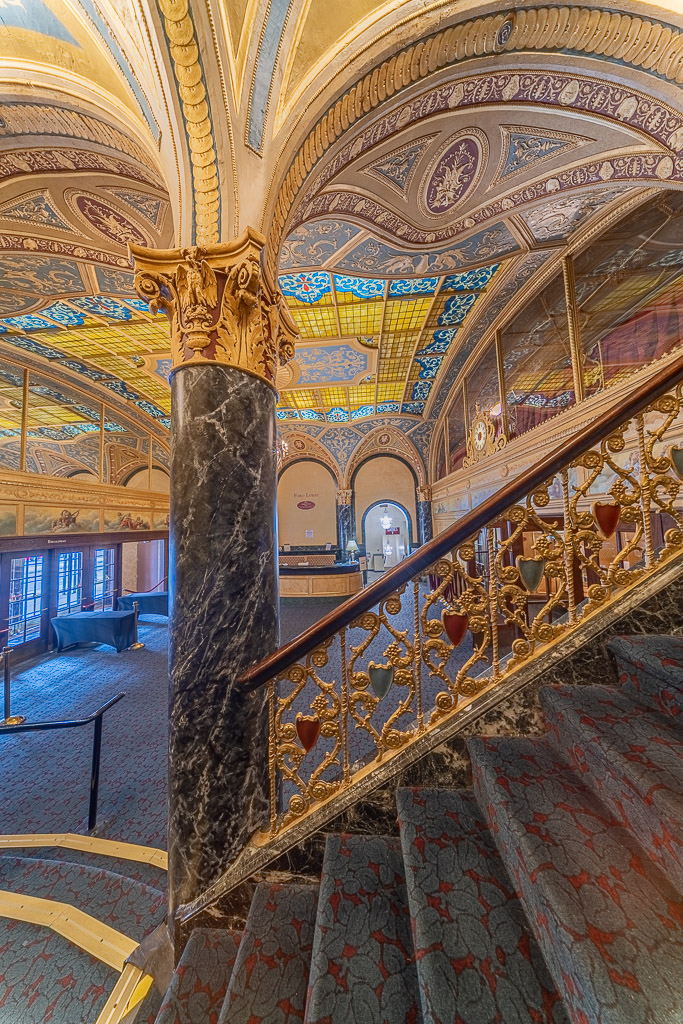
Through the ground floor wooden doors, or up the ornate stairway, takes you to the Grand Lobby, a three-story premier, historic space characterized by Italian Renaissance style, featuring marble stairways, crystal chandeliers, and ornate, gilded detailing.
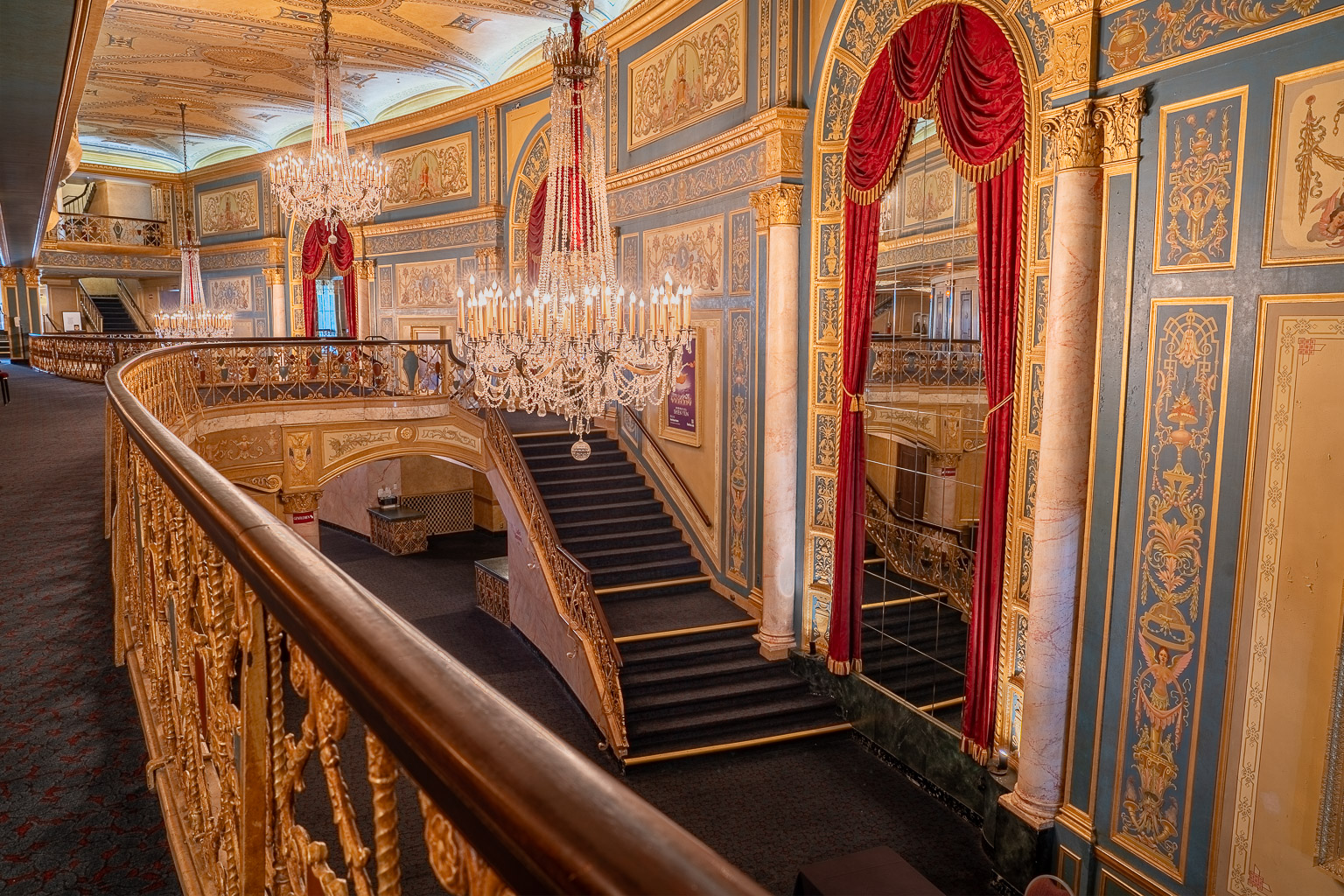
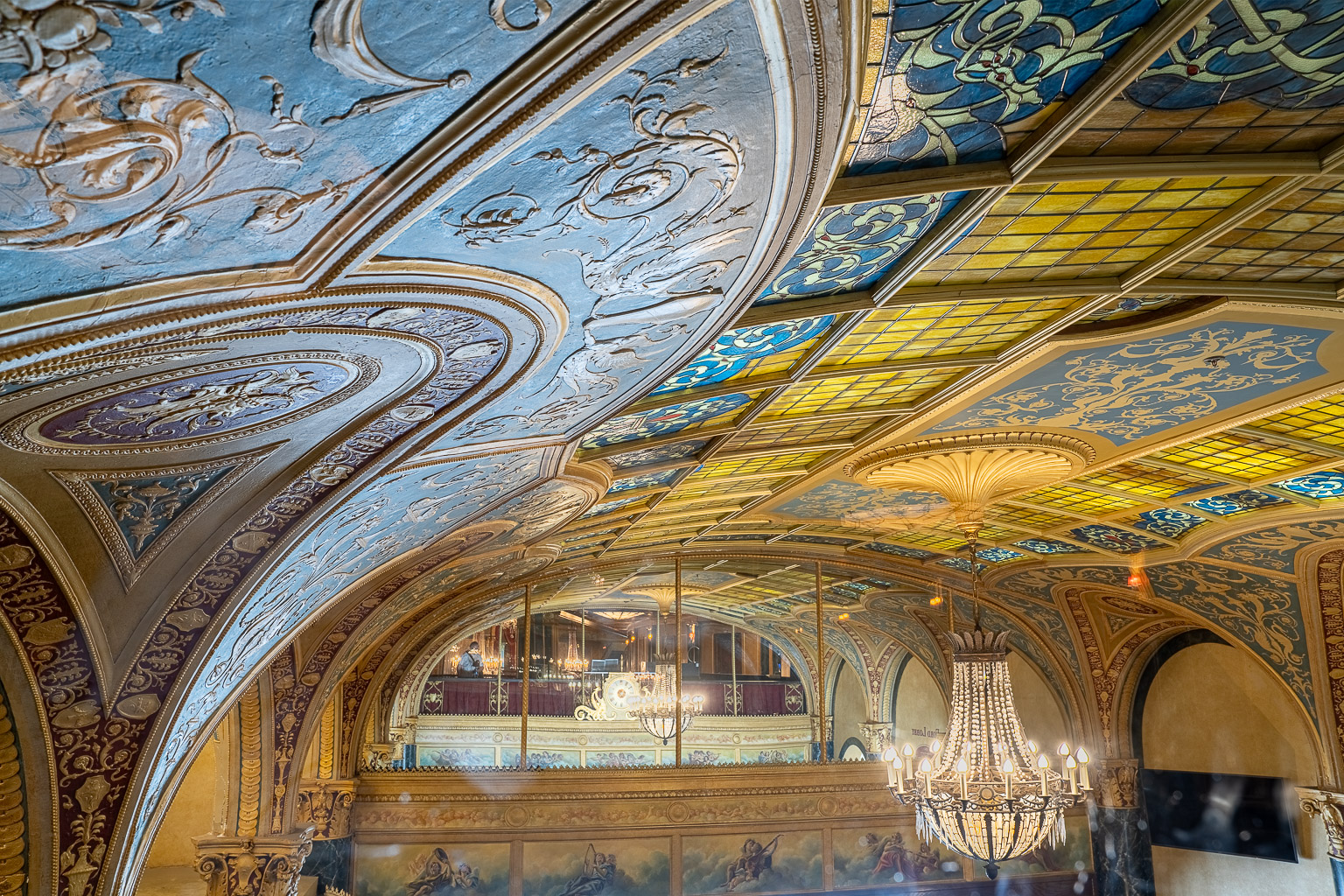
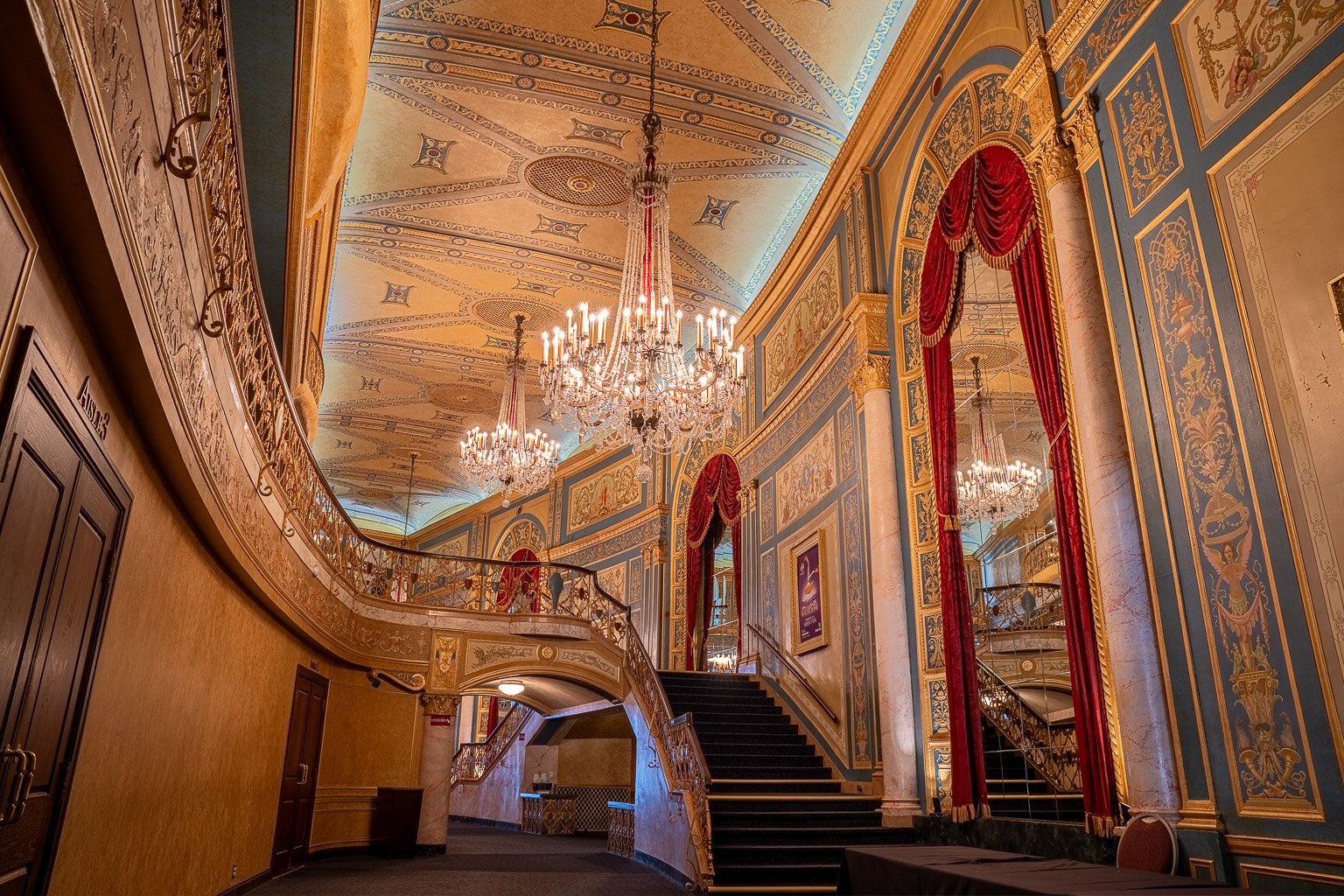
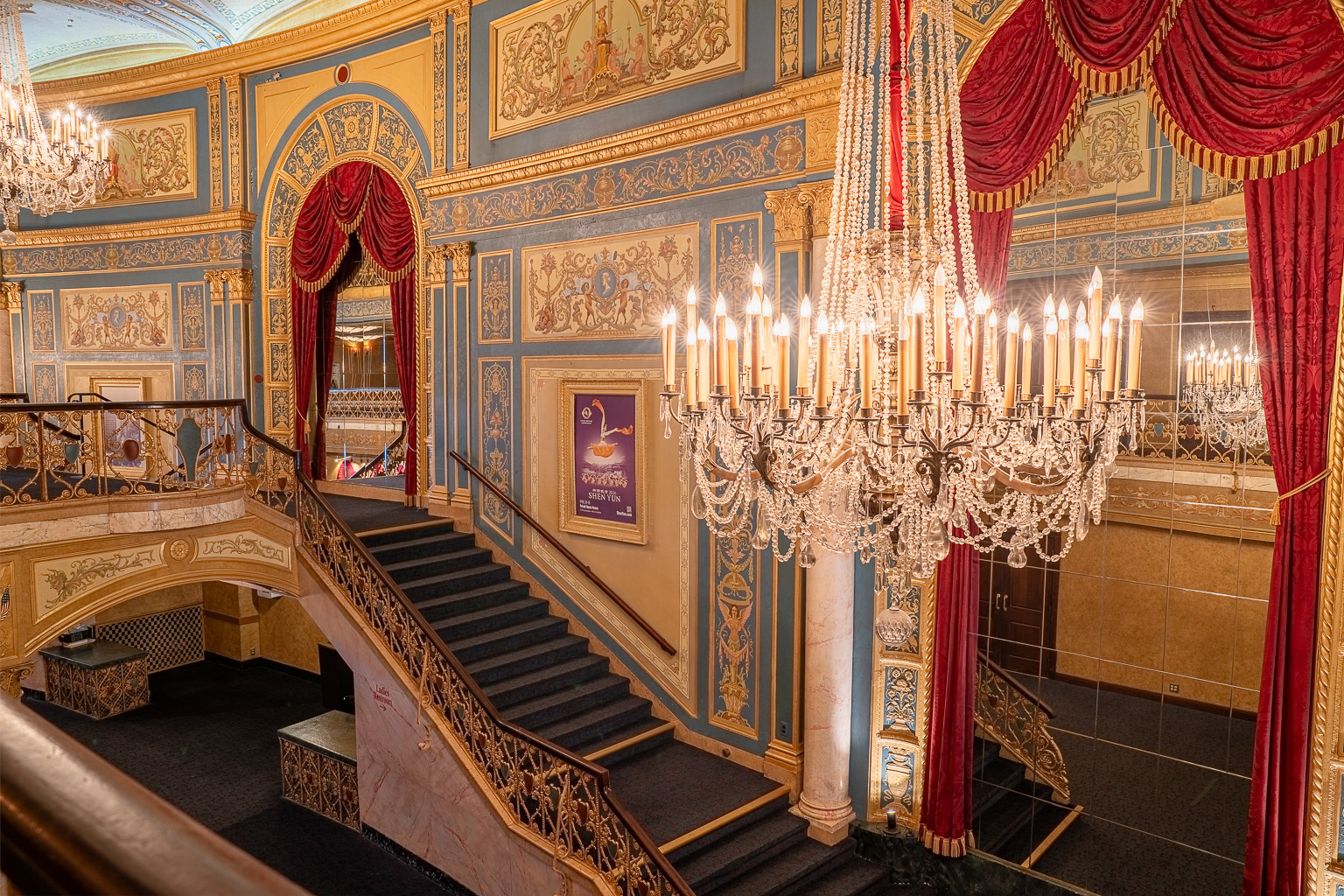
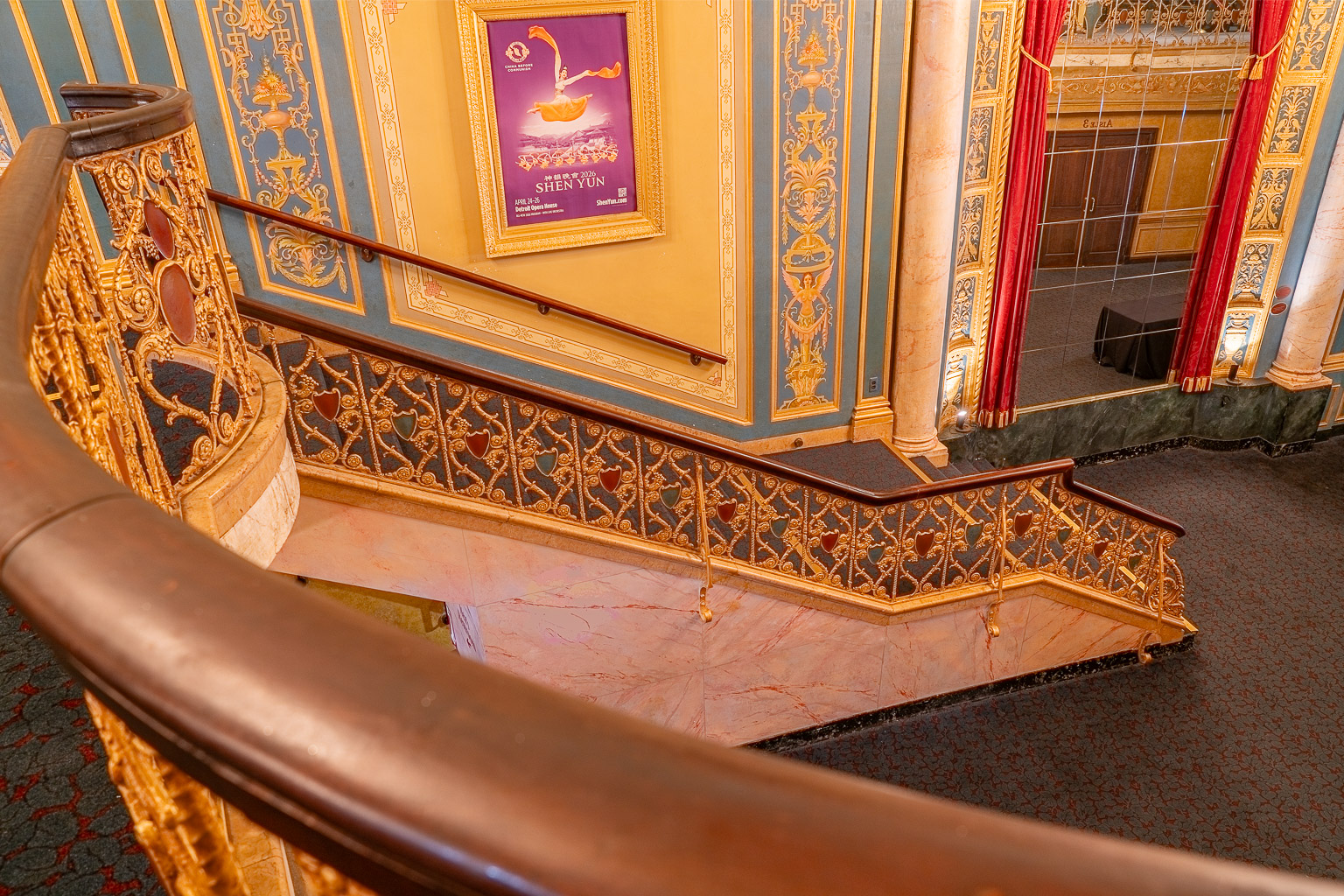
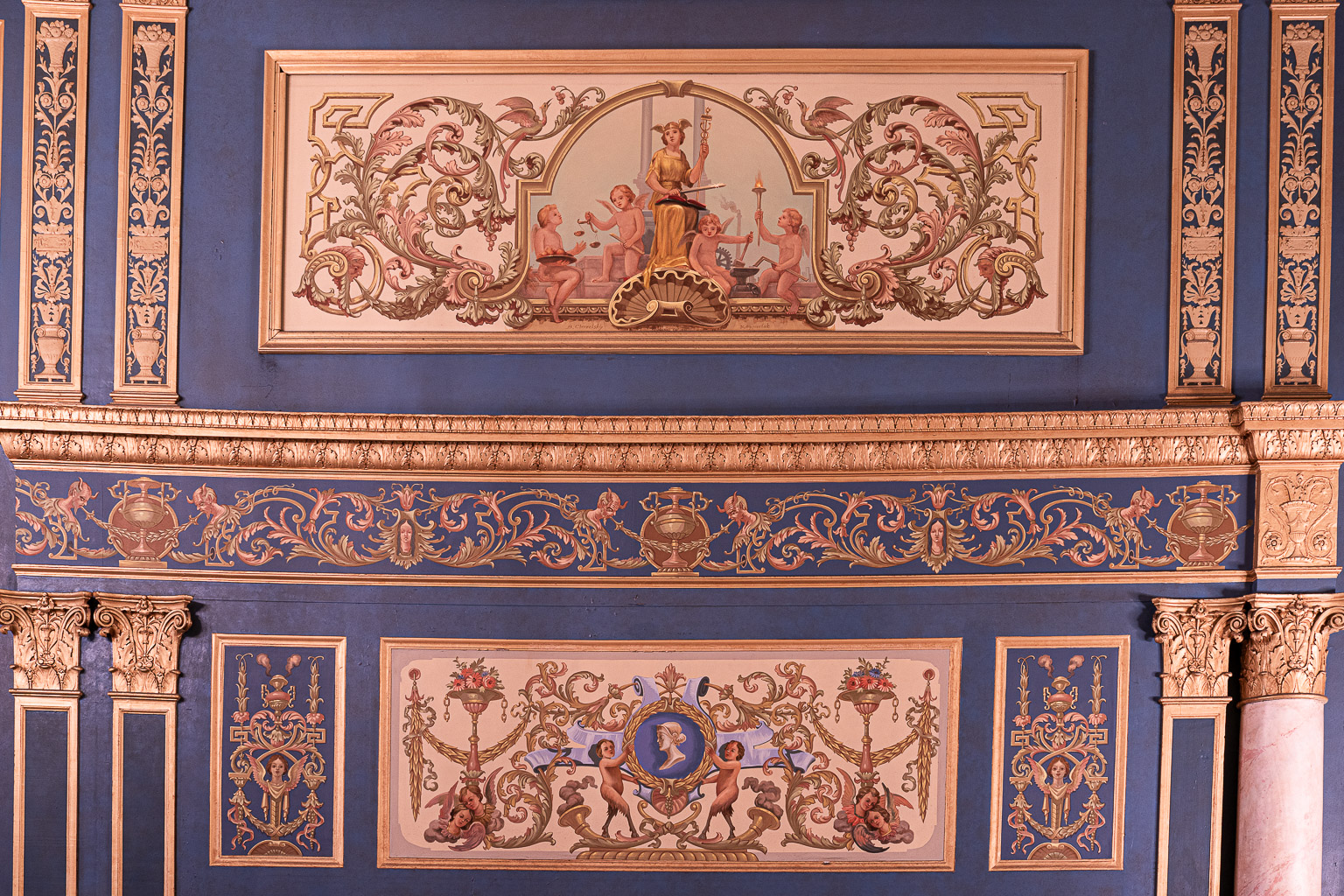
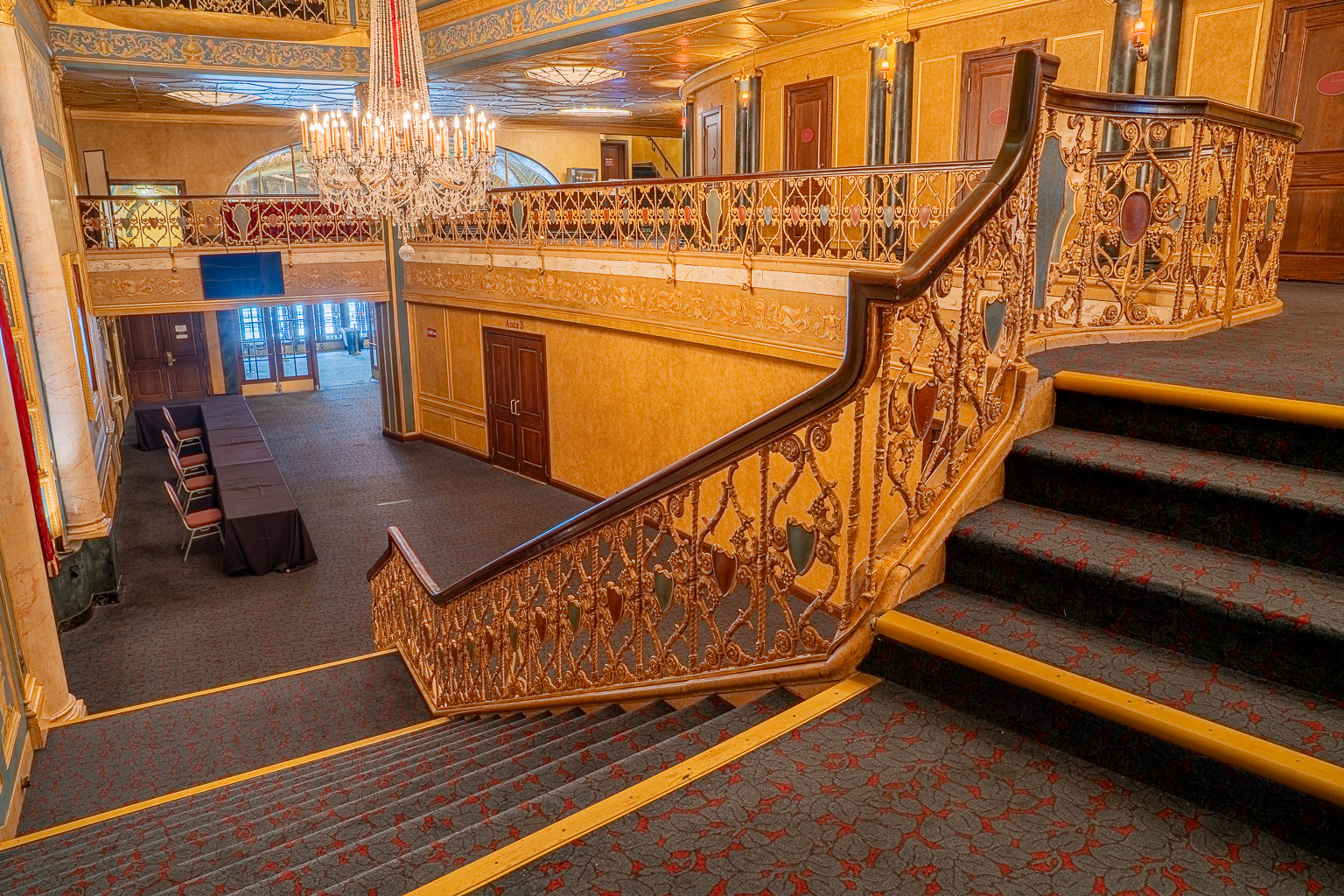
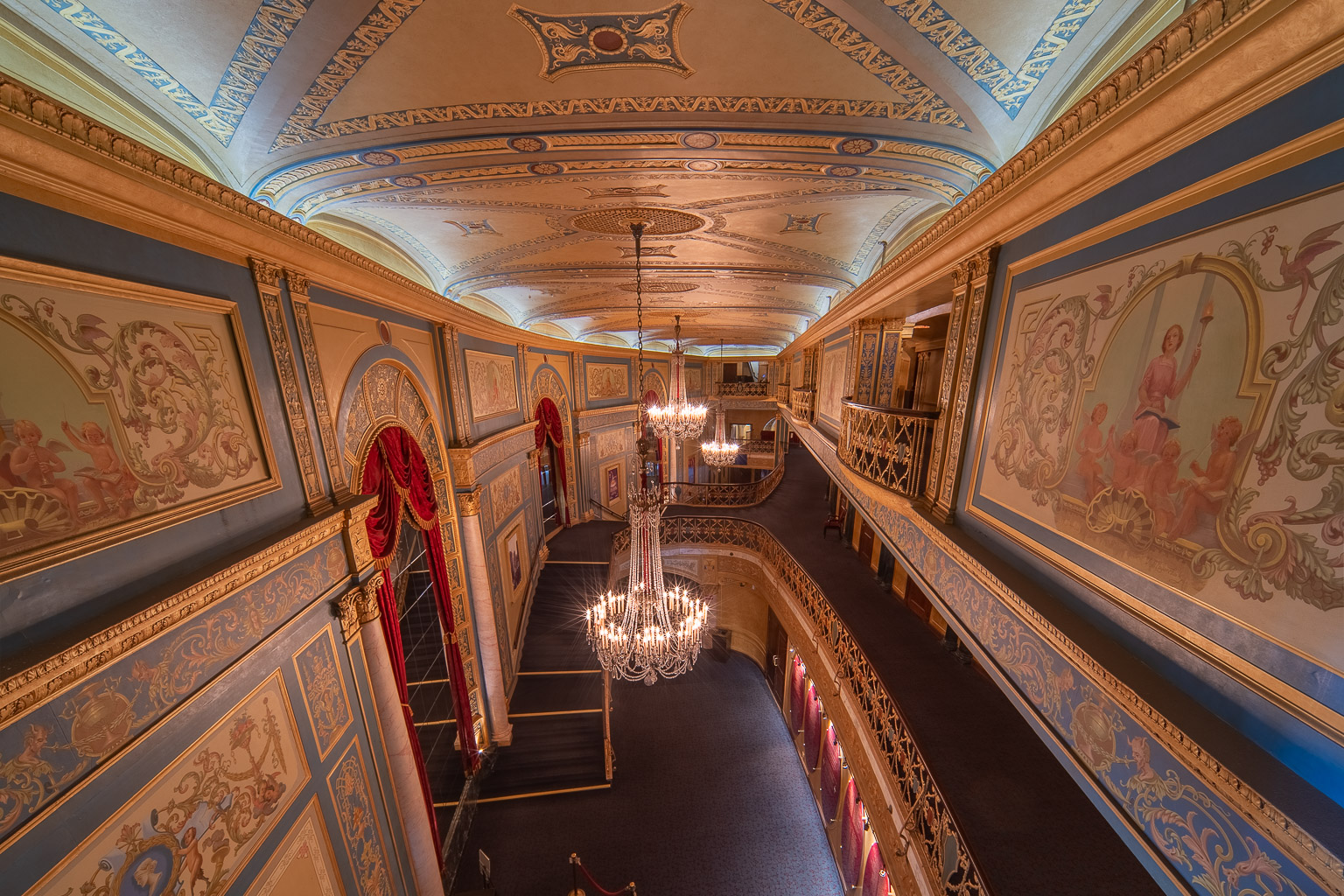
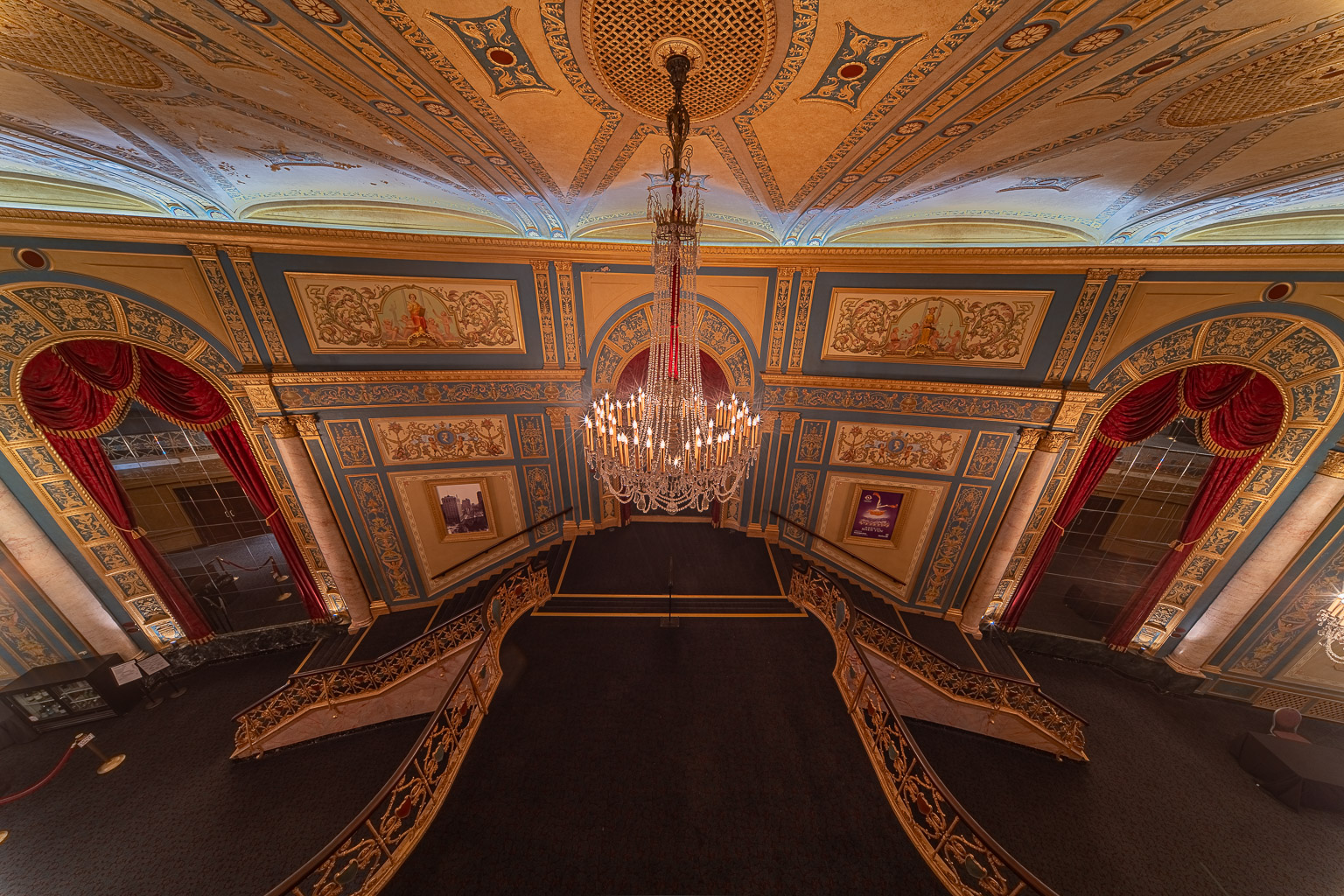
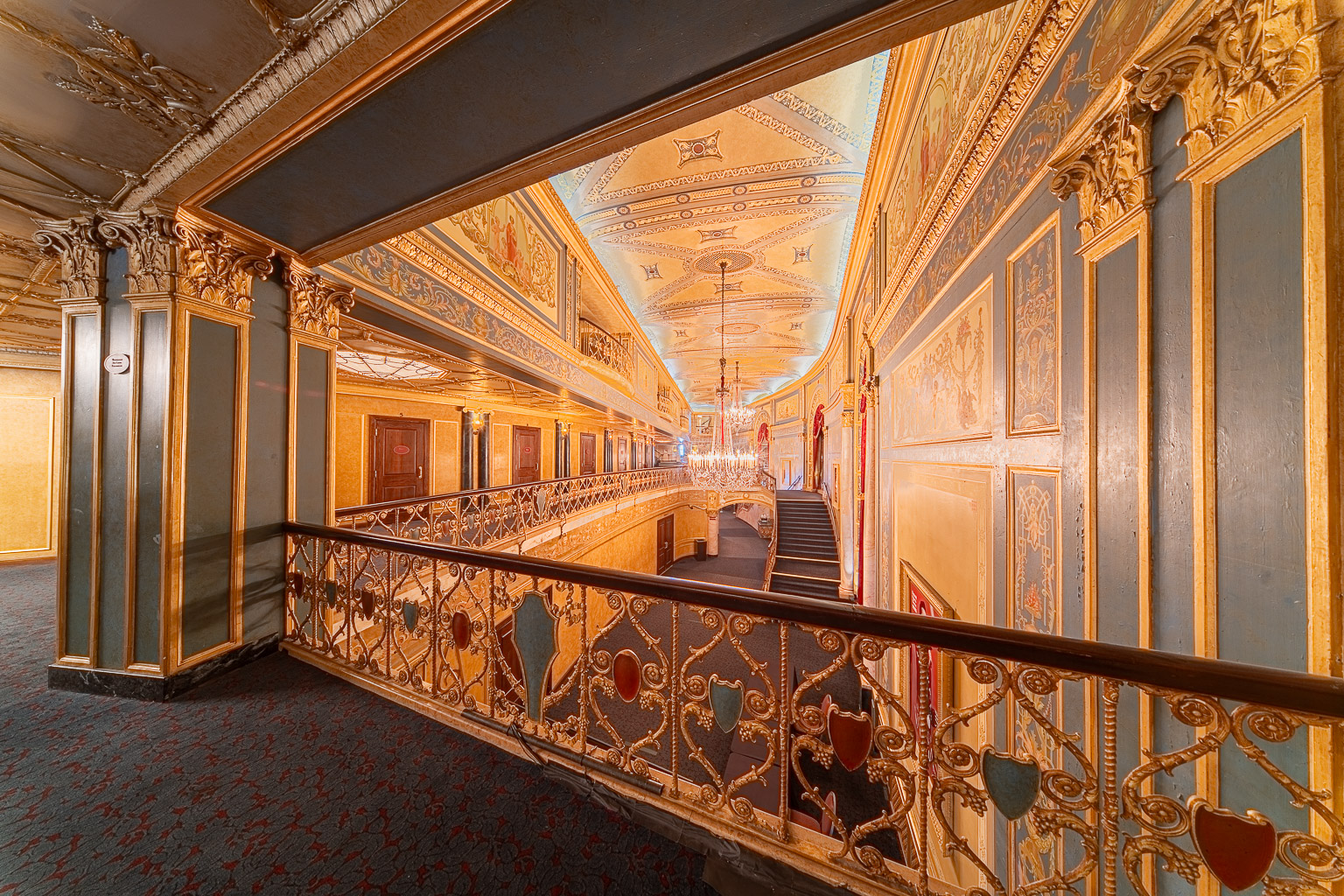
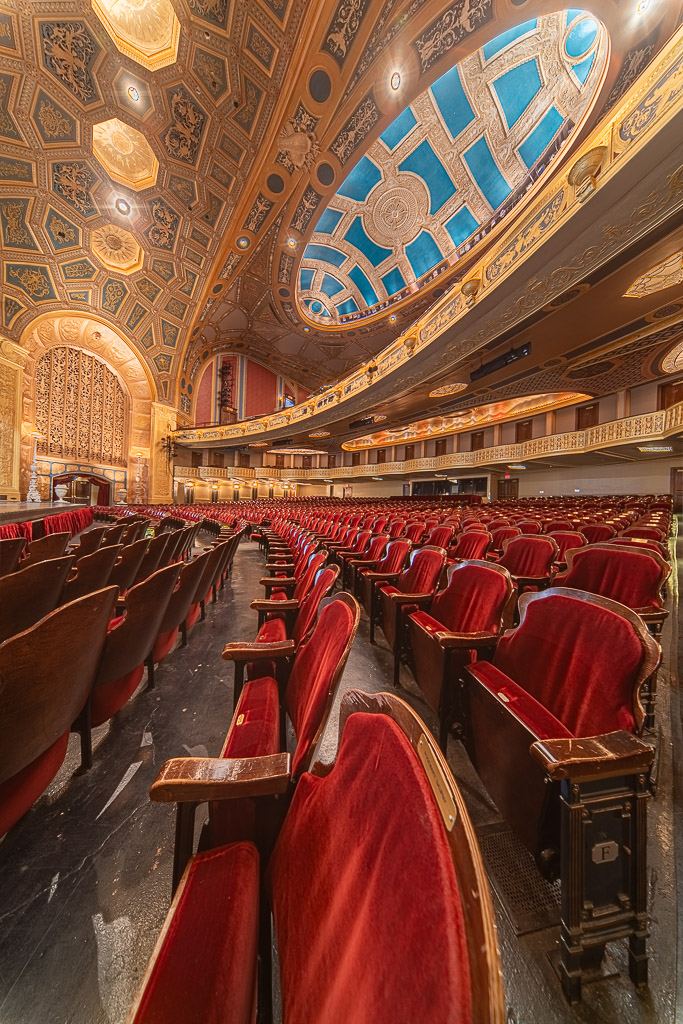
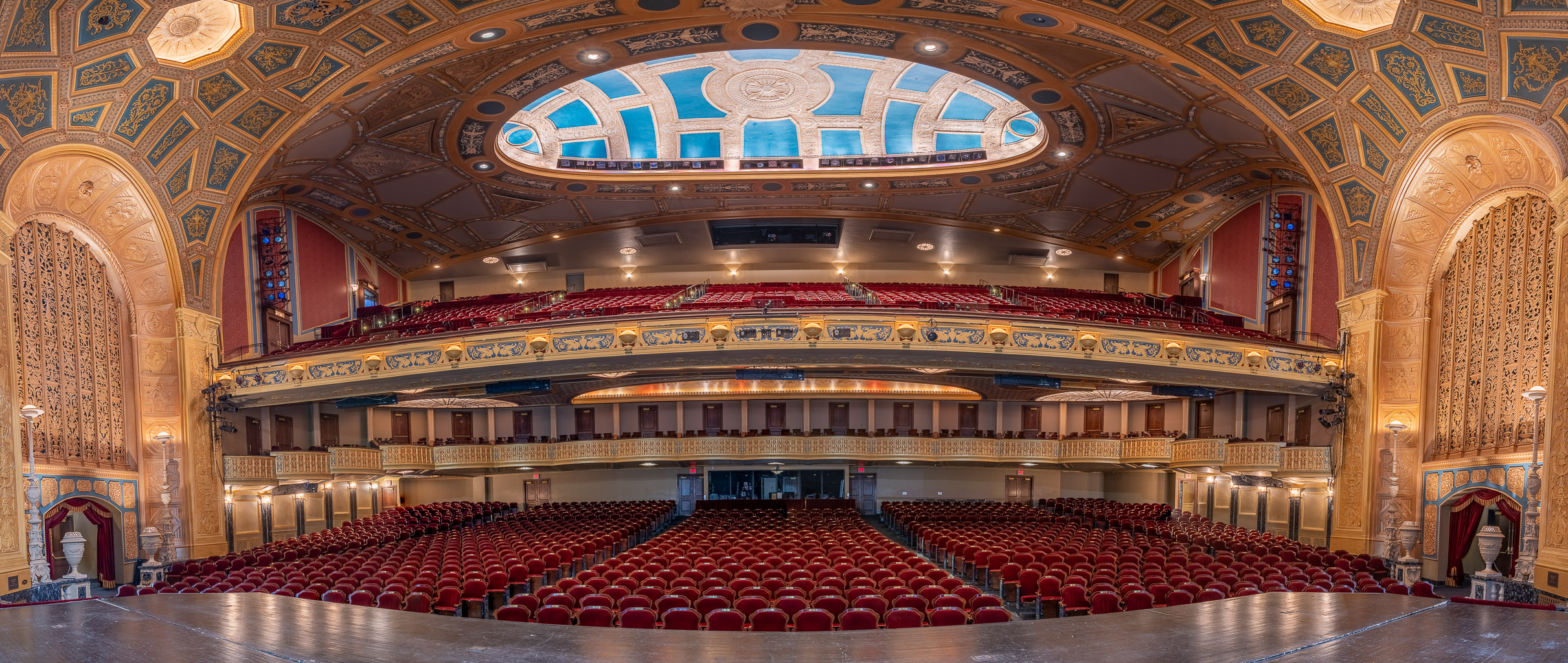
The main auditorium seats 2700 people, and the stage is the largest between New York and Chicago.
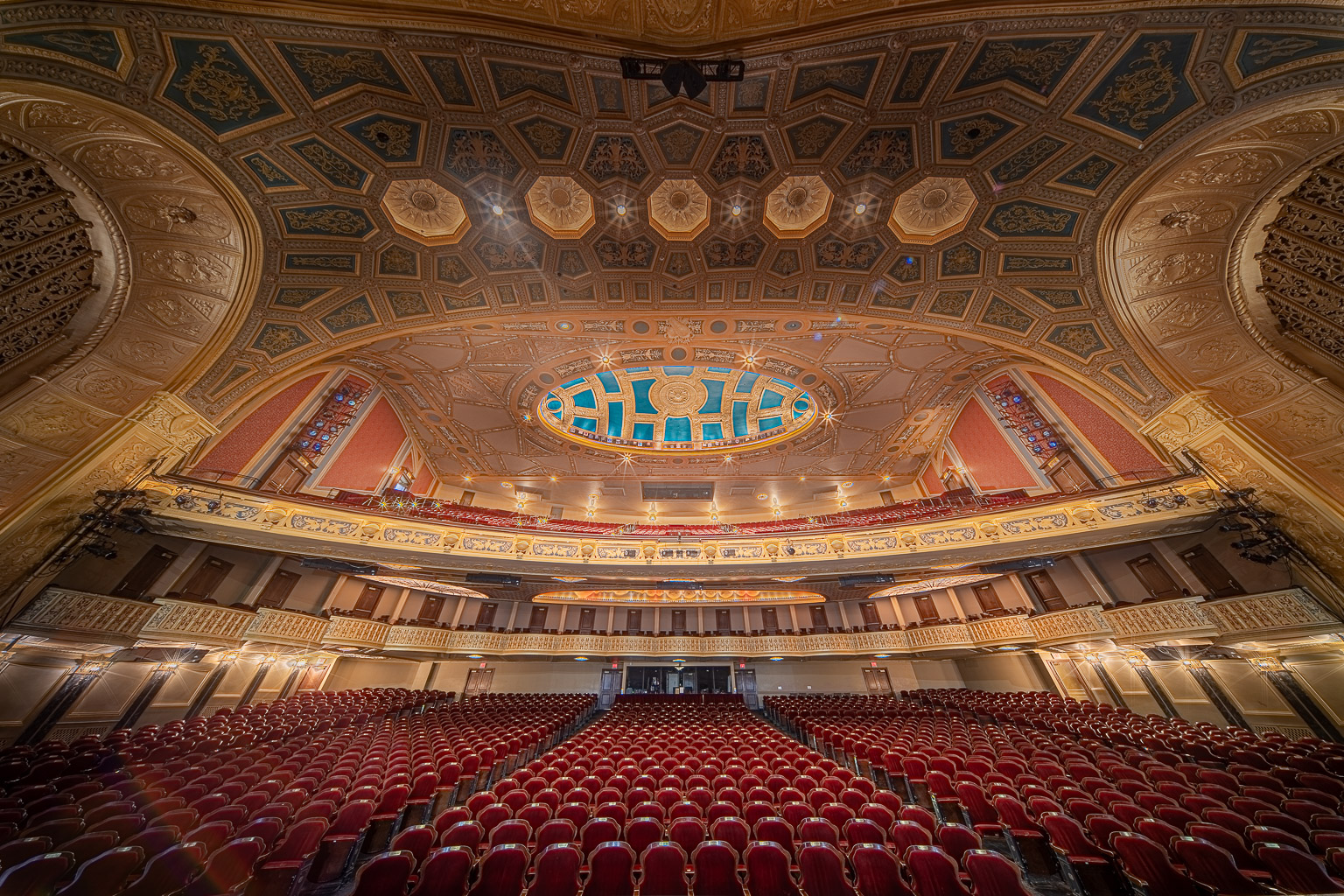
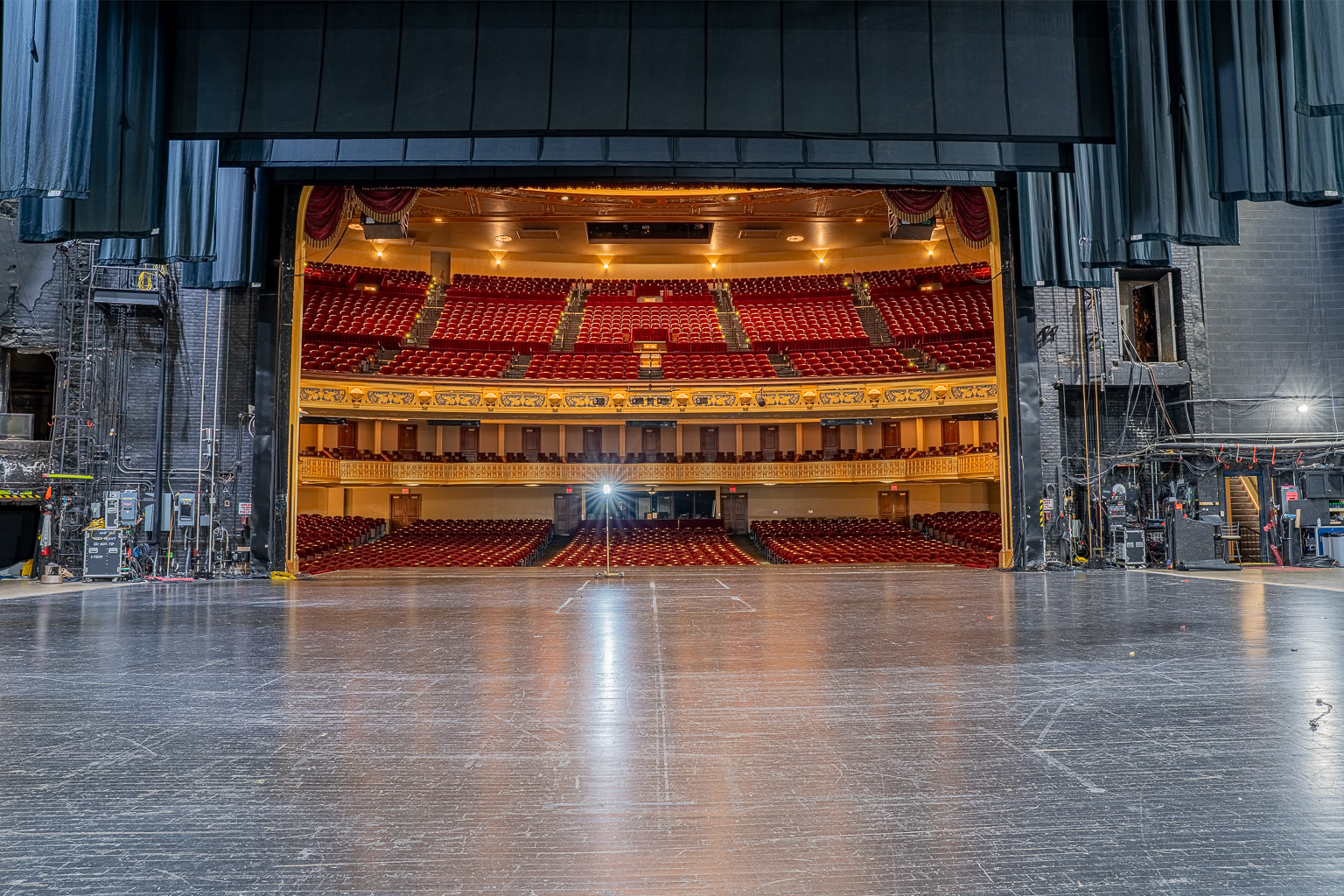
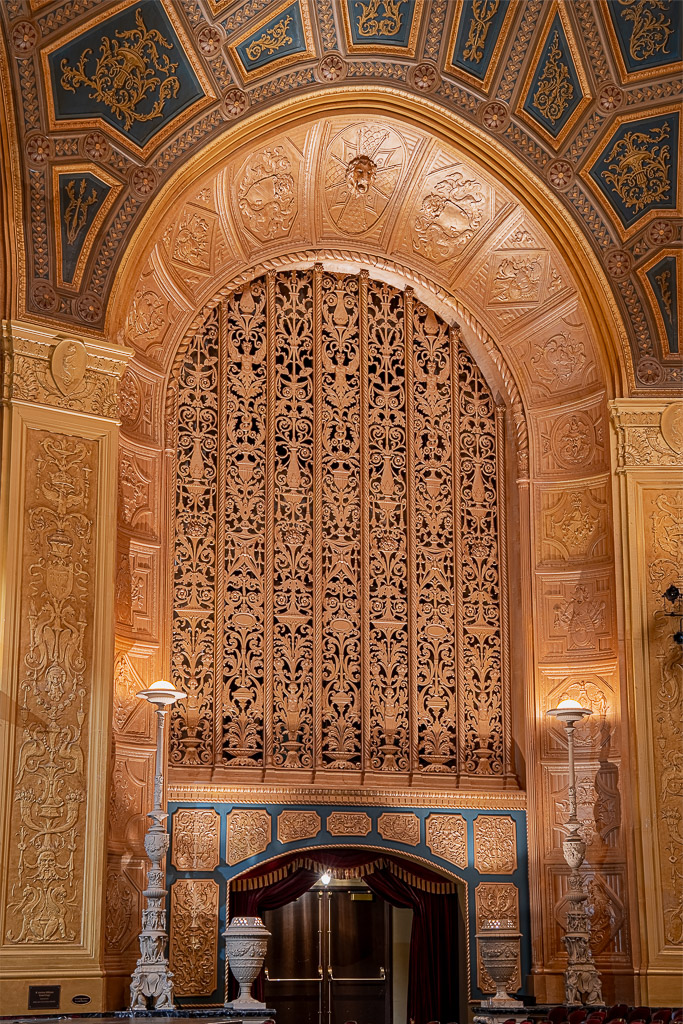
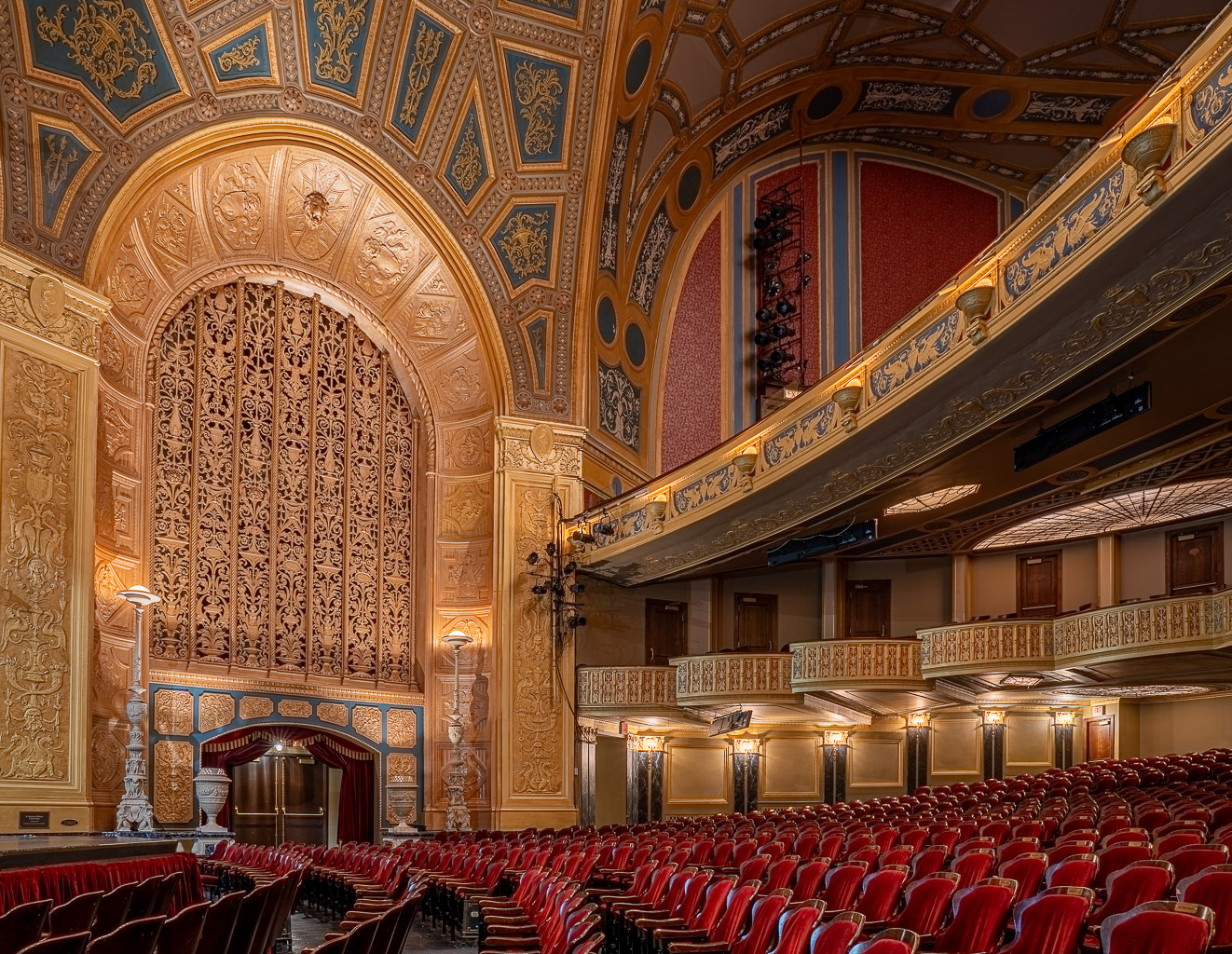
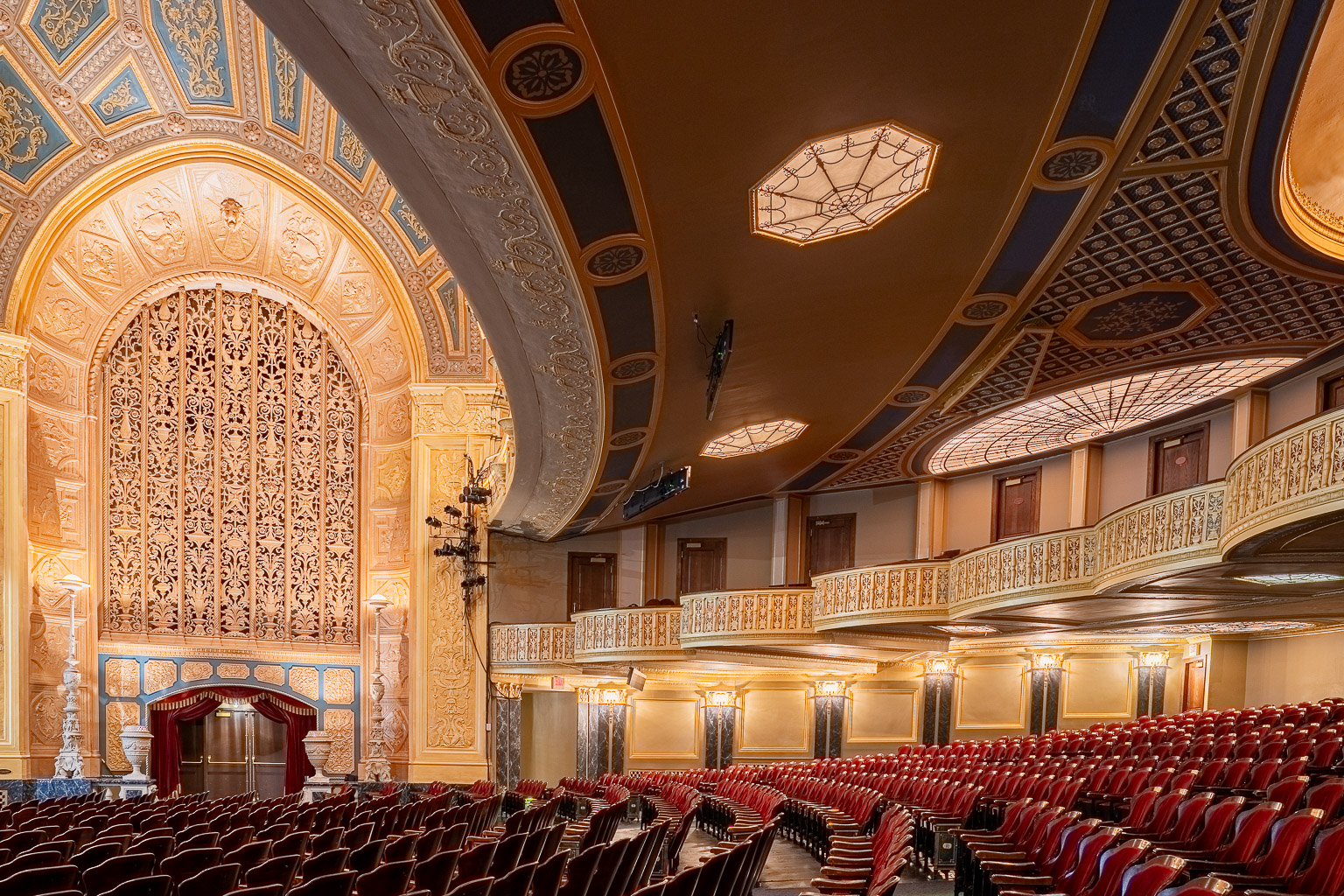
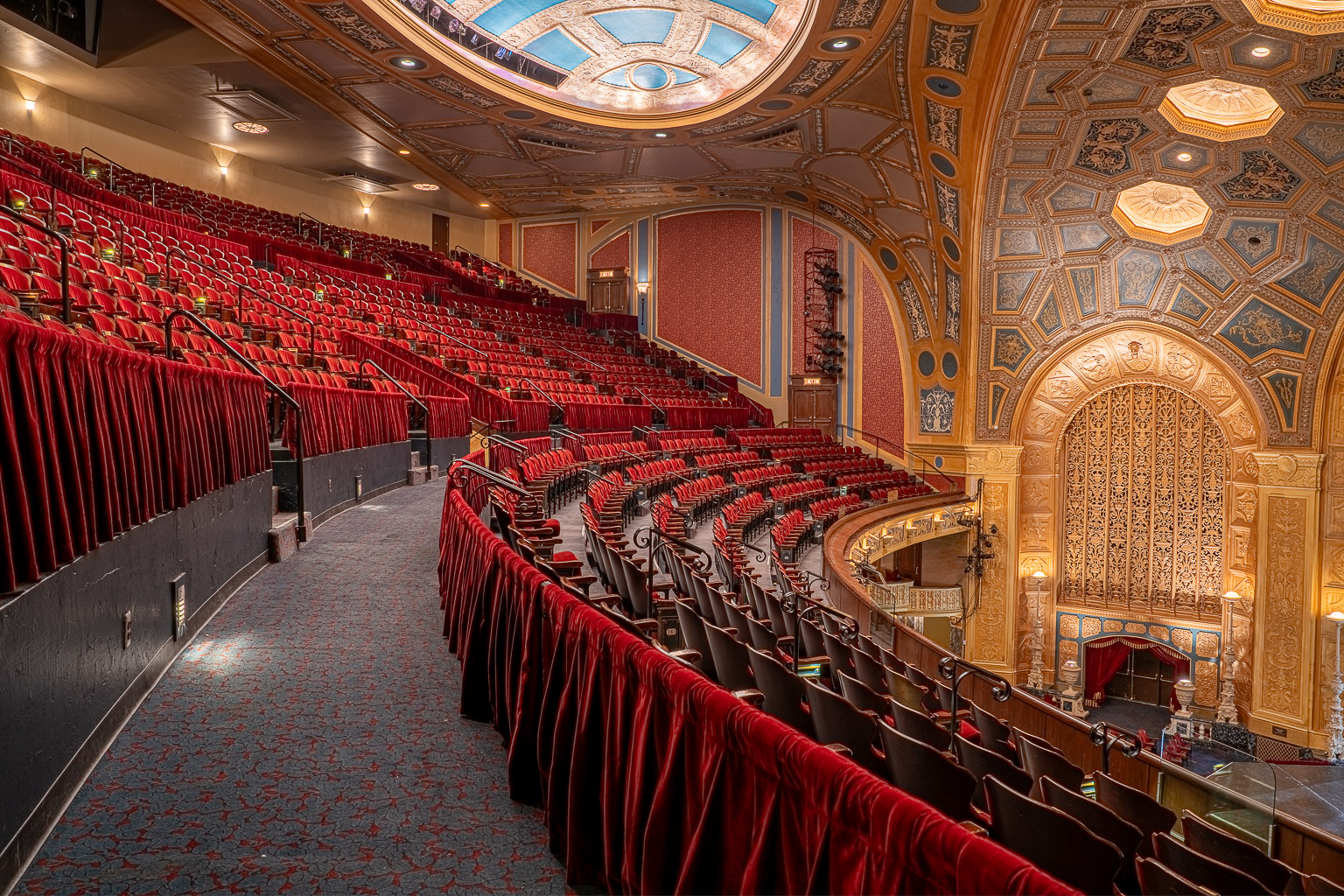
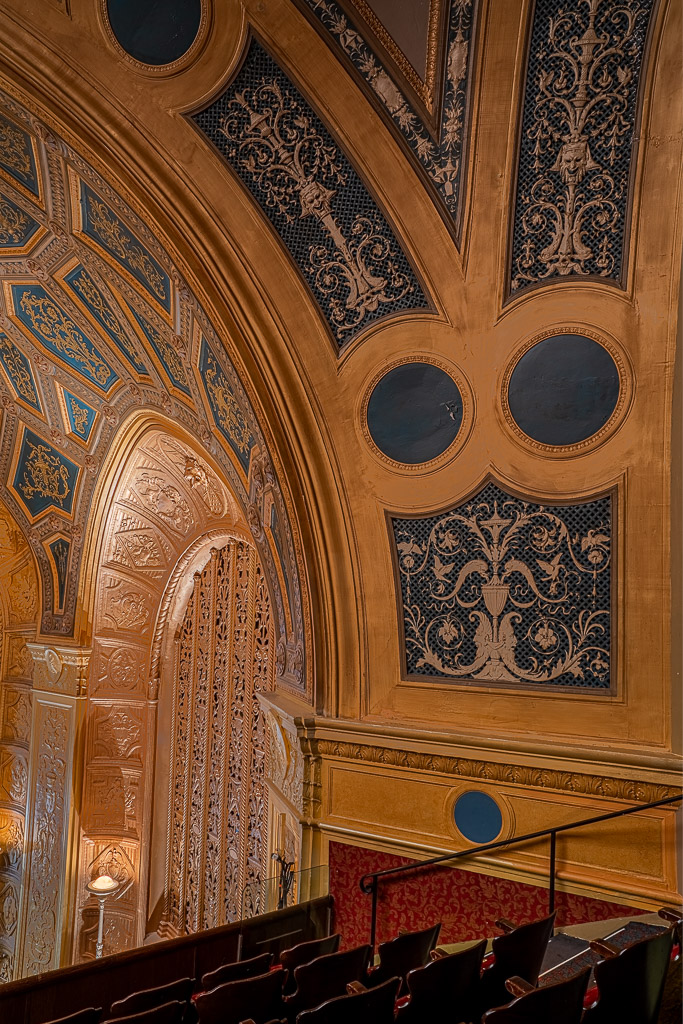
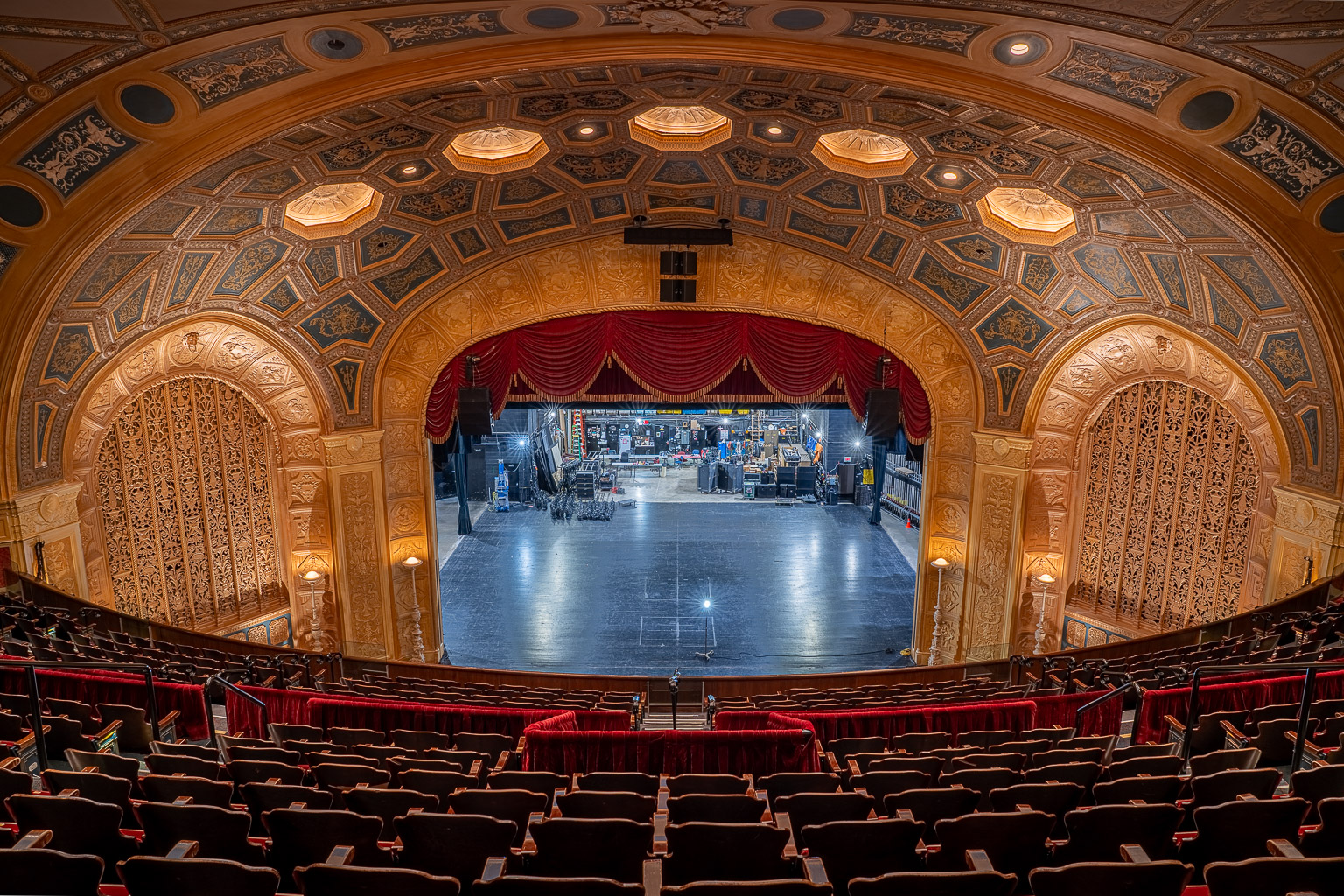
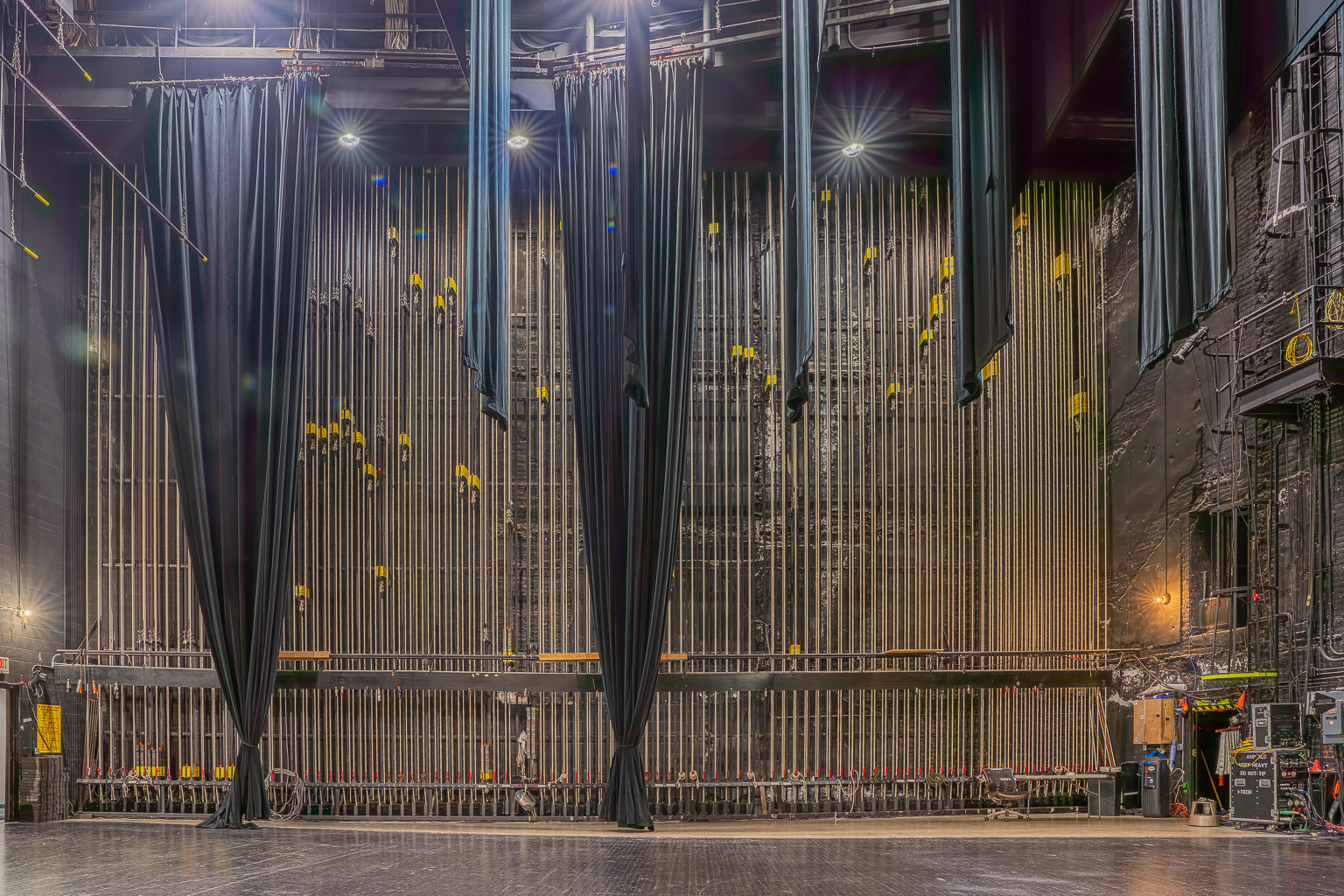
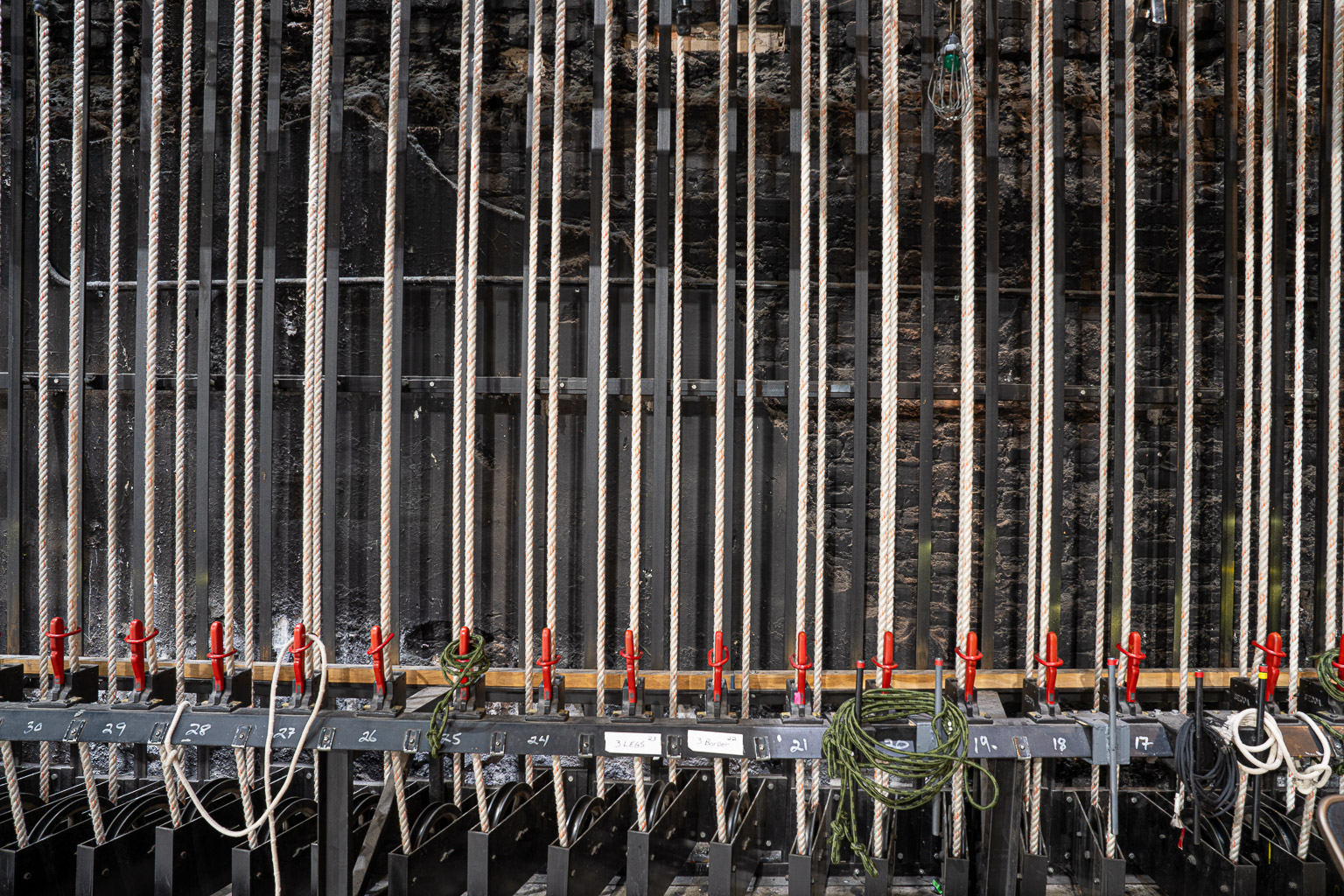
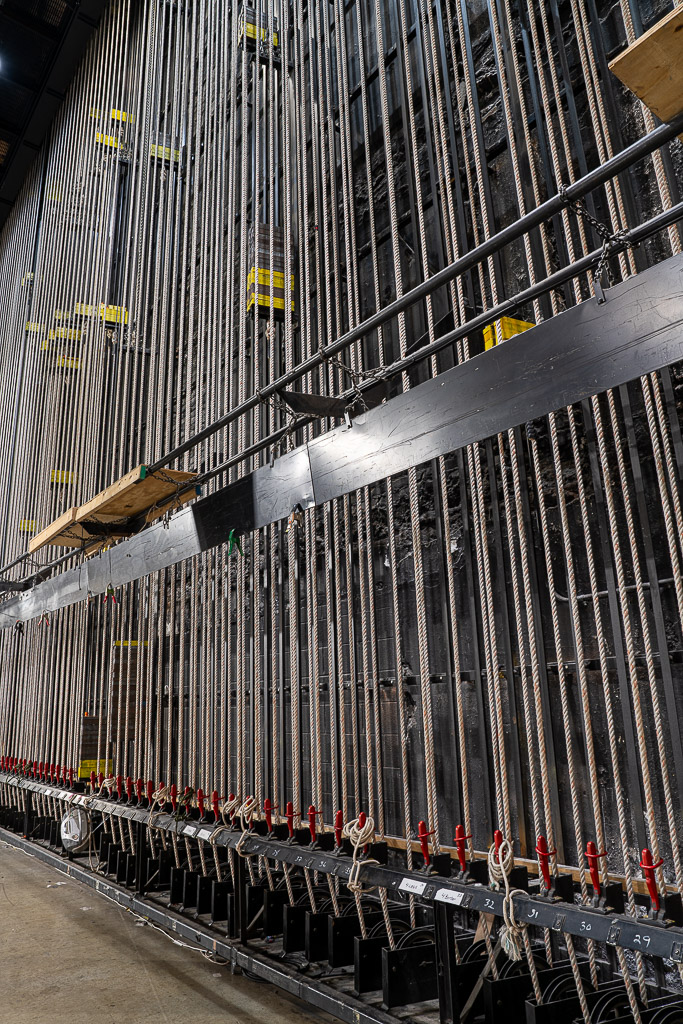
And here are the backstage lift lines at the Detroit Opera House.
In the fall of 1929, the Capitol Theater became the Paramount Theater and in 1934, was renamed the Broadway Capitol Theater. A variety of entertainers such as Will Rogers, Louis Armstrong, Betty Hutton, and Duke Ellington performed at the theater during the 1930s and 1940s; and later many of the rock and roll stars of the 1950's. In 1960 the theater was reconfigured to 3,367 seats and begin to show movies. The name was changed again to the Grand Circus Theater and it remained opened until 1978. From 1981 to 1985 , the theater ran intermittently presenting diverse entertainment, from mainstream artists to alternative rock bands. After a small fire in November of 1985, the theater remained closed for the next three years. In 1989 building was purchased by the Michigan Opera Theater.
Since its inception in 1971, Michigan Opera Theater has called three different theaters "home" prior to the opening of the Detroit Opera House. In 1971 the Company became the catalyst for the revitalization of Detroit's celebrated Theater District as it reopened the Music Hall Center for the Performing Arts. In 1985, in an effort to accommodate its growing audience and increase production needs, the Company, began performing the fall season at the Fisher Theater and by spring they had moved to the 4000 seat Masonic Temple.
In the spring of 1993, the Roberts Fur Building located on the south side of Madison Avenue near the park was razed for the 75,000 square foot stagehouse and patron service areas. The adjoining office towers underwent adaptive reuse into dressing rooms, and offices for Michigan Opera Theater's administration, production, and community outreach departments. The company moved into its new offices in November 1998.
More photos and more description of this building can be found at HistoricDetroit.org.
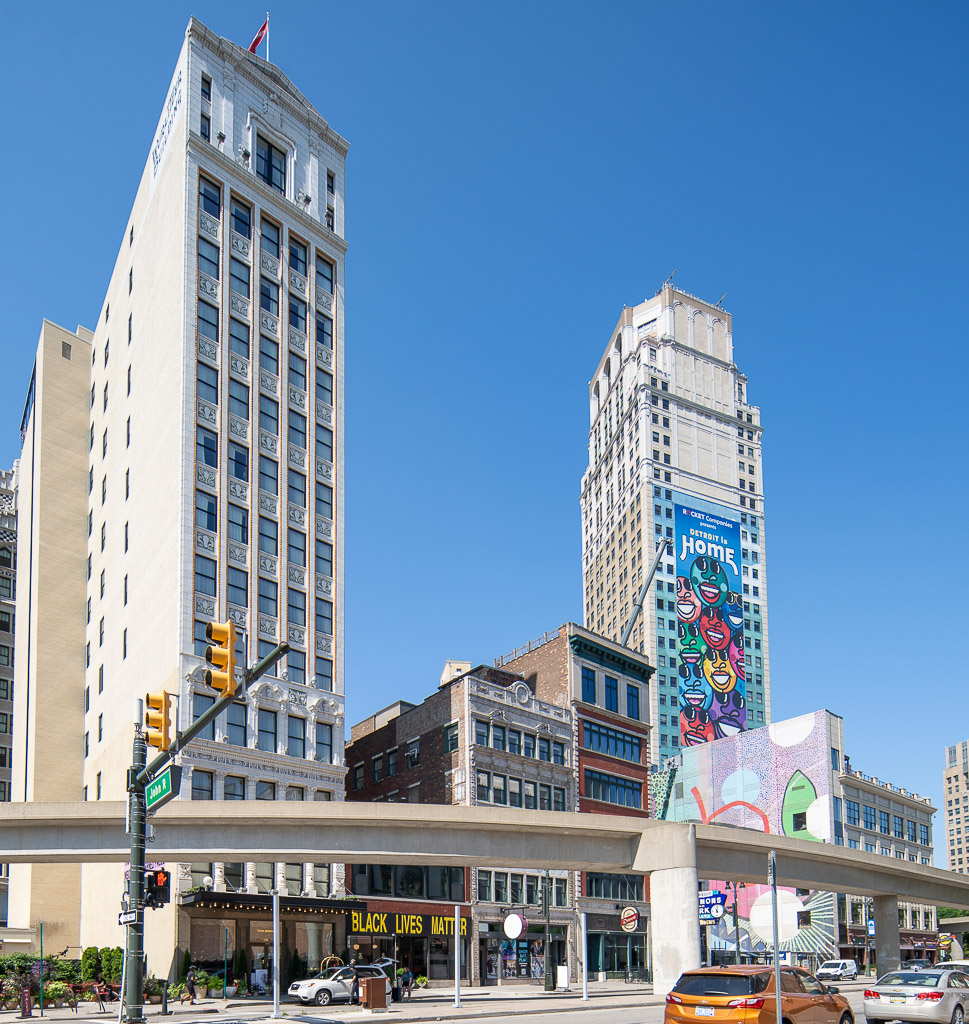
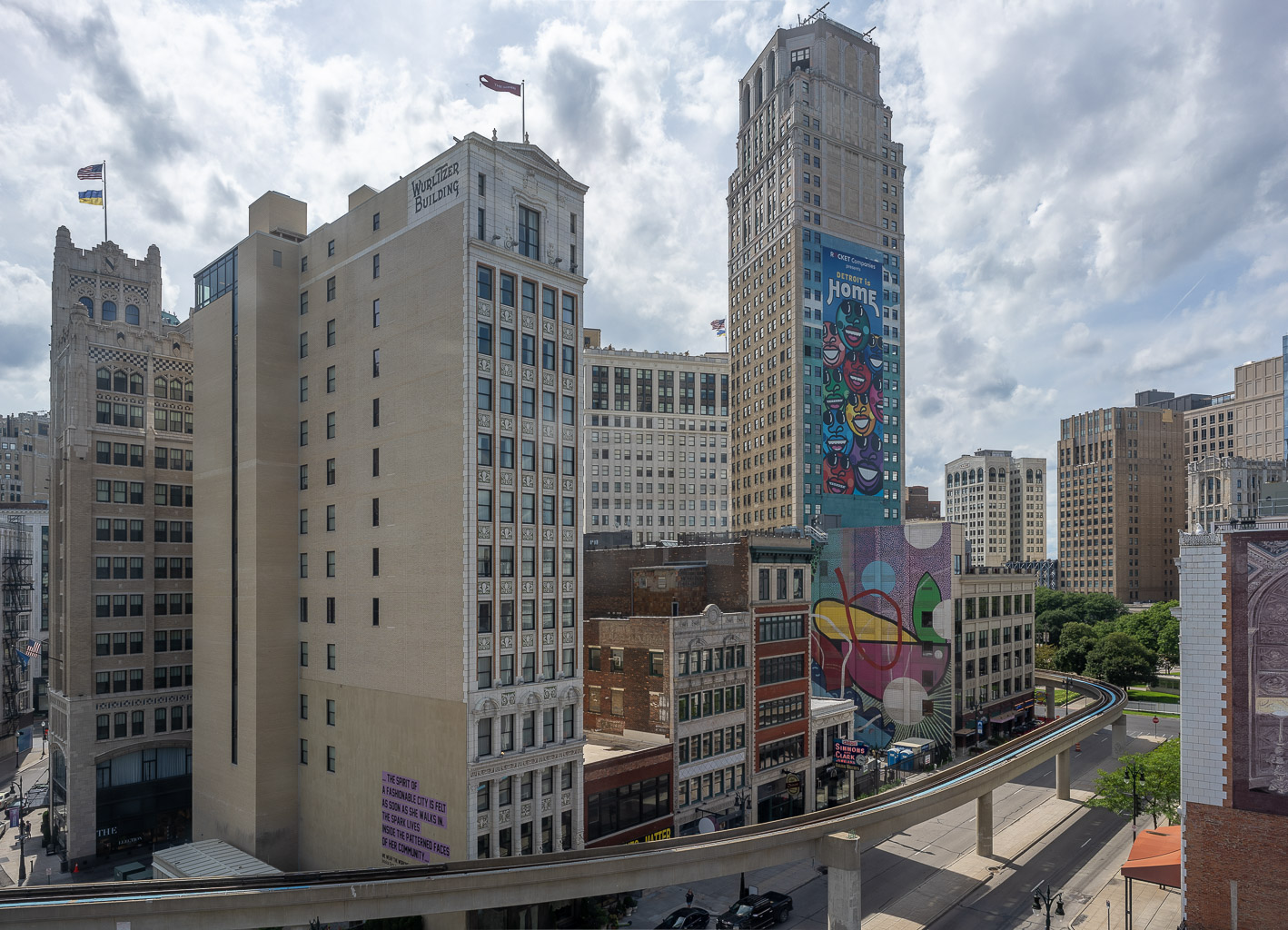
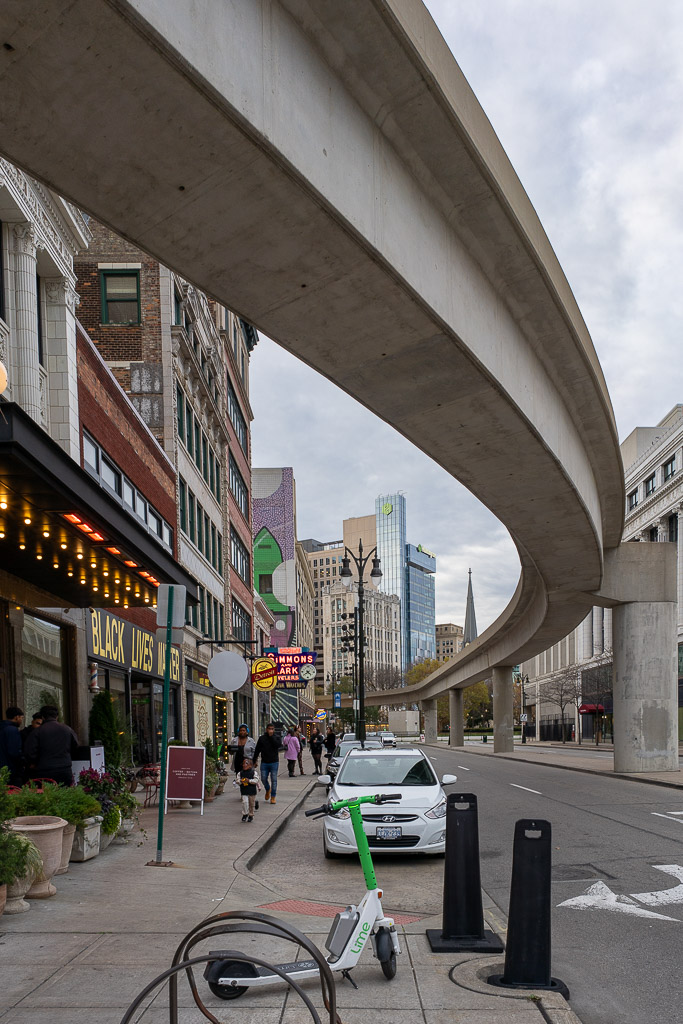
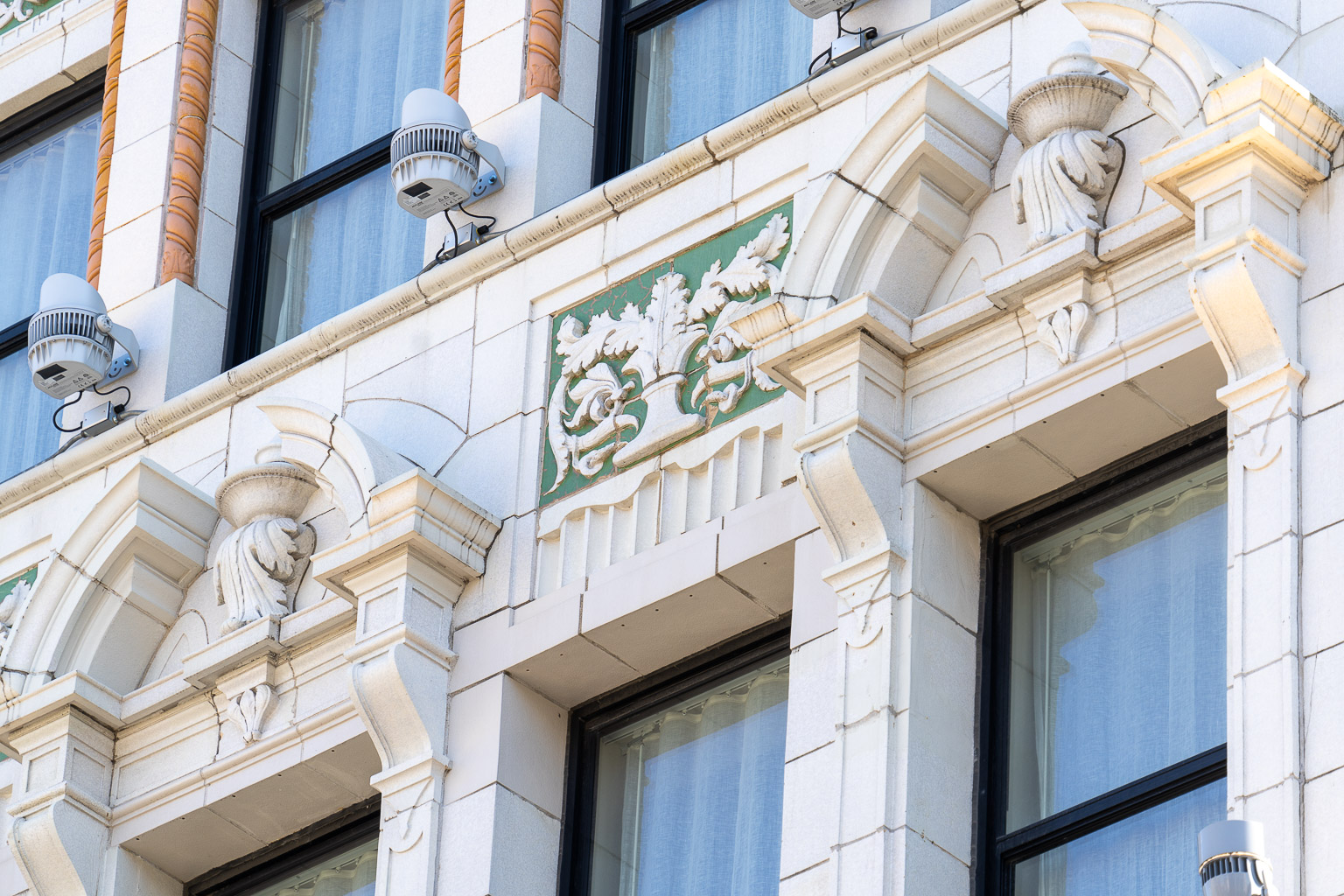
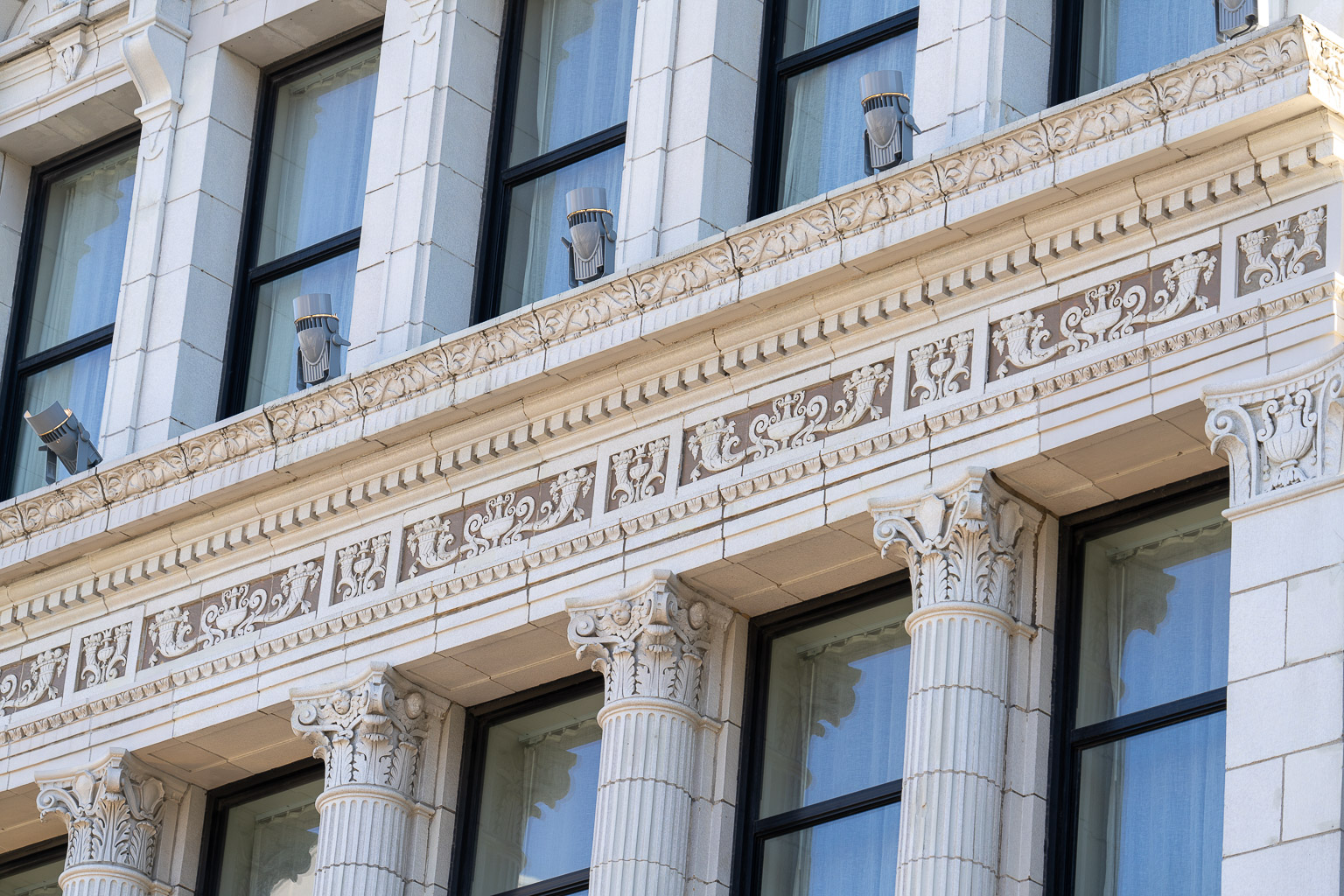
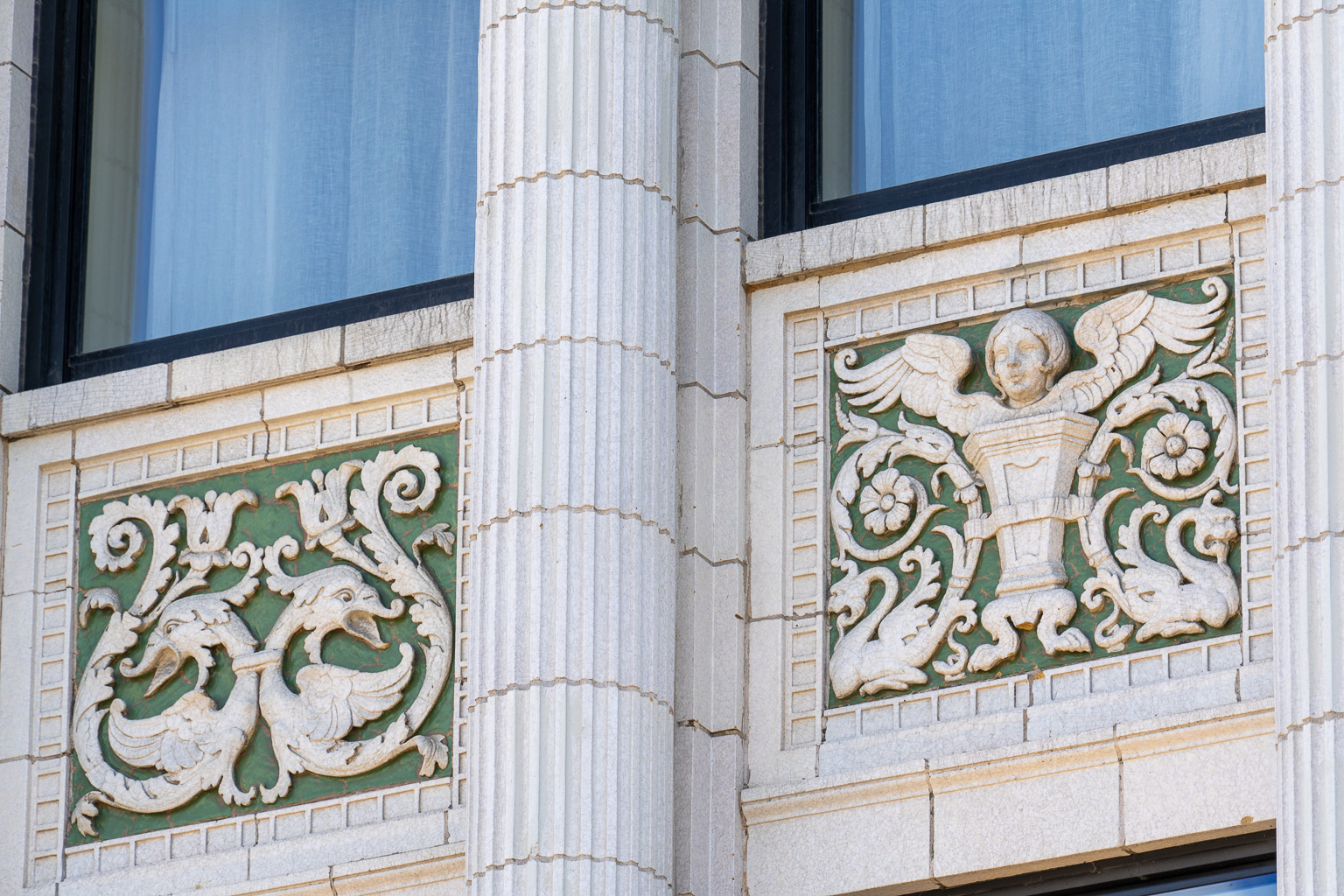
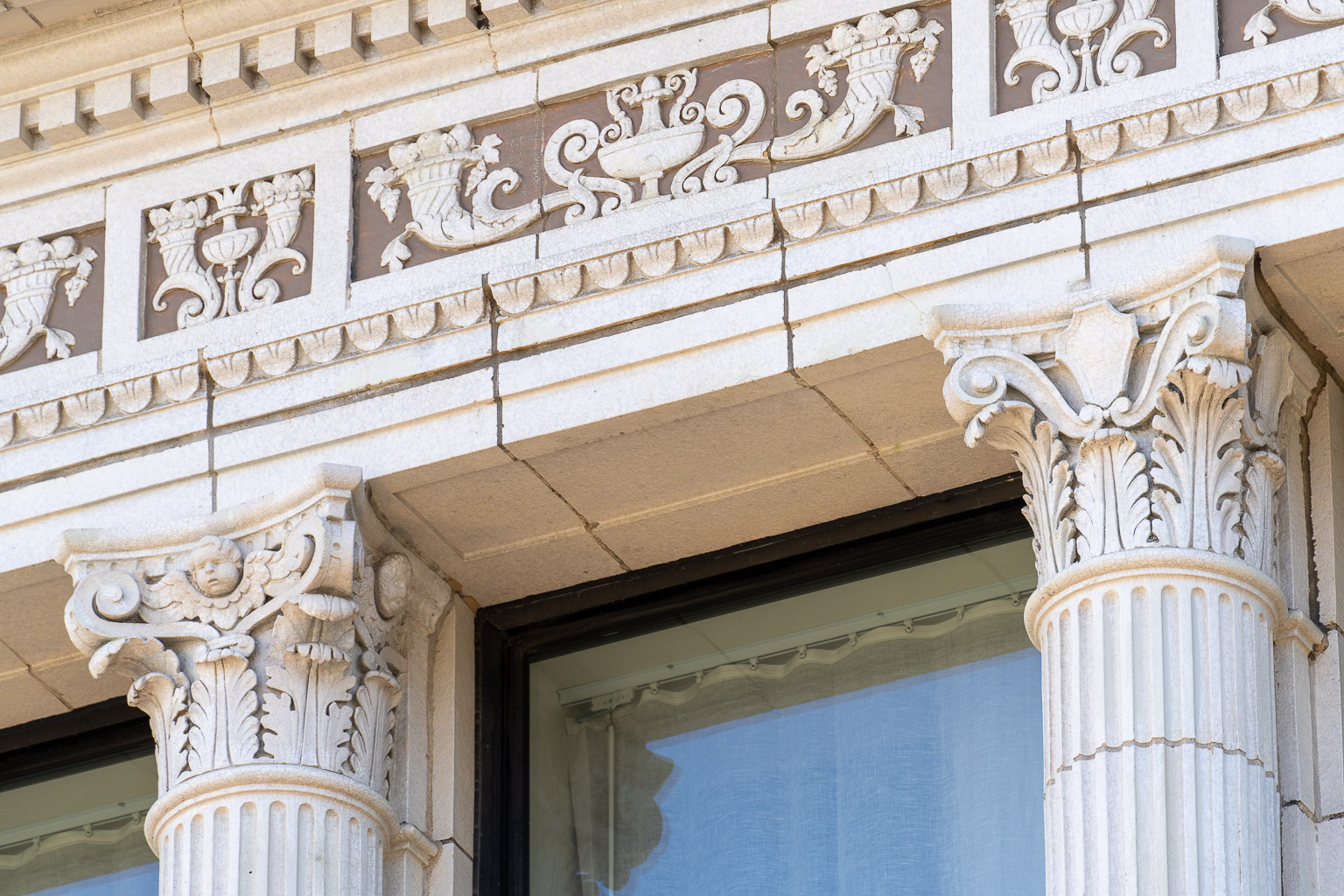
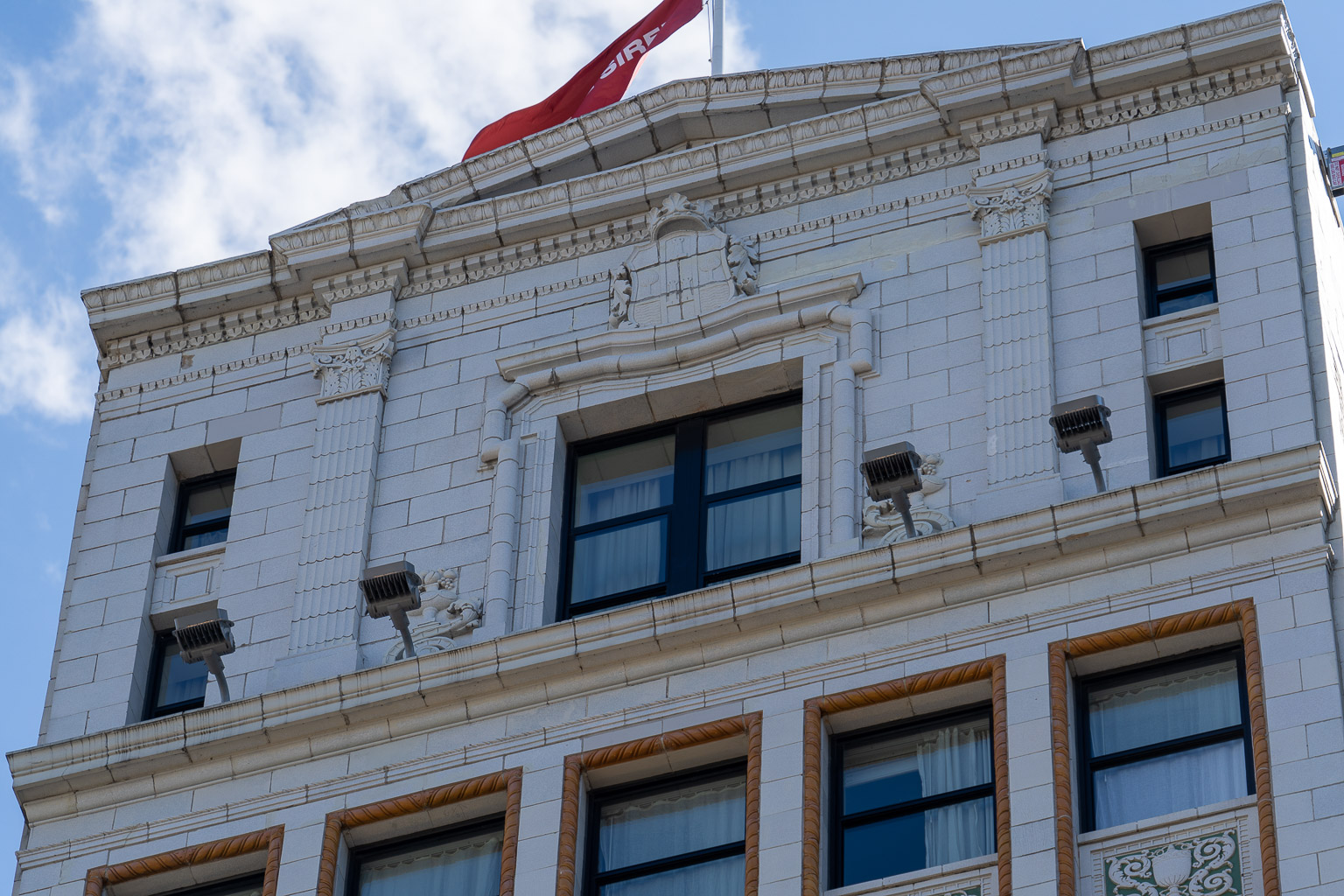
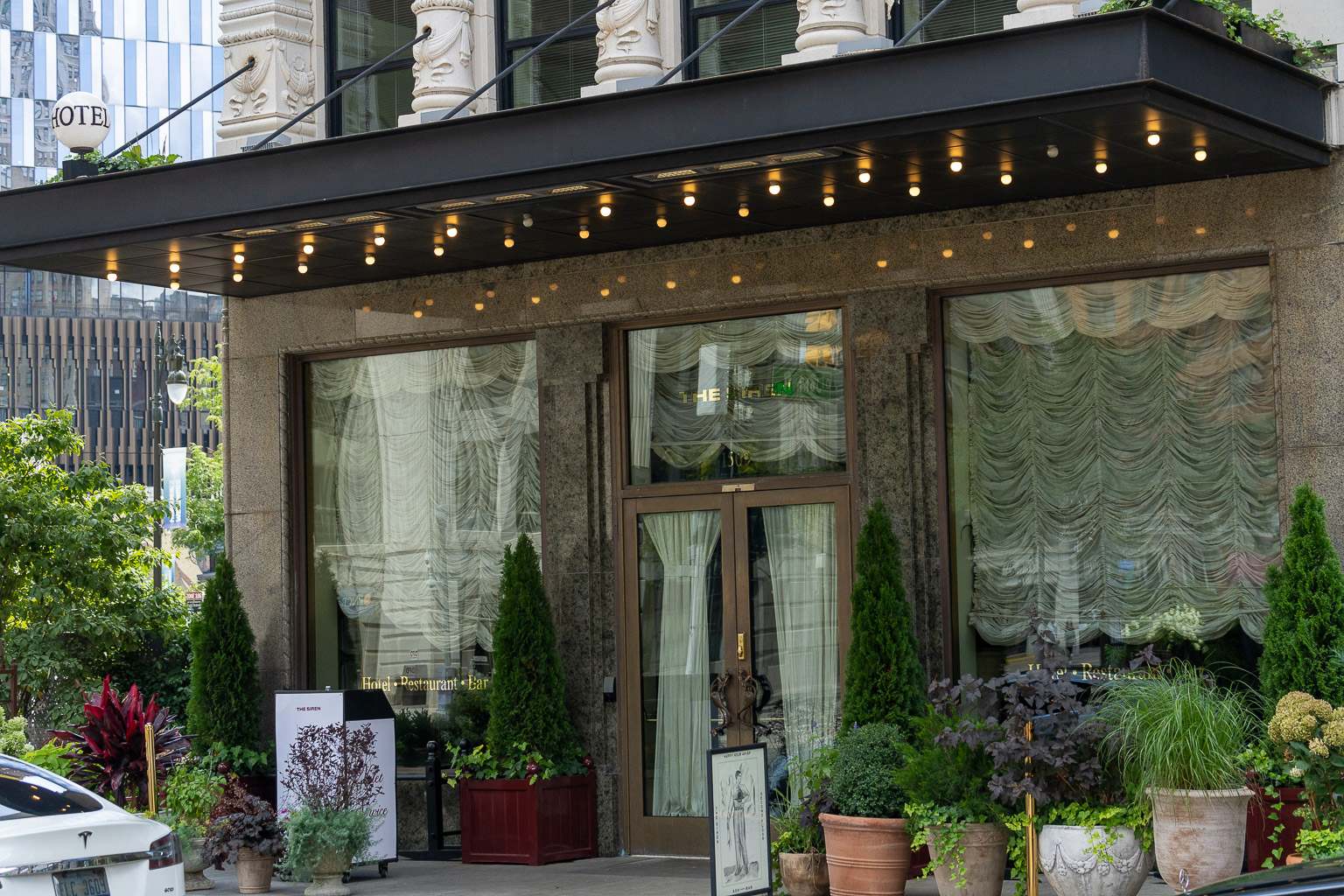
Designed by Robert Finn and built by Otto Misch, the fourteen-story Wurlitzer Building is the youngest and tallest building on this block of Broadway, having been built in 1926. The first story has a centered double-door, with large windows on either side. The door leads into the lobby of the Siren Hotel, which is the current occupant of the building, having been renovated into the hotel during 2016. Overhanging the ground floor is a projecting marquis-like structure. Above that marquis the front facade is all windows and white terra cotta with green accents. The two stories above the first floor consiste of a classical-temple-like facade with 6 two-story tall windows surrounding 5 windows on each floor. Elaborate sprandres divide the windows of each floor from the other floors all the way up the building, and the fourth-floor windows are decorated with a split arch. The top story has a raised pediment over a large window.
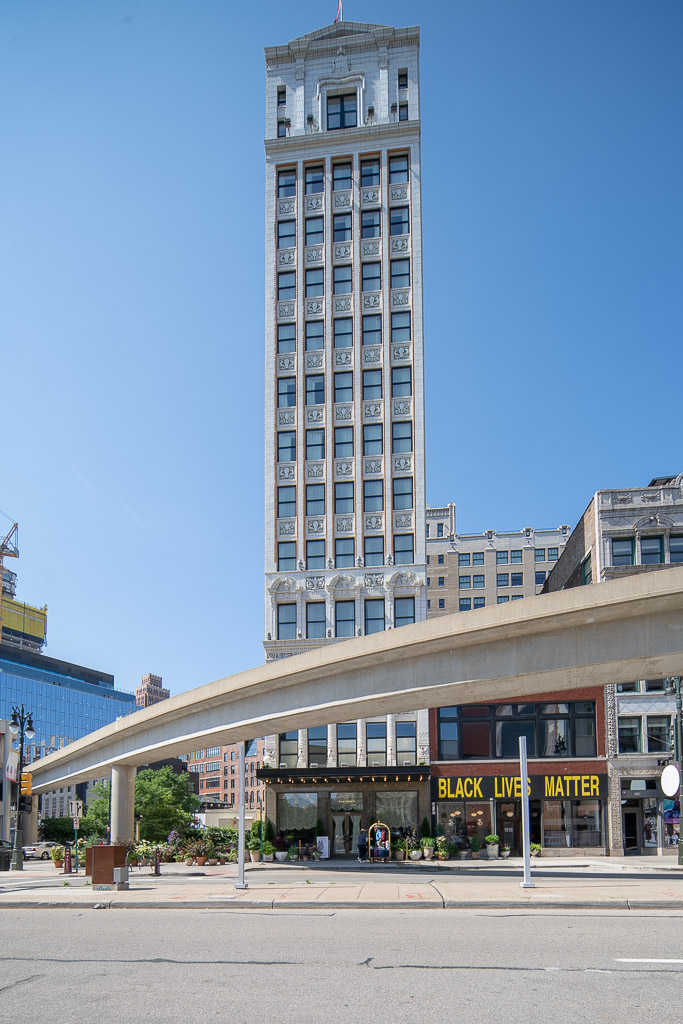
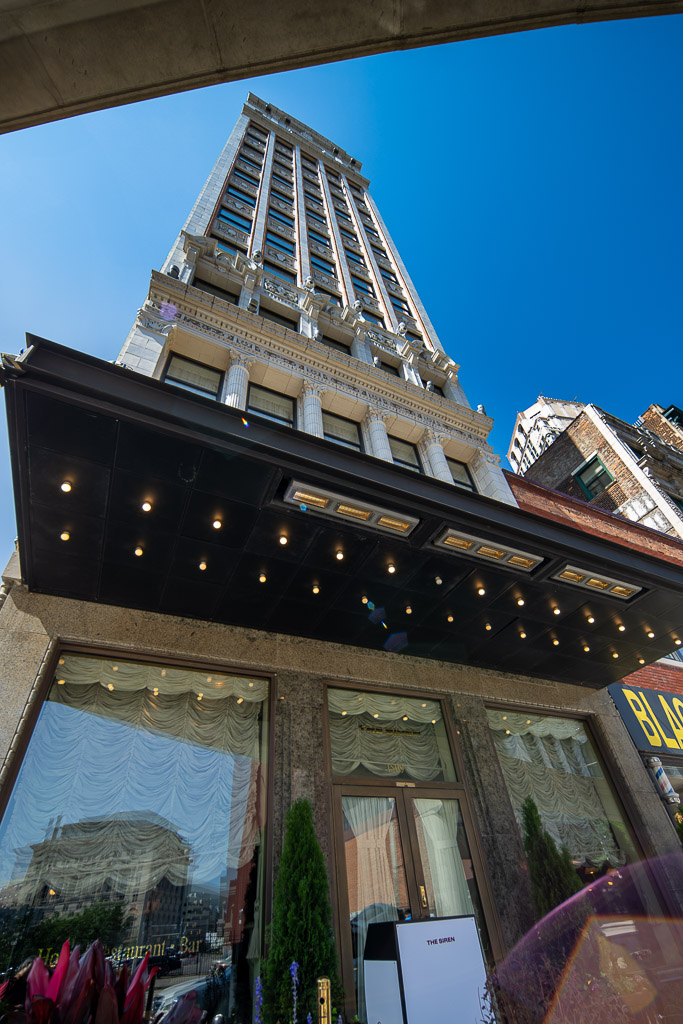
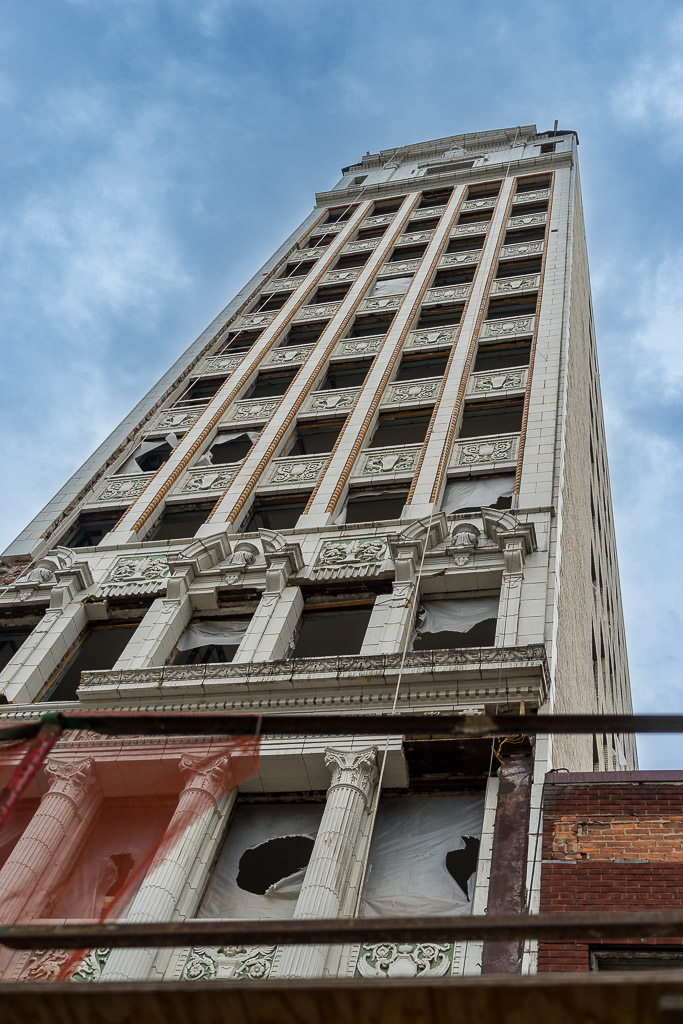
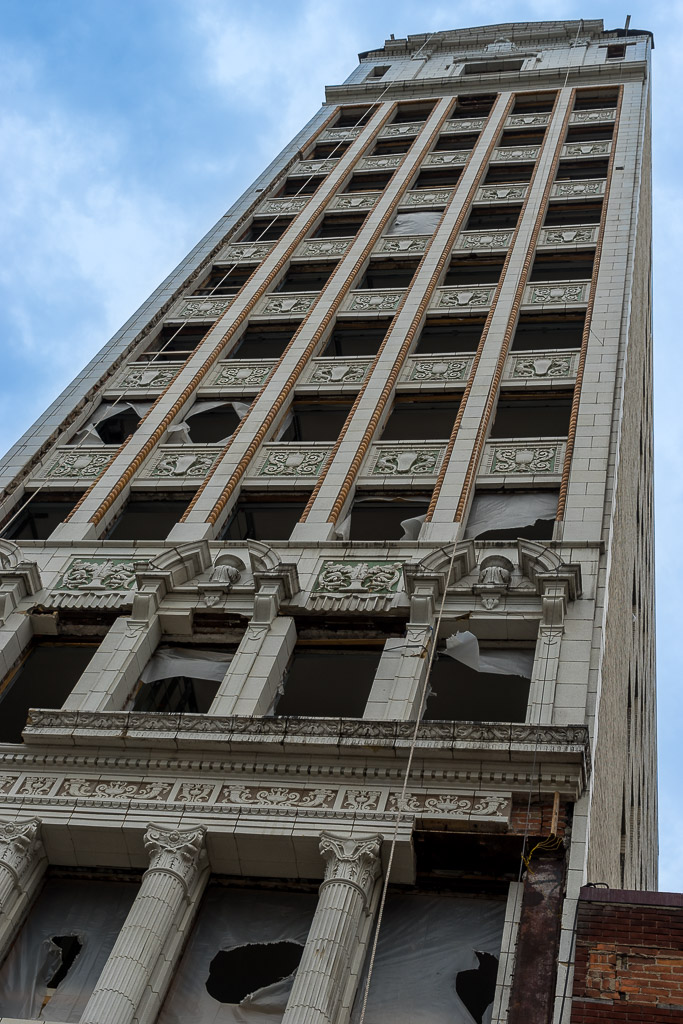
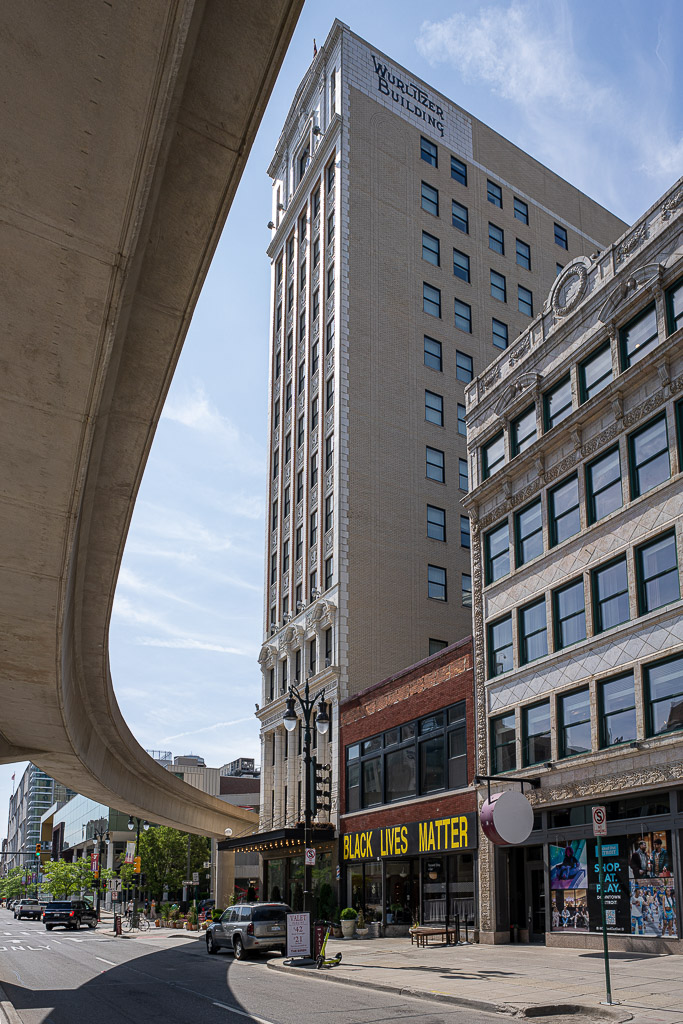
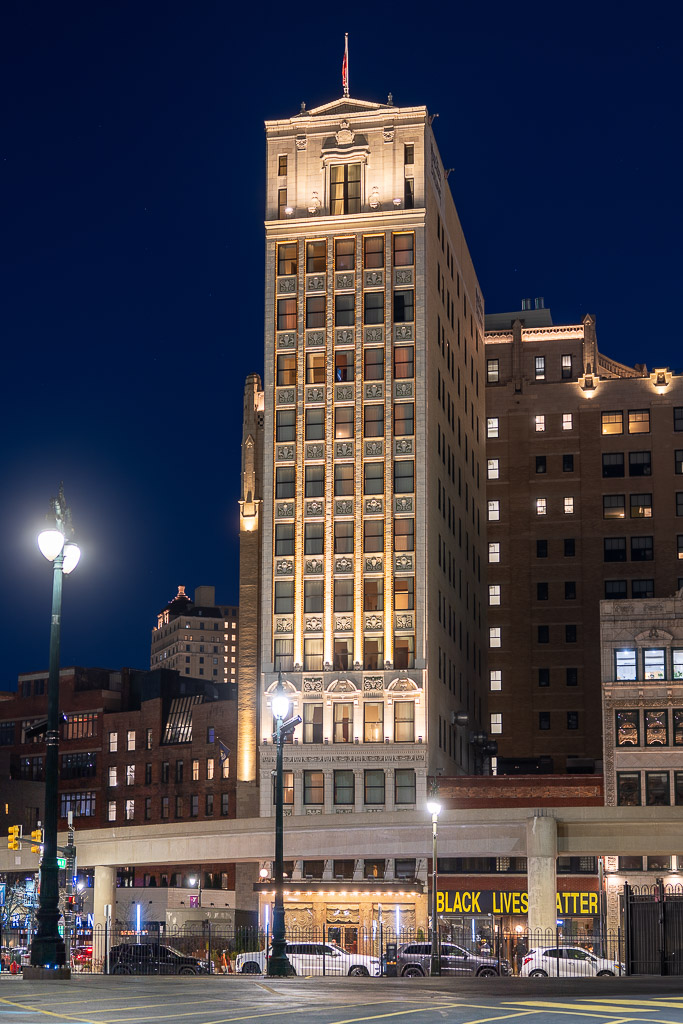
The photos below show details of the exterior of the Wurlitzer Building.
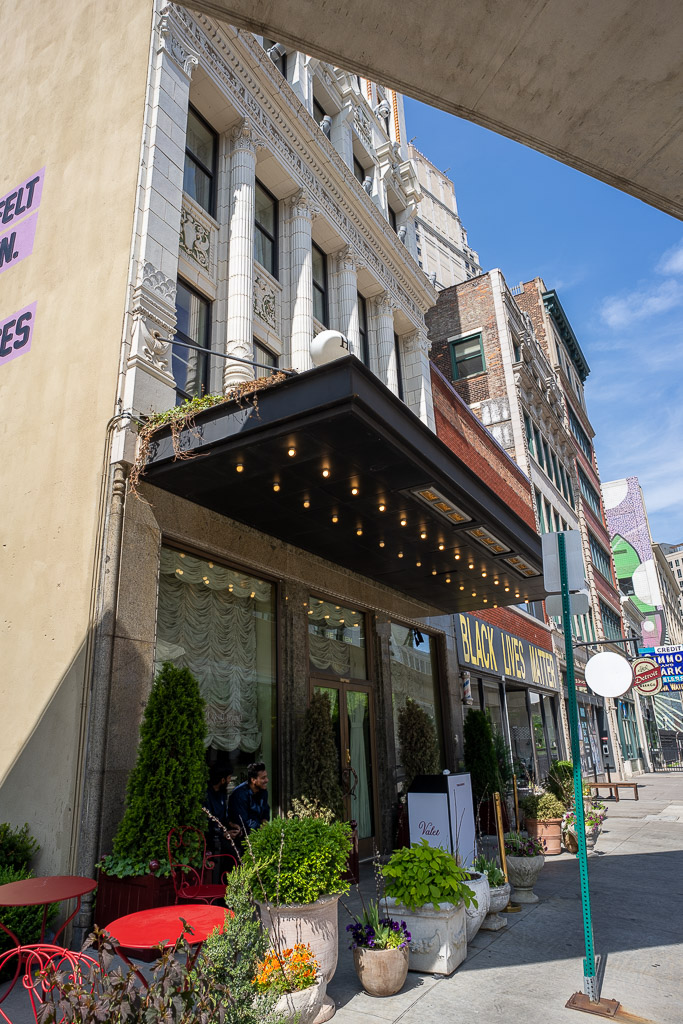
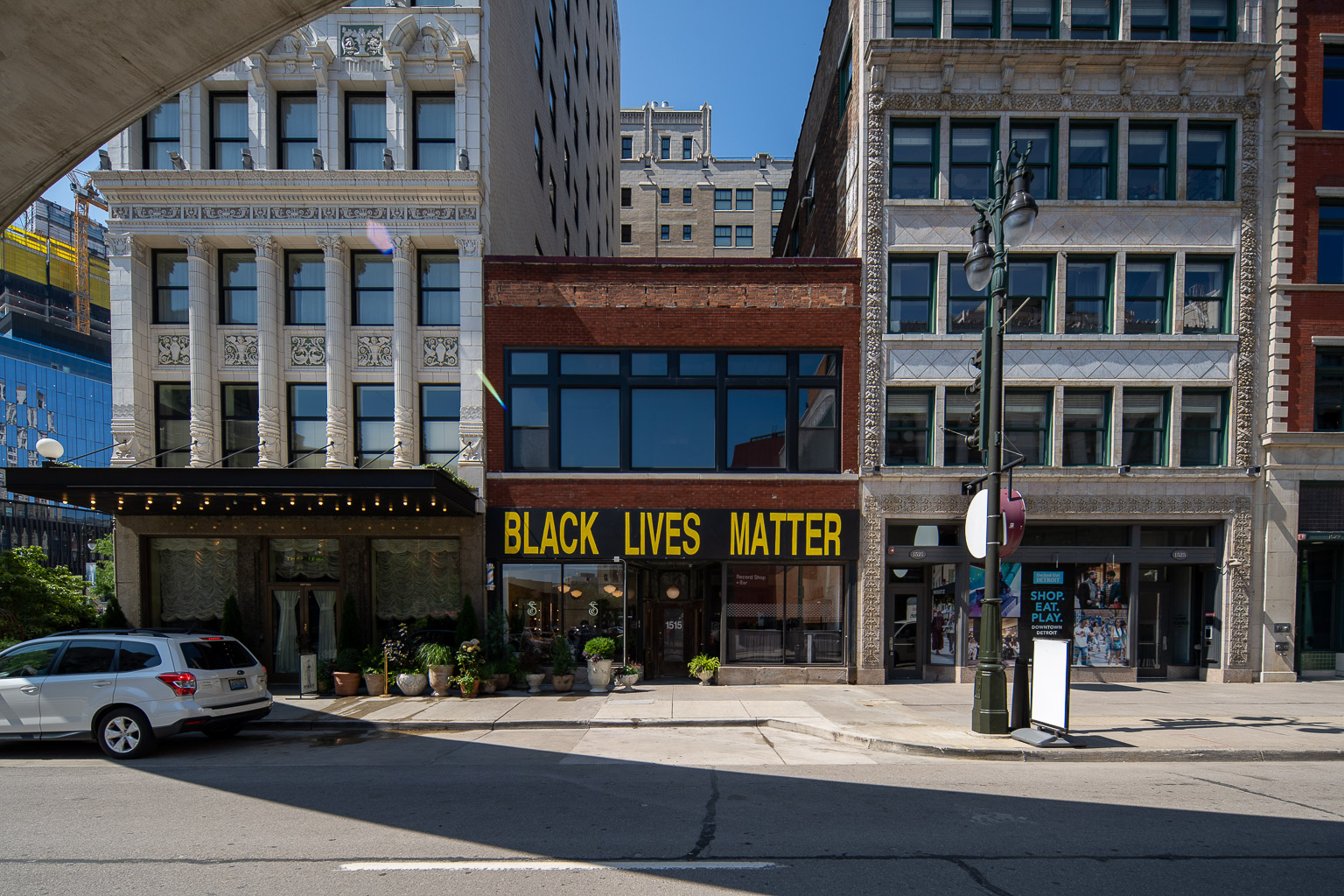
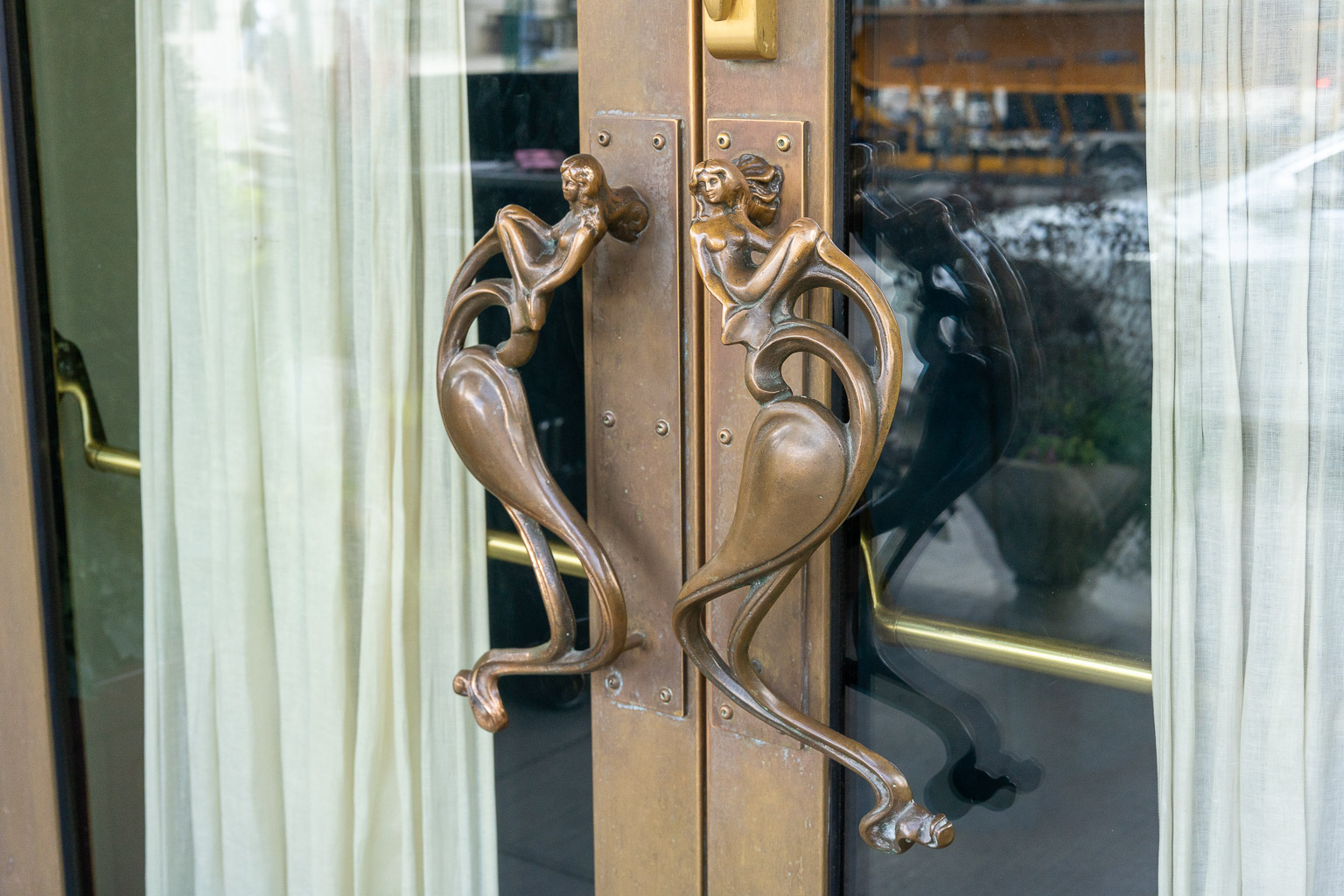
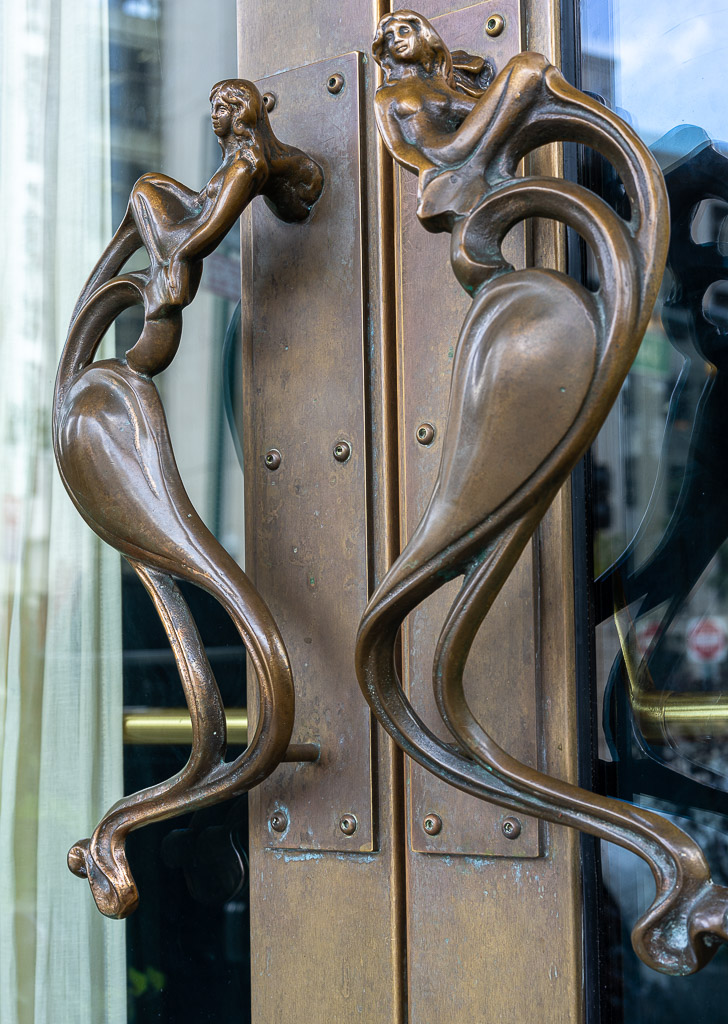
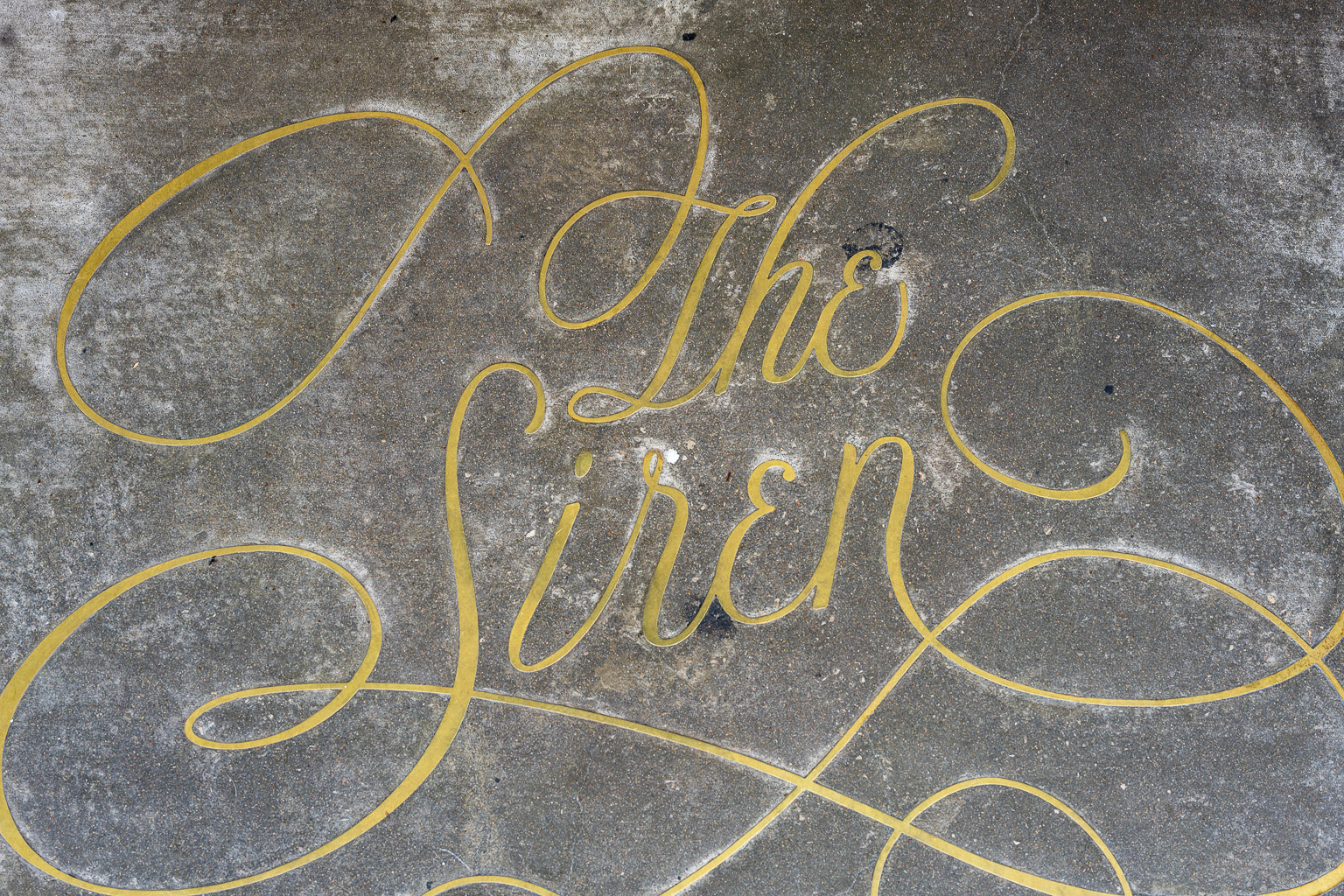
The photos below show the entrance to the Siren Hotel on the ground floor of the Wurlitzer Building.
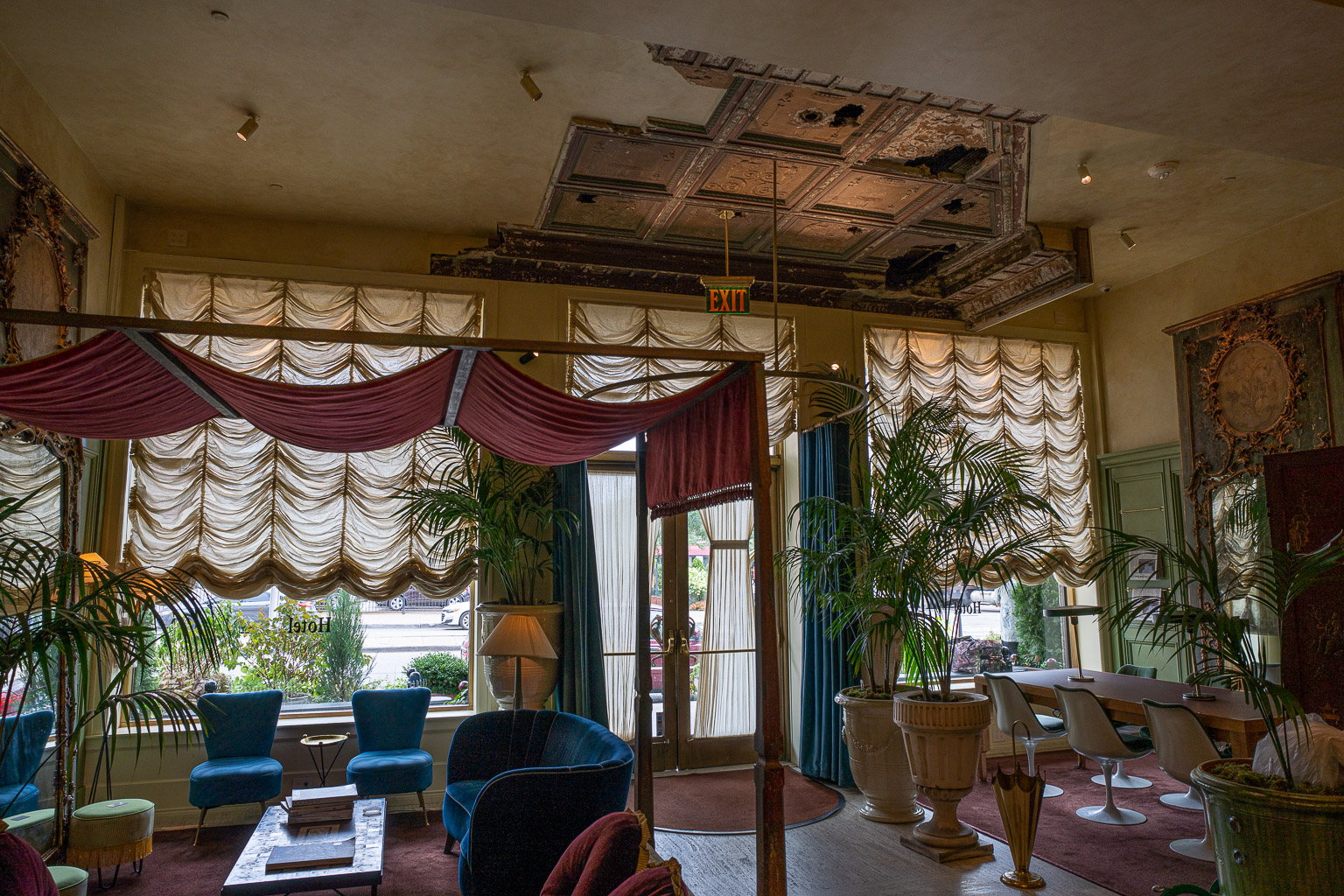
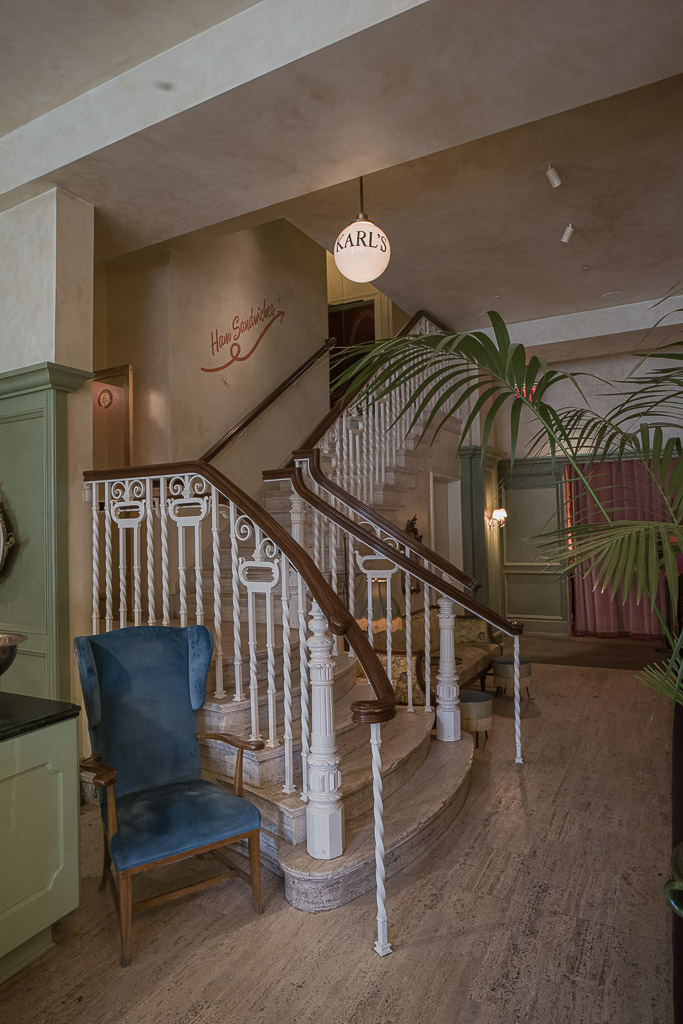
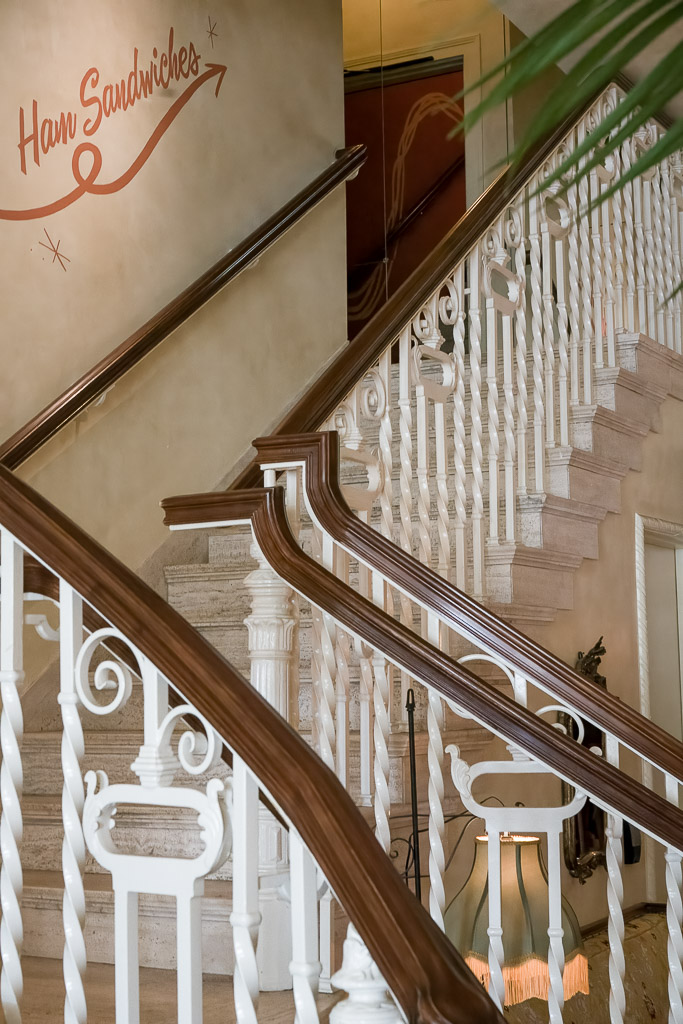
The photos below show details of the lobby of the Siren Hotel, inside the Wurlitzer Building.
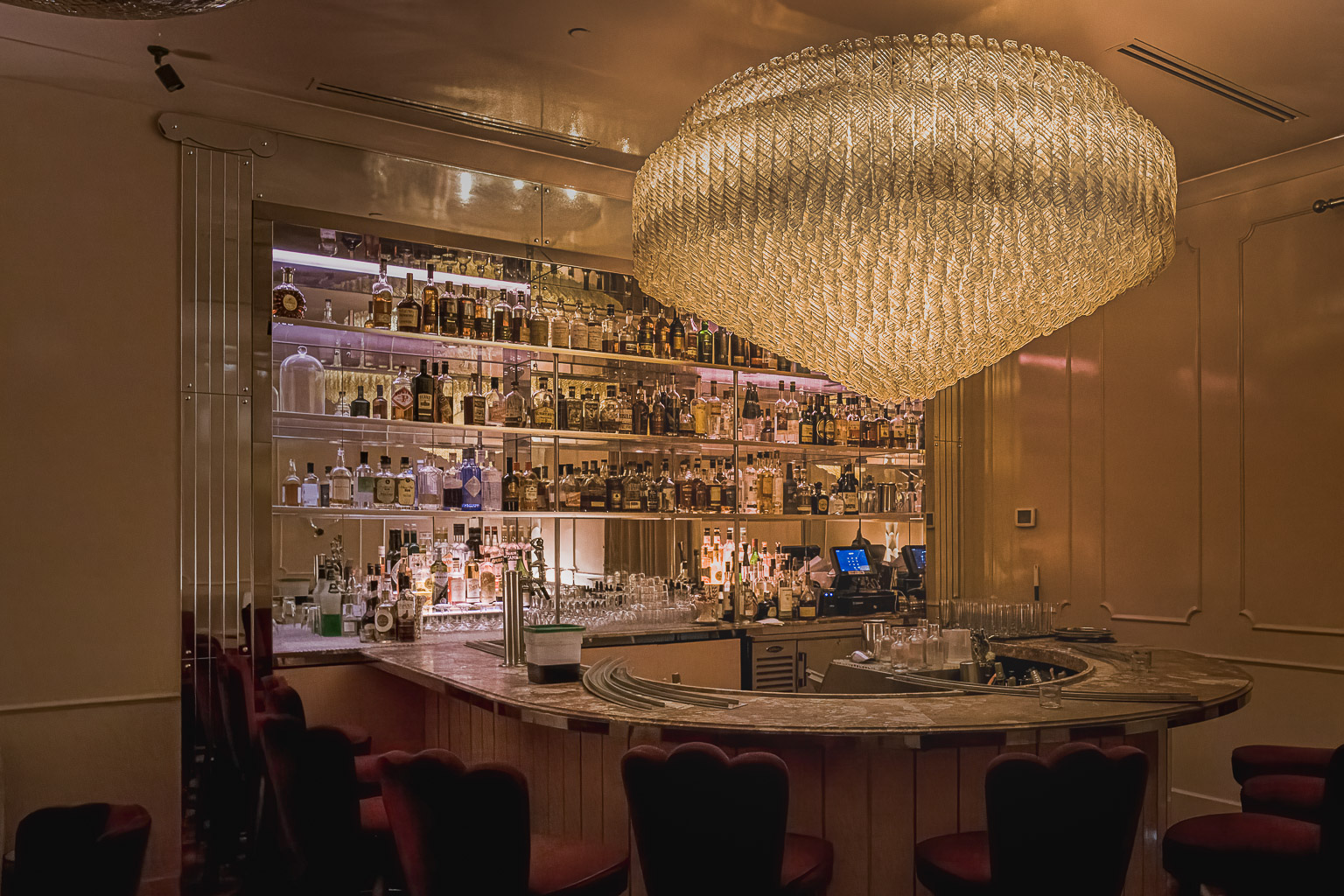
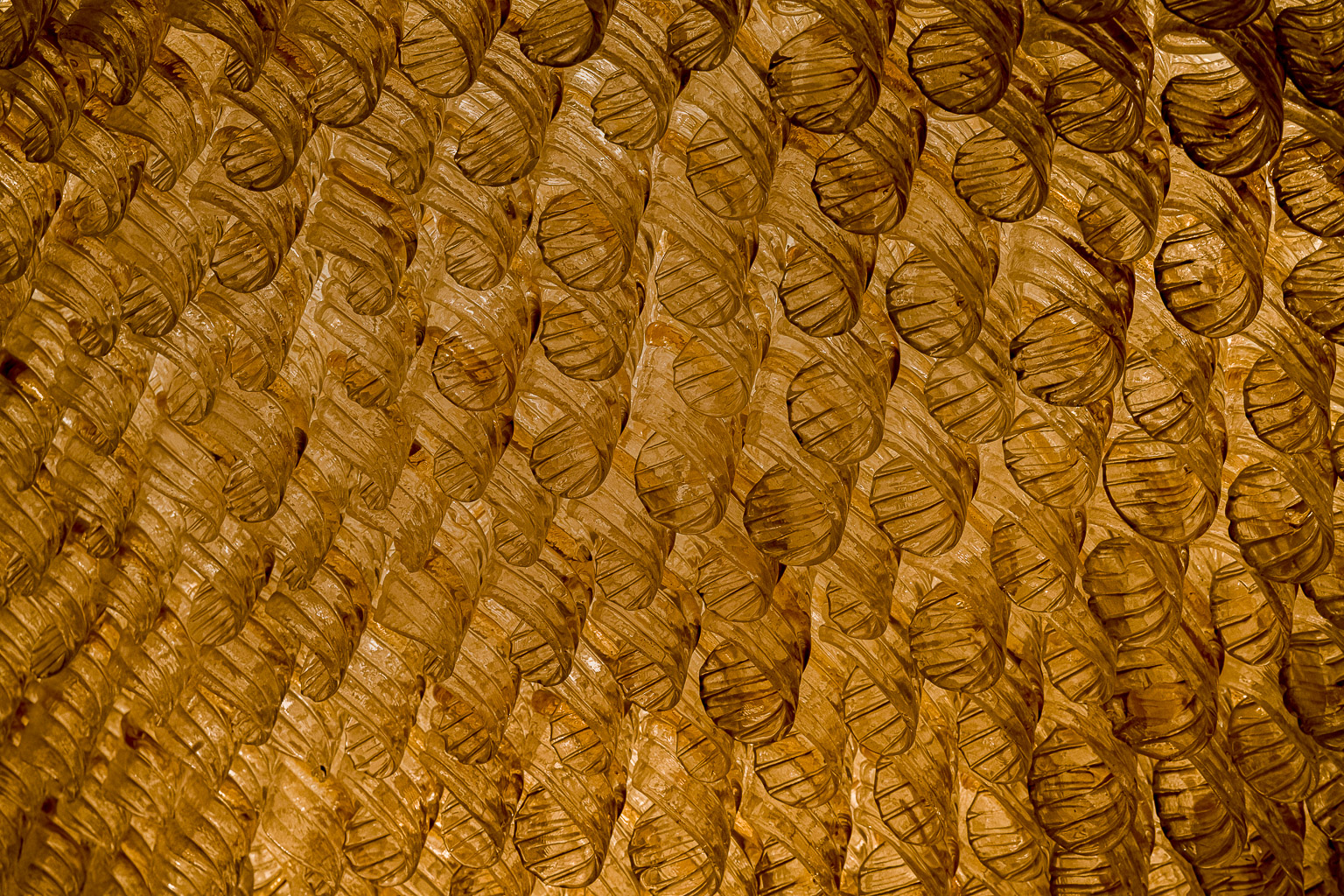
The small, stylish bar in the Siren Hotel is named the Candy Bar. The centerpiece light fixture in the ceiling is a 1500-pound vintage Murano glass chandelier with 670 pieces of glass, created in Venice, Italy, and found in Paris.
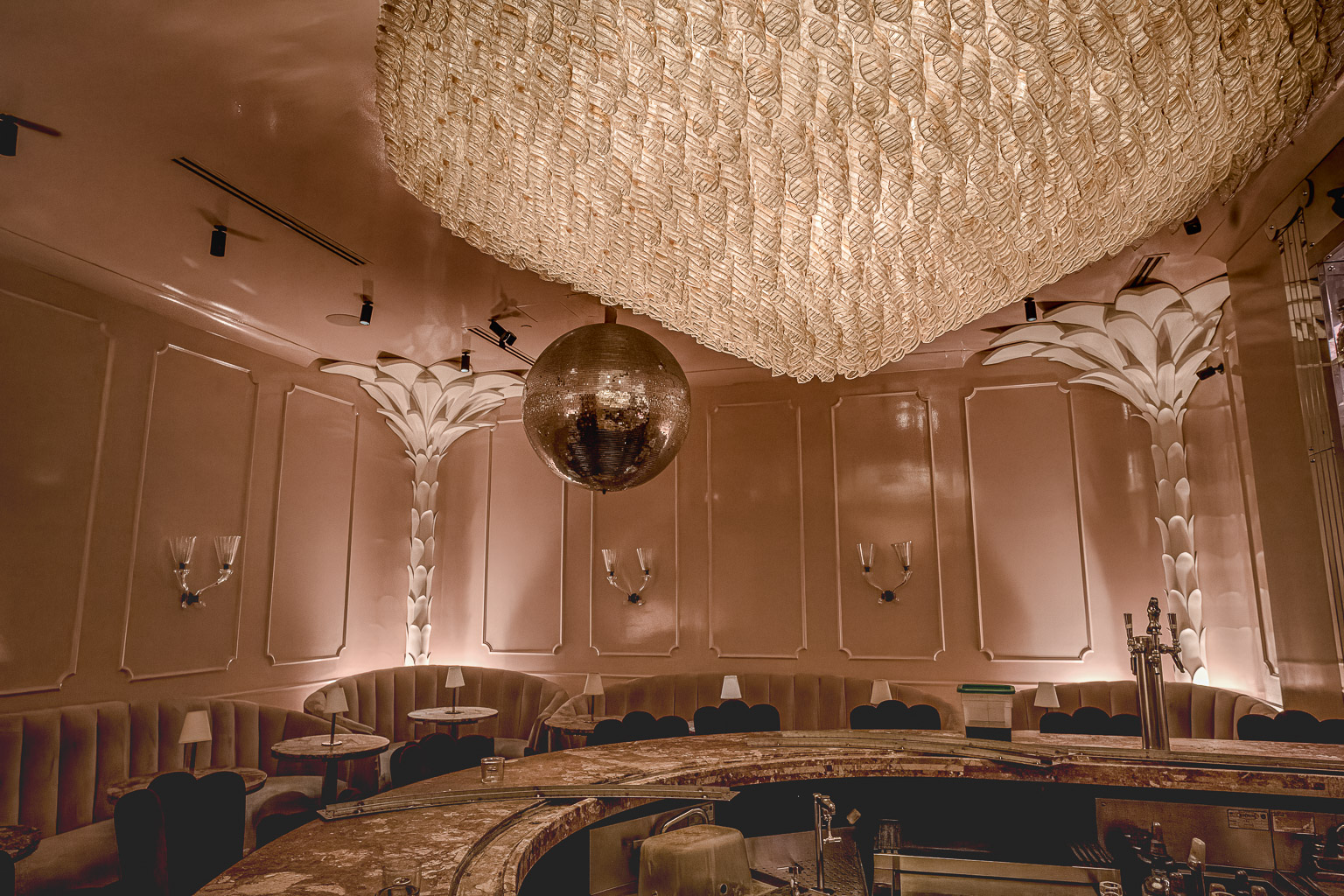
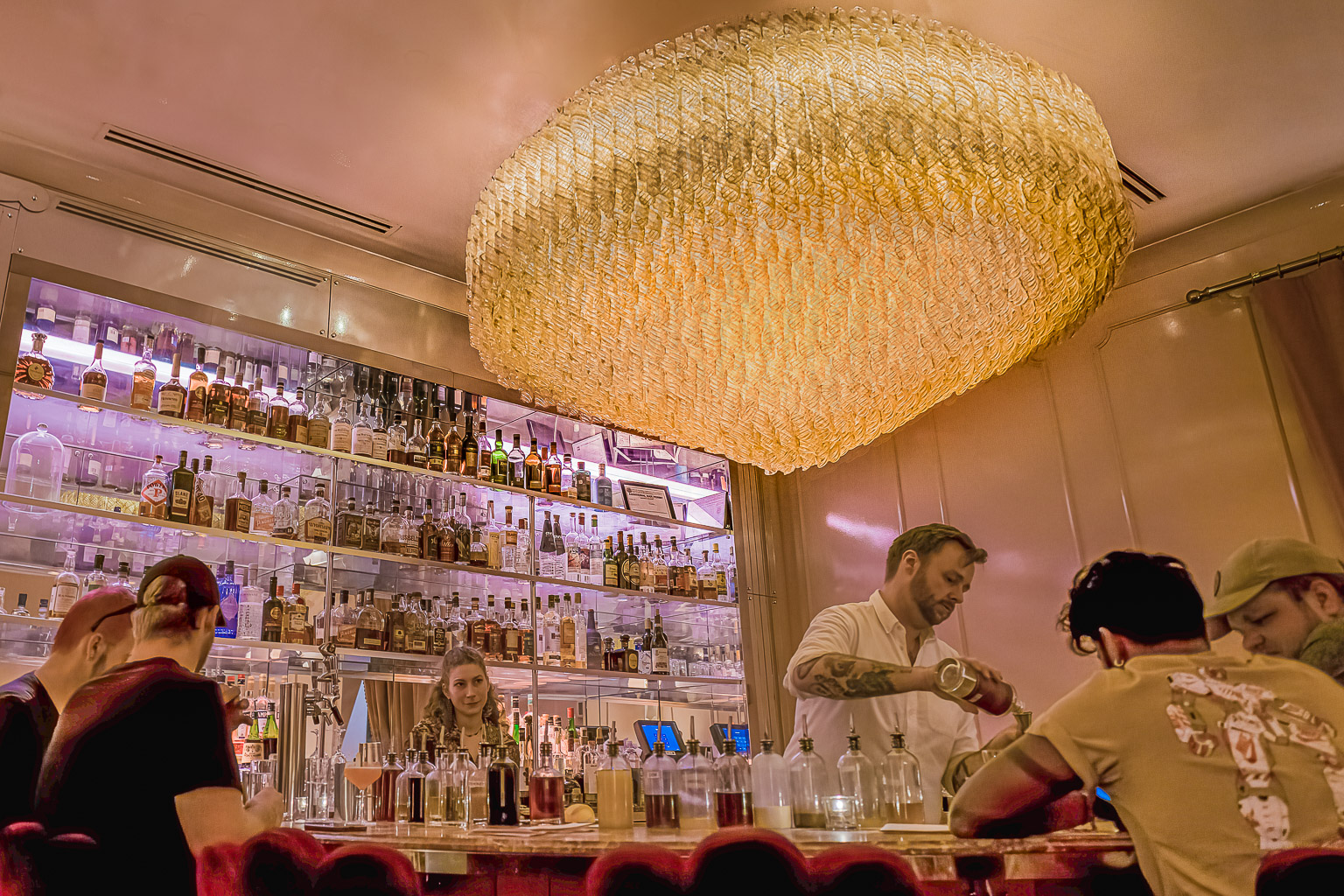
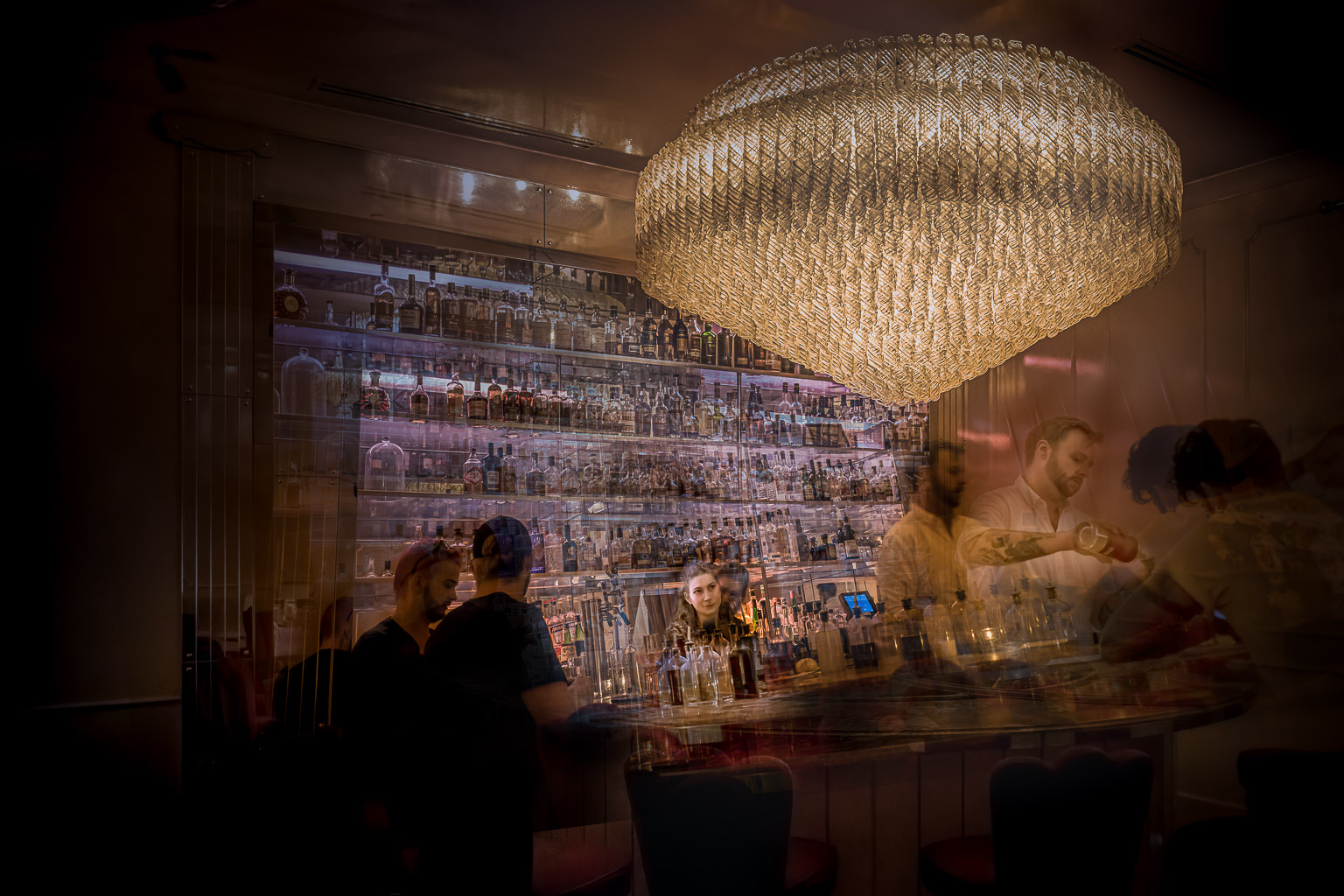
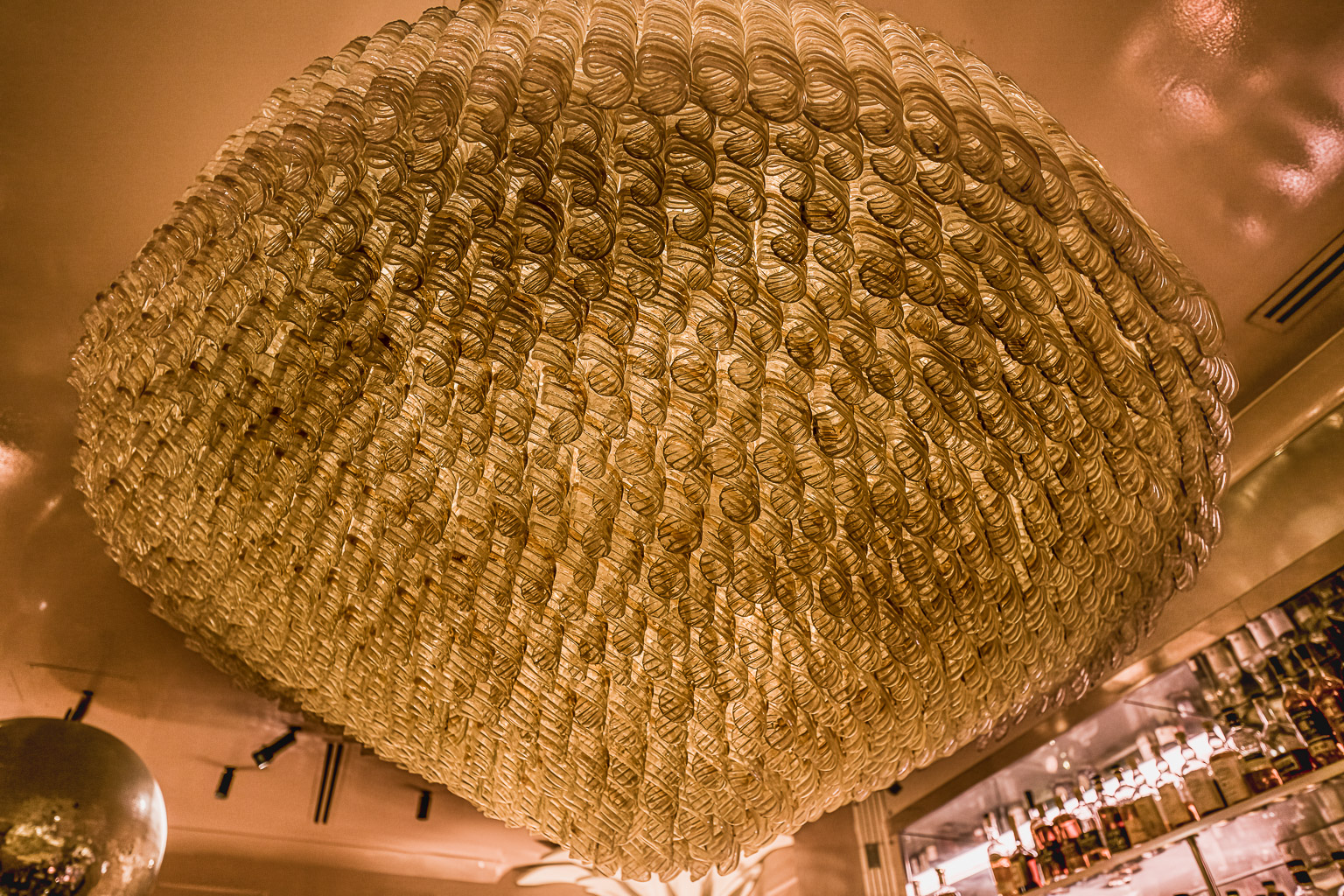
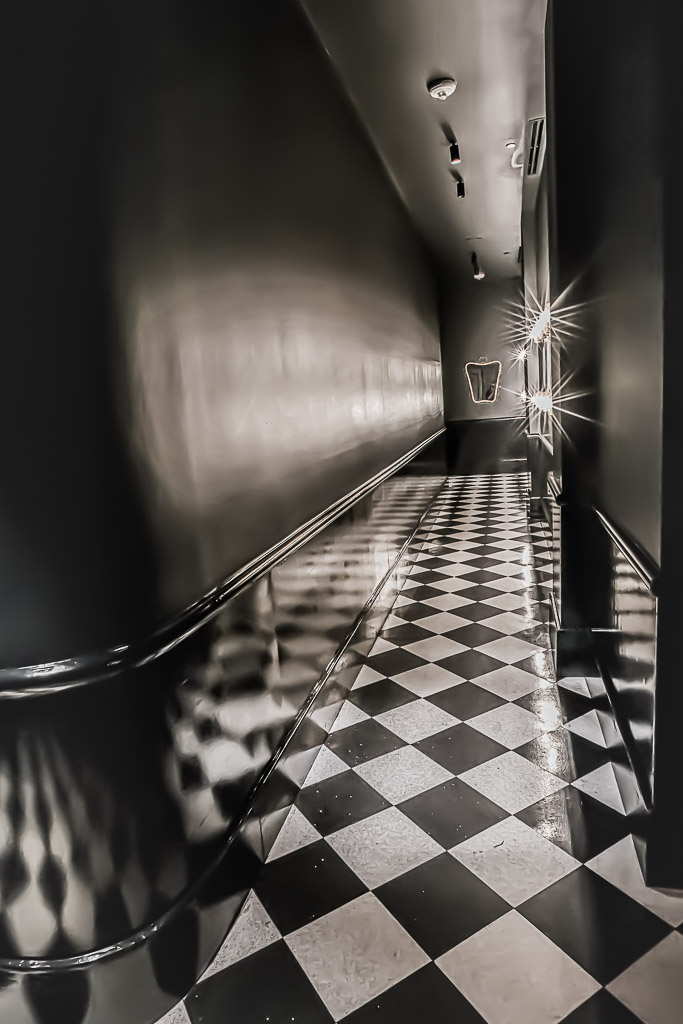
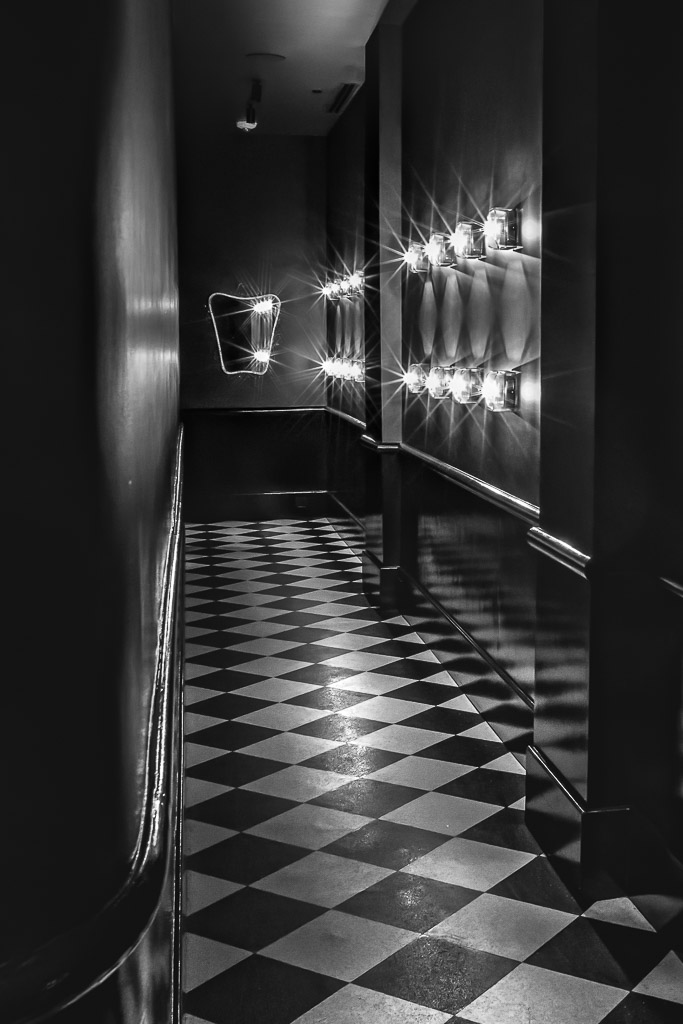
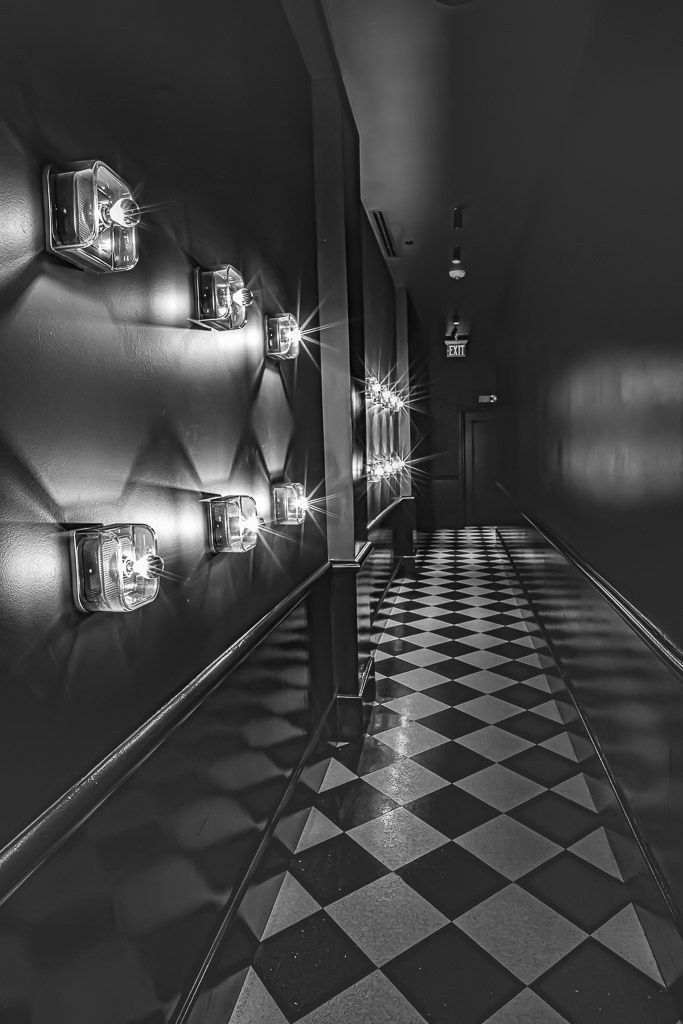
The ground floor hallway to the elevators is a beauty in black-and-white, and is lit with bare light bulbs along one wall.
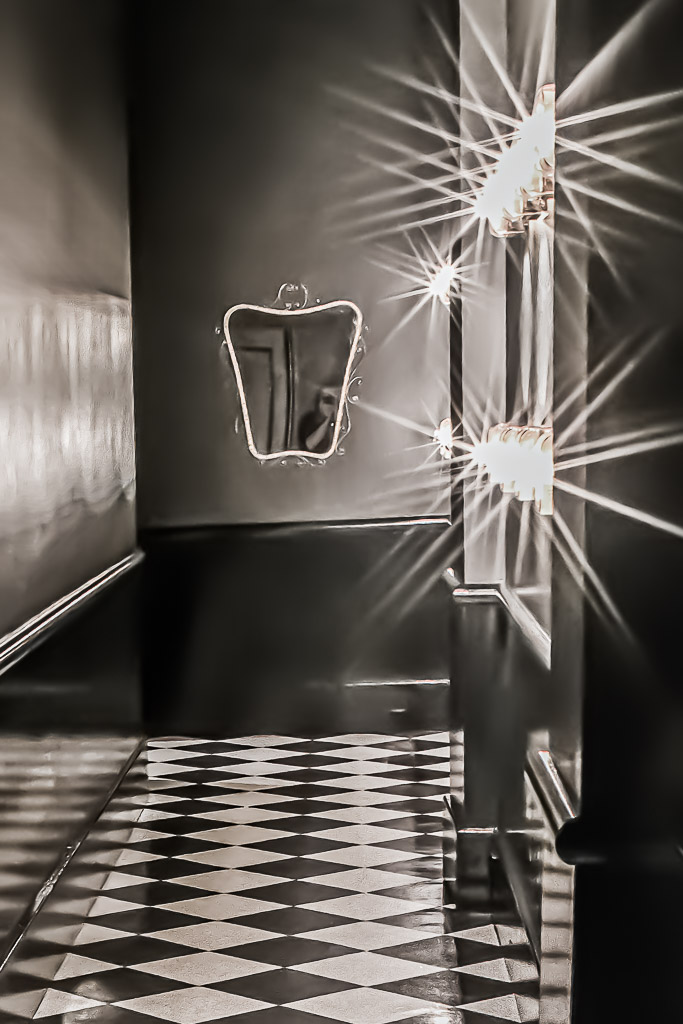
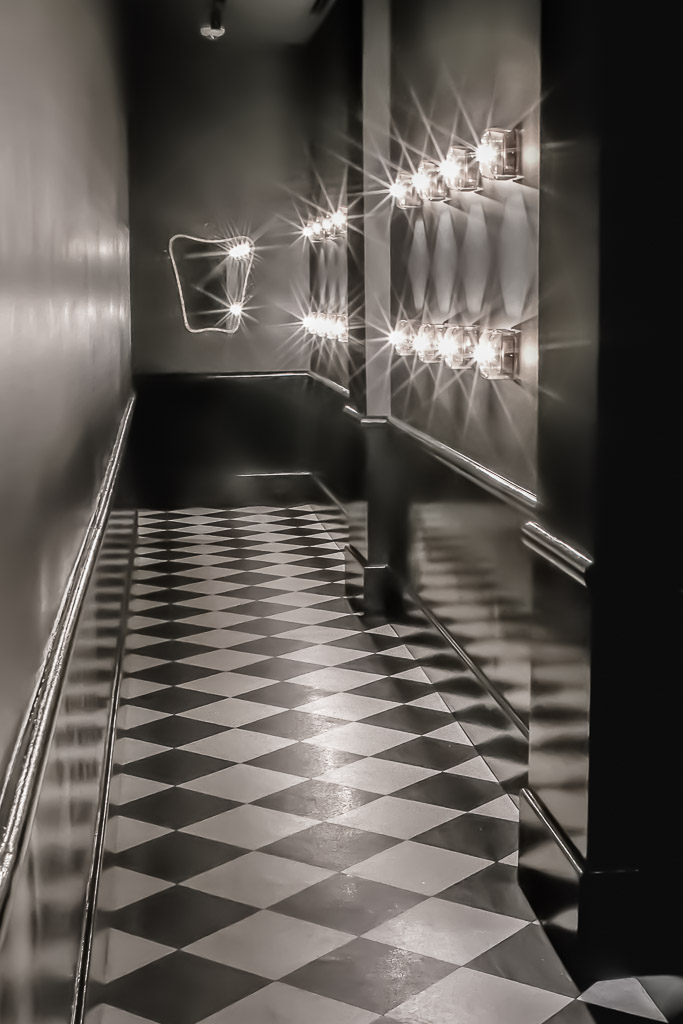
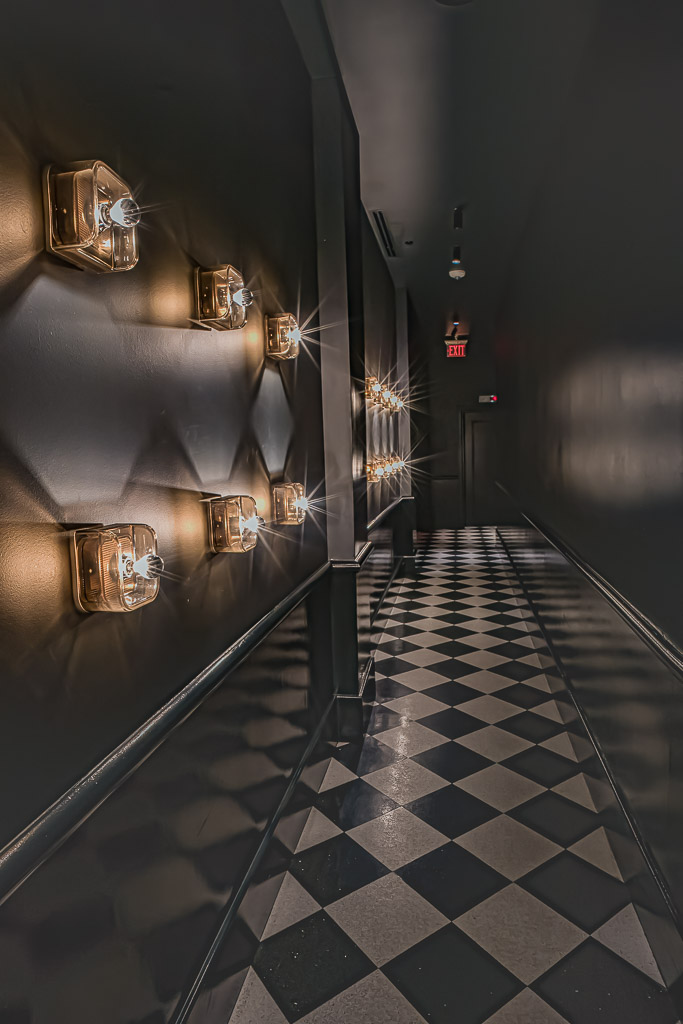
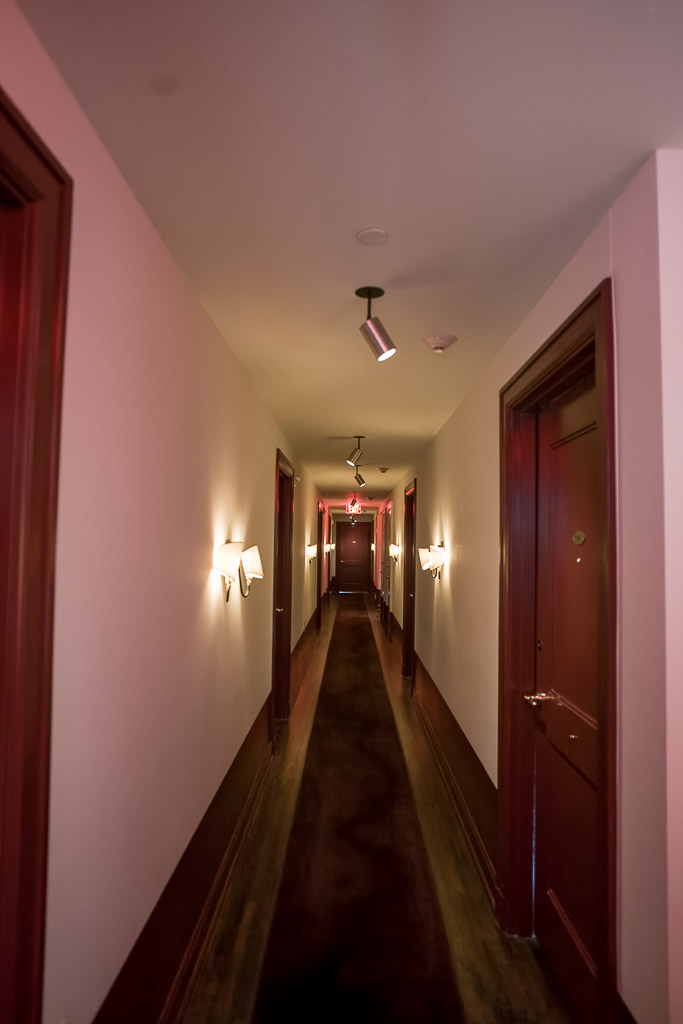
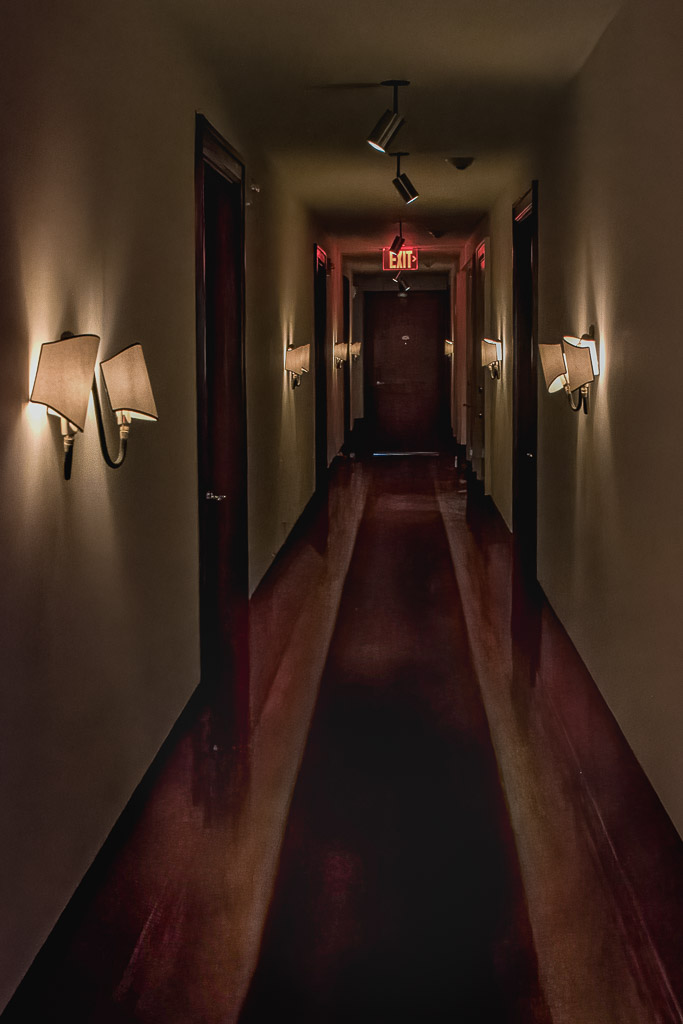
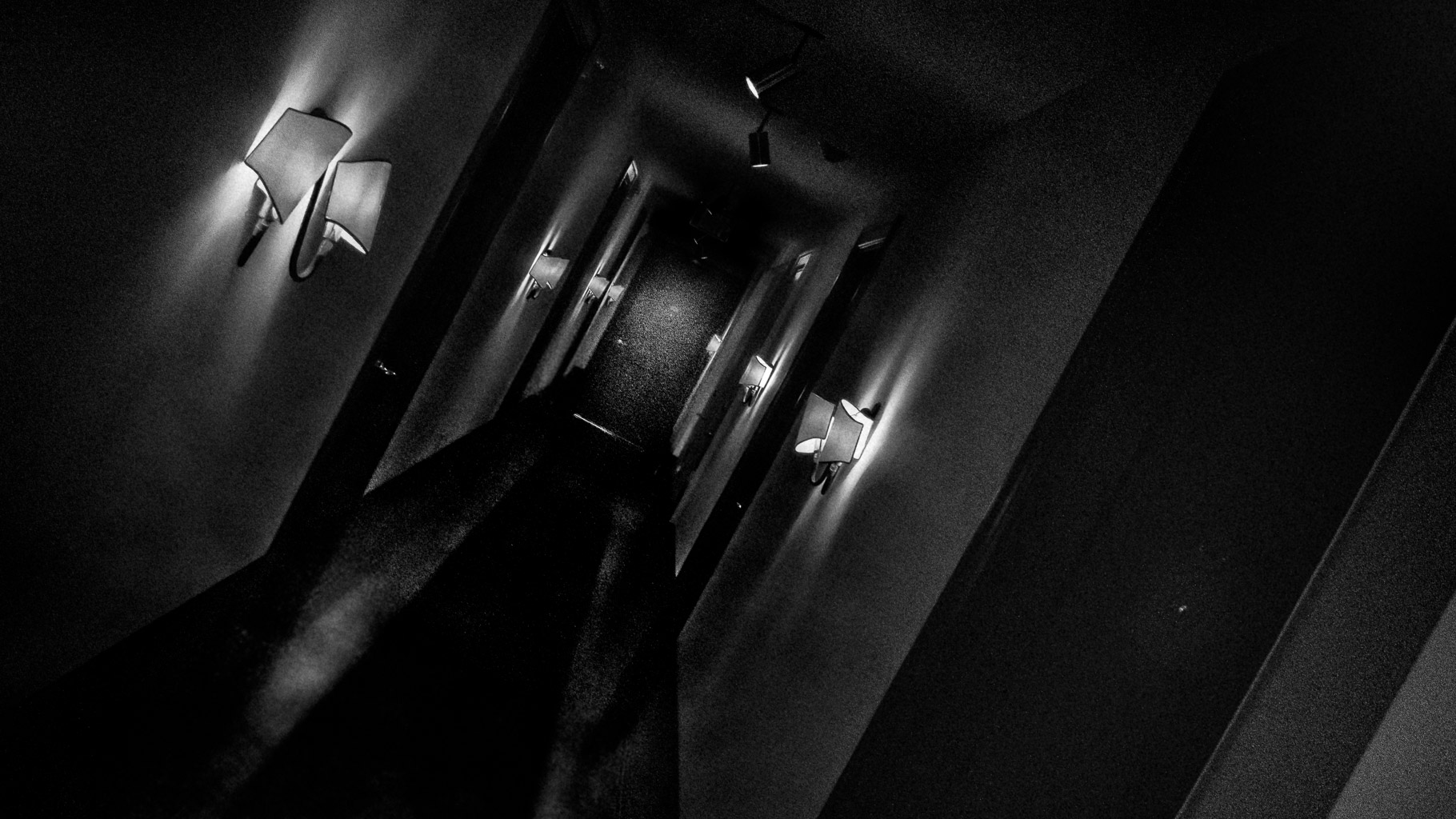
An upstairs hotel room hallway is shown below, with horror-movie processing on the last shot.
More photos and more description of this building can be found at HistoricDetroit.org.
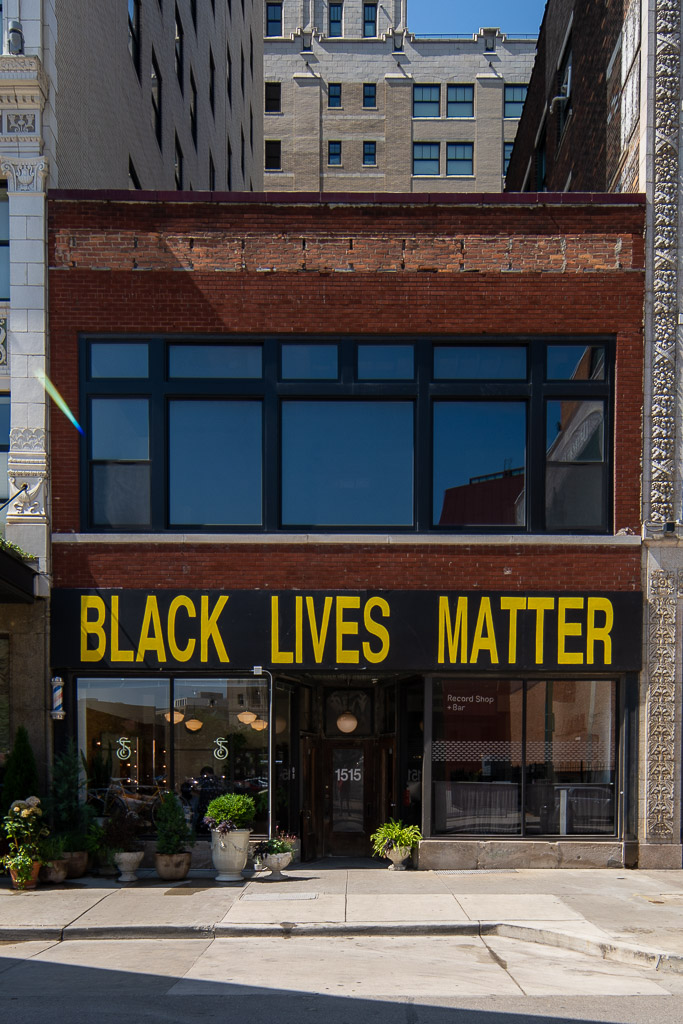
A real estate company named the J. E. Scripps Company built this 2-story building in 1925. Among the early occupants were the Safety Washing Machine Company, Safety Oil Burner Company, the Broadway Grill, Schmansky Brothers Company, tailors, and the Kimball Piano Company. Its recessed entrance is still intact. A row of five windows spans across the second story. Current tenants are a barber shop on the left side and a record shop and bar on the right side.
This served as the retail store for the Eureka Vacuum Cleaner Company. Fred Wardell was president of the company and Wardell & Son, auctioneers, were also early tenants of the building. The three-story building is highly ornamented with white terra cotta, banded decorative molding framing two stories of regularly arranged windows beneath a bracketed cornice. Its ground floor storefronts are recessed to provide maximum display area.
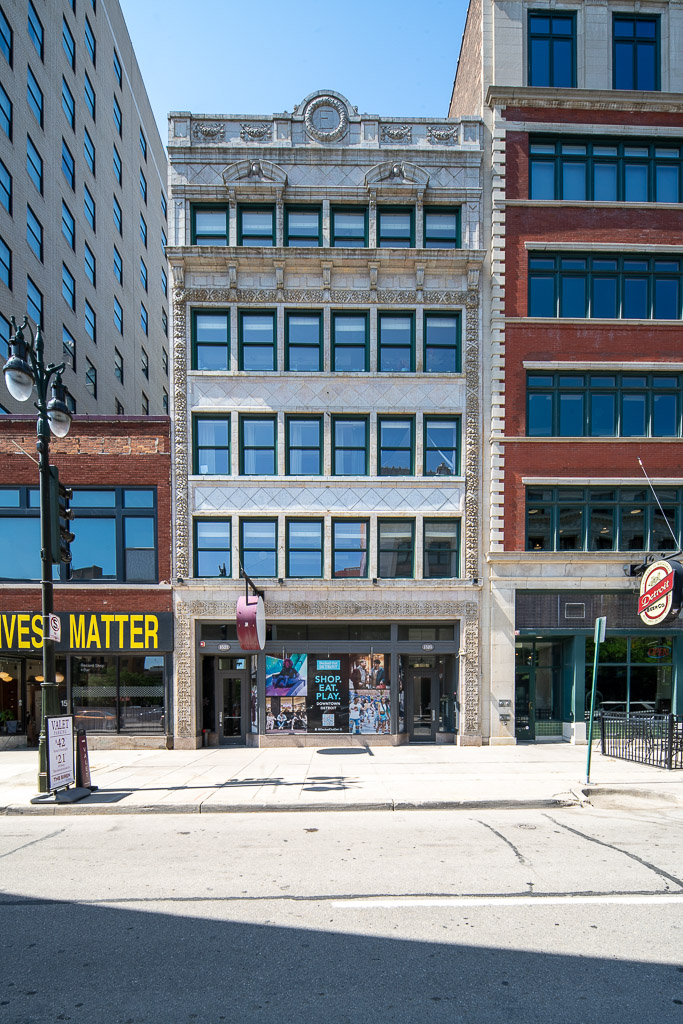
The photos below show details of the Eureka Building
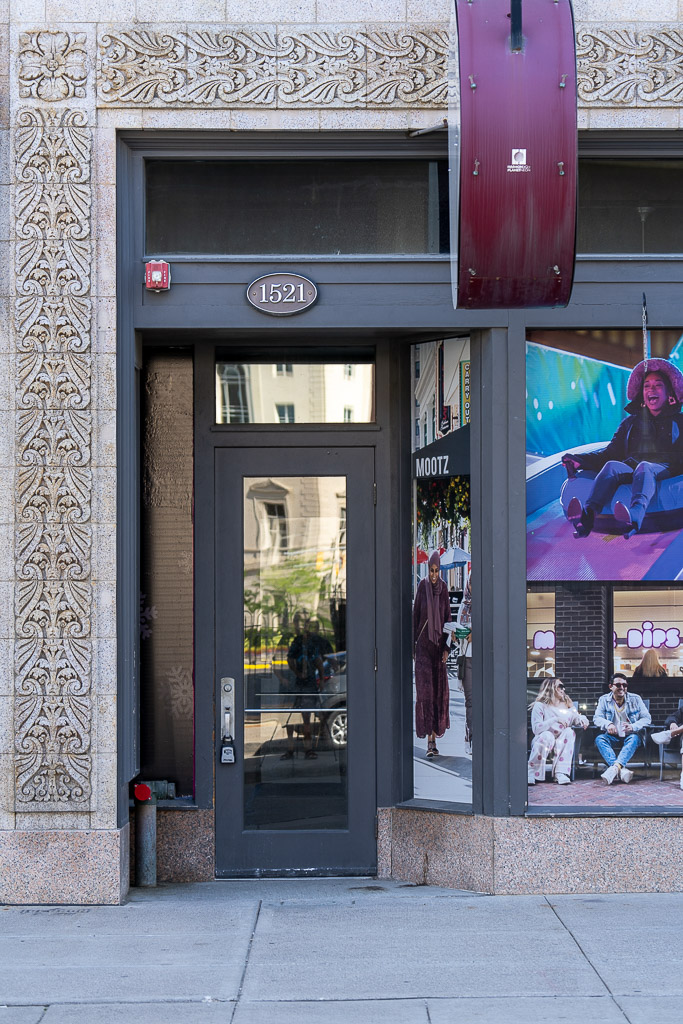
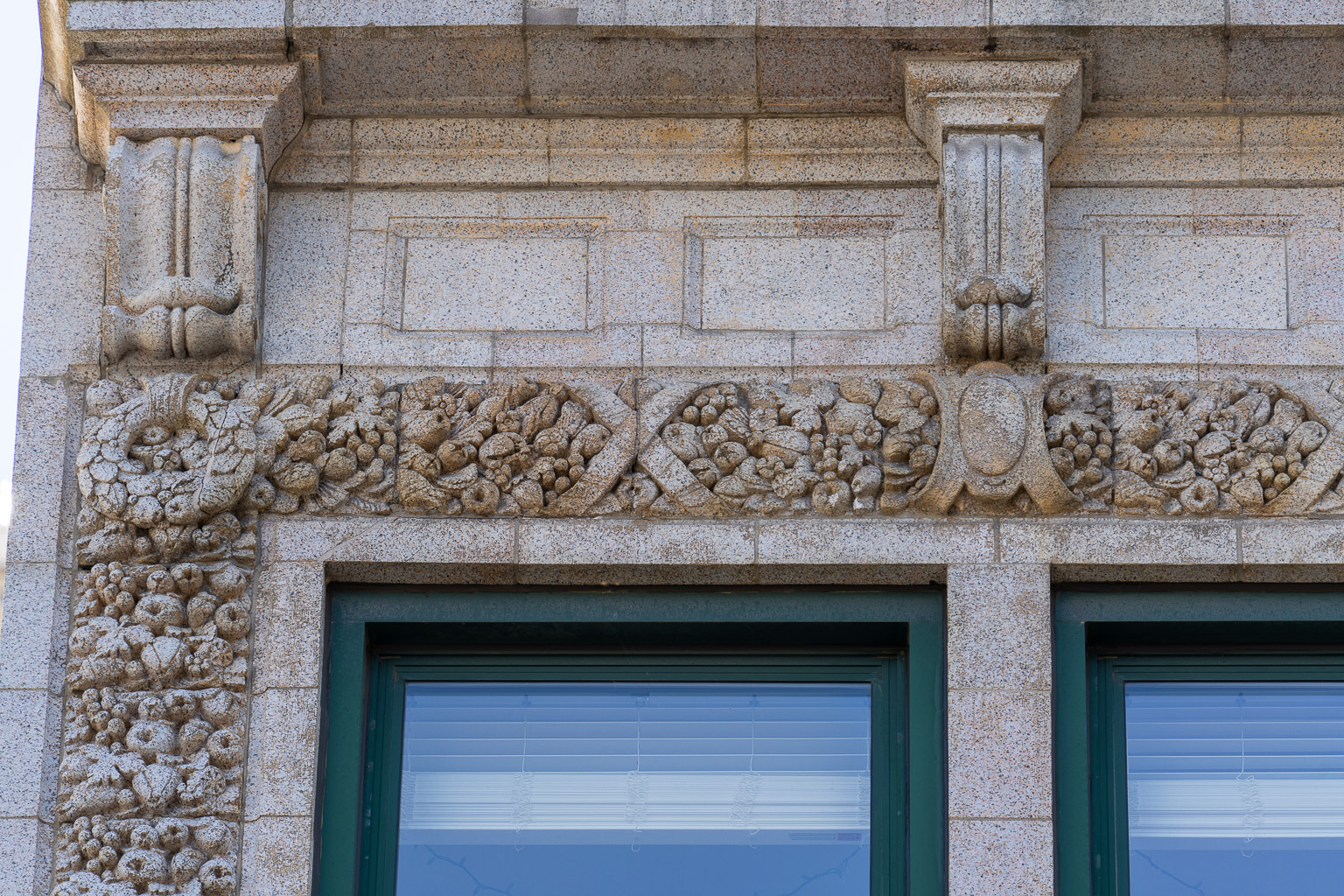
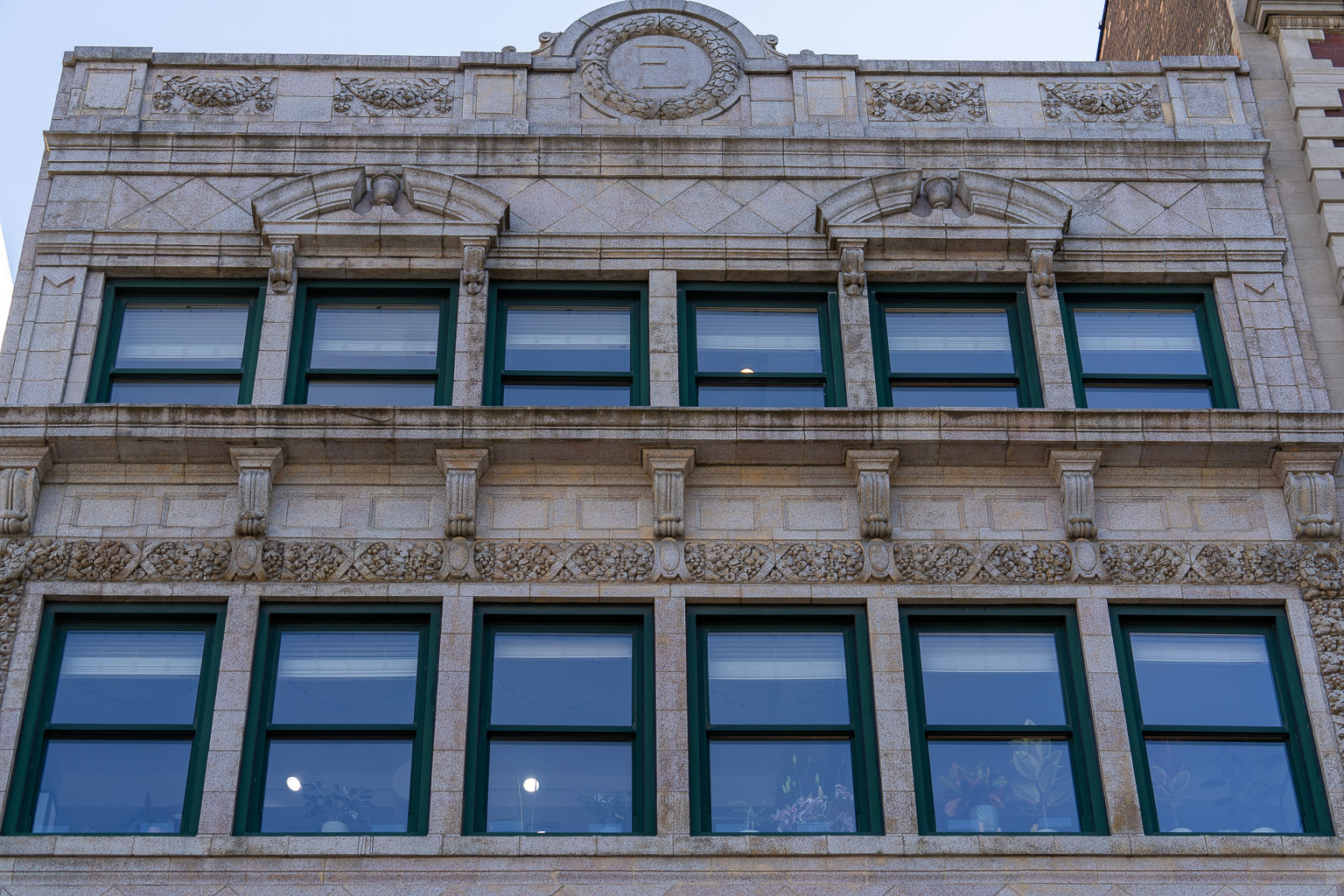
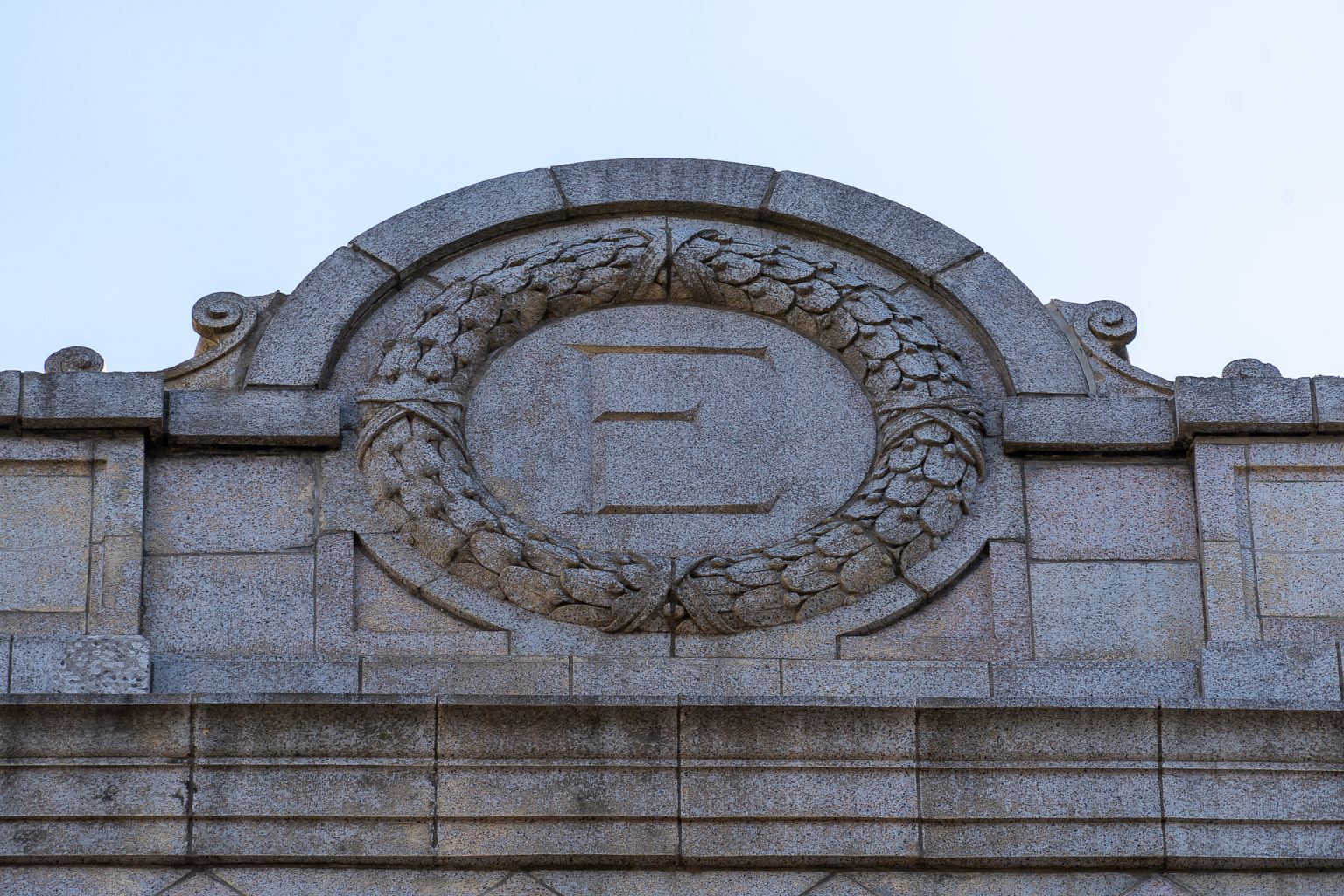
More photos and more description of this building can be found at HistoricDetroit.org.
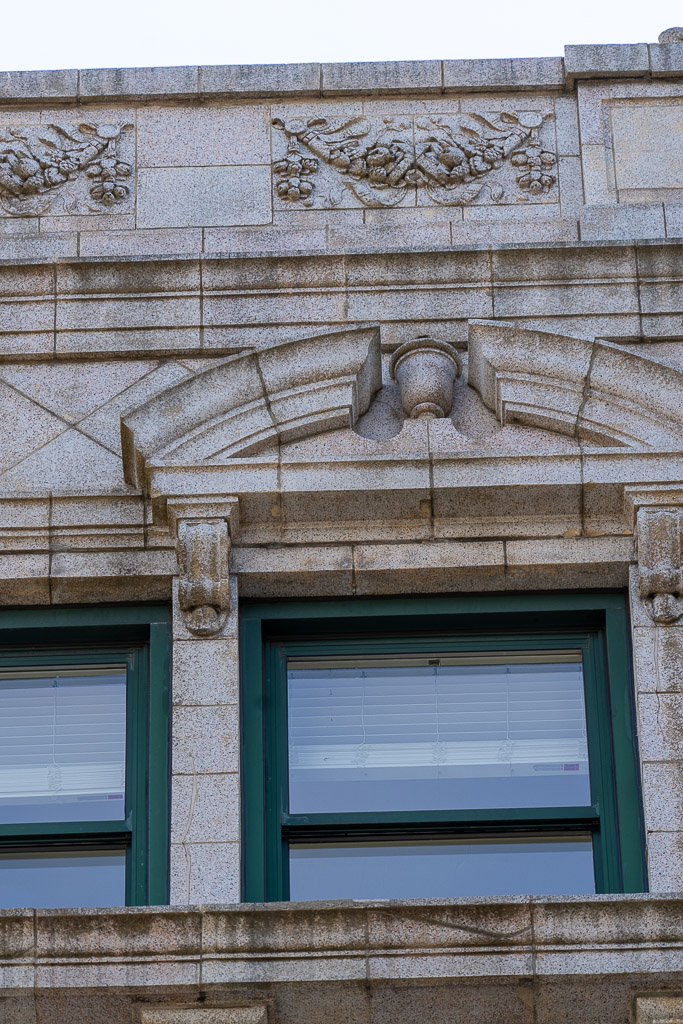
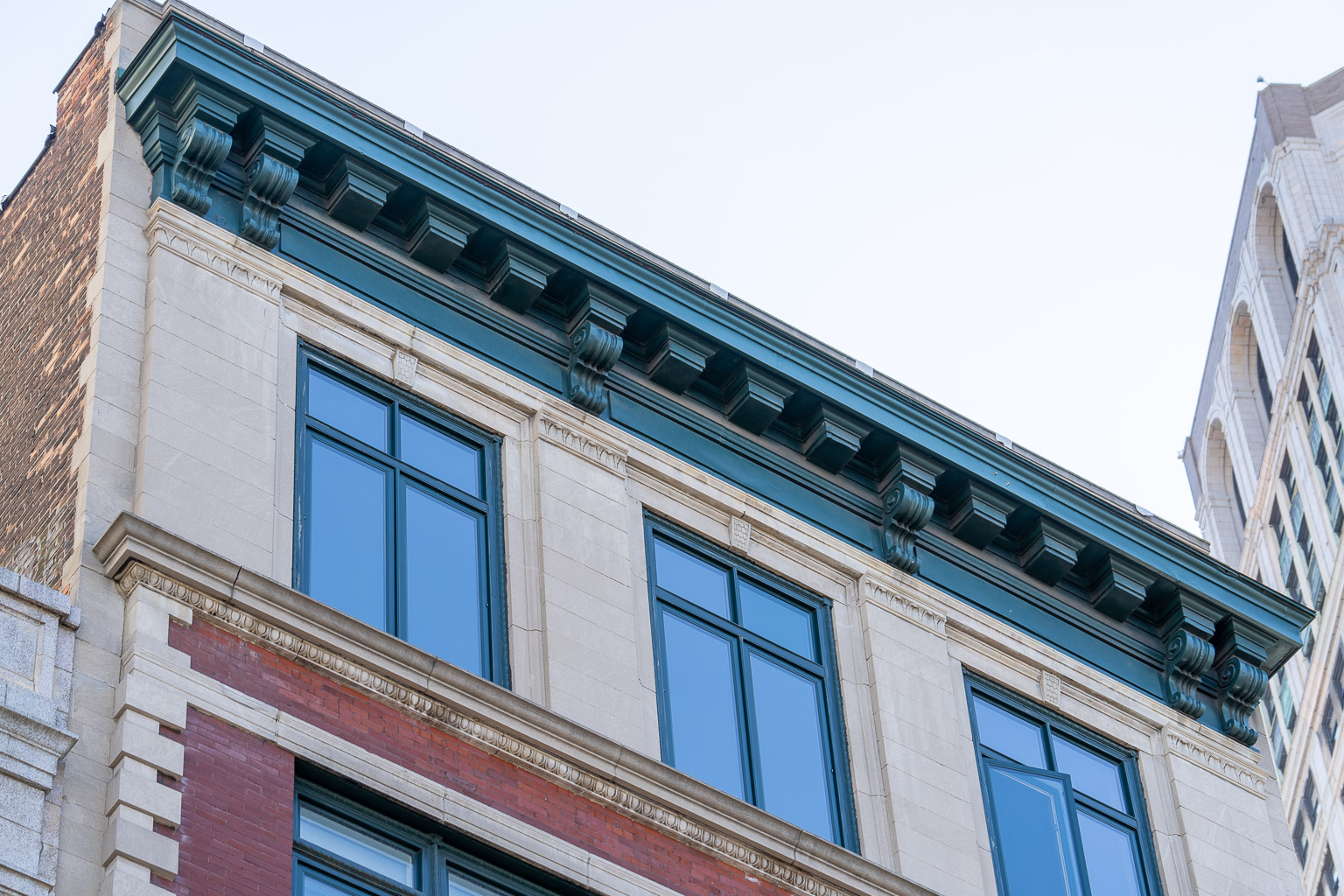
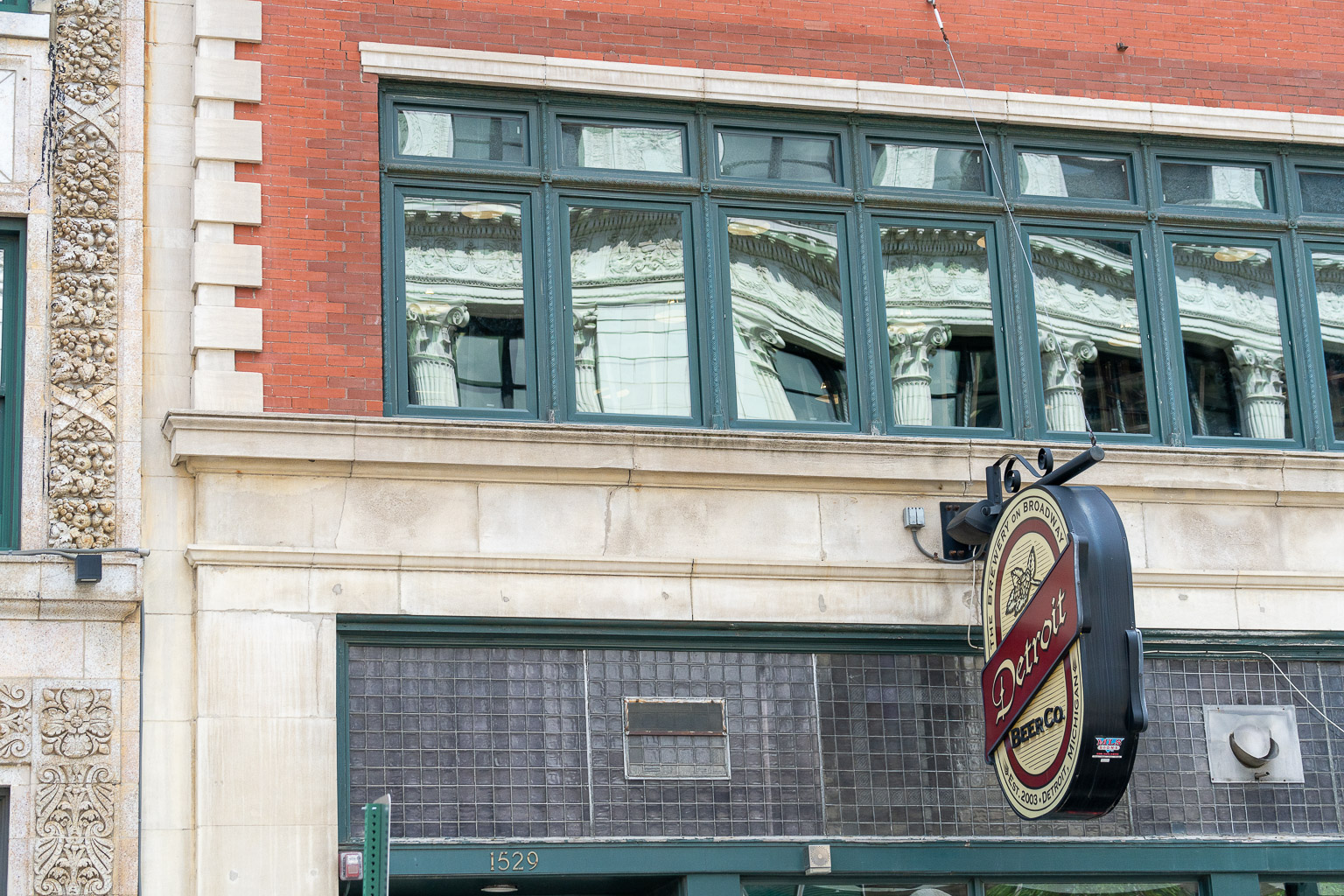
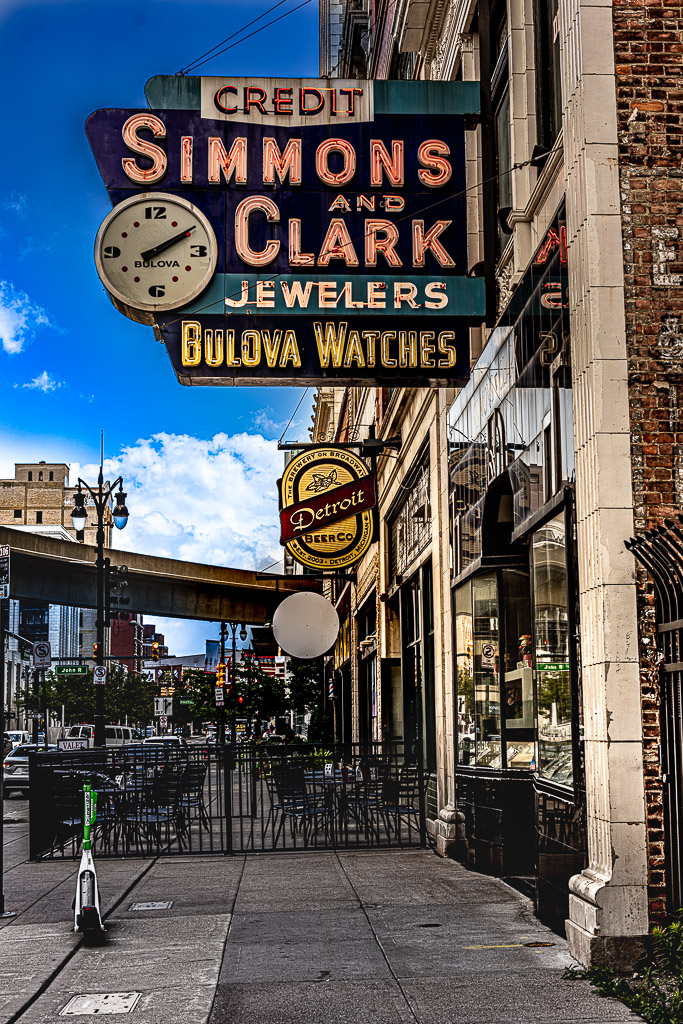
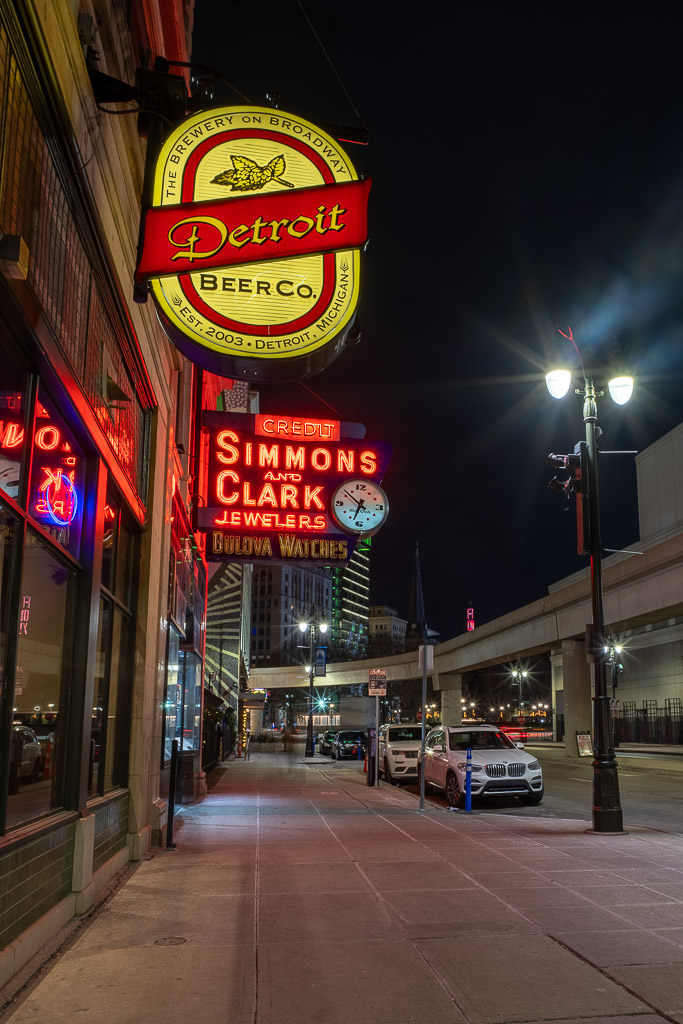
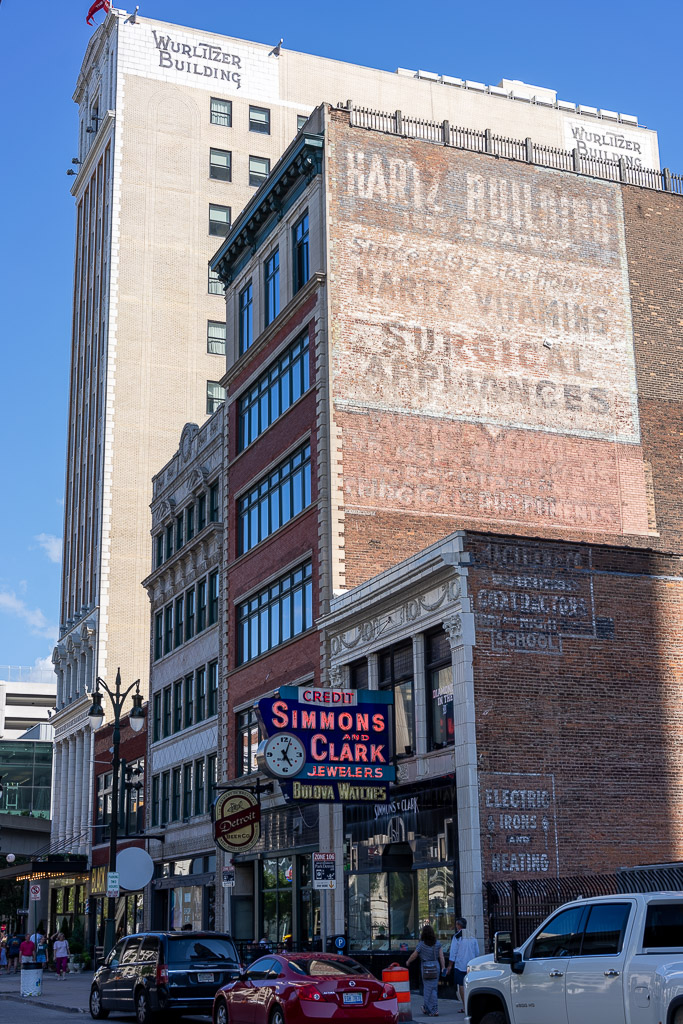
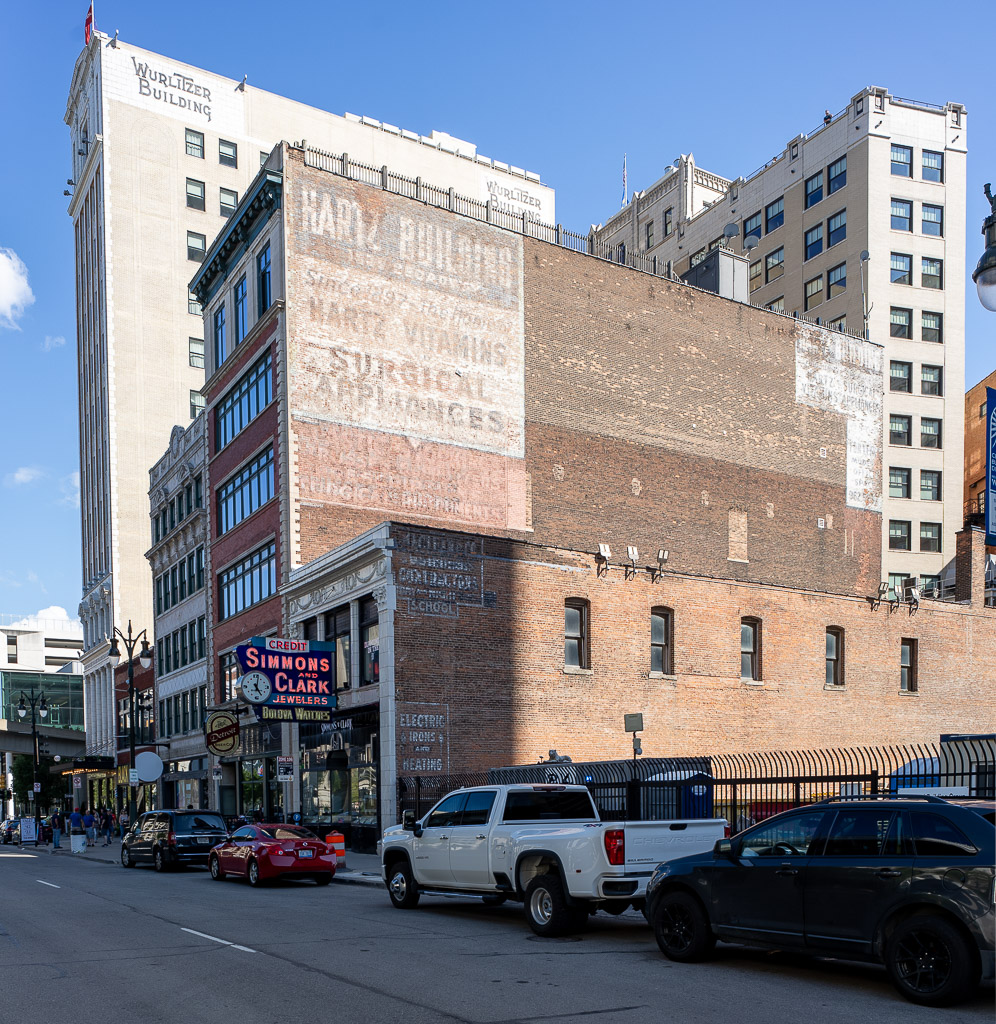
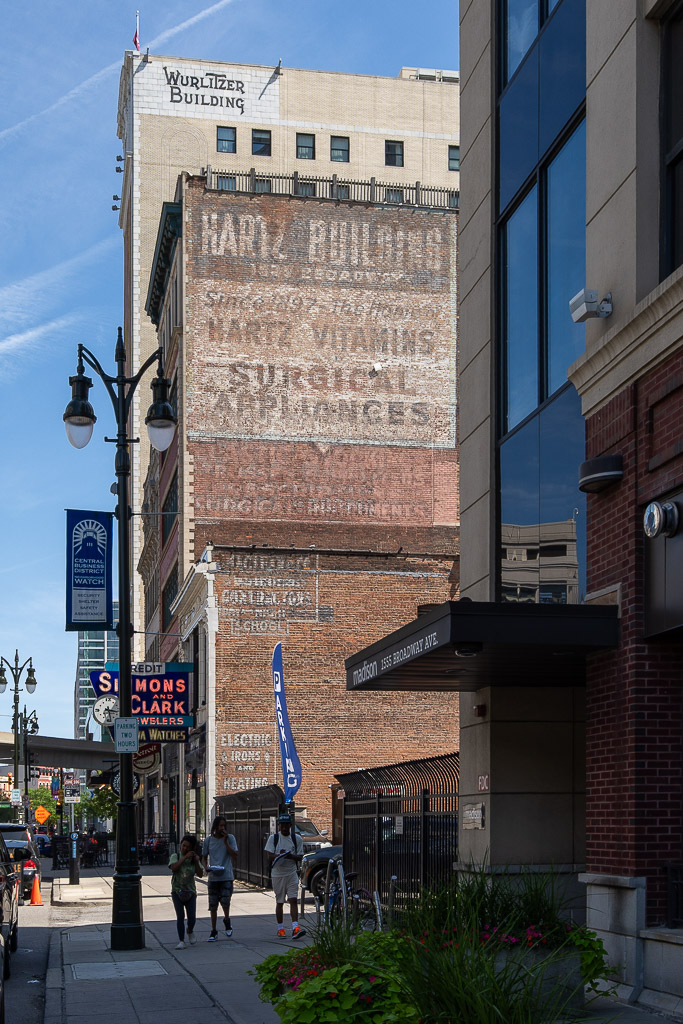
The J.F. Hartz Company, suppliers of medical supplies and surgical instruments for physicians, nurses, hospitals and sick rooms built this building in 1902. Several other tenants occupied the building as well, such as a cigar manufacturer, a medical journal, a dentist, and a clothing manufacturer. It was originally a three-story brick building, but a fourth-story was added in 1926/7, and two more floors were added sometime after that. Stone quoins frame its front facade and bands of seven windows with transoms fill the single horizontal opening per floor above the store level. The current occupant of the first two floors is the Detroit Beer Company, a reasonably-priced spot to enjoy a good lunch with a great beer which opened in 2003. The three floors above each contain a single 3-bedroom condo with a great view of the Detroit Opera House, across the street, on Detroit's Broadway Avenue.
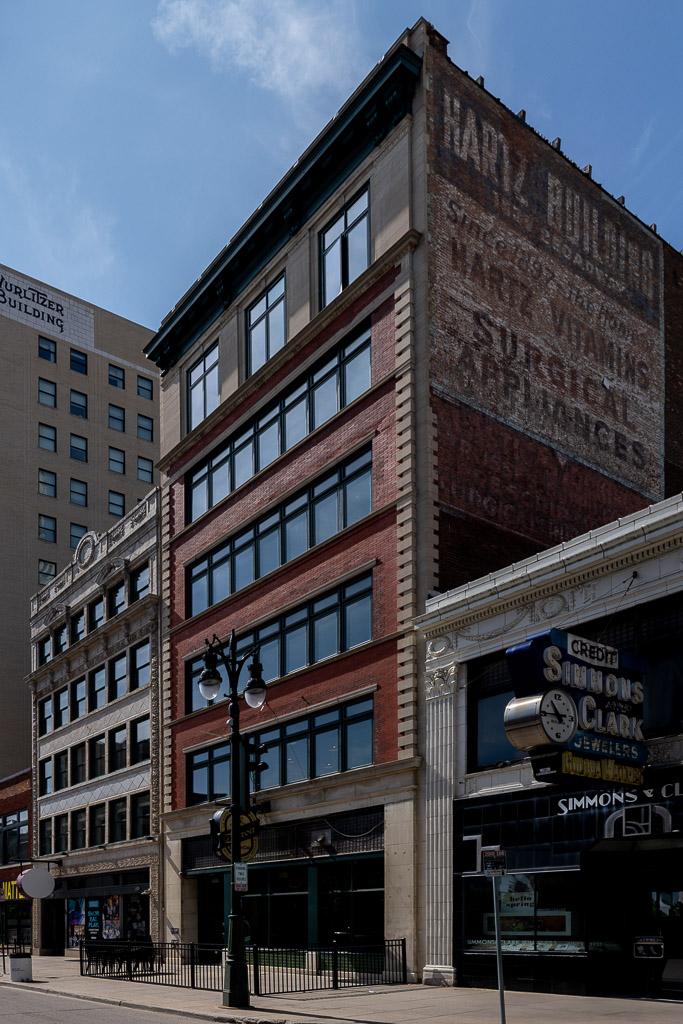
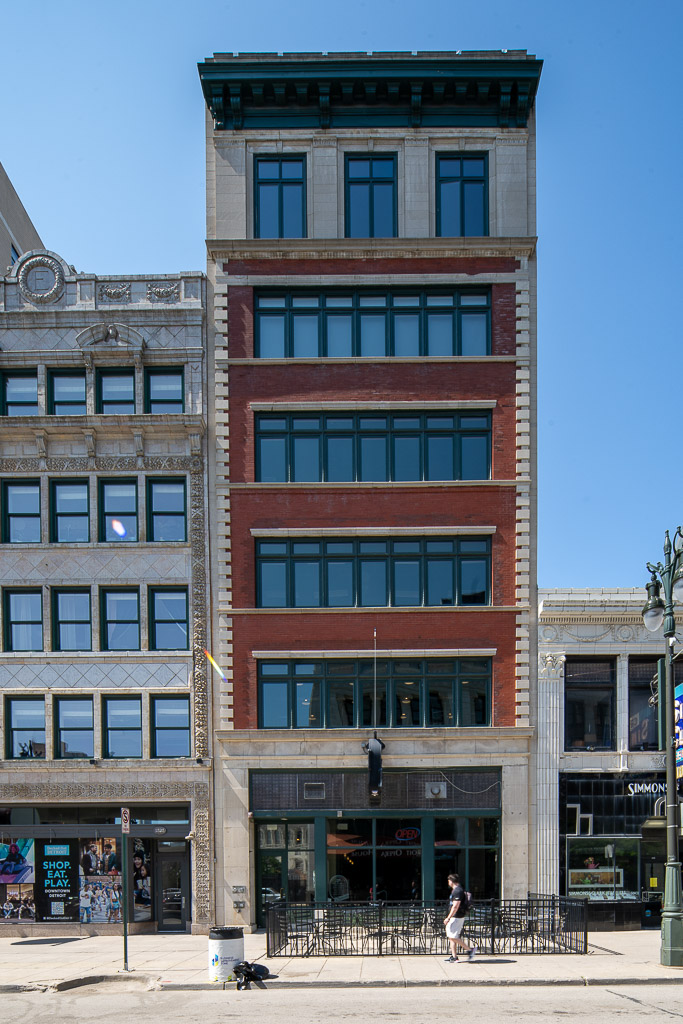
The photos below show details of the Hartz Building.
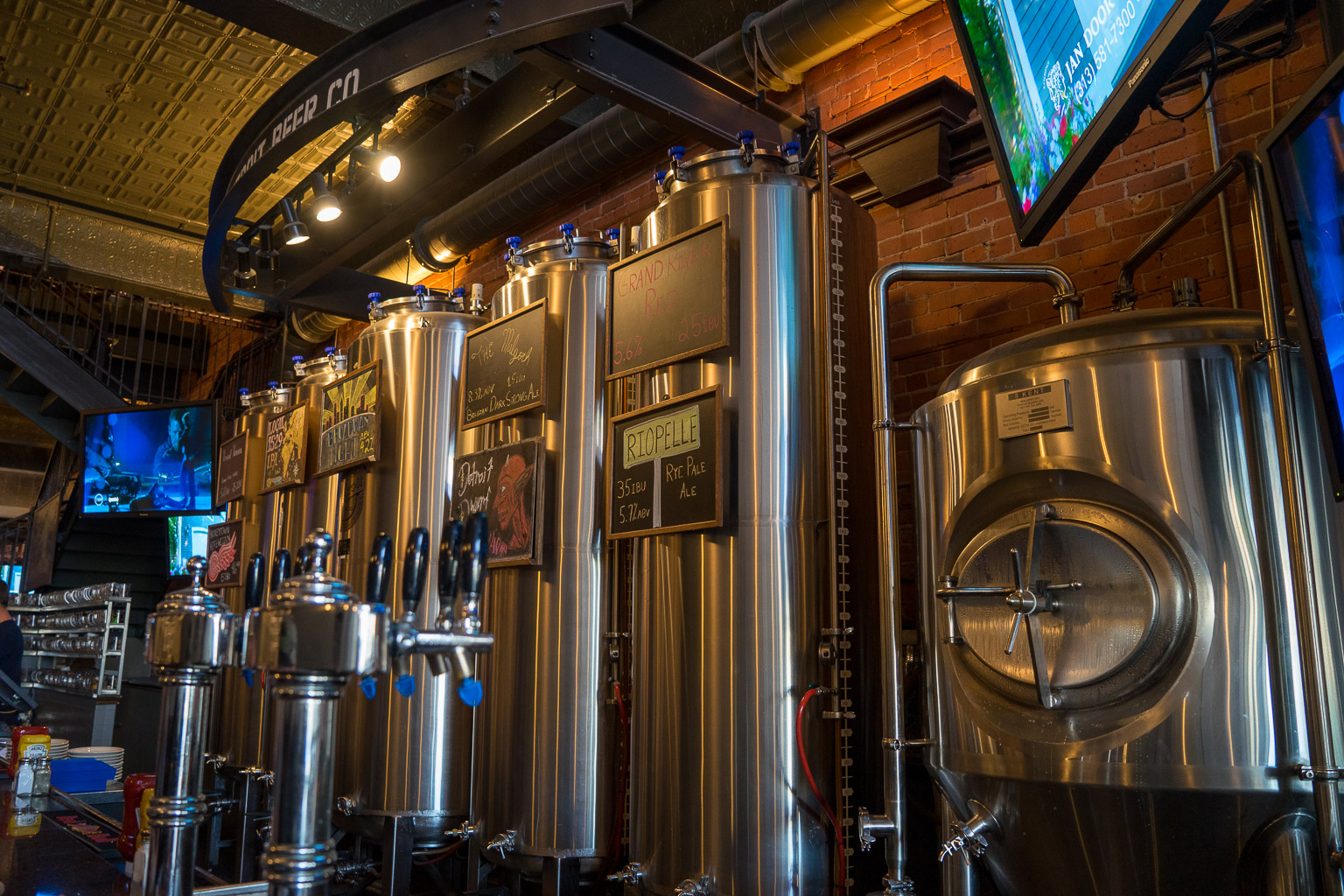
The photos below show the interior of the Detroit Beer Company.
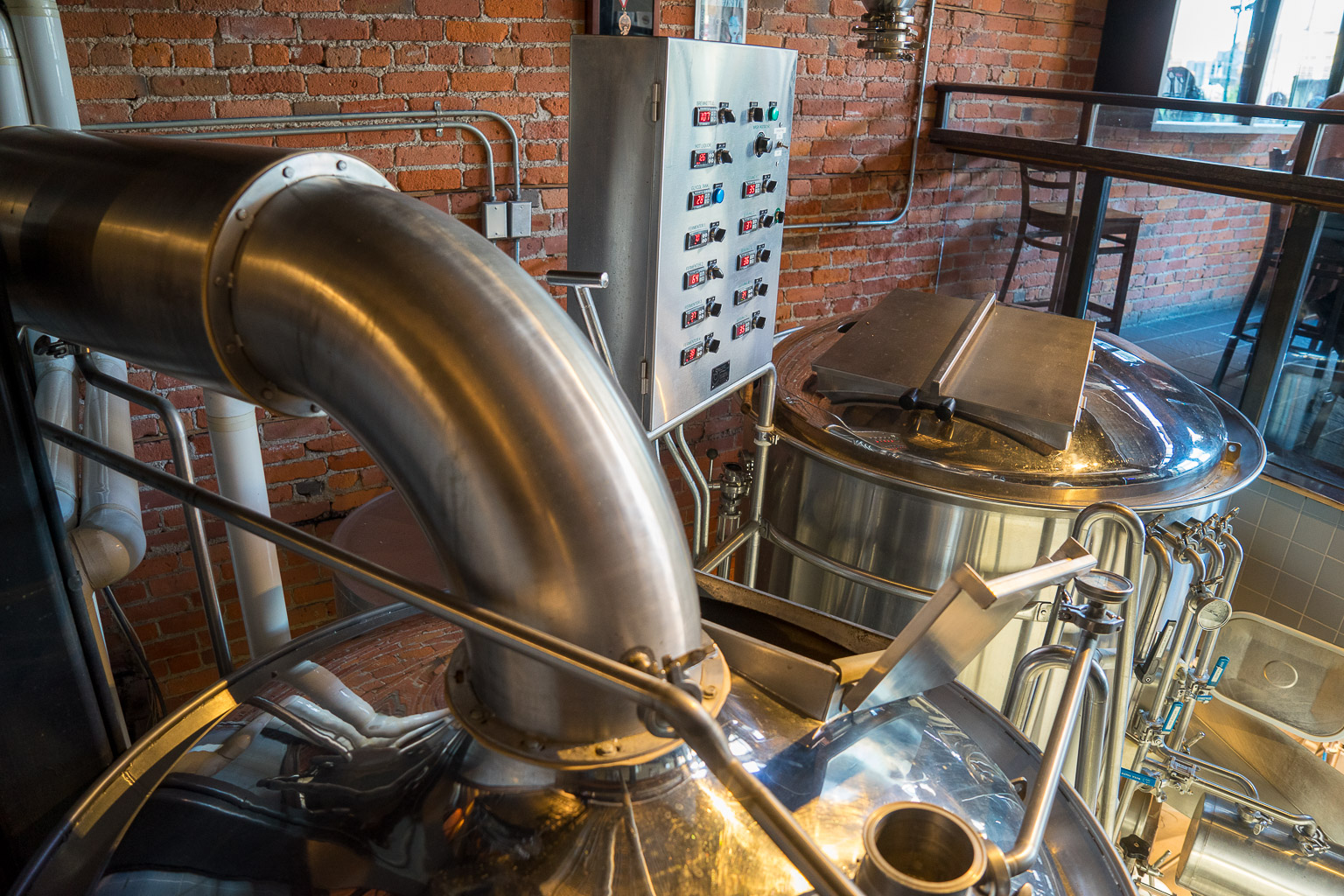
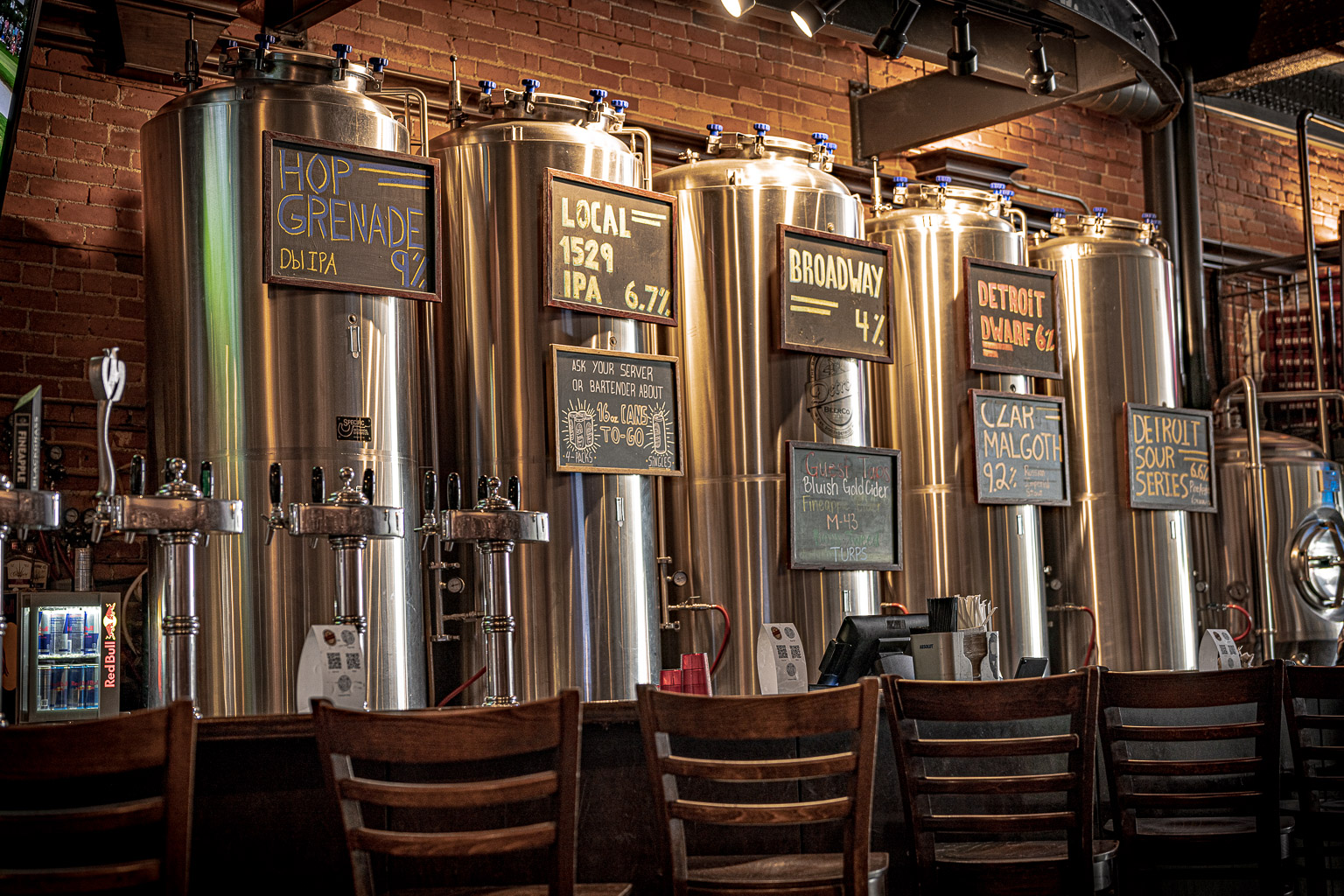
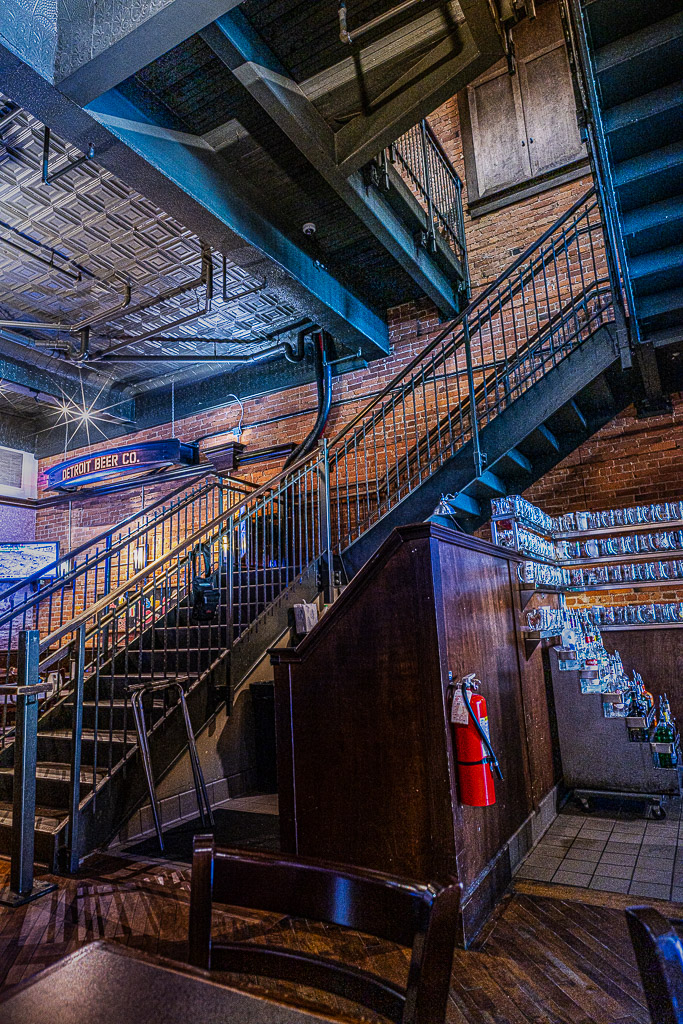
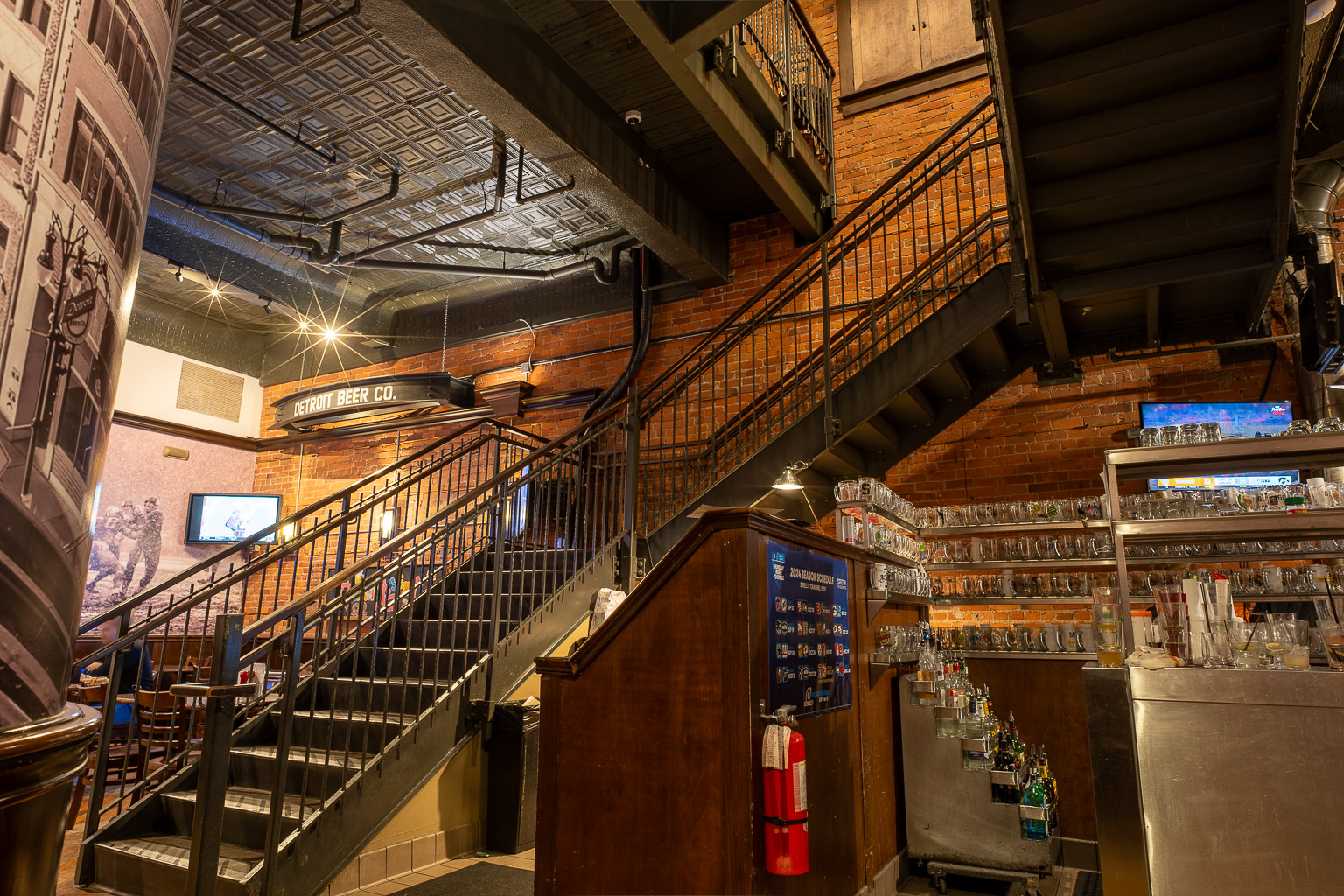
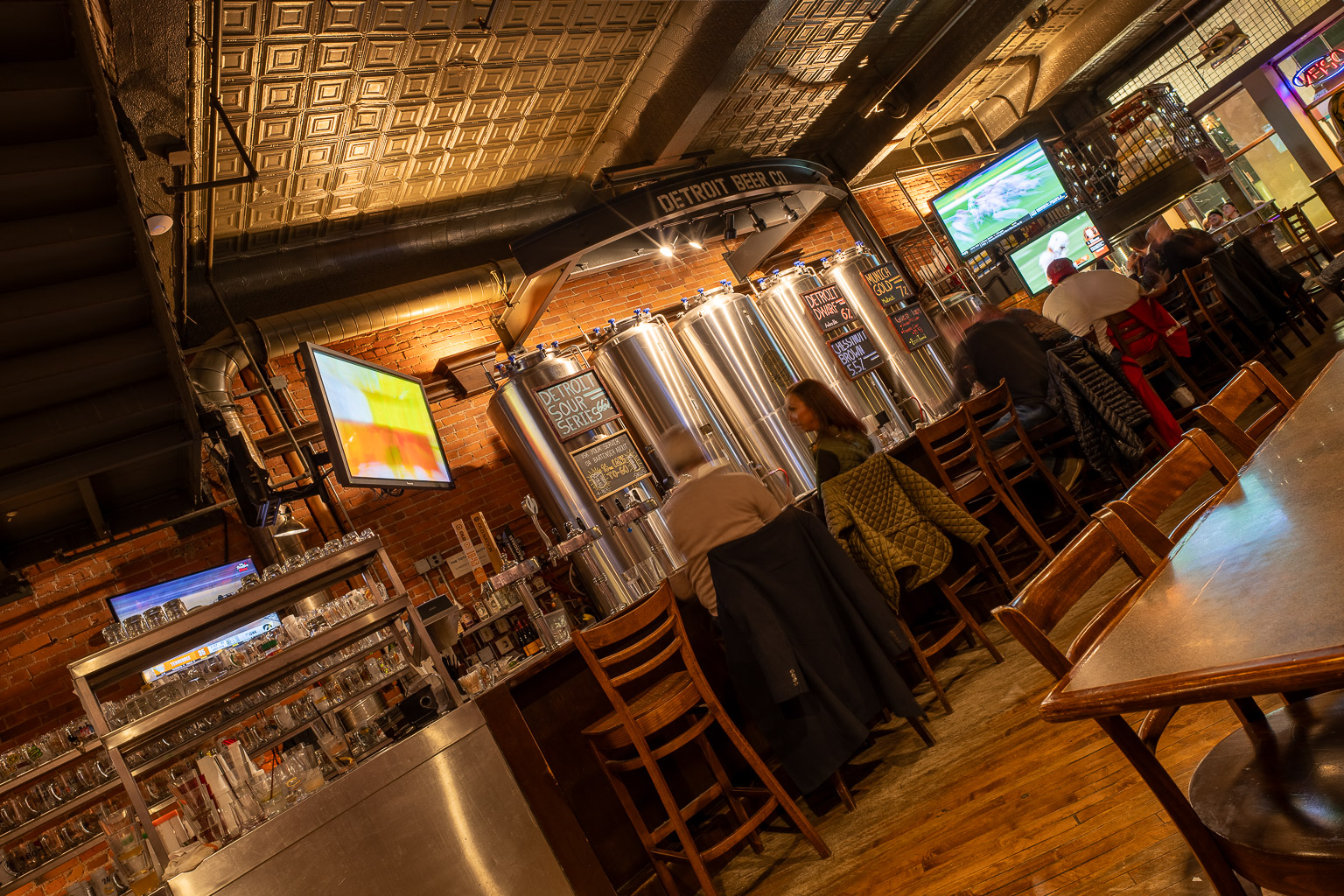
More photos and more description of this building can be found at HistoricDetroit.org.
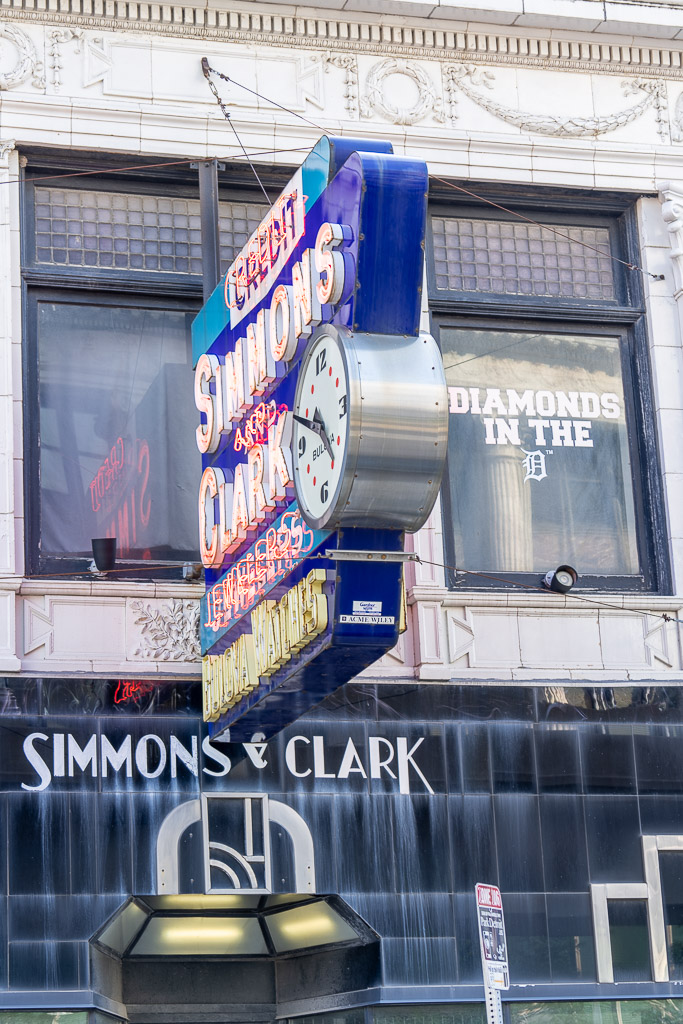
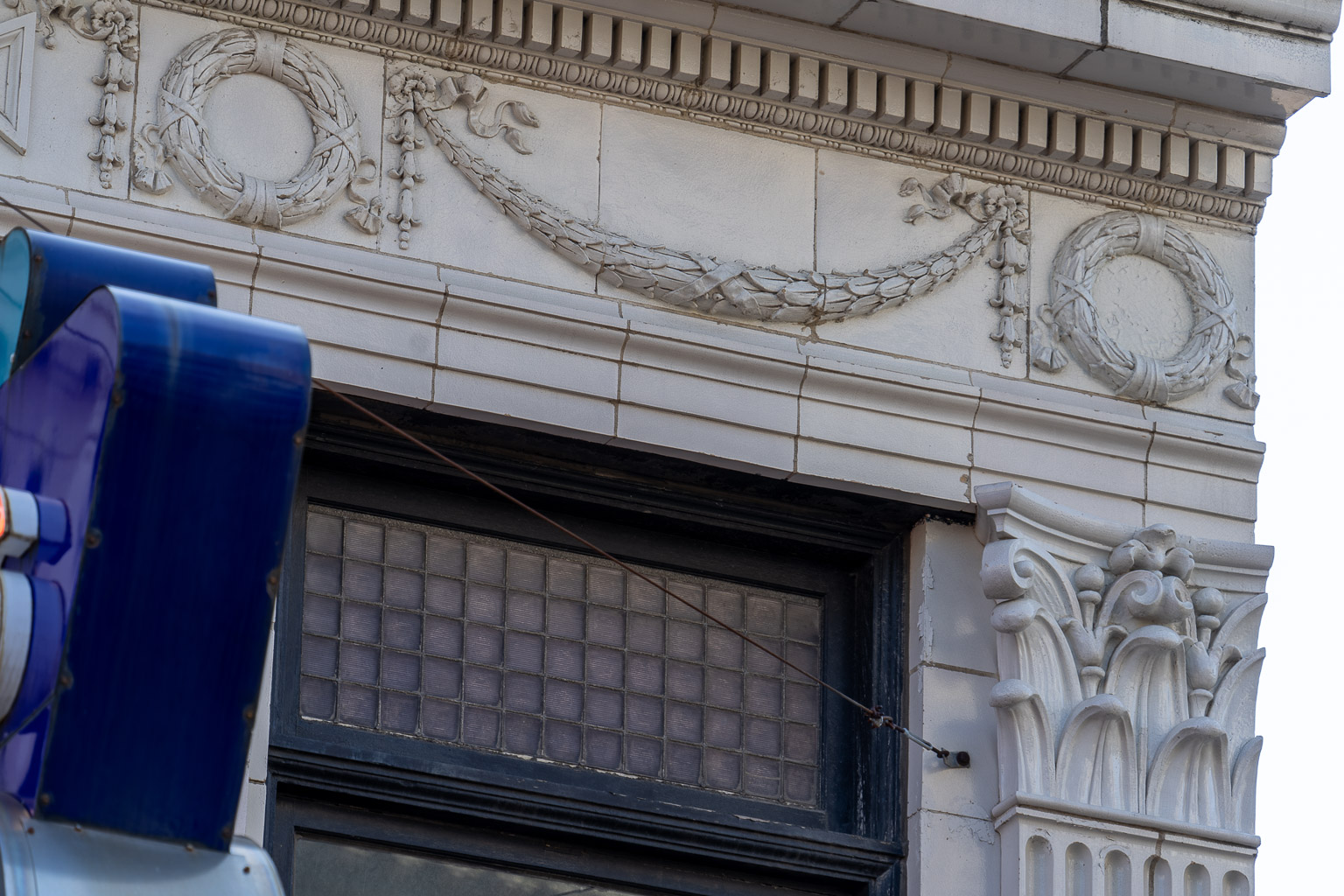
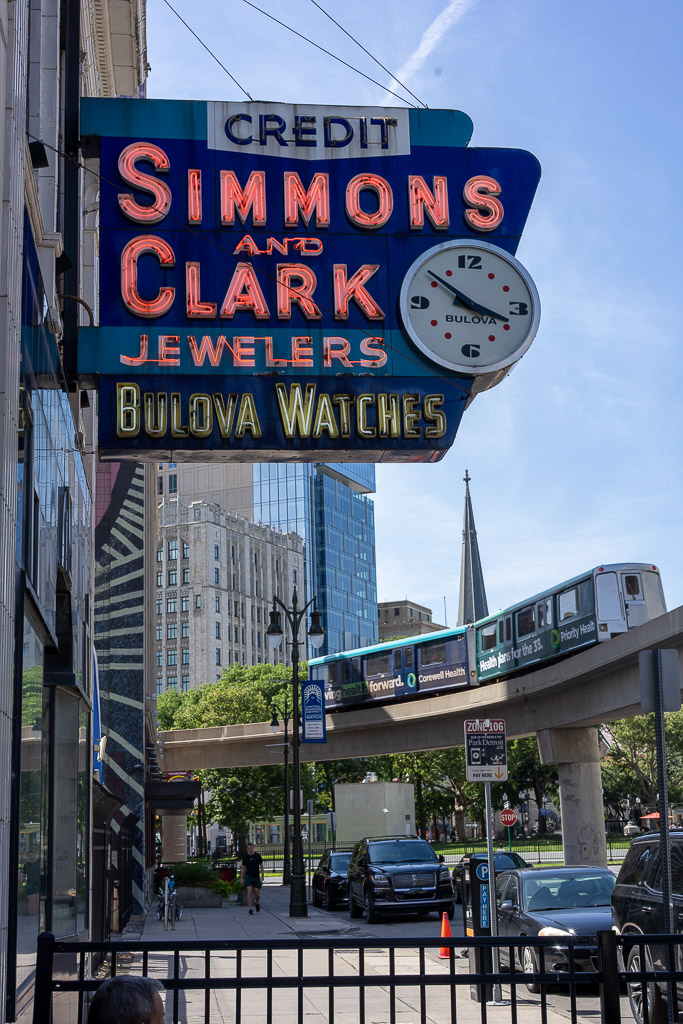
McNaughton-McKay Electric Company, electrical supplies, were the first owners of this two-story commercial building, constructed in 1908. The edges and second story are finished in detailed terra cotta. Fine details in the terra cotta work include embedded fluted pilasters with leafy capitals on the edges of the building, a leafy wreath right above the central front door, and swags, festoons and wreaths above the second floor windows. The original storefront was replaced in 1935 with the now-famous art deco storefront of Simmons & Clark, featuring silver aluminum highlights on black structural glass. The single recessed entrance is flanked by horizontal storefront windows that curve around the corner to the doorway without interruption. Black structural glass frames the windows and spans the wide surface at mezzanine level, highlighted at the corners by a simple geometric step-like pattern and, in the center above the doorway, a highly stylized geometric motif with curves extending from its top. A centered, hanging metal and neon sign at the second story level advertises the jewelry store still there today.
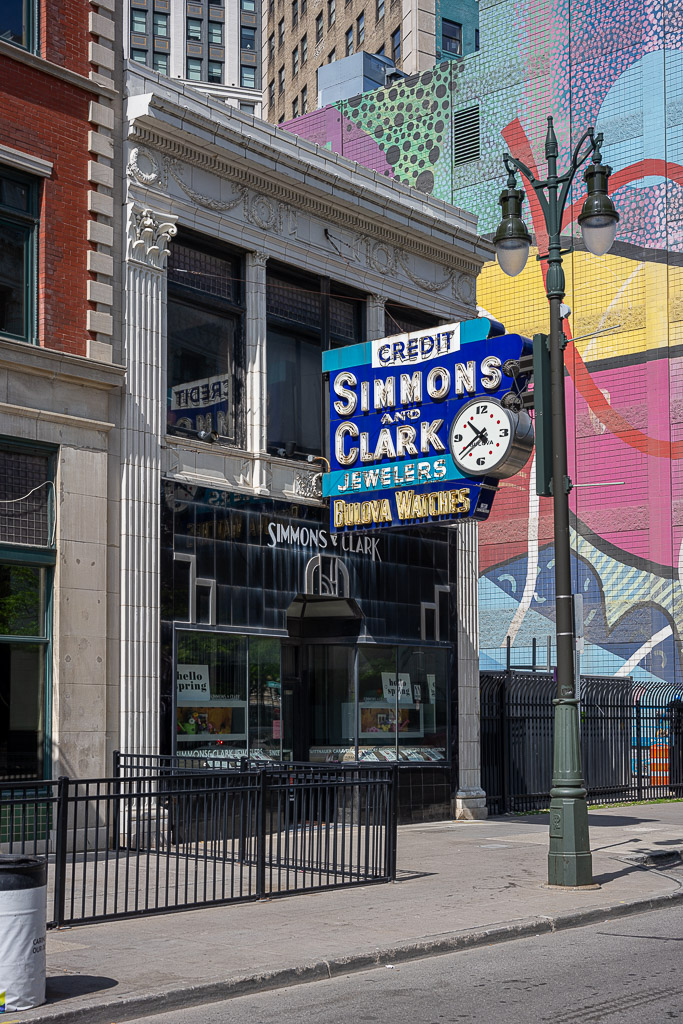
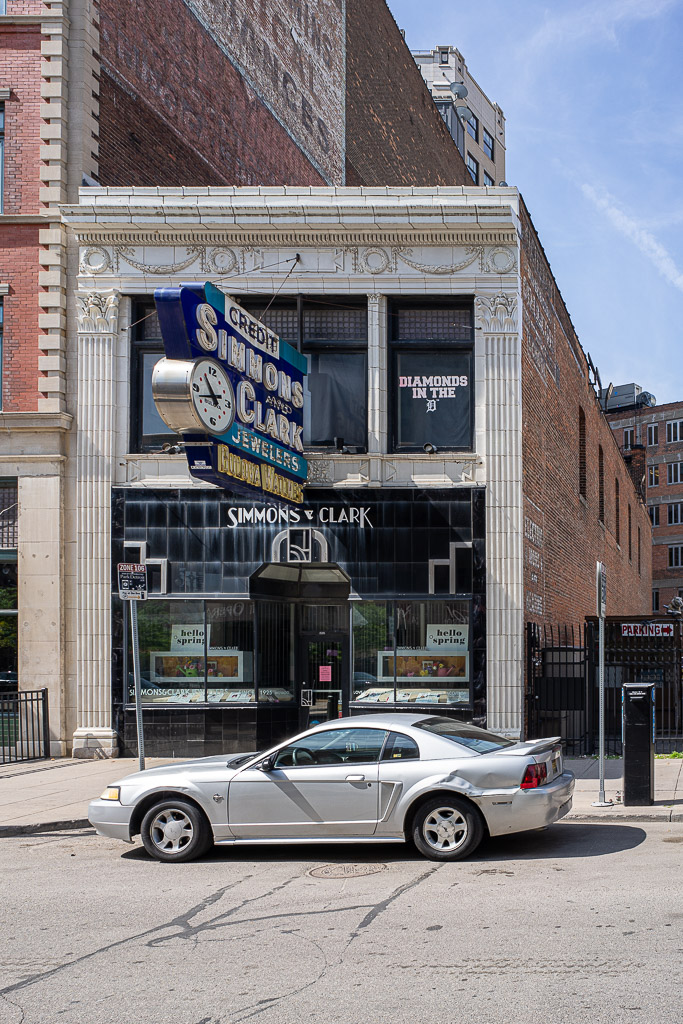
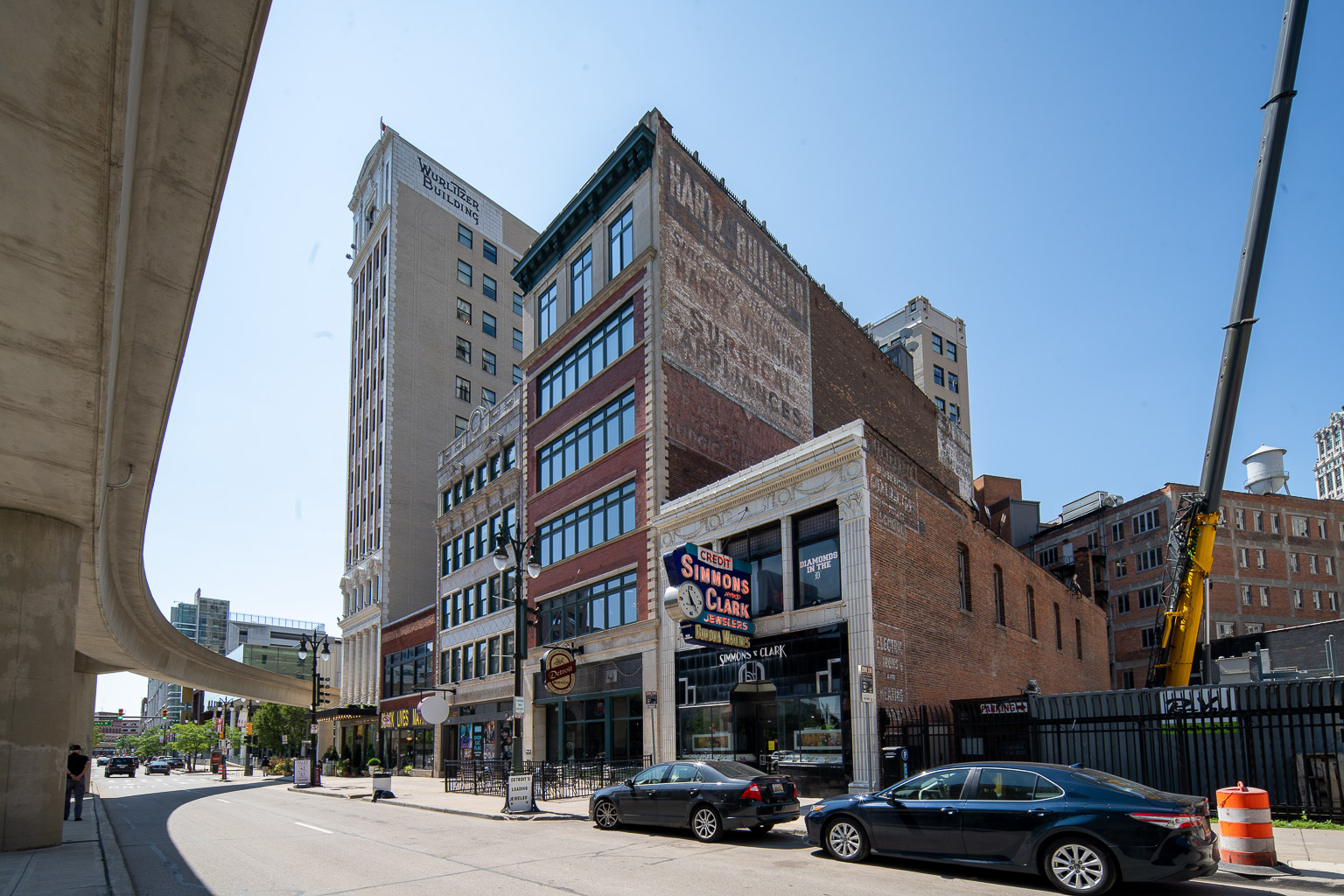
The photos below show details of Simmons & Clark.
The west side of the northern block of the Broadway Avenue Local Historic District, looking south from the Simmons & Clark Building.
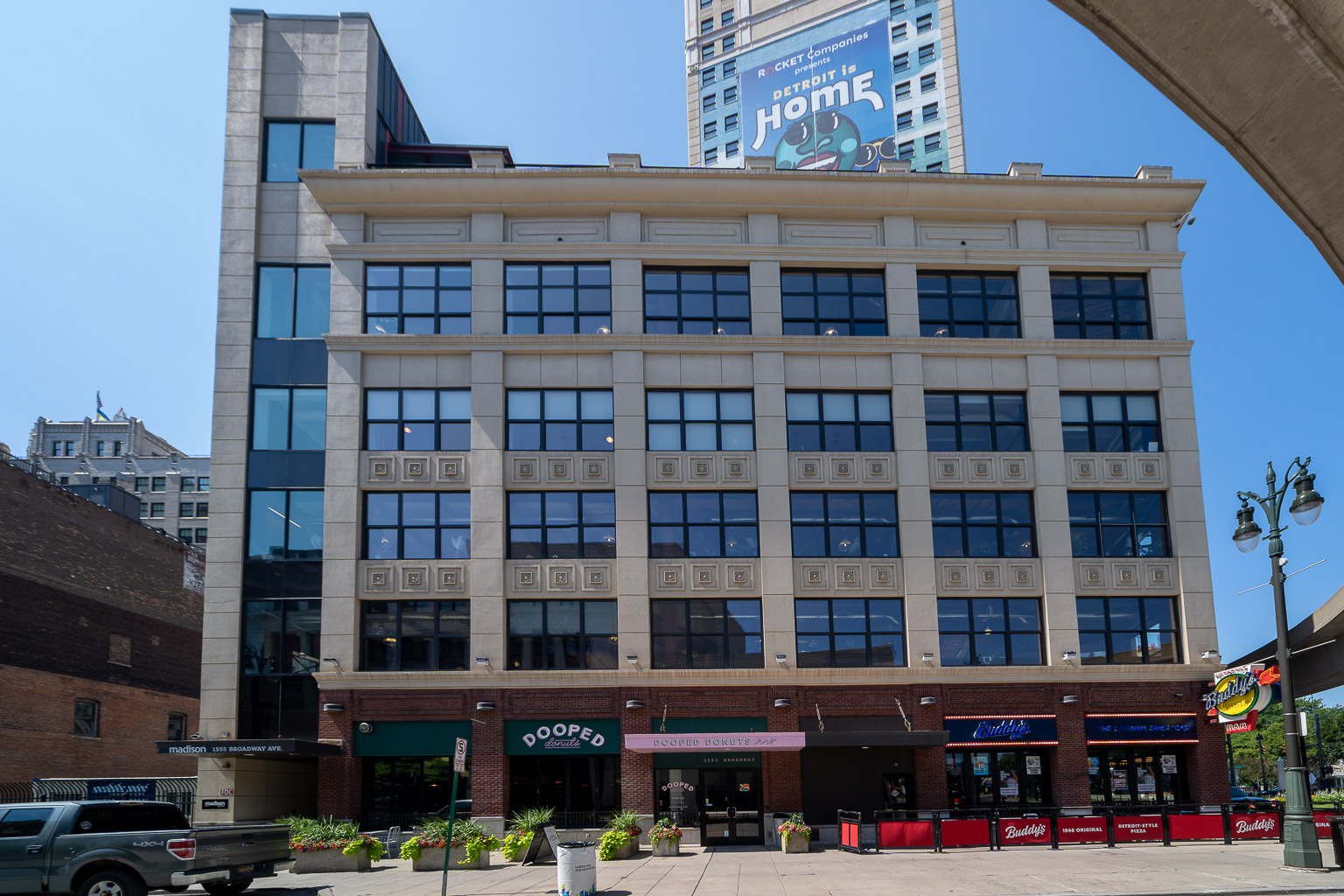
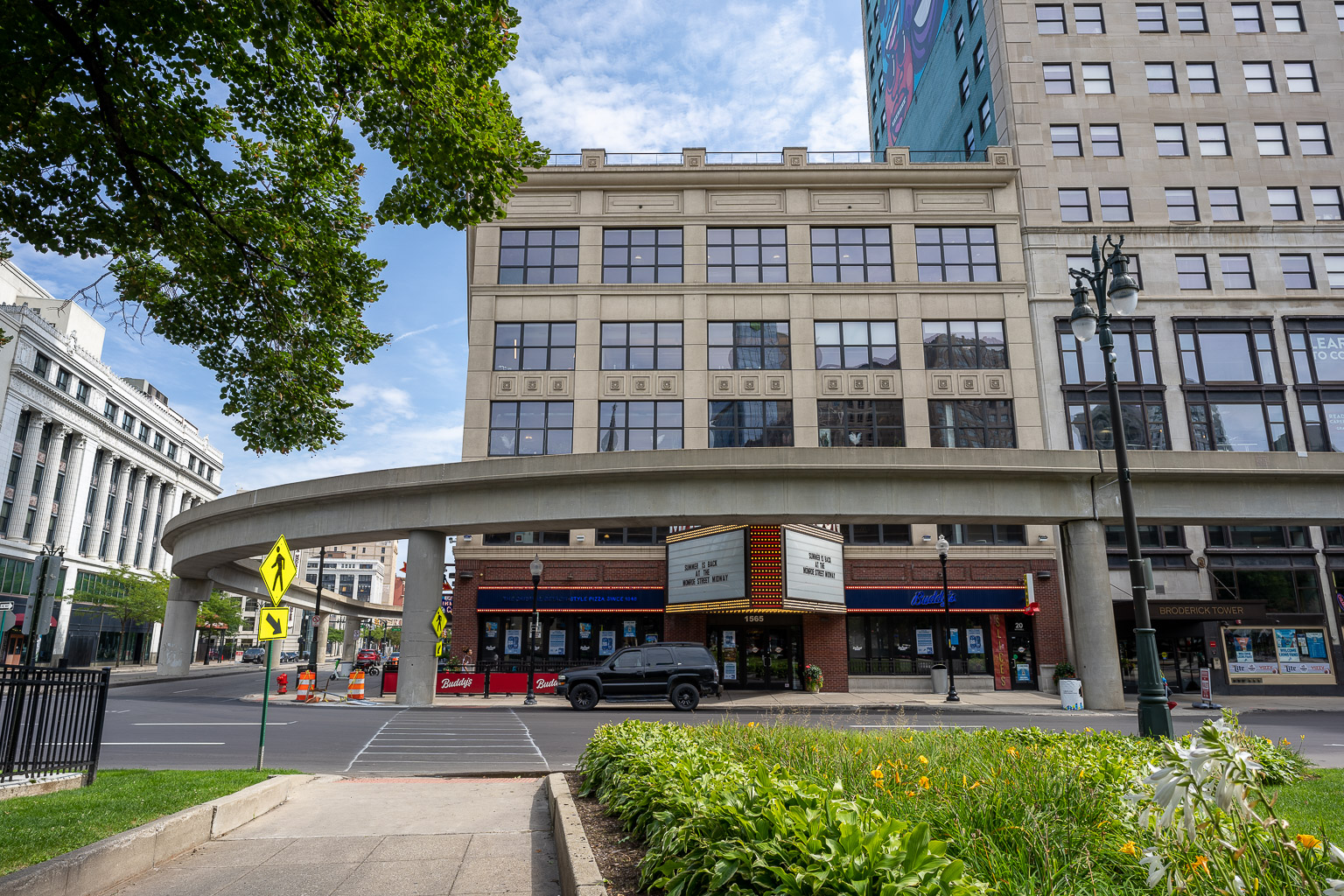
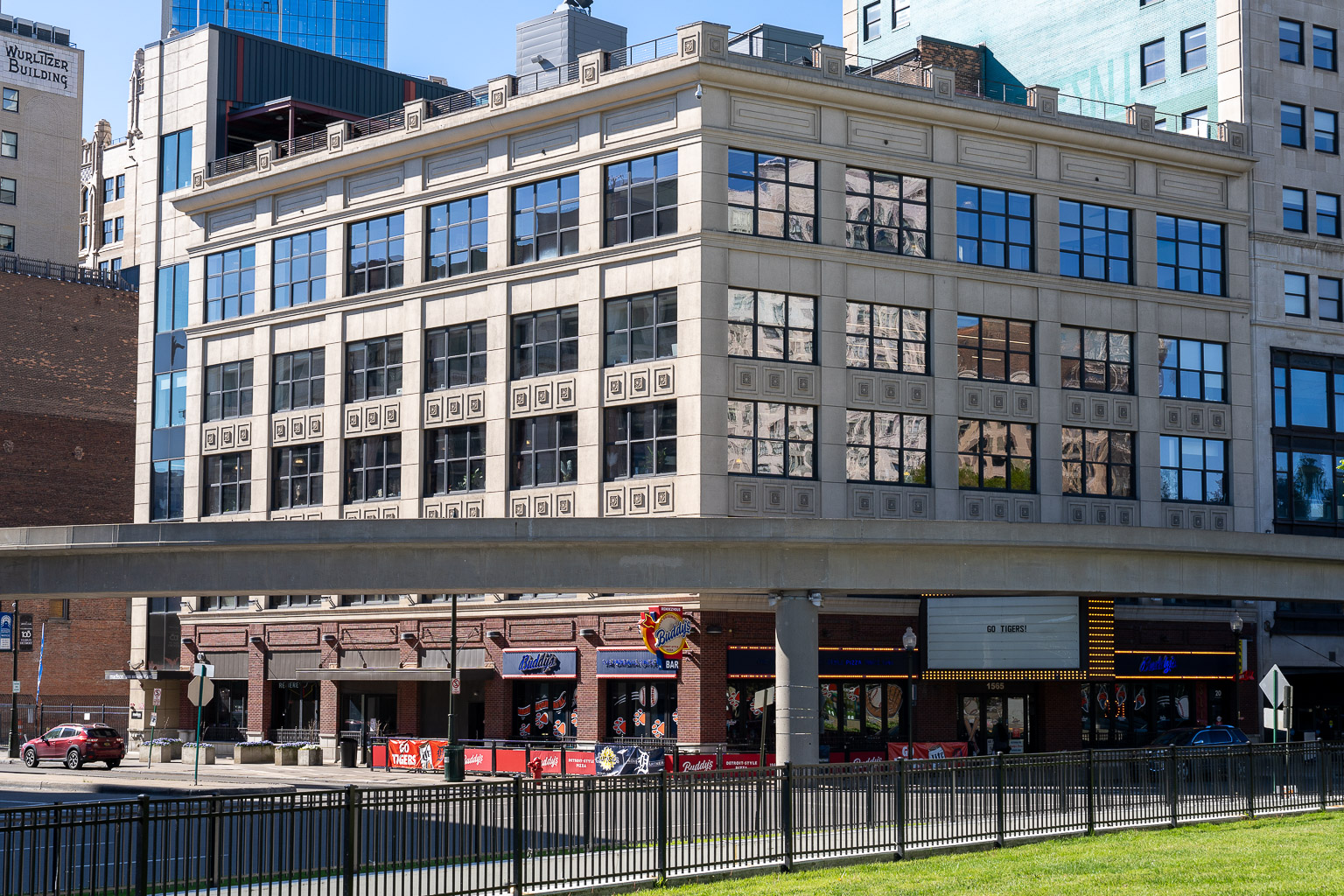
The Madison Building is the office-building portion of the Madison Theater, which was built in 1921. As with many Detroit movie theaters, the Madison was built with an attached office building. The theater portion, located in what is now a parking lot behind the existing building, was demolished in 2001, but the office part remains. It is not part of the official Broadway Avenue Local Historic District, but I'm including photos since it seems to me to be part of the northern block of the Broadway Avenue Local Historic District.
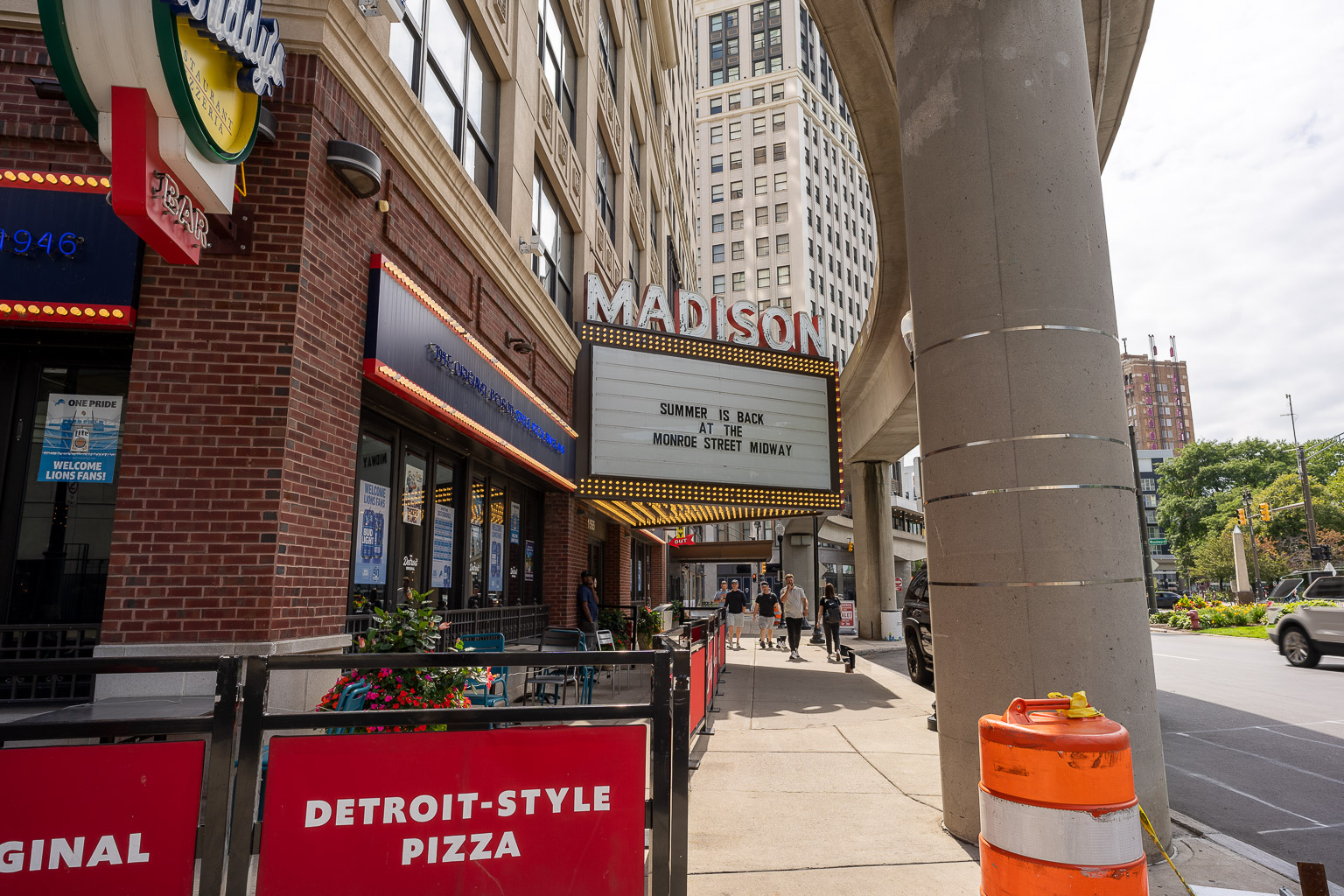
Up at the corner, looking down Witherell Street to the left, the marquee of the Madison Theater appears (1st photo below). Then from across Witherell, the 2nd photo below looks directly at the front facade of the Madison Theater. The 3rd photo shows the Madison Theater from within Grand Circus Park.
More photos and more description of this building can be found at HistoricDetroit.org.