Cass Park Local Historic District
You can read details about the Cass Park Local Historic District in the Cass Park Local Historic District Final Report (local copy), which I recommend highly to anyone interested in Detroit's history.
Contents:
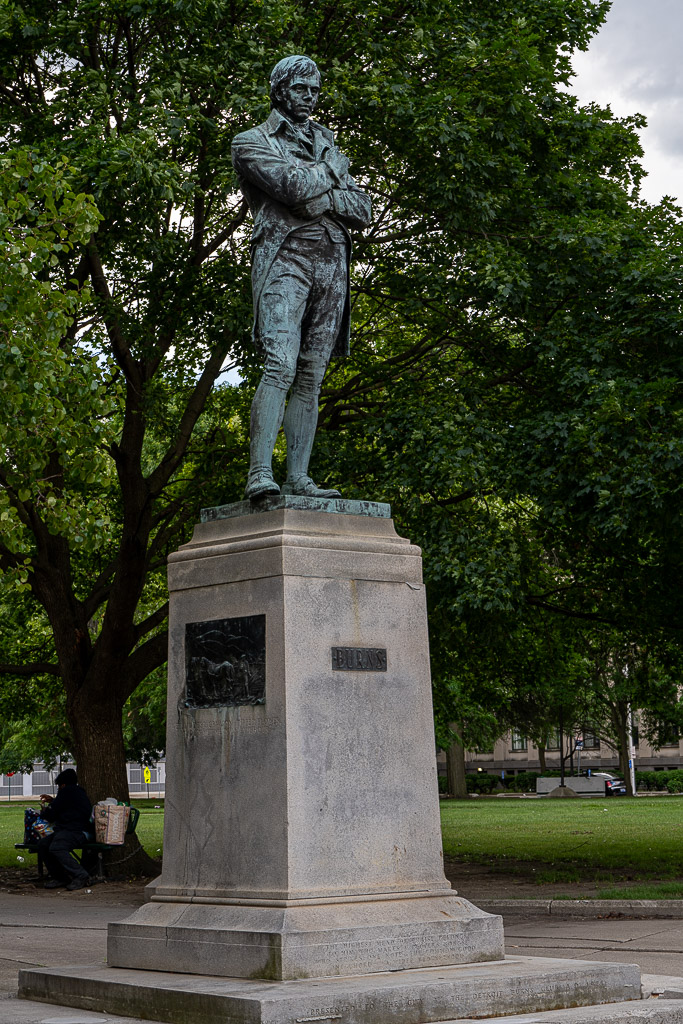
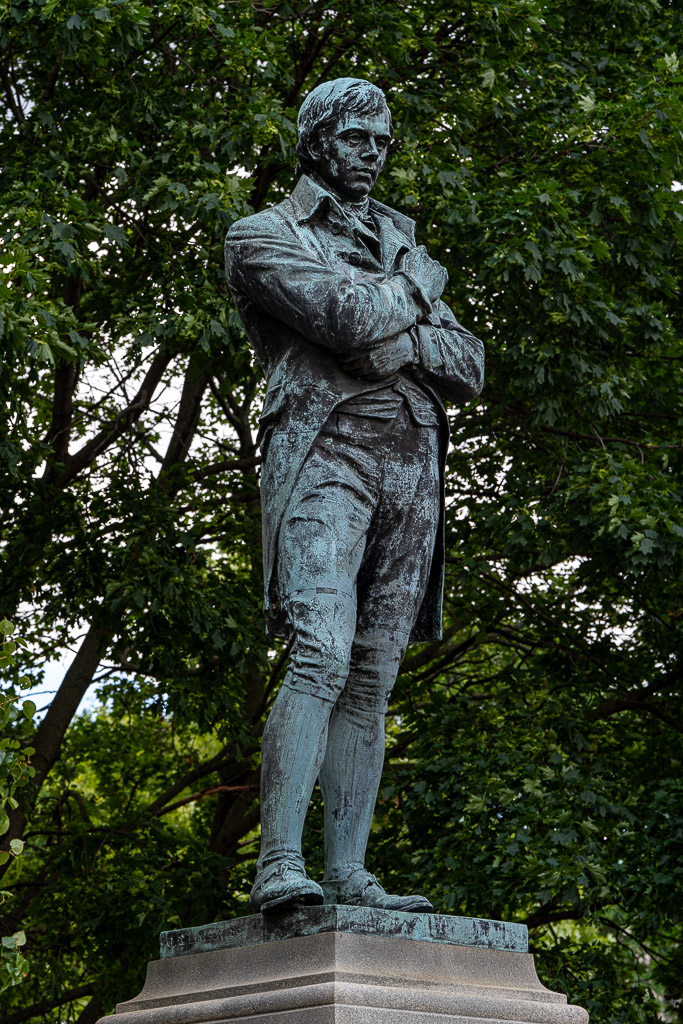
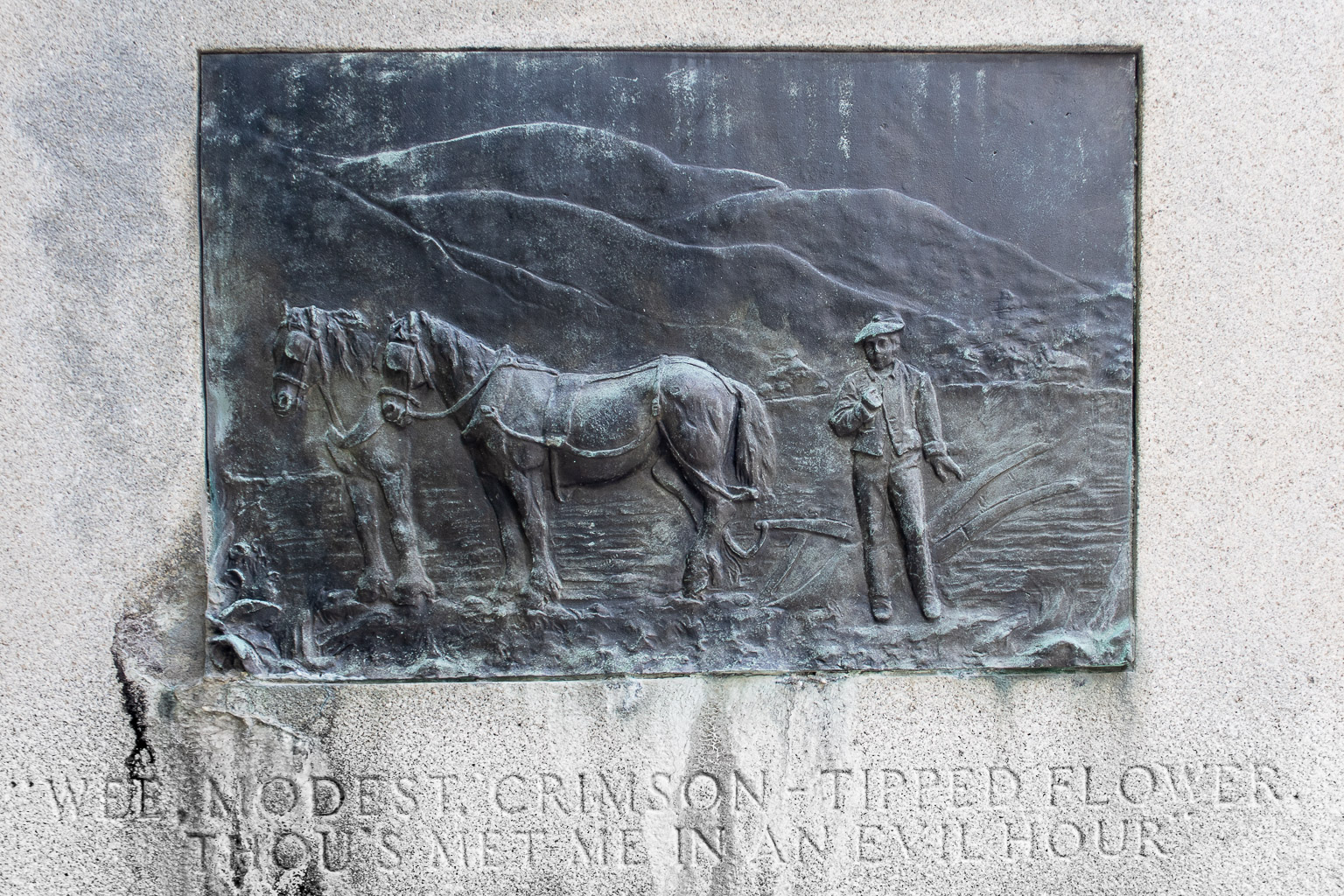
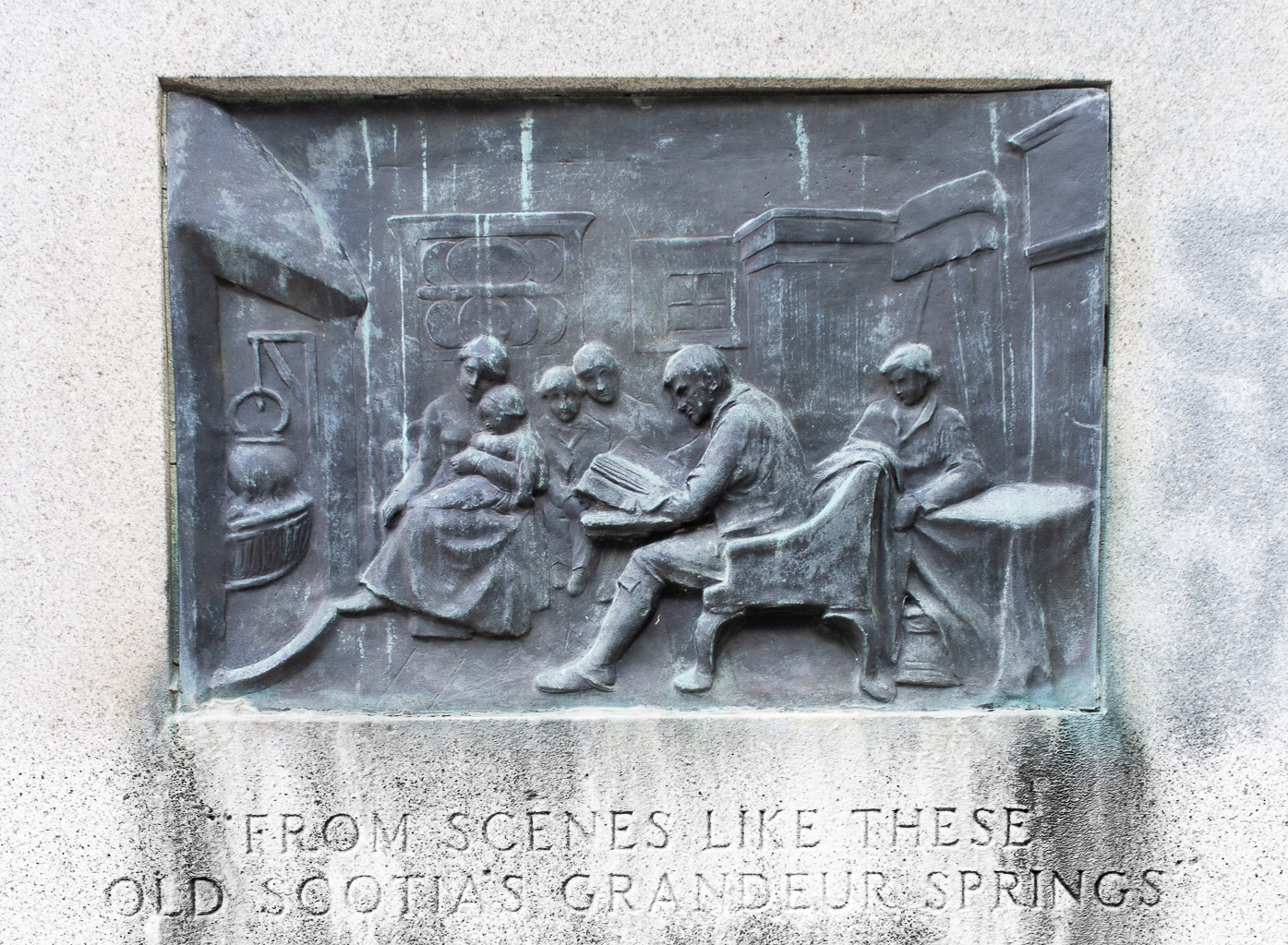
Planned in 1860 and open for public use by 1870, Cass Park is a contributing resource. Robert Burns Located within Cass Park, this is a 1920 bronze standing figure of Burns on a granite pedestal, by George A. Lawson, a Scottish artist. Inset bronze reliefs on the sides and back of the pedestal illustrate verse from various poems by Burns.
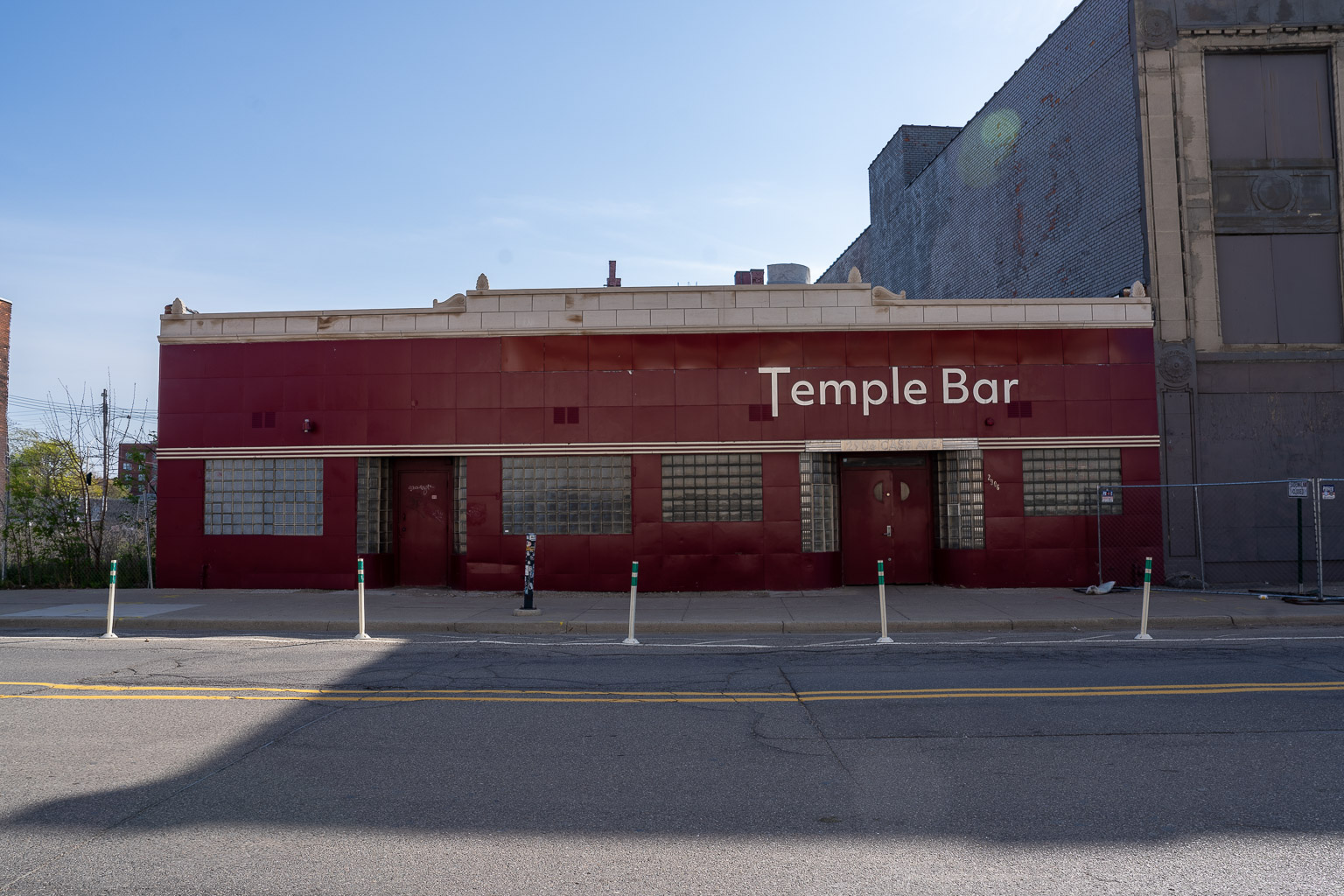
This Art Deco building, the Temple Bar, features glass block windows and porcelain-enamel steel panels. It is reflective of the later, mid-20th century development of the Cass Park area.
Three–story, four bay, brown brick commercial building, 1915. Built by Riesterer, the building housed his drug store on the first floor and ten apartments known as the Riesterer Apartments on the second and third floors. The decorative elements of the building include panels of green tile in the parapet and iron balconets on two of the upper floor windows. Above the boarded storefront is a multi-light transom with fanlight. The arch with keystone and voissoirs above the entrance to the apartments hold a divided fanlight.
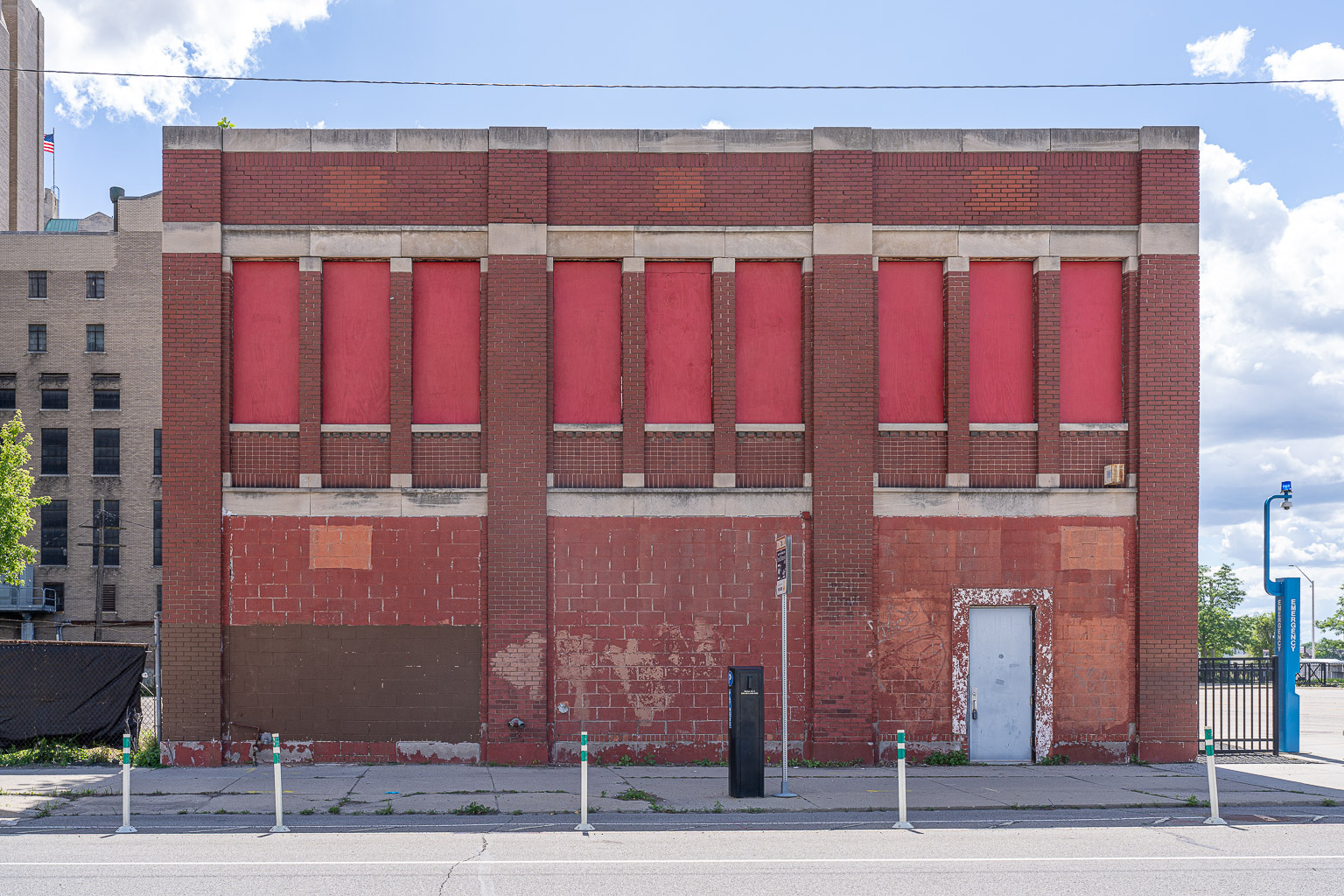
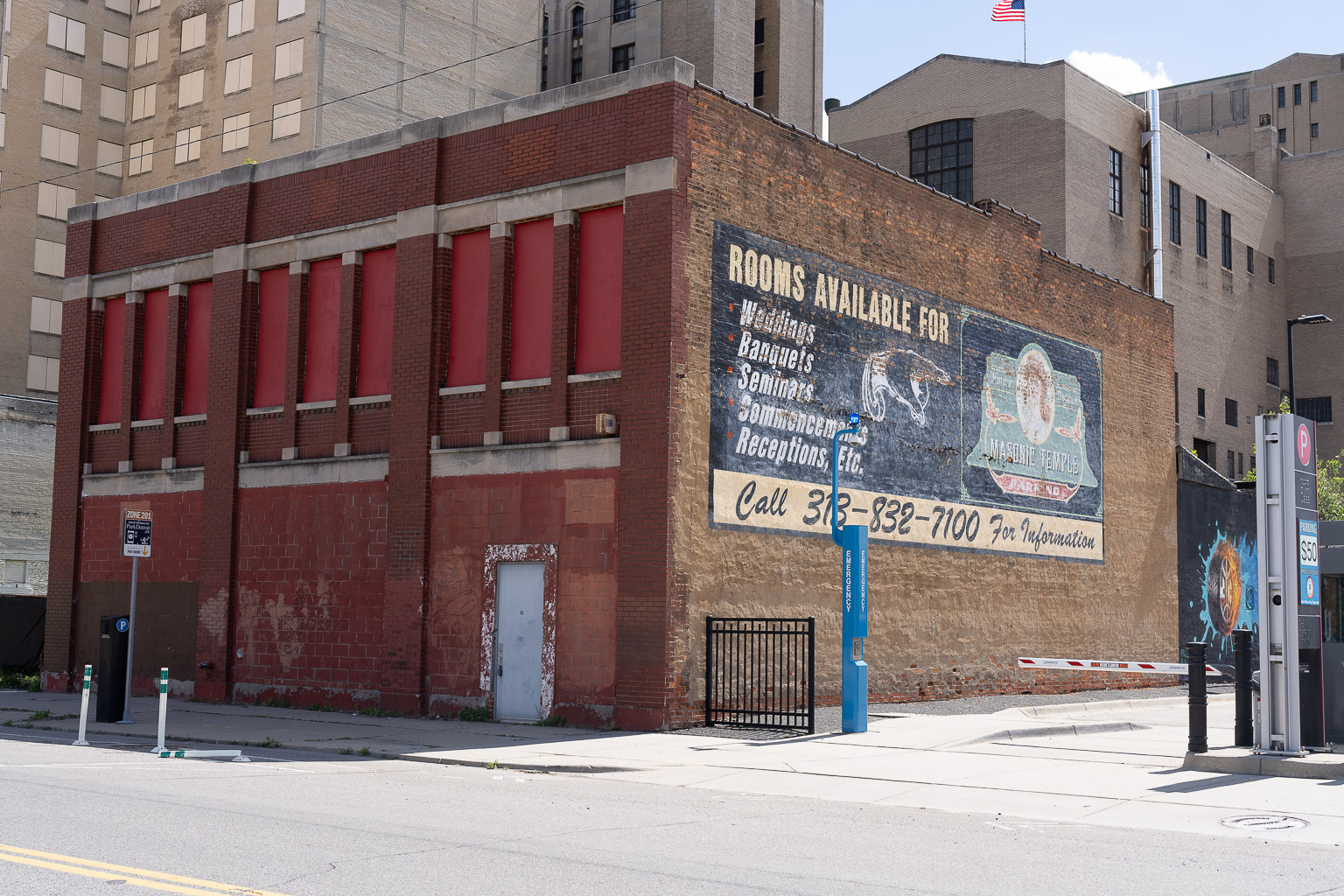
Two-story, three bay red brick and reinforced concrete commercial building, 1922, Albert Kahn, architect. The building was originally designed by Kahn as a film exchange building. The first floor windows have been filled in with concrete block. The three bays are divided by projecting piers with a set of three windows in each bay on the second floor.
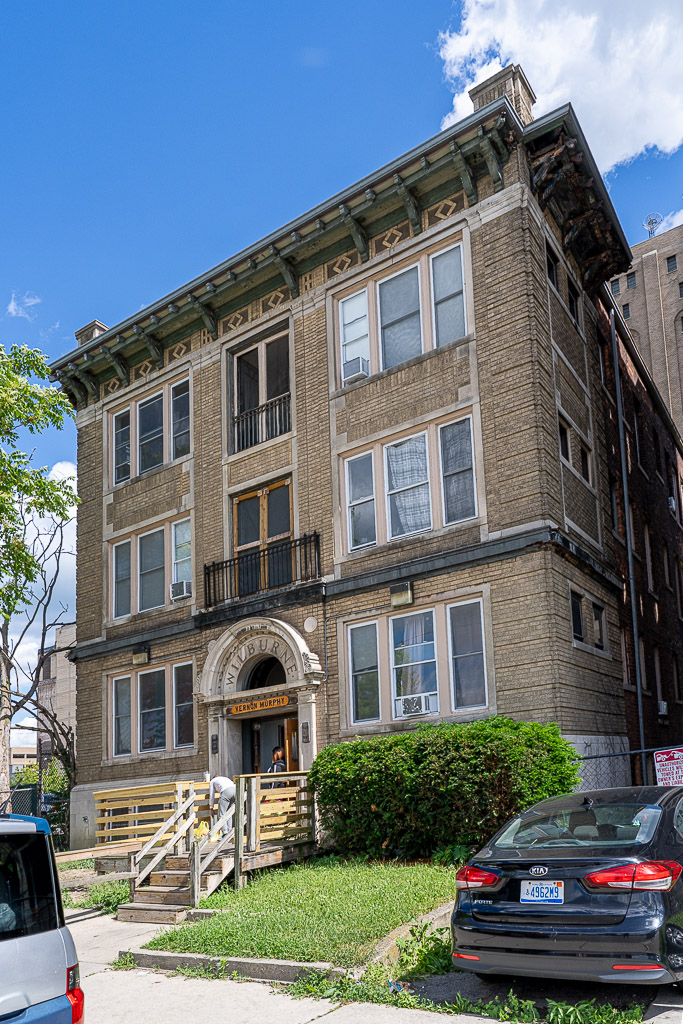
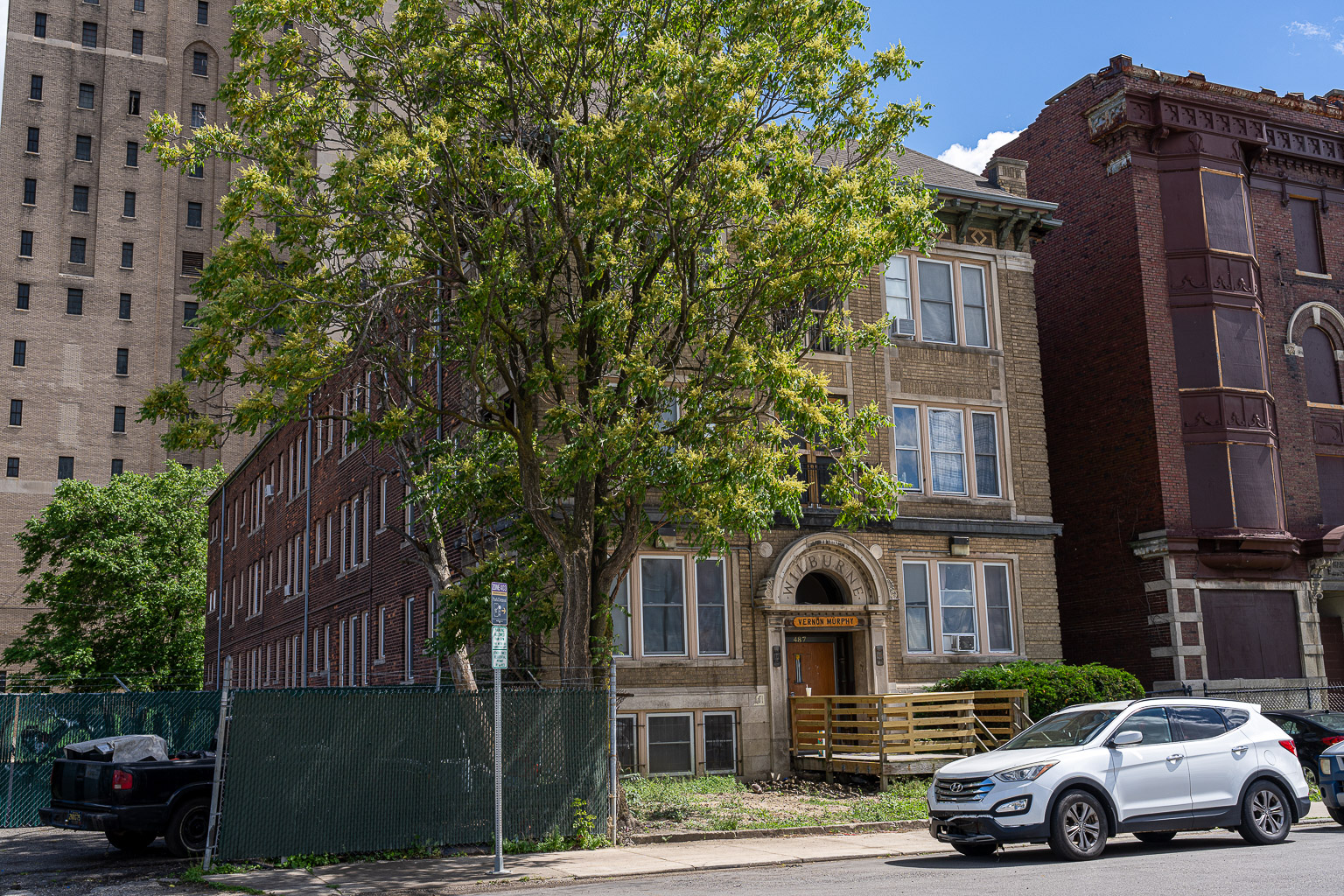
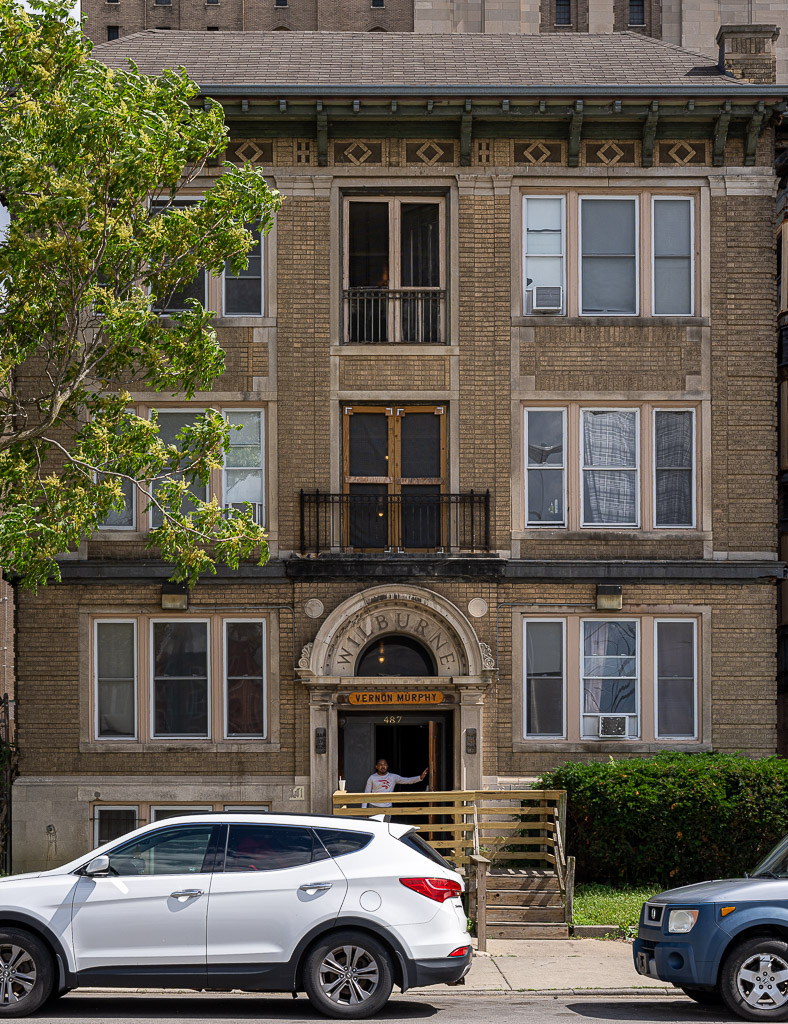
The Vernon Murphy Apartments was built in 1916. is a three-story Arts and Crafts inspired building with wooden brackets, decorative tile, and brick quoins.
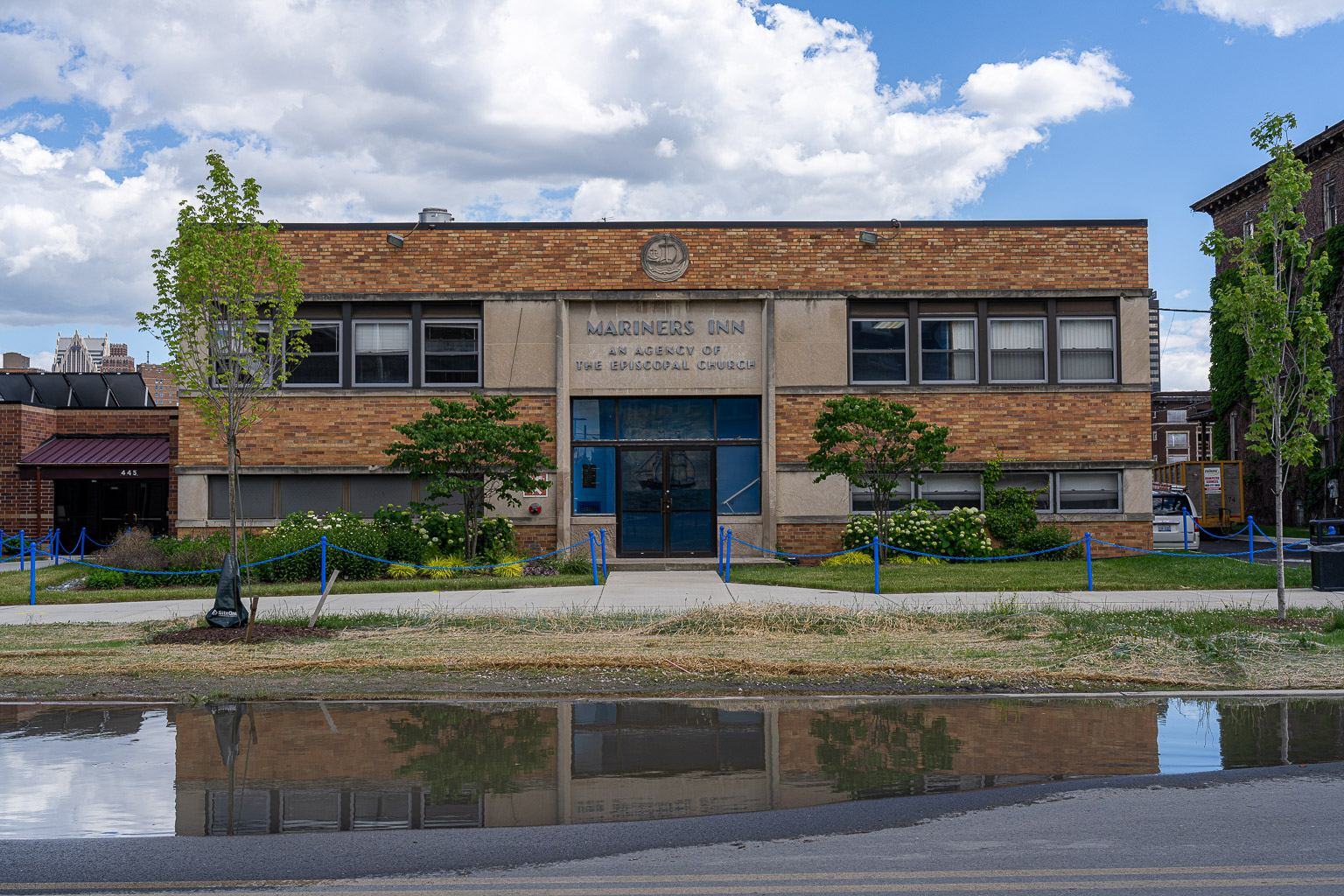
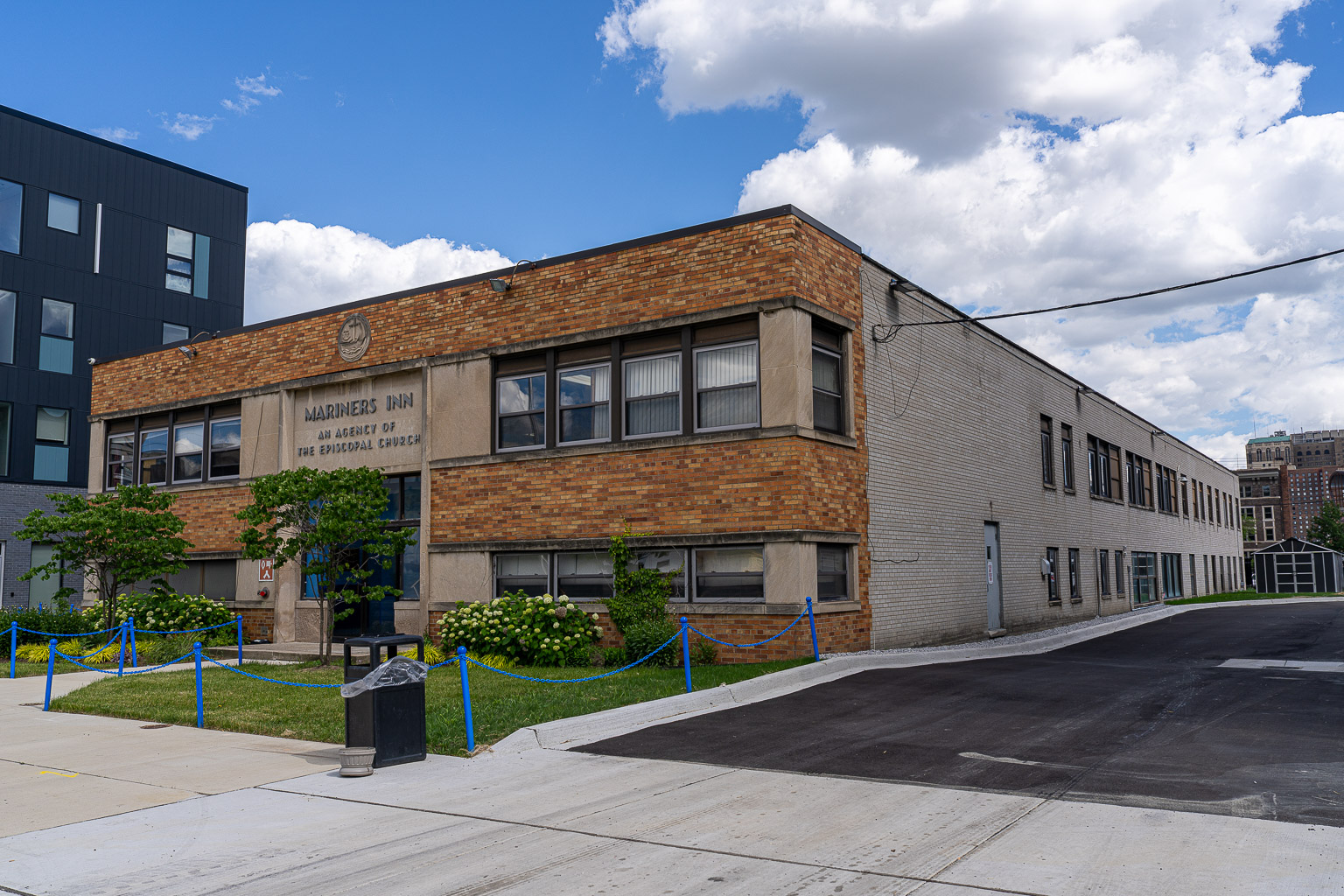
Two-story, rectangular limestone and concrete trimmed, brick office building, 1955, Charles Vogel, architect. This modern, mid-century office building was constructed for the non-profit agency whose name appears in raised letters in a large stone panel over the entrance, MARINERS INN – AN AGENCY OF THE EPISCOPAL CHURCH. Above the door surround is a medallion with a ship and cross that symbolizes the organization. The Episcopal church being referred to is, of course, Mariners Church, downtown on Jefferson.
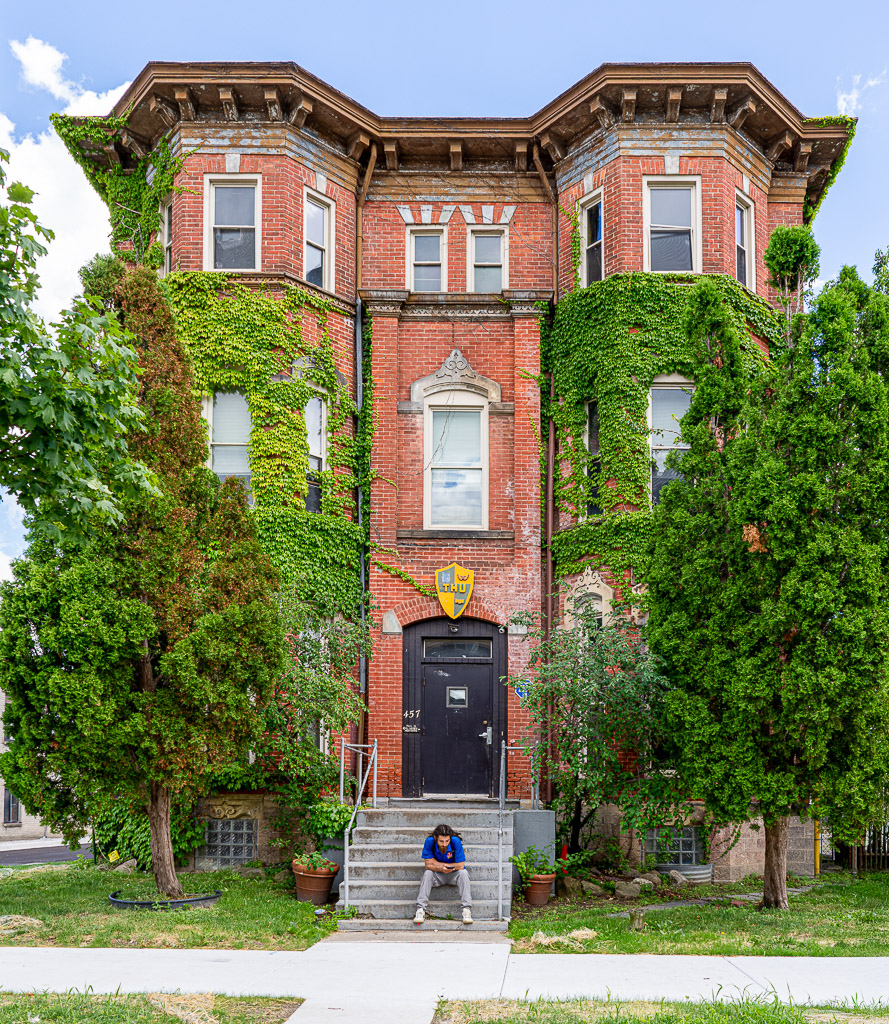
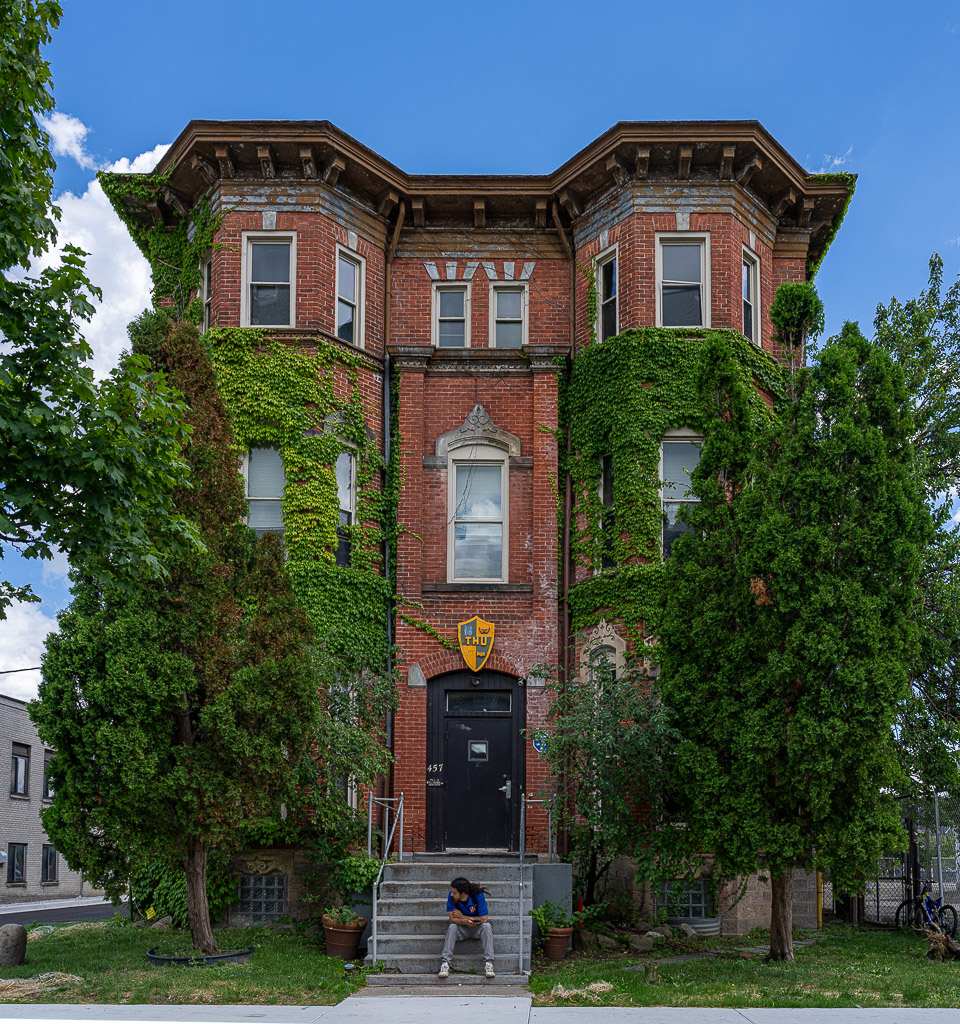
Three one-half story, three bay, red brick, Italianate house, 1878, with third floor likely added c. 1900-1910. This house was constructed for John H. Avery, prominent businessman and heir to Newell Avery lumberman and real estate dealer. Windows on the first and second floors of the front façades have elaborate carved stone hoods; the third floor windows have flat arches embellished with stone. A denticulated stringcourse separates the second and third floors. The overhanging flat roof has a modillioned cornice that encircles the entire house. The house is now owned by neighboring non-profit agency, Mariners Inn.
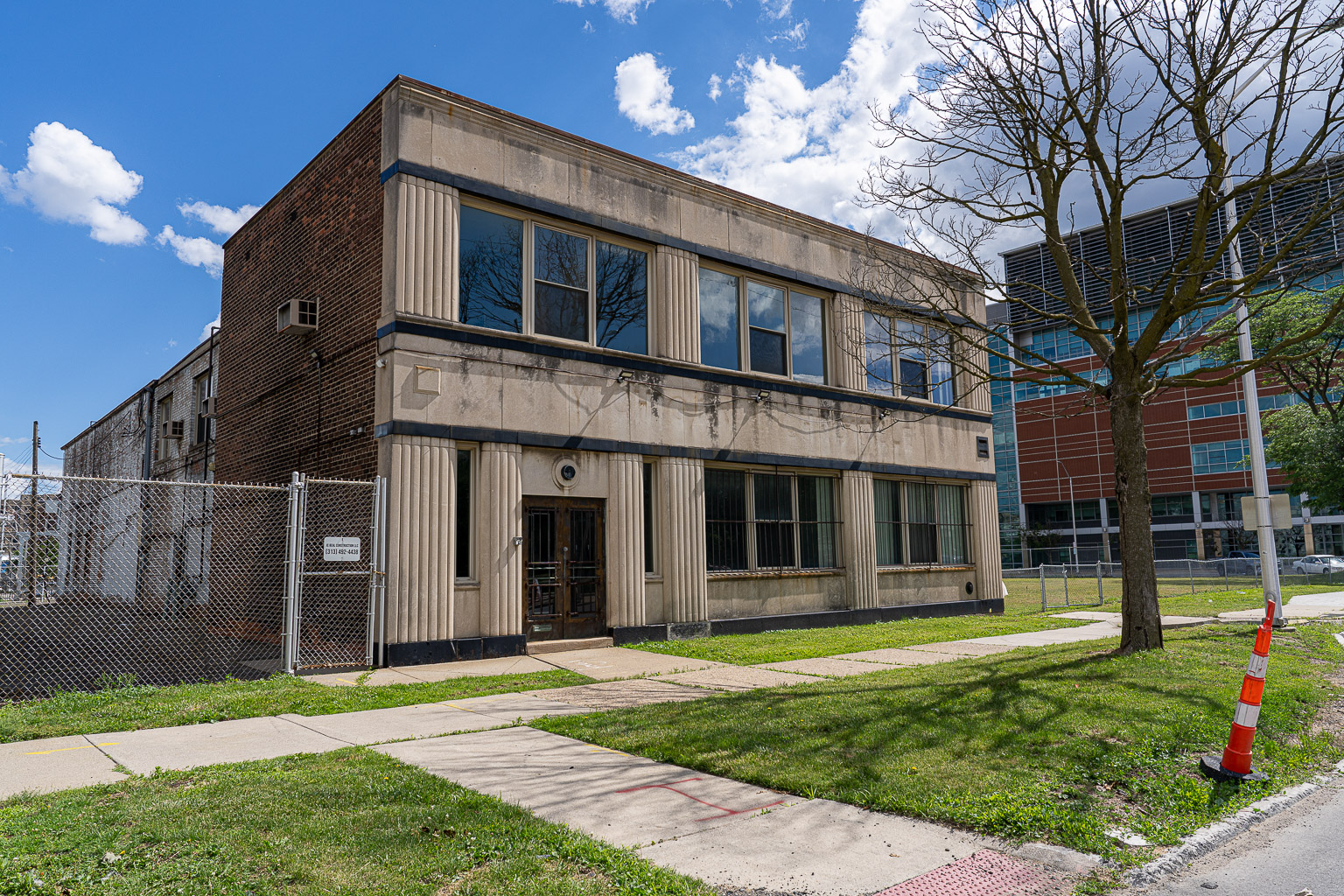
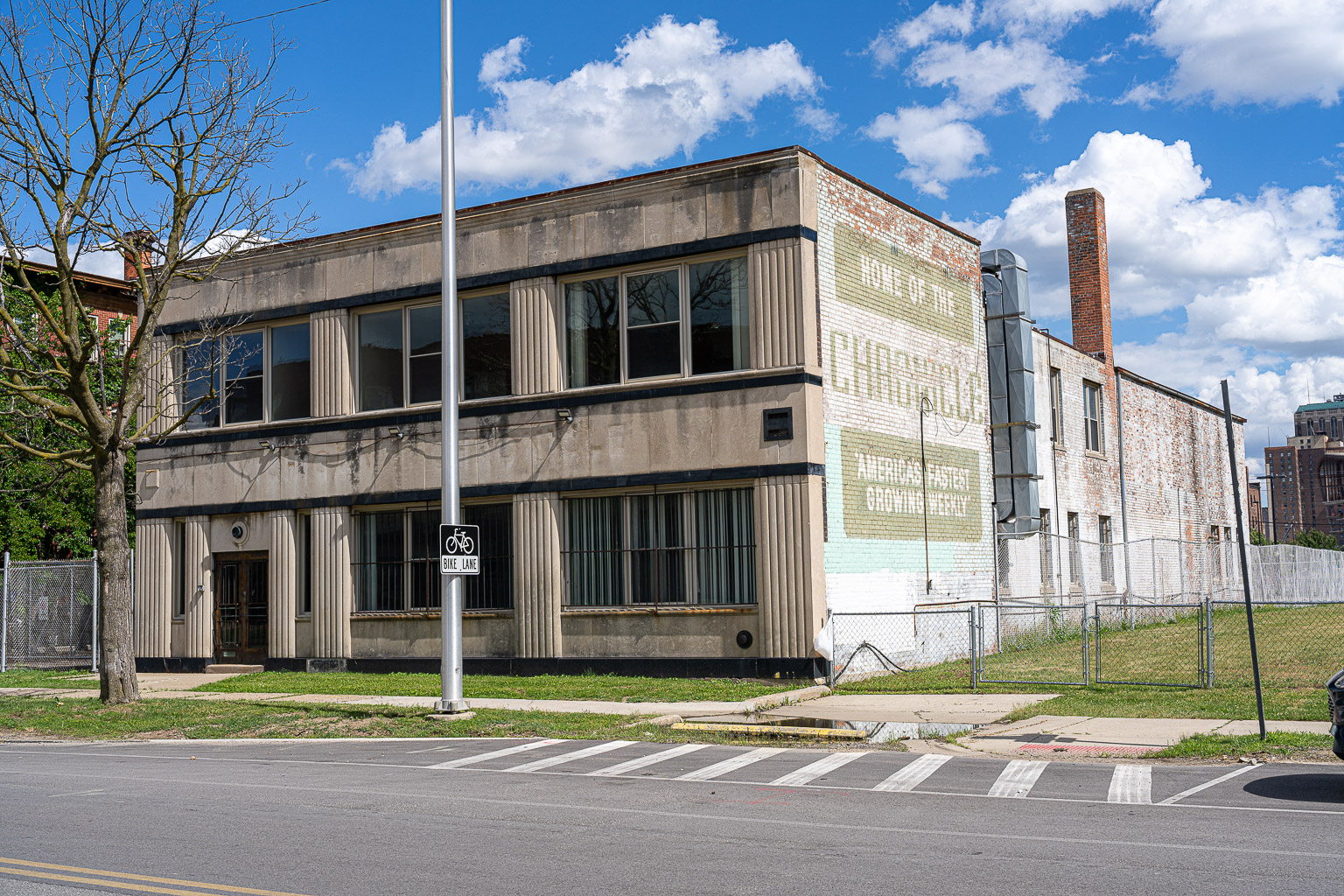
Two-story, three bay, brick office building with a limestone Moderne façade, 1936, H.G. Winter, builder. Originally constructed as a film exchange building, the building is now the home of The Michigan Chronicle, Detroit’s first black-owned newspaper. The front façade is composed of horizontal stone bands and large metal framed windows separate d by ridged vertical cast stone piers or pilasters which also flank the entrance doorway on the east end of the building. The name MICHIGAN CHRONICLE appears in raised letters between the first and second floor.
More photos and more description of this building can be found at HistoricDetroit.org.
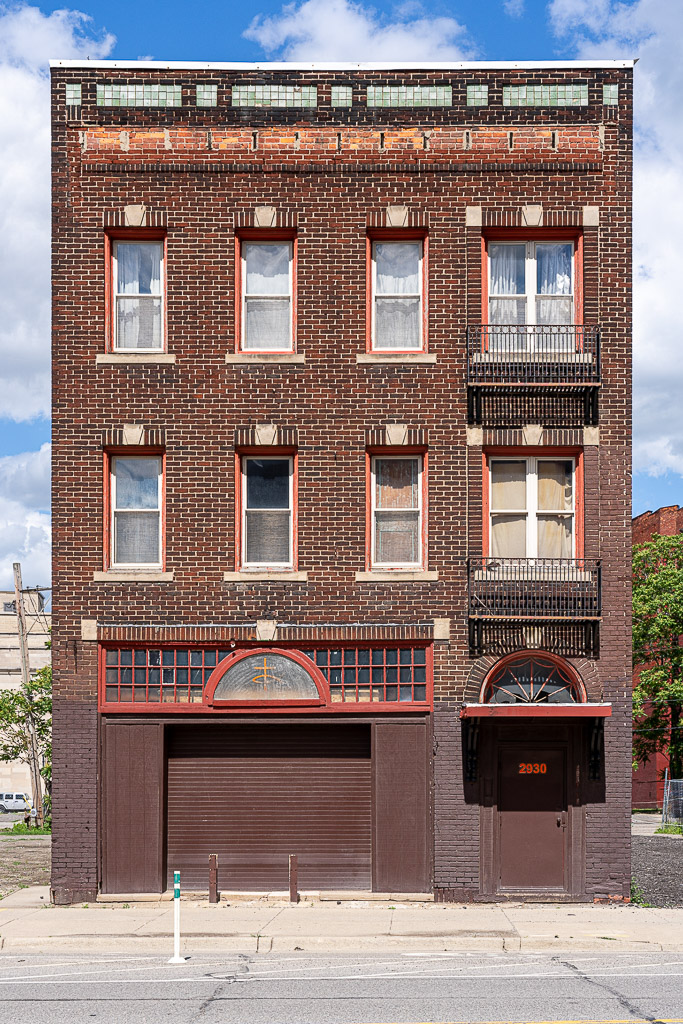
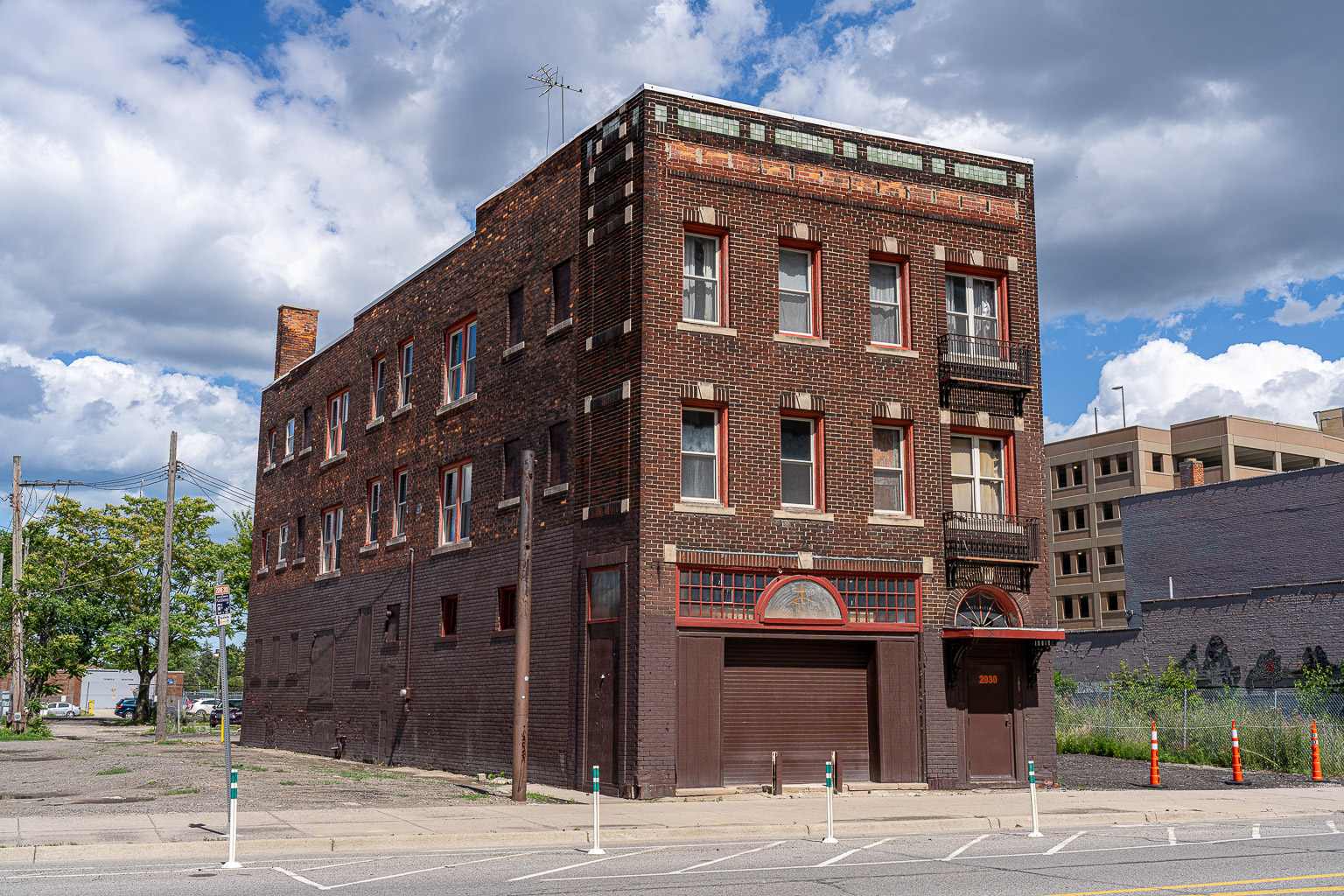
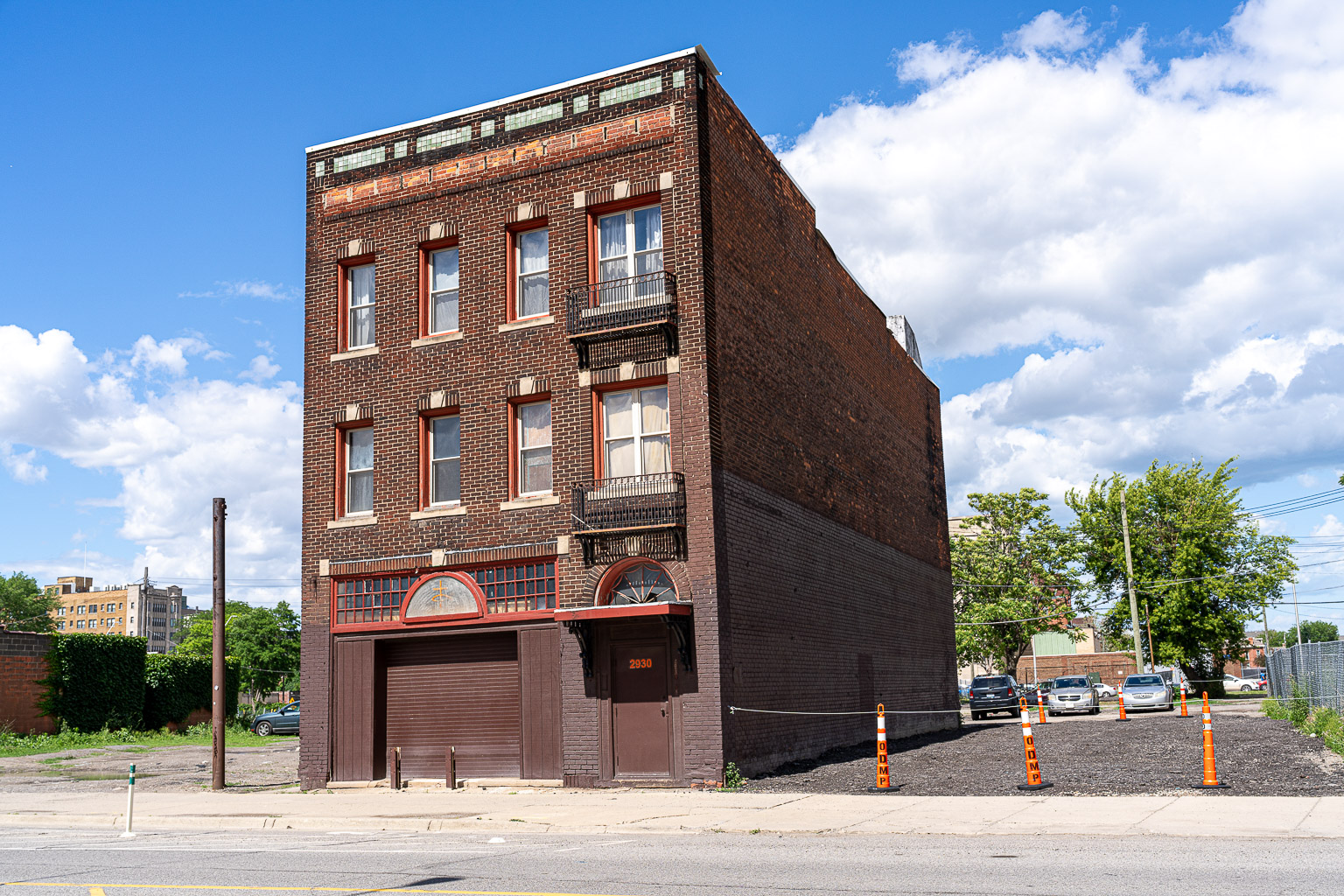
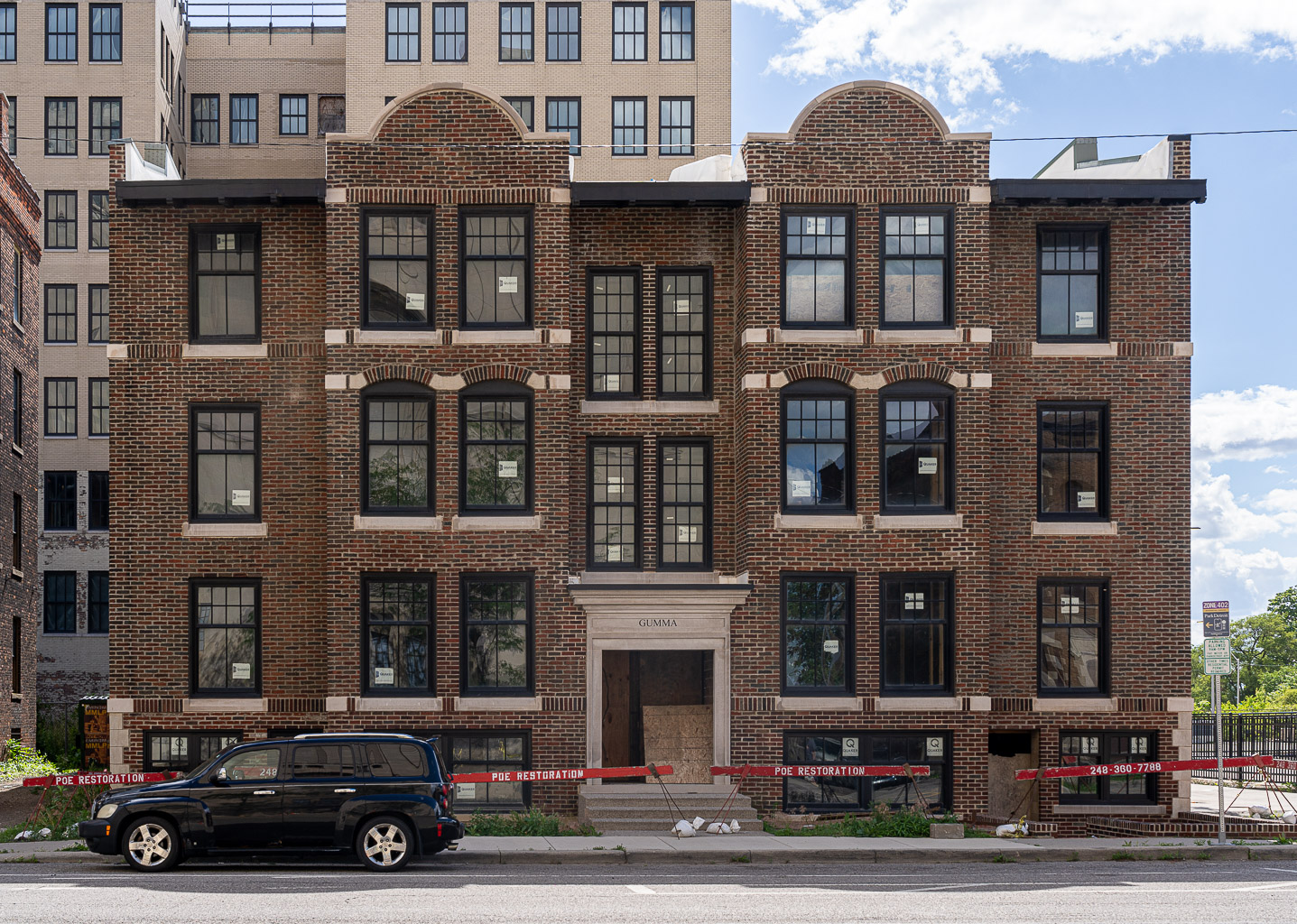
This building has existed since the 1880s but has been altered. The two-story house has been converted, but the addition of a 1910s facade, into a three-story Georgian Revival-style apartment building. As of June 2026, there is no building at this address.
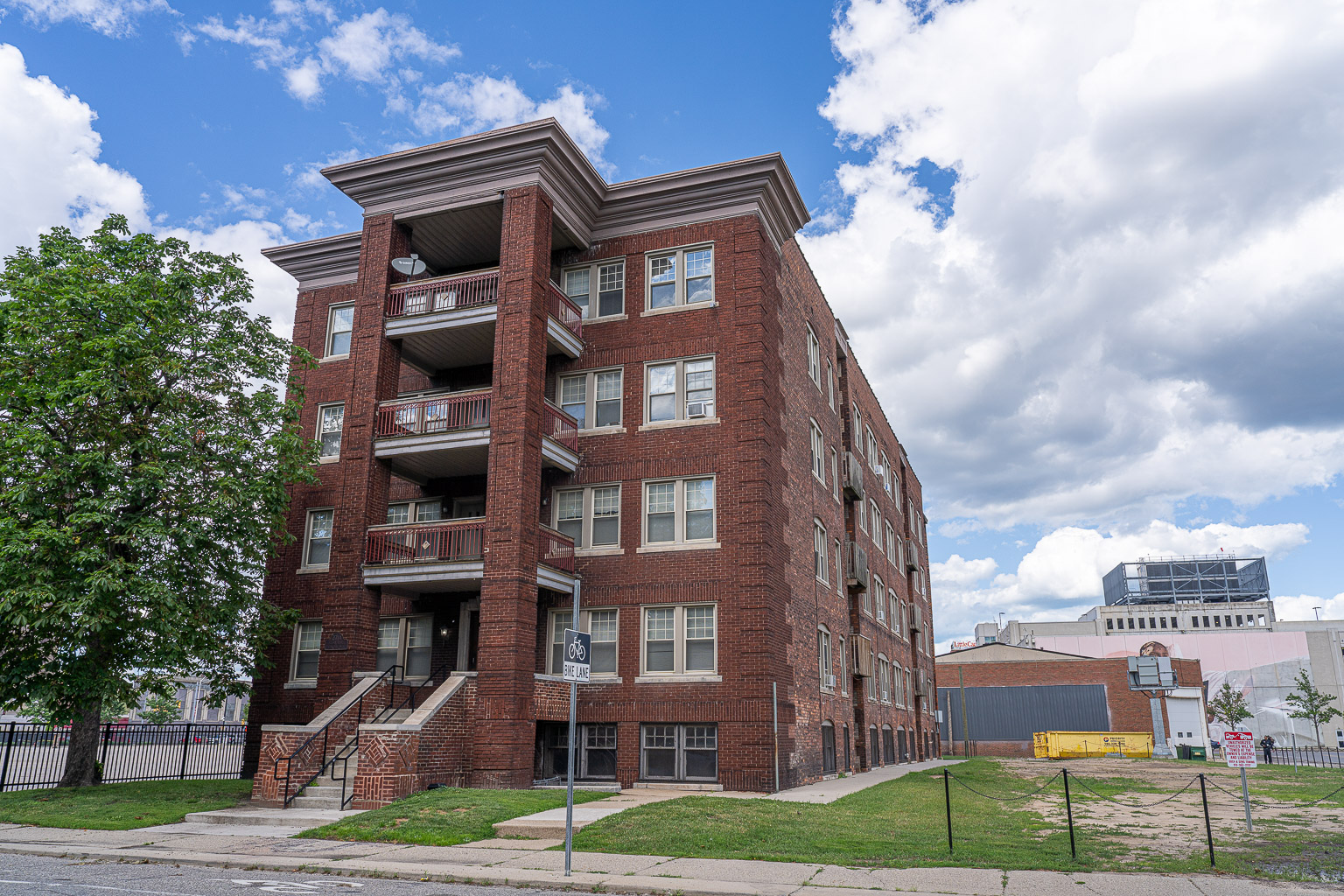
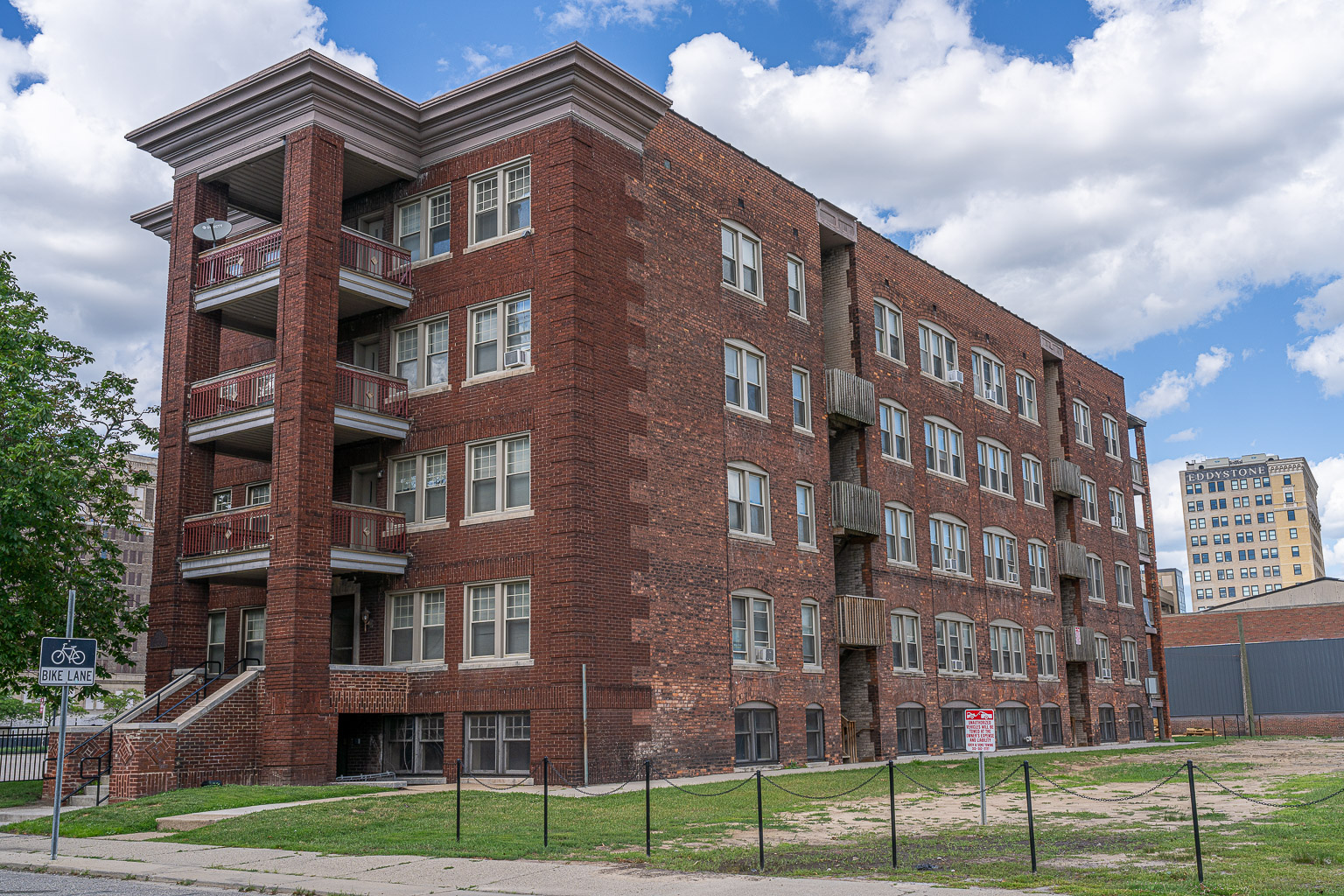
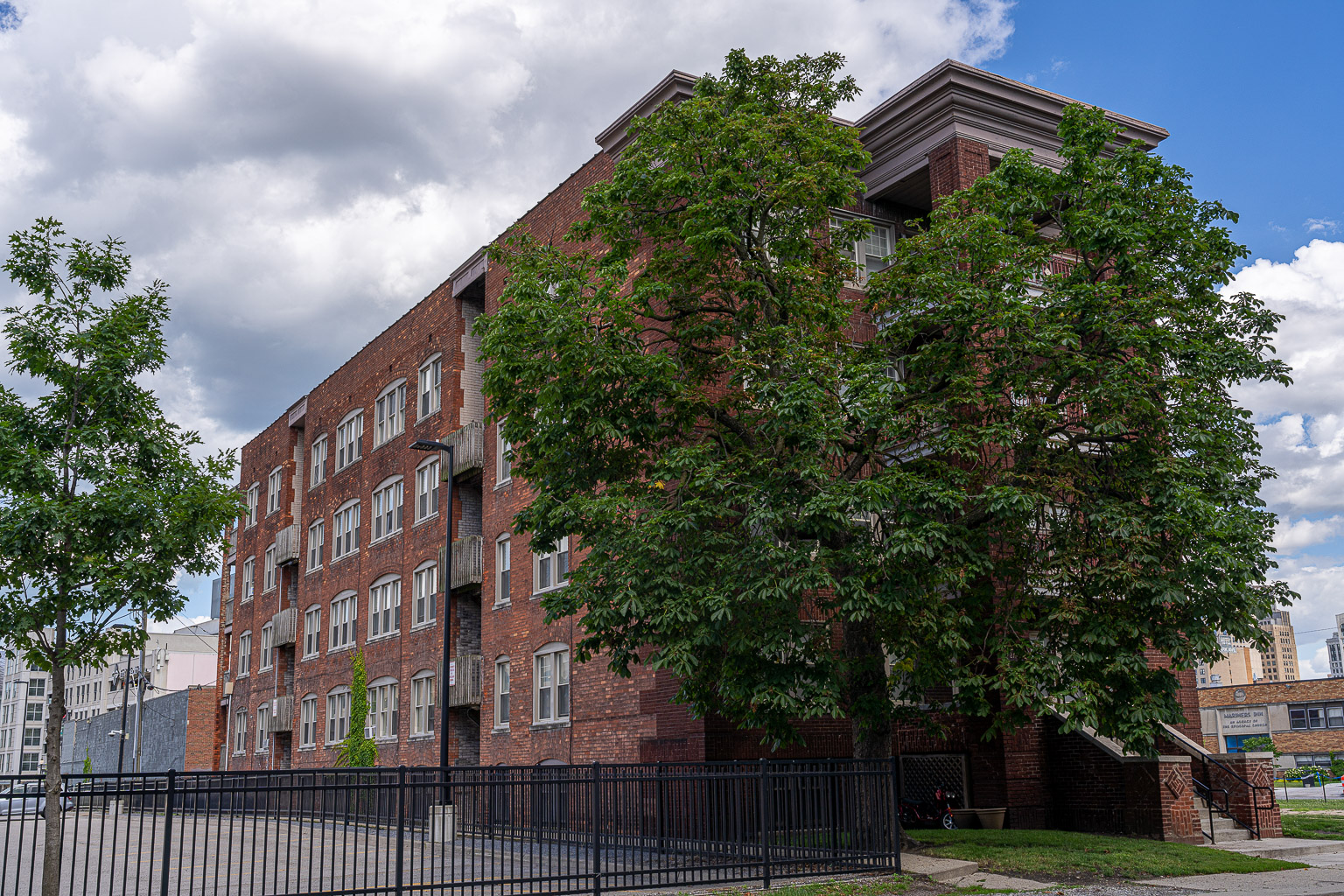
Four and one-half story, three bay, brown brick apartment building, 1914. The facade of this building with its four-tiered central portico displays a vernacular Georgian Revival/Arts-and-Crafts design with a prominently profiled overhanging cornice. The center bay consists of covered porches with decorative metal rails supported by paneled brick piers that rise the full height of the building. Originally built with thirty-seven units, the building retains its original nine-over-one double hung windows.
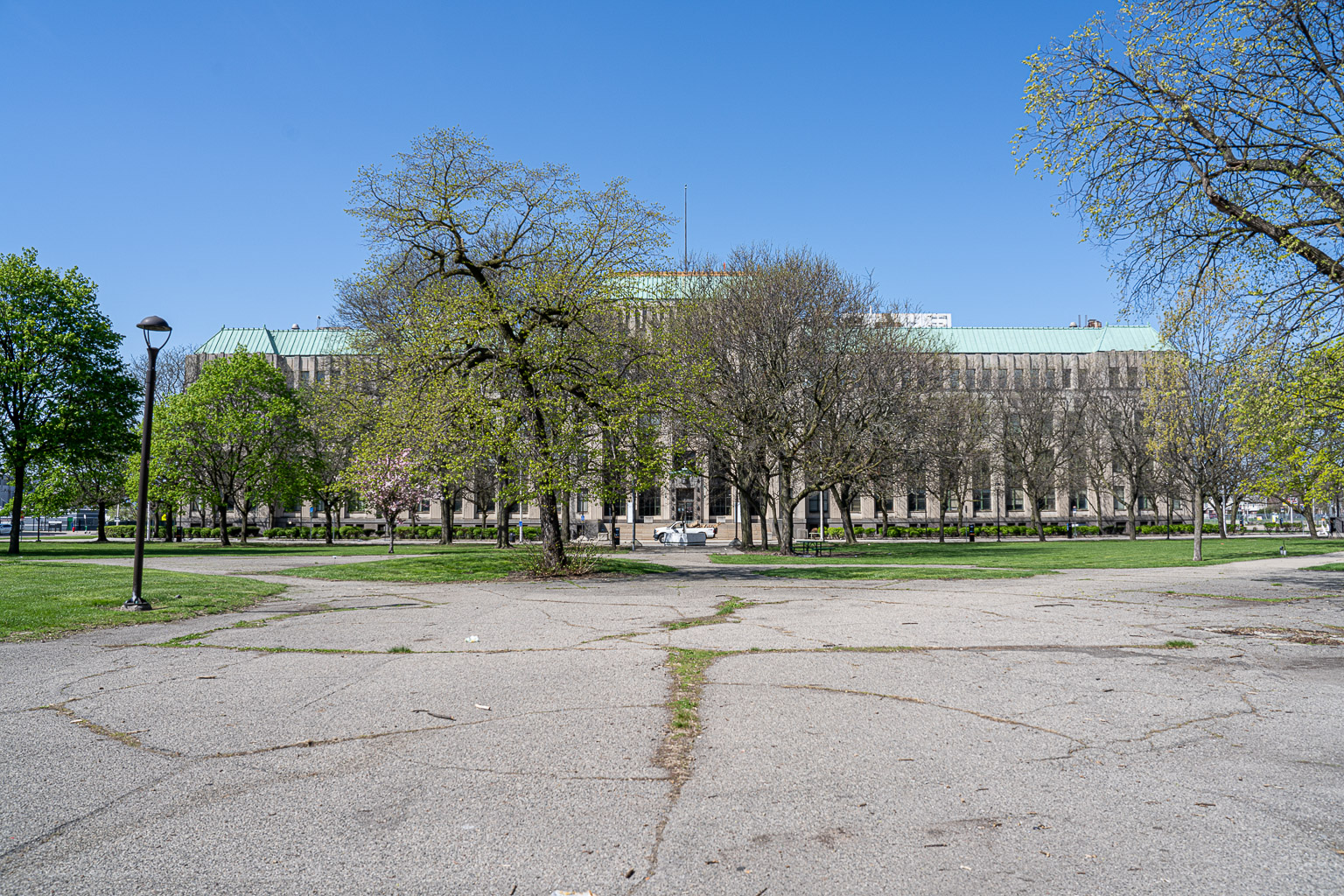
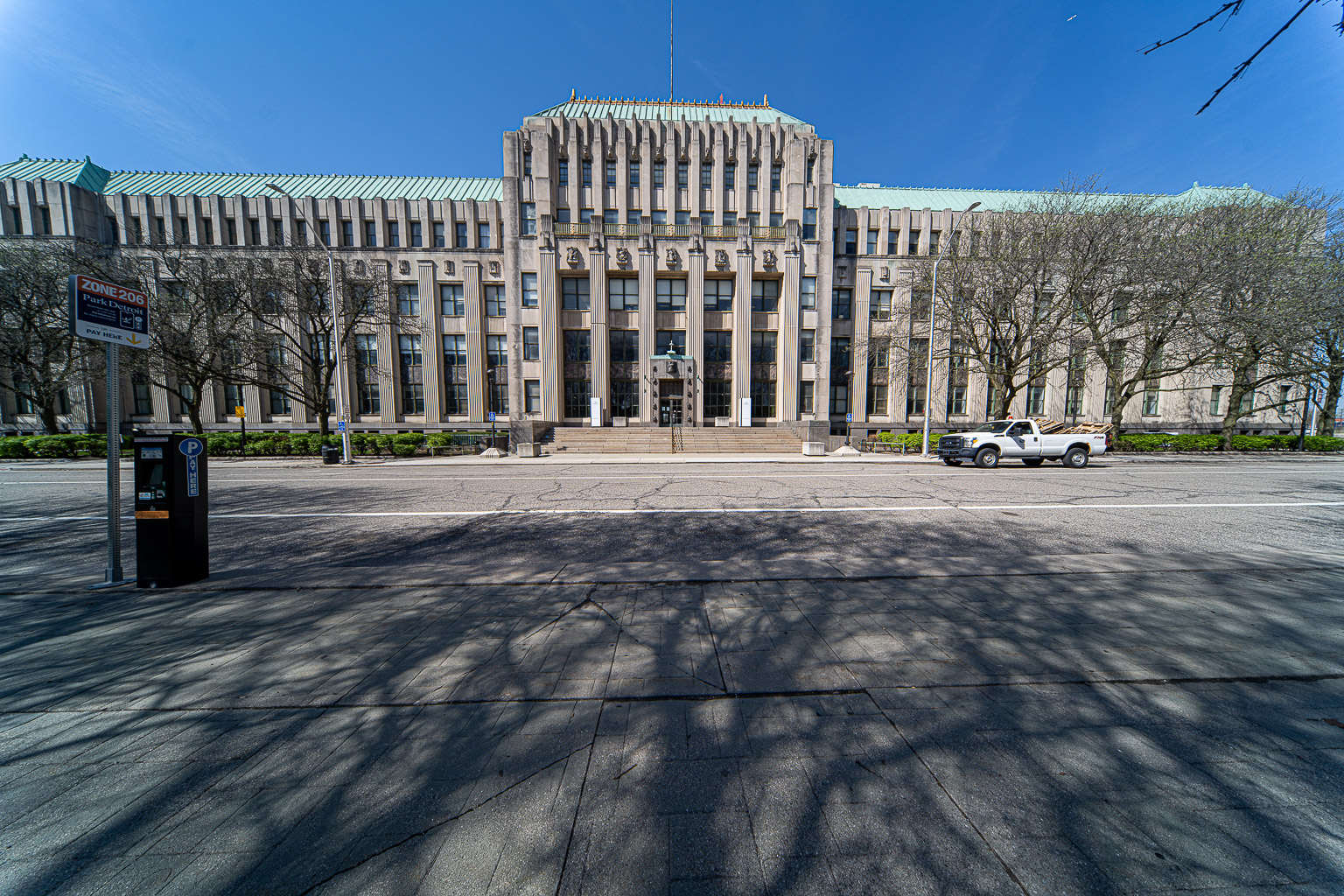
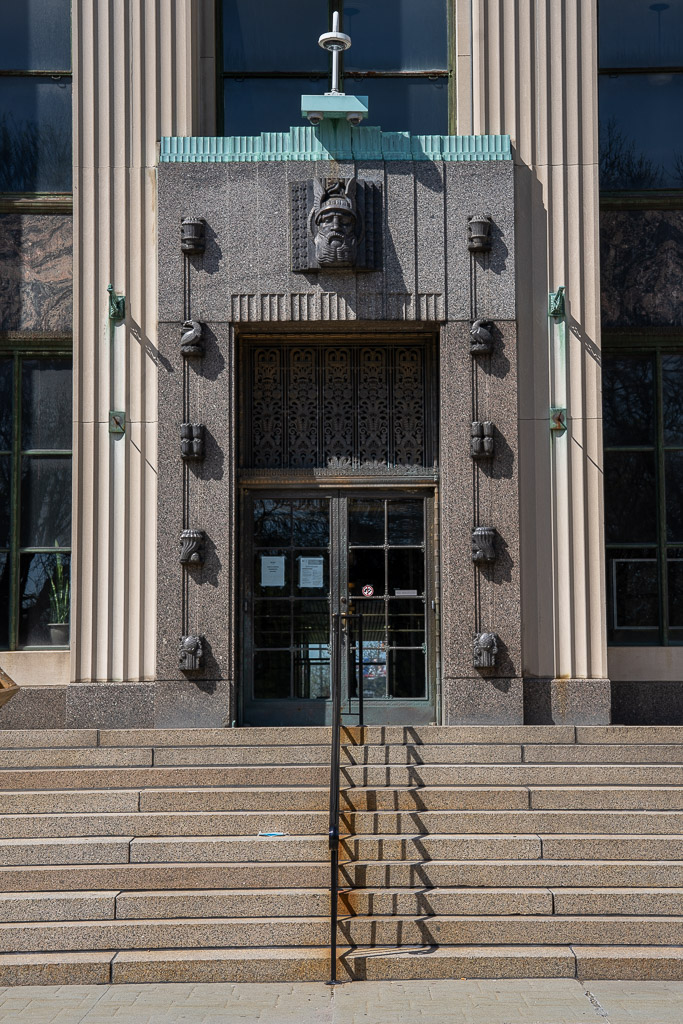
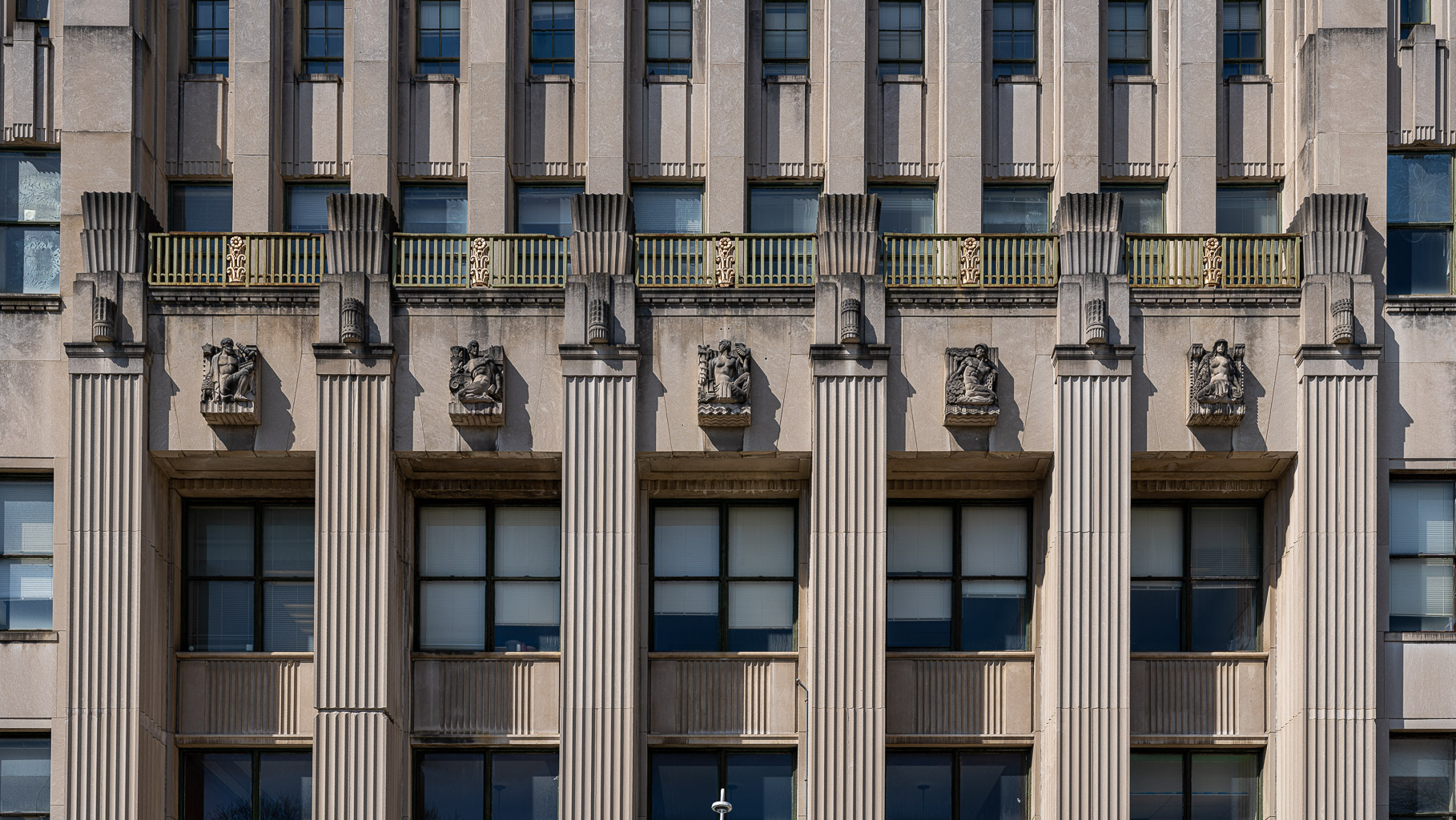
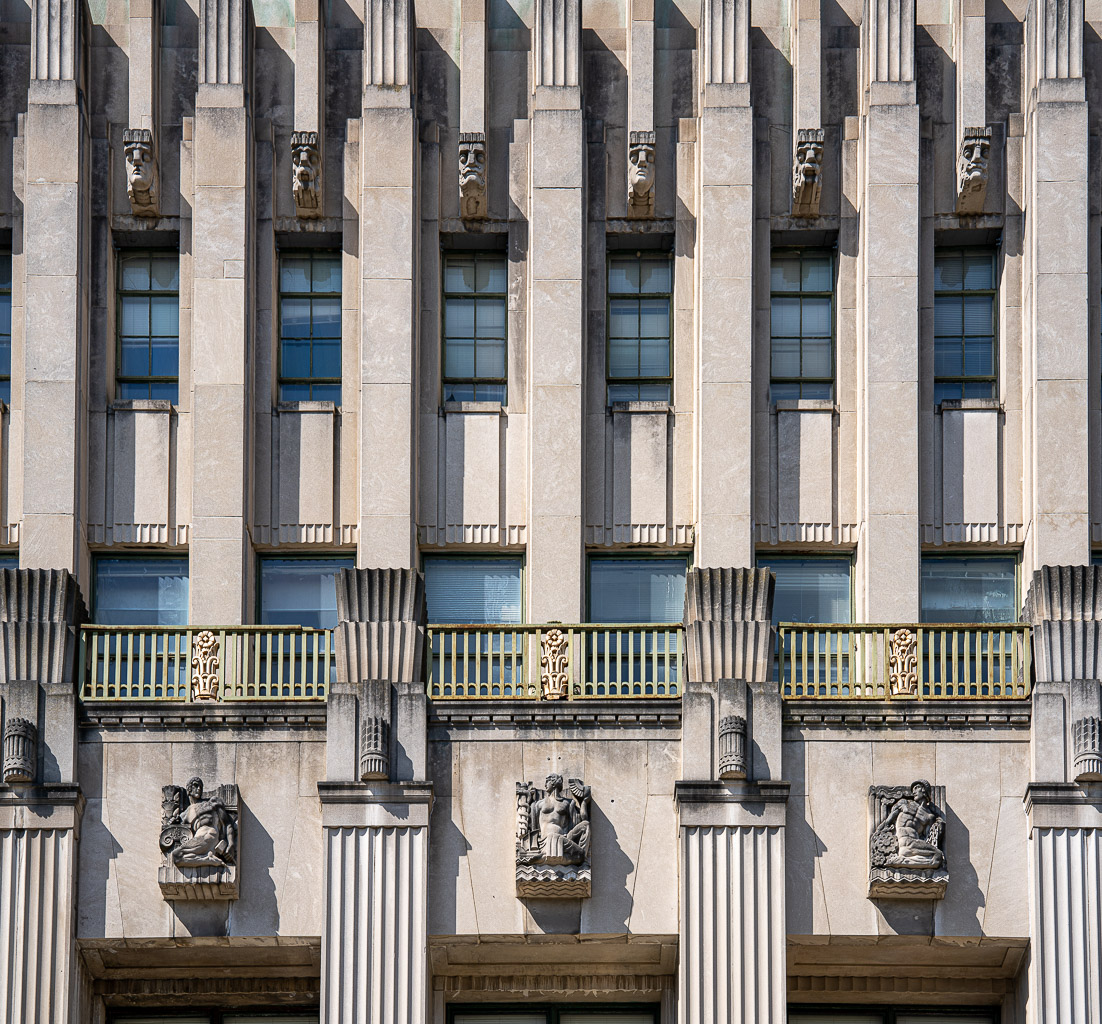
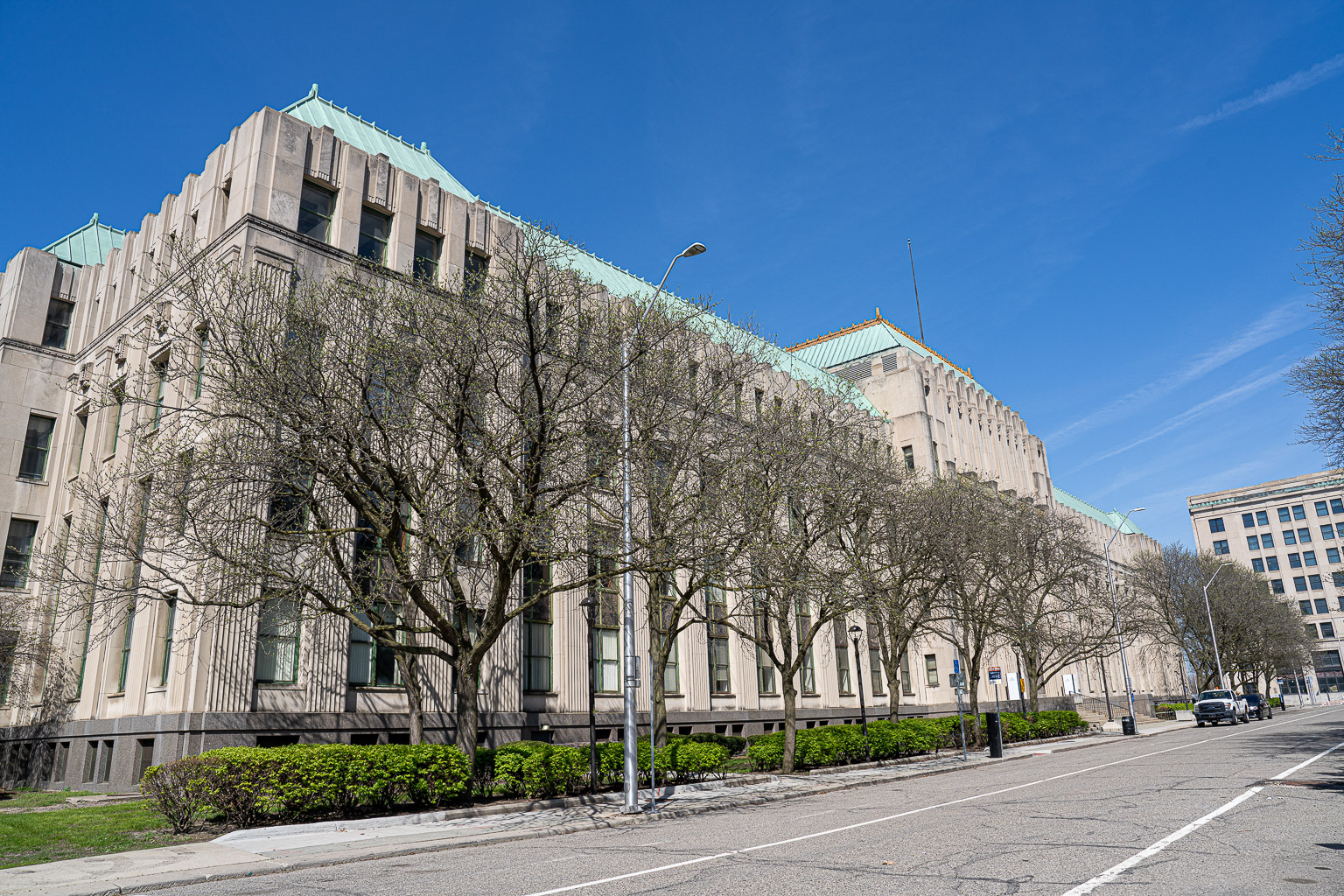
Five and one-half story, brick and limestone office building, 1928-30, Albert Kahn, architect, listed on the National Register of Historic Places. Built as the world headquarters for the S.S. Kresge Company, this massive Art Deco building, an outstanding example of the later commercial architecture of Albert Kahn, has a broad façade that fronts Cass Park's entire west side. The building has a projecting five and one half story central pavilion flanked by four story wings with forward-projecting ends. The symmetrical fenestration is broken by three-story fluted Doric pilasters interspersed with carved relief blocks. The fourth floor is visually separated from the lower levels by a bandcourse and different fenestration. The building is capped with a standing-seam copper Mansard roof decorated with terra cotta cresting.
More photos and more description of this building can be found at HistoricDetroit.org.
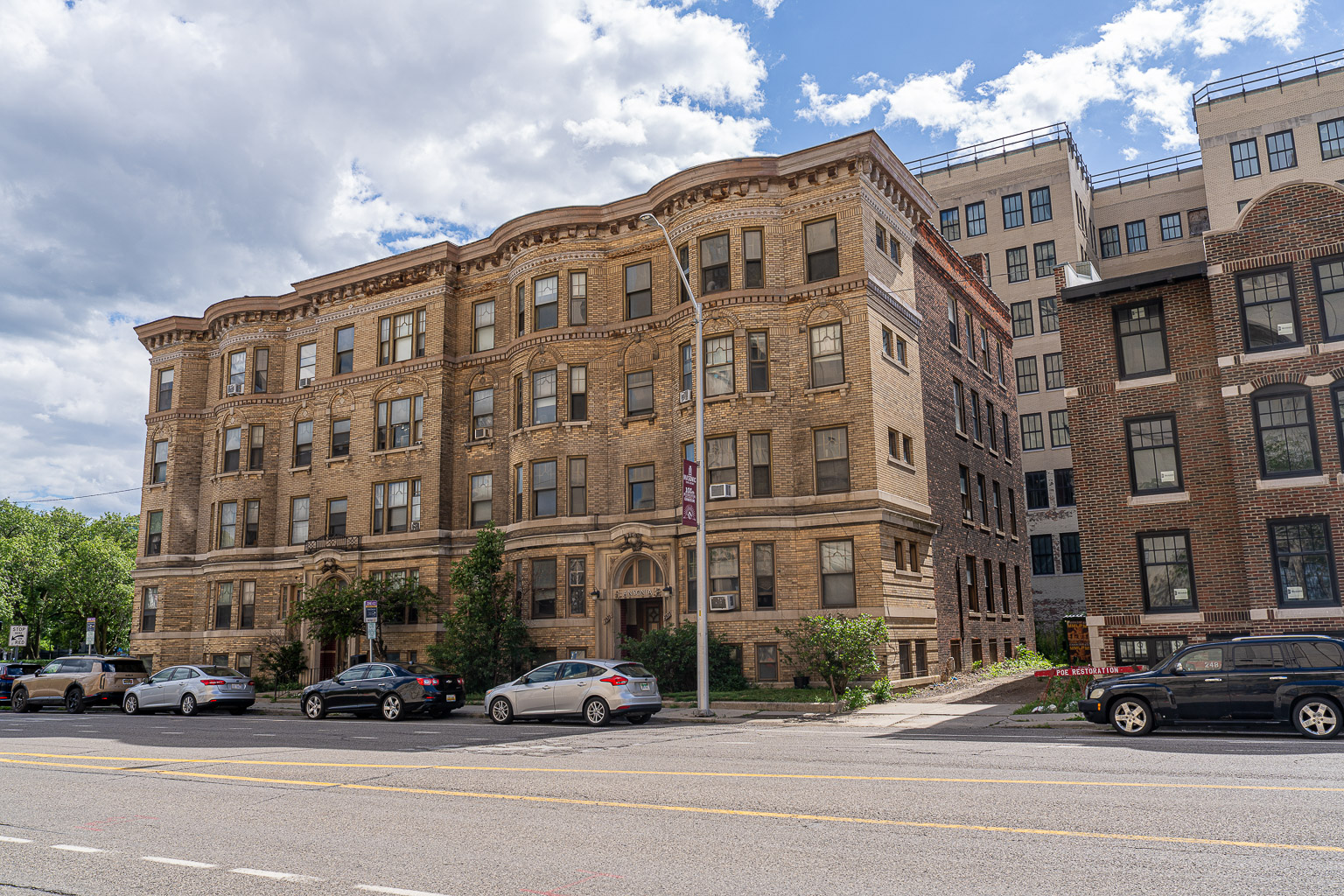
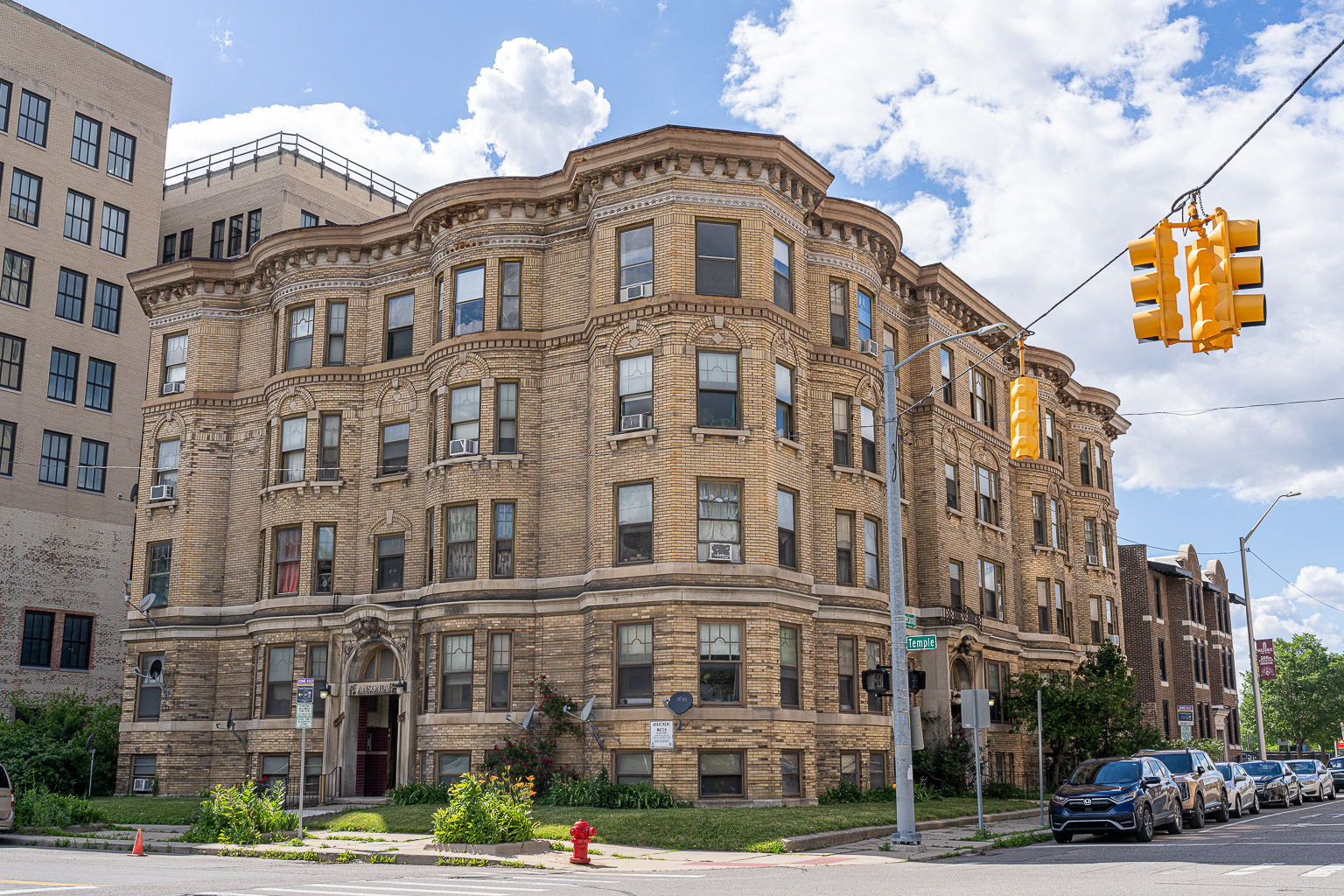
Four and one-half story, yellow brick apartment building divided into three sections with three separate entrances, 1908, William S. Joy, architect. The building, originally constructed with twenty units, sits on the northwest corner of Second and Temple with two of the entrances on Second and the third on Temple. The Georgian Revival Ansonia Apartments has an undulating appearance with multiple bays of different composition. The façade facing Temple has three slightly curving "bow front" bays and a semi-octagonal corner bay. The façade facing Second Avenue has three round bays and one square bay. The carved stone entrance surrounds have recessed arches and the name Ansonia in raised letters on the door heads. The old addresses are carved into the stone door jambs. The building has a denticulate stringcourse between the third and fourth floors and a heavy modillion cornice.
Three and one-half story, brown brick apartment building, 1924. The building was constructed in the Craftsman style and originally had thirty-six units. The façade is composed of five bays with the central bay flanked by two projecting bays that have Flemish gables. The central bay has a gable covered entrance that was later enclosed with shingle siding. The central bay has nine-over-nine windows, the remaining bays have unique eight-over-two sash windows. The roof has exposed rafters ends that support overhanging eaves.
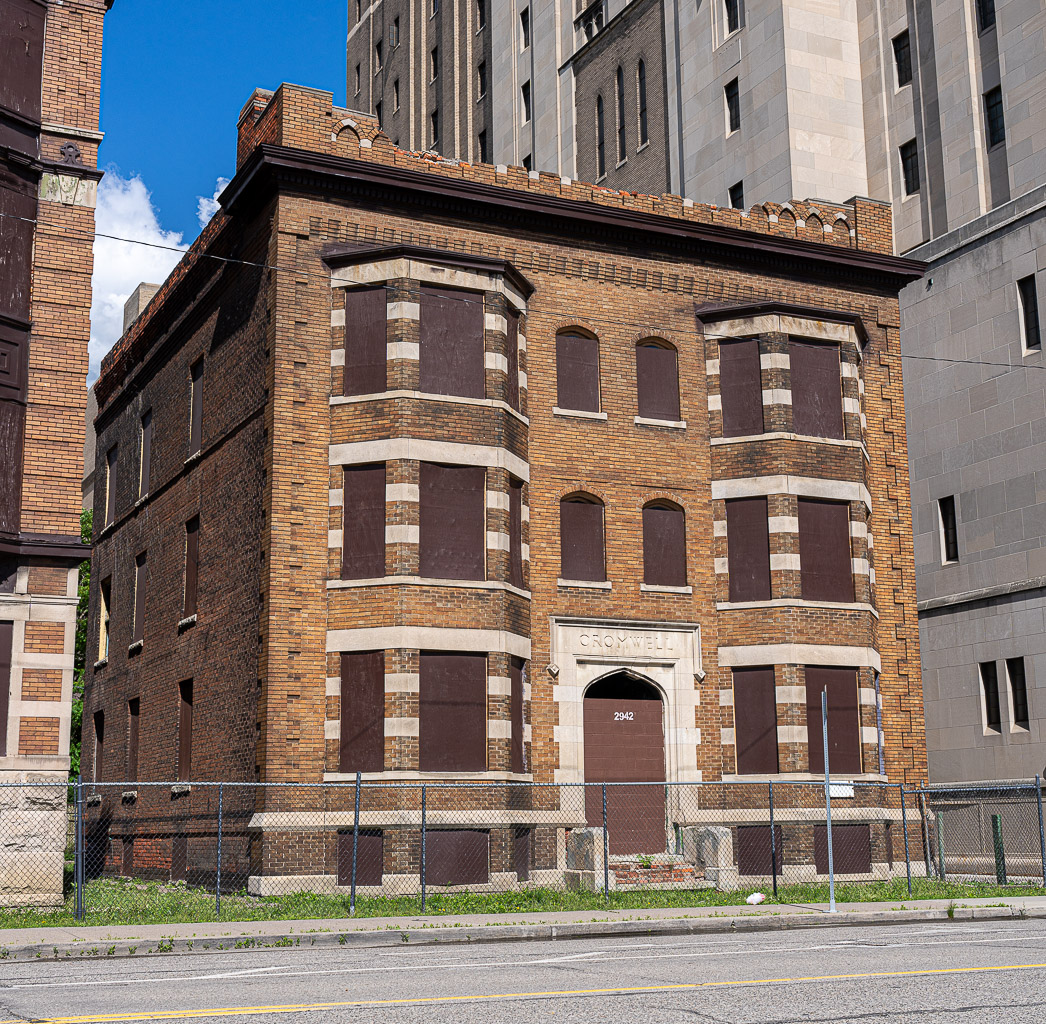
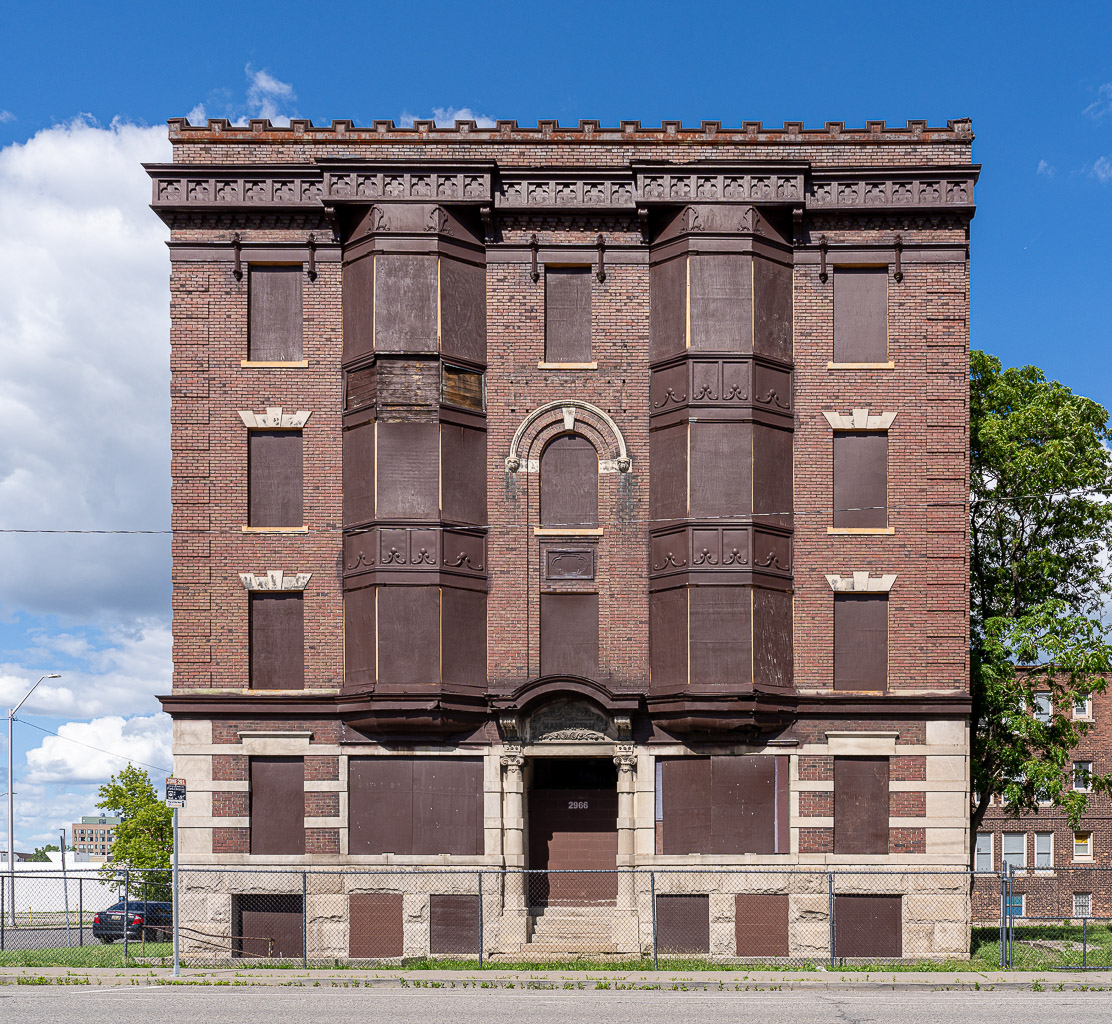
Three and one-half story, three bay, brown brick apartment building, 1904, A.C. Varney, architect. The Cromwell is one of three apartment buildings constructed on the east side of Second at Peterboro that complement each other in style and setback. The building displays Jacobethan elements including the stone entrance surround with the name Cromwell carved in the door head. The central entrance bay is flanked by three-sided window bays with alternating bands of brick and stone. The center bay has two arched windows each on the second and third floors. The building has brick quoins at the corners and a parapet detailed with blind pointed arches.
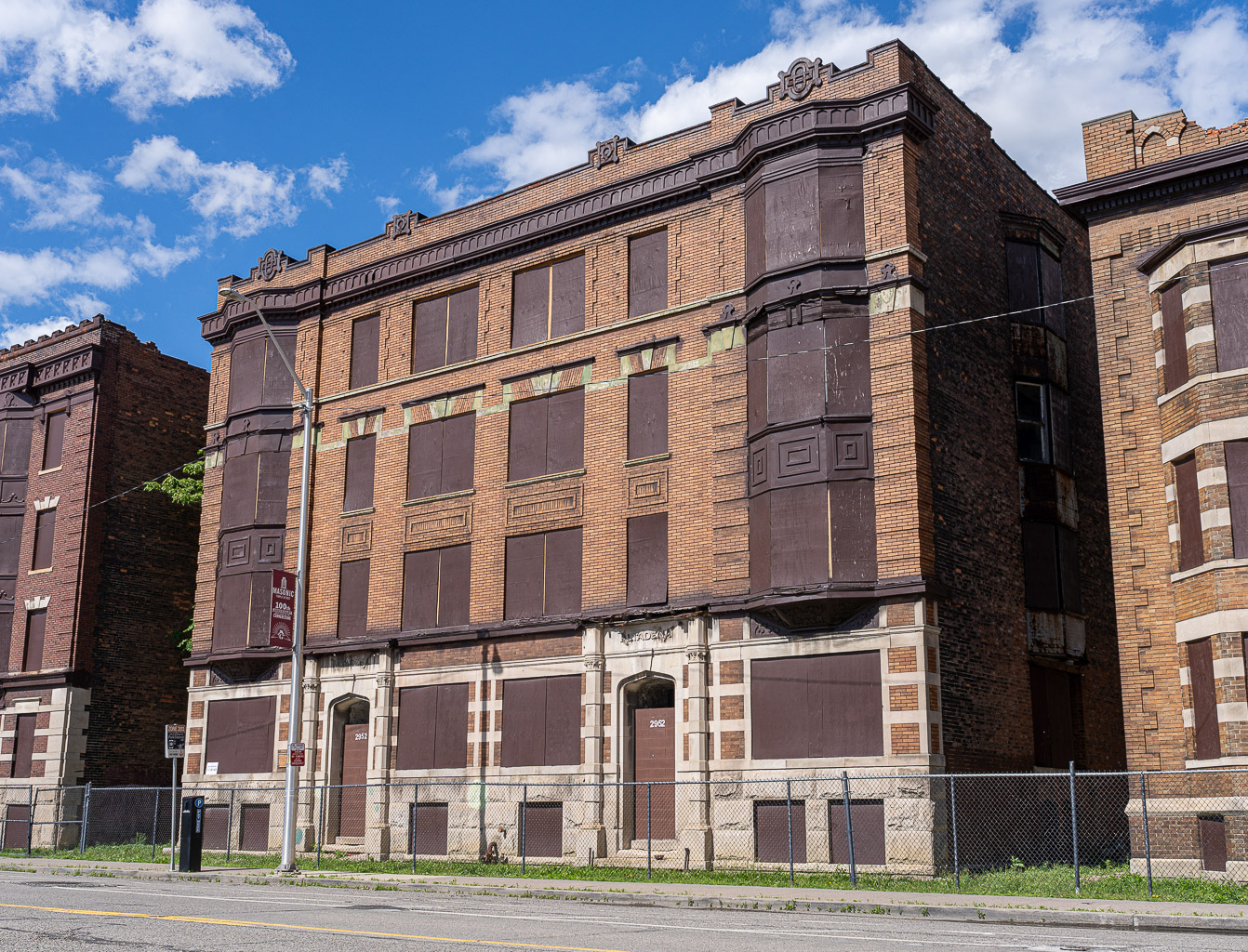
Four and one-half story, brown brick apartment building, 1911, Pollmar & Ropes, architects. Originally designed with twelve units, the building has two entrances at street level. Located between the Cromwell and the Manhattan apartment buildings, the Altadena closely matches its neighbors in setback and design. The entrance surrounds have elaborate Jacobethan detailing with the name Altadena in raised letters in both door heads. Two three-sided window bays rising from elaborately detailed metal corbel panels run from the second to the fourth floor on both ends of the facade. The façade has metal detailing including the bay window spandrels and the paneled cornice.
Four and one-half story, five bay, brown brick apartment building, 1905, Pollmar & Ropes, architects. Like its neighbors, the Cromwell and the Altadena, the Manhattan displays Jacobethan detailing in its design. The main entrance sits in the center of the building with an elaborate door surround with the name Manhattan in raised letters in the door head. The second to fourth floors have three-sided window bays that flank the central entrance bay. Decoration includes green painted metal spandrels in the window bays, a cornice detailed with quatrefoils, and a battlemented parapet.
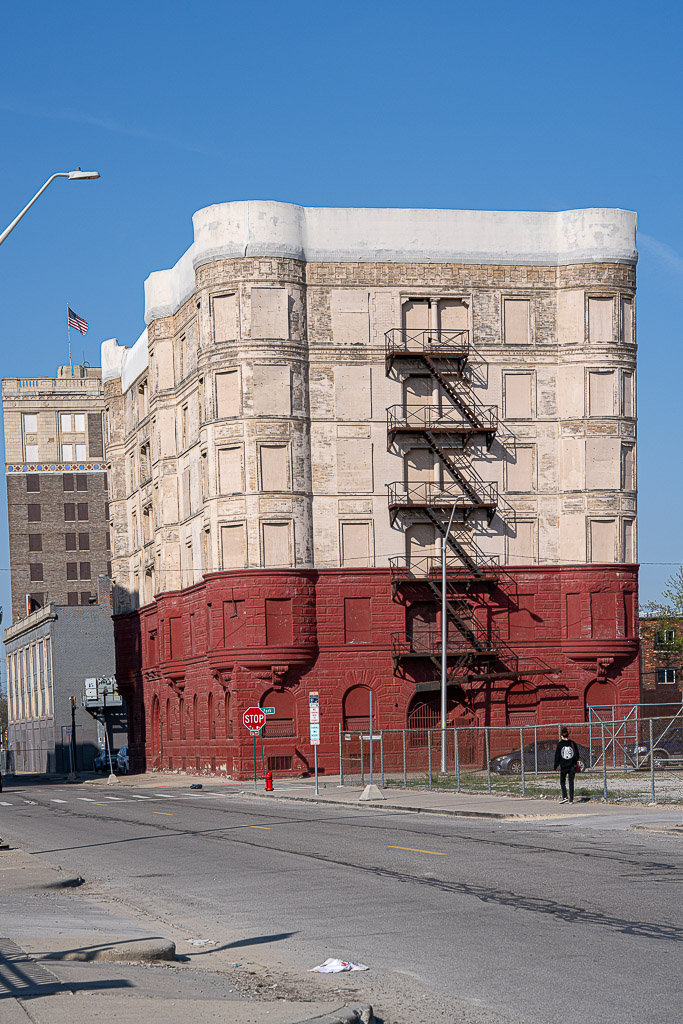
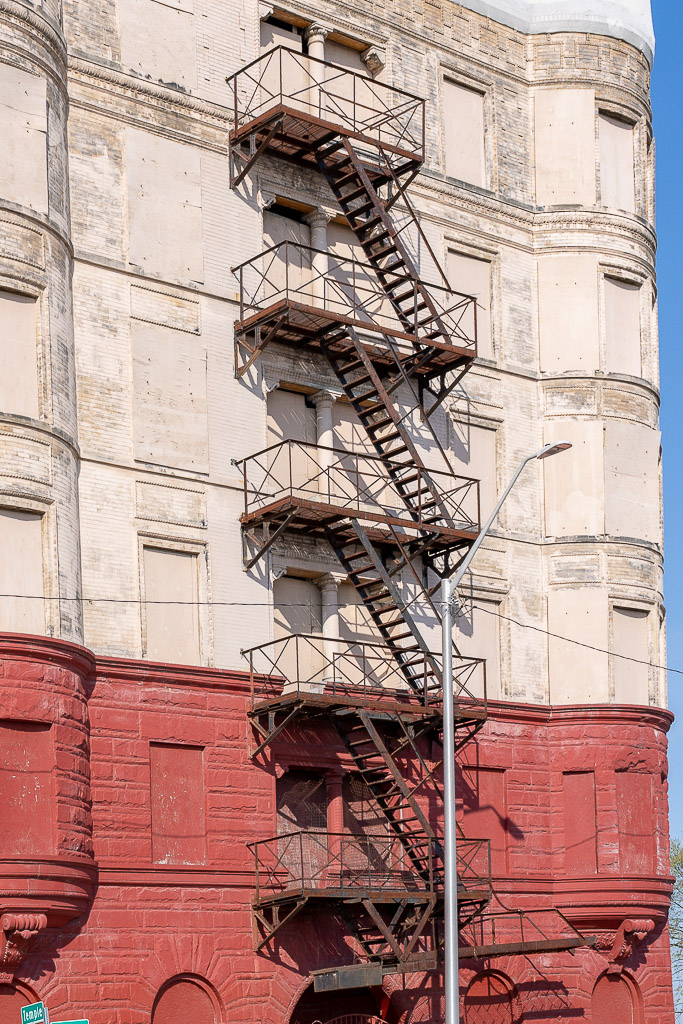
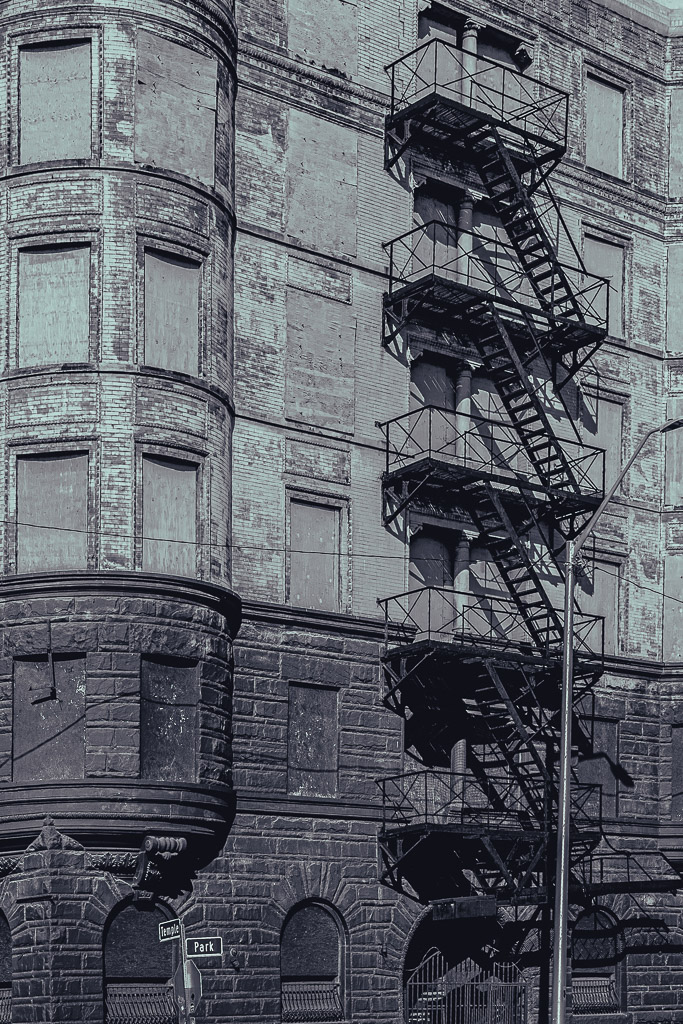
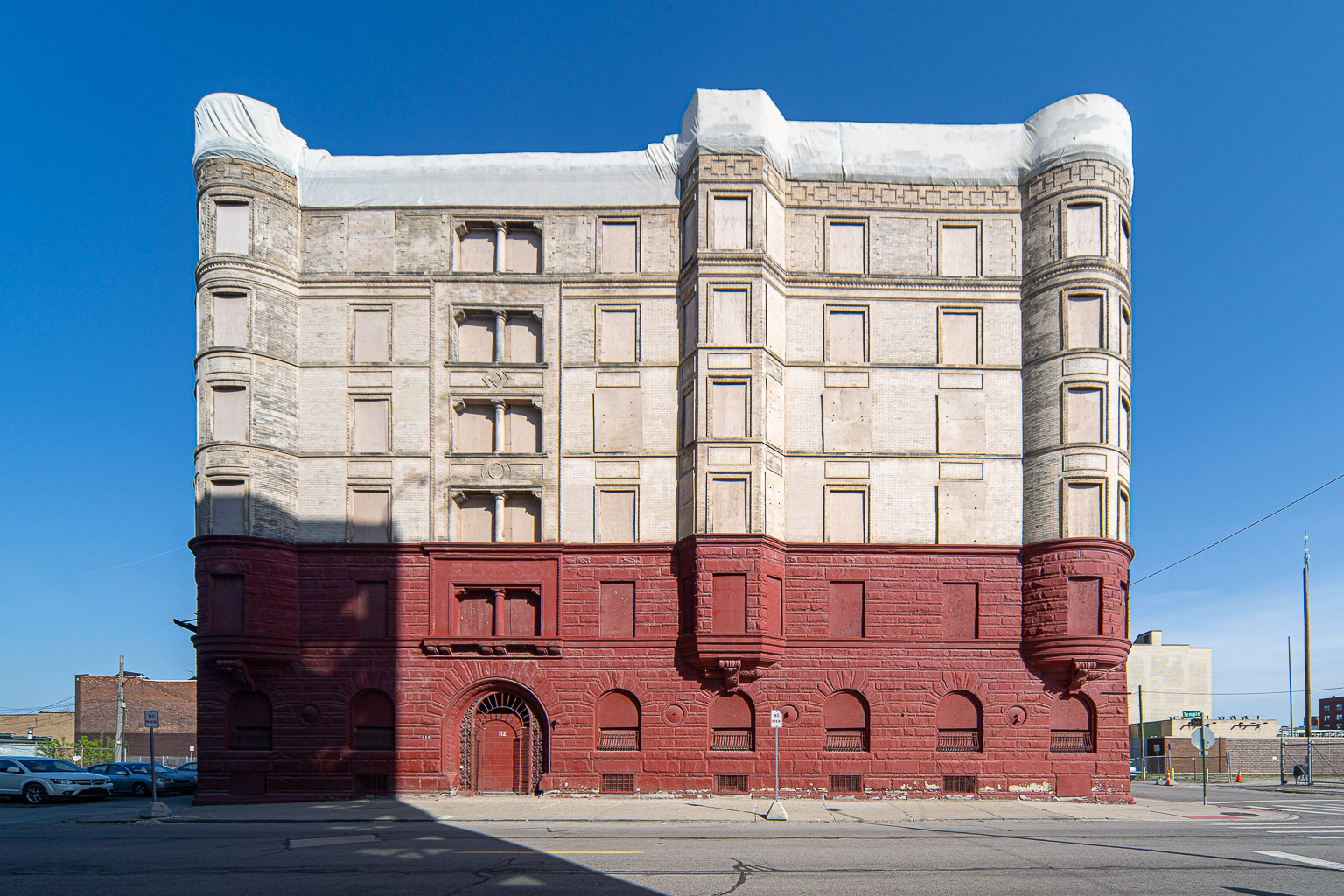
Six-story, brick and stone, Romanesque Revival apartment building, 1895, J.R. Gentle, architect. The building sits on the northwest corner of Temple and Park. The first and second floors of the east and south elevations are faced in coursed rock-faced stone. Both elevations have recessed entrances under heavy arched doorways. The third through sixth floors are finished in pink brick. The second through sixth floors have rounded bays on the corners and a three-sided bay in the center of the south elevation. Both elevations have recessed open porches supported by single columns; the south porches are covered with a fire escape. The windows are single pane with transom, arched on the first floor and squared on the remaining floors. At the top of the building is a patterned frieze with a finely denticulated stringcourse. The cornice of the building has been removed.
More photos and more description of this building can be found at HistoricDetroit.org.
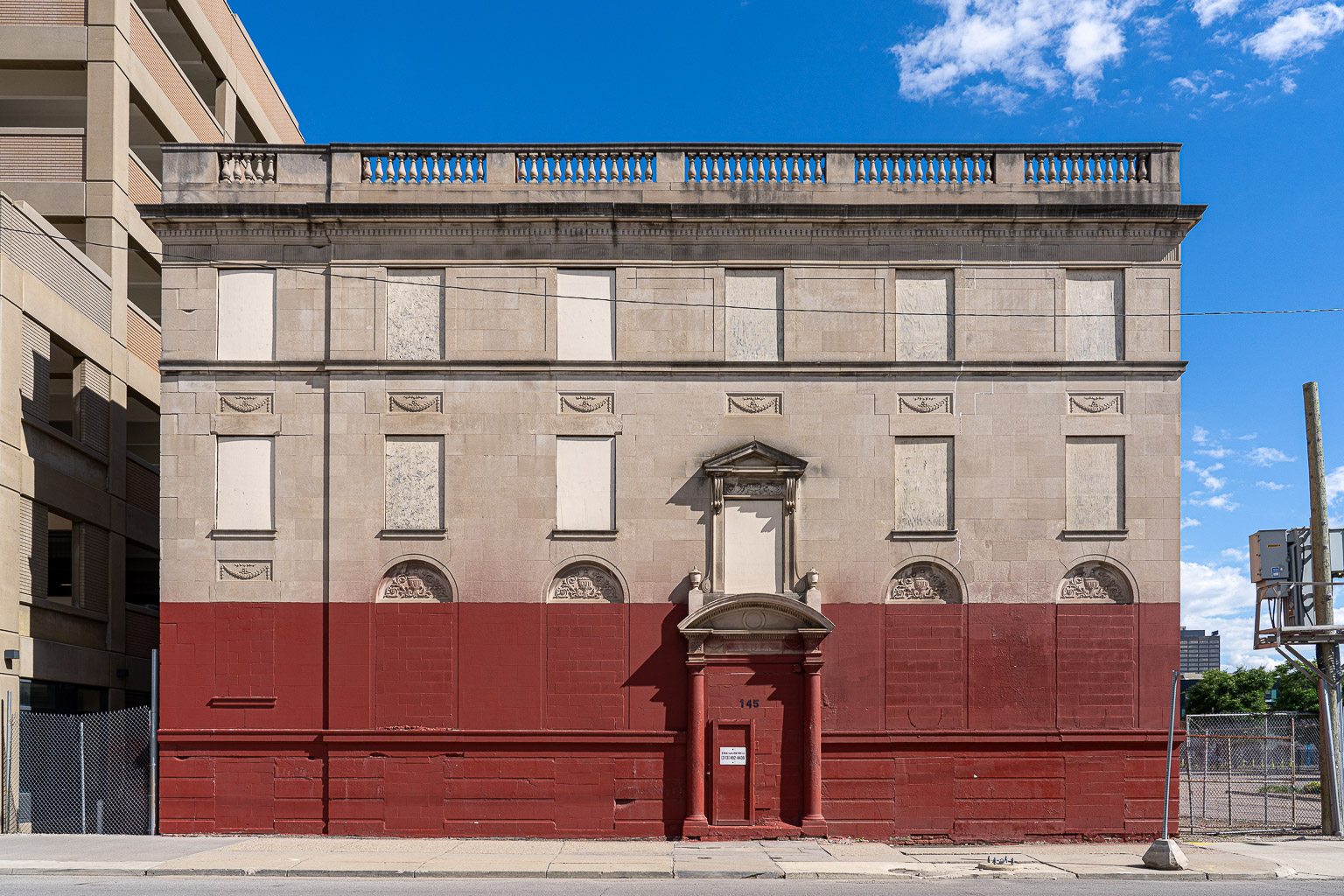
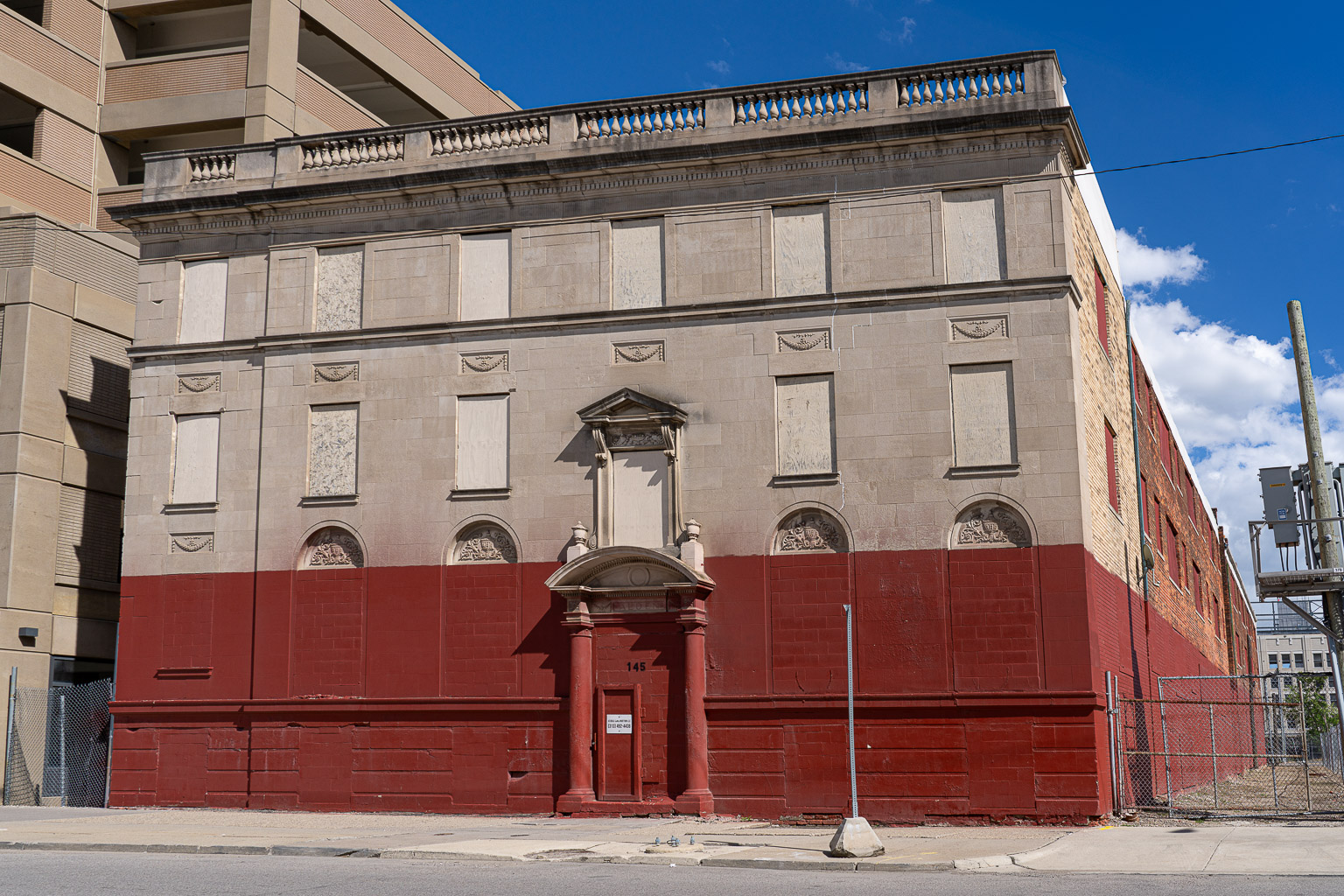
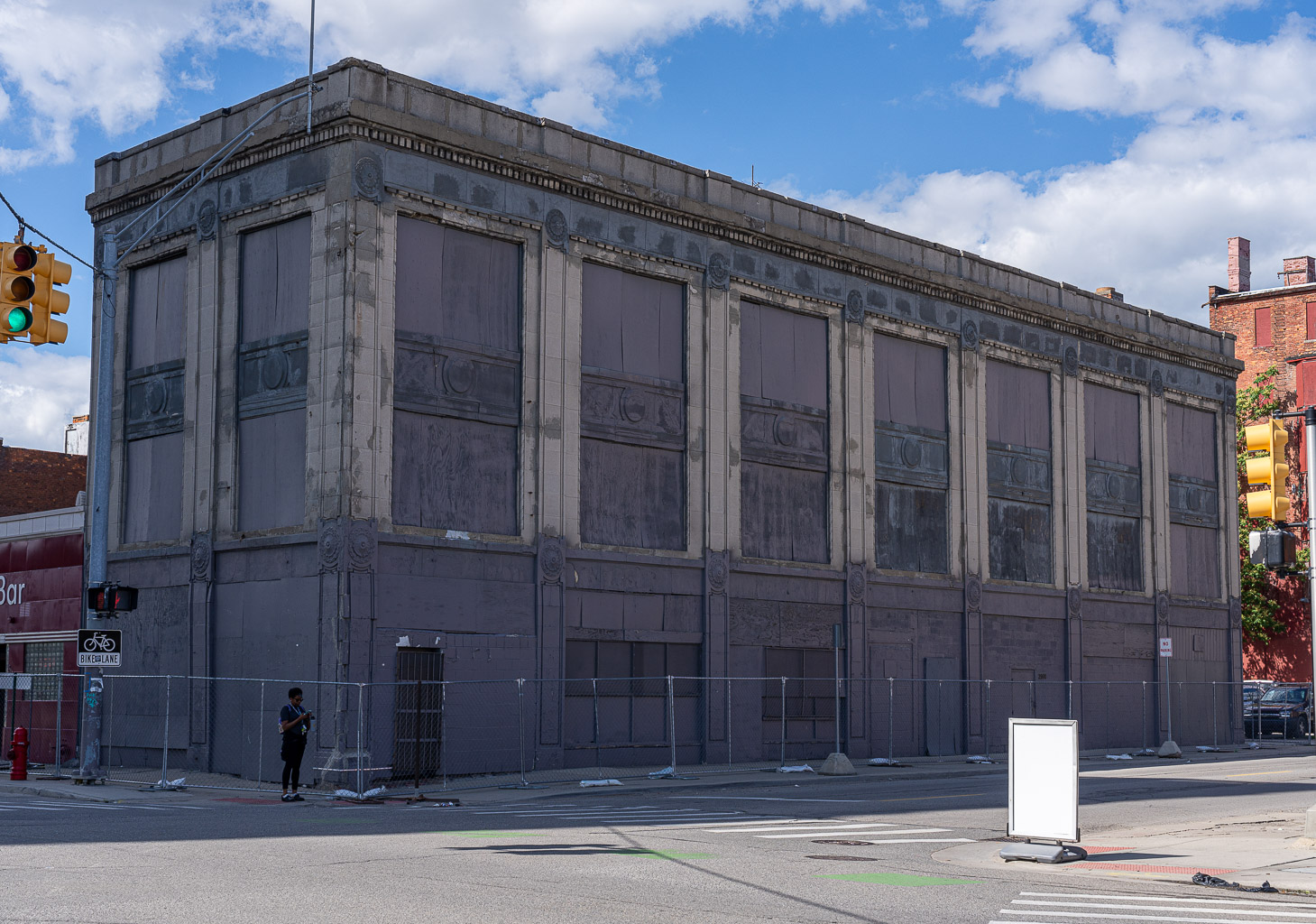
This is a two-story, four-bay brick window with a flat roof. The first floor consists of a central entrance flanked by large window openings, now enclosed, above continuous masonry sills, and a truck bay covered by a rolling metal door at the west end of the building. The cornices and pilasters as well as any ornamental details have been removed from the building. As of June 2026, there is no parking garage at this address. It was apparently demolished and rebuilt as the much larger parking garage at 123 Temple Street.
Three and one-half story, brick, with limestone Renaissance Revival facade, apartment building, 1922, George P. Rogers, builder. Originally built with twenty-two units, a brick and tile addition to the building was constructed six months later with another twenty units. The entire front façade is composed of limestone with Renaissance detailing including festoon reliefs, a denticulated cornice and a balustrade parapet. The entrance to the building is set in a Classic door surround with stylized columns that support an entablature with a rounded pediment. The frieze of the entablature is inscribed with the name ALDEN. The door surround supports two posts with urns and a window with a bracketed pedimented hood. The first floor has arched window openings with French doors and engaged balustrades beneath the windows. The remaining windows are eight-over-eight, one-over-one, or eight-over-one double hung.
Three-story, reinforced concrete commercial building, 1923. This Classical Revival commercial building sits on the northeast comer of Temple and Cass Avenues with its length consisting of seven bays along Temple and its depth consisting of two bays along Cass. The first story is comprised of storefronts and display windows, most of which have been filled in. The second and third floors have 1/1 double hung sash windows in groups of three along Temple and in pairs along Cass. The window groupings are separated by pilasters that span both stories. The pilasters are decorated at both the top and bottom with paterae. Ornamental paneled spandrels separate the second and third floor windows. There is a simple dentiled cornice
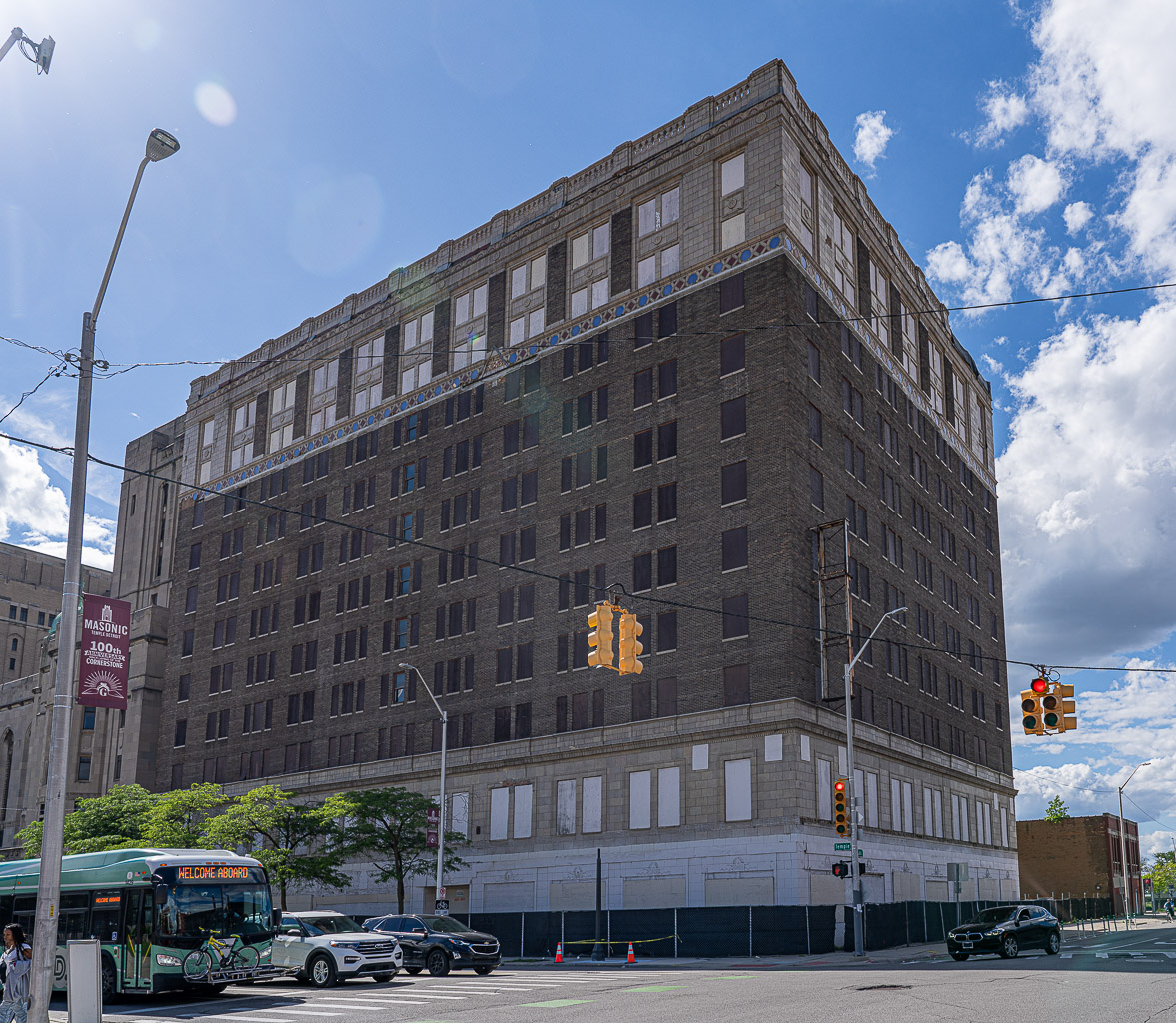
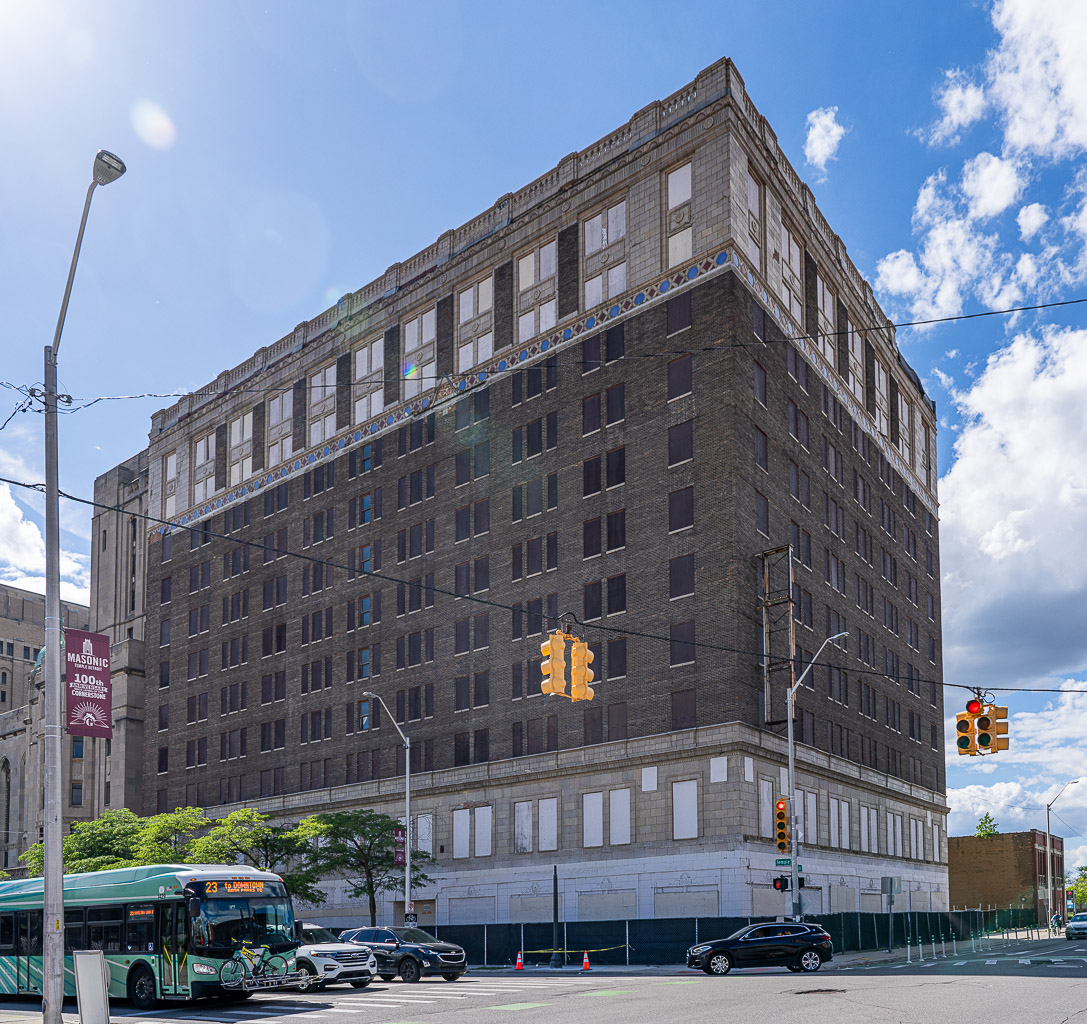
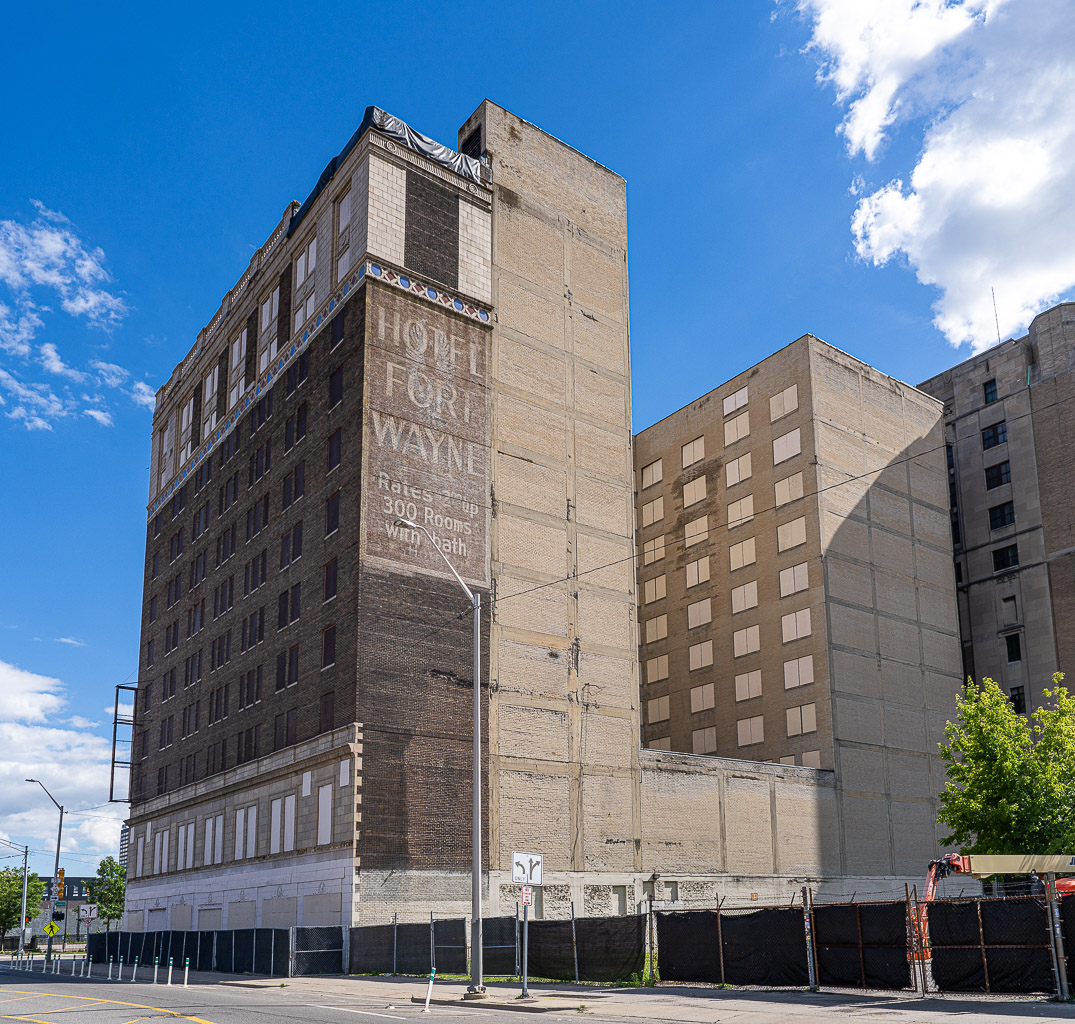
Eleven-story, brown brick and terra cotta, three-part stacked vertical block building, 1926, Ellington and Weston, architects. The Fort Wayne Hotel was originally constructed for the Knights of Pythias as a hotel and lodge headquarters. The building sits on the northwest comer of Temple and Cass Avenues. Its design reflects Italian Renaissance styling. The first and second floors are finished in smooth ashlar. The main entrance is in the center of the front façade facing Temple but the door and all first floor storefronts have been altered. A decorative polychromatic band of red and blue terra cotta separates the ninth and tenth floors. The tenth and eleventh floor windows have decorative stone surrounds. A stone cornice supports a balustrade parapet. The windows are 1/1 double hung sash with single windows at the corners of the building and groupings of two and three windows throughout the main wall sections.
More photos and more description of this building can be found at HistoricDetroit.org.
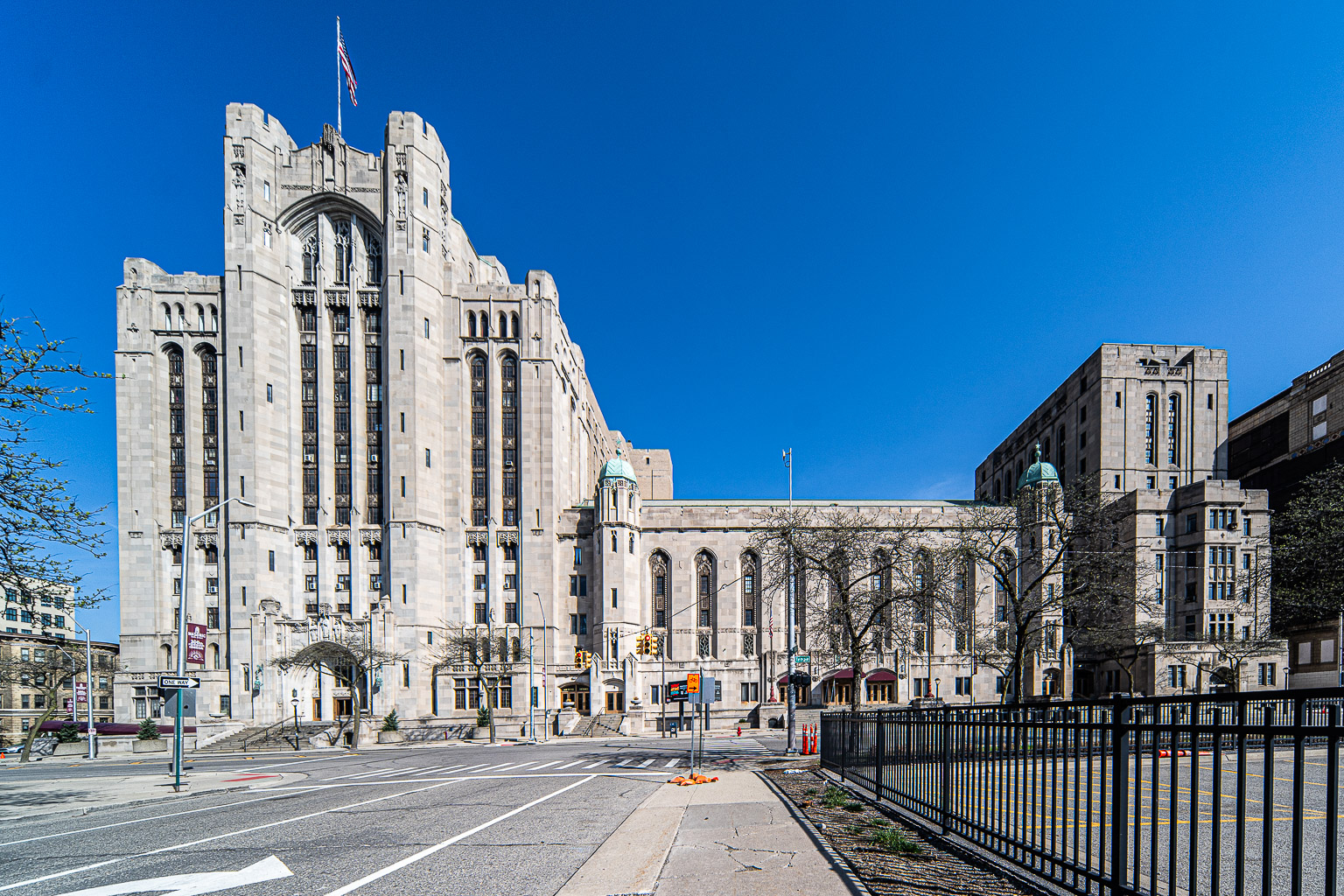
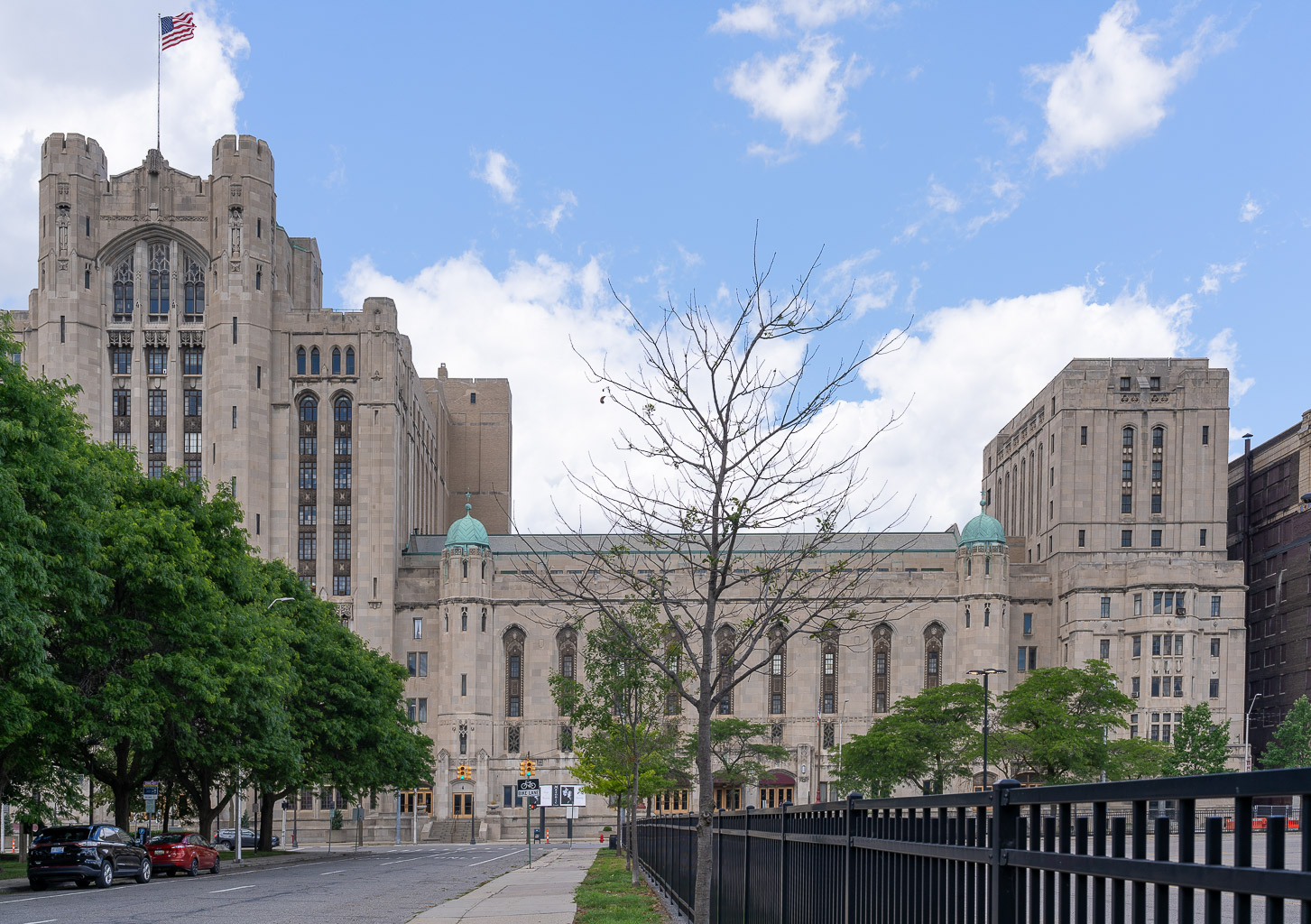
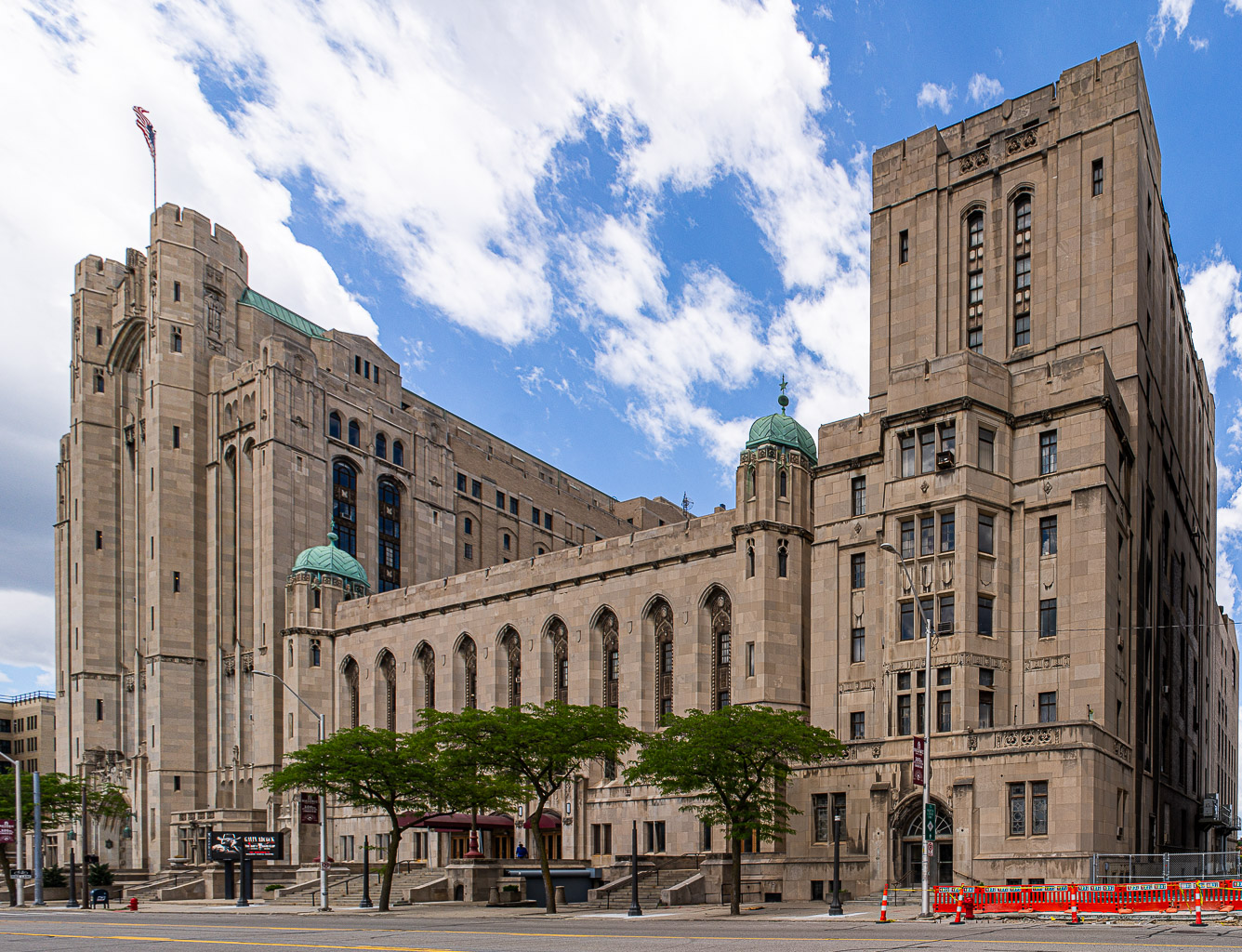
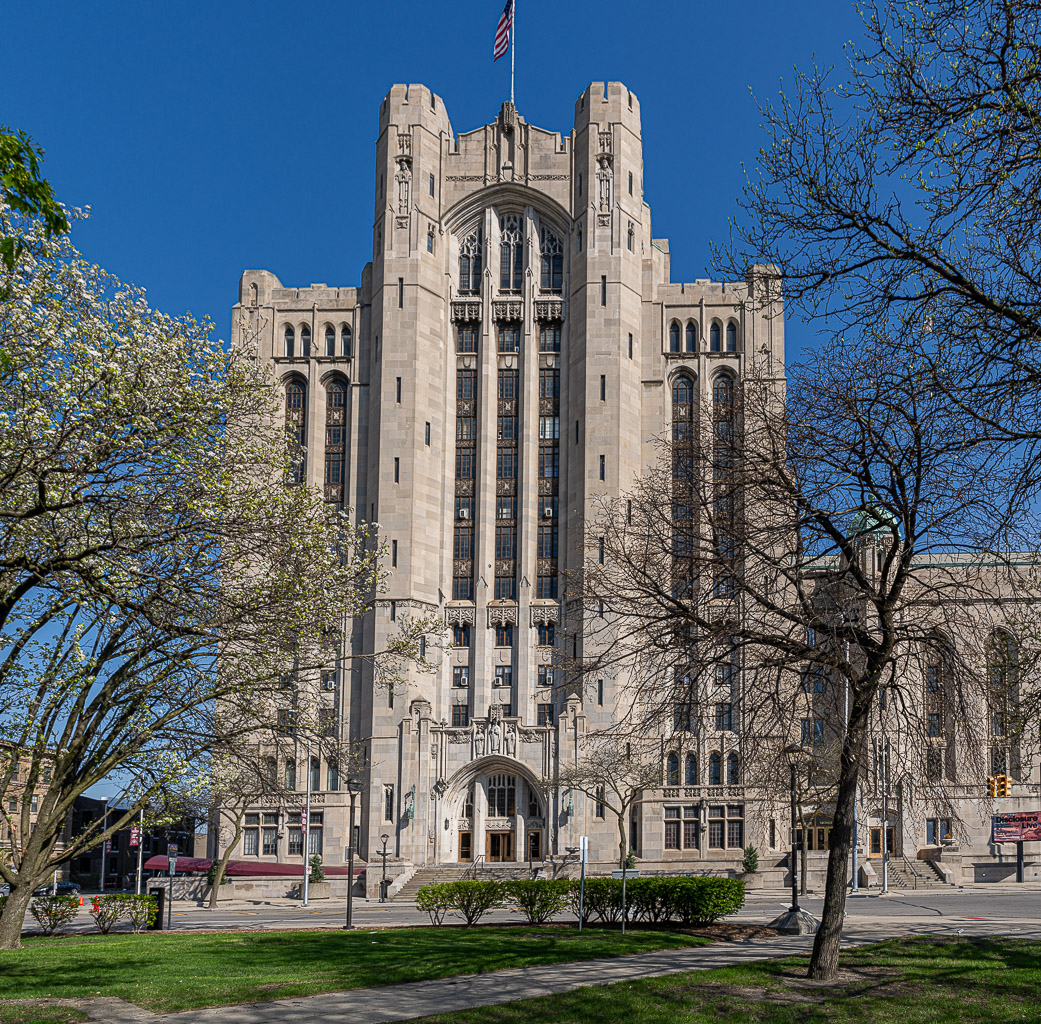
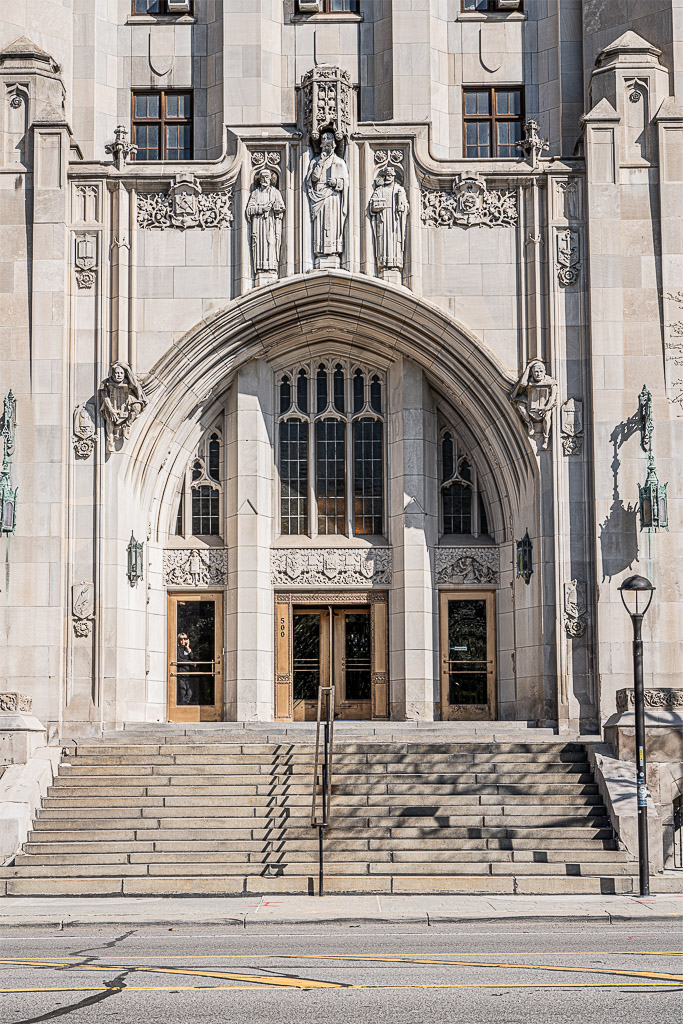
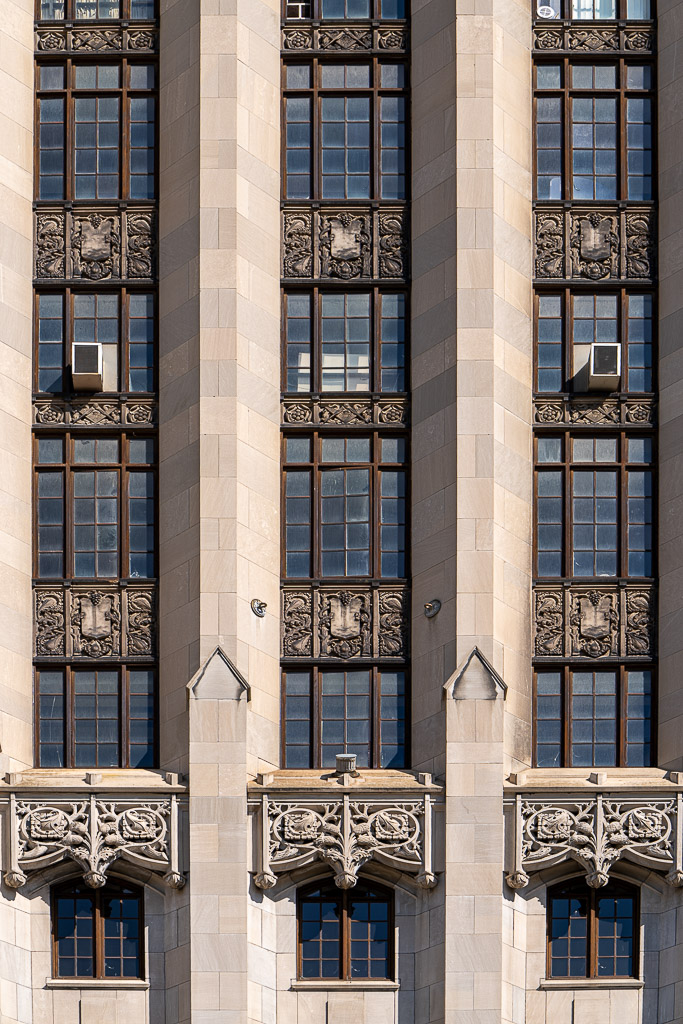
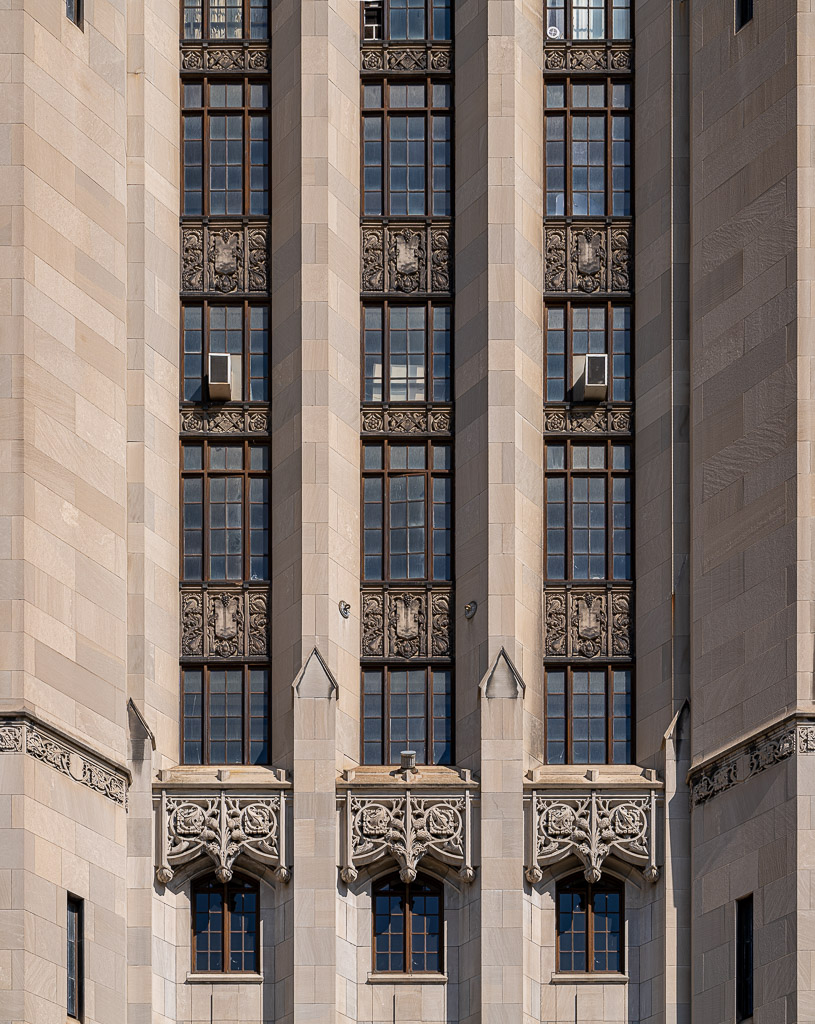
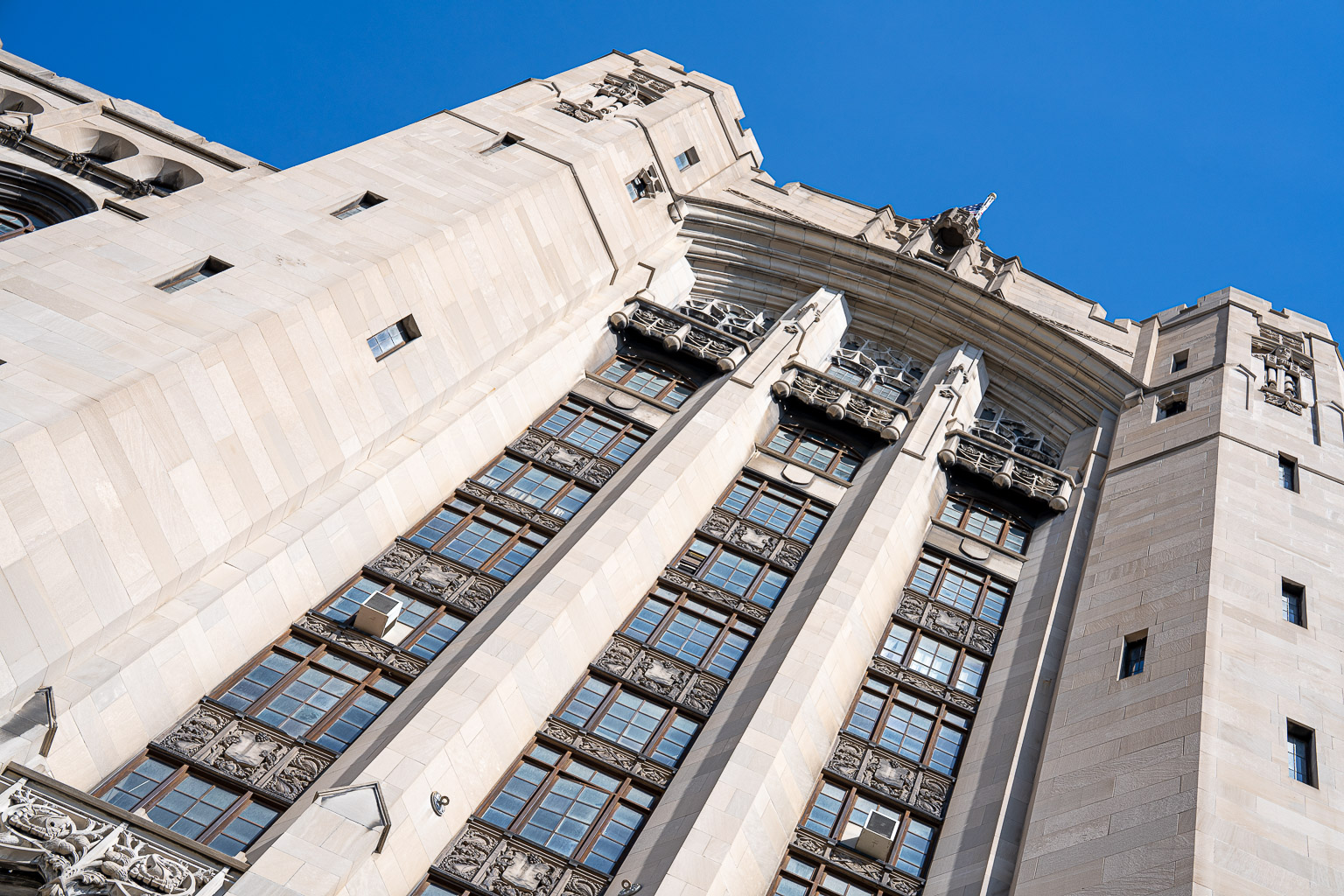
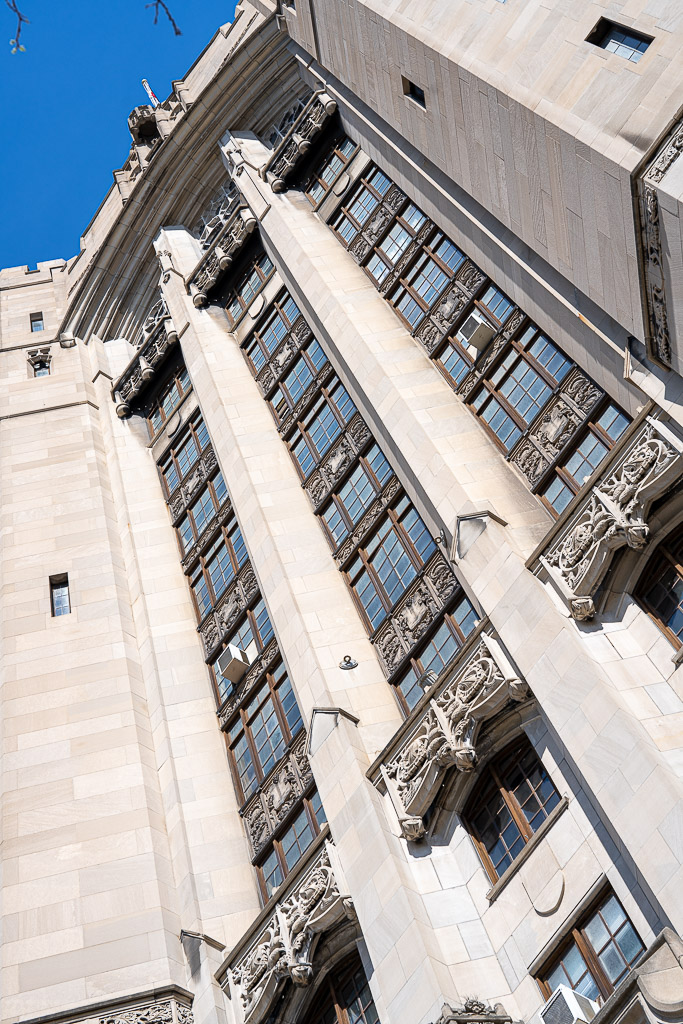
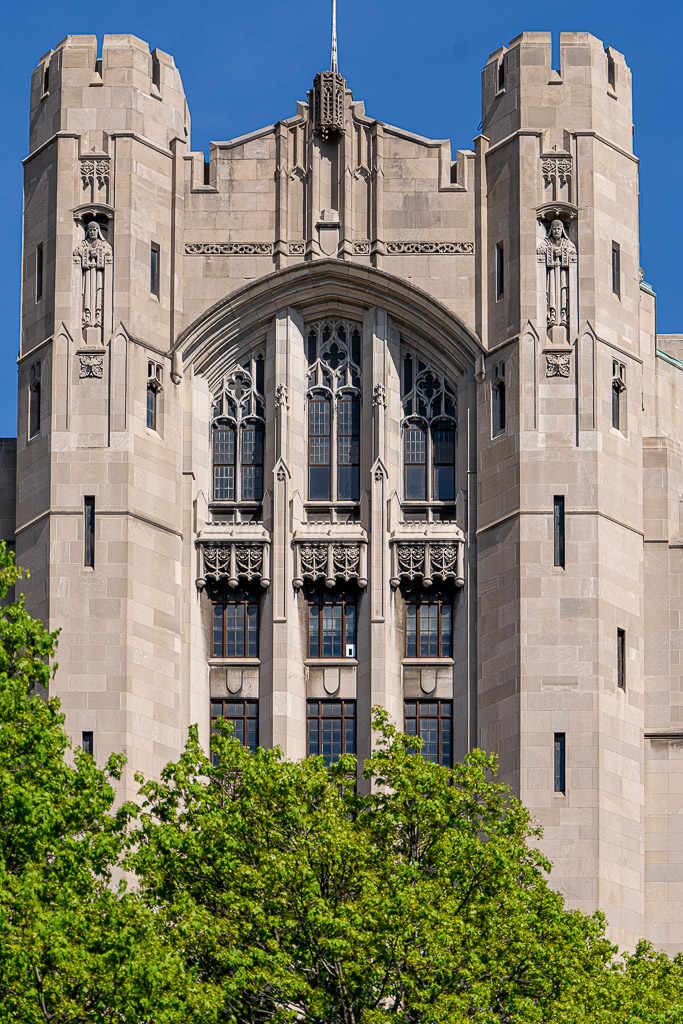
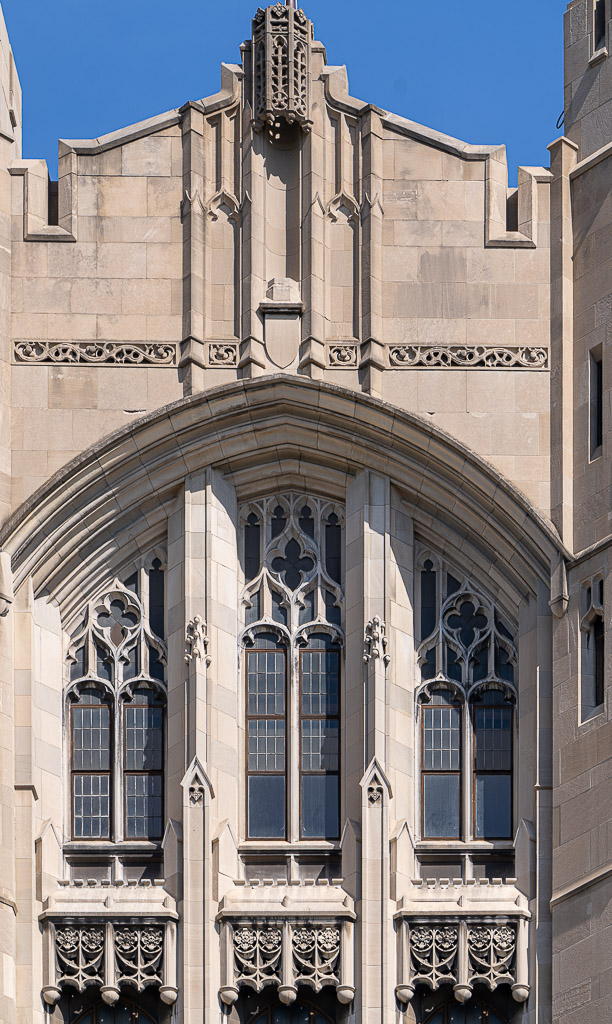
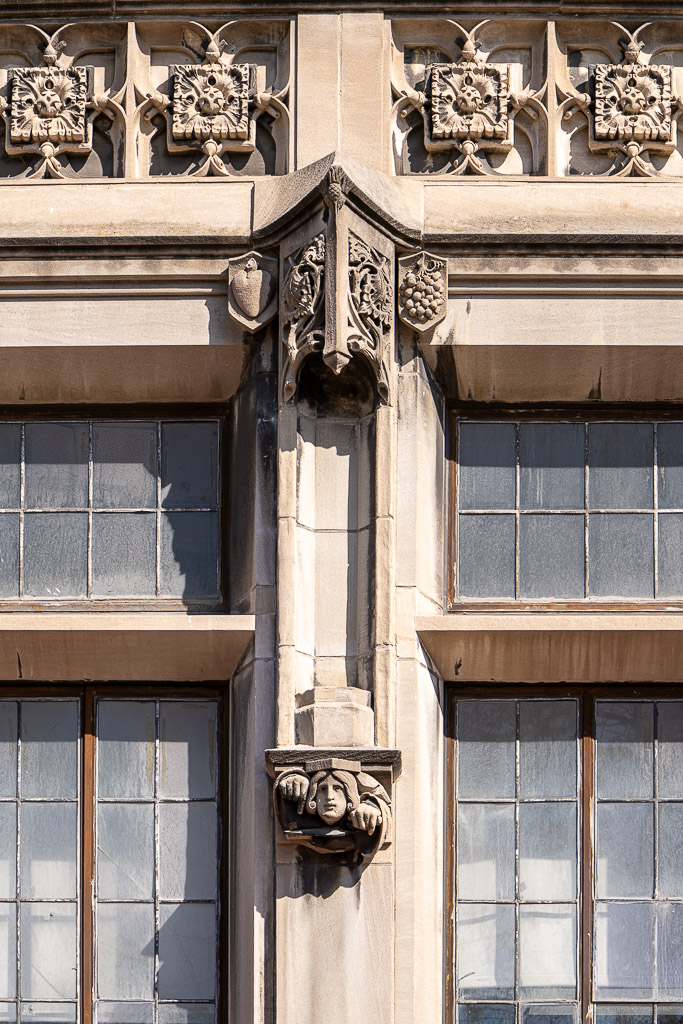
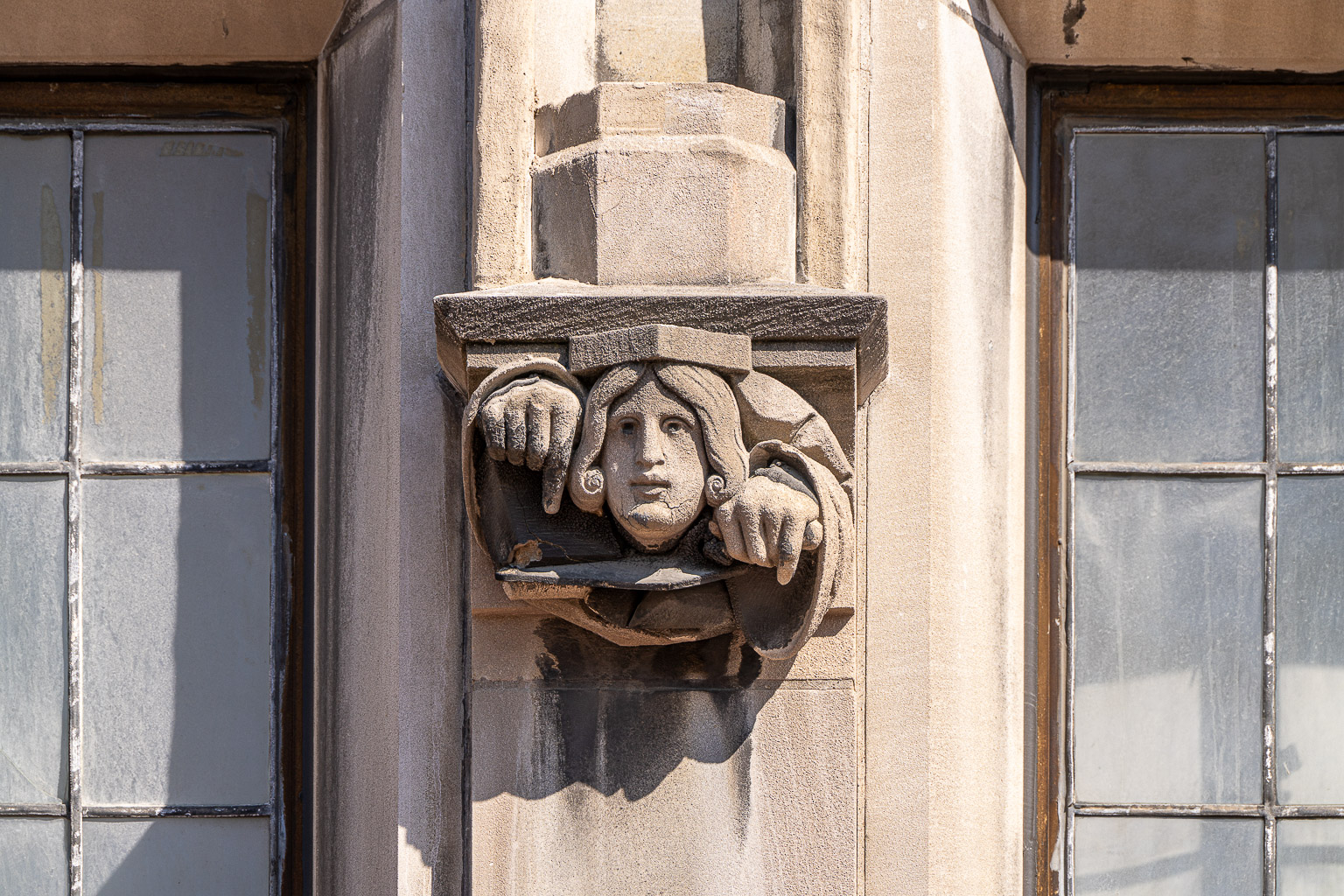
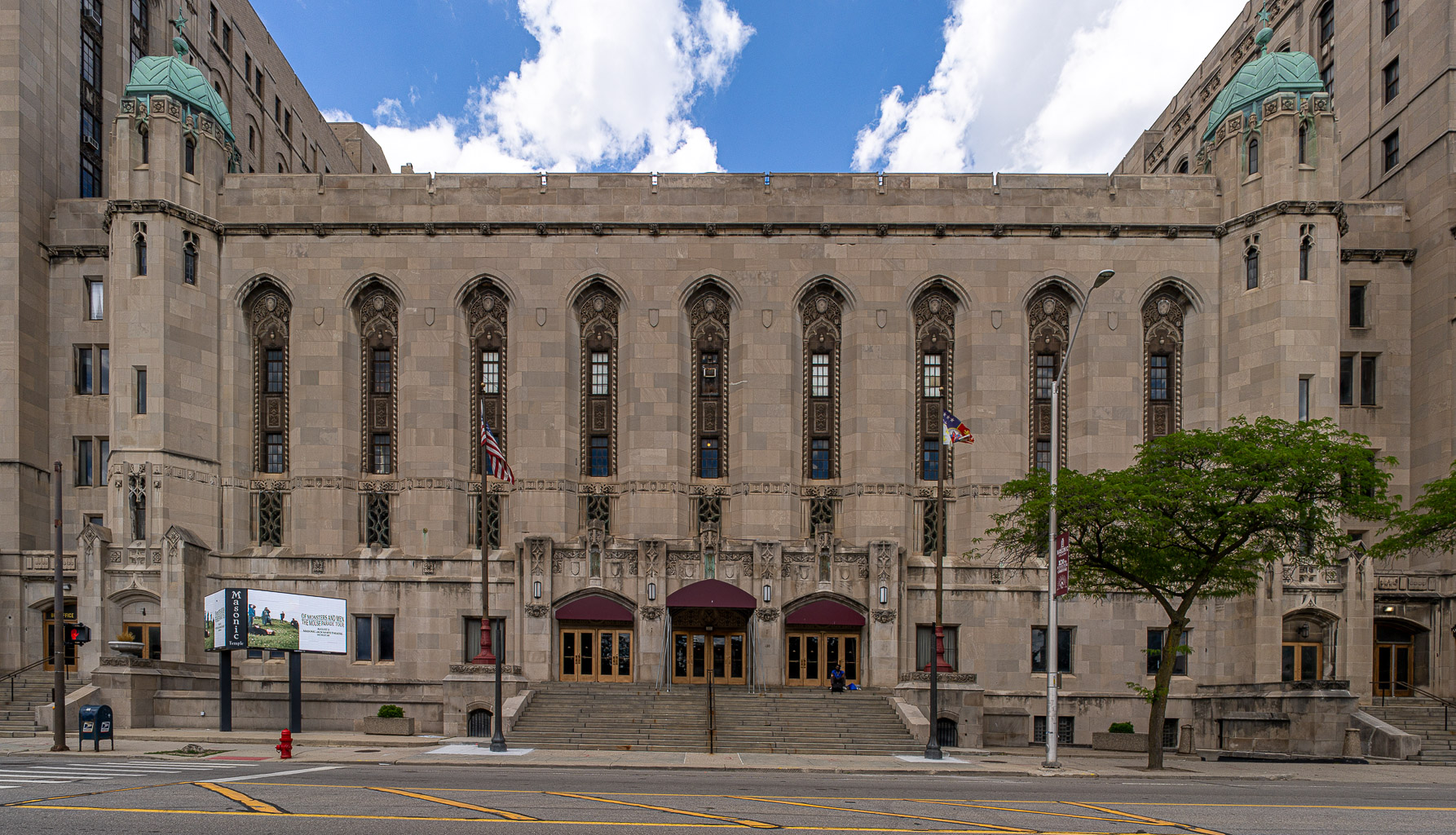
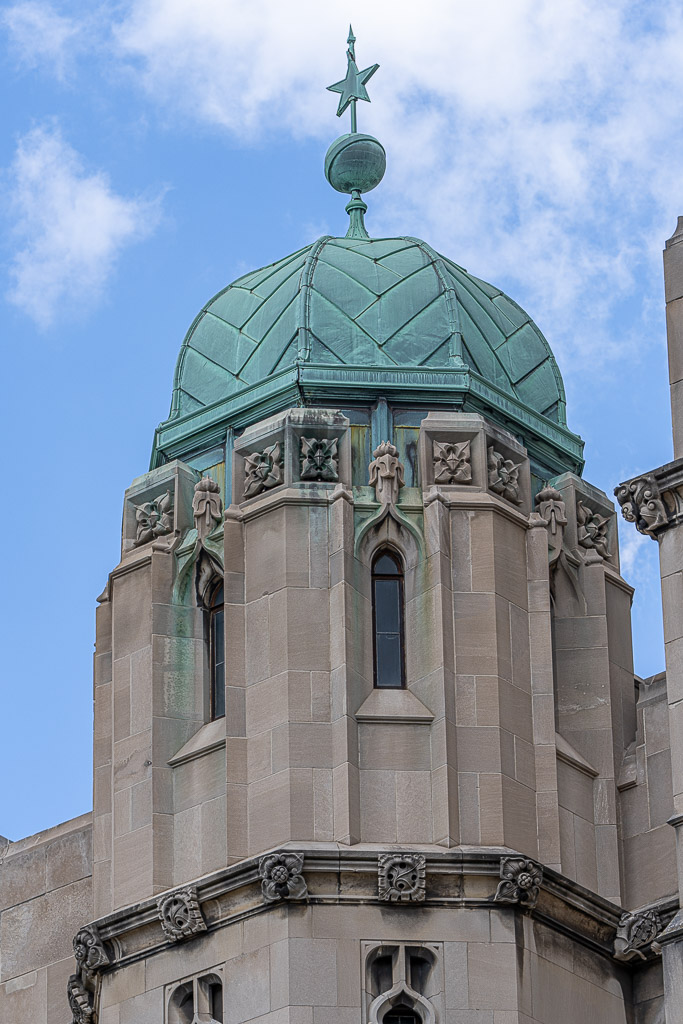
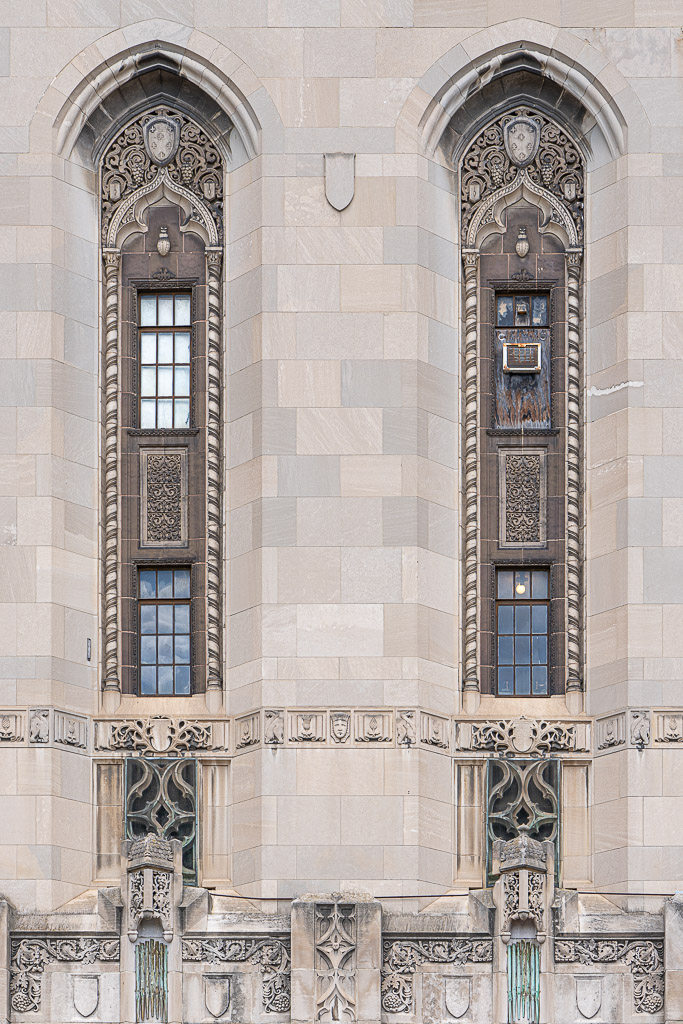
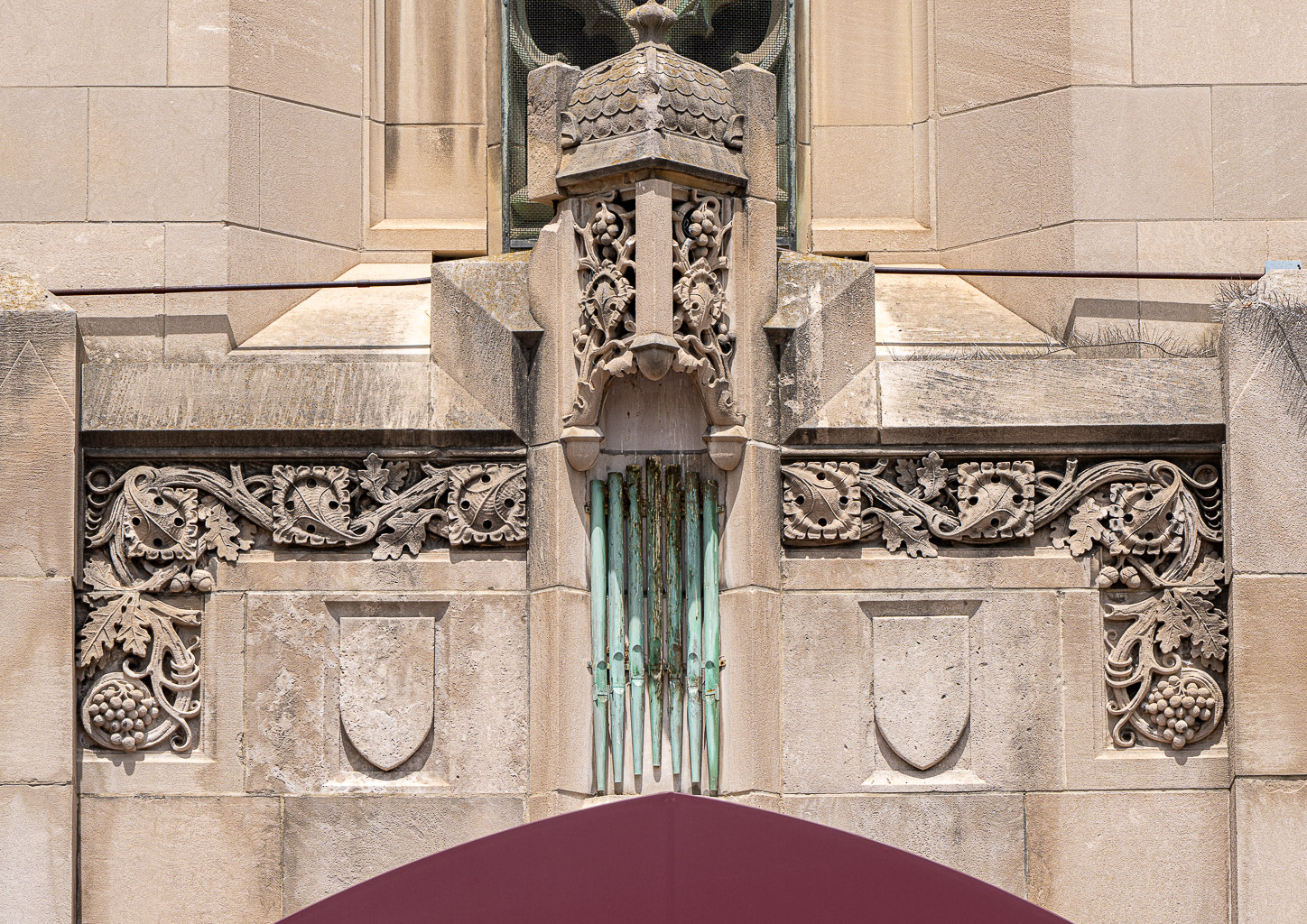
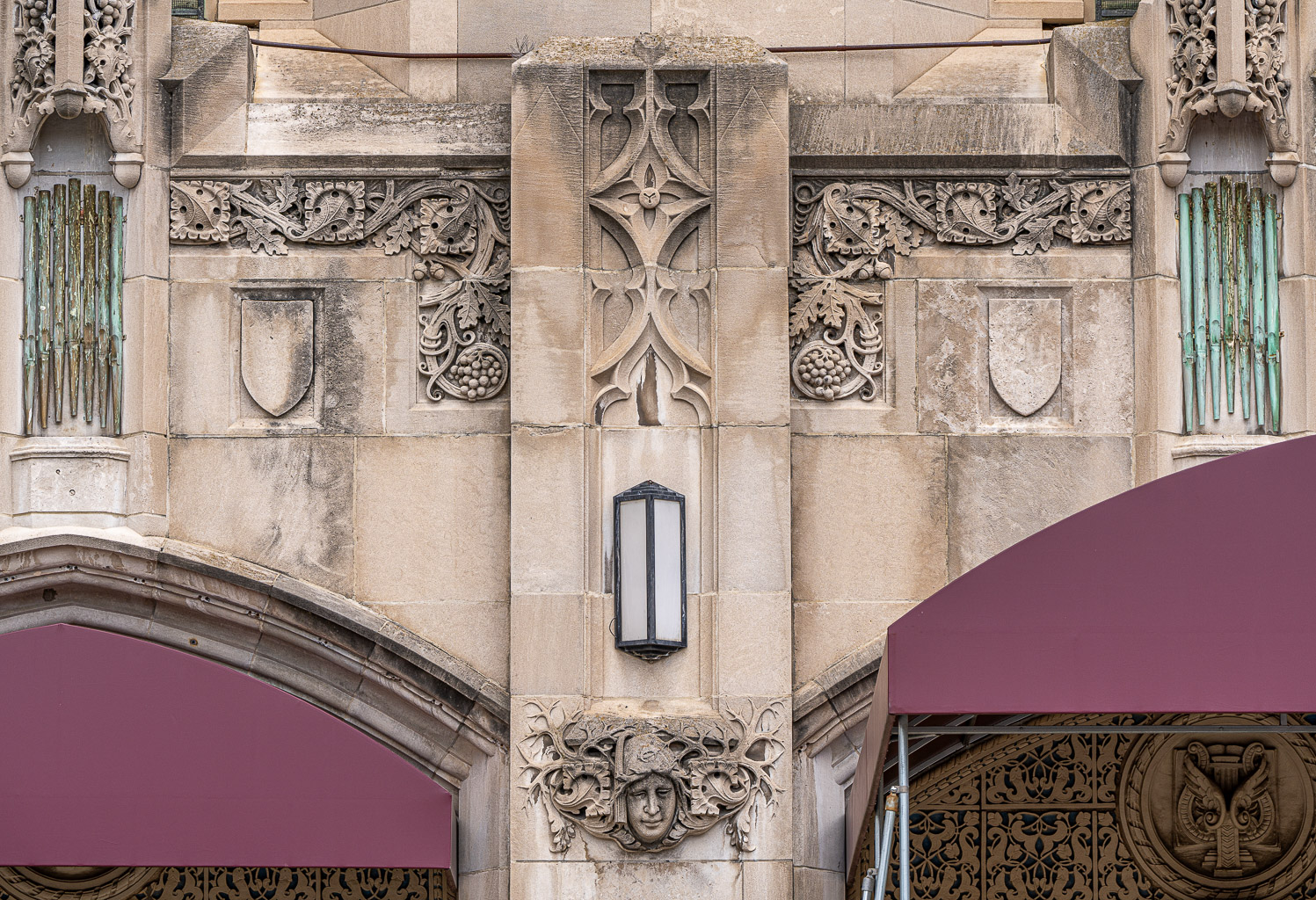
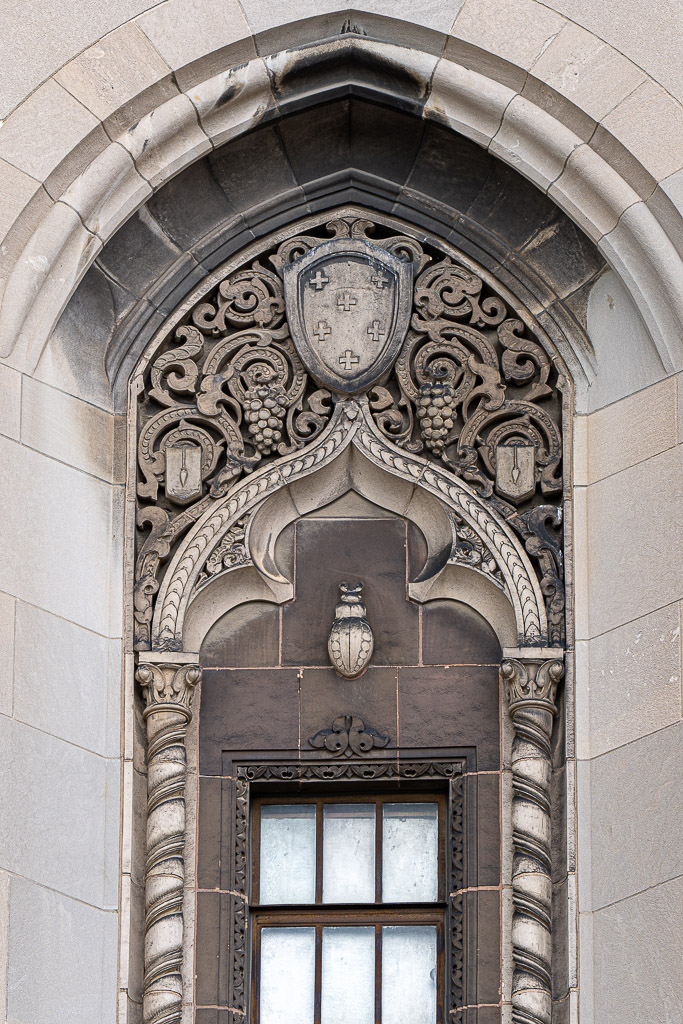
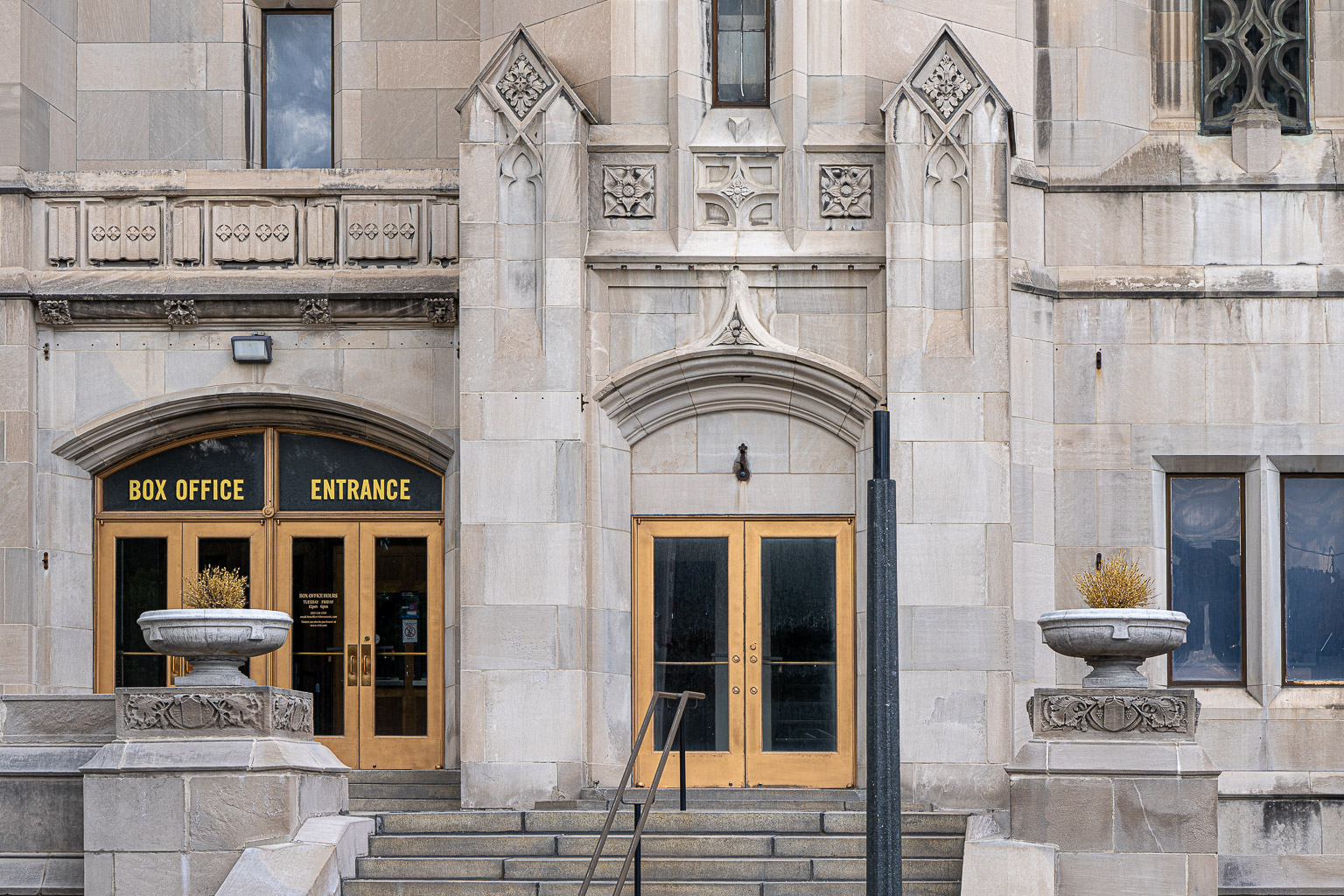
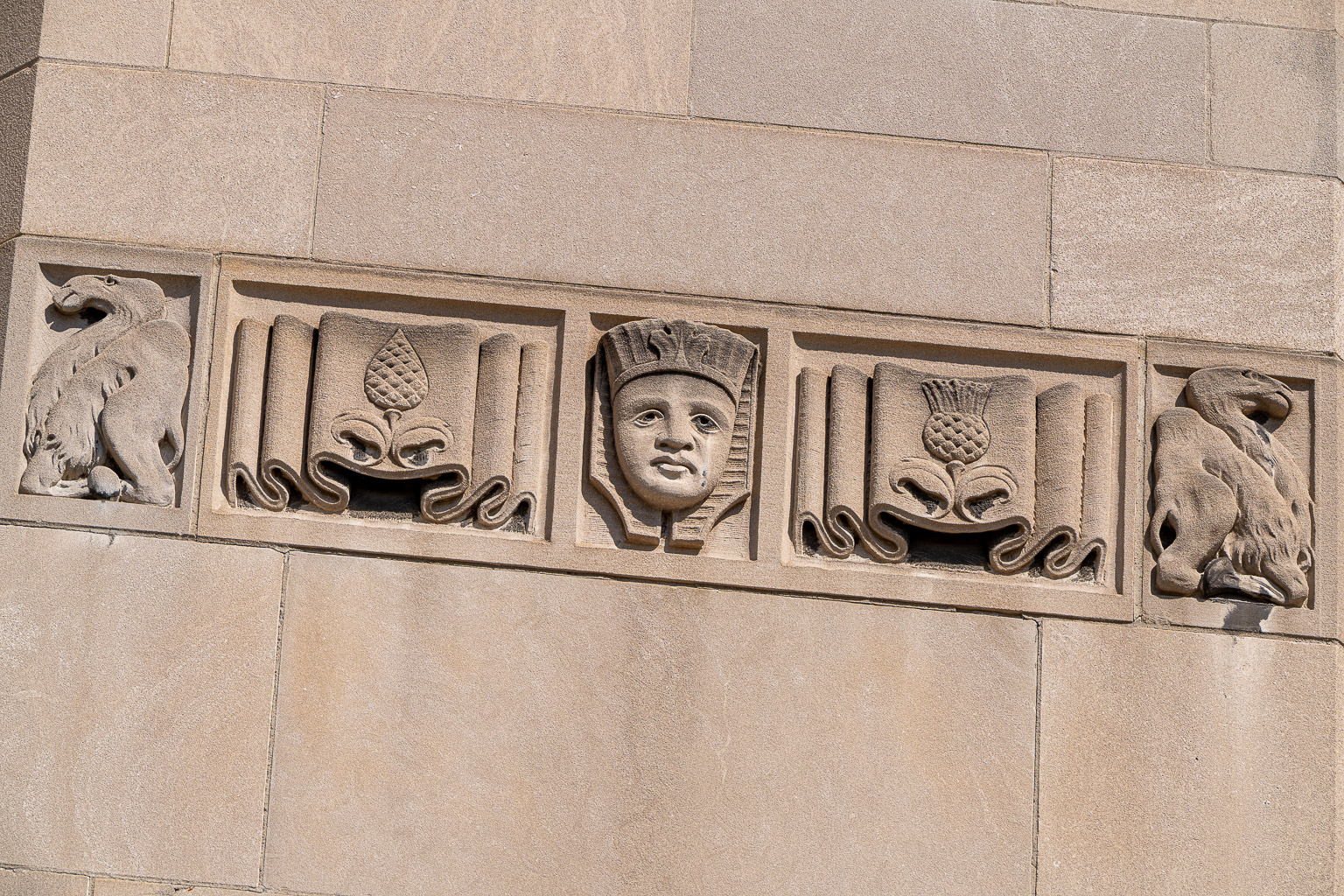
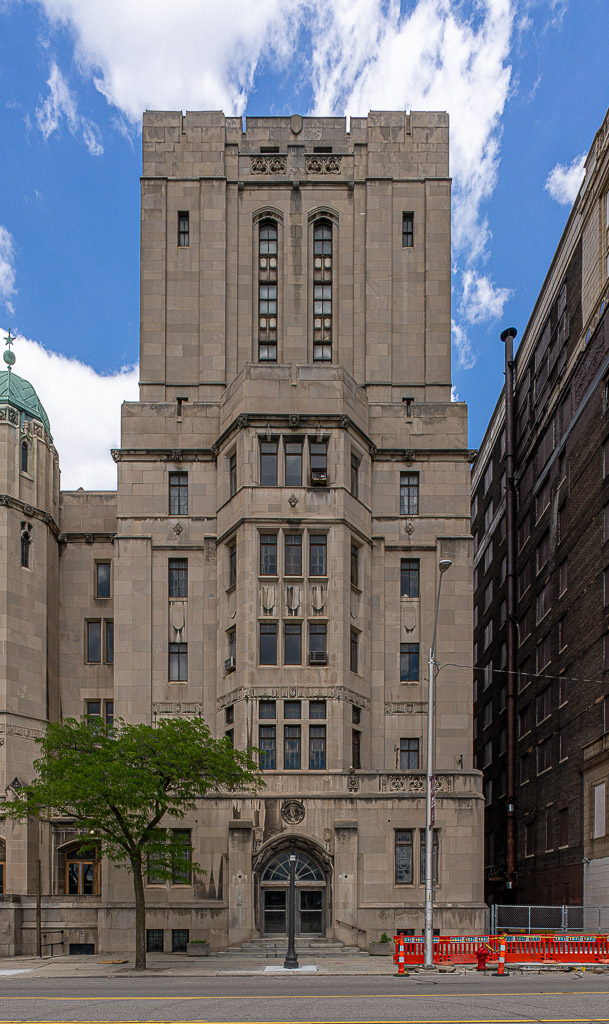
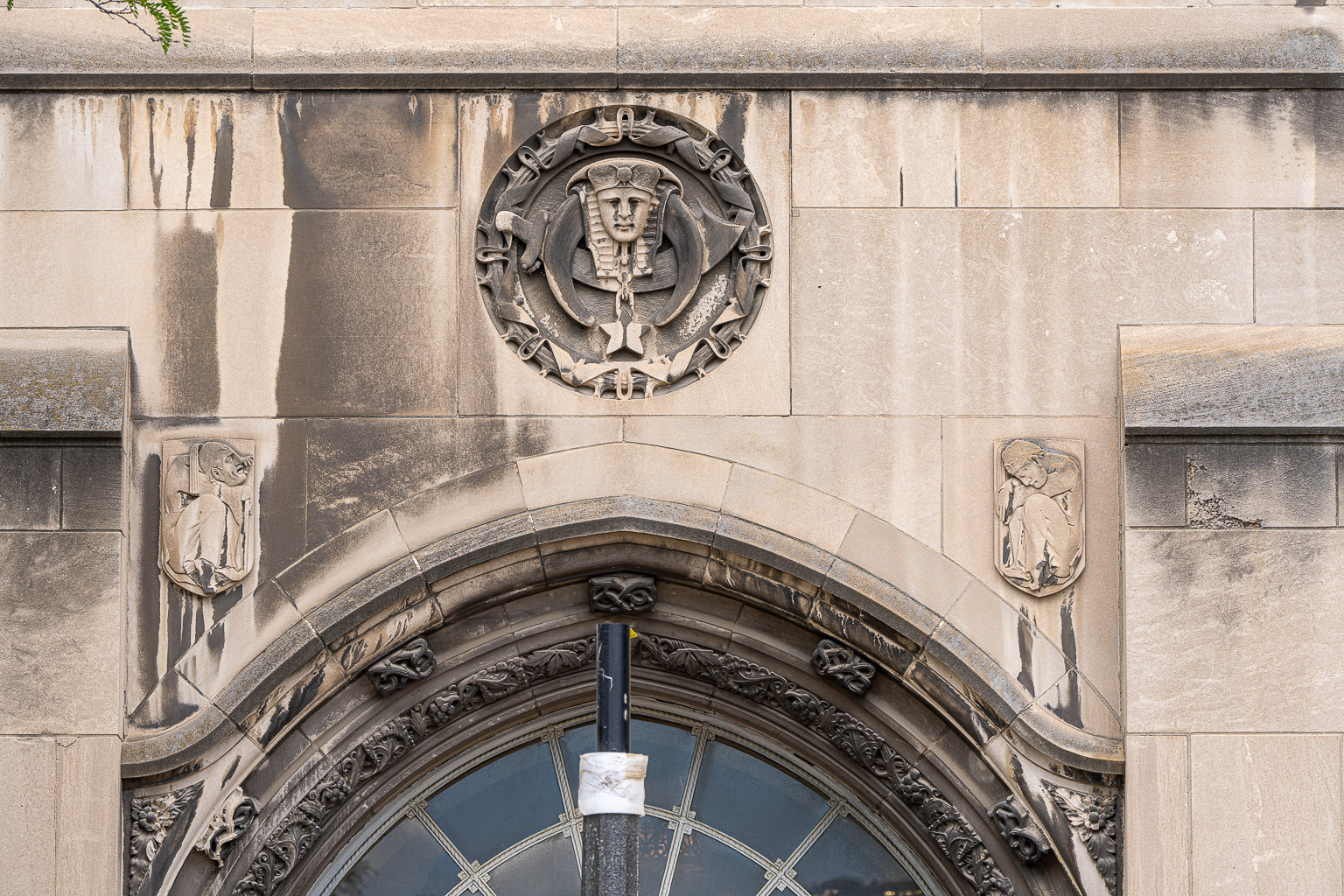
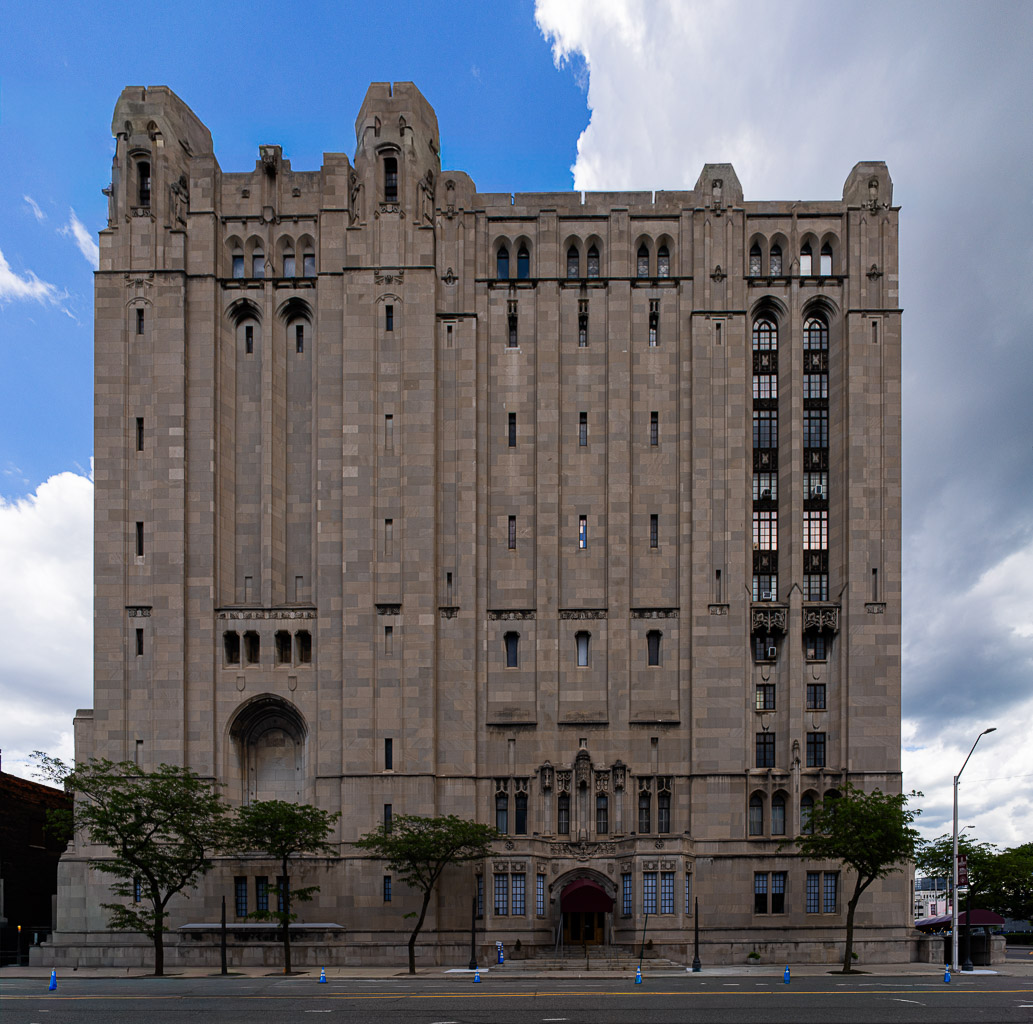
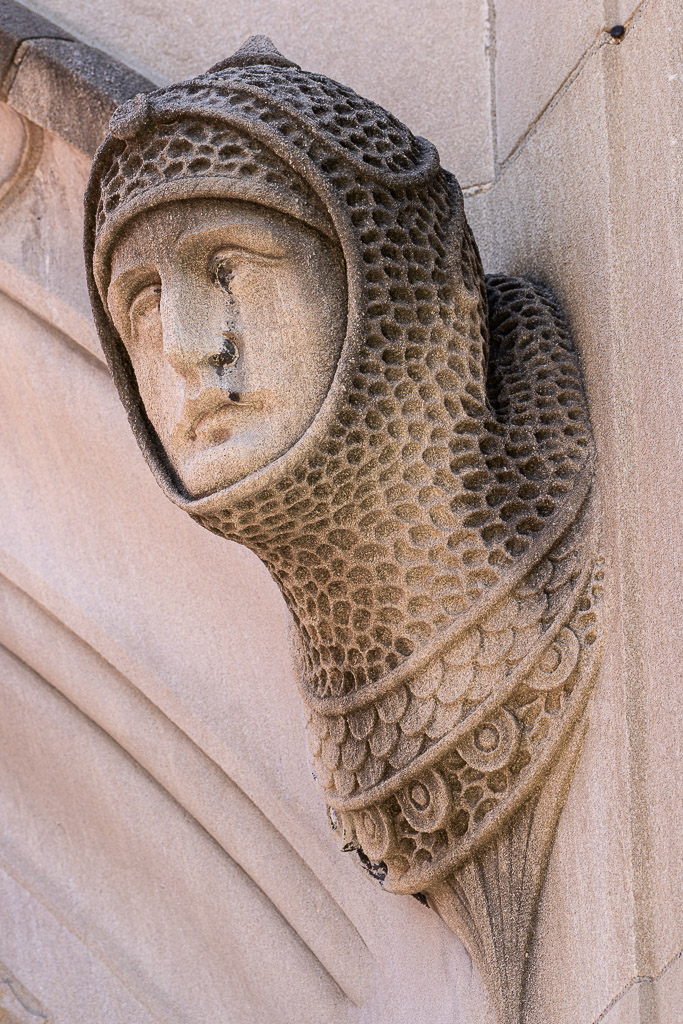
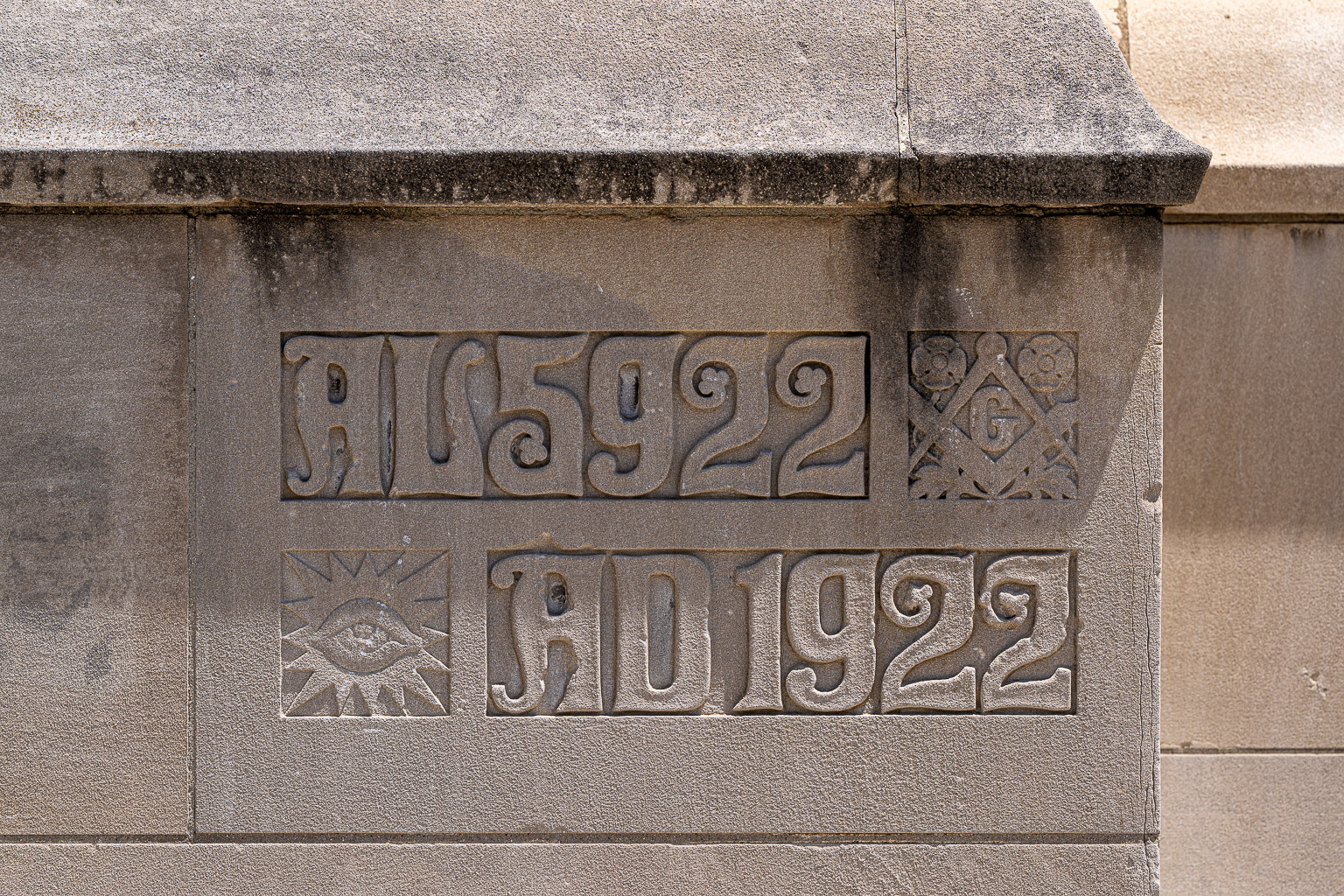
Fraternal lodge headquarters building and auditorium, designed by George D. Mason, architect, and listed on the National Register of Historic Places since 1980. When the cornerstone was laid in 1922, the trowel used was the one George Washington used to lay the cornerstone of the U. S. Capitol. The Temple is a massive English Gothic complex comprised of three distinct structures that are unified by its exterior architectural treatment. The complex consists of two towers, the fourteen-story Ritualistic Building (left side of 1st through 3rd photos below, and entire 4th photo below) and the ten-story Shrine Club (right side of 1st through 3rd photos below), which are connected by the seven-story Auditorium Building (center of the 1st through 3rd photos below). The three structures are sheathed in Indiana limestone with architectural sculpture by prominent local artist Corrado Parducci. The structure is the largest Masonic Temple in the world since the Chicago Masonic Temple was demolished in 1939, and is one of the most ornate and structurally complex buildings of its kind ever built.
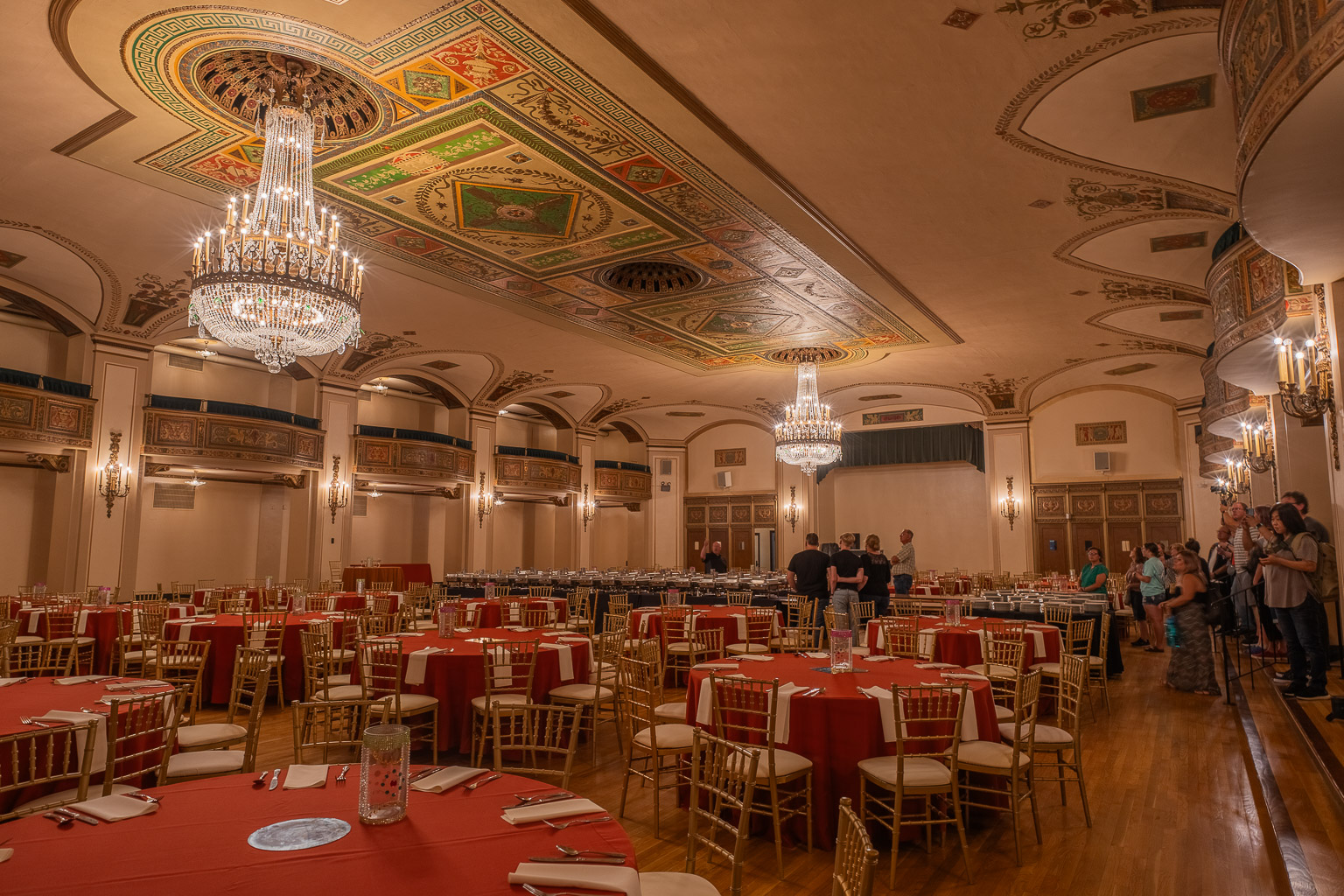
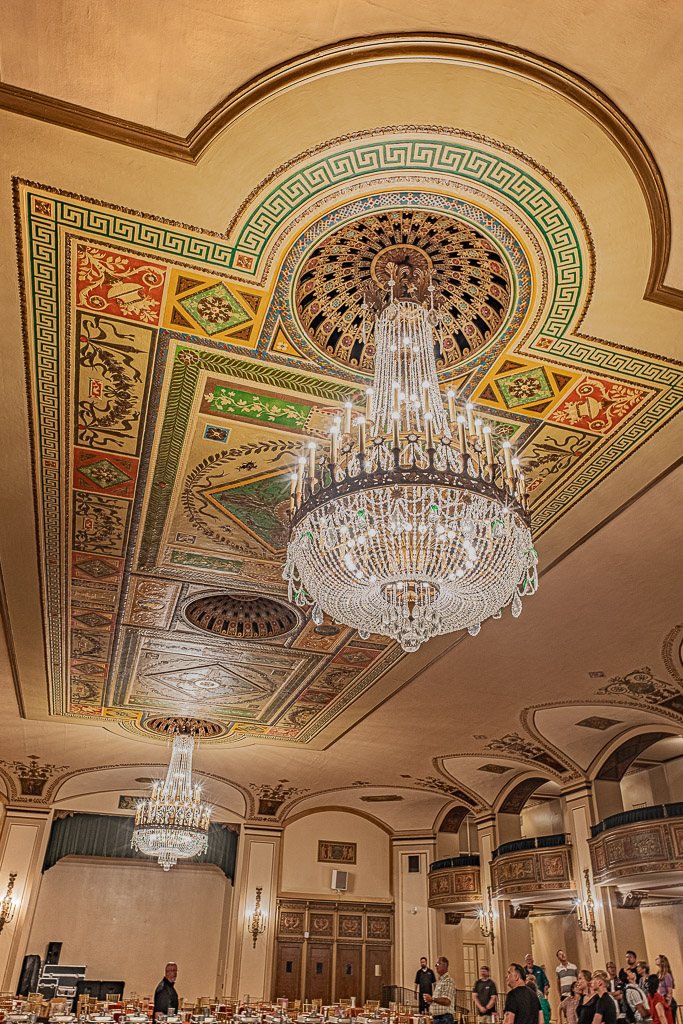
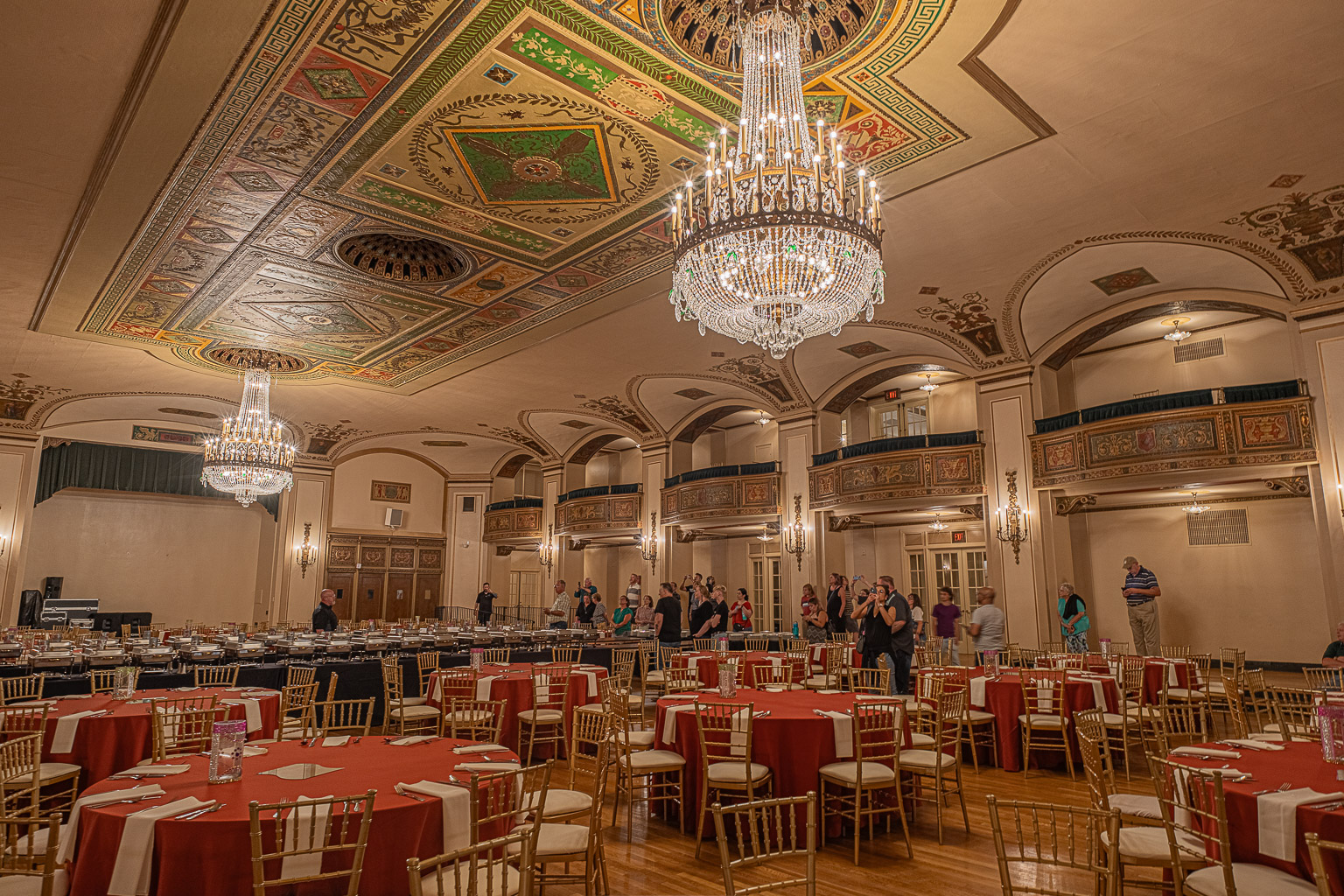
The Temple includes three theaters, three ballrooms and banquet halls, a drill hall, recreational spaces such as a swimming pool, a handball court, a gynmasium, a bowling alley, and a pool hall. There ae also numerous lodge rooms, offices and dining spaces.
The Ritualistic Building is home to twenty-six lodges and contains a number of ornately decorated meeting rooms, most of which were designed by Anthony DiLorenzo Studios of New York. The 210 foot tower of the Ritualistic Building dominates the neighborhood and can be seen from a distance in many parts of the city. It contains an astounding 1,037 rooms. Exterior photos of the Ritualistic Building are shown below, first the Ritualistic Building as a whole:
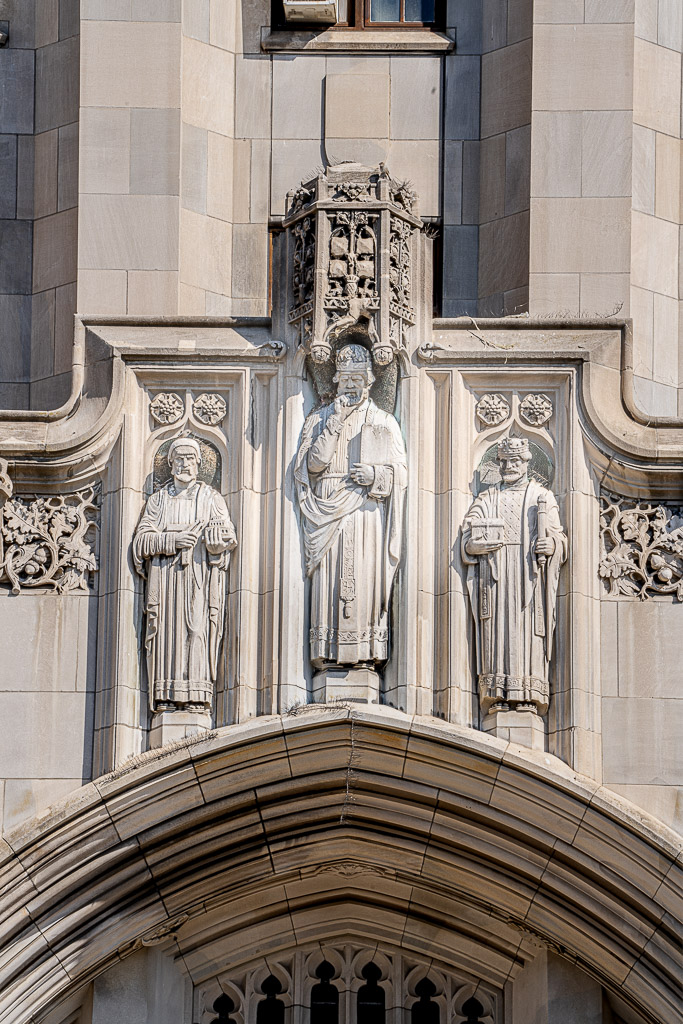
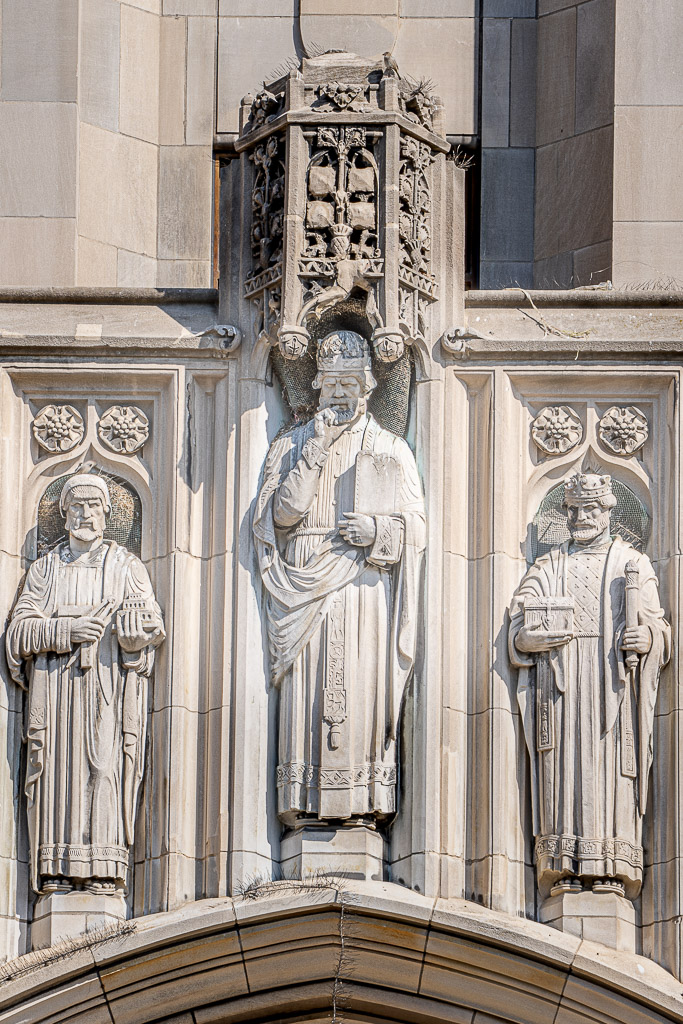
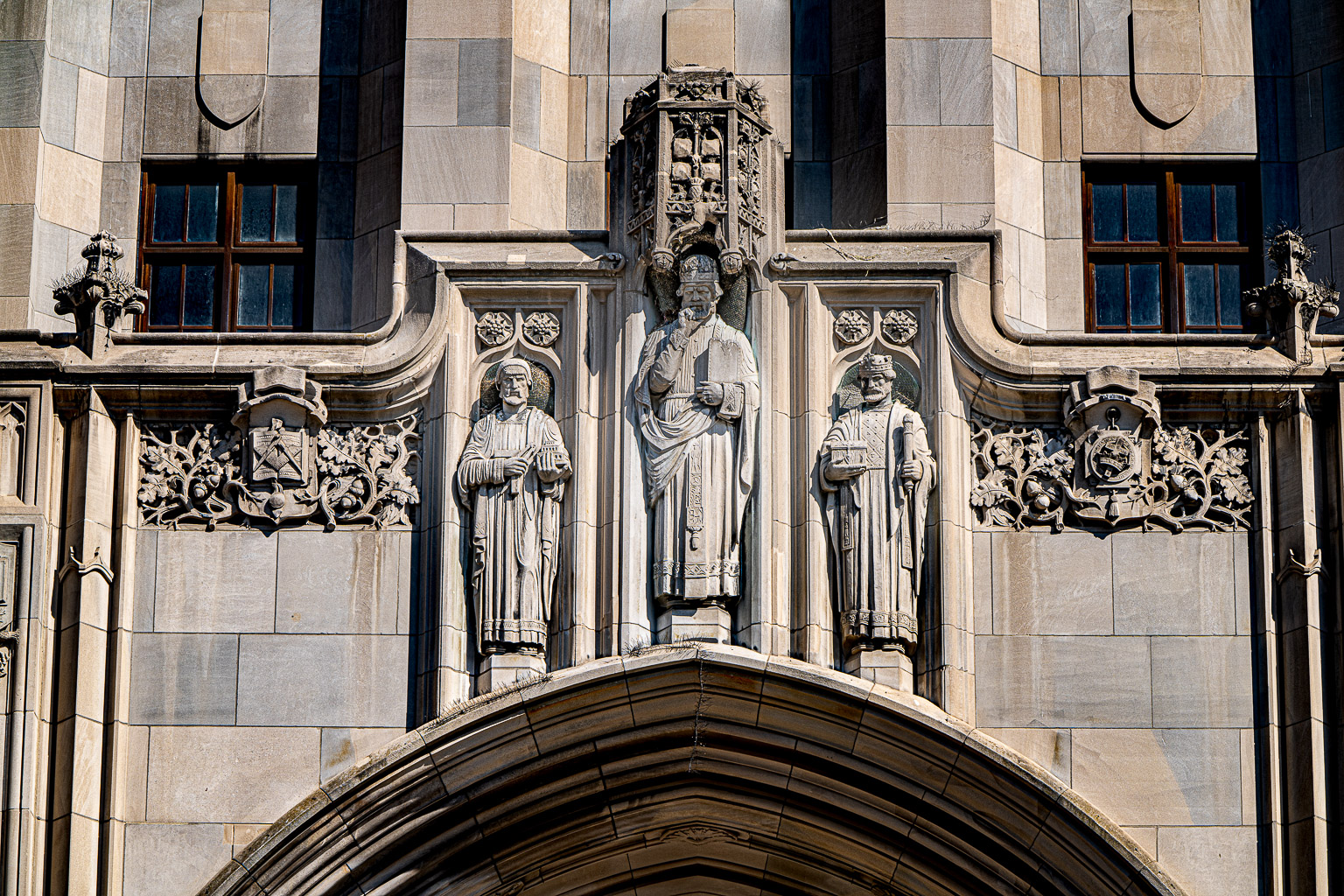
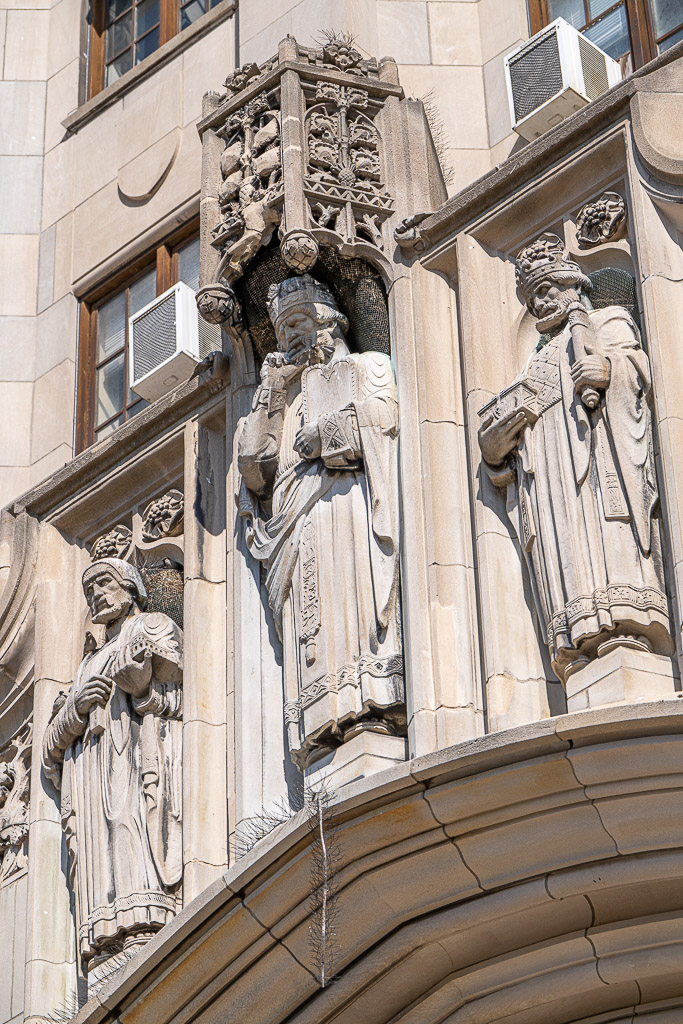
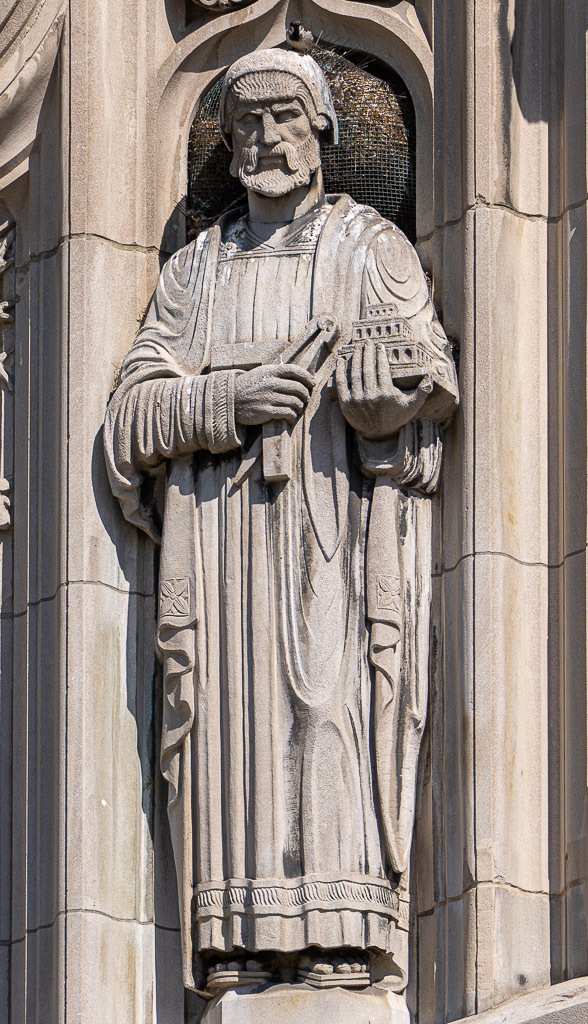
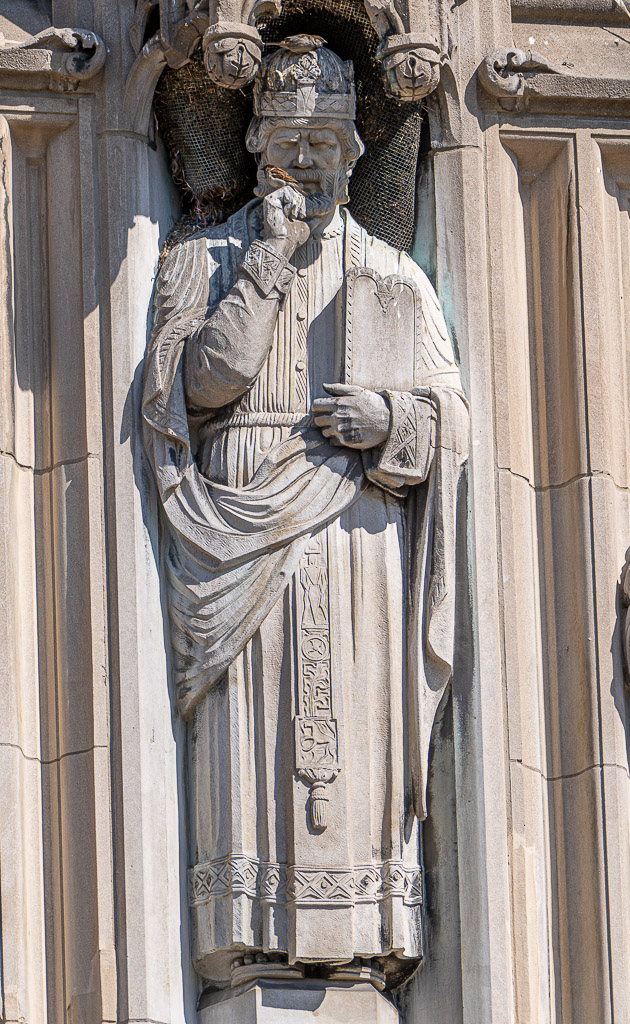
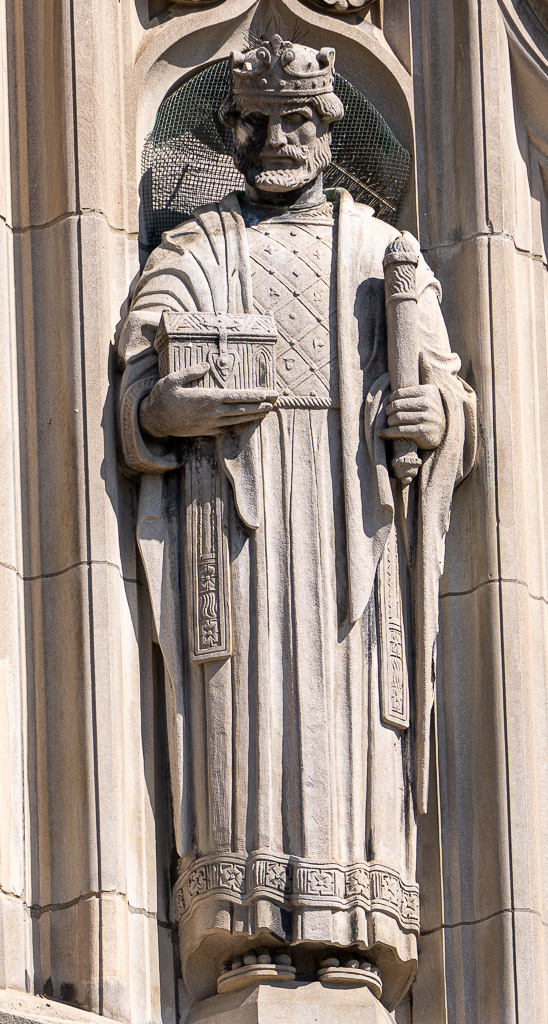
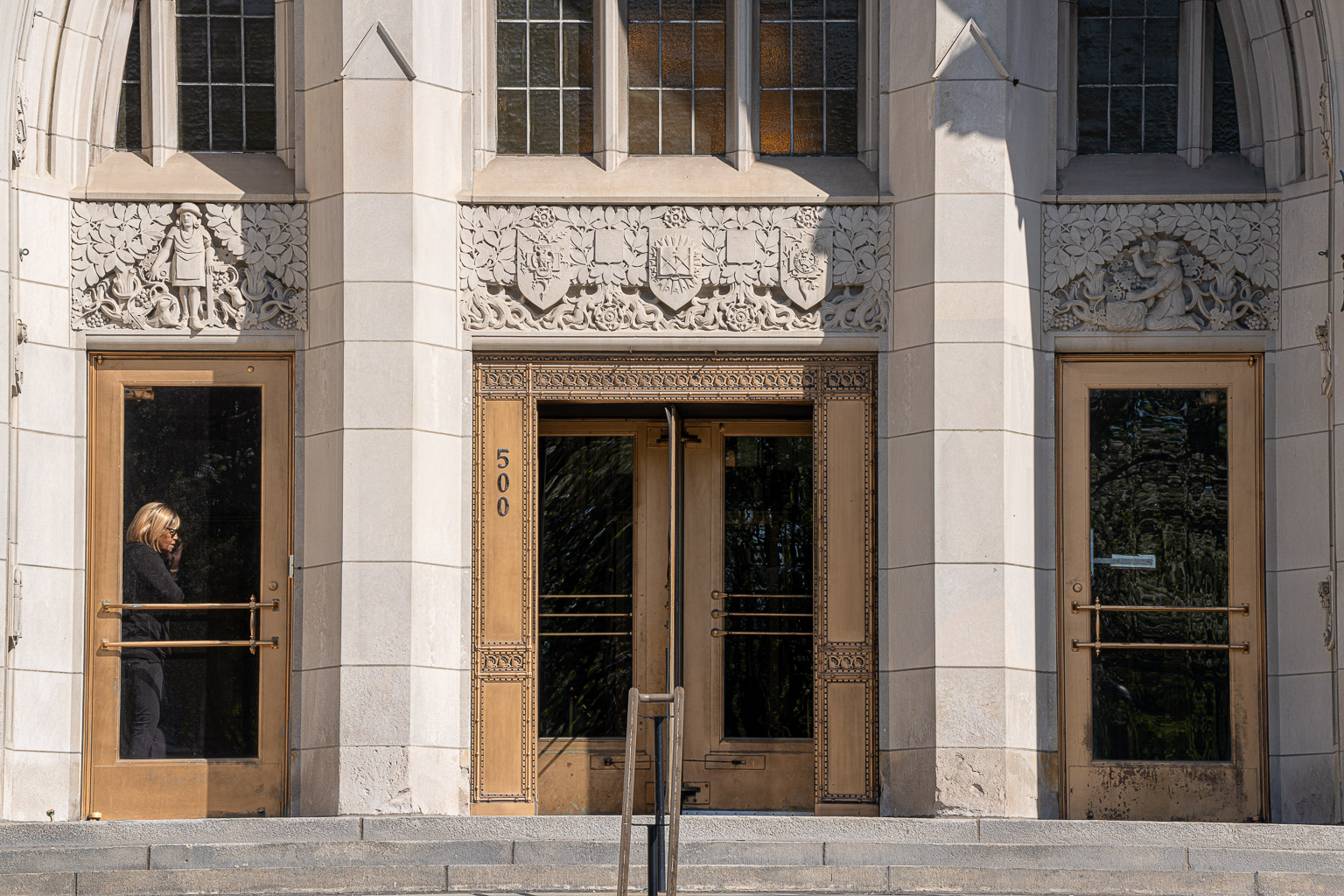
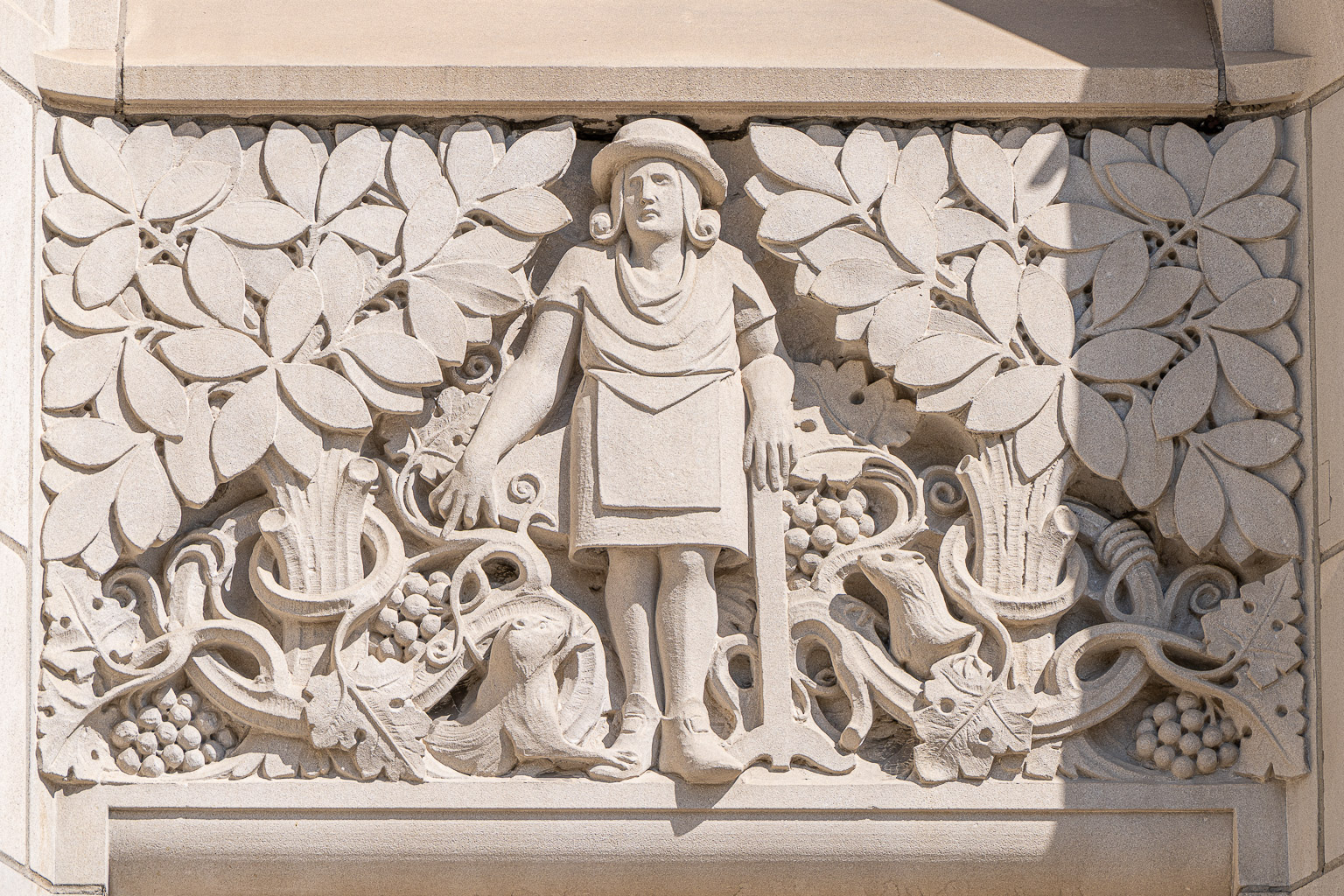
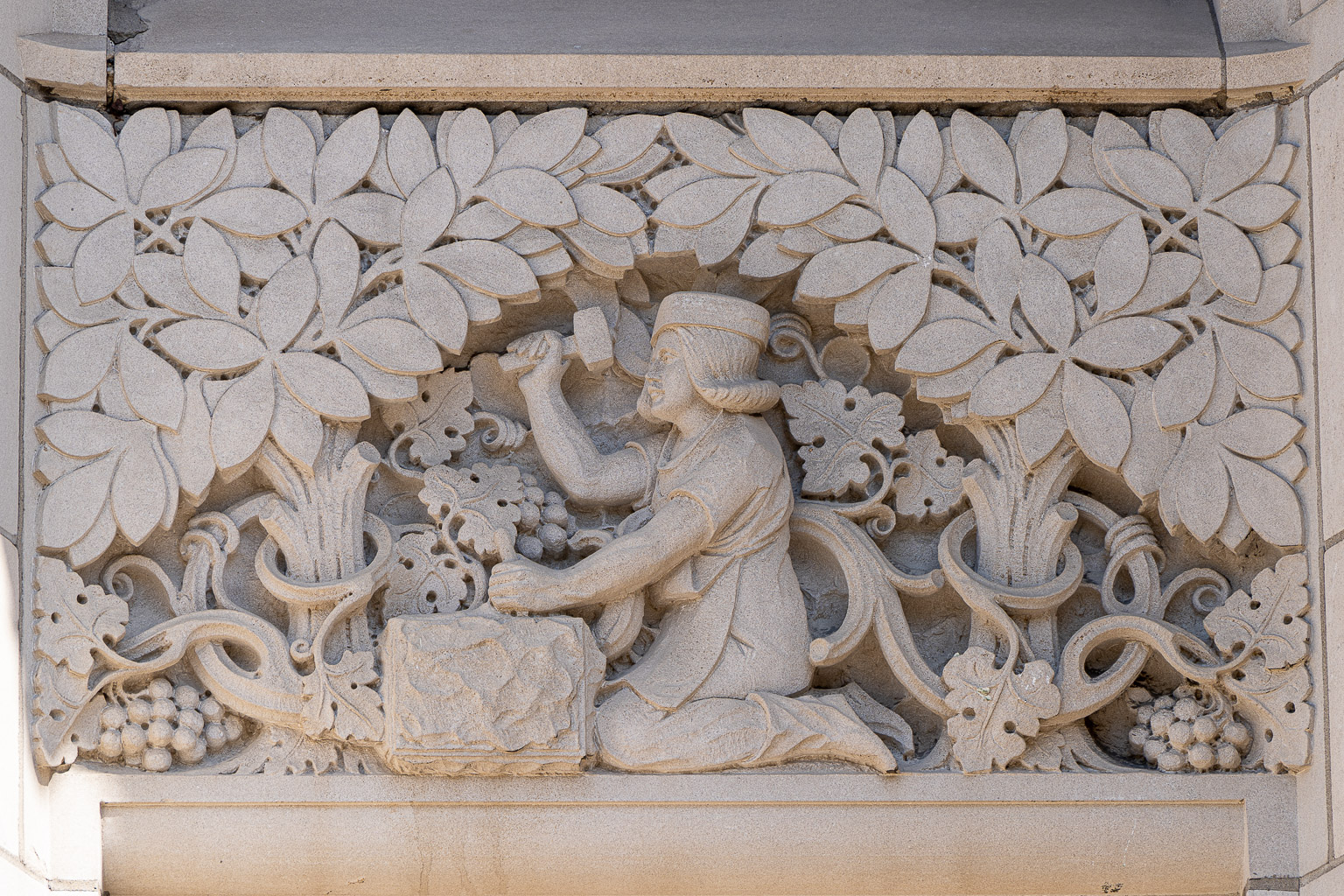
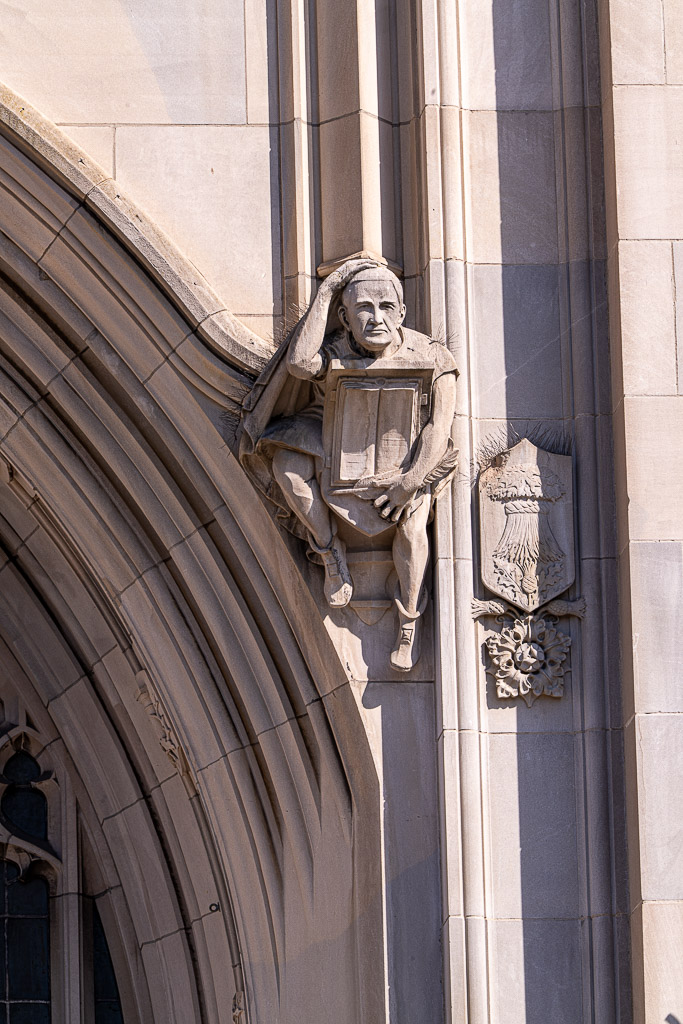
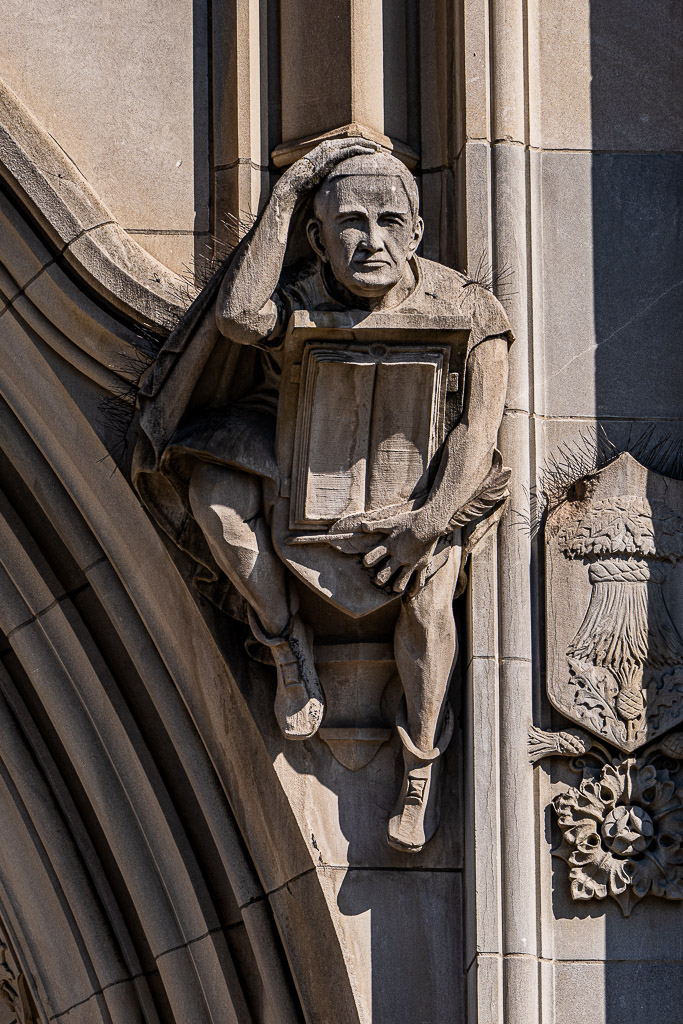
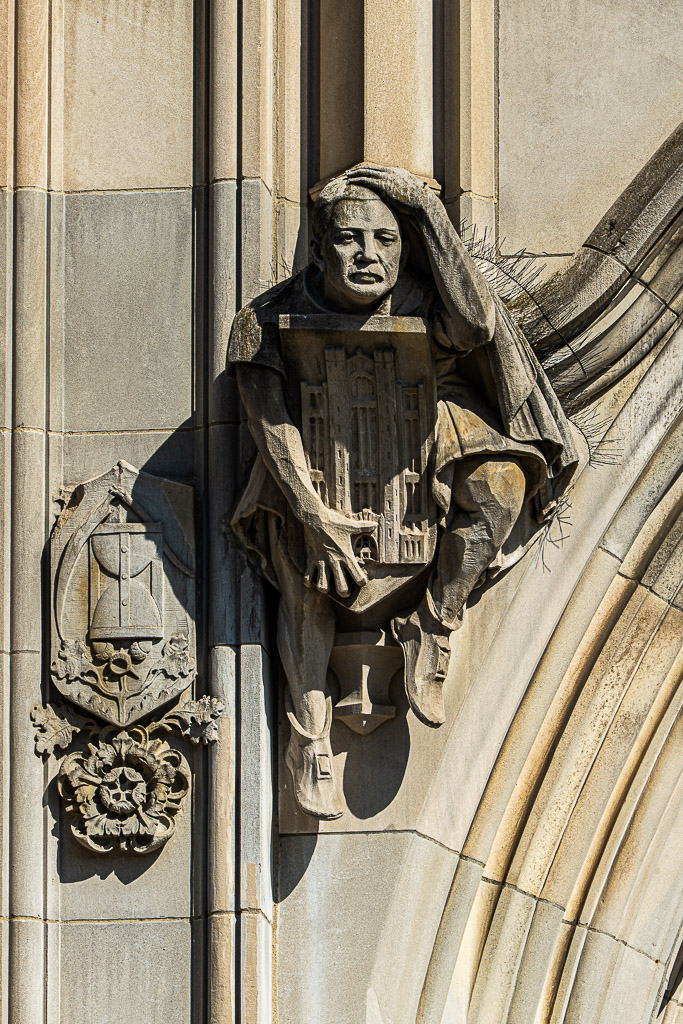
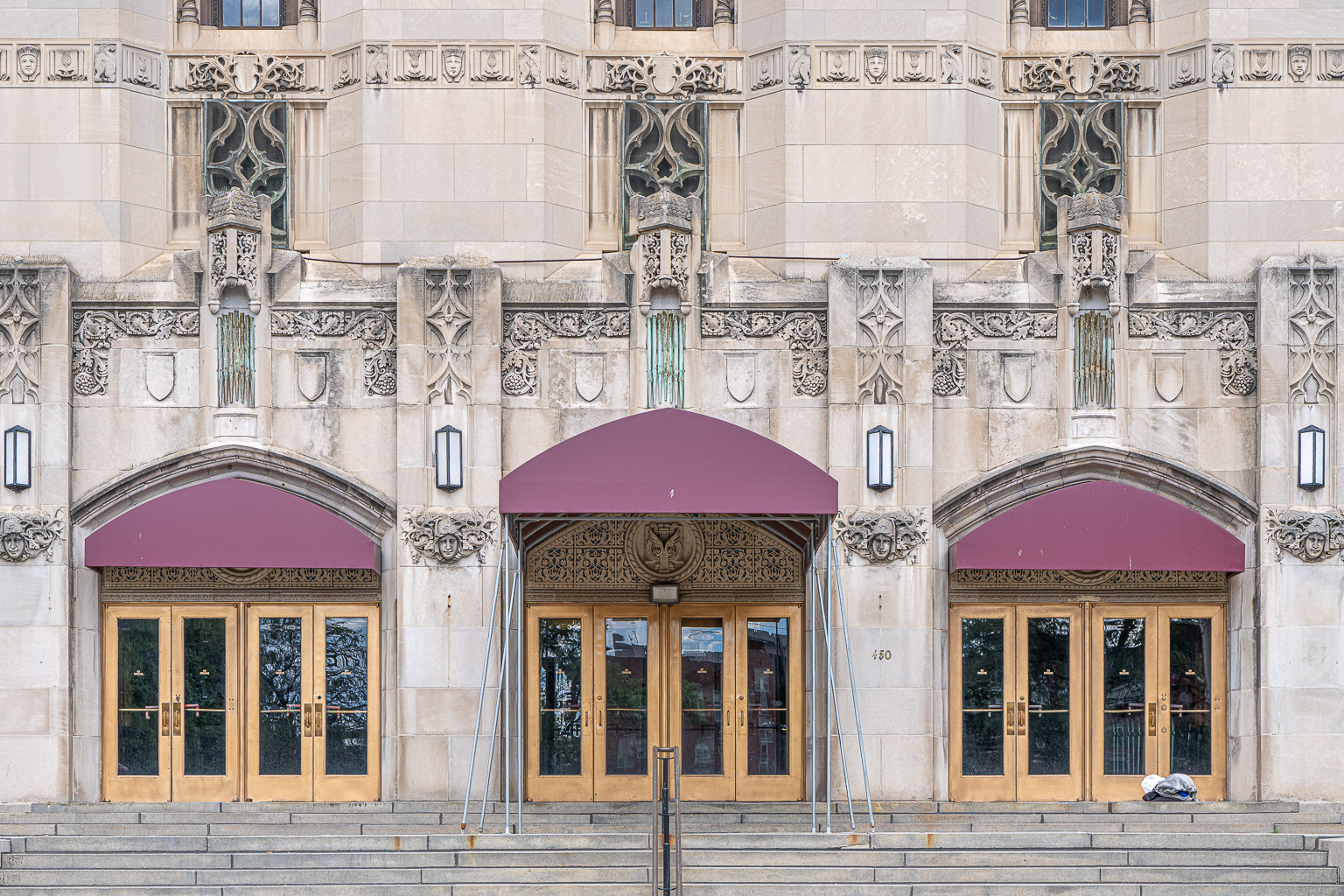
Next, details of the main doorway at the center of the ground floor. The three figures over the main entrance (first 8 photos below) are of King Solomon, Hiram Abiff, and King Hiram of Tyre. They were by sculpted by Leo Friedlander, while the rest of the considerable architectural sculpture on the exterior was by Bill Gehrke.
Up above the central door by about 6 floors:
Looking up the central tower.
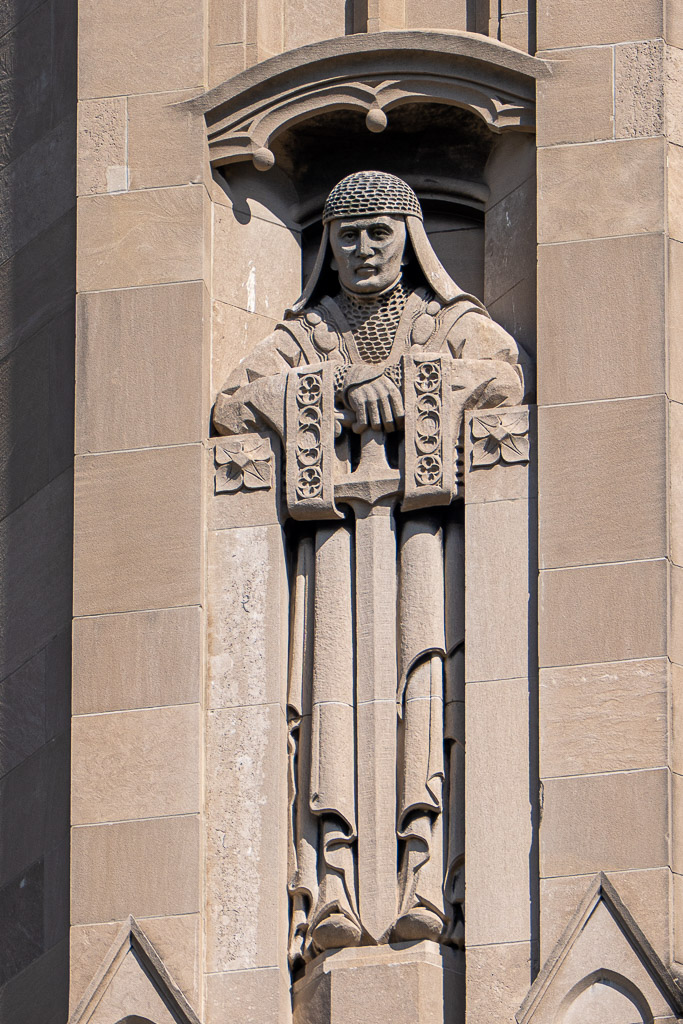
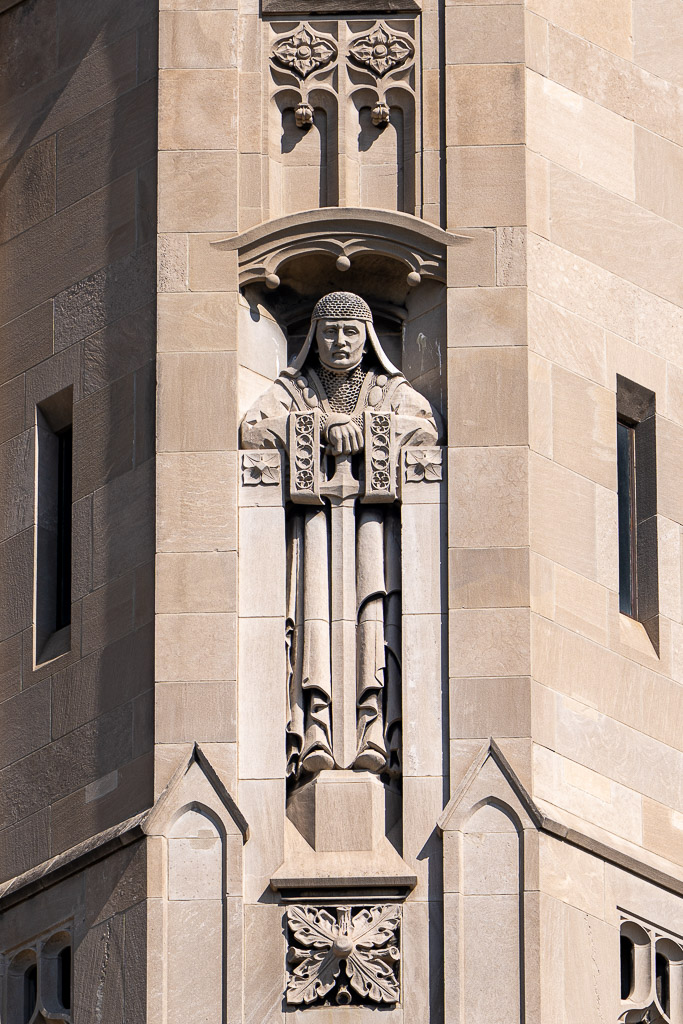
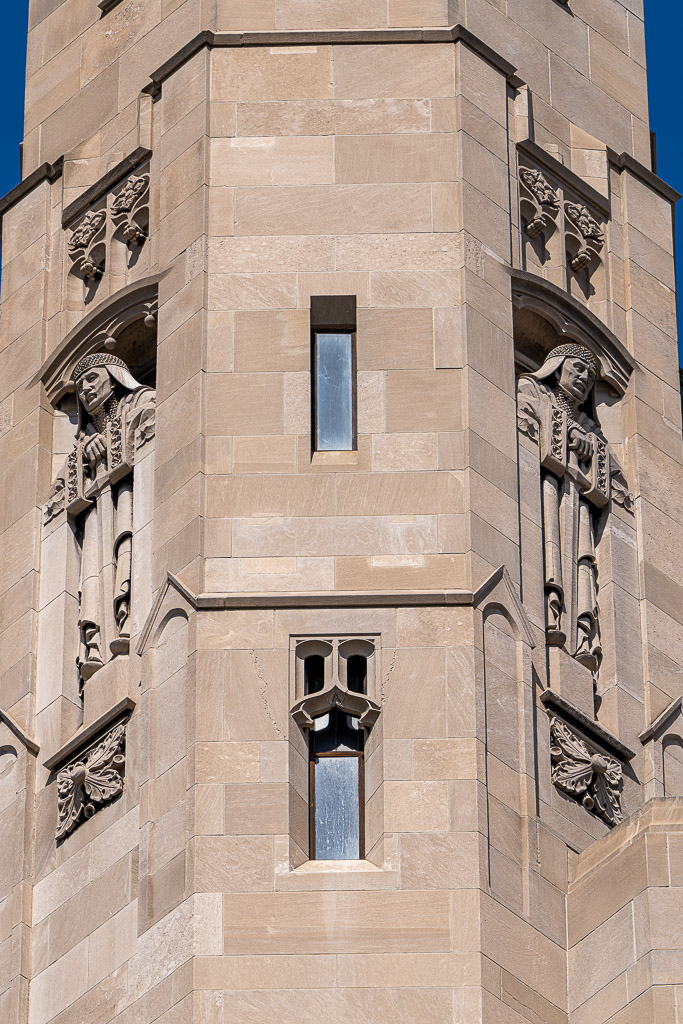
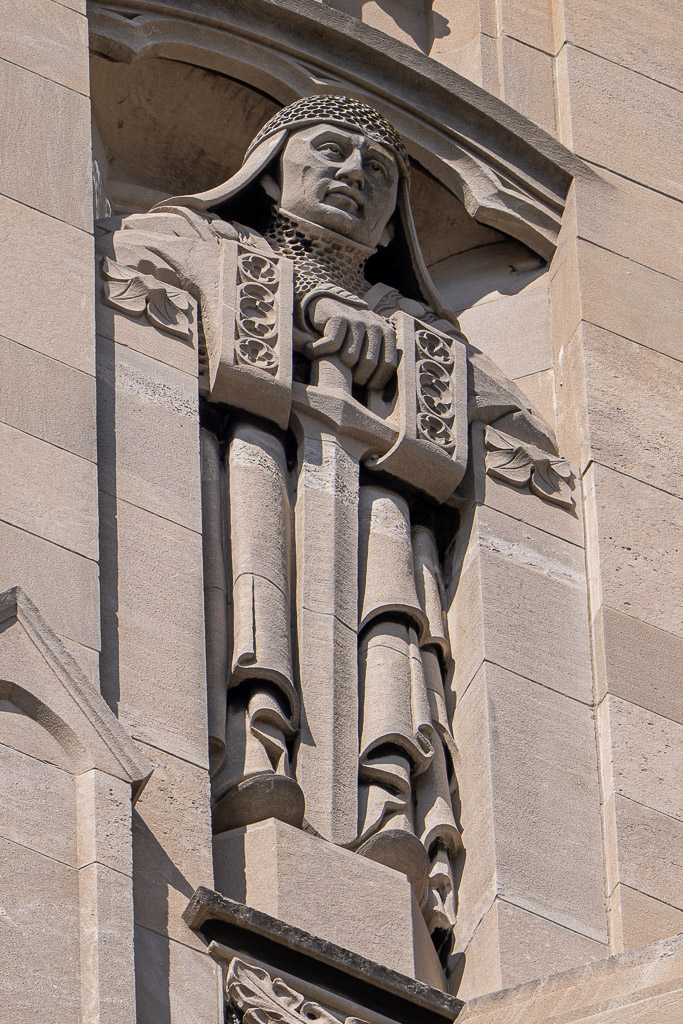
Now way up to the top of the central tower. Knights Templar, 2nd through 5th photos below, guard Detroit’s Masonic Temple. They are the largest sculptures in Detroit. Knights Templar invented modern finance, and Freemasons see them as their midieval ancestors.
Back to ground level, moving to the bay to the right of the central doorway:
The Auditorium Building is a vast four-level, entertainment and recreational complex consisting of a 160'x100' clear-span Drill Hall, the Main Auditorium, the Fountain Ballroom, the Crystal Ball Room, and a 1,586-seat Scottish Rite Cathedral. The stage of the Main Auditorium is the second largest in the United States, having a width between walls of 100 feet and a depth from the curtain line of 55 feet. The Drill Hall is also home to the Detroit Roller Derby, and has a floating floor, where the entire floor is laid on felt cushions. This type of construction, also known as a sprung floor, provides 'give' to the floor which tends to relieve the marchers.
The Shrine Club was built for exclusive use by the members of the Ancient Arabic Order of the Nobles of the Mystic Shrine, now known as Shriners International, with a lounge, gymnasium and eighty guest rooms.
The west (2nd Ave) face of Detroit's Masonic Temple is shown below, along with some details:
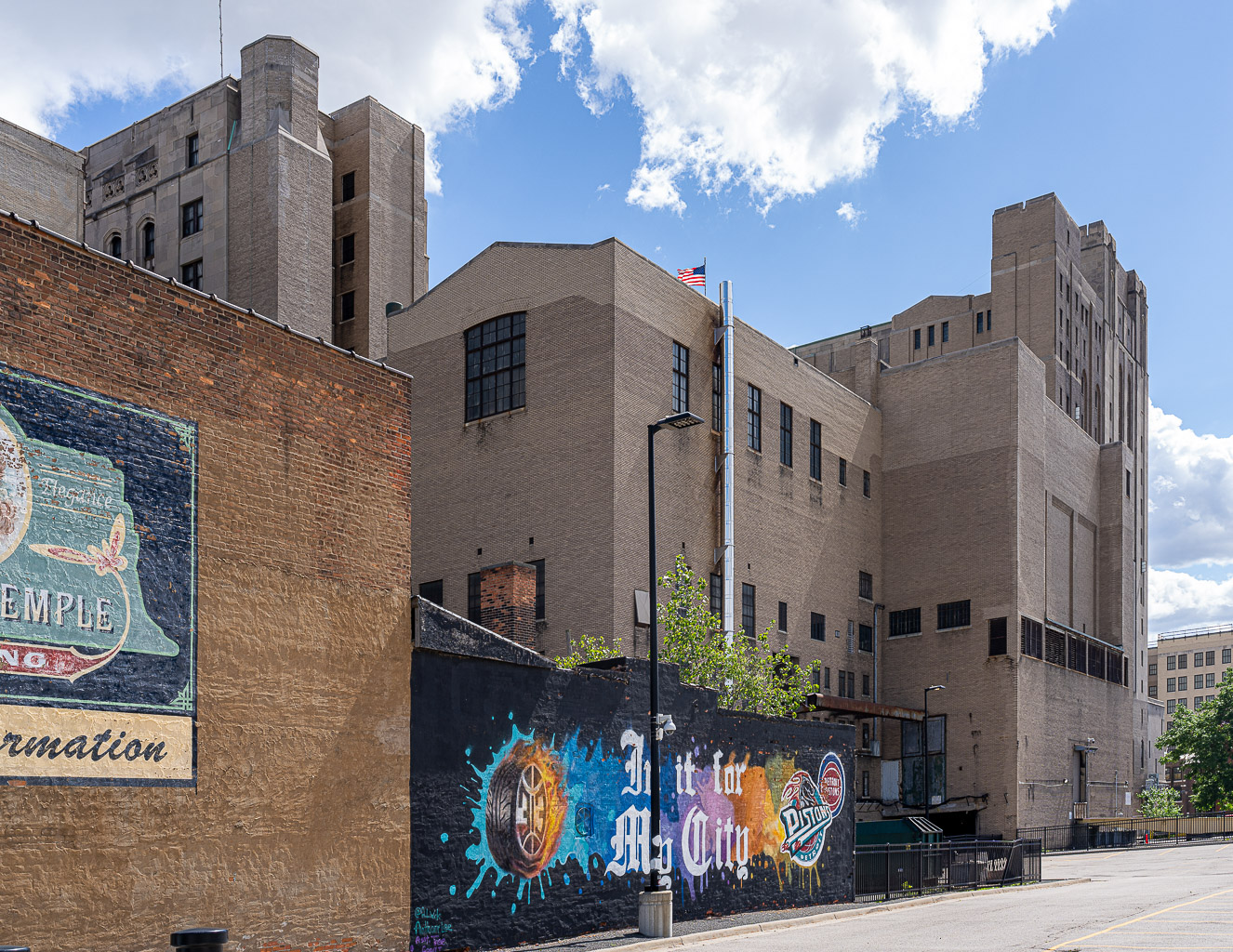
Finally, an exterior photo of the back of Detroit's Masonic Temple:
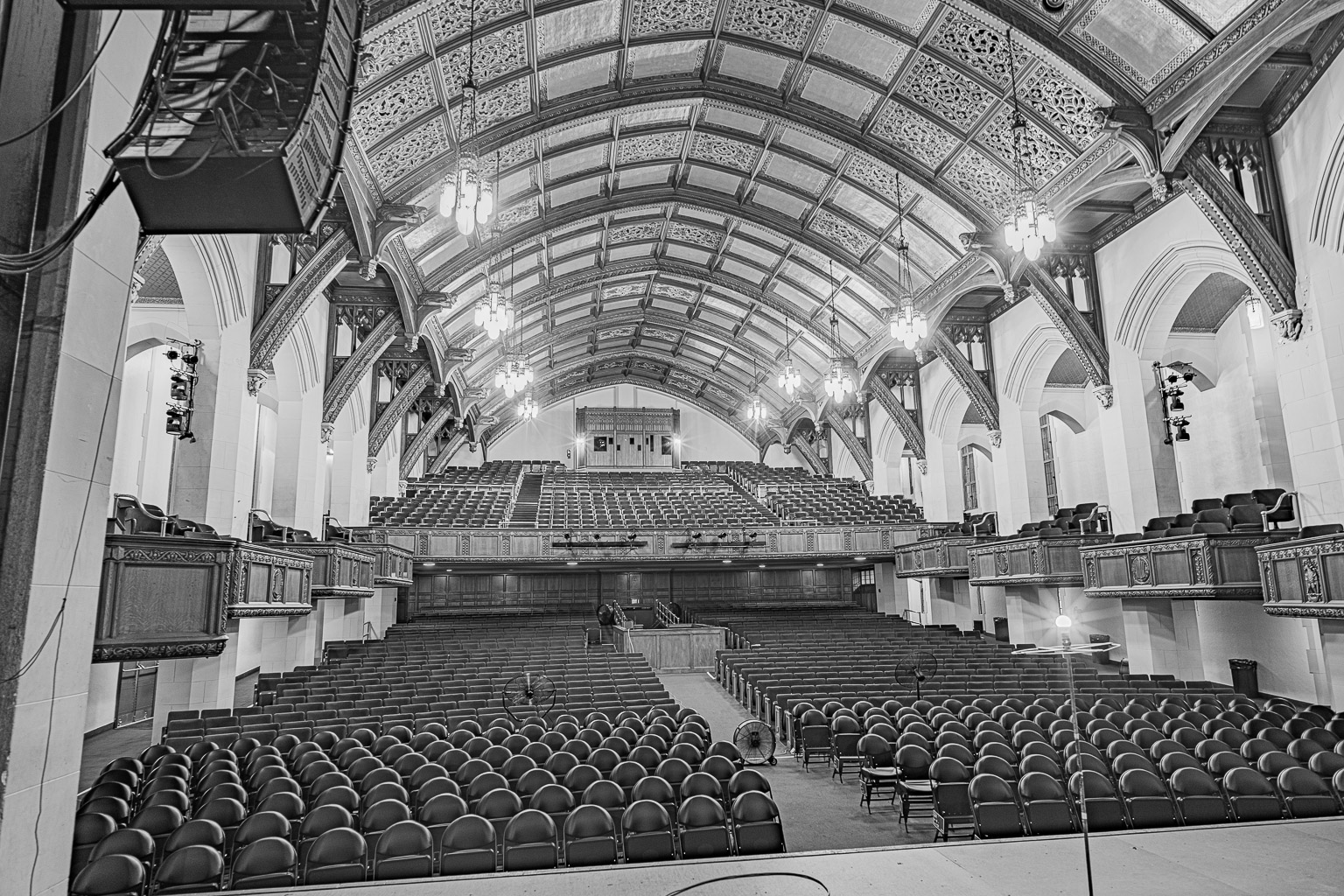
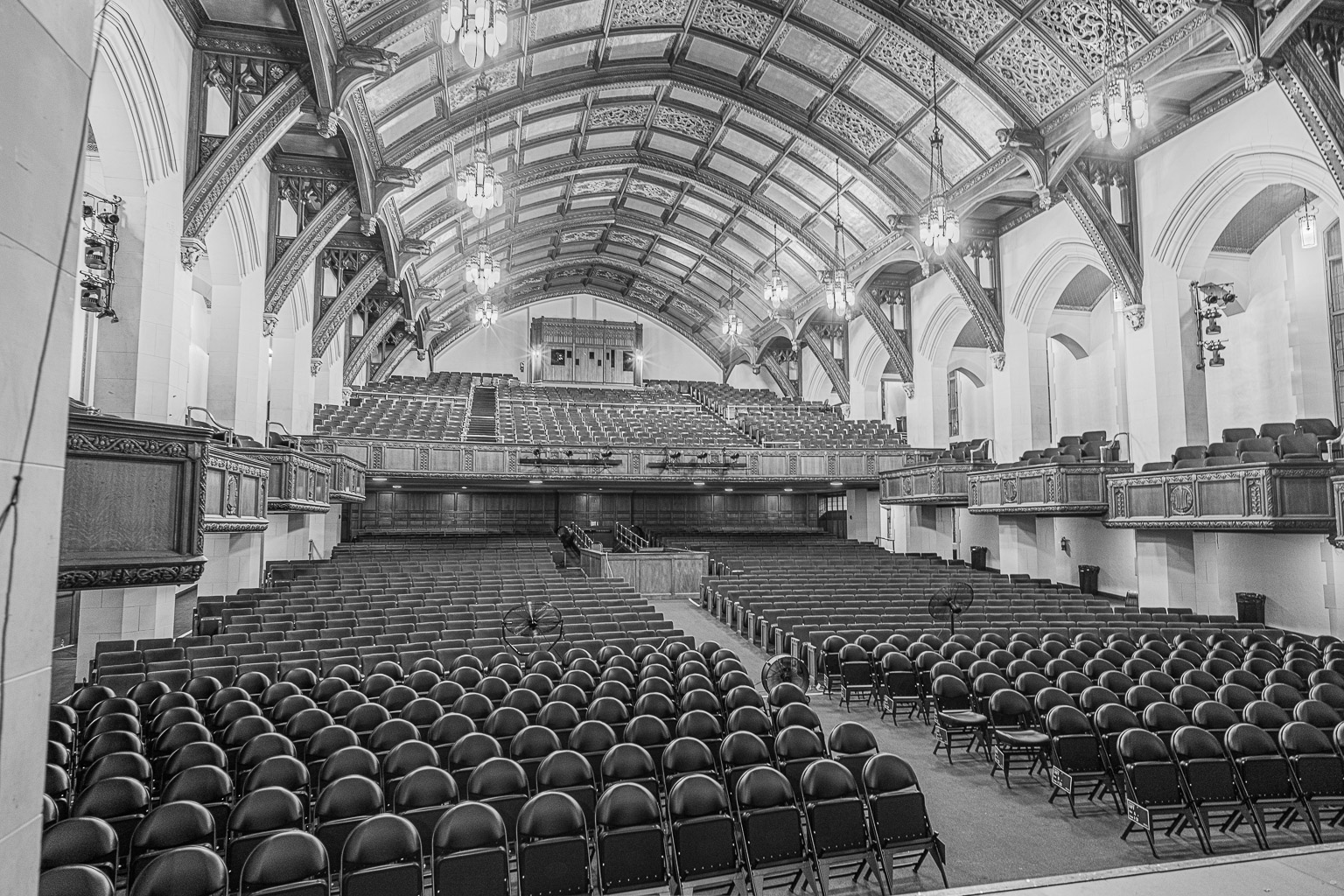
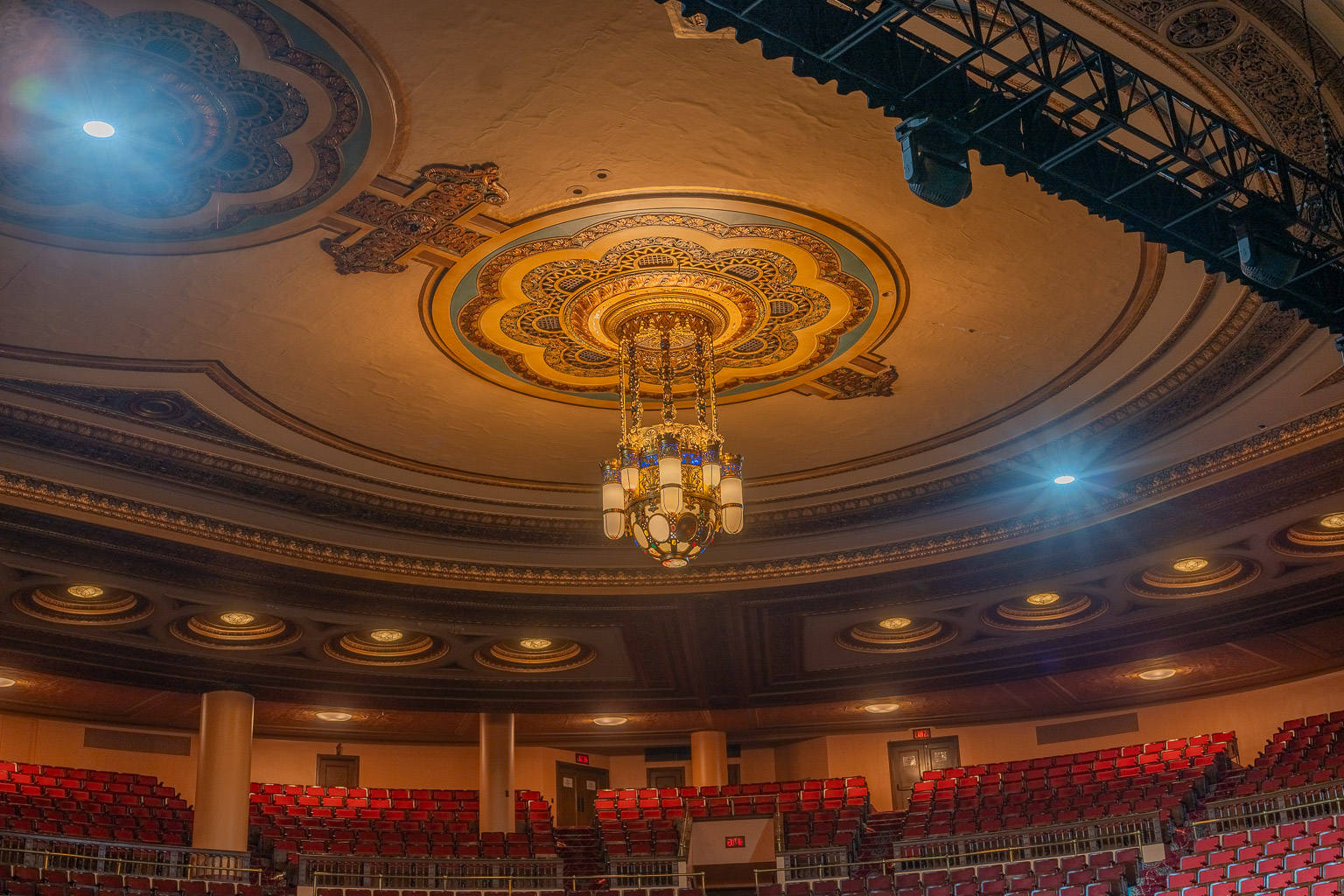
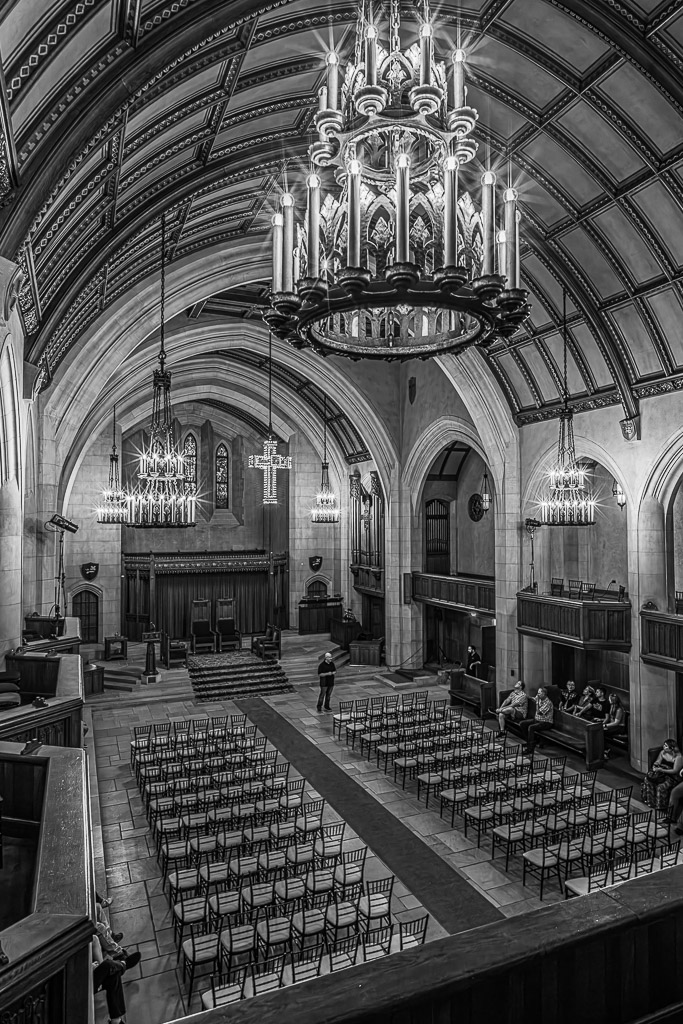
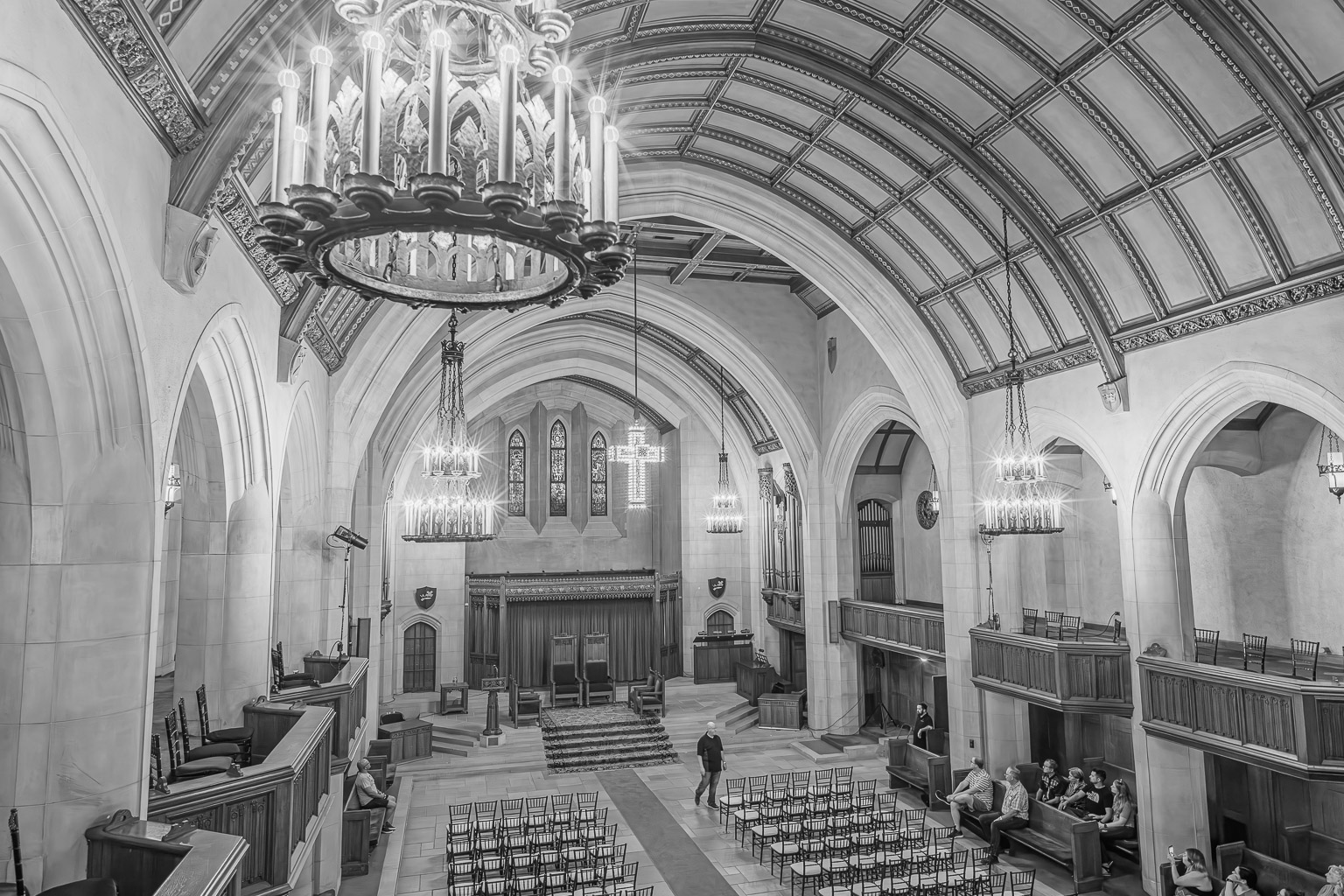
Inside, there's a lot to see. My tour started with the Small Theater, which I believe is also called the Scottish Rite Cathedral. The Scottish Rite Cathedral has a seating capacity of 1600. Its stage is 64-feet (19.5 m) wide from wall to wall, with a depth of 37 feet (11 m) from the foot lights.
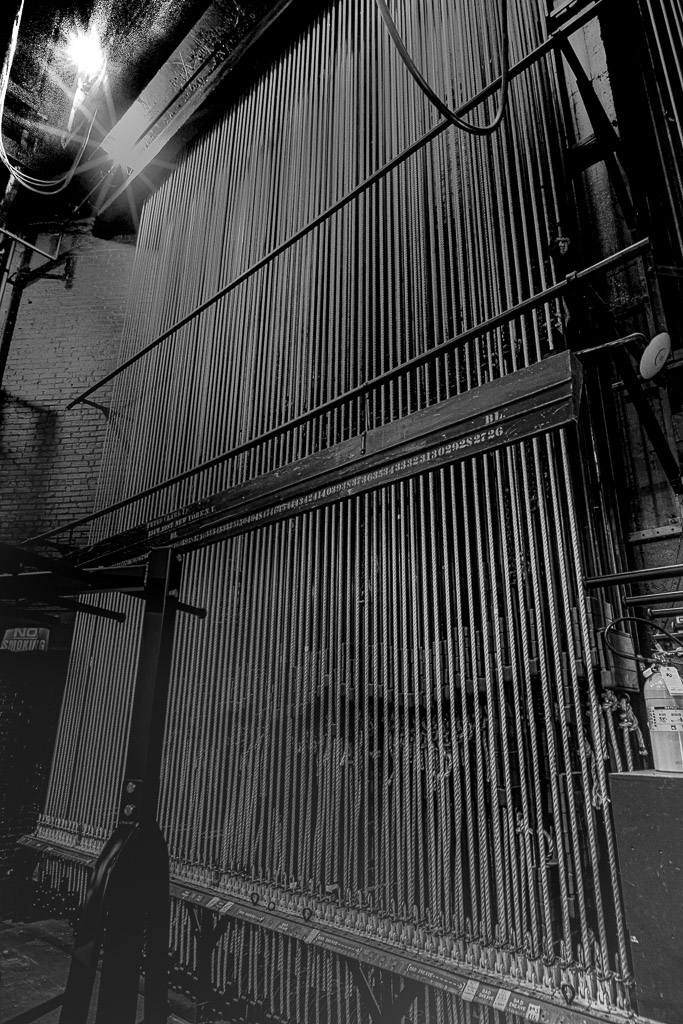
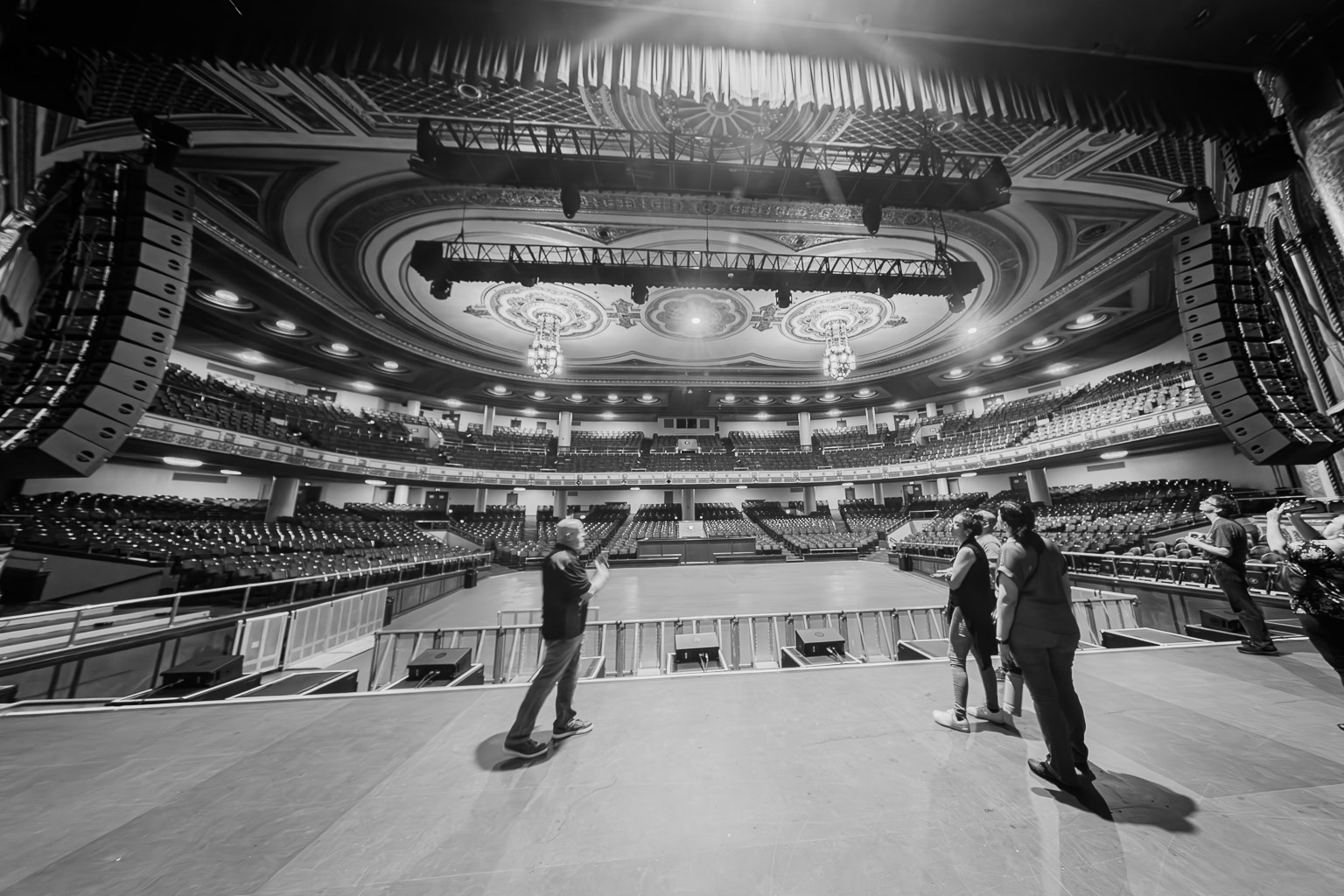
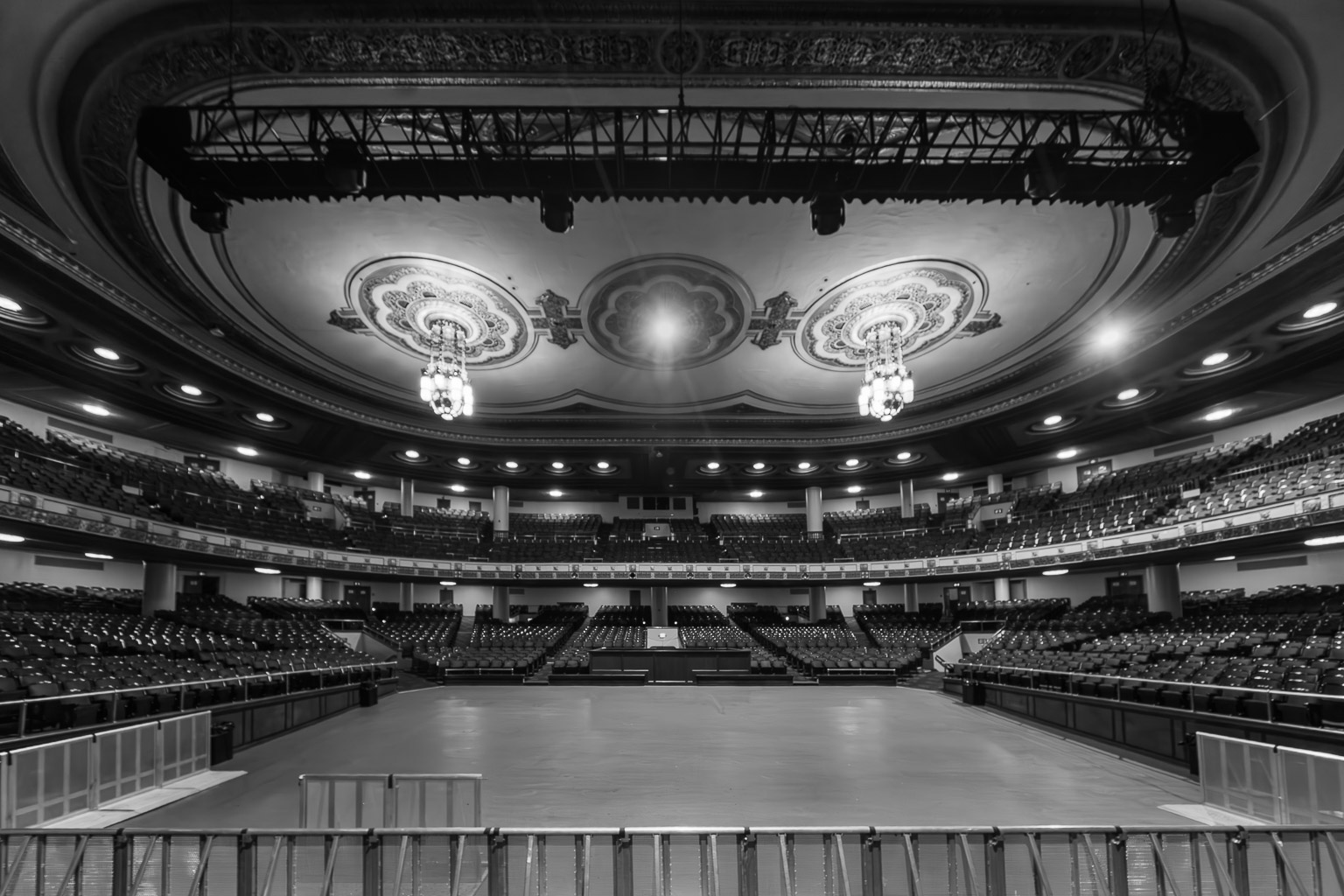
The large theater can seat about 5000 people. The stage is the second largest in the United States, having a width between walls of 100 feet and a depth from curtain line of 55 feet.
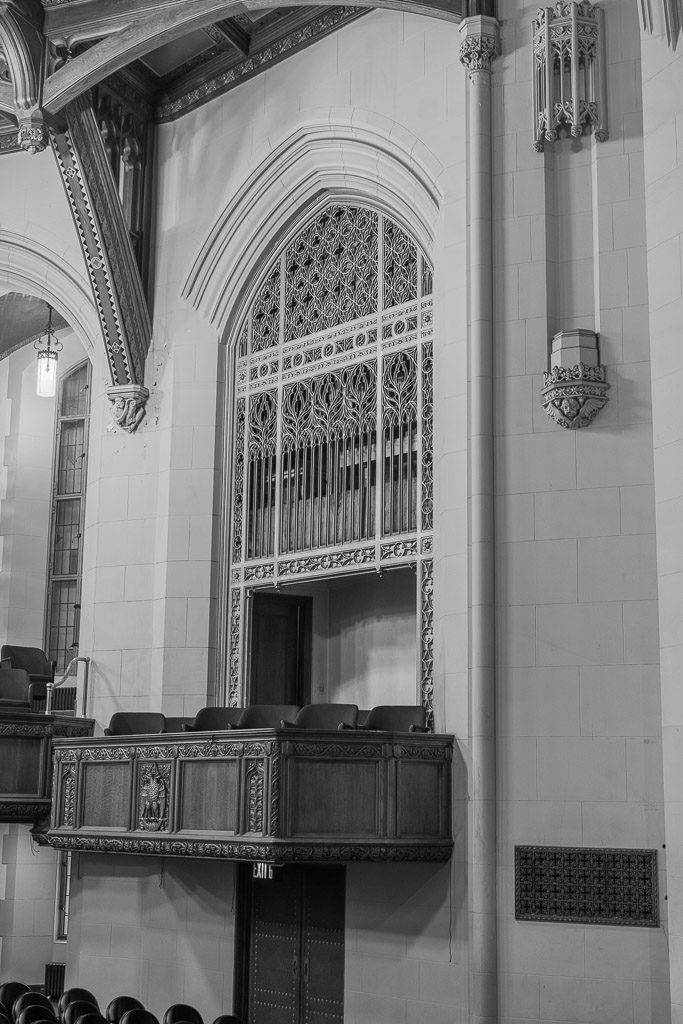
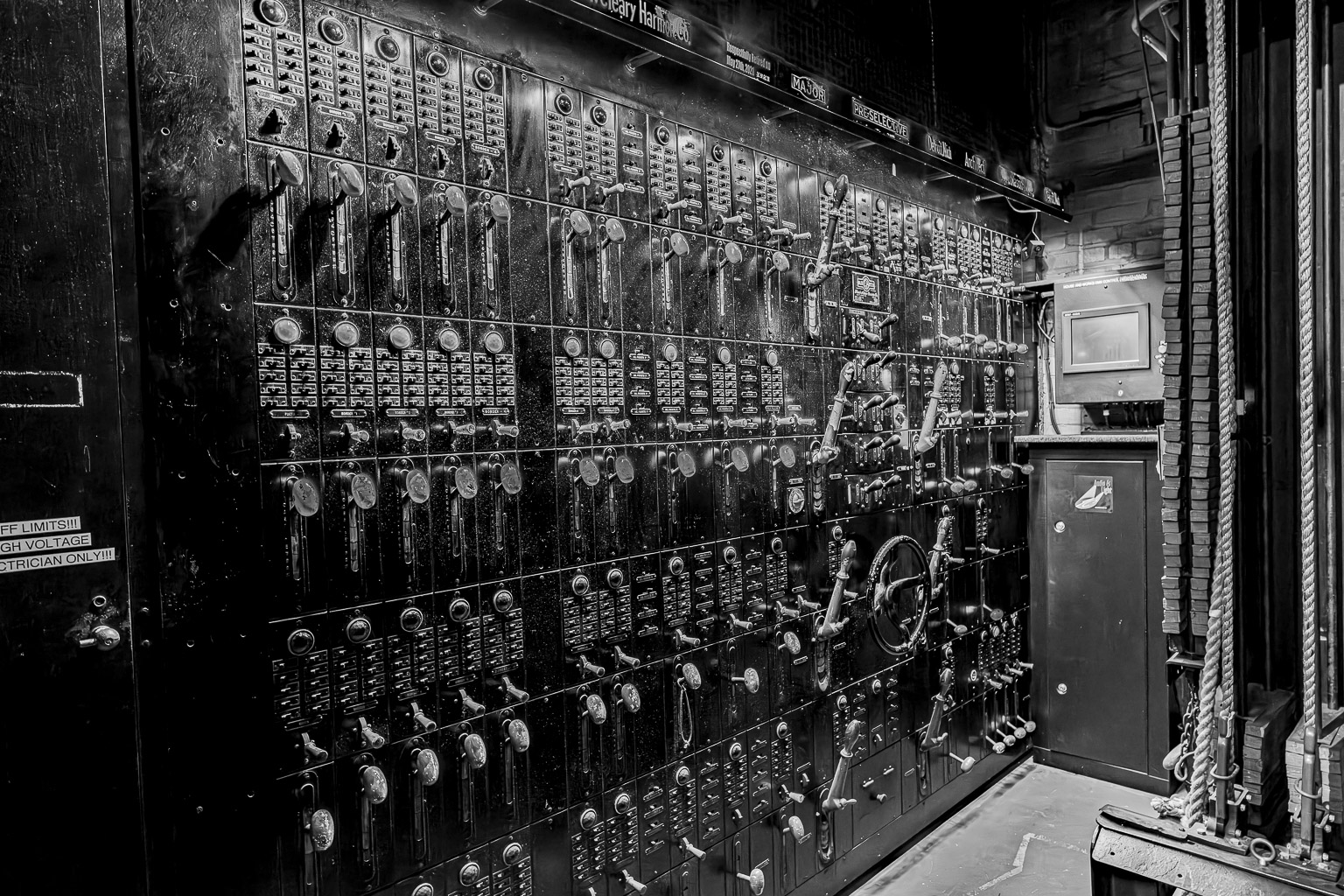
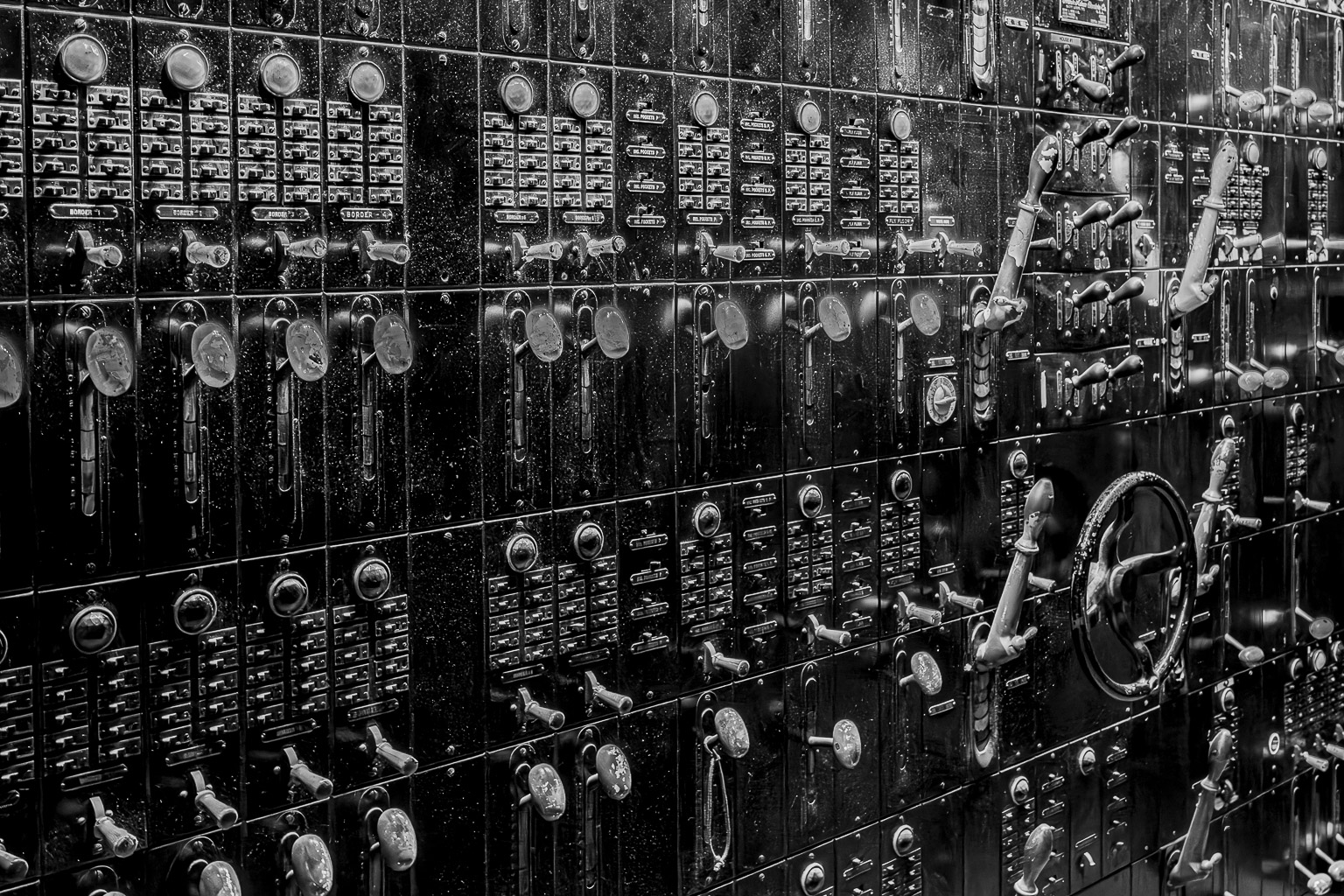
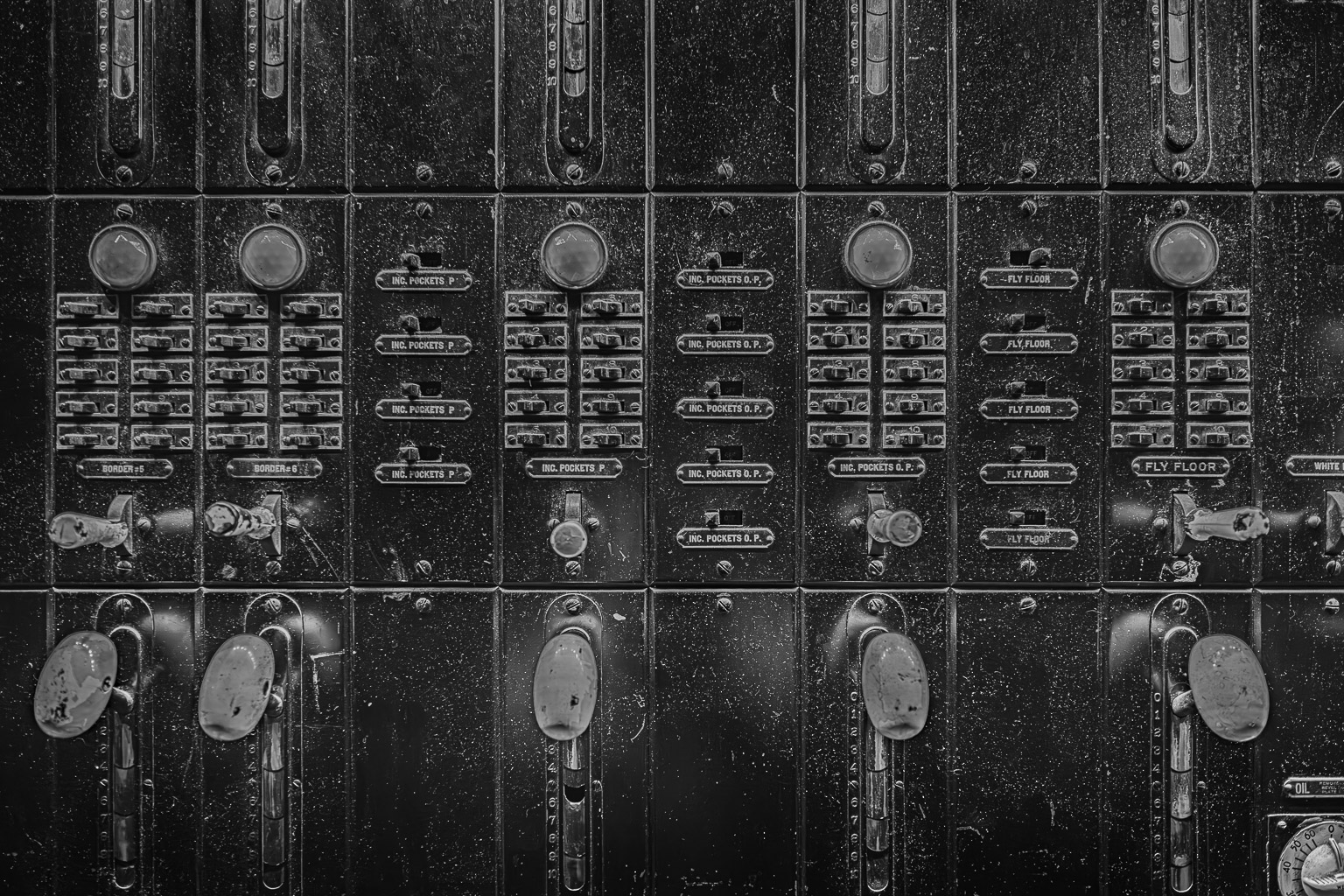
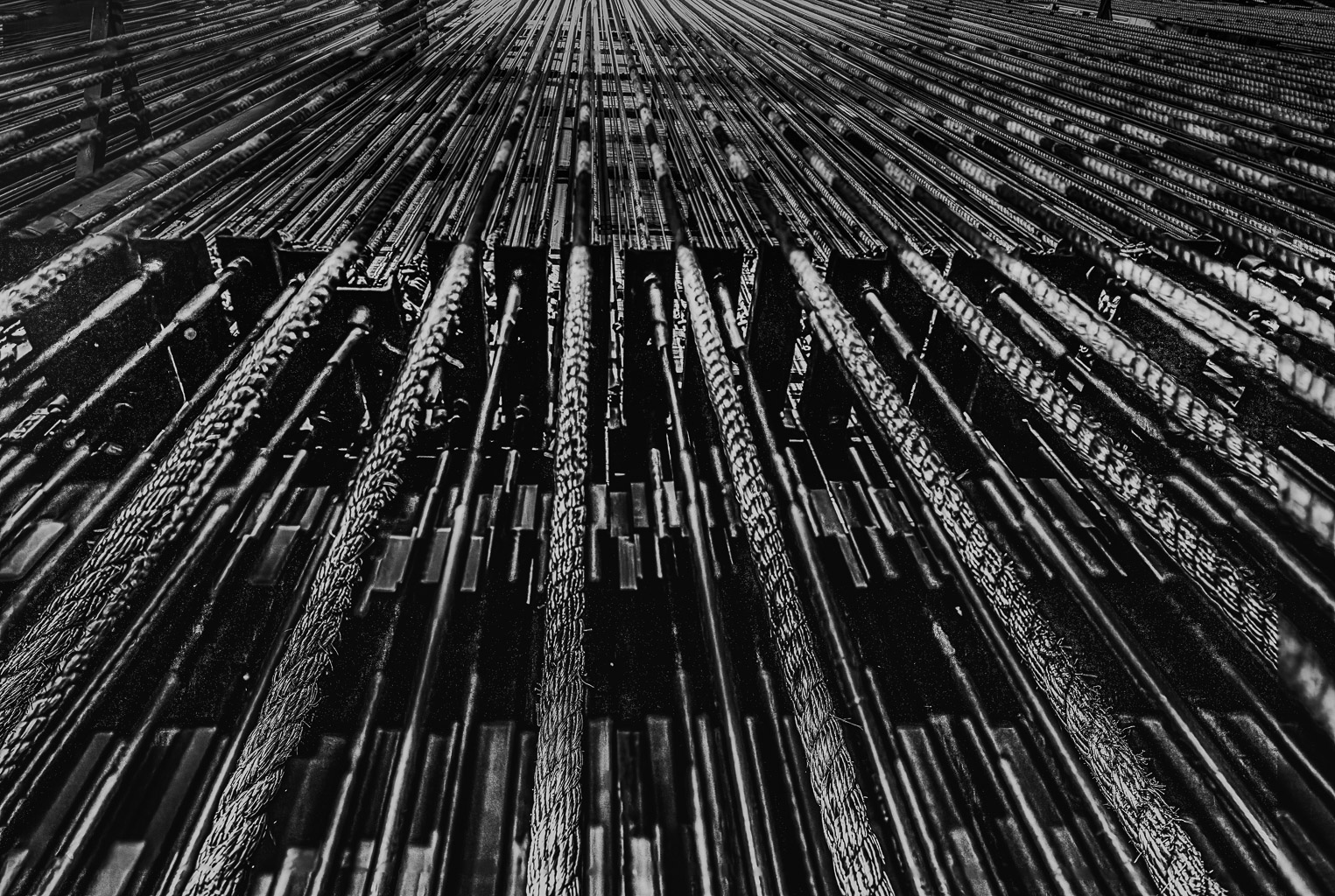
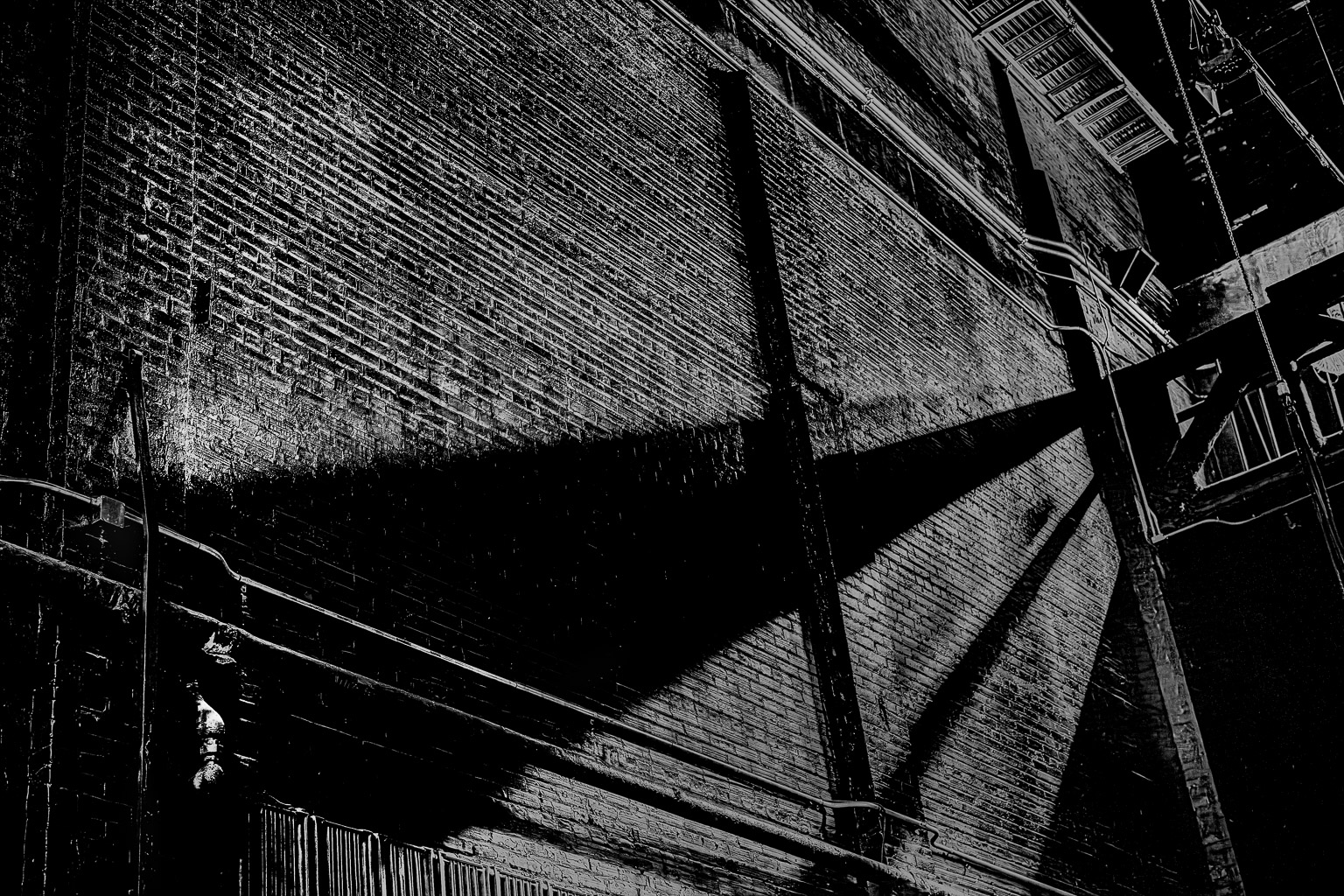
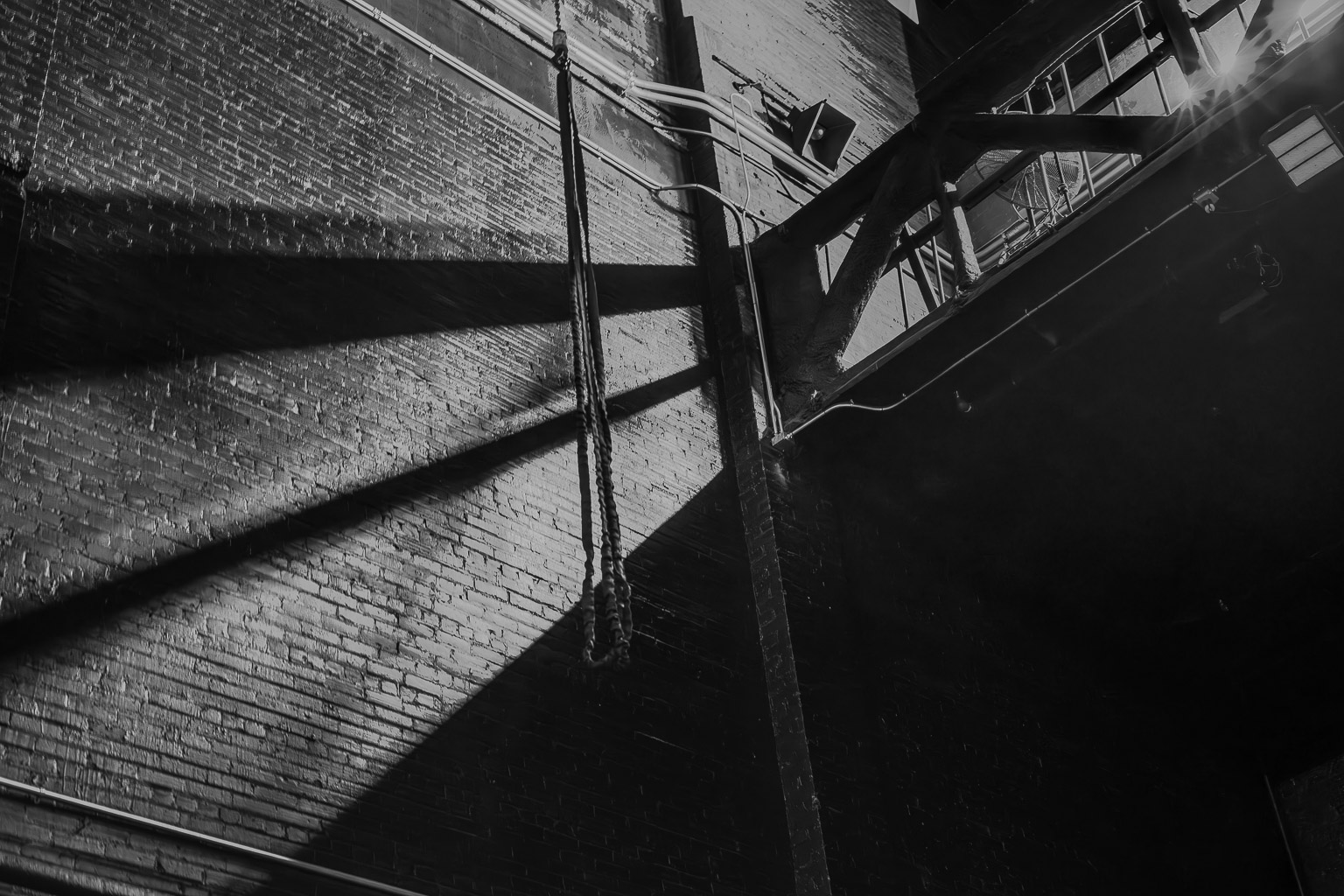
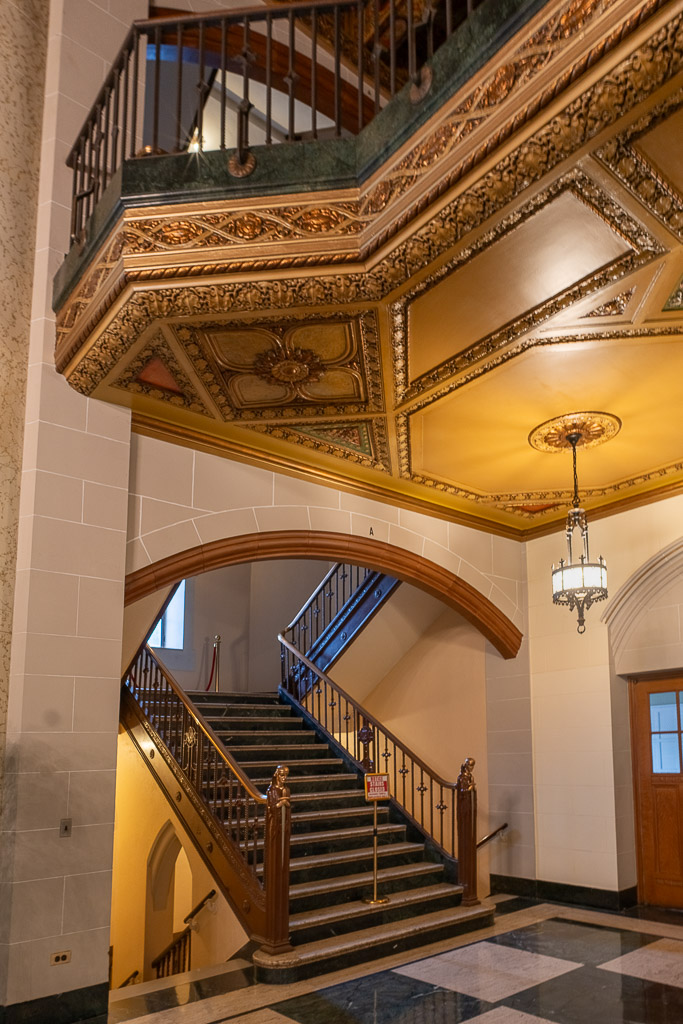
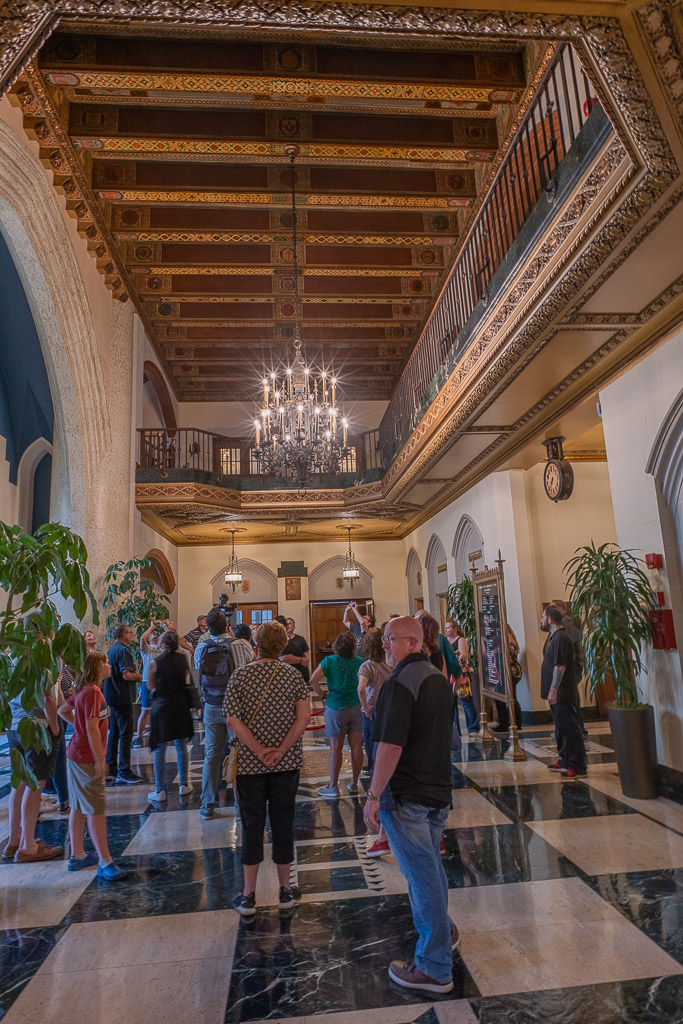
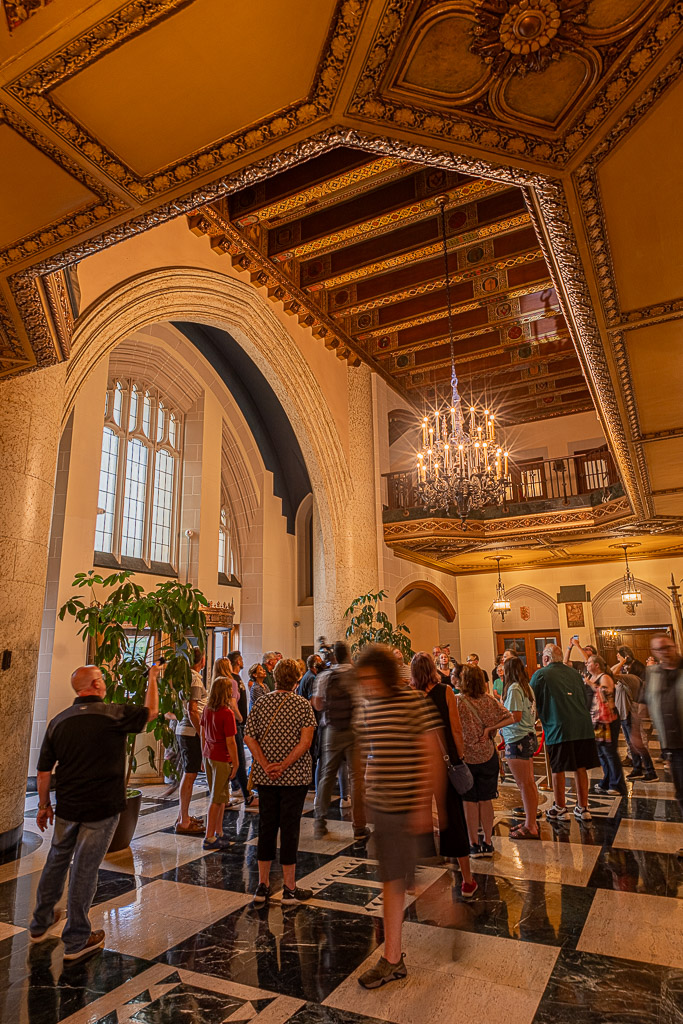
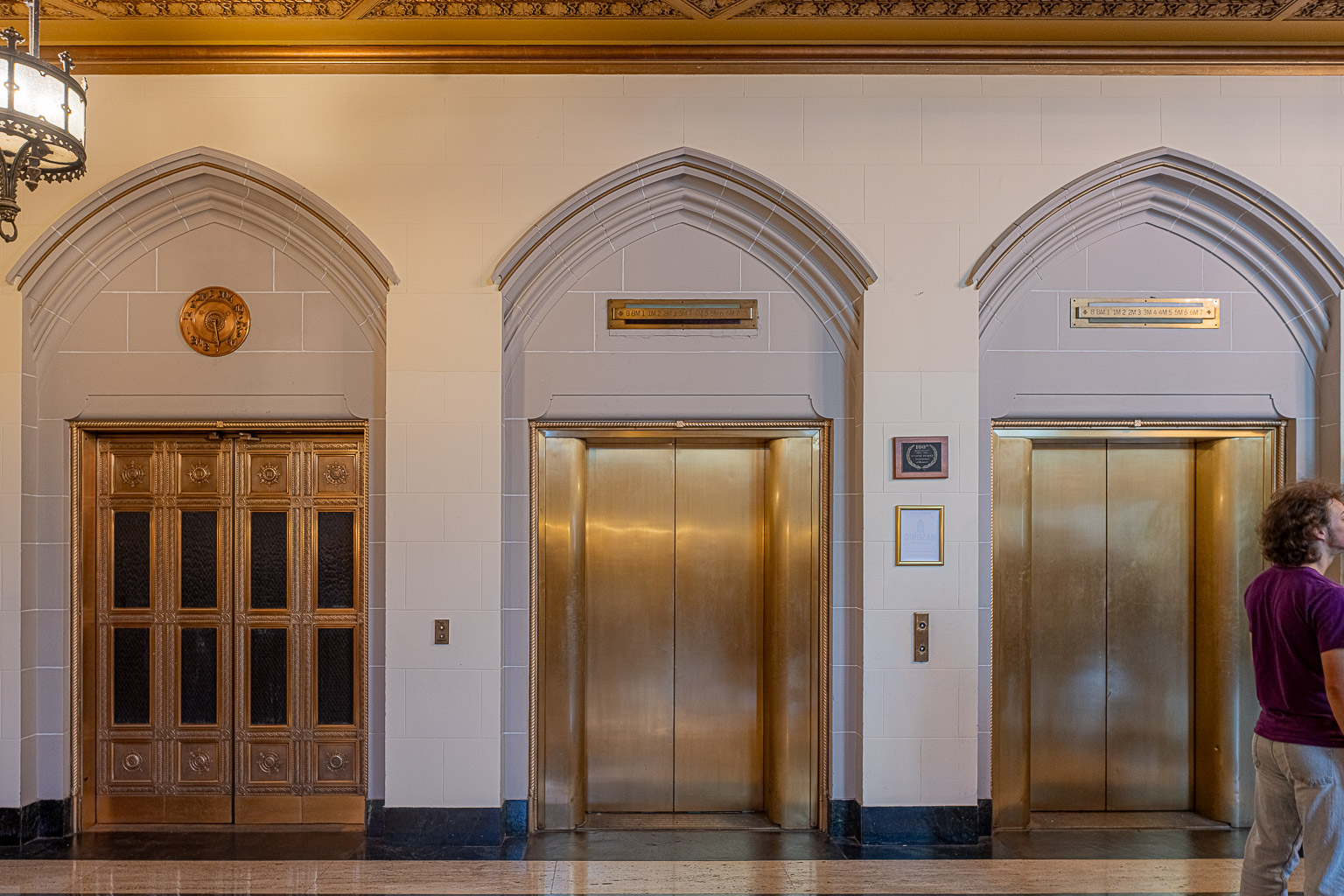
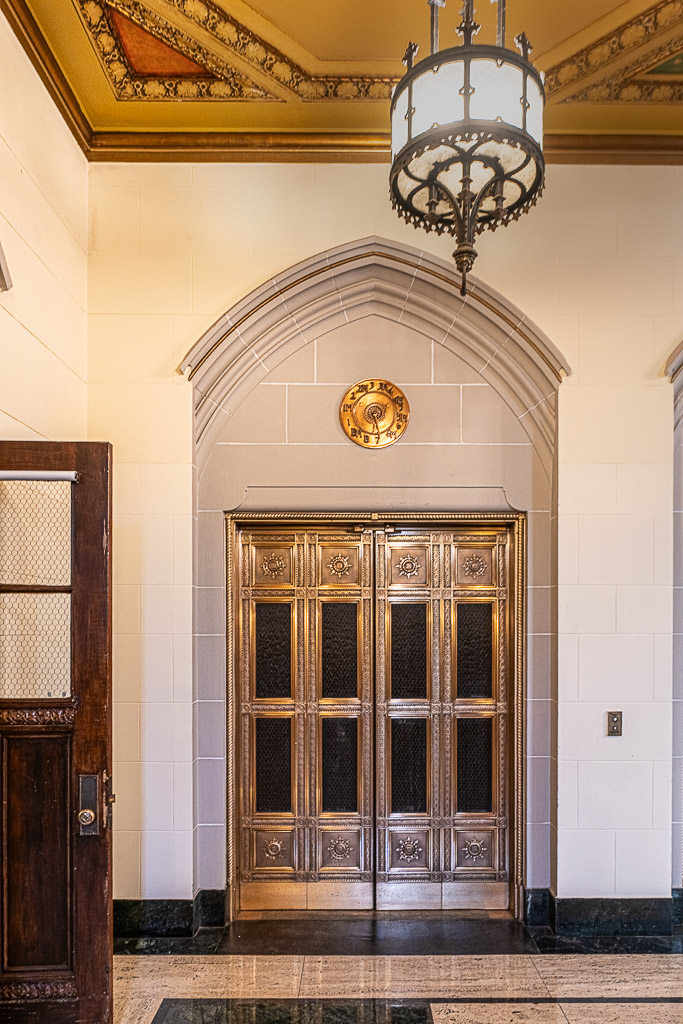
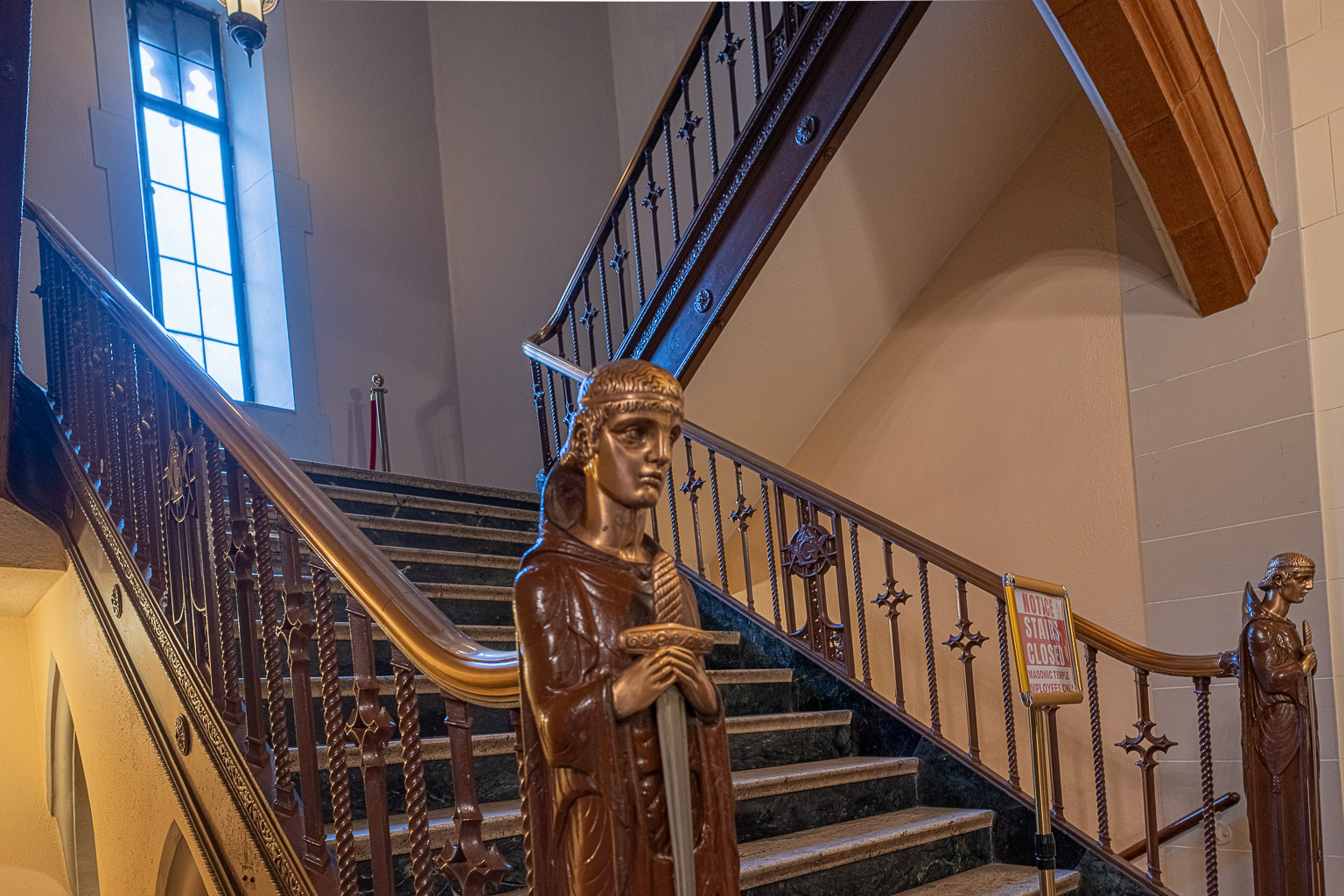
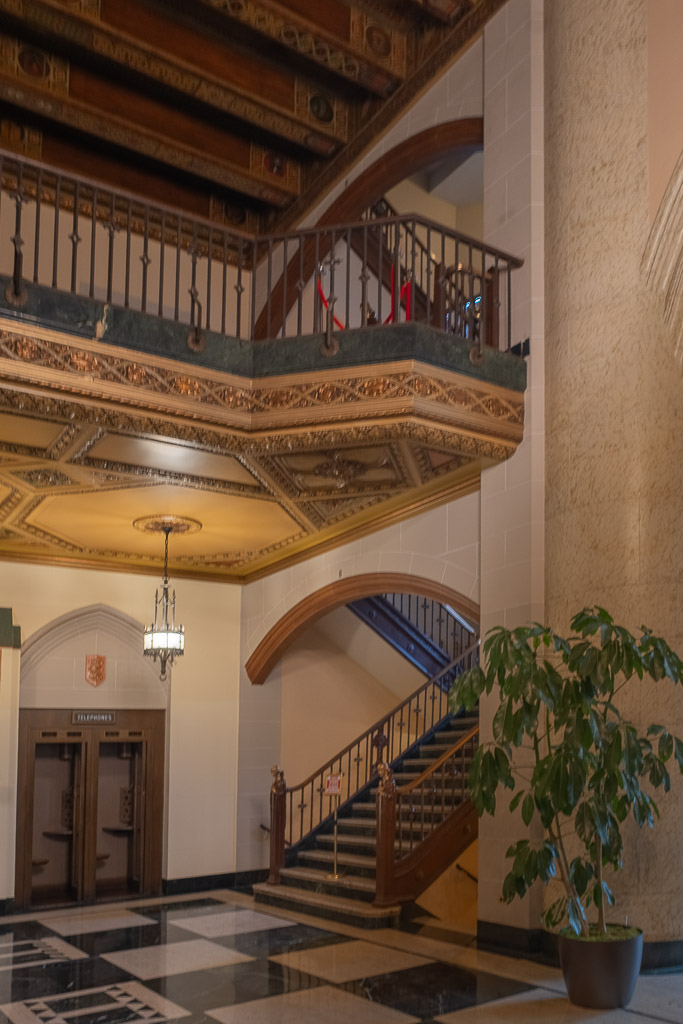
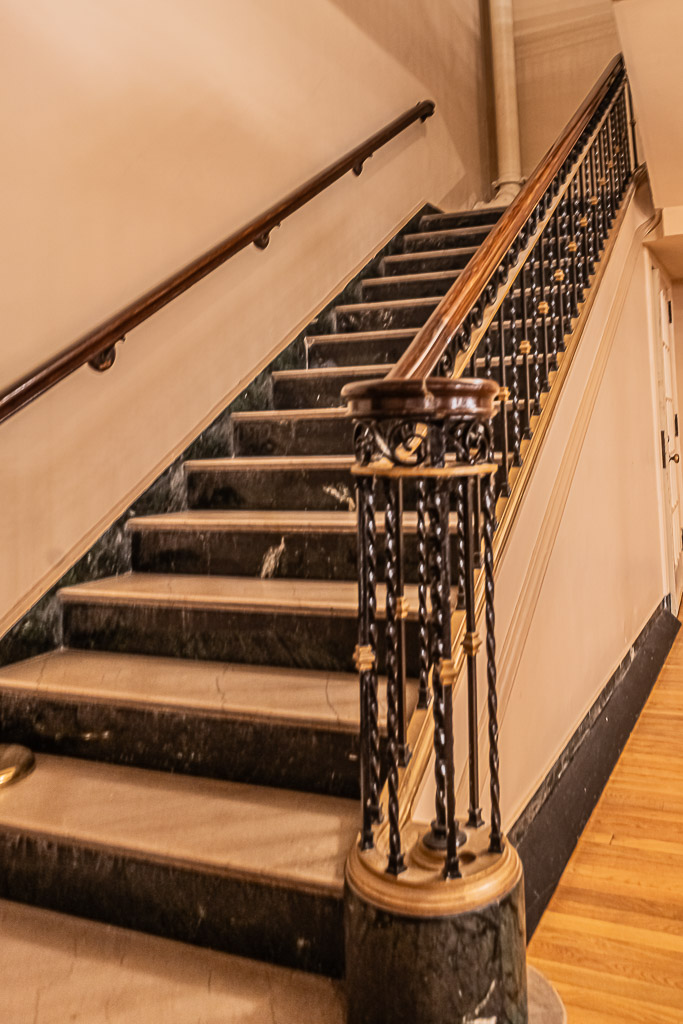
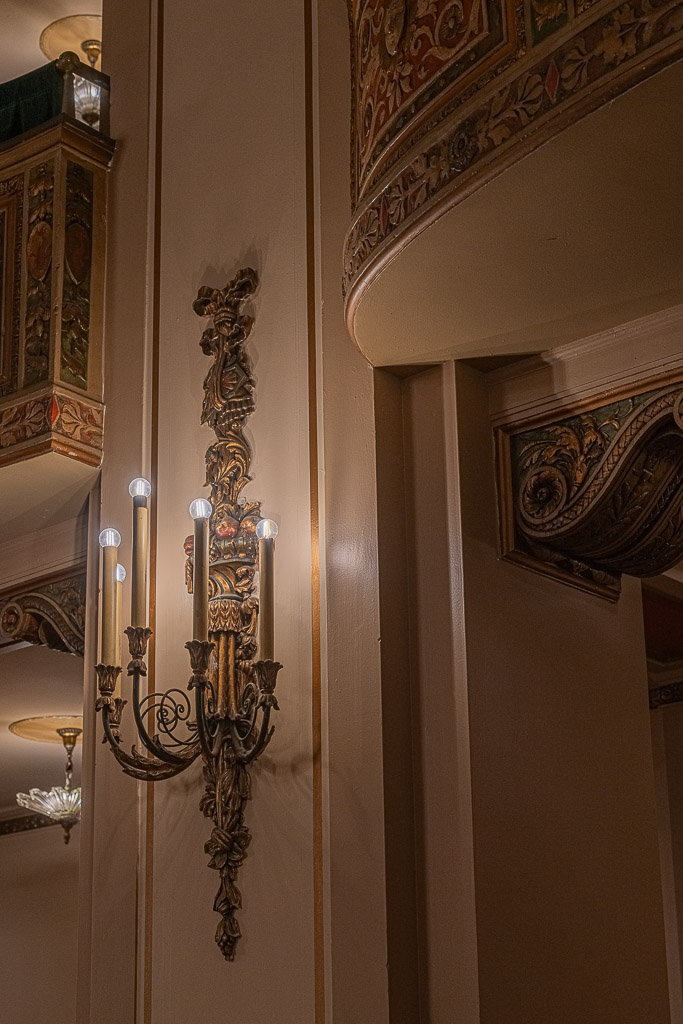
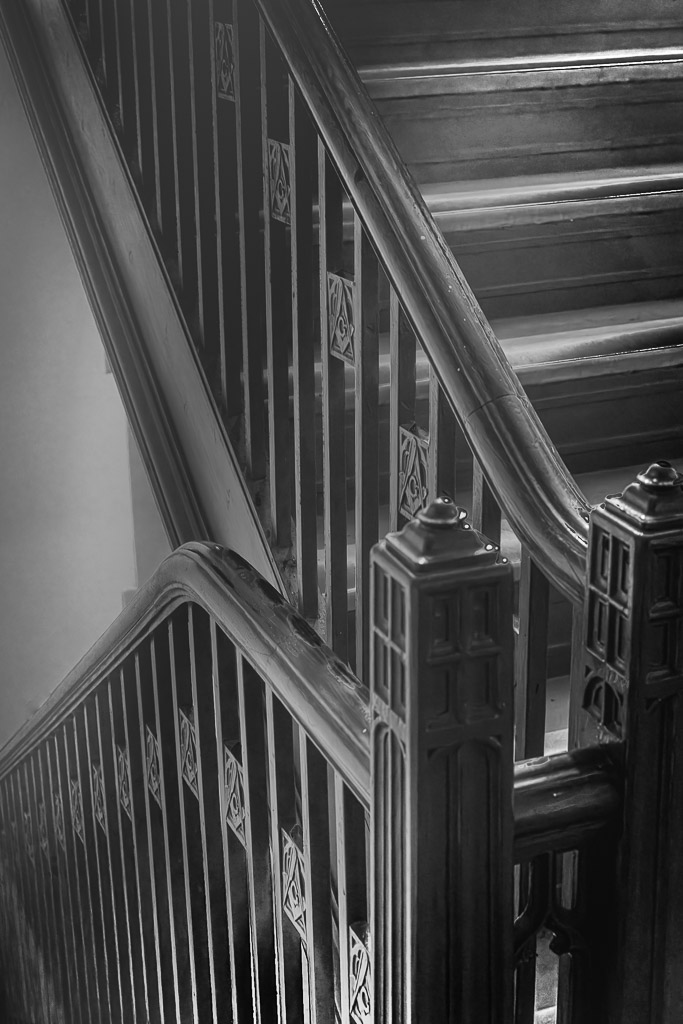
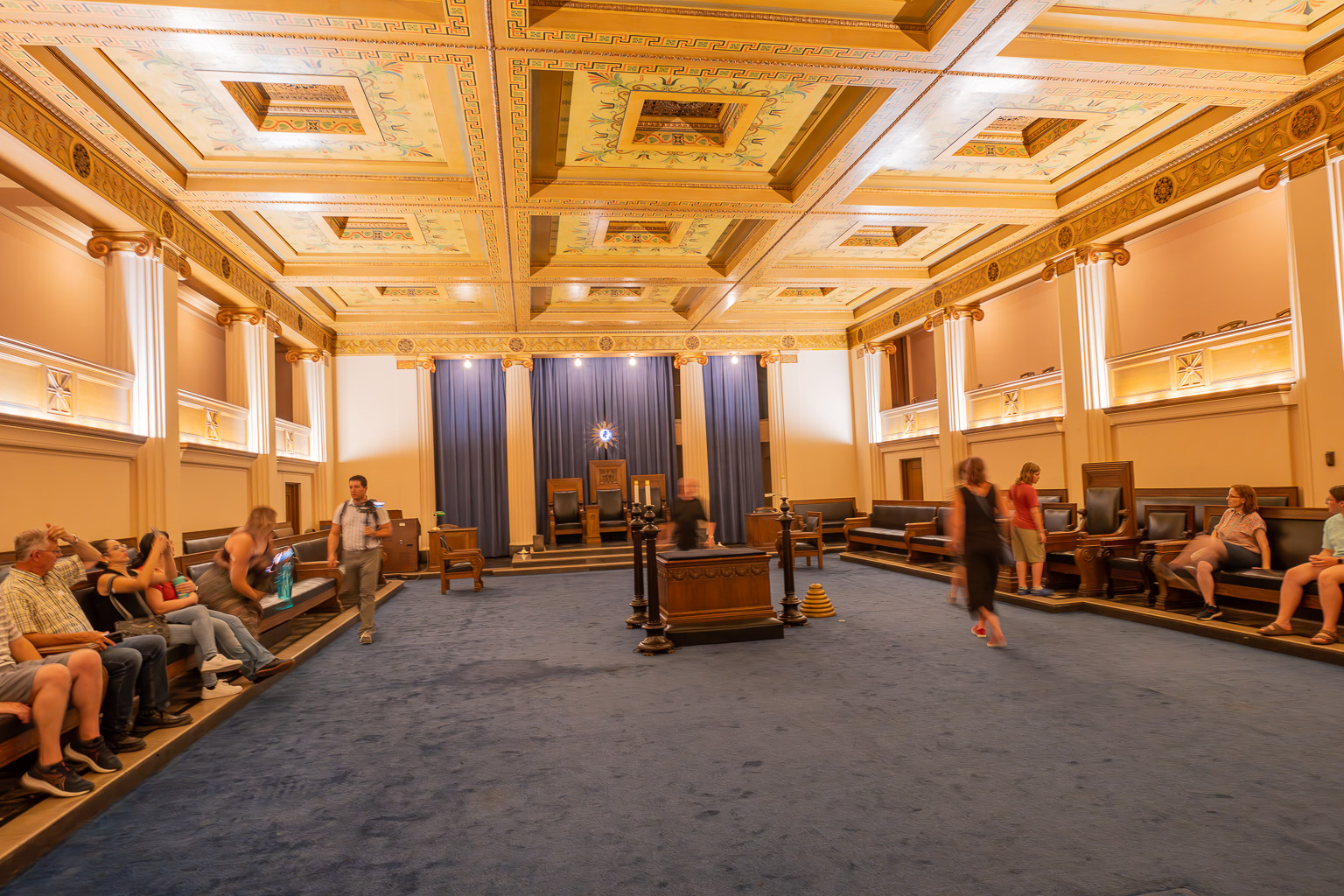
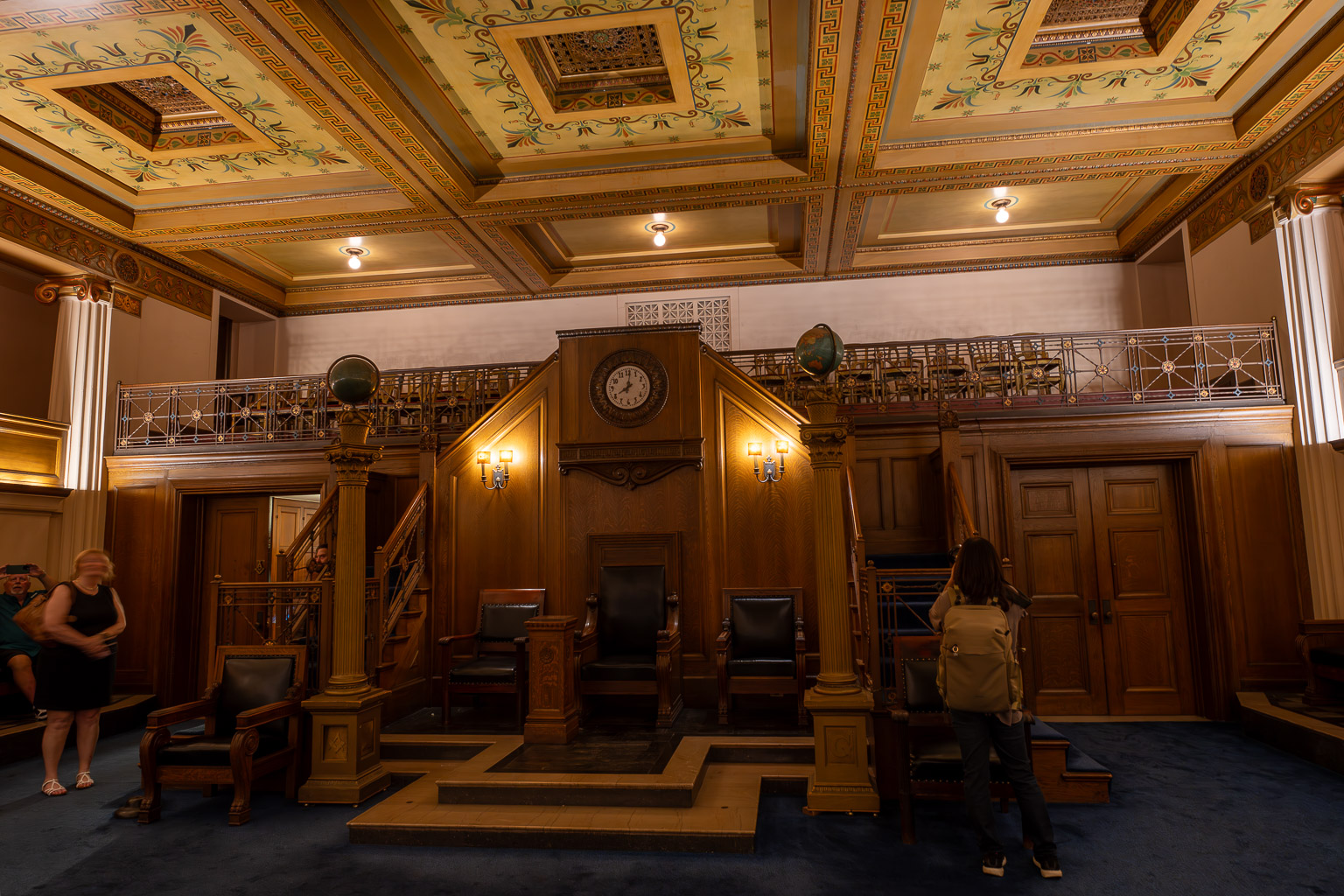
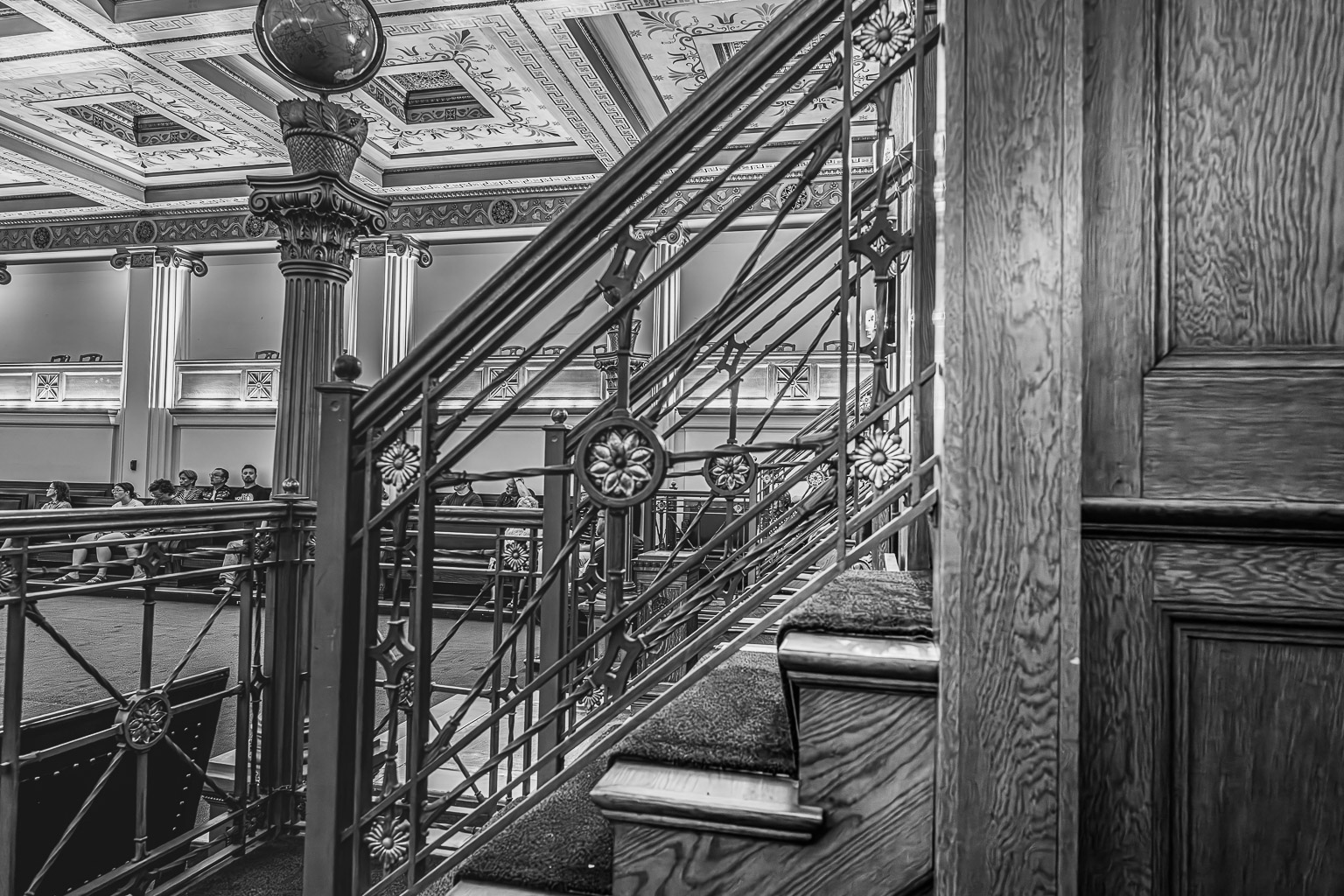
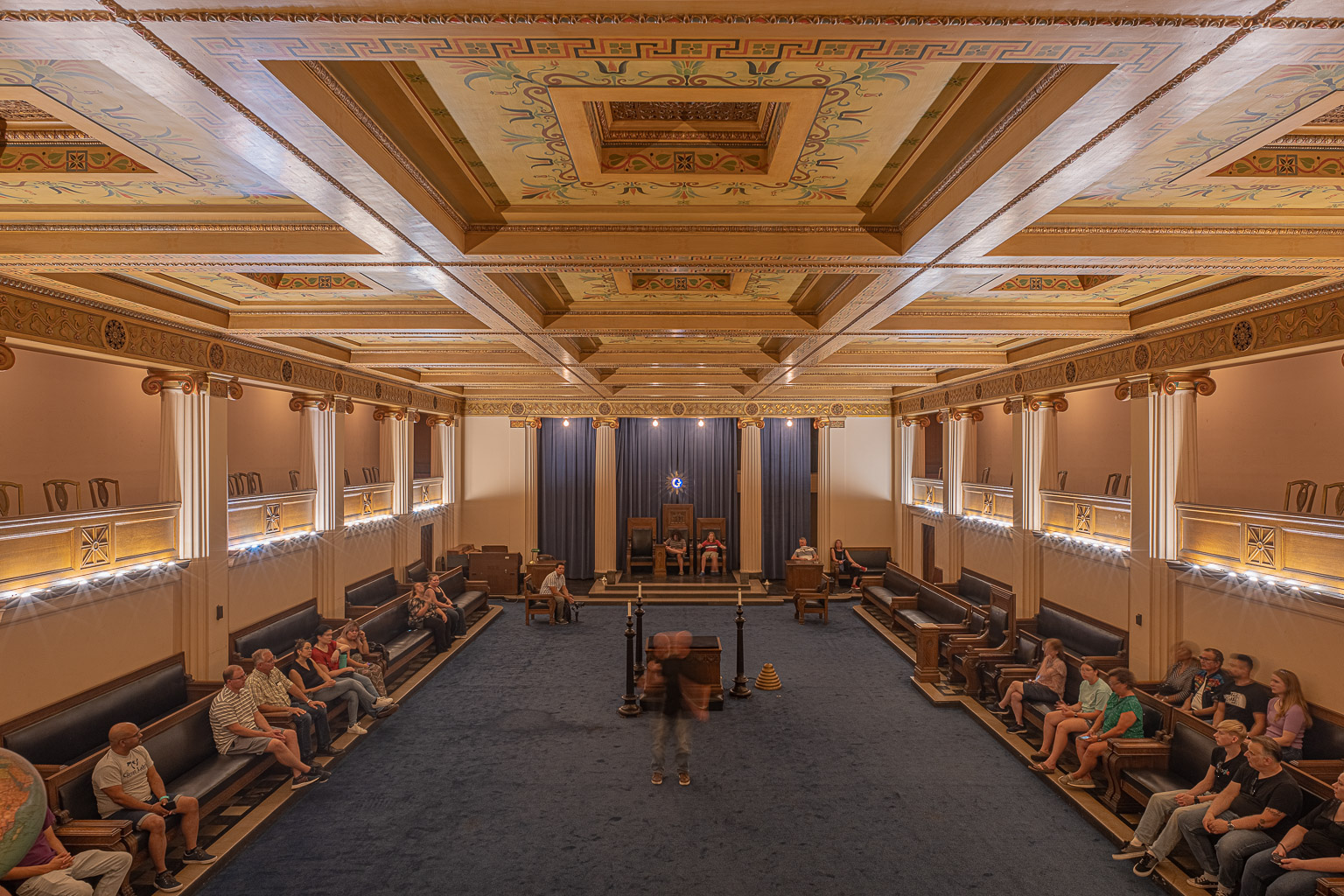
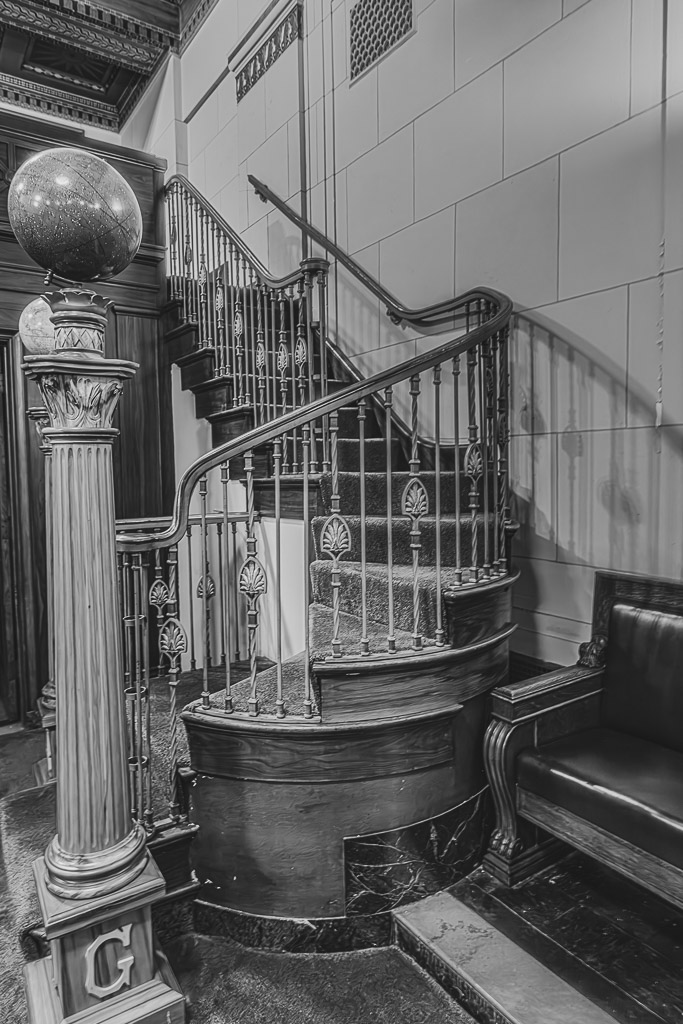
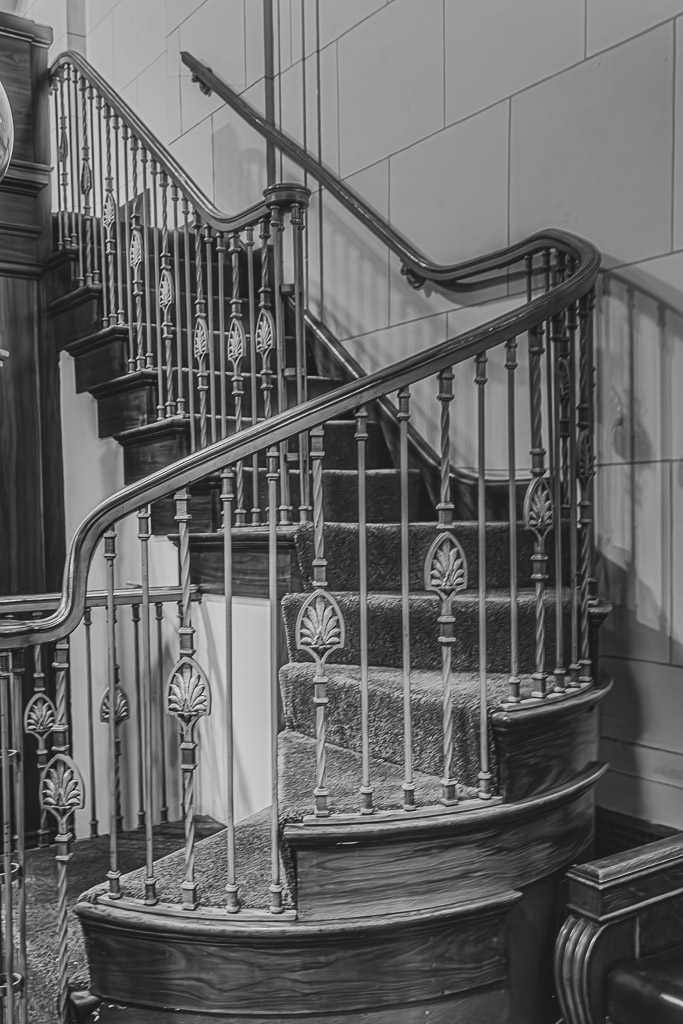
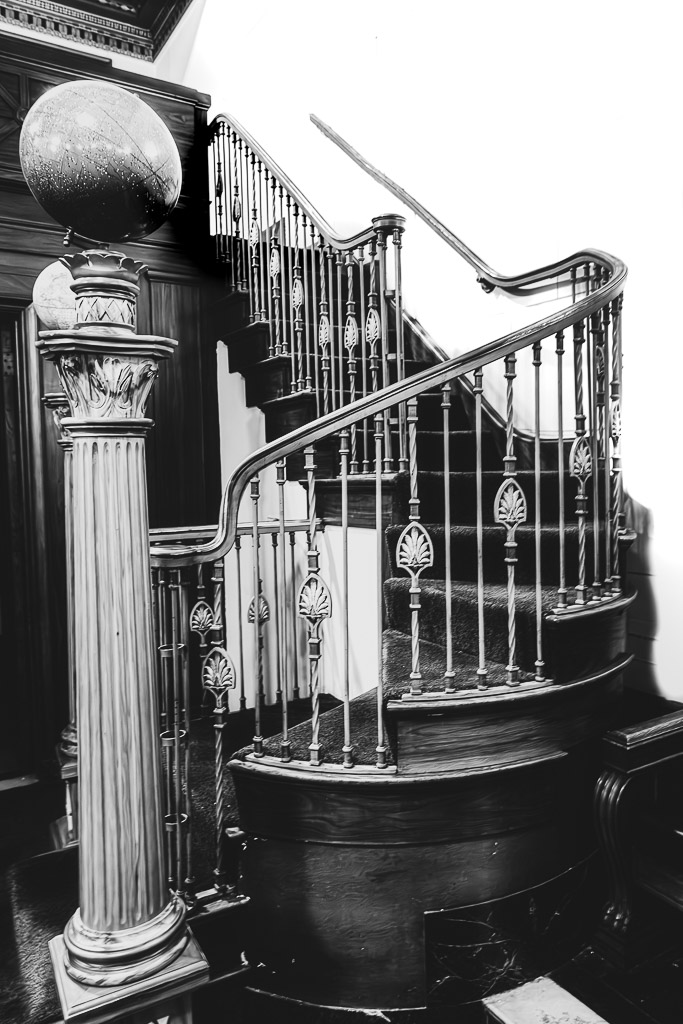
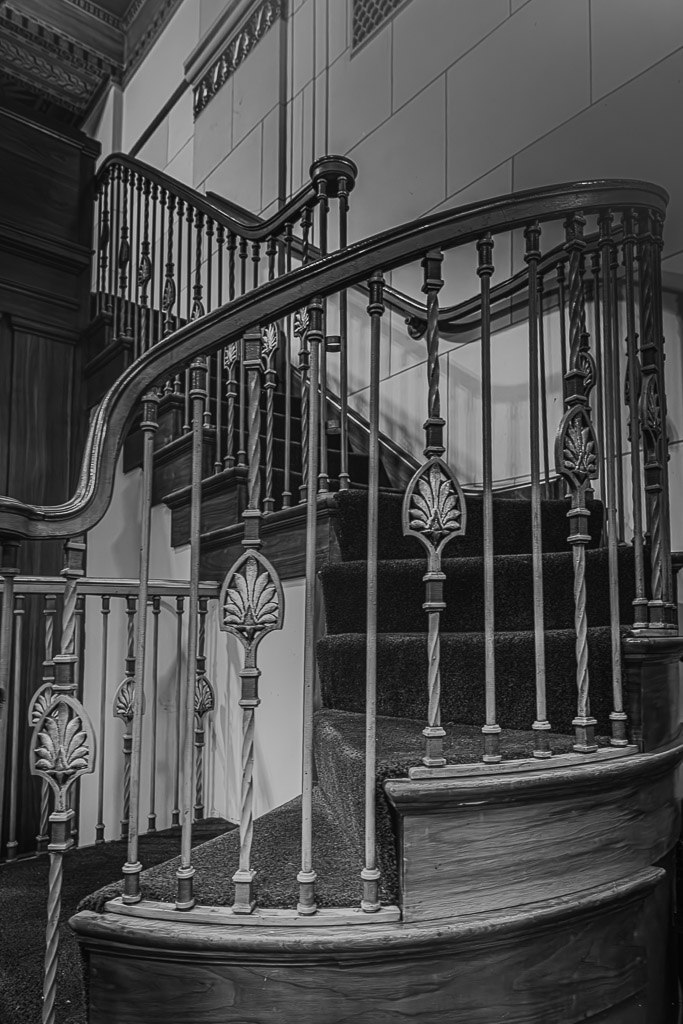
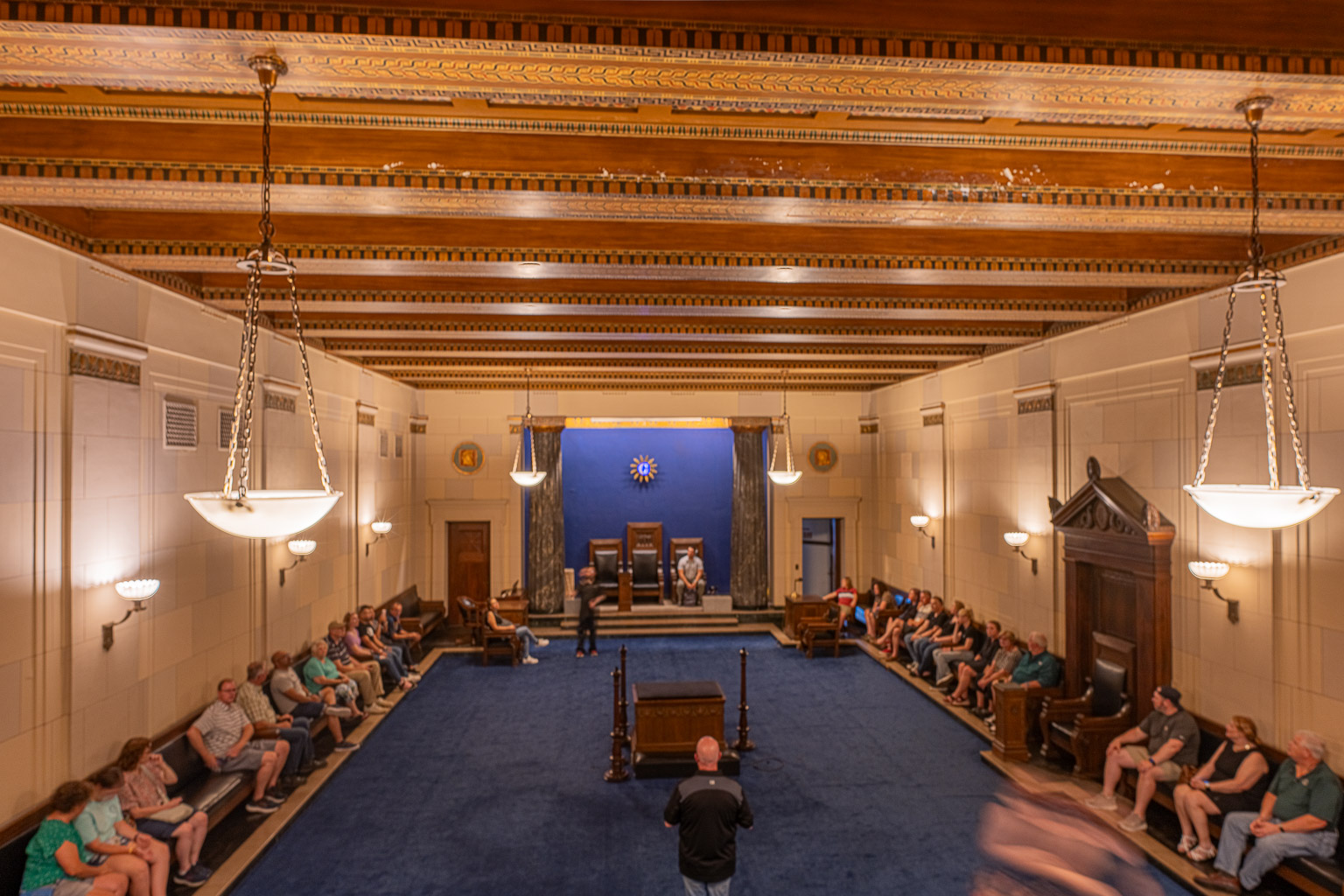
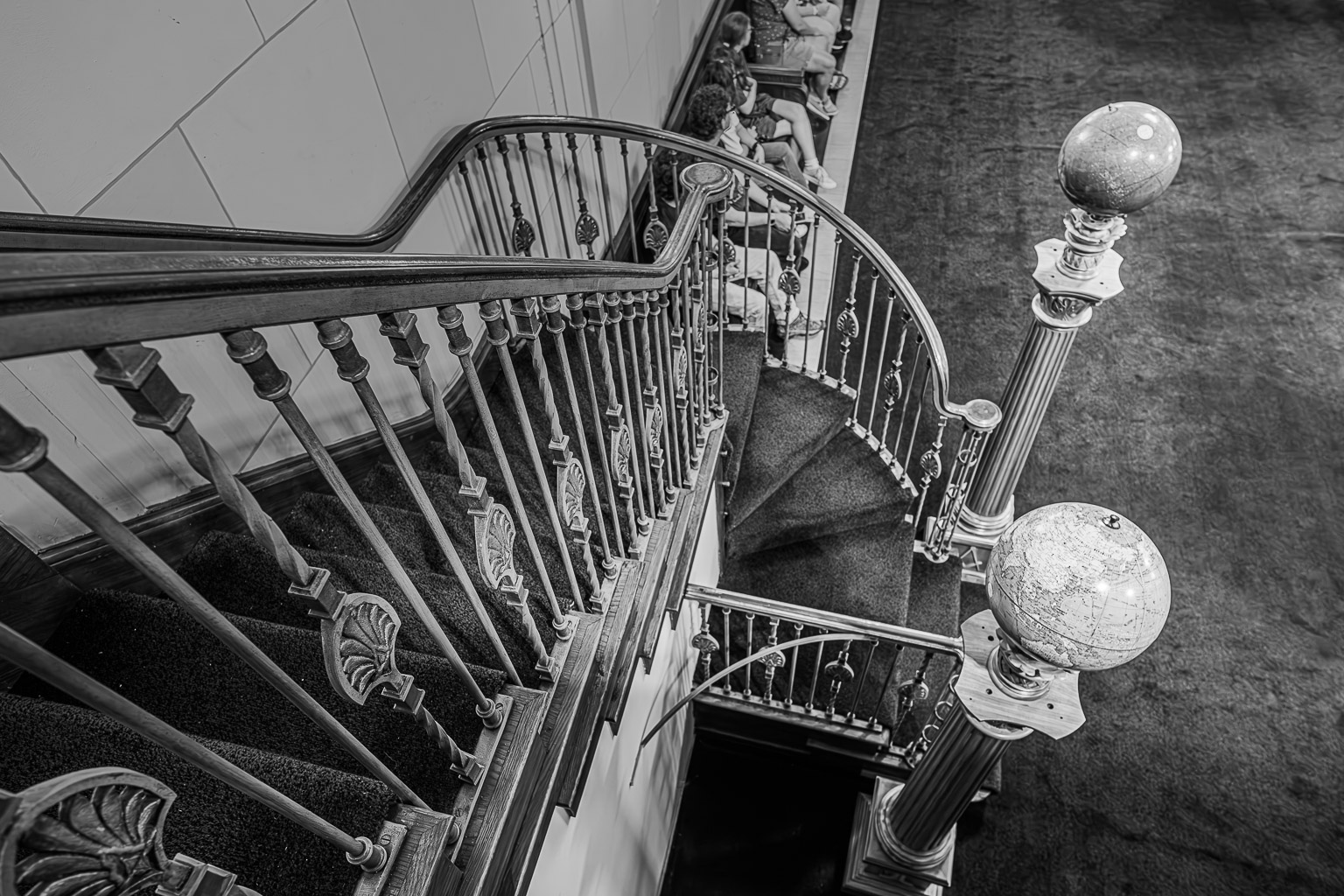
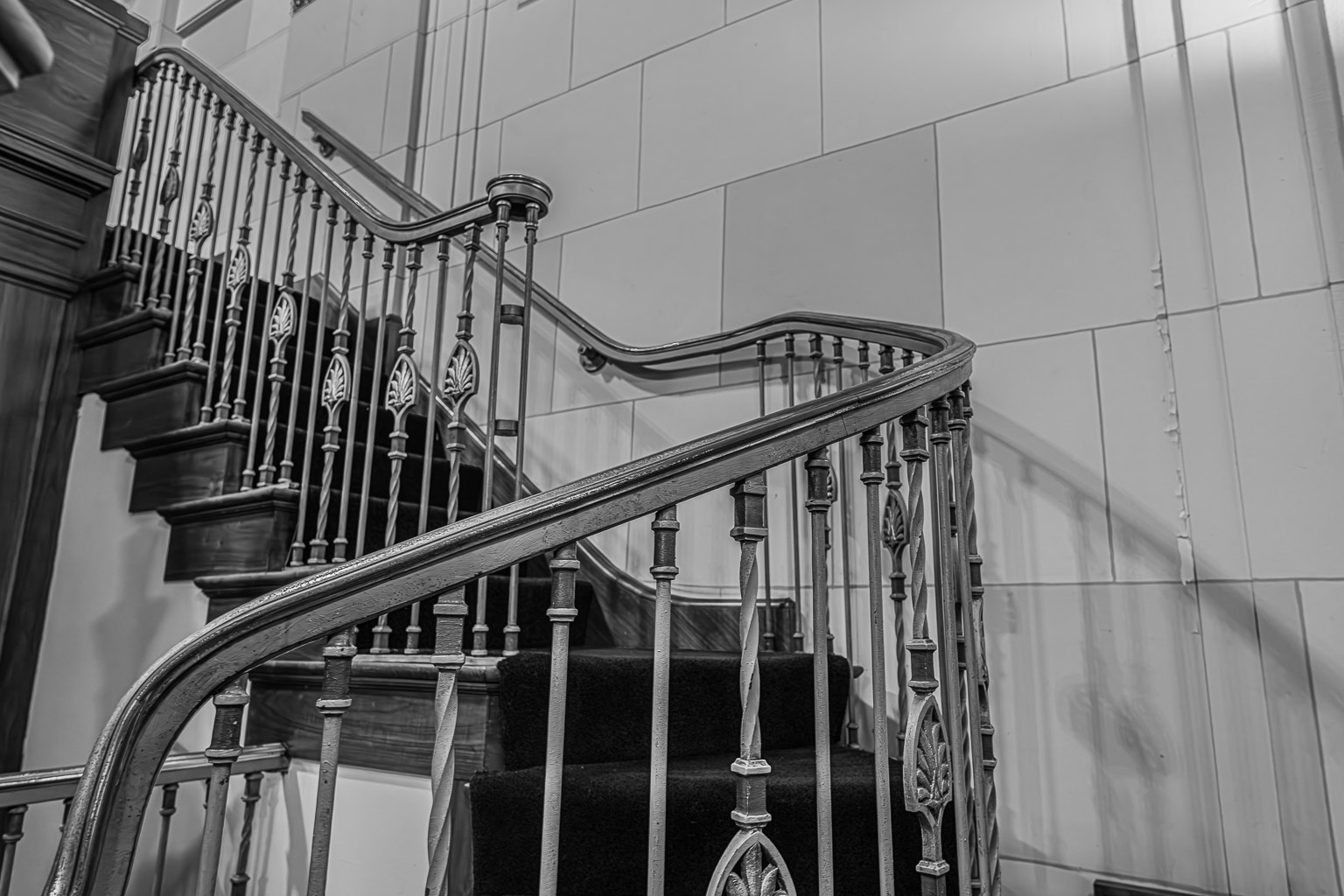
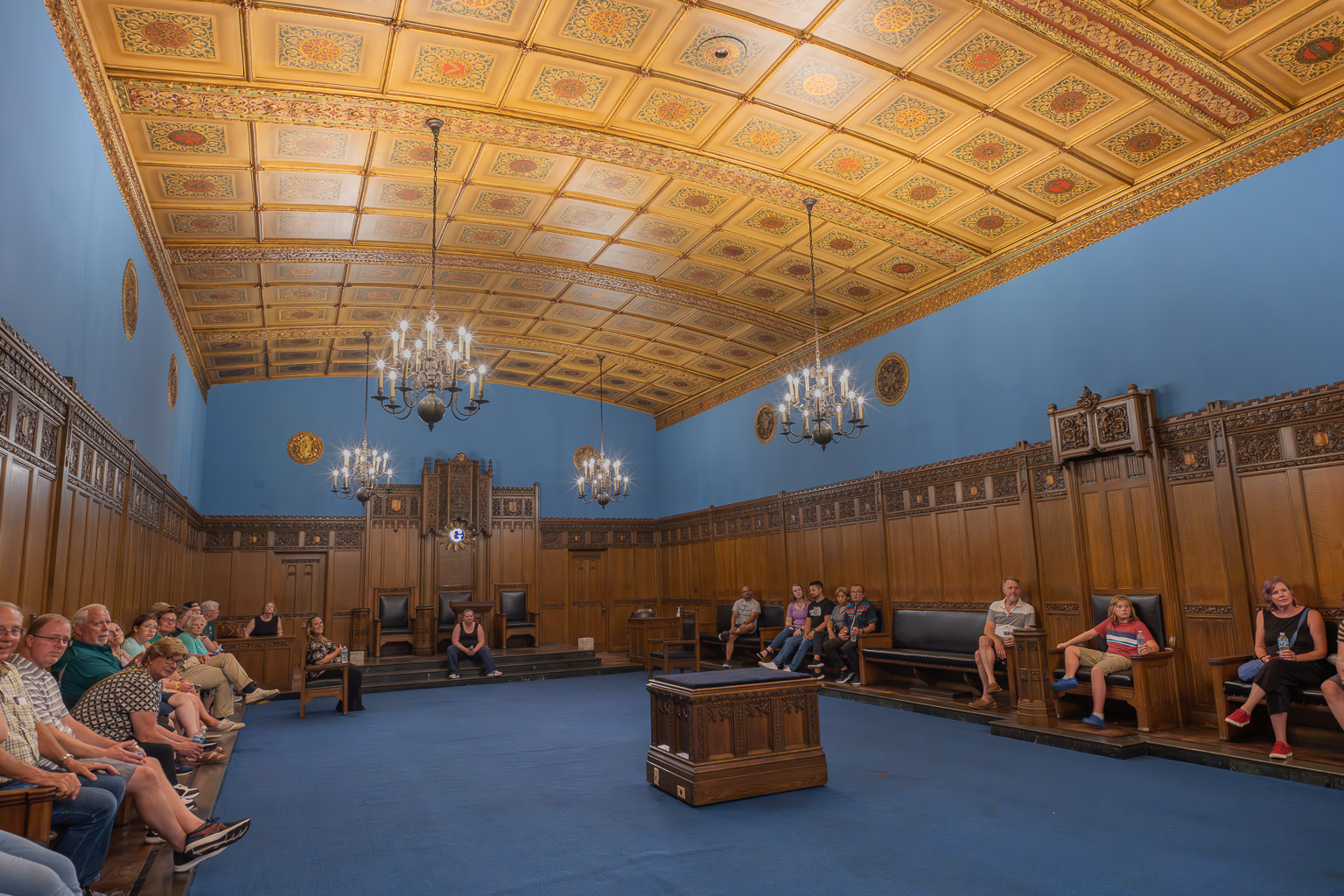
"Craft Lodge Rooms" all have different decorative treatments, the motifs of decoration being taken from the Egyptian, Doric, Ionic, Corinthian, Italian Renaissance, Byzantine, Gothic, and Romanesque styles. All of the artwork throughout the building, especially the decorated ceilings, was done under the direction of Italian artists. The building includes Royal Arch room, as well as a Commandery Asylum for the Knights Templar. Much of the stone, plaster, and metal work in the interior of the building was designed and executed by architectural sculptor Corrado Parducci. My interior photos of Detroit's Masonic Temple are below:
More photos and more description of this building can be found at HistoricDetroit.org.
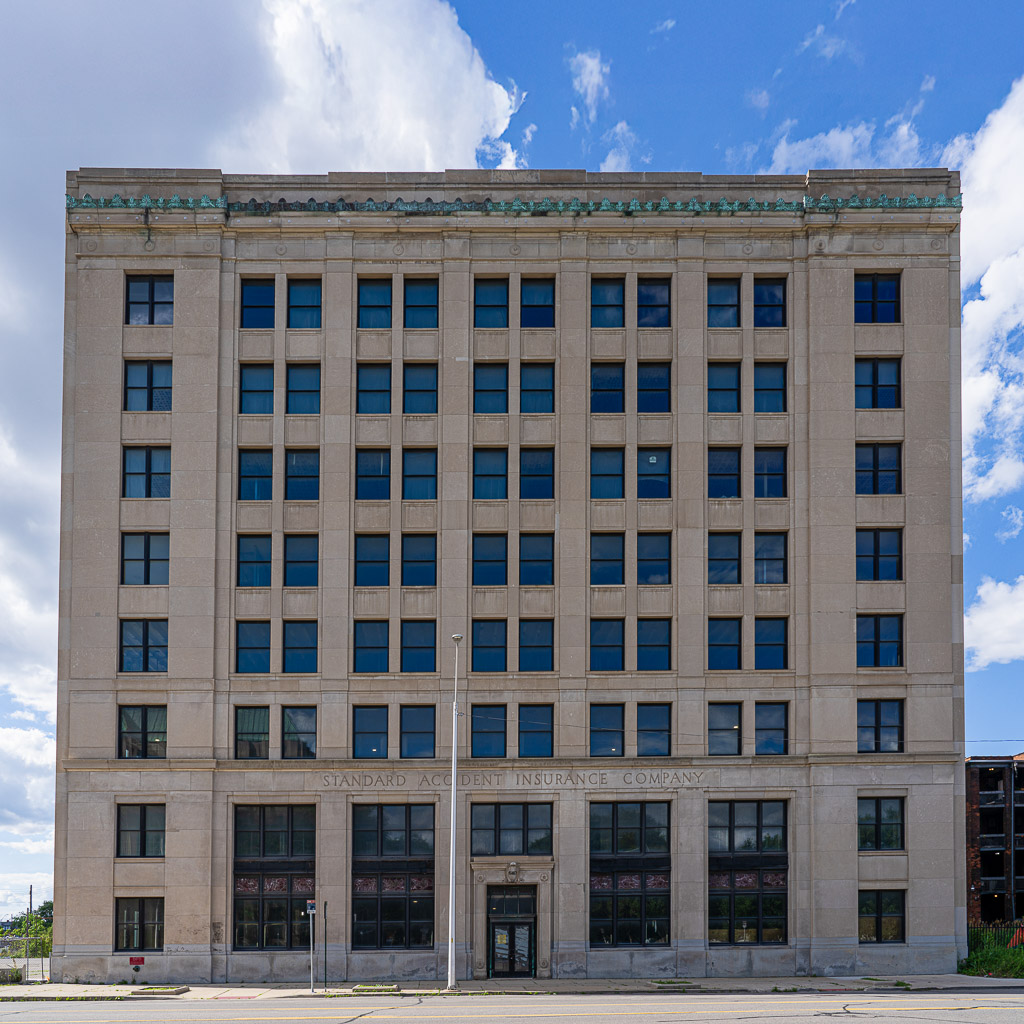
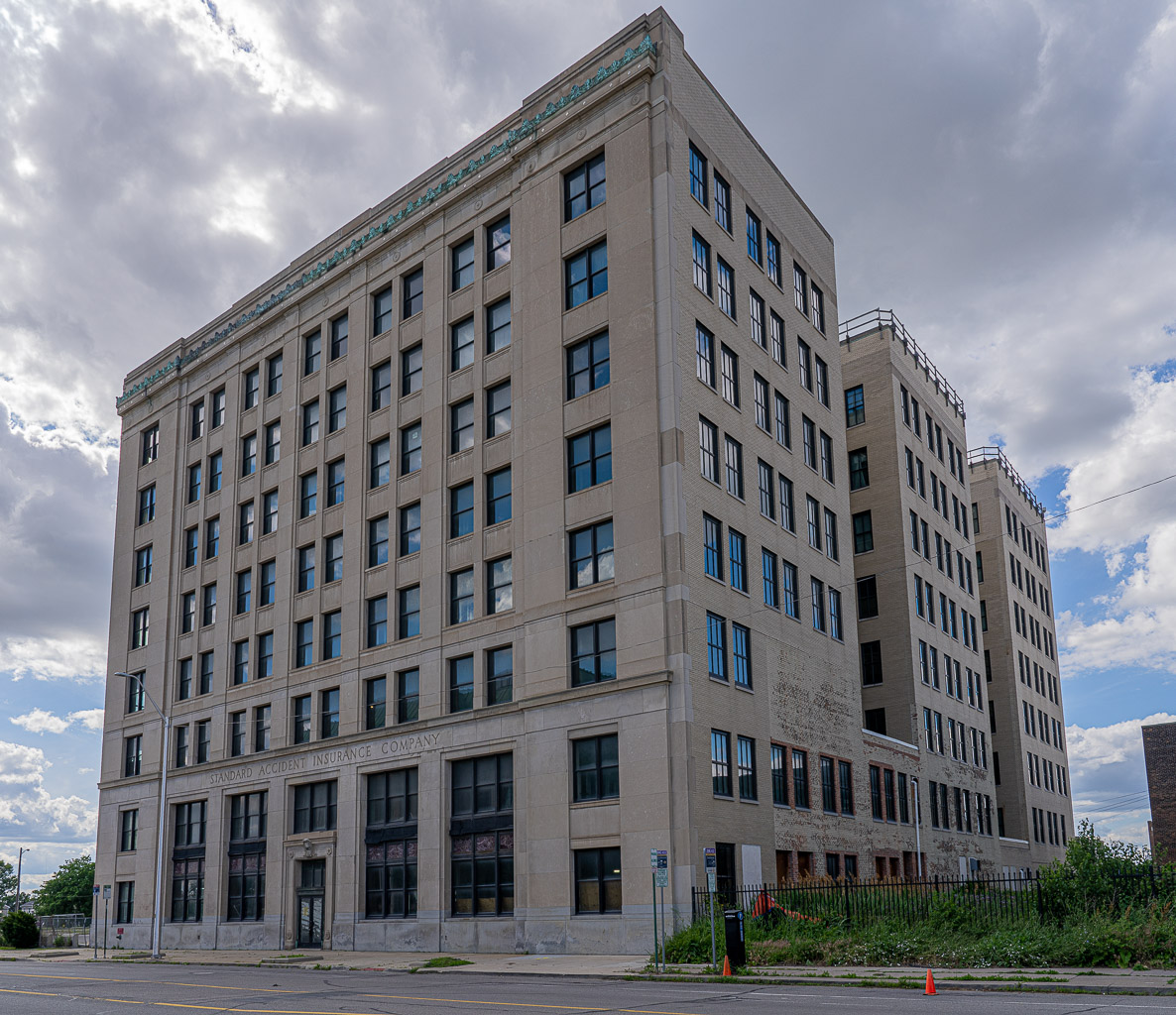
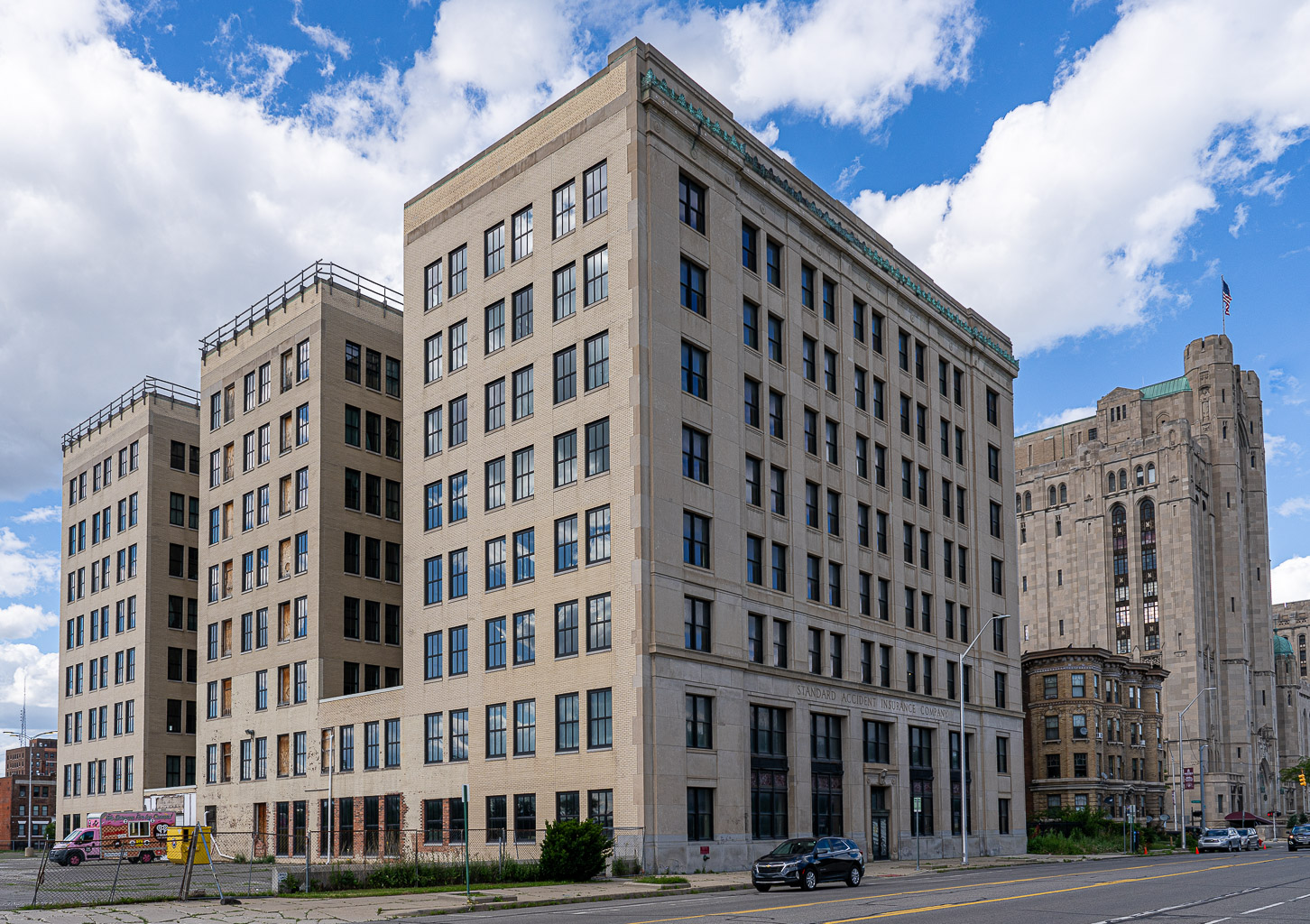
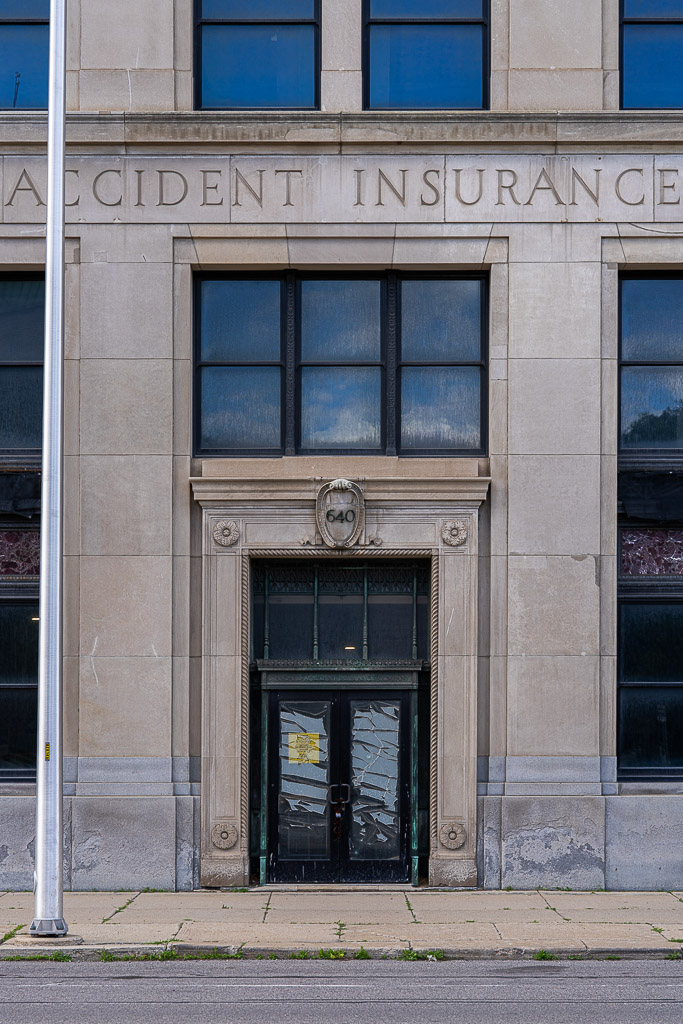
Eight-story, seven bay. brick and stone, two part vertical block office building designed in the Classical Revival style, 1920, Albert Kahn, architect. The first and second floors have sets of three double hung windows divided by stone pilasters which support a frieze inscribed with the name STANDARD ACCIDENT INSURANCE COMPANY. The windows are set in metal frames and separated between the floors by metal panels. The remaining floors have sets of two 1/1 double hung windows. The main entrance has an austere Classic door surround with a cartouche in the center of the door head. The cornice is decorated with an anthemion patterned copper band under a slightly stepped parapet.
More photos and more description of this building can be found at HistoricDetroit.org.