Engine House 11 Local Historic District
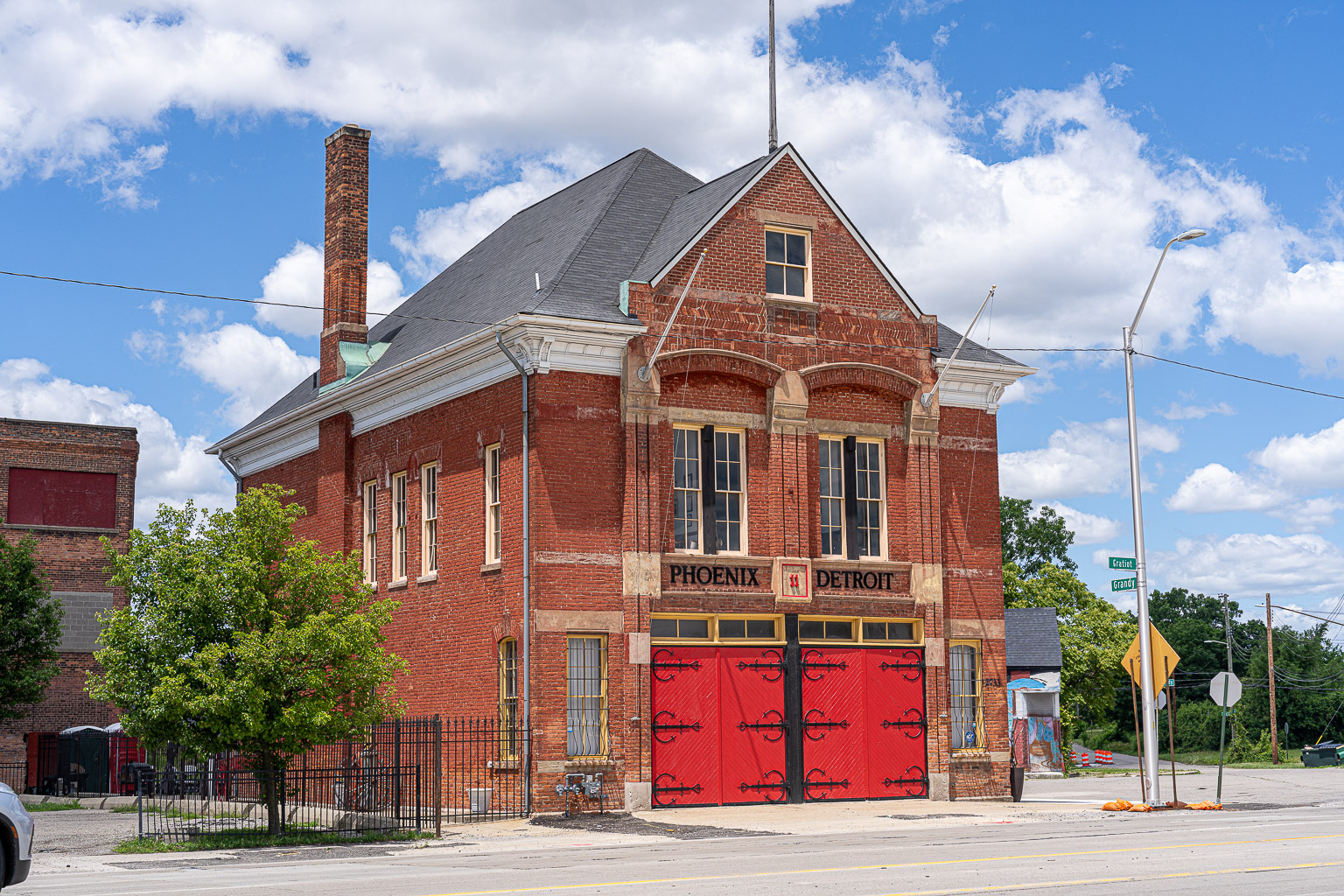
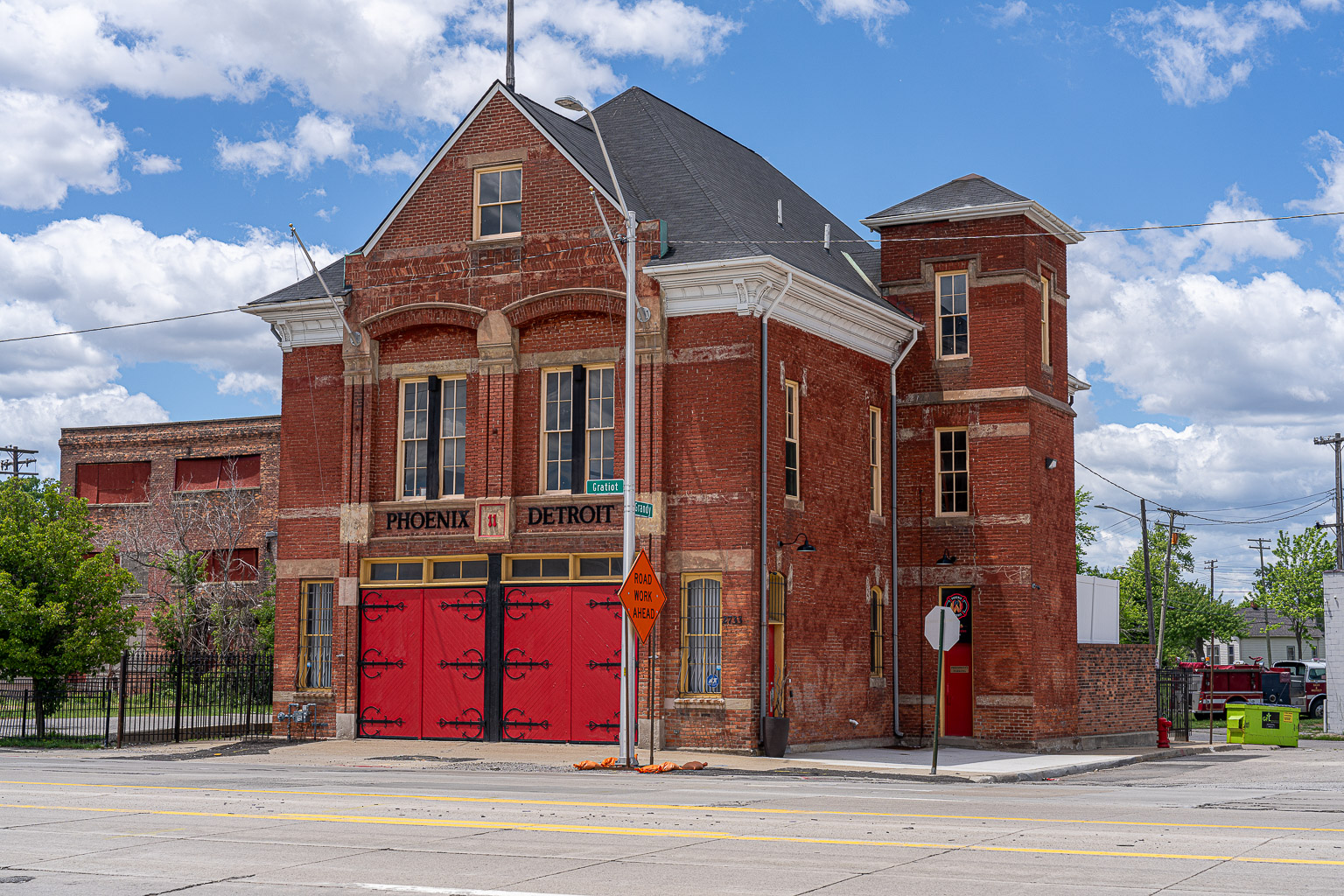
The Engine House 11 Local Historic District consists of one building, the Detroit Fire Department's Engine House #11, located at 2737 Gratiot. You can read details about it in the Engine House 11 Local Historic District Final Report (local copy), which I recommend highly to anyone interested in Detroit's history.
HISTORY: [+ expand]
The Steam Fire Engine Company #11 of the Detroit Fire Department was organized on January 1, 1884. It occupied a building at the northwest corner of Gratiot and Grandy, designed by the architects Gascione & Sons, and built by the contractors A. Albrecht & Marlow Brothers. The company's original equipment included a Silsby Steam engine and hose reel cart, both horse drawn. The company was converted to motorized operation in October, 1916 when a Seagrave gasoline propelled pumping engine replaced the horse drawn equipment. At the same time the engine house was altered somewhat to serve the new motorized equipment. The tower on the southeast side of the building was reduced in height during World War II to allow for the installation of an air raid siren. Of particular note in the history of Engine Company #l1 is the continuous service of the De Caussin family, four generations of which served the company from 1886 until 1972 when the company moved to new quarters. After the departure of Engine Company #11 the building was used for four years by an Emergency Medical Unit. The building is now a museum for the Detroit Fire Department and houses several pieces of historic fire fighting equipment.
Engine House #11 is now the oldest remaining fire house in the city of Detroit.
PHYSICAL DESCRIPTION:
Engine House #1l is a two and one-half story brick structure with a hipped roof, and stone and wood trim. The main elevation consists of a slightly projecting center section flanked by two small bays. The center section contains on the first floor the two large double doors for access of equipment; on the second floor two pairs of double hung windows contained in shallow recesses created by pillasters and segmental arches. The central projection terminates in a gable which forms a dormer for the attic space and contains a single double hung window. On the southeast side of the building there is a watch tower which was also used for drying hose. The stone and wood trim are painted cream; the roof is covered in dark asphalt shingles.
The first floor interior walls are wainscoted and plastered. The ceilings are plastered with exposed wood beams. The apparatus room, kitchen, dining area and lounge are on the first floor, while the second floor.contains sleeping quarters, showers and locker room. Two private sleeping rooms were provided for the captain and lieutenant. To the rear of the dormatory on a slightly lower level is a recreation room that was originally the hay loft. The third floor is an attic.
As the oldest firehouse now existing in Detroit, Engine House #11 represents the history of fire fighting in the city, with its dedication to the public good on the part of generations of fire fighters, and also represents the valuable service rendered to the city by the Fire Department for over a century. In recognition of this significance, the building is now listed on the National Register of Historic Places.
The building is now the subject of a program to create and operate a fire museum, with ownership remaining with the Fire Department and cooperation and volunteer effort being supplied by The Box 42 Associates, a fire buff's group. Designation by the city was requested by Fire Commissioner Melvin Jefferson.
CRITERIA: In the judgement of the Historic Designation Advisory Board, Engine House No. 1l meets criteria one and three of the Historic District Ordinance, (Sections 28A-1-2 (a) (1) & (3).).
Criteria One: The social and political history of the city, in this case the history of the Detroit Fire Department, is particularly exemplified in this building.
Criteria Three: The building does embody the distinguishing characteristics of an architectual specimen, inherently valuable as a representation of its period, particularly in that, as the oldest fire house in Detroit, it represents the characteristics of that building form in the nineteenth century, and also serves as an interesting example of the style of the period applied to a small building for a public purpose.