Madison-Harmonie Local Historic District
The proposed Madison-Harmonie Historic District is located in the northeastern section of the Central Business District around the intersection of Madison Avenue and Randolph. It is a mixed-use area composed of moderate-to-large scale apartment buildings, two substantial clubs and a charitable organization, a major cultural institution, two parking garages, and small-to-moderate scale commercial buildings facing Harmonie Park, for a total of 16 buildings in all. You can read details about the district and its buildings in the The Proposed Historic Detroit Financial District Final Report (local copy), which I recommend highly to anyone interested in Detroit's history.
Contents:
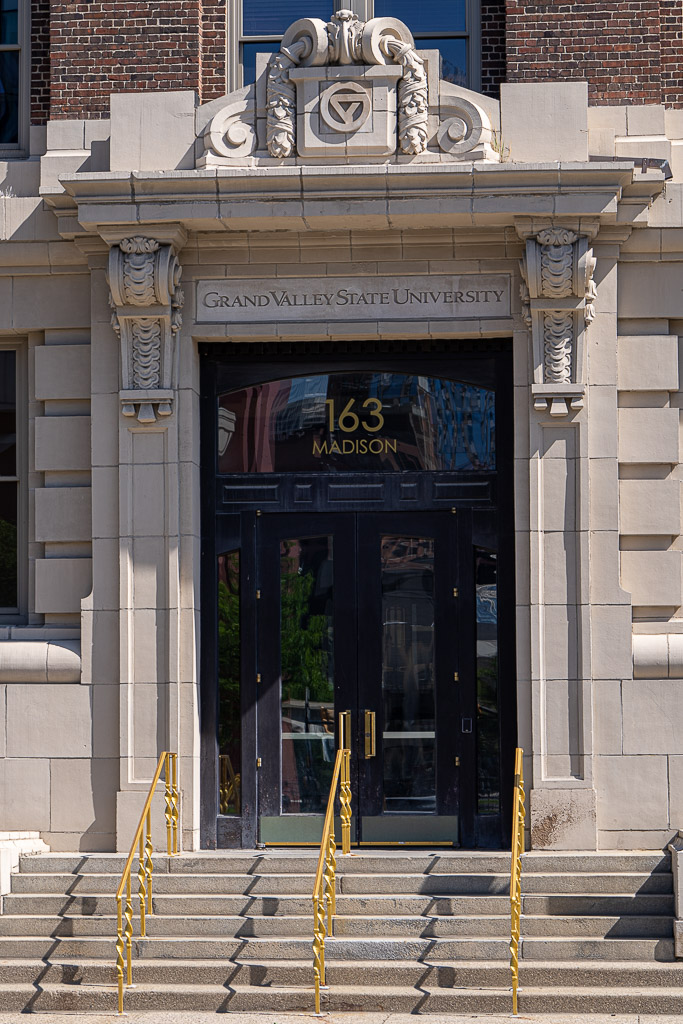
The Detroit architectural firm of Stratton & Baldwin designed the architectural aspects of the building at 163 Madison for the headquarters and city exchange of the Home Telephone Company of Detroit. C.H. Ledlie, one of the most prominent consulting telephone engineers in the country, designed and built the spaces and installations necessary for telephone communications. The new building had the ability to serve 60,000 subscribers through its five switchboards; in 1909 the company was serving 12,500 subscribers.
The speaking telephone was first exhibited at the Centennial Exhibition of 1876 in Philadelphia. The first instruments were installed in Detroit the following year. W. A. Jackson, the chief executive of the Home Telephone Company, was responsible for this first installation, and was the founder of the Telephone & Telegraph Construction Company and the Michigan State Telephone Company. The Home Telephone Company of Detroit became the Home Telephone Company of Michigan in 1909, and was sold to a rival firm, the Michigan State Telephone Company, in 1912. In 1923, the building was sold to Michigan Mutual Life Insurance Company. After being transferred to several other insurance companies, it was sold in 1935 to Michigan Mutual Liability Company, becoming its home office. Michigan Mutual moved from the building in 1951 after it had been sold to the United Jewish Charities of Detroit, a non-profit corporation directed by Julian H. Krolik. It then became the home of the Jewish Welfare Federation of Detroit, a charitable organization founded in 1926. Frederick M. Butzel, the building's namesake, was a founder and major contributor to the goals and coffers of the Jewish Welfare Federation. Its first home was at the old Statler Hotel. The federation is the primary local organization of financing, budgeting and coordinating 20 family service agencies, day schools, Sinai Hospital, the Jewish Home for the Aged, and other beneficiaries today. Through its Allied Jewish Campaign, the federation assists groups and provides service programs in 33 nations, including Israel.
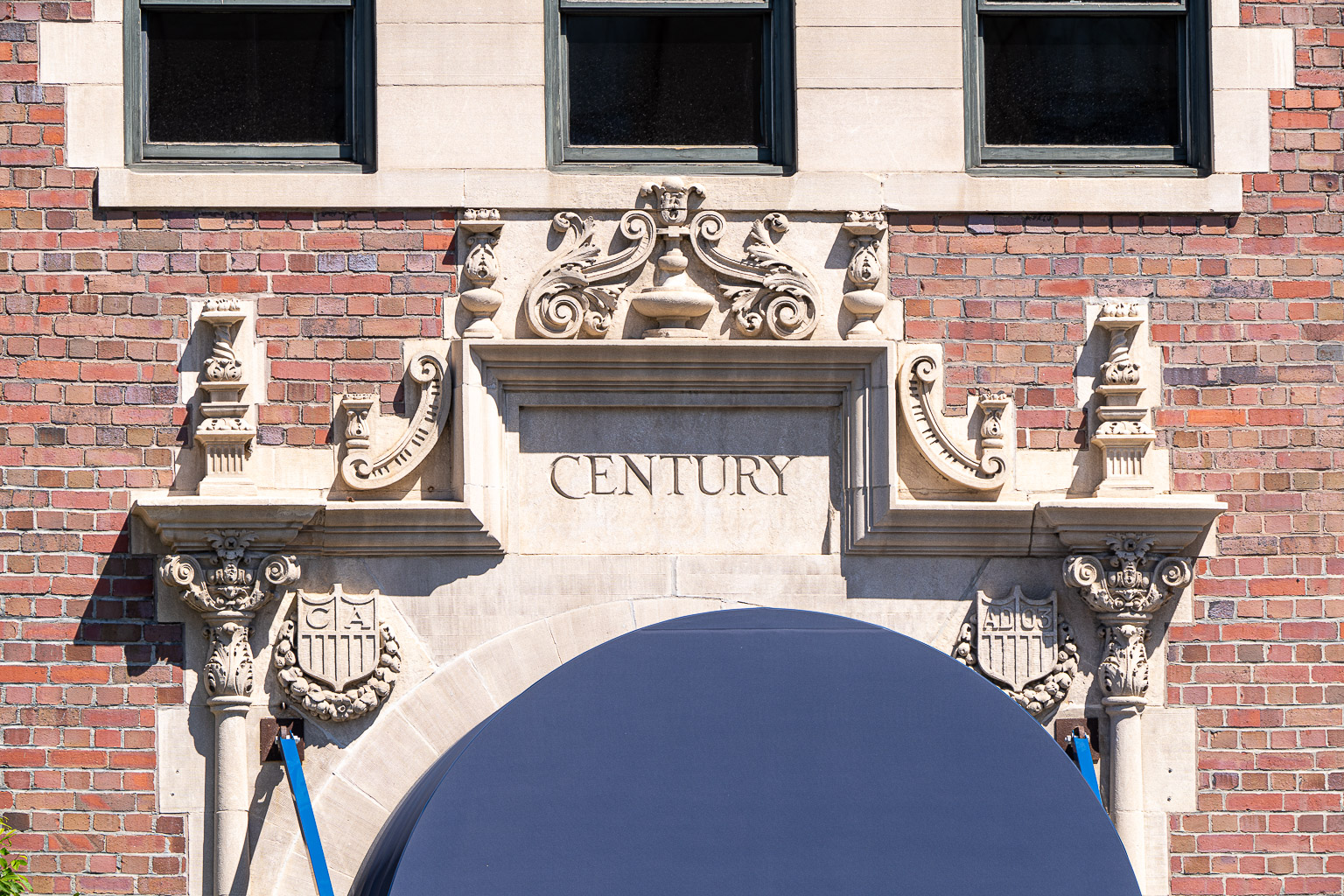
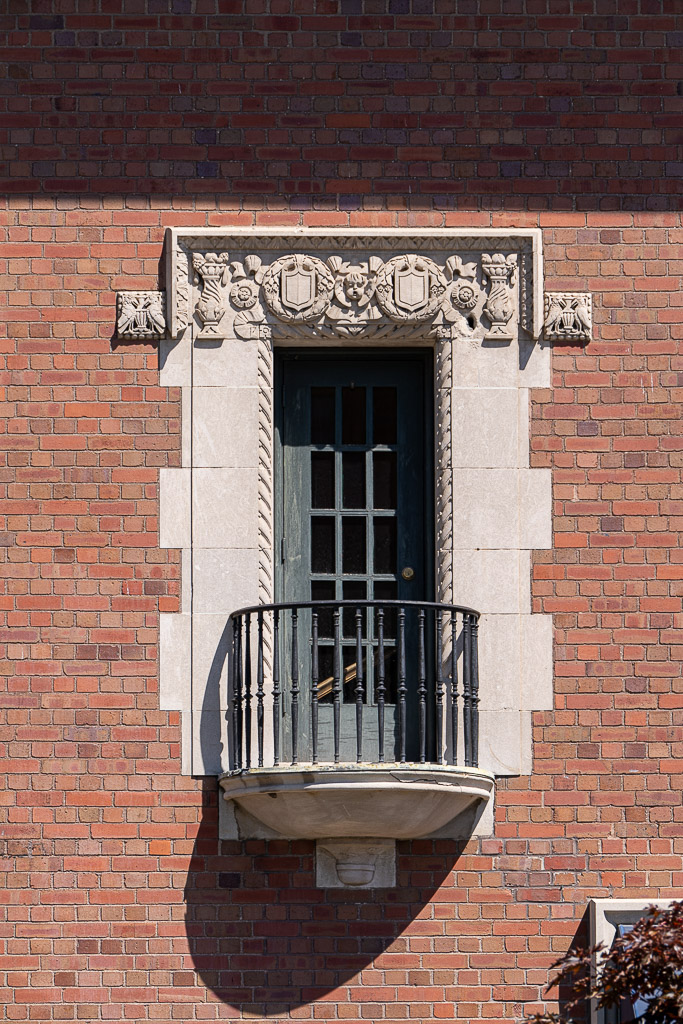
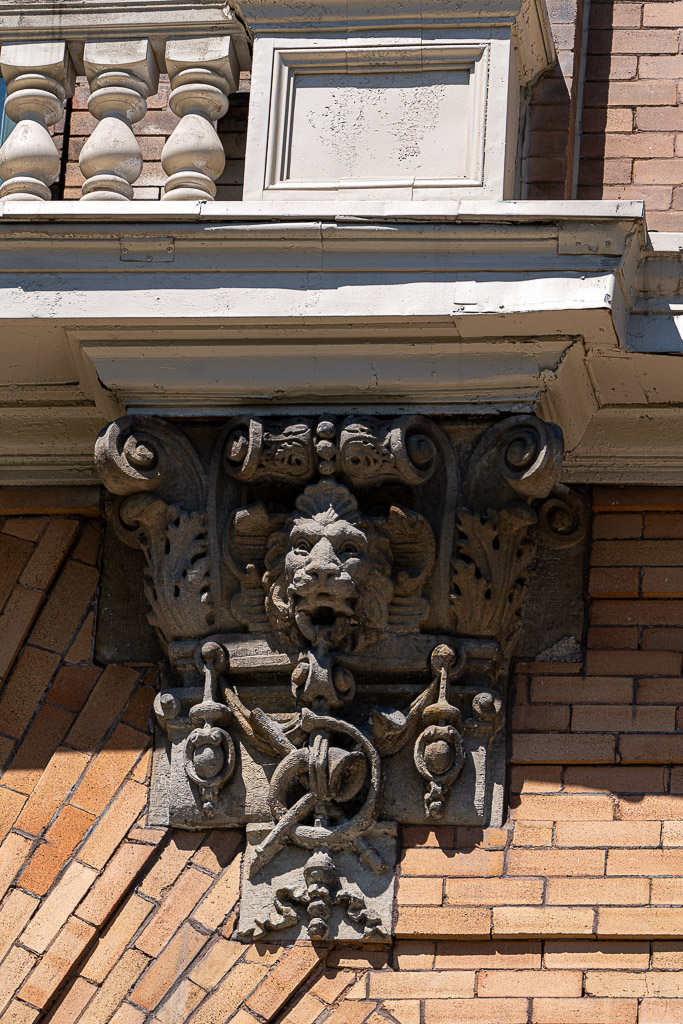
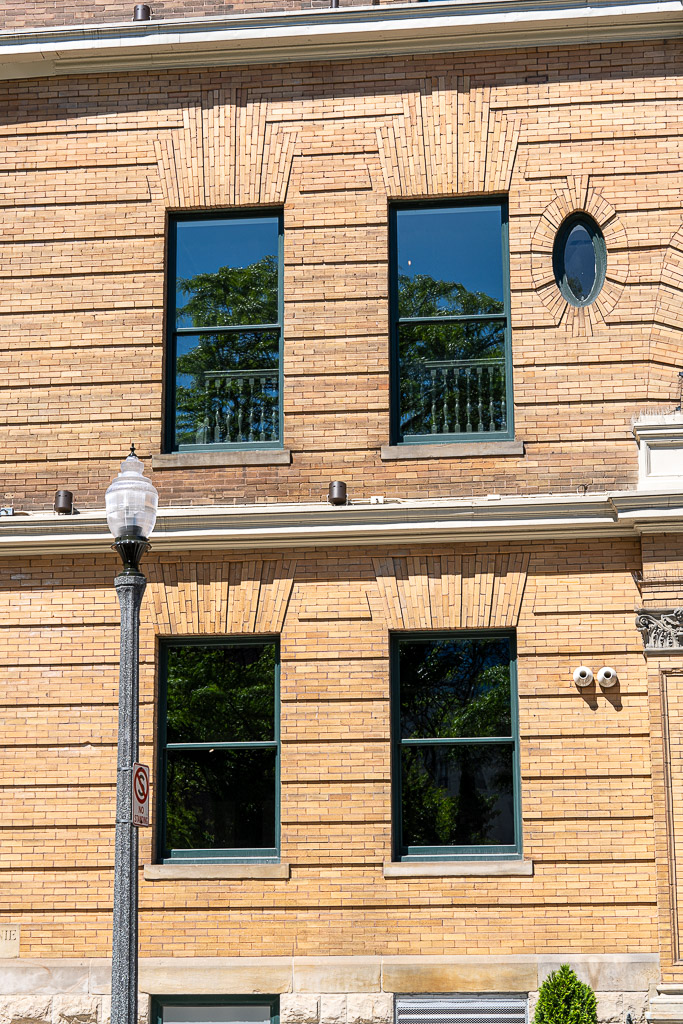
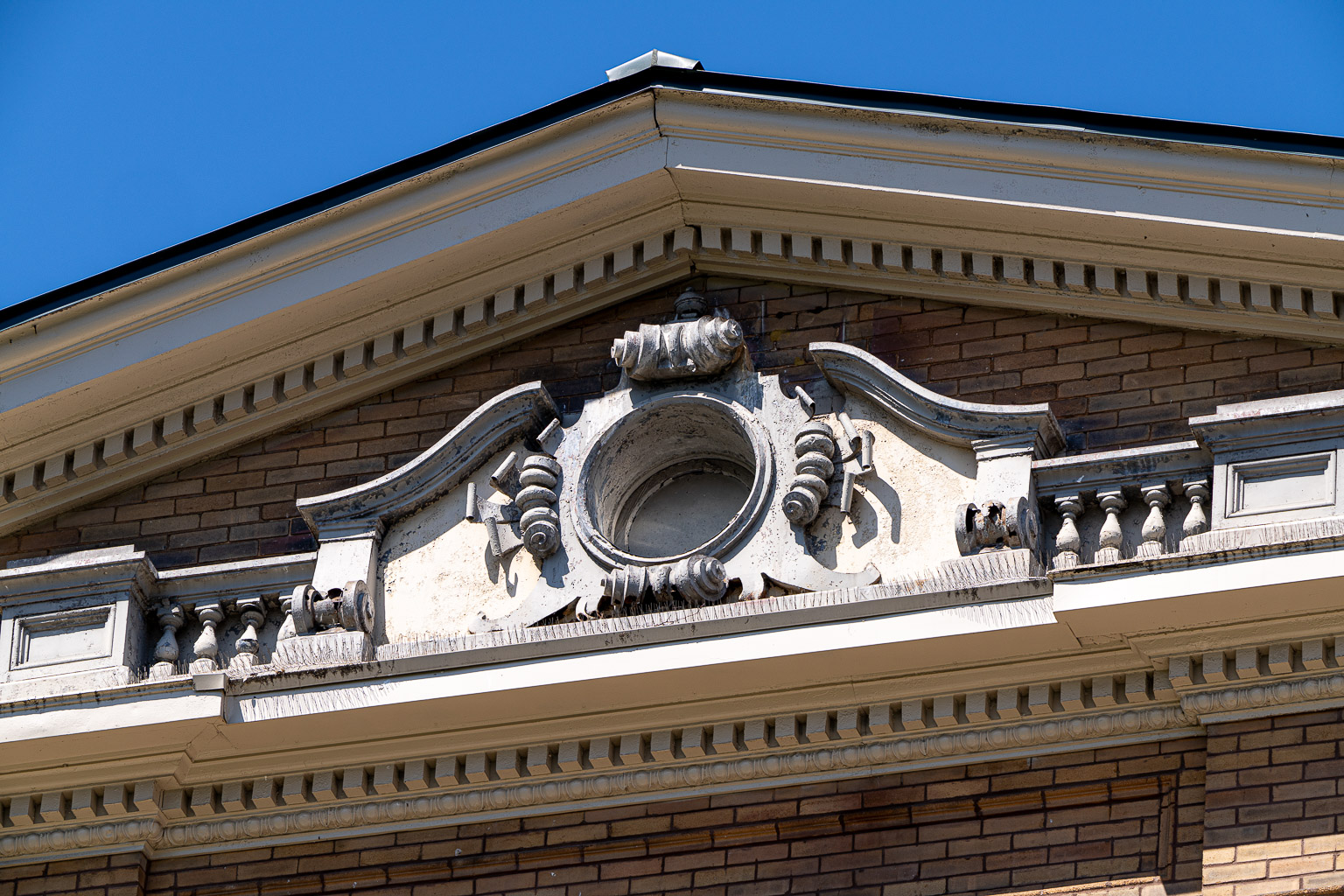
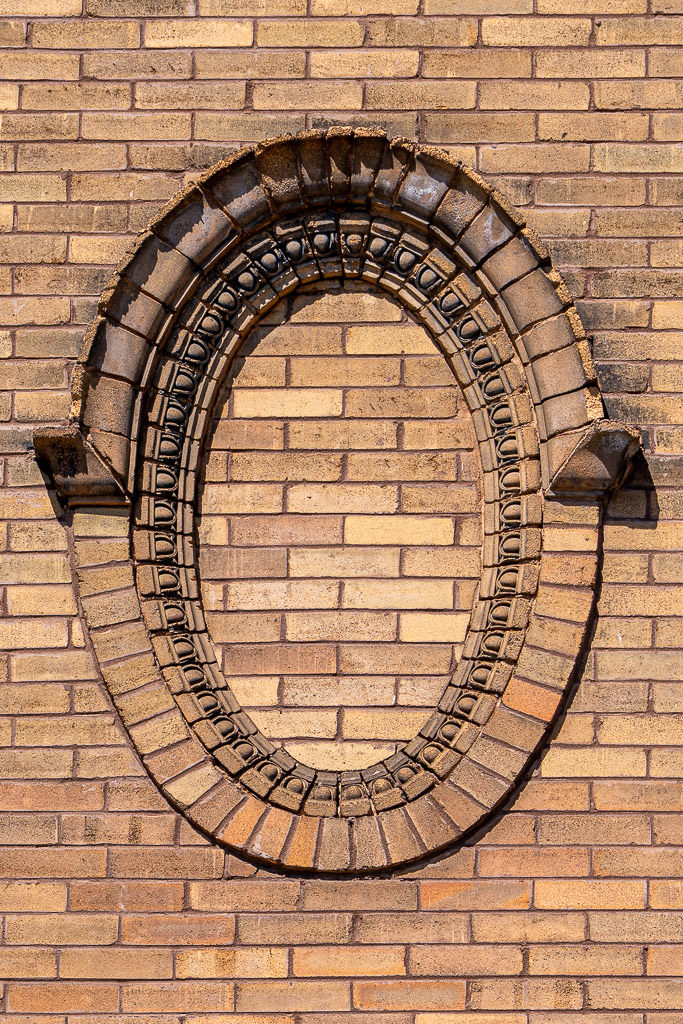
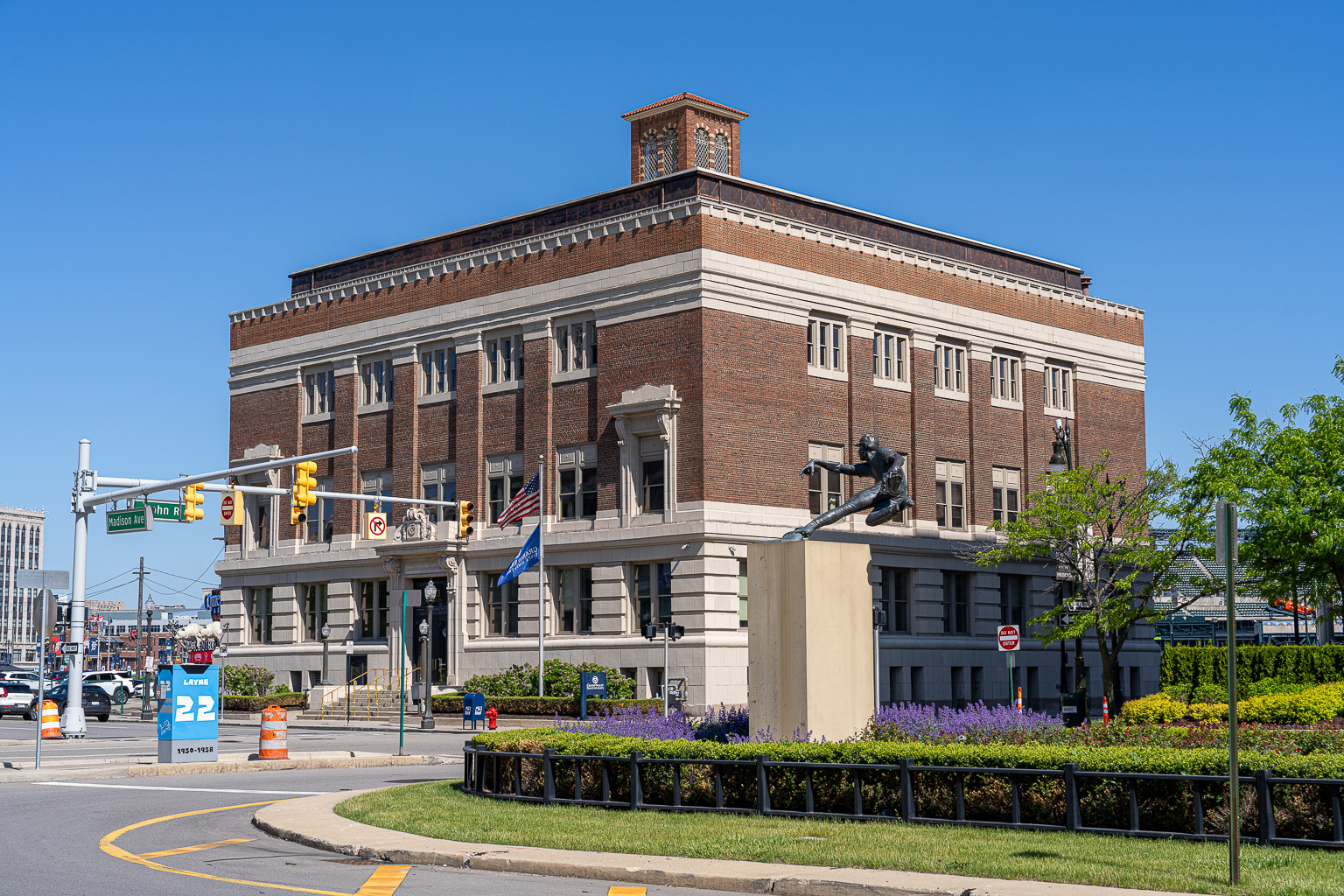
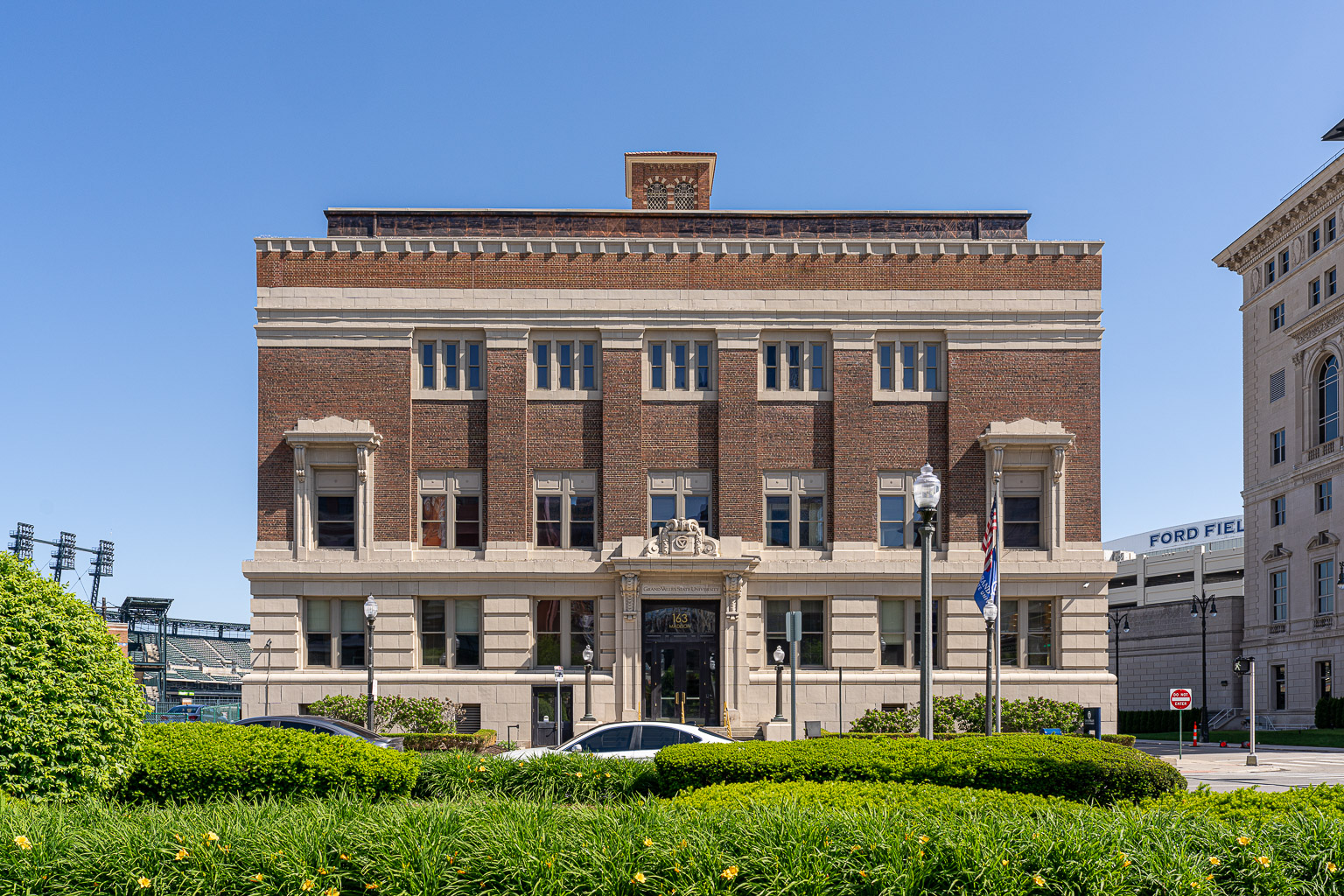
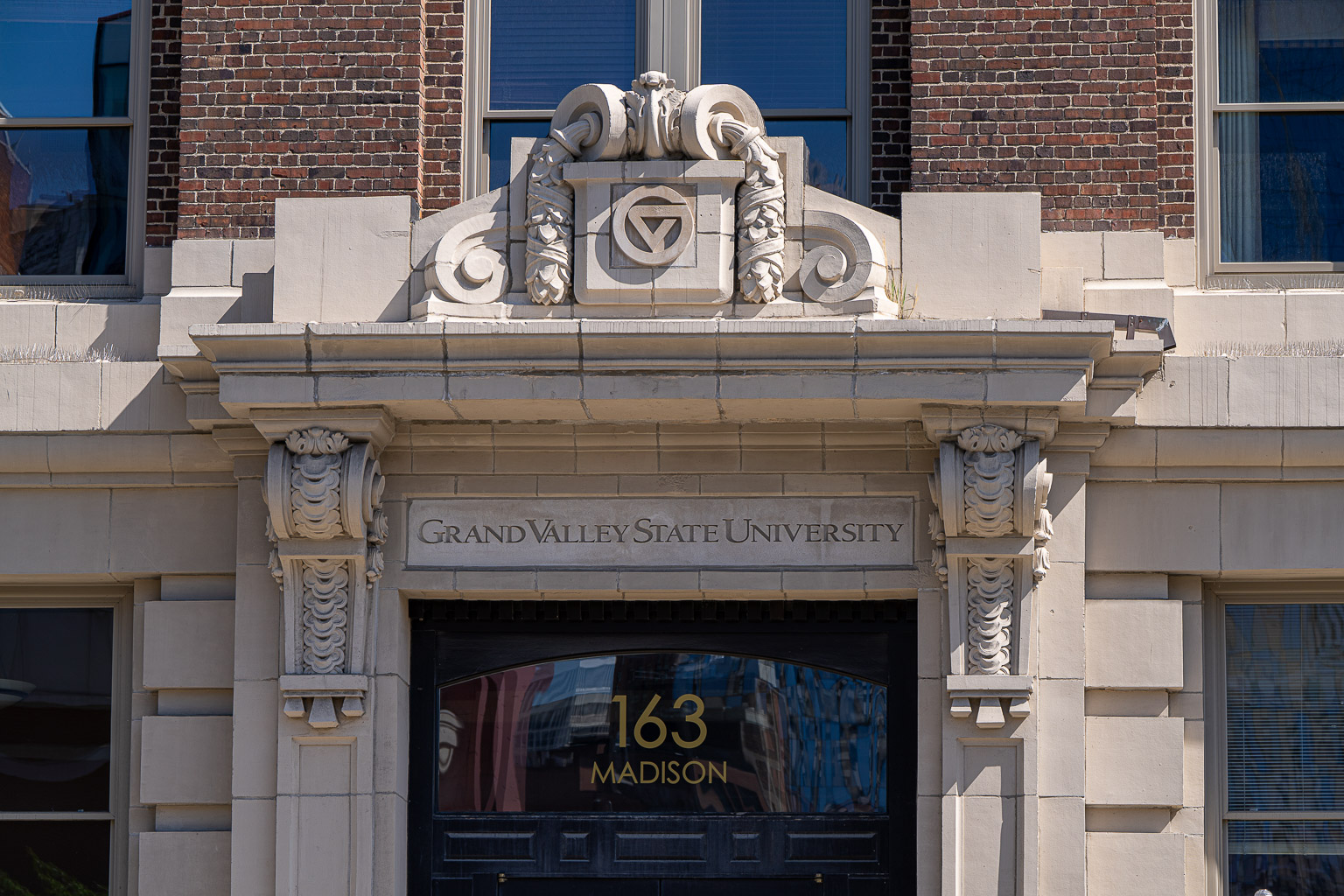
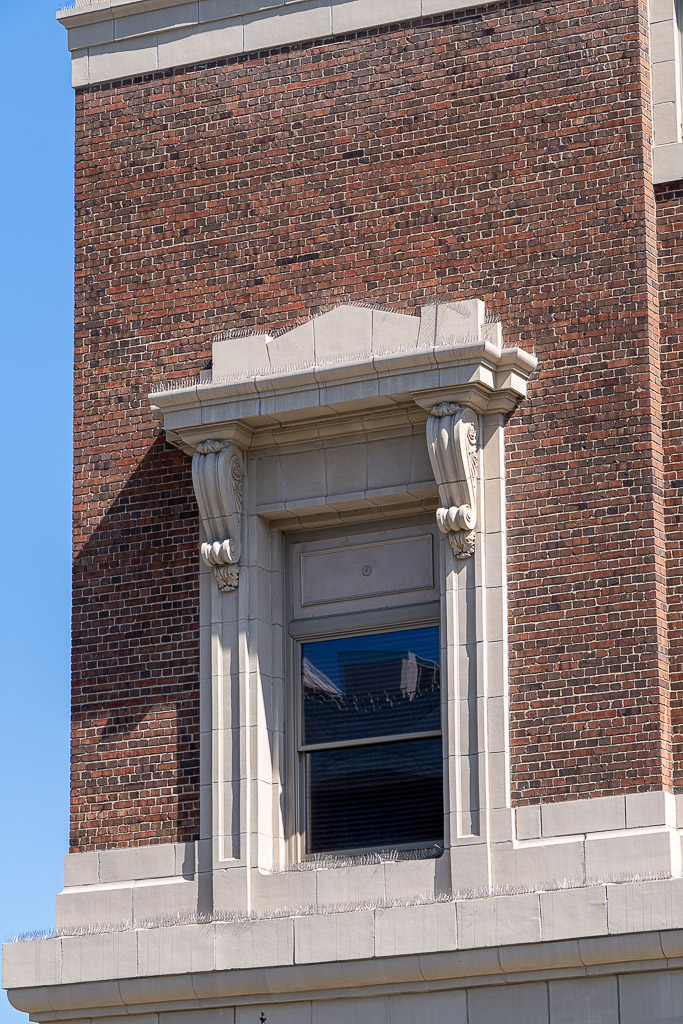
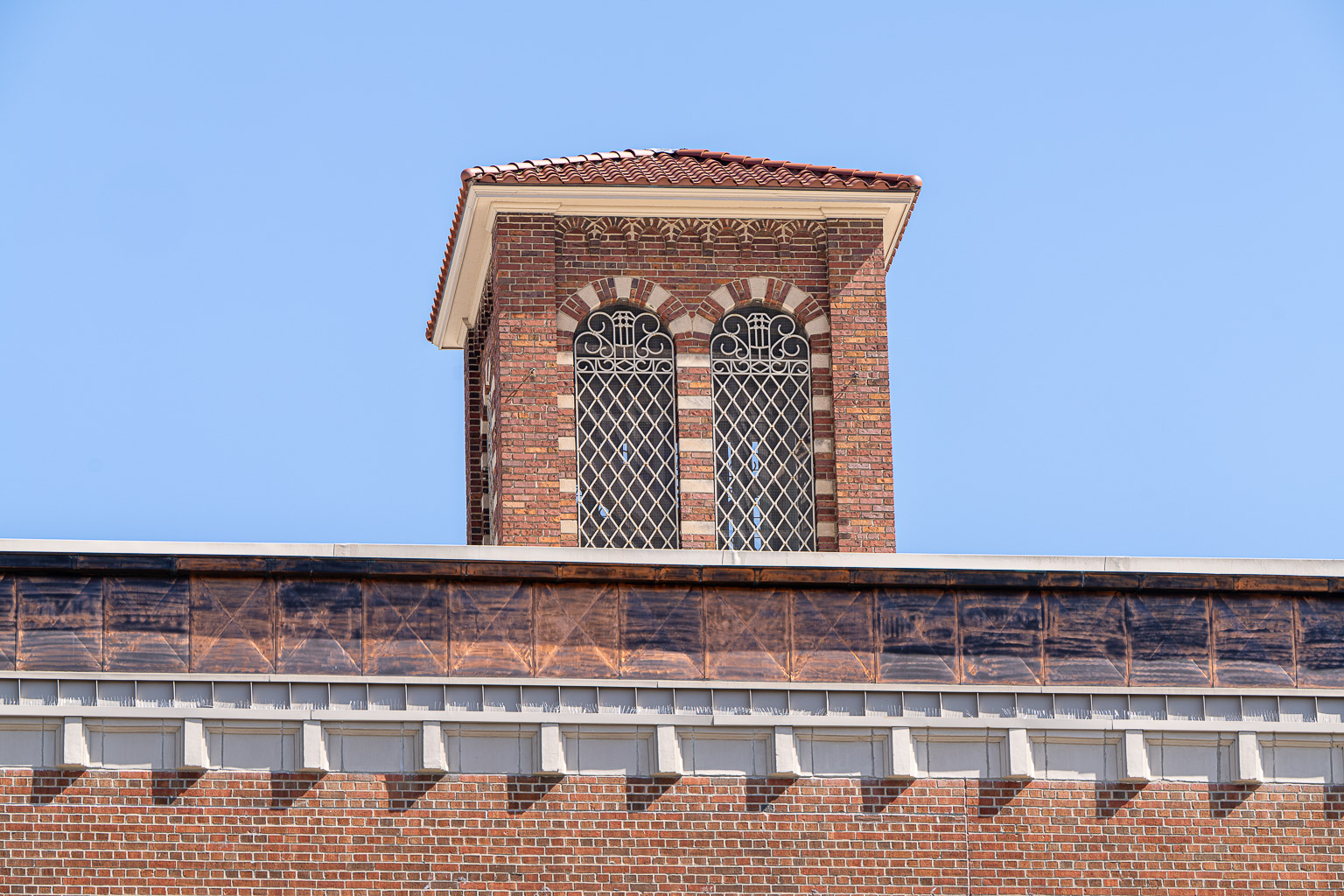
The Butzel Memorial Building is a three-story brick and terra cotta building on a high basement (1st and 2nd photos below). Its first story is of rusticated light gray masonry; its second and third stories are brick. The heavy terra cotta molded frieze of the parapet wall is supported by four two-story pilasters. An elaborate terra cotta cartouche is centered above the projecting roof of the entrance (3rd and 4th photos below). A second story window at each end of the front facade is treated similarly to the entrance, with large brackets supporting the projecting shelf below the lintels (5th photo below). On top of the building is a double-arched cupola with alternating light and dark voussoirs (7th photo below). All in all, the Butzel Memorial Building is a handsome, substantial Renaissance Revival building with Modernistic tendencies.
This building is currently used by the Detroit Athletic Club for storage and administrative purposes.
More photos and more description of this building can be found at HistoricDetroit.org.
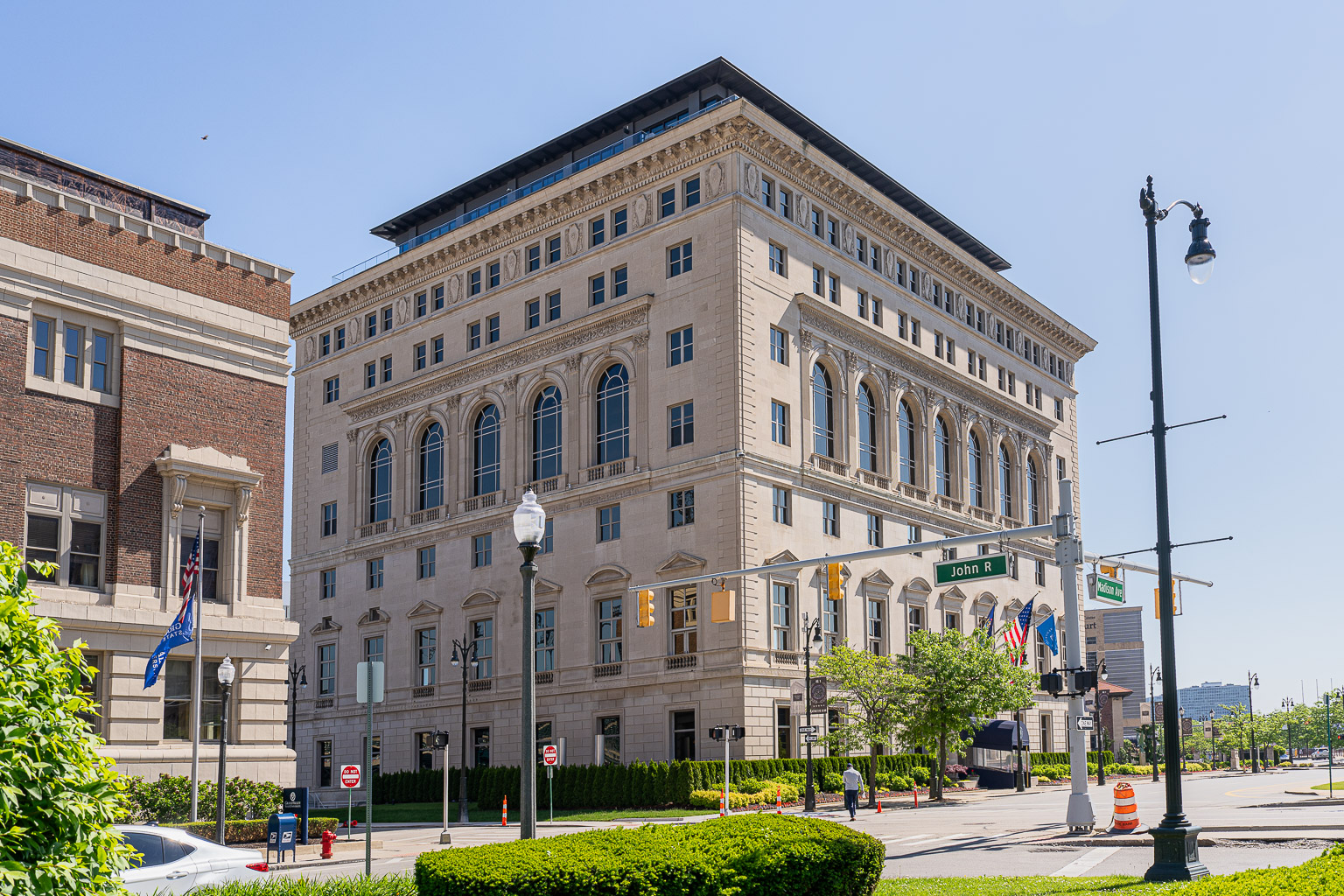
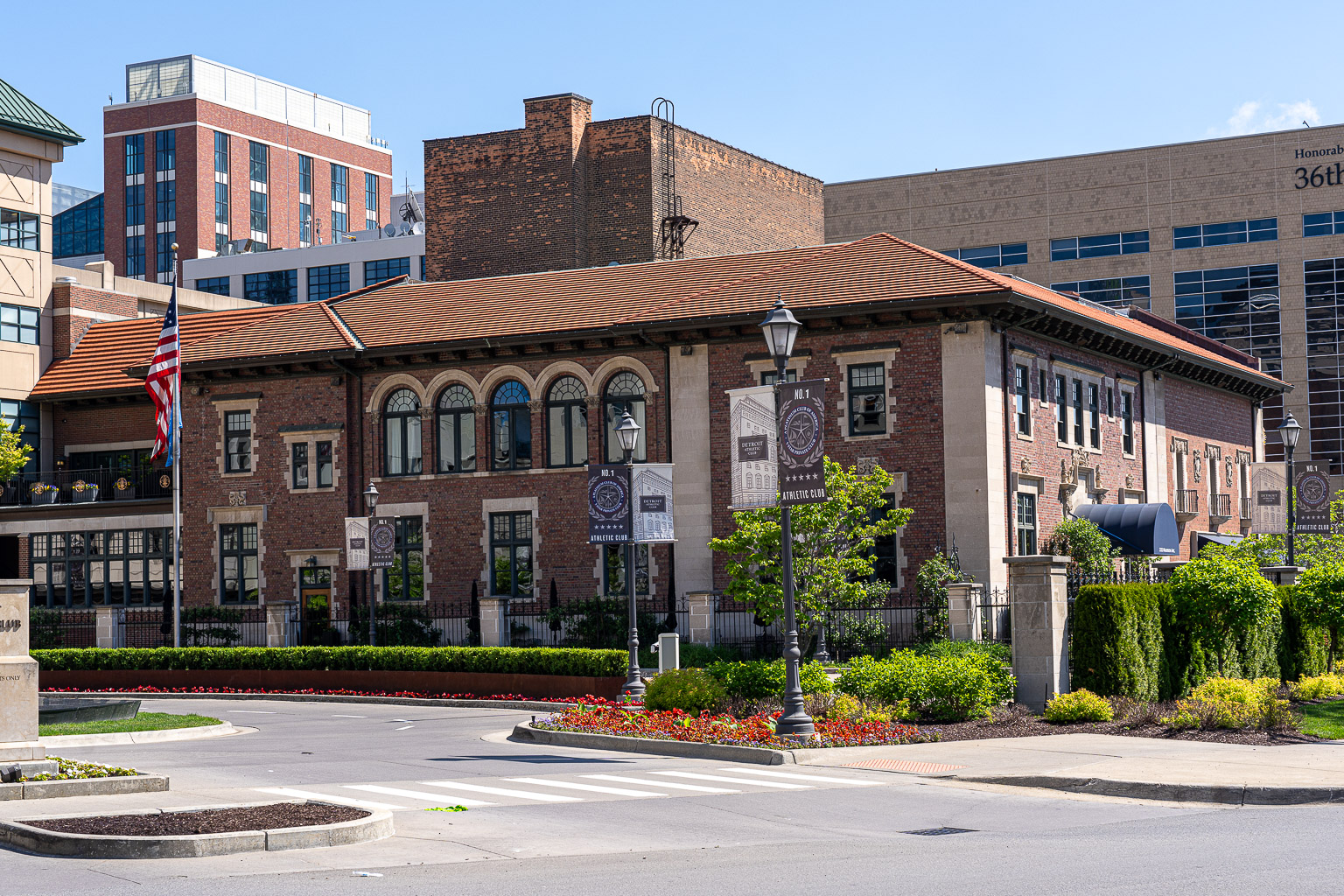
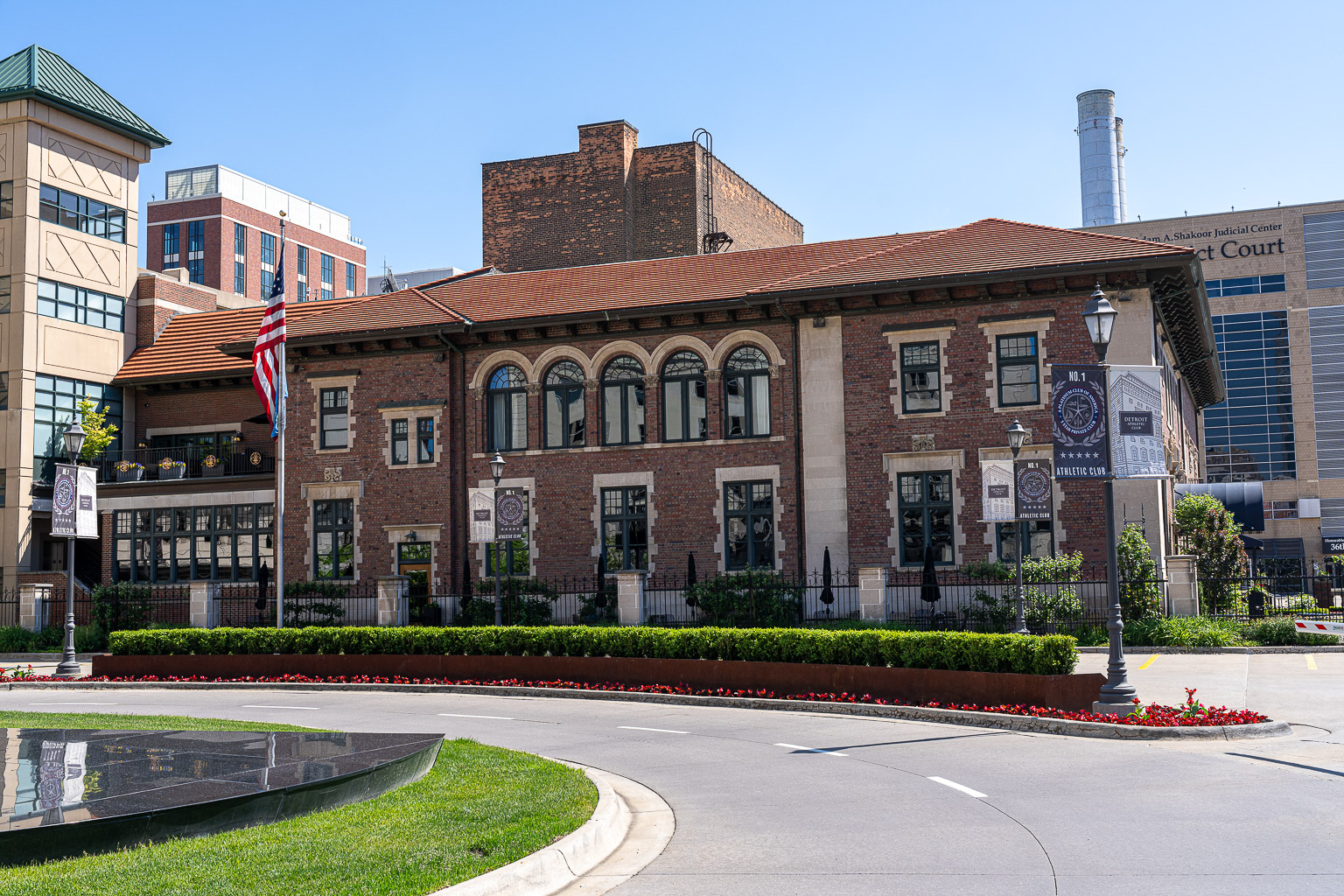
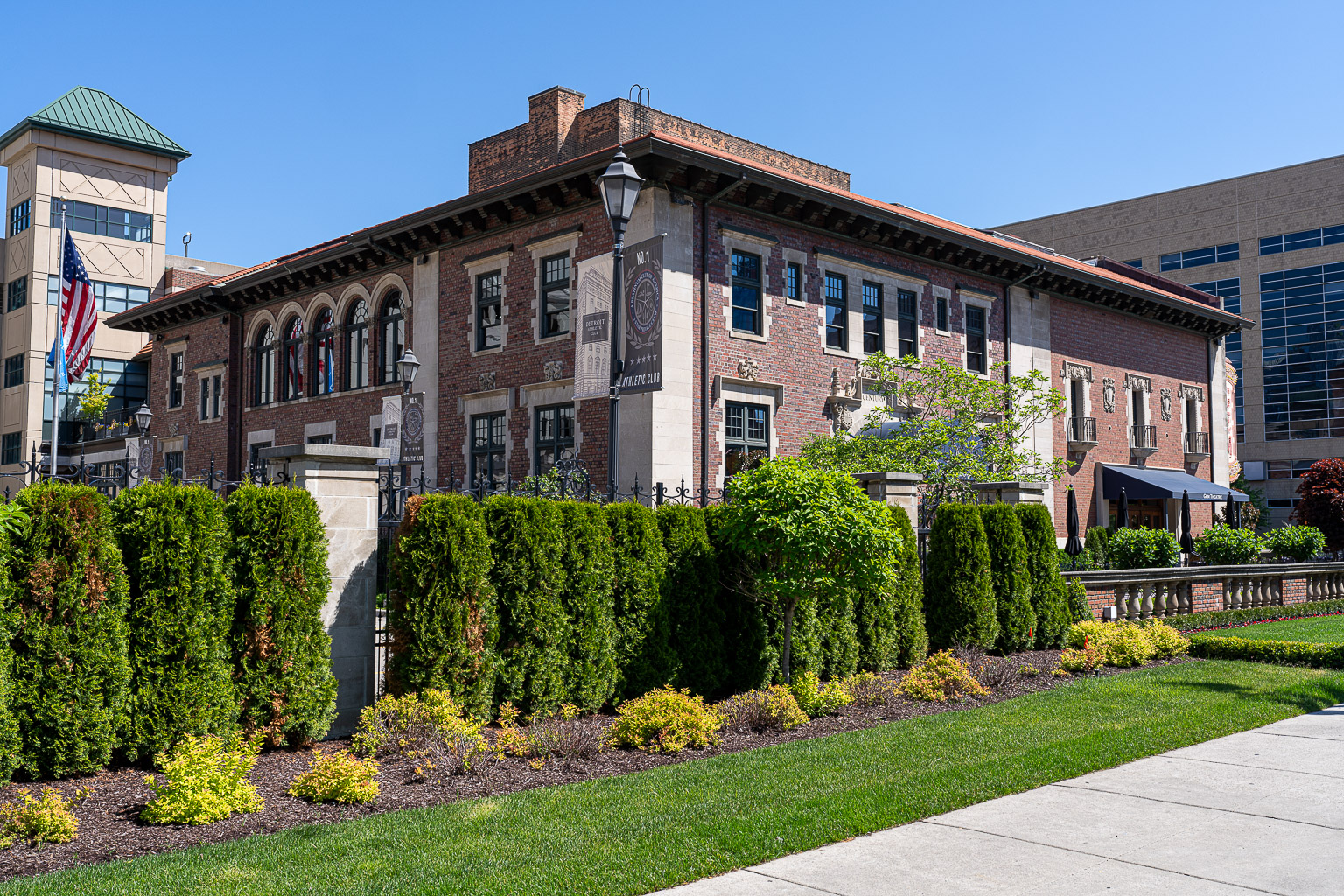
Henry B. Joy, president of the Packard Motor Car Company, and Frederick Stearns, president of Stearns Pharmaceutical, advocated building a downtown athletic club for Detroit as early as the mid-1880's, when the club was located at Woodward near Canfield. It wasn't until 1912 that the real planning for a new club began. Hugh Chalmers was appointed chairman of the committee to formulate plans for the new edifice.
The Wolverine Auto Club's option was purchased to obtain the property on the corner of Madison and John R. Henry Joy, vice president of the club at the time, was influential in the selection of Albert Kahn as designer of the building. Kahn built factories for Joy's auto company and designed Joy's palatial residence on the lake shore in Grosse Pointe in 1910. Kahn and a group from the board of directors of the club went on a six day junket to visit outstanding hotels and clubs in several American cities, most notably Pittsburgh and Chicago. Kahn himself had just returned from a European tour in February, 1912. He spent the major part of his trip in Italy, where he made many sketches of Renaissance palaces. Kahn's design for the D.A.C. was also inspired by McKim, Mead and White's famous University Club in New York City, constructed in 1900.
At the time of the grand opening on April 17, 1915, the D.A.C. had 2000 active members. The magnificent new building cost approximately $1,350,000, including $186,000 for the furnishings alone. Vinton and Company, a Detroit contracting concern, was selected to construct the building, which was to contain "every convenience and luxury known to athletic clubs" (Detroiter, Jan., 1914, p. 14).
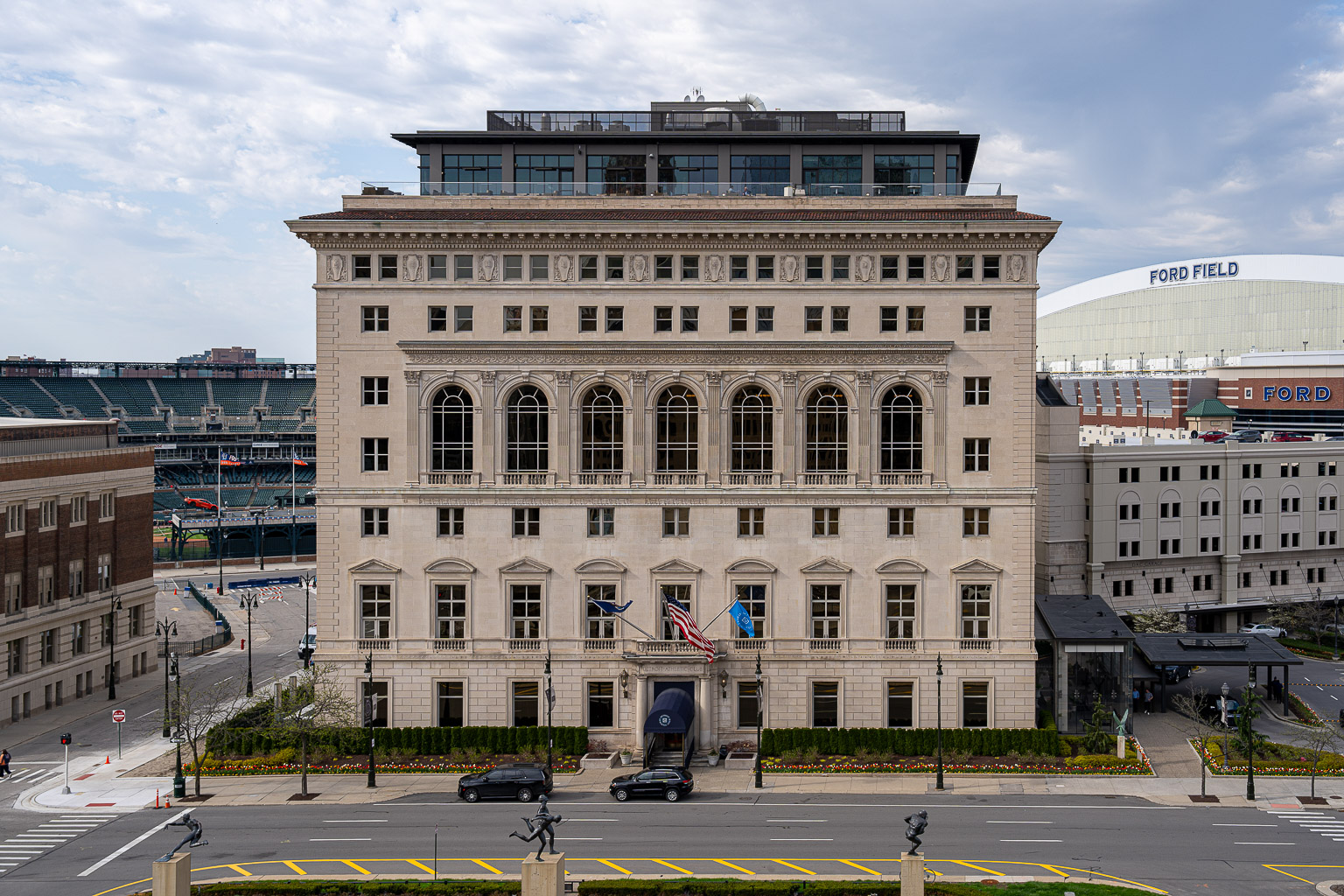
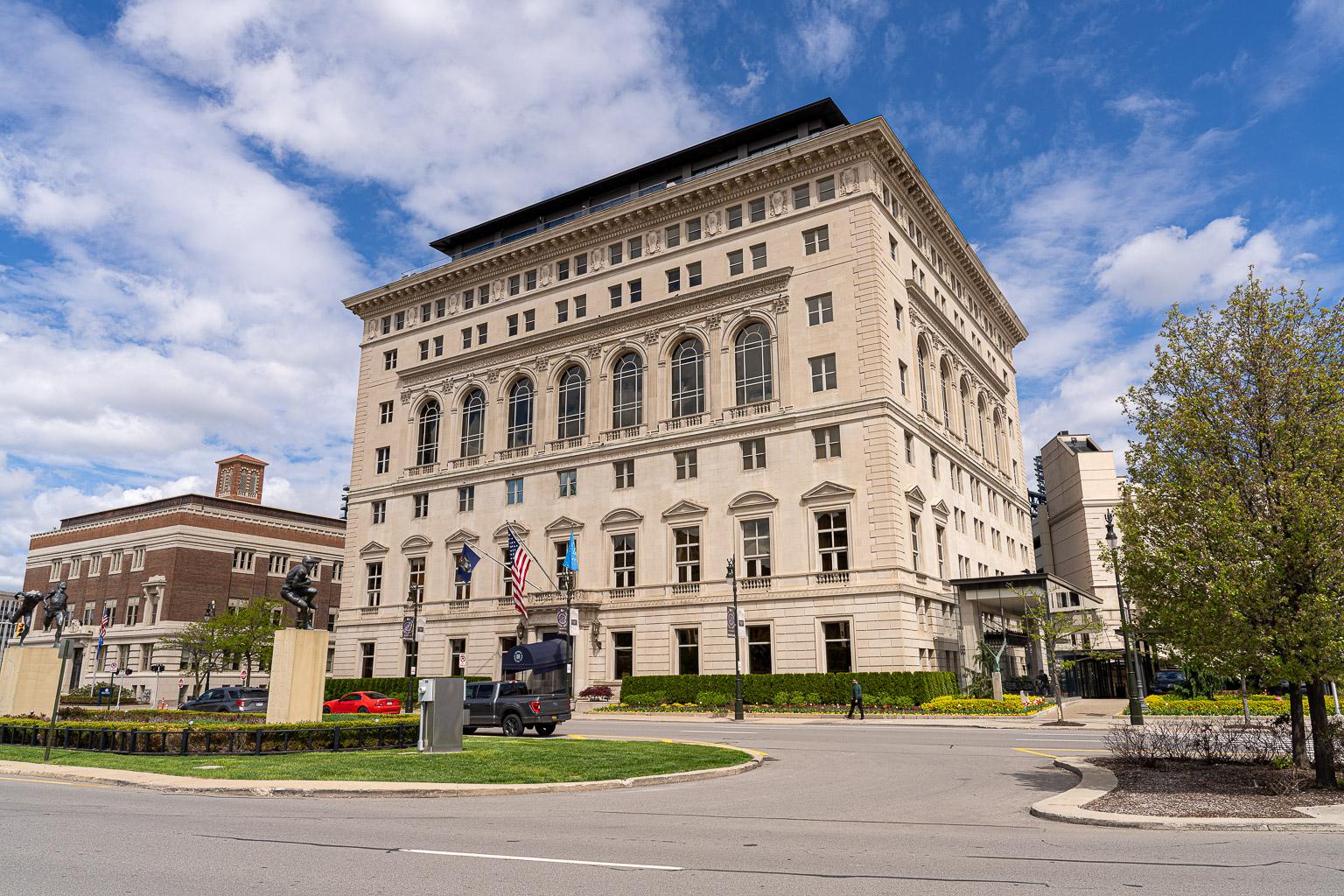
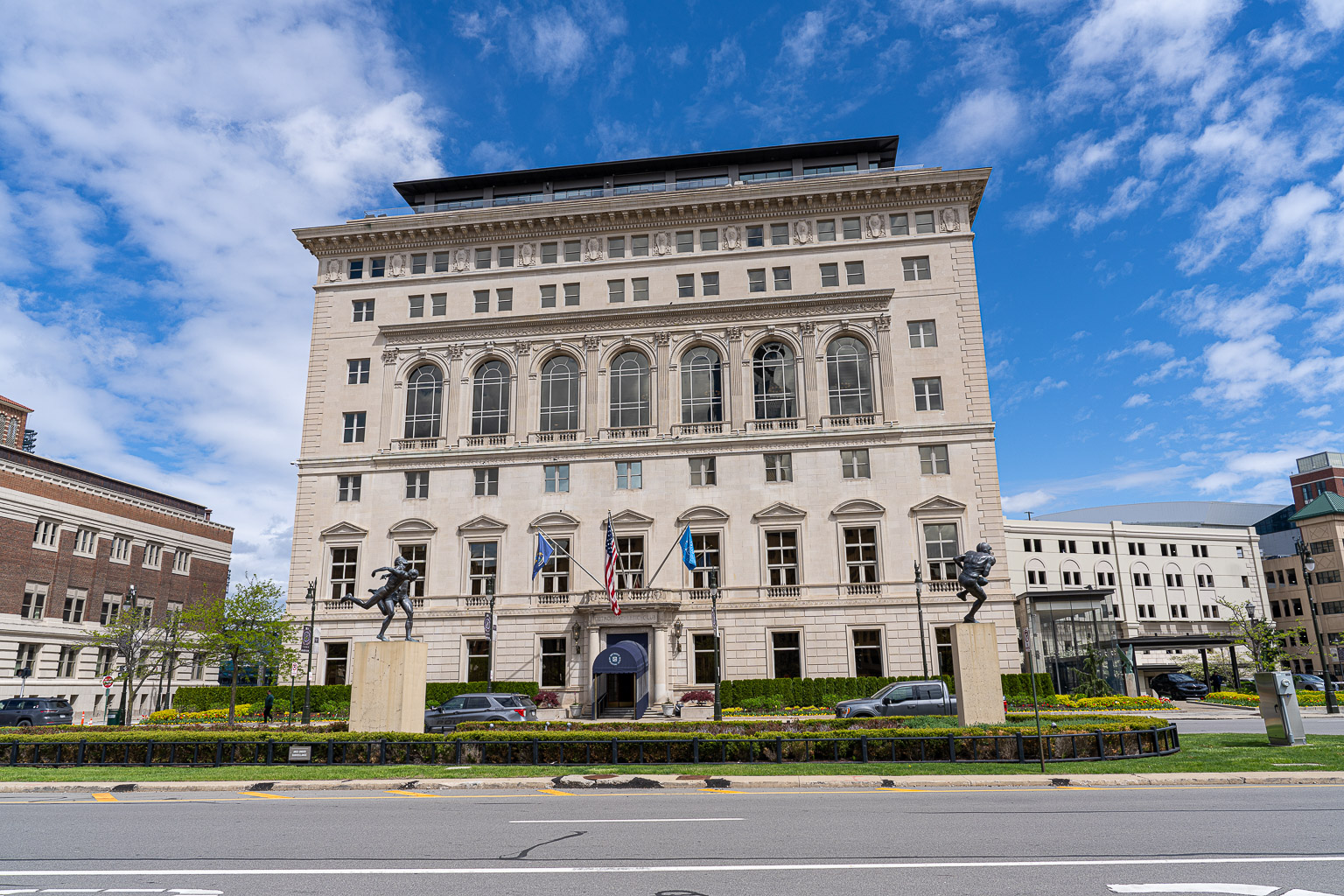
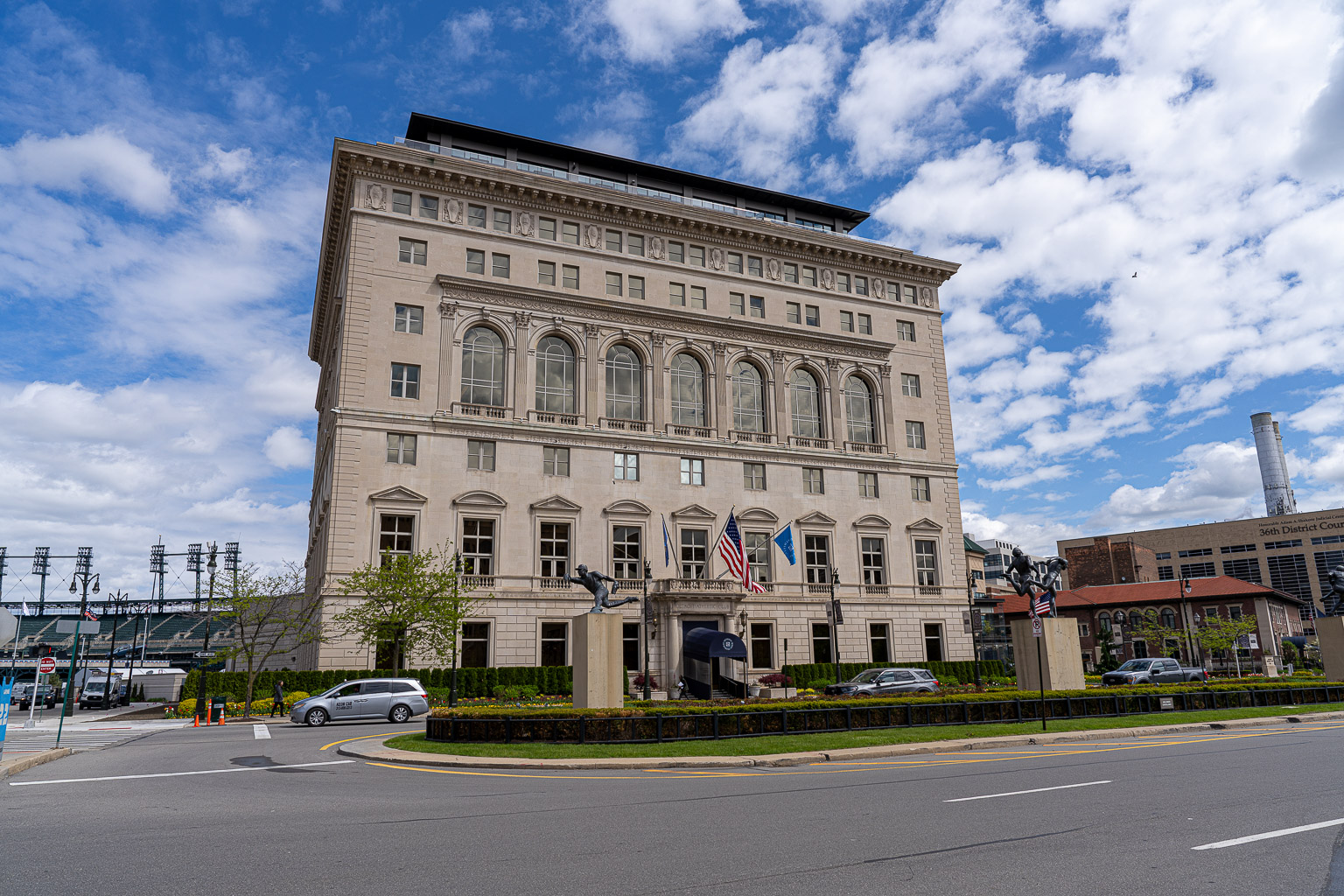
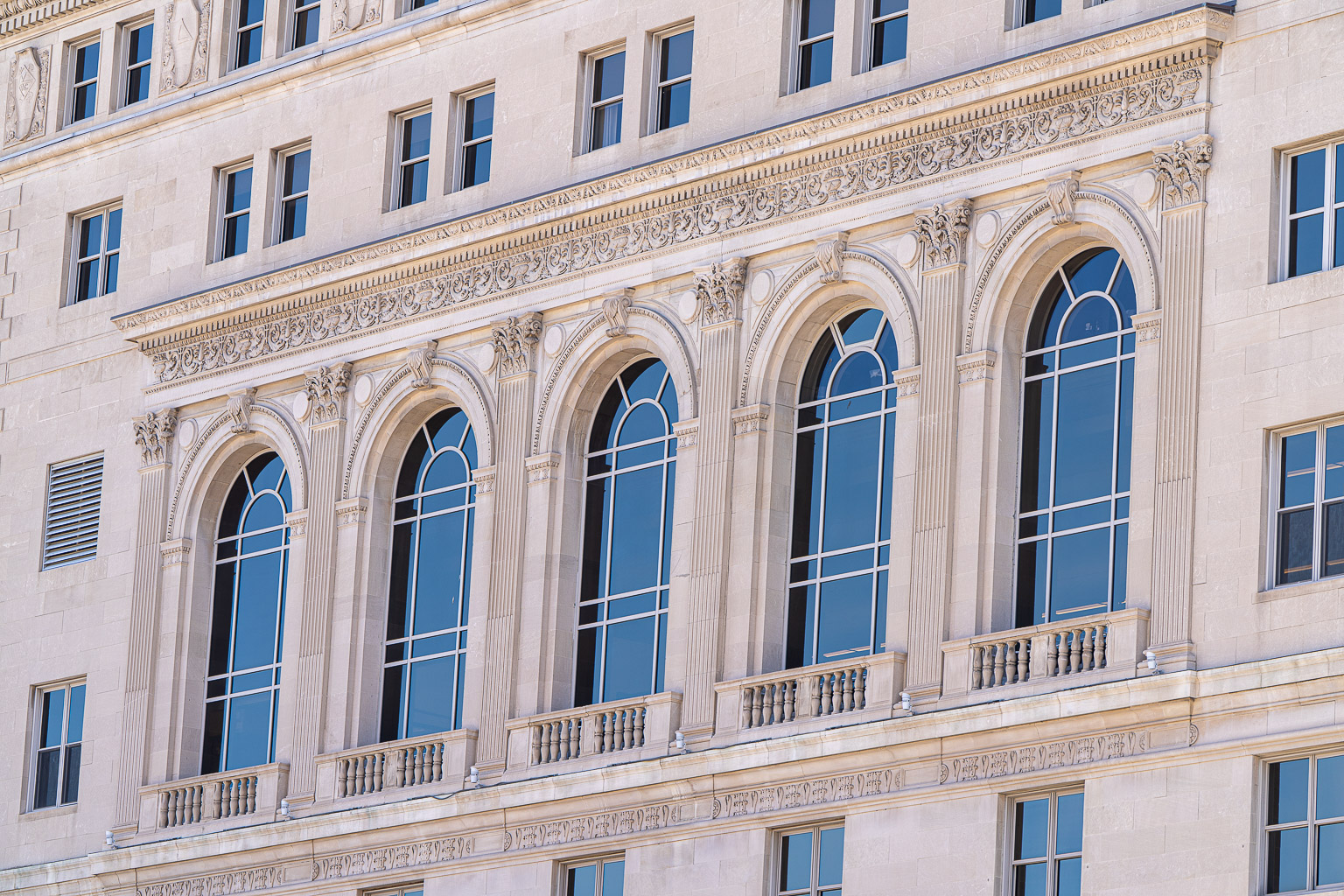
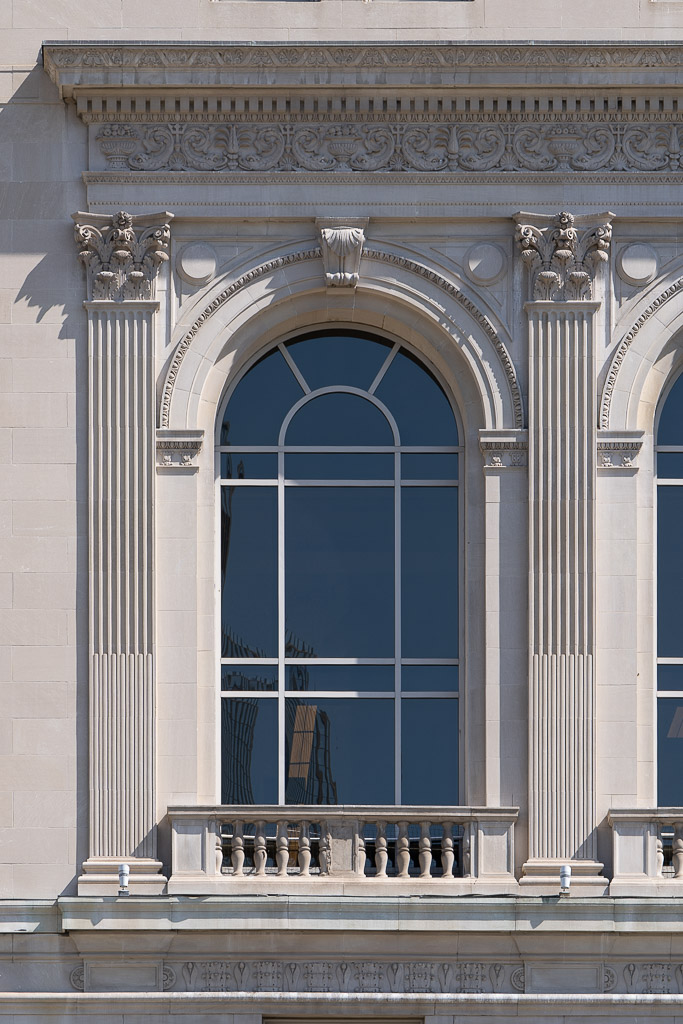
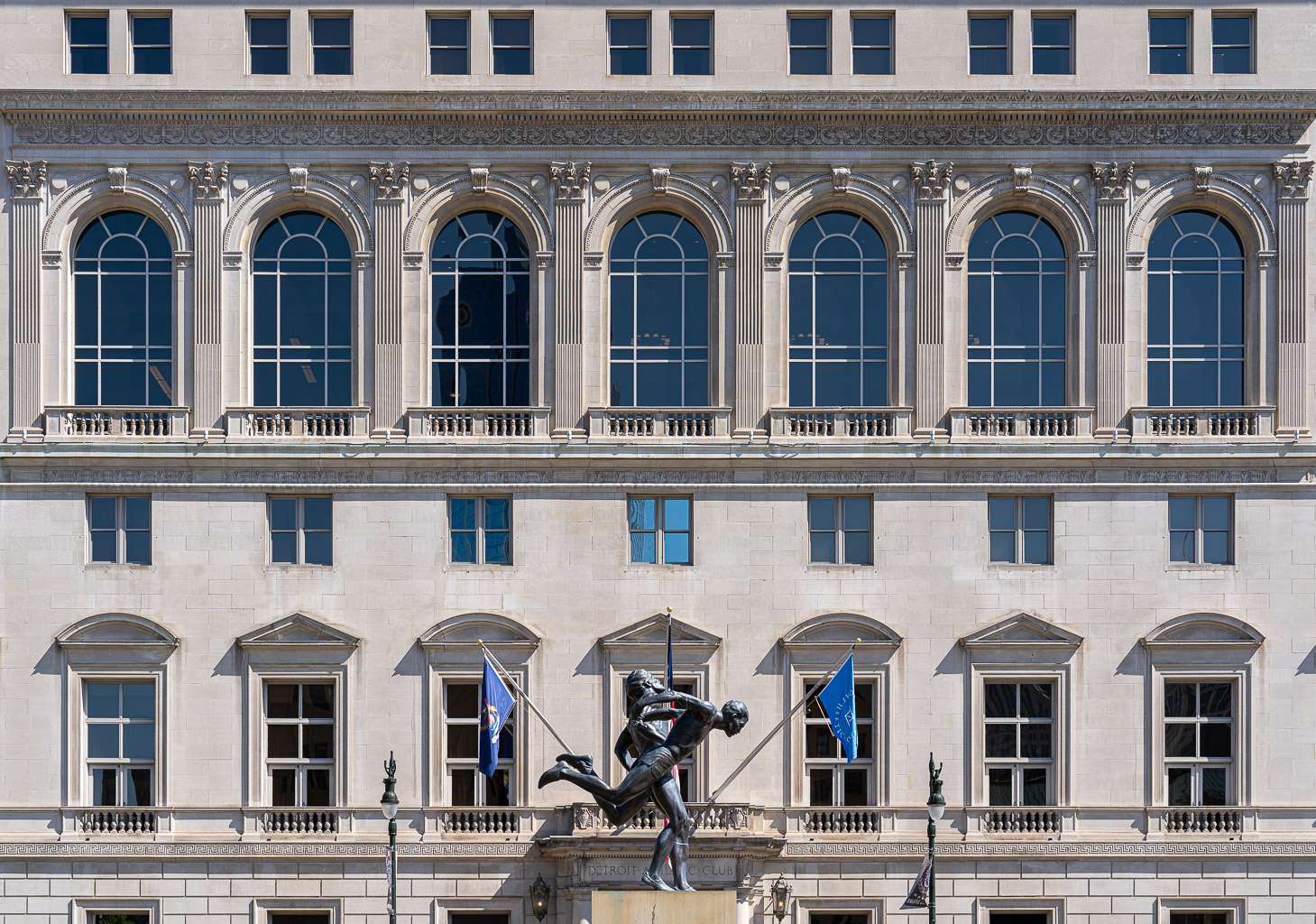
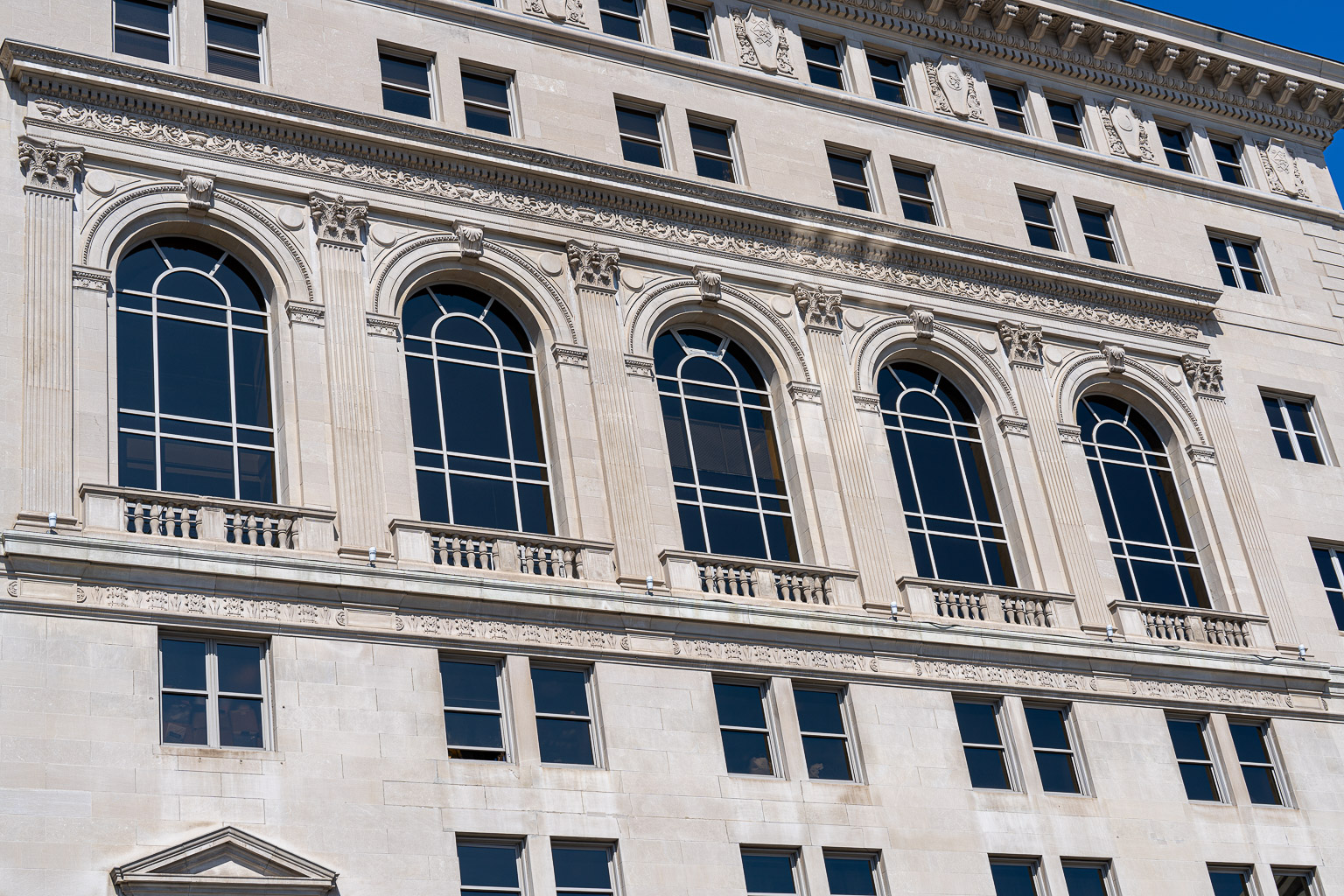
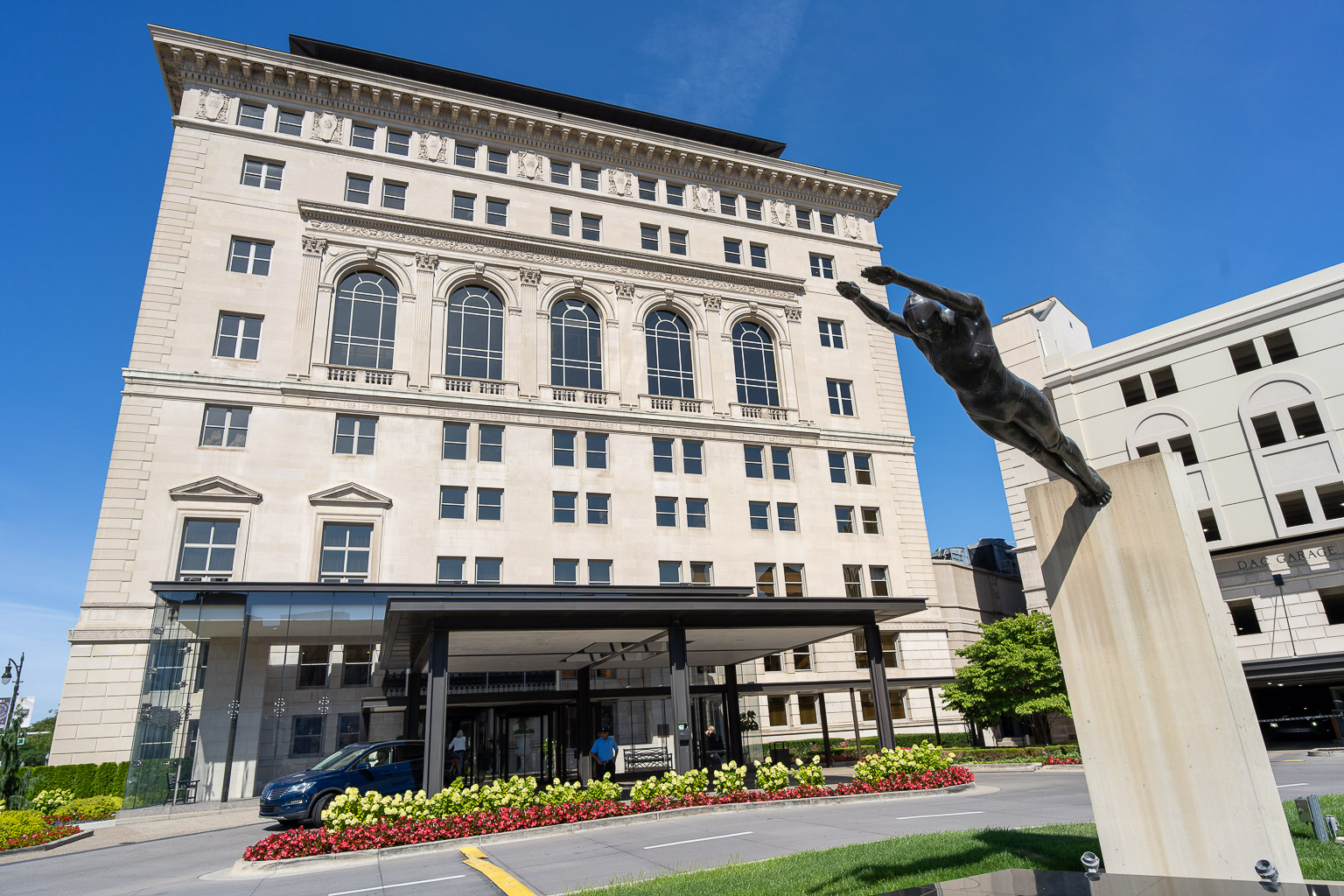
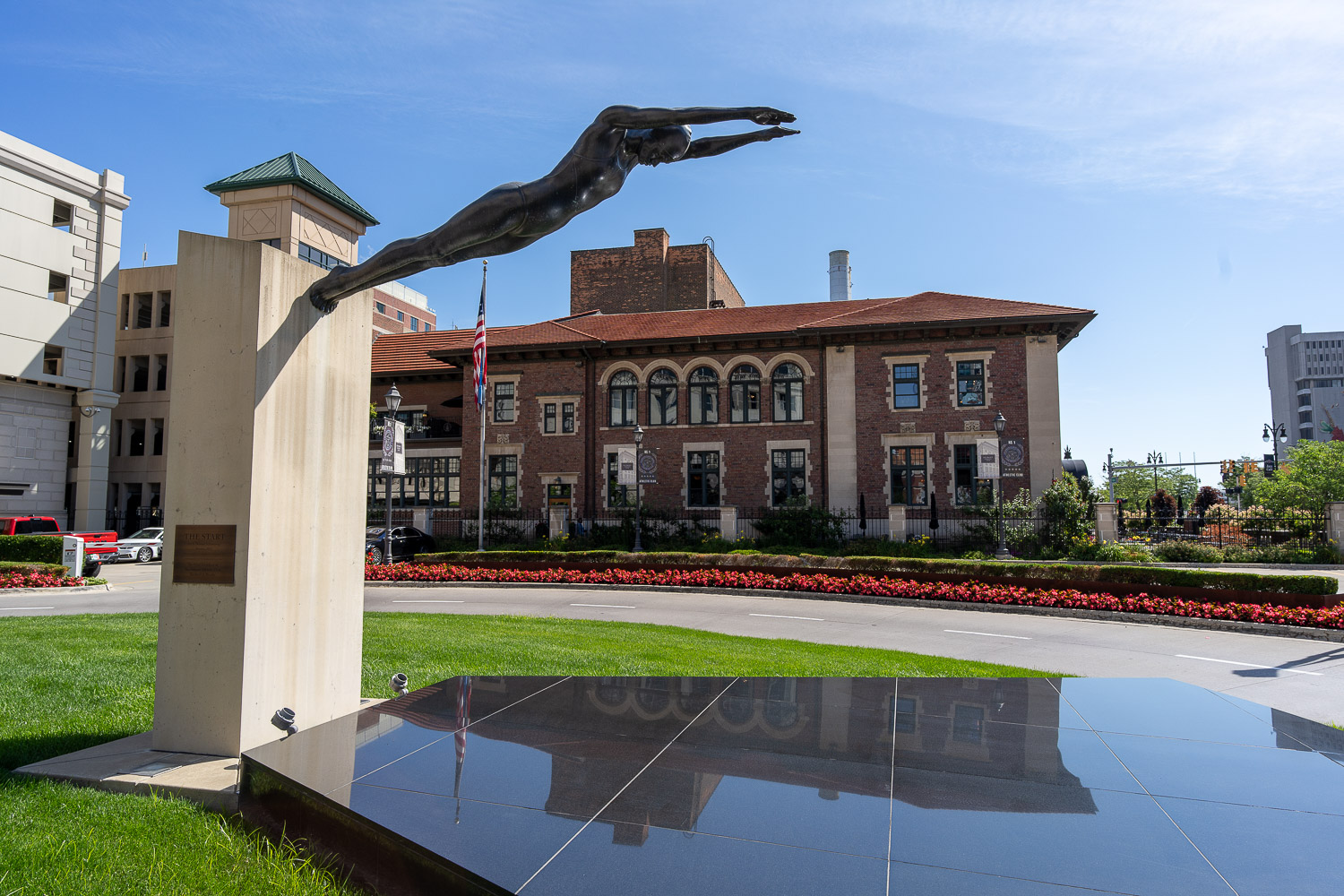
Kahn designed a monumental Roman Renaissance palace out of Bedford limestone for the D.A.C. W. Hawkins Ferry, in The Buildings of Detroit, described the building's Doric portico as modeled after the Palazzo Borghese, and its treatment of the large 4th story windows, an arched loggia with delicate corinthian pilasters, as modeled after the Palazzo Farnese.
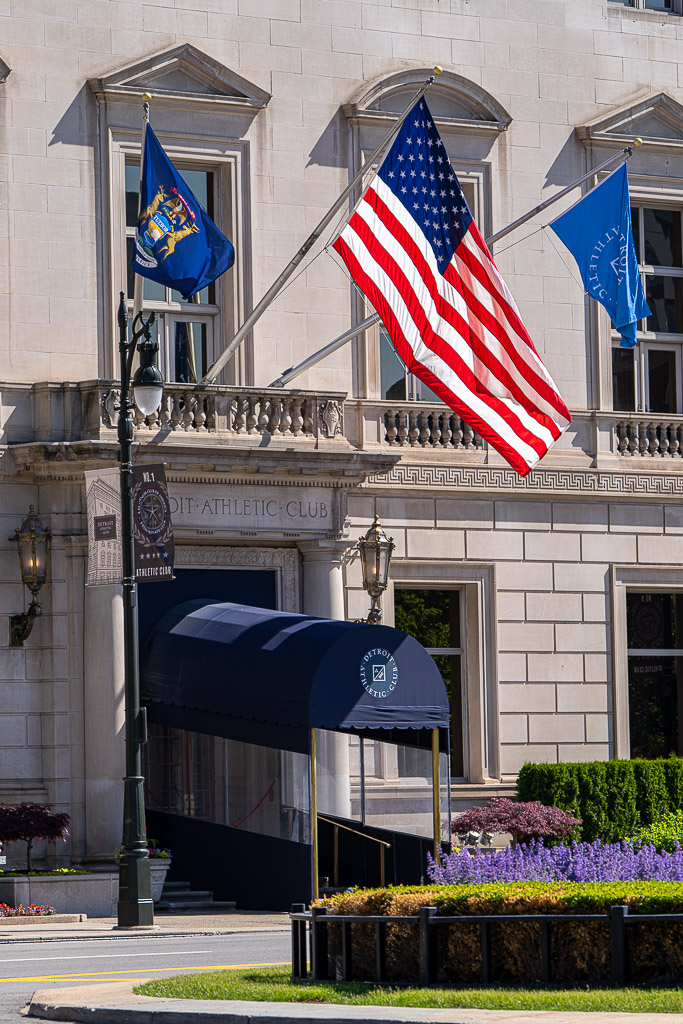
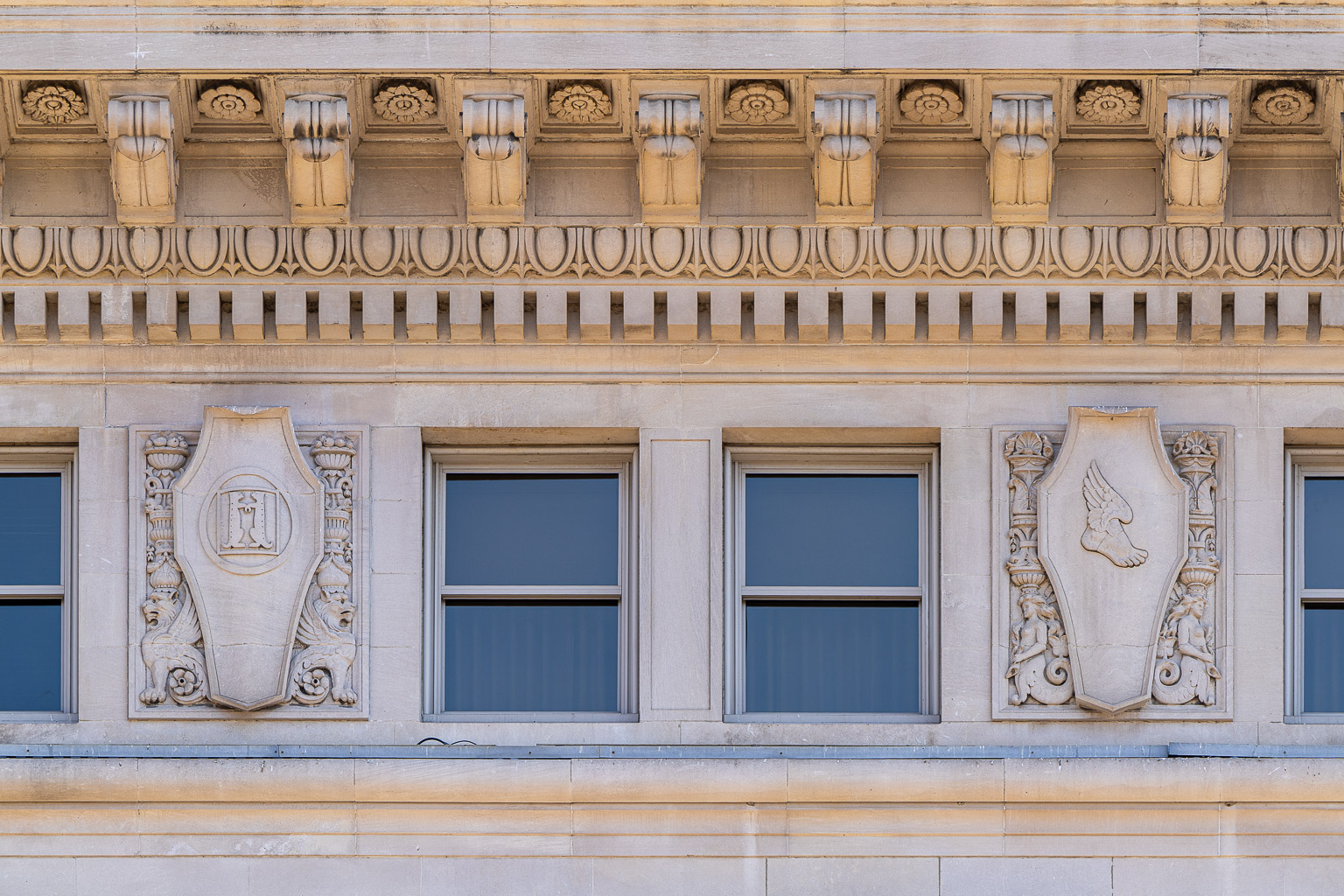
The first story of the seven-story building is rusticated, with the entrance placed centrally. Alternating triangular and segmental pediments over elongated windows are evenly spaced along the 2nd story. Large shallow cartouches were placed between every pair of windows on the seventh, or attic story, beneath the heavy modillion cornice.
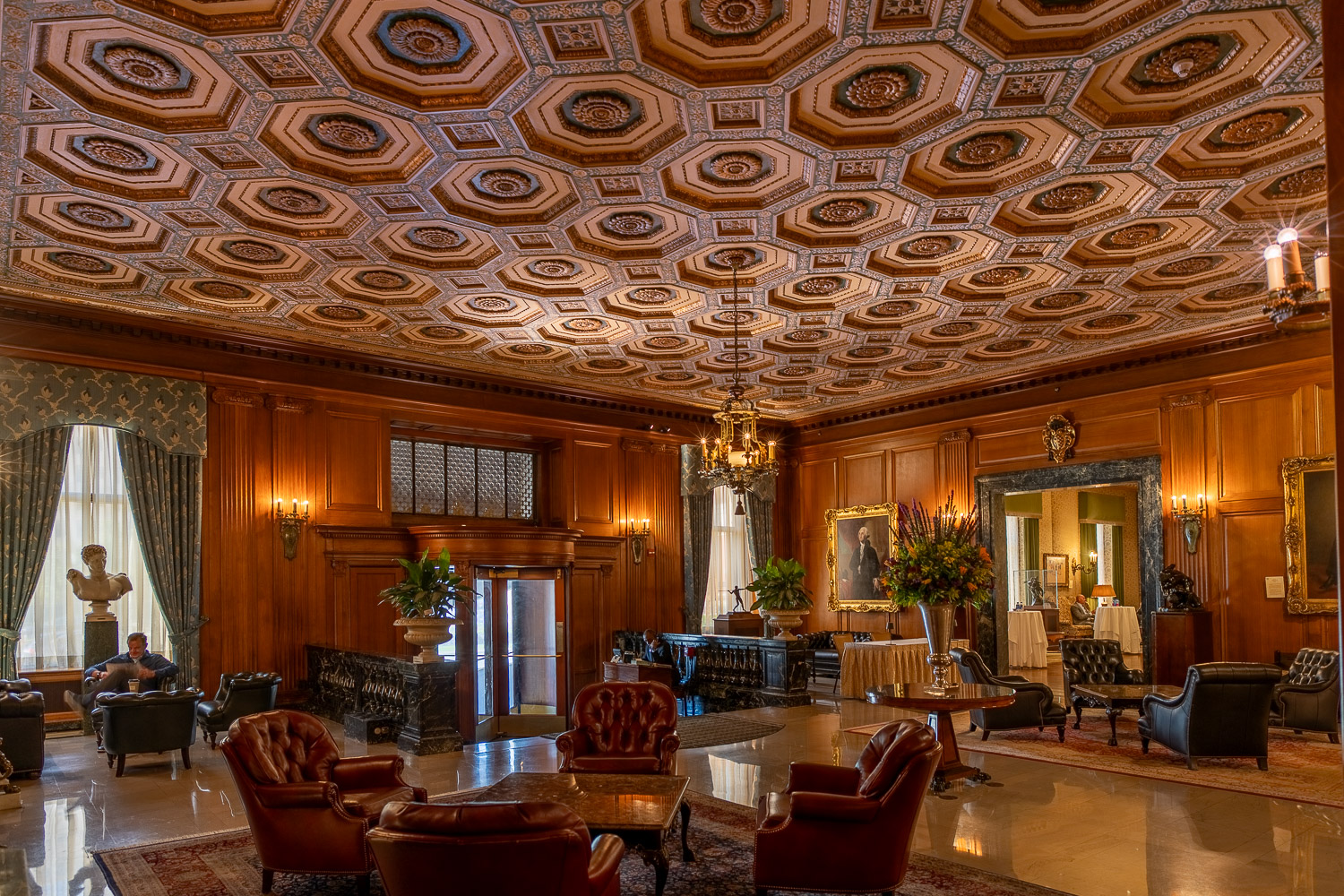
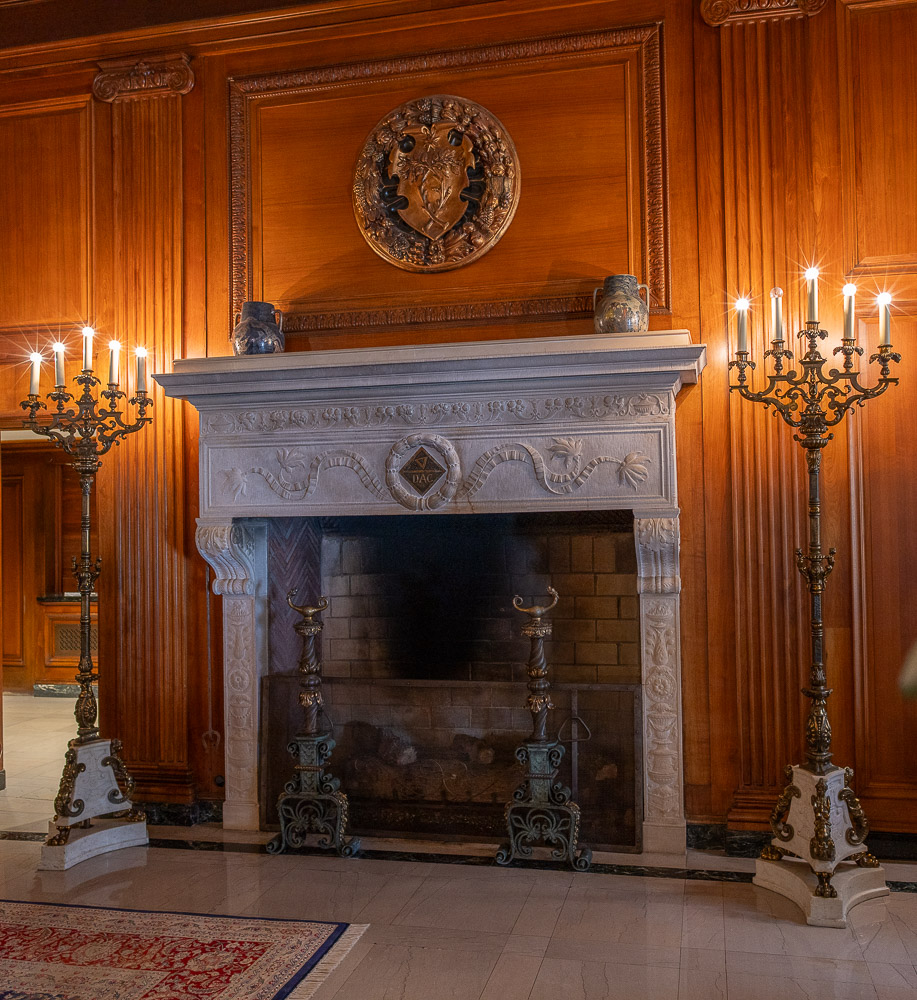
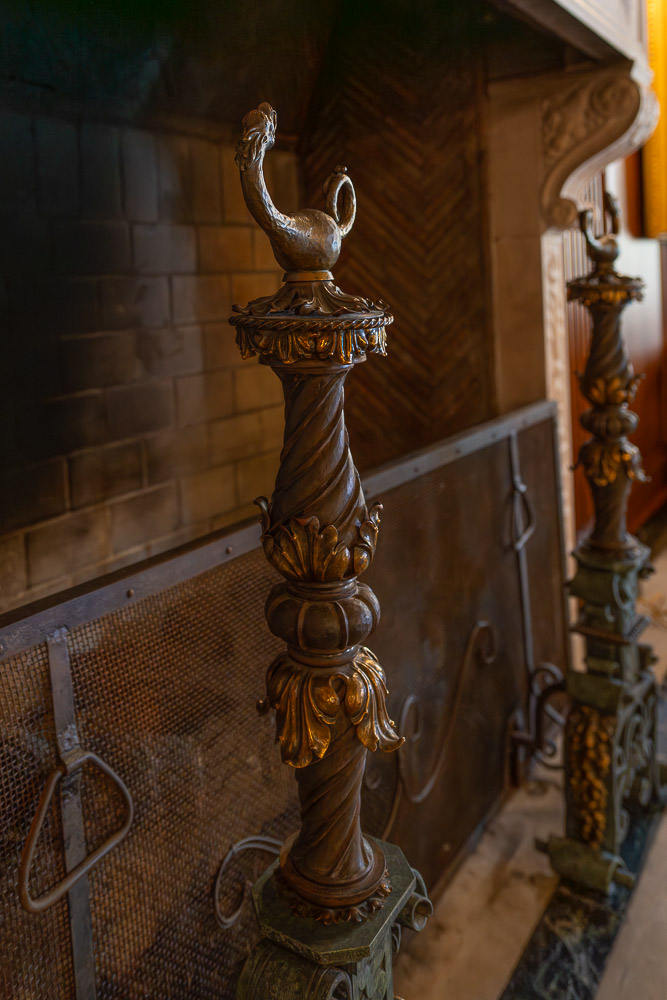
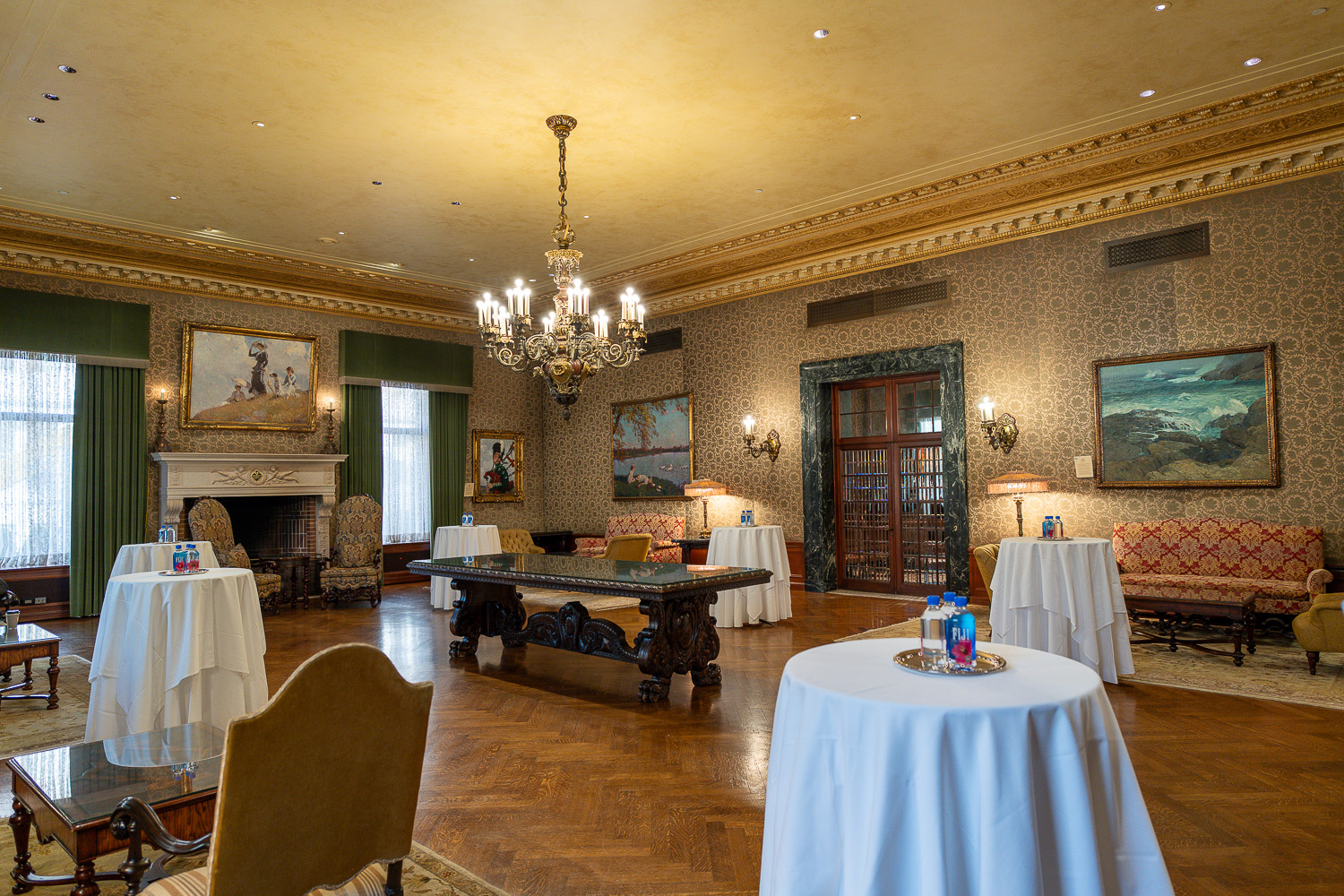
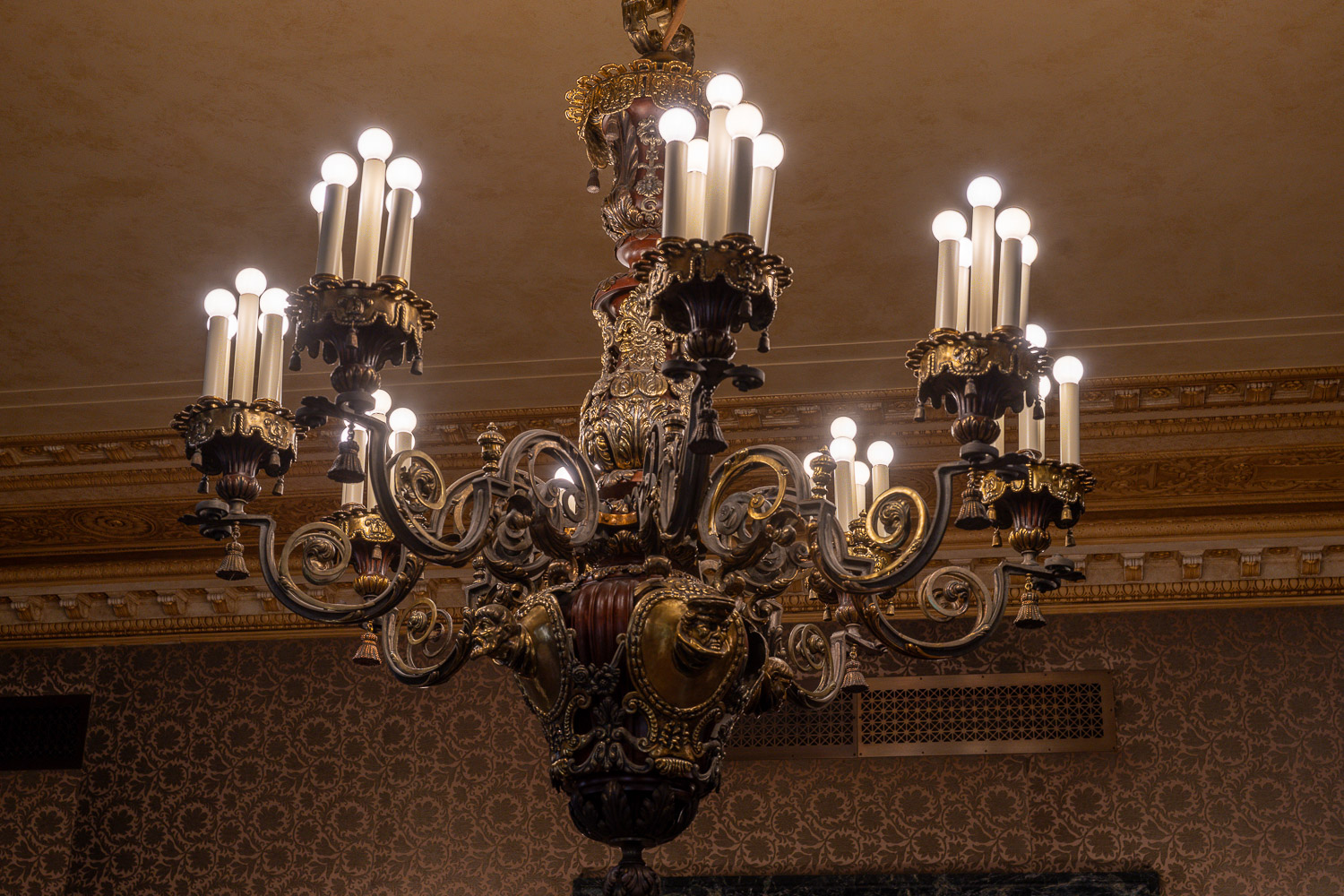
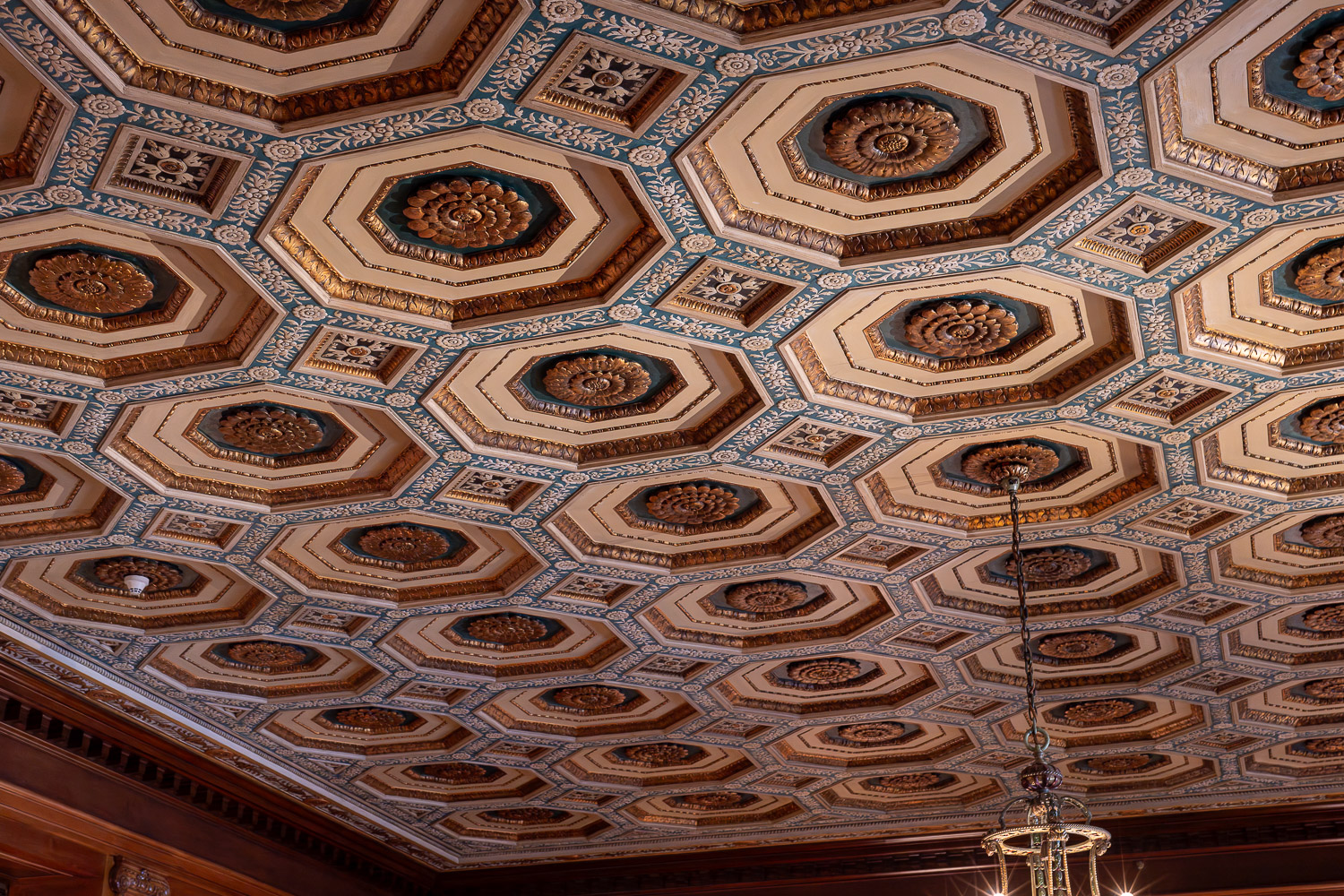
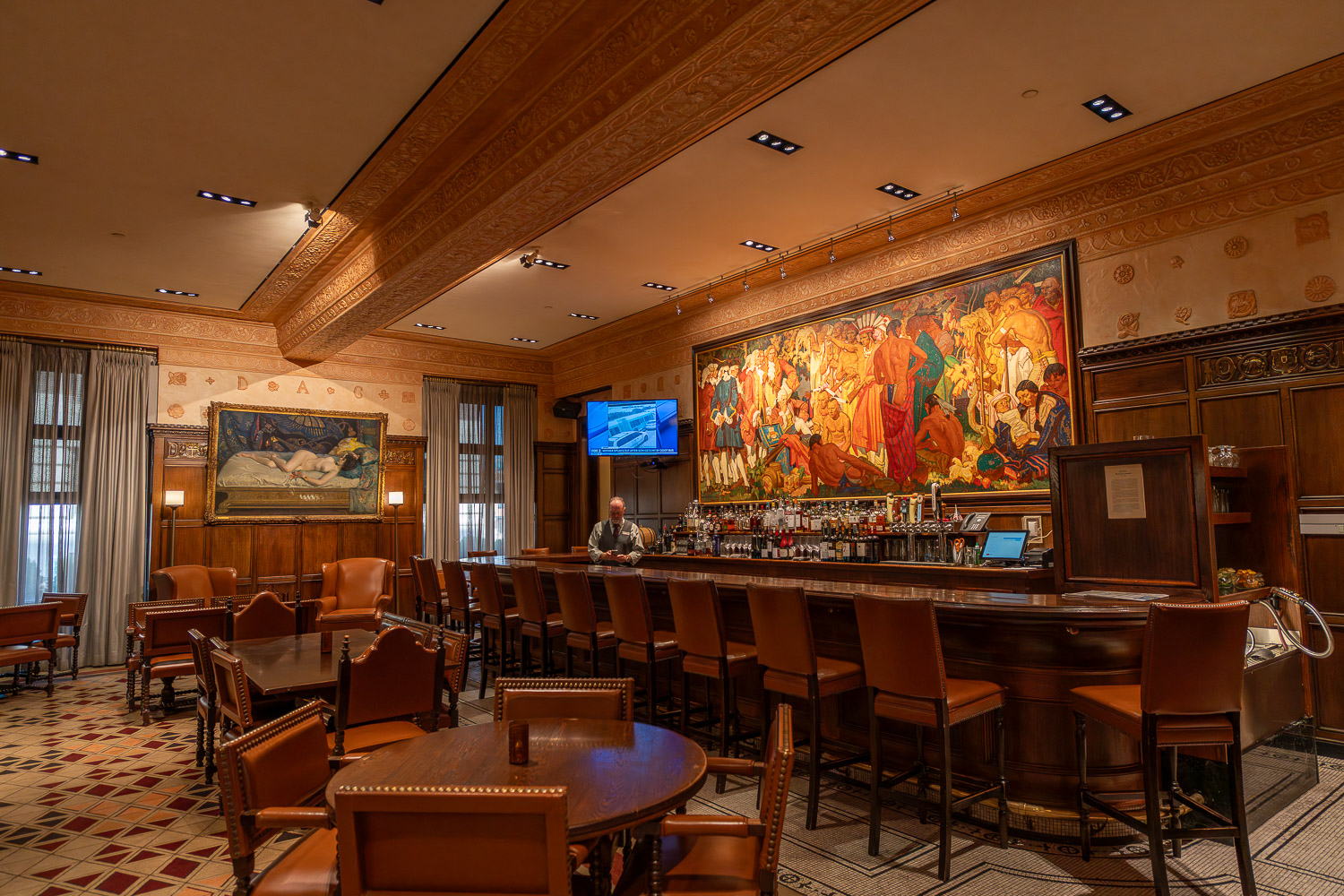
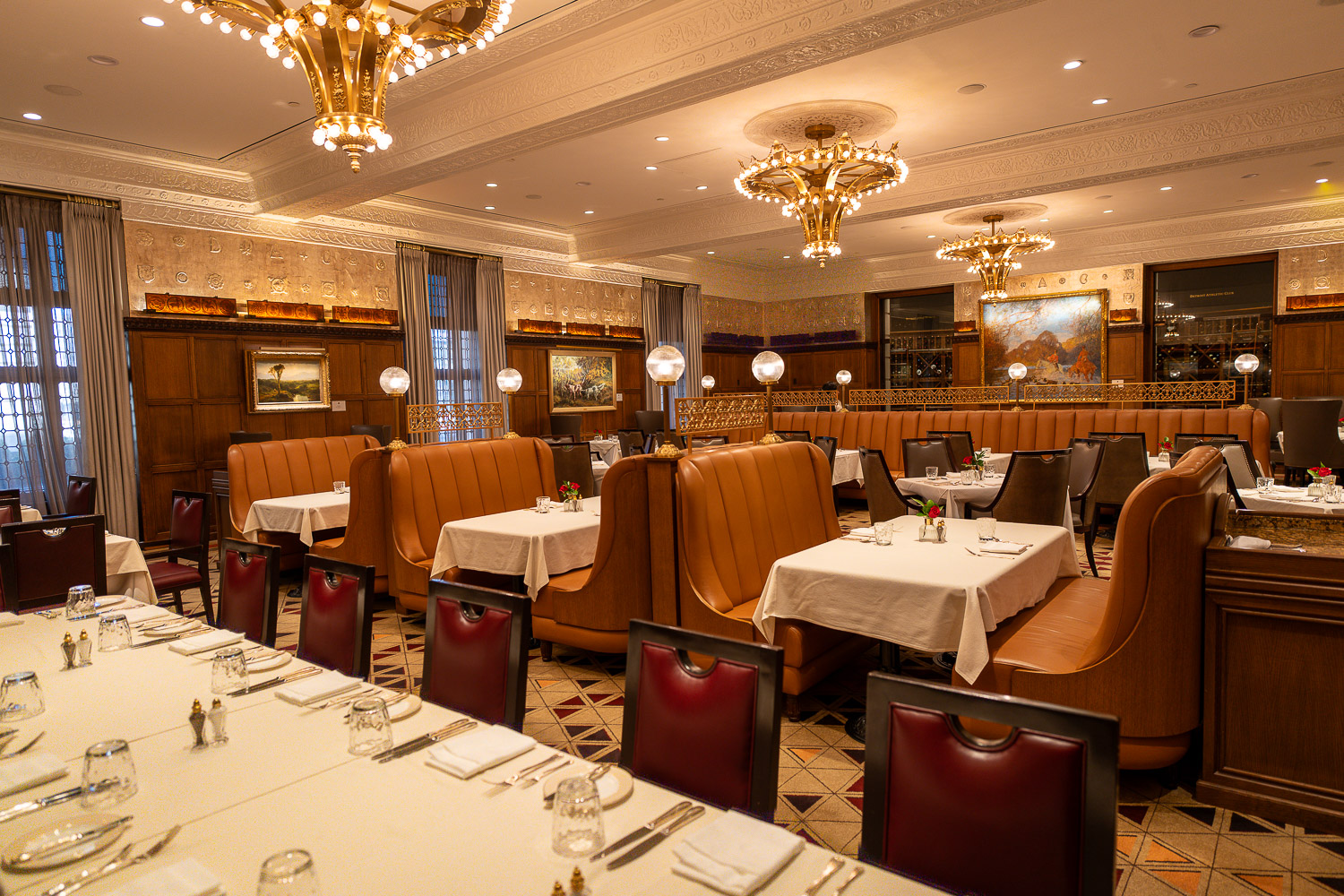
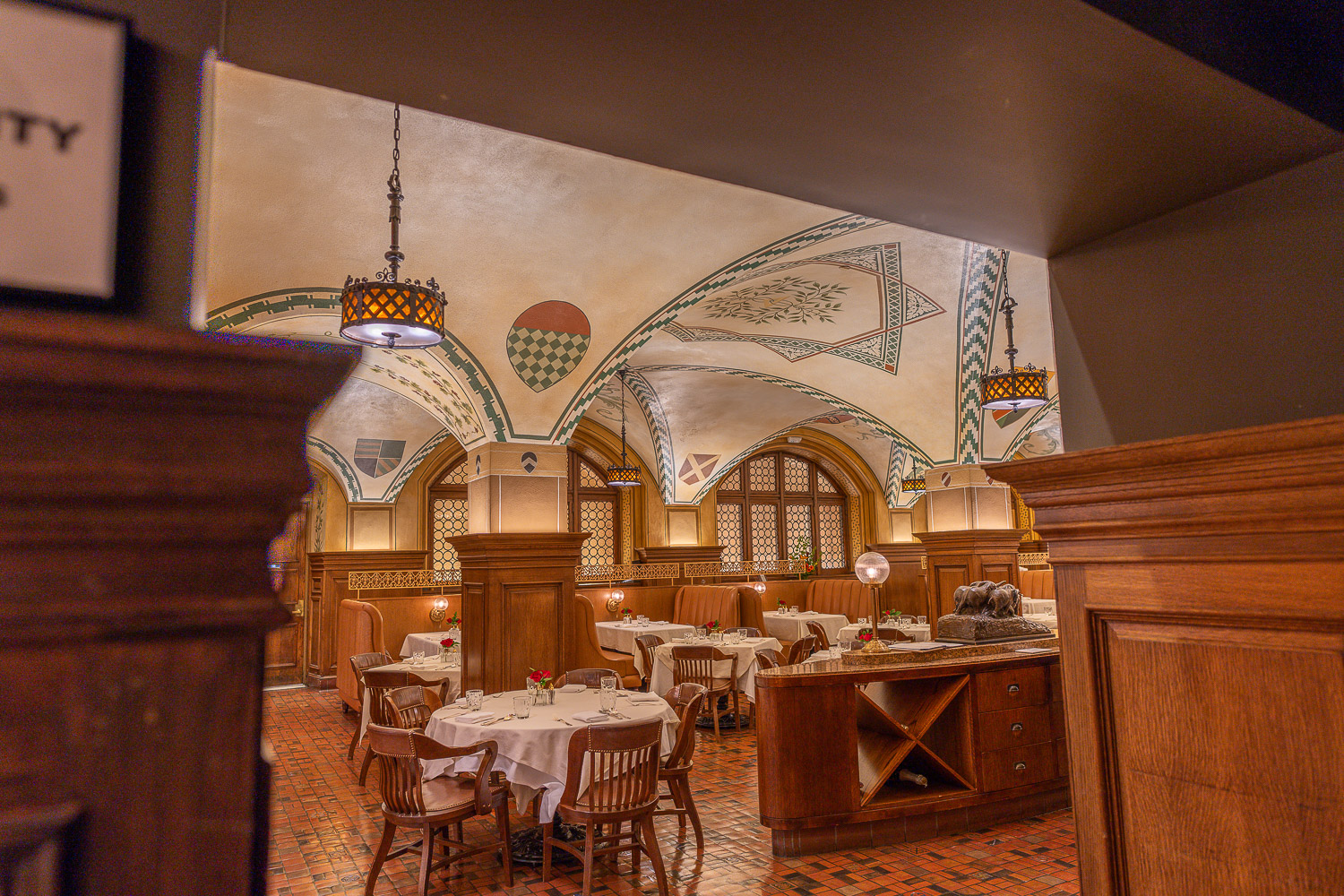
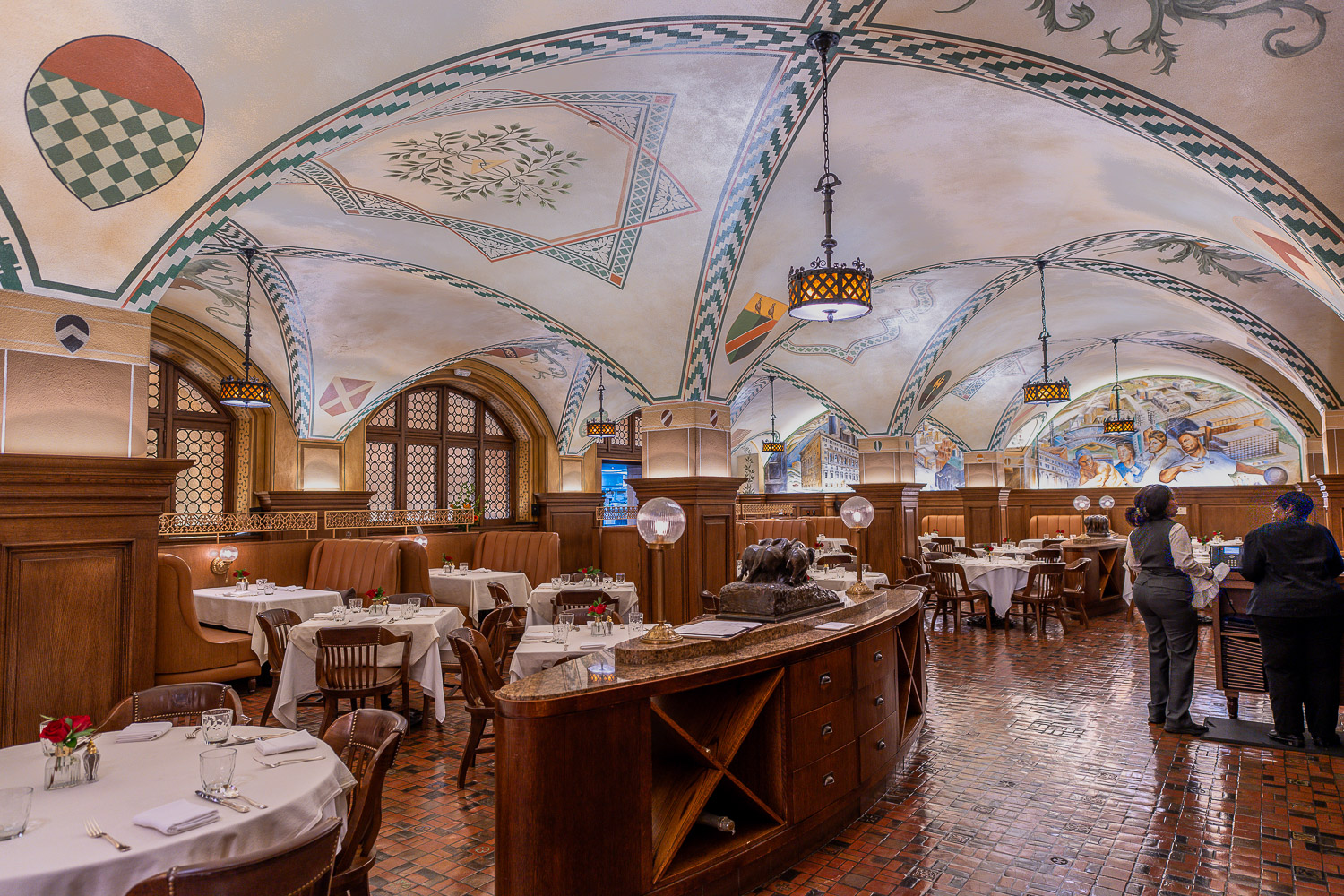
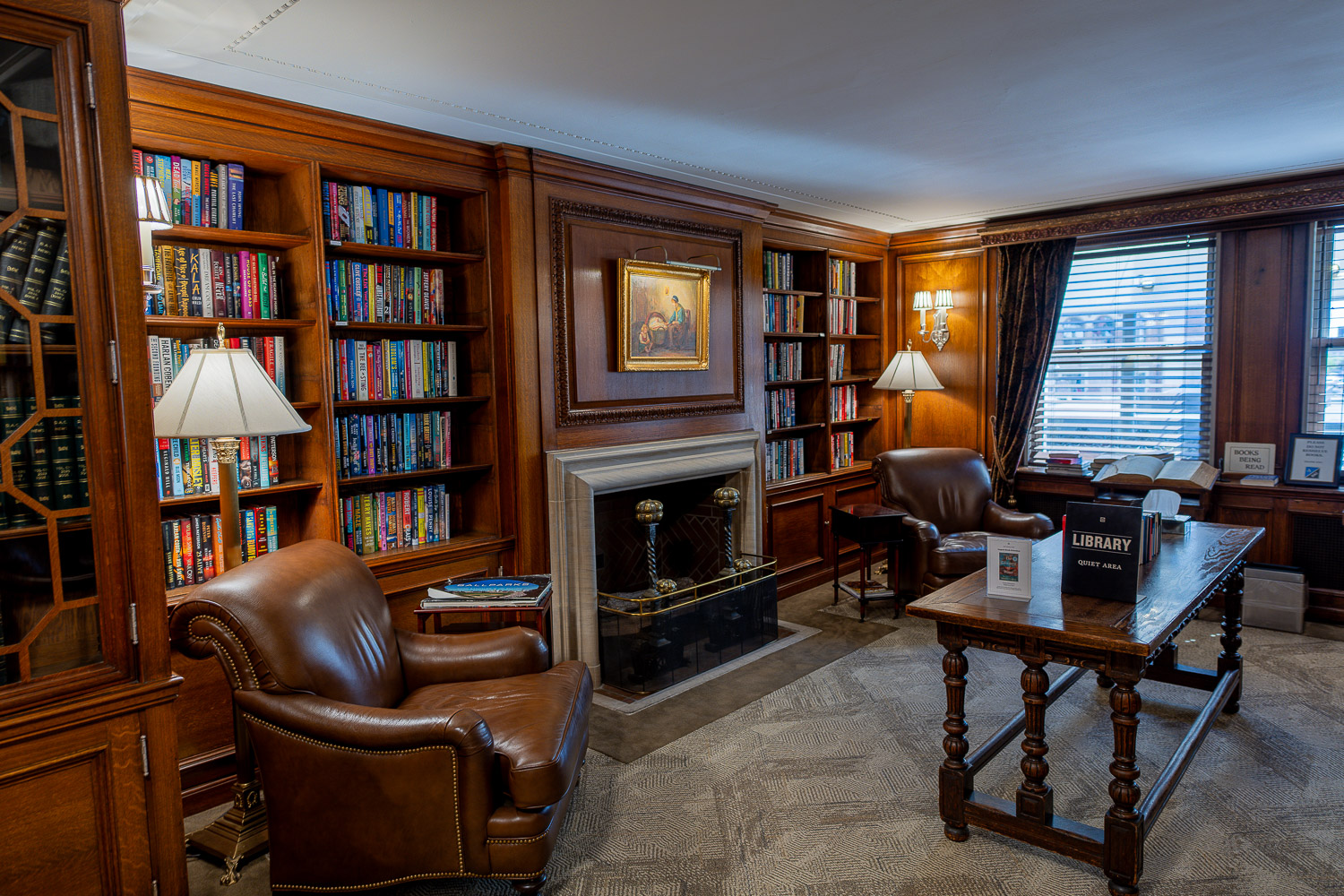
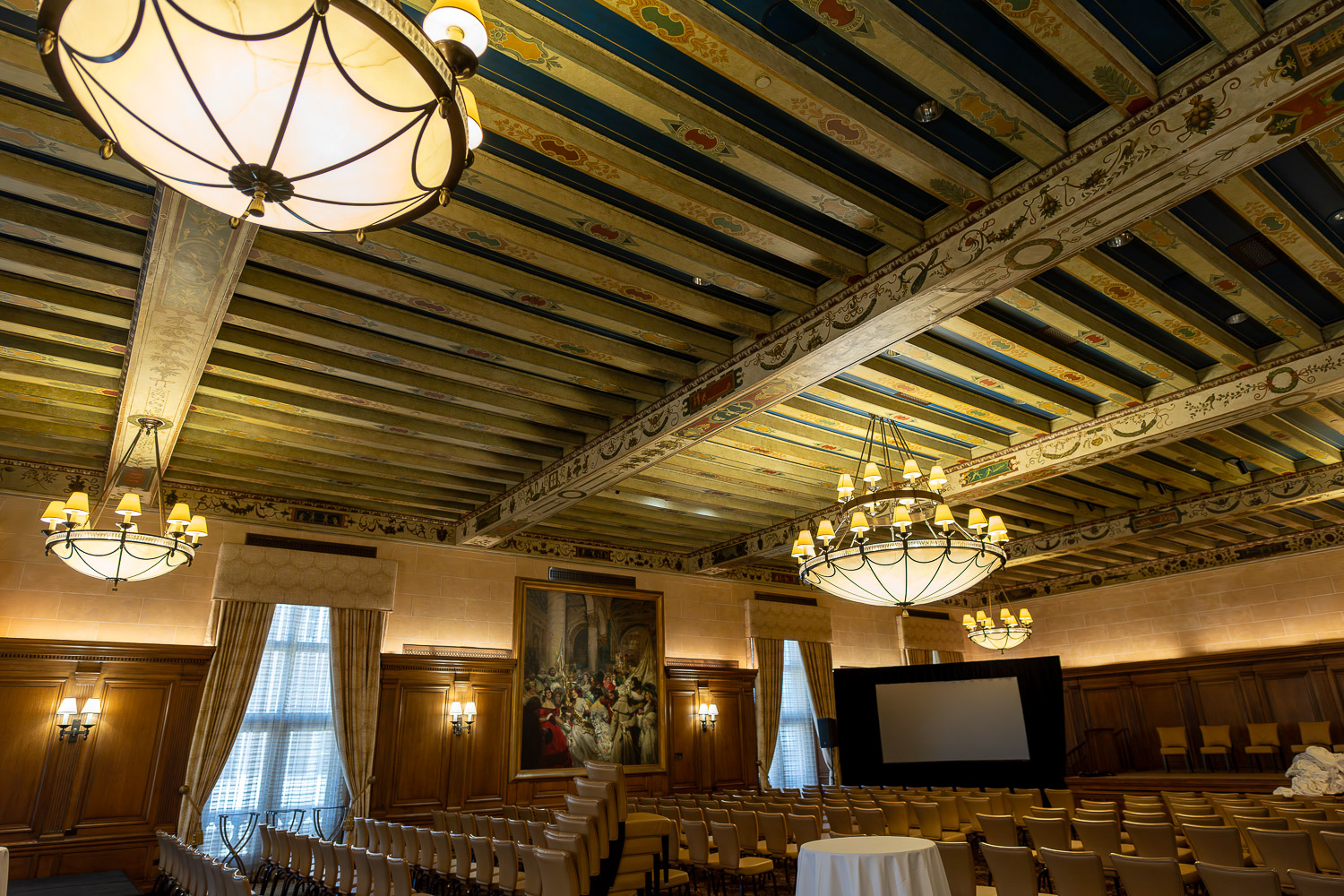
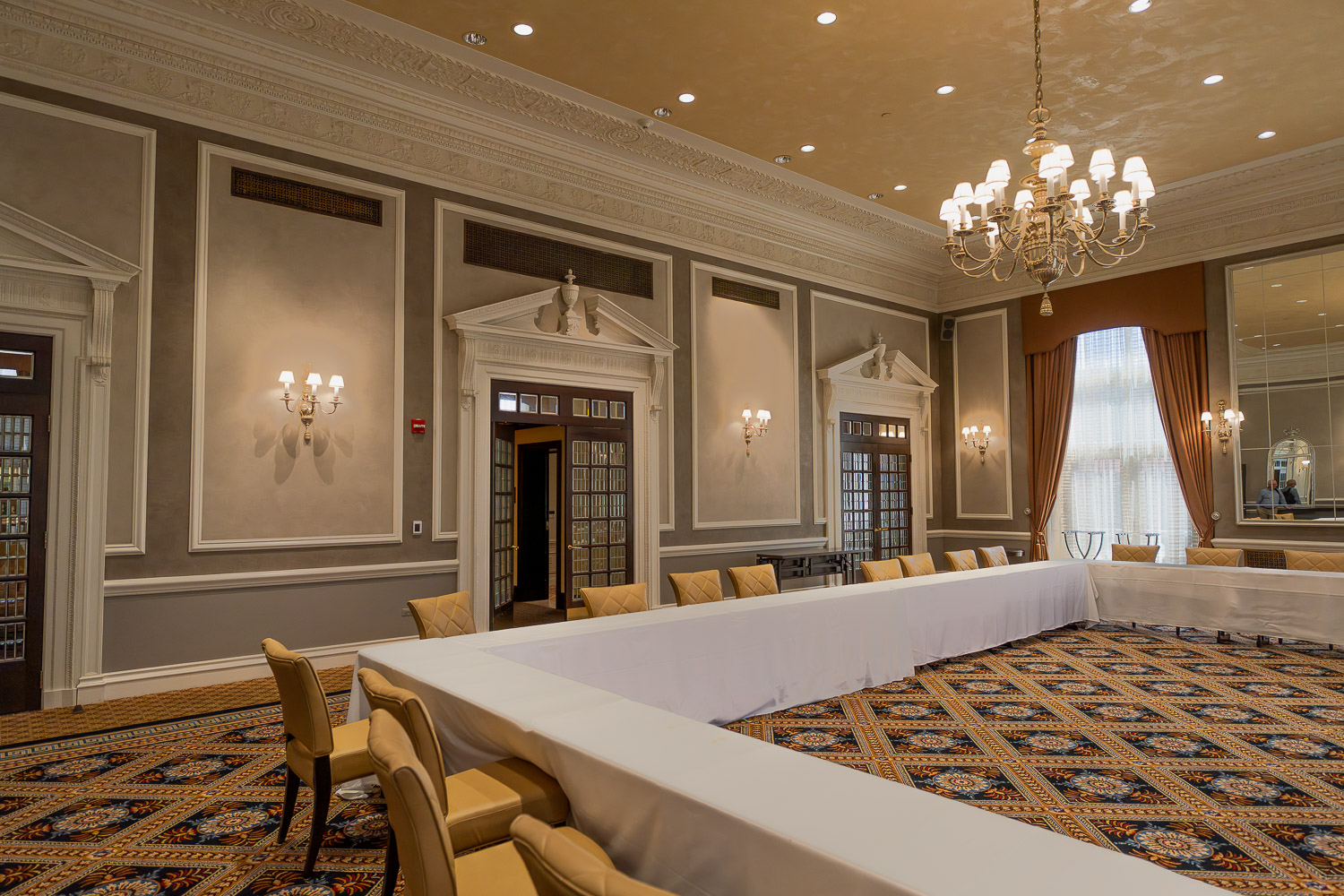
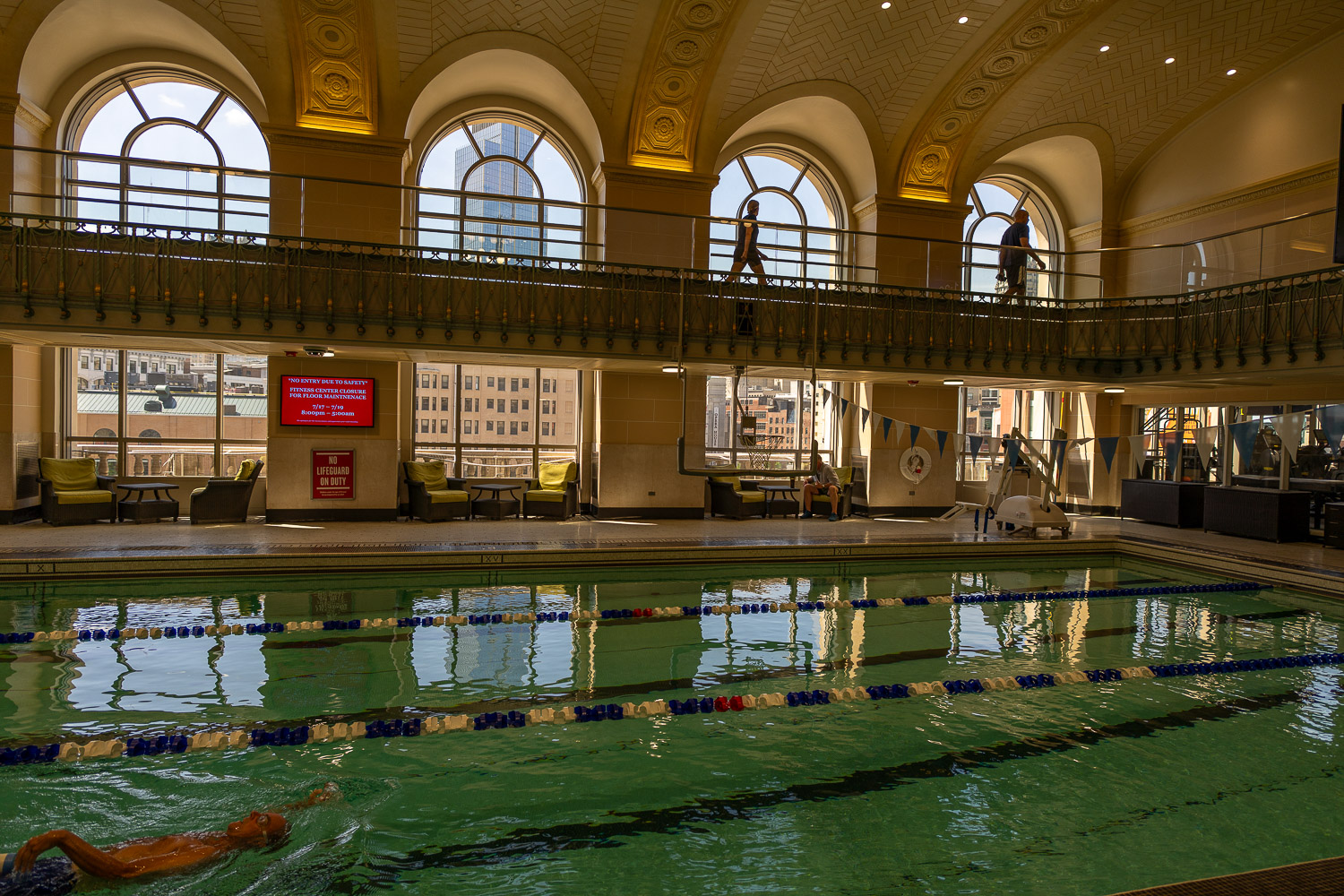
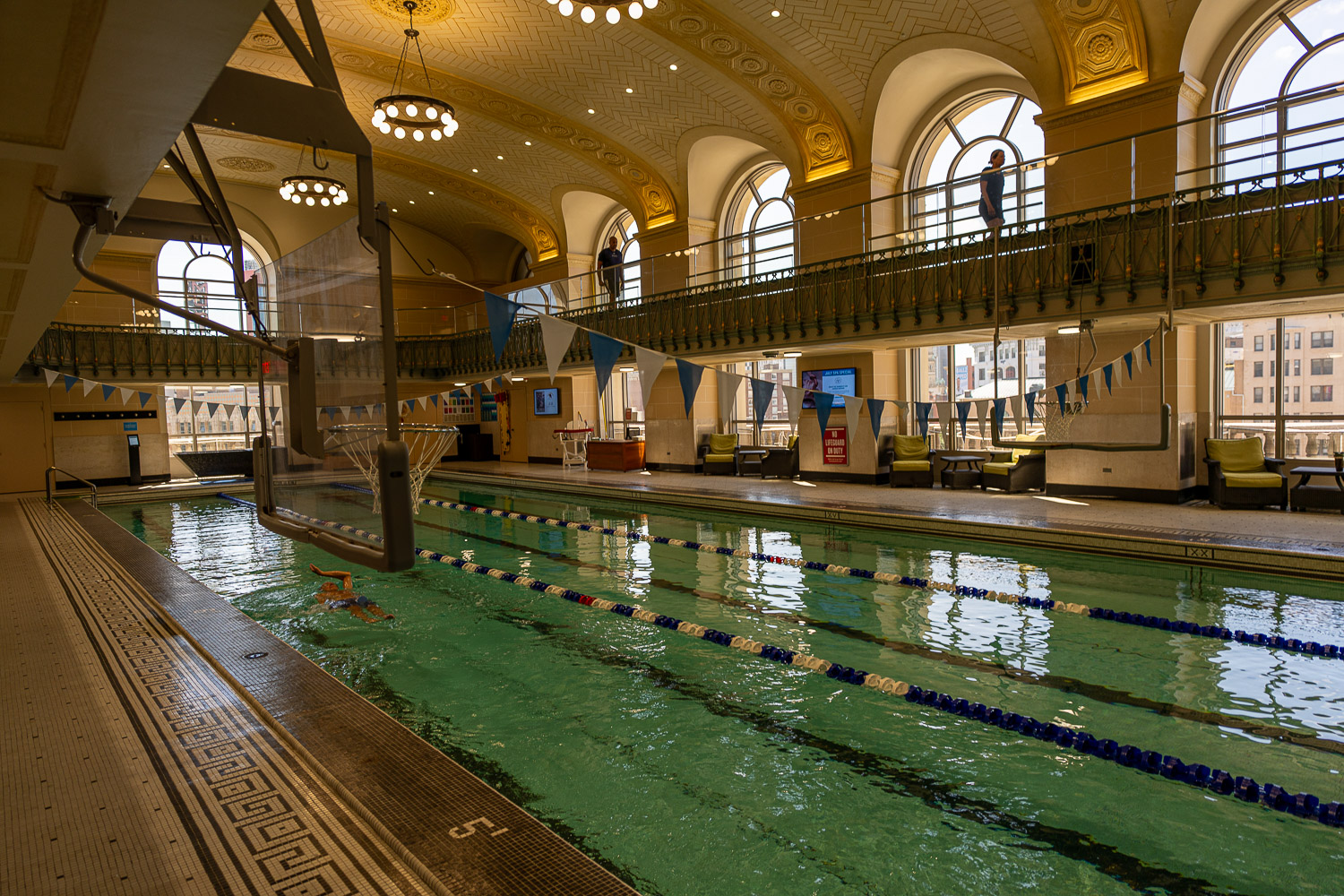
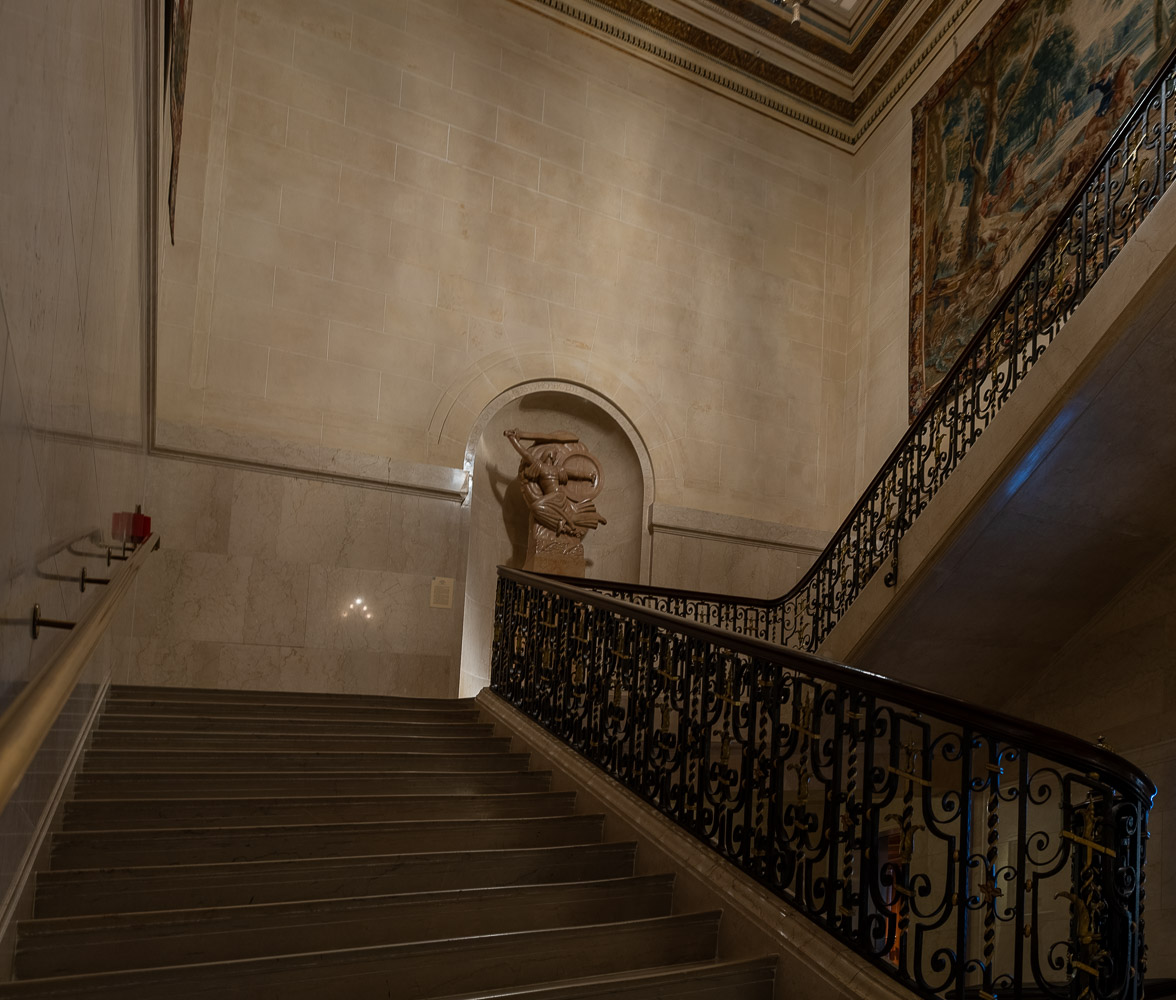
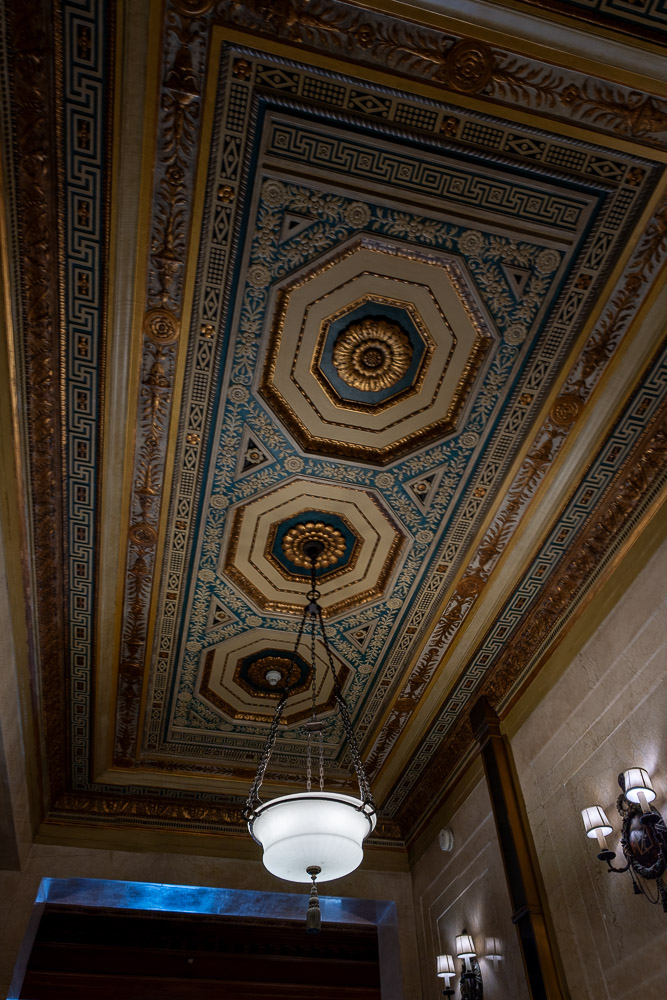
On the interior, the first floor is of Tennessee marble and walnut wainscoting. The showcase of the club's early years was the Palm Room, now the Ponchartain Room. When the building opened in 1915, it contained a main dining hall, grill room, ladies dining room, and 9 private dining rooms. The pool and gym facilities occupied the fourth floor, and the 5th, 6th, and 7th floors were occupied with 108 sleeping rooms. In the basement was a bowling alley. Click the interior photos below to enlarge them and see their caption, then click again to put them back on the page.
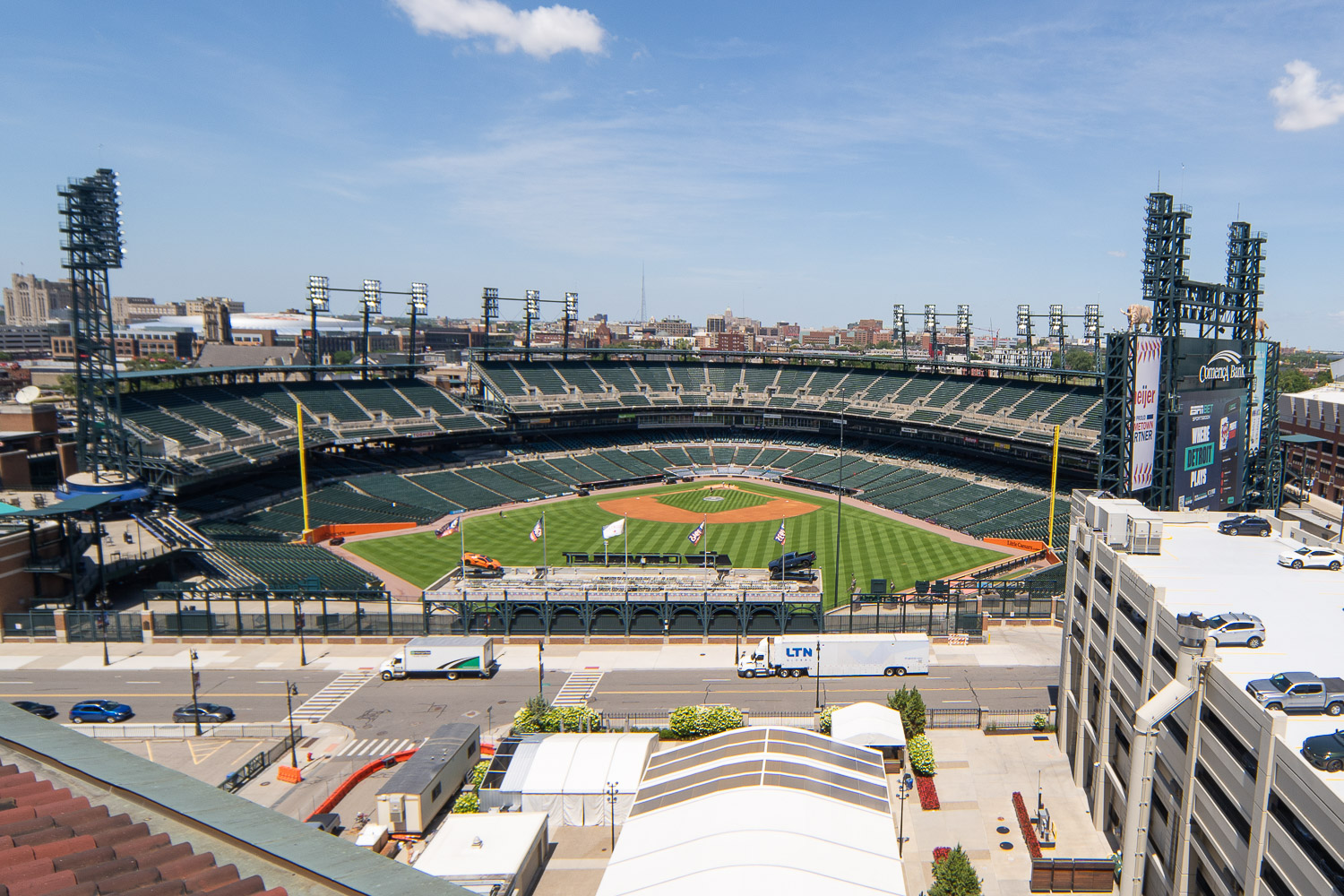
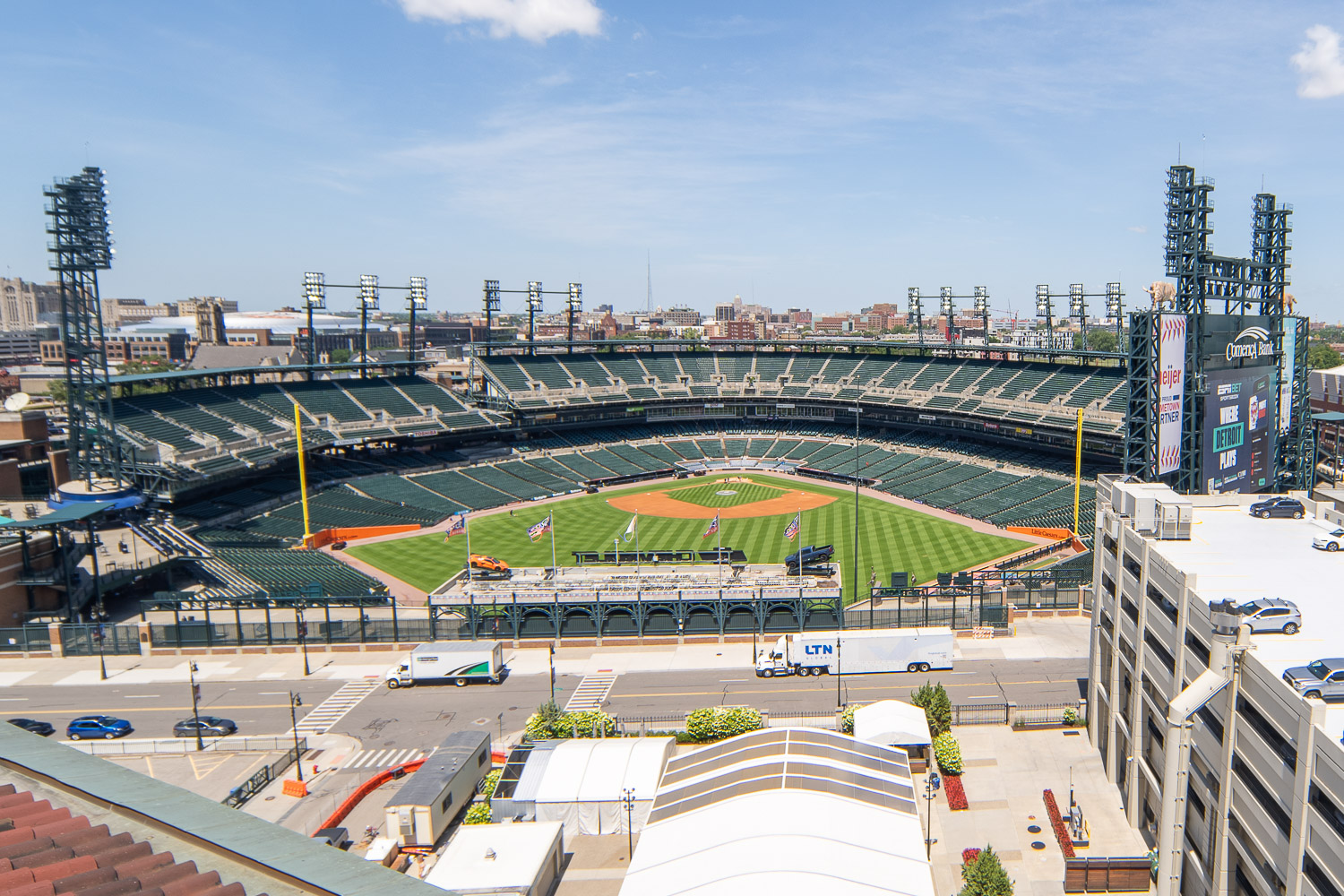
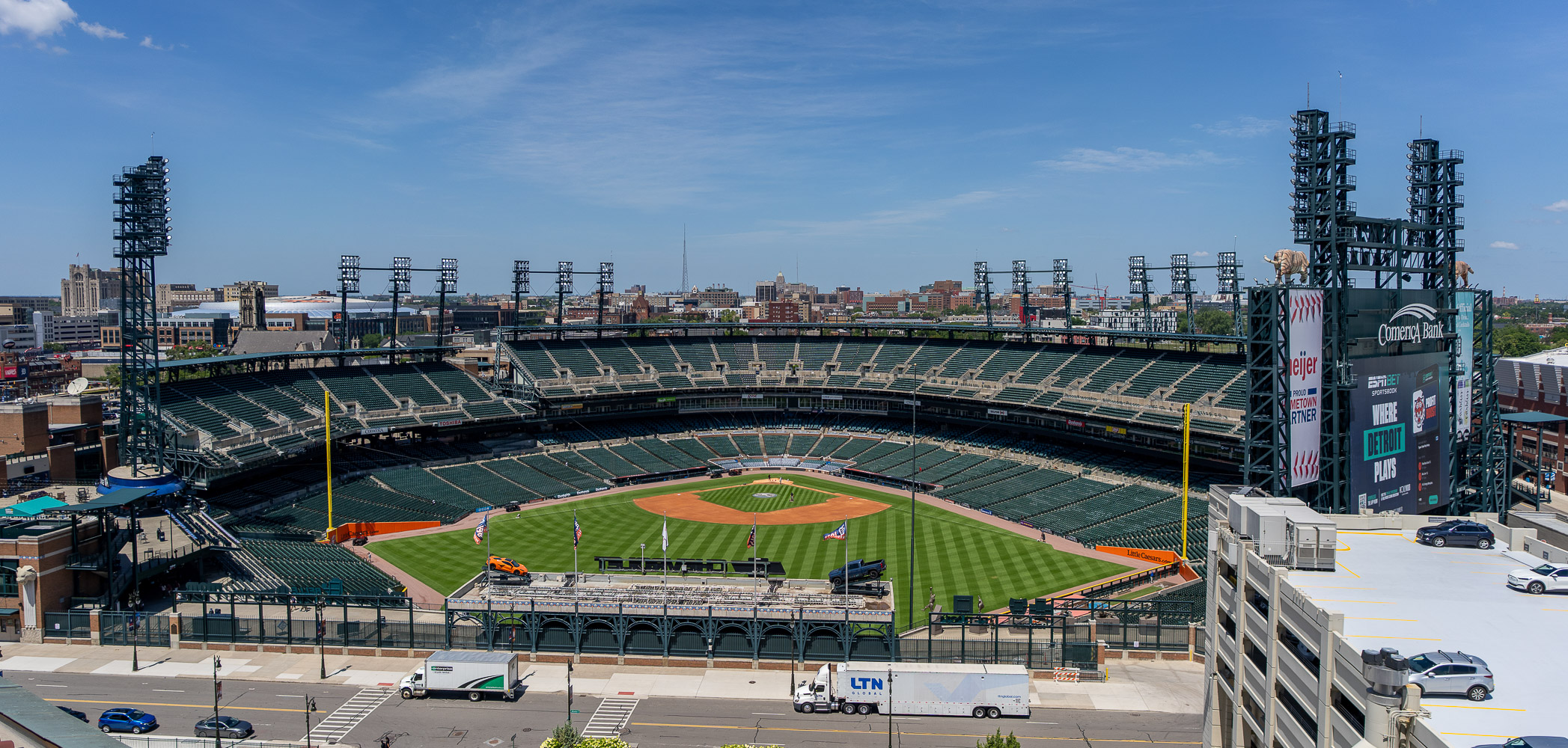
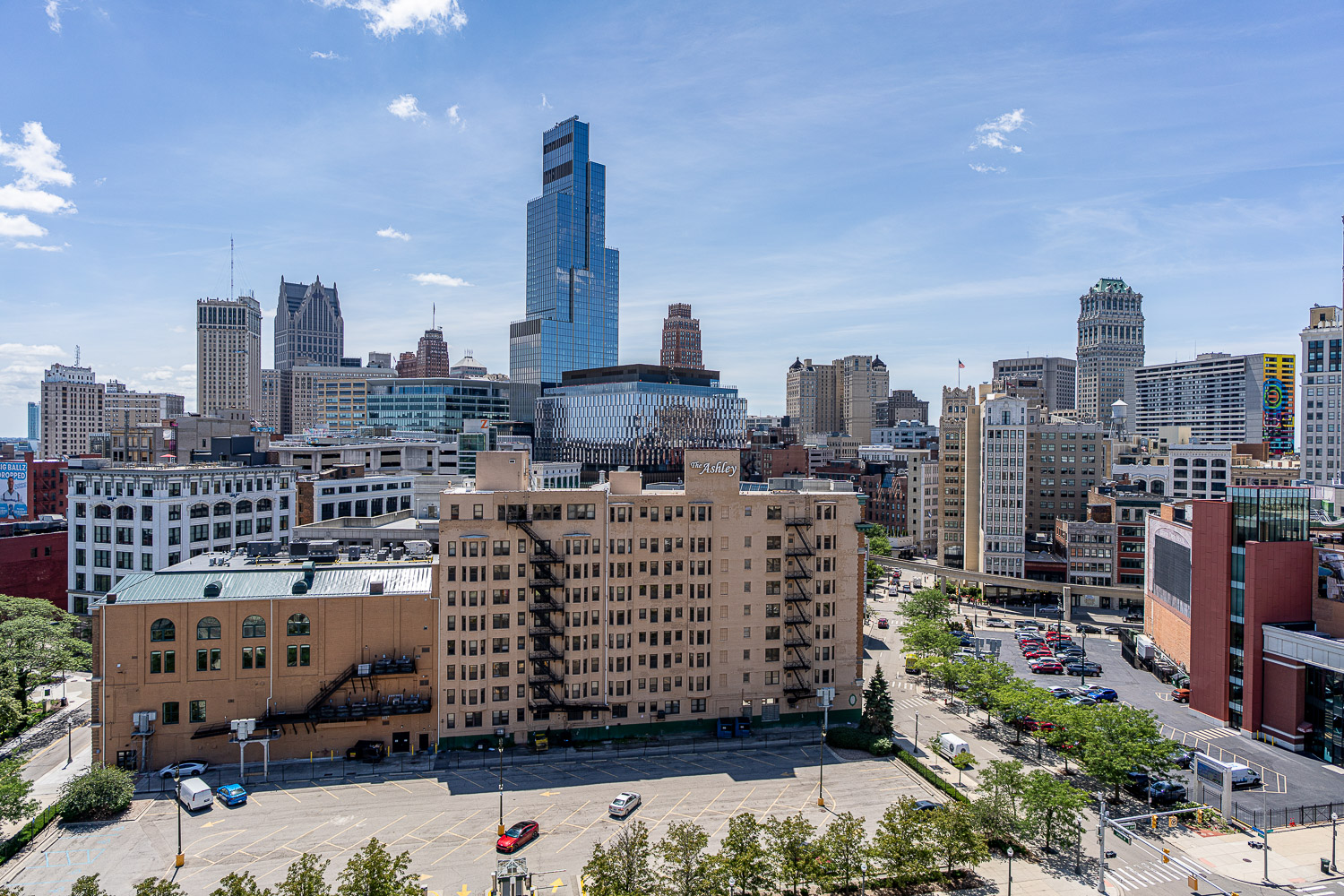
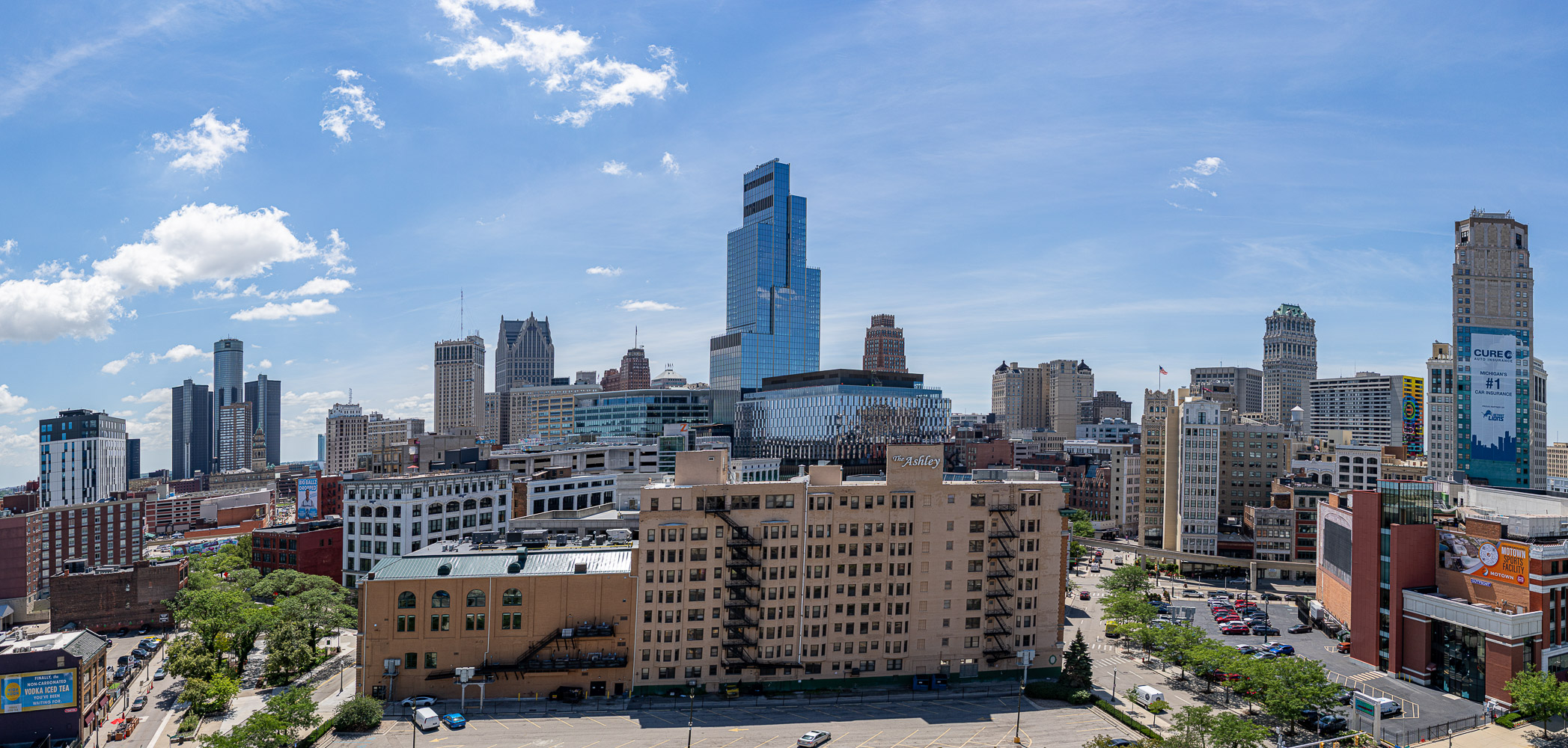
On the roof (8th floor), the views of Comerica Park, where the Detroit Tigers play, and of downtown Detroit in the other direction, are incredible.
The newly opened D.A.C. became a meeting place for the automobile industry elite, and has retained its status as a place where "the elite meet" today. It accepted its first black member in 1976 and its first woman in 1986.
More photos and more description of this building can be found at HistoricDetroit.org.
William W. Hannan, real estate developer, was responsible for both the Madison and Lenox Apartment Hotels. He acquired the land for the Madison in 1898 and the land for the Lenox in 1903. The Madison, therefore, was built first.
The Madison, as originally planned by the architect F.E. Pollmar, was to be seven stories tall on a basement and built of pressed brick, cut stone, and terra cotta. It was to exemplify the architecture of the "French Late Gothic style." (Free Press, 4-22-1900). As built to the designs of the architect A.C. Varney, the eight-story building was more classical in character. It contained a limited number of housekeeping apartments and 200 rooms that were divided into 64 suites, each with its own bath.
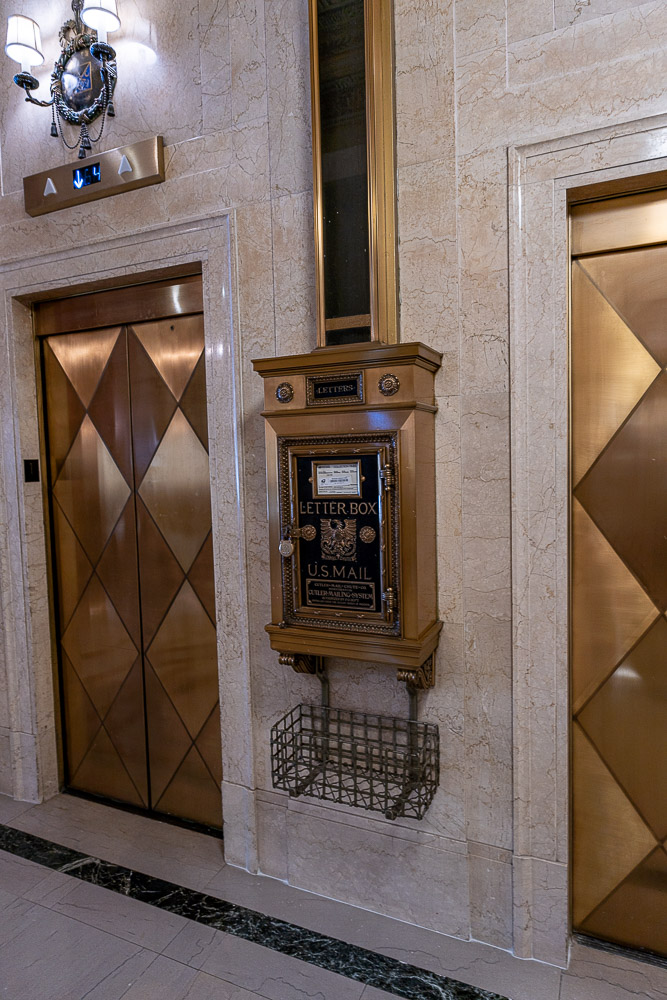
The building had steam heat, two elevators, and Cutler mail chutes. A suite of four rooms cost from $22.00 to $24.00 per month. The cafe, built to the west, had a mosaic tile floor and marble trimmings. Hannan and Tuft were the proprietors. The Lenox, built in 1903, was also owned by Hannan and Tuft.
William Washington Hannan (1854-1917), after graduating from the University of Michigan Law School, came to Detroit in 1883 and entered the real estate field that year, establishing the Hannan Real Estate Exchange. He was instrumental in organizing the National Real Estate Board. In addition to successfully erecting the Madison, Lenox, and Pasadena Apartment Hotels, he owned and subdivided land at the then fringes of the city. Rannan was also one of the founders of the Detroit Athletic Club. Hannan's generosity lived on after his death; upon his passing in 1917, two-thirds of his estate went to Detroit charities.
Hannan and Tuft Apartment House Company was founded around 1903. The name was changed from Hannan and Tuft to the Detroit Realty Company, and the Madison-Lenox Apartment Hotel was transferred to Hannan Charitable Corp., and then Luella Hannan Memorial Home, in 1930. It was sold out of the Hannan estate in 1946.
The facades of the Madison and the Lenox have many similar architectural qualities. Both are derived from classical precedents, and both are eight stories tall. Both are articulated horizontally into three sections in the same manner; their first and second stories rest on high basements and are rusticated, their mid-sections are comprised of floors three through six, and, separated by a cornice, floors seven and eight form the upper section. Both the Madison and Lenox are missing their original cornices.
The Madison, the first built, is the less ornate of the two buildings. Both have arched windows but the designer of the Lenox employed stone voussoirs and quoins to accentuate the architectural elements of the building, whereas the Madison makes use of raised brick quoins and voussoirs that are less prominent in the composition.
Between the Madison and the Lenox is a two-story building that originally housed the hotel cafe. Its style is also classical; its height consciously corresponds to the height of the base section of the two flanking apartment hotels.
The buildings were illegally demolished in 2005. See this article for details, and for more information about these buildings.
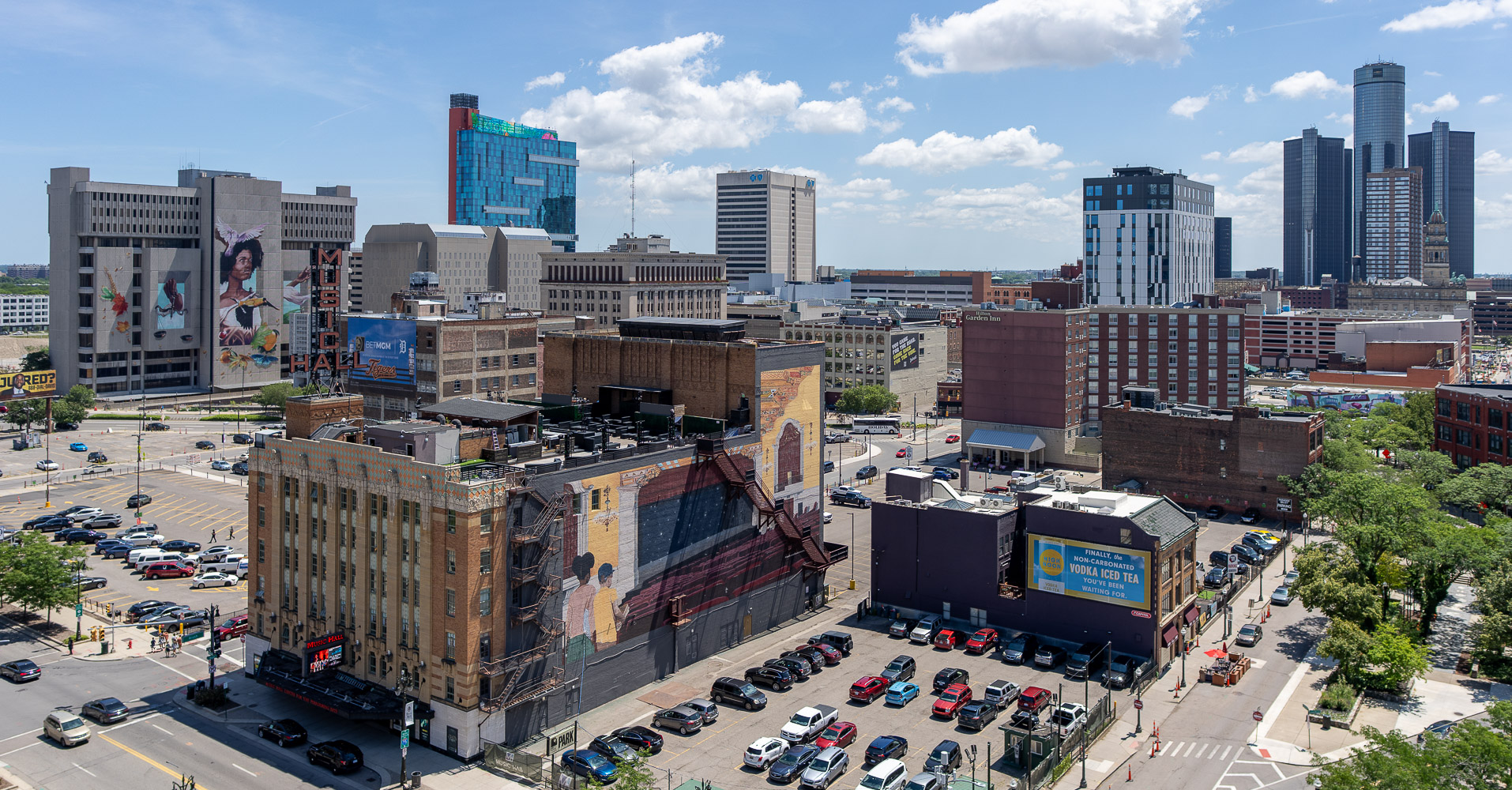
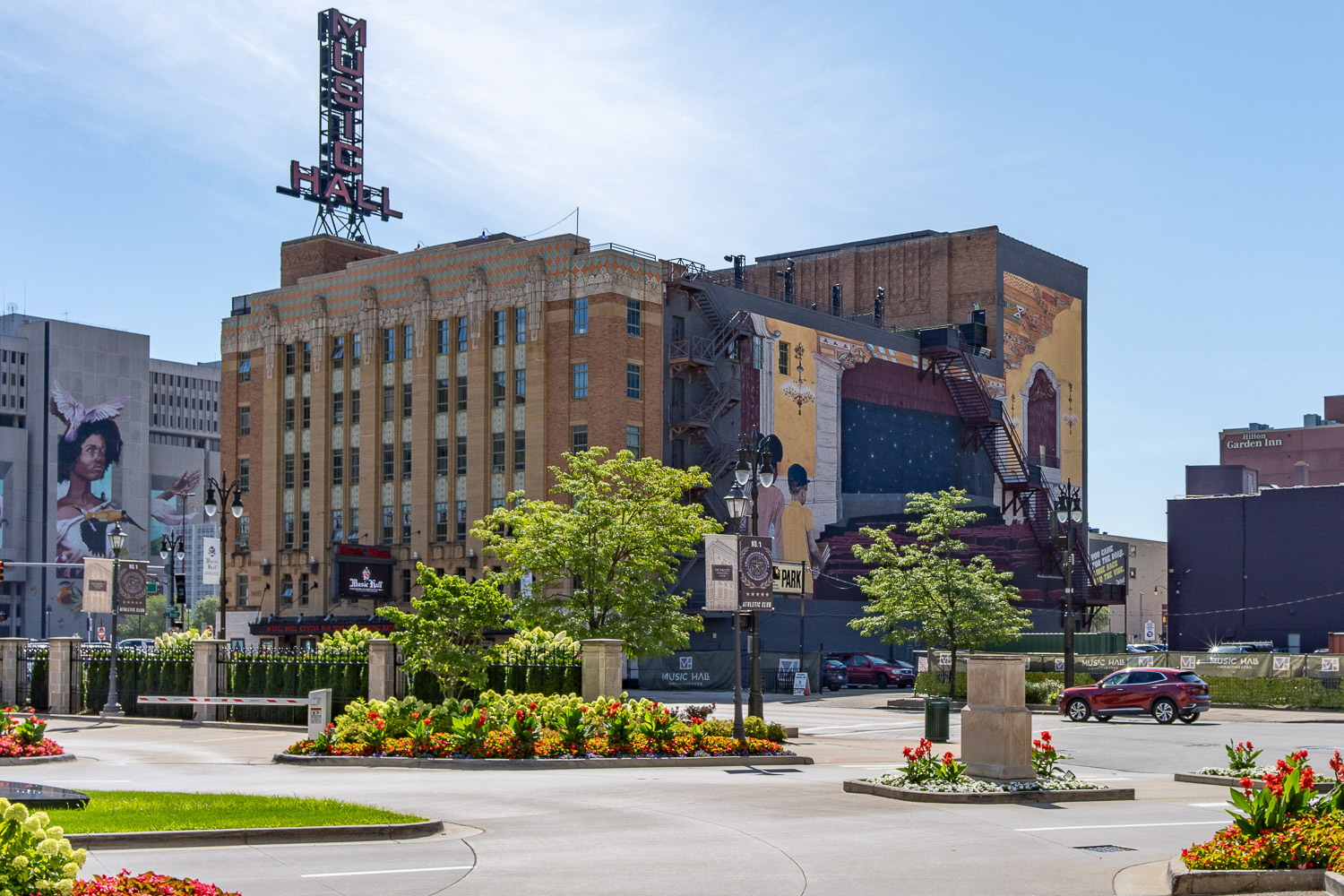
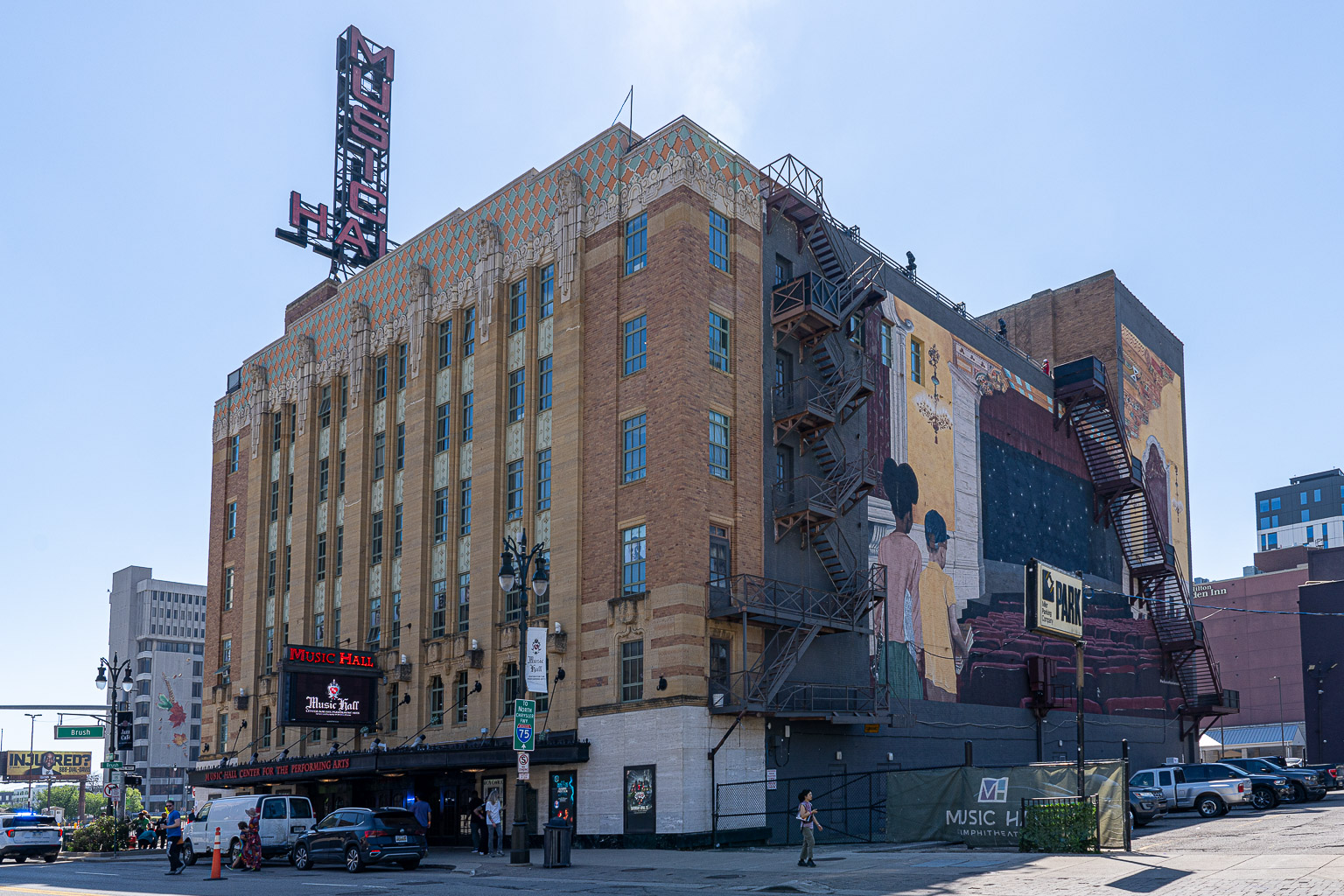
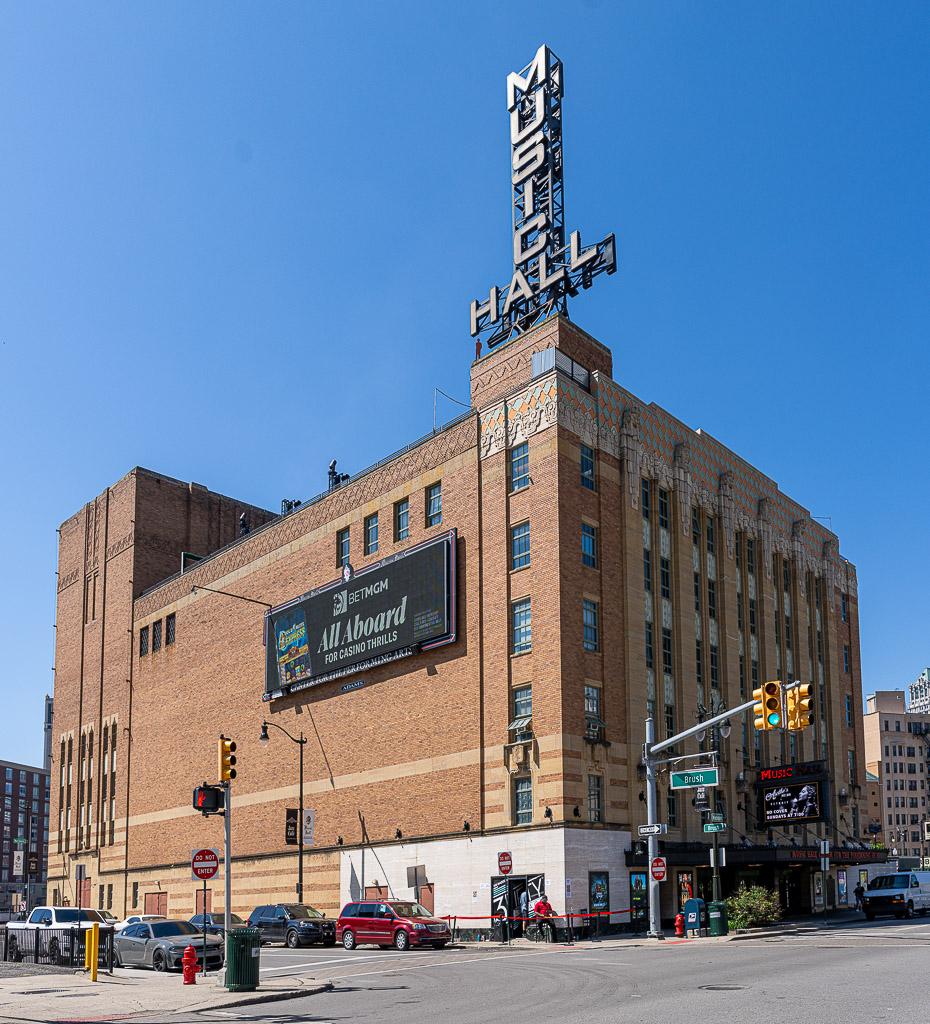
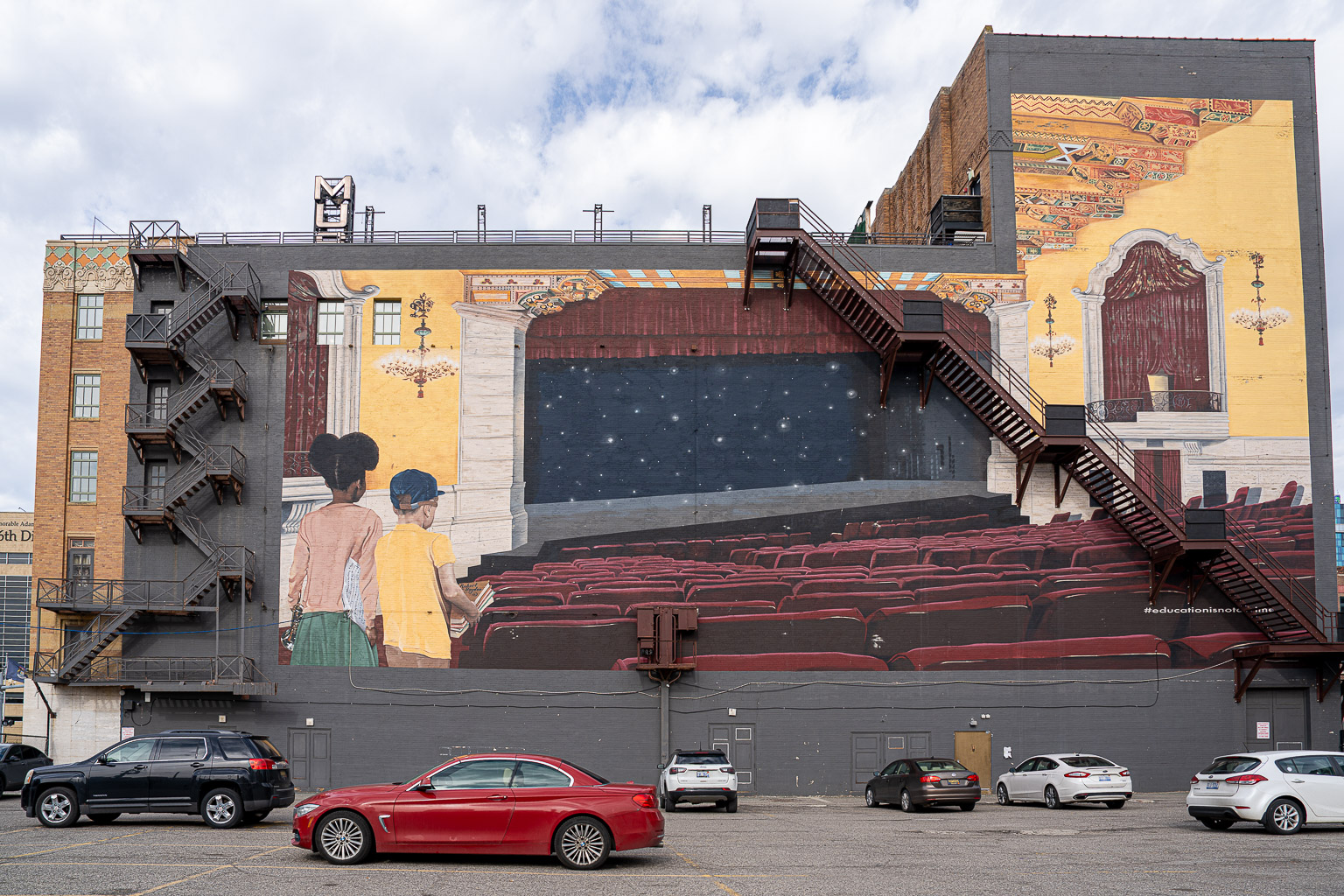
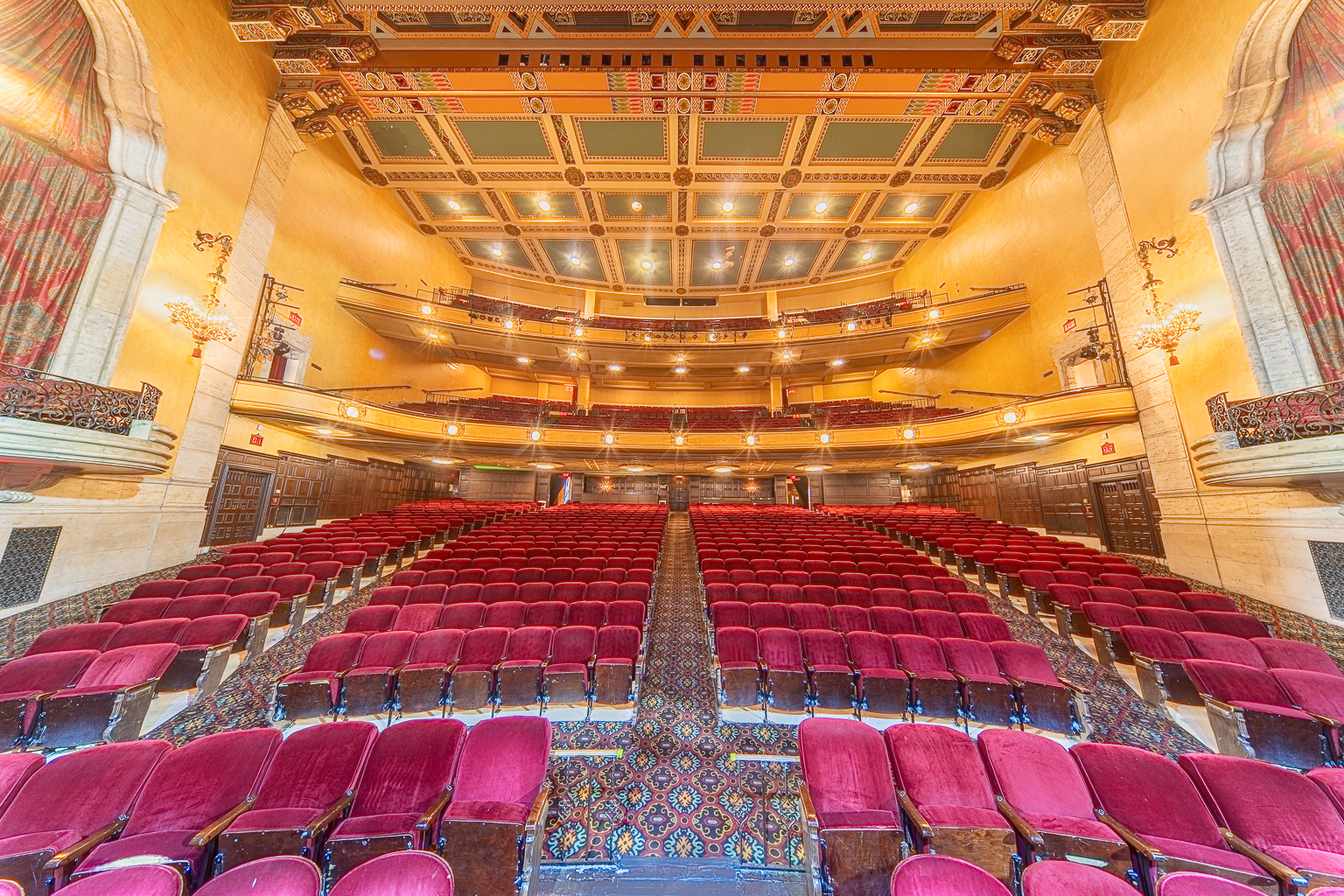
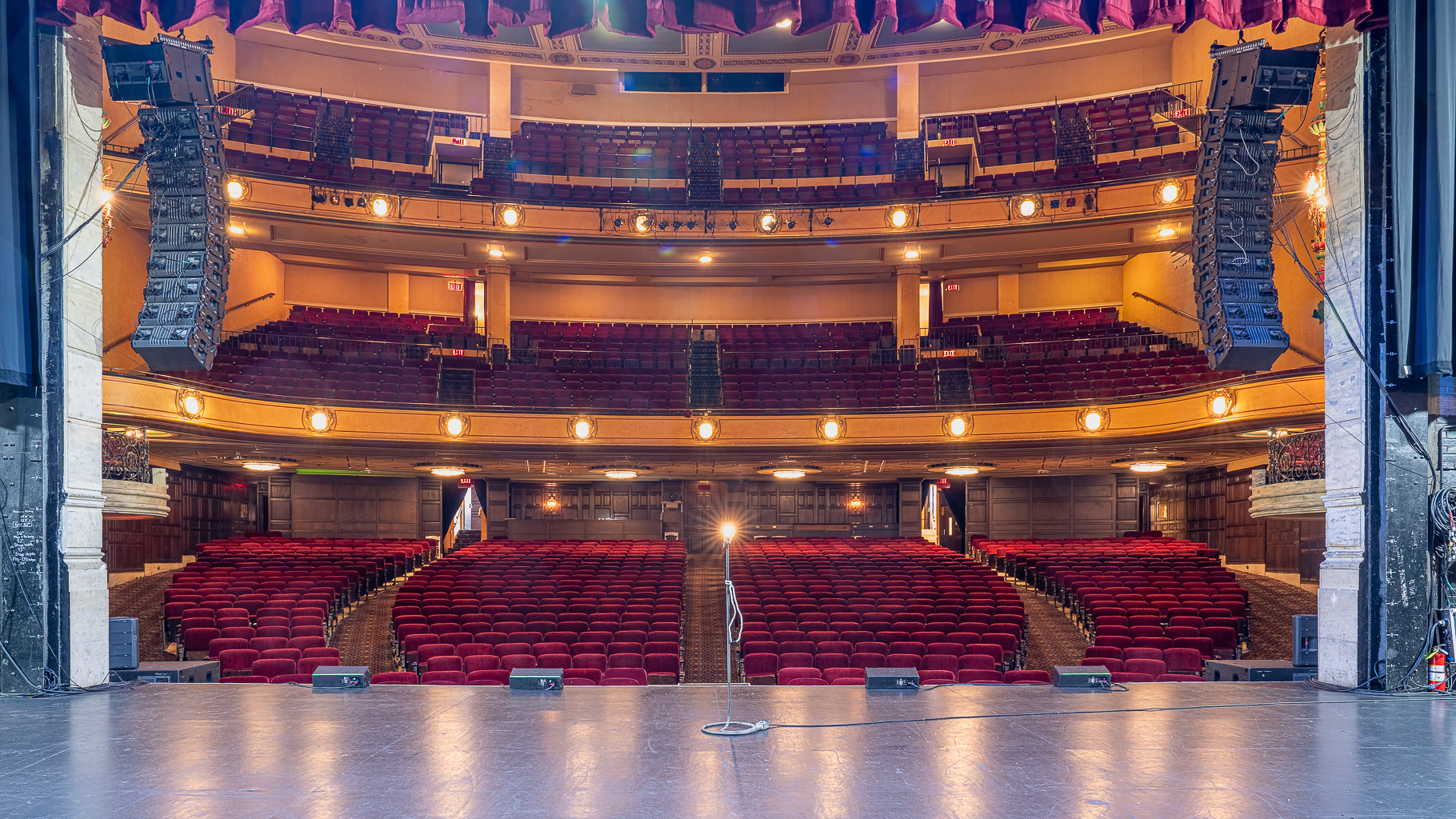
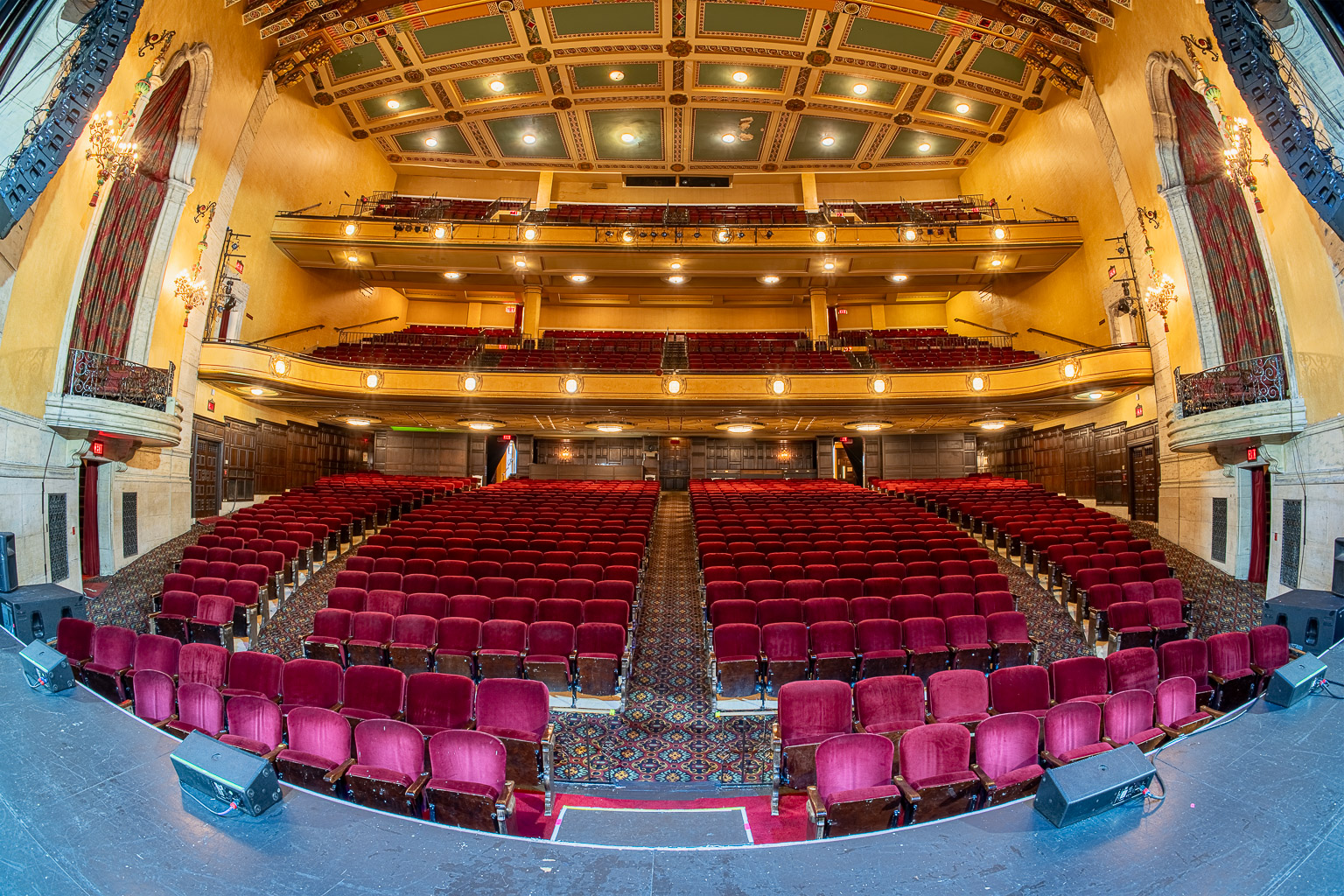
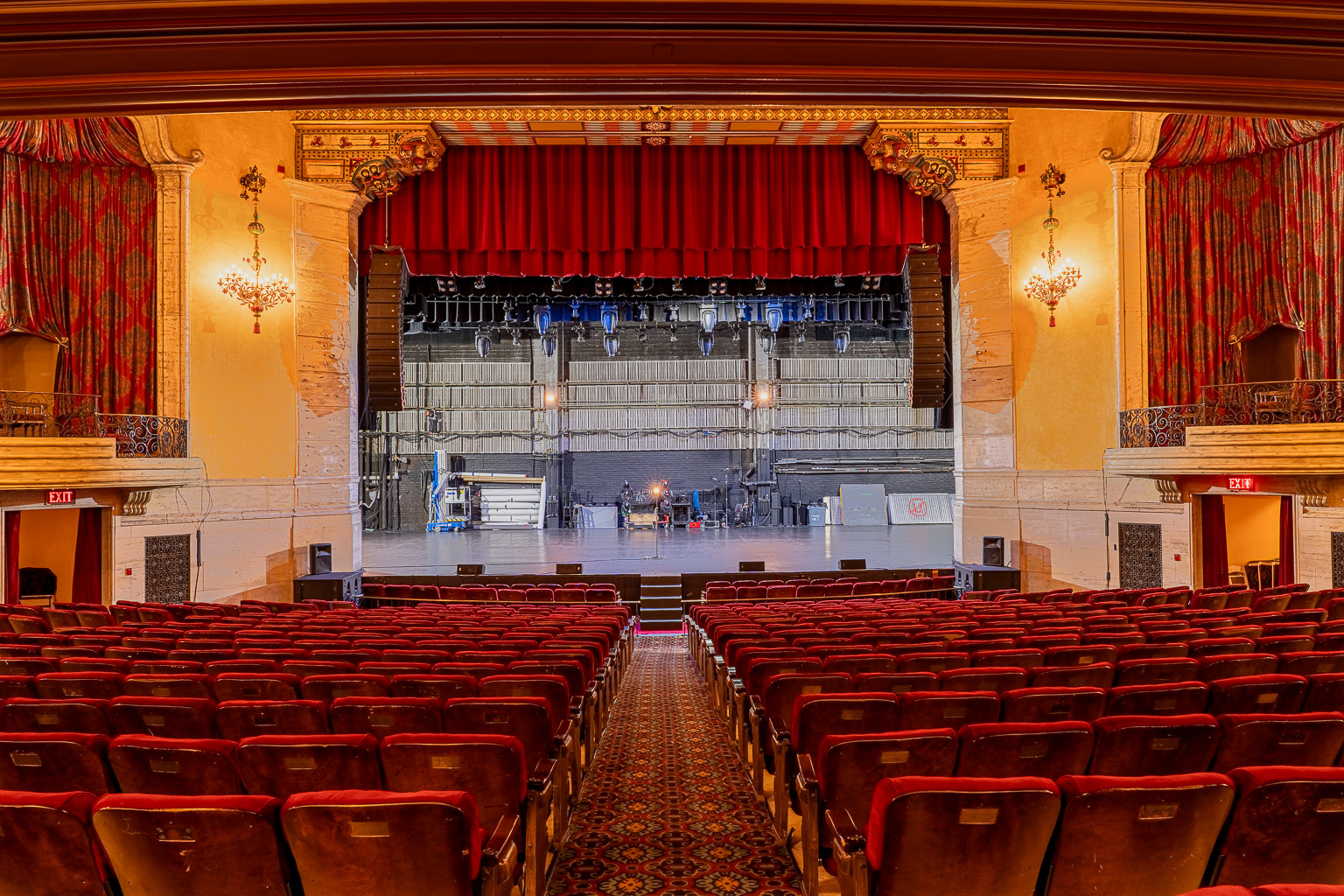
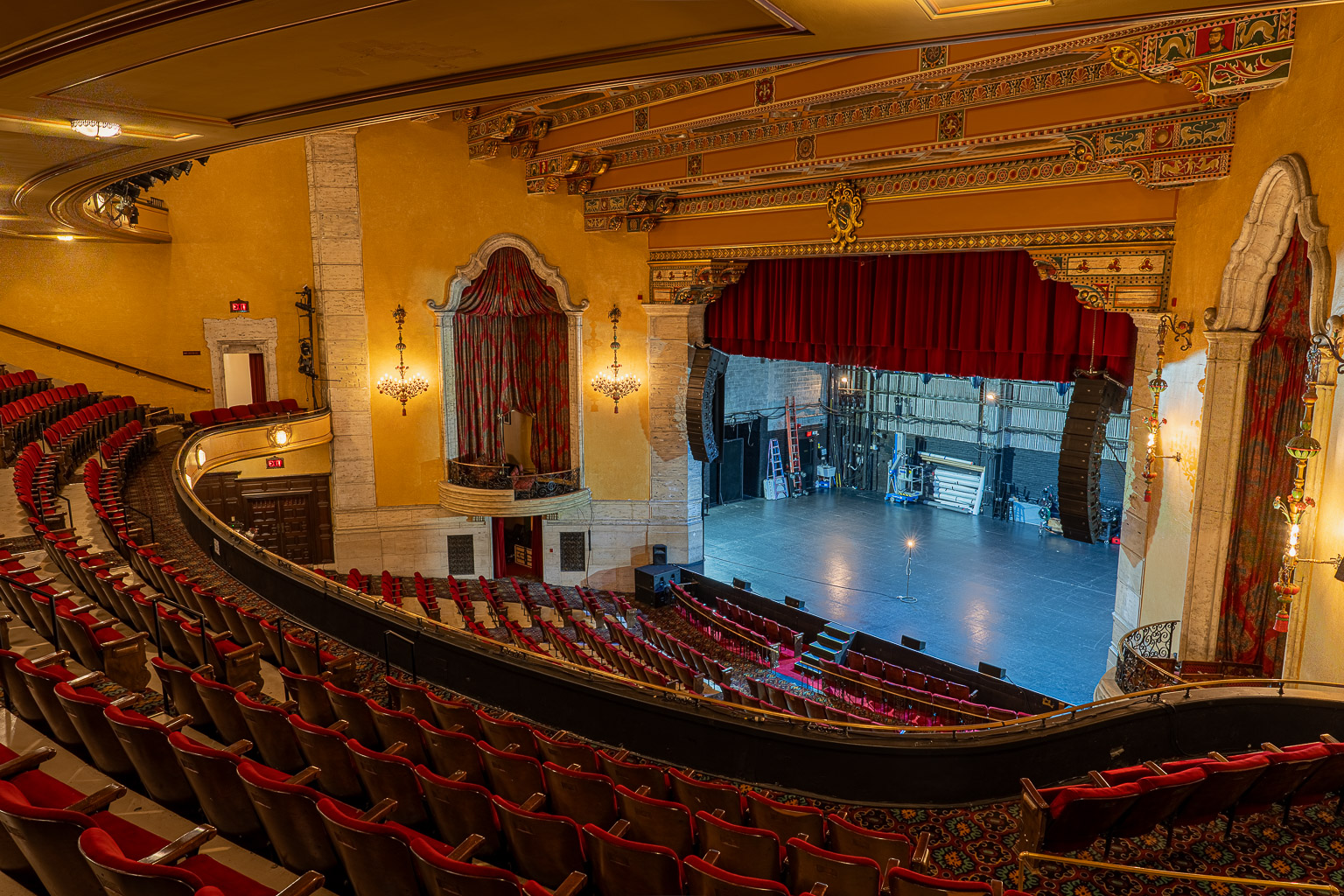
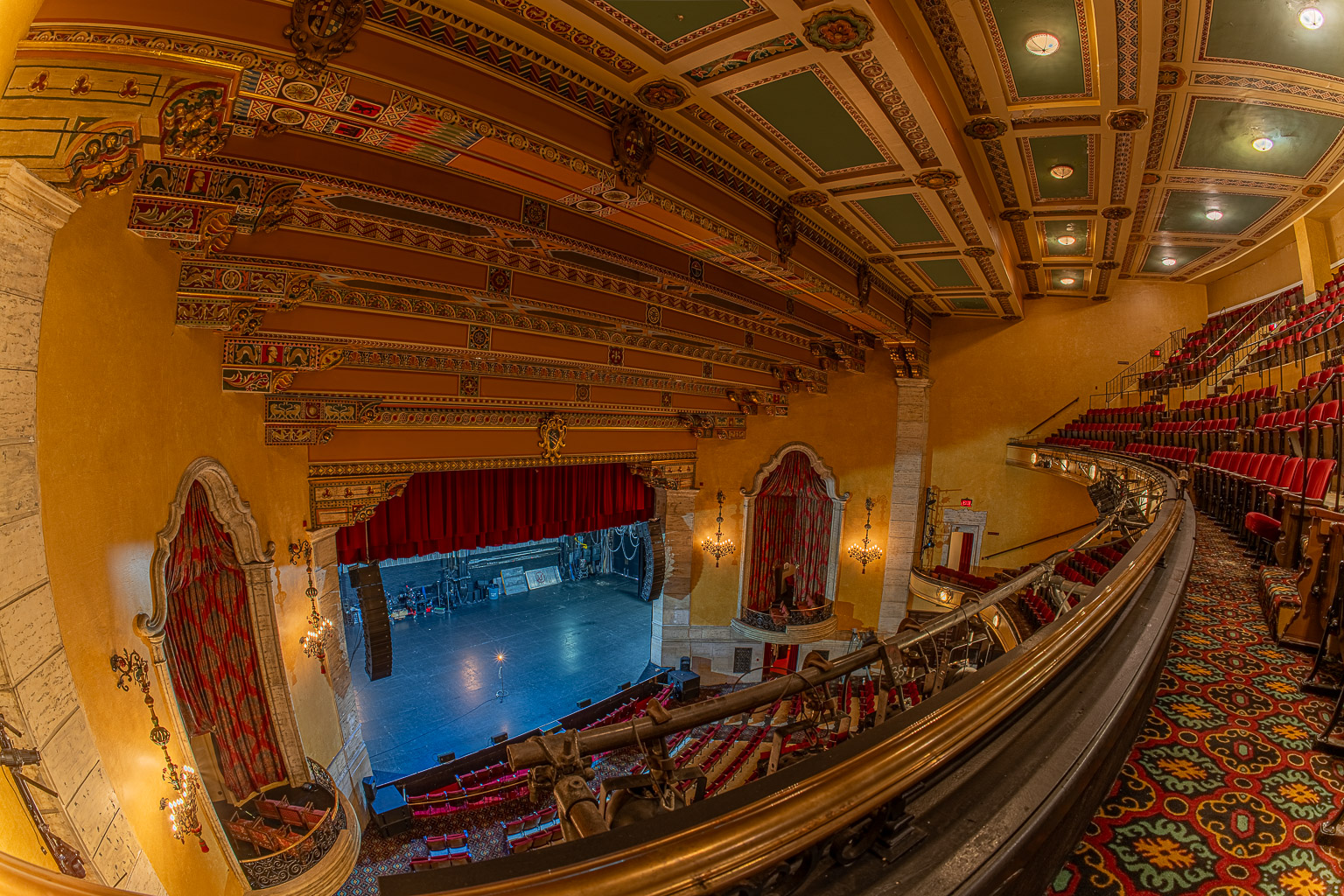
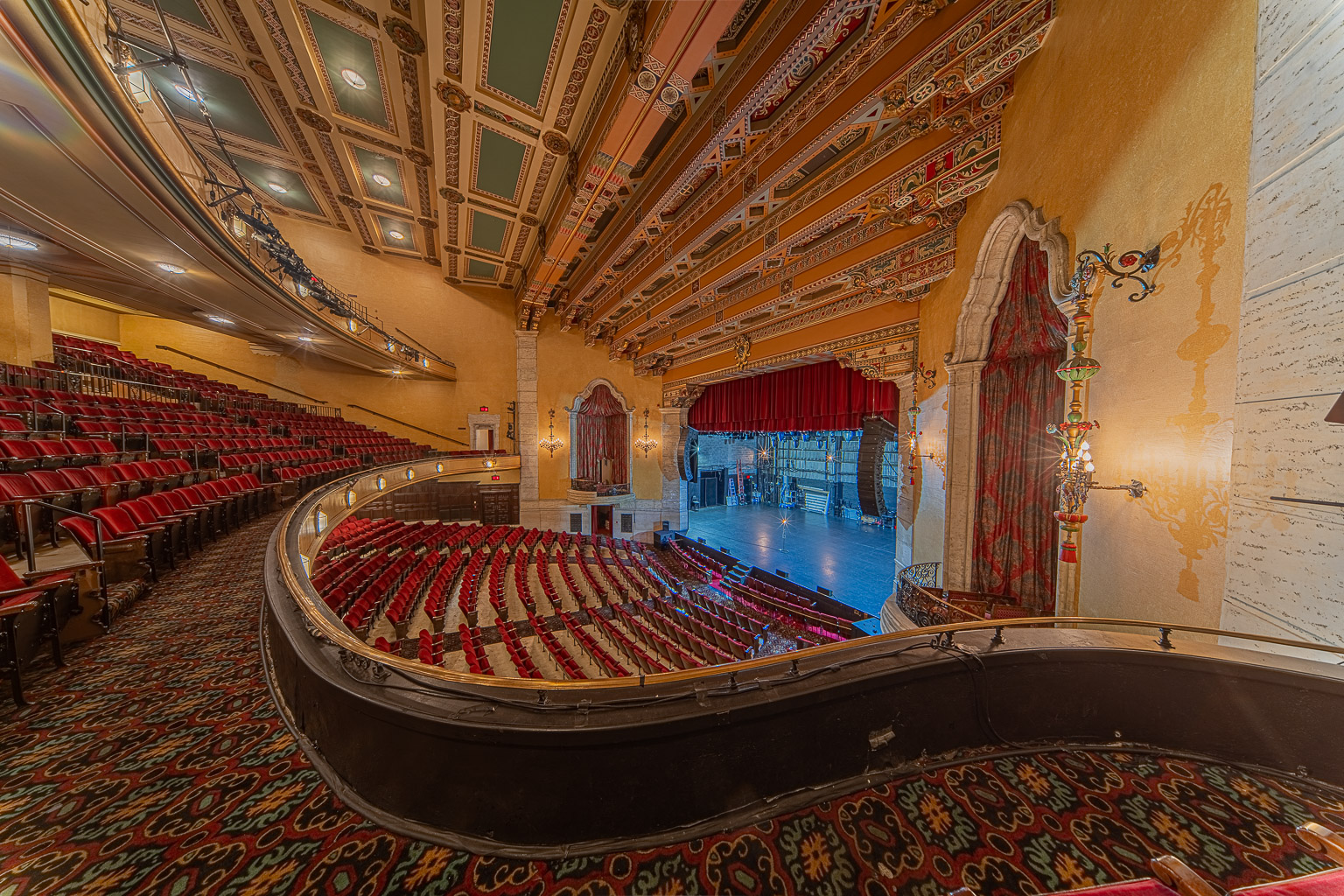
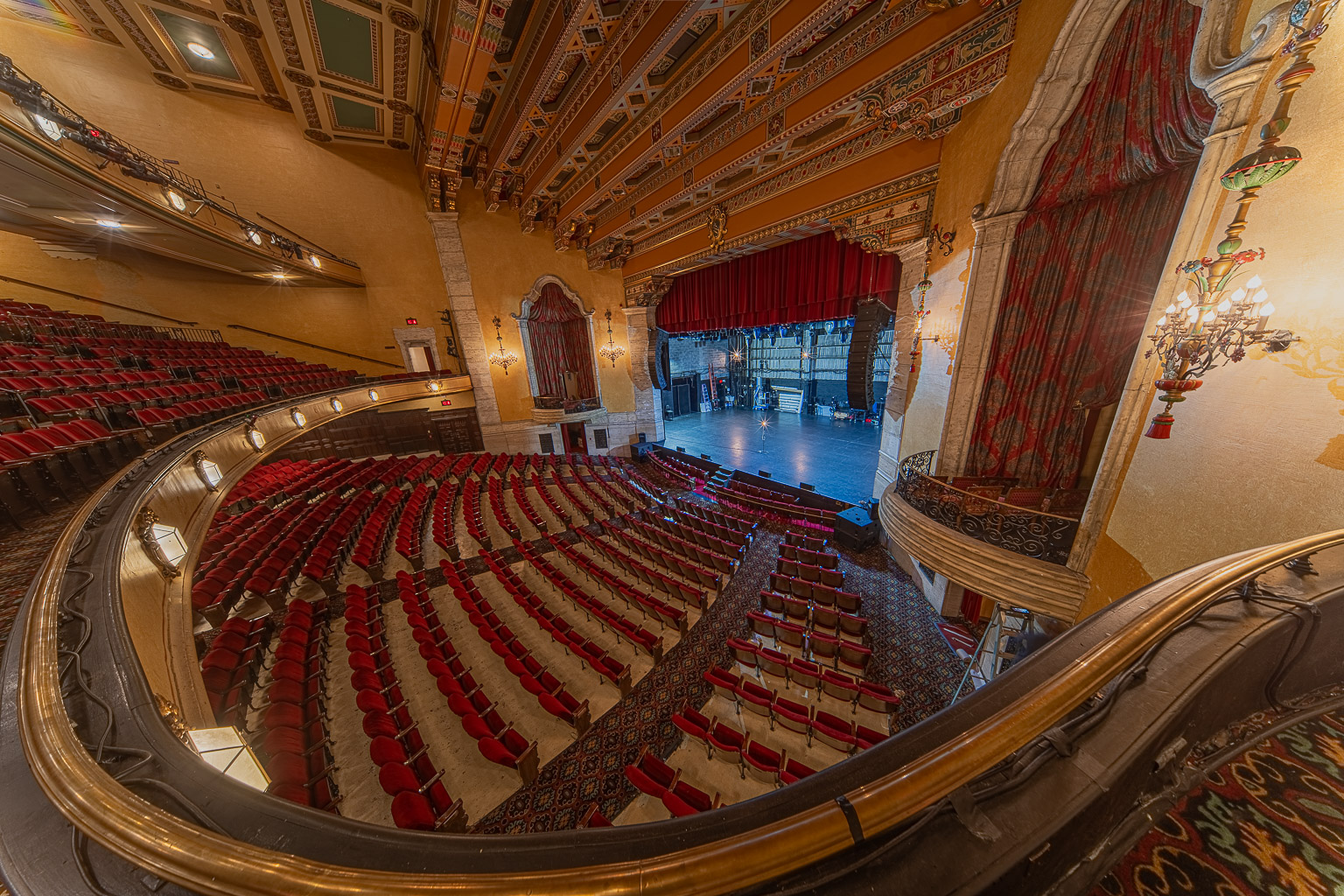
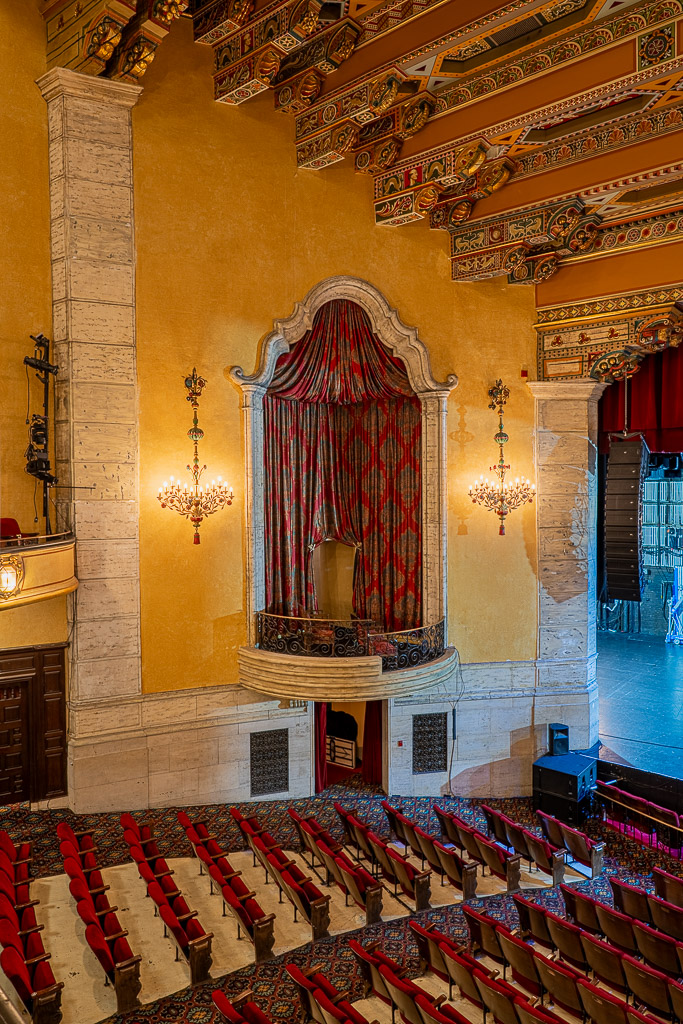
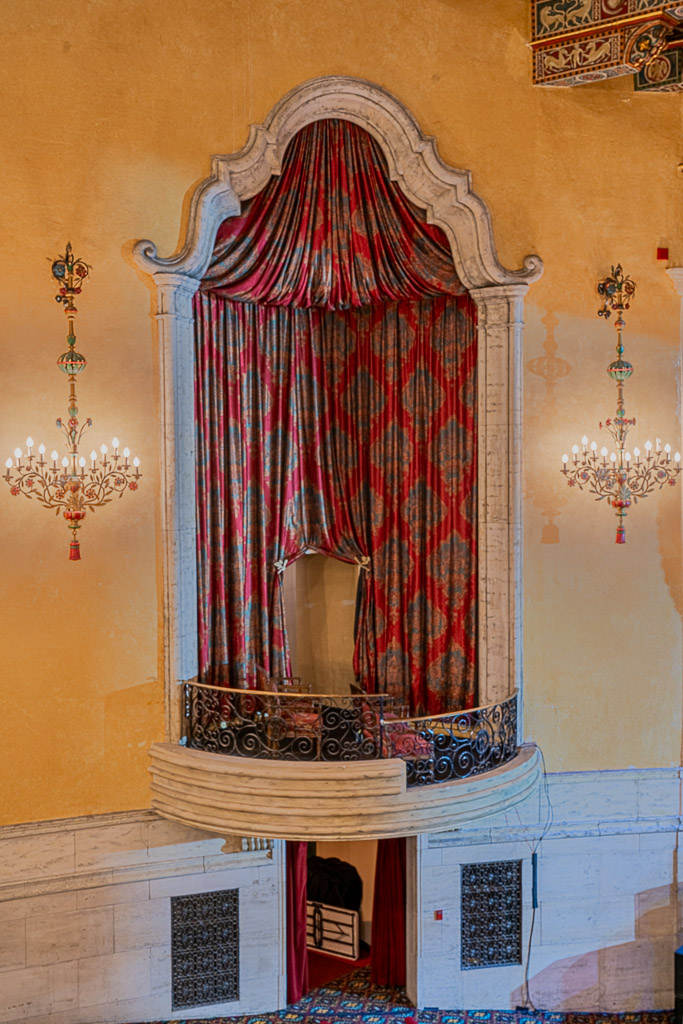
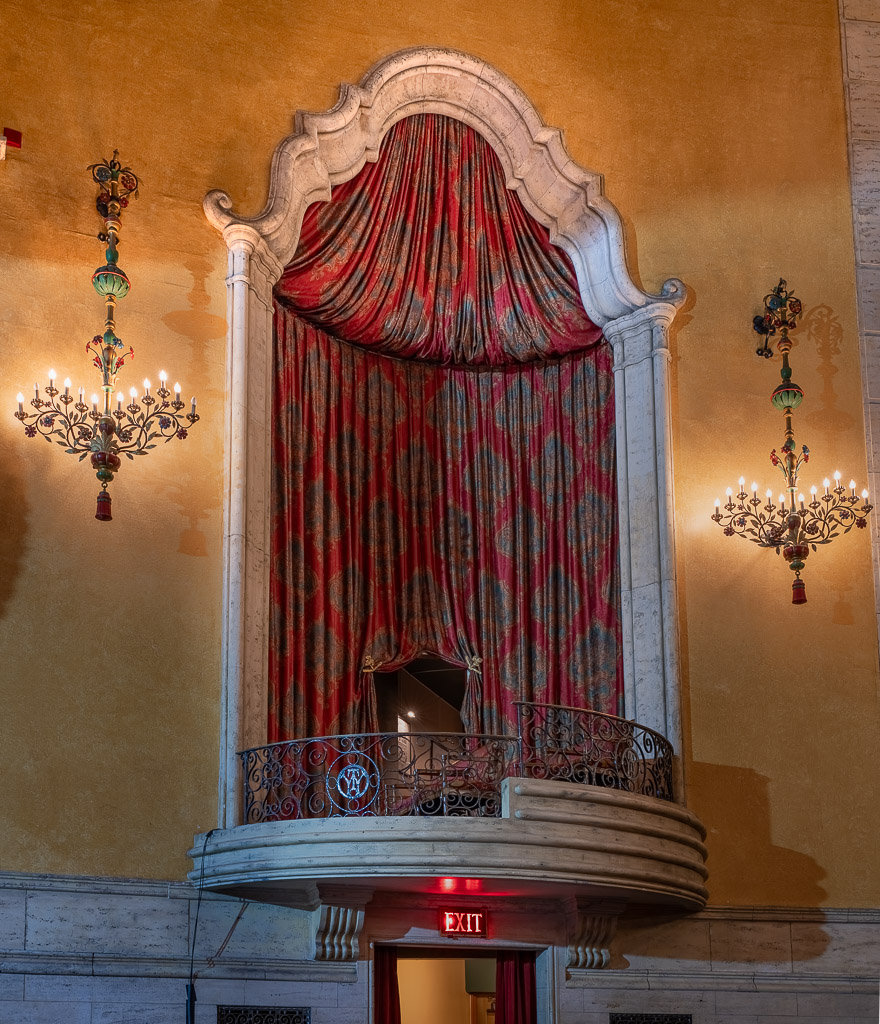
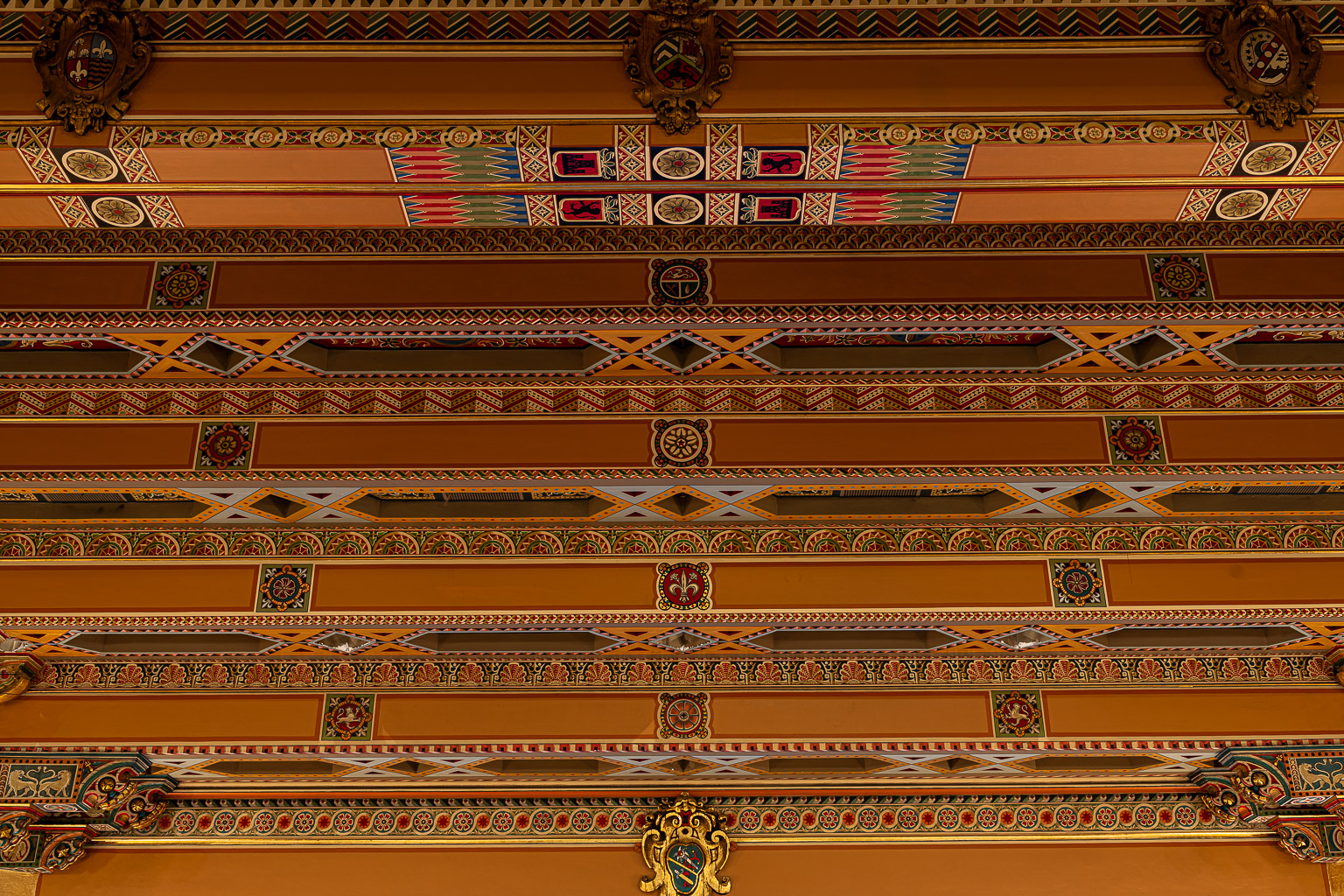
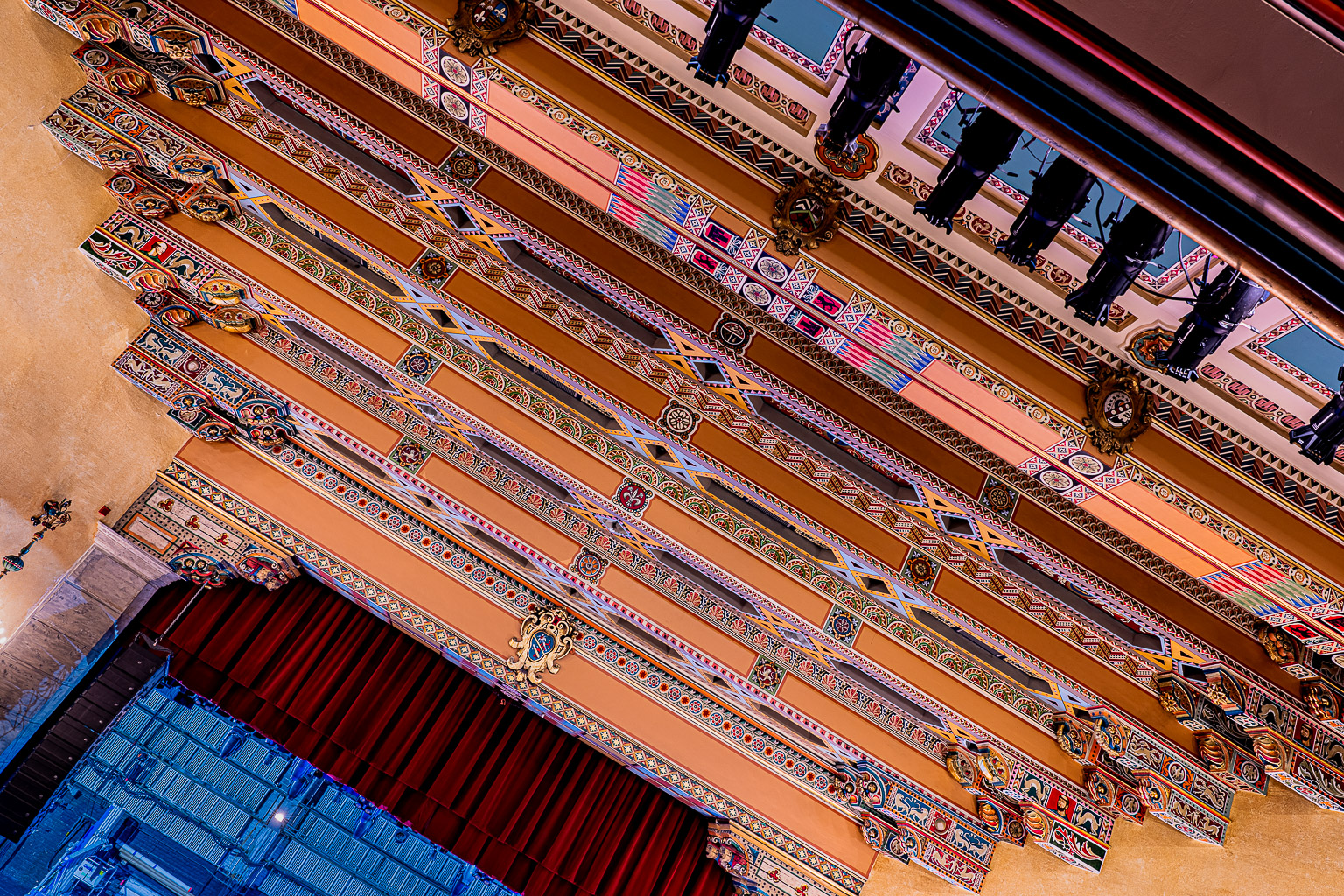
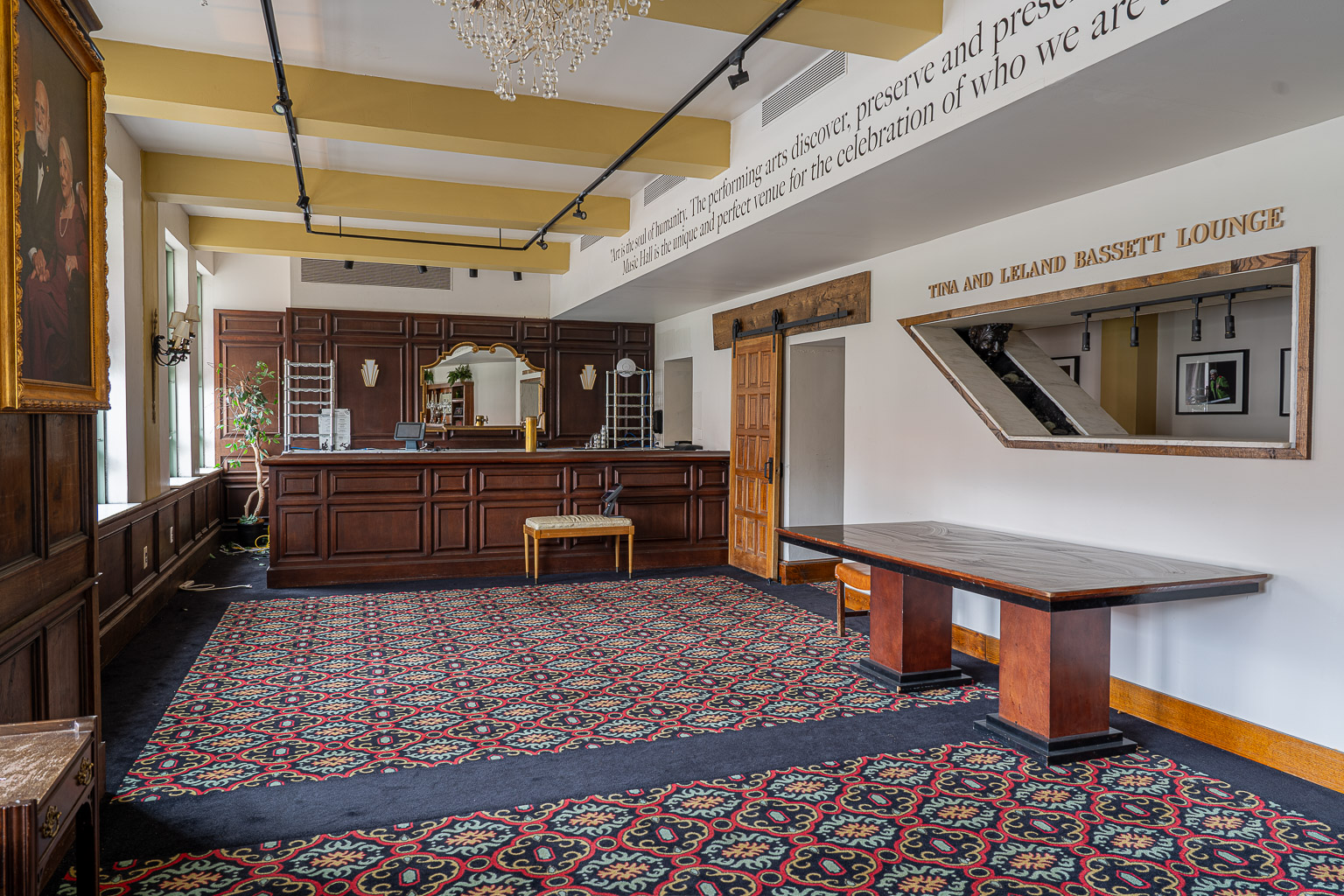
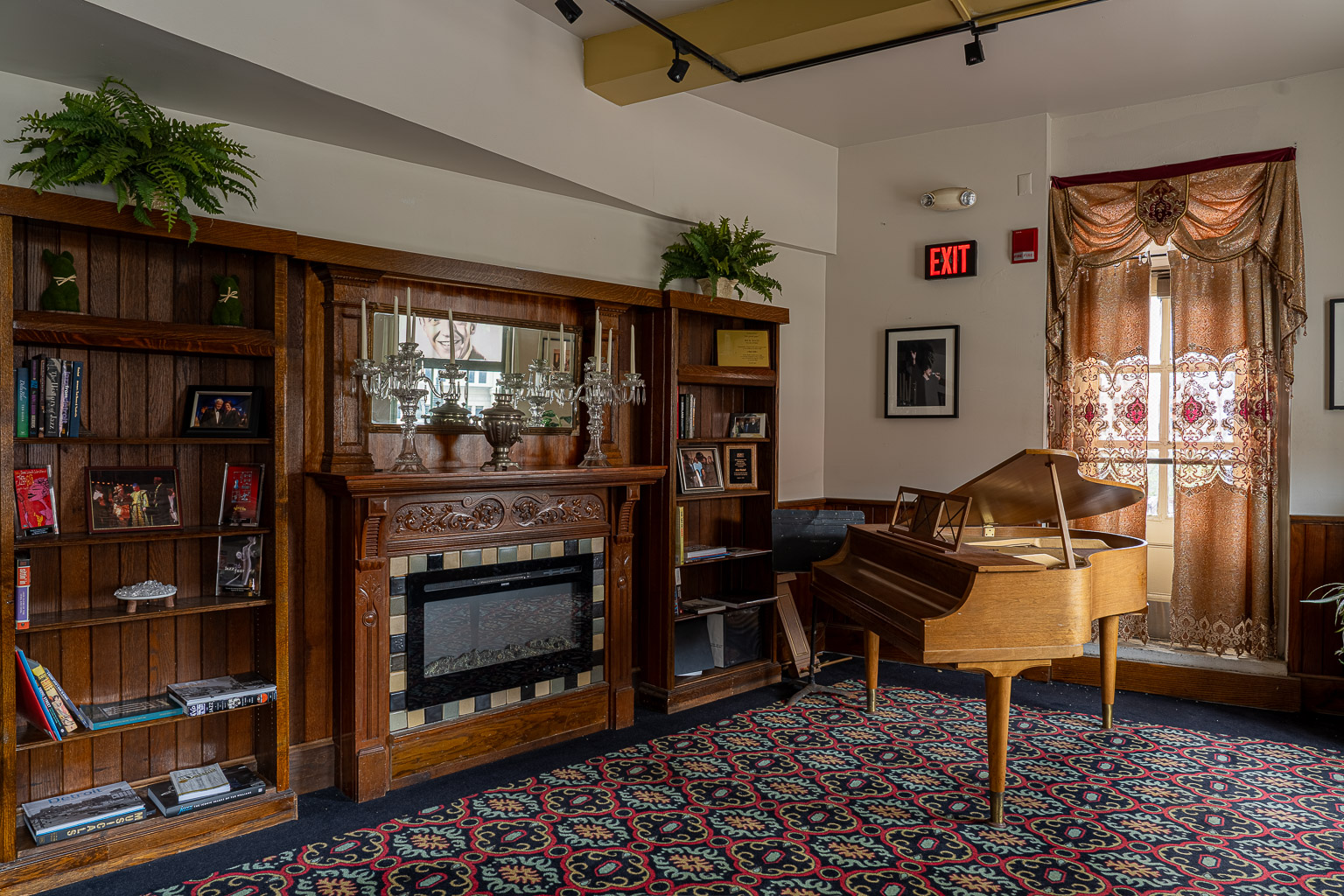
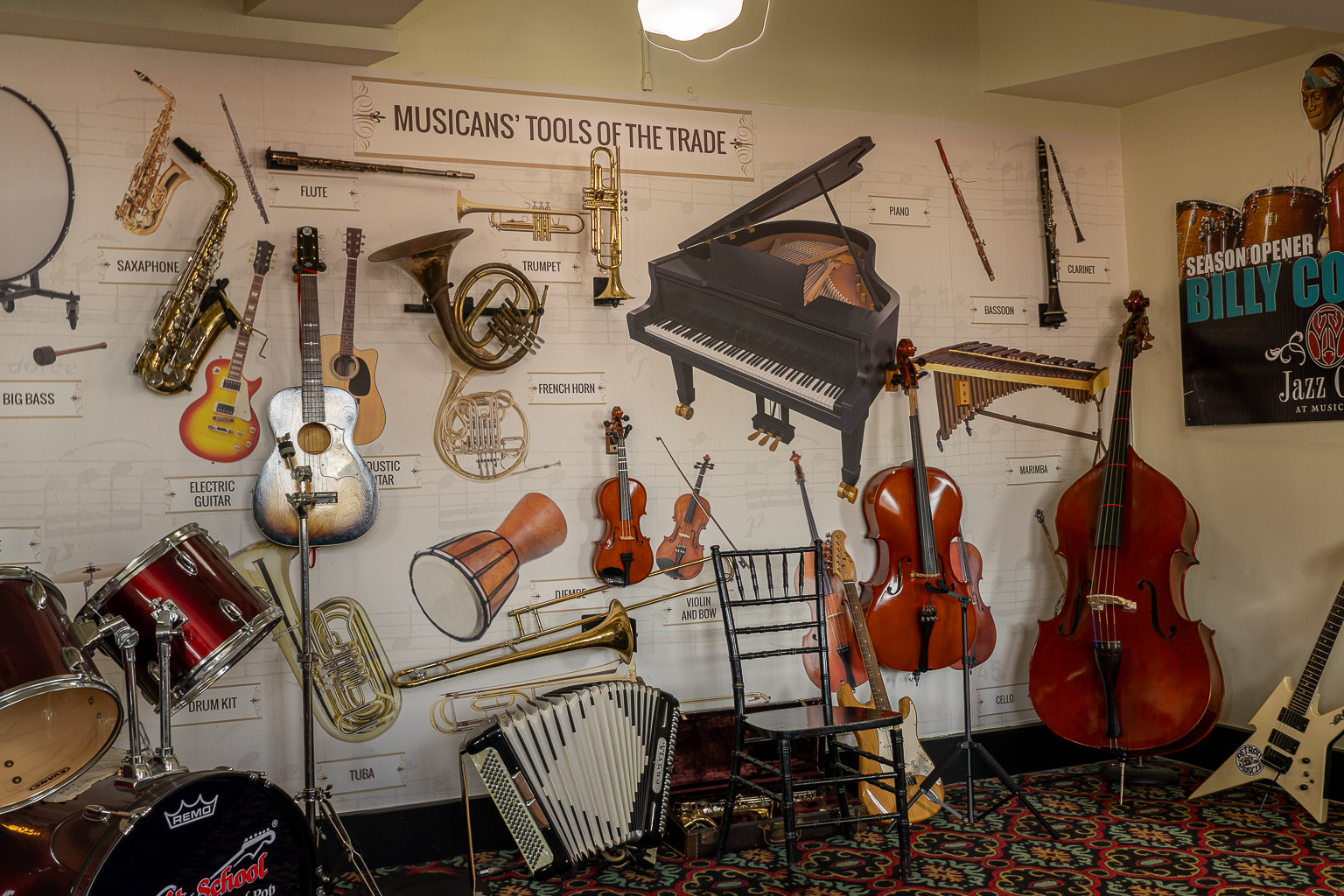
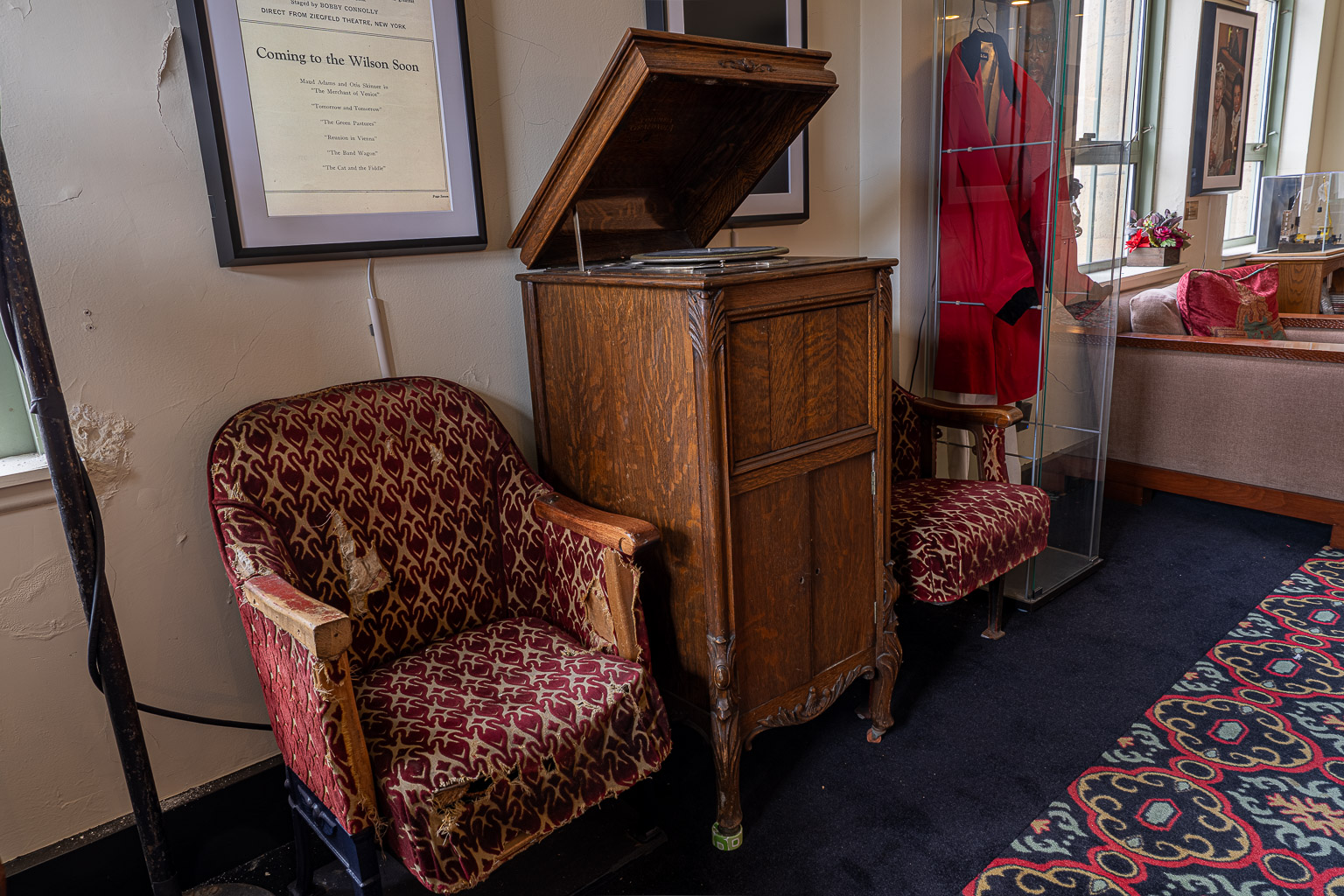
The Wilson Theatre, designed by William Kapp of Smith, Hinchman & Grylls, is significant as one of the best examples of early Art Deco architecture in Detroit. All of the theatre's architectural sculpture was designed and executed by Corrado Parducci who, in a working partnership with Smith, Hinchman, & Grylls, left a rich legacy of architectural sculpture in Detroit and throughout the country. His sculpture always comprised an integral part of the design of the building it adorned and never had the "applied" feeling which led many contemporary critics to scorn architectural ornament.
The theatre is also significant for the diverse role it has played in the theatrical history of the city of Detroit. Built as a legitimate theatre, the Wilson attracted the best of touring Broadway productions, in addition to providing a forum for presentations of the Acting Company, the Shaw Festival, and the Young Vic. During the Depression, the theatre only opened sporadically but still provided Detroiters with an opportunity to attend quality theatre productions.
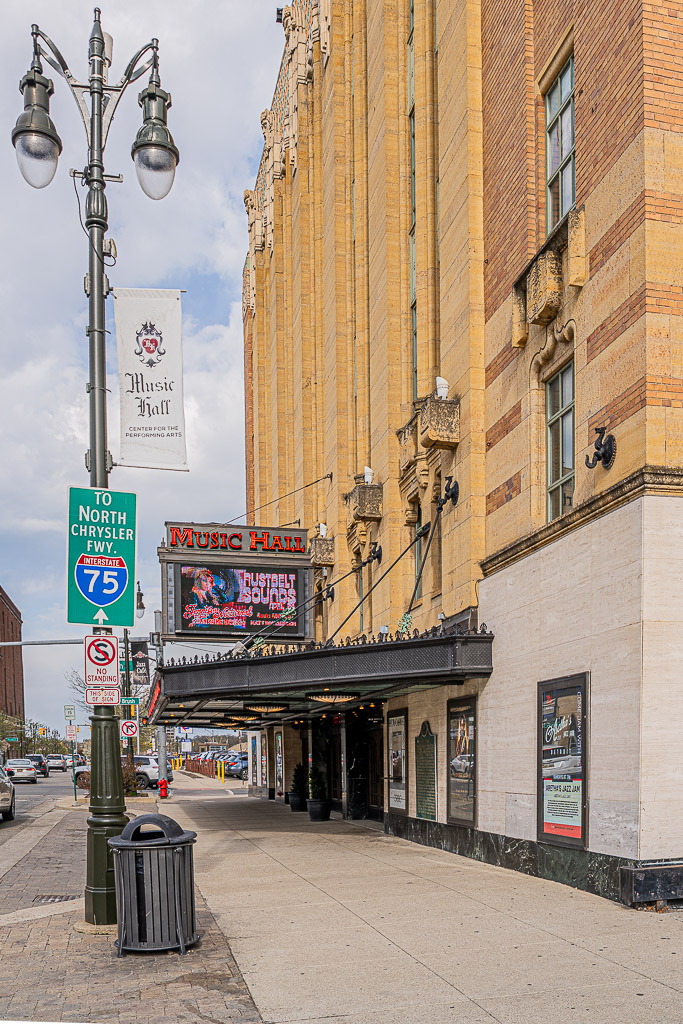
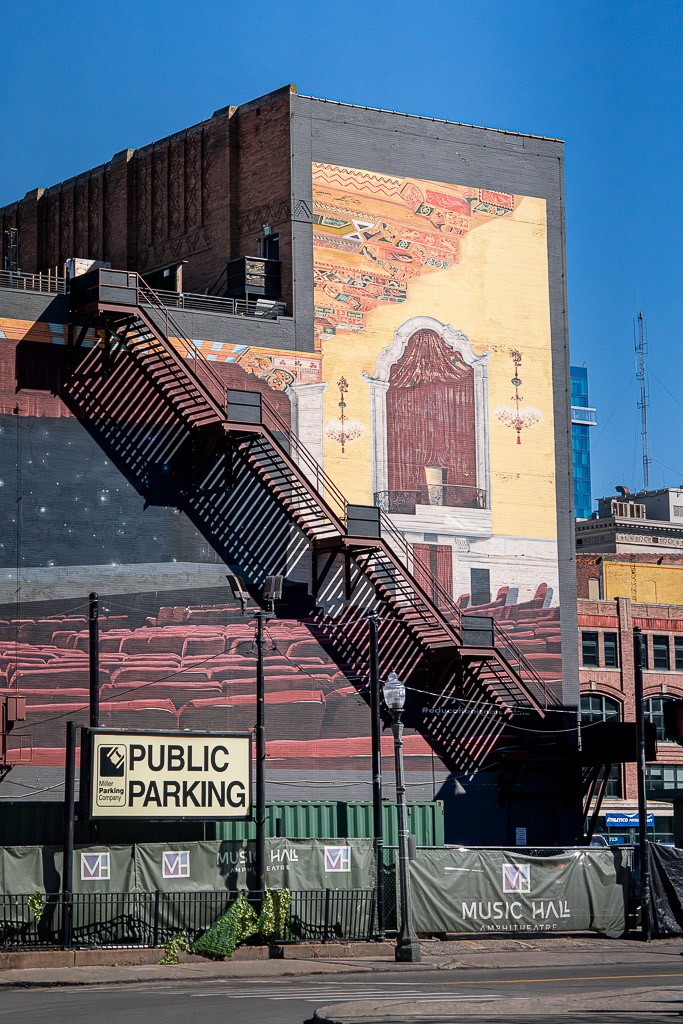
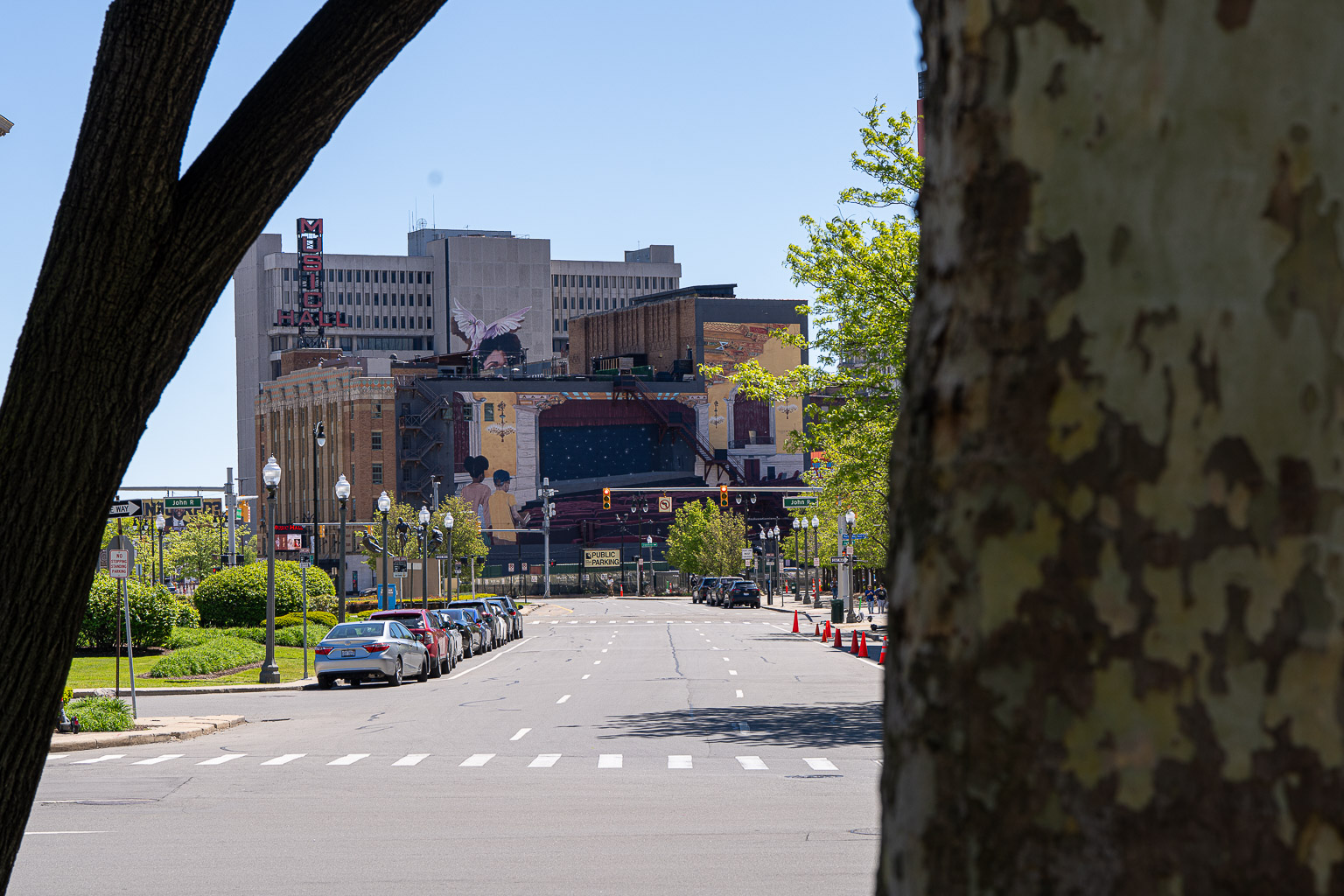
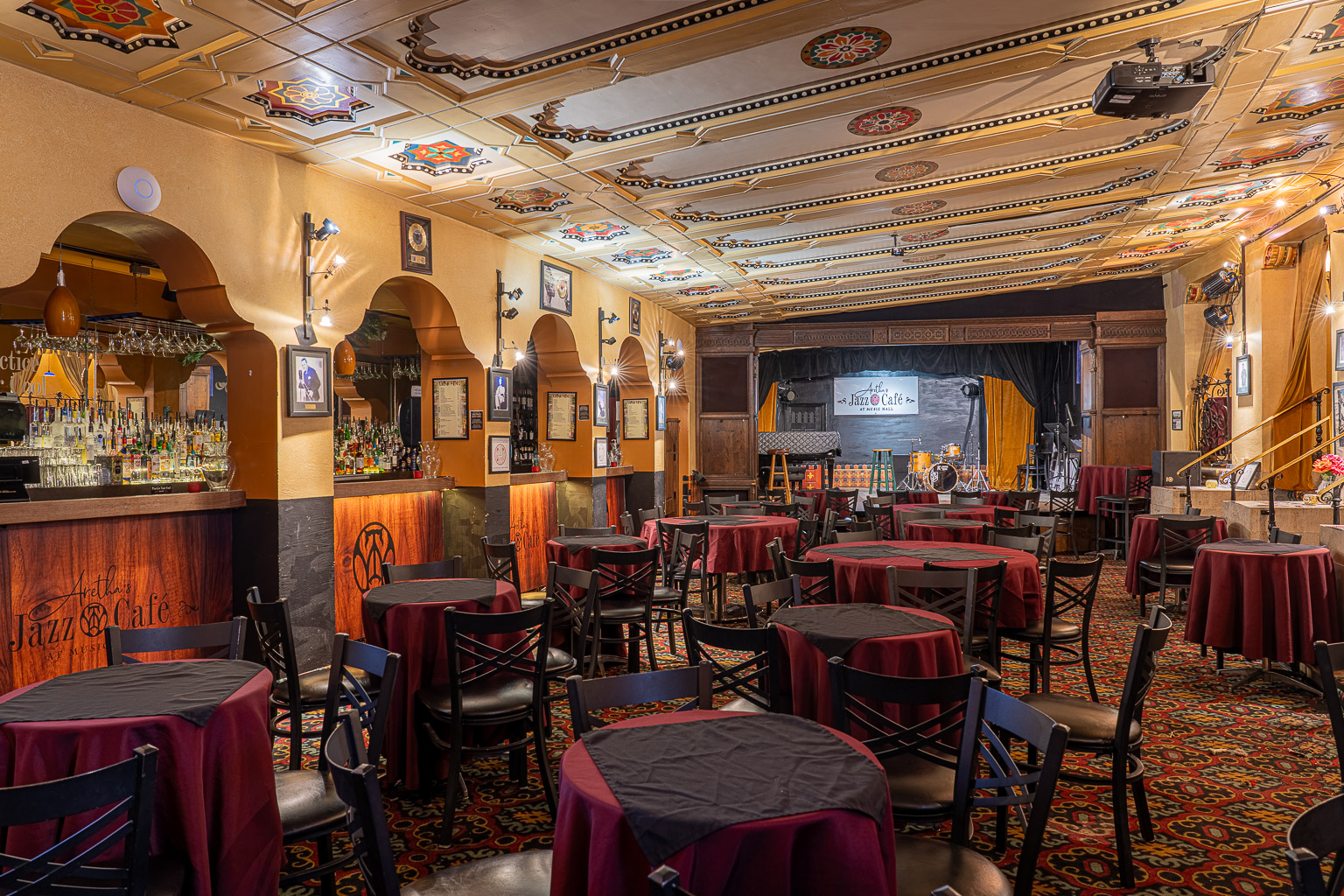
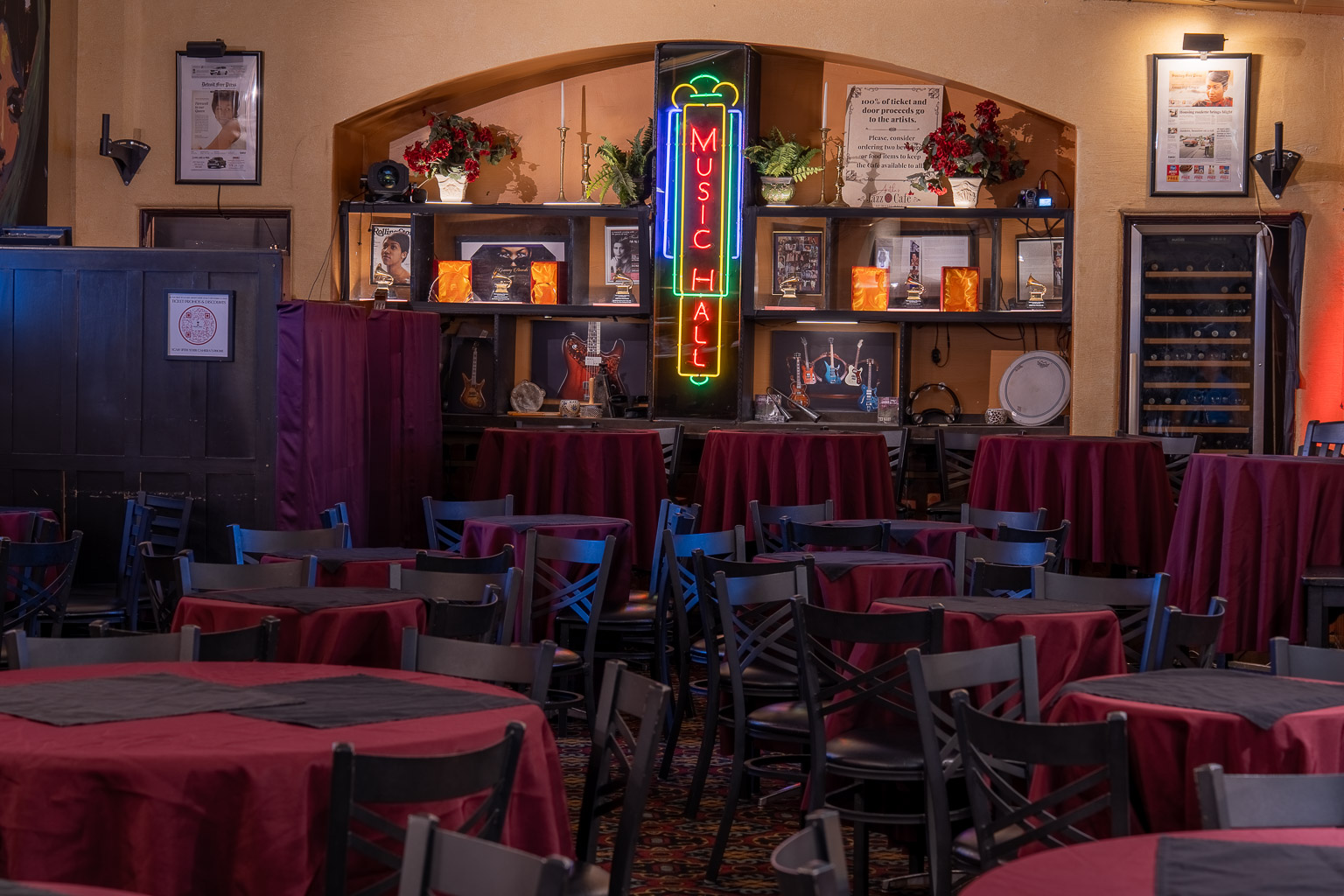
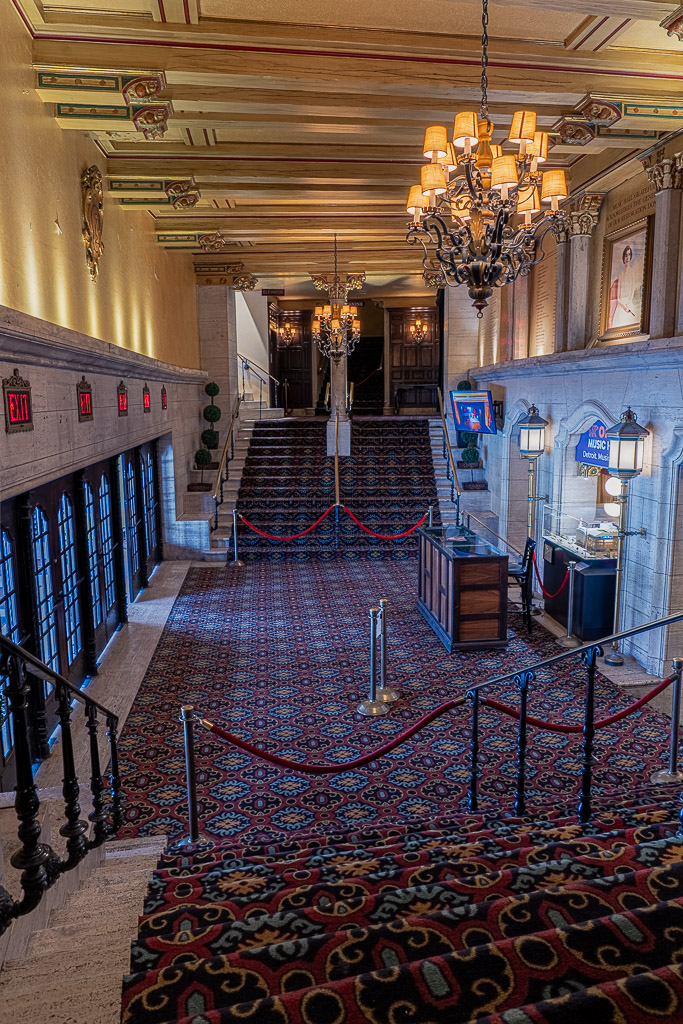
The Wilson was renamed Music Hall in 1946 when it became the home of the Detroit Symphony. The Symphony moved on to larger quarters in 1949, and in 1951 Music Hall became the home of Detroit's Cinerama.
Until recently, the Music Hall was the home of the Michigan Opera Theatre, an outgrowth of the Detroit Opera Company. The theatre has also become a center for the performing arts and has served as the stage for many new plays and musical, among them two top hits by Detroiters, "What the Wine Sellers Buy," and "Selma." With traditional drama, classical music, Cinerama, dance, jazz, and ethnic productions, the Wilson Theatre has provided Detroit with five decades of vital entertainment.
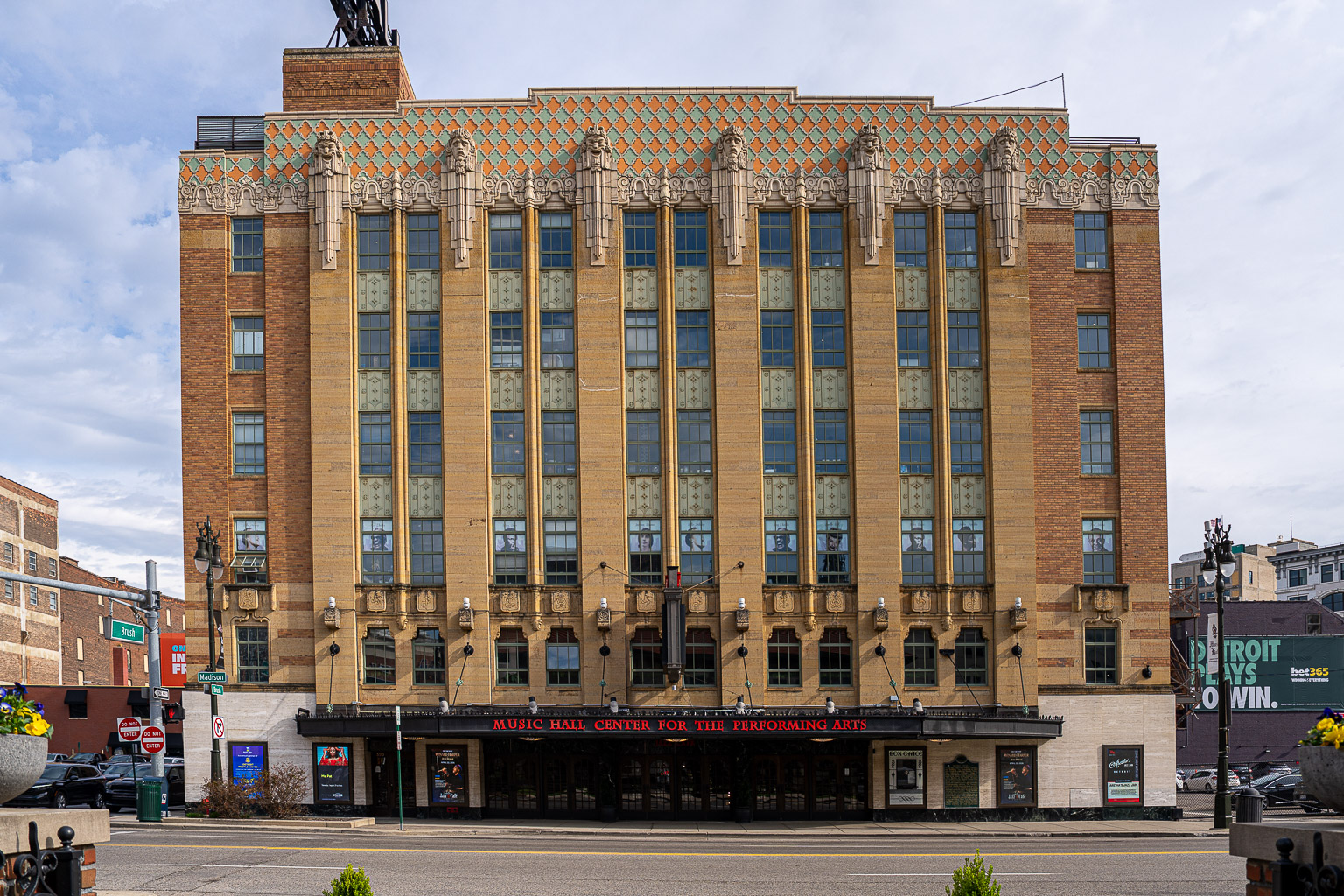
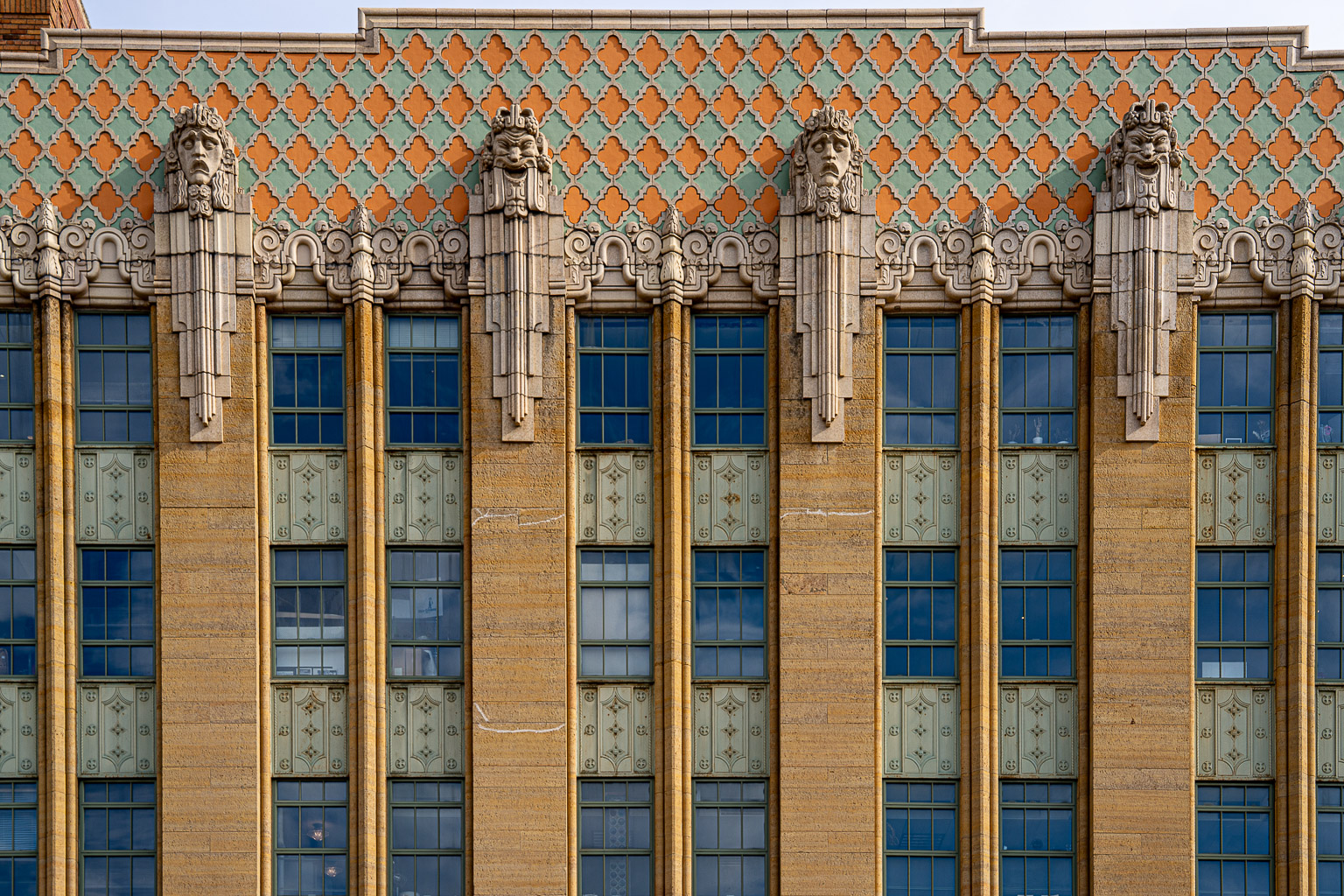
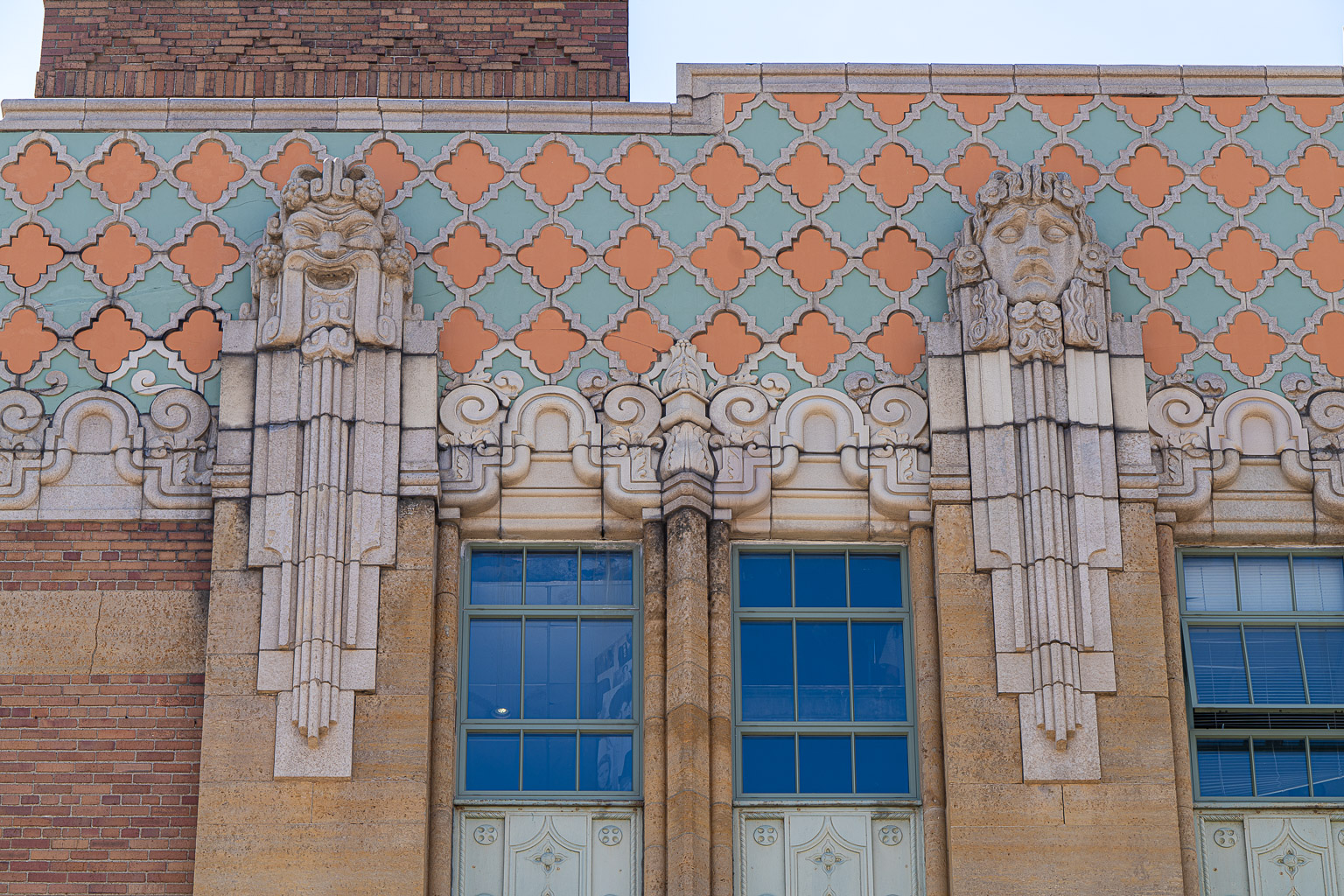
The front (north) elevation has a dark marble base topped by beige Mankato stone to the height of the marquee. Above the marquee are six stone pilasters alternately surmounted by the masks of tragedy and comedy. These pilasters form a fenestration pattern which is composed of paired openings divided by slender engaged columns. The cornice line above the pilasters is covered by a green and tan mosaic. On either side of the pilasters is one bay of face brick which wraps around the corners of the building. The east elevation features Mankato stone with face brick courses, topped by face brick, with some decorative brickwork at the cornice line. The other two facades are common brick. This exterior, a 1928 version of the modern, combines features of the Arts and Crafts style with early Art Deco.
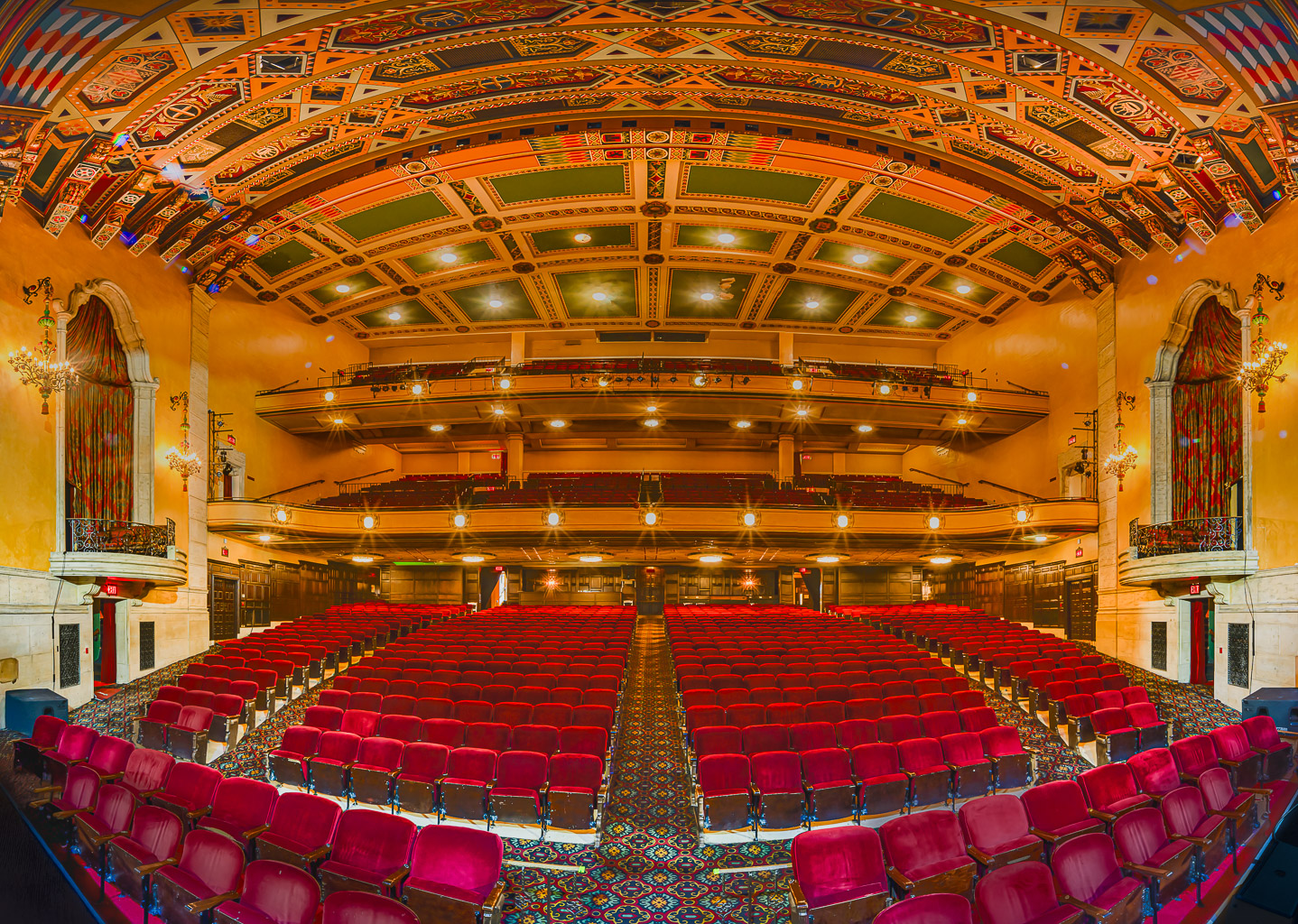
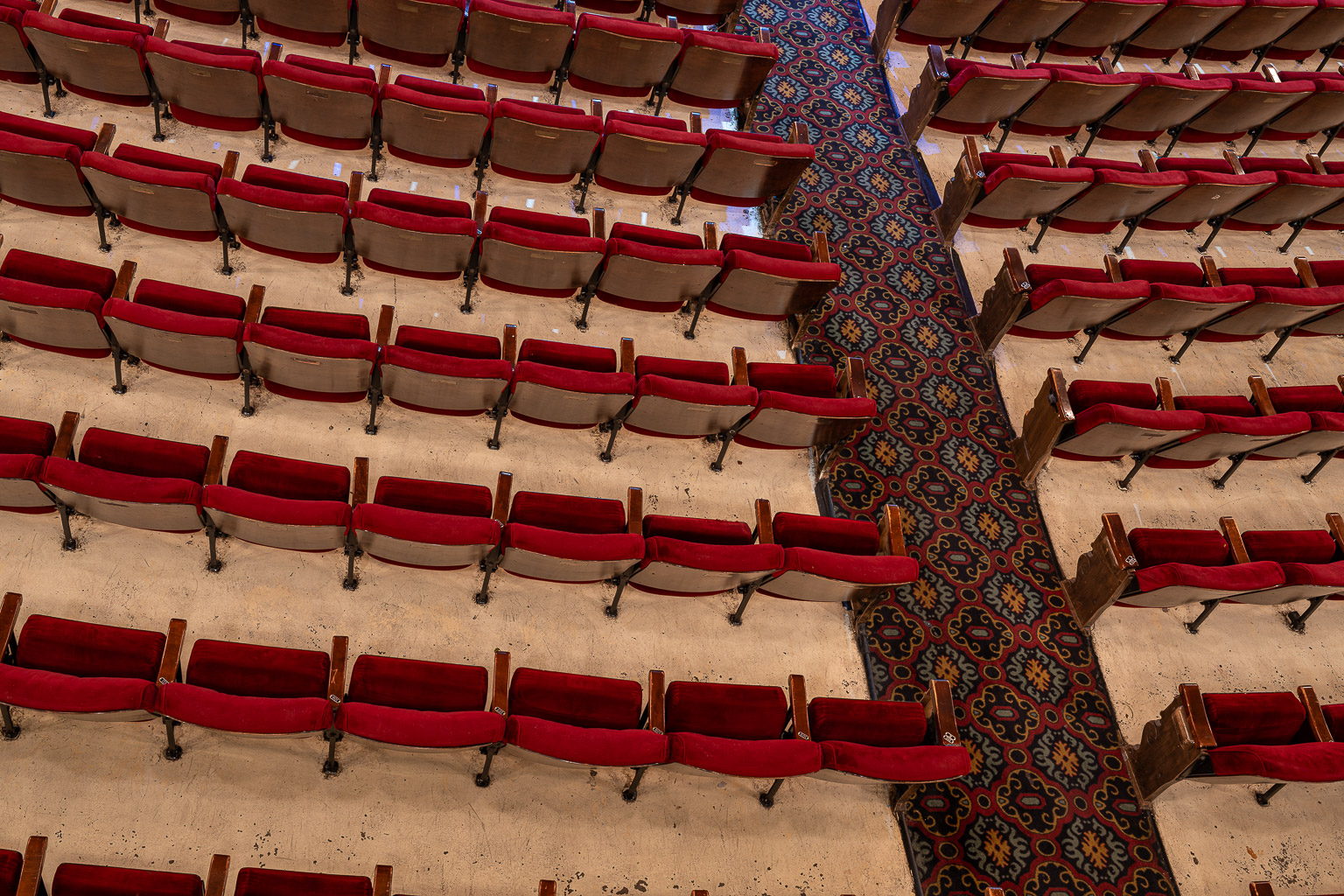
The interior of the building is done in a Spanish Renaissance motif characteristic of the electicism of American architecture during the 1920s and 1930s. The auditorium section is designed so that all sight lines lead directly to the stage. Even though the theatre seats 1800, the pitch of the first and second balconies creates an intimacy missing in most large theatres. The interior contains elaborate applied plaster, stenciling, and molded columns with Greek masks.
More photos and more description of this building can be found at HistoricDetroit.org.
The Roy Court Apartments was designed by the architectural firm of Pollmar and Ropes, a Detroit firm which was noted for their residential commissions, particularly those in the Arden Park-East Boston and New Center areas. A permit for the Roy Court was issued on November 13, 1903. However, construction for the four-story, 32 unit building did not get underway for several years. This in part was due to the financial situation of the land developers, Thomas F. Norris and Donald Miller. As a result, in 1904 Norris and Miller sold the property to Samuel Ferguson, president of the Detroit Lead Pipe and Sheet Lead Work for $30,000. Although Ferguson financed and oversaw the construction of the Roy Court, the property was managed by Miller and Norris who purchased the property back in November of 1905. However, the first residential listing did not appear in the City Directory until 1907.
Many of the Roy Court's first residents were employed in white collar positions including clerks, travel agents and secretaries. Several professionals also resided in the building including several doctors, dentists, and a lawyer. The Roy Court was also the home of many realtors including Recardo French, vice-president of the Henry S. Kopppik Company; William Kludt and Charles Berdan of the Moffat Building; and Thomas Norris and Donald Miller, president and secretary-treasurer of the A & A Land Improvement Company of Detroit and owner of the Roy Court.
The Roy Court remained fully occupied until the 1930s when the impact of the Great Depression was felt. For although the Roy Court remained a residence for predominantly white collar- professional people, many of its long time residents found themselves in reduced circumstances and unable to afford the rent. In 1930, for the first time, the Roy Court experienced 15% vacancy, with 35% of the residents being women. By the 1940s the economy had recovered and the Roy Court once again became an affordable place for white collar-professionals.
The Roy Court Apartment building is a very pleasant example of a typical Neo-Georgian residential structure. The Neo- Georgian style was very popular at the turn-of-the-century in urban areas where the facades of the buildings were either at or close to the sidewalk.
The Roy Court Apartments is a four-story building on a high basement. The first story is red brick; the upper stories are buff colored. The entrances into the building are positioned off the essentially U-shaped courtyard. Sets of stone stairs lead through large archways into recessed entrances. Each doorway is composed of an oak door with oak framed sidelights and transoms. Brass keyplates adorn the doors. The archways themselves have
Roy Court Apartments was demolished, see this page.
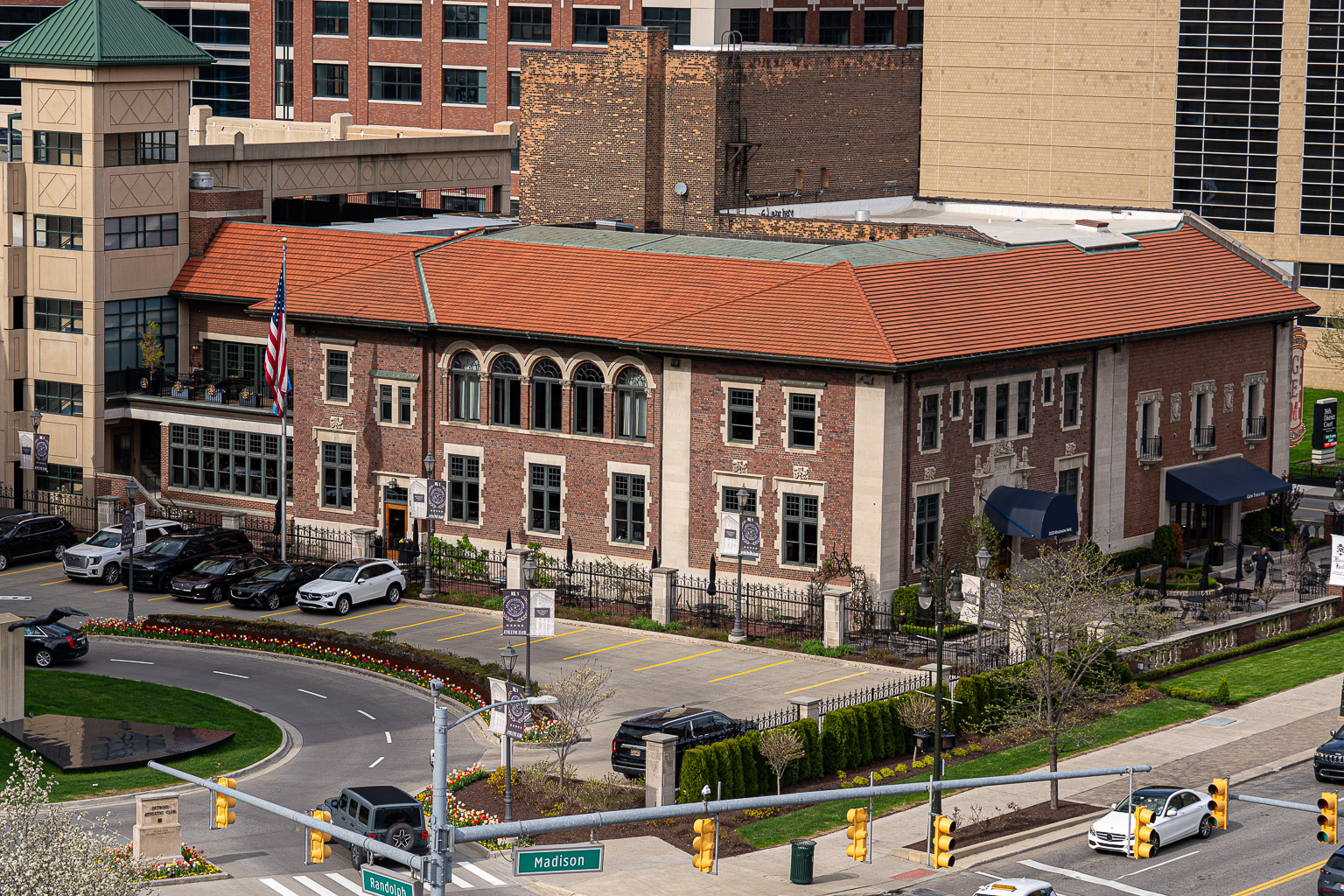
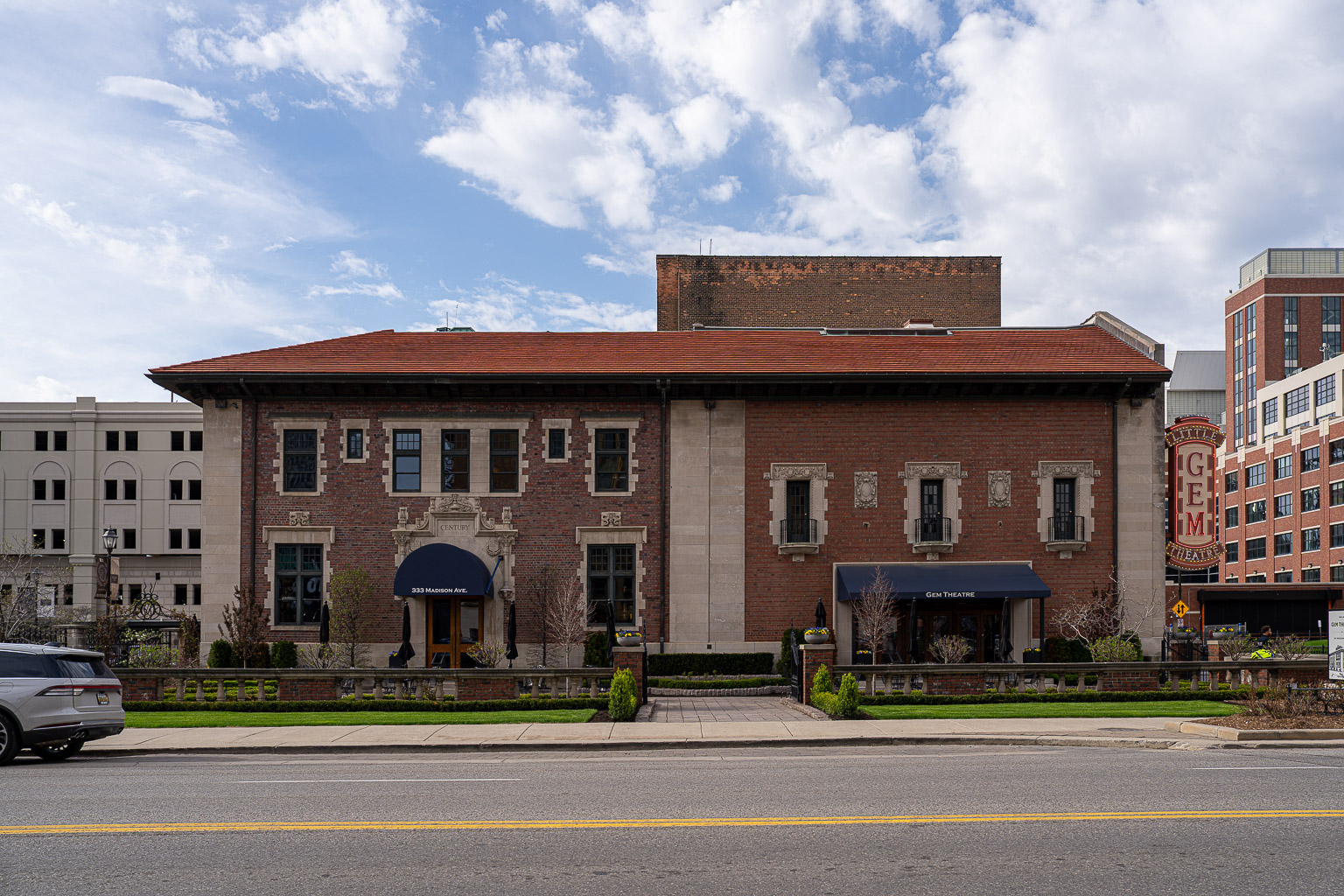
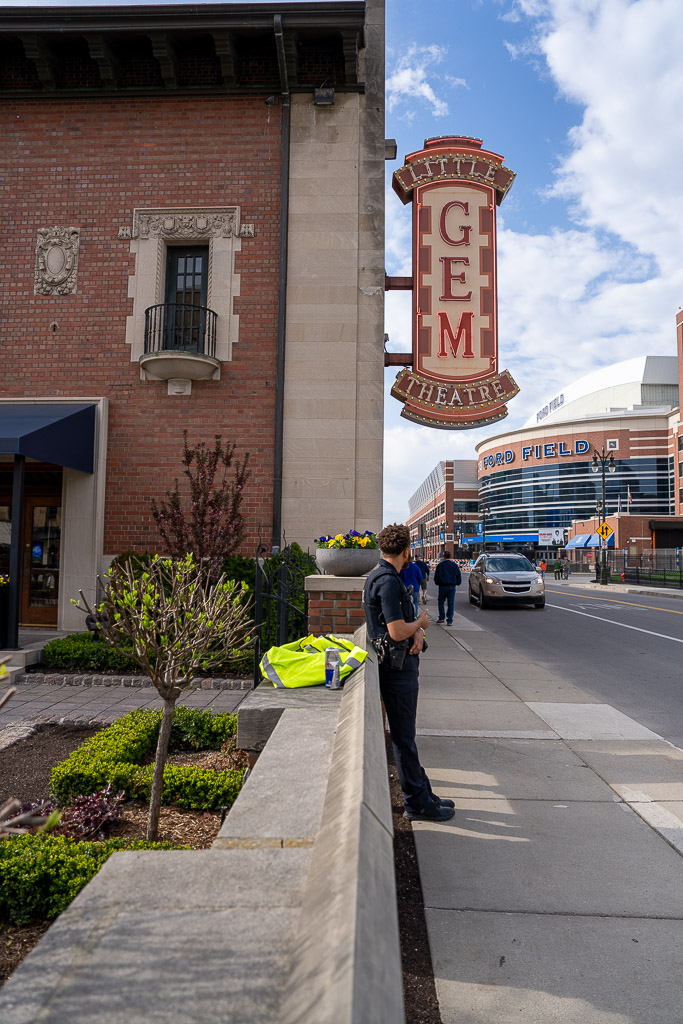
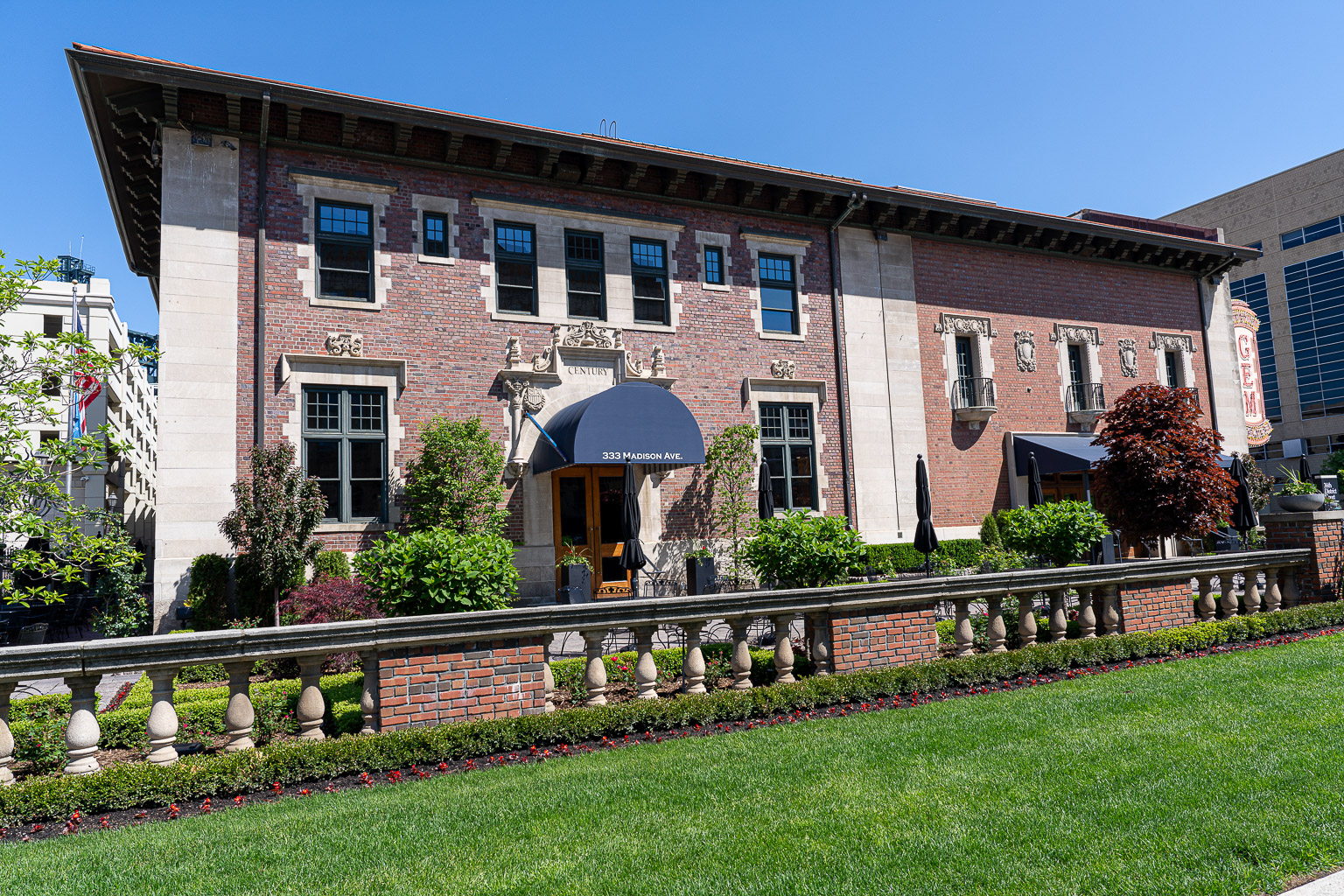
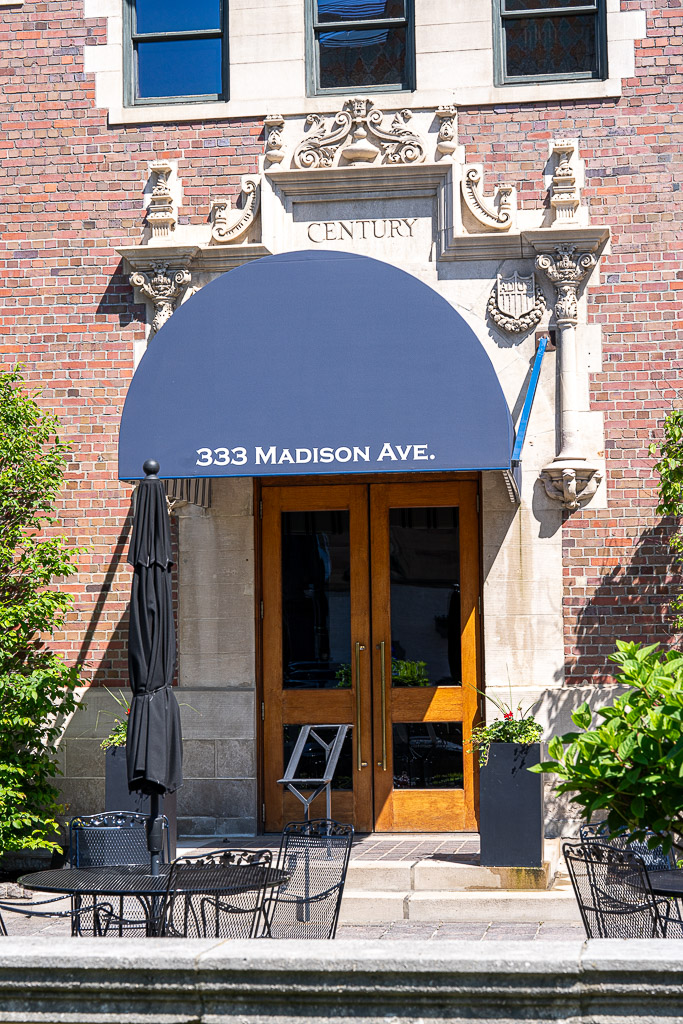
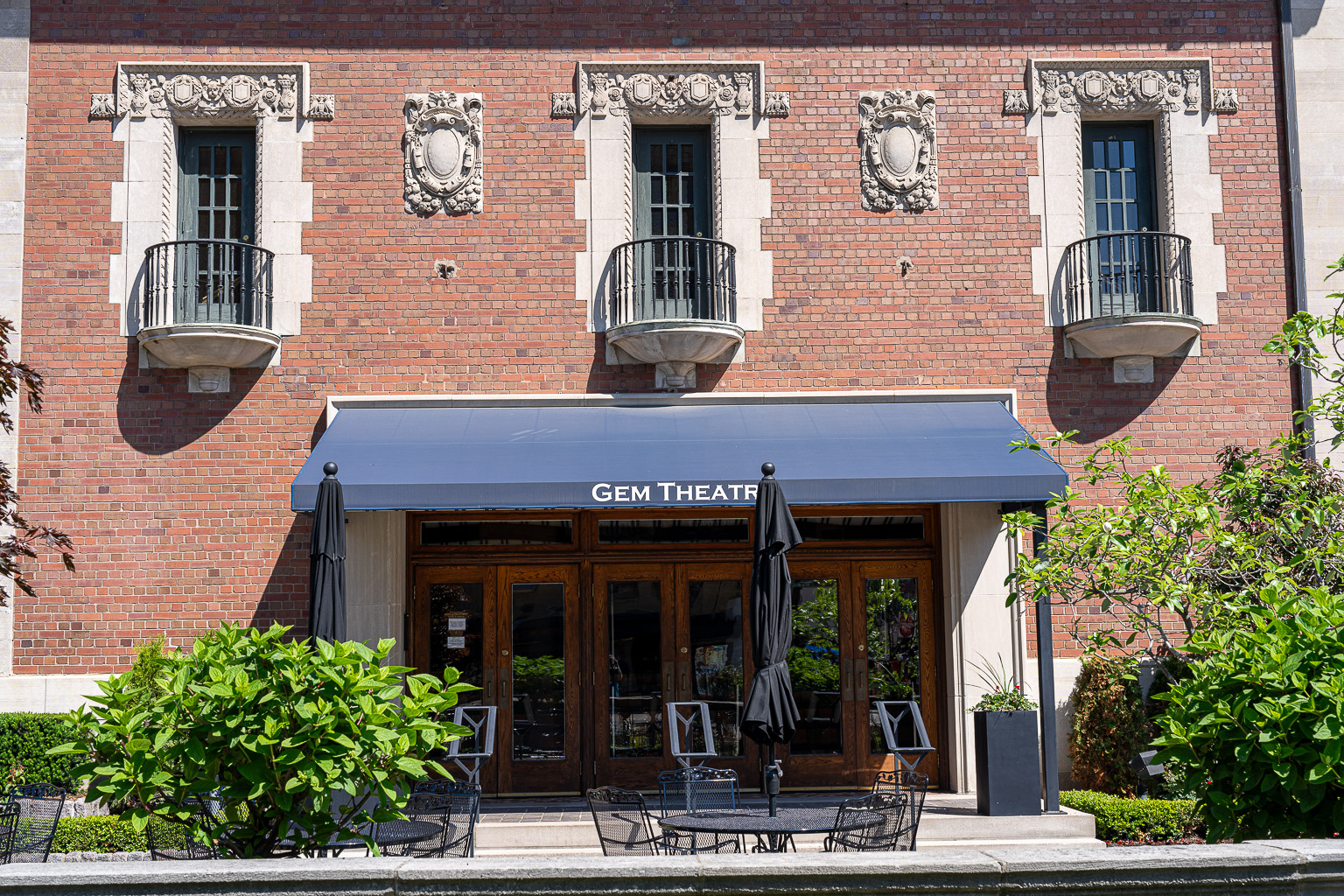
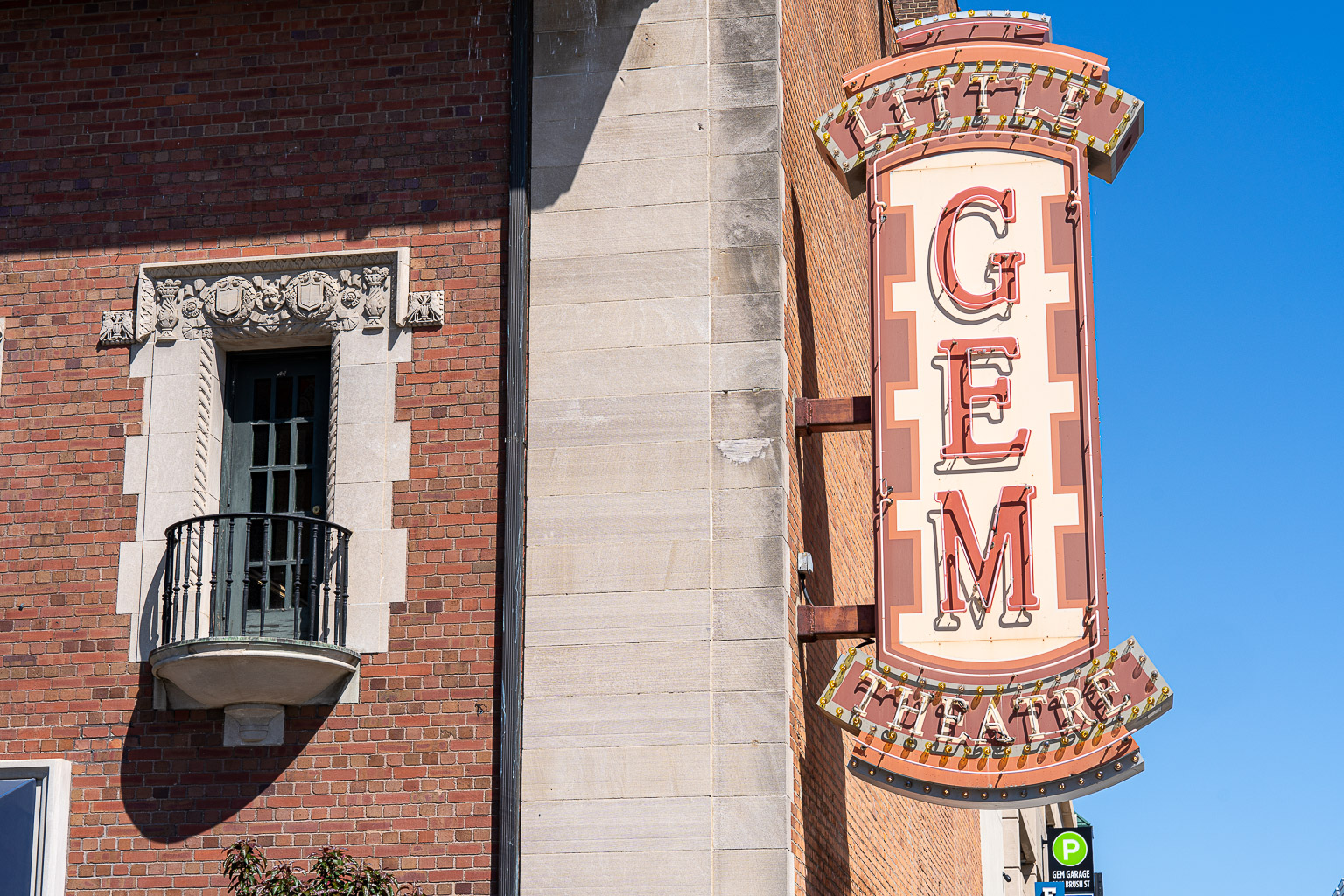
The page of the historical district report containing the Gem Theater is missing.
Information and more photos of the Gem Theater can be found at HistoricDetroit.org.
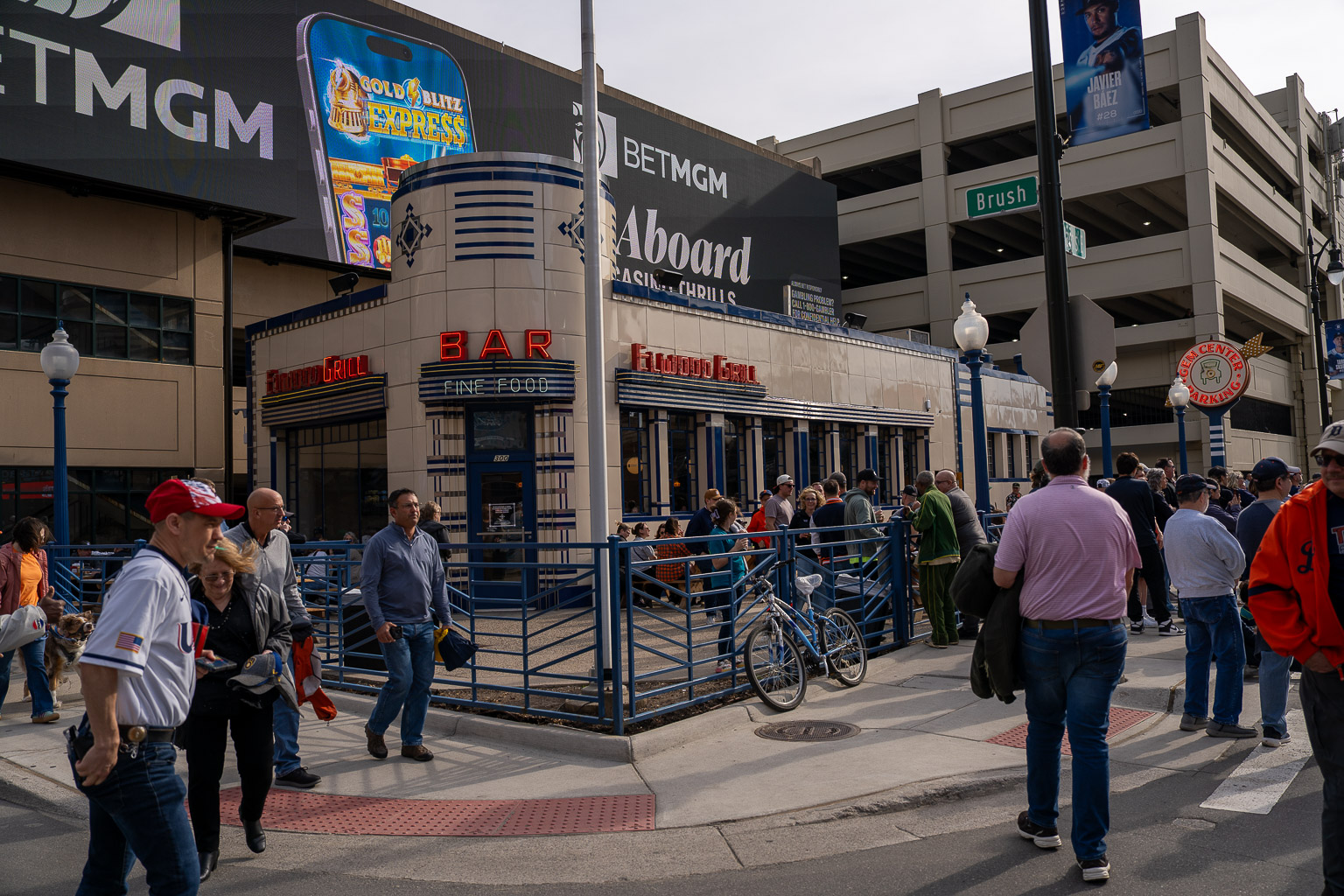
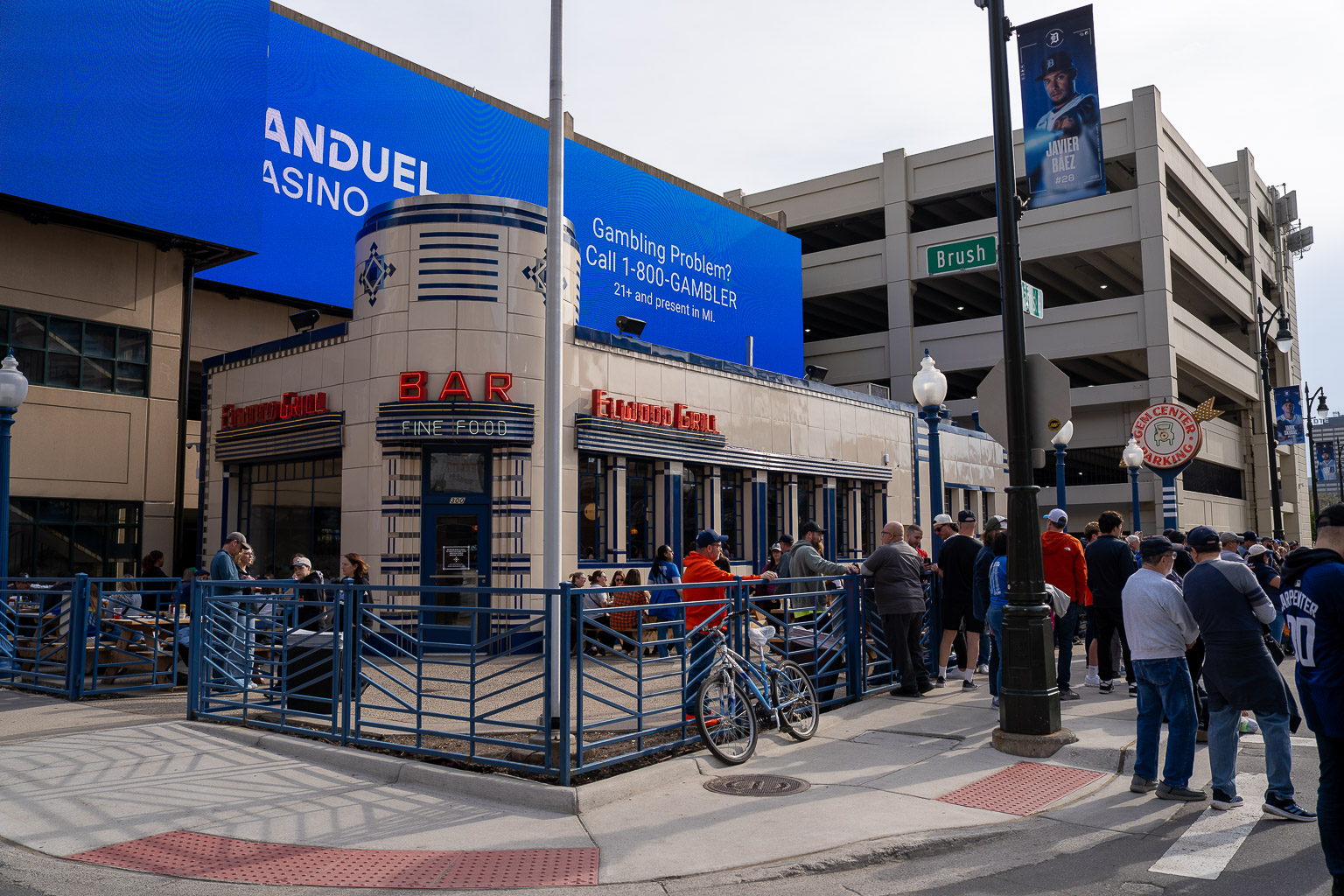
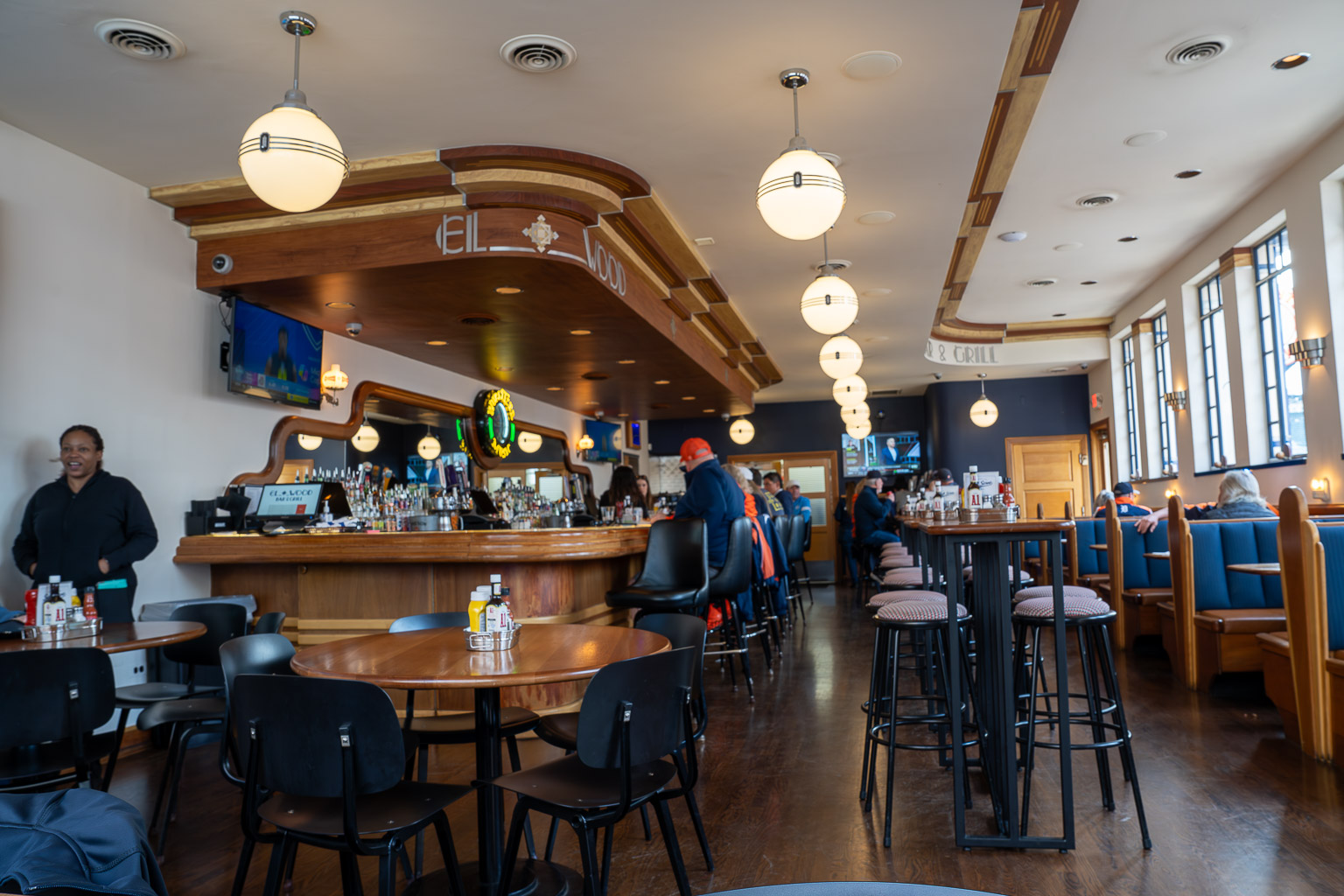
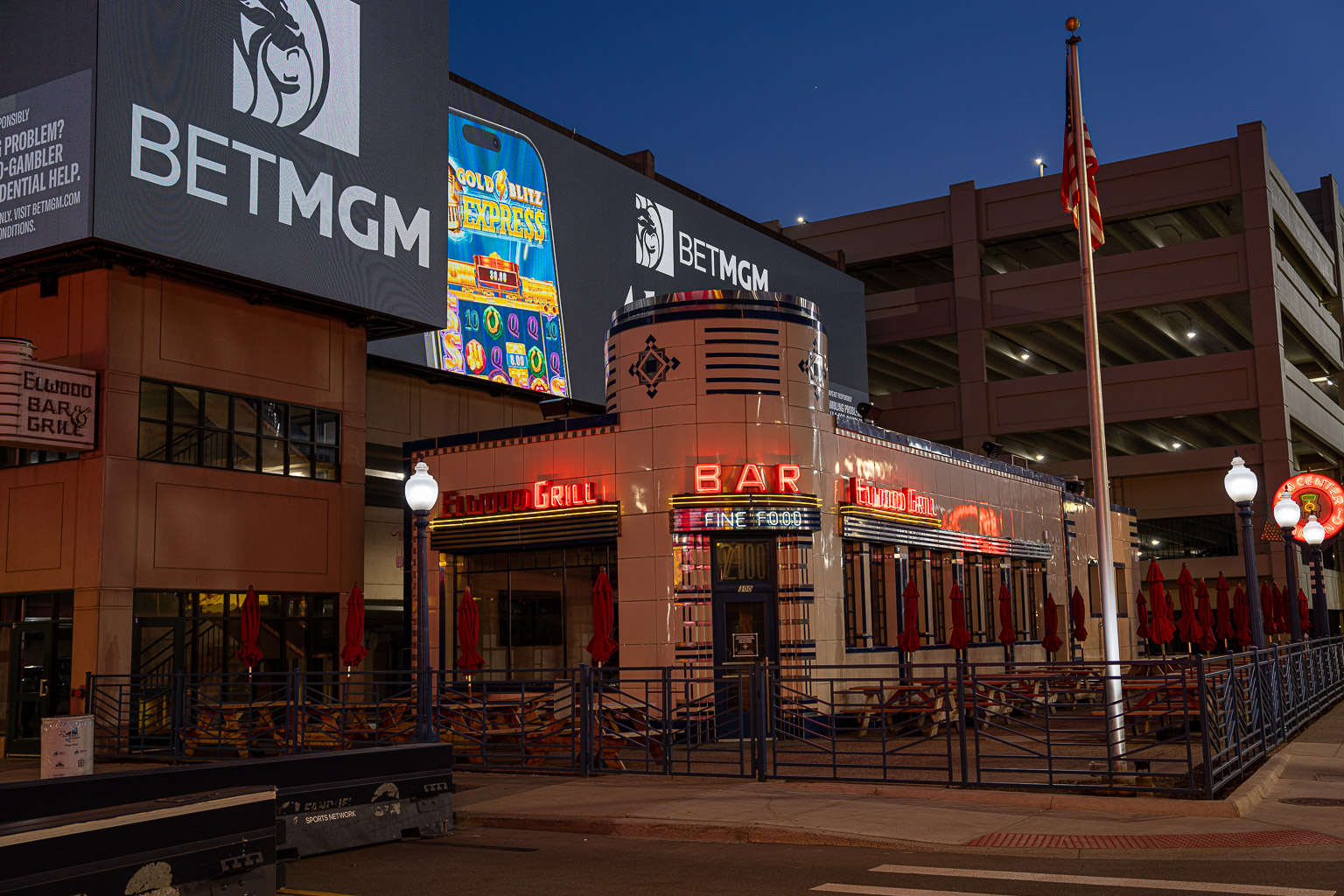
The page of the historical district report containing the Elwood Bar & Grill is missing.
Information and more photos of the Gem Theater can be found at HistoricDetroit.org.
The Harmonie Club traces its origins to 1849 when four German immigrants gathered together a group of ten young men to meet and sing the German Lieder under the name of Gesang-Verein Harmonie. The membership increased rapidly and in 1852 the club was chartered by the State. By 1875, when it was incorporated, the club had a reputation for offering the best in German song and music. In that year the Harmonie Club dedicated its first club house at Beaubien and Lafayette. In 1893 this structure burned, but the German community in Detroit had grown so significantly in both numbers and prominence in the intervening years that the need for a larger and more opulent meeting place had long been felt anyway. An architectural competition, in which only German-American architects were asked to participate, resulted in the selection of the design for the present building, which was soon begun at the new site on Harmonie Park.
From the time the club occupied its lavish new home in December of 1895, it gained in prominence in the cultural life of Detroit. It carried outs its original purpose to foster musical activities and good fellowship and continued to be a noted musical and social organization down to the mid-twentieth century. The clubhouse lounges offered fine dining, a tavern, card rooms, a bowling alley and elegant lounges for the use of its large membership.
After 1950, the Harmonie Club membership dwindled. By this time the German community had lost much of its ethnic identity. Nevertheless, the remaining membership undertook several small- scale interior redecorations in the 1950s and 1960s, although the exterior was unchanged. Finally, in 1974, with only 350 members and debt aggregating $250,000, the club was sold to its past president, Gordon Chandler, who attempted to operate it as a German-oriented, semiprivate dining-club. This effort eventually failed and the building was closed.
The Harmonie Club is also significant for its architectural qualities. Its architect, Richard E. Raseman, was a German by birth. He was one of a number of German-American architects working in Detroit at the turn-of-the-century. These firms were principally engaged in designing houses, churches and commercial blocks for the city's large and affluent German population. Raseman's nearby Breitmeyer-Tobin Building, constructed by the wealthy German-American florist John Breitmeyer, has recently been listed in the National Register.
His design for the Harmonie Club reflects the classical, Beaux Arts style that was becoming popular for public buildings in the 1890s. The use of buff-colored brick and the rather heavy, overscaled quality of the ornamental features are typical of this period. Raseman imbued his design with the solid, monumental character appropriate to a prominent German social club while reflecting contemporary opera house and theatre design in the facade to symbolize the organization's primary interest in musical entertainment. Today, the Harmonie Club is one of the finest and least altered structures of its kind in Detroit, as well as one of the city's earlier surviving examples of Beaux Arts design.
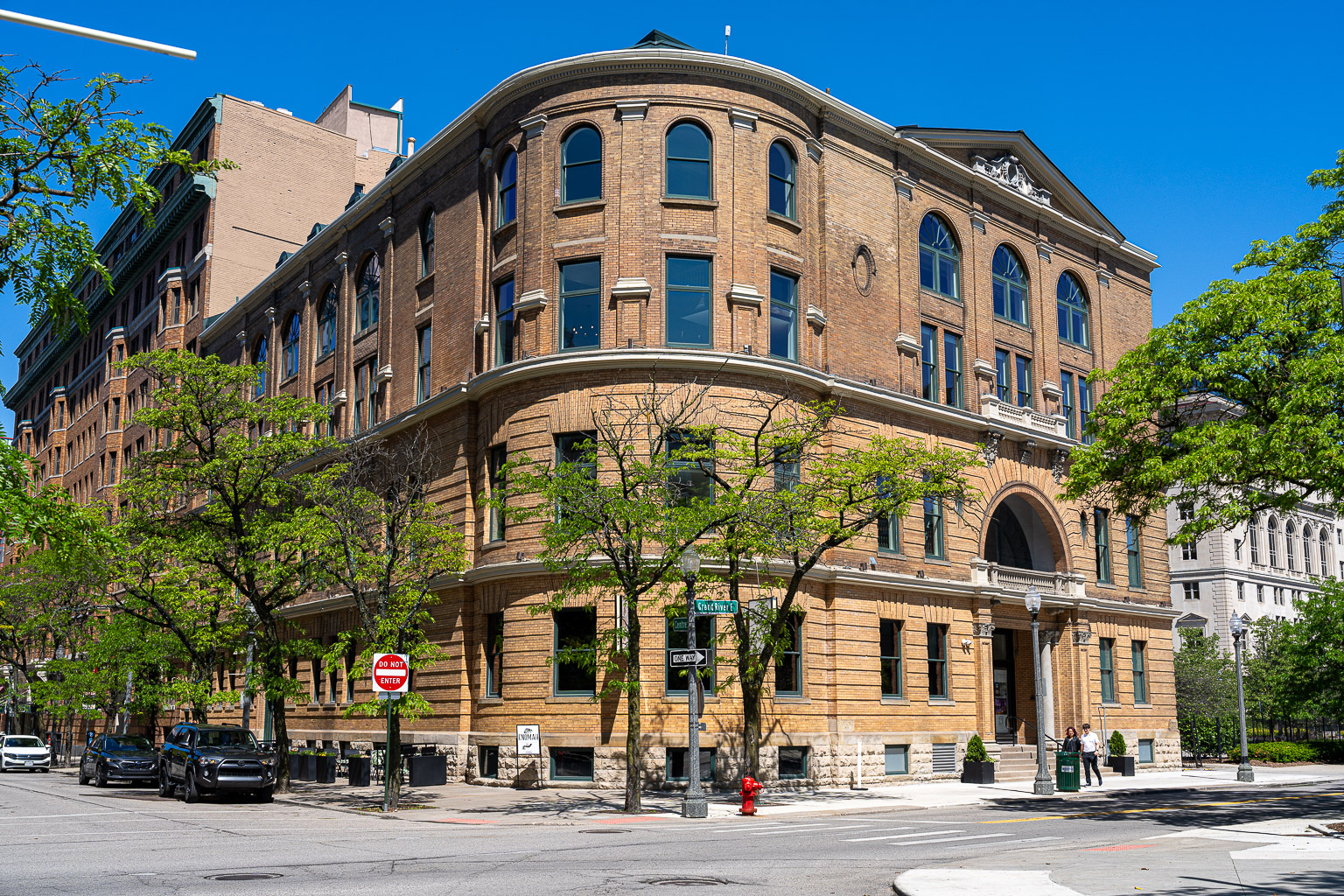
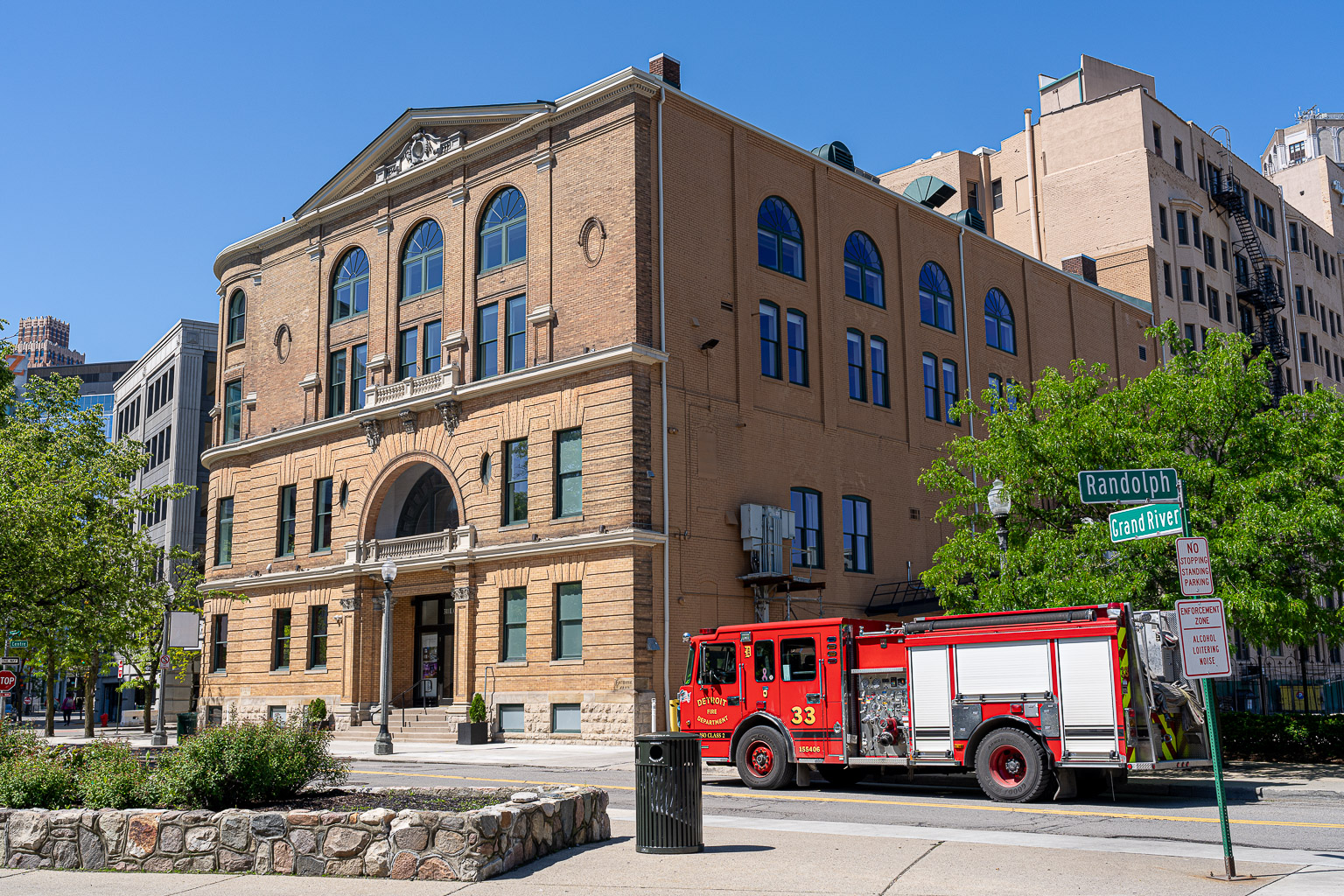
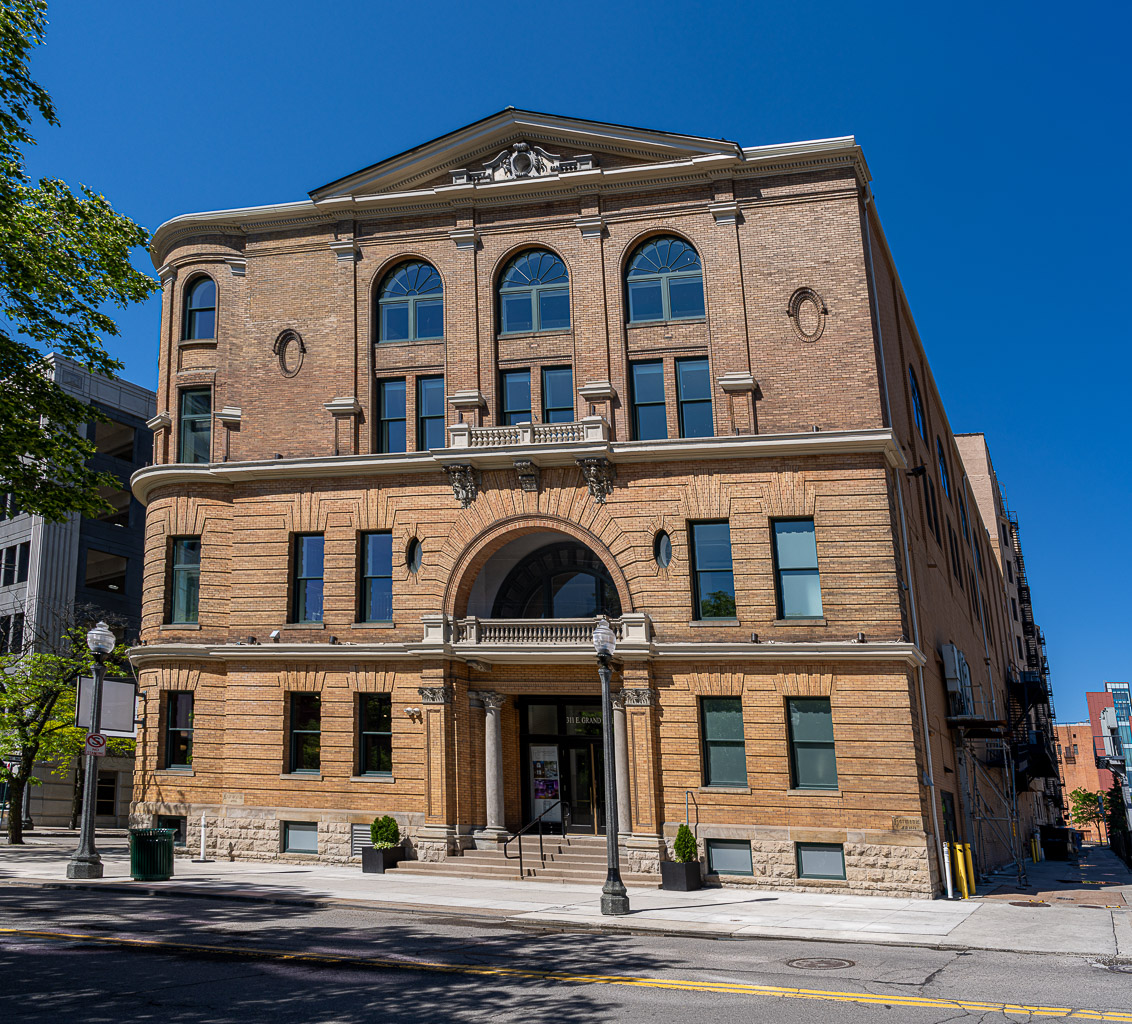
The building is a rectangular, four-story, hip-roofed, buff-colored brick structure of Beaux Arts design approximately 75' X 100' in size. The two elevations are unified by a large curving corner section.
Above the low basement of rusticated stone, the brick first and second stories are banded while the third and fourth stories are faced with flush brick masonry articulated with colossal pilasters on pedestals. The one-over-one fenestration is symmetrically arranged. The windows on the first and second levels have elaborate splayed lintels of banded brick while those of the third and fourth stories are unarticulated. The fourth story windows have arched tops. All of this is displayed in the two photos below.
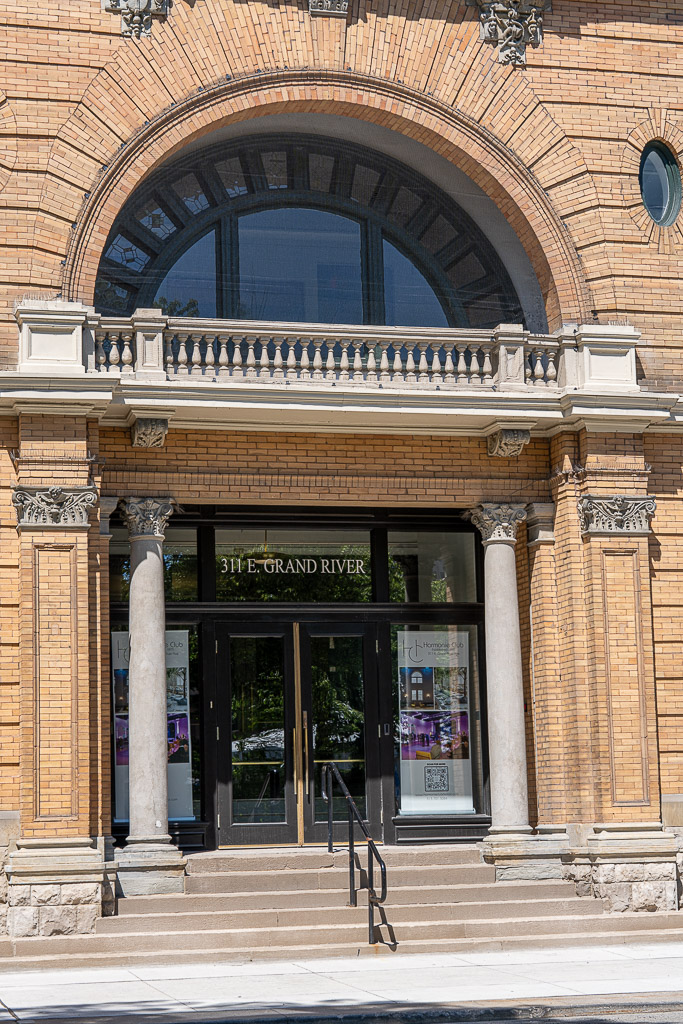
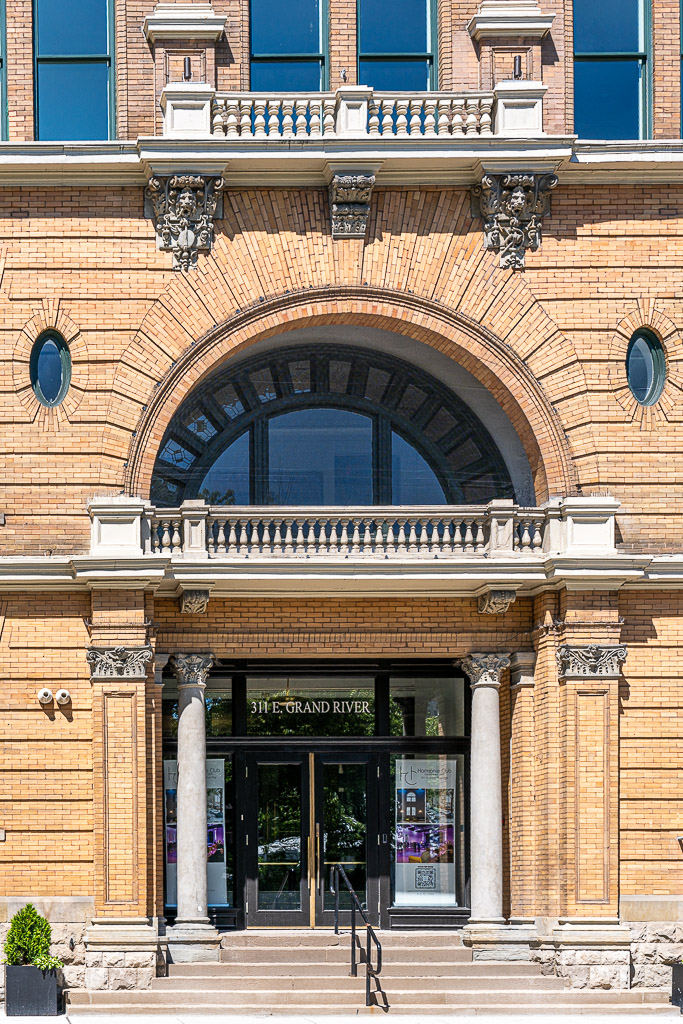
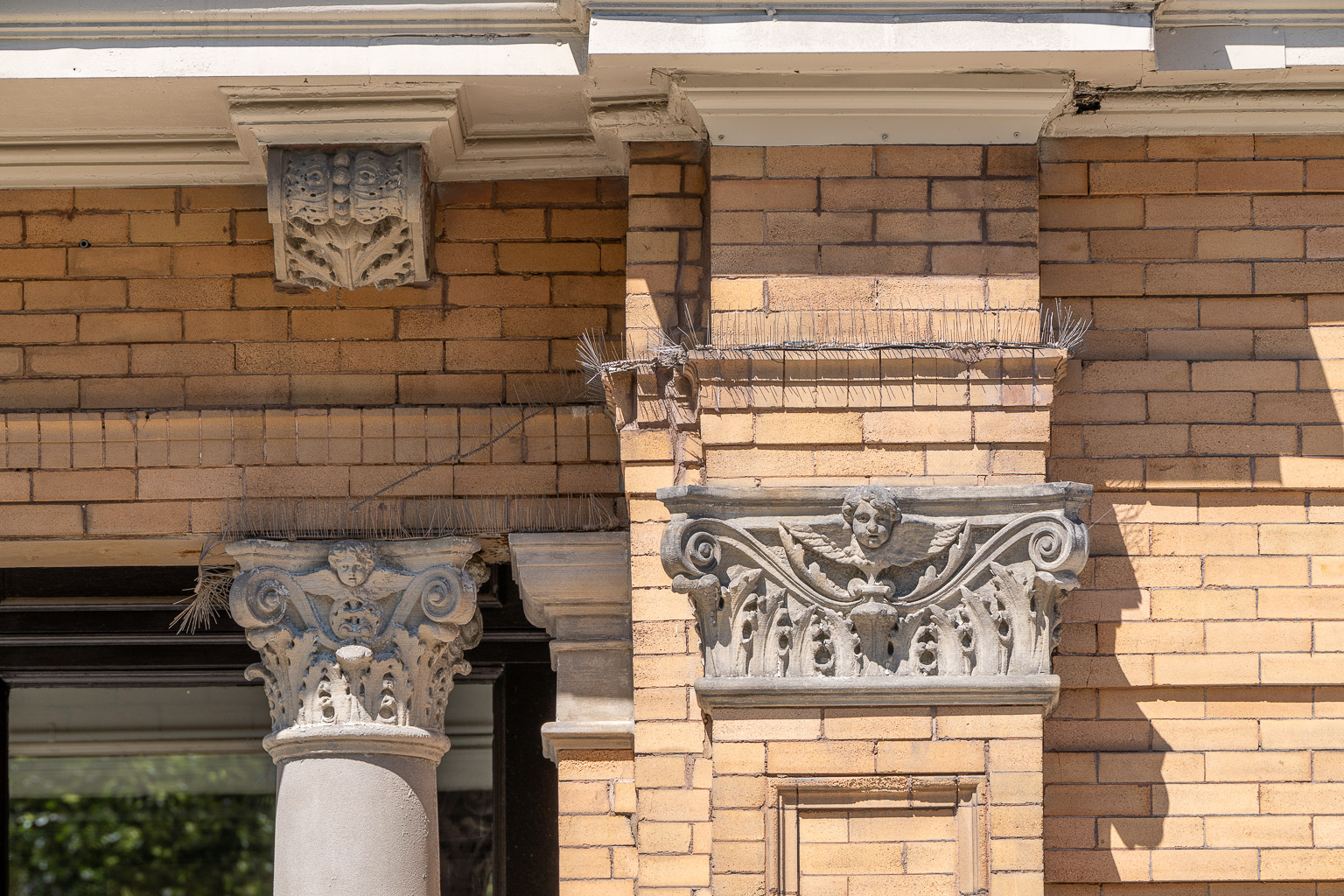
The symmetrical facade on East Grand River Avenue is formally composed along classical lines. The central Ionic ordered entrance is under a broad arch extending through the second floor (1st photo below). Above the projecting molded metal course separating the second and third levels is a pedimental three-bay pavilion set off by brick pilasters and ornamented with a balustraded stone balcony centered over the entrance arch (2nd photo below). The pediment contains a high relief, triumphally-articulated, foliated cartouche (3rd and 4th photos below).
More details on the Grand River facade are shown below.
The Center Street elevation is less formally composed with fenestration located to respond to floor plan requirements.
The interior is divided into dining rooms, lounges, meeting rooms, a bowling alley, a rathskeller dining room and two large auditoriums. Throughout the classical plasterwork and dark oak panelling are typical of the heavy-handed, interior decorating popular for social clubs at the period.
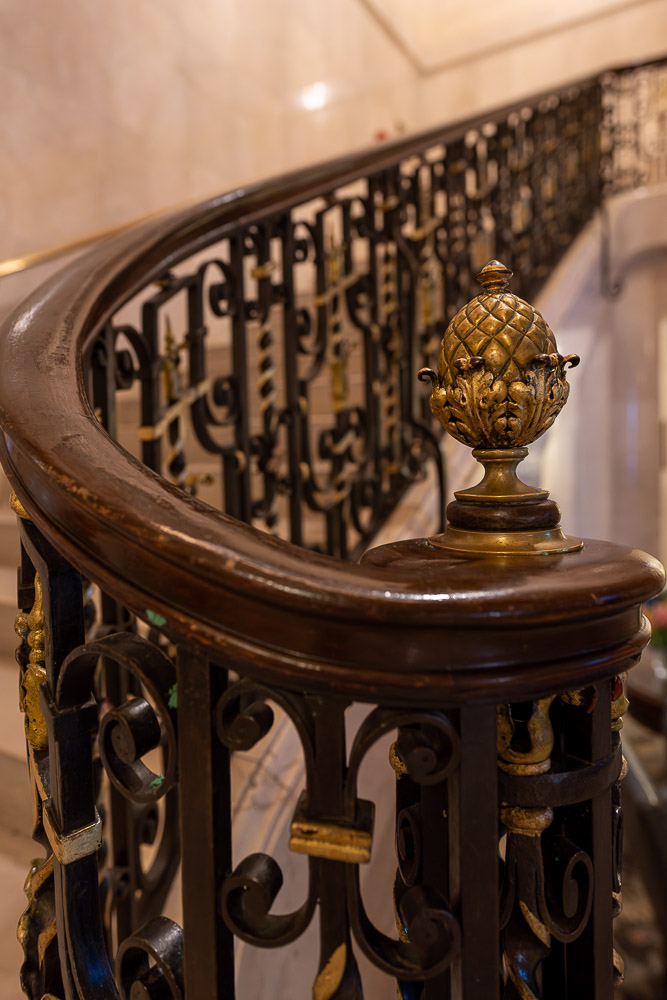
The entrance leads to a large hall containing the wide Colonial Revival style staircase with bulbous turned balusters. Other than the staircase itself, the hall was refinished in a sleek modern style in 1953-54 and retains none of its original finish.
More photos and more description of this building can be found at HistoricDetroit.org.
The Milner Hotel, originally the Henry Clay Hotel, was built by Henry Clay Hodges, a wealthy Detroit manufacturer, author and real estate developer. Originally from Vermont, Hodges moved from Marshall, Mi. to Detroit in 1862 to associate with his brother in the life insurance business. He built the Hodges Building on the corner of Griswold and State, now the location of the David Stott Building, in addition to the Henry Clay Hotel. The Hodges brothers also subdivided a portion of the City north of Grand River Ave., including Trumbull and Lincoln Avenues.
In addition to real estate, Henry Clay Hodges had a lifetime interest in science. He found time to write books on scientific topics, including 2000 Years in Celestial Life ... (Received through Psychic Telegraphy) ... , Detroit, 1901, and Science and Key of Life; Planetary Influences, 7 volumes, Detroft, 1902-1910. Hodges was a great believer in astrology. He died on August 31, 1919 at the age of 91.
The Henry Clay Hotel was designed by the architectural partnership of Alvin E. Harley and Norman S. Atcheson. The original eight story reinforced concrete and brick hotel building erected in 1913 was 77' wide by 65' long; its eastern half was built in 1915.
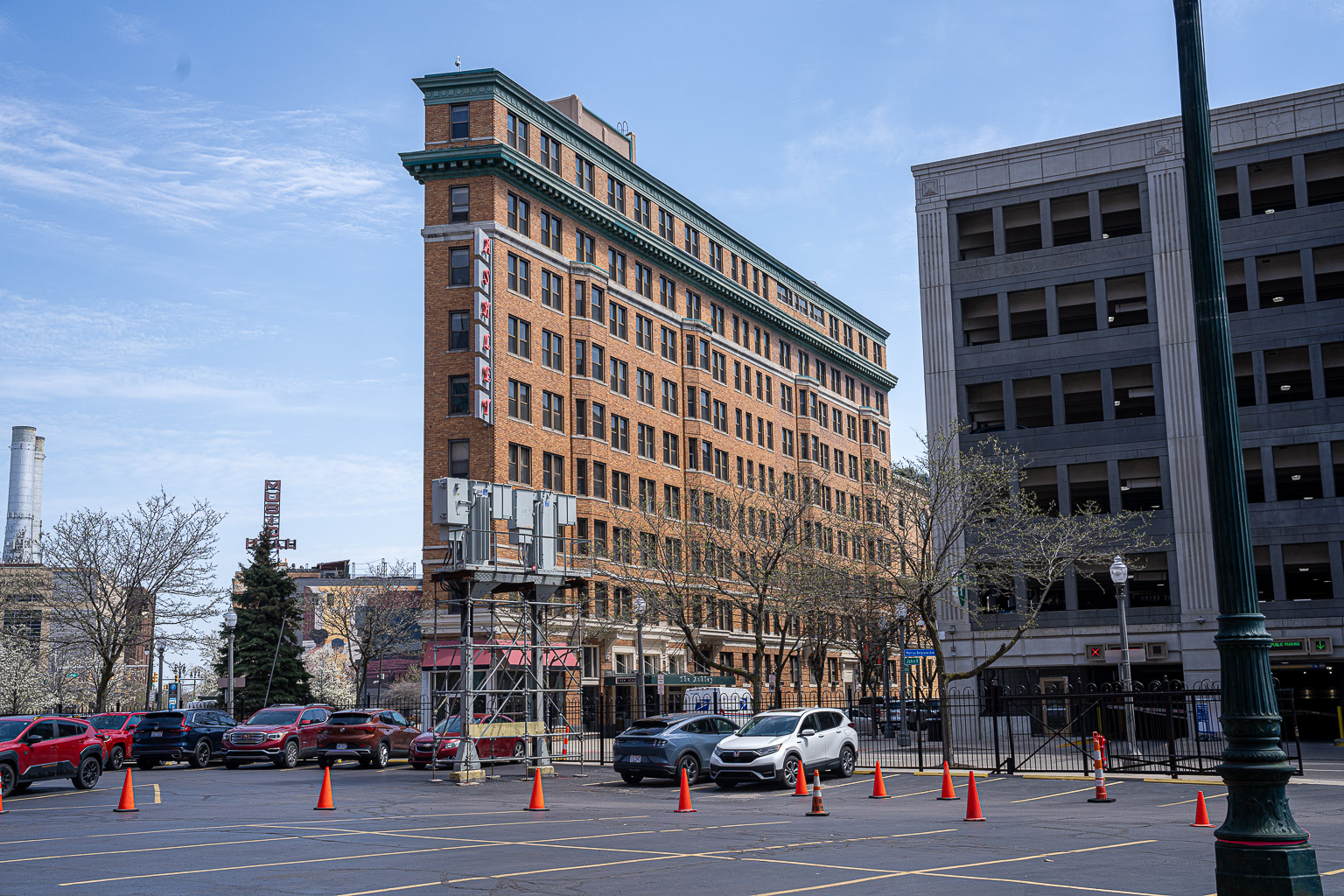
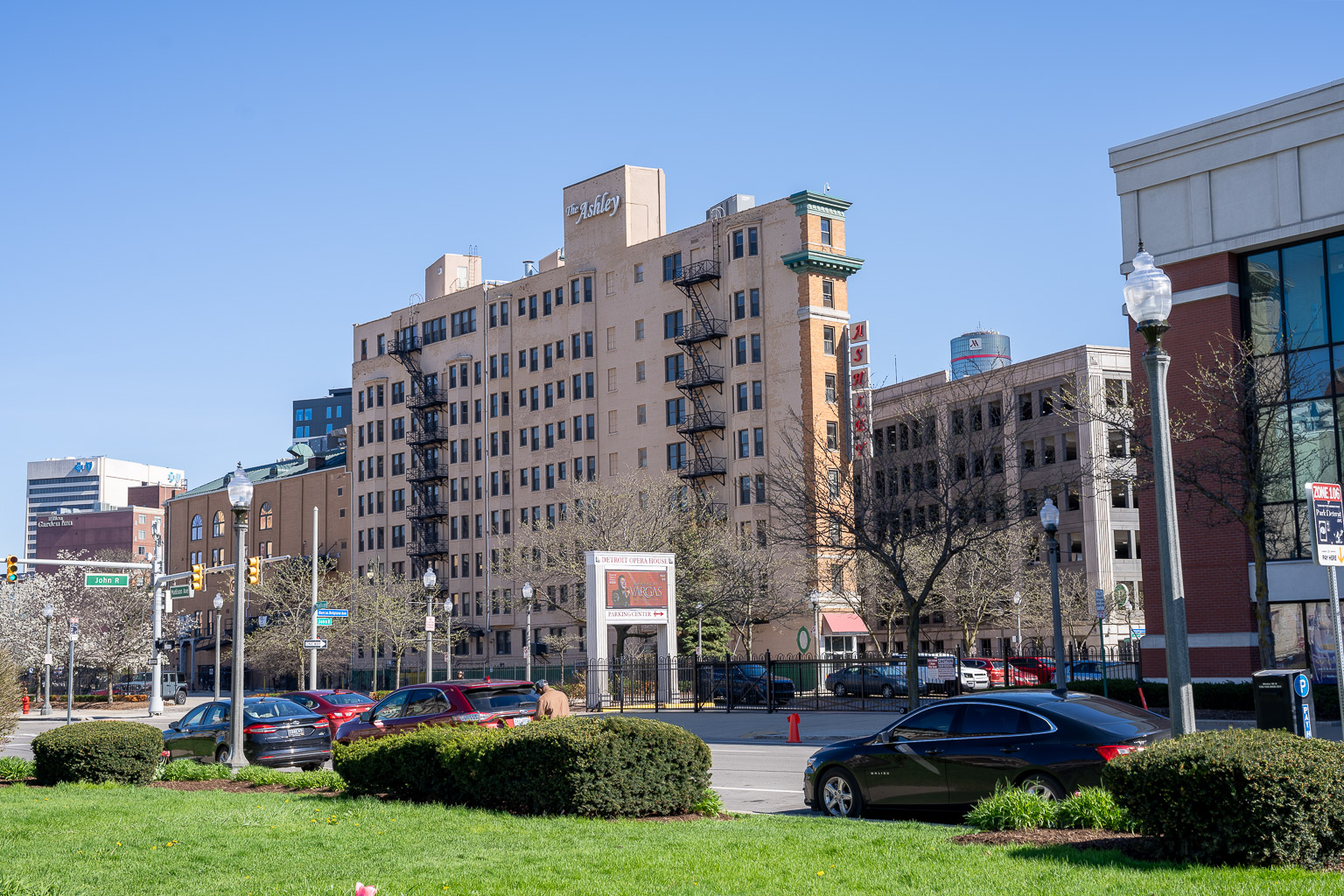
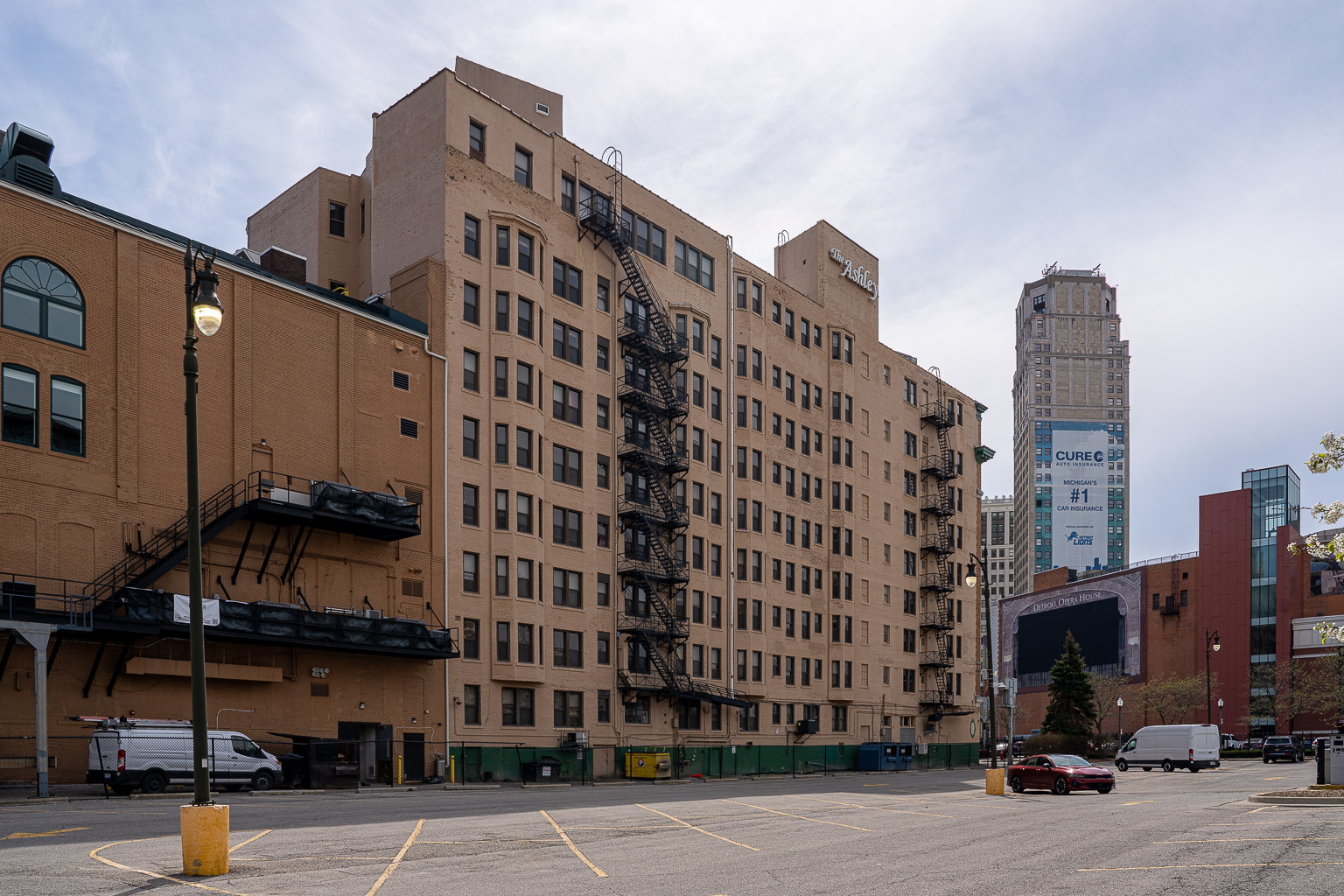
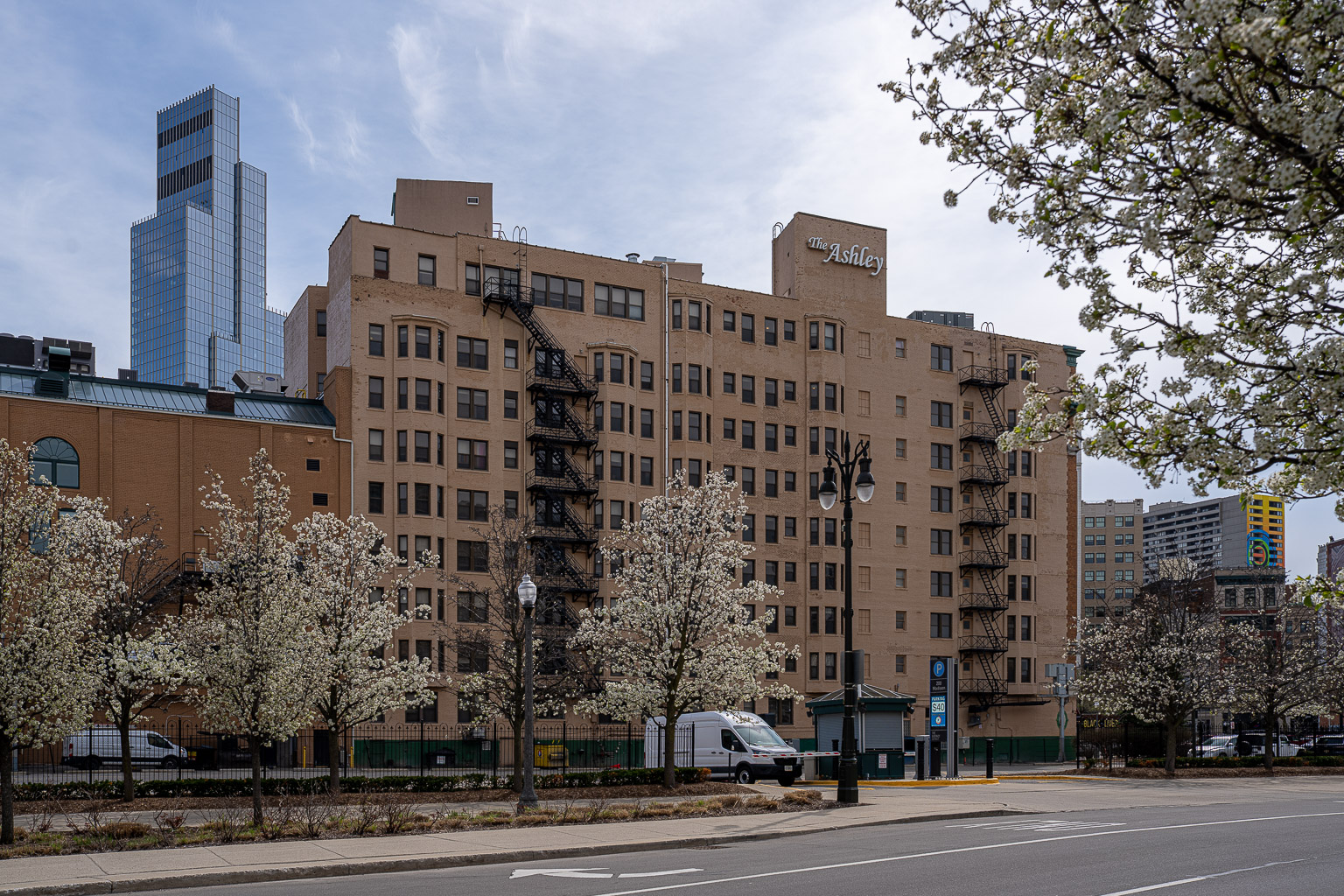
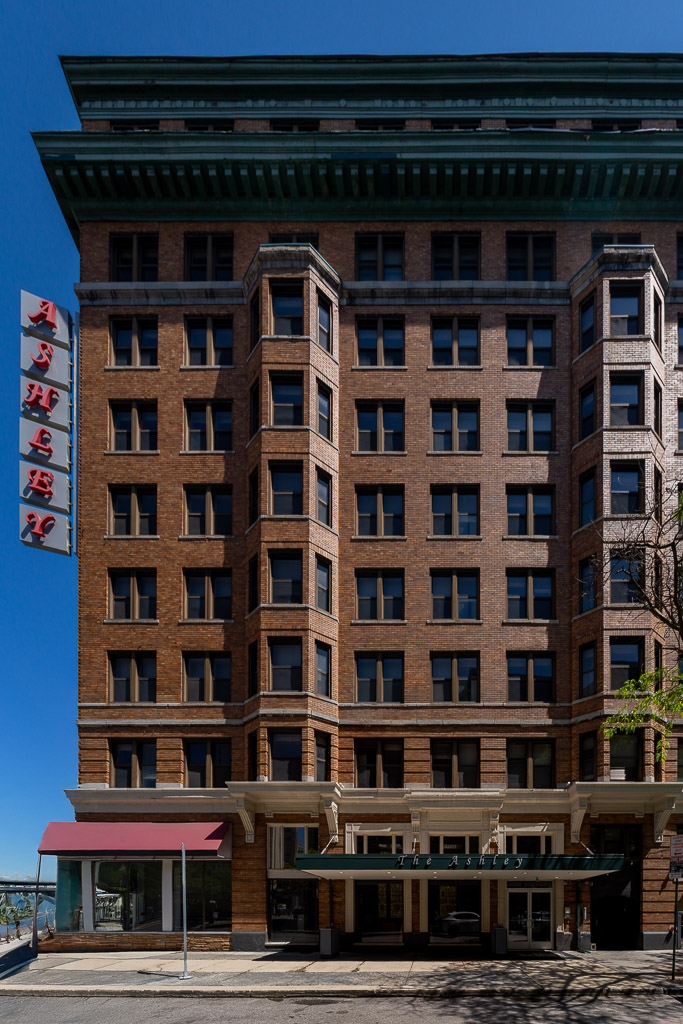
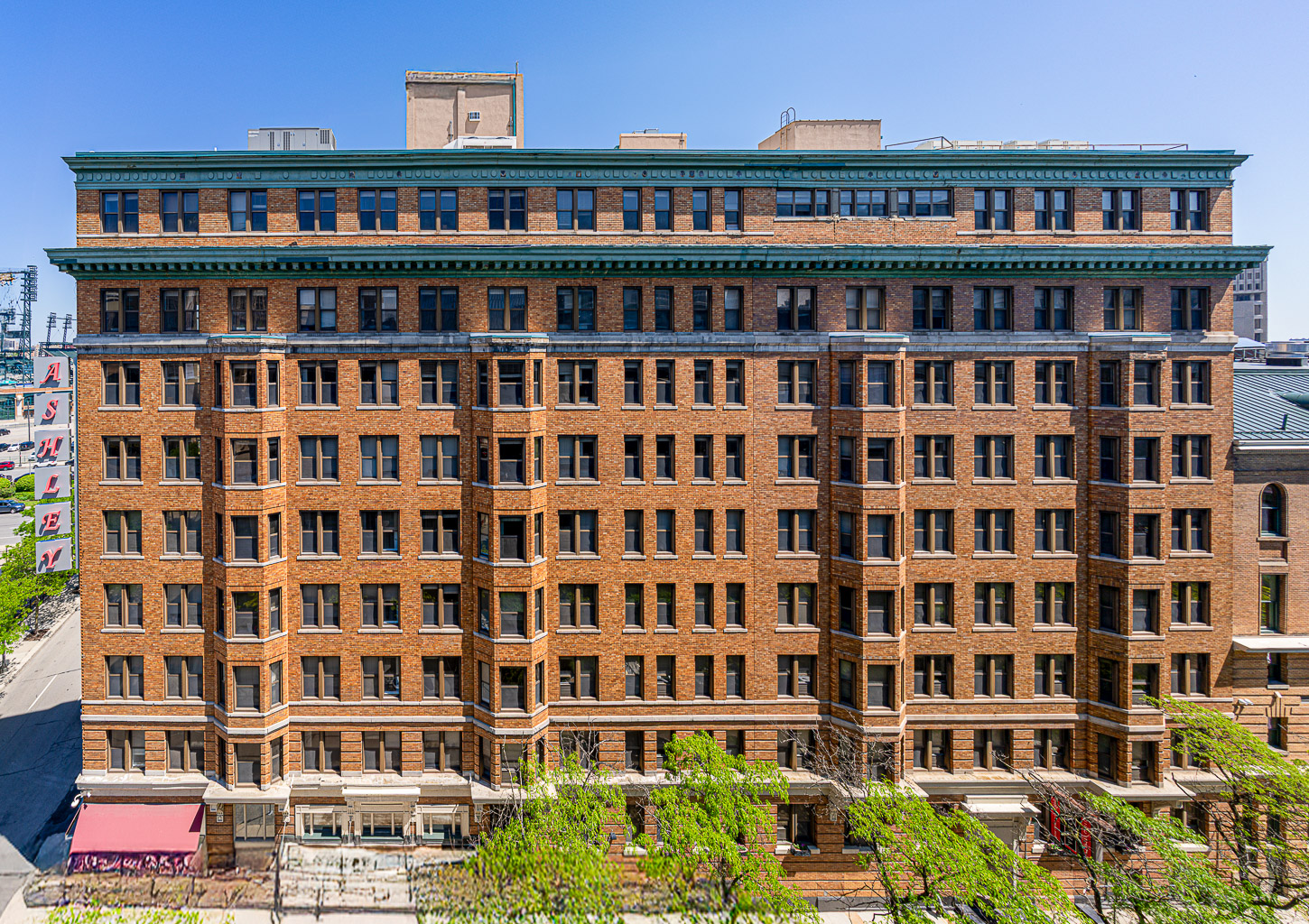
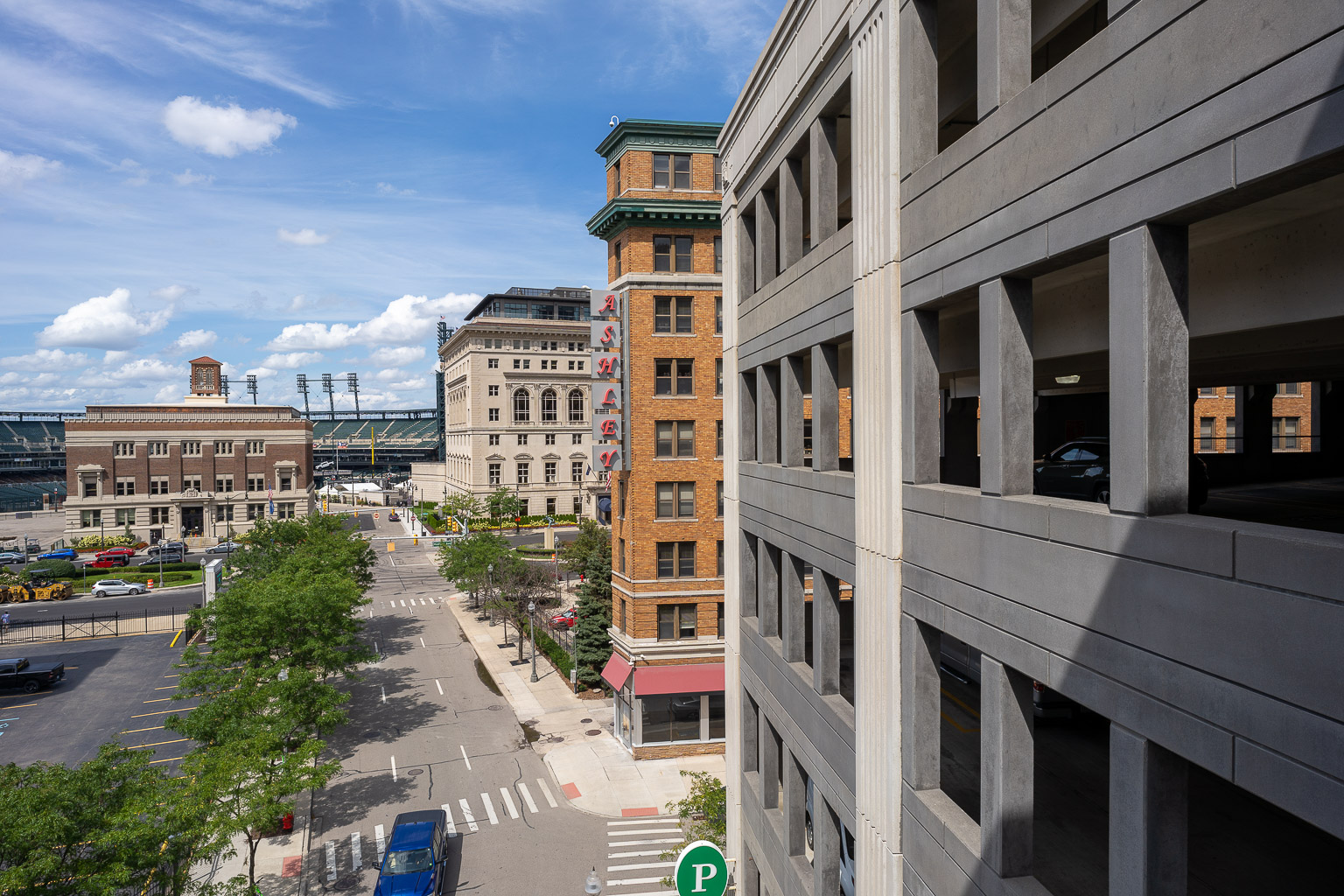
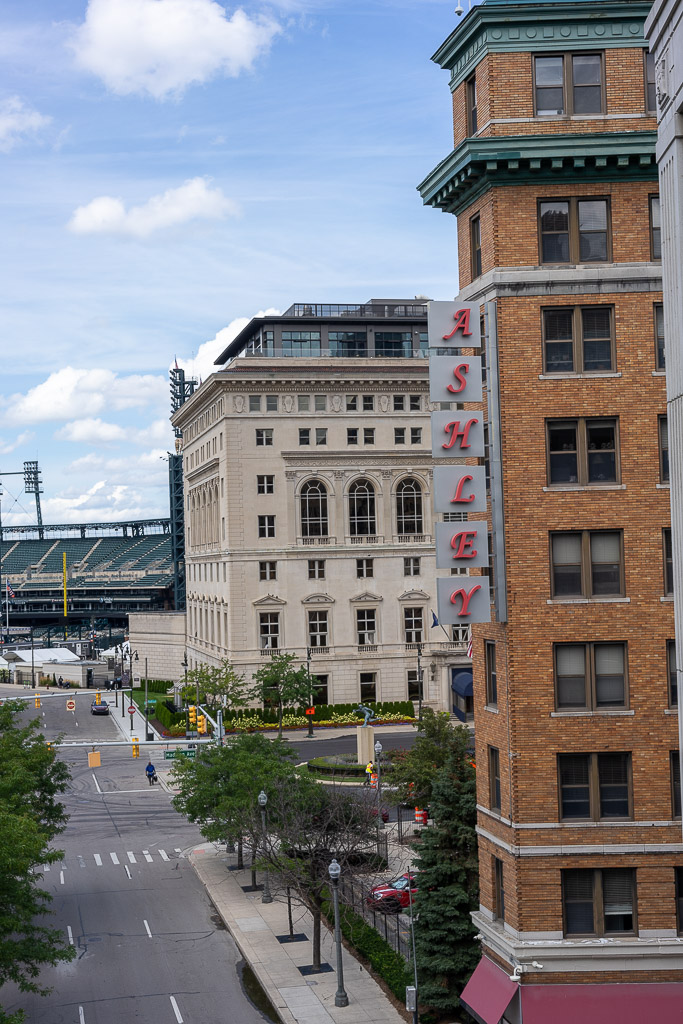
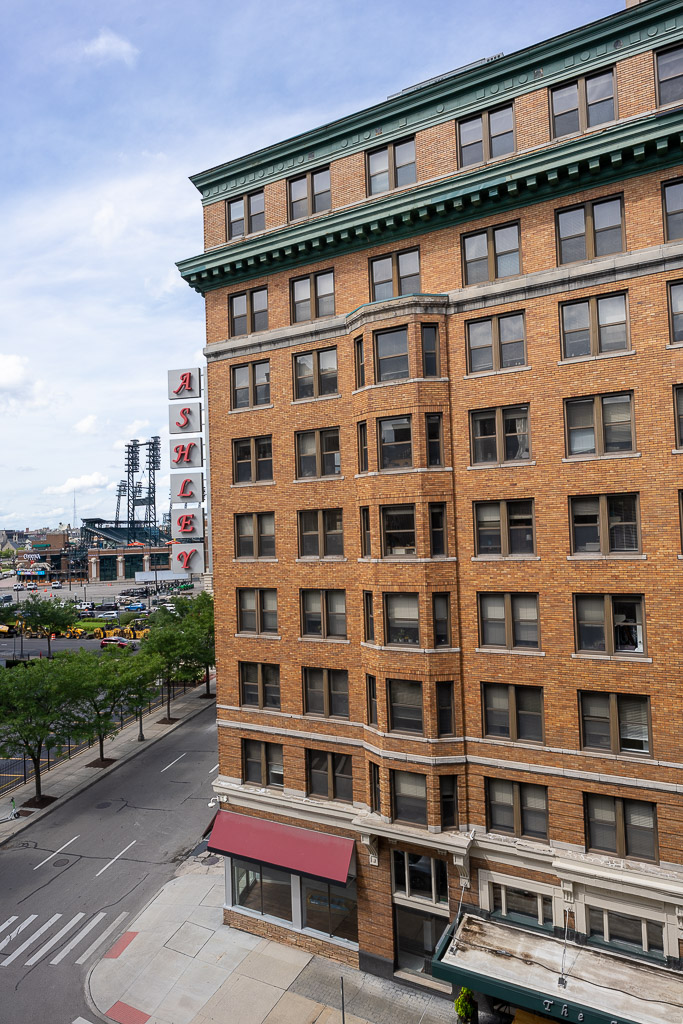
The Henry C. Hodges Realty owned the hotel until 1950, when its was sold to Milner Hotels, Inc. and its name was changed accordingly. In 2012 the building was sold and converted into the Ashley Apartments, with a ribbon-cutting in March of 2015. That name survives to the present (2026).
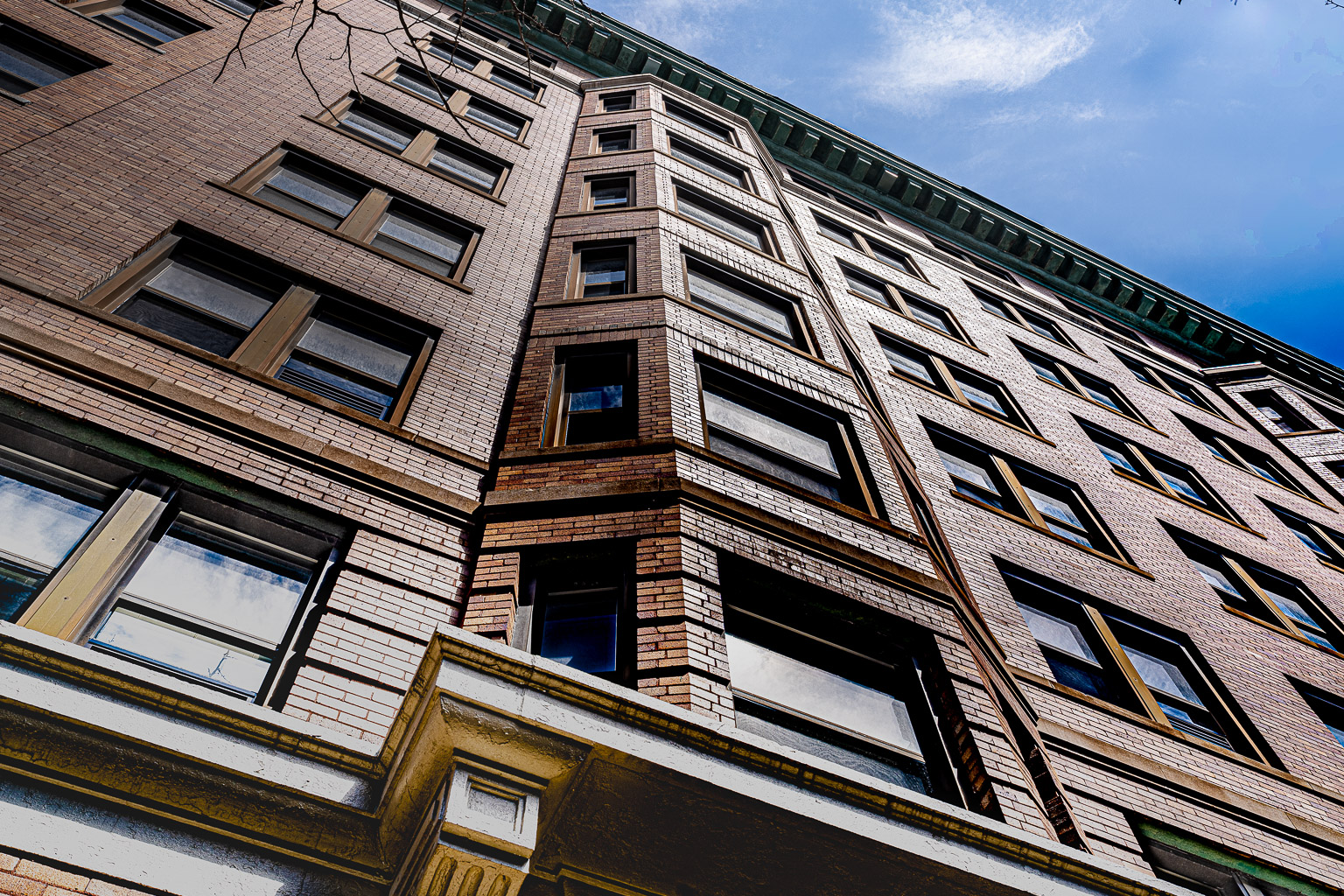
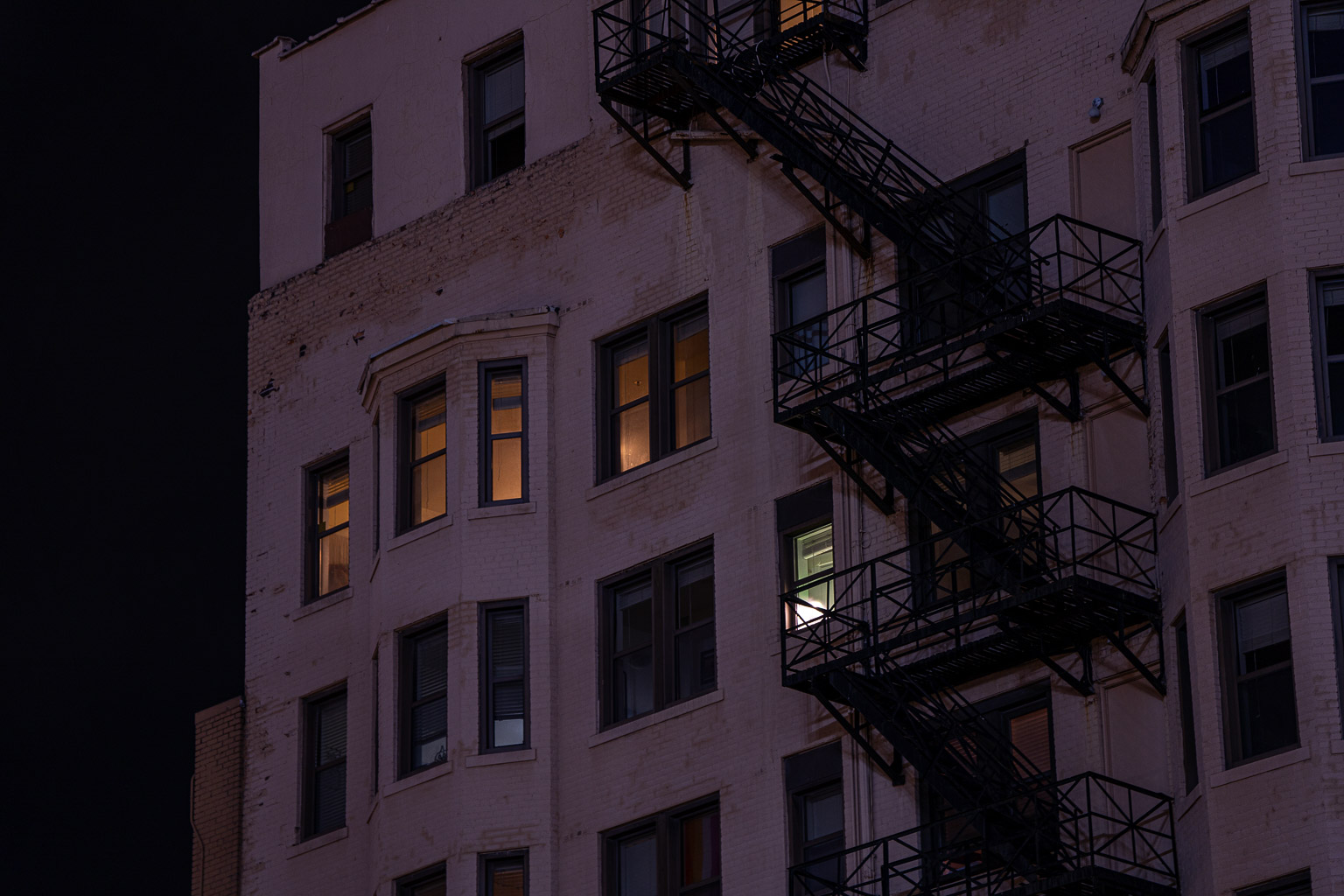
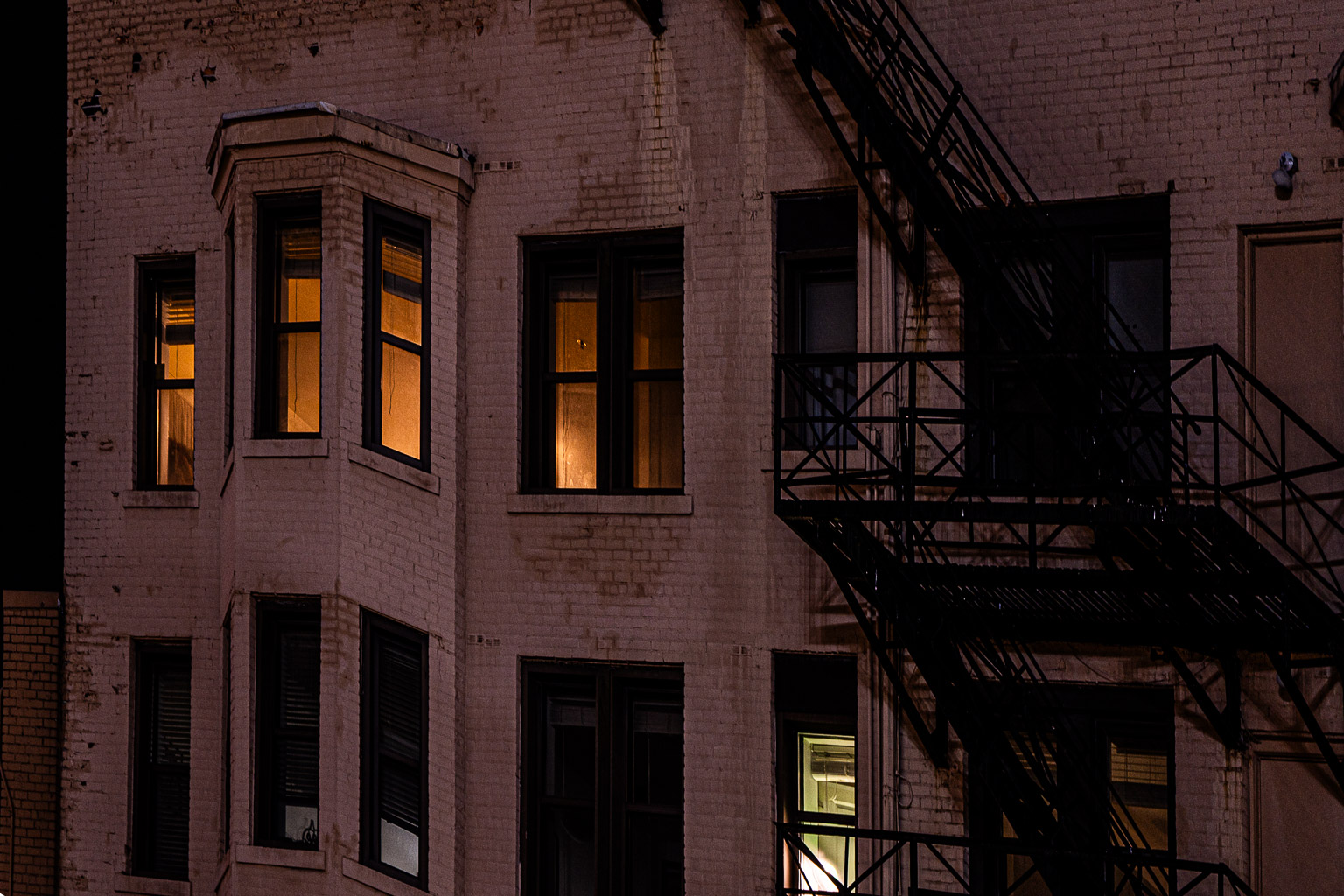
Ashley Apartments (The Ashley) is a nine-story brick building on a rusticated base. The building conforms with the triangular shape of its site, resulting in a very narrow west end (1st photo below). Irregular massing due to the banks of bay windows add architectural interest to the building; the six-story bays rising from the second story are supported on large brackets extending to the first story. Store windows and projecting entrances add diversity in massing on the first story. A denticulated cornice separates the eighth and ninth stories.
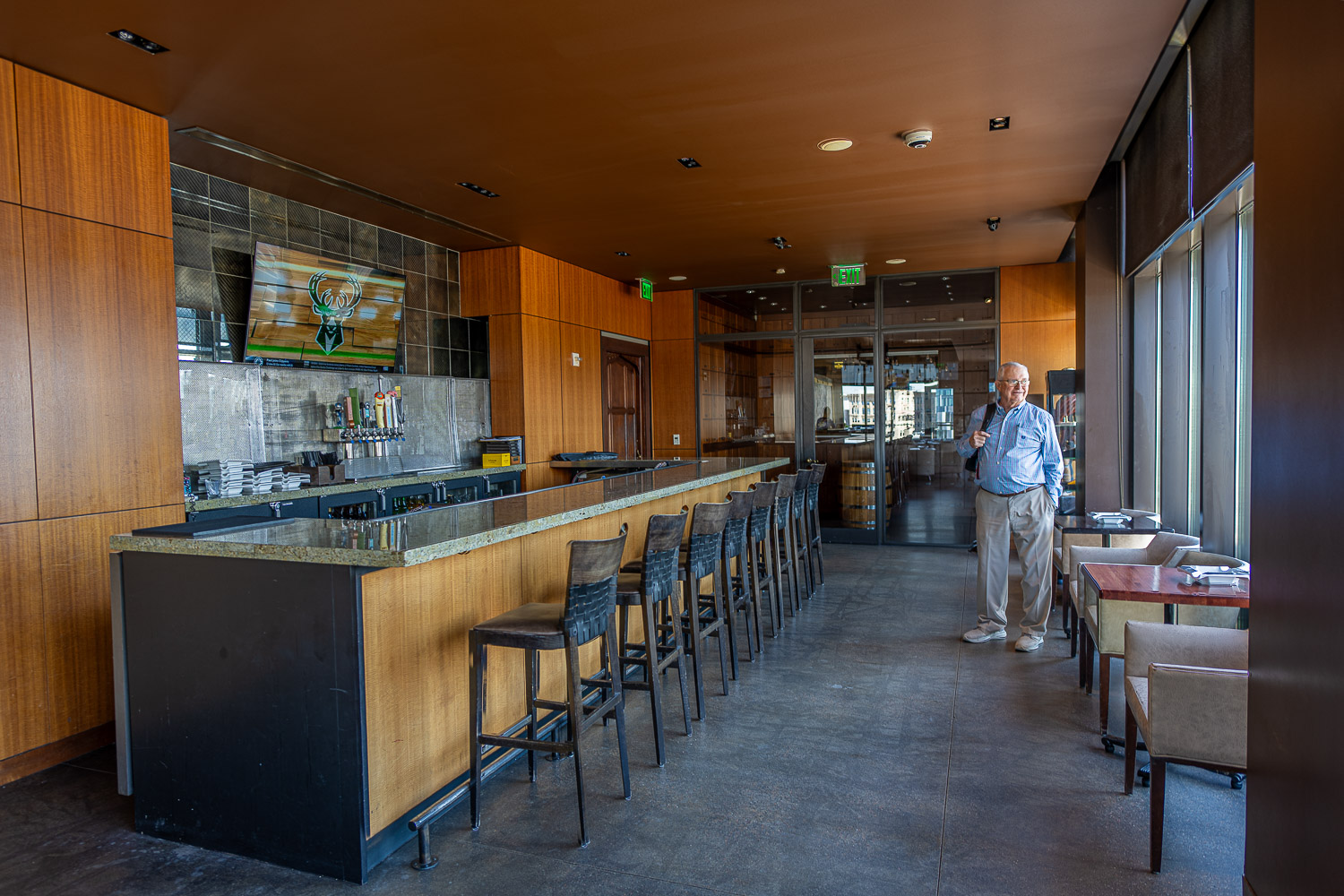
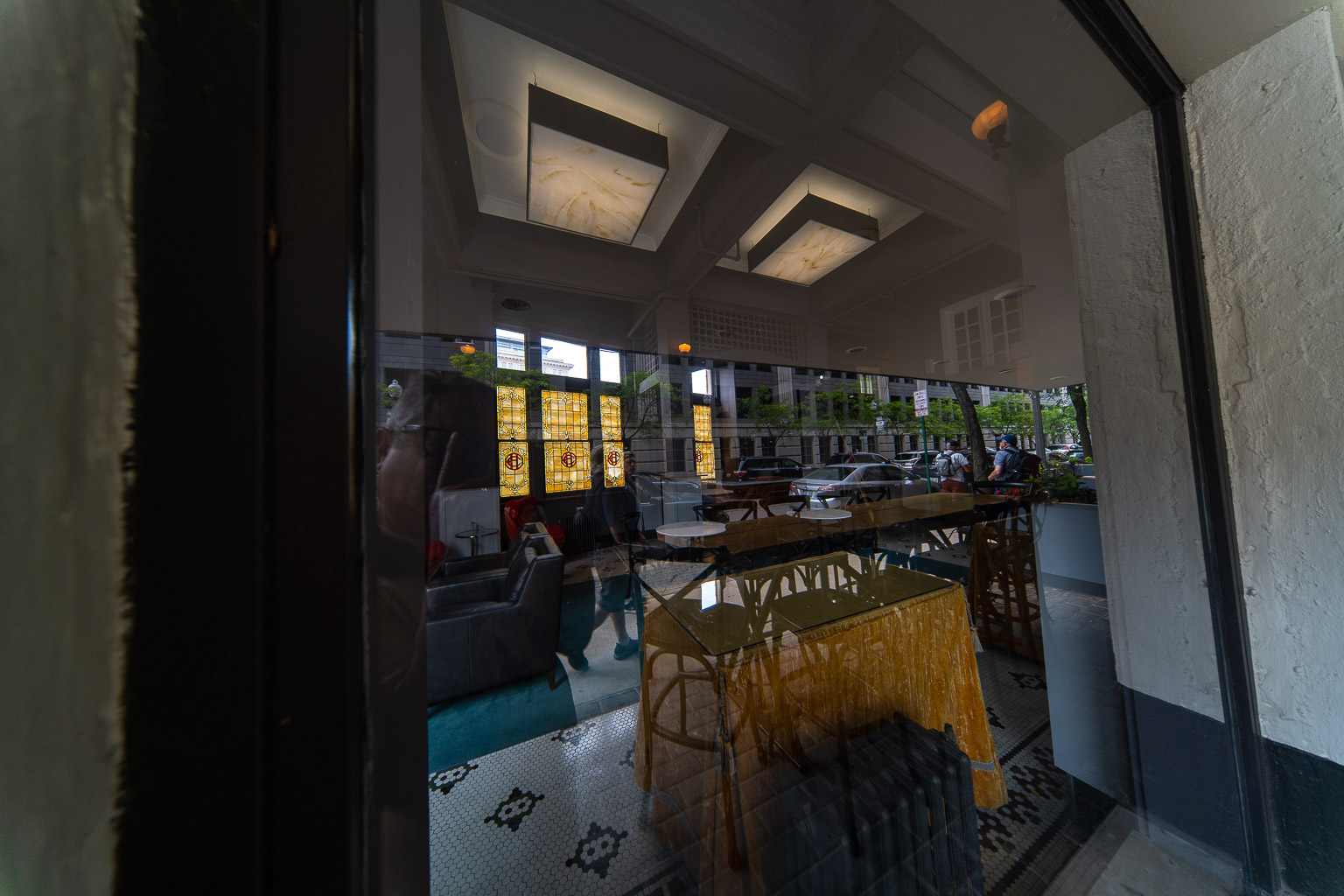
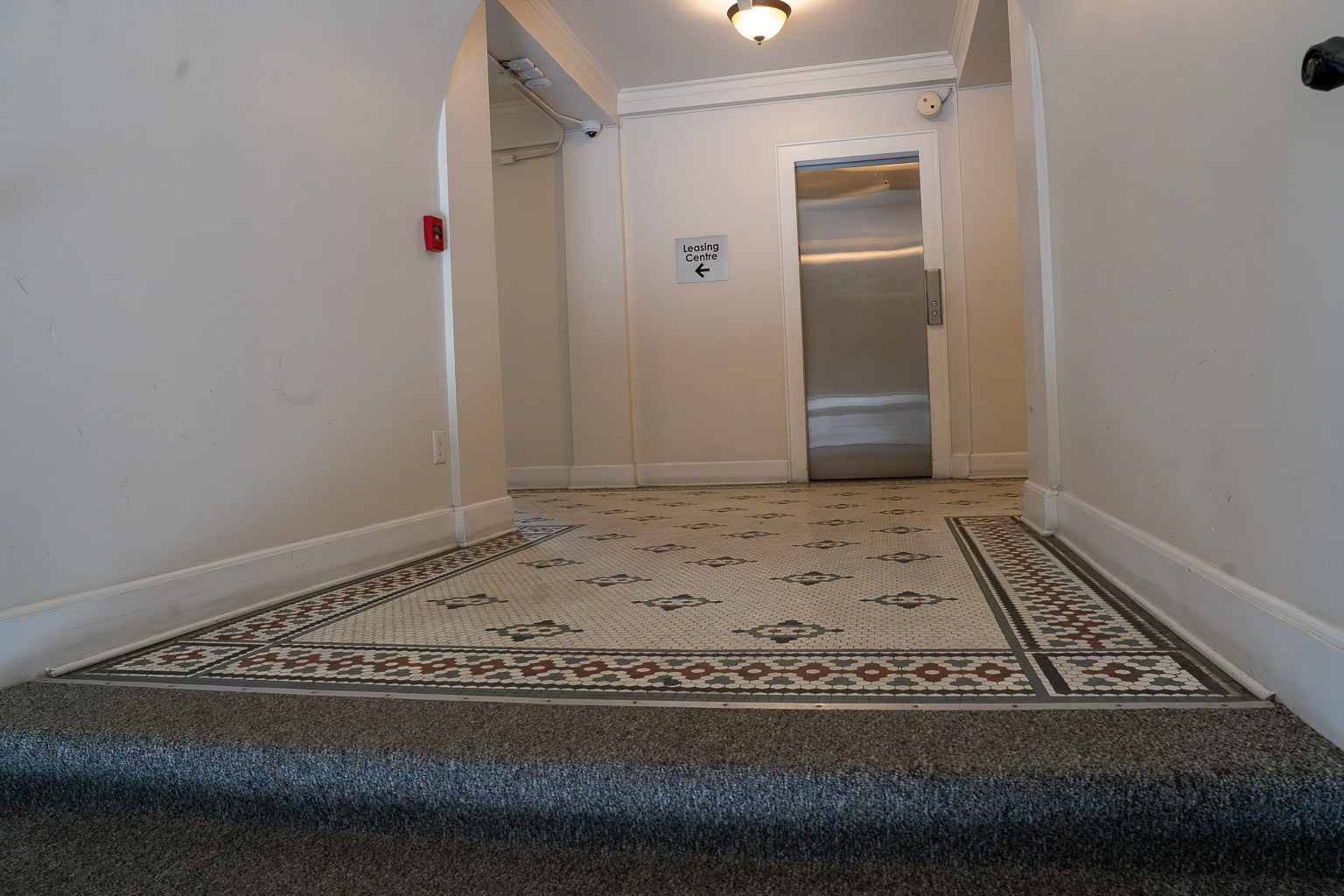
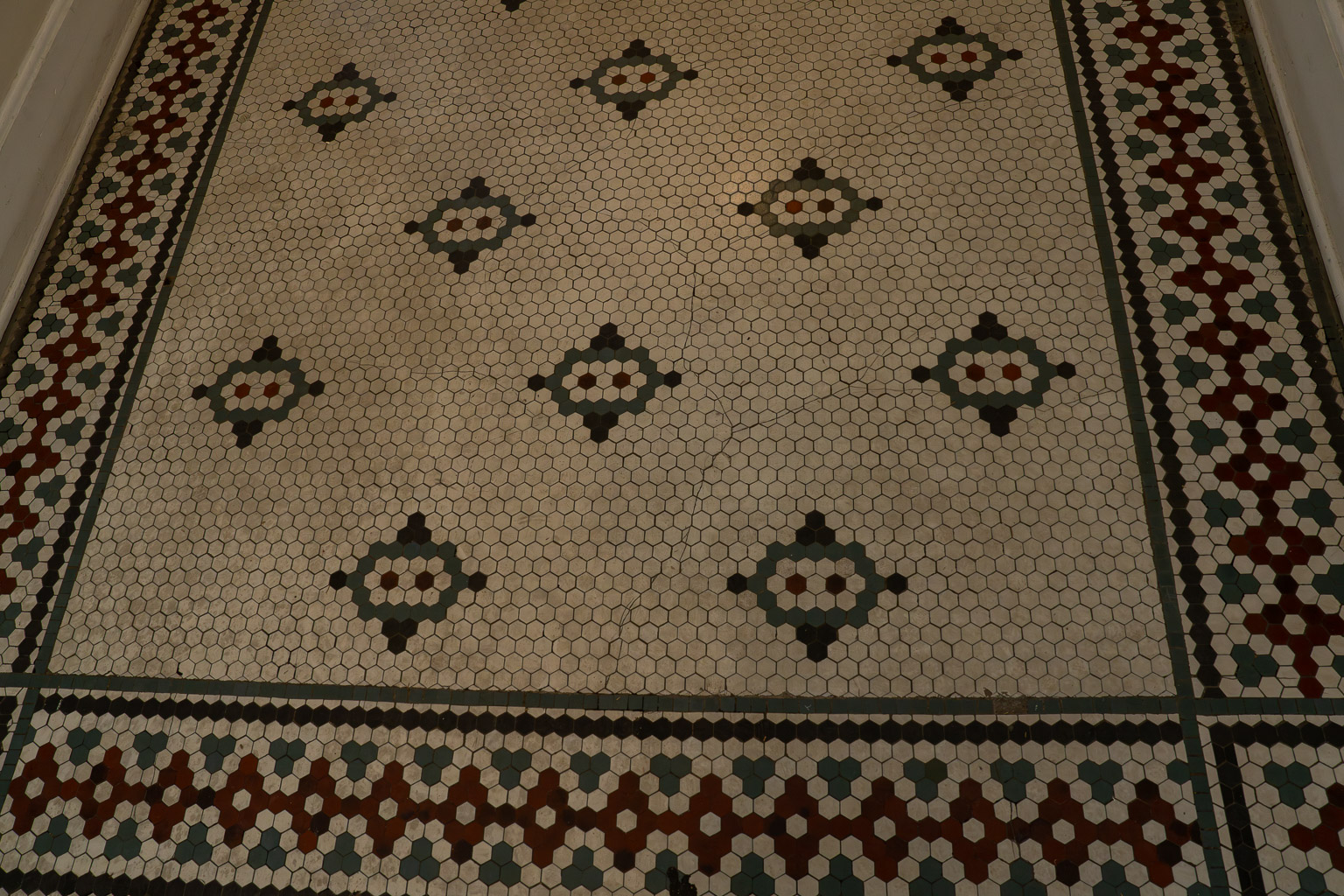
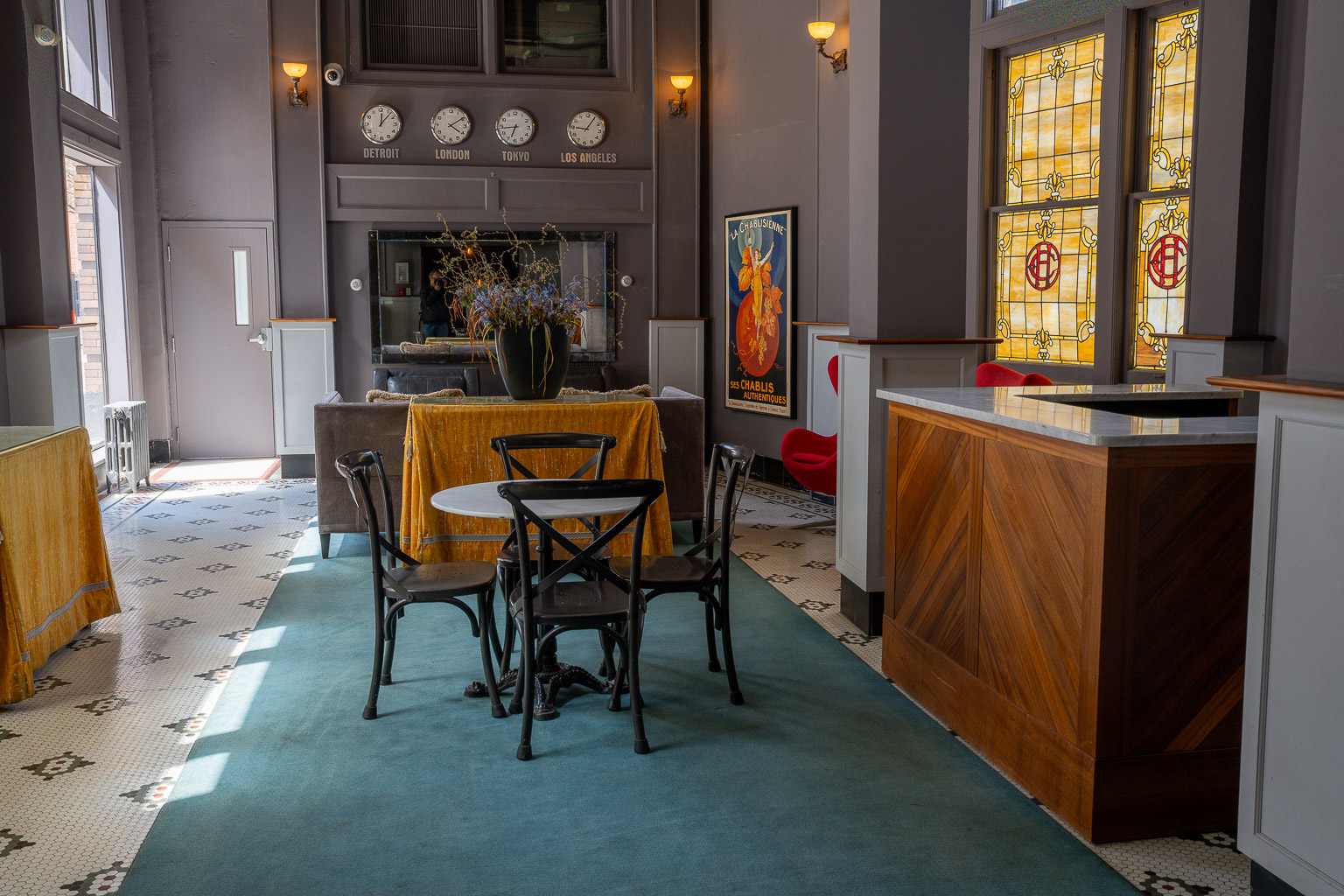
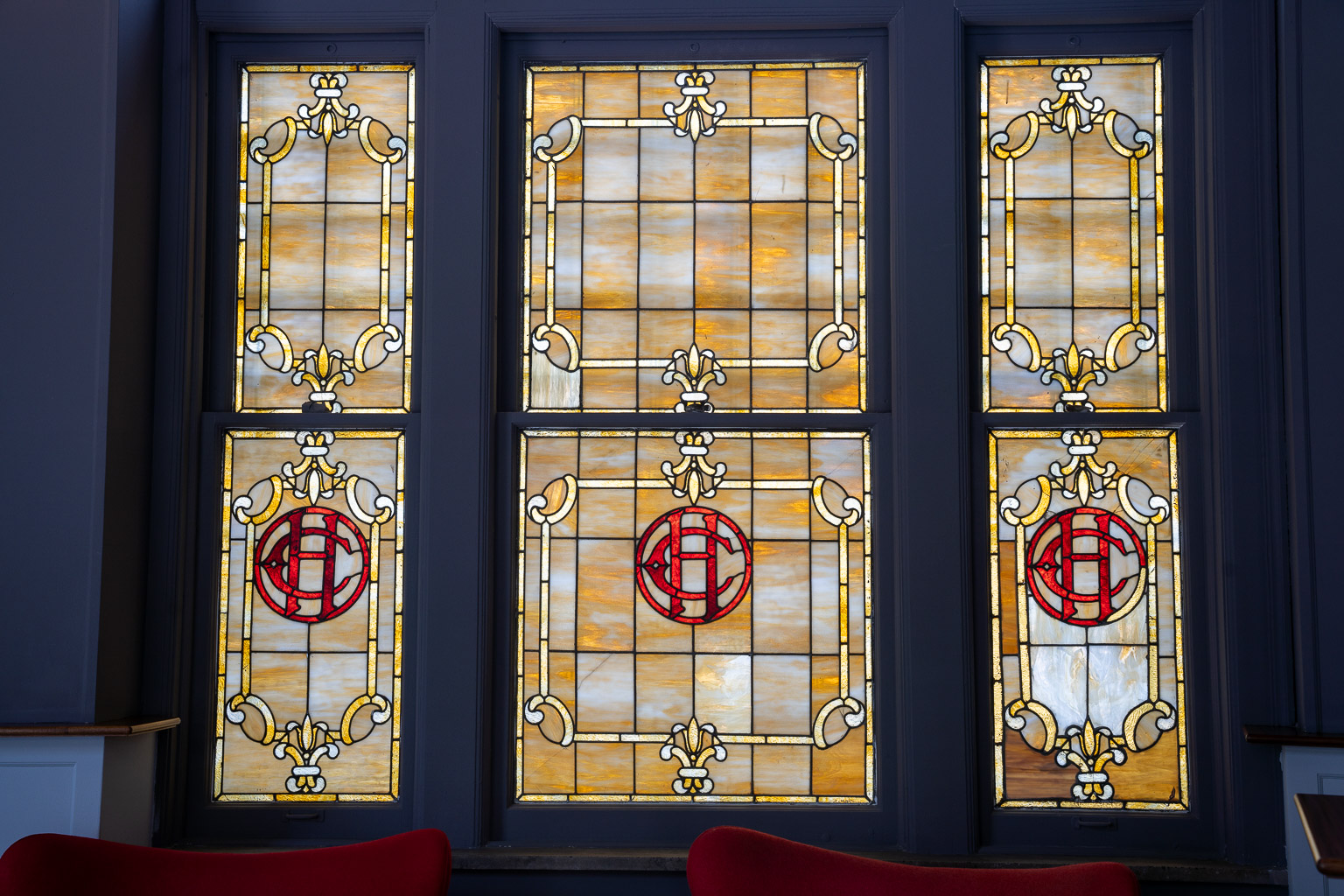
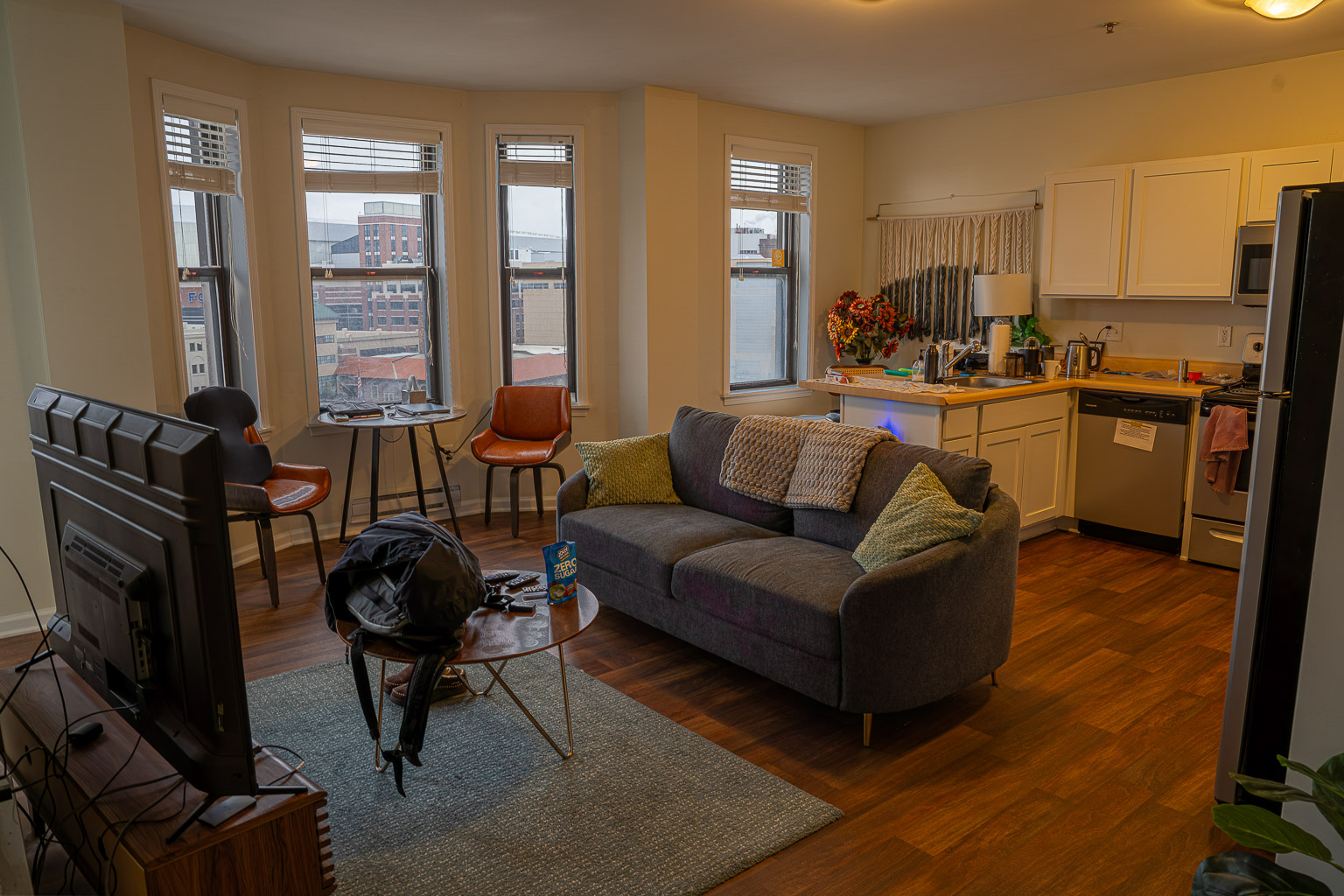
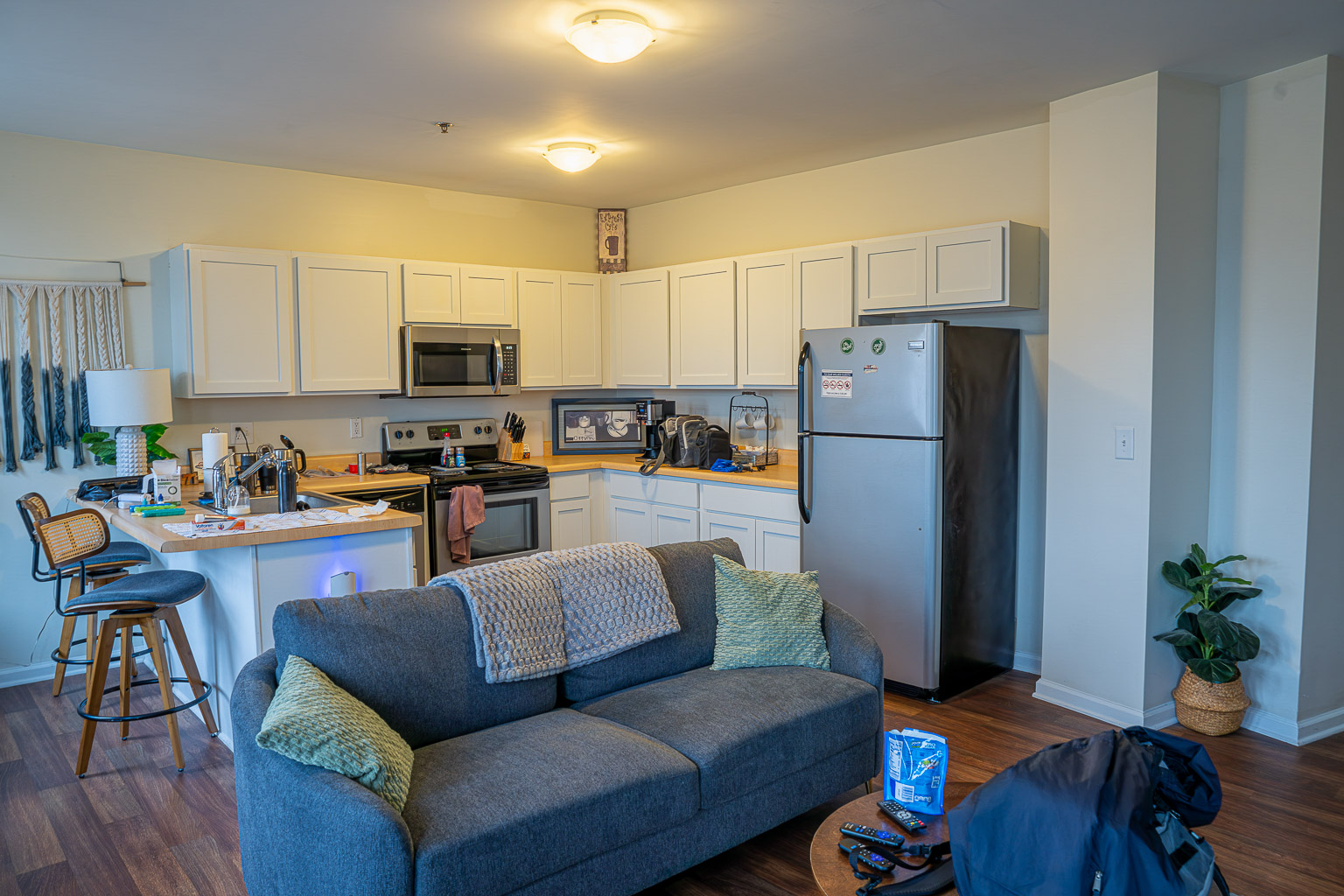
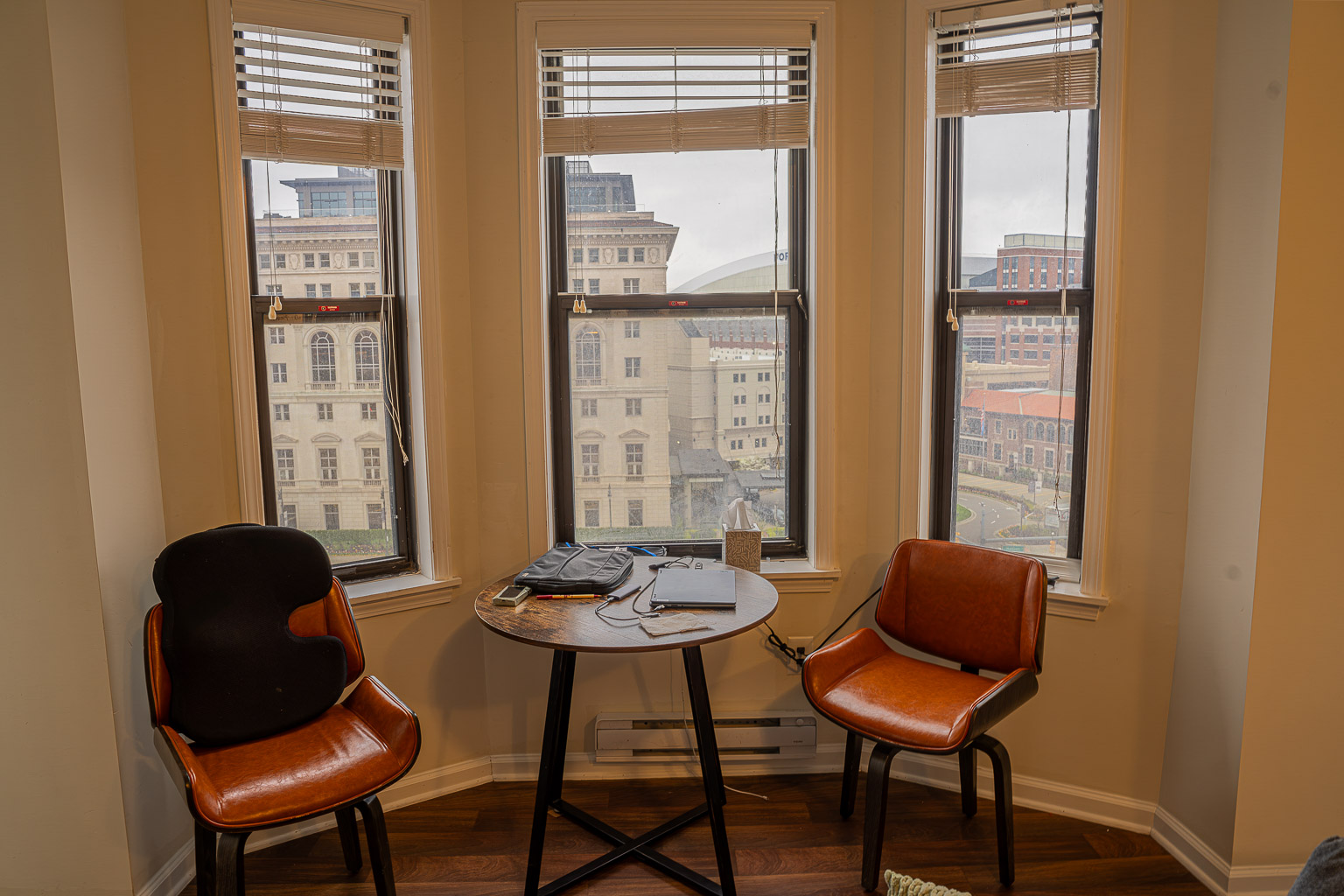
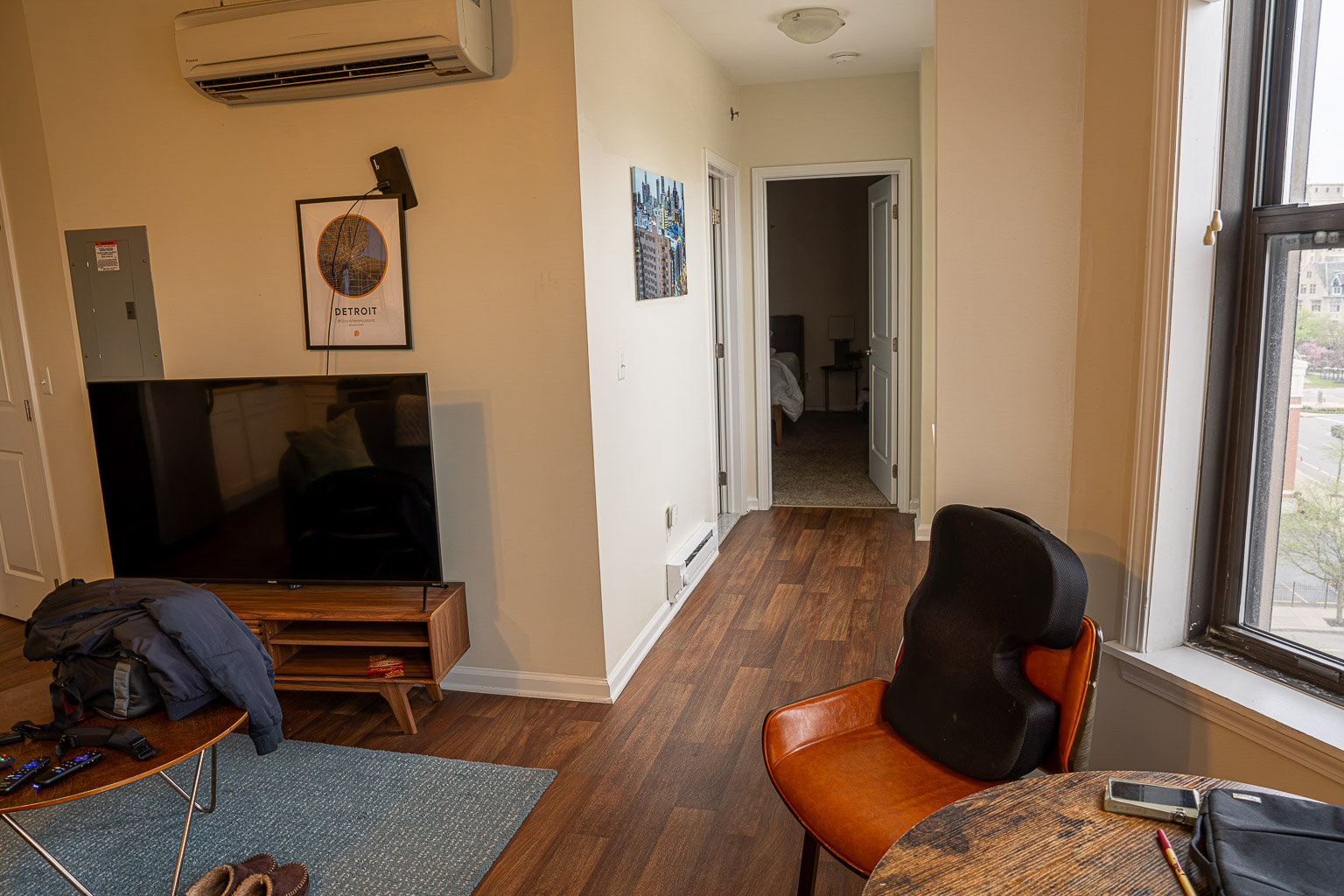
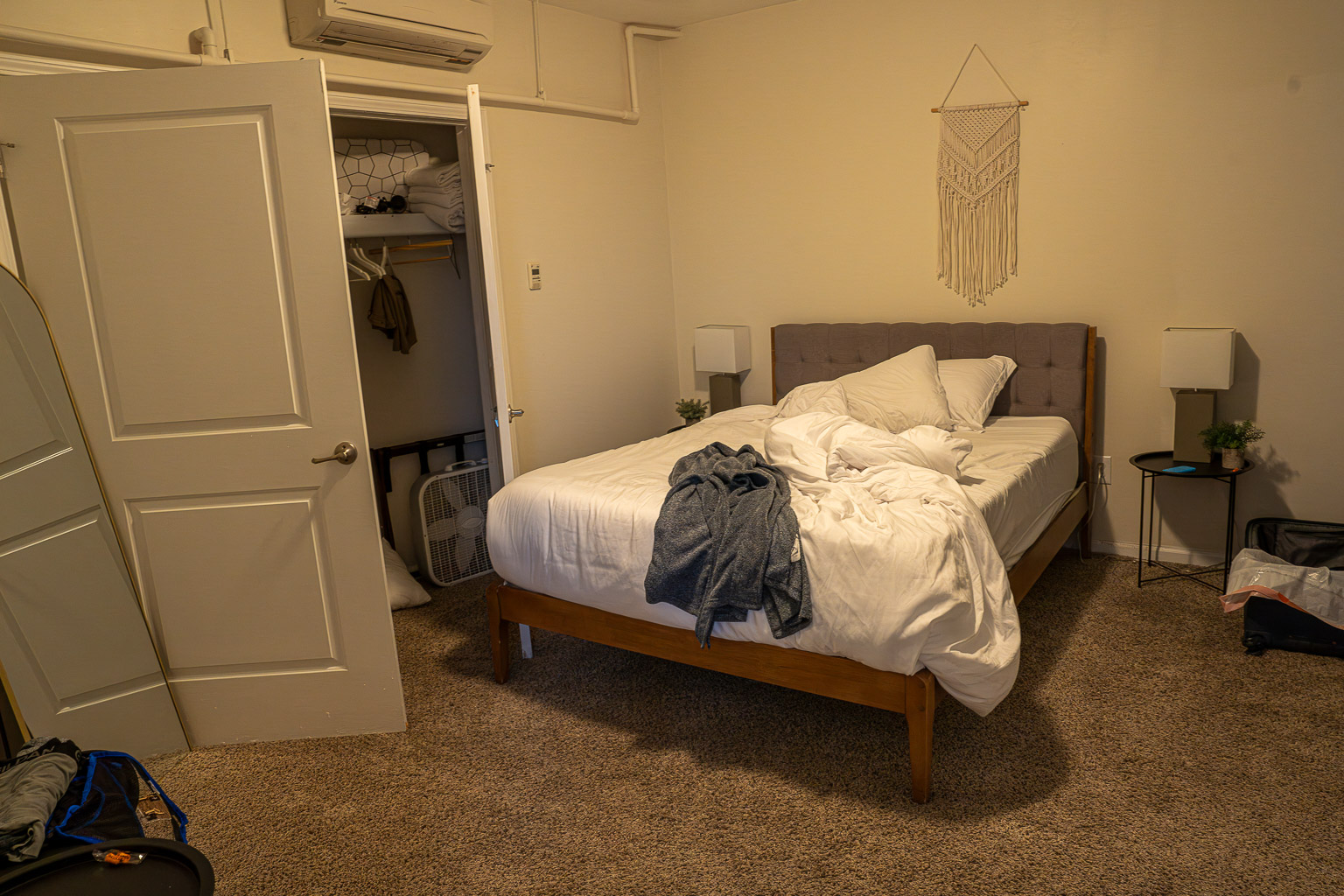
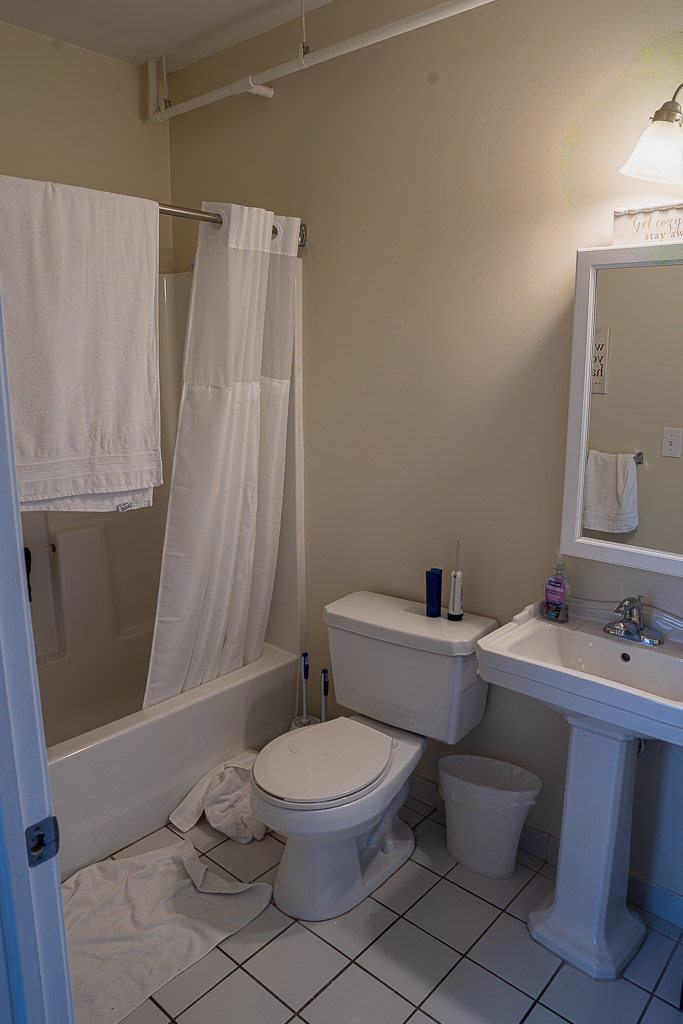
I rented an AirBnB in the Ashley Apartments for my Downtown Detroit Vacation April 20-26 2026. My rental unit was on the 7th floor, facing north (toward Comerica Park). The 1st and 2nd photos below show the tile floor at the entrance to the apartment building, and the 3rd through 5th are photos of a now-closed restaurant called Vertical.
Here's the apartment I rented:
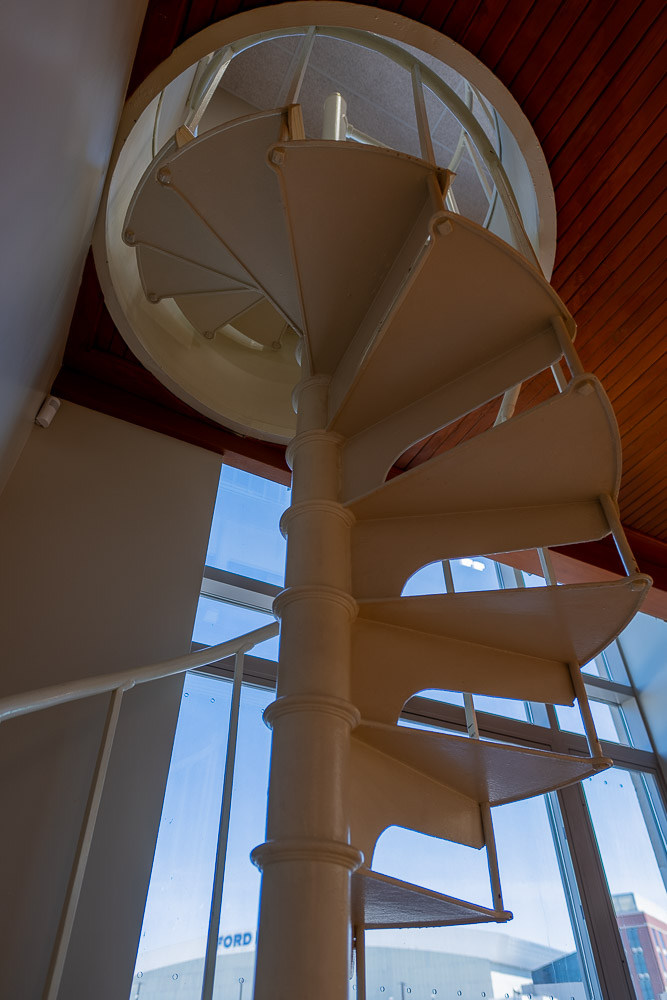
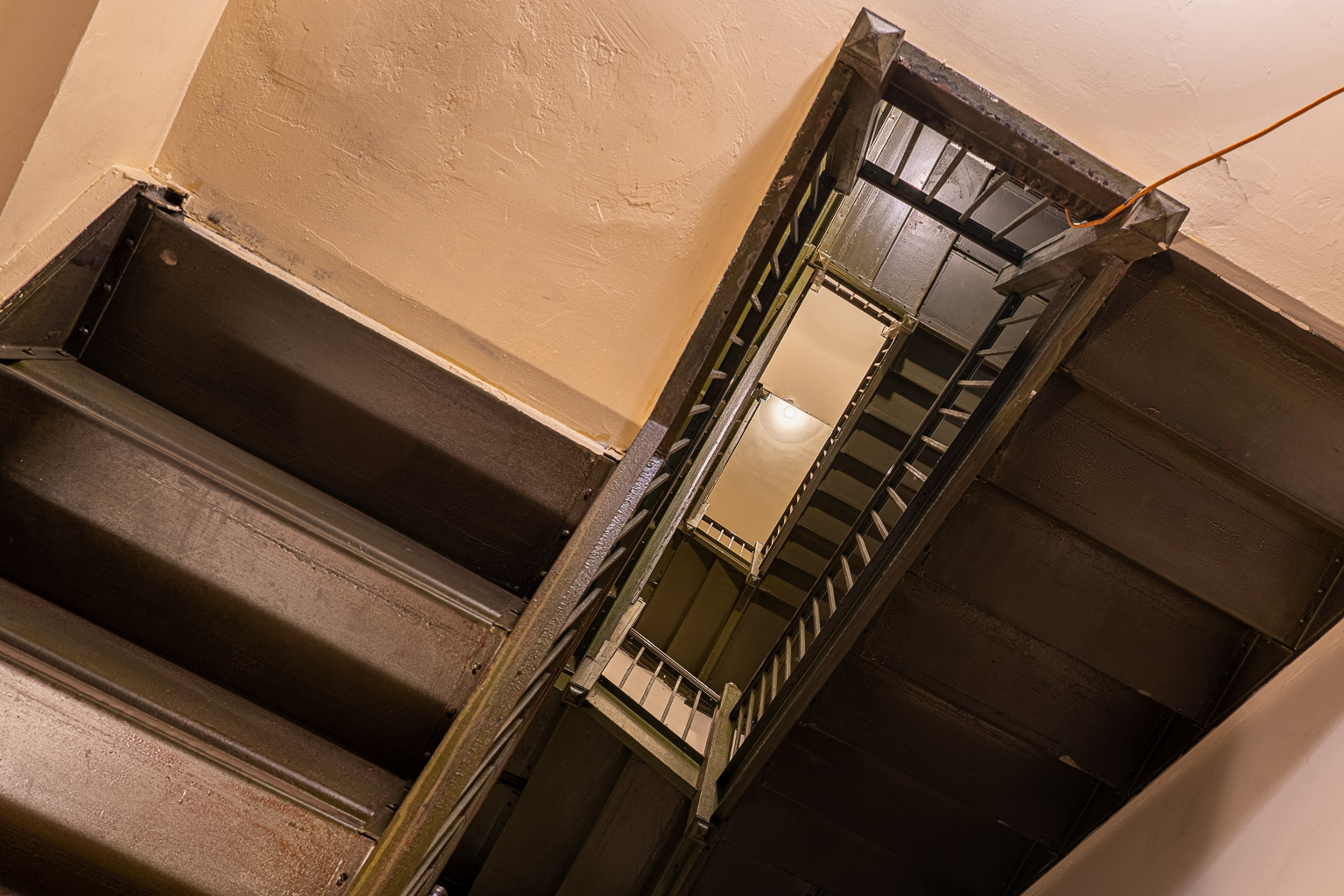
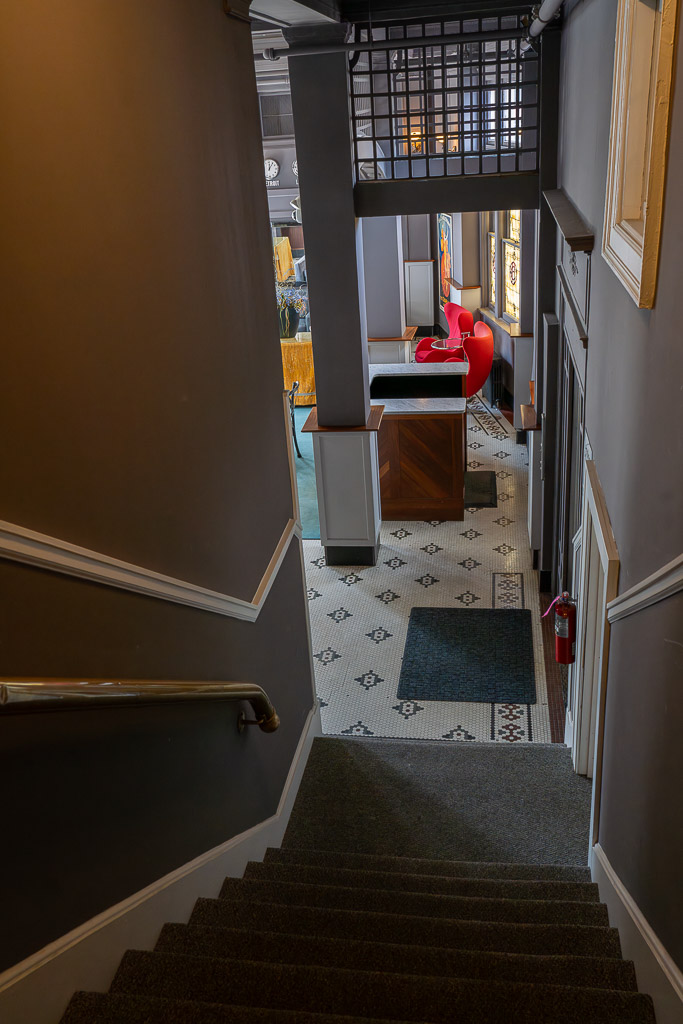
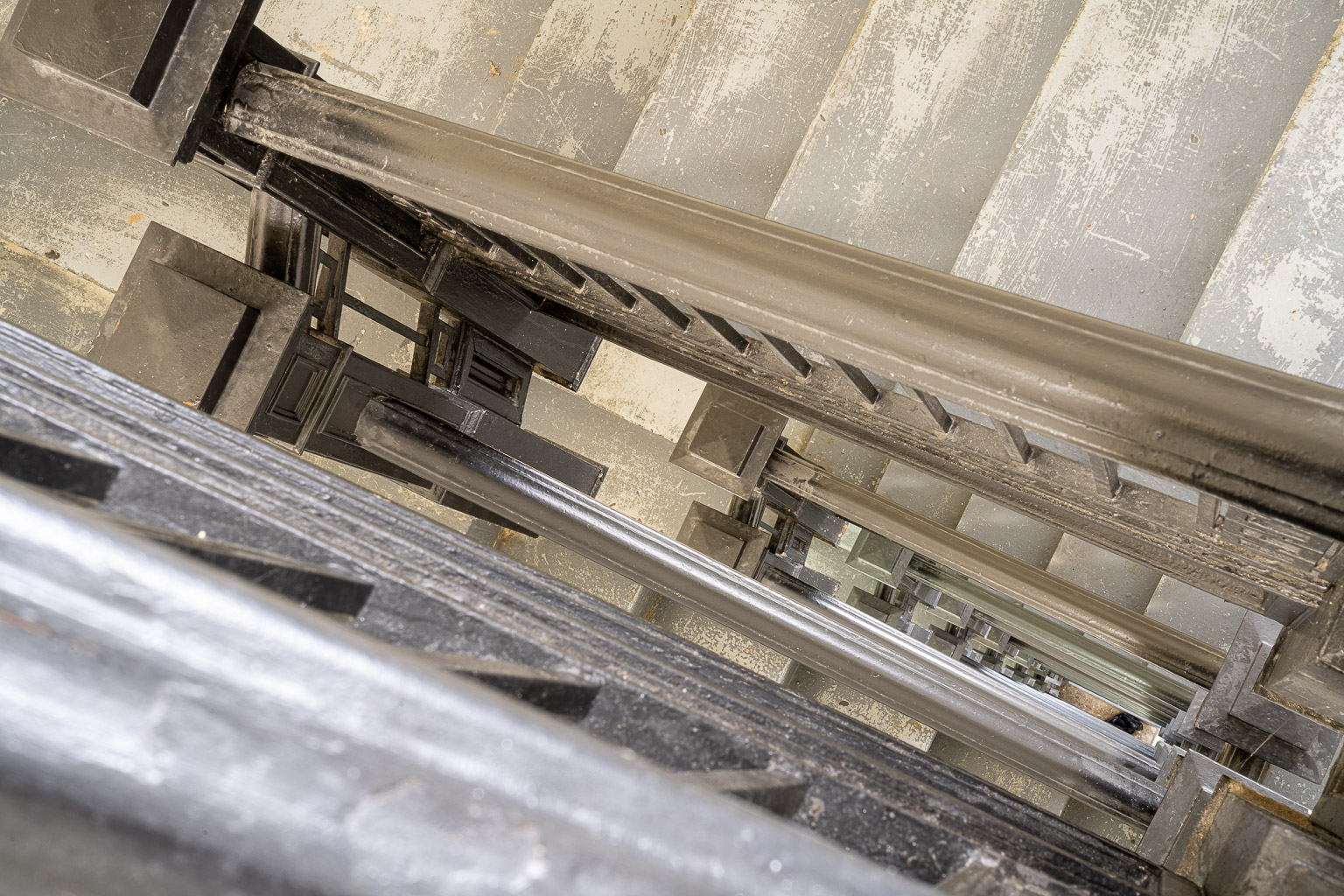
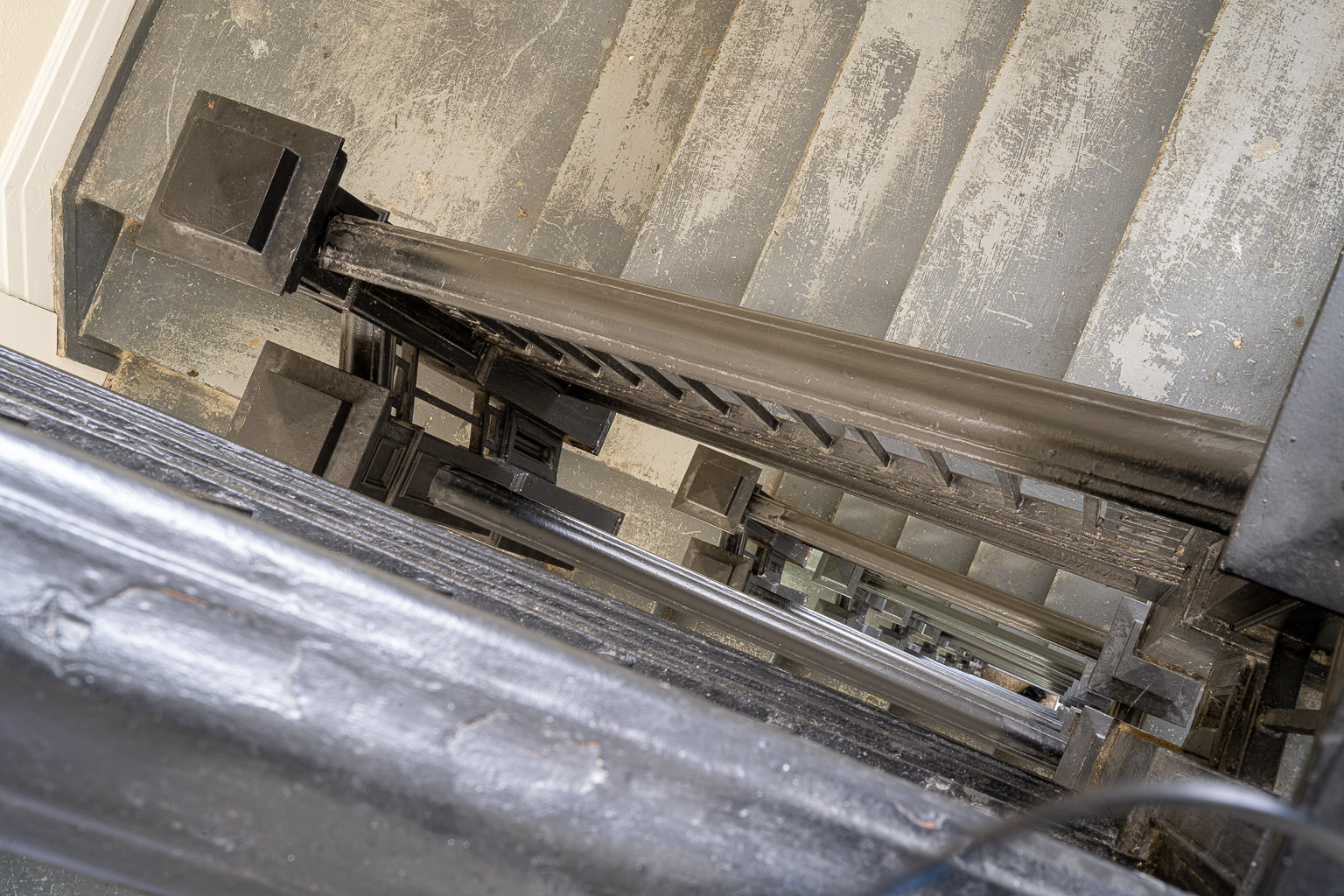
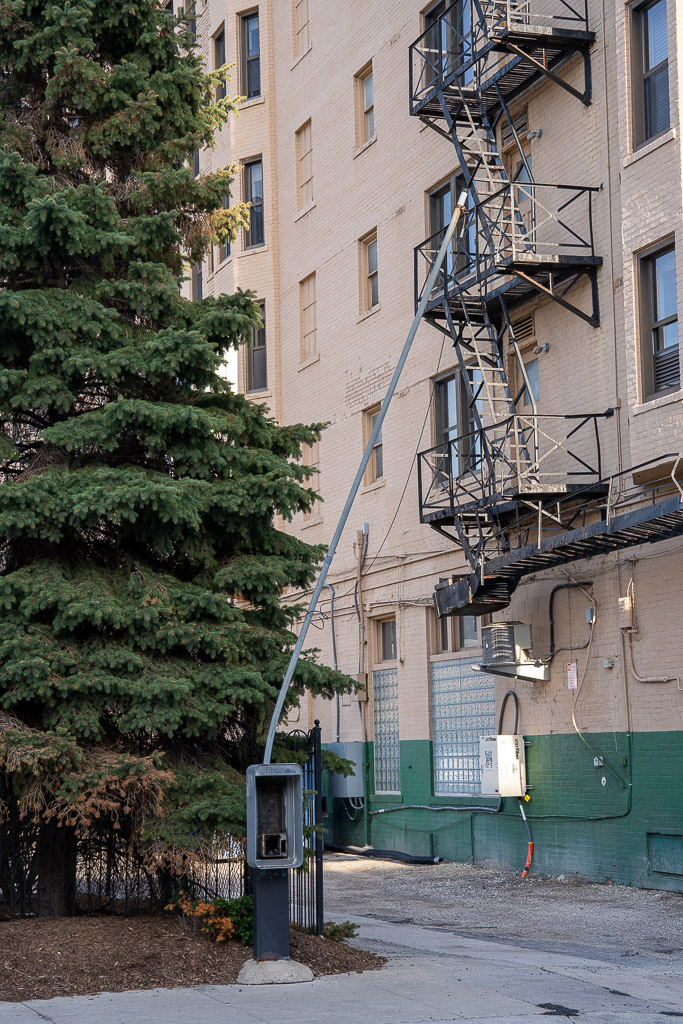
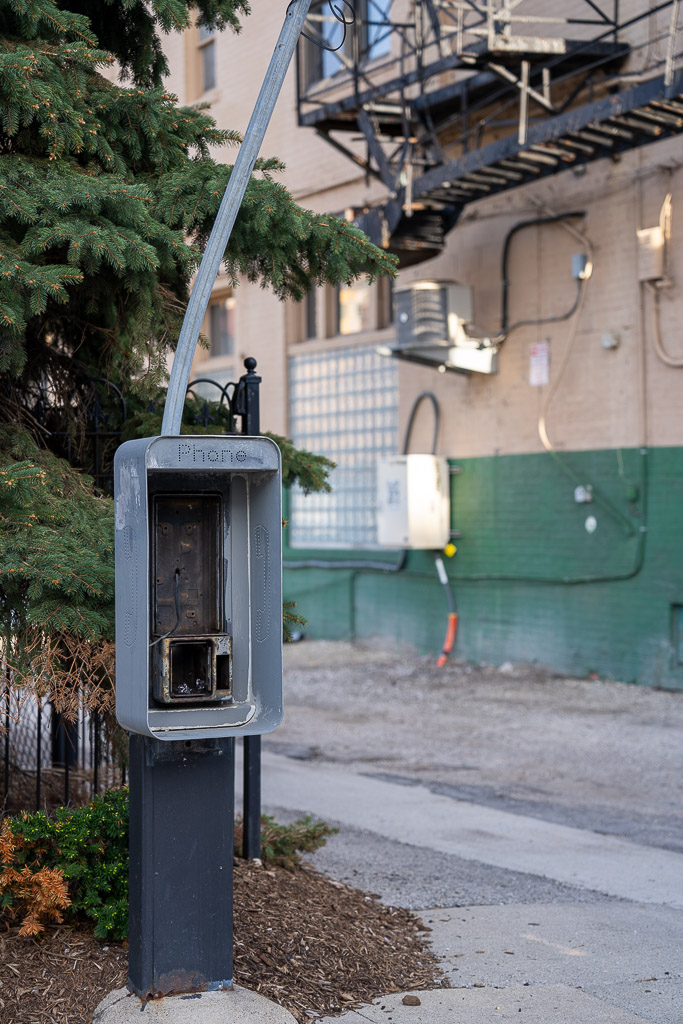
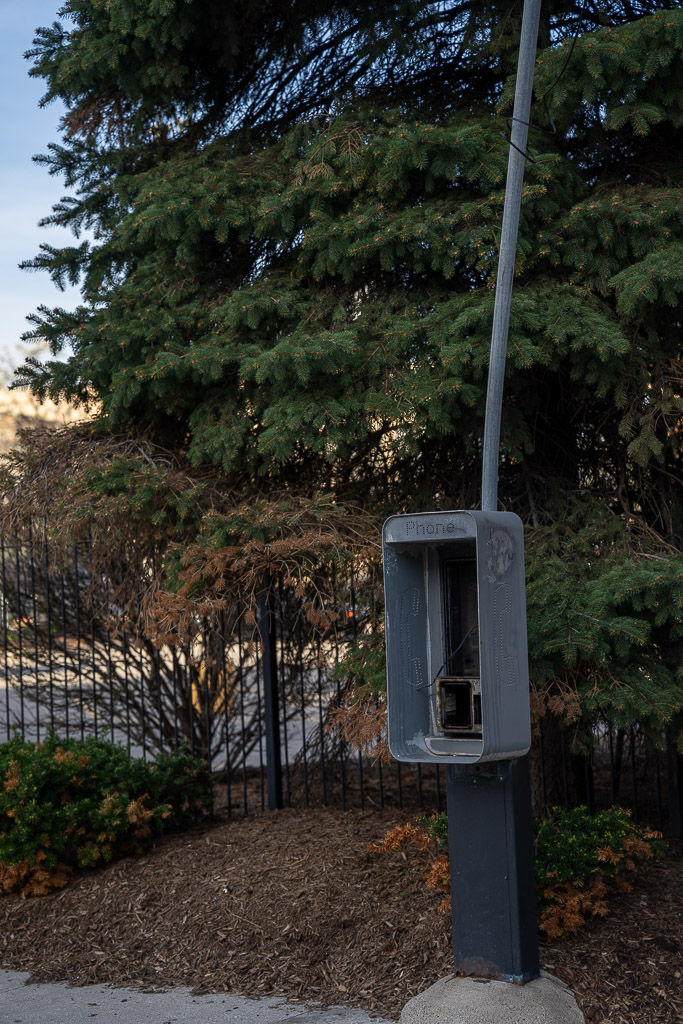
The first two photos below show my apartment from the outside, 7th floor, facing Comerica Park. The second two photos look down the internal emergency exit staircase (I like to photograph stairways). The last three photos show a surprising empty phone stand just outside on John R.
More photos and more description of this building can be found at HistoricDetroit.org.
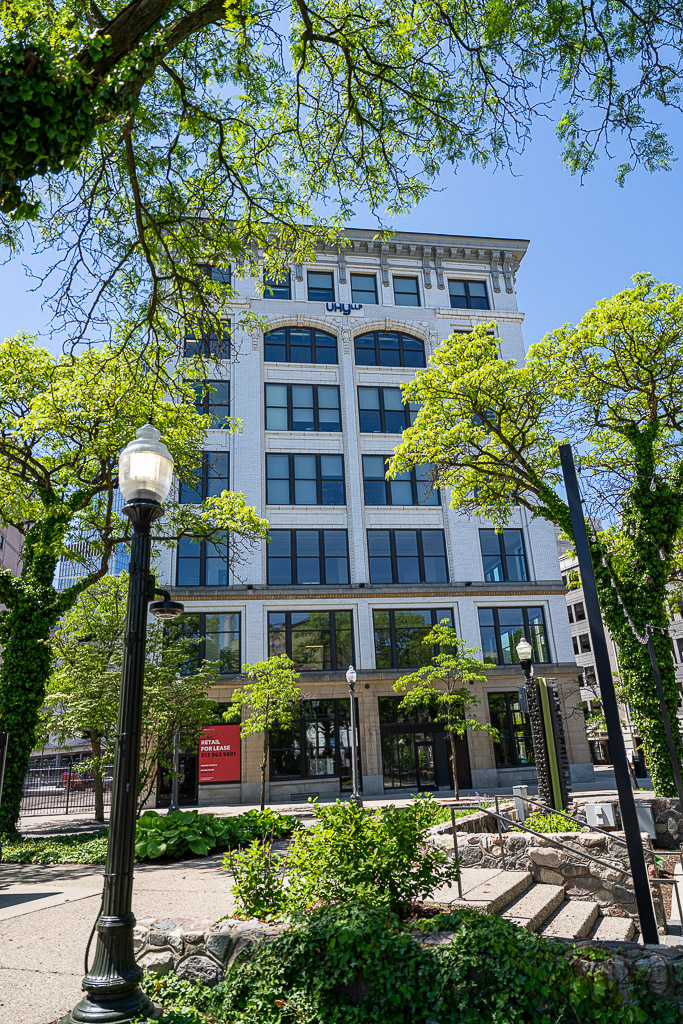
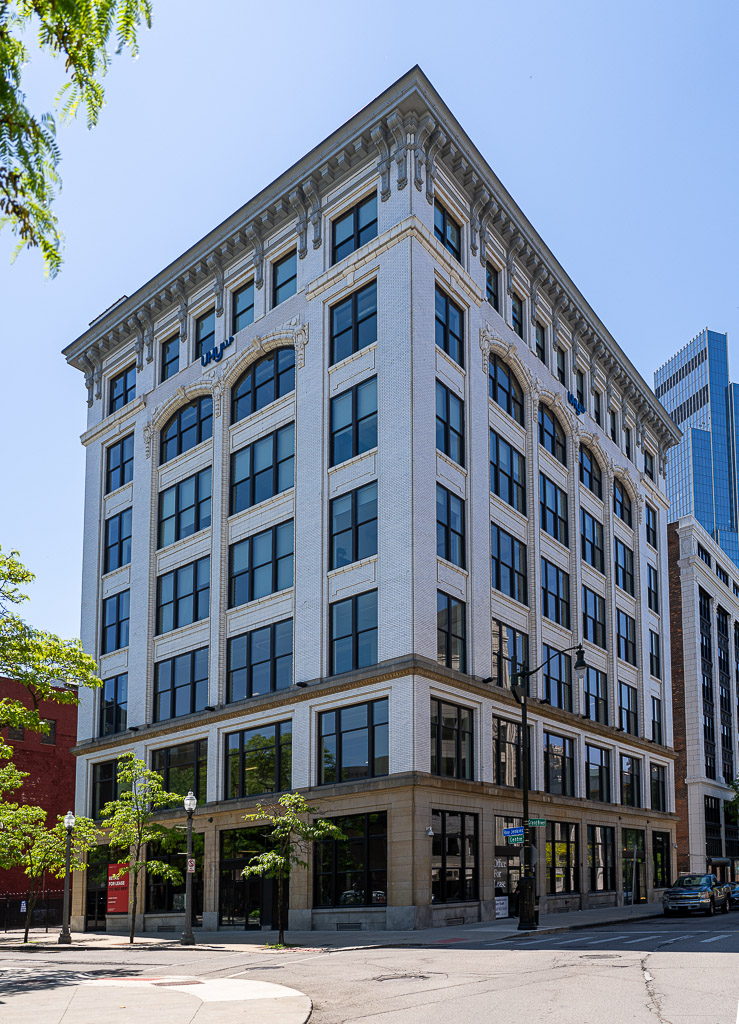
Soon after John P. Hemmeter purchased the property at the southeast corner of Center and E. Grand River in 1911, Richard E. Raseman was issued a building permit for the construction of a seven story brick factory measuring 71' wide by 100' long by 104' high. It was estimated to cost $78,000. In addition to designing the building, Raseman also supervised its construction.
This "modern, fireproof structure" was to be the new home of the Hemmeter Cigar Factory. The building is of steel frame construction, the steel work supplied by the Russel Wheel and Foundry Company of Detroit. The Center and Grand River frontages were of white enameled brick and terra cotta; the masonry work was done by Albert A. Albrecht Company of Detroit. On every floor except the first, the interior walls were also planned to be white enameled brick. On the first floor, the offices and warerooms were finished in oak. The entire second story was dedicated to employee comfort; here were found a large lunch room and rest rooms. The building was equipped with an electric elevator and sprinkler system. Contemporary news accounts cited the finished cost of the building as $150,000.
John P. Hemmeter established himself in the manufacture of cigars in Saginaw, MI. in 1893. He moved the business to Detroit in 1897. At around the time the Hemmeter Building was erected, the cigar industry was first in Detroit in number of establishments and third in number of employees. In 1923, after moving the cigar factory to E. Warren, Hemmeter and his wife Caroline transferred the property to Hemmeter Investment Company It then housed the Schulte Optical Company, American Telephone and Telegraph Company plant department, and Michigan State Telephone Company's accounting department. The Hemmeter Building remained with the Hemmeter family until 1943, when it was sold to Detroit Trust Company J.L. Hudson Company, which purchased it in 1945, sold the building to Adler Schnee Inc. in 1971, and they, in turn, sold it to the 230 E. Grand River Ave. Company in 1985.
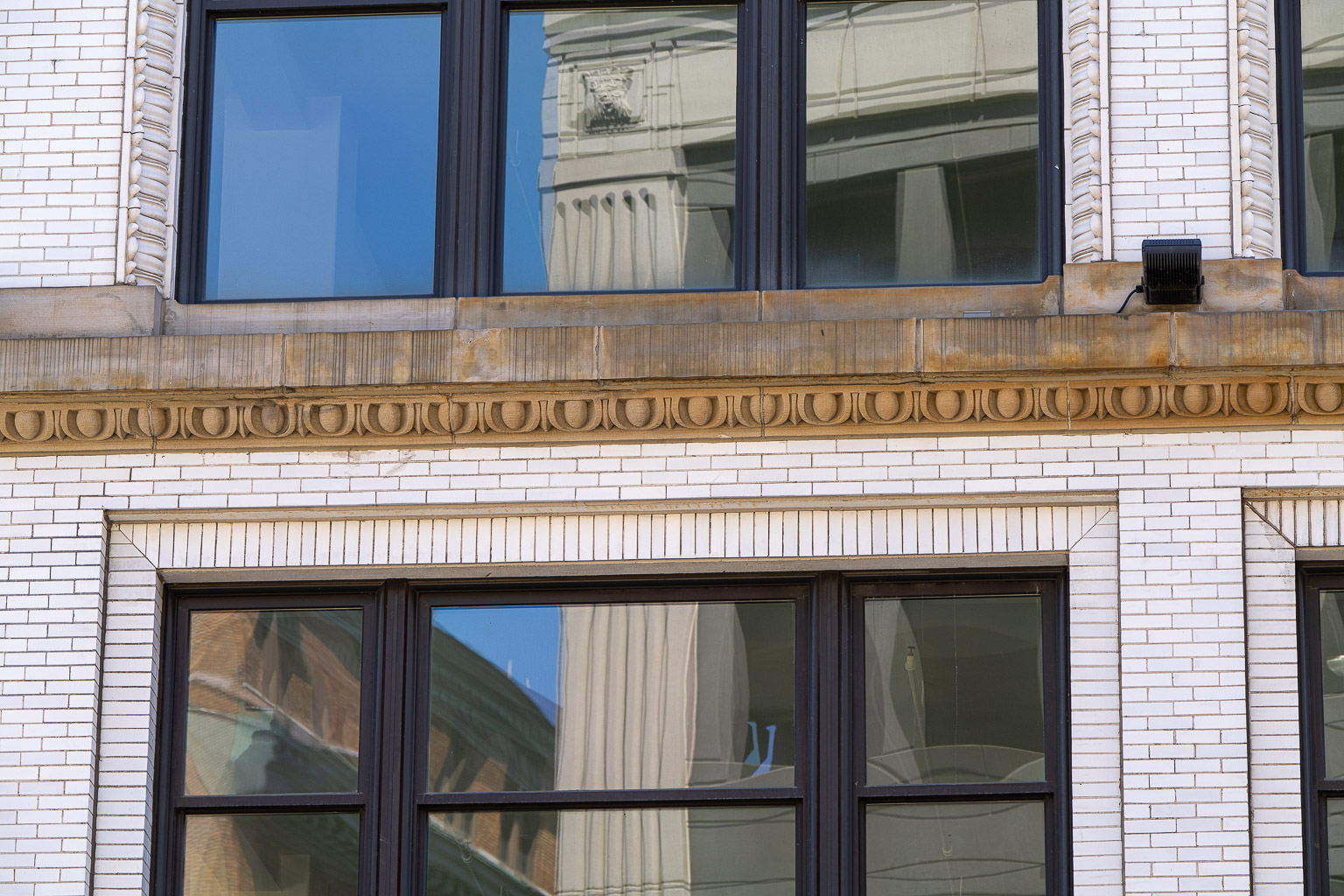
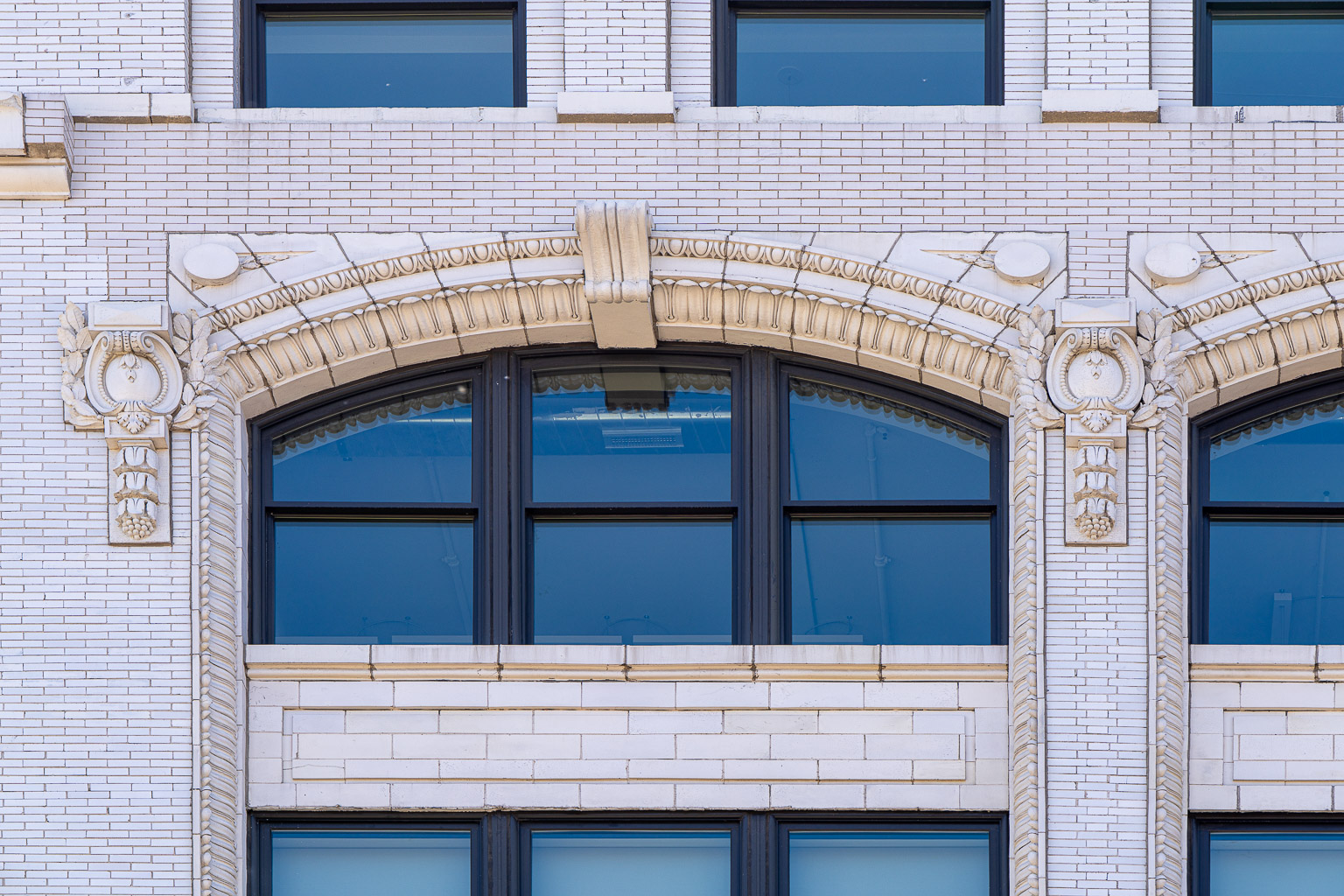
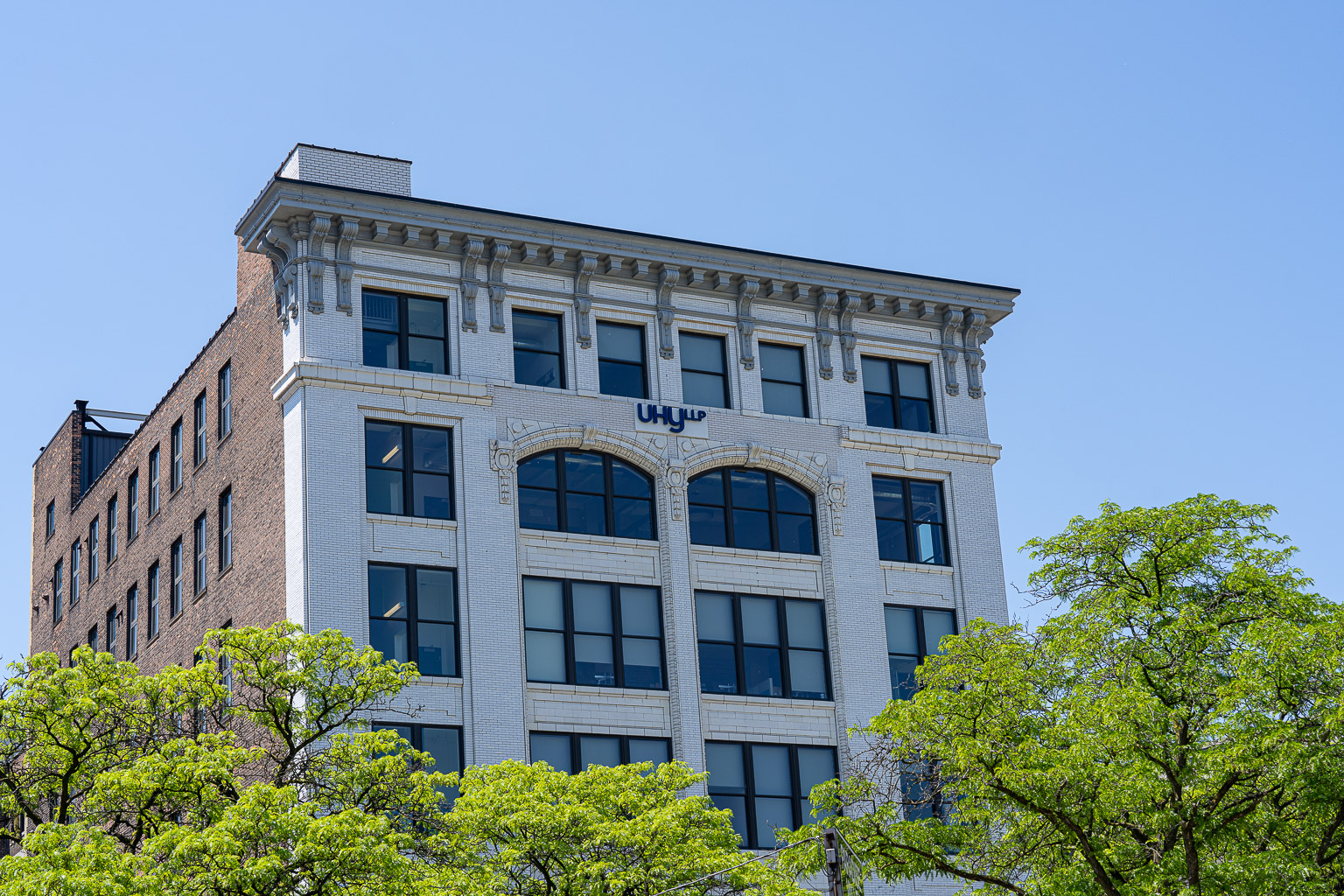
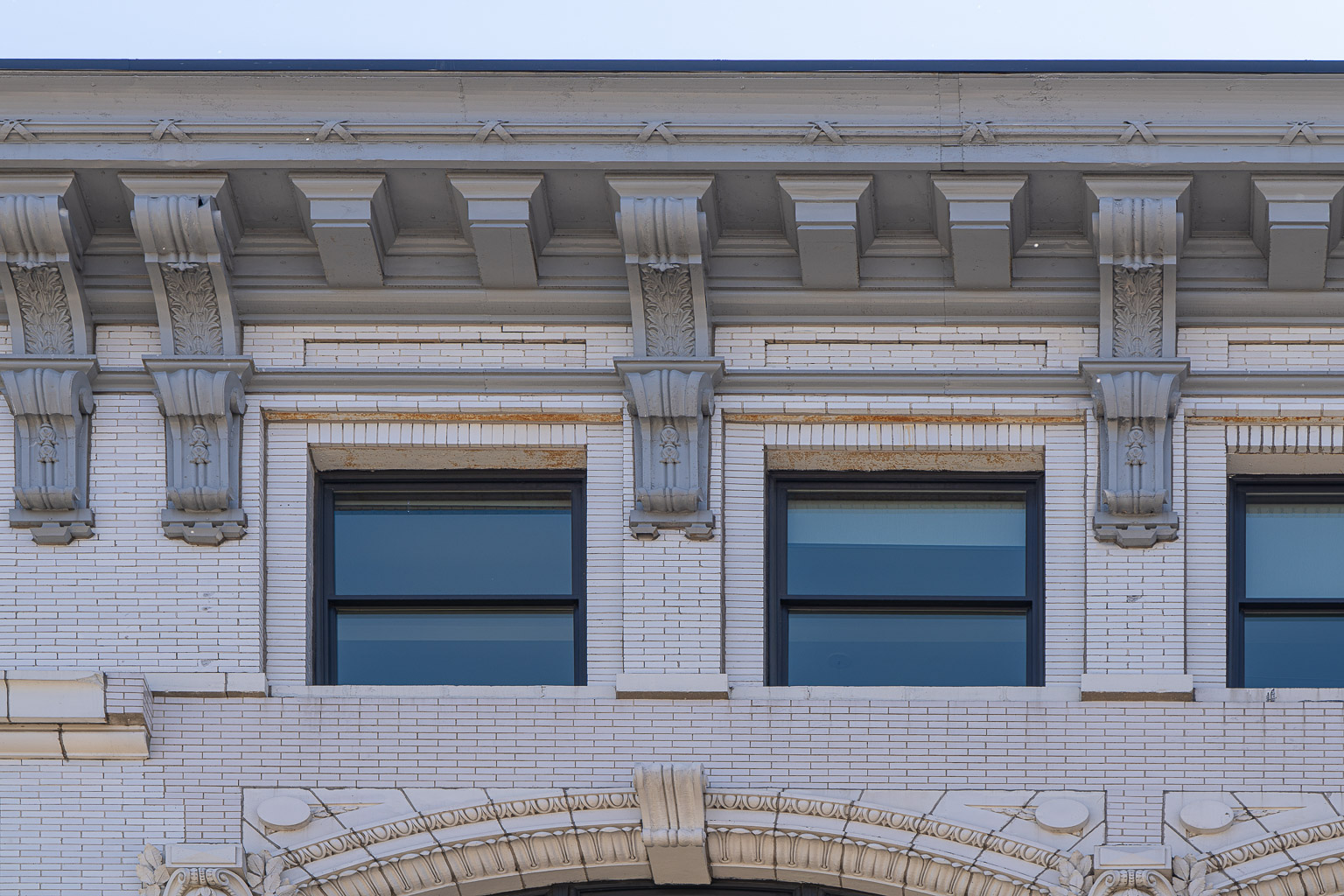
The Hemmeter Building retains much of its original appearance today. Its first story is clad in light brown masonry blocks. A stone belt course separates it from the white enamel brick of the second story (2nd photo below). A stone belt course with an egg-and-dart molding distinguishes the second story from the third (3rd photo below). The fenestration of floors three through five are identical; a leaf molding rising up through the arched windows of the sixth floor occupies the recessed area between the wall and the window frame. Cartouches drip from the molded arches of the sixth floor windows (4th photo below). The seventh story, articulated as the attic story in the classical sense, is fenestrated with smaller windows (5th photo below). It is topped with a heavy modillion cornice with brackets extending down between the attic windows (6th photo below).
More photos and more description of this building can be found at HistoricDetroit.org.
Charles Werner of Charles Werner Son Company, suppliers of crockery, china, and hotel and restaurant supplies, expended approximately $12,000 to have the three-story building at the corner of Center and Randolph constructed in 1898 by Spier and Rohns. Spier and Rohns, a prolific Detroit architectural partnership, was known throughout the state of Michigan for its many Michigan Central and Grant Trunk Railroad commissions, among them the Ann Arbor, Battle Creek, and Niles stations. William C. Rohns was trained at Hanover Polytecnhnicum and came to Detroit in 1883 where he worked for the architects Gordon W. Lloyd and Elijah E. Myers. In 1884, he formed a partnership with Frederick H. Spier, who came to Detroit to monitor the construction of the German medieval style Michigan Central Station at 3rd and Jefferson. Among the firm's church designs was Sweetest Heart of Mary R.C. Church.
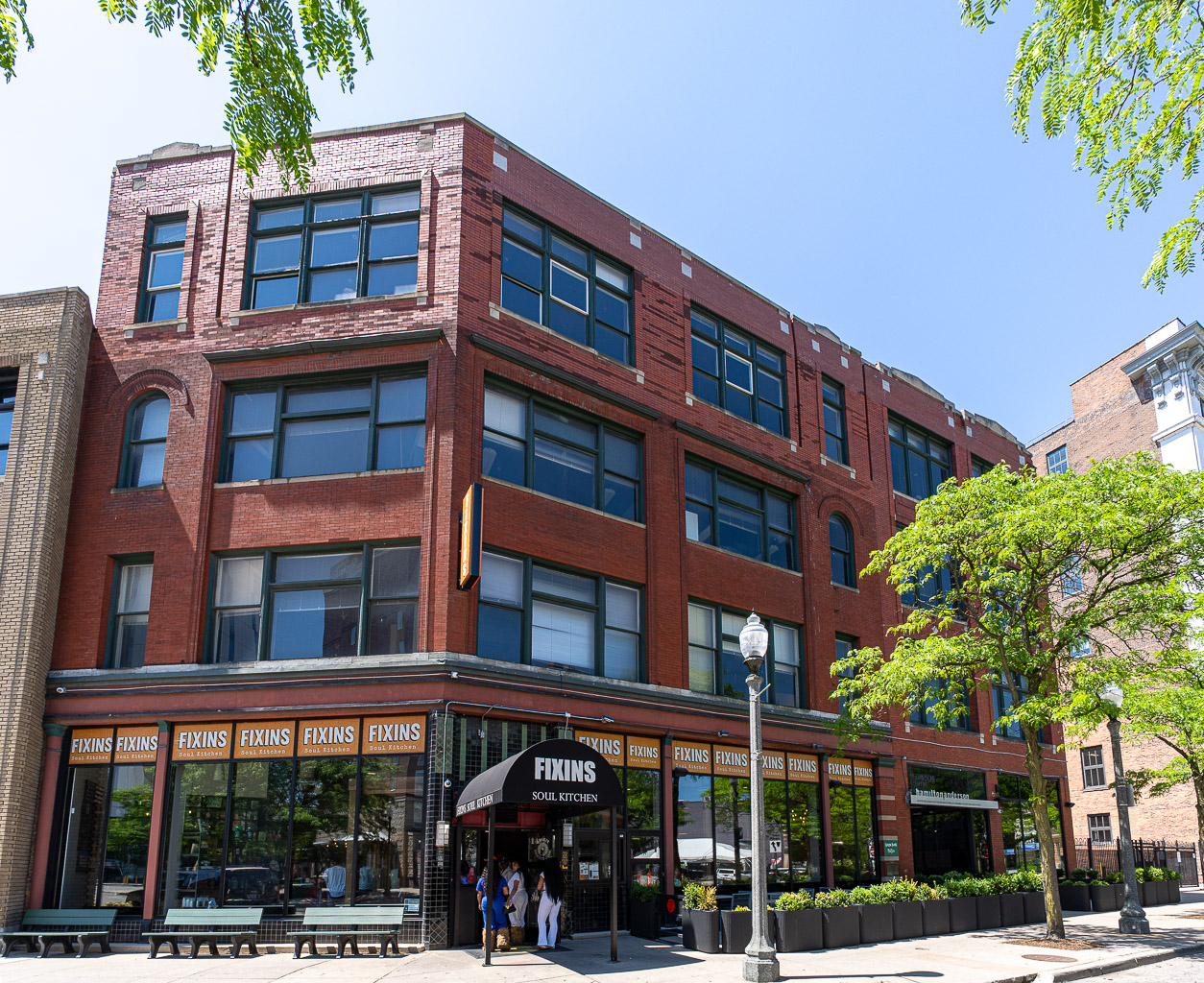
The three-story red-brick 1898 building that turns the corner of Center and Randolph can be vaguely characterized as Romanesque in style. Its round-arched windows on the end bays of the third story and molded brickwork are indicative of the Romanesque; the Chicago School windows - the three-part window with a broad central portion- is a modern commercial application popularized by Chicago architects in the late-nineteenth century. The four-story building to the north was built for Werner in 1913, the same time the three story building obtained its 4th story addition. Charles H. Werner Jr. sold the property, comprised of the two adjoining buildings, to Werner Land Company in 1923. It is presently owned by the Randolph Center Association. The ground floor is currently (2026) occupied by Fixins Soul Kitchen.
The 1913 building and the 4th-story of the earlier building are typical of simple commercial buildings dating from the second decade of the 20th century, typified by the stone square details at the corners of windows and parapet.
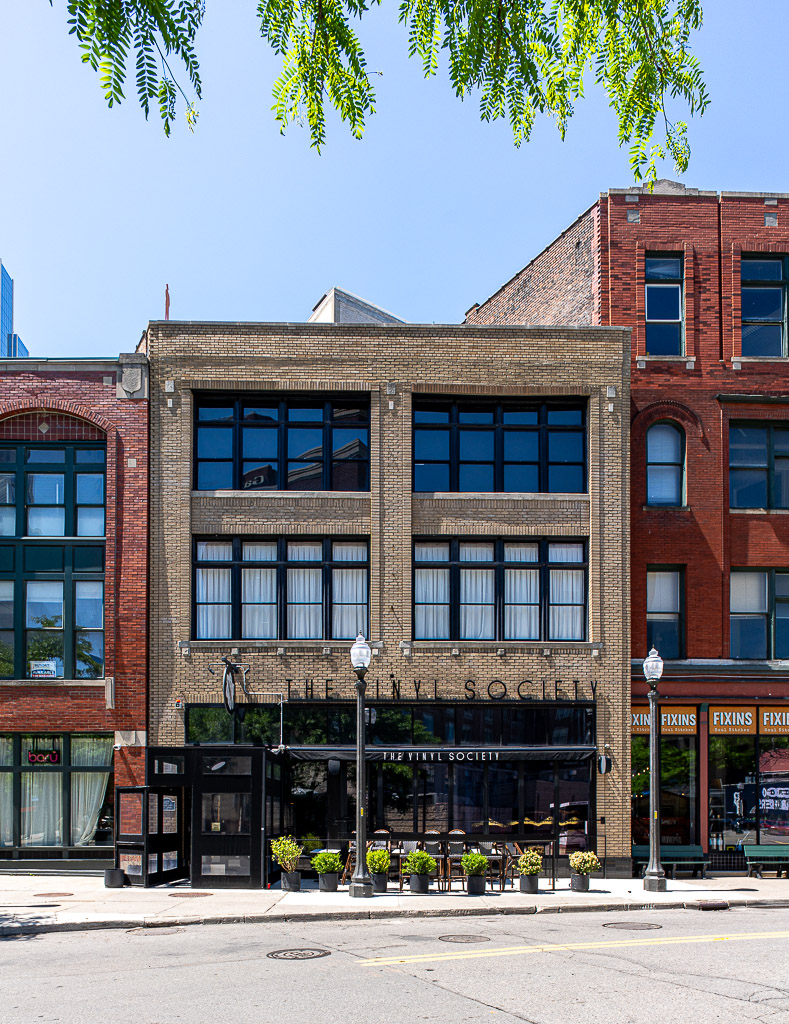
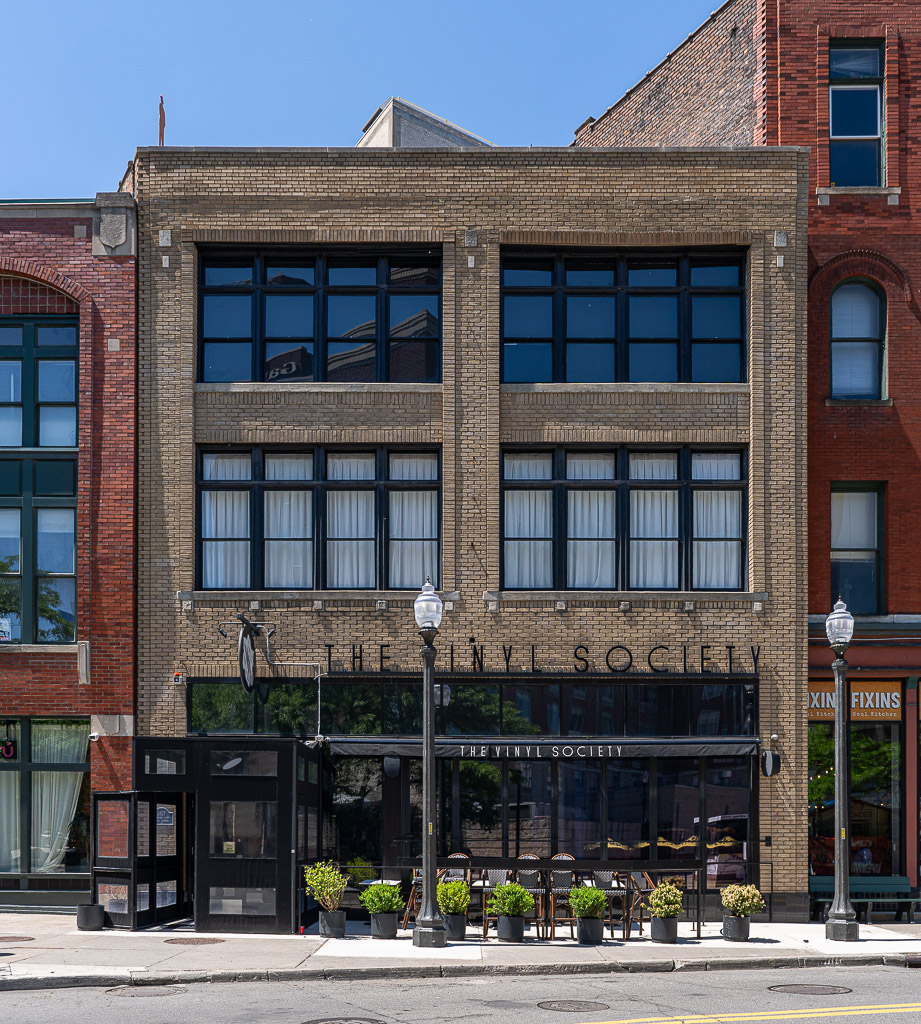
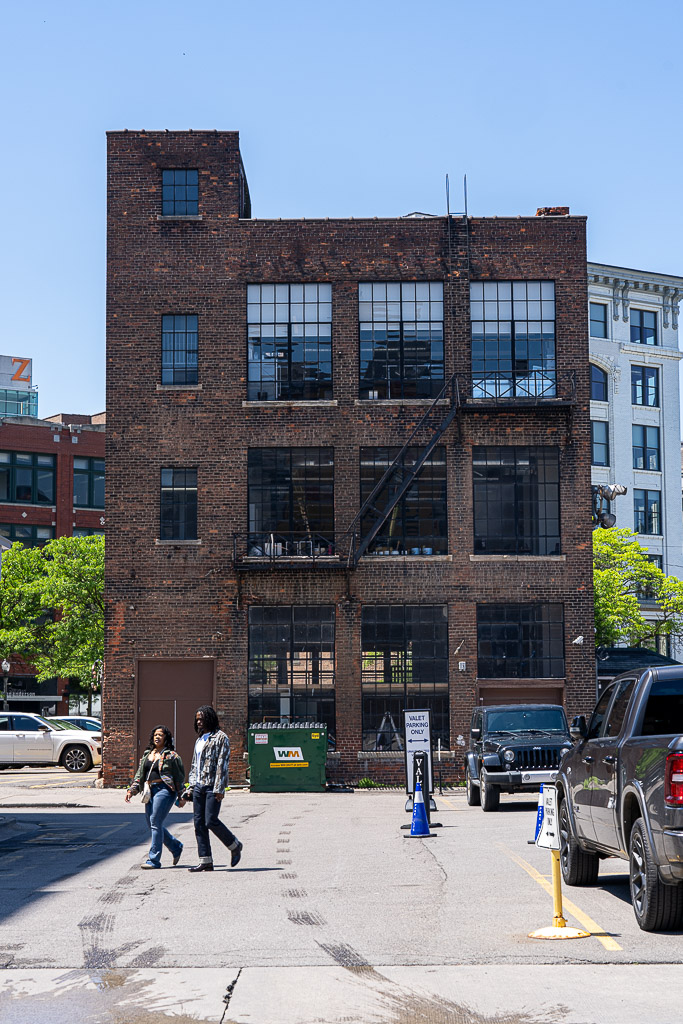
The Detroit firm of Bryant and Detweiler, building contractors, built the three story brick building in 1914 for Max Broock, the well-known Detroit land developer. It was described on the building permit as a "store and warehouse" with a reinforced concrete frame. Taepke Zepf Paint Company occupied the building from 1914 until the early 1920s. Broock died in 1915, but his estate retained the property until 1971.
Max Broock was president of the North Woodward Ave. Land Corp. in 1910, and he had already by that time opened and sold lots in many subdivisions in Detroit, including parts of the Brush Farm and Virginia Park. He was associated with the Molony Real Estate Exchange in the Breitmeyer Building. In 1910, the same year he purchased Arden Park, Broock was appointed to the City Plan and Improvement Commission by Mayor Phillip Breitmeyer. Broock was a member of the Harmonie Club and the D.A.C.
Broock's building appears today as a utilitarian brick structure with little superfluous detail. Its original first story treatment and cornice have been severely altered. The second and third stories are largely occupied by two groupings of four windows per story. The only architectural details are the masonry corbel blocks beneath the window sills and the stone square motif at the top of each pilaster.
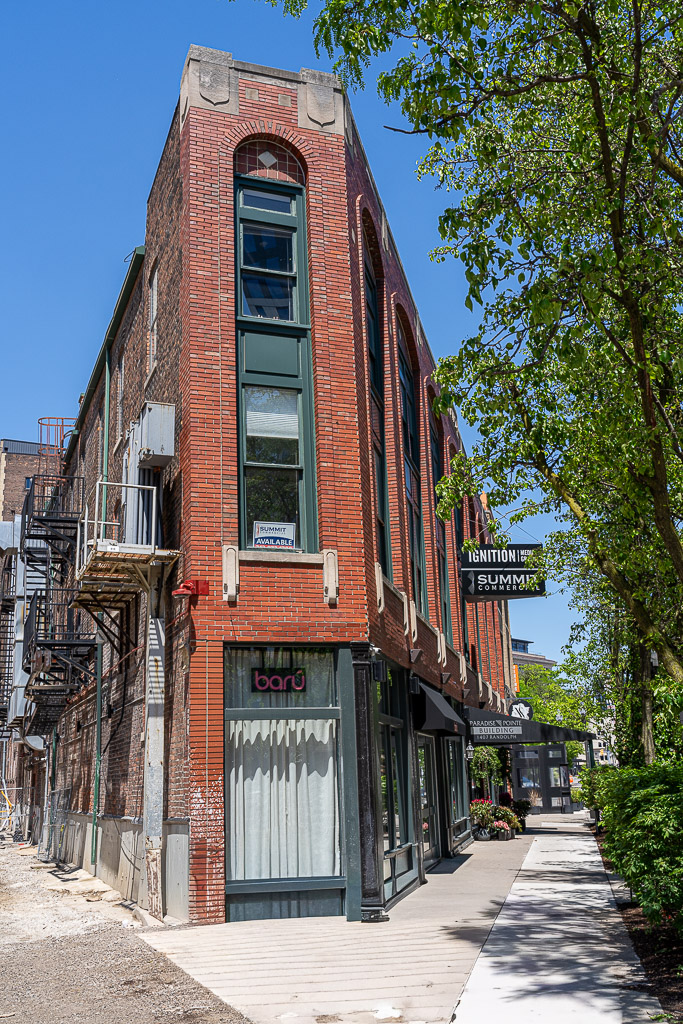
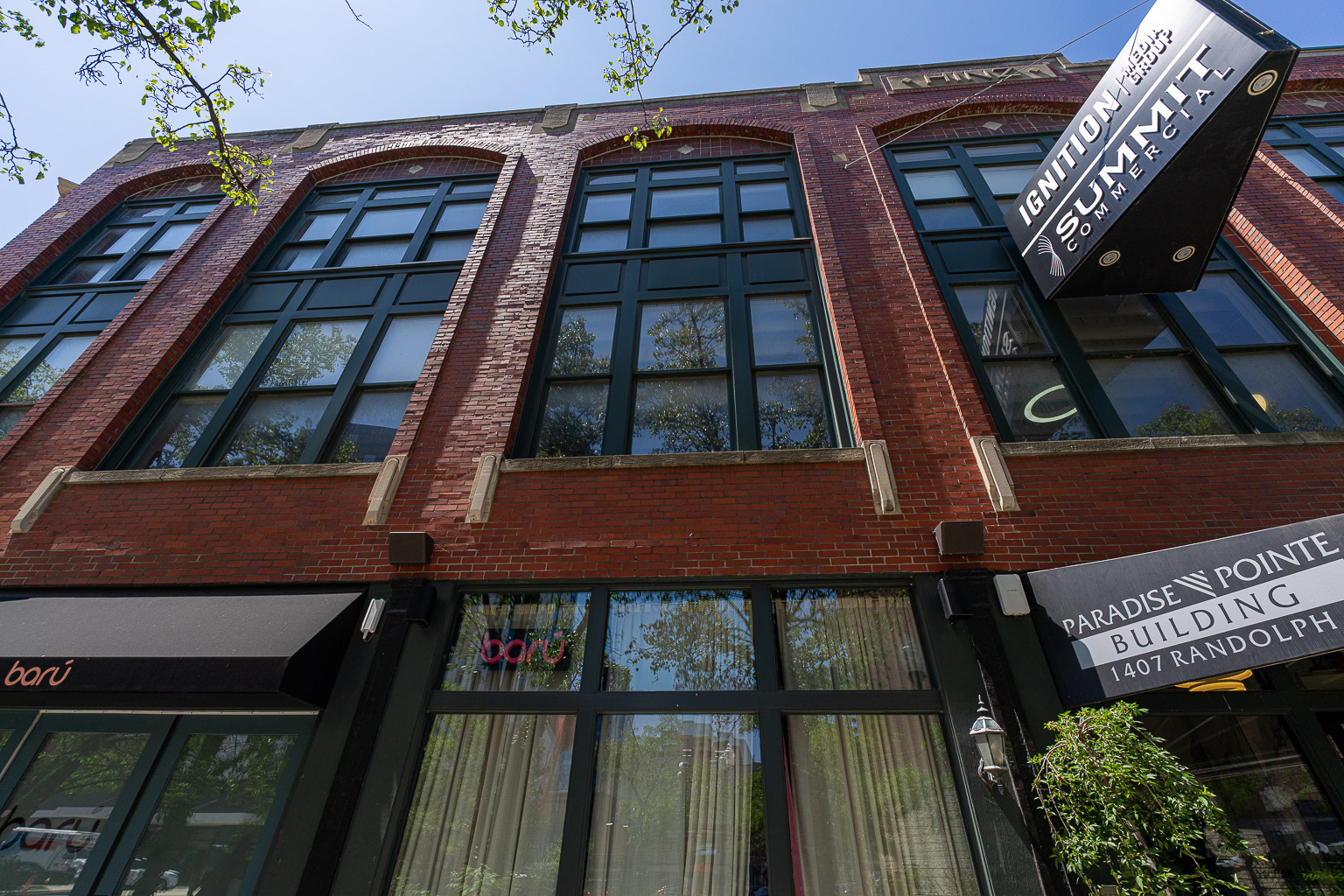
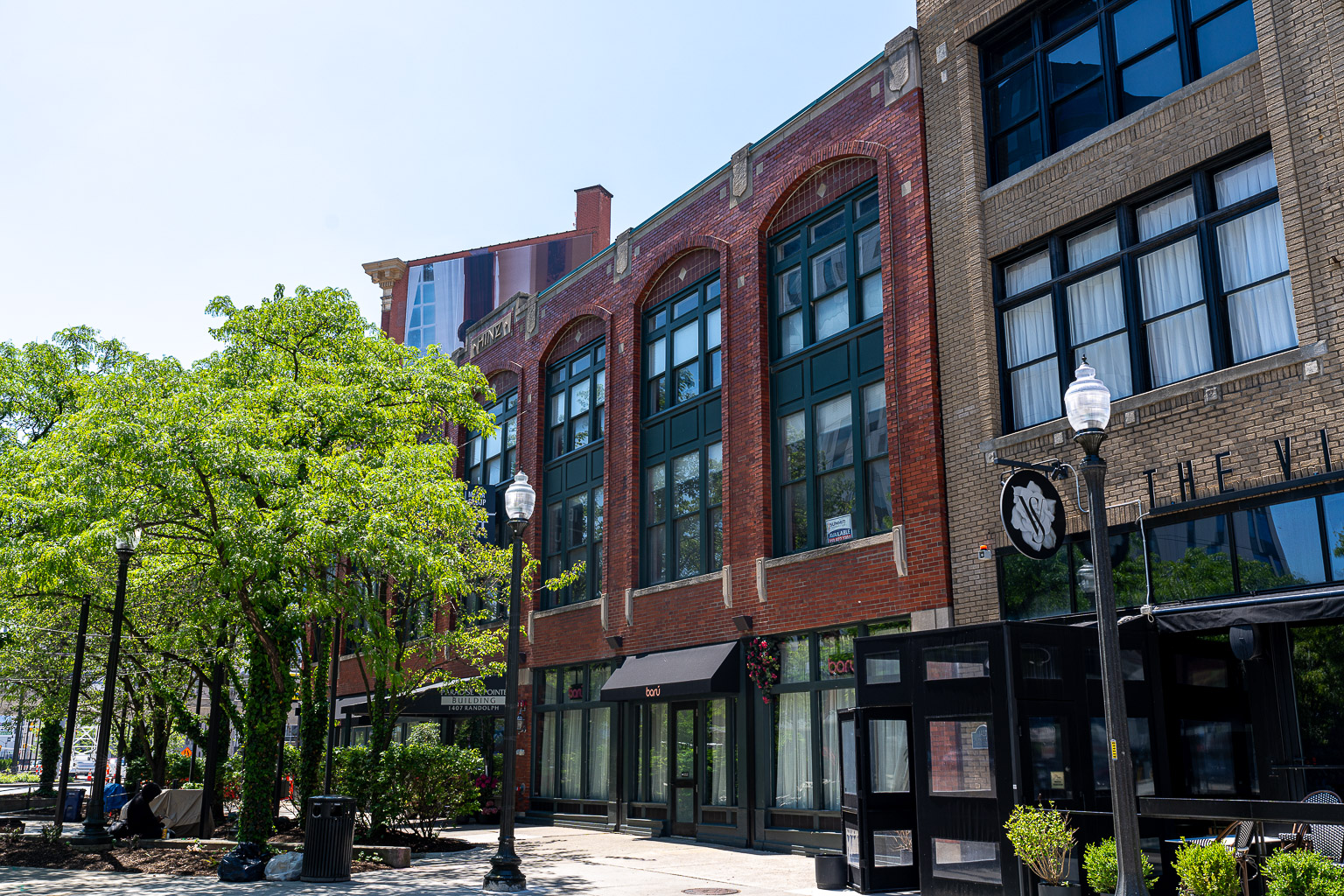
Herman A. Hinz was the proprietor of Hinz Hall. Hinz Hall, at 75 (old #) Gratiot, contained a restaurant and a cafe. Hinz purchased the land to build this commercial block on Randolph in 1907, and on February 3, 1908 Richard E. Raseman was issued a permit for the construction of a triangular-shaped building to cost an estimated $4,000. Lohrman Seed Company occupied the building on a long-term lease from the time the building was completed through the 1920's. Other tenants with the seed company in those years were the Lebleogian Restaurant and the Cairo Coffee Shop. The property passed out of the Hinz family in 1963, and has had several owners since.
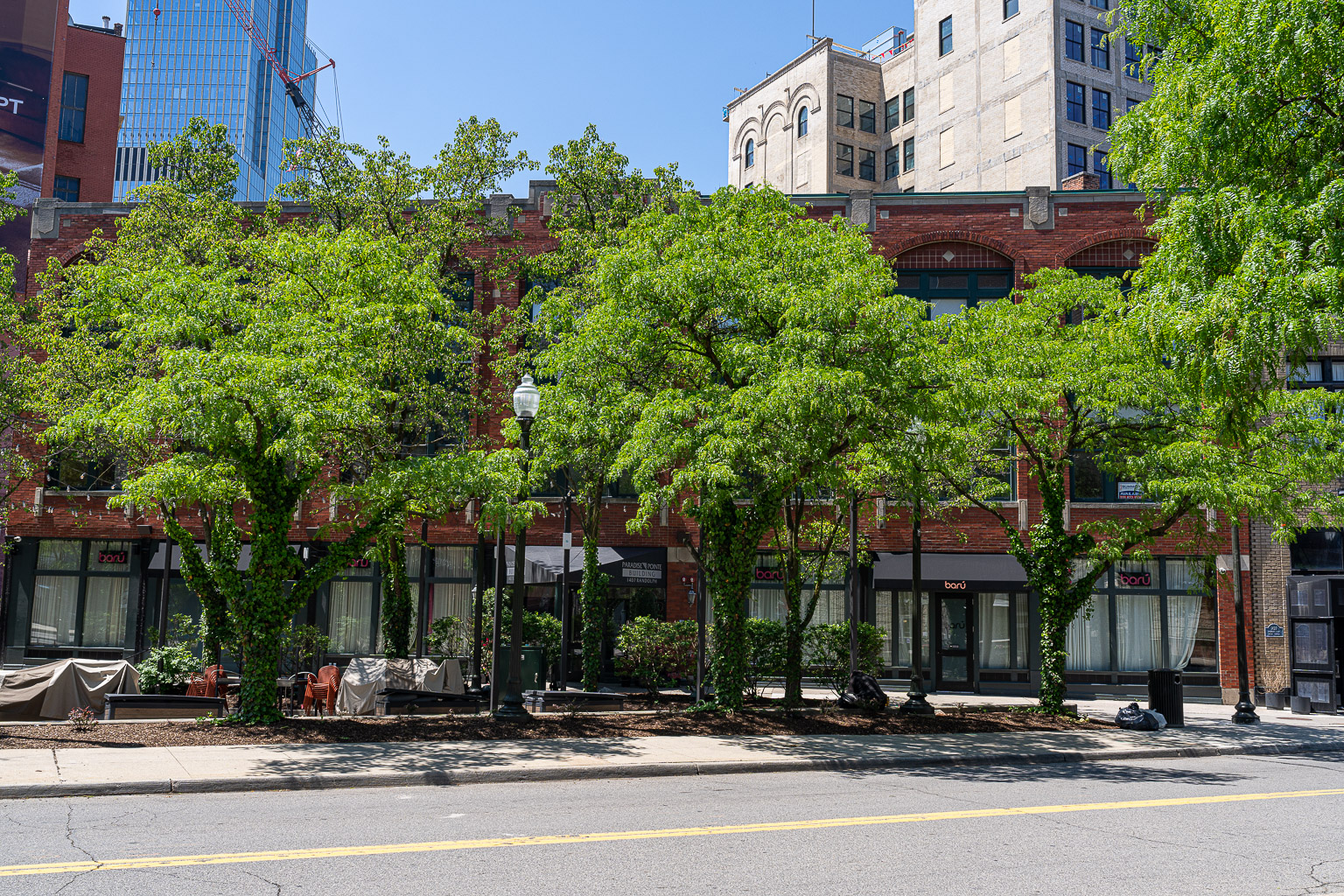
The building is an attractive three-story red brick structure characterized by the wide banks of windows that rise through the second and third stories, culminating in a segmental arch motif. Masonry sills, geometric details, cresting, and the panel bearing the name "HINZ" ornament the building. The first- floor storefronts have been altered significantly. But wow, this is a very difficult building to photograph since it's covered completely by trees which are only a few feet away from the front of the building. I did the best I could.
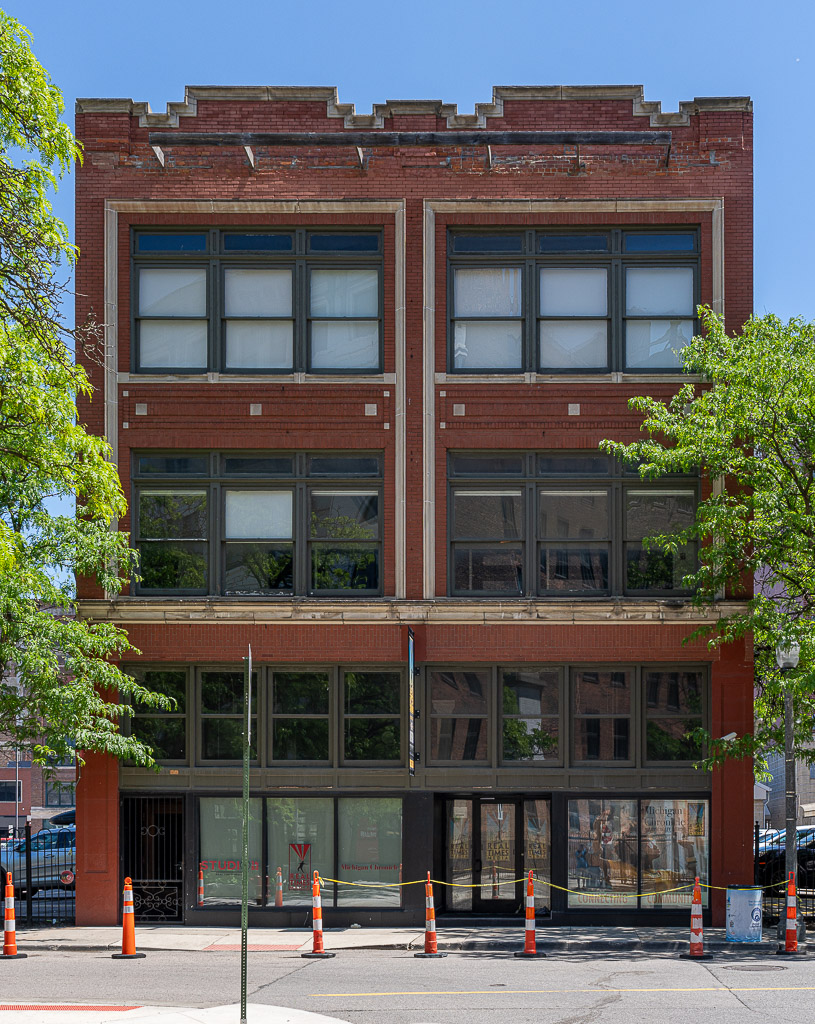
This building was erected in 1913 for the Michigan Cut Flower Exchange. Phillip Breitmeyer was president of this wholesale florist and florist's supply business. John Breitmeyer Sons was the premier florist company in the city of Detroit at the time; the Breitmeyer-Tobin Building at 1308 Broadway was built by Phillip Breitmeyer and his brothers in honor of their father, John, in 1905.
In 1926, the Flower Exchange sold the building. I suspect this was because they'd moved to a new building on Broadway, built in 1923. Although there has been a succession of owners since, the Detroit Artists Market has been at its Harmonie Park location since 1932. It was founded in that year as a showcase gallery for southeastern Michigan artists.
The building at 1452 Randolph is a brick, three-story structure with masonry trim. Its first-story display windows have been altered but its second and third story fenestration, consisting of two large groupings of three double-hung sash windows per floor, remains intact. Slightly raised brickwork and stone trim provide architectural detail and textural contrast. The top of the parapet wall steps up and down, providing an interesting silhouette. In general, the Artists Market building is typical of commercial architecture of a modest scale built during the 2nd decade of the 20th century.
Charles Geist, an undertaker, purchased lot 89 of Houghton's Subdivision in 1909 and operated his business at this address (old #288). Mrs. Geist sold the property to C.J. Netting Company in 1925. Conrad John Netting, born in Germany, was a dealer in gas and electric lighting fixtures, mantels, tiling, and grates. He operated a business at this address but ran into financial difficulties during the Depression. The bank foreclosed on the building in 1934.
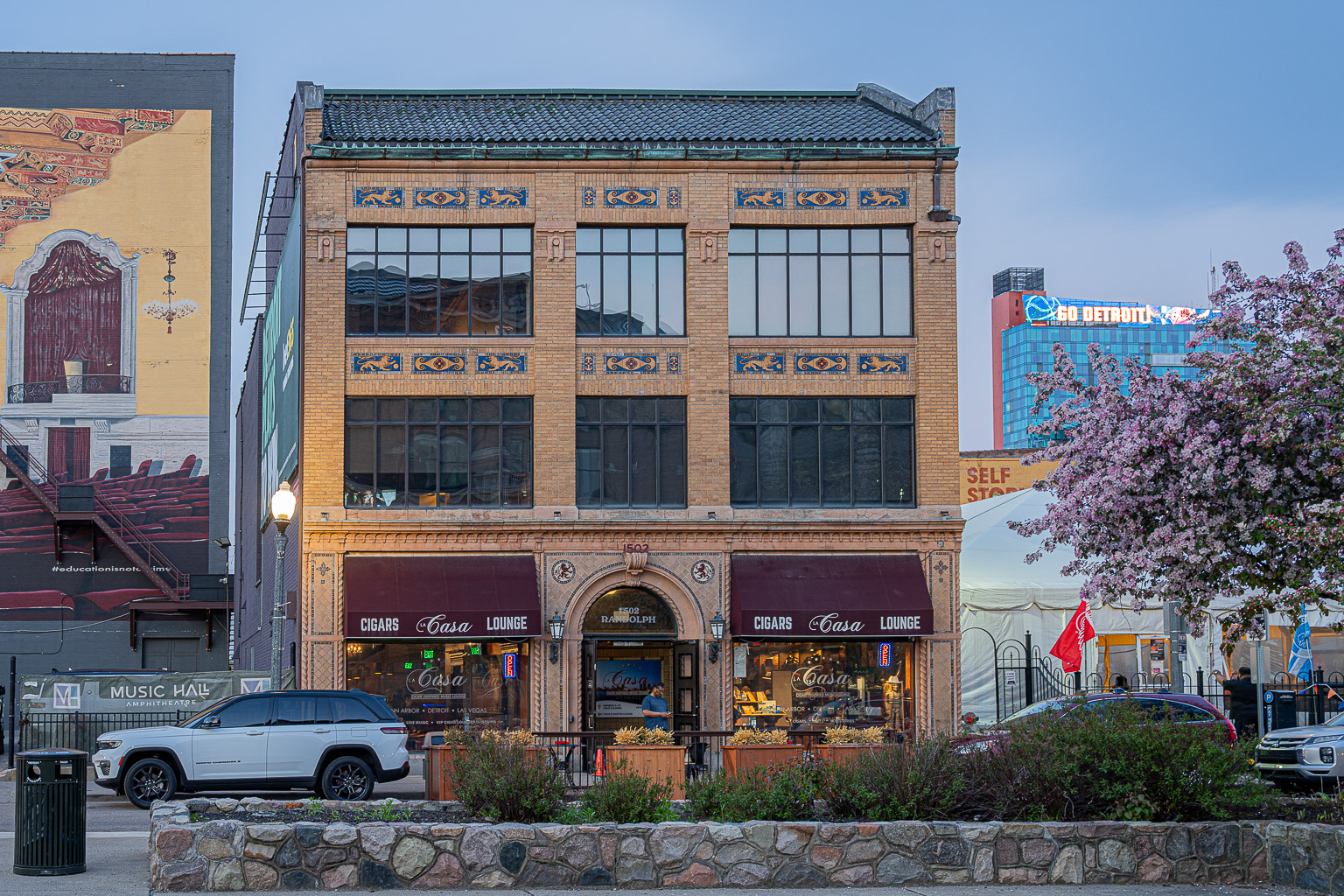
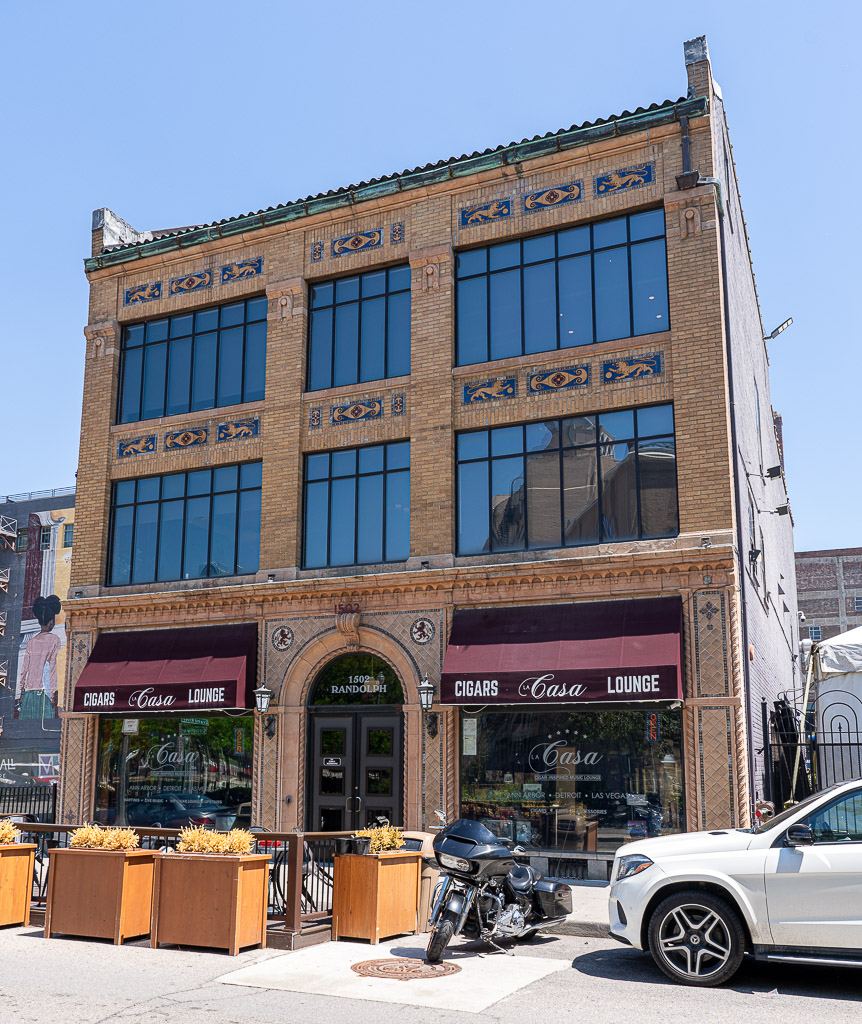
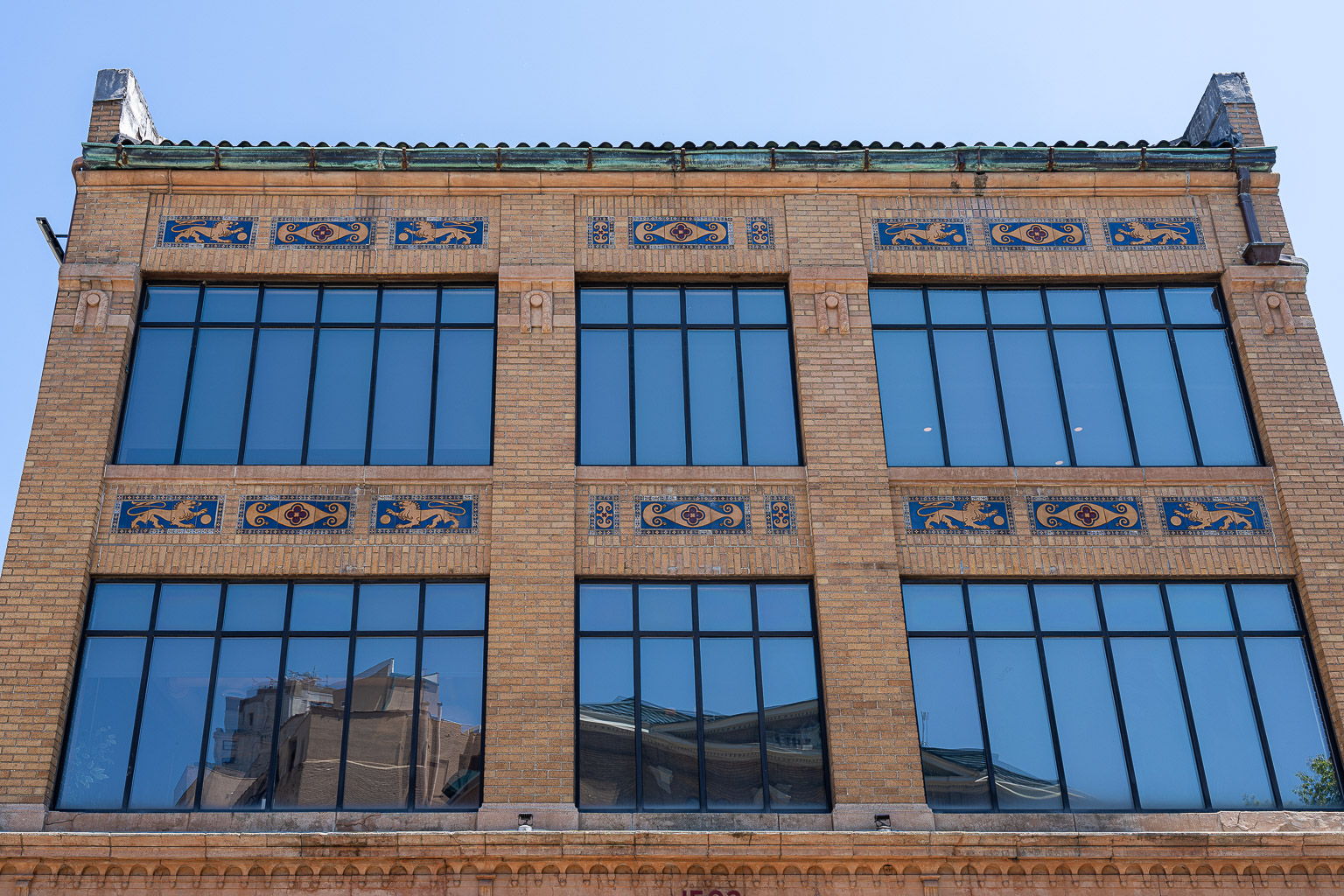
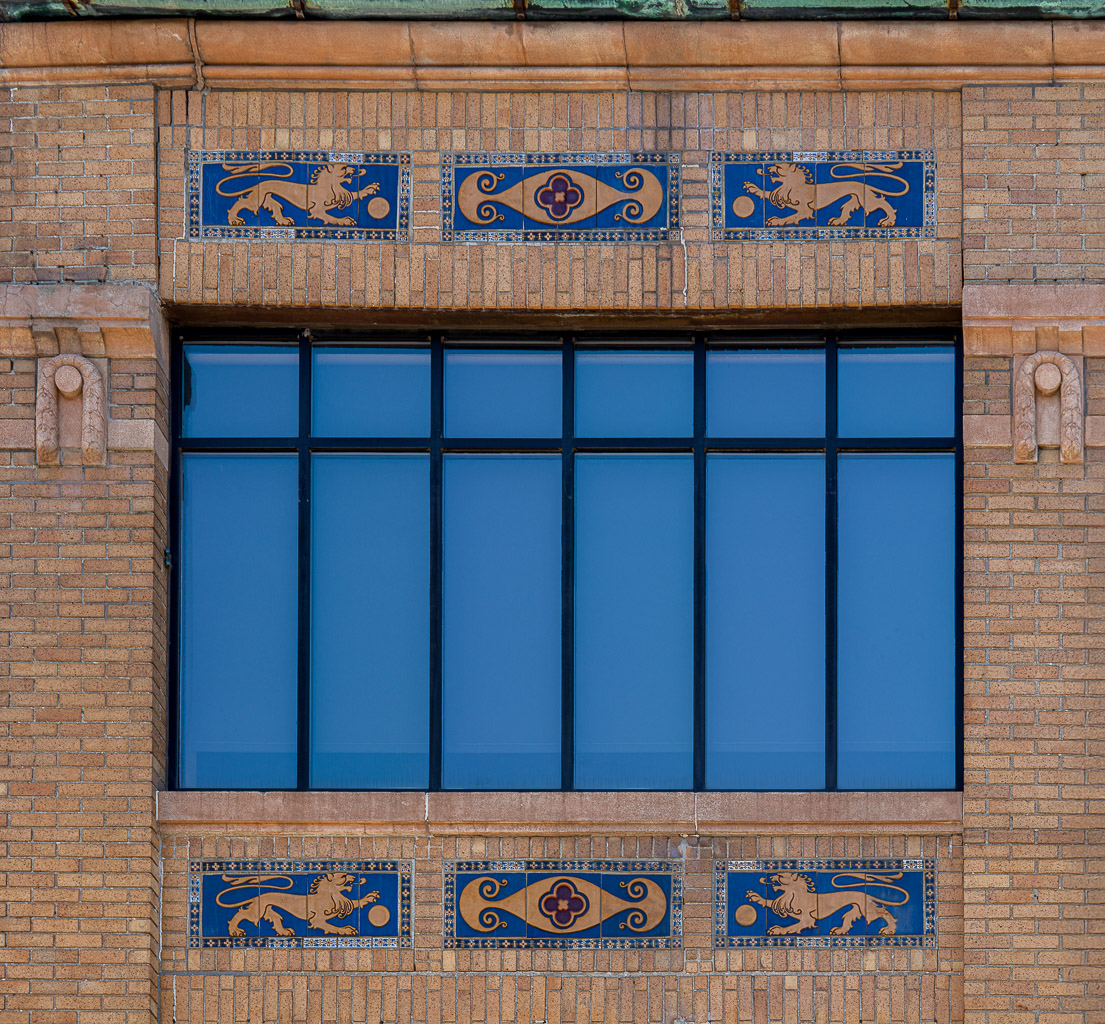
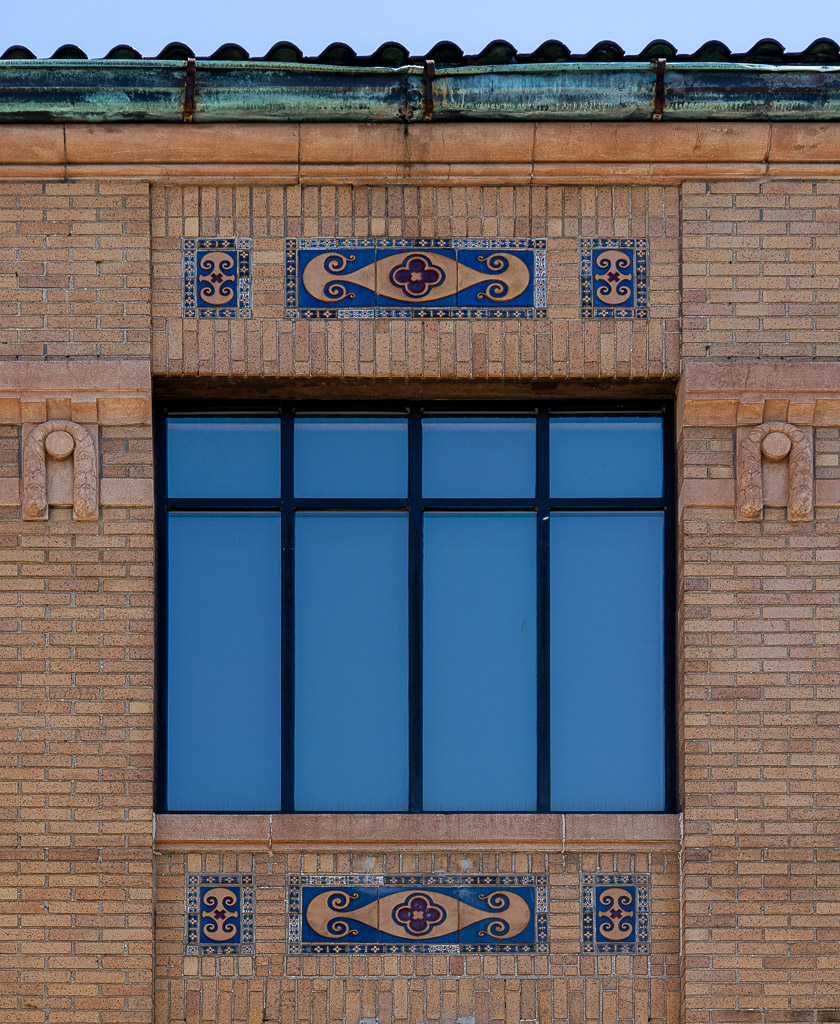
It is possible that this attractive building is a remodelled older building, as no building permit can be located. Alteration permits show that the store windows were changed in 1923, and additions to the structure were built in 1921 and 1925. The building is early Art Deco in feeling. Its walls are light orange brick; the first story is stone, as is the trim on the upper two stories. Tile is used around the entrance and in the panels above the windows containing more motifs. The arched entrance is surrounded with rope moldings and the rondels in the spandrels bare more lions. Pilasters separate the rows of large windows on the upper two stories. The building is now a popular cigar store and lounge.