The Grand Circus Park Local Historic District includes the park itself and the buildings across the half-circle of streets that surrounds it, including East and West Adams Avenue, and Witherell Street and Park Avenue, south from Adams to Woodward. You can read details about the district and its buildings in the Proposed Grand Circus Park Local Historic District Final Report (local copy), which I recommend highly to anyone interested in Detroit's history. A Wikipedia Page also describes the district.
Contents:
- Grand Circus Park
- 2001 Park, The Park Avenue Building
- 76 West Adams, Kresge Company Building (Kales)
- 44-58 West Adams, The Fine Arts Building
- 28-36 West Adams & 25 West Elizabeth, The Stroh Tower, Michigan Mutual Building, Grand Park Centre
- 18-24 West Adams, First National and Central Savings Bank
- 10 West Adams, The Fyfe Building
- 23 East Adams, Central United Methodist Church
- 47 East Adams, Women Exchange Building
- 1526 Broadway, Capitol Theater (Detroit Opera House)
- 1555 Broadway, The Madison Theater
- 10 Witherell, Eaton Tower (David Broderick Tower)
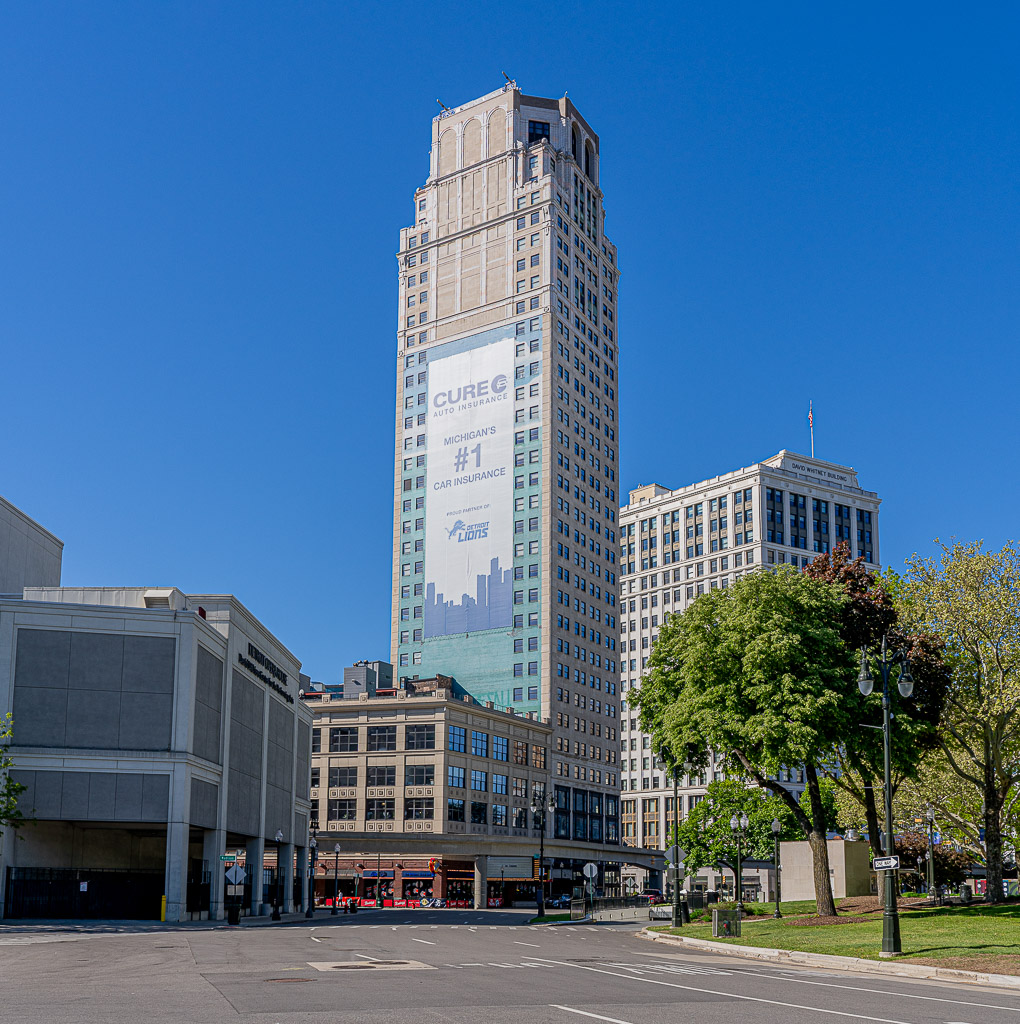
- 1 Park Ave, or 1553 Woodward, David Whitney Building
- 1539-65 Washington Boulevard, Statler Hotel (Heritage Hotel)
Grand Circus Park, consisting of 4.6 acres in two quarter circles, was created by Judge Woodward's plan for the laying out of streets and public spaces in 1805 after a great fire swept the small frontier town of Detroit. It was called "Grand Circus" after the name ancient Romans gave to circular areas where games and public spectacles were held. The Woodward Plan provided for two additional quarter circles on the north side of Adams Avenue to form a complete circle, but this was never carried out. Consequently, the park is a semi-circle bisected by Woodward Avenue. Adams Avenue became the northern boundary of Grand Circus Park and the last street laid out in the Woodward Plan before it was abandoned. Other parks and public squares were intended, according to the Woodward plan, but only Grand Circus Park, Campus Martius, Clinton Park and Capitol Park were initially set aside.
Although Grand Circus Park was identified as parkland on early maps (Hart Atlas, 1855), its east side was nothing more than a low and swampy marshland where the sound of bull frogs croaking was not uncommon, and the west side was a pond. The change from bog and goose pasture to parkland began after 1840 when H.H. LeRoy, chief engineer of the fire department, built his residence on the site of the present David Whitney Building. Through his gradual efforts and petitions to City Council to improve the park, the grounds of Grand Circus Park were filled in and raised from one to four feet. A walk, two planks wide, was reportedly laid down around 1841.
Other lots were sold at auction by the city in 1843 and more residences, including that of John Bagley, and the Church of Our Father were built. A wood market occupied the park about 1850, but because of protests was displaced by 1853. In 1853, gas lamps were installed in the park and the City Council authorized the expenditure of $1,500 to set out trees and build fences surrounding the park. The west side got the most attention. In 1855 water pipes were put in to ready the park for fountains, the first of which was installed in the center of the west half in 1860. In that same summer, the walks were installed. A fountain was placed in the east half of the park in 1874, but it was moved to another park two years later and replaced3.
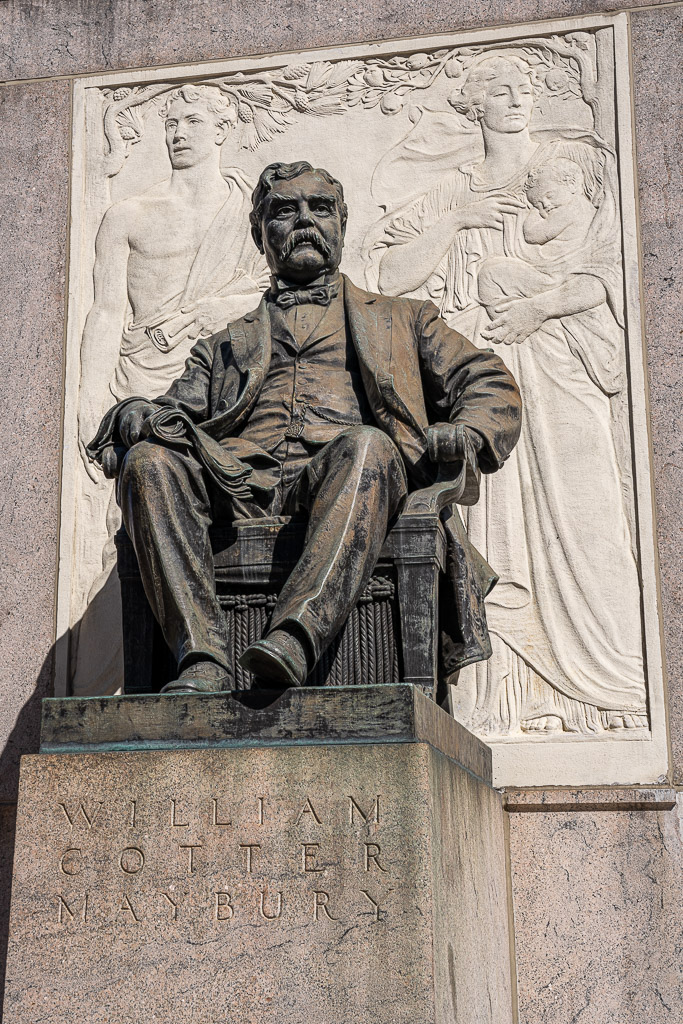
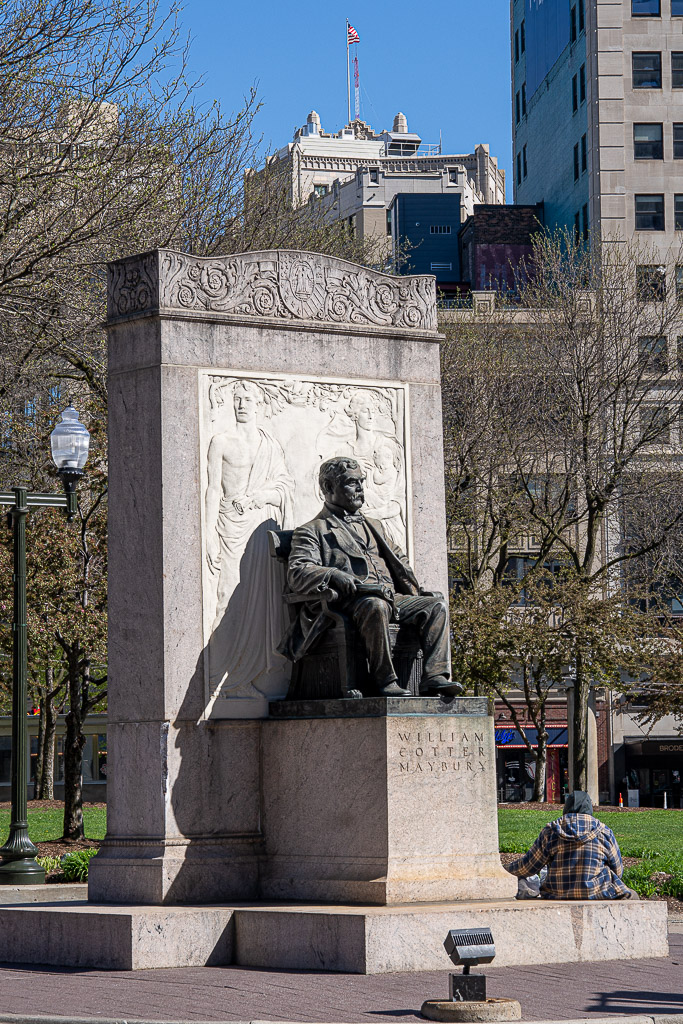
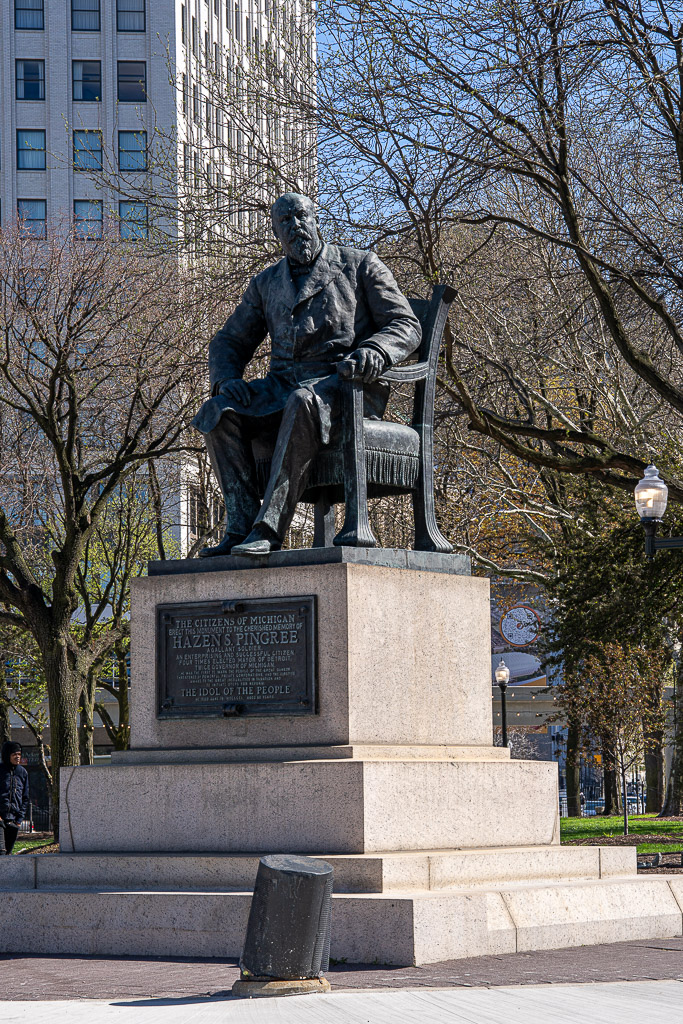
Locating various monuments was discussed early in the park's history; there was talk about putting the statue of Washington on one side of Woodward and Lafayette on the other. Although that was not carried out, the intent of two monuments facing each other on opposite sides of Woodward evokes the original placements of Pingree and Maybury many years later.
Grand Circus Park was kept closed until May, 1866 when it was opened to the public on Sundays only. Central Methodist Church opened in 1867, and its parishioners promenaded in the park after Sunday services. As late as 1873, a high board fence with gates that were padlocked kept the cattle and people from damaging the trees. In 1866, the city wanted to place the Soldiers Monument in Grand Circus park, but the public objected.
Until about 1870, the area above, or north of, the Campus Martius was used for residential purposes and below was commercial. Beginning in the 1870s, Adams Avenue gradually became the northern boundary of Detroit's commercial architecture; beyond that, mud-filled wheel ruts made travel difficult beyond the cedar block pavement of Lower Woodward Avenue. North of Grand Circus Park were the city's grand mansions, and beyond them, farmlands.
It is not known who designed the layout for the paths and if those laid out in 1860 were those that became permanent through 1956, but it is reasonable to assume that the fountain locations were determined in 1855 when water pipes were installed, and a path system was in place in 1866 when the park opened to the public. It can be said with certainty that the system of intersecting paths cutting through the park existed prior to 1885, when it is clearly shown on the Robinson Atlas. The paths were lined with wooden benches, flower beds, bushes and trees. In 1896, the Detroit Public lighting Commission installed the first electric lights in Grand Circus Park. The light poles were of the ornamental pole (O.P.) type throughout the park, with the more decorative fluted iron pole with double globes later placed on Woodward (same type as today).
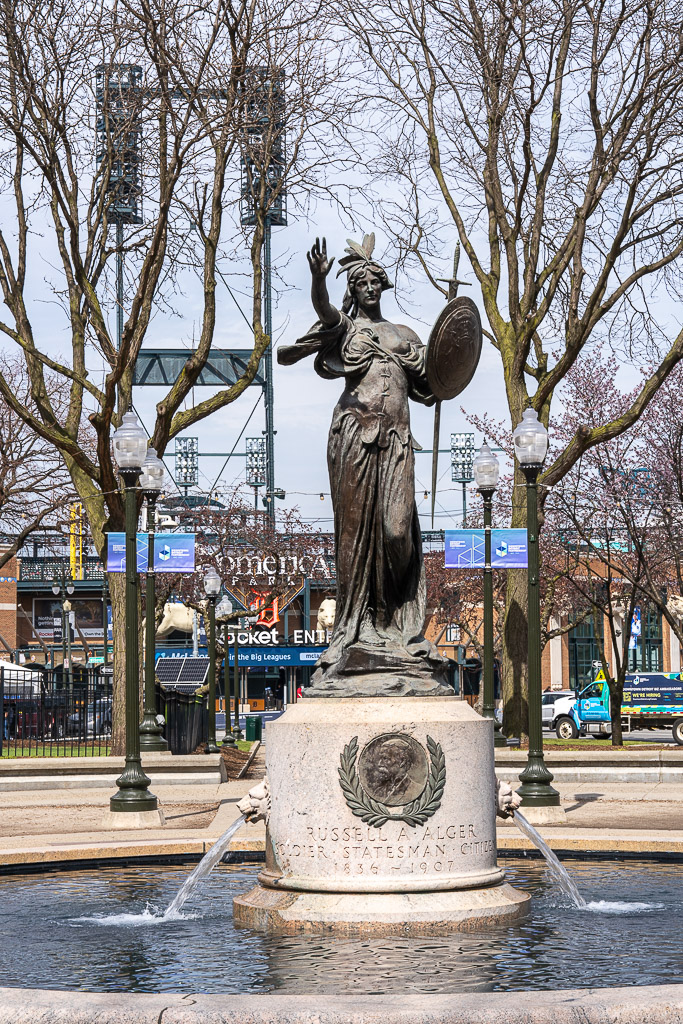
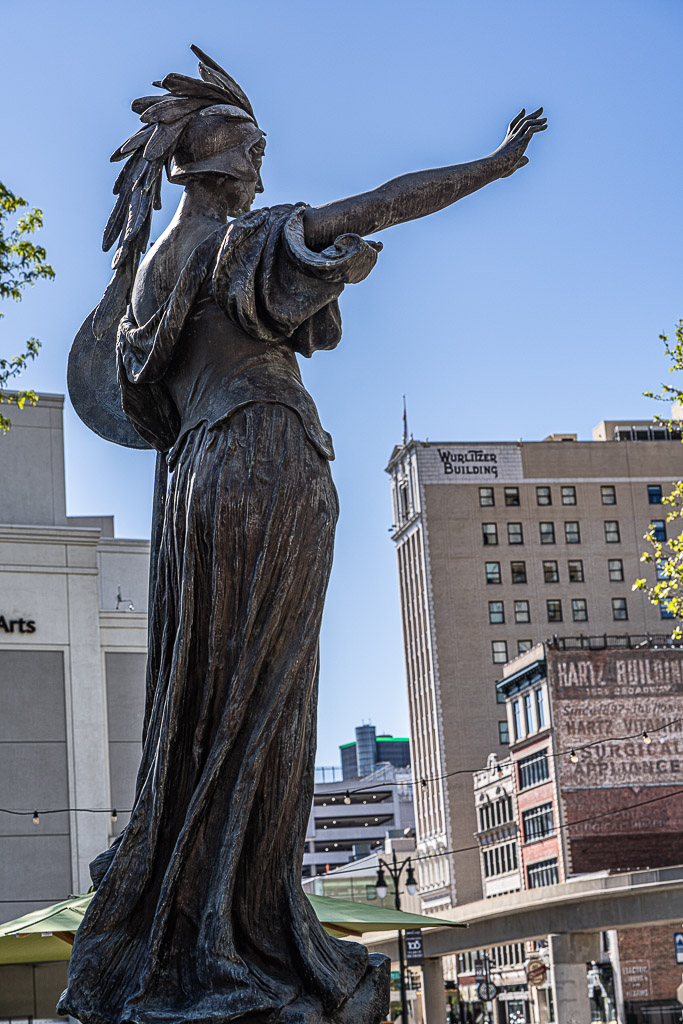
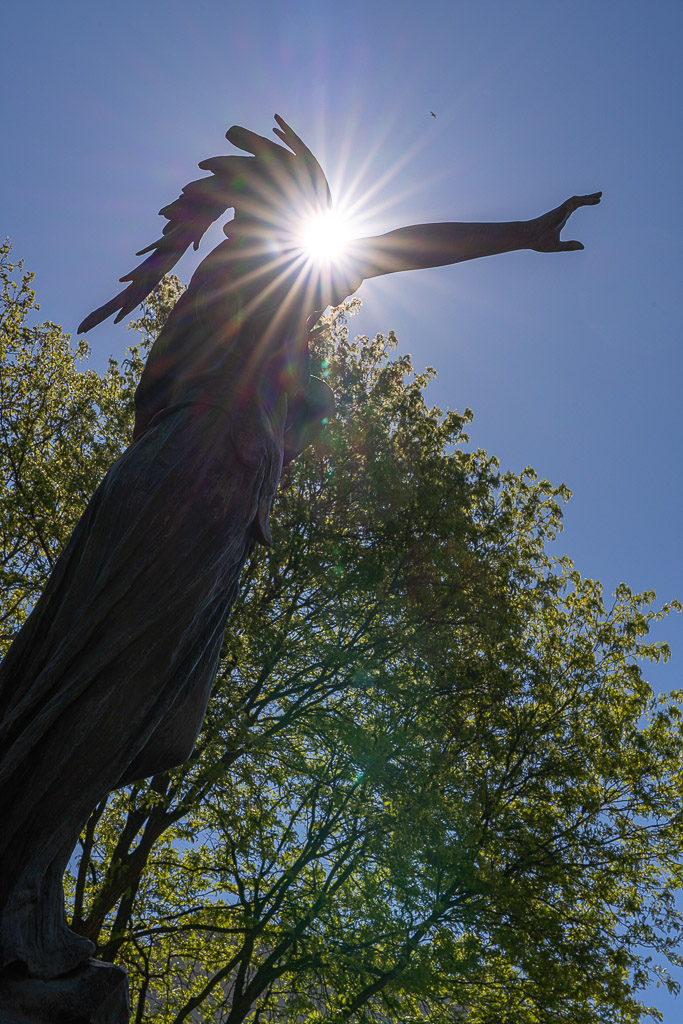
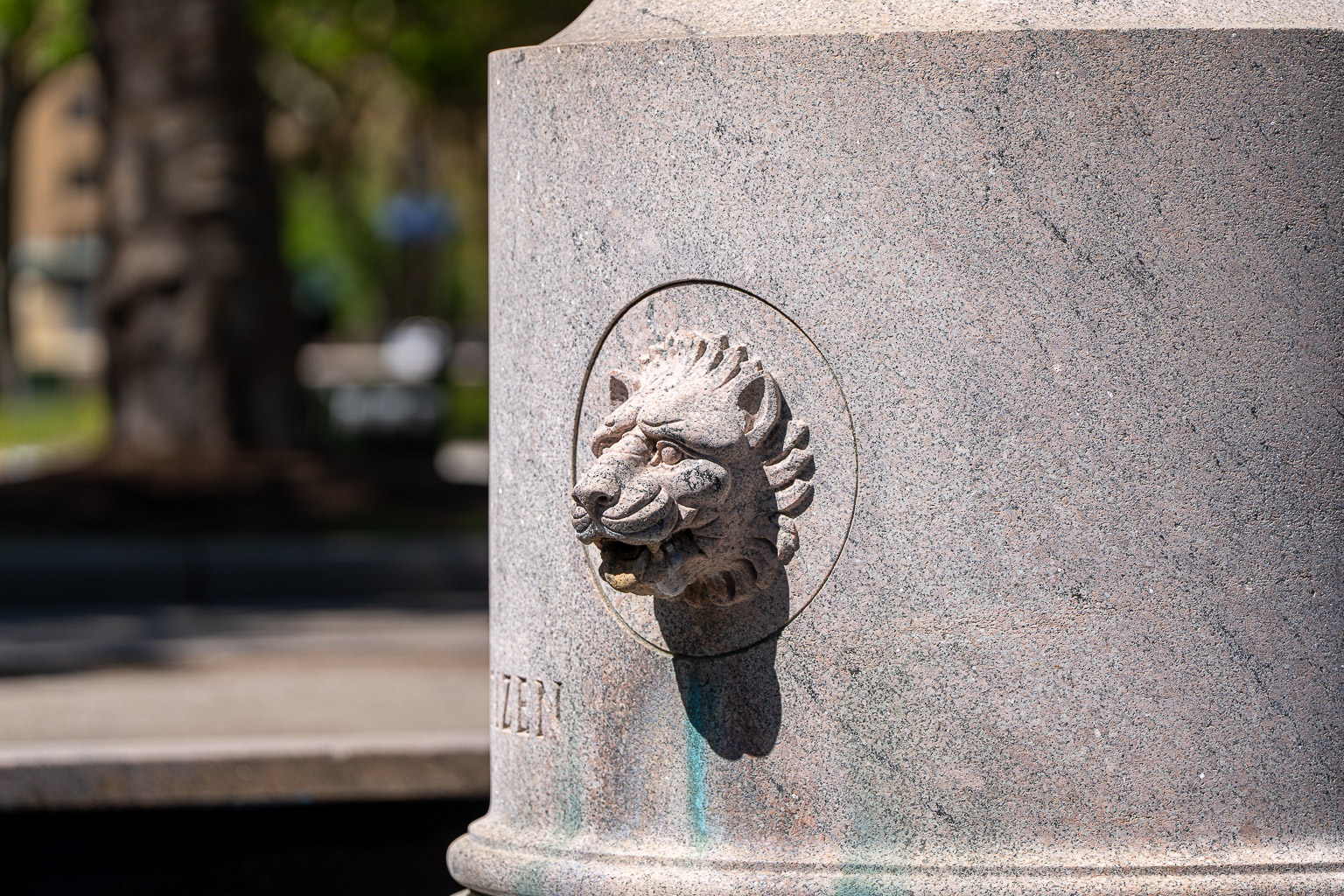
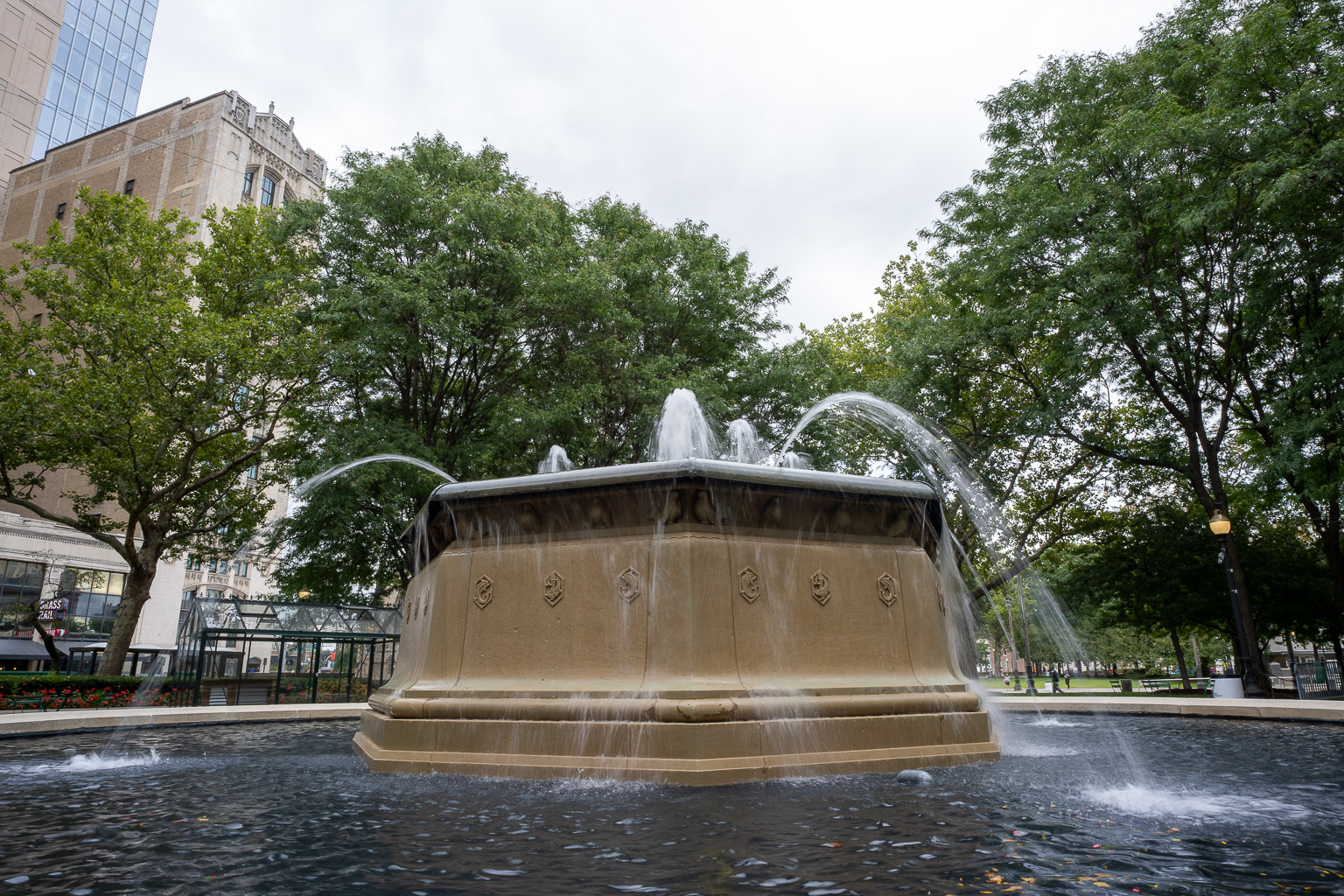
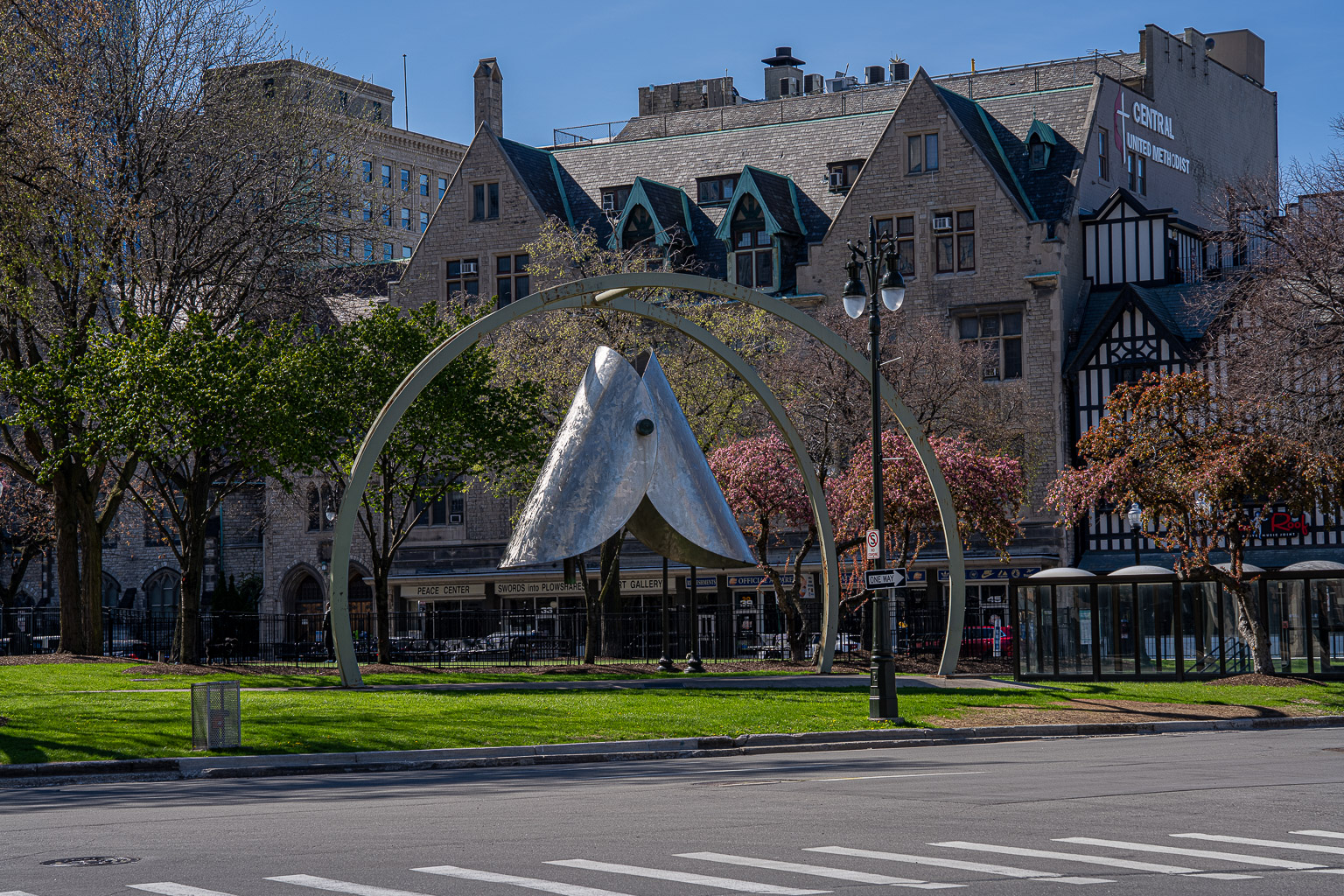
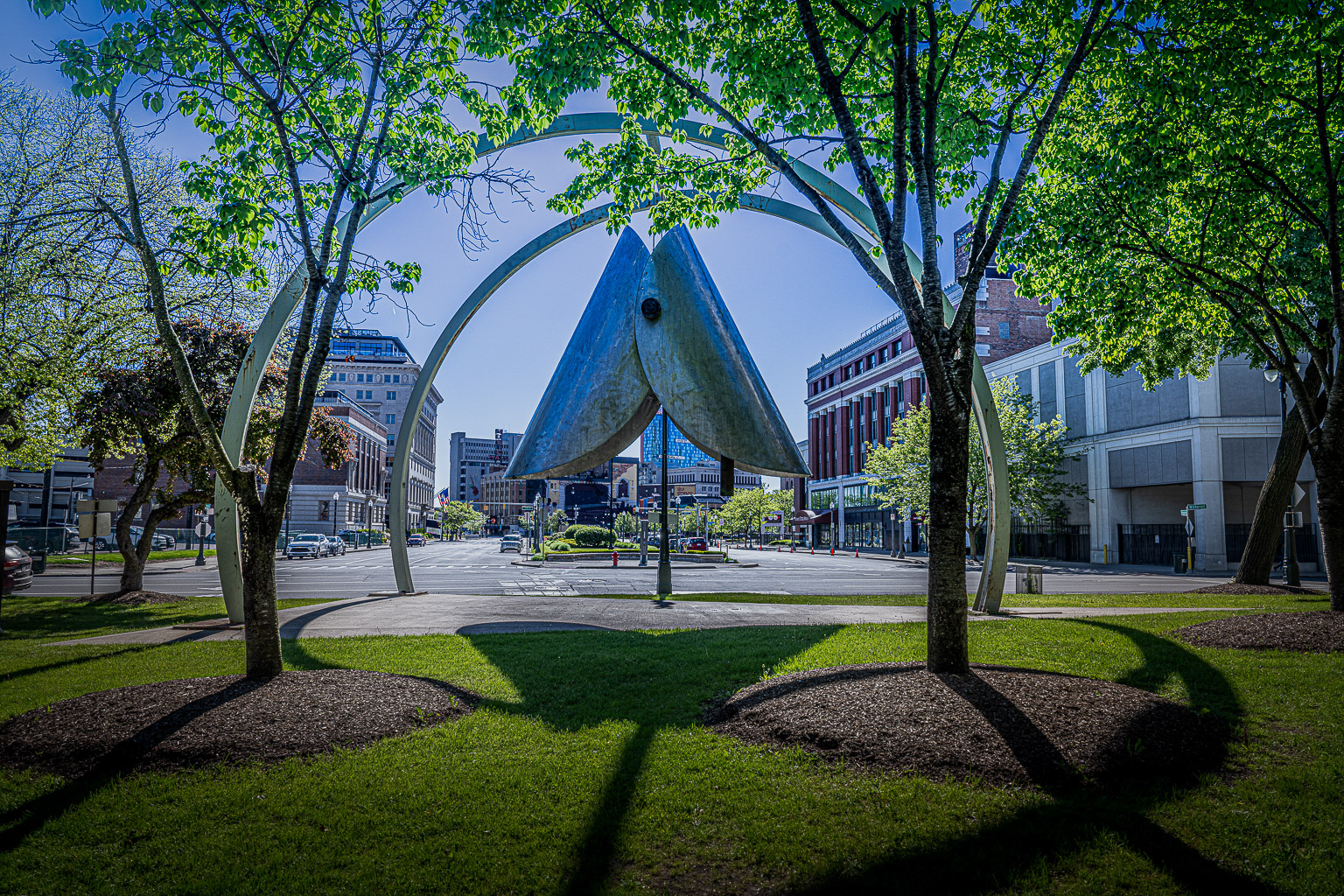
The Pingree Monument (1st photo below), installed in 1904, was located in the southeast corner of the west side of Grand Circus Park. The Maybury Monument (2nd and 3rd photos below), installed in 1912, was originally located in the southwest section of the east half of the park, facing the statue of Pingree. The Alger Fountain (4th through 7th photos below), dedicated on July 27 1921, 14 years after Russel A. Alger died, replaced an earlier fountain with three water nymphs in the east side of the park. Alger was a lumber baron and railroad man who rose to become a U.S. senator and, later, was governor from 1885 to 1887, and McKinley's secretary of war. The monument features a bronze statue of a woman about 7 feet tall wearing a headdress and a flowing gown and carrying a sword and a shield that bears the state seal. Her right hand is raised in greeting. She is the bronze personification of the state of Michigan. The Edison Fountain (8th photo below), dedicated in 1929, remains in its original location on the west side of the park. Designed by artist Chris Turner and dedicated on New Year's Eve 1999 to ring in the new millennium, the Millennium Bell (9th and 10th photos below) is at the eastern edge of the park. The Bell's resemblance to a fish head has given it the nickname of the "Fish Head Bell".
The character of Grand Circus Park has changed tremendously with the growth of the City of Detroit in the last one hundred and fifty years, yet the original intentions of its early planners - that of a place of meetings for "religious, moral, literary or political societies..." (John R. Williams) was left intact. Efforts by the city to build a library or a new city-county building in 1926 were shot down by a public who wanted the park to remain open space for thoughtful repose and exchange of ideas. During the Depression, the park served in the warm weather as an open air dormitory, with as many as 500 sleepers nightly.
Drastic changes occurred in the mid-late 1950's when the park was completely dug up for the construction of an underground parking garage. Permanent structures relating to the parking function, such as ventilating structures and enclosed entrances, certainly changed the physical appearance of the park as modern intrusions. The redesign of the park with a few paths removed and modern paving, the relocation of the statue of Maybury, and a new landscape design, left little trace of the nineteenth century romantic landscape with the City Beautiful symmetry that had existed before. More recently in the mid-1990s, the Pingree Monument was relocated to the northwest corner of the east half of the park, moving it from its original location while restoring its important relationship to the Maybury Monument on the opposite side of Woodward Avenue.
More recently, in the early 2020s, a master plan has been developed to improve the park which has been published here (with a local copy here).
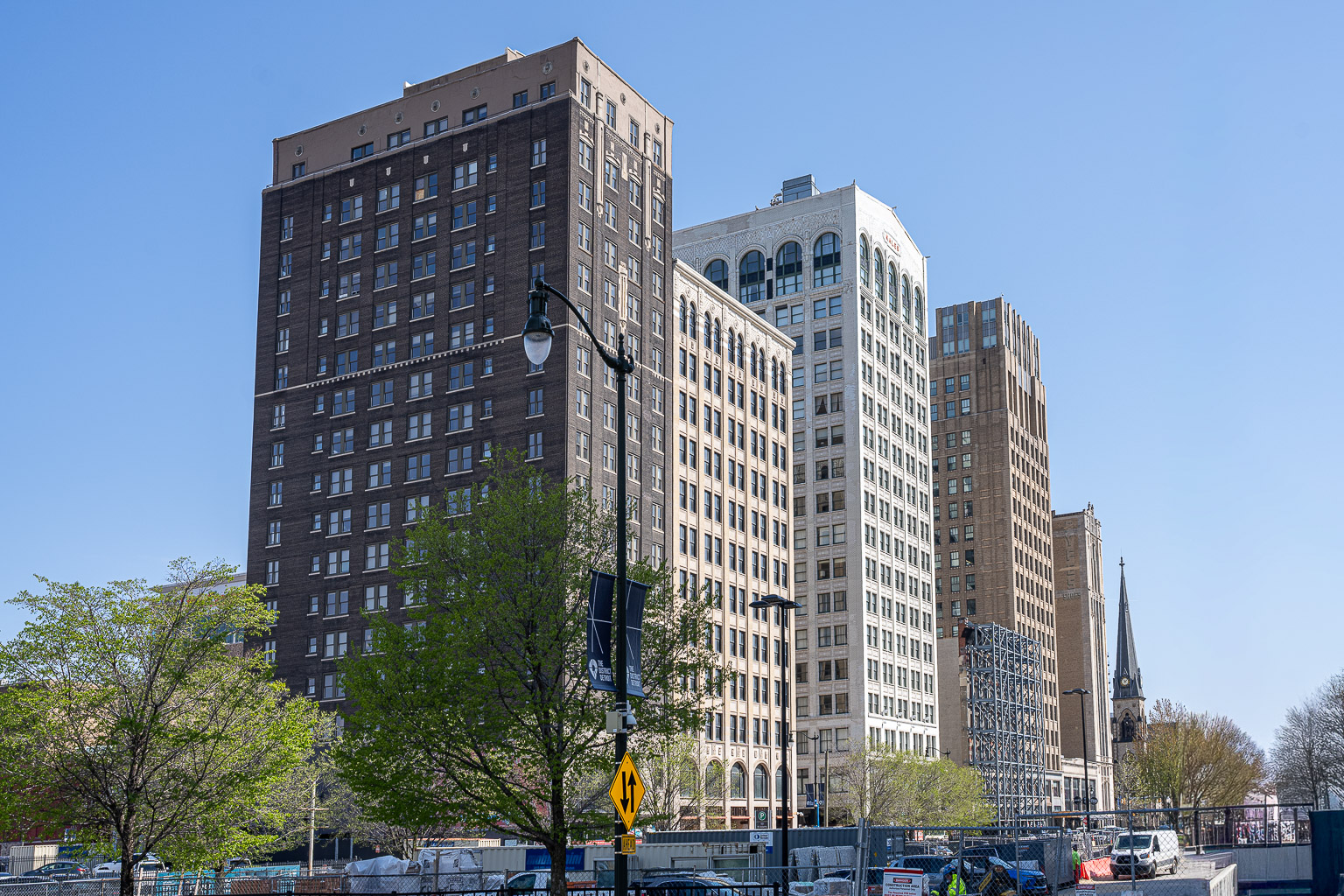
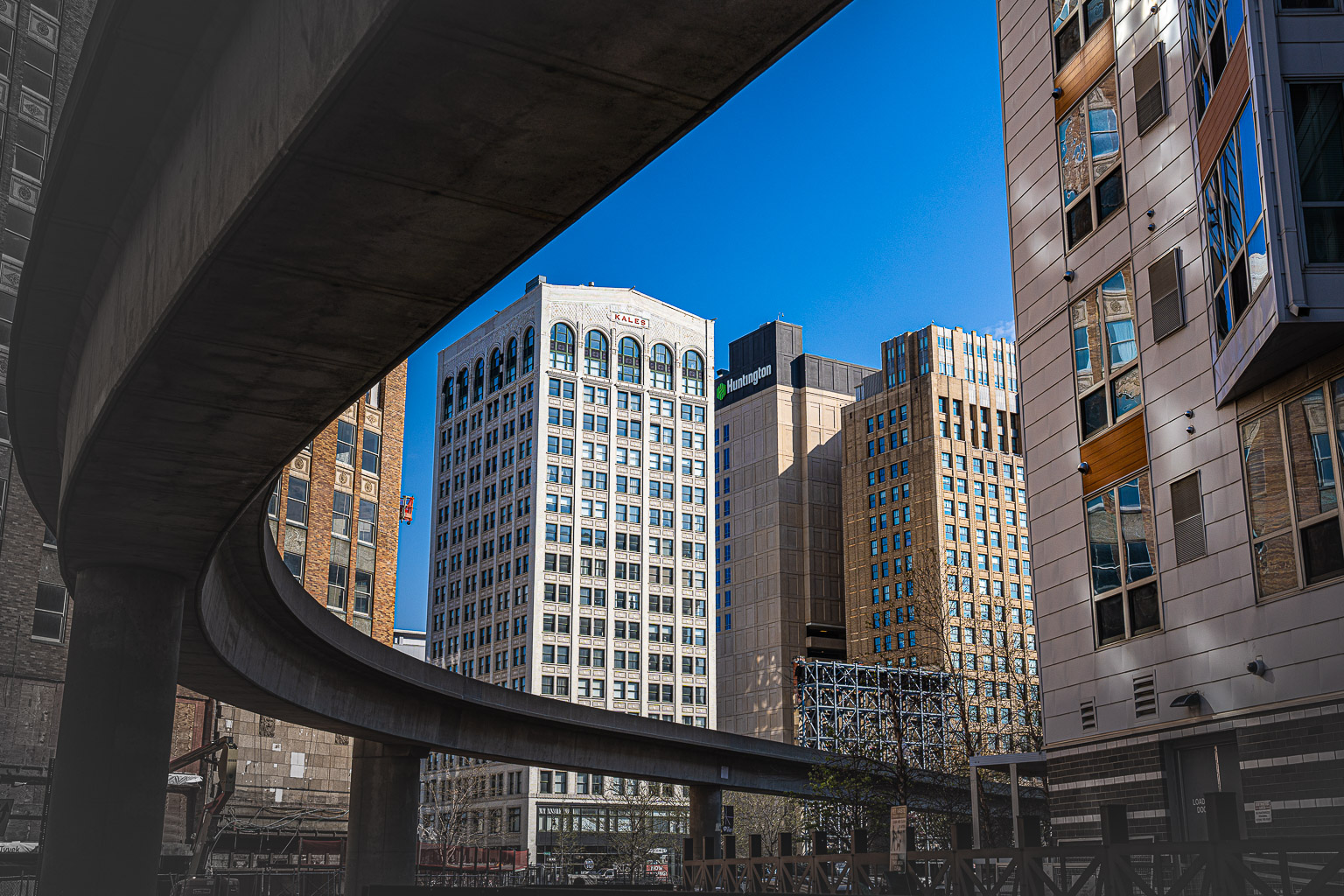
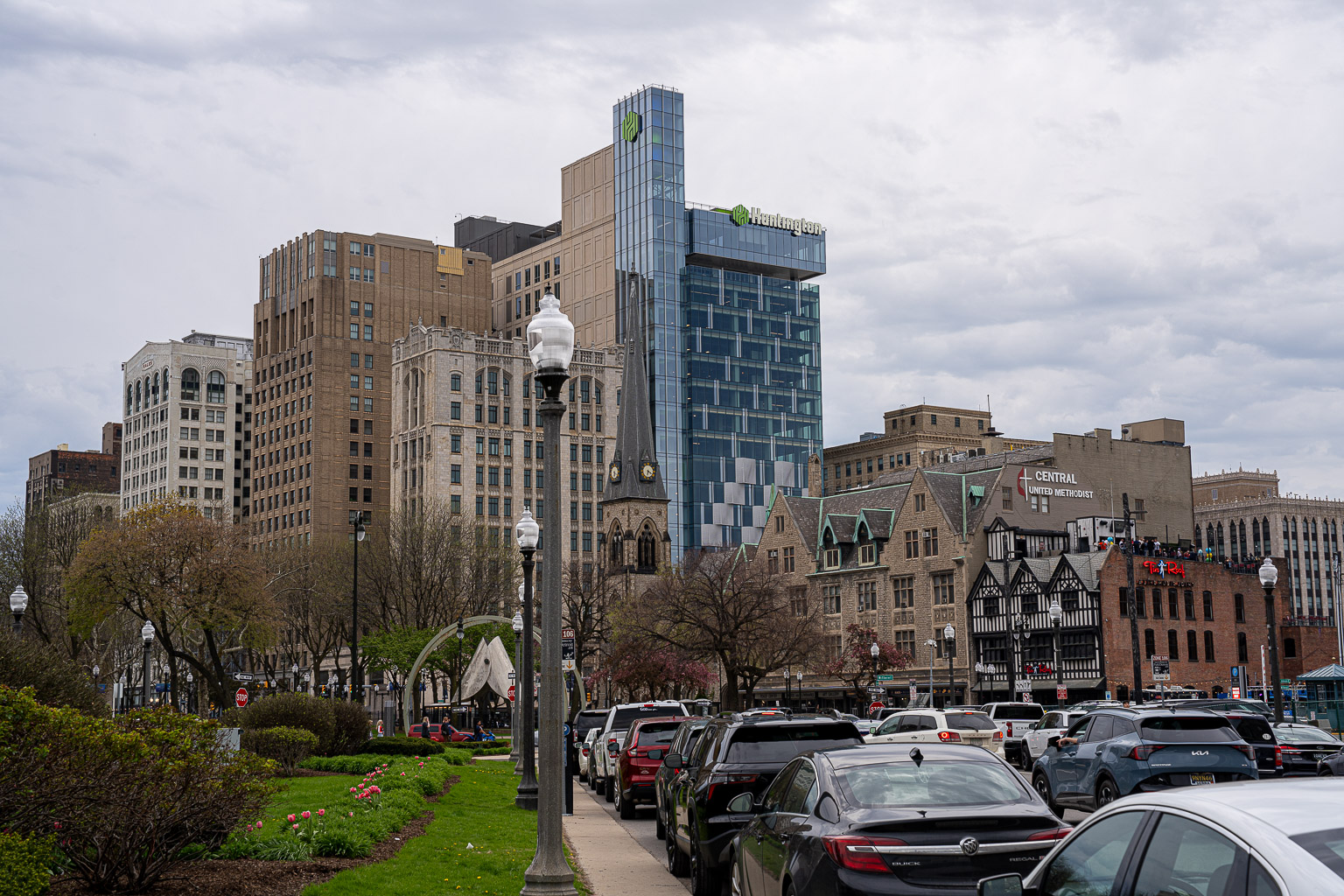
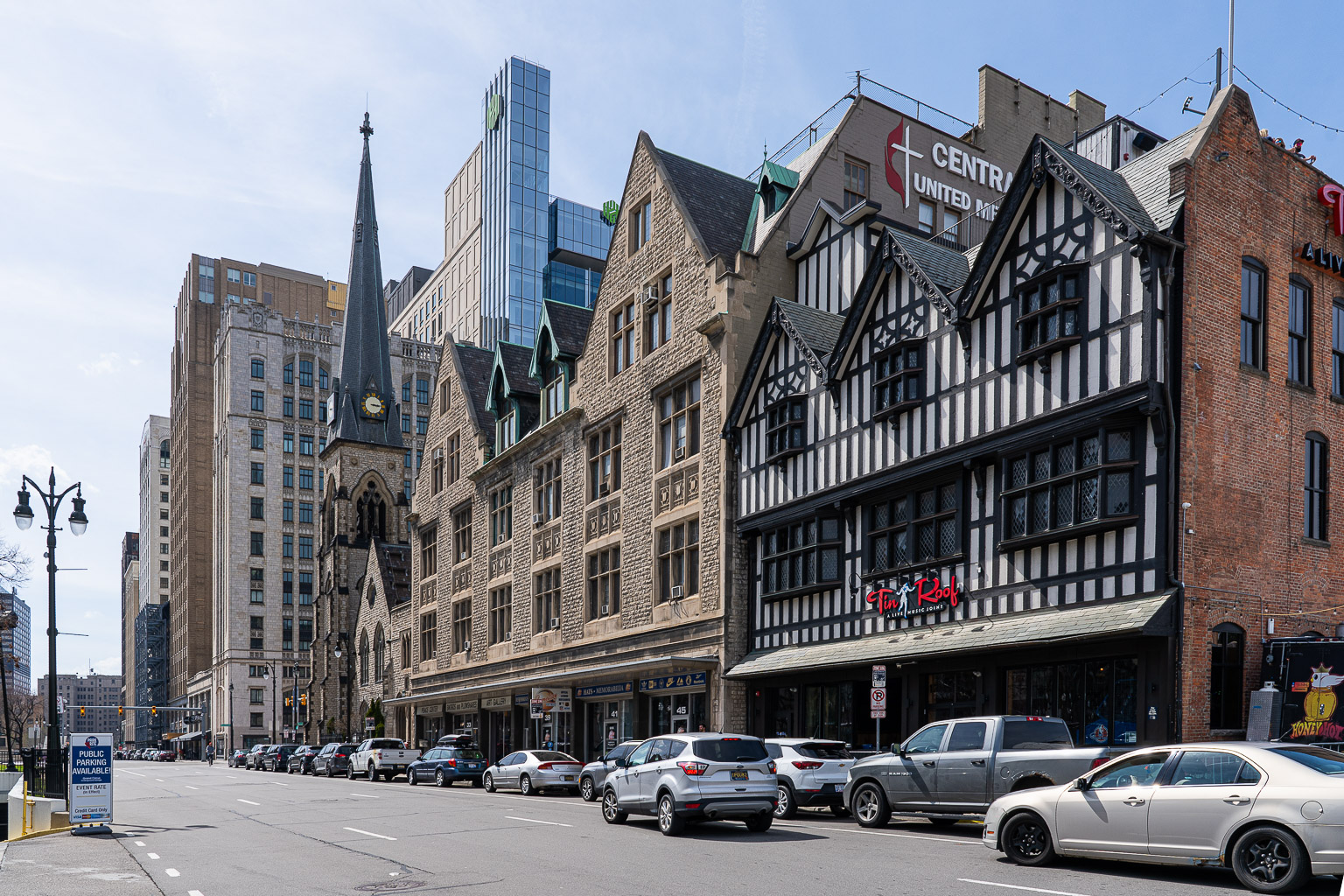
Meanwhile, the park is surrounded by buildings across the three streets which bound the park (Adams, Witherell, and Park Ave), and photos of those rows of buildings are shown below, with individual buildings described and photographed in the remaining sections of this page.
The Park Avenue Building was constructed as a speculative commercial office building in 1922. It was known as the General Necessities Building from November 23, 1923 to February 20, 1930. The original lease was made to Sherman Bond of Toledo, and O. H. Stimson of Mt. Clemens, both hotel owners, by the Wyman estate and Hugo Scherer. The lease was for 99 years at an estimated value of $350,000. the General Necessities Company returned the building to its owners, the Park Boulevard Company. The building was well occupied although the Depression severely reduced the occupancy in the 1930s.
The Detroit City Directory of 1929-30 lists the building as having an American State Bank branch and Fitzgerald & Sons Lunch & Sandwiches was another first floor retail tenant. In the 1936 City Directory, the building is listed as having 16 vacancies, with the entire 12th floor vacant. Tenants included the Detroit Council of Churches, and offices for insurance, advertising, real estate, engineers, a furrier, optometrist, tailor, physician and cosmetic studio.
In the 1941 directory, the Elmer Freed Cigar store occupied the lobby, and the building was approximately 75% occupied. The Park Avenue Building tenants also included a large number of religious-oriented associations such as the Detroit Council of Religious Education, the Detroit Guild of Church Missions and the Detroit Mission of Lepers. Other tenants included the Real Silk Hosiery Mills, a vacuum manufacturer, osteopath and a dictaphone company.
The 1956 directory lists offices as including the Detroit League for Planned Parenthood, Michigan Temperance Foundation, wholesale greeting card companies, an architecture firm, and the offices of the Detroit Skyliner Magazine, Guest magazine, Trafton Millinery School and the Carnegie Institute.
The Park Avenue Building fills the 80' x 100' lot at the northwest corner of Park Avenue and Adams Avenue. It is 12 stories tall and utilizes steel frame construction. The building is faced with brick and limestone. The Adams and Park Avenue facades are identical in composition and are symmetrically arranged. The Adams elevation is vertically divided into five bays by brick pilasters. The Park Avenue elevation is divided into six bays. The first floor of the Park Avenue Building originally contained storefront windows in each bay of the building. The windows have since been altered. An overhanging marquee of stainless steel surrounds the facades on Park Avenue and Adams.
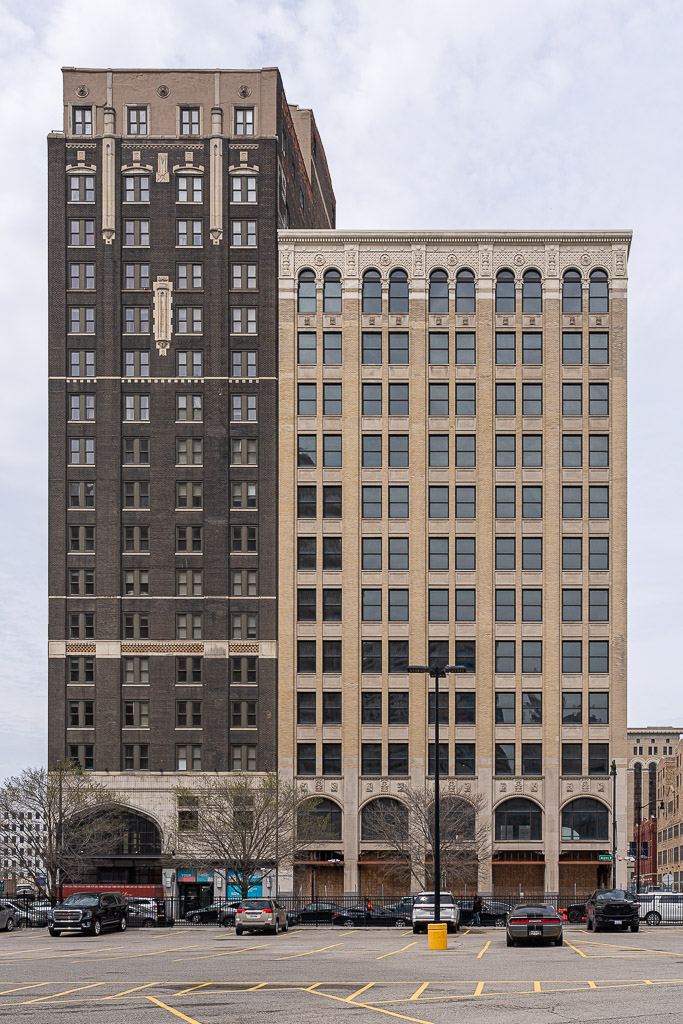
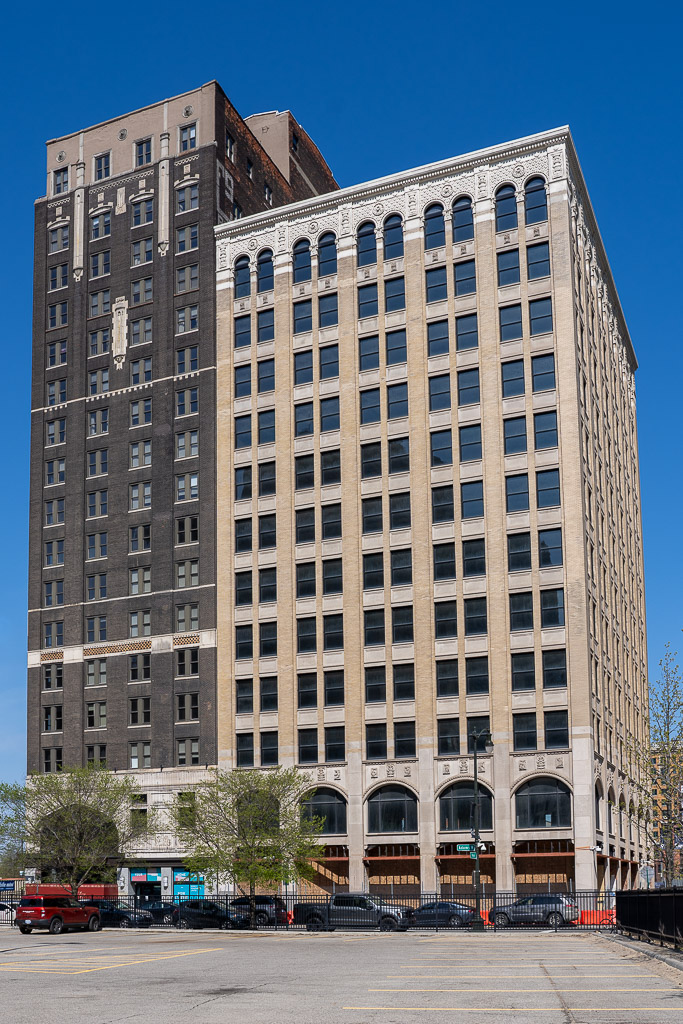
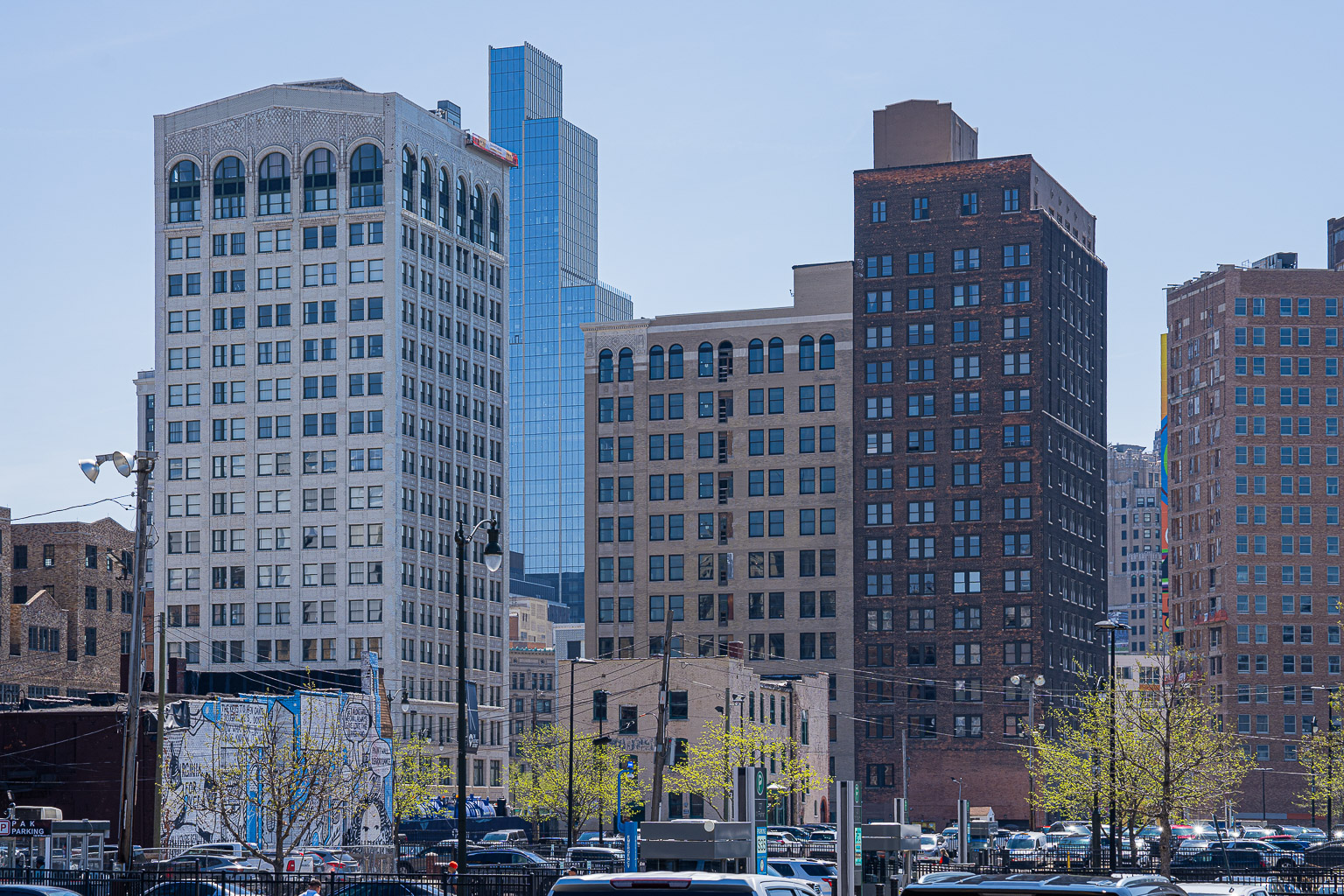
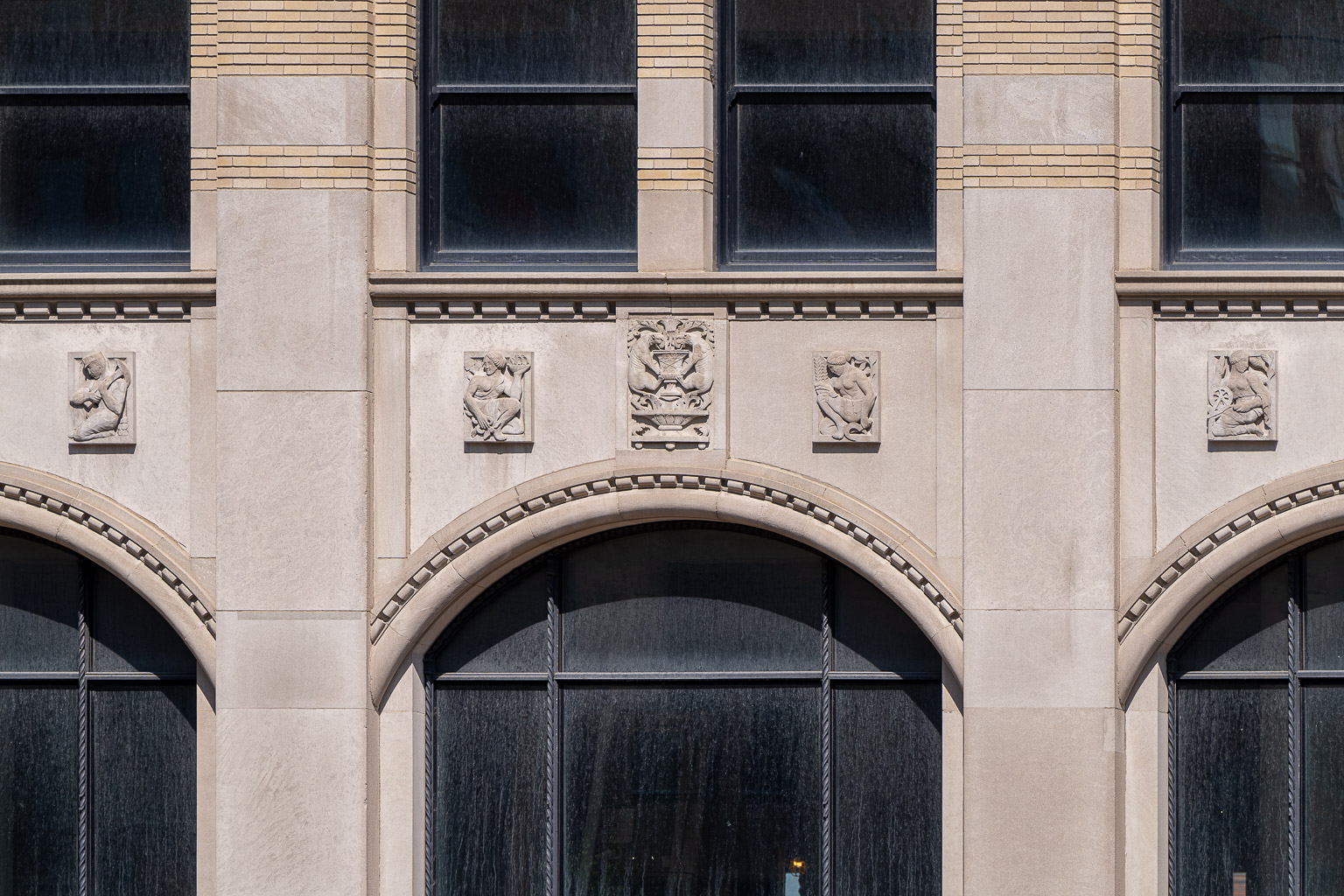
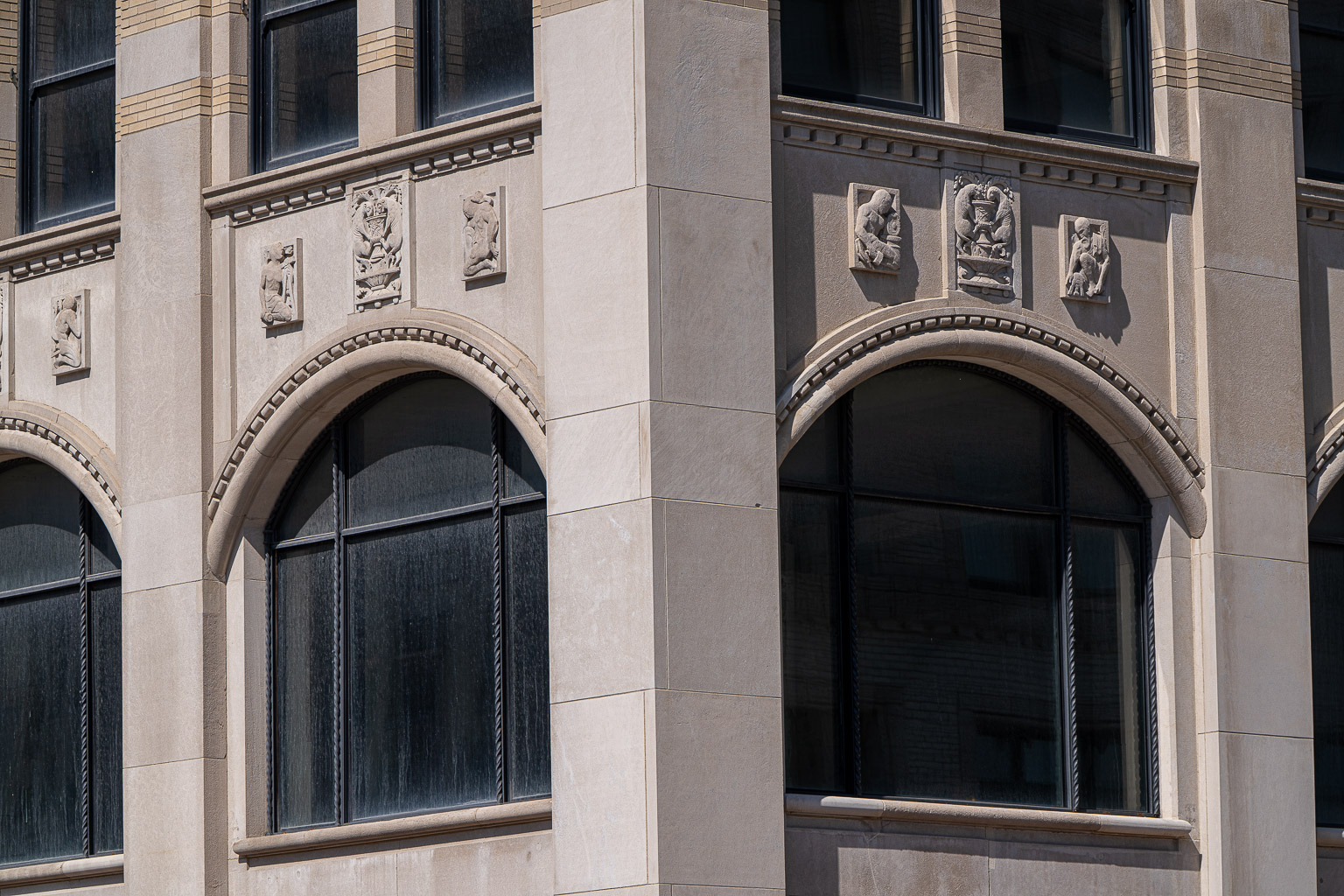
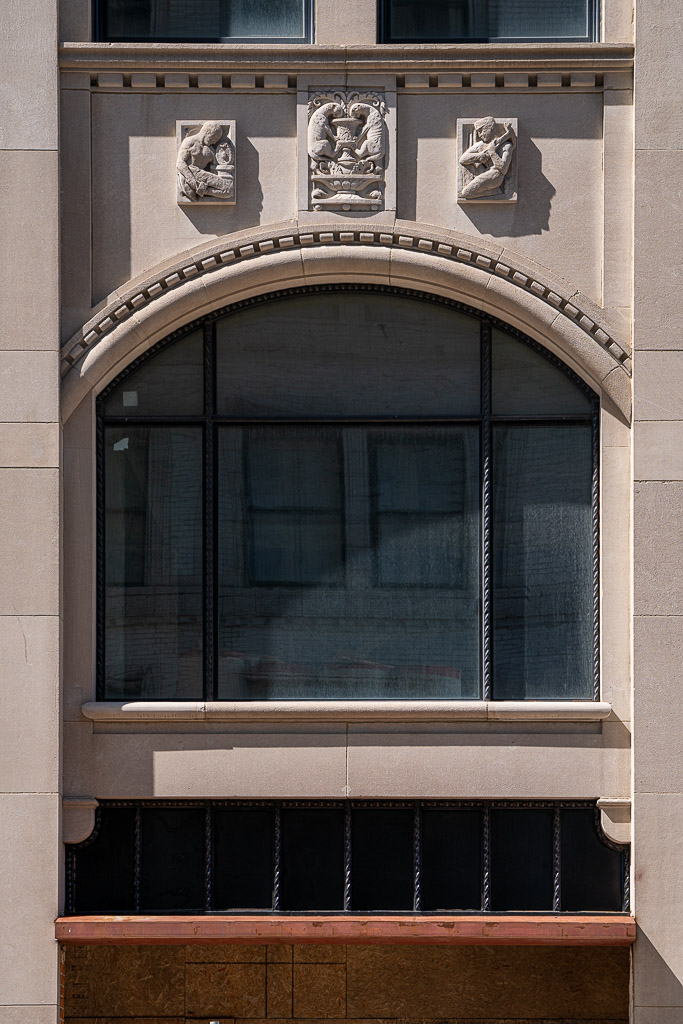
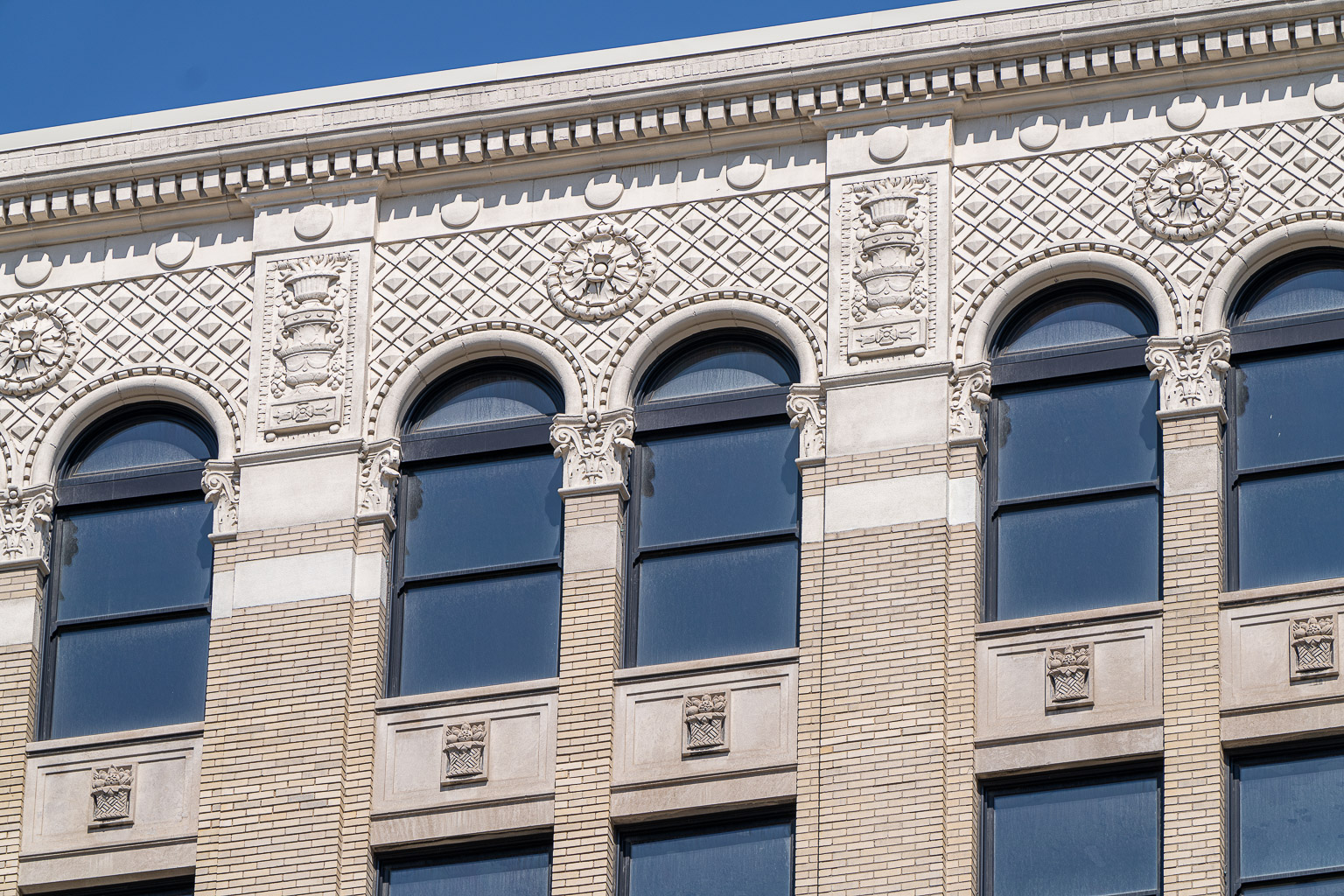
The second story on both facades features large limestone segmental arch window surrounds. Above each arch are panels featuring two figural plaques. Between the two plaques is a fountain detail. A dentil course is above the spandrel space (all preceeding details show in the 1st through 3rd photos below). The floors above the second are faced in buff brick. Floors three through eleven contain pairs of double hung windows in each bay. The transoms above the windows at the twelfth floor are completed in a round arch (4th photo below). A circular medallion is centered between each pair of arched windows. A denticulated cornice surrounds the flat roof. The western elevation is hidden from view by the Milner Park Apartment building. The northern elevation faces onto the alley and has one bay ornamented in the same manner as the Park Avenue facade. The remainder of the back façade (3rd in the first set of photos) is devoid of ornamentation.
The building is currently vacant.
More photos and more description of this building can be found at HistoricDetroit.org.
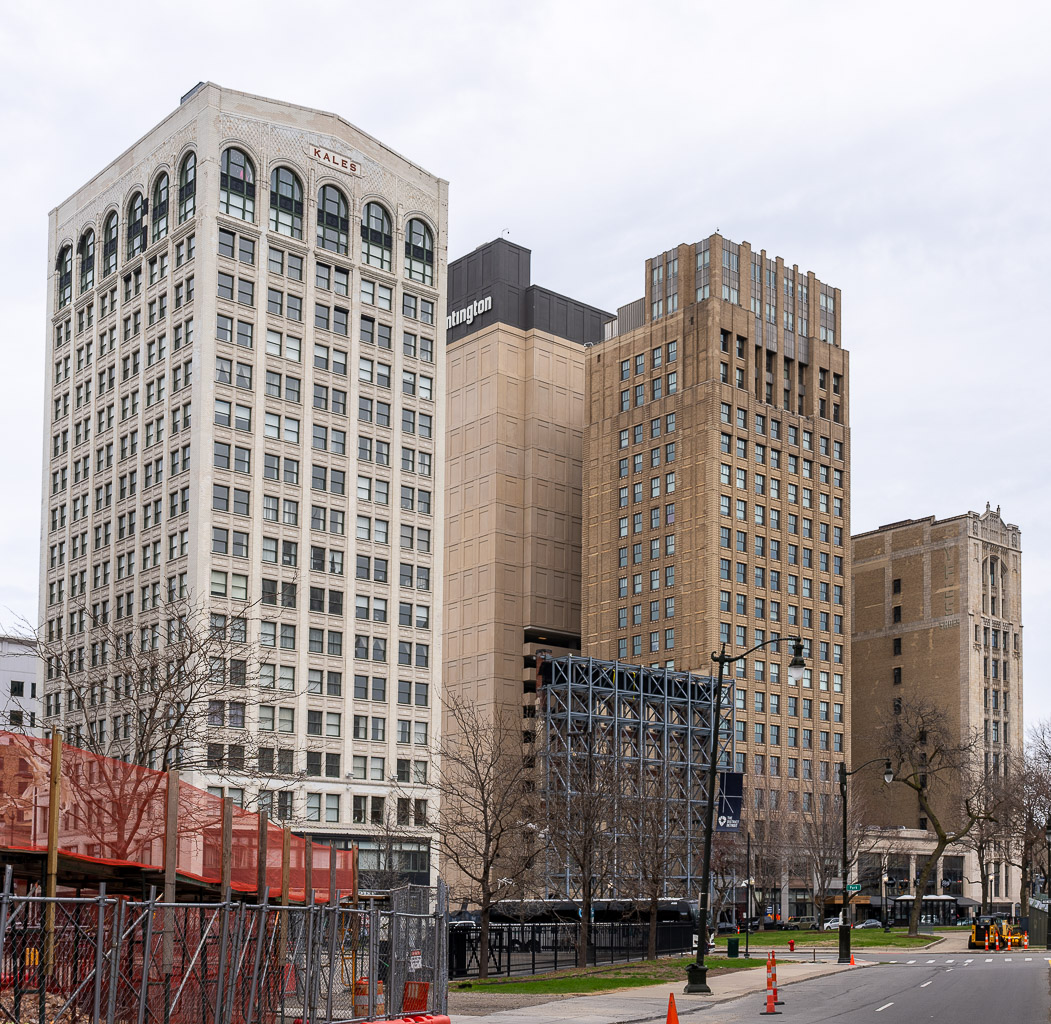
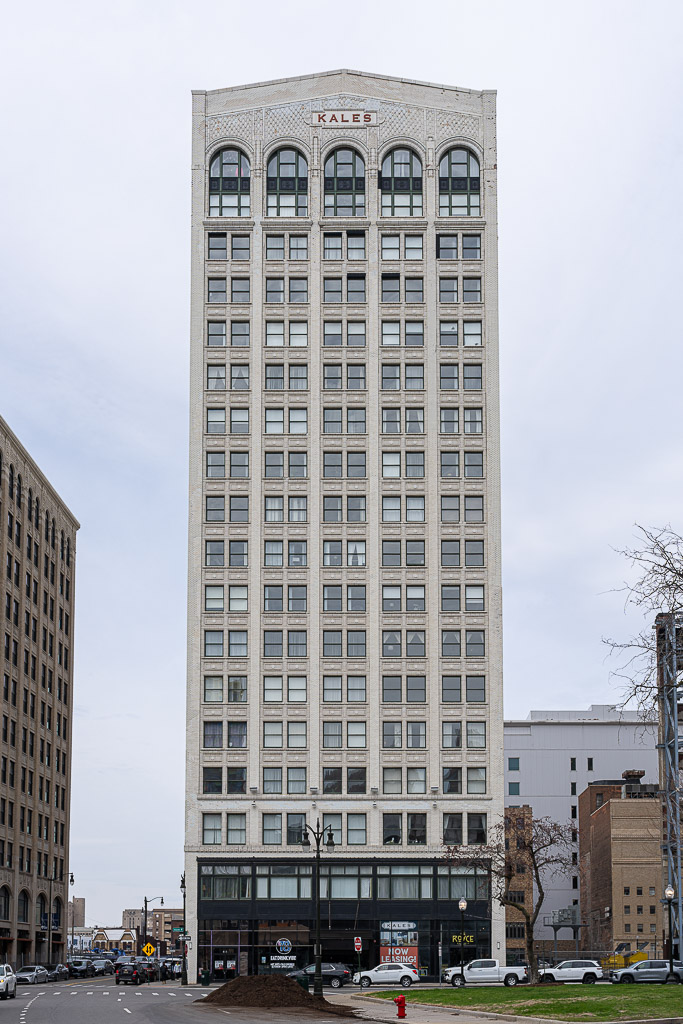
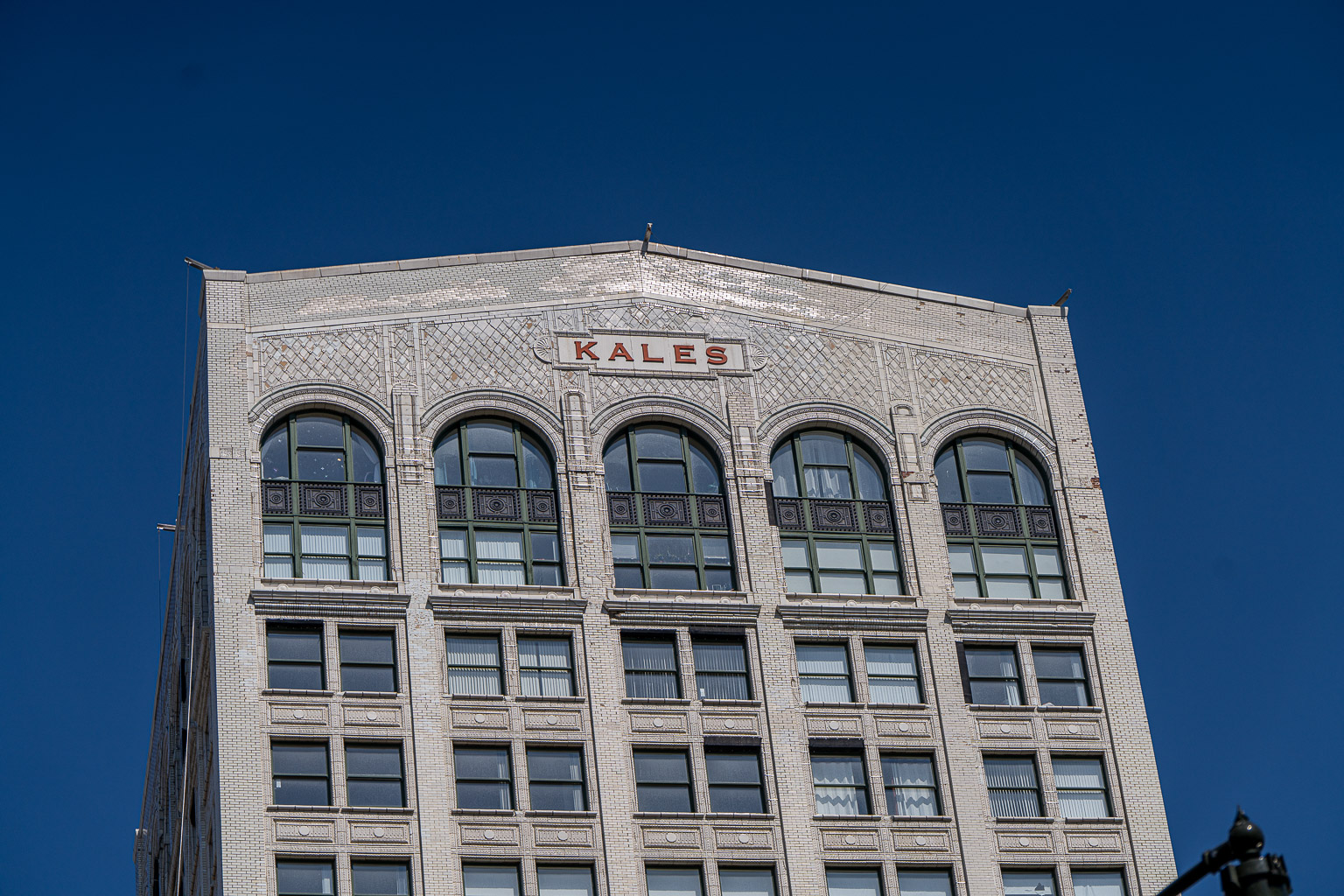
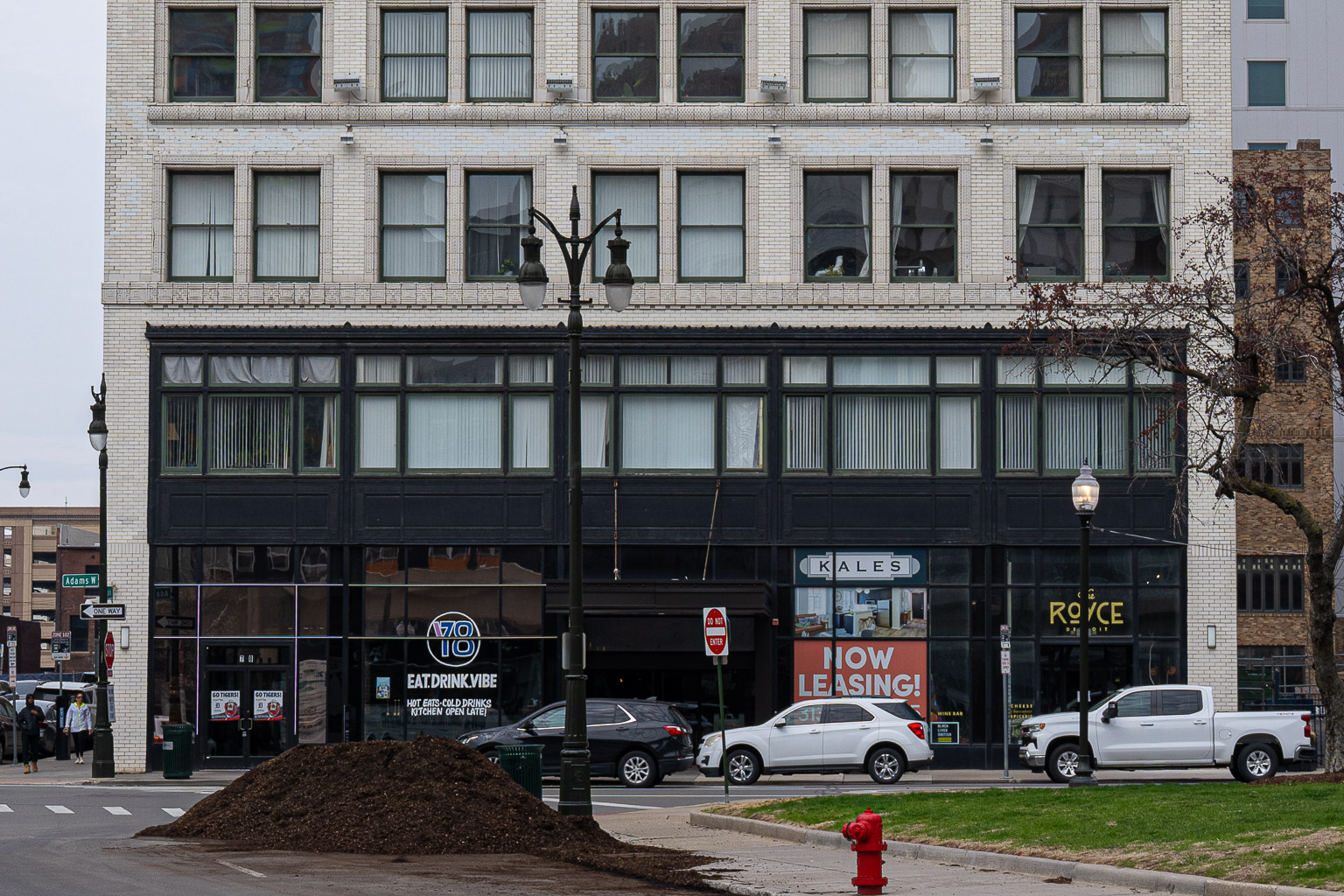
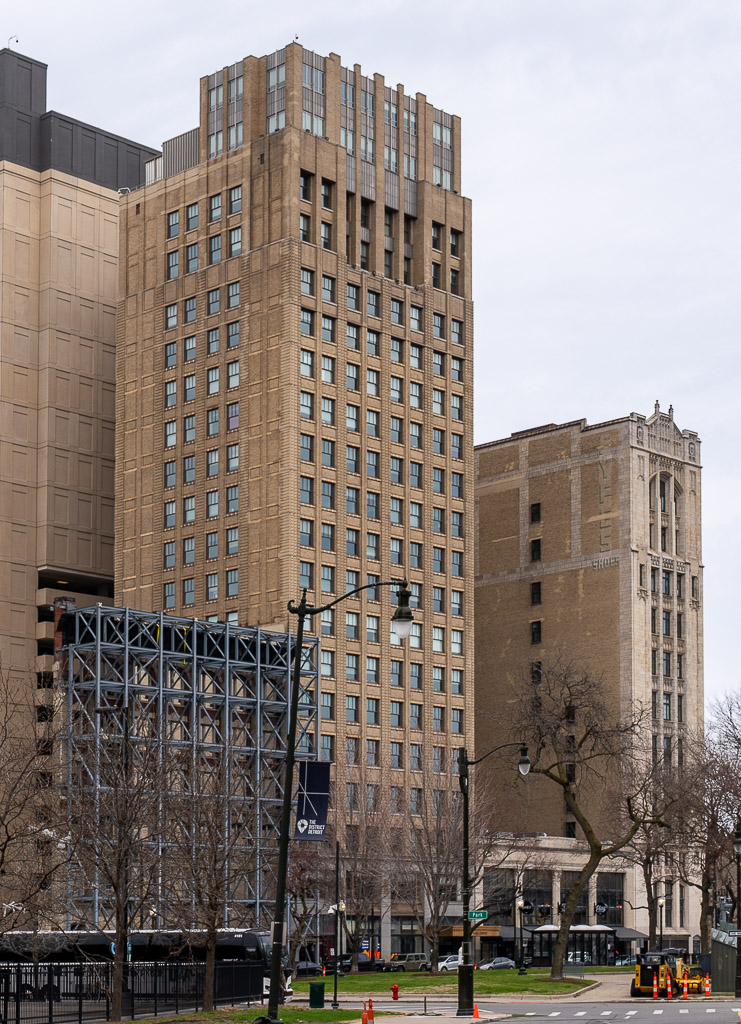
The former Kresge Company Headquarters is an eighteen-story steel frame building located on the northeast corner of Park Avenue and Adams Avenue. The building is sheathed in near-white colored brick combined with terra cotta detailing. The building has a continuous floor plate for the first three floors. From the fourth floor up there is a light well at the eastern side of the building. Floors 4-18 are U-shaped, wrapping around the light well. The piers terminate in spandrels at the 18th floor. The roofline is formed in an unusual shallow gable with a suppressed cornice. The name "Kresge" was inscribed in a plaque under the cornice of the building. Today (early 2000s) the plaque is blank and the cornice has been denuded of ornament. In 2026, the plaque reads "Kales", whose significance is explained below.
There are five bays of windows on the Adams façade (1st and 3rd photos below). The Park Avenue façade has six bays of windows (3rd photo below). The windows are double hung in sets of two. Spandrels between the windows contain detailed terra cotta egg and dart and circular motifs (4th through 6th photos below). The window bays terminate at the 18th floor in rounded arch windows (4th and 5th photos below). The spandrels between the windows of the 17th and 18th floors are cast iron (4th and 5th photos below). At the base of the 17th floor windows, historic photos show a terra cotta balustrade running across the Adams façade of the building. Today only a belt course remains to designate this area as the "capitol" of this tall building shaft. The rear facade of the building is shown in the 7th photo below.
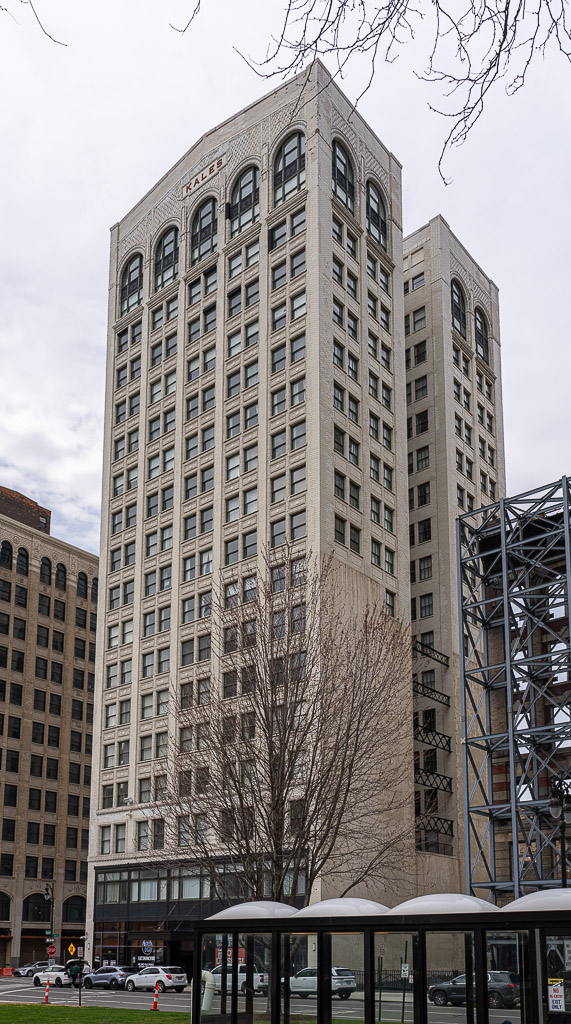
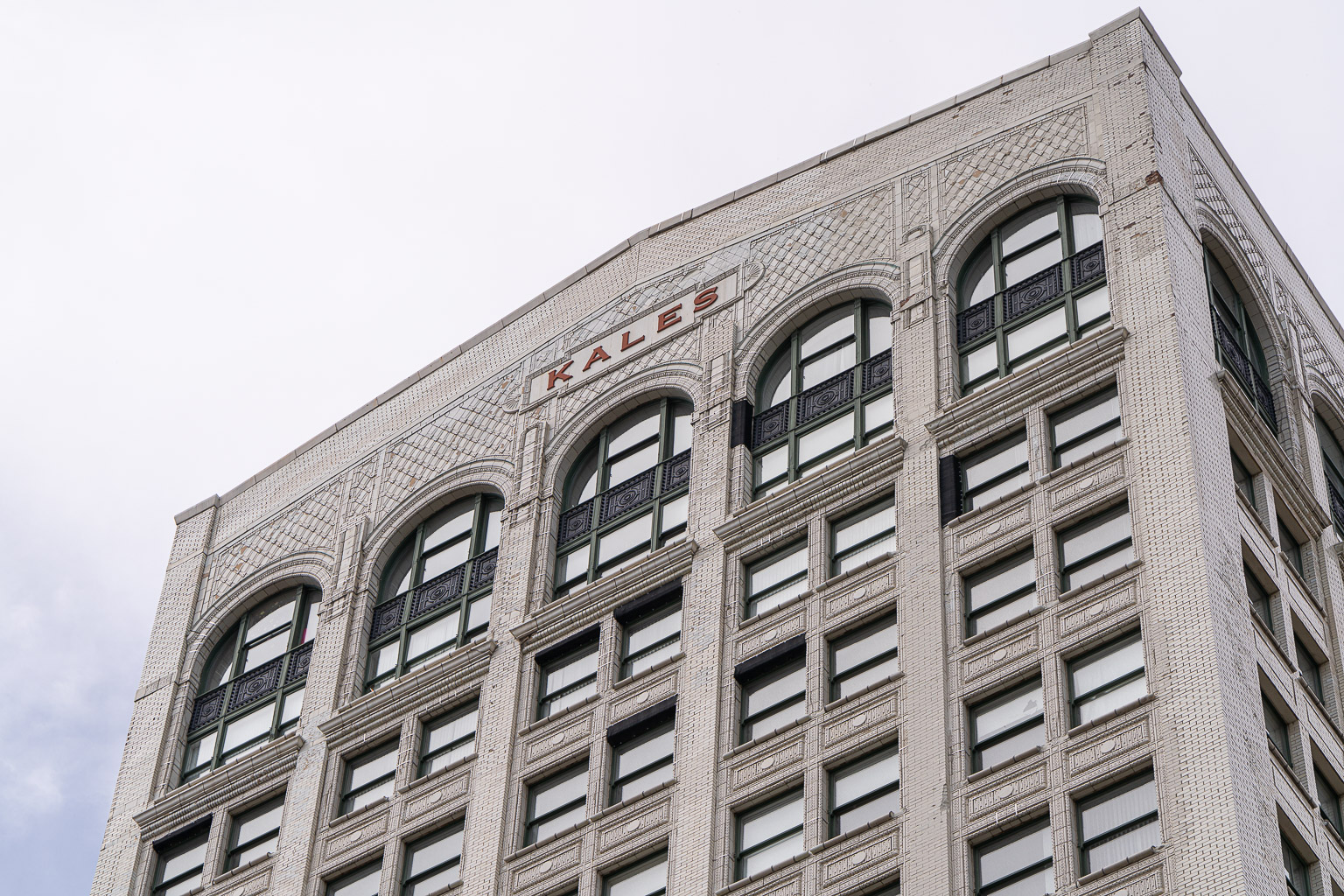
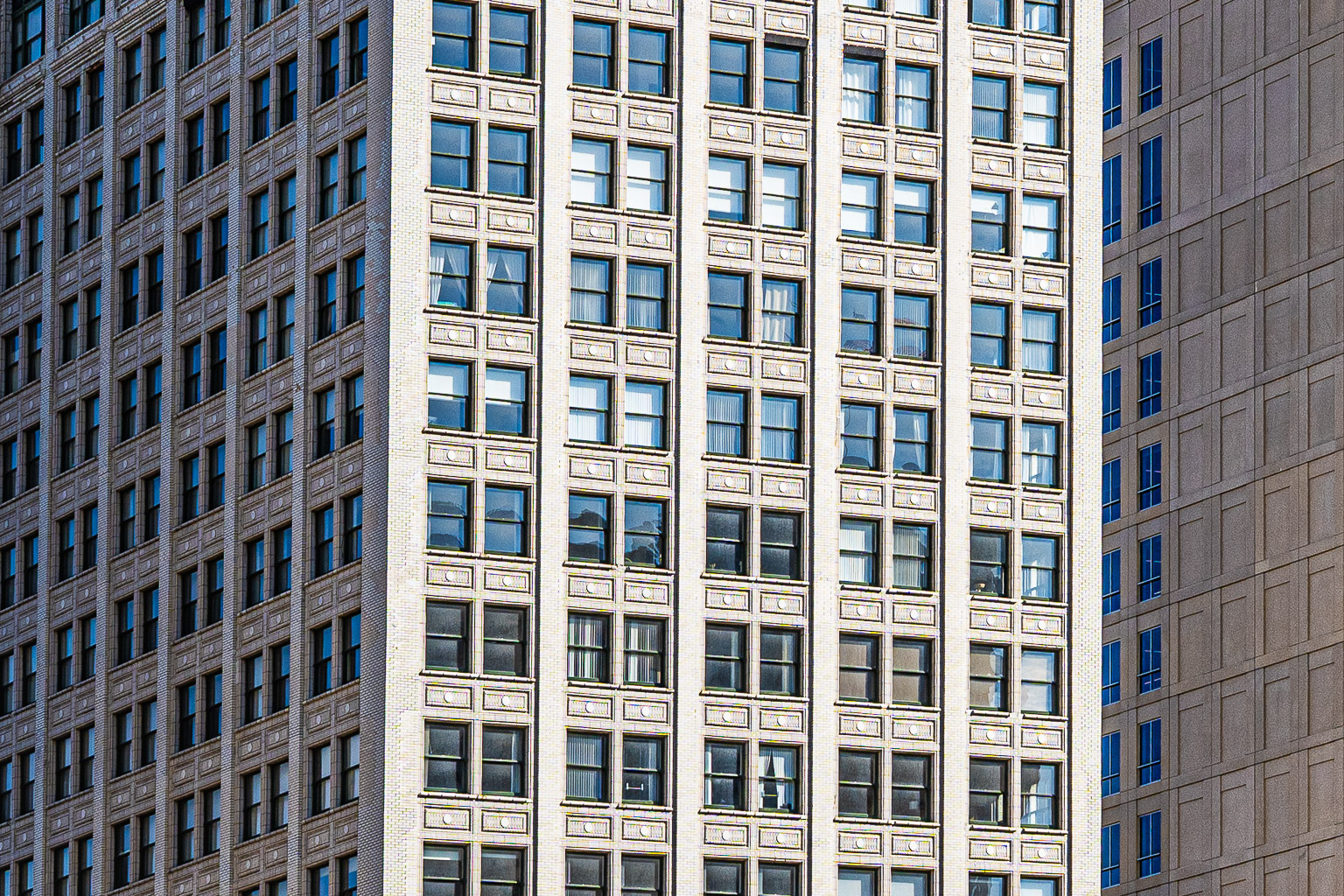
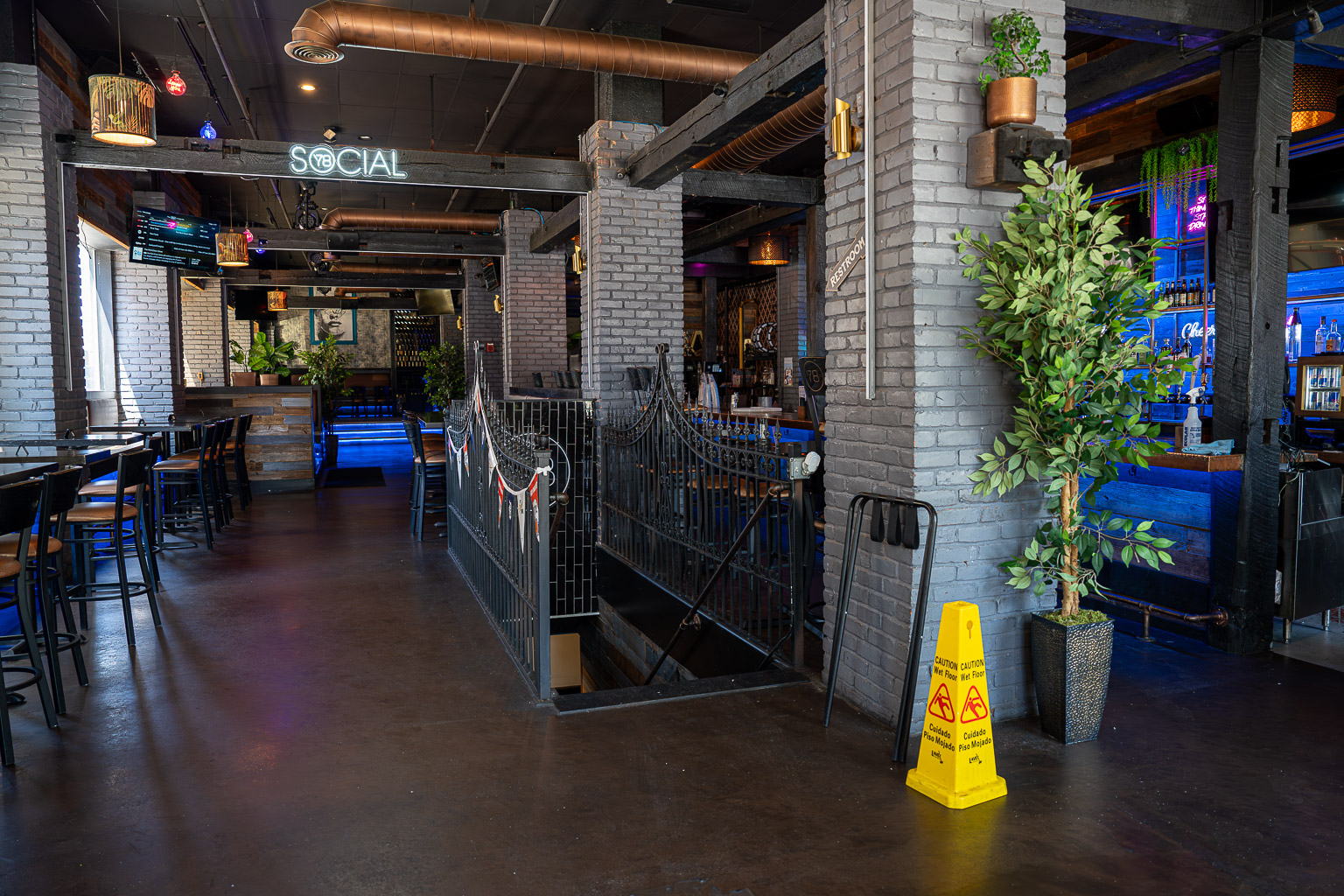
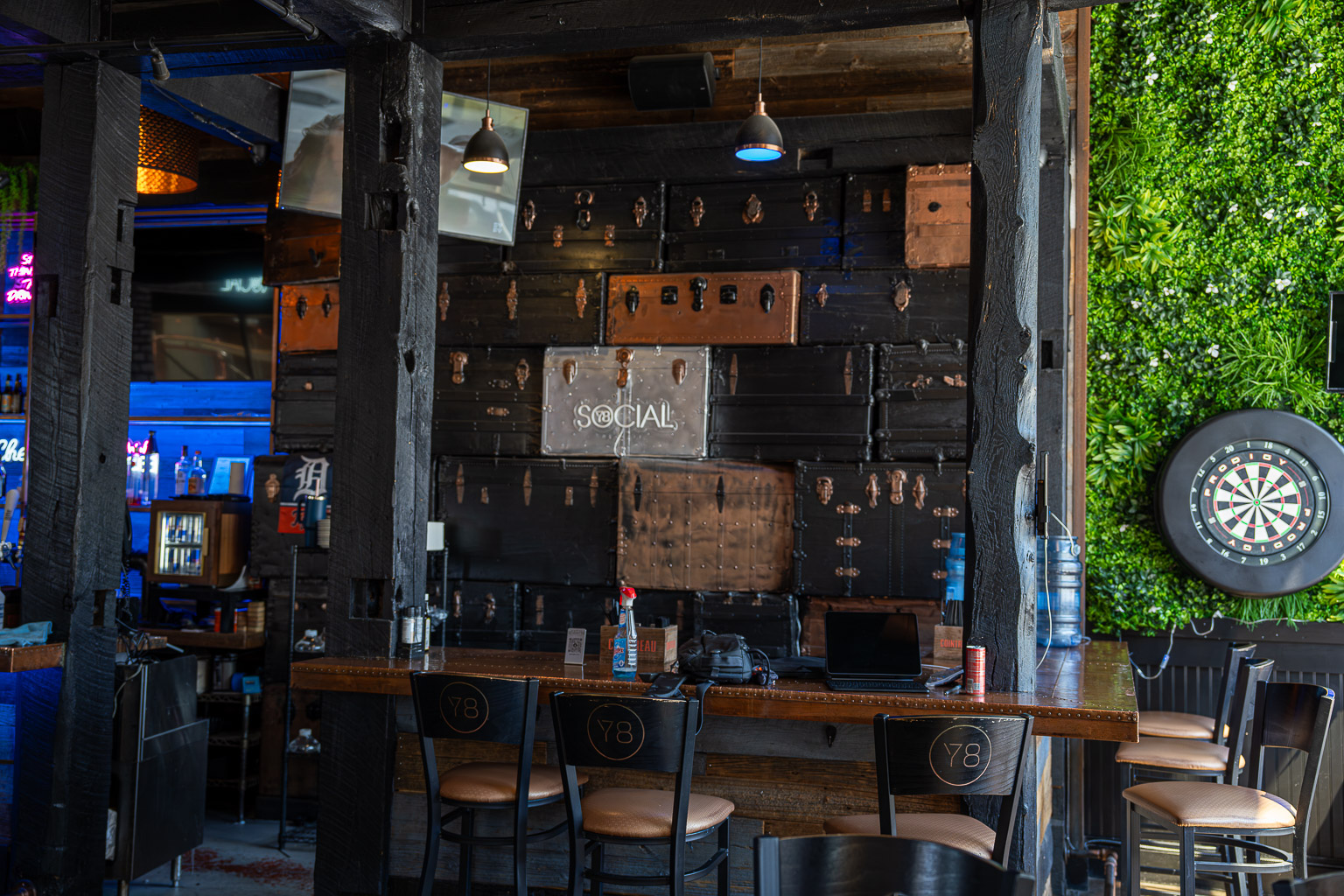
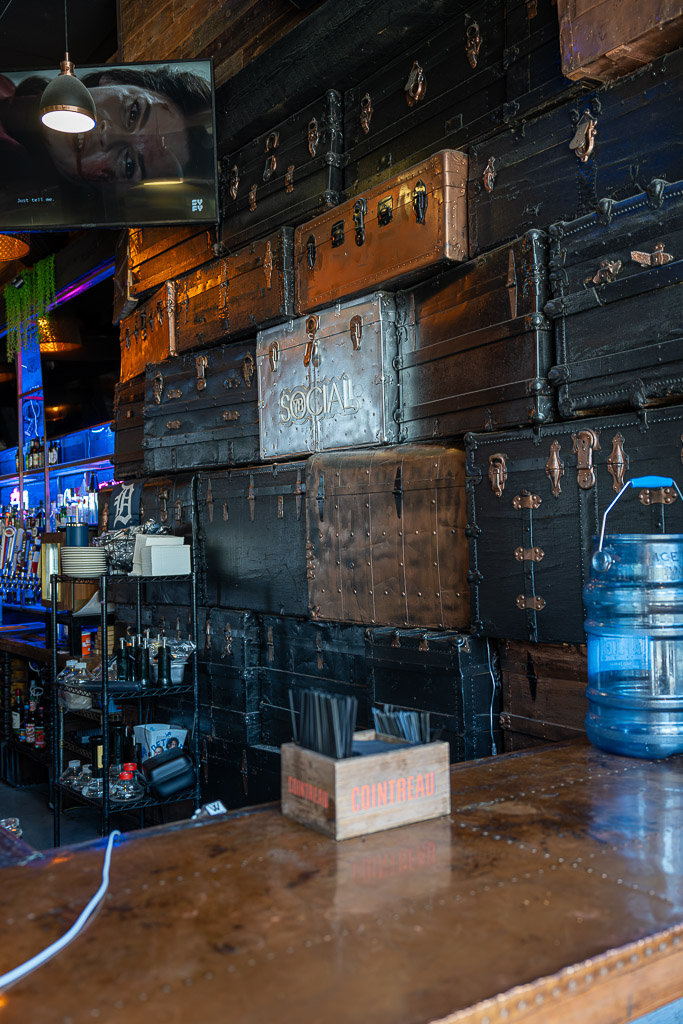
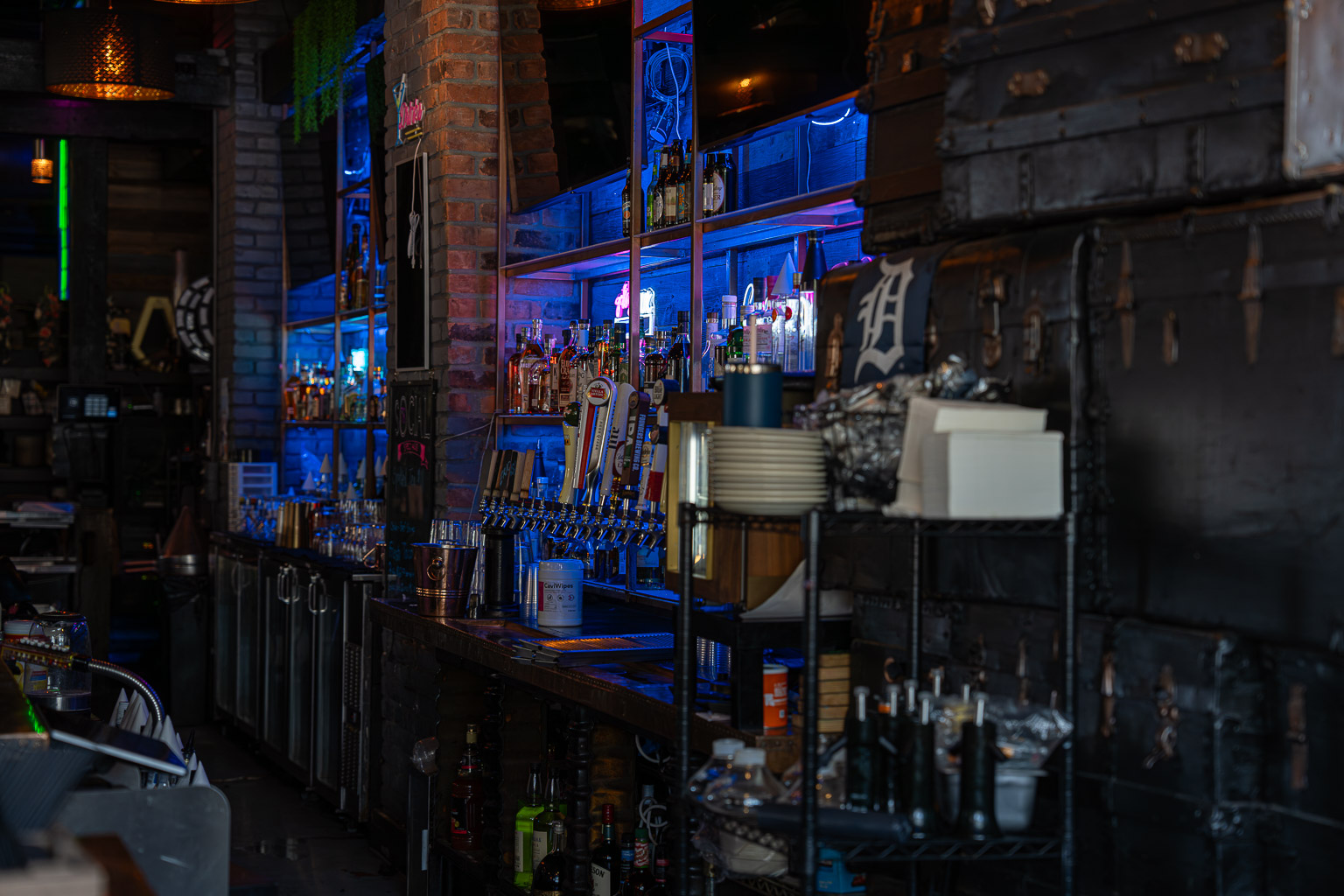
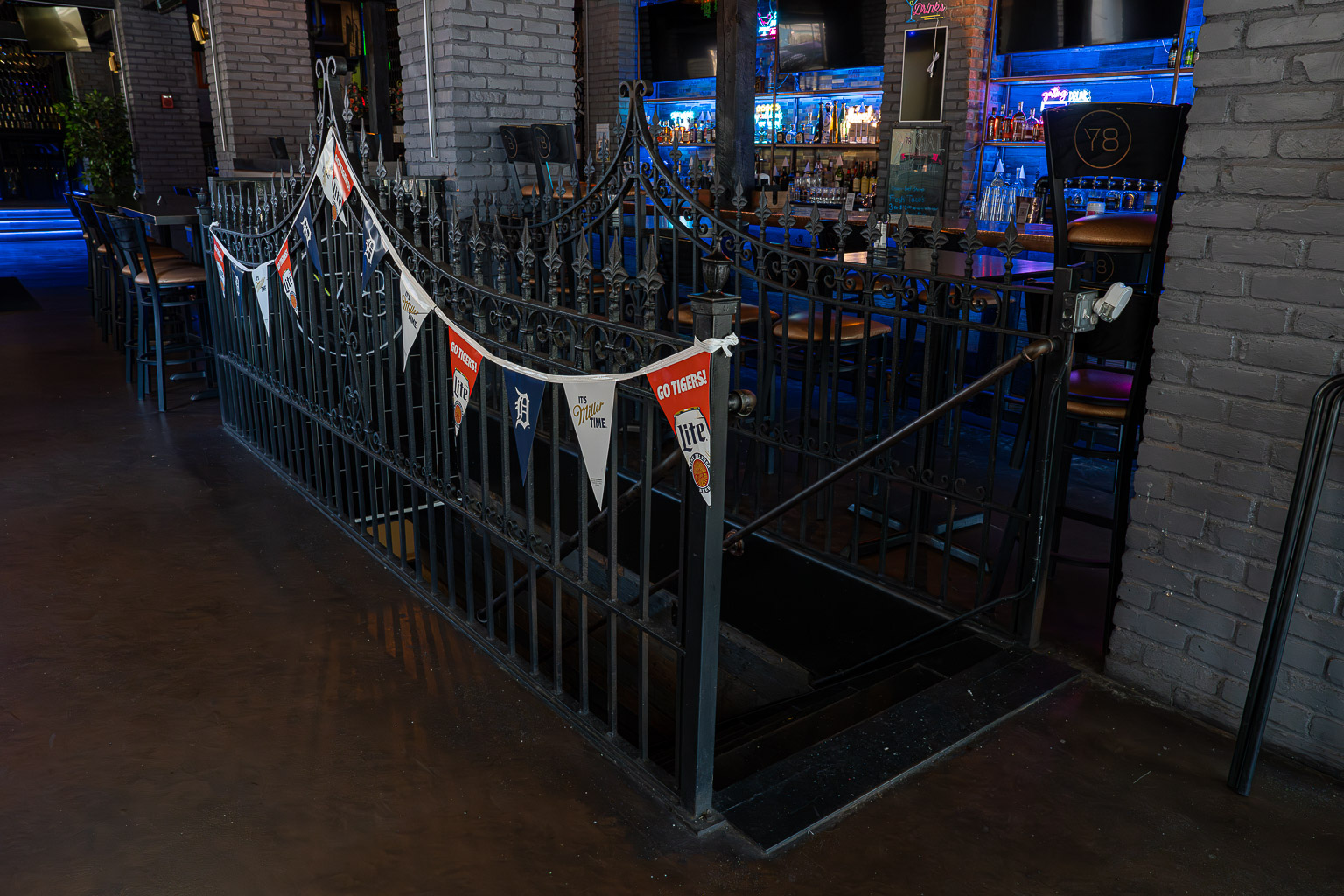
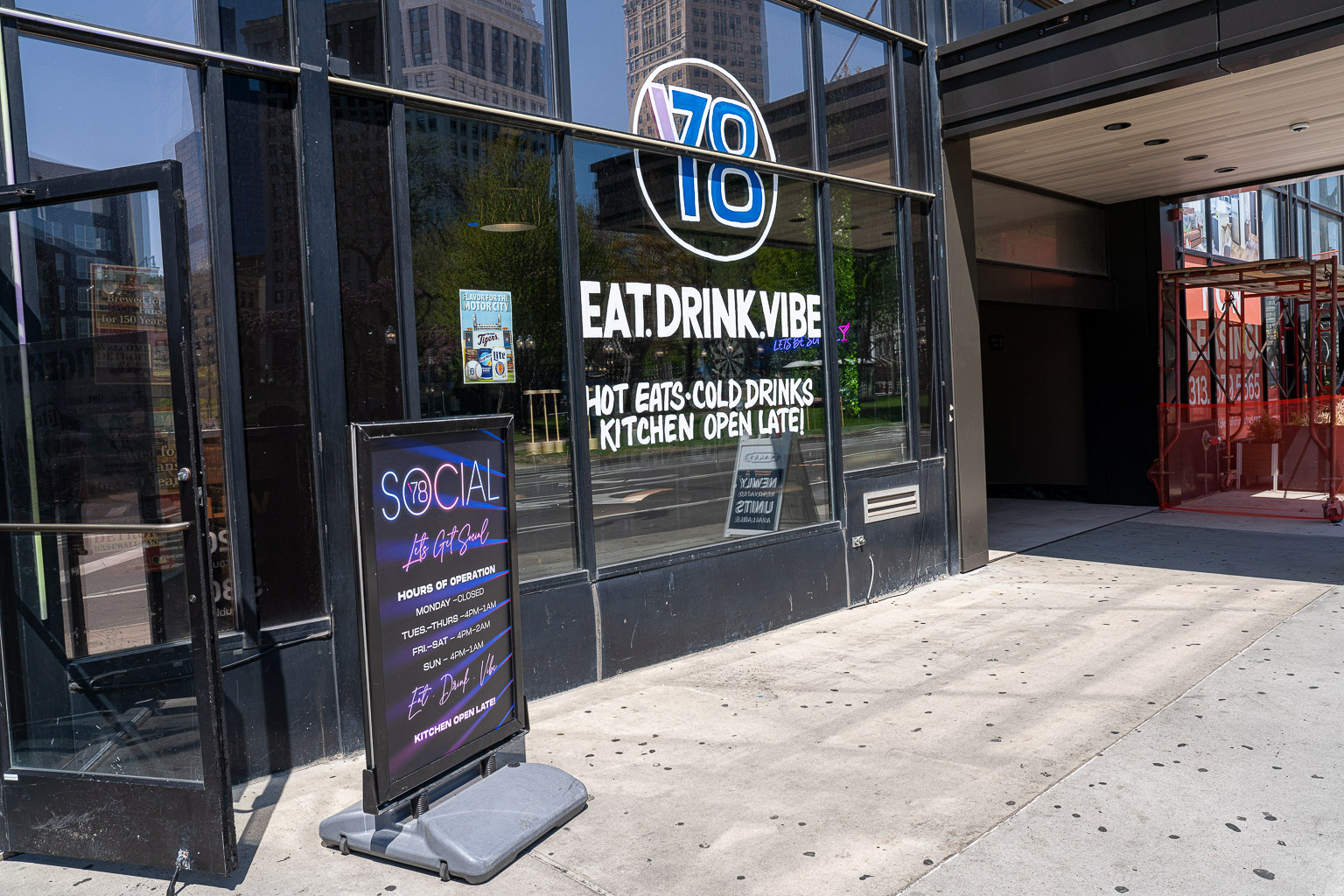
The second story windows on the Park Avenue façade are grouped together and cast iron mullions separate the window into three sections. A transom is above each section. Each window is surrounded by terra cotta detailing. The second story windows on the Adams Avenue façade are arranged in a continuous strip with a thin cast iron mullion between each window (1st photo below). The first floor retail storefronts have been reconstructed with brown granite piers and aluminum surrounds for plate glass. A bulkhead of brown granite continues to the ground. The original overhanging marquee awning recently fell from the building and was removed. The shadow of the demolished Shurly Building, which was to the east of the Kales Building, is imprinted on the eastern façade (2nd photo above). The left-most storefront in the 1st photo below houses 78 Social Bar & Lounge (2nd through 7th photos below).
The S. S. Kresge Corporation was founded by Sebastian Spering Kresge on Woodward Avenue in downtown Detroit just three blocks from the Kresge Company Headquarters on Adams. In 1914, the S. S. Kresge Company moved its administrative offices from the upper floors of the retail store building at Woodward and State (Kresge Store #1), to this new building. The S. S. Kresge Company occupied the upper nine floors of the new building and restricted the lease of the remainder of the building to doctors and dentists; with a pharmacy in the first floor retail space. What began as Detroit's first "dime store" really was a five and ten cent store - in 1898, became an international successful business. The growth of the Kresge chain was phenomenal. By 1925 there were 304 Kresge stores in the U.S. and company sales were $106 million. In 1977, Kresge, the multi-million dollar chain store, catapulted into the multi-billion dollar mass merchandising firm called the Kmart Corporation.
The Kresge family was well known in Detroit for their charitable donations and public consciousness. The Kresge Foundation was established in 1924 and is still in existence today and supports many non-profit organizations. In 1930, the Kresge Corporation built its new headquarters at 2727 Second Avenue on Cass Park.
In 1936 William R. Kales purchased the former Kresge Company Headquarter and changed the name to the Kales Building. William R. Kales was a noted engineer and successful businessman. His firm, the Whitehead & Kales Company, was a steel fabricating firm that grew from a small shop in Detroit at the corner of Randolph and Franklin to a 22-acre plant in River Rouge with almost 1,000 employees. Kales served as a City of Detroit Lighting Commissioner, Belle Isle Bridge Commissioner, and President of the City Plan Commission. He ran a losing campaign on the Republican ticket as a Congressman for Detroit's 1st District in 1924. William Kales died in his office in the Kales Building in 1942.
The Kales building leased primarily to businesses associated with the medical field. Tenants included companies like the Wayne Optical Company, a wholesale optical distributor. Colony Park Pharmacy sold prescriptions and surgical appliances at the southeast storefront on Adams. For many years there was a Cunningham's Drugs Store in the western storefront. In the 1970s and 80s, the Downtown Train & Camera hobby shop was located in the southwest storefront on Adams and a custom shoe store occupied retail space on Park Avenue. The building has been vacant since 1986.
In 1999 the Kales Building was marketed for redevelopment by its owner, the City of Detroit. The building was sold in November 2000 to a group of developers who plans to convert the building to loft apartments which appears to be "Now Leasing" in 2026, according to the 1st photo in each of the 2 sets above.
More photos and more description of this building can be found at HistoricDetroit.org.
The Fine Arts Building was designed in the Italian Renaissance style, and has many features of the Italian palazzo. The first floor's rusticated stone work was entirely replaced by renovations to the storefronts. Currently, black Vitrolite structural glass surrounds the western entrance to the Fine Arts Building, and the bulkhead of the storefronts to the east. Plywood boarding covers the recessed entrance to the Adams Theater lobby and the rotating theater marquee was removed in 1999.
The Fine Arts Building's Adams façade is divided into seven bays. The western-most bay consists of a single window which lights the stairwell on each floor. The other bays have double-hung windows grouped in pairs. The second story windows have a transom above each double window. The third story double-hung windows are formed into a segmental arch. The fourth and fifth floor windows are simple double hung, while the sixth floor windows are double hung with the upper transom window formed in an arch.
Eight Ionic pilasters run from the 4th through 6th floors, delineating the middle section of the building. There is an attic story, and bracketed cornice on the building. Underneath the cornice is a horizontal corrugated aluminum patch that once held a neon sign declaring the "Fine Arts Building". Above the cornice is a strip of low horizontal windows and a stone balustrade.
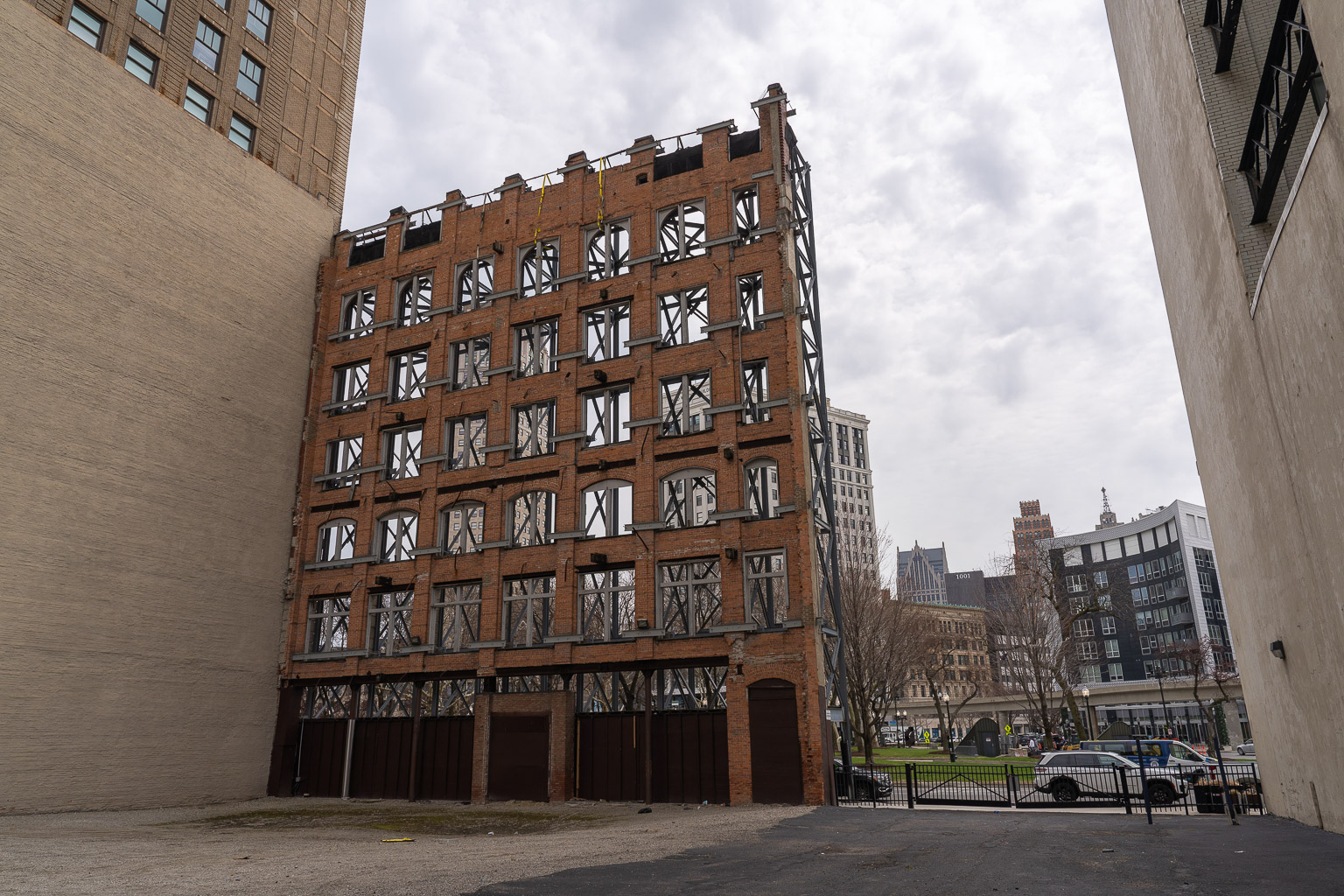
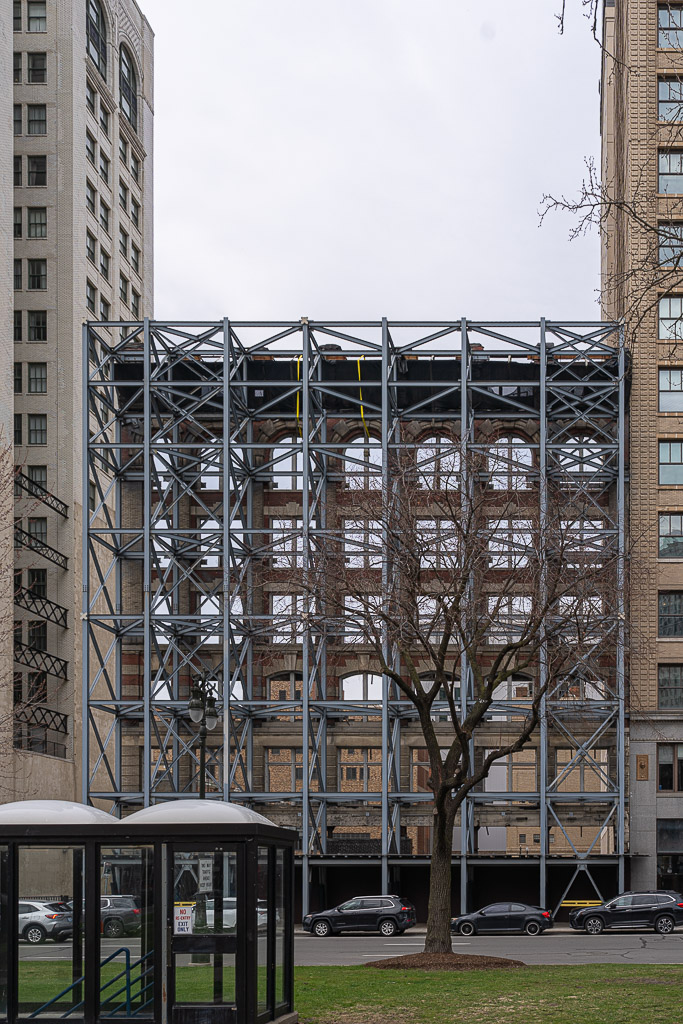
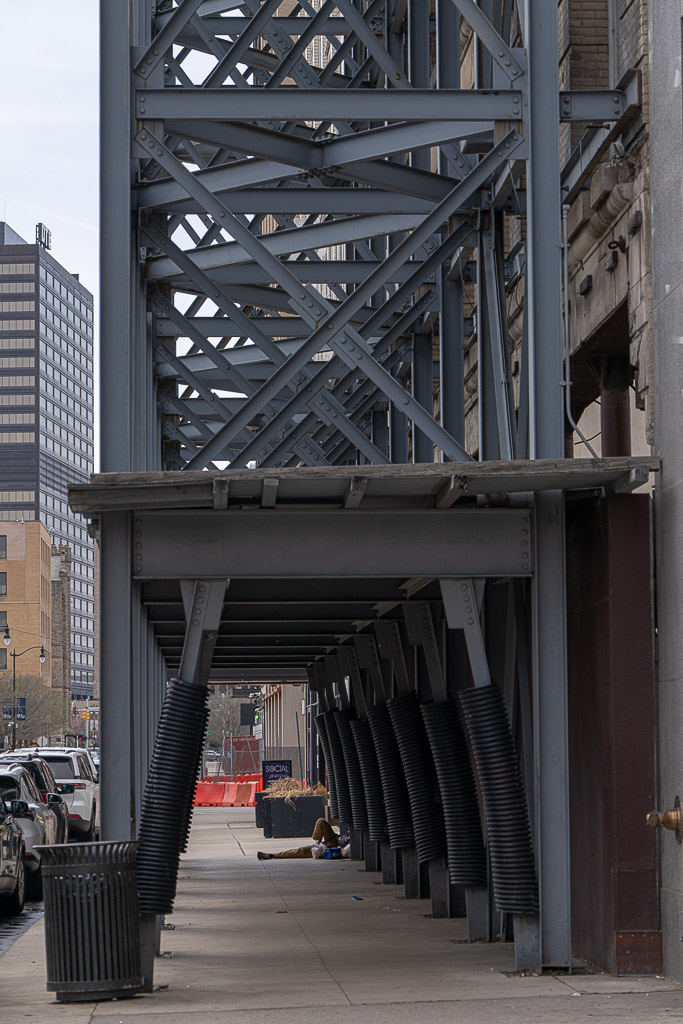
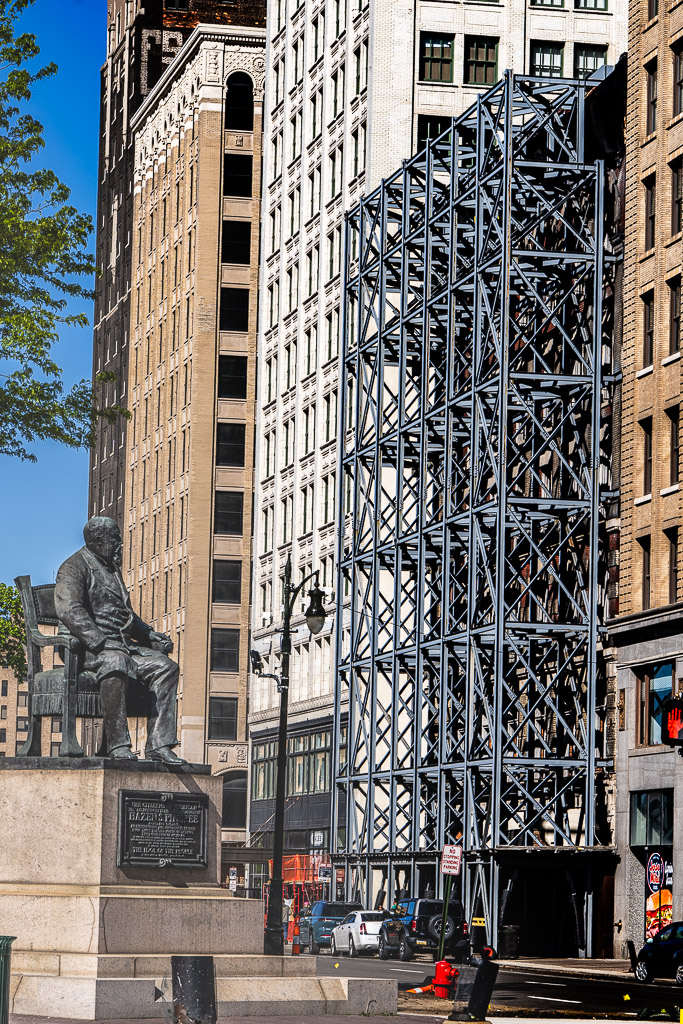
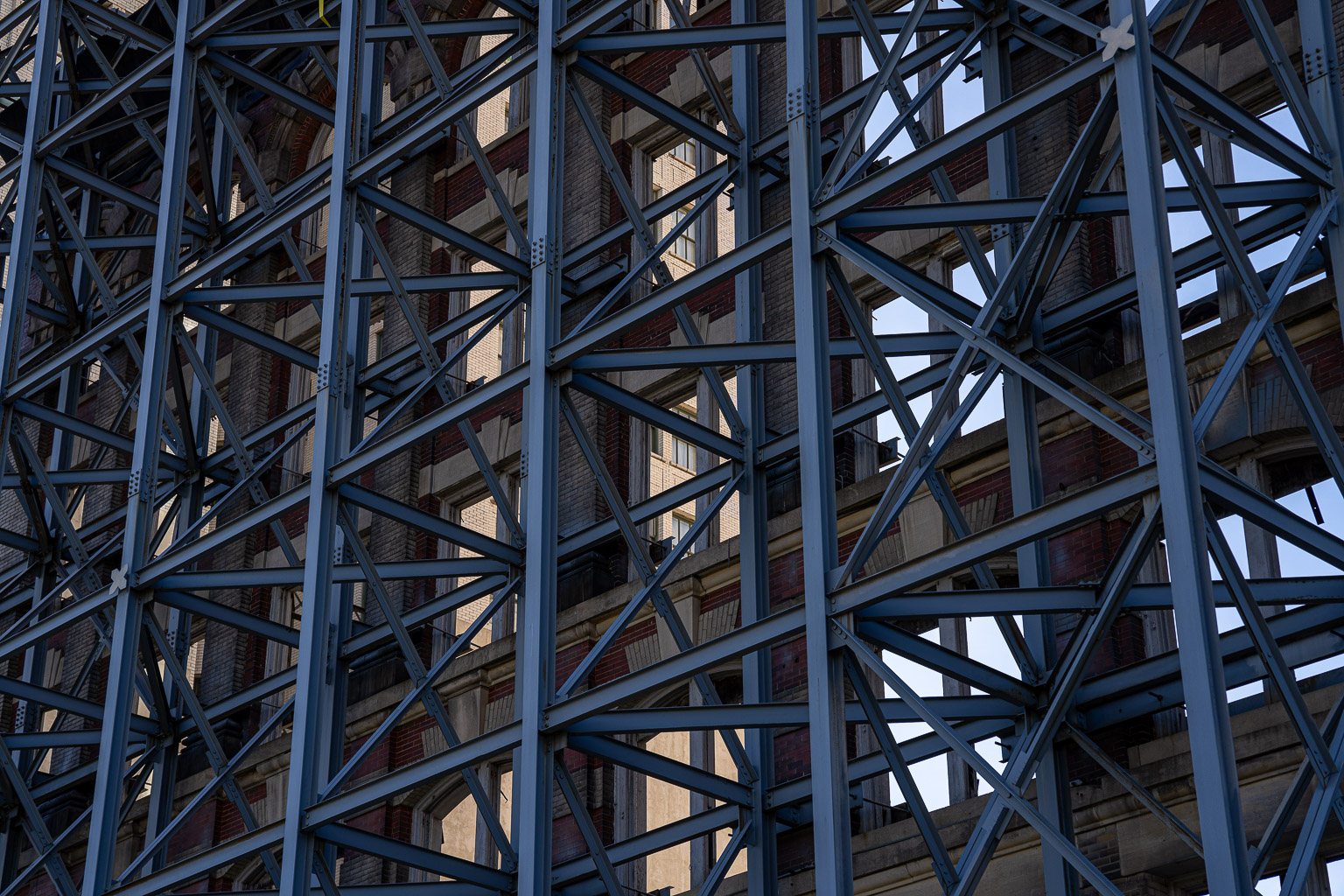
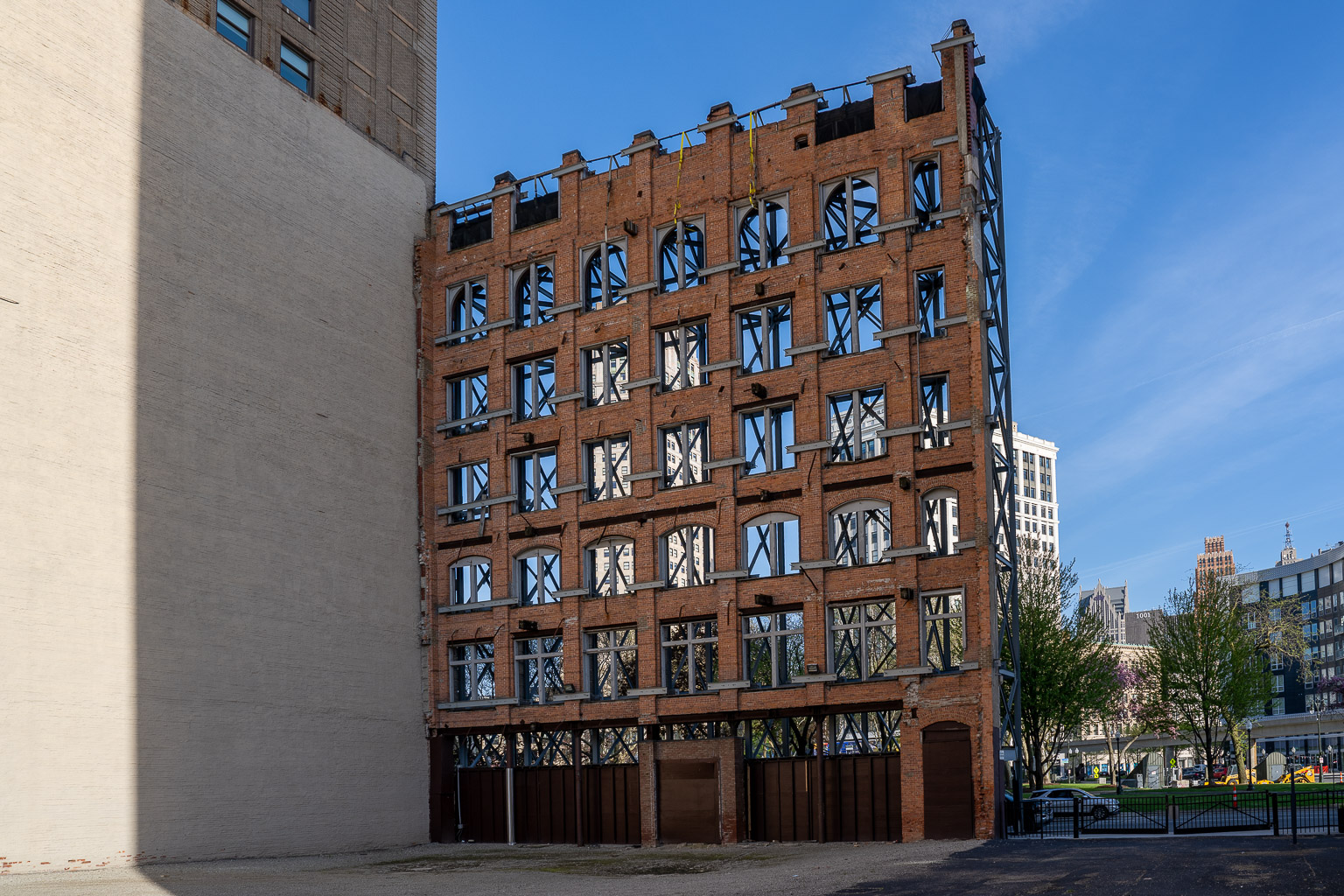
Here are some photos of the Fine Arts Building today, in 2026, for which only the front facade remains, both from the front (where the scaffolding faces Grand Circus Park) and from the back (where you see the vacant space from the rest of the building which has been demolished. Read to the end of this section to learn how and why this happened.
The Fine Arts Building is sheathed in variations of red and yellow brick. The window sills and keystones in each arch are limestone. The western façade of the building is brick that has been painted. Three bays of windows puncture the western wall, above the portion where the four-story Shurly Building existed.
Developer Hugo Scherer had the Fine Arts Building constructed to accommodate the "fine arts trade in Detroit" and made sure the design of the building reflected that fact. A local newspaper article called it "one of the most elaborate and modern" Initial tenants included the George R. Angell Company, an art gallery for the display of foreign and American paintings, C. M. Hayes & Company photographer studios, and the Gies art school which was located on the top floor. Physicians and other professionals also found the Fine Arts Building a desireable leased offices.
In 1917, movie mogul John Kunsky developed the Adams Theater in the Fine Arts Building. The lobby of the theater was sited in the eastern storefront of the Fine Arts Building, and the theater auditorium connected under and above the alley to Elizabeth Street. Because the property values on Grand Circus Park were expensive, it made sense to have only the lobby face the park, and the large auditorium portion of the property on the secondary street. This type of theater design was executed in other cities and is known as an "alley jumper".
The Adams Theater's architect was C. Howard Crane, and it was originally designed with 1,770 seats. The Adams opened as a legitimate playhouse, but a year later it was fitted for moving picture presentations. The theater's style is that of an Adamsesque vaudeville palace. There were boxes on each side of the proscenium. The theater's balcony and loge were designed utilizing a cantilever and had no obstructed view seats B an innovation at the time. In 1935 the theater closed briefly for remodeling and re-opened as "the Greater Adams".
A 1960s renovation altered the lobby, auditorium and box office. The boxes were removed from the auditorium, and the lobby was completely redesigned. The number of seats was reduced to 1,488. In 1986 the balcony was "twinned" into two auditoriums. New state-of-the-art projection equipment was installed and a new booth was built on the loge level for movies shown in the original auditorium. Film fare through the years at the Adams was diverse, from first run reserved seat films to spaghetti westerns to karate movies in the 1970s. The Adams closed in November 1988 after showing films continuously for seventy years.
The tenants in the western portion of the Fine Art's Building's first floor were restaurants. In the 1940s Marco's Chop House, a dinner-dance supper club, occupied the first floor adjoining the theater. Later, Victor Lim's, a Chinese restaurant and cocktail lounge was in that space. In the 1980s a cabaret theater theme restaurant called "On Stage" was the first floor tenant.
Mike Ilitch's Olympia Development purchased the property in 1992 and announced that the building would be renovated into additional office space for his employees. The long-range plan was to create a cabaret theater in the Adams Theater. The plans have yet to be realized, and building remains vacant today.
Actually, the Fine Arts Building and the Adams Theater were both demolished in 2009, though the facade of the Fine Arts Building was preserved standing with a heavy-duty scaffold to support it. The buildings were deemed structurally unsound, filled with asbestos, and demolished, though the facade was preserved by Olympia Development. Someday, when a building is erected behind that facade at a future date, it can re-use that facade rather than having an ugly modern facade.
You can read more about the Fine Arts Building at this The "Finer Things" and at Olympia Development Seeks Bids for former Fine Arts Building in Downtown Detroit.
This is one super-confusing building to me. Apparently Stroh's brewing built this 20-story tower but never really used it much. Yet they built another building behind it, 10 stories in height, called the Elizabeth Street Annex which was attached to the back of this building with a pass-through from the 2nd to the 10th floor. No such pass-through exists nowadays (2026). But it does appear that the tower is now named the Grand Park Centre. So with this confusing introduction, below is the (outdated?) text from the Local Historical District Report.
The Stroh Tower is a twenty-story high-rise structure clad in buff brick with limited terra cotta trim. More extensive terra cotta trim was removed and replaced with buff brick when the building was remodeled in the 1950s. Its aluminum storefronts and plate glass windows date from the 1970s. The windows at floors 3 through 18 are double-hung 3-over-1 units. Floors 19 and 20 were added in the 1950s replacing a rooftop gazebo. These floors are clad in buff brick and aluminum panels in a simple utilitarian style. The windows are aluminum. The building faces south onto Adams.
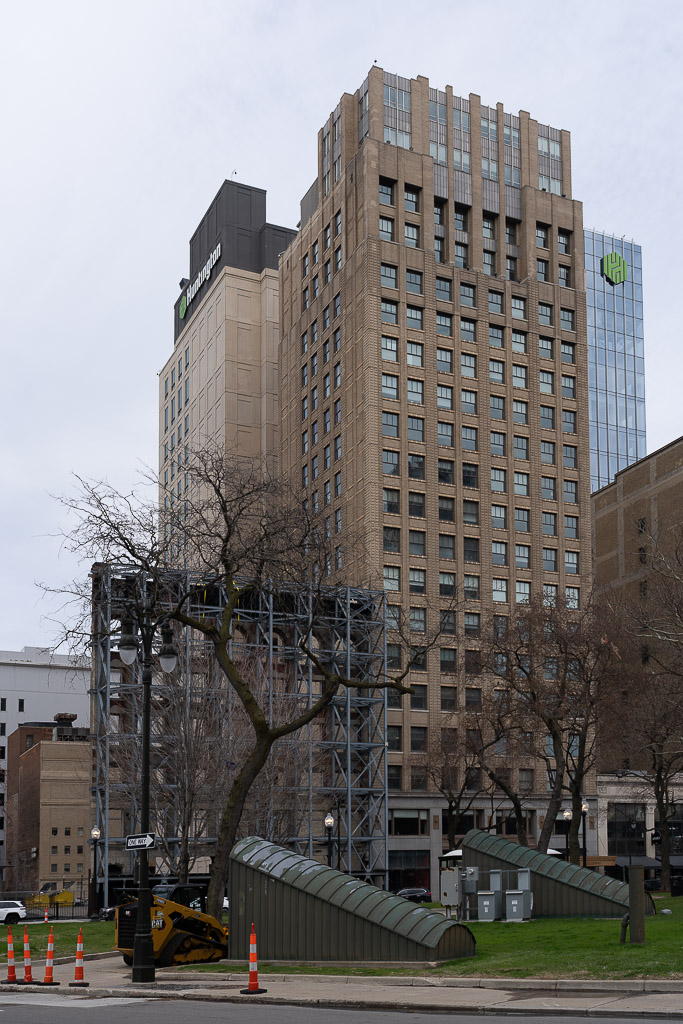
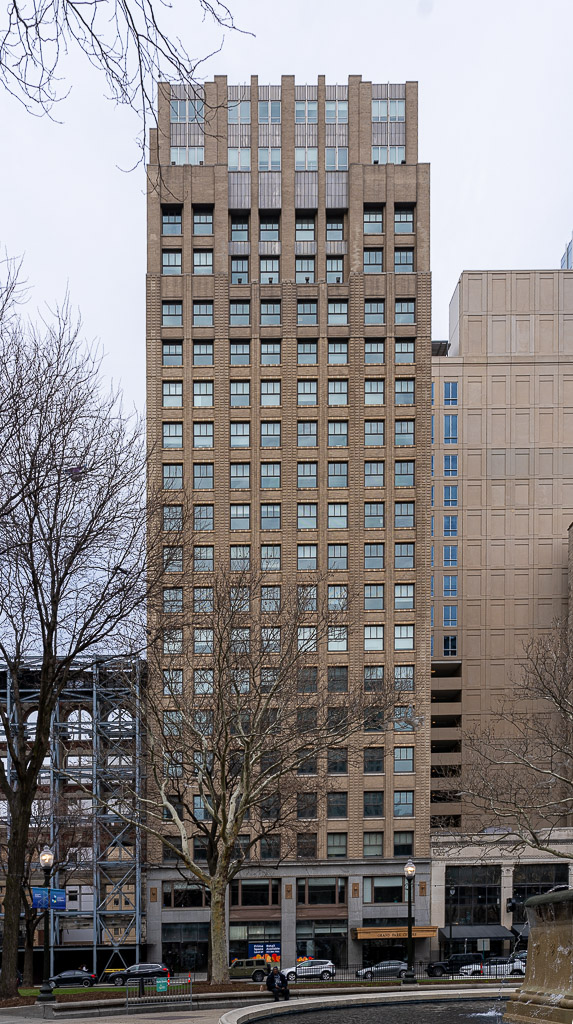
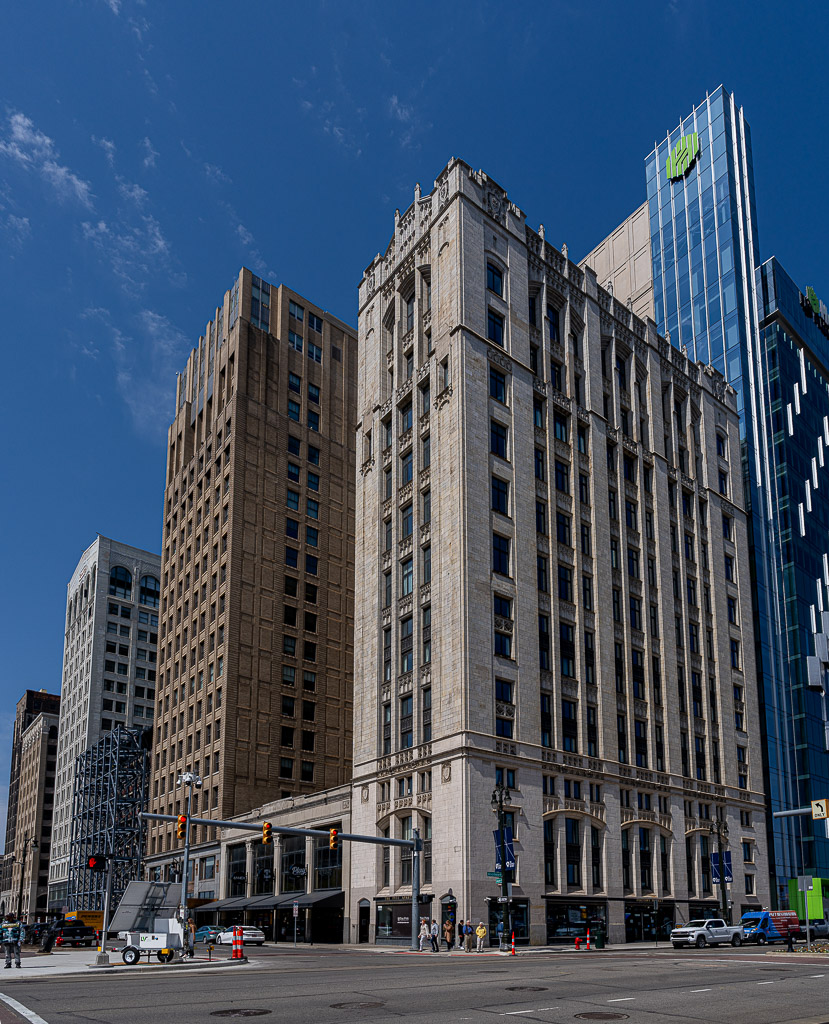
The first and second floors have a rectangular footprint measuring eighty feet four inches wide and one hundred feet deep. Floors 3 through 18 are L-shaped with a light well at the northwest quadrant. A penthouse at floors 19 and 20 is set back approximately two feet from the east, west, and south elevations and approximately twenty feet from the north elevation with a roof-top veranda at the 19th floor.
The first and second floors have recently been renovated, and an awning from the 1970s was removed. The windows on the second story are now seen as they were originally, grouped into four shallow bays with a center window flanked by two narrow windows. The center window contains a divided window. At the second story, on each of the five piers is a bronze vertical plaque containing a projecting lion's head (3 photos below). These are the remnants of the building's architectural detail before the renovations removed the rest of it.
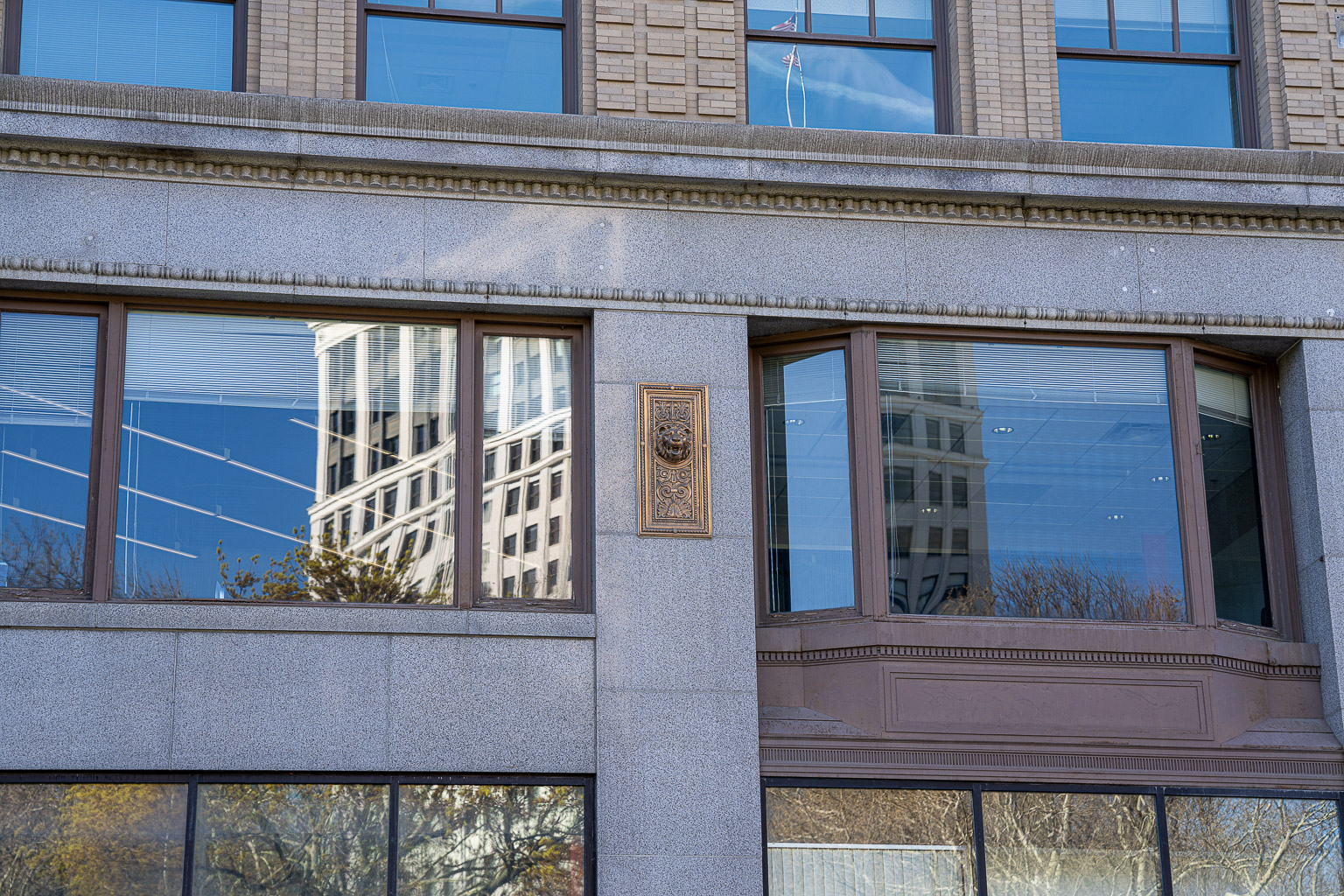
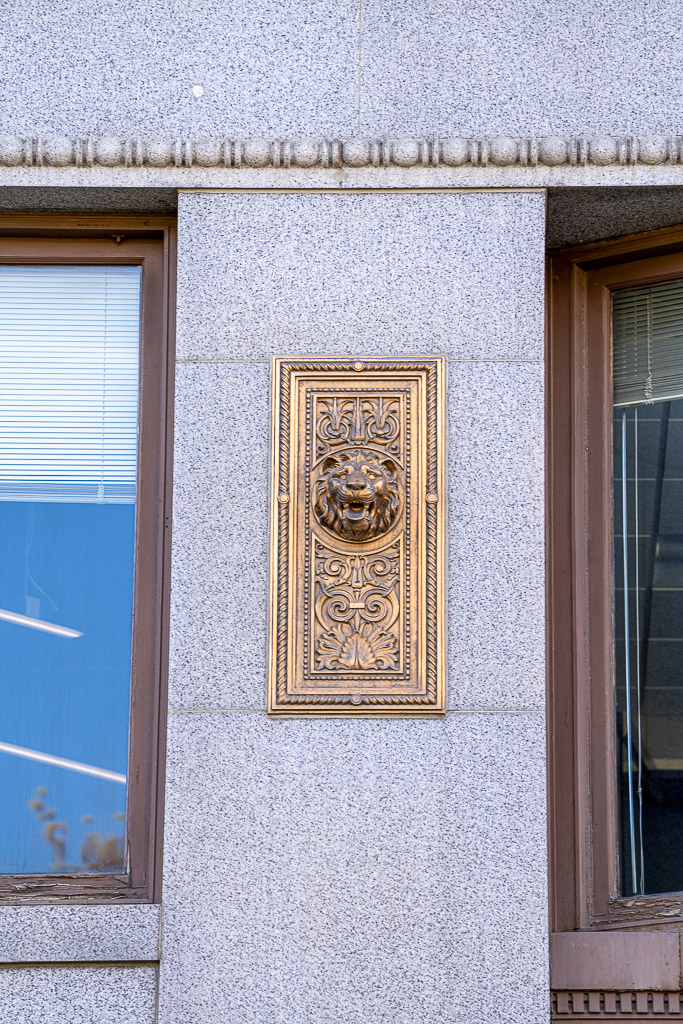
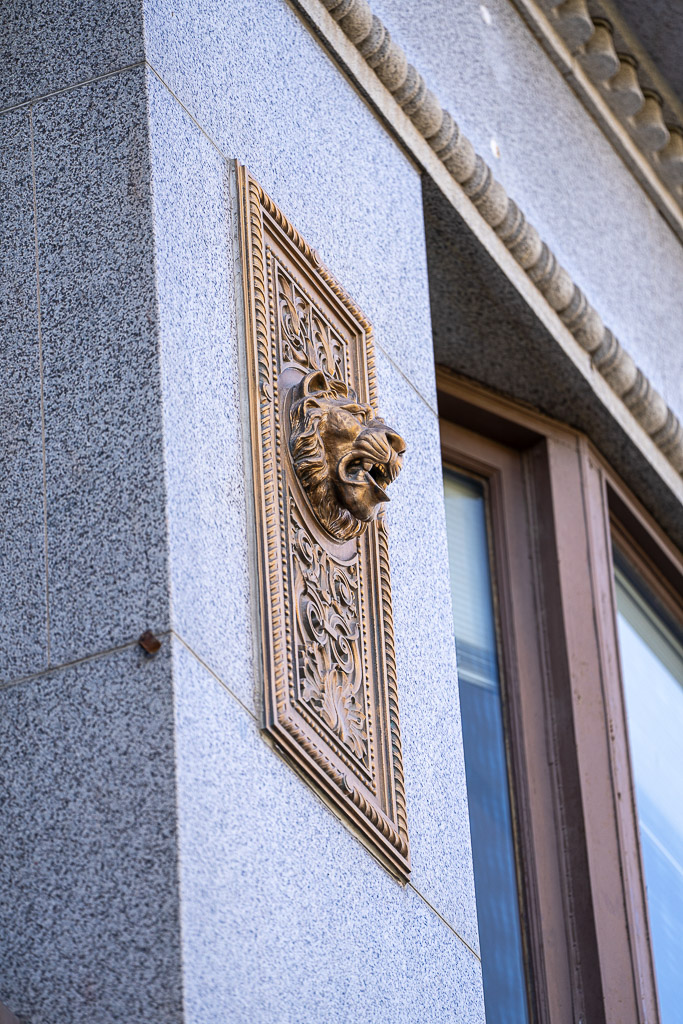
The 1st photo below shows the marquee above the front entrance to the building, and the others are interior shots of the lobby.
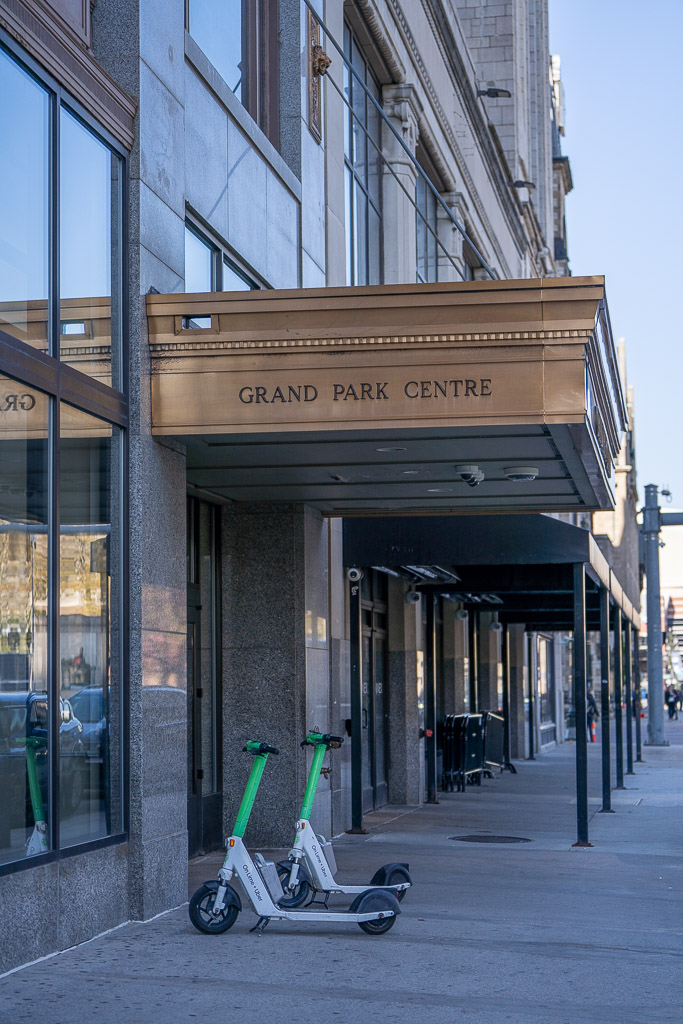
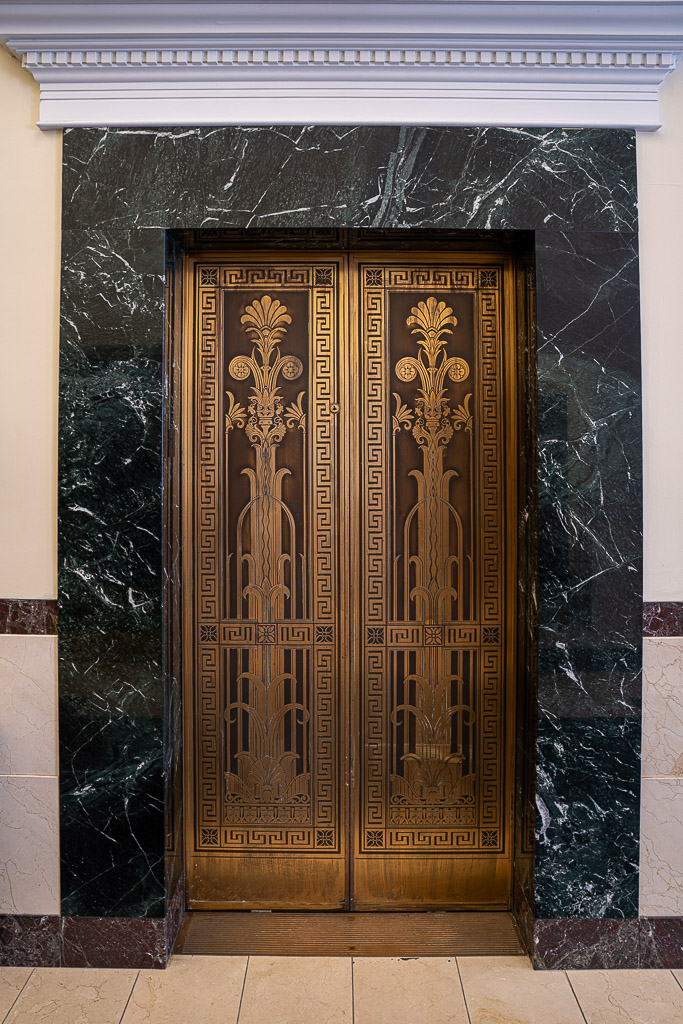
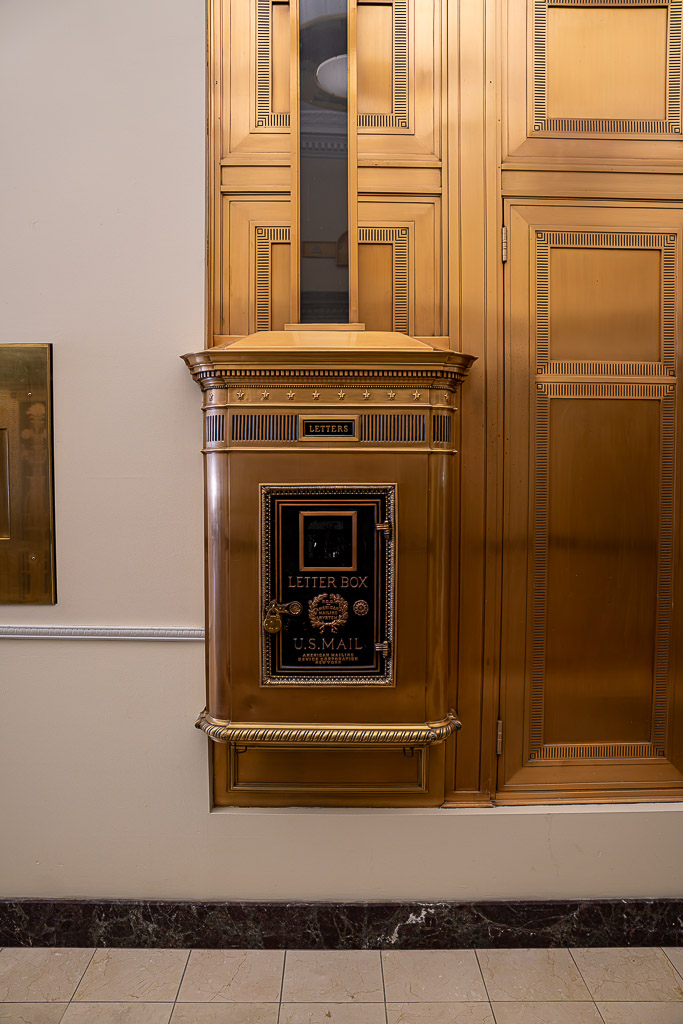
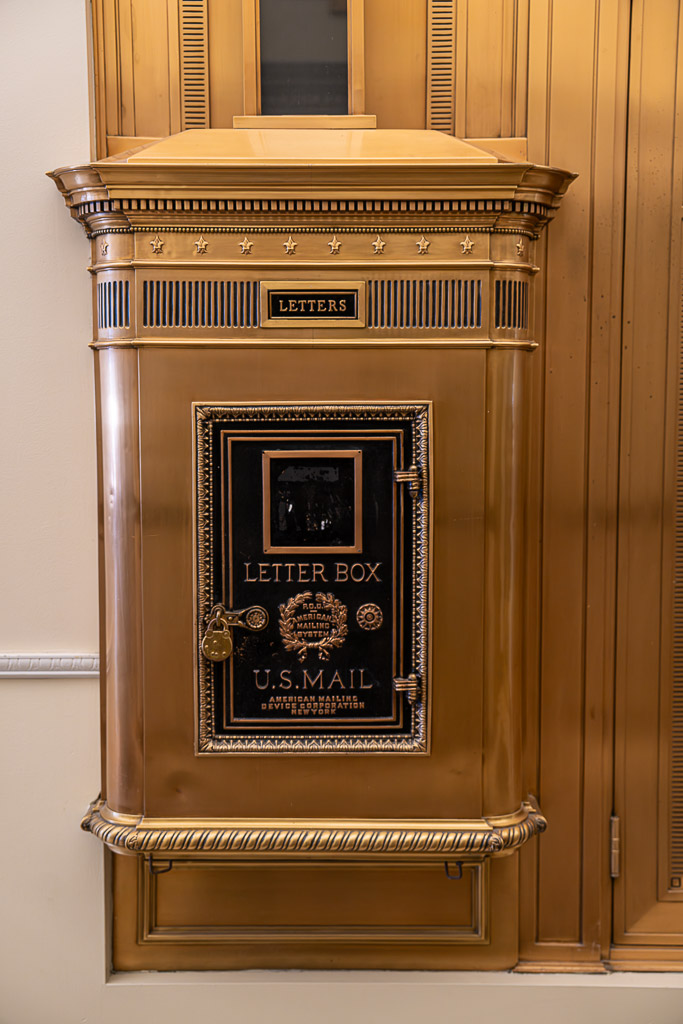
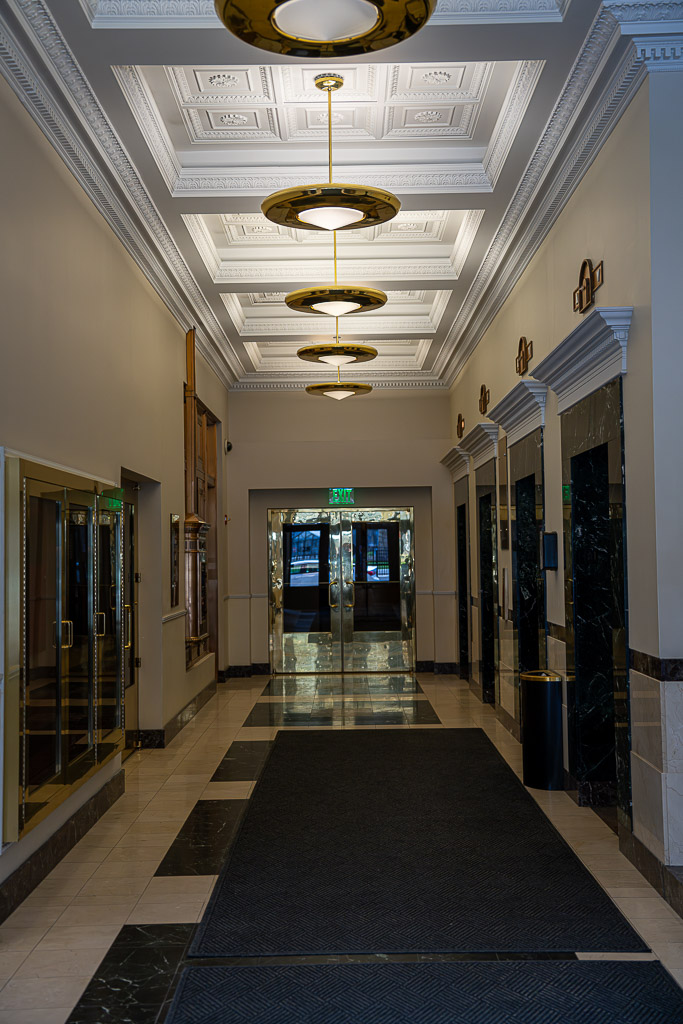
The Elizabeth Street Annex, constructed in 1950, is ten stories in height and is comprised of six floors of office/service space above four floors of parking. It is said to be the first "International Style" building in Detroit. The annex has a rectangular footprint measuring 120 feet by ninety feet. It is clad in buff-colored brick with aluminum ribbon windows at the north and south elevations. The annex has a simple aluminum canopy at the entry to a small lobby at the northwest corner. The annex has no decorative trim. It is connected to the Stroh Tower to the south across an alley by a bridge connecting floors from 2 through 10.
In 1920 Julius Stroh, president of the Stroh Products Company, announced plans for the building of an 18-story skyscraper at a cost of $2,000,000. The Stroh Building had several floors devoted to high-end specialty retail shops. Tenants included the Rollins Company a furrier, Merrill's Exclusive Hat Shop, Picard & Picard, makers and importers, Mlle. Milne, Modiste, Mme. Guideau, Modiste, Sanderson & Doran, Jewelry and Stationery.
The building was completed in 1922. The overhanging marquee held lettering naming it the "Stroh Building". It appears that the executive offices of the brewery remained at the brewery site; it is likely that the Stroh Building was solely an investment property and an image-builder for the company.
Uhleman Opticians were a second floor tenant, and a "Foot Comfort Shop" was in the first floor retail space. The building was occupied by various commercial tenants including the Detroit Convention & Tourist Bureau.
The basement space housed a beautiful brew-haus finished with a verdigris marble stair entrance, vaulted ceiling and elaborate plaster detailing. The 1926 City Directory lists Briggs Restaurant in the basement space. Briggs leased and operated the Belden Hotel (at 114 West Adams) in the 1920s. After Lester Briggs died his businesses were dissolved and the basement space was occupied by Fisher's Prince German Restaurant.
In the early 1950s the building was sold to the Michigan Mutual Insurance Company and the building became known as the Michigan Mutual Building. A Michigan National Bank was located on the first floor of the building. Michigan Mutual Insurance Company donated the building to the Detroit Public Schools in March 1995. The school board sold it, the addition, and three other parcels to a private developer in June 2000. The name of the building changed again to the Grand Park Centre.
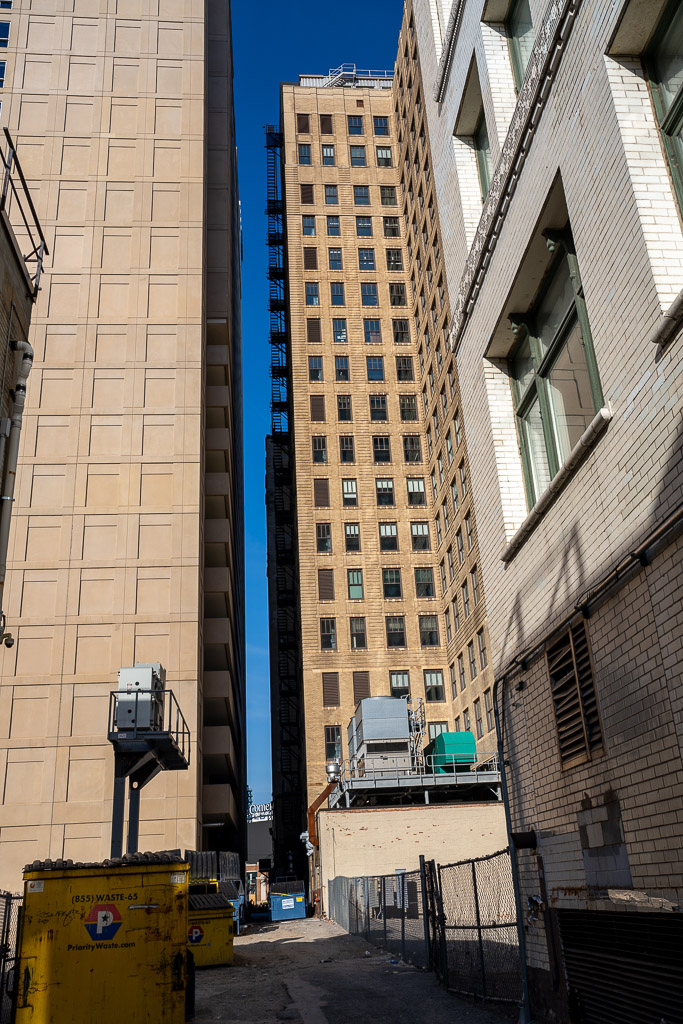
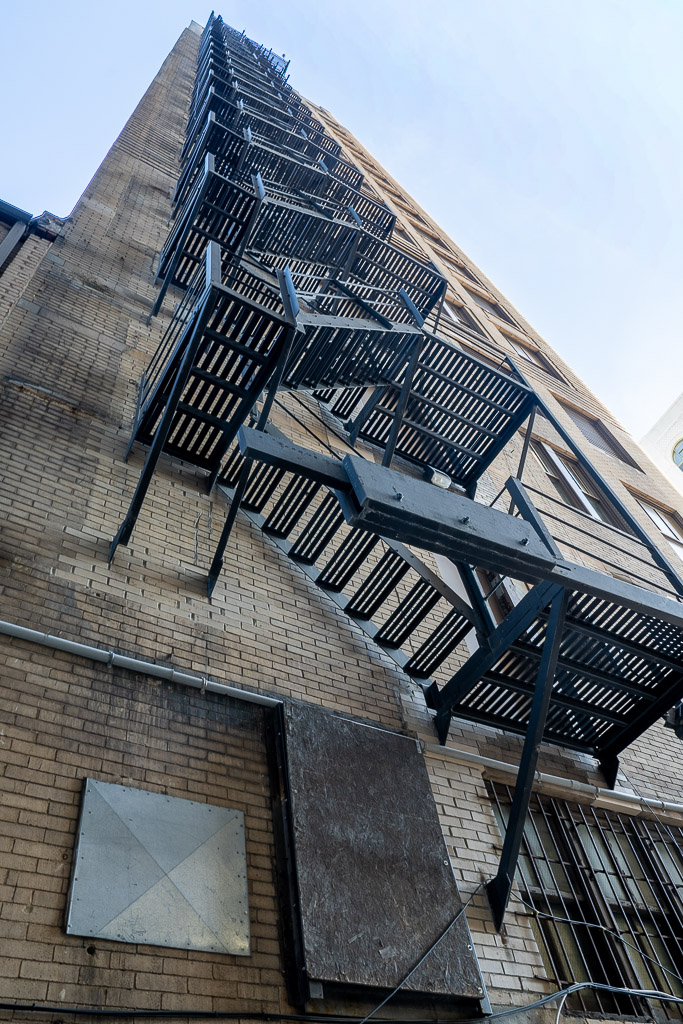
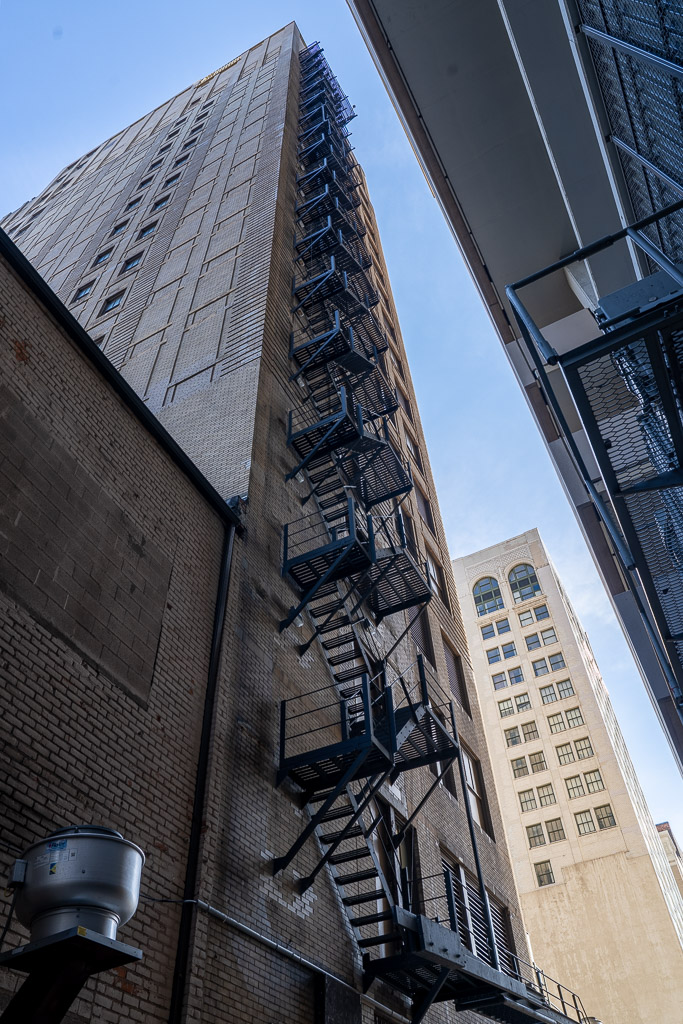
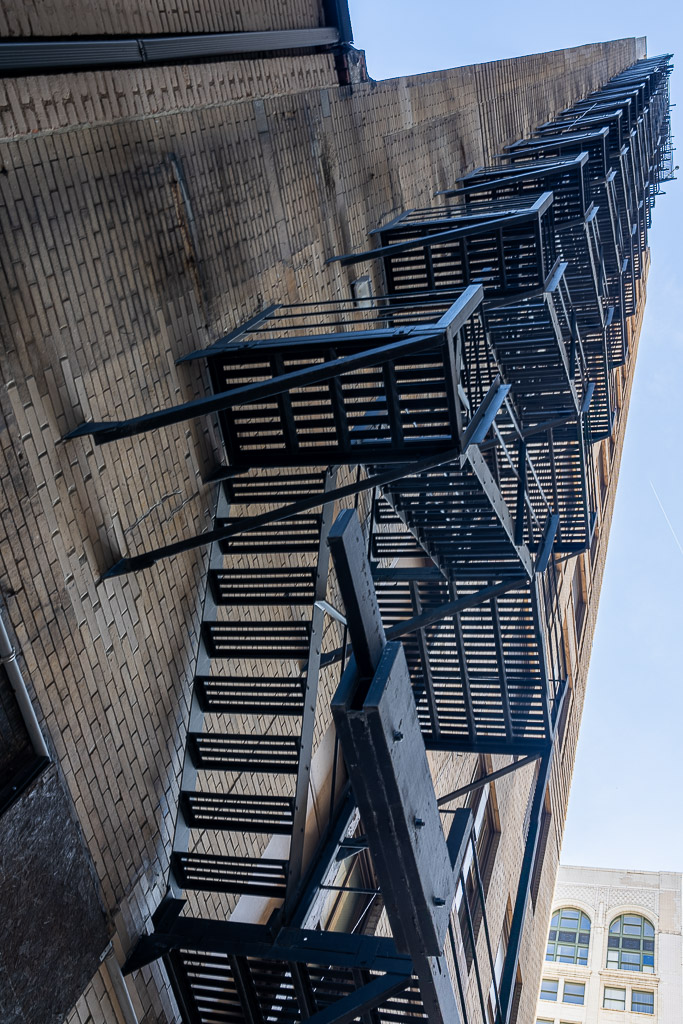
There is an incredible 10-story fire escape attached to the back of the 11th to the 20th floor of the Grand Park Centre.
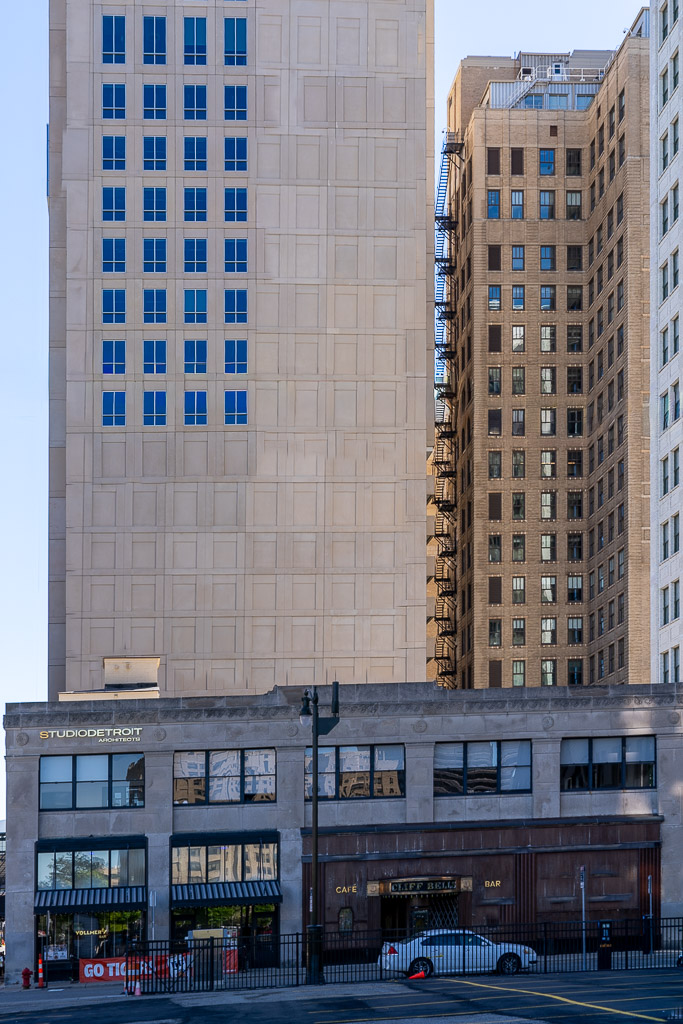
This two story commercial building with a mezzanine fills the lot line on this parcel of property.
The building's façade is constructed of limestone and articulated with three centered pilasters between two end piers. There is a denticulated cornice and parapet along a flat roofline. Above the two end piers, the frieze contains two plaques each with two heraldic shields in two different patterns. A gray granite base rises six feet from the sidewalk.
The storefront entrances have been completely covered with reflective glass panels divided into rectangles by muntins and mullions. Today the only access to this building is through the the Grand Park Centre Building.
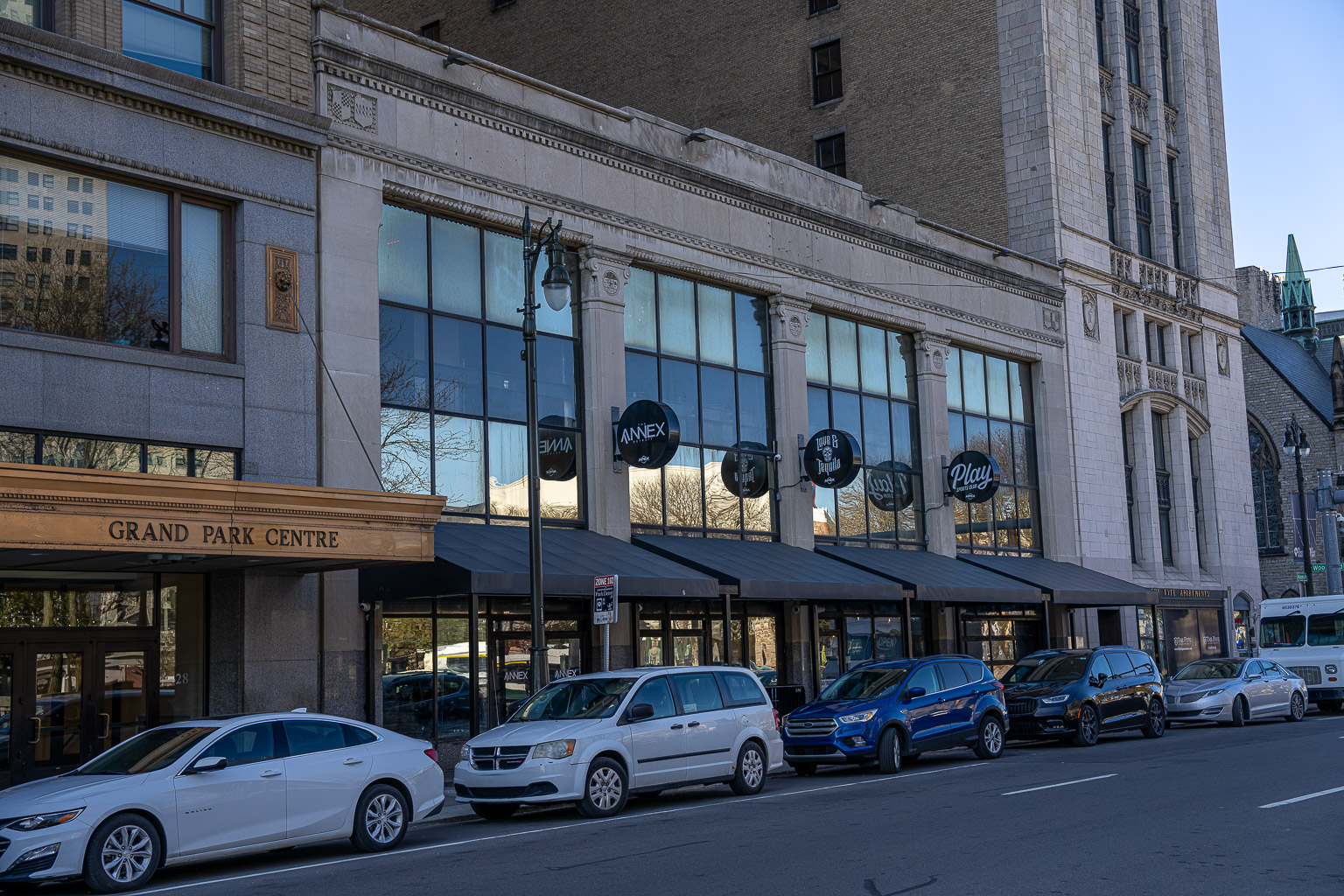
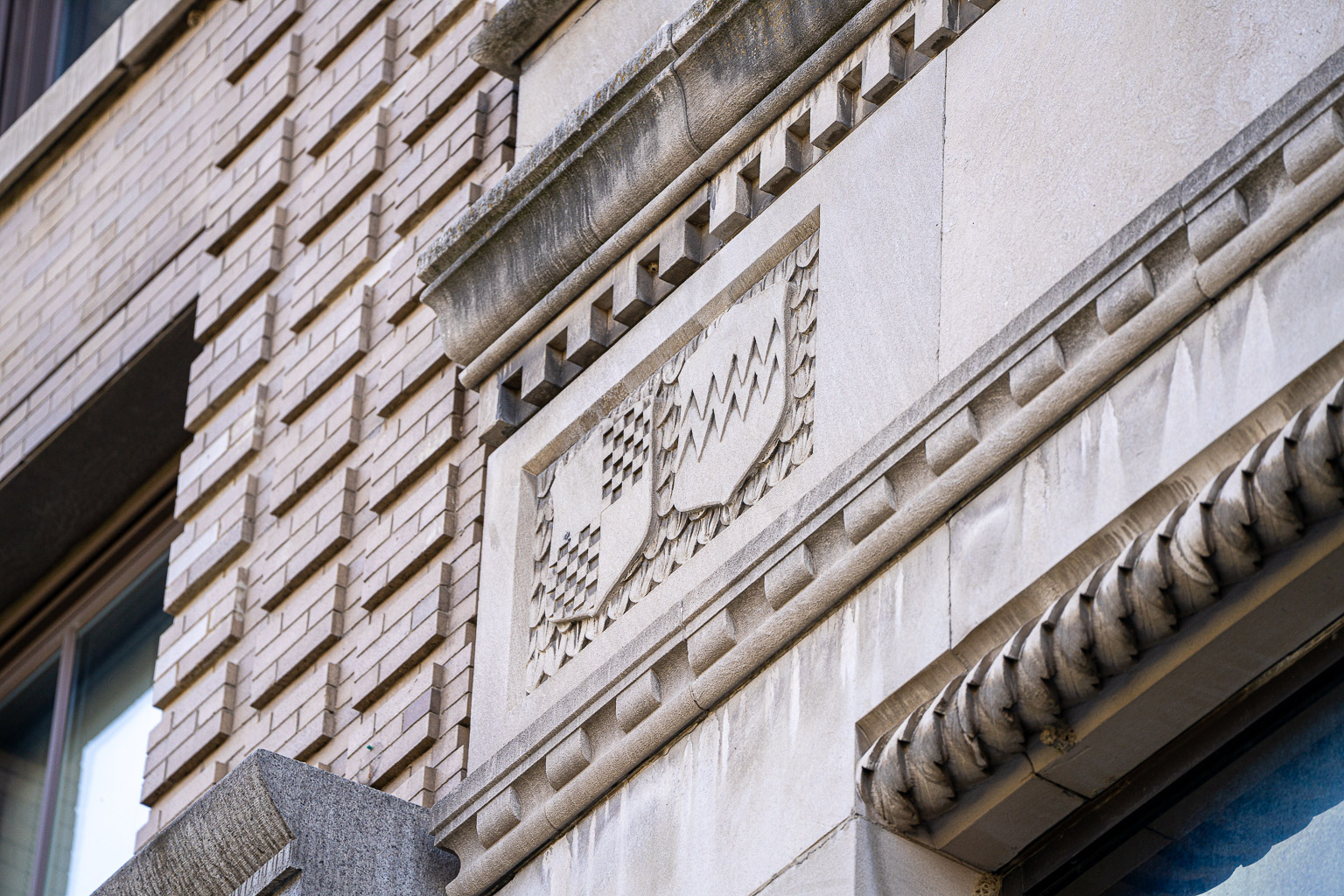
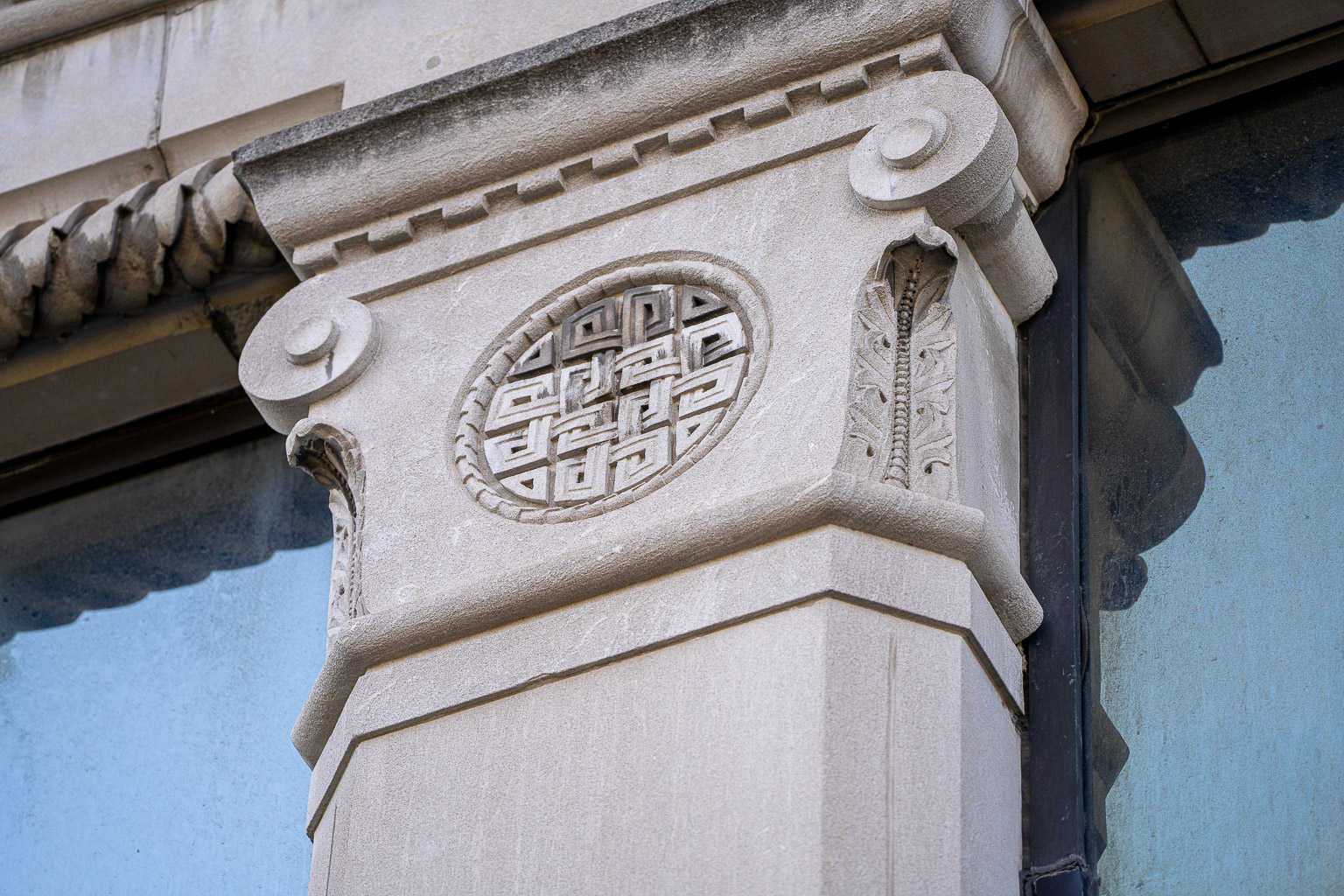
The 1926 City Directory lists the building at 14 West Adams as housing the First National and Central Savings Bank. The other three storefronts remained vacant until 1929. In the 1935 City Directory, the Doubleday Book Shop had replaced the bank. At 20 West Adams storefront, the directory lists Gulian Rug Company and at 22 West Adams was the Zinke Shoe Repair. The shoe repair placed an oversized boot hanging from the frieze to signify their business trade. At the 24 West Adams storefront, the "Bungalow Restaurant Sandwich Shoppe" was a first floor tenant in the 1930s and 1940s.
In the 1950s and 1960s the Brass Rail was a chain of three bars in Detroit's downtown. Their exterior signage included a carved wood relief by the local sculptor Gustave Hildebrand. The wooden signage depicted one man in a stovepipe hat lifting a beer stein while another other man in a kilt carves a turkey. This decorative element is now located at a bar in Rochester, Michigan.
This structure, for much of its history, featured a large seven-story outdoor sign on the roof. The sign featured advertising for various automotive firms such as DeSoto and Willys. The sign became a downtown Detroit landmark for years featuring cigarettes and had "smoke" puffing from the mouth of a huge face on the sign.
In the 1970s the building housed a franchise of the Roy Rogers chain restaurant and the Doubleday bookstore was still in the eastern storefront. The building has remained vacant for the past twenty years.
This 14-story tower is sited at the northwest corner lot of Woodward Avenue and Adams Avenue. The building fills the lot line at 43 wide on Adams Avenue (1st photo below) and 105 feet deep on Woodward (right side of building in 2nd and 3rd photos below). The building's structure is steel frame and it is faced with terra cotta on the Adams Avenue and Woodward Avenue Facades. The western façade (4th photo below) and alley façade to the north are both faced with brick.
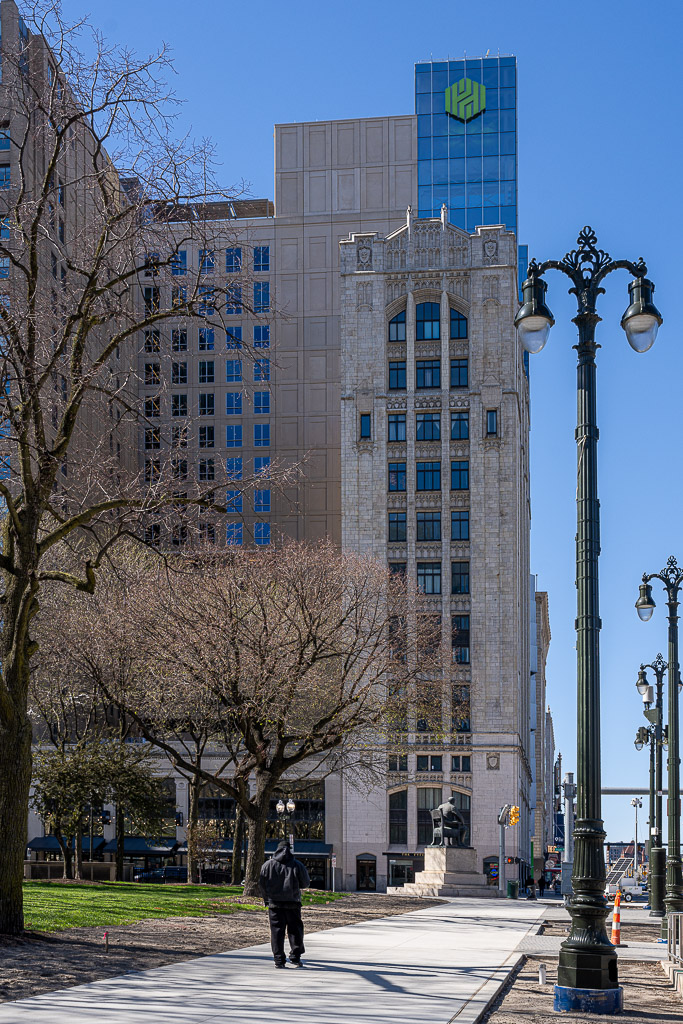
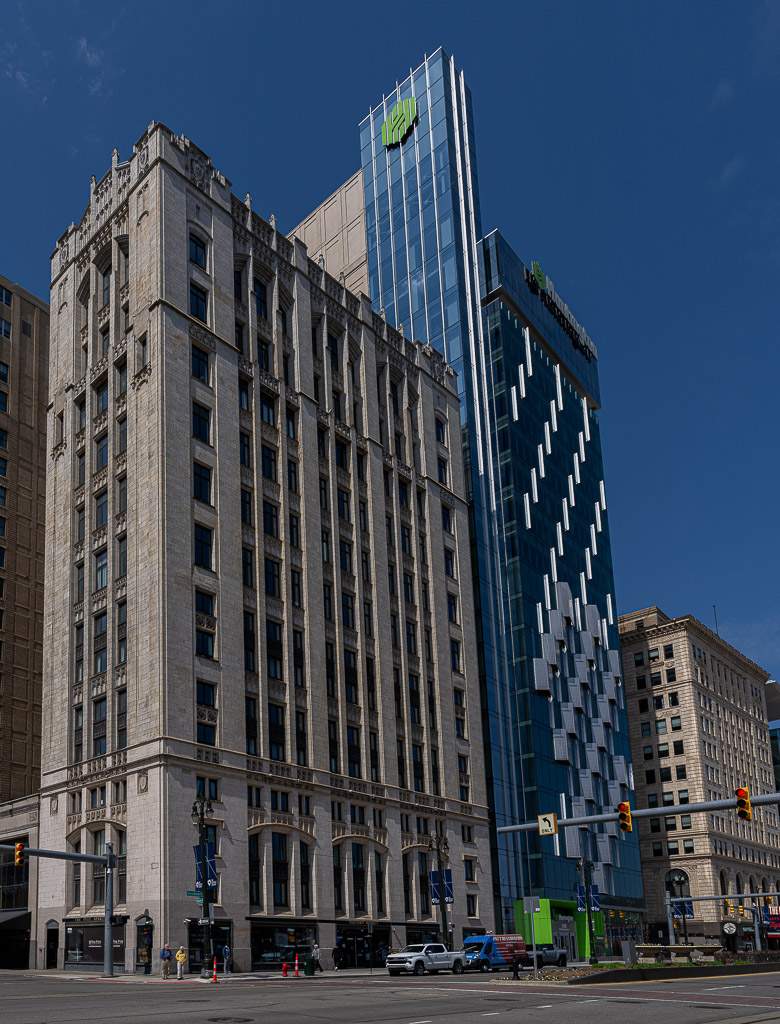
The first floor storefront has been renovated and is now faced with brown aluminum and plate glass windows (1st photo below). There is a canvas canopy over the entrance to the apartments (apparently removed before 2026). The three stories above the storefronts are faced with a light buff colored terra cotta formed in blocks with mortar joints to replicate sandstone. The floors above the three-story base are faced with cream colored terra cotta.
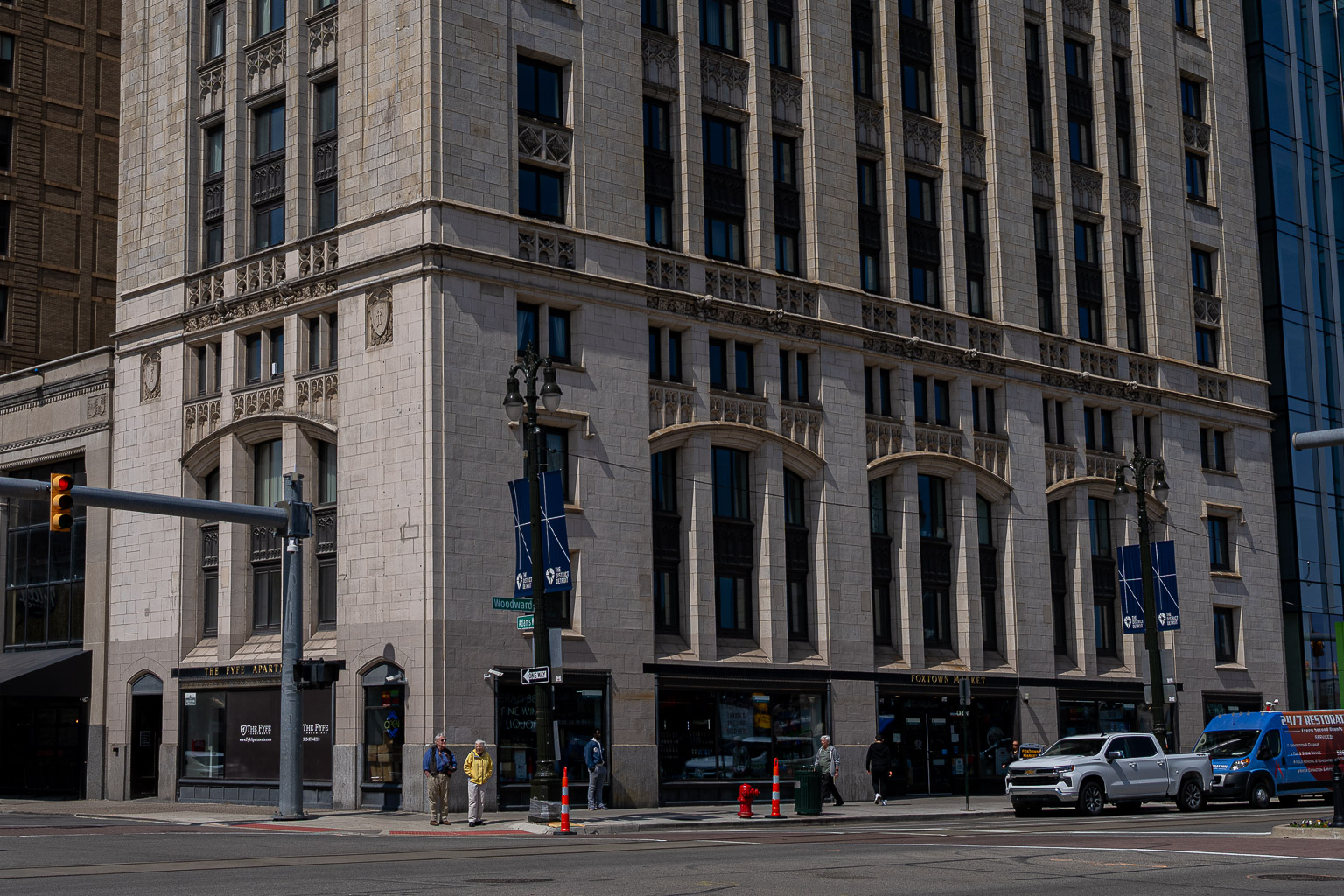
The Fyfe Building was designed in a commercial gothic revival style and utilized much gothic detailing. Above the second story, gargoyles are leering from the ledge on both the Adams (1st through 3rd photos below) and Woodward (4th through 6th photos below) Avenue facades. Those gargoyles are shoemakers!
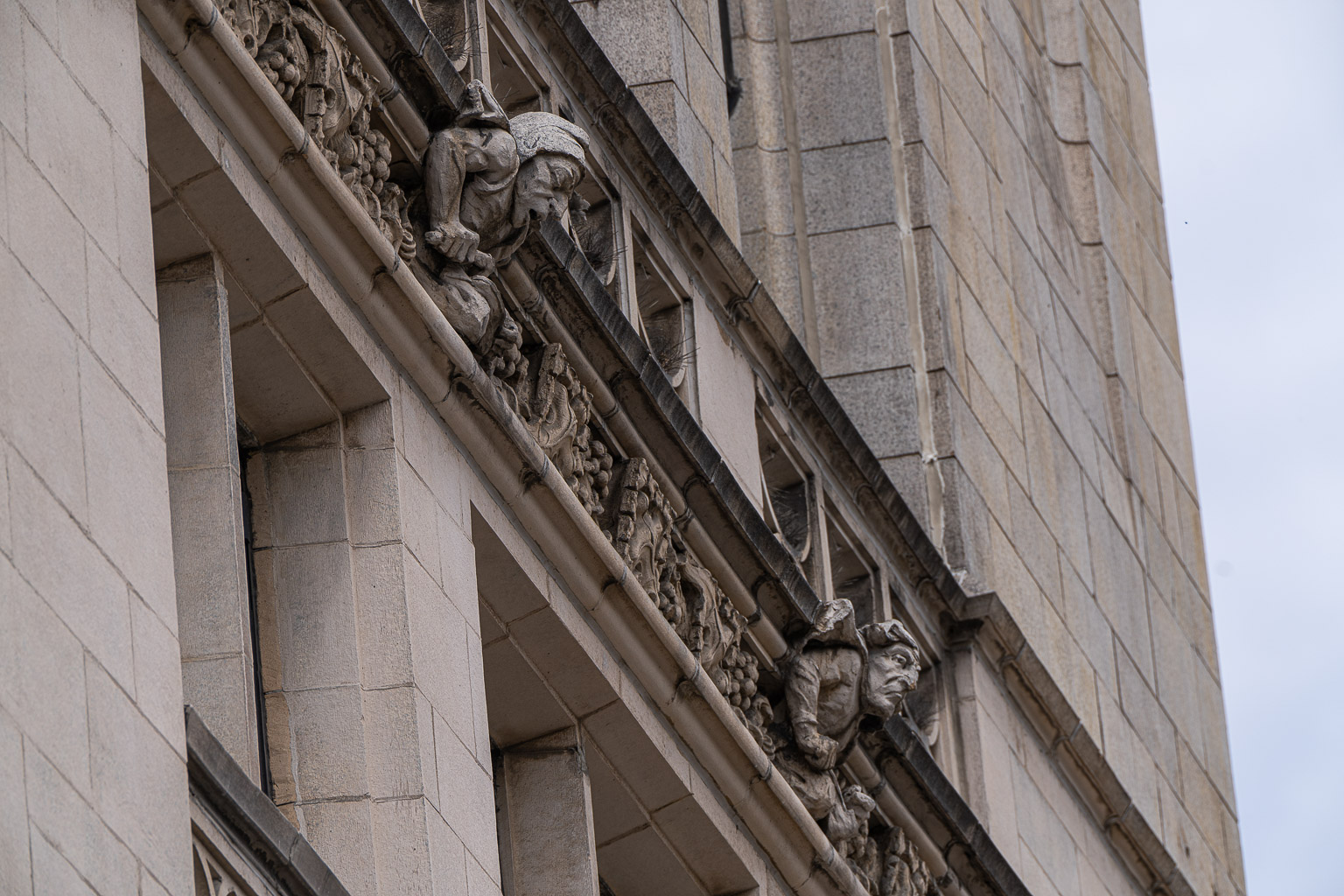
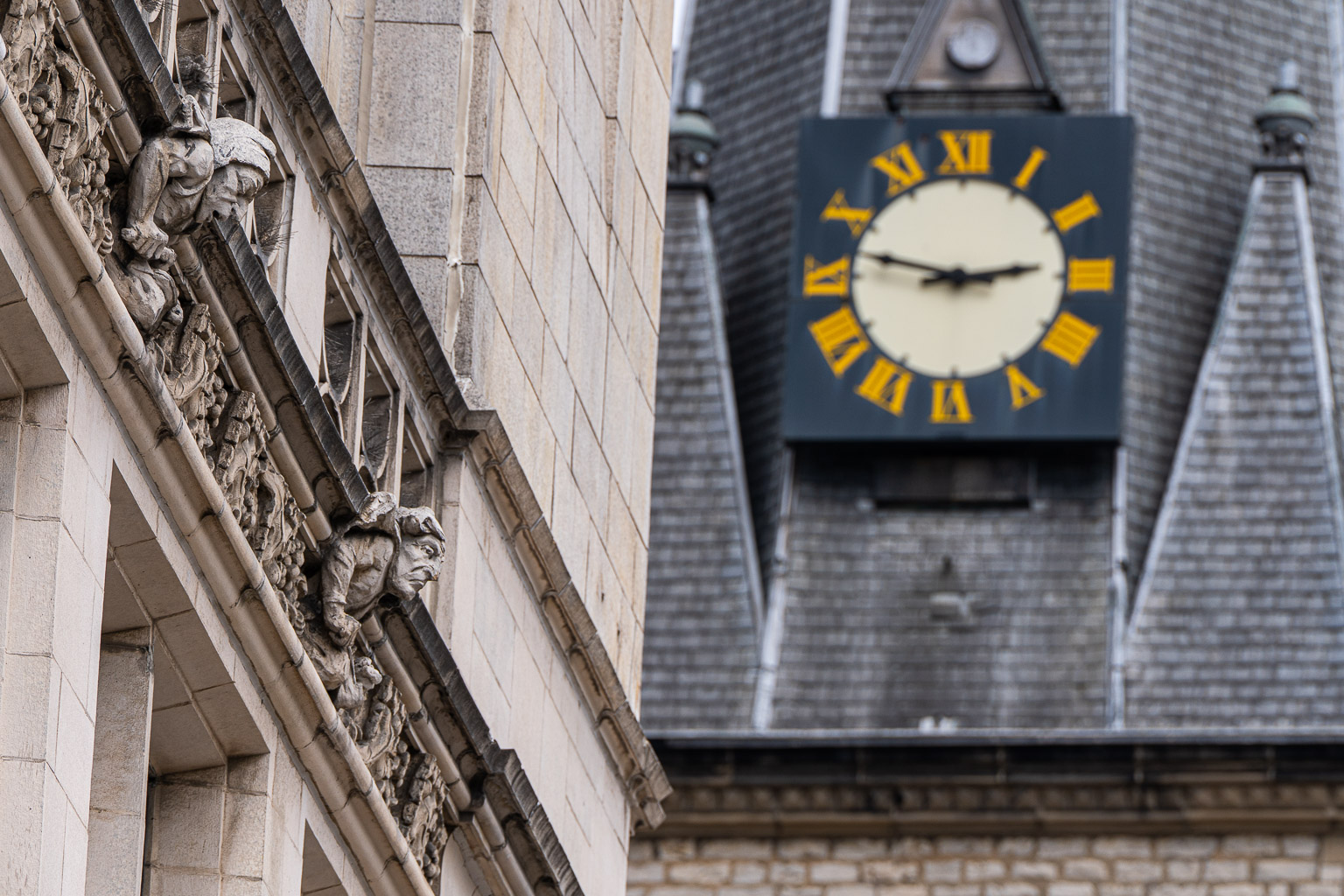
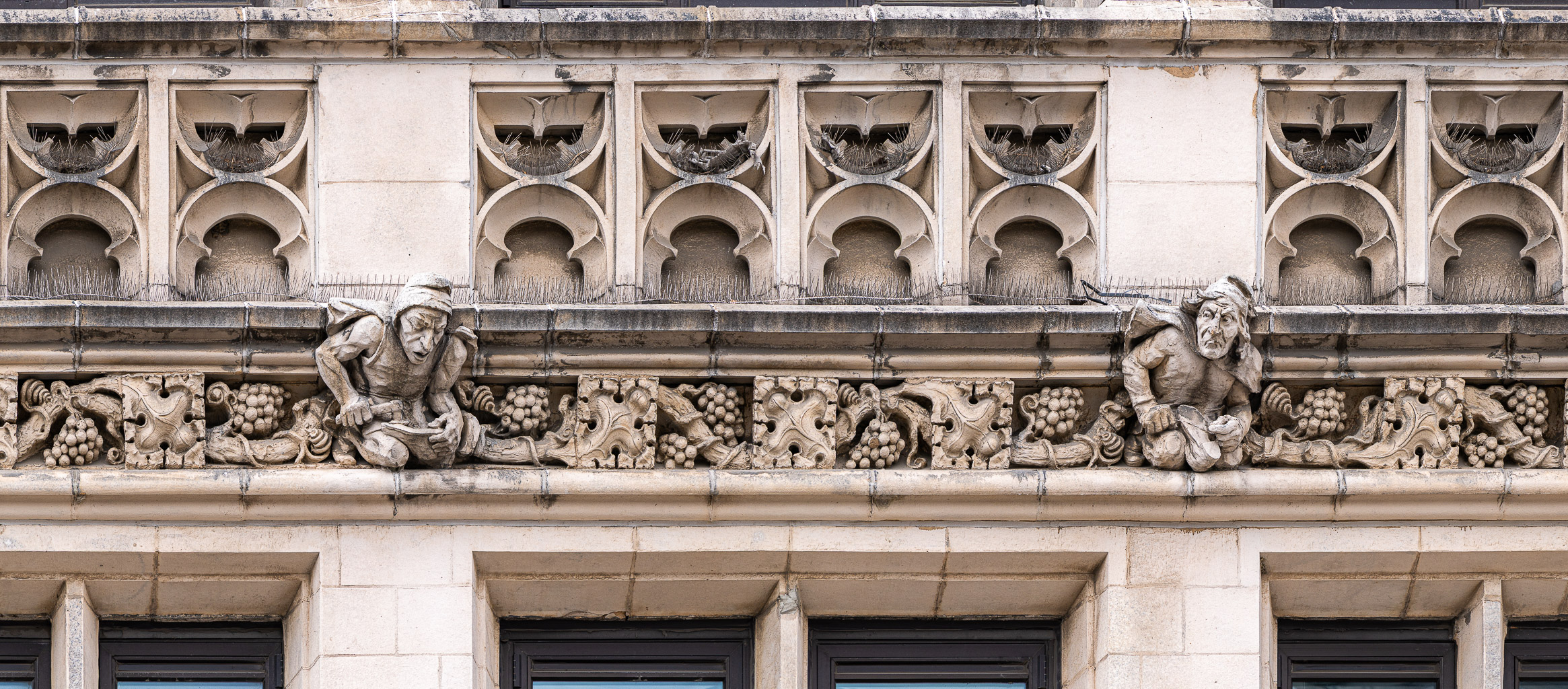
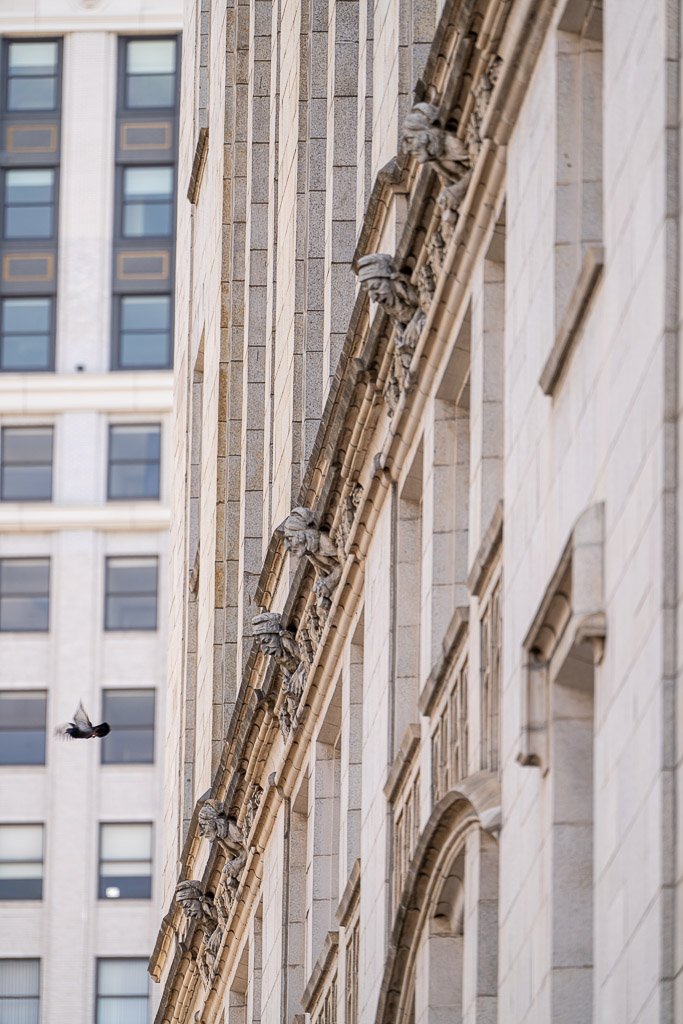
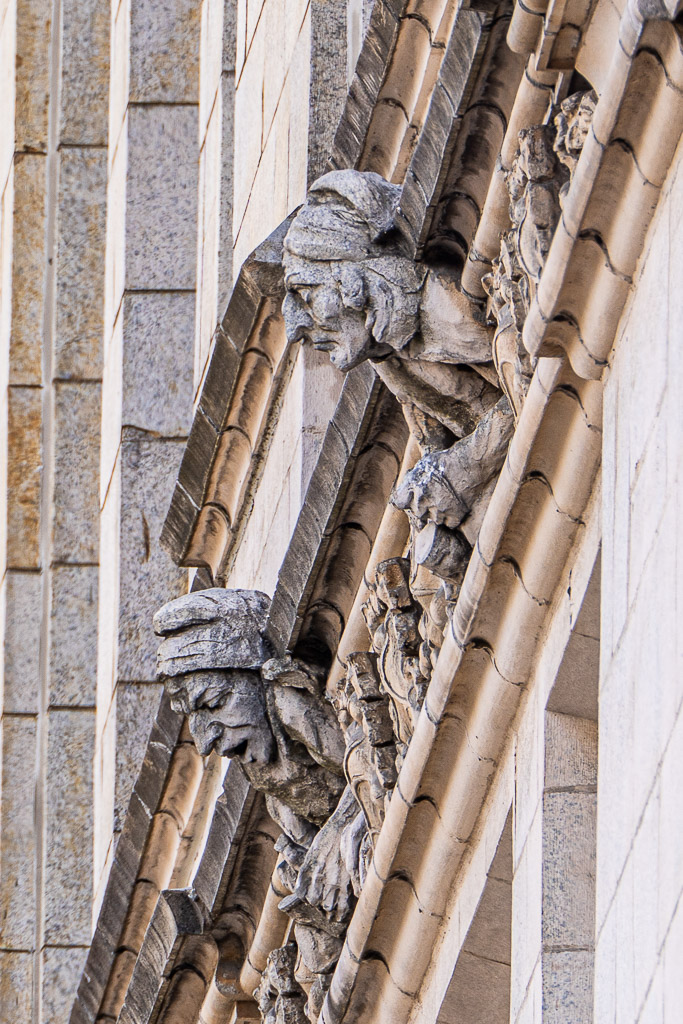
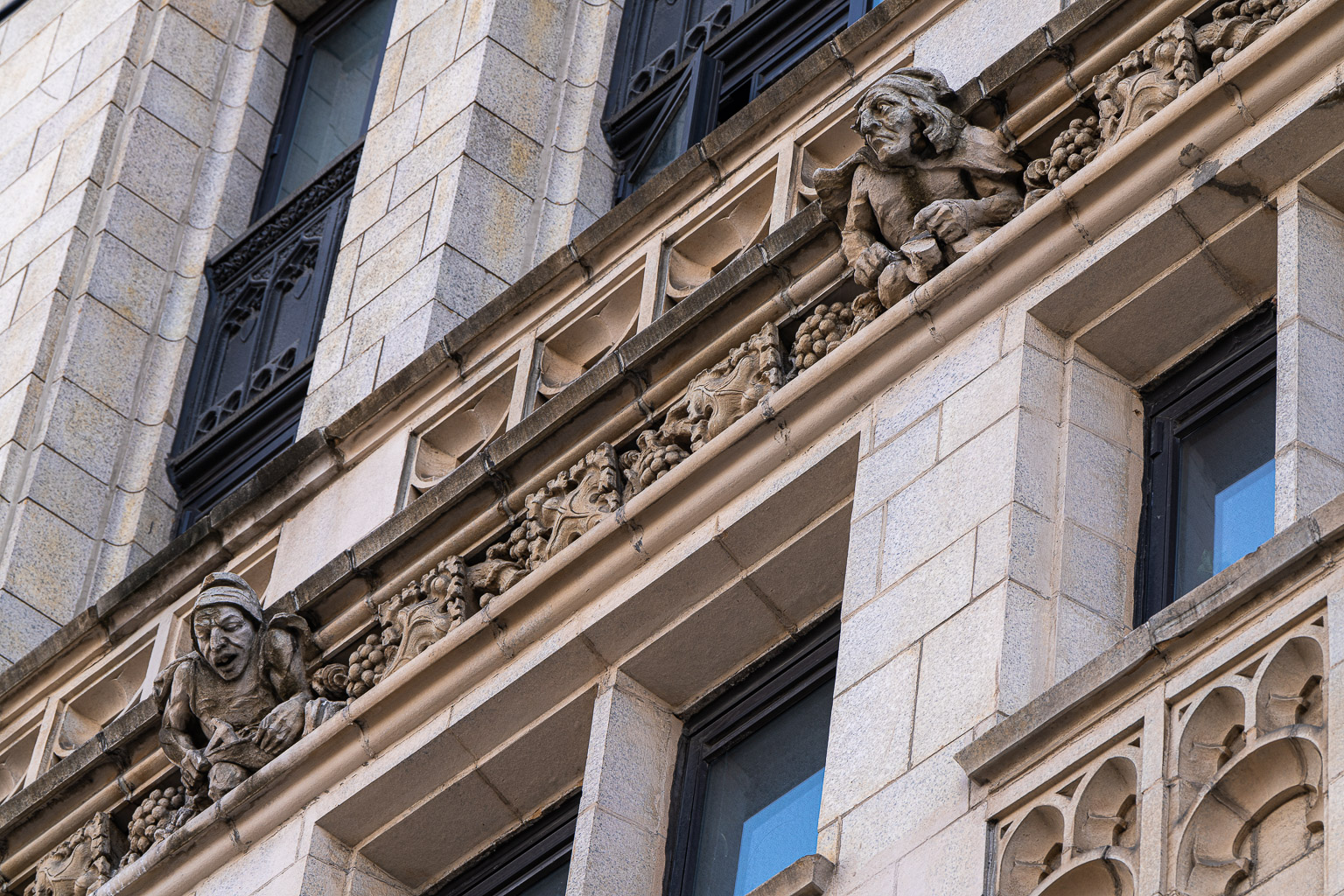
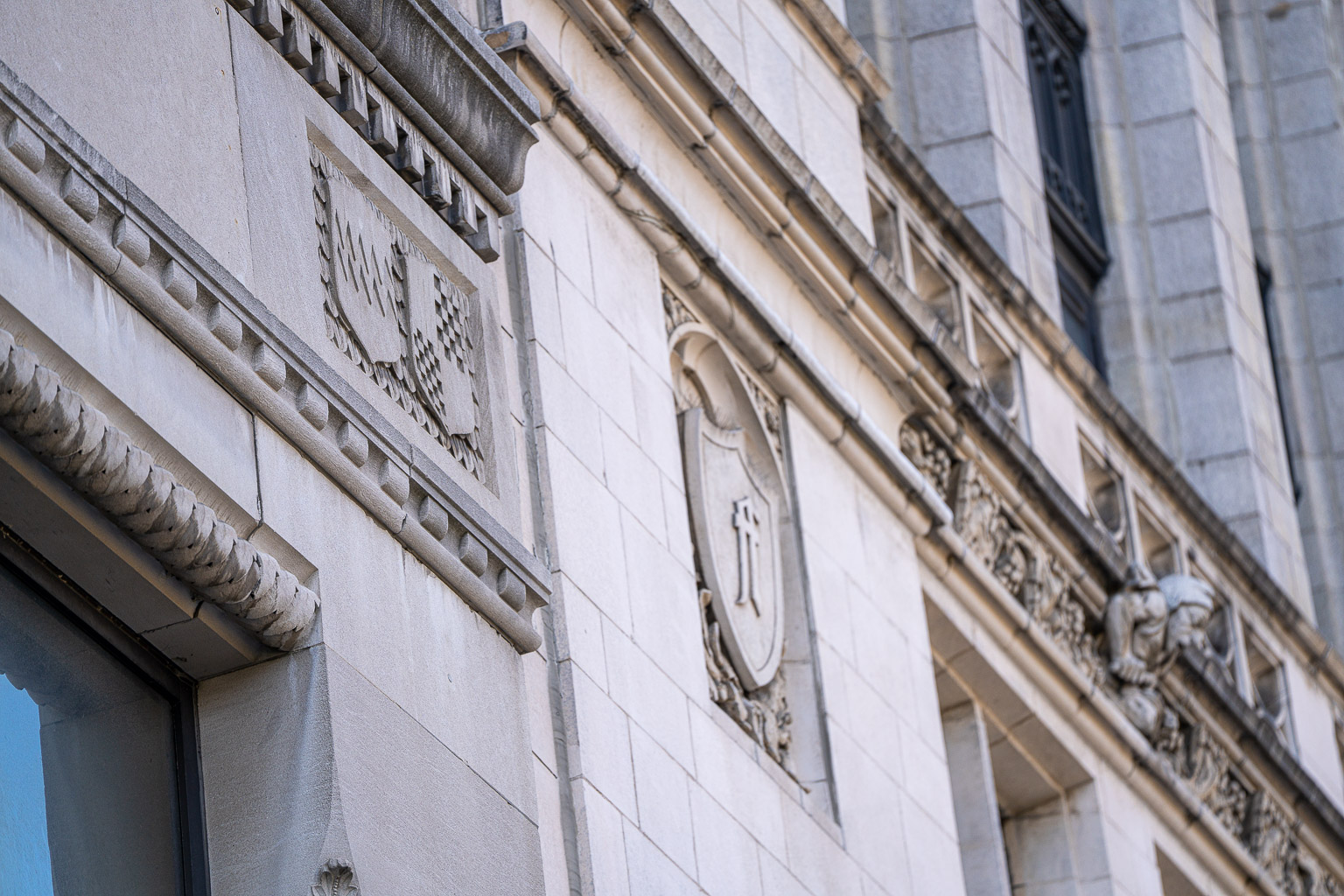
A stone segmental arch is above the windows on the third story (1st and 2nd photo below). At the fourth floor, just under the belt course, two heraldic crests flank each side of the end windows (2nd photo below). The crests contain two lower-case "f's" for Fyfe.
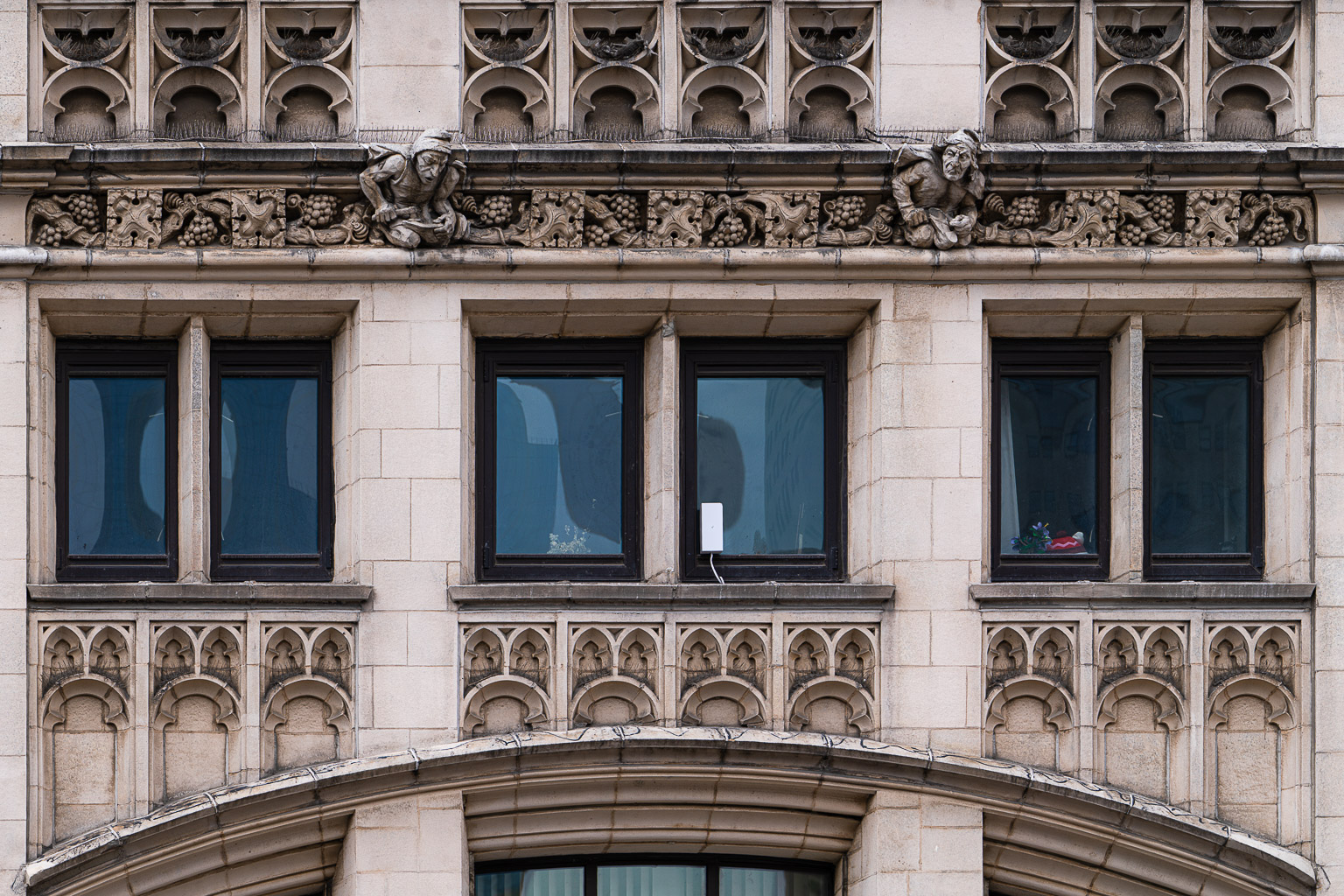
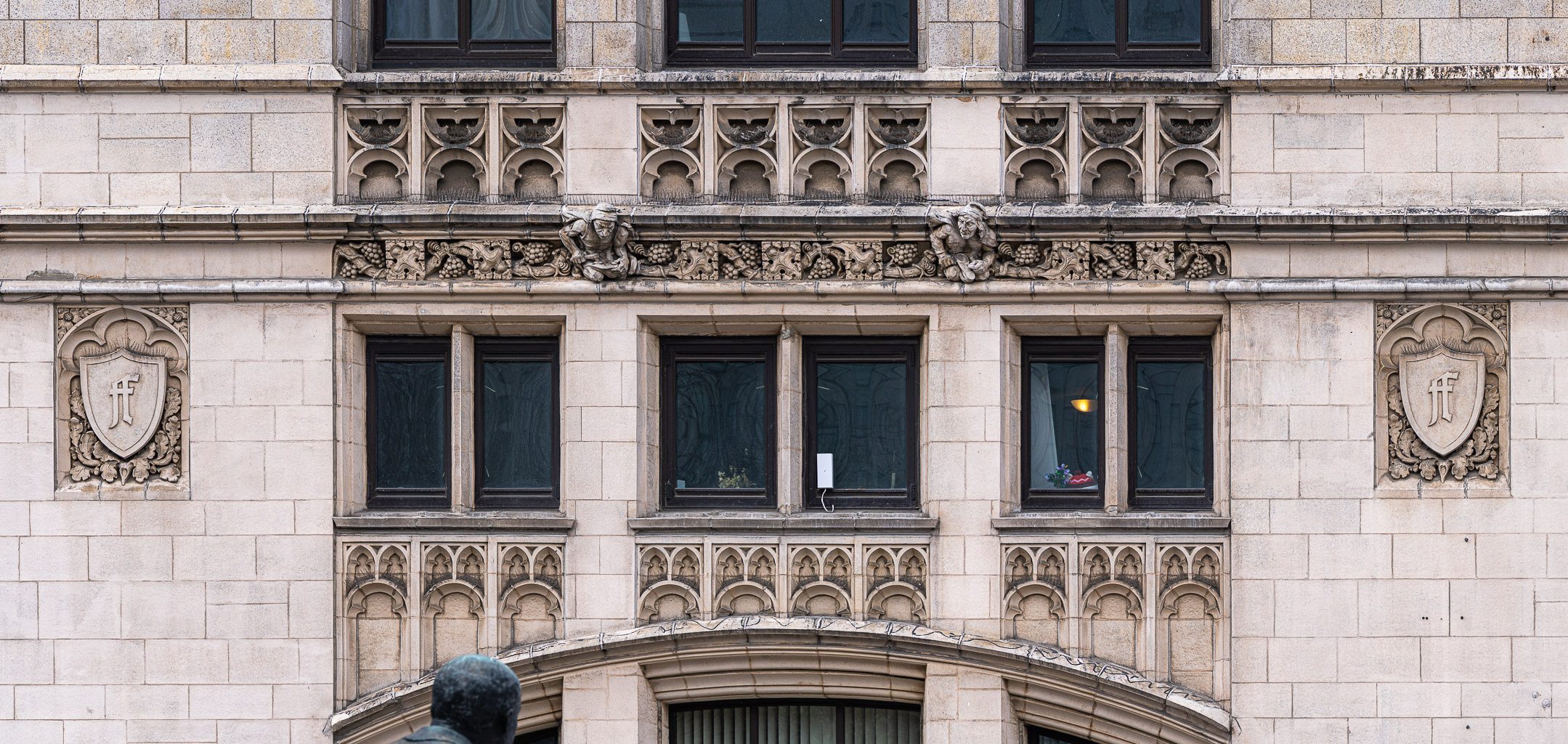
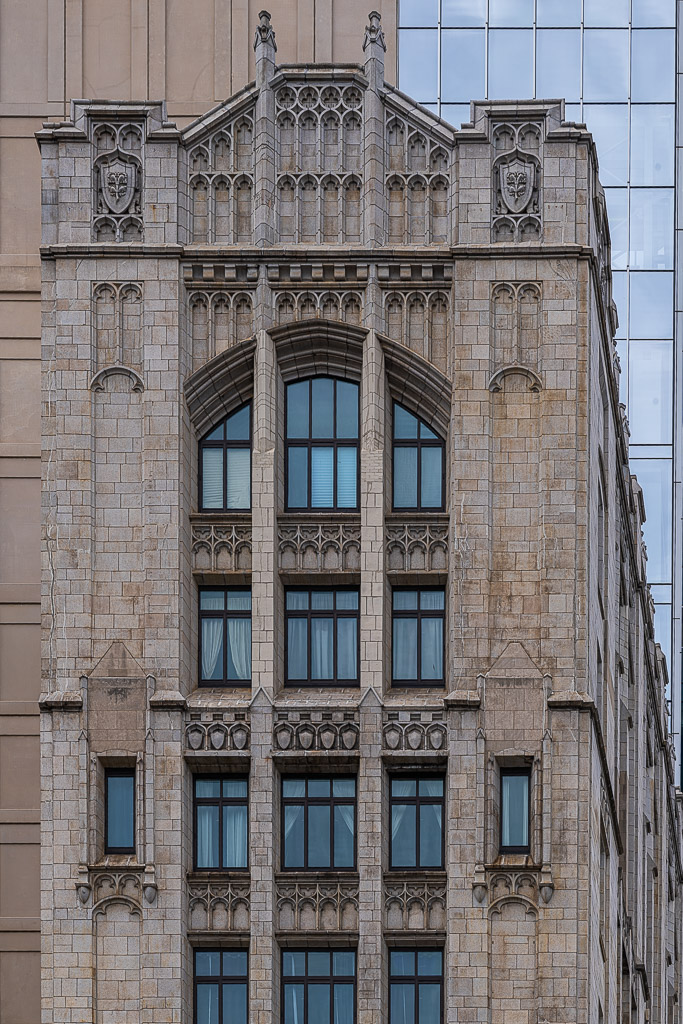
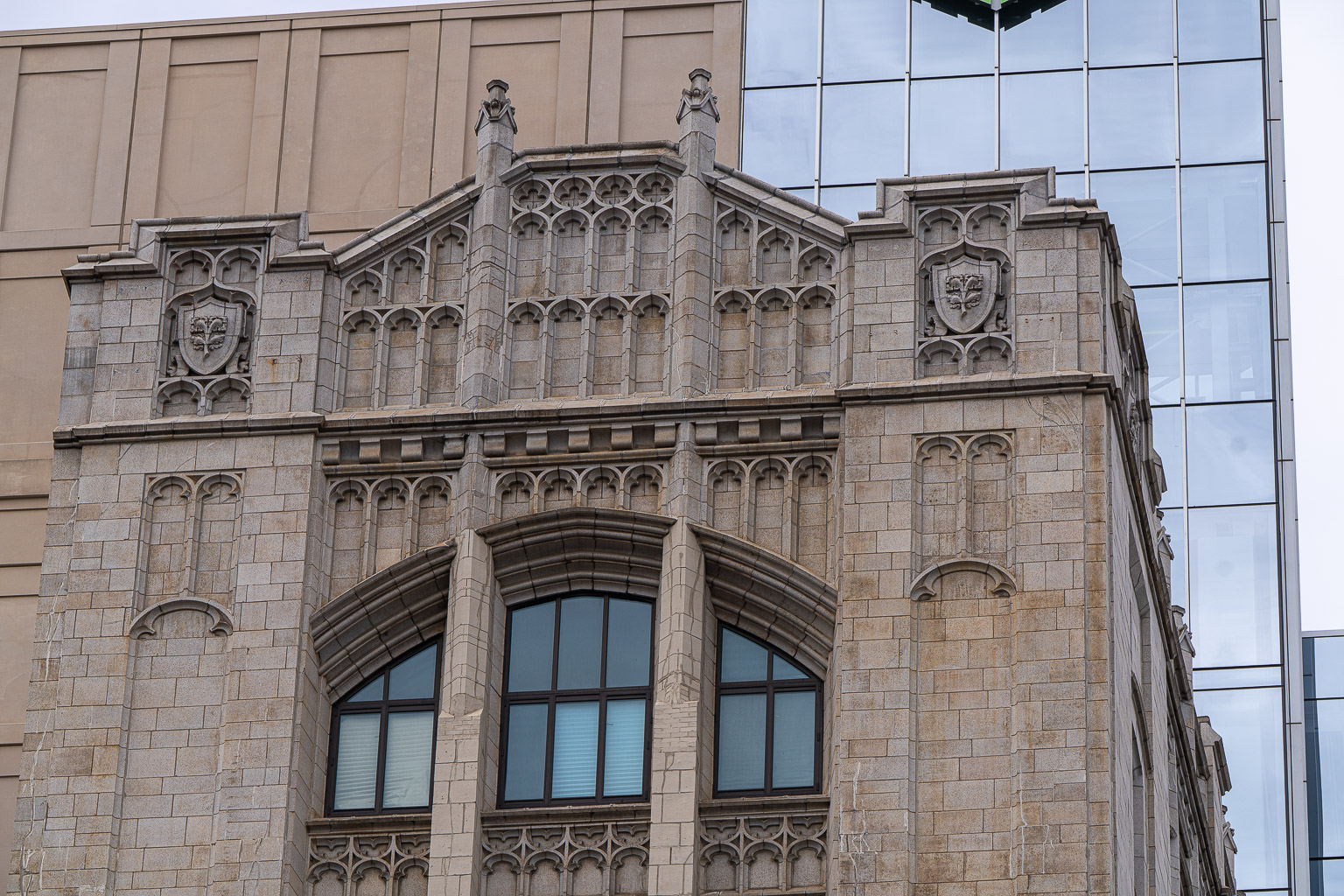
At the eastern and western piers of the Adams façade, two elongated niches rise for seven stories (1st photo below). At the top of the niches are decorative detailing and a 2 over 2 window (2nd photo below). Decorative details (3rd photo below) include a segmental arch at the 14th story windows, which has fretwork in the spandrels. The fretwork continues up to an arched peak at the roofline. Two herald crests are at the roofline on the eastern and western piers. Two short finials are centered in the flat arch of the roof.
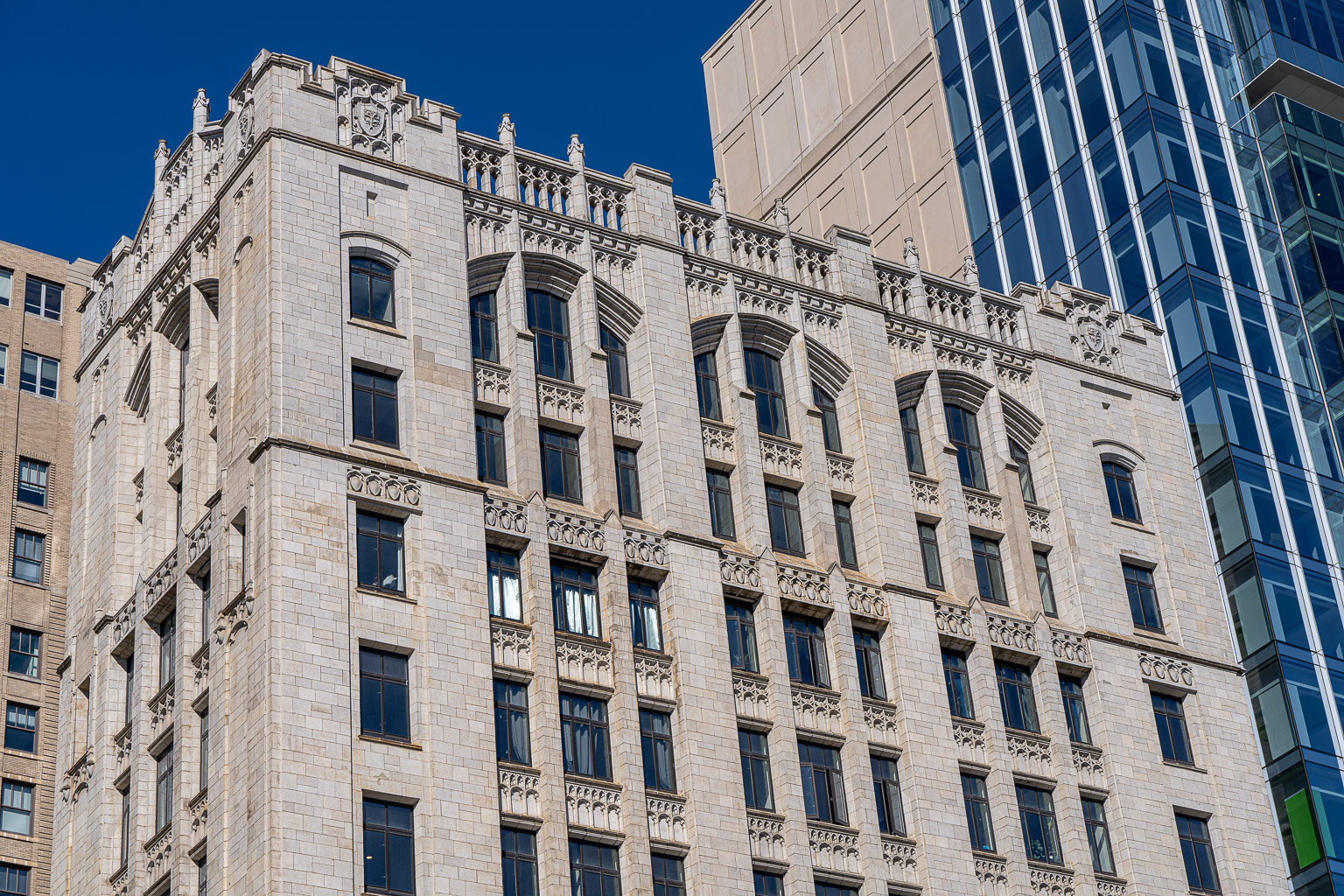
The building was constructed by the R. H. Fyfe & Company retail shoe store. The Fyfe Building replaced two three-story retail brick buildings. The pace of development in Detroit was rushing past the 19th century architecture that had been built even just 30 years earlier. Excavations for the Fyfe Building were started in May 1918, and the top was reached in November 1918, a construction time of seven months. When the company moved into their new building, it was the largest shoe store in the country. Fyfe & Company advertised the building as the "shoe skyscraper", ten stories were used entirely for the retail sale of shoes. Painted signs for Fyfe Shoes can still be seen on the western side (1st and 2nd photos below) and north (rear alley) side (3rd photo below).
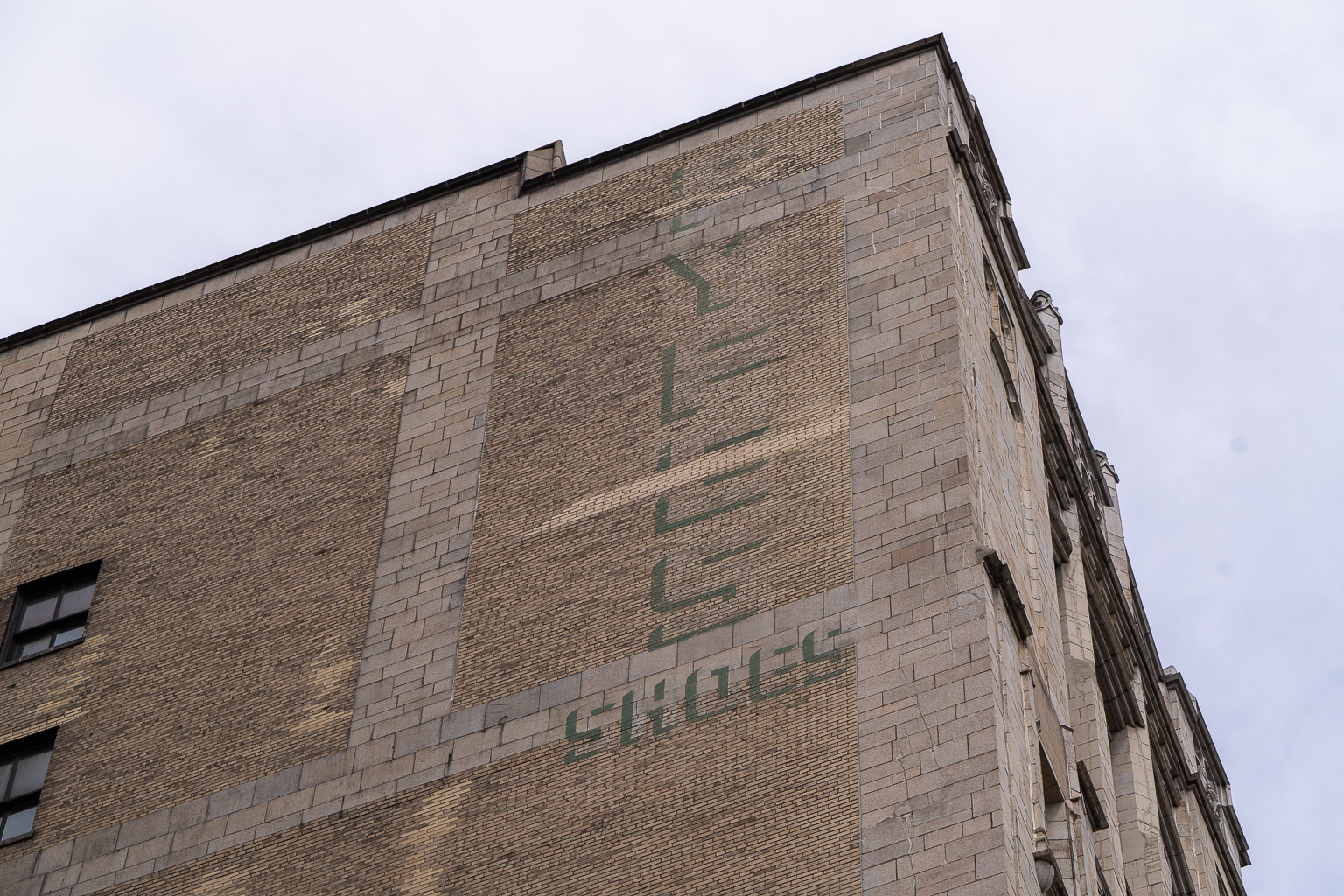
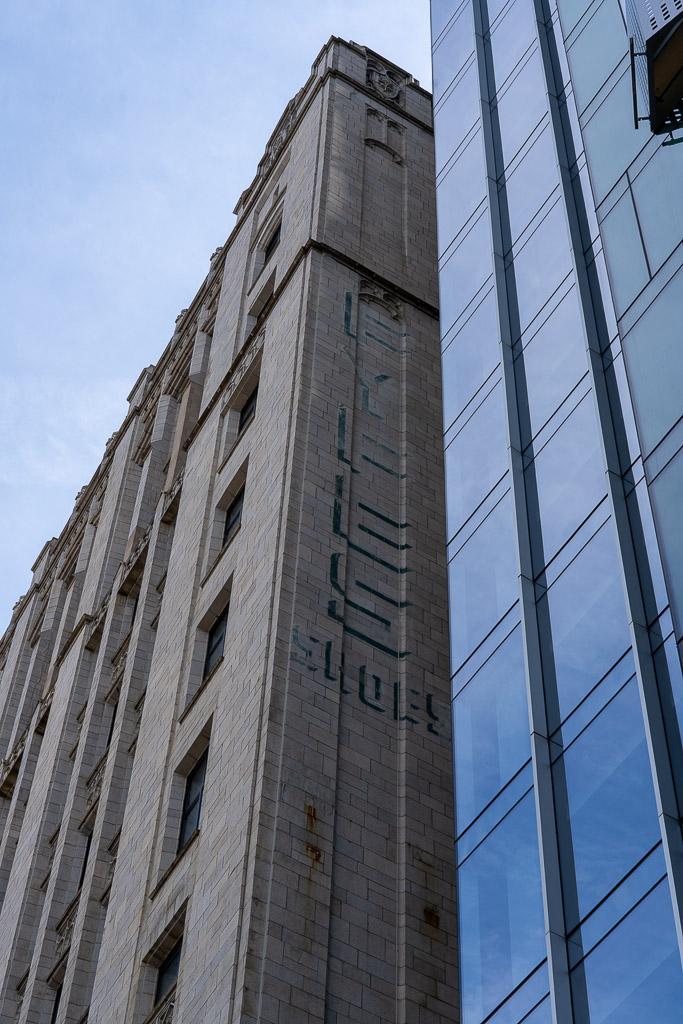
The business was founded in 1865 by Richard Henry Fyfe when he was just 26 years old. Mr. Fyfe had started in the business as a shoe clerk, saving his money until he could set up shop on his own. The firm began in a shop at 83 Woodward Avenue, and expanded to its fifth location at 183 Woodward Avenue, now the site of the Lener building. On March 4, 1917 a fire struck the block which resulted in the planning and construction of the Fyfe Building at Adams and Woodward. Mr. Fyfe stayed in charge of the business until his death in l931 at the age of 92.
The Fyfe Company billed itself as the "World's Largest Shoe Store" and a promotional brochure from 1929 claimed that Fyfe's always had a stock of more than 150,000 pairs of shoes on hand. The "Shoe Skyscraper" stacked up as follows: The street-level space offered men's shoes, riding boots and hand-made shoes. Hosiery for men, women and children was also on the street level. The mezzanine floor was devoted to boy's shoes and men's and boy's slippers. On the second floor were infants, children's misses' and women's shoes. There was a children's barber shop and play room (with a merry-go-round) for children to pass the time while their mothers shopped. The third floor housed women's shoes, galoshes and slippers. The fourth floor had women's high-end expensive shoe styles and evening slippers.
The "most unique feature ever introduced in a retail shoe store" was on the fifth floor - a putting green and driving range. Golf lessons were offered by appointment, and there was a charge of 50 cents for the driving range. Of course that was where they sold golf clubs, bags and golf shoes. This was later converted to a large auditorium for company meetings of the firm's 140 employees.
The sixth floor housed the shoe repair and service department, while the seventh contained the shopping service, mail order department and an expert Chiropodist's office. On the eighth floor were the general offices, while ninth and tenth were reserve stock rooms. The first basement housed retail space as well and carried only women's shoes. This where they sold the lower-end retail shoes, and a brand called "Fyfe's Health Shoes" for women. The second basement contained the building's heating and utility systems.
A tragic accident involved the Fyfe Building during the celebrations of the end of World War I. On Armistice Day, Monday, November 11, 1918, tens of thousands of Detroiters jammed downtown streets for a parade. At about 4 p.m., Lieutenant K. C. Morrow, piloting one of five planes flying formation over the peace parade on Woodward, clipped the flagpole on top of the Fyfe Building and crashed. He was killed, one of last casualties of the war to end all wars.
In the 1920s, 30s, 40s and 50s a 7-story vertical neon sign for "Fyfe's Shoes" hung from the Woodward façade at the corner of Adams. There is still a painted sign on top floors of the western façade (2nd photo above). The Fyfe Company used a line drawing of the building as an image in advertising promoting their business. Downtown retail business was changing, and in 1956 a section of floor space in the "Temple of Shoes" was set aside for the sale of women's hats.
A Detroit Free Press article in 1968 stated that the Fyfe Company had sold the building although they would still retain a shoe store in the lower floors. The article reported that an insurance company was occupying the eighth floor, and that the upper floors would be converted into luxury apartments. In the late 1970s, the building was converted to sixty-six apartment units. Sibley's Shoes for men moved into the first floor retail space and is still there today.
The Fyfe Building has been sold twice since the 1980s.
More photos and more description of this building can be found at HistoricDetroit.org.
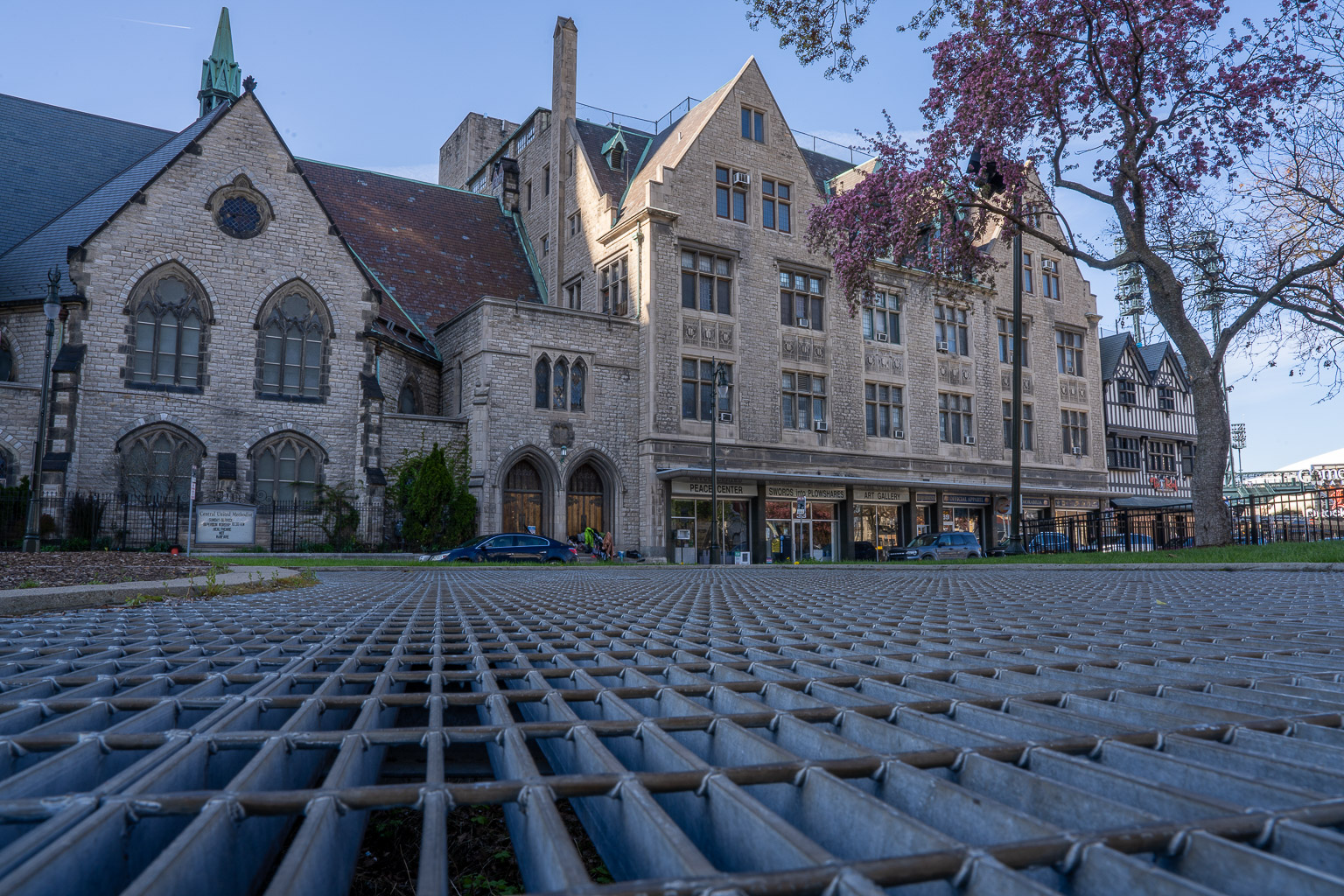
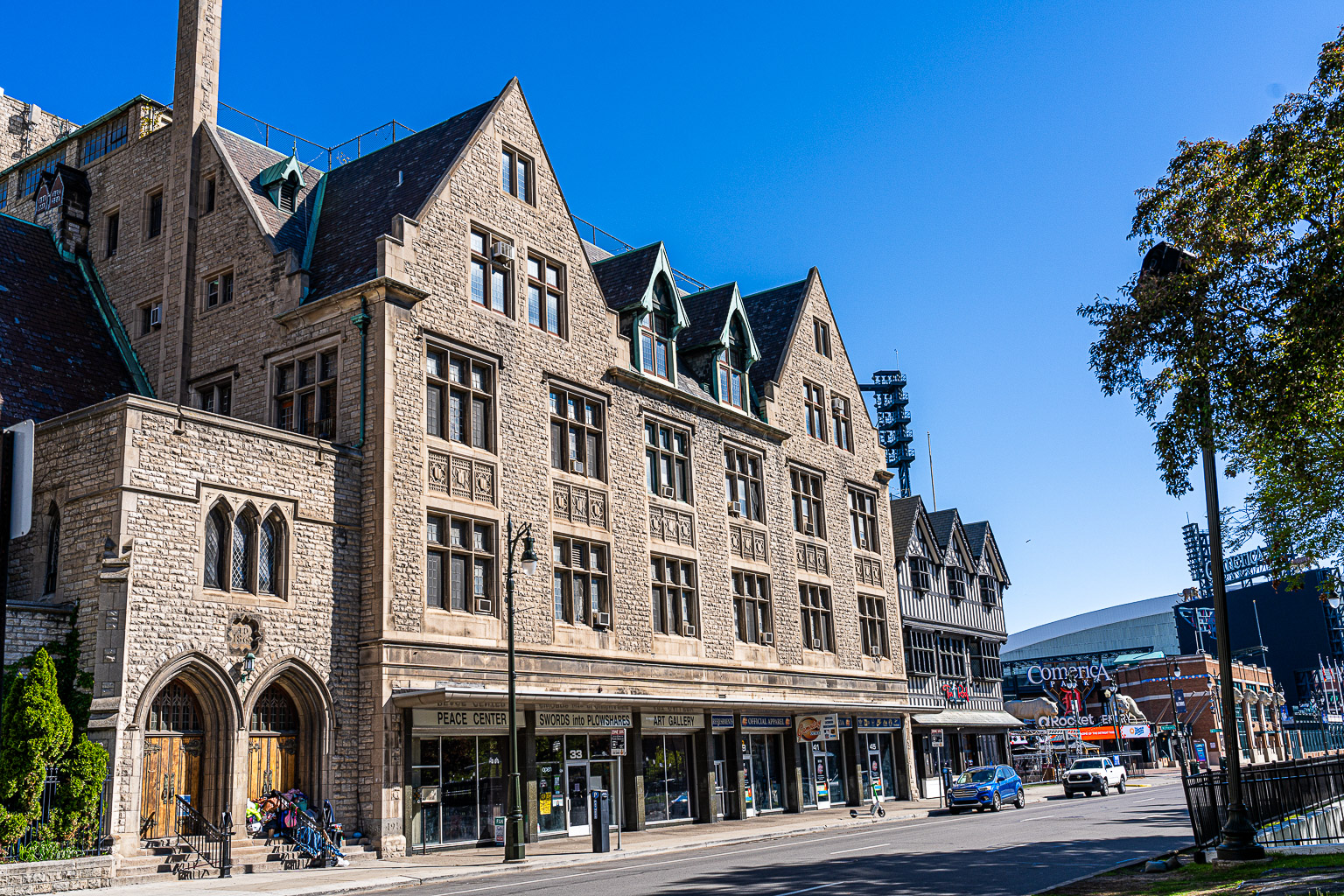
The Central United Methodist Church is located on the northeast corner of Adams and Woodward Avenues. The church property is composed of two buildings: the church building on the corner and an annex on the east side of the church along Adams. The architect, Gordon W. Lloyd, designed the church in the Gothic Revival style was built in 1867. The annex designed by the firm of Smith, Hinchman & Grylls in the Tudor Revival style with Gothic elements incorporated in the design was built in 1915.
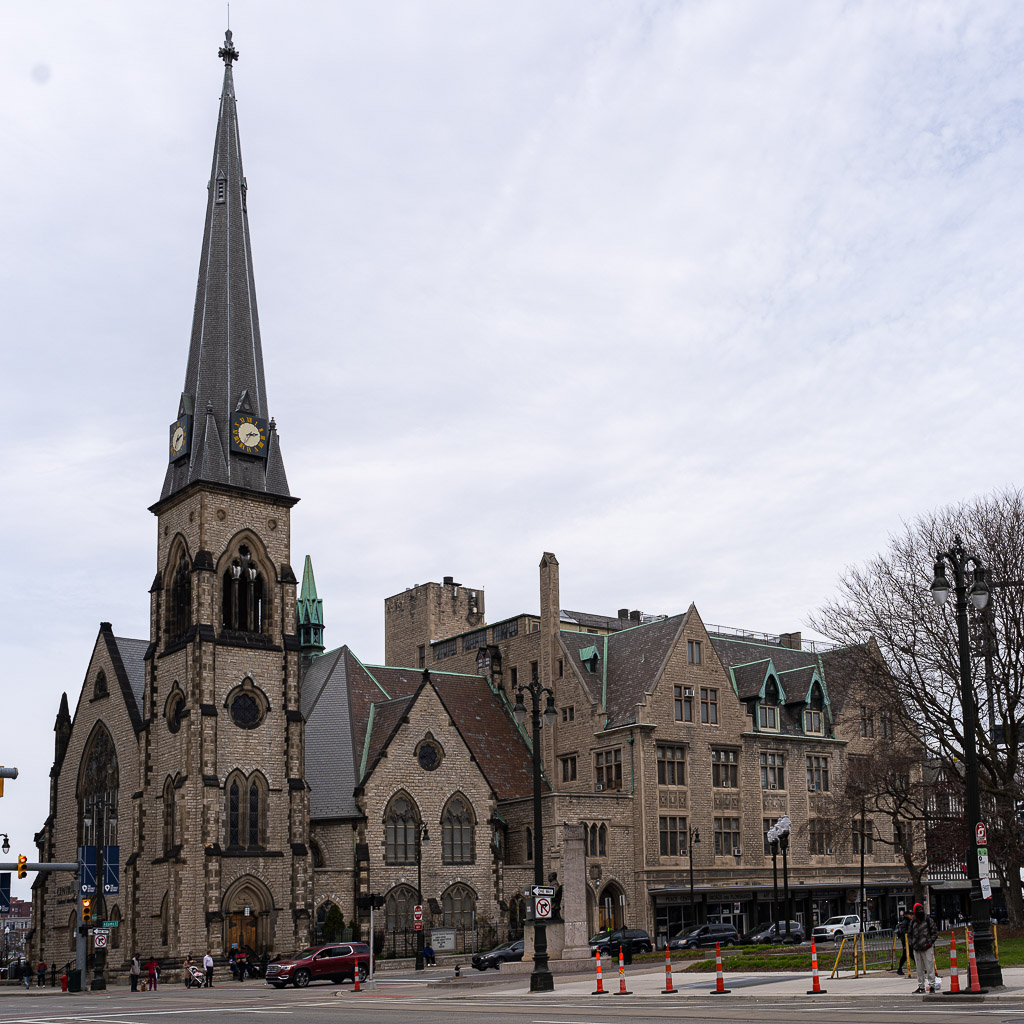
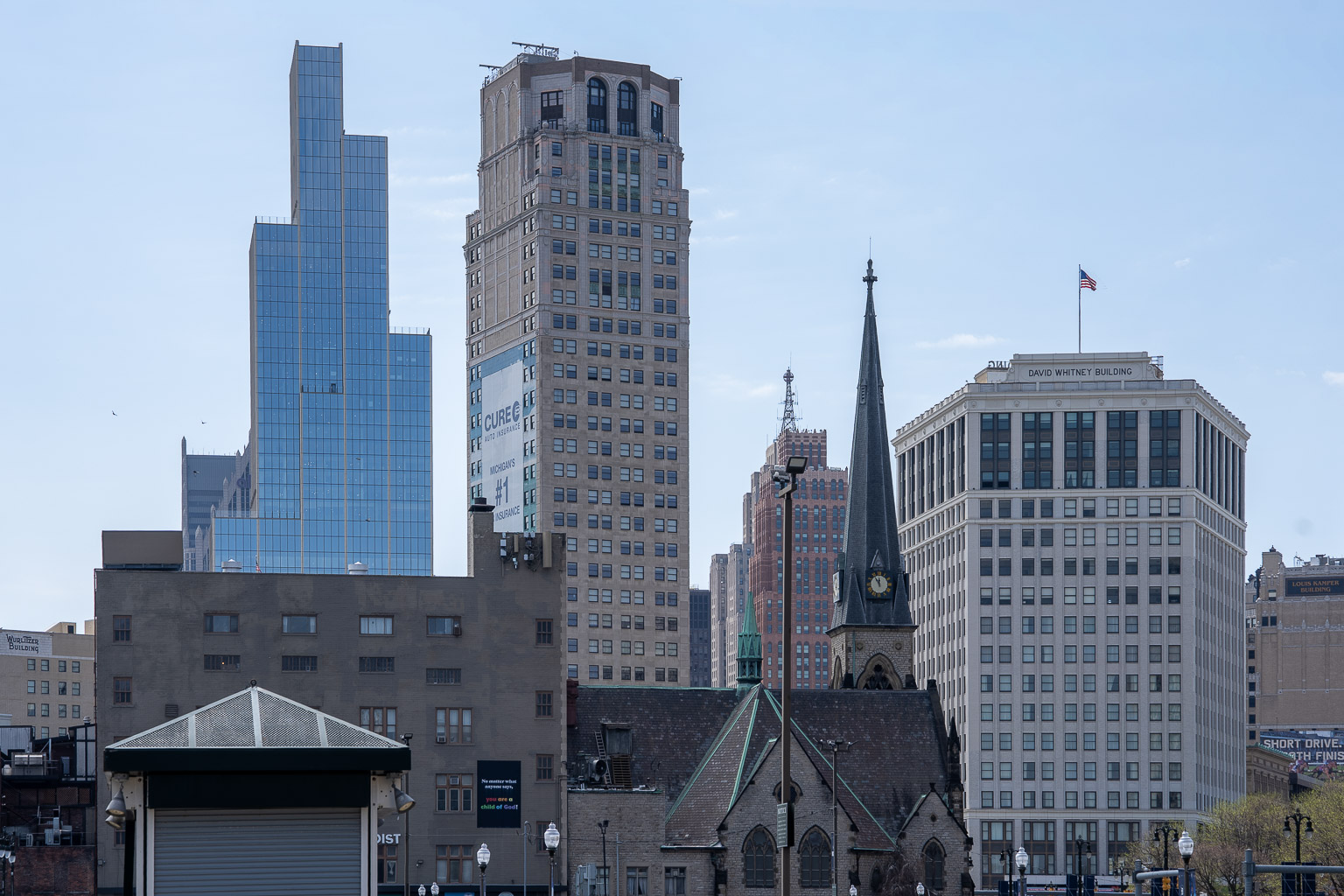
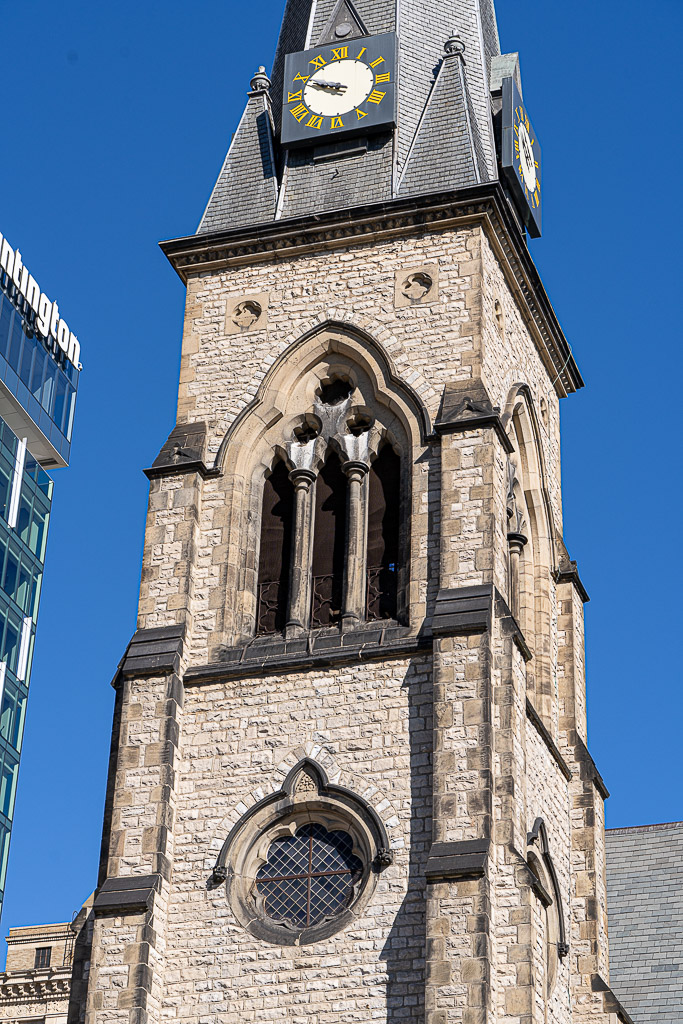
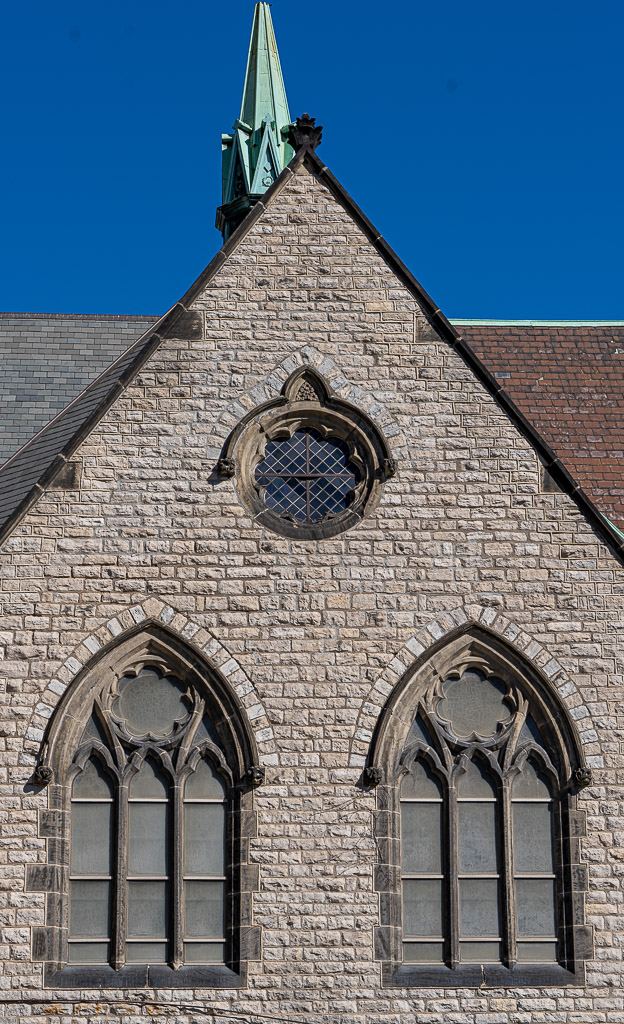
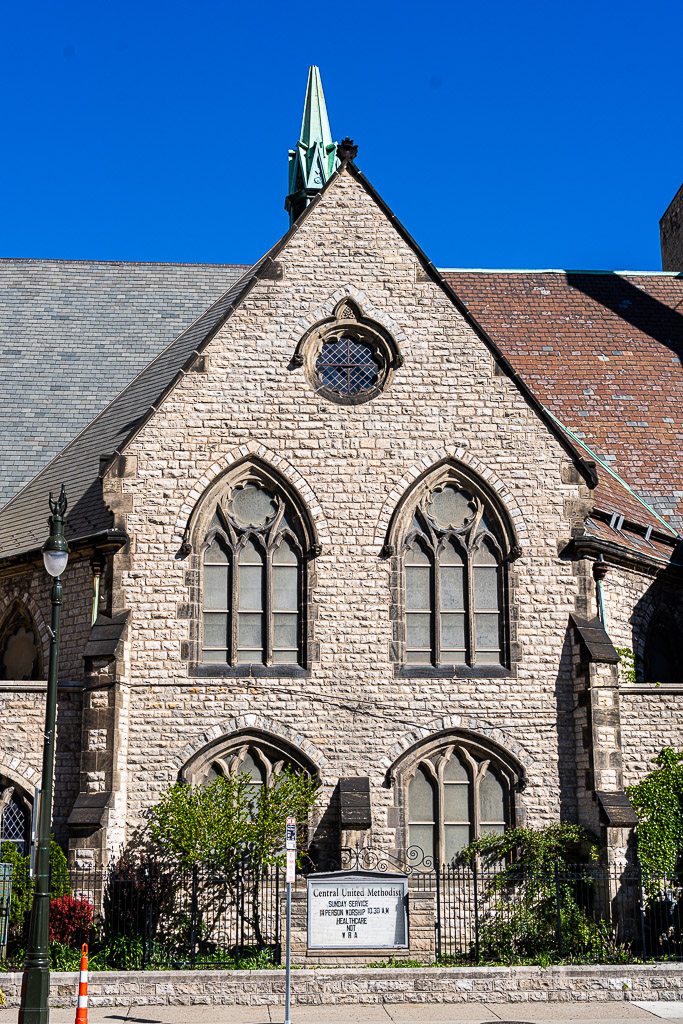
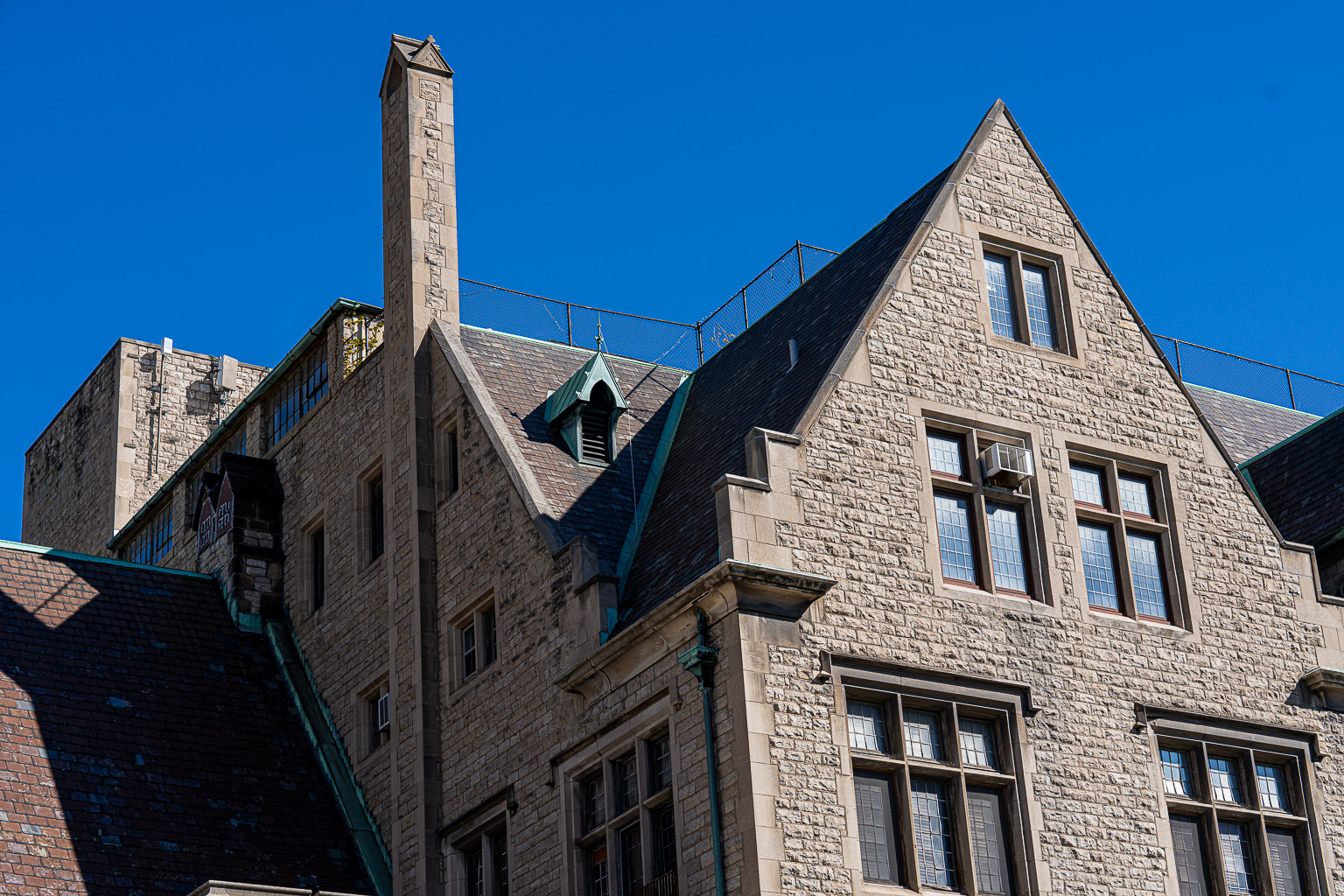
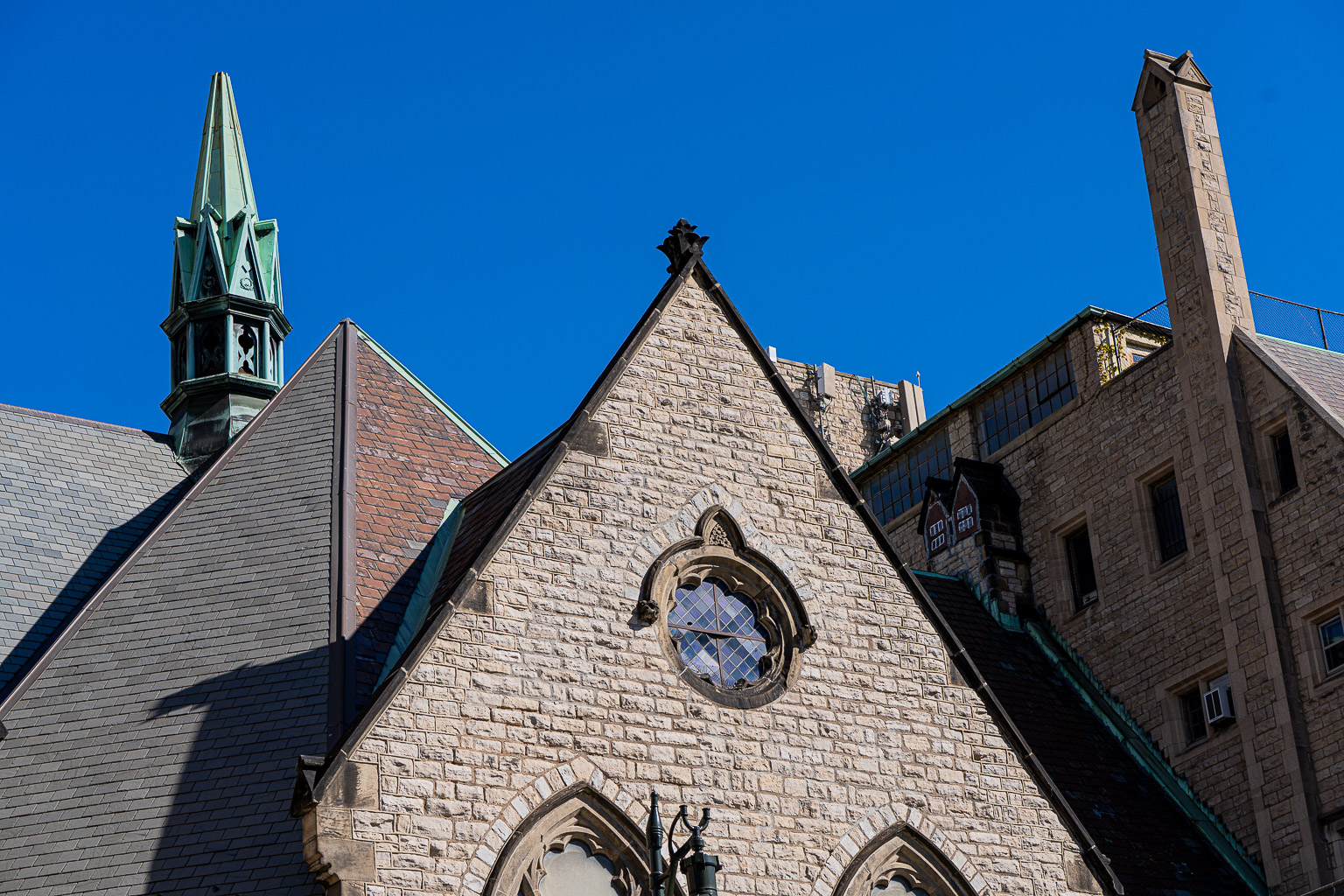
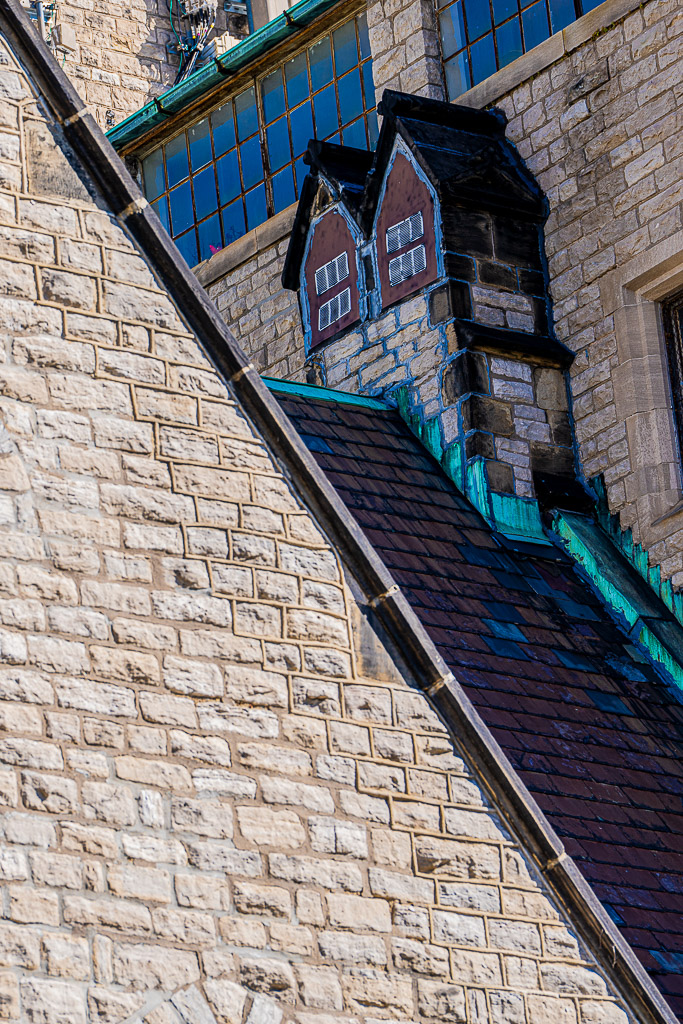
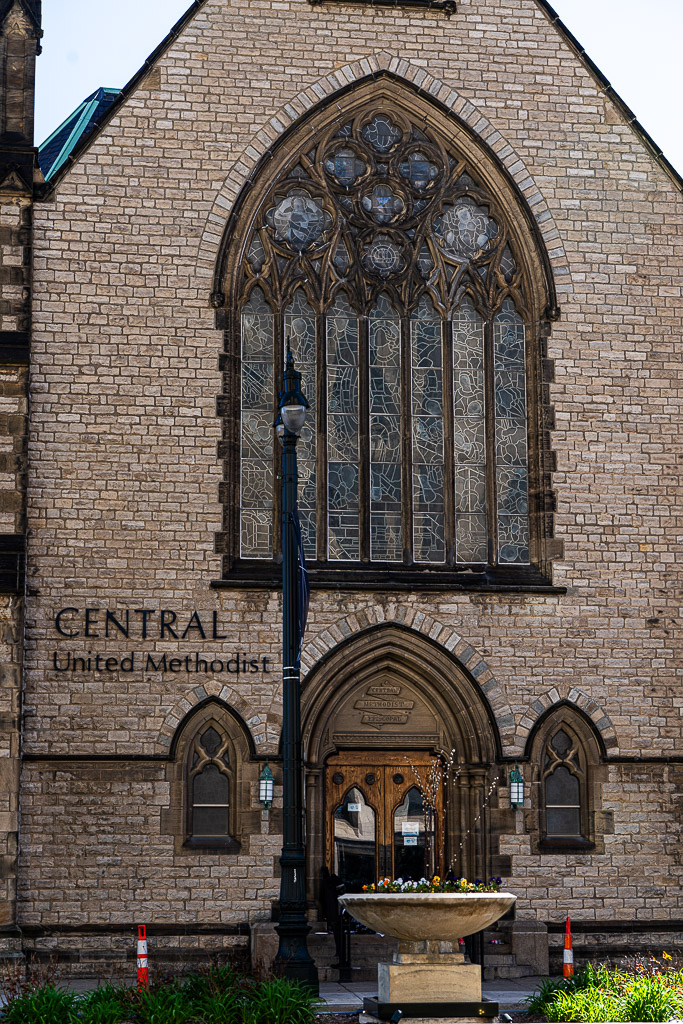
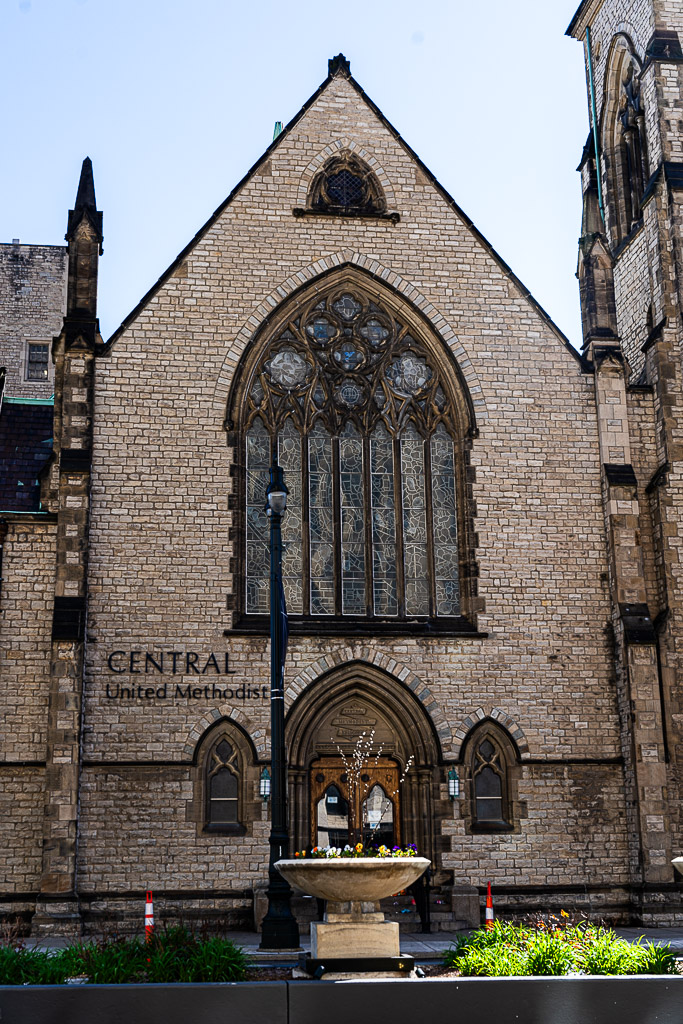
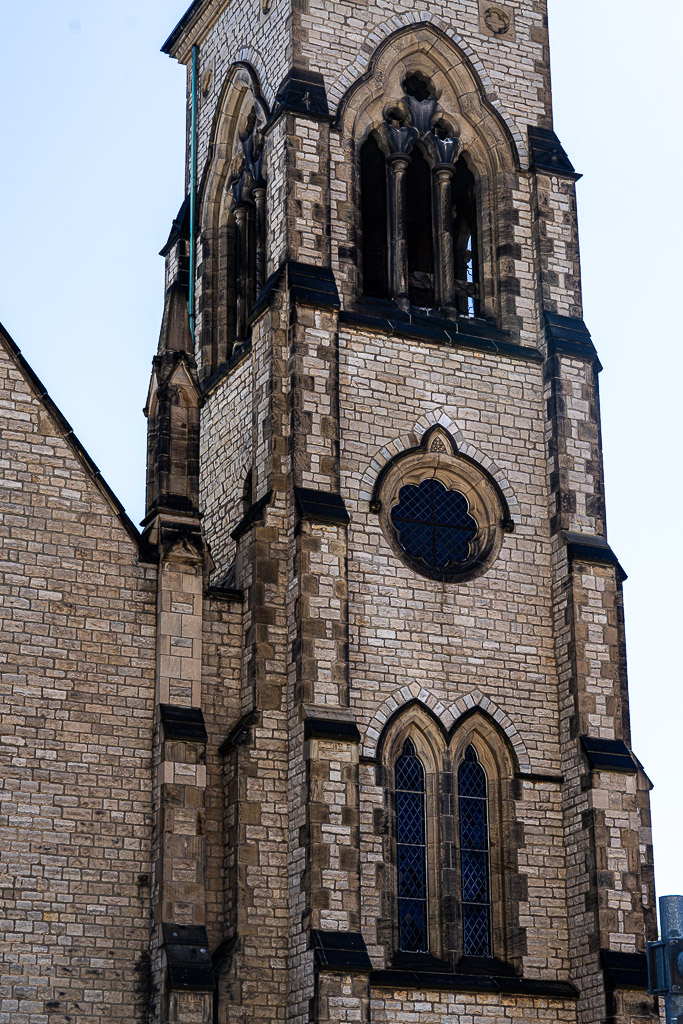
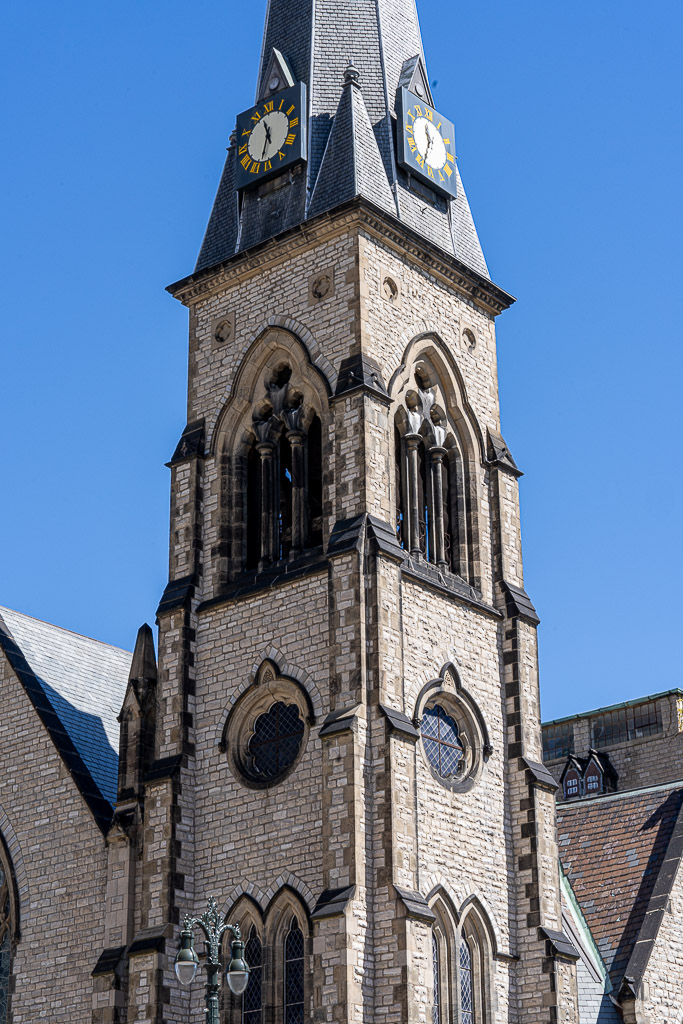
This church is constructed of gray limestone ashlar blocks, and the annex is constructed of a similar gray stone. The most prominent feature of the church building is the corner tower which rises four stories and is topped by a broach spire with clocks on each face. The tower contains a Tudor arched entrance on the first floor of the south elevation and a window on the west elevation. The upper three stories also contain windows on the third, and arched windows with a trefoil in the fourth.
The west, gabled elevation is symmetrical and contains the main double door entrance flanked by arched windows. A large stained glass arched window which measures 18 feet wide by 28 feet tall is located over the door. The south elevation of the intersecting gabled wing is also symmetrically arranged and features two Tudor arched windows on the first and second "floors".
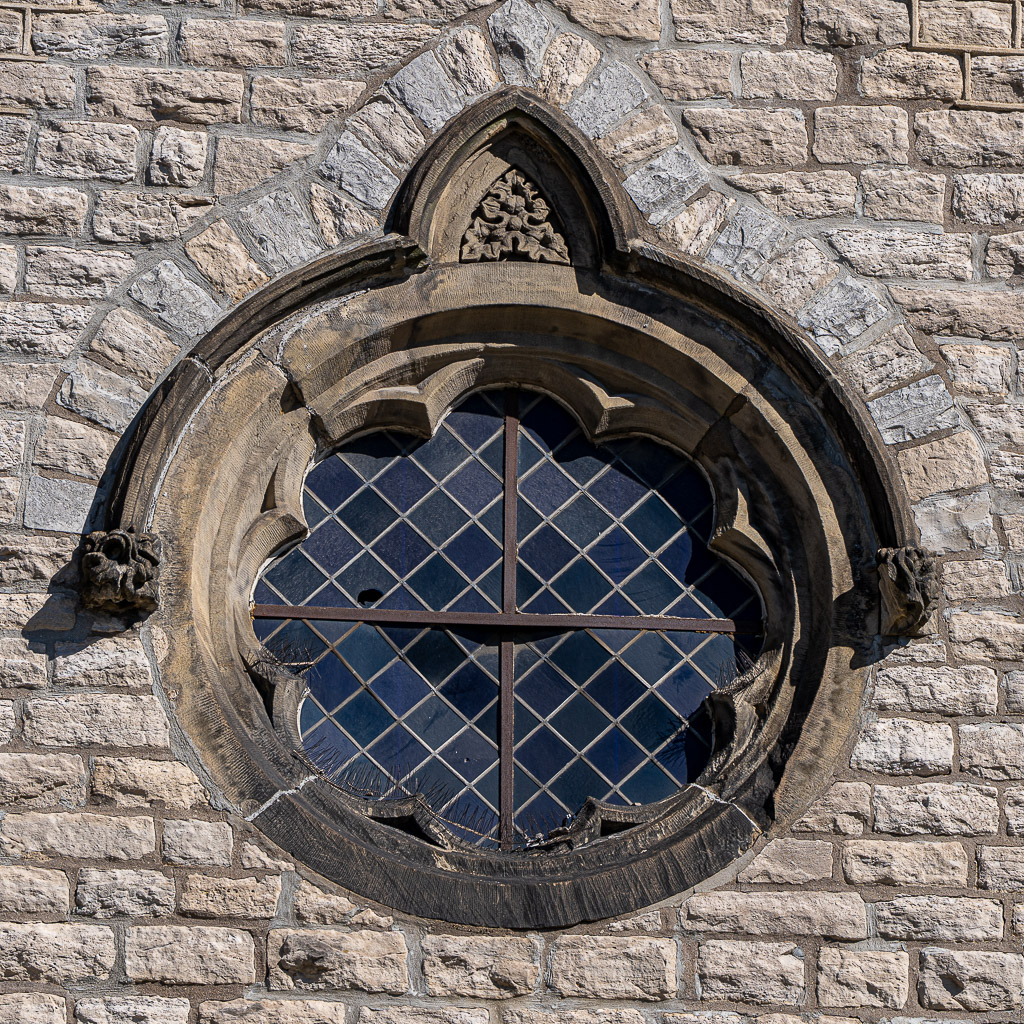
A small window is within the gable peak.
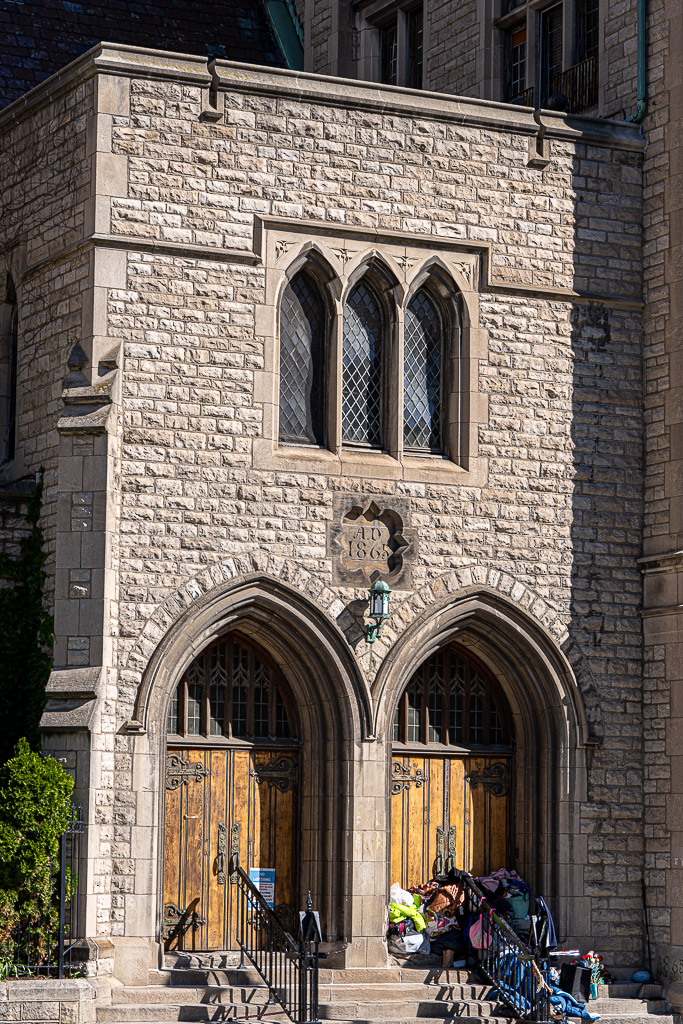
The church and annex are connected by a thin, two-story section with a double entrance on the first floor and a series of arched windows on the second.
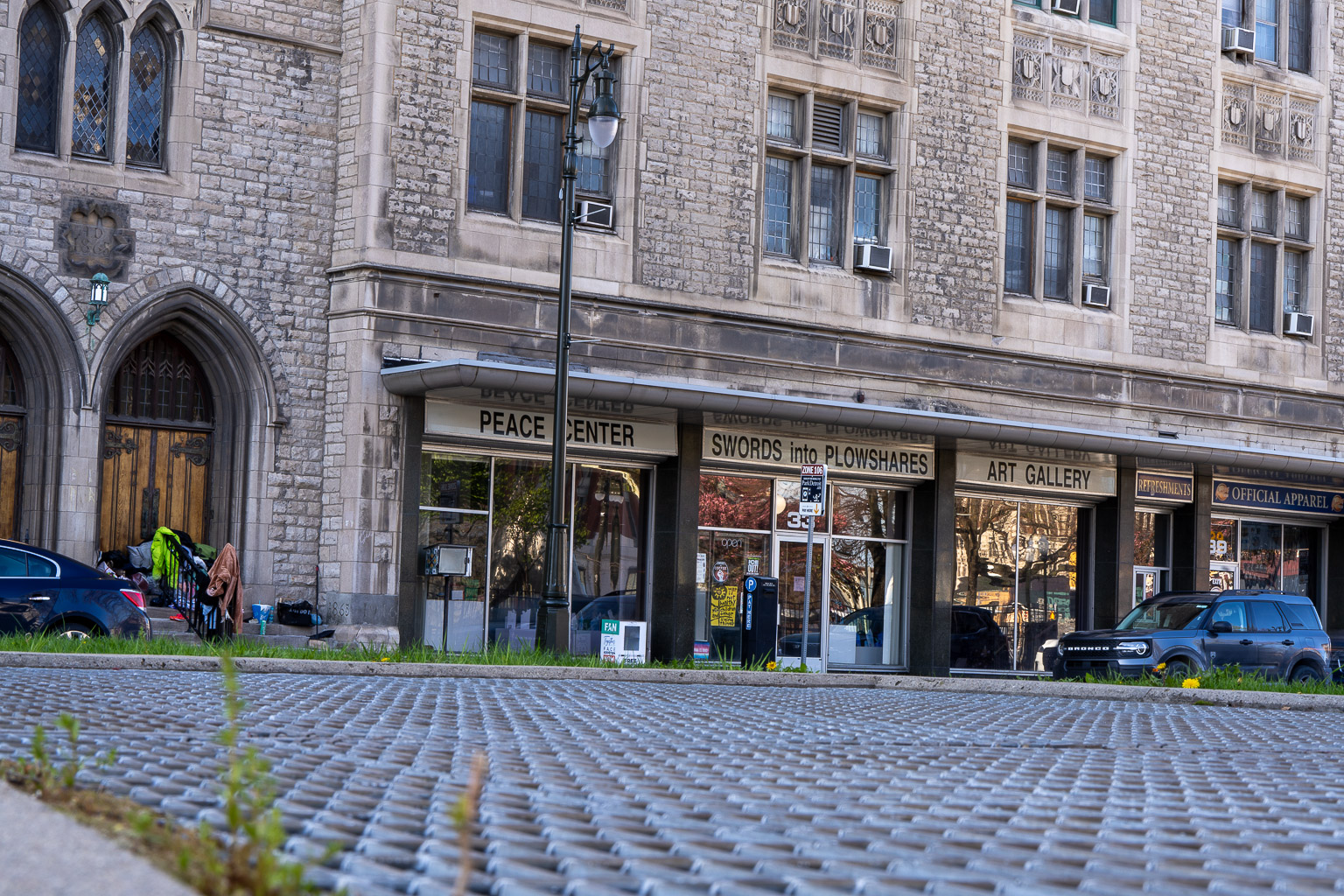
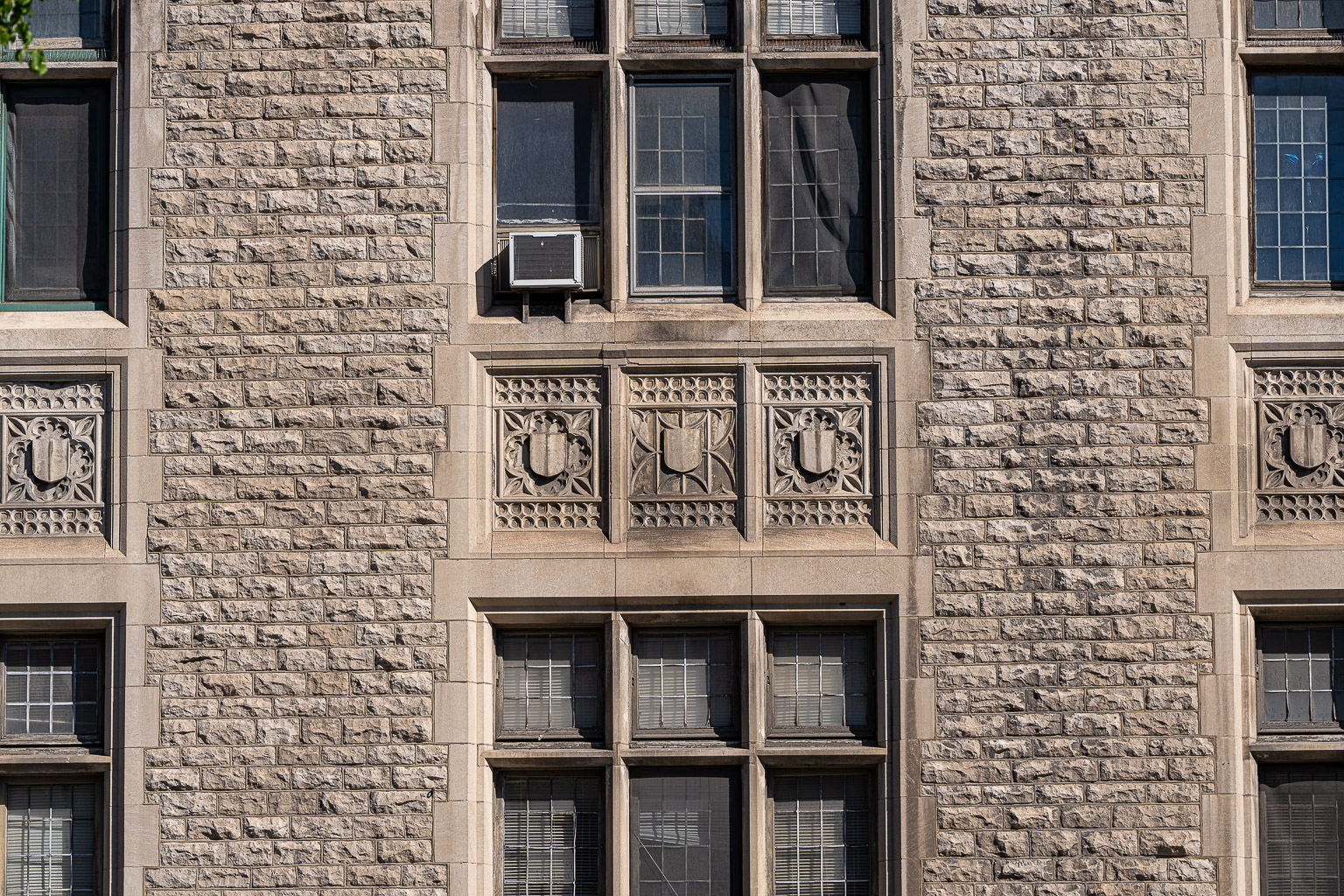
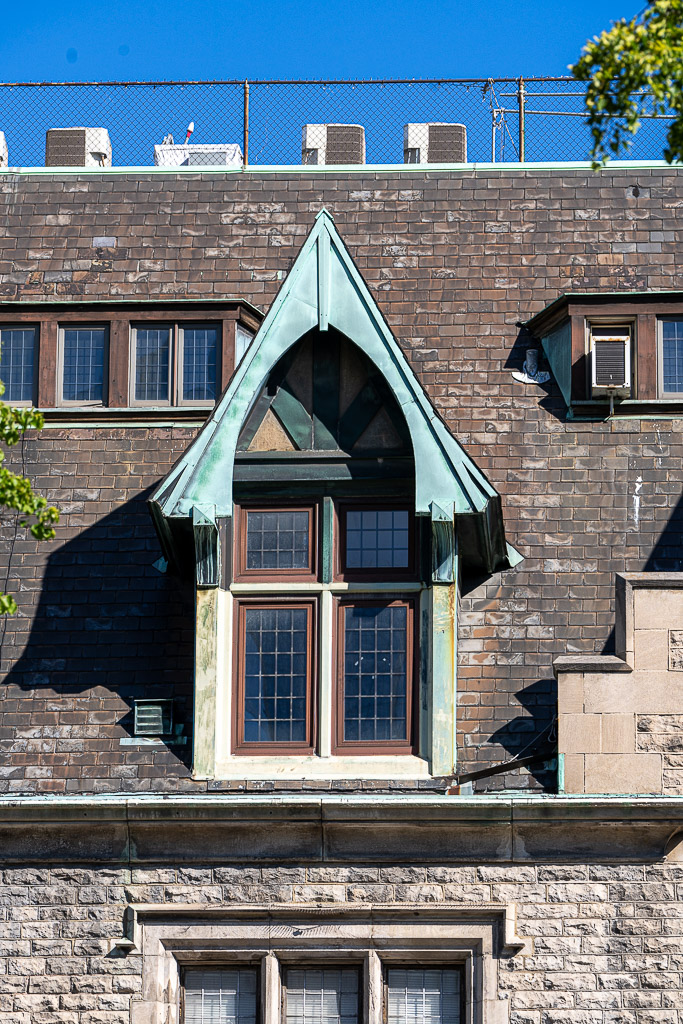
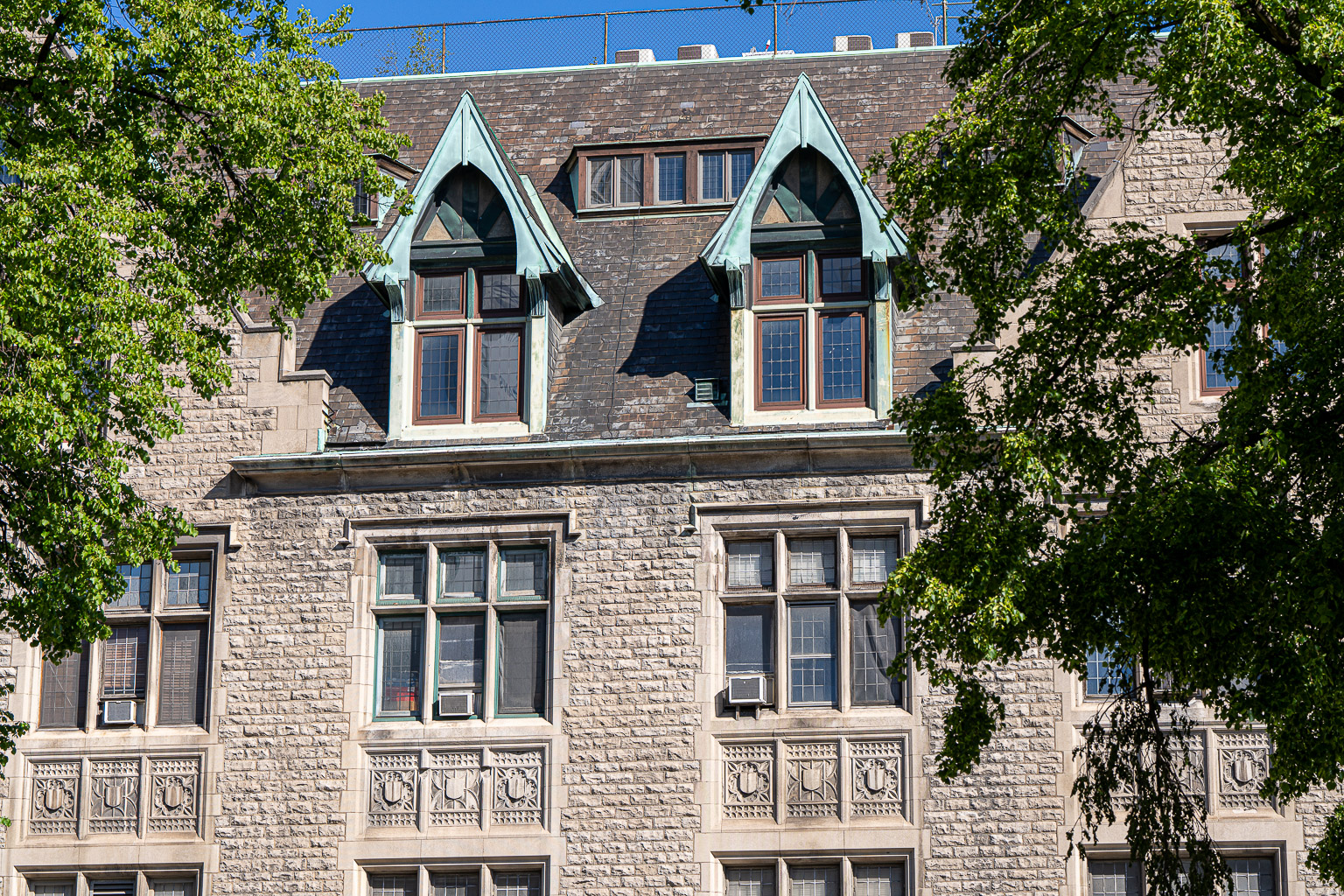
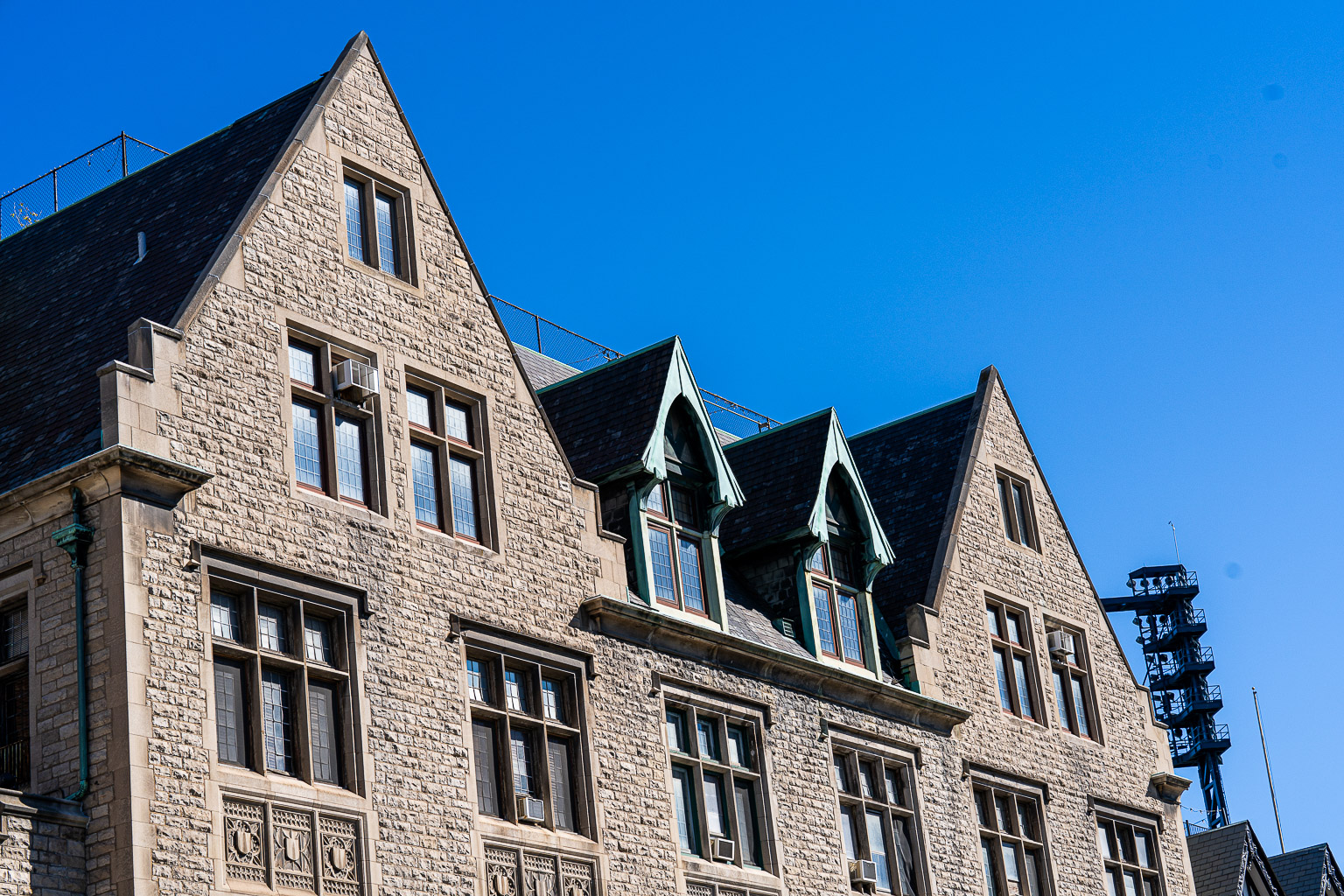
The annex to the church is a five-story symmetrically arranged building with an ashlar face granite façade. The façade is divided into six bays on the first three floors. The first floor, containing commercial storefronts underwent a renovation which applied polished granite facing, stainless steel awnings and large plate glass windows. The second and third floors contain a triple window in each bay. The spandrel between the second and third floors contains three panels, each with a stone shield in the center. The two outer bays on the east and west of the annex rise into gables which contain two double windows on the fourth floor and a small double window on the fifth. Two dormer windows with Gothic detailing are located over the central bays and project from the side facing gable roof.
The Central United Methodist Church, located on the northeast corner of Woodward and Adams Avenues, was constructed in 1867, however, its parish dates back to the early 1800s in Michigan. Talk of constructing a new church began after the parish church, then called the Congress Street Society, burned down in 1863.
The Congress Street Society united with the First Church in 1864. The two parishes combined their resources to build a stone edifice on the site already owned by the Congress Street Society at Woodward and Adams. The location included five lots and was purchased for $8,600. The decision to move to the new location was controversial because the site was considered to be too far north of the urban core. Later the area became known as Piety Hill, clustered with churches from a variety of faiths.
The first building erected on the site was wood frame chapel. The cornerstone of the Central United Methodist Church building was laid on July 3, 1866 and the completed building was dedicated on November 17, 1867. Spanning 100 feet on Woodward Avenue and fronting 190 feet on Adams, the church and chapel cost $136,000.
Gordon W. Lloyd was allowed a great opportunity for originality in the design of Central United Methodist. Unlike other faiths, Methodists were not bound to a traditional architectural concept. Advantageous for both seating and lighting are the broad semi-octagonal transepts. Large gables on the faces of the transepts serve to break up the external mass of the building. An interesting three-dimensional quality was achieved in the structure's design and a strong vertical accept was provided by a corner tower with a broach spire. The spire is 180 feet high and the bell weighs 4,600 pounds, and there is a clock in the tower that has a seven foot diameter dial. The church seated a body of 1,140 people.
Central United Methodist was considered an architectural gem of its day and it was praised by the Northwestern Christian Advocate of Chicago. In 1883 the church erected a parsonage on two Adams Avenue lots and in 1892 work continued on the church building itself. The chapel was enlarged and an extensive remodeling and redecorating of the interior was completed. At this time, the church was one of the most prominent in the Detroit area, drawing an average of 600 people every Sunday.
However, Central Church's position in the community changed greatly. When it began at the Woodward and Adams location, it was considered to be on the outskirts of town. Within three decades, it became a downtown church as members of its parish moved to "suburban" areas such as Brush Park. The church adopted a position that if it were to remain an influence in the community, it would have to adapt to the human needs of the time. The church's mission was to assist in the social life of Detroit's new arrivals. To fill this need, plans for an expanded church began in 1912. On the site immediately adjacent to the church on the east was erected a six- story building. Designed by Smith, Hinchman & Grylls, it supplied the site of the varied social, philanthropic and religious activities that were an important part of the church's program.
Extensive remodeling of the Central Church annex has taken place over the years. When the addition was completed and dedicated in 1916, there were six retail stores on the ground floor that provided an income used to reduce the indebtedness of the building. The second and third floors were devoted to a Sunday school auditorium that, with its balcony, could seat 2,000 people. Open from the auditorium were various rooms for prayer meetings, class meetings, and motion picture equipment. The fourth floor was divided into classrooms, club rooms, kitchen and pantries. The banquet hall was capable of accommodating more than 500 for dinner. The fifth floor of the Central Church building was devoted to a gymnasium, showers, lockers, bowling alley, hand ball courts, and living space for a custodian.
A grand-scale renovation came to the church in the 1930s. The City decided to widen Woodward Avenue from Adams northward, only affecting buildings on Woodward's east-side, including Central United Methodist Church and St. John's Episcopal Church. The west-side of the street, comprised mostly of theaters, was left intact.
Central Church's administration decided it would not be necessary to demolish the building, but that a 30-foot section between the transept and the front of the church could be removed. The courts awarded the church a settlement of $514,650 in 1932 with which it could accomplish this feat. The exact amount of the property to be removed was 28.4 feet. In newspaper reports of the time, moving of the 183-foot spire and front segment was called an engineering feat unparalleled in the city's history. The 100 by 27-foot section of the church was estimated to weigh more than 2000 tons. The project was believed so perilous that no insurance company in the United States would accept a risk on its success. Finally, Lloyd's of London consented to underwrite the job and the move was a success.
Central United Methodist Church was a leader in demonstrations in support of peace and against war, the arms race, nuclear weapons, and universal military training. These activities, coupled with a church policy that allowed rental of the church hall to any group not seeking to over through the government by force, brought protests to the doors. The church, however, prides itself in adapting to the physical and sociological needs of the City through the years.
Today (2026), the church serves to feed and shelter the homeless. Due to how busy they are with this mission, I was denied entrance to photograph the church.
(Local Historic District-designated in 1983)
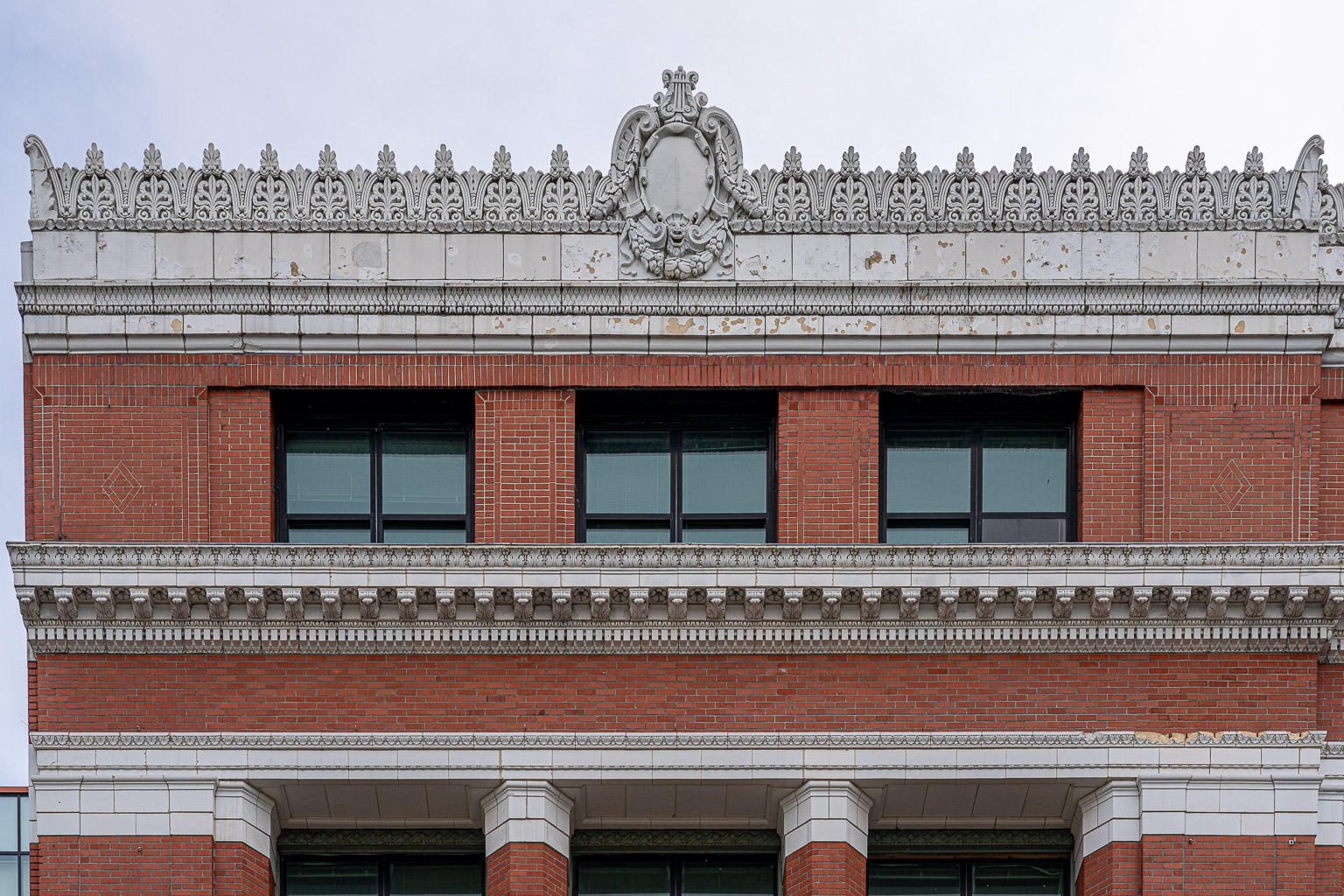
Located on the corners of Broadway and Madison at Grand Circus Park, the Capitol Theater was the first in a series of palatial vaudeville and moving picture houses built in the Grand Circus Park area in the 1920s. Designed by prominent Detroit architect C. Howard Crane, the building was constructed in the style of Europe grand opera houses. The 4,250 seat theater claimed to be the fifth largest in the world when it opened on January 12, 1922. Crane went on to design other theaters in the city. His most notable commissions included the Fox Theater, Gem Theater, and the acoustically perfect Orchestra Hall. His genius for theater design took him to cities around the world.
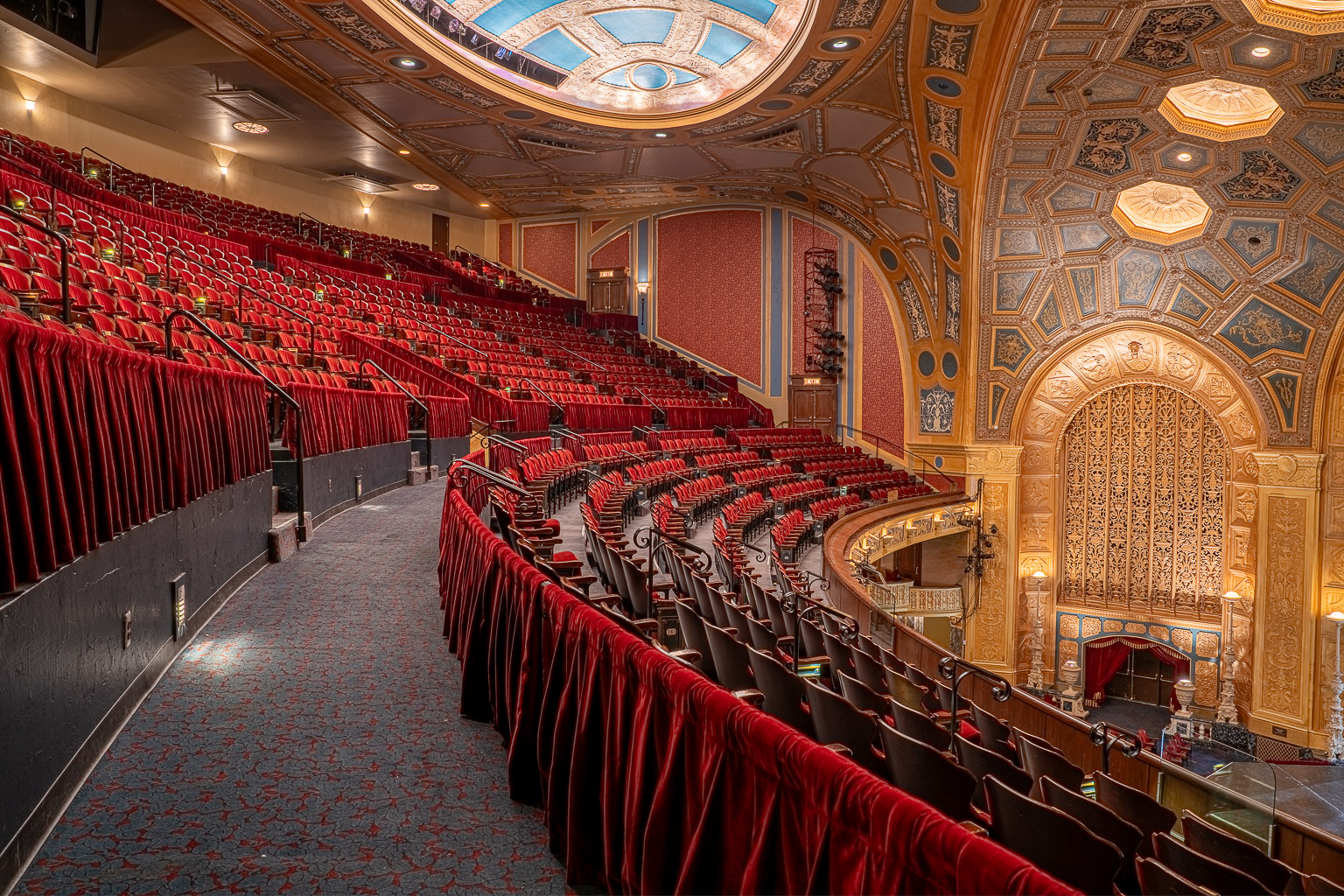
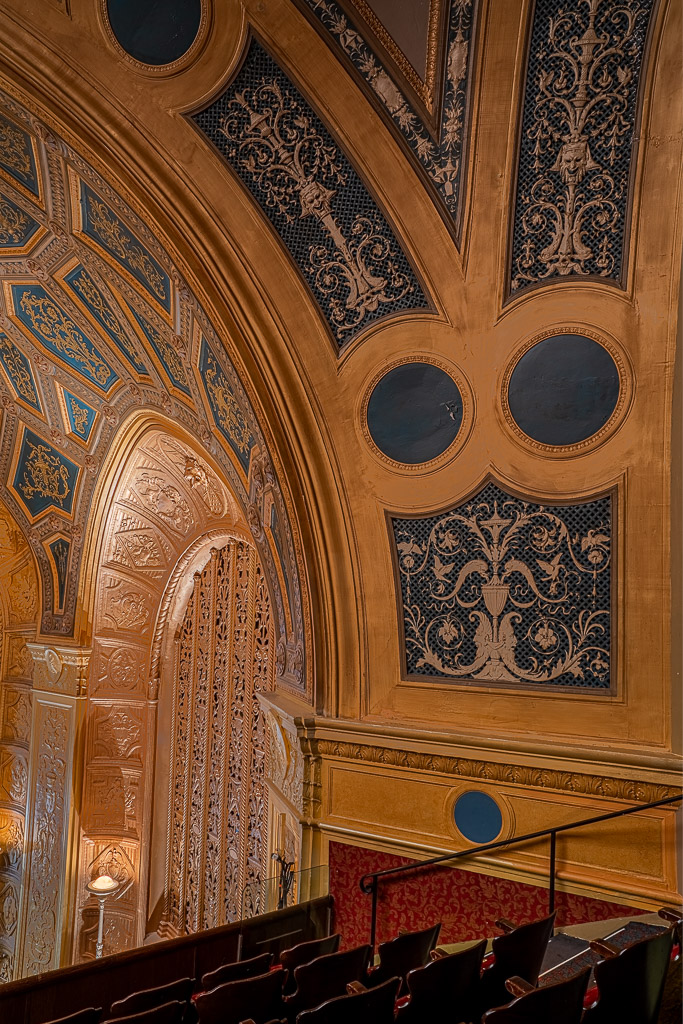
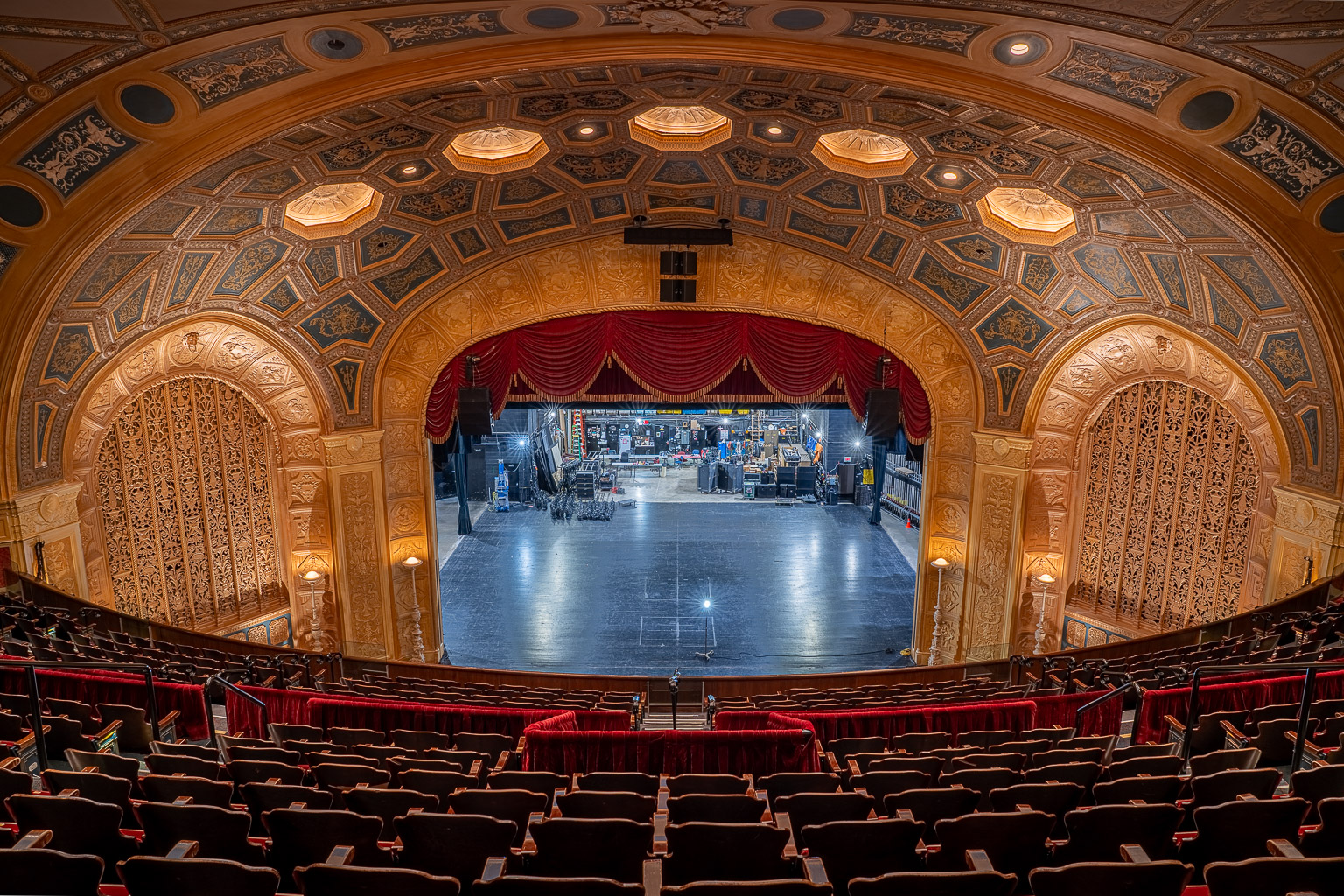
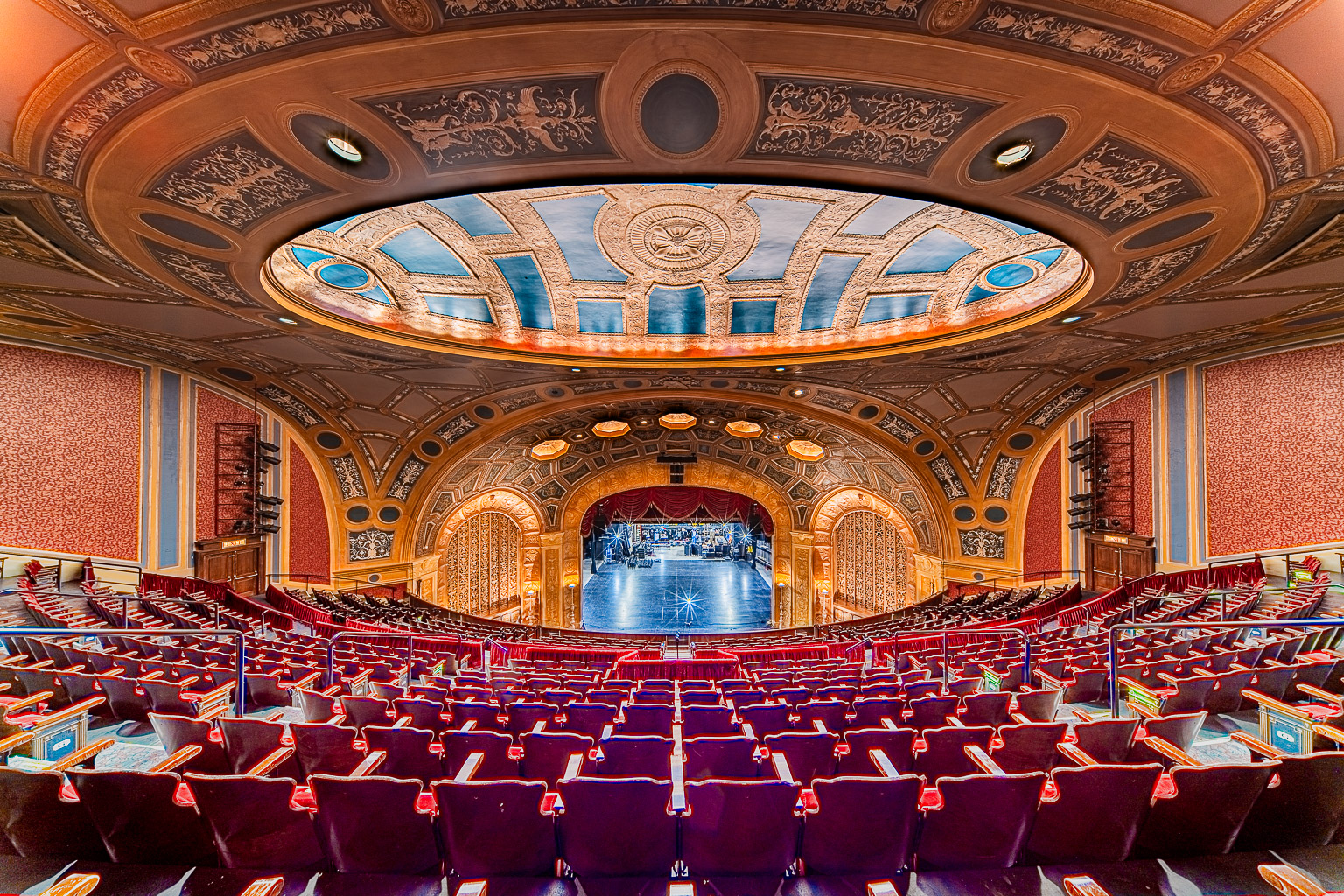
The Capitol Theater was decorated in the Italian Renaissance style with lavish Tiffany chandeliers, frescoes, brass fixtures, marble stairways and drinking fountains. Rich rose-red Italian damask was used for the main stage curtain and draperies throughout the house. Most of these features are present today in the Detroit Opera House.
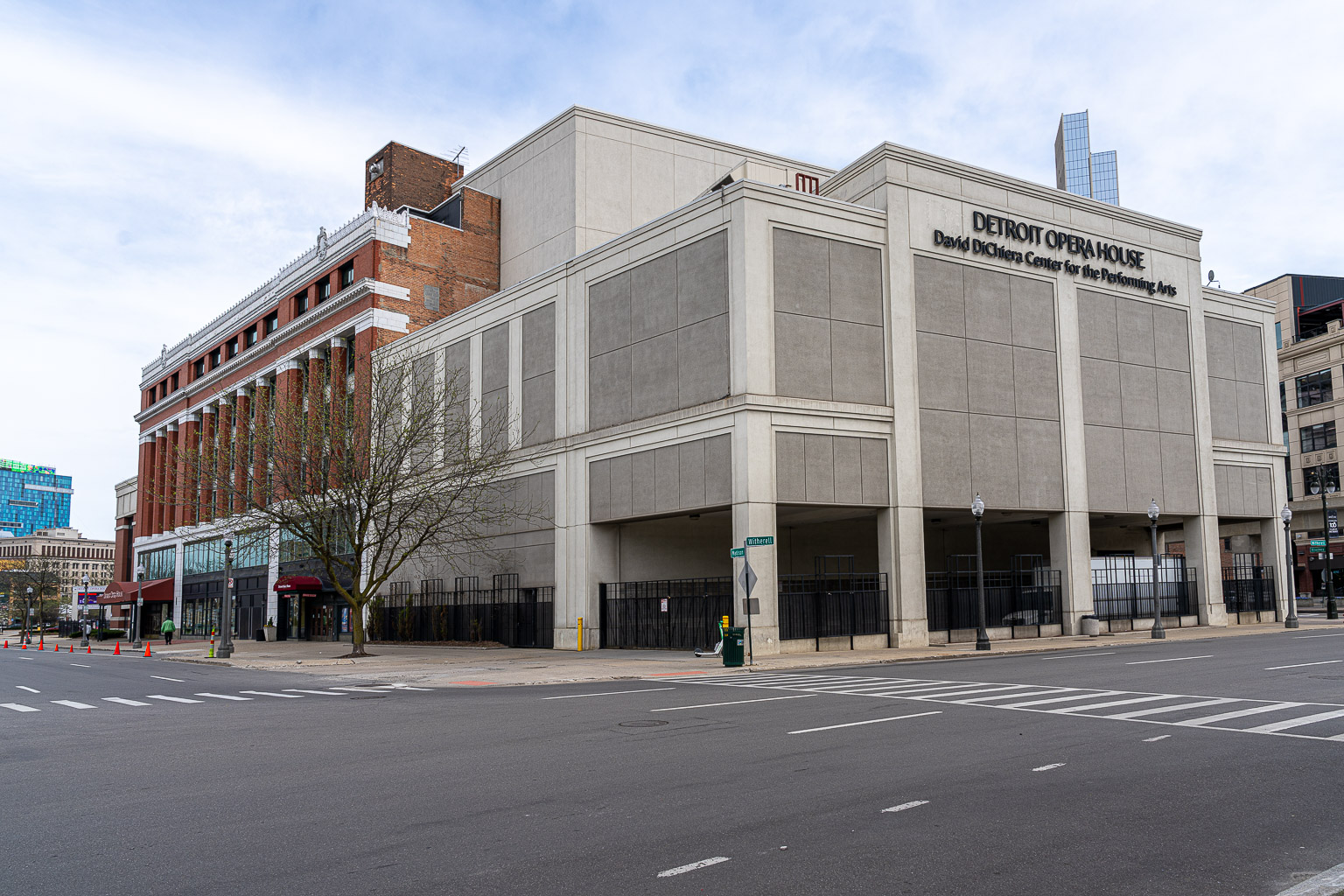
The photos below show the Madison Avenue (north) side of the Detroit Opera House.
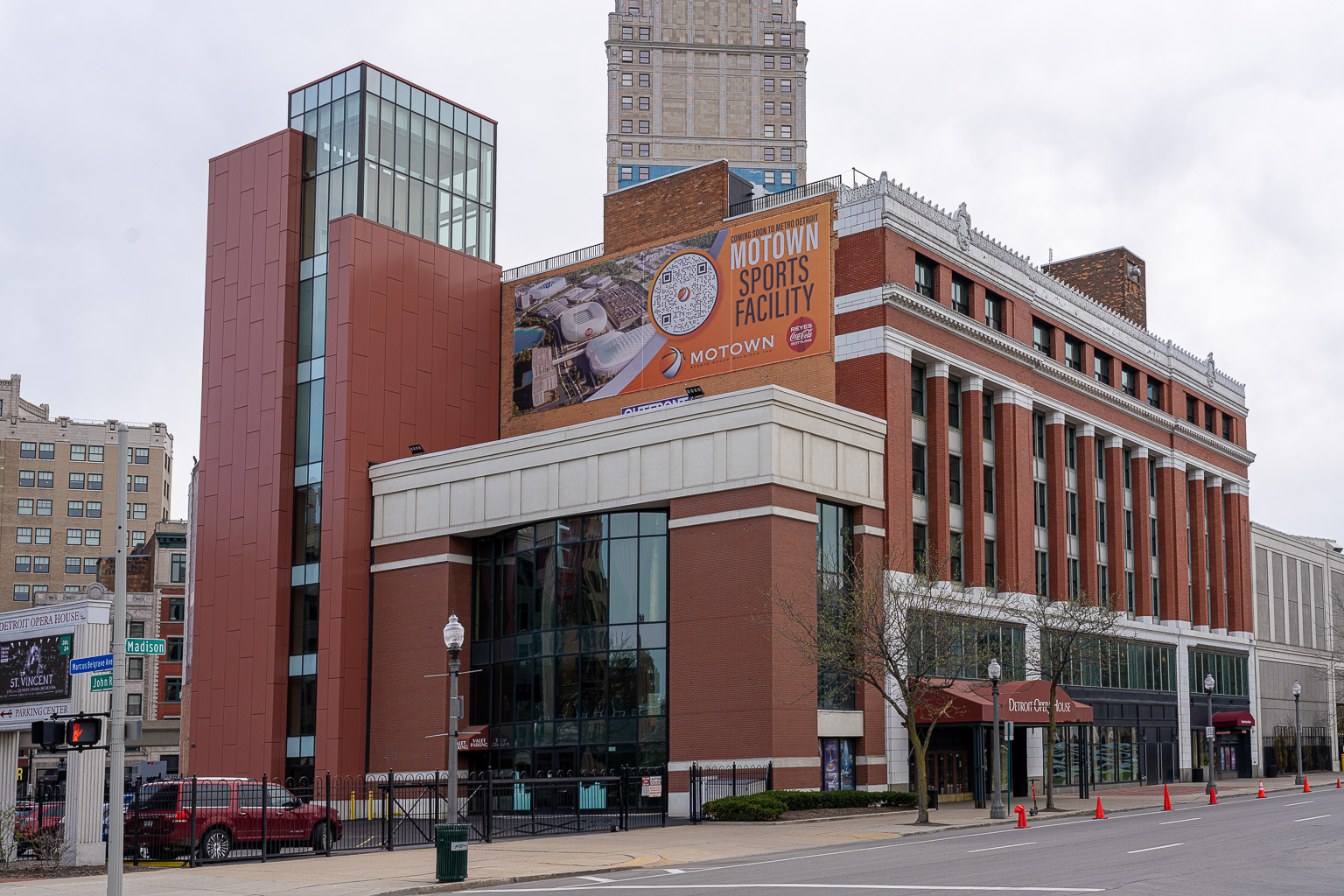
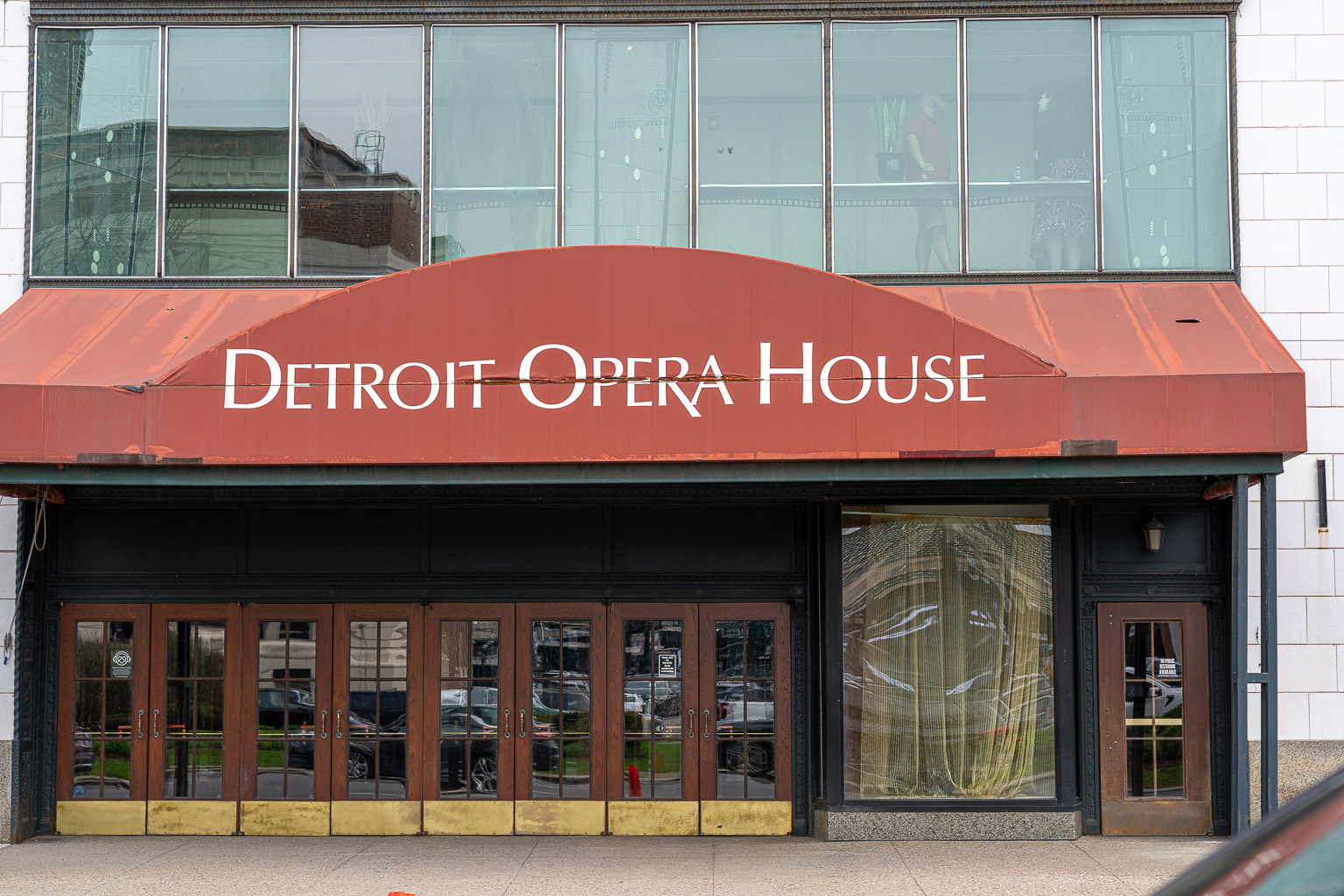
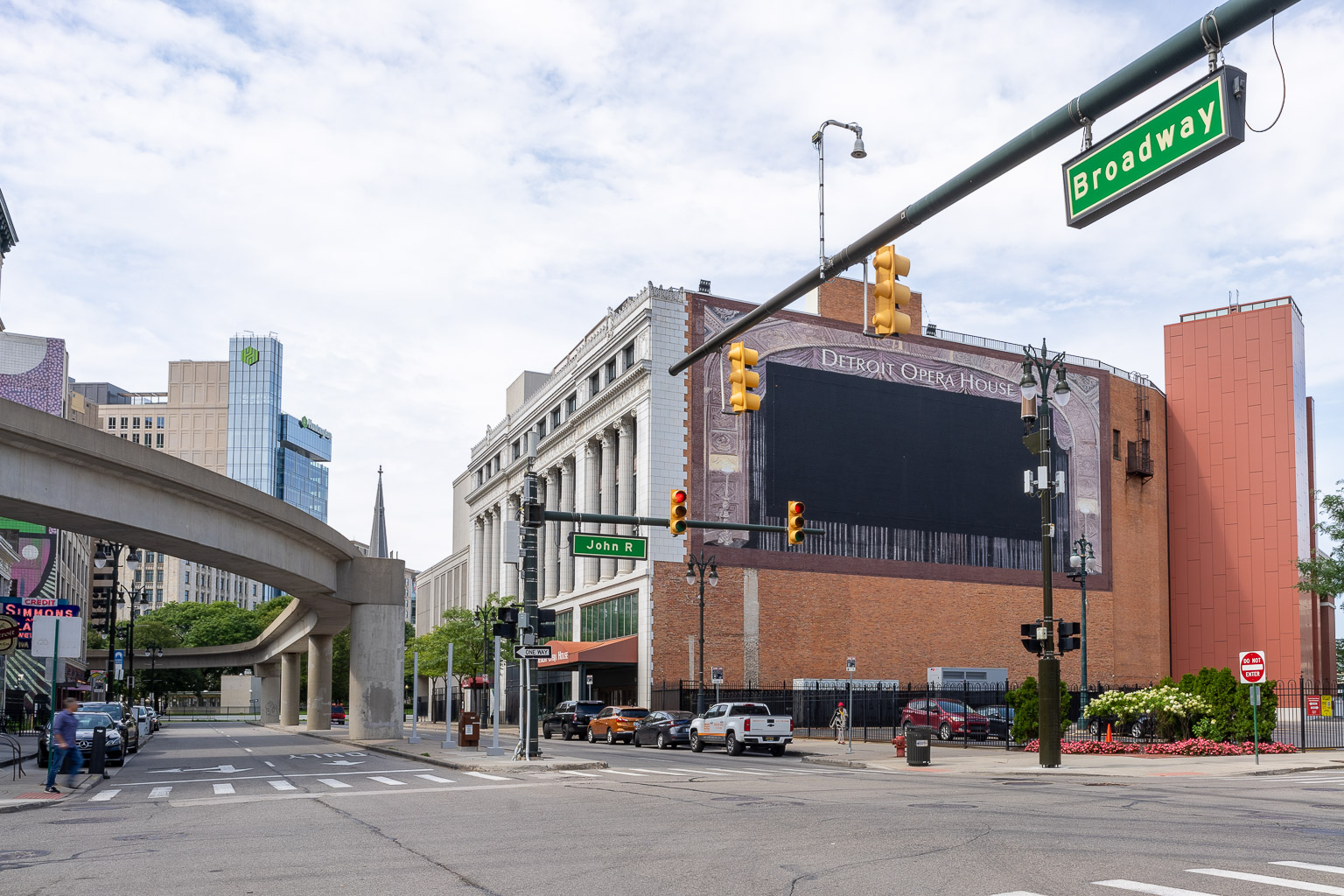
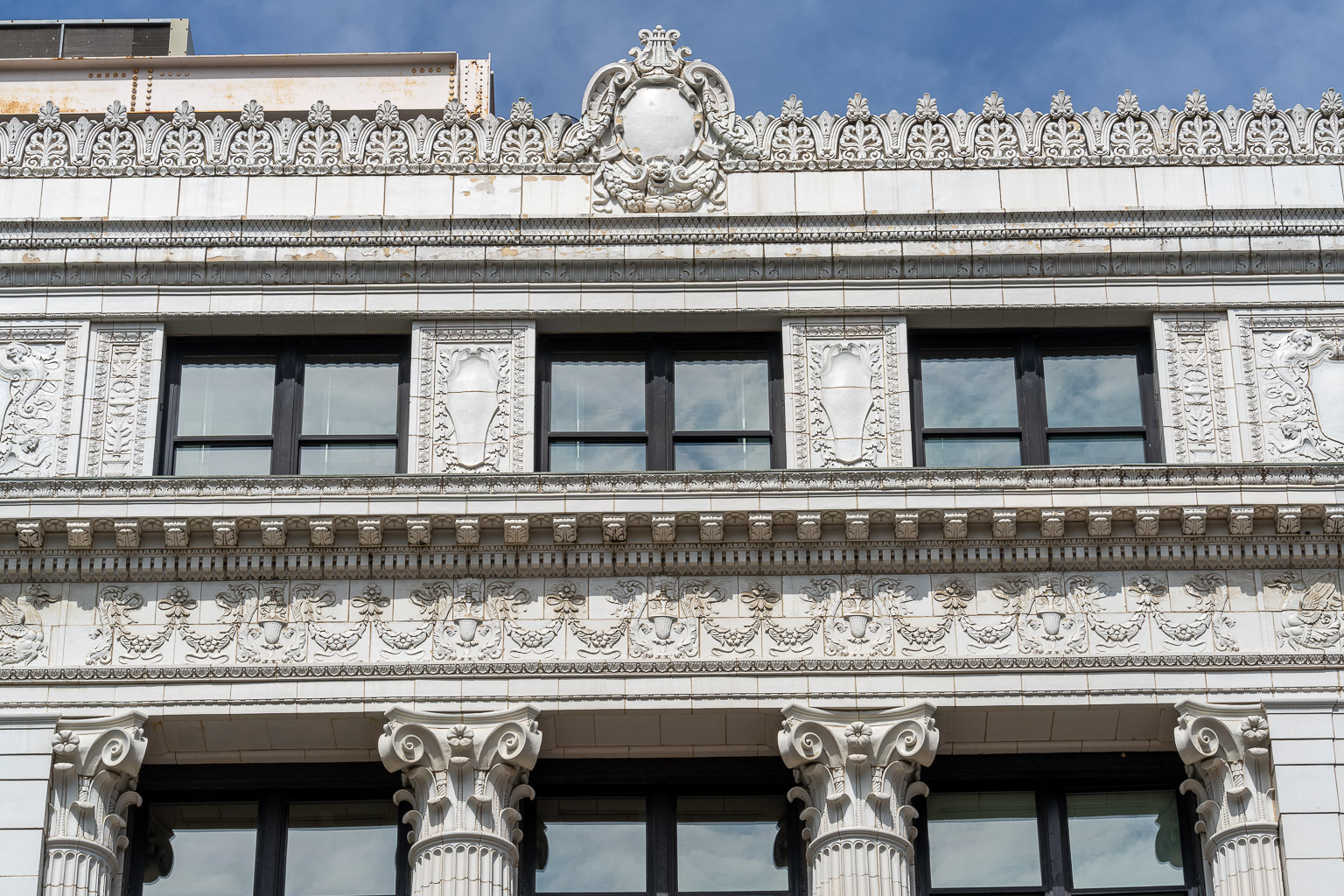
These photos show the Broadway Avenue (south) side of the Detroit Opera House. The ticket office is at the eastern (right) end of the building on this side (3rd photo below), and the most ornate part of the building is also on this side.
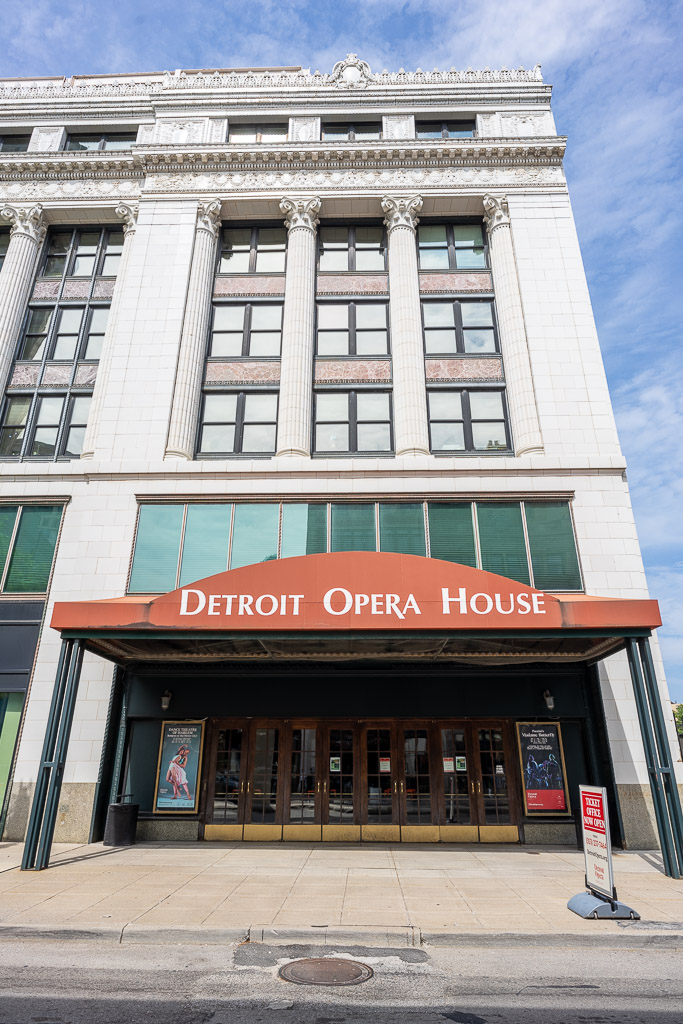
If you enter the ticket office, you're in the ornate Ford Lobby. The Ford Lobby is the primary, ornate entrance to the Detroit Opera House on Broadway Street, featuring a historic stained glass ceiling and a massive chandelier on loan from the Ford Museum. Restored post-1996 with Ford Motor Company funding, it serves as a grand entrance to the venue, which was originally designed in 1922 by C. Howard Crane.
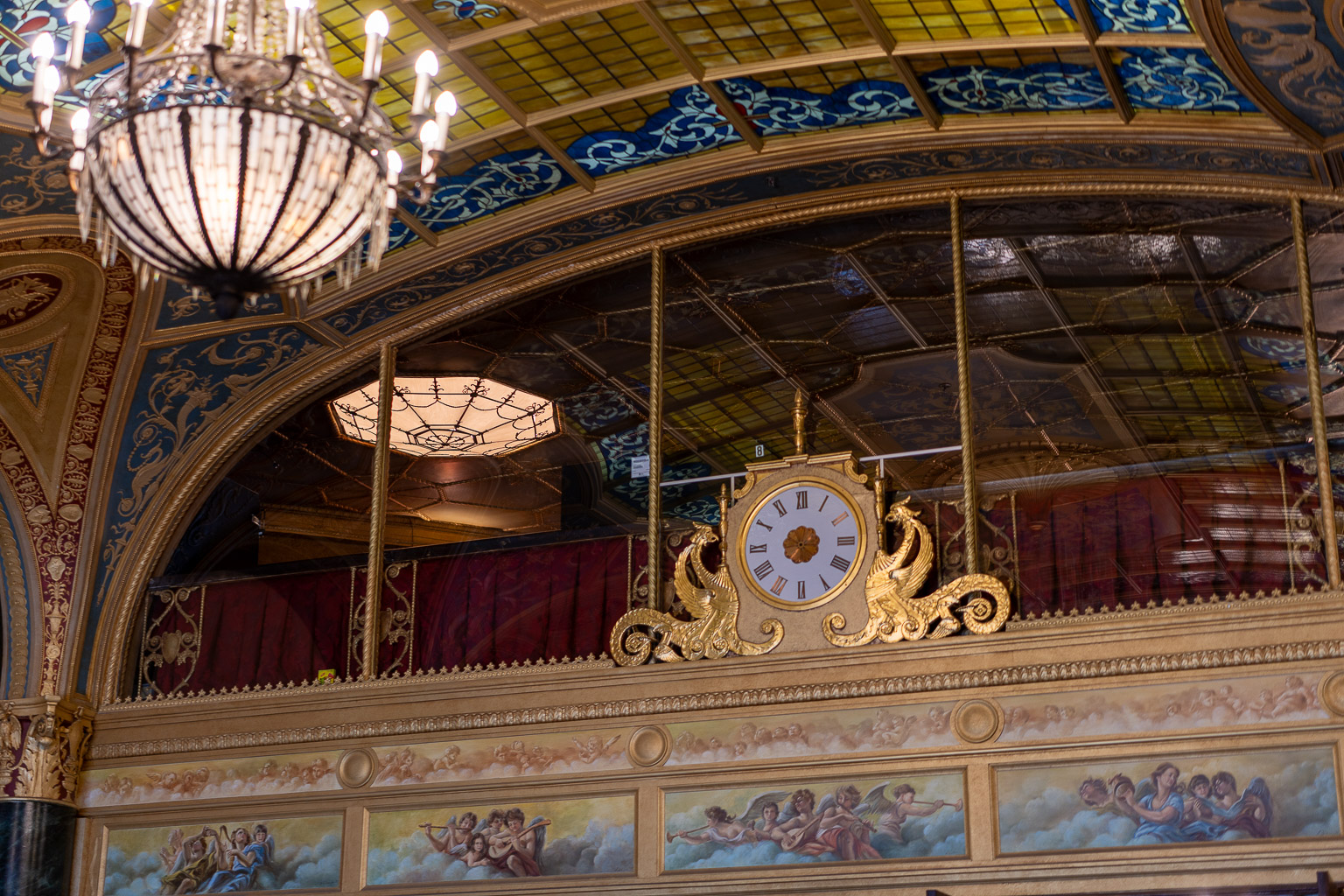
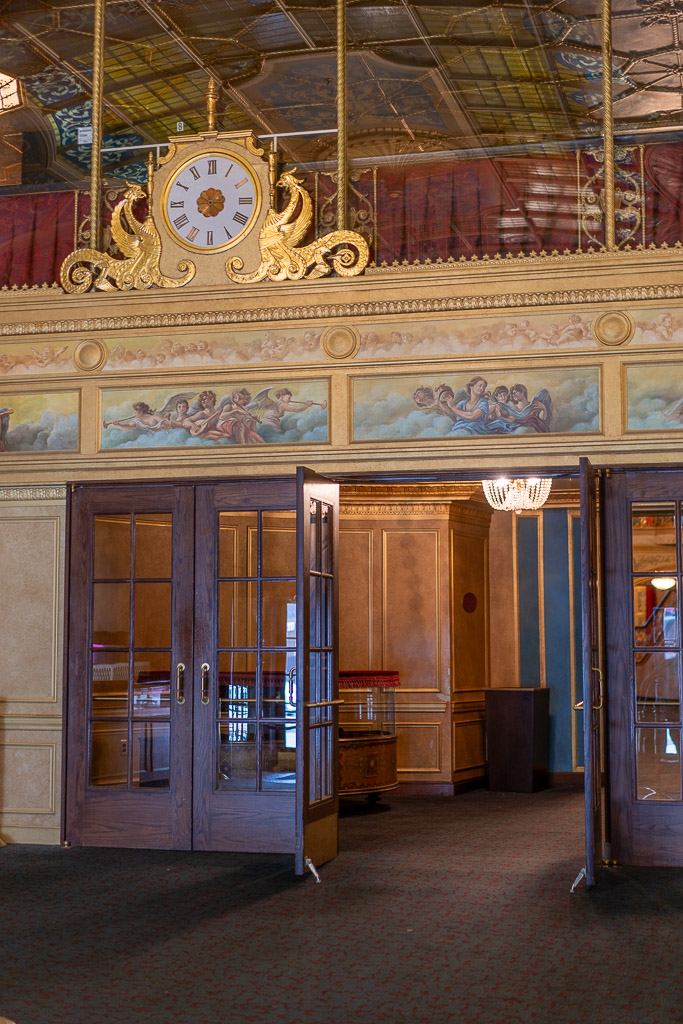
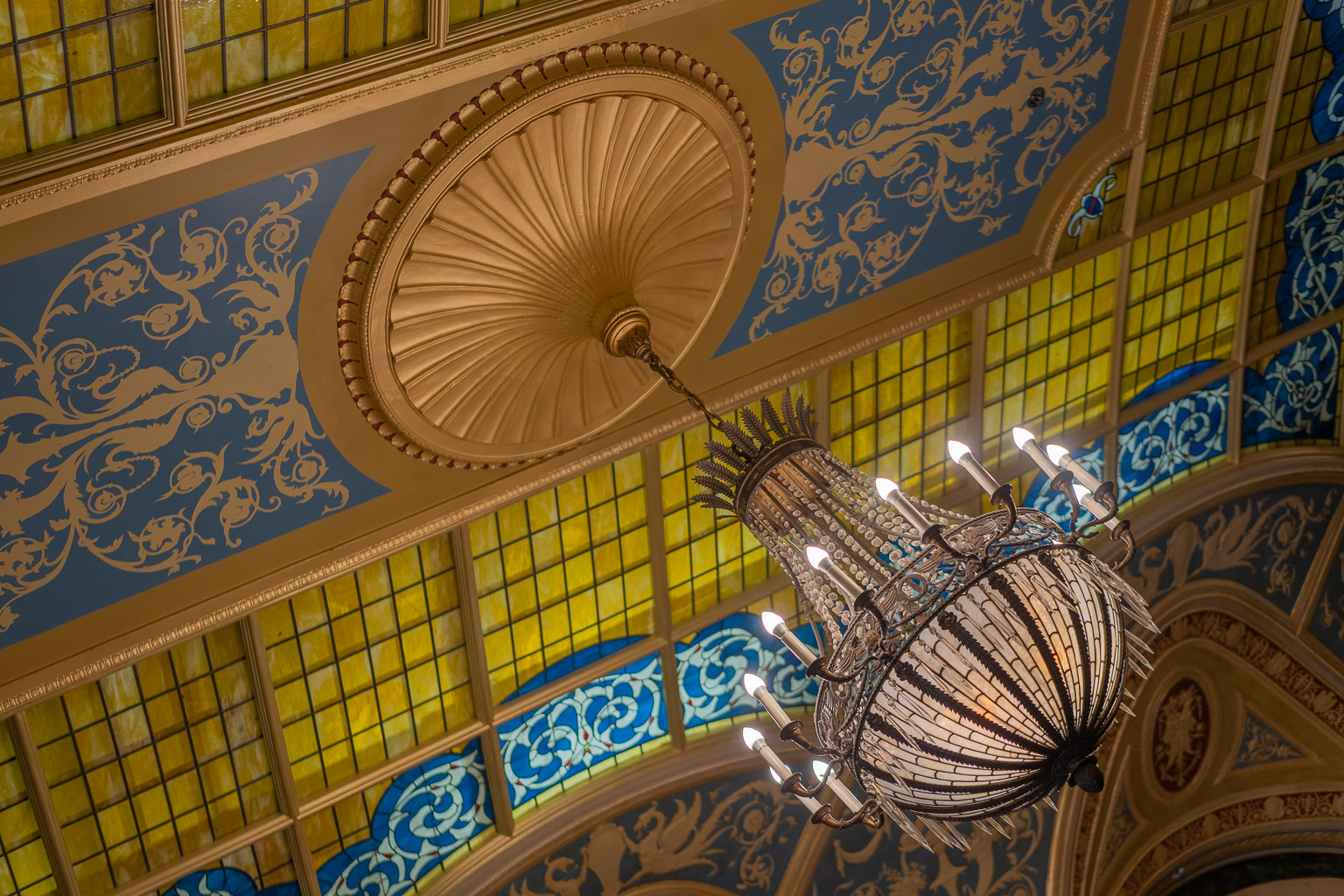
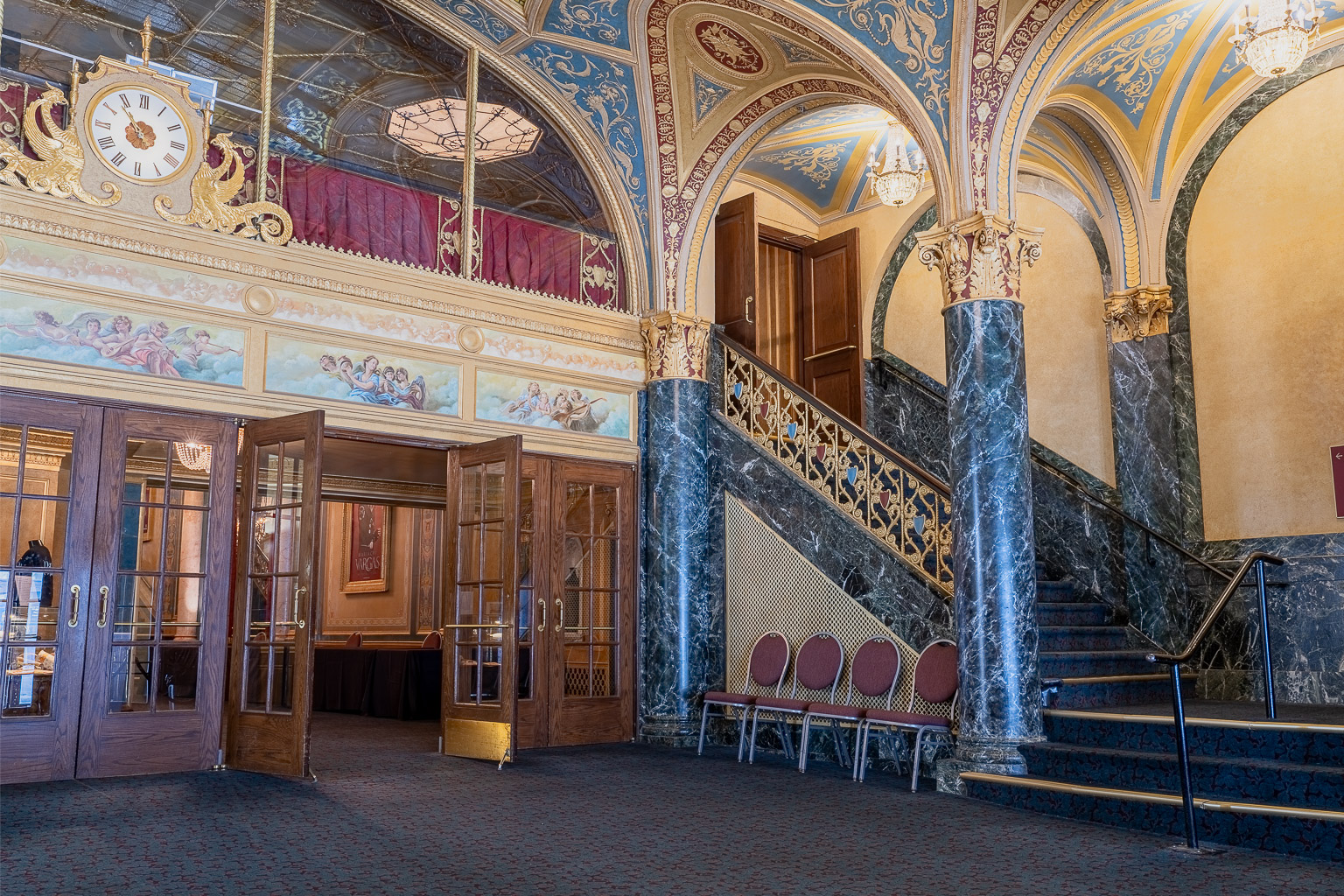
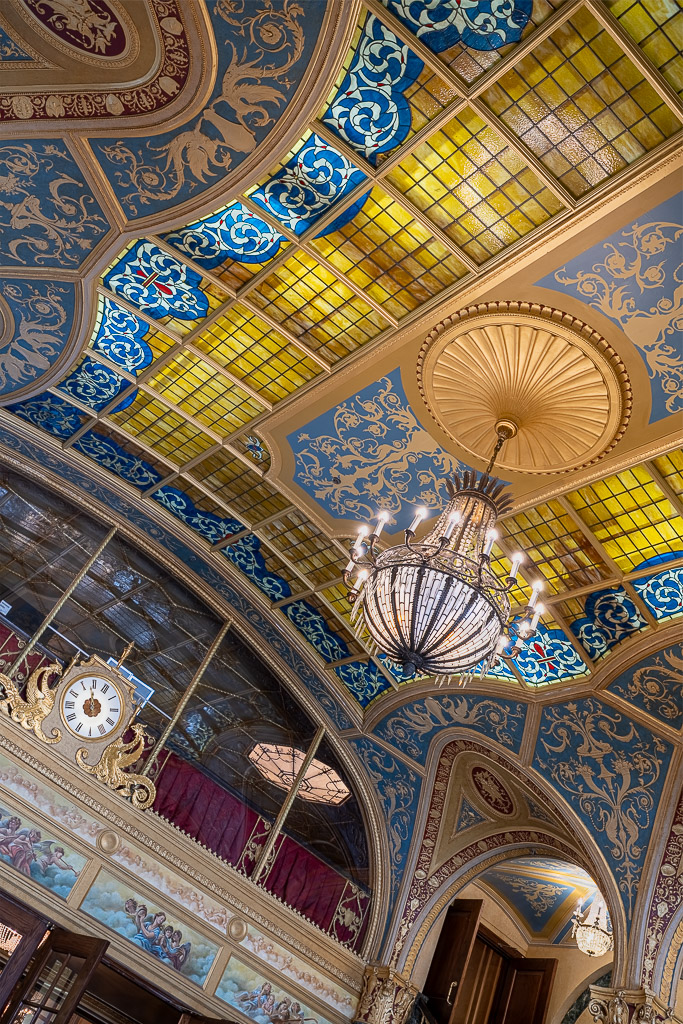
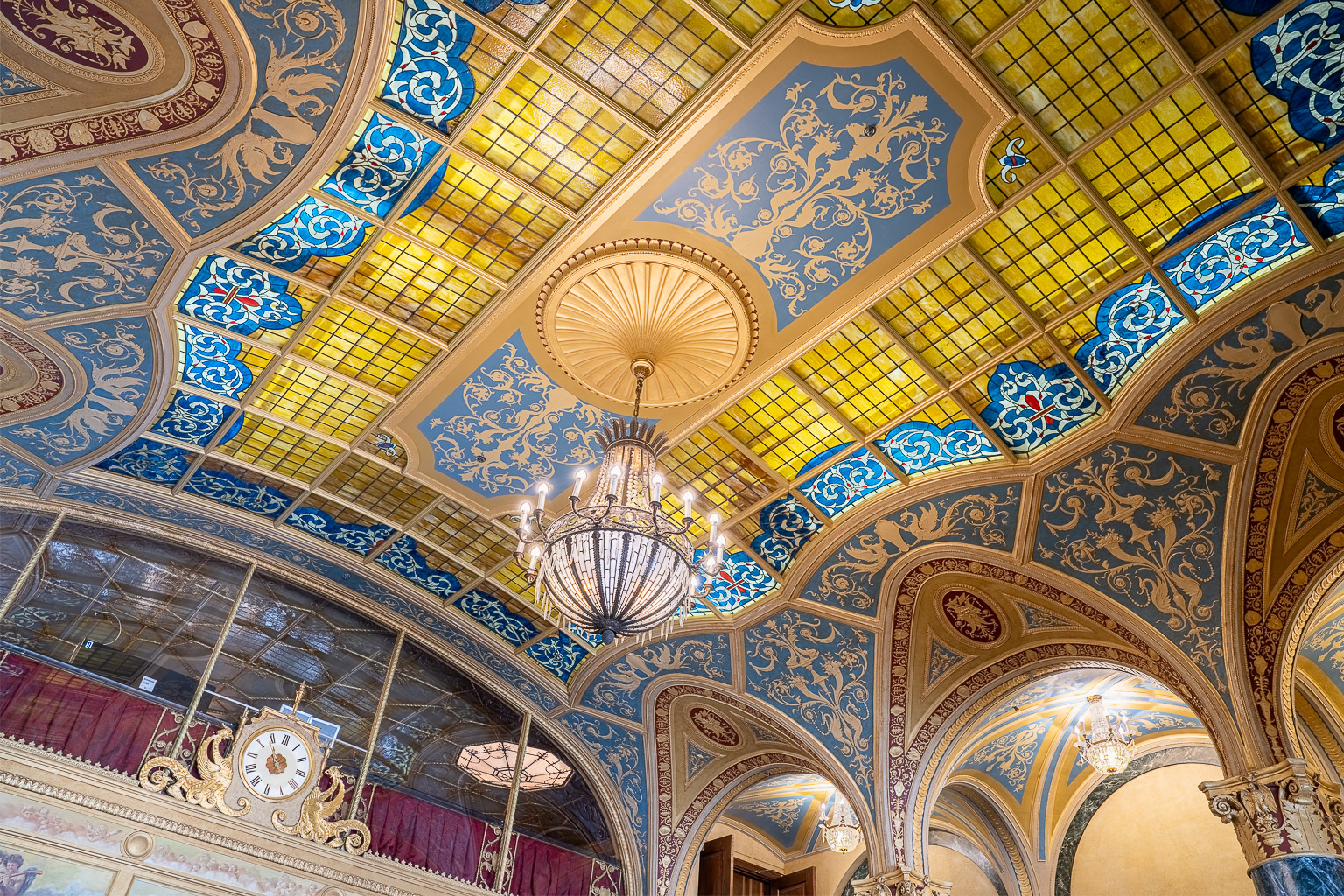
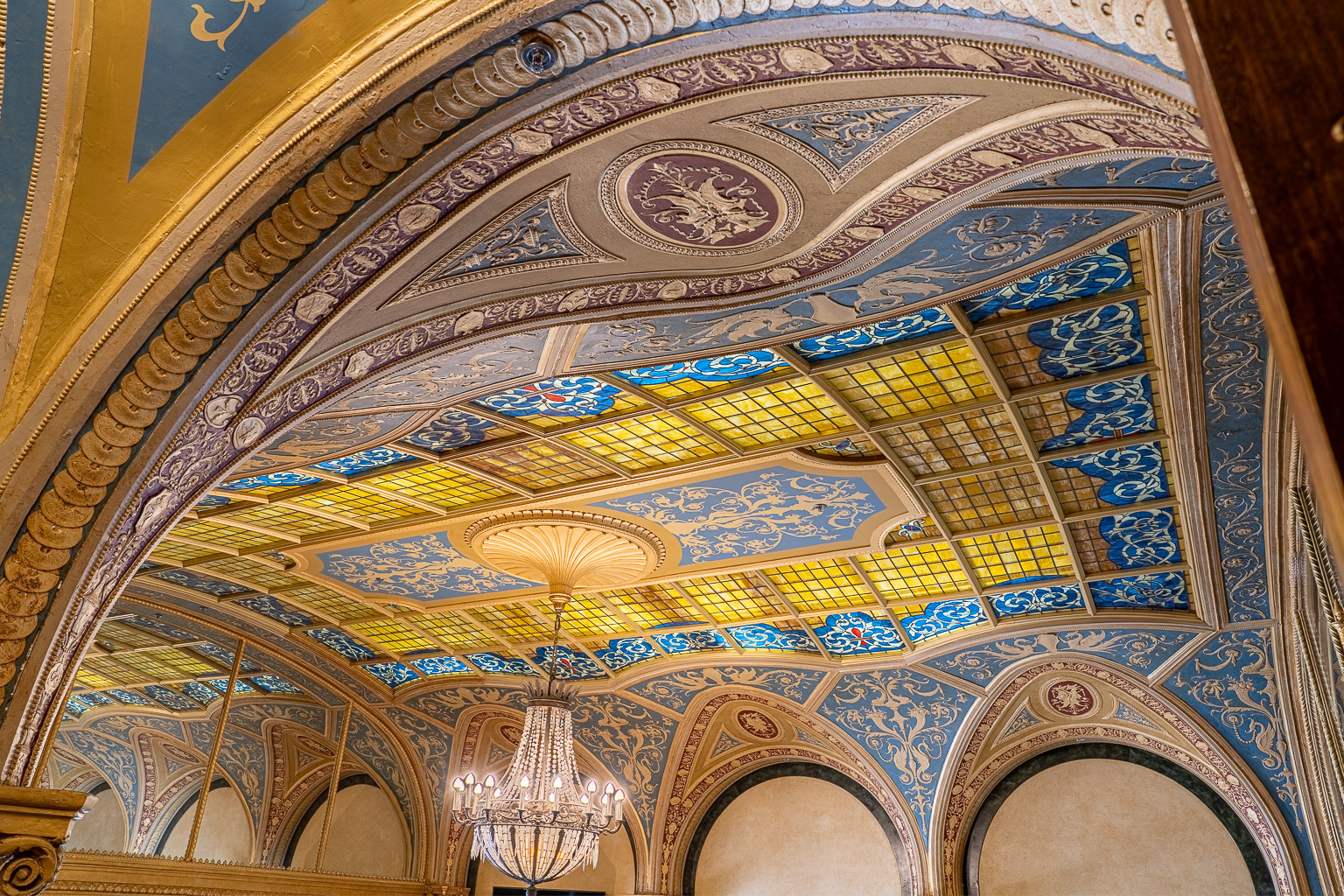
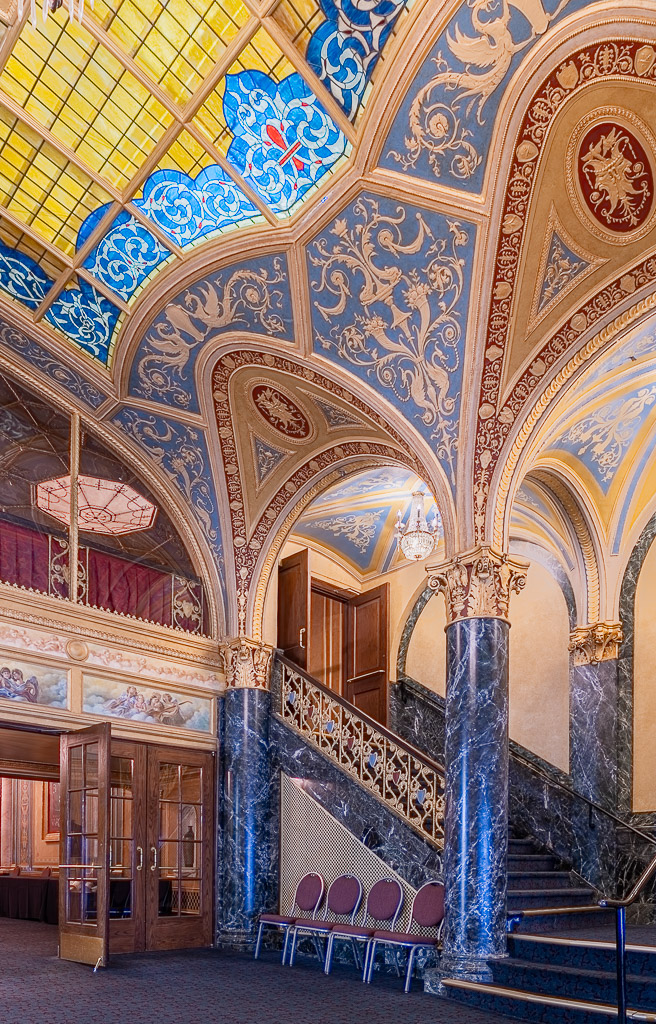
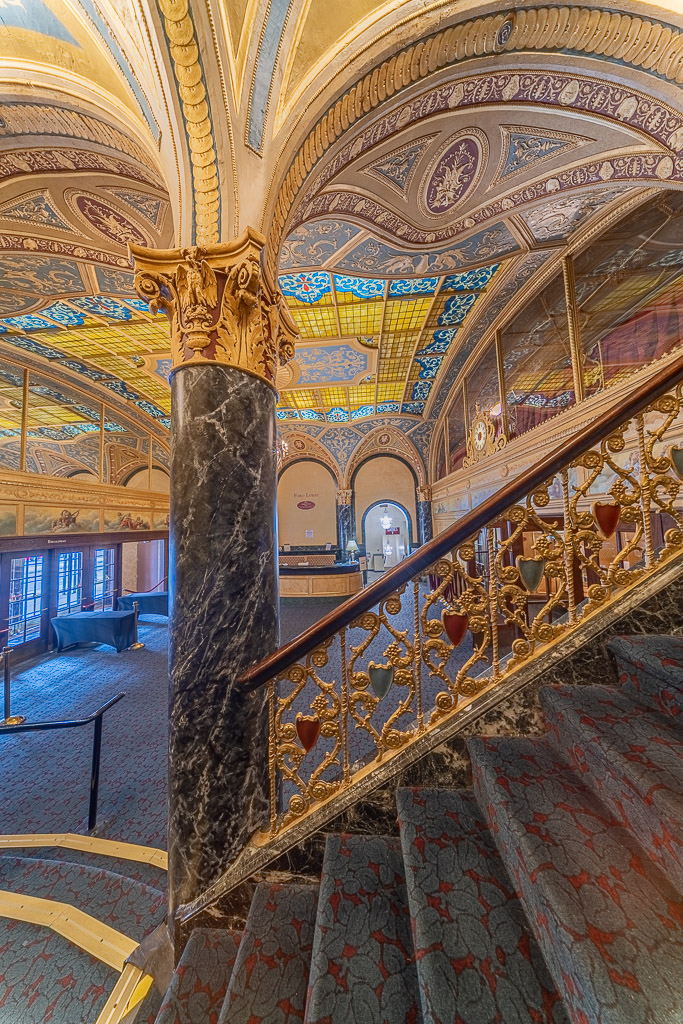
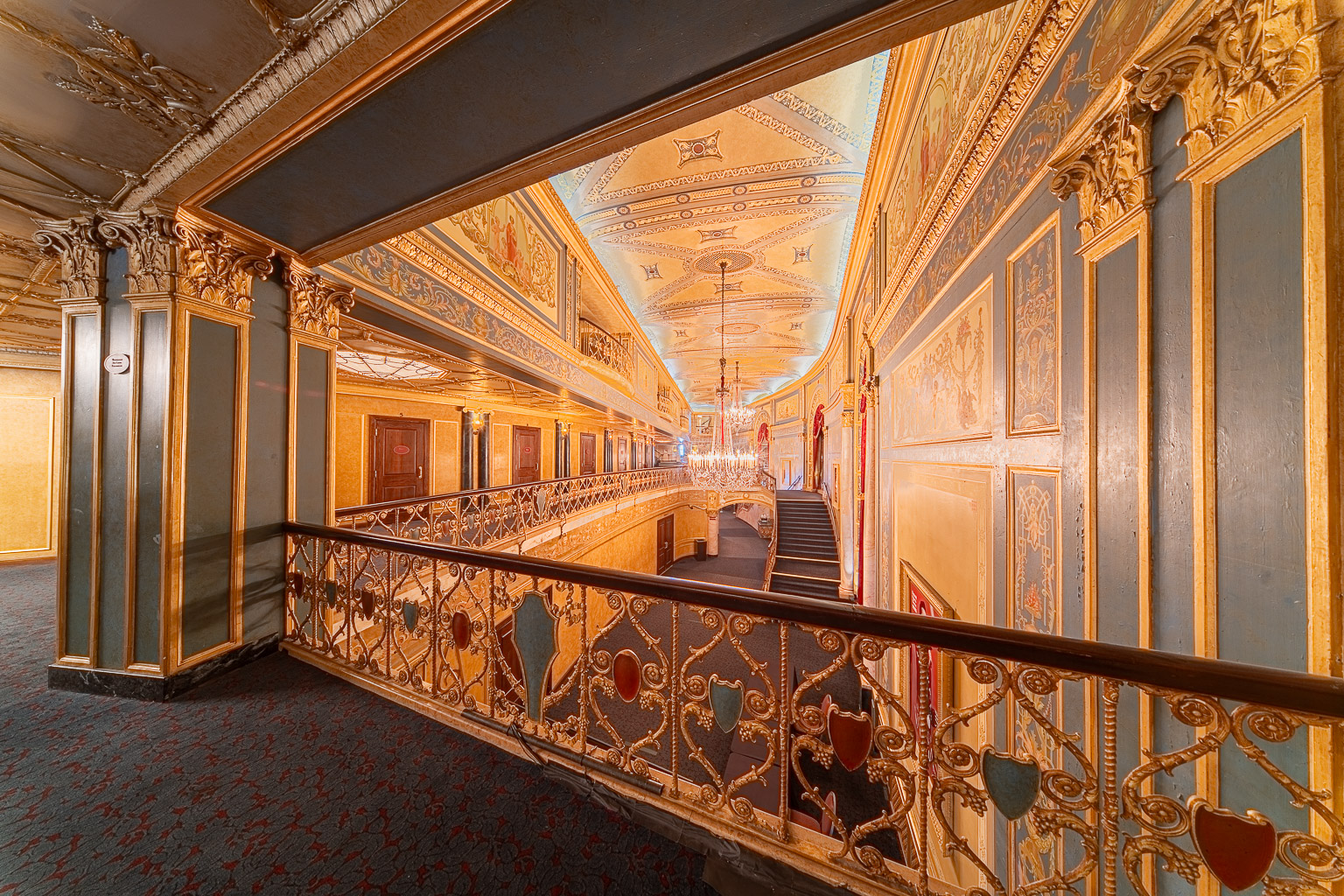
Through the ground floor wooden doors, or up the ornate stairway, takes you to the Grand Lobby, a three-story premier, historic space characterized by Italian Renaissance style, featuring marble stairways, crystal chandeliers, and ornate, gilded detailing.
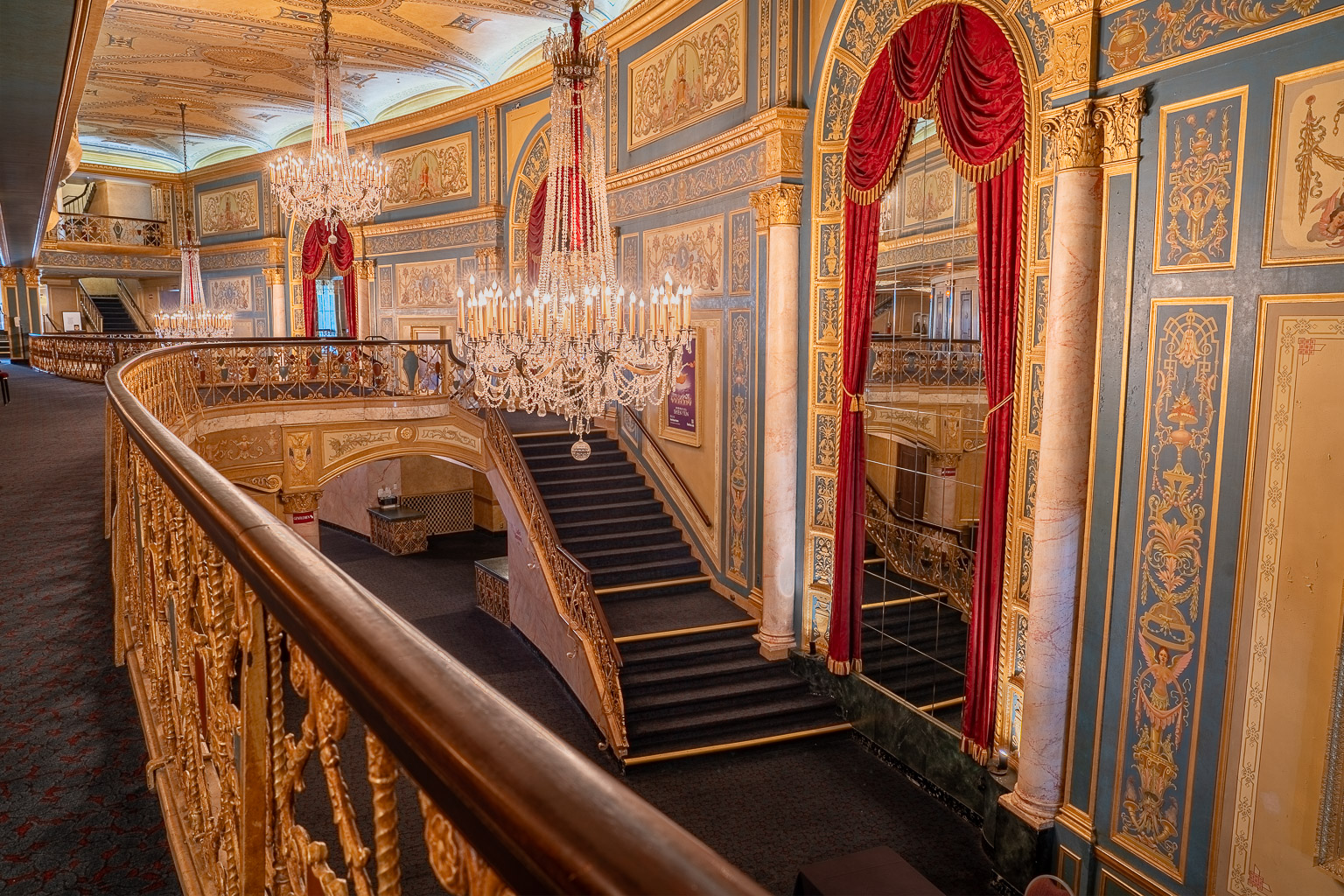
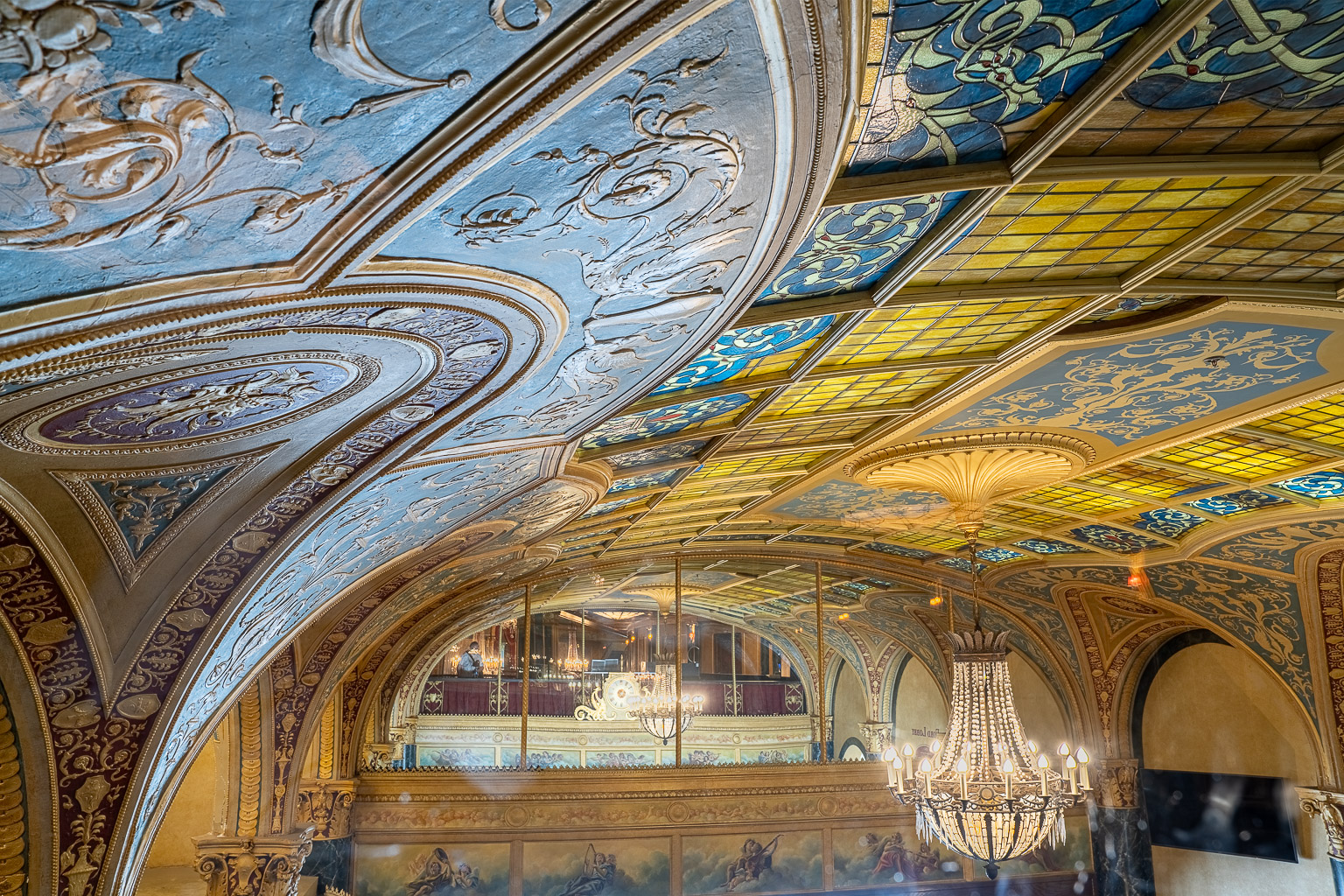
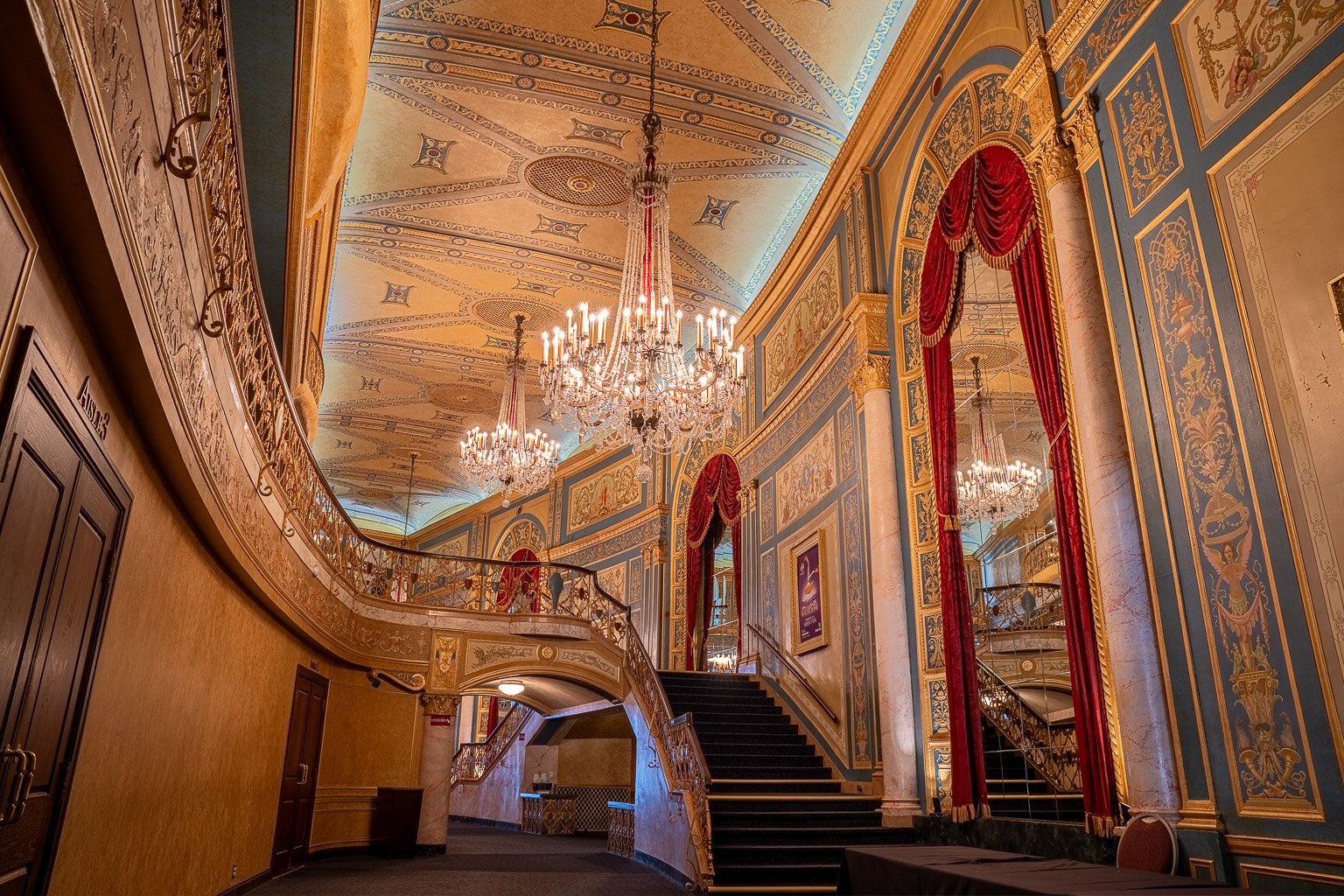
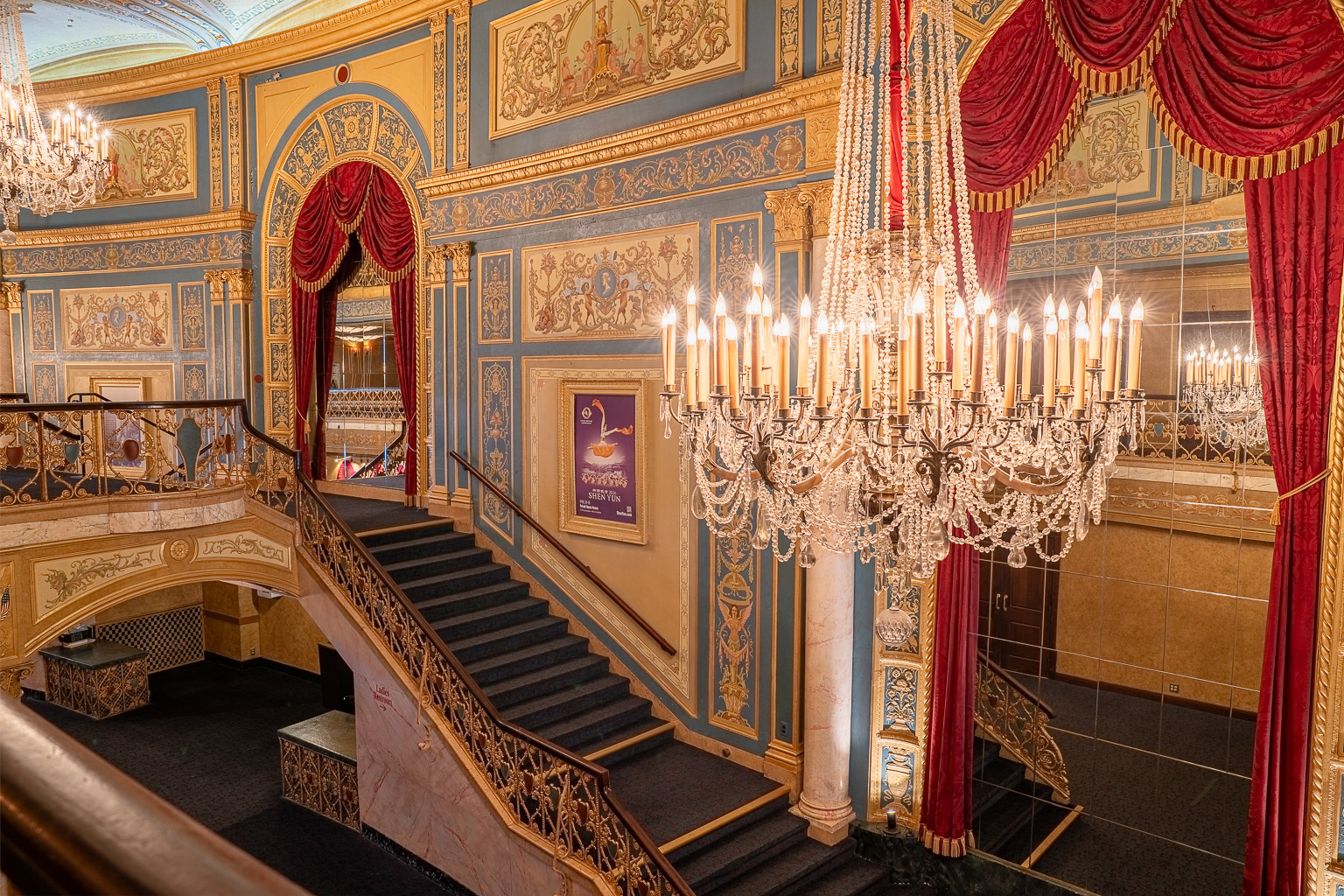
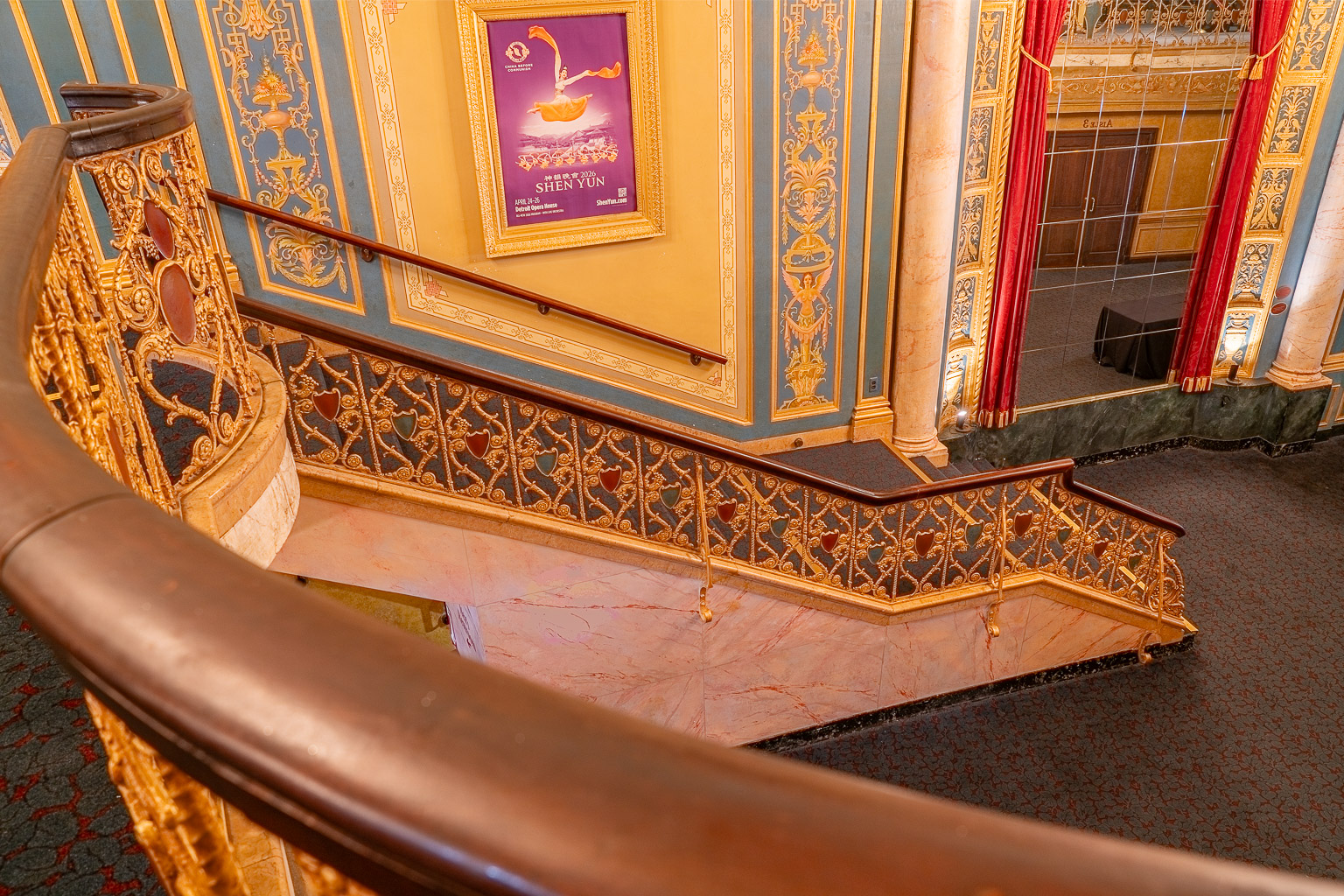
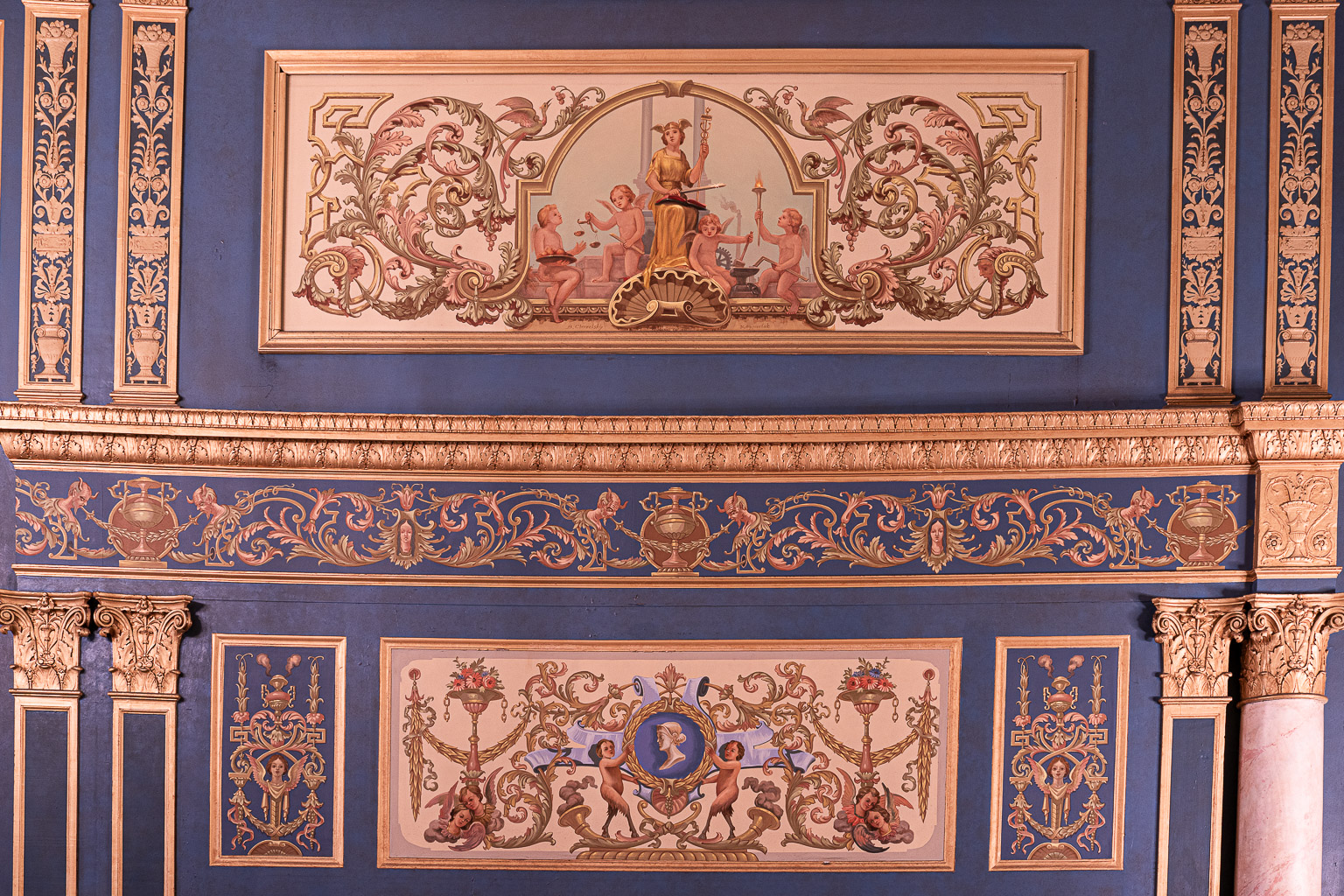
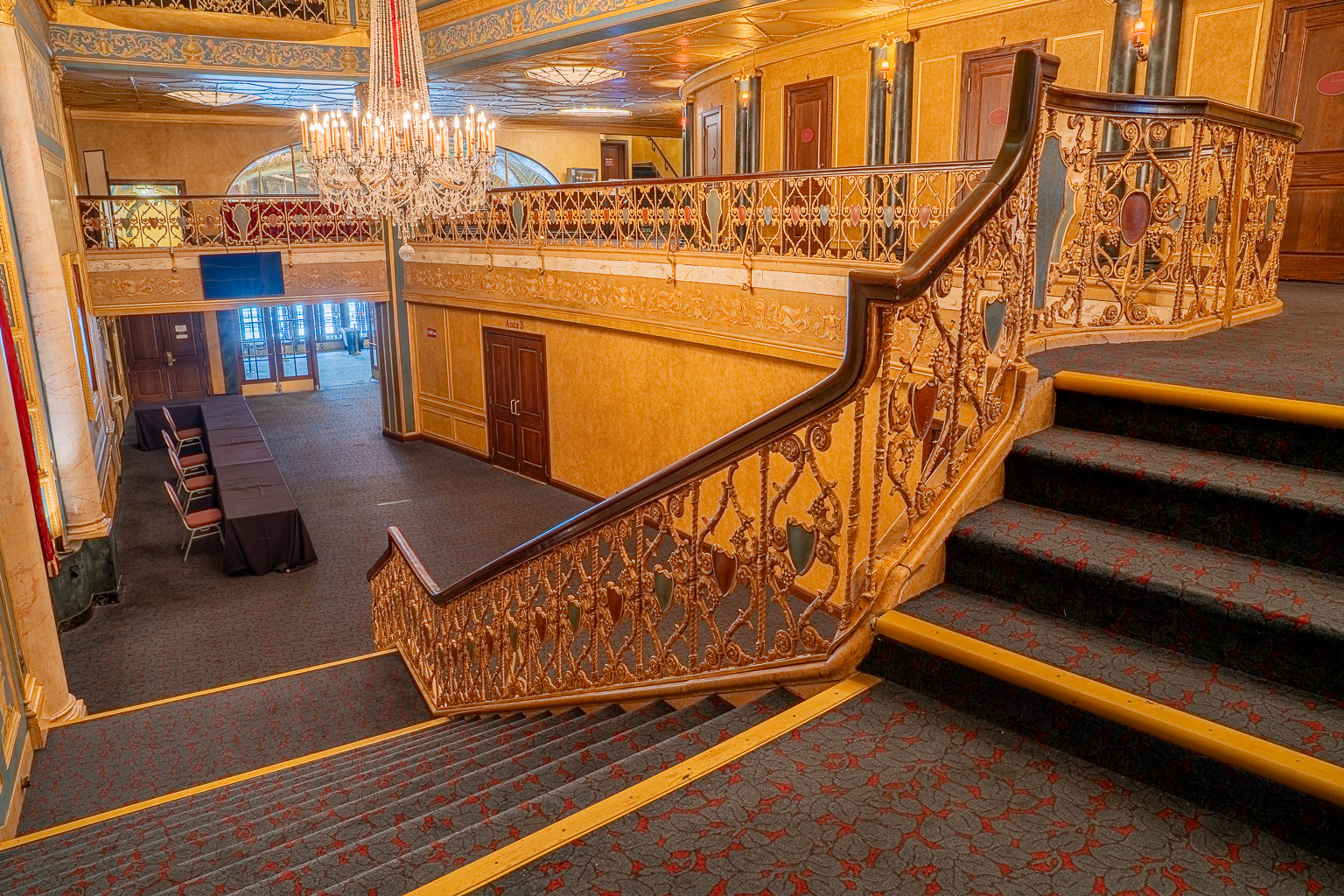
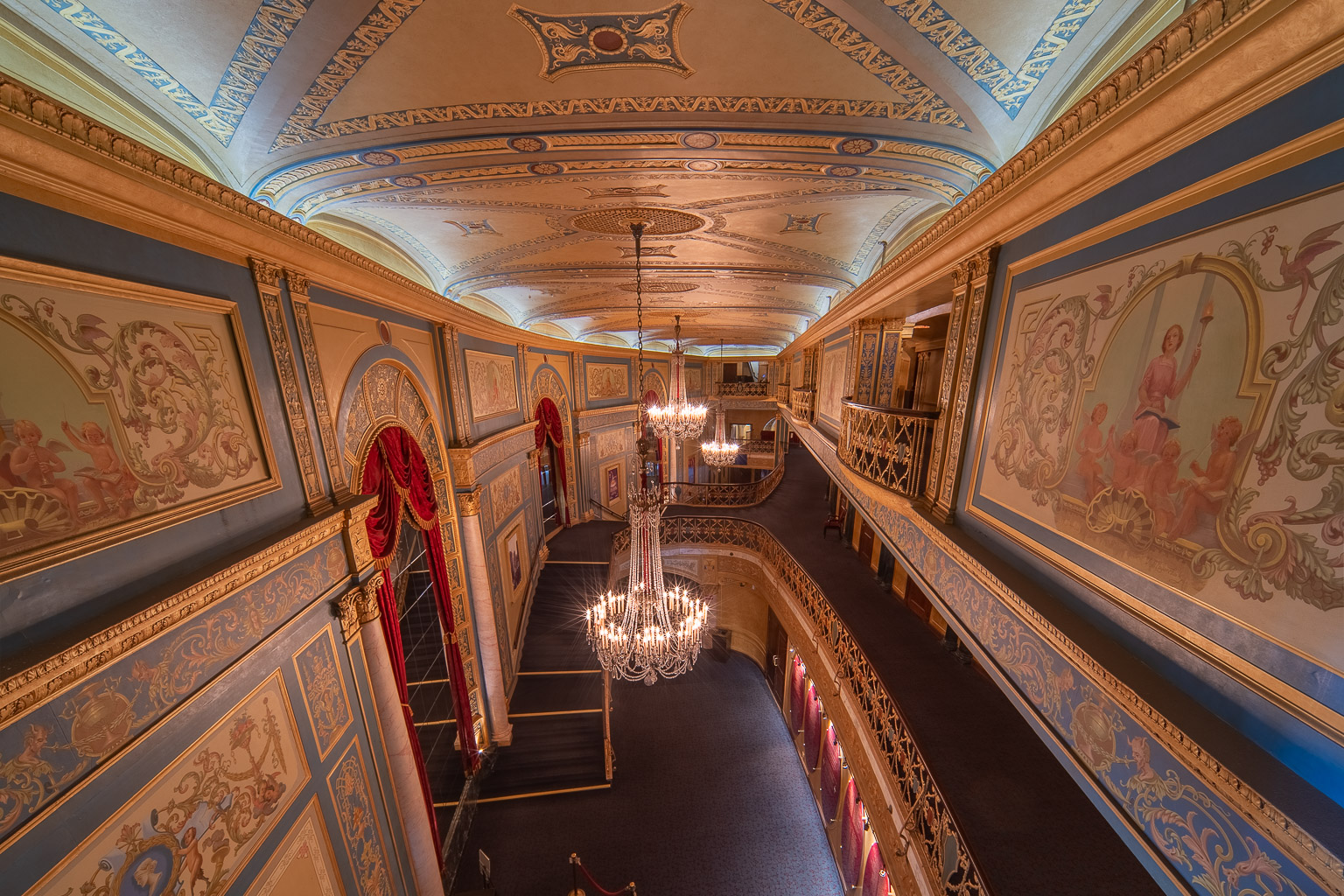
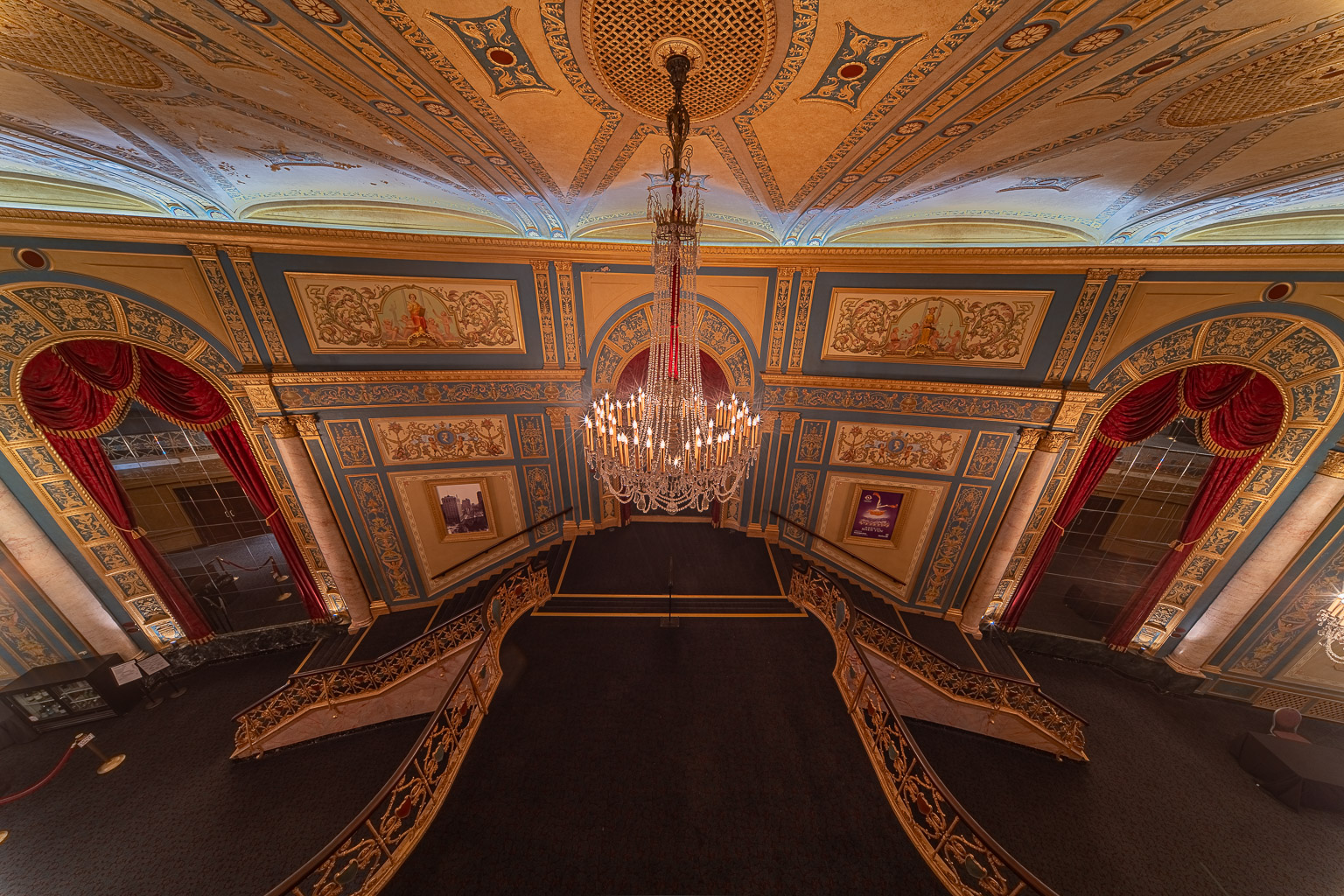
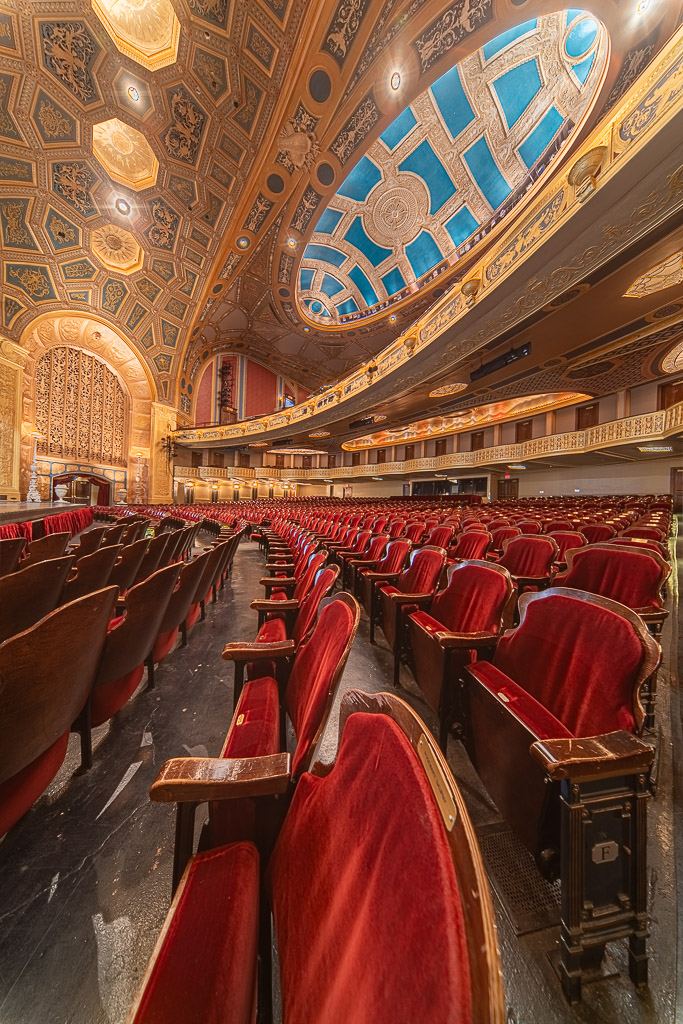
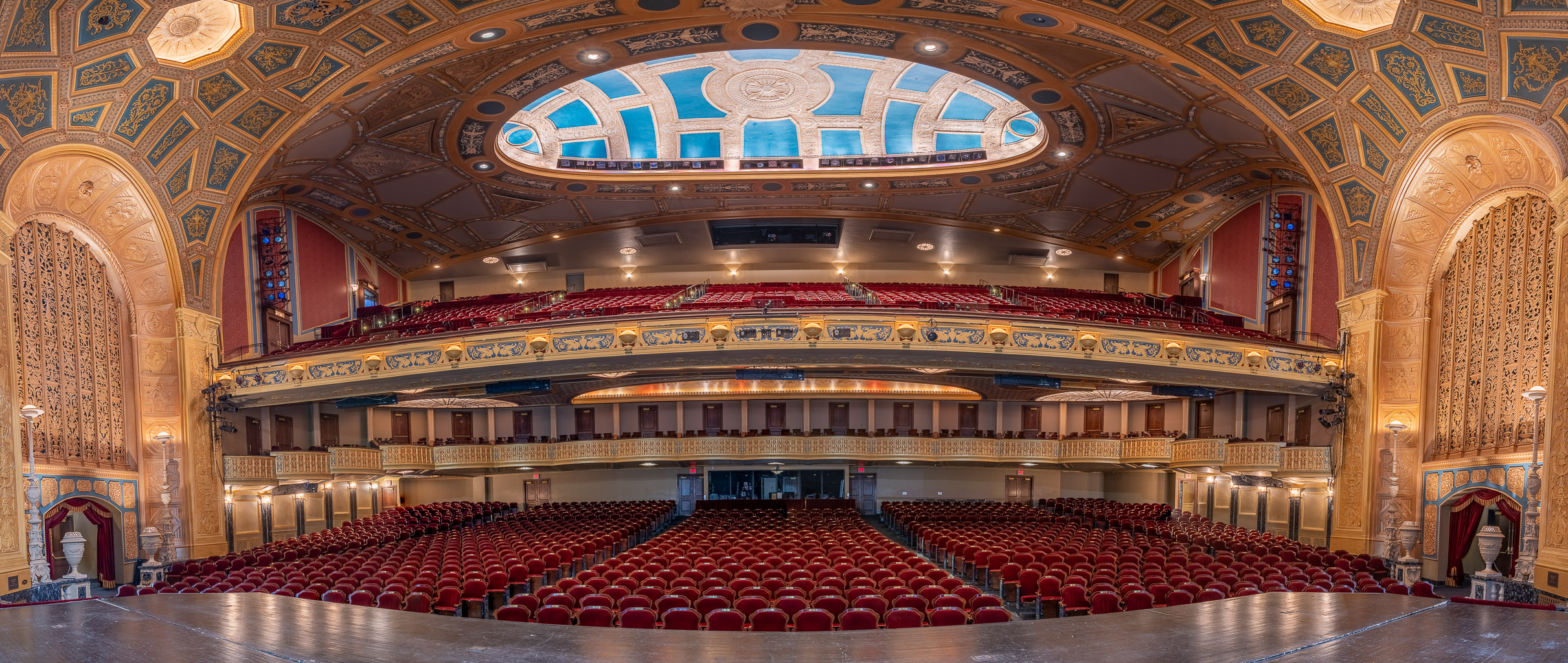
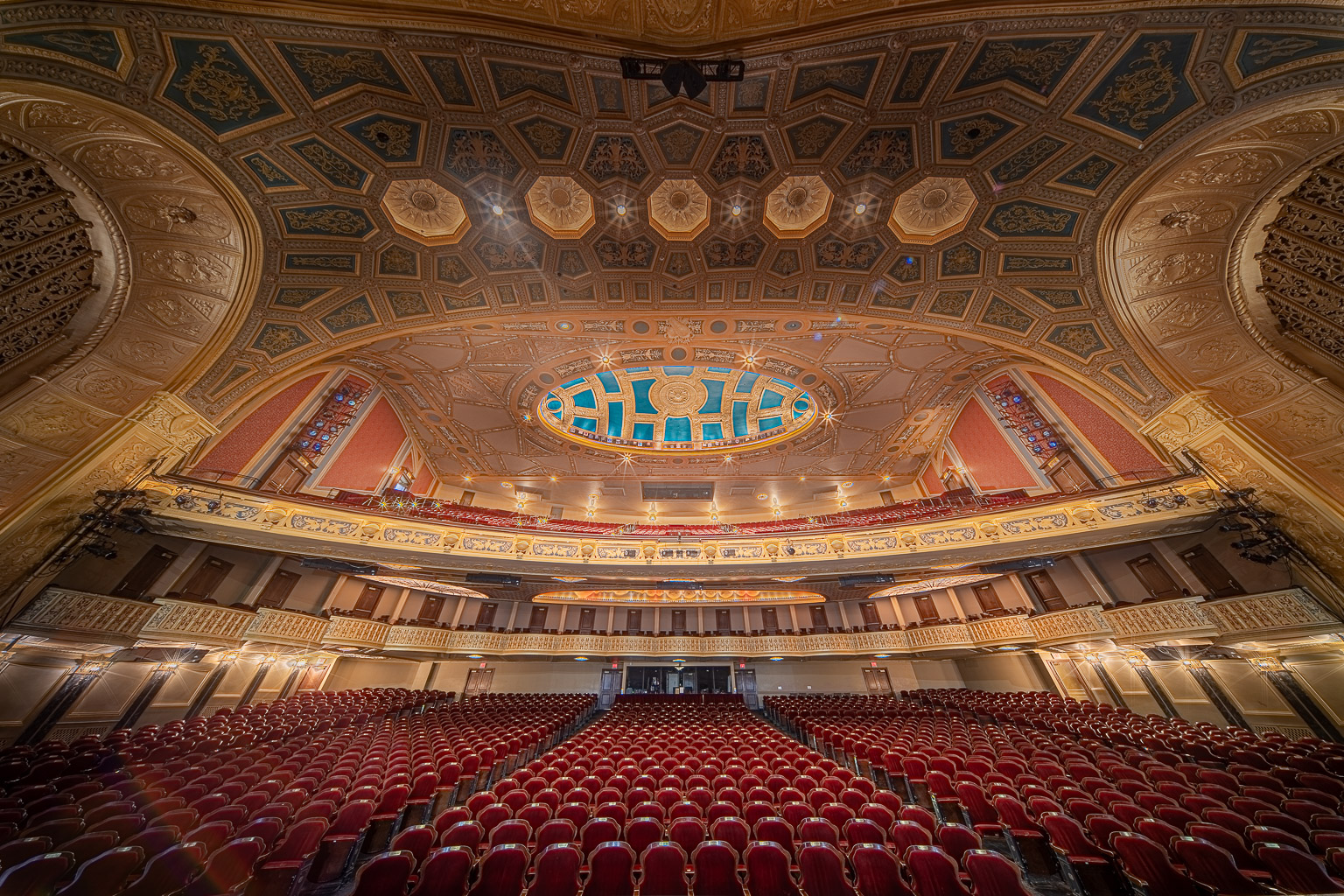
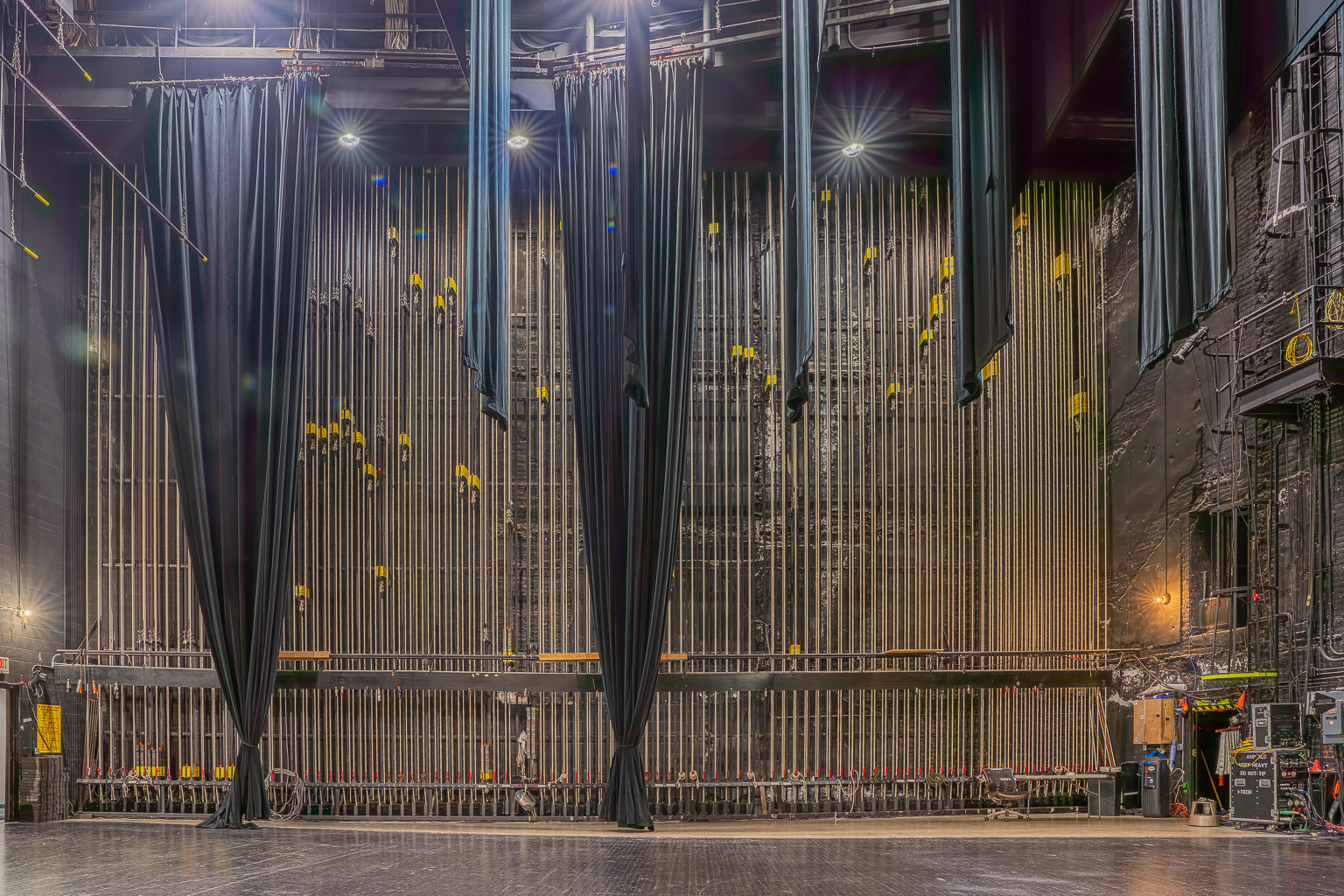
The main auditorium seats 2700 people, and the stage is the largest between New York and Chicago.
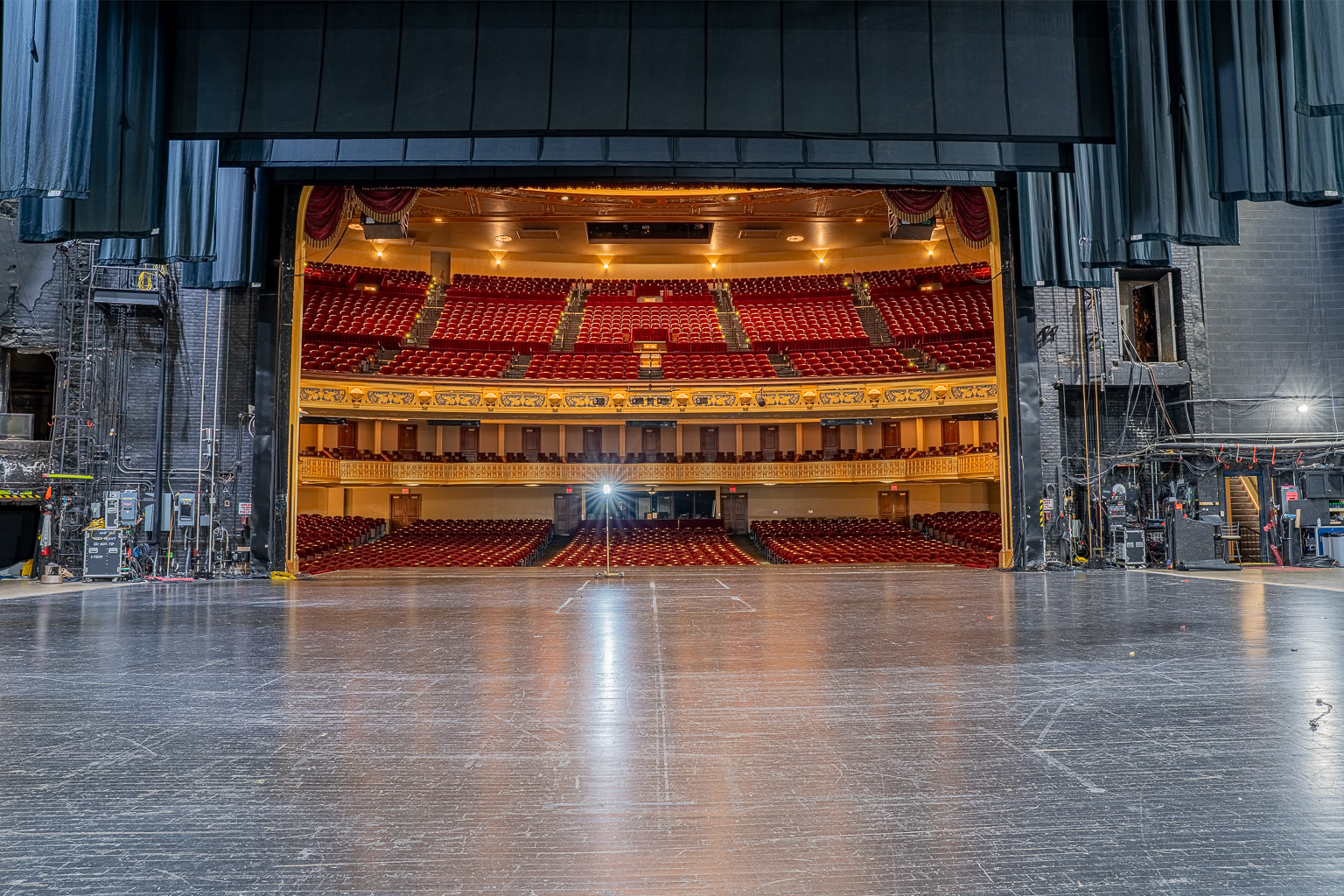
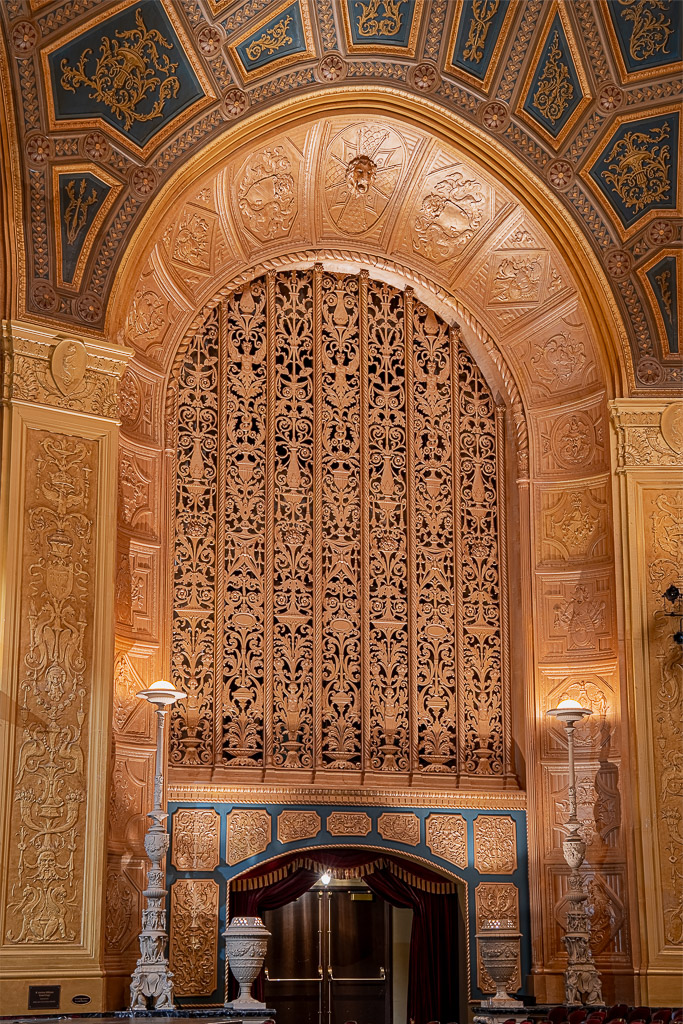
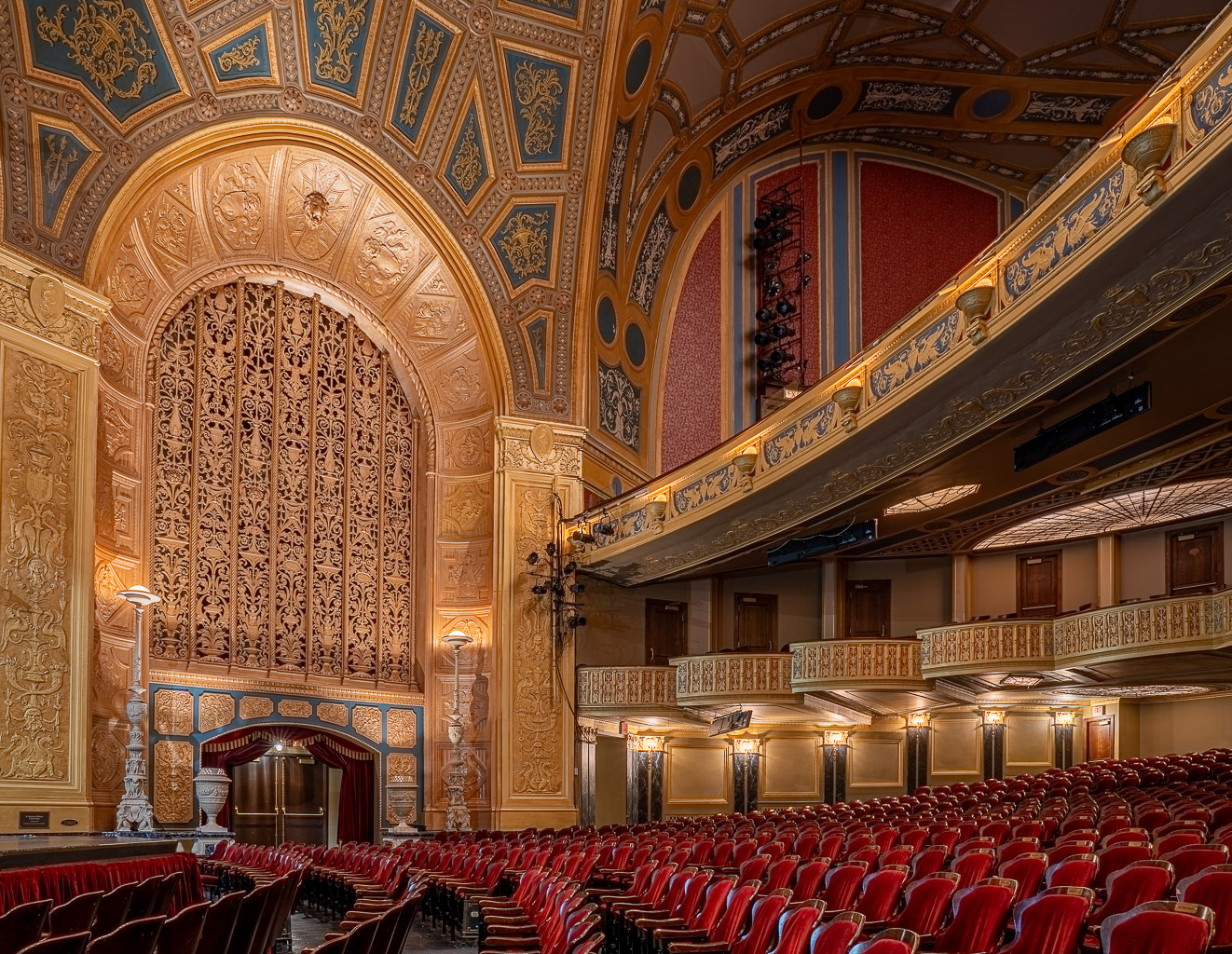
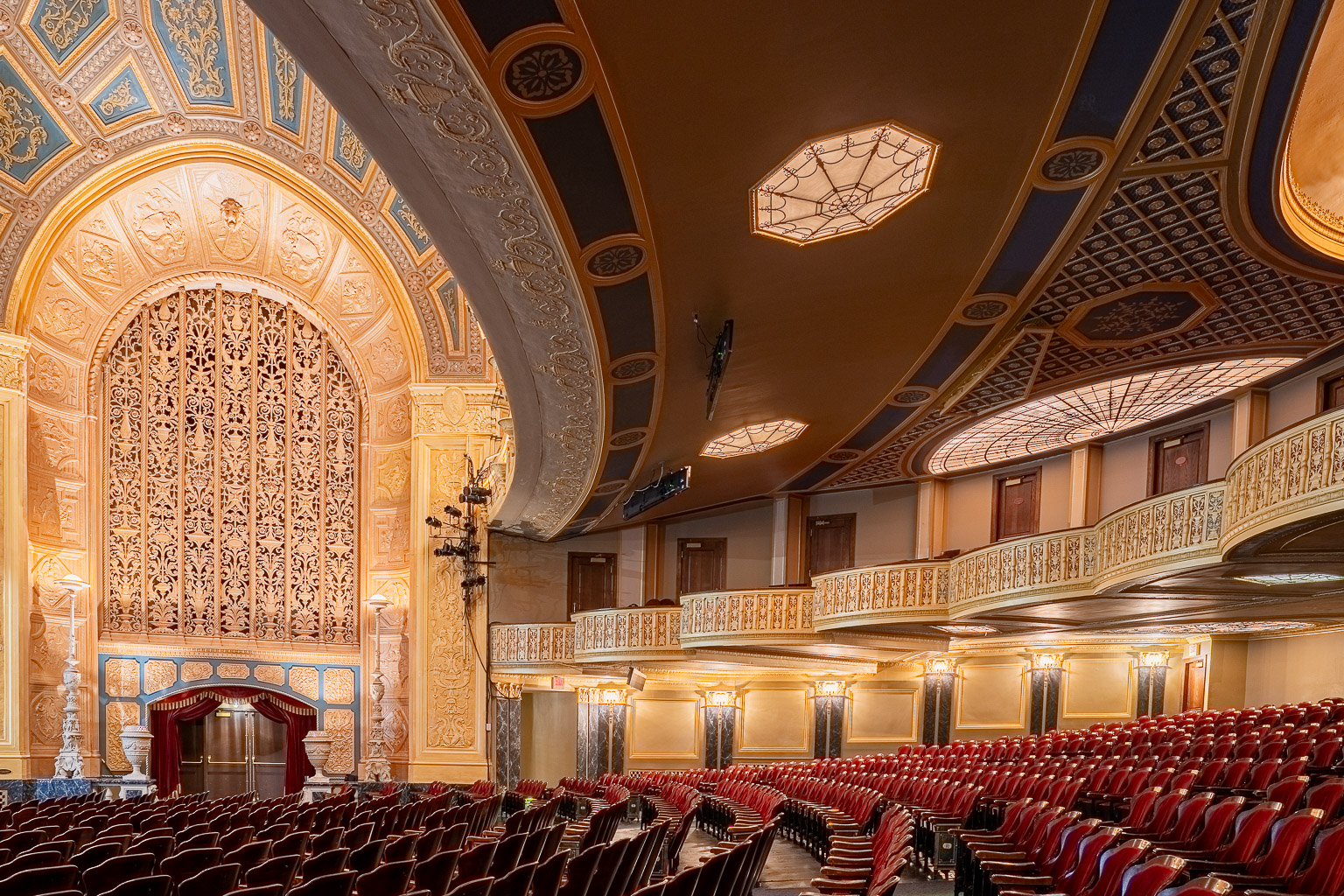
Warning: getimagesize(E:/var/www//DetroitHistoricDistricts/GrandCircusPark/.jpg): Failed to open stream: No such file or directory in E:\var\www\commonPhp.php on line 103

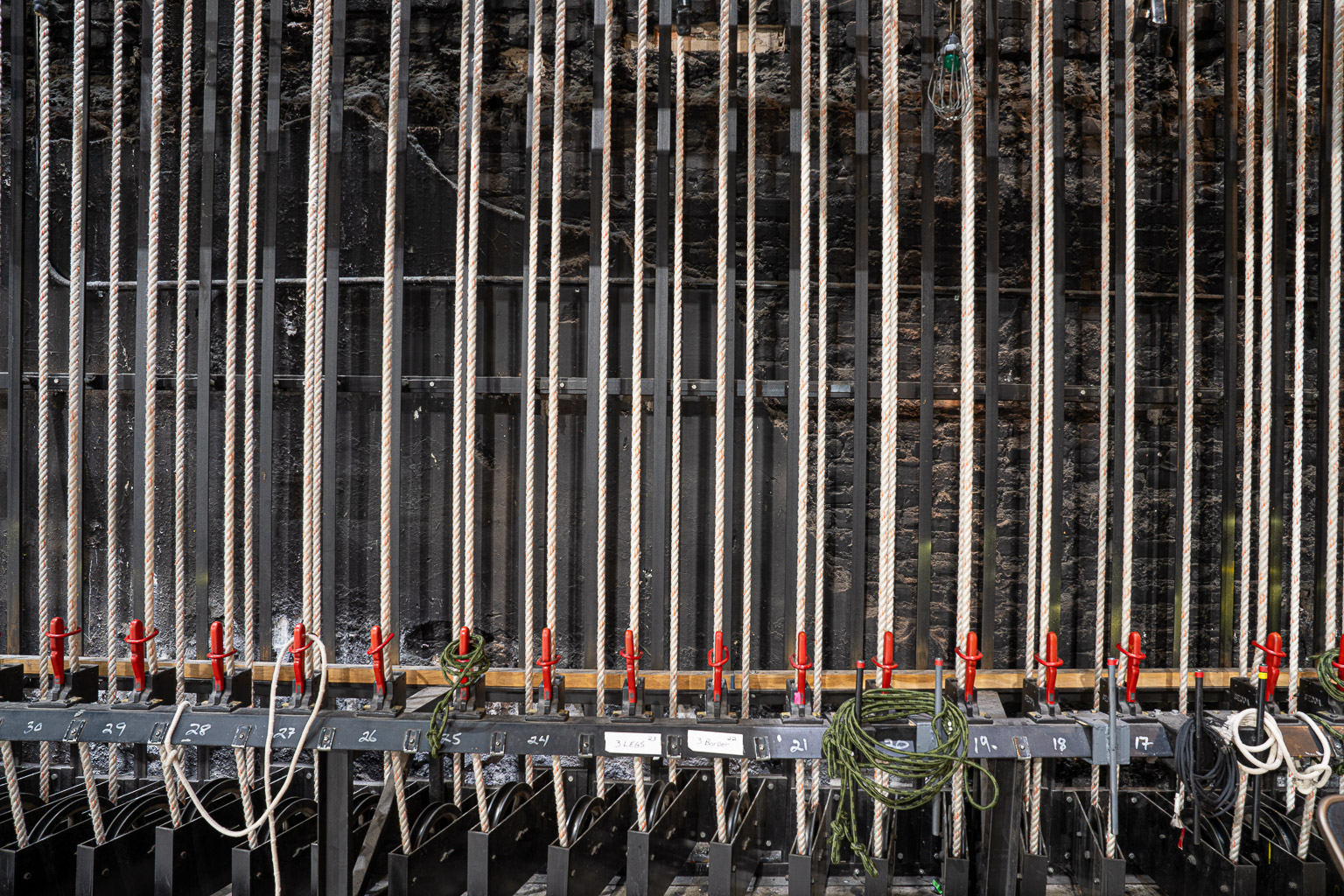
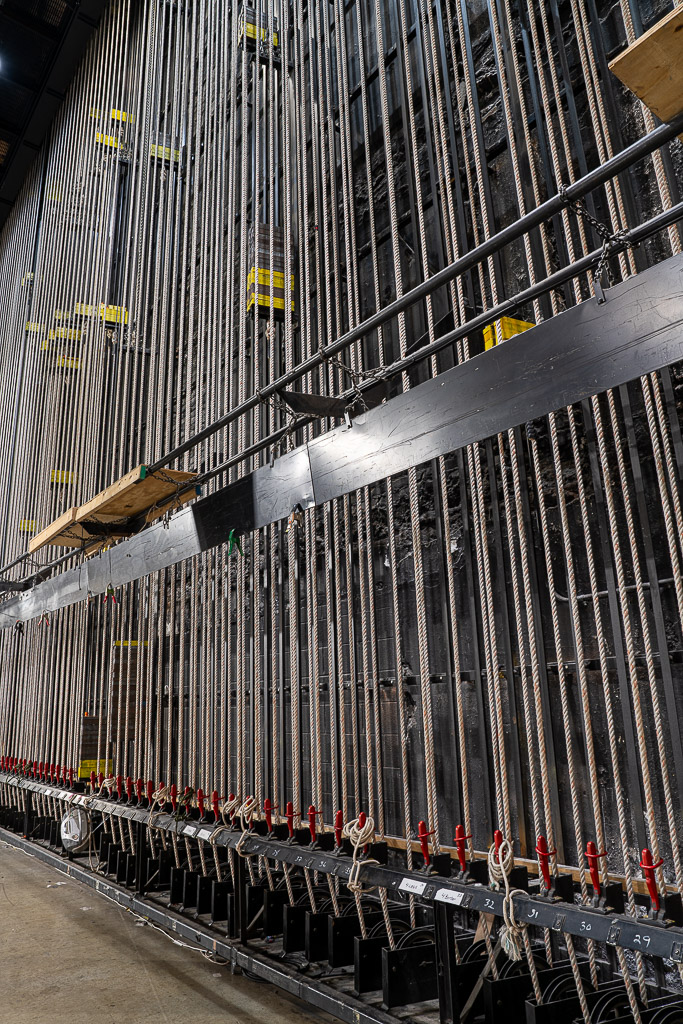
And here are the backstage lift lines at the Detroit Opera House.
In the fall of 1929, the Capitol Theater became the Paramount Theater and in 1934, was renamed the Broadway Capitol Theater. A variety of entertainers such as Will Rogers, Louis Armstrong, Betty Hutton, and Duke Ellington performed at the theater during the 1930s and 1940s; and later many of the rock and roll stars of the 1950's. In 1960 the theater was reconfigured to 3,367 seats and begin to show movies. The name was changed again to the Grand Circus Theater and it remained opened until 1978. From 1981 to 1985 , the theater ran intermittently presenting diverse entertainment, from mainstream artists to alternative rock bands. After a small fire in November of 1985, the theater remained closed for the next three years. In 1989 building was purchased by the Michigan Opera Theater.
Since its inception in 1971, Michigan Opera Theater has called three different theaters "home" prior to the opening of the Detroit Opera House. In 1971 the Company became the catalyst for the revitalization of Detroit's celebrated Theater District as it reopened the Music Hall Center for the Performing Arts. In 1985, in an effort to accommodate its growing audience and increase production needs, the Company, began performing the fall season at the Fisher Theater and by spring they had moved to the 4000 seat Masonic Temple.
In the spring of 1993, the Roberts Fur Building located on the south side of Madison Avenue near the park was razed for the 75,000 square foot stagehouse and patron service areas. The adjoining office towers underwent adaptive reuse into dressing rooms, and offices for Michigan Opera Theater's administration, production, and community outreach departments. The company moved into its new offices in November 1998.
More photos and more description of this building can be found at HistoricDetroit.org.
The Madison Theater is part of the Broadway Avenue Local Historic District.
The David Broderick Tower is within the Lower Woodward Avenue Historic District Local Historic District.
The David Whitney Building is a Local Historic District all on its own, not a member of this one.
Ellsworth Statler was born in 1863 and spent his life in the hotel business. His first independent venture was a temporary hotel for the 1901 Pan American Exposition in Buffalo, New York Profits from that and another temporary venture at the 1904 St. Louis Exhibition enabled him to build his first permanent hotel in Buffalo in 1908. His second hotel, opened in 1912 in Cleveland, was designed by George B. Post, who remained a favorite architect as Statler built his chain of major-city hotels.
The Detroit hotel was also designed by Post, and was opened in 1914; an addition on the south on Washington Boulevard followed very shortly thereafter. The massive block of the red- brick building rests on stone base three stories high; the second and third floors are divided into bays by shallow pilasters two stories tall surmounted by a cornice. The fourth floor windows rest on that cornice, and have stone surrounds, providing a transition to the brick curtain wall above, which is articulated only by alternating paired and single windows.
Above the fourteenth floor the facade is further detailed to provide an appropriate termination for the top of the building. The windows of the top three stories are all paired opening, and are contained in two-story aedicules, every other of which rests on a balcony; the alternating bays have only a recessed balustrade imitating the balconies. The triangular pediments of the aedicules support the paired windows of the seventeenth floor, above which is a frieze and cornice supporting a balustrade with urns at the divisions between bays.
Although the building had a reputation for grand interior spaces, the sale of interior fittings after the closing of the hotel and the many years that the building has stood vacant suggest that there may be no significant interiors remaining within. The building was closed in 1975, and was recently the subject of an RFP by the City of Detroit seeking redevelopment. It remains to be seen whether the structure is economically viable.
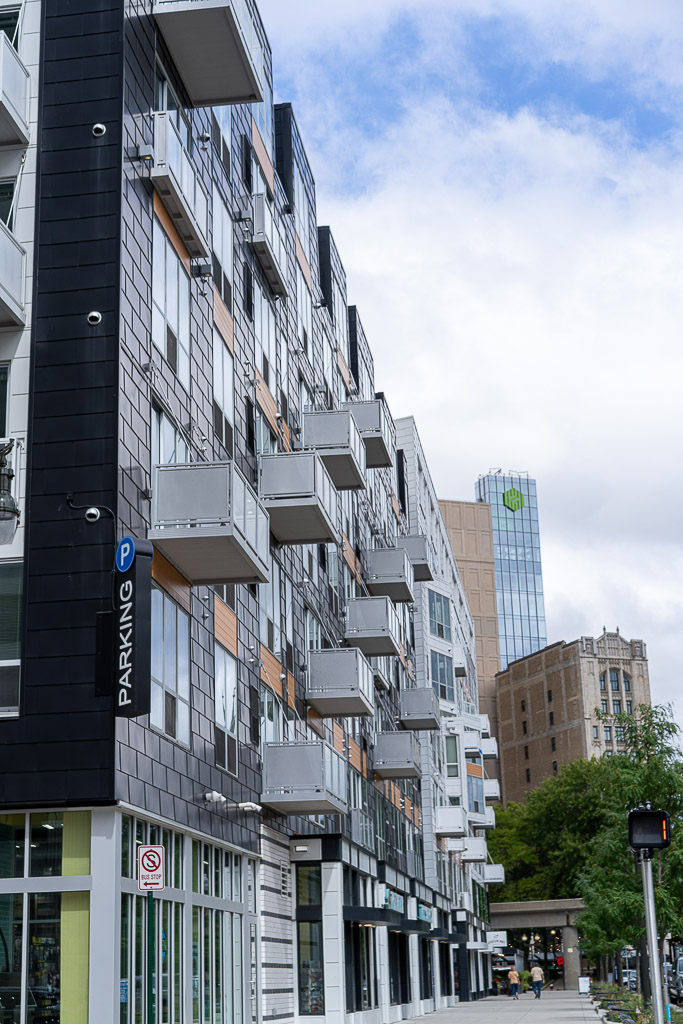
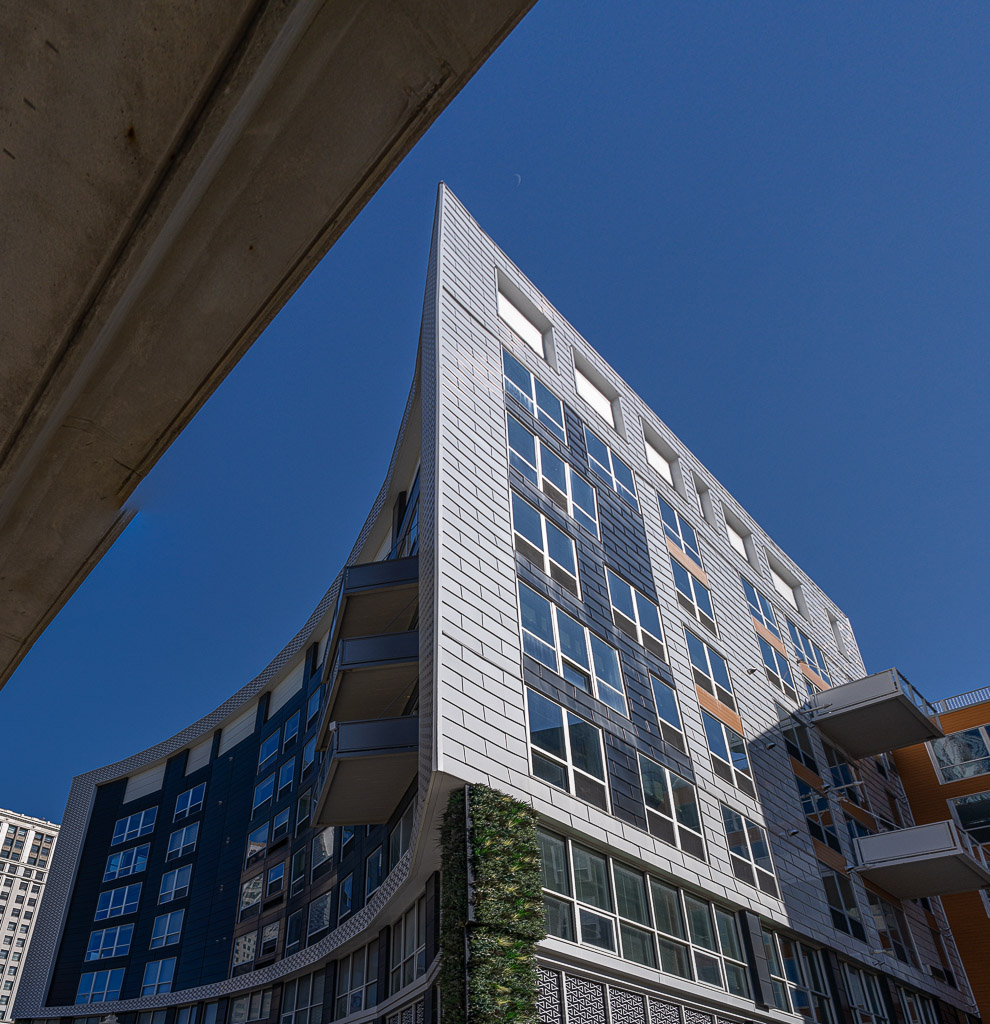
Well, we received our answer a few years later, as the hotel was demolished from April - October 2005, and subsequently replaced with the City Club Apartments.
More photos and more description of this building can be found at HistoricDetroit.org.