Buhl Building
In 1868, the Buhl brothers erected an office building at the corner of Griswold and Congress Streets that became an attractive location for prosperous law firms. It built directly above the Savoyard Creek on a site which in the early 1800s had been part of Fort Shelby. In the 1920s, a third generation of Buhls decided to make more profitable use of their prime downtown land by replacing their small office building with the current 26-story building.
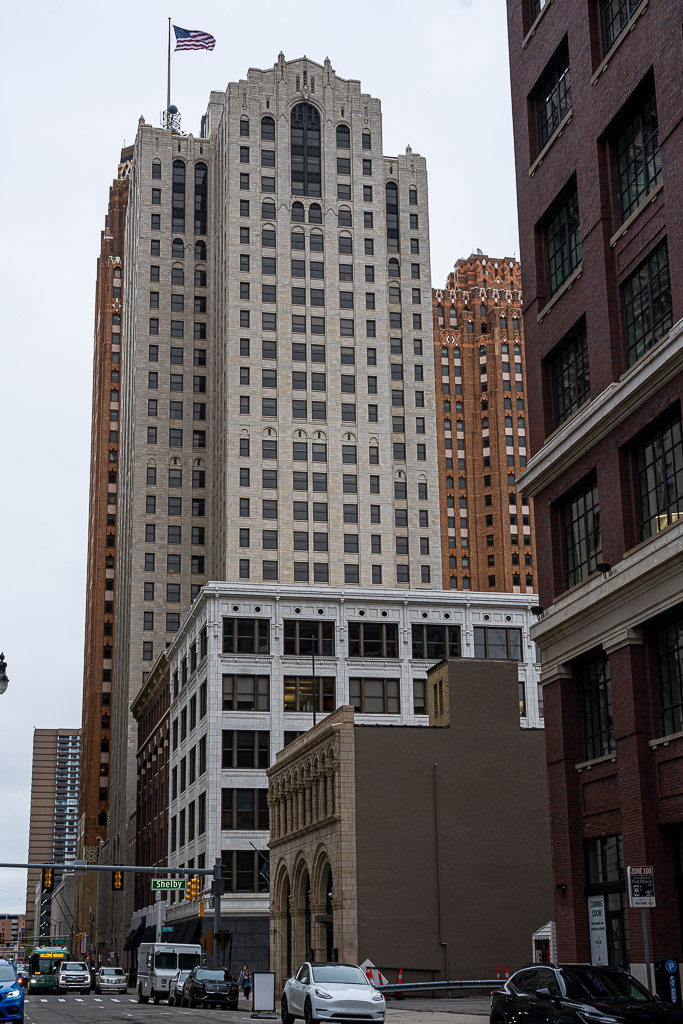
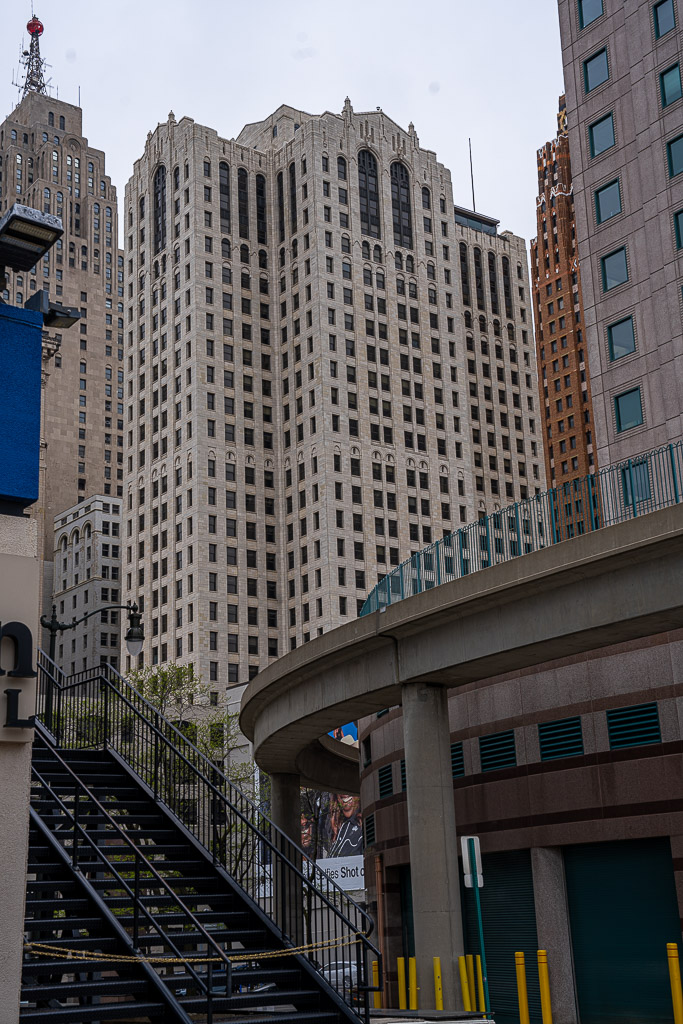
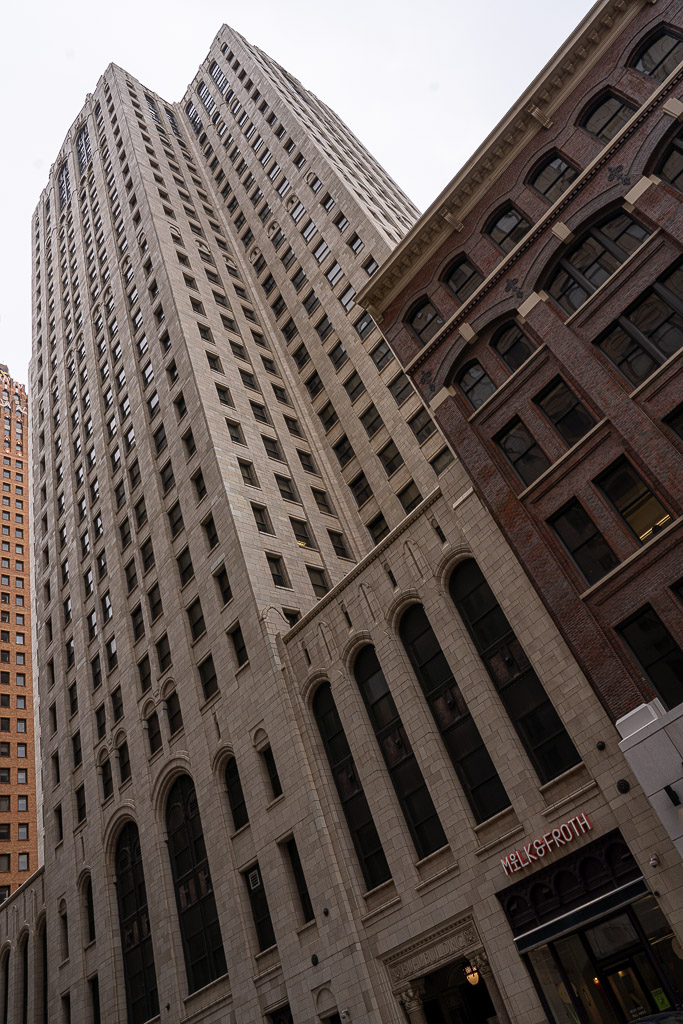
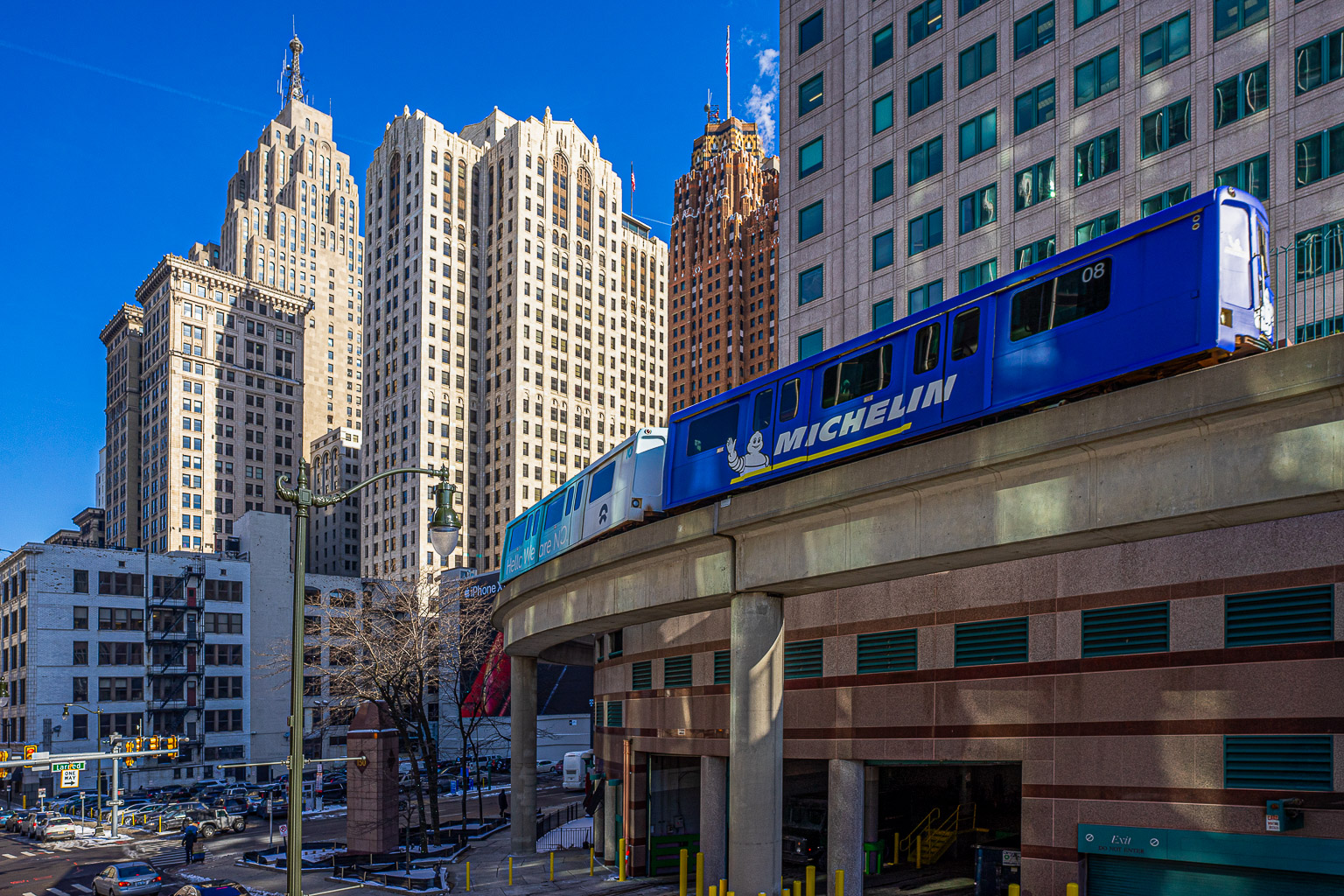
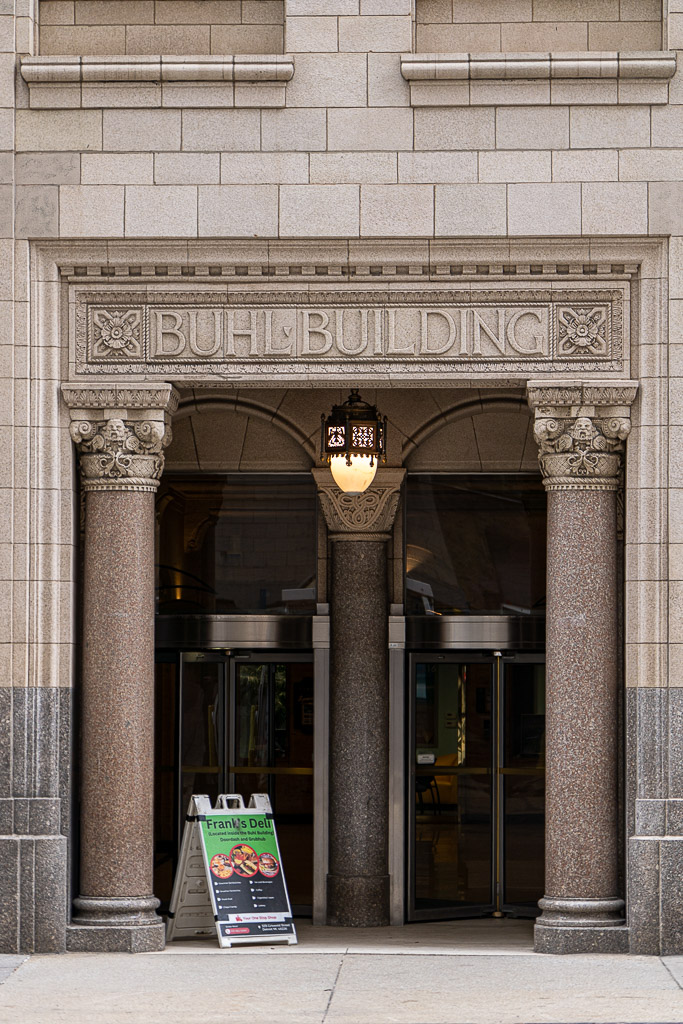
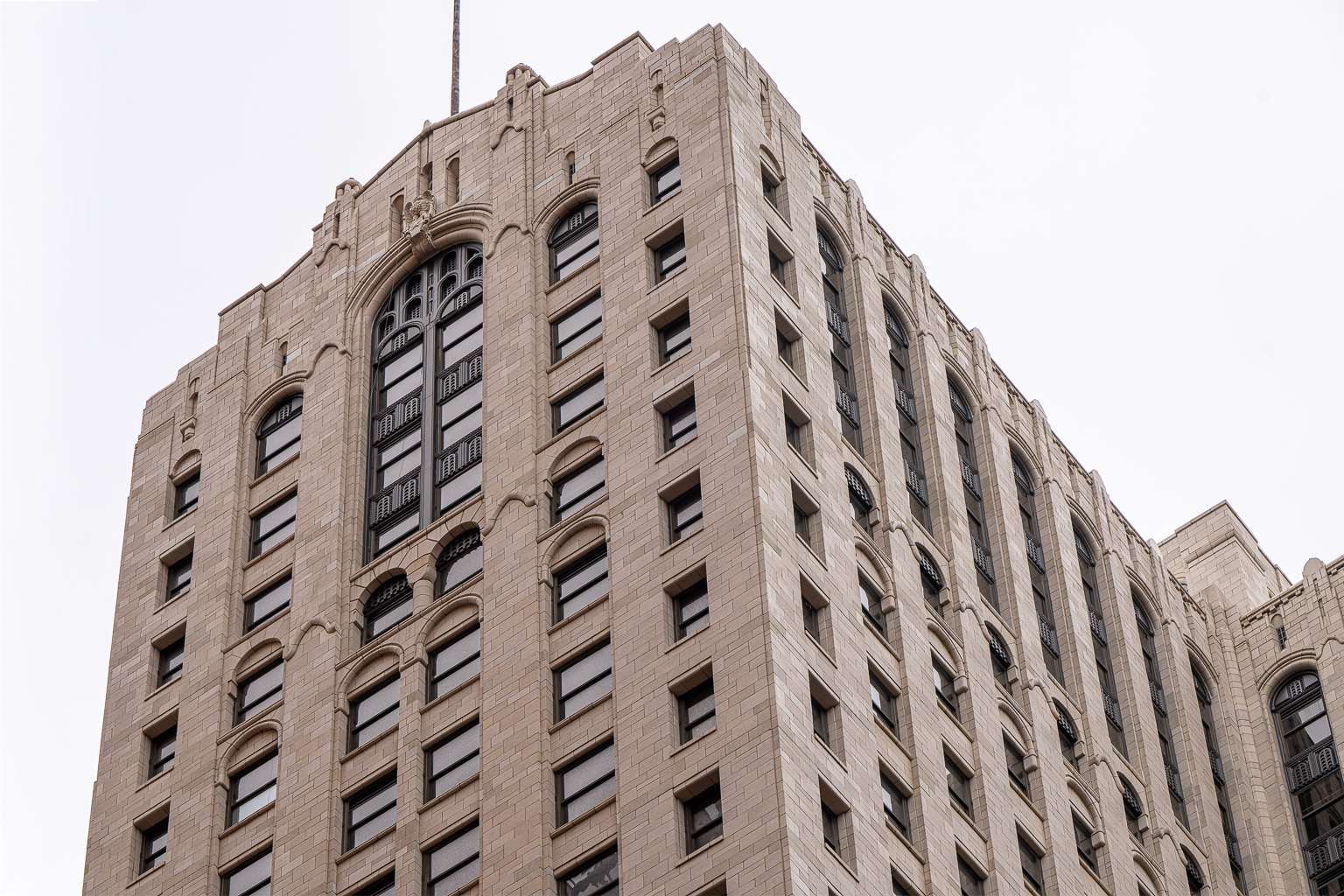
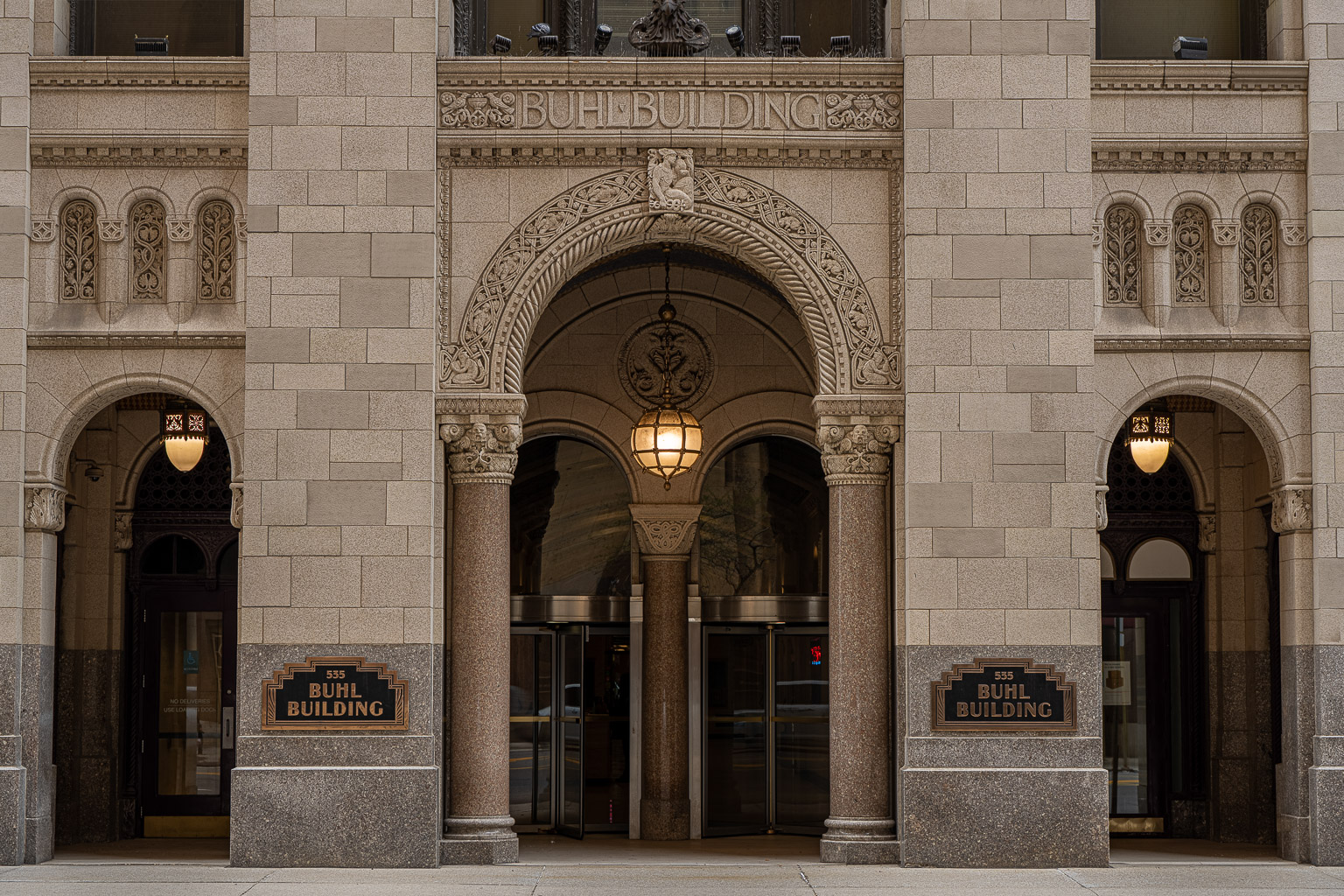
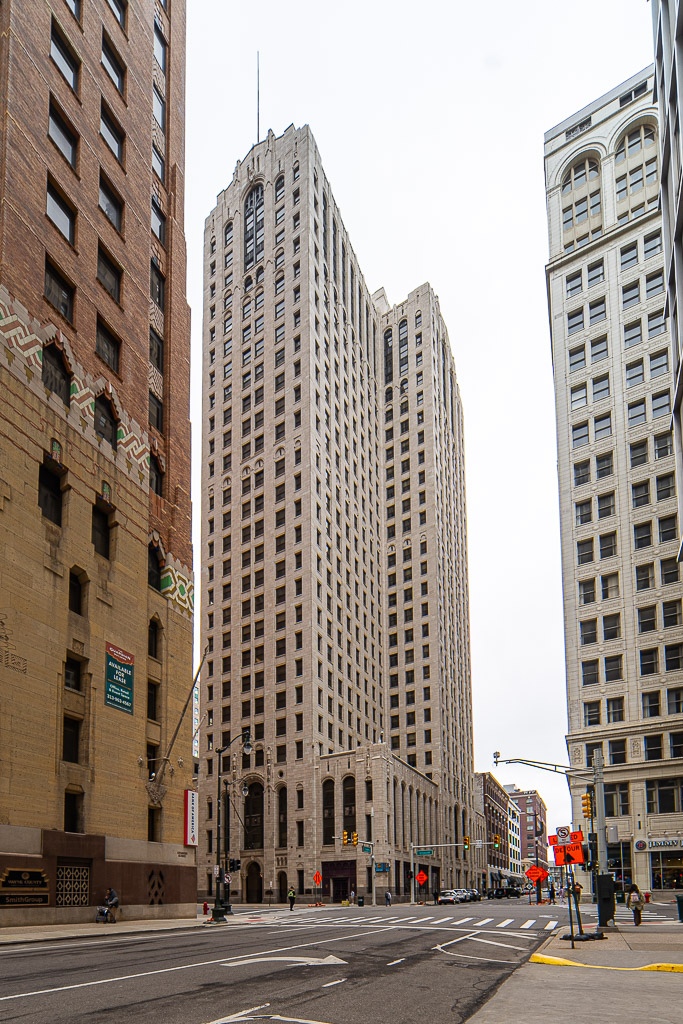
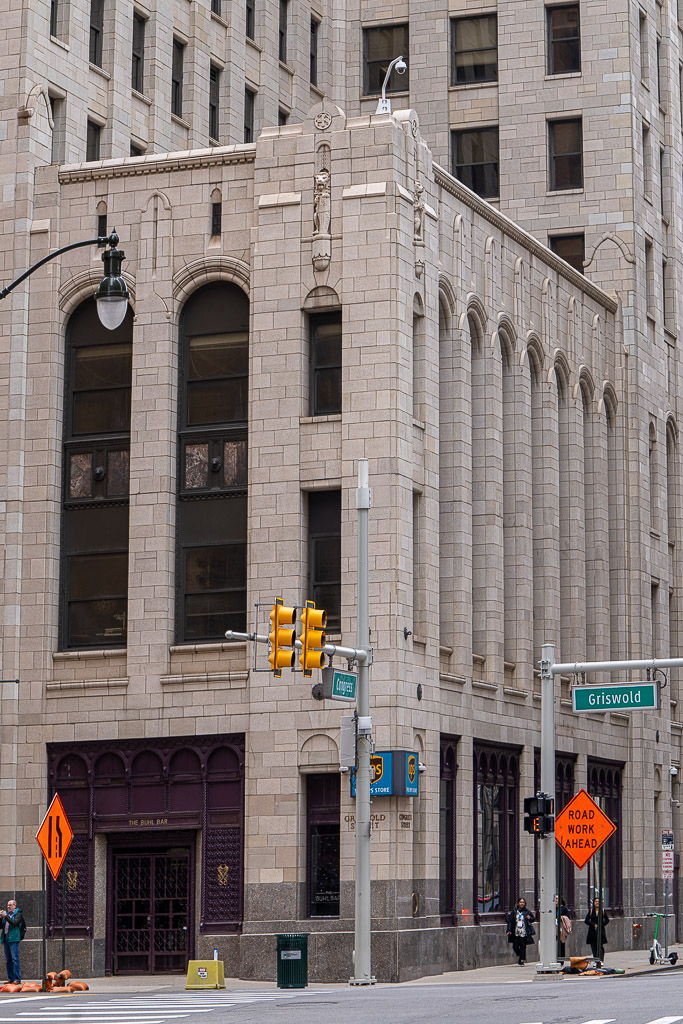
The Buhl Building is a 26-story steel-frame skyscraper faced in cream-colored terra cotta and granite, and built in 1925. Wirt C. Rowland of Smith, Hinchman & Grylls, the architect of the Guardian Building was chosen as architect, and Corrado G. Parducci was selected as its sculptor. It is located at the southwest corner of Griswold and West Congress Streets (1st photo below). The terra-cotta cladding was colored to resemble granite and cast in seemingly random-sized blocks, providing an attractive finish at moderate cost. This clever treatment was used previously on the Fyfe Shoe Store Building designed in 1918 by Smith, Hinchman, and Grylls, so, presumably, the idea did not originate with Rowland. The first four stories of the building have a rectangular footprint that fills the lot line (2nd through 4th photos below).
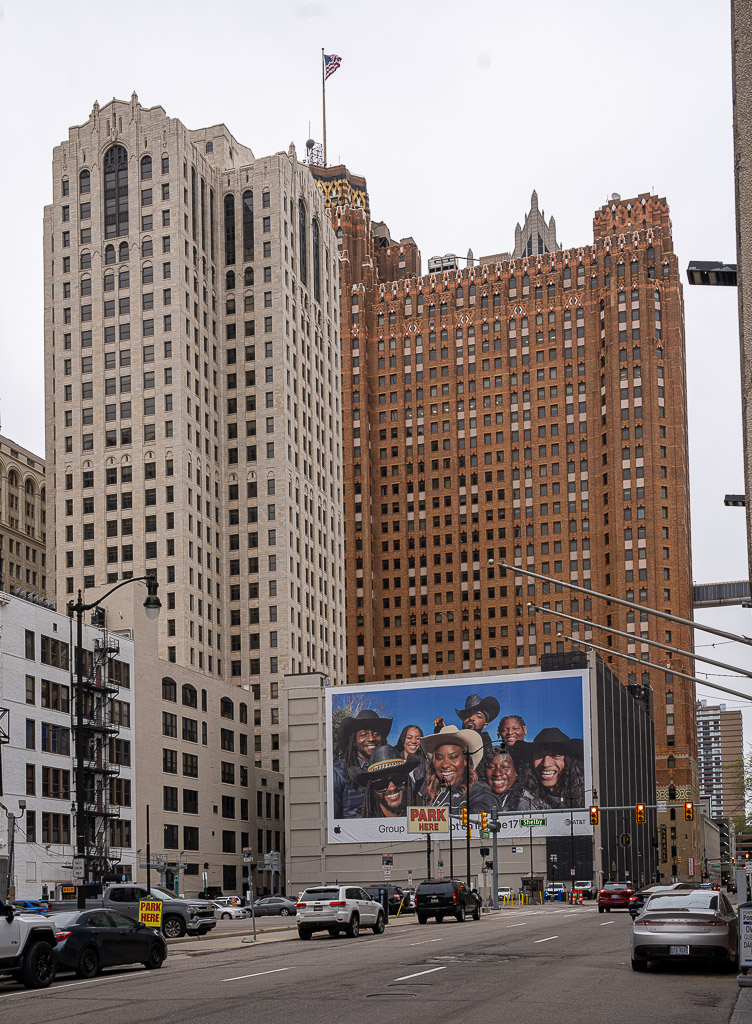
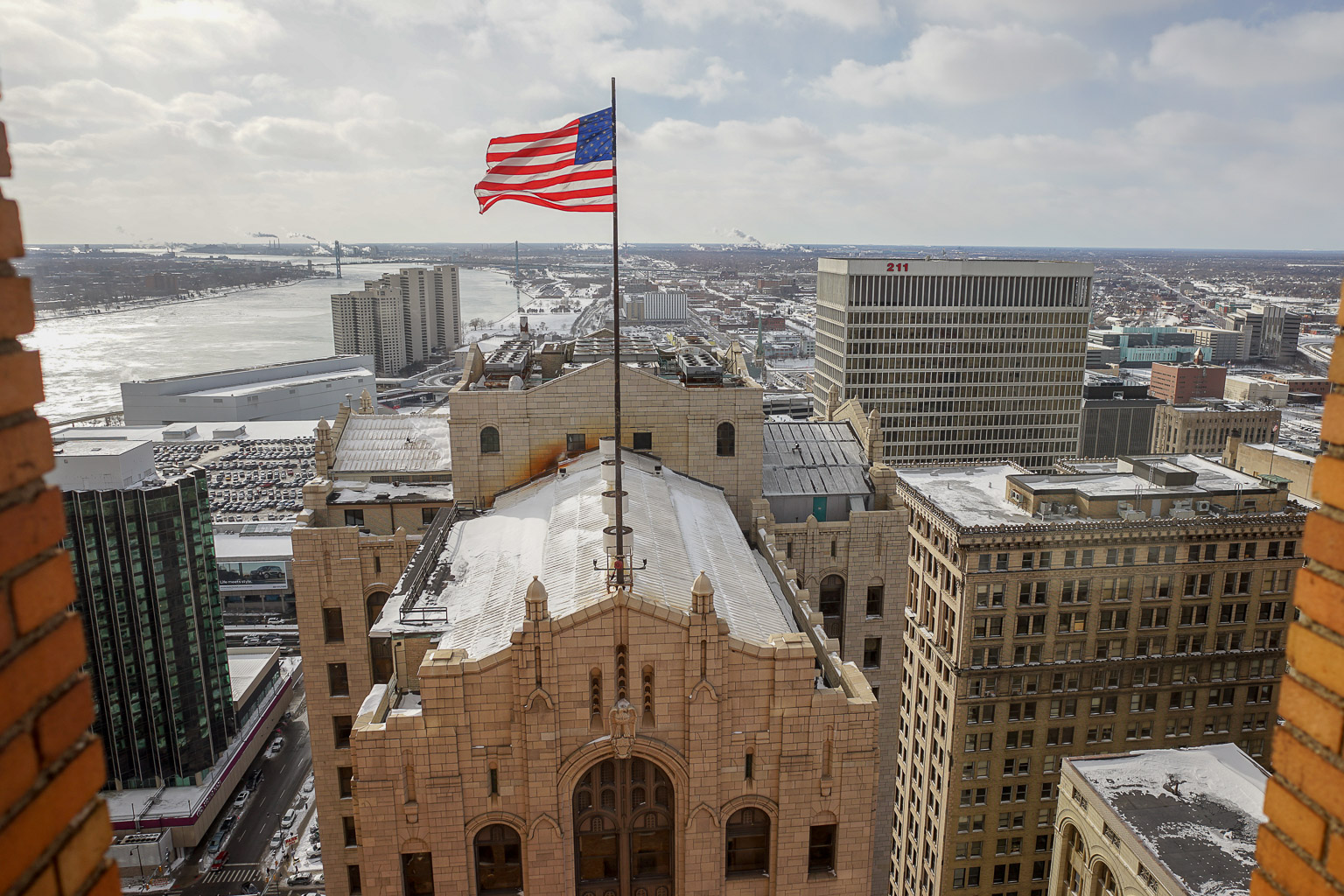
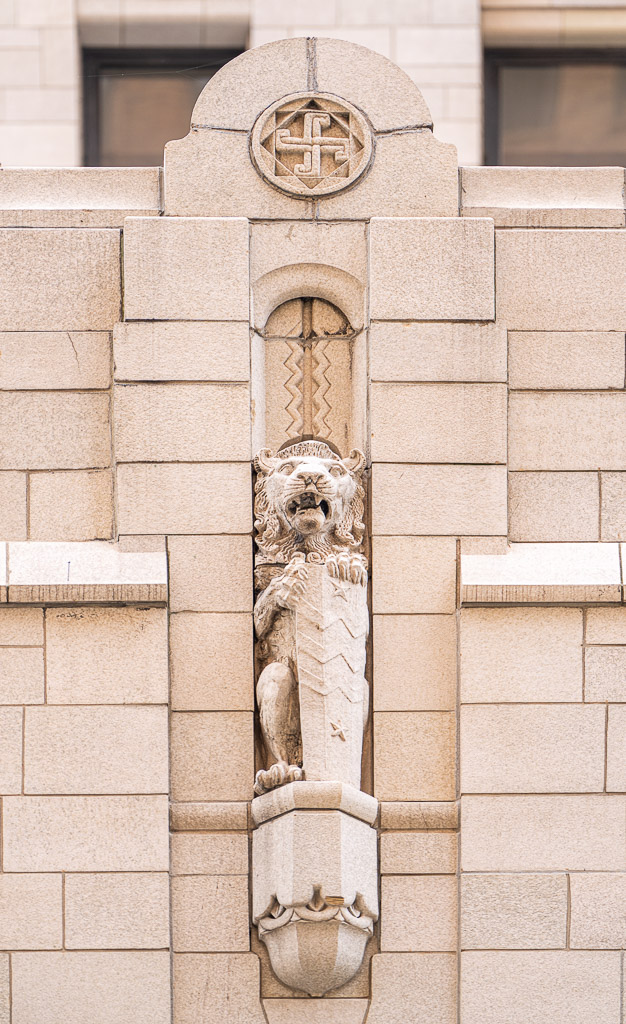
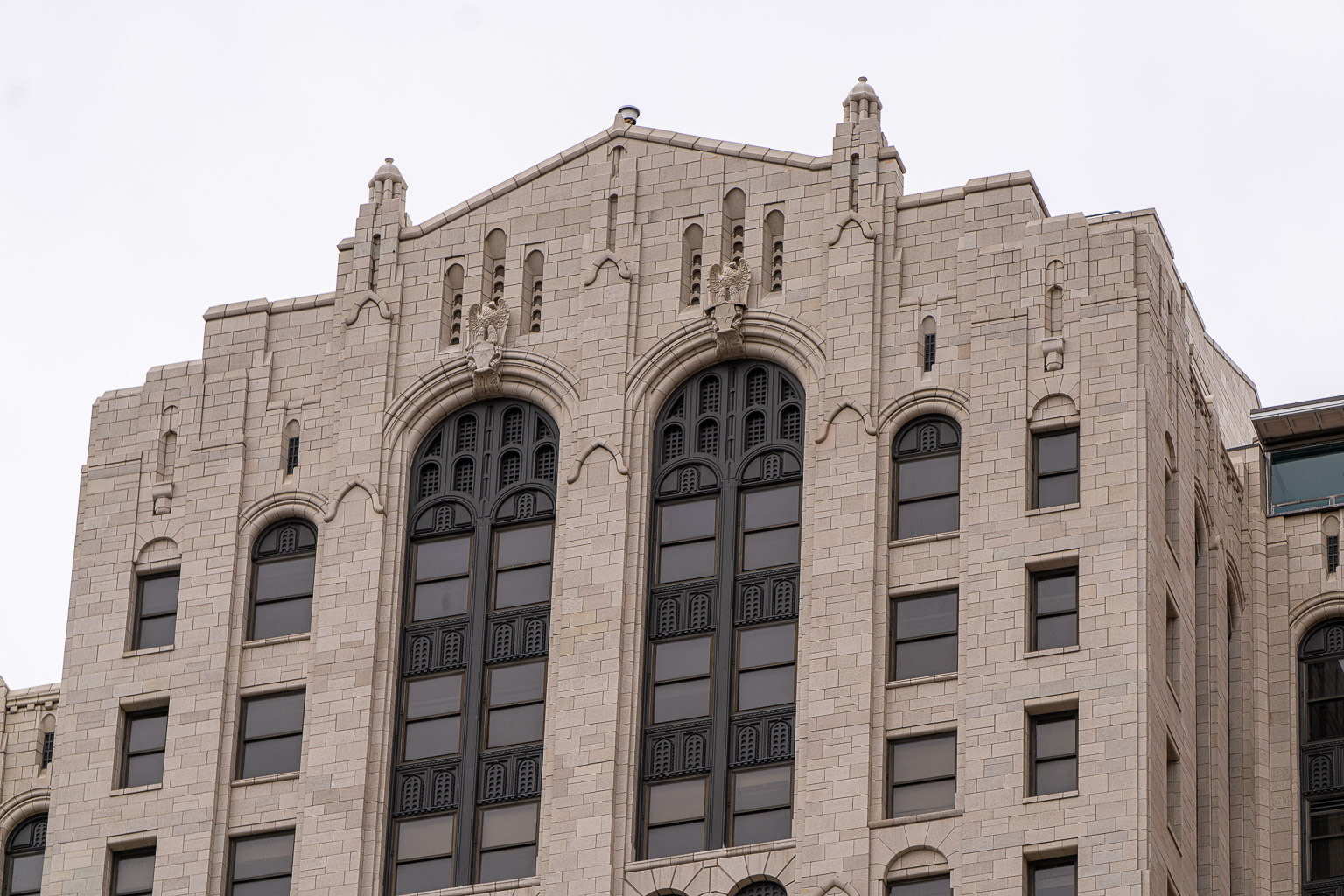
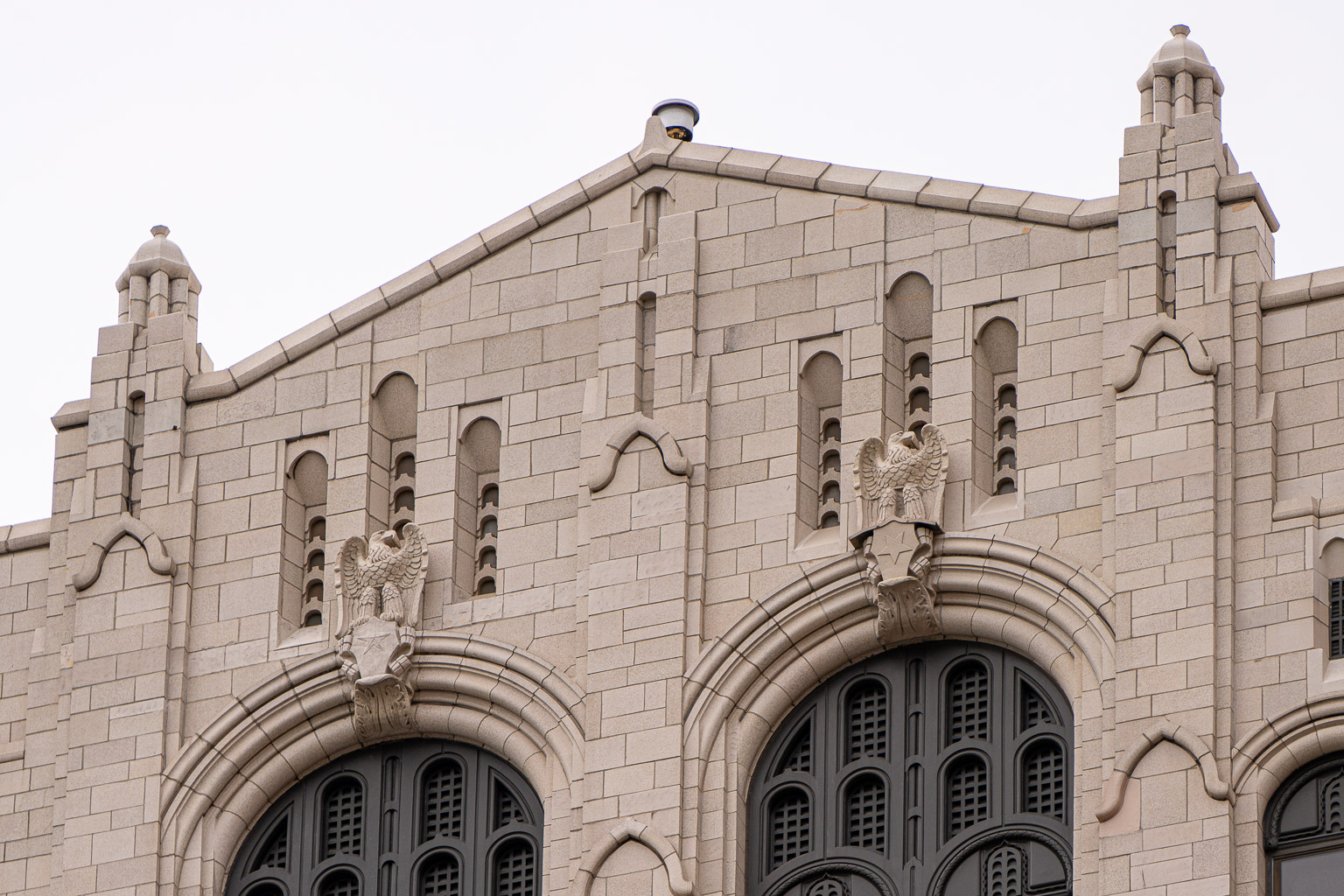
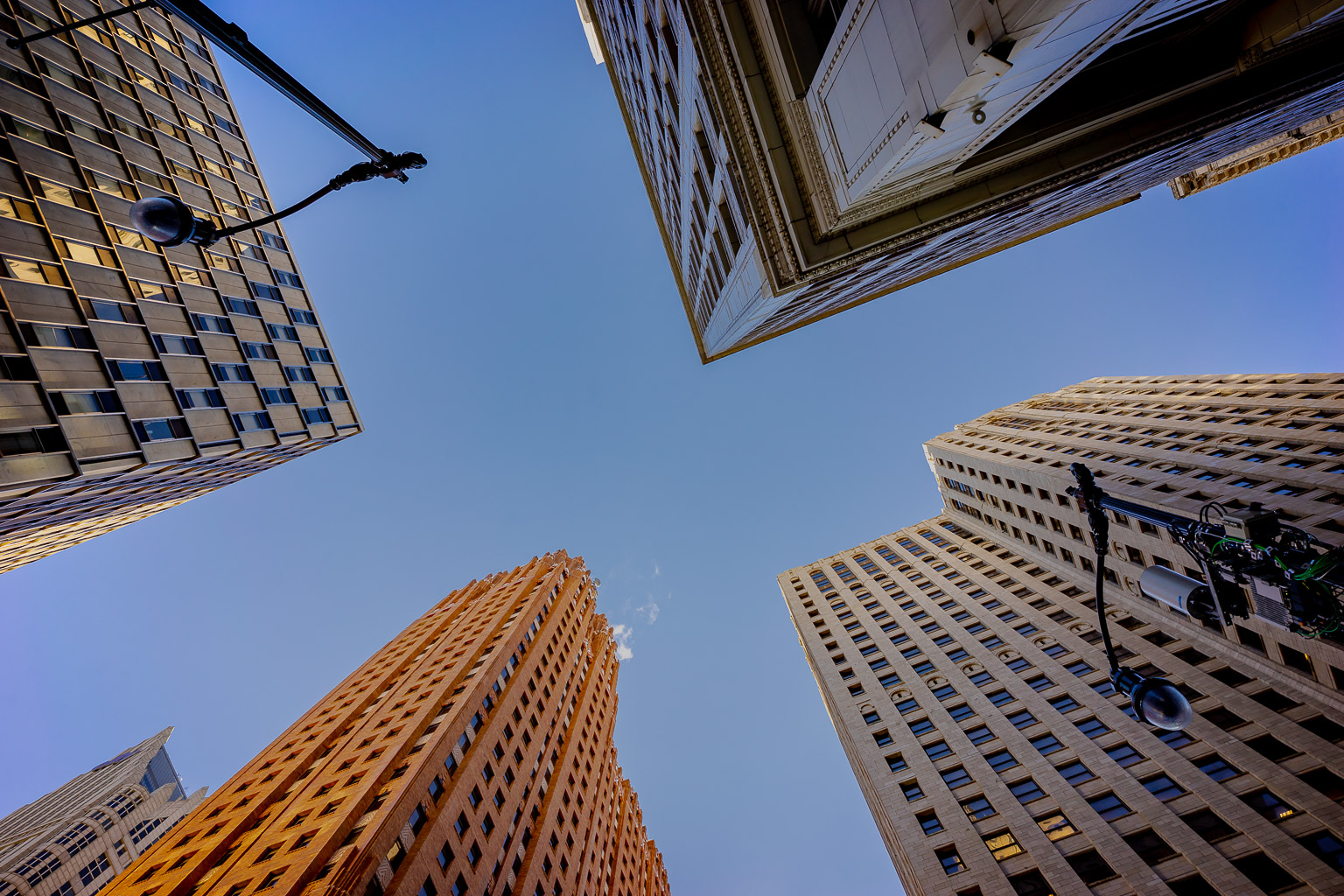
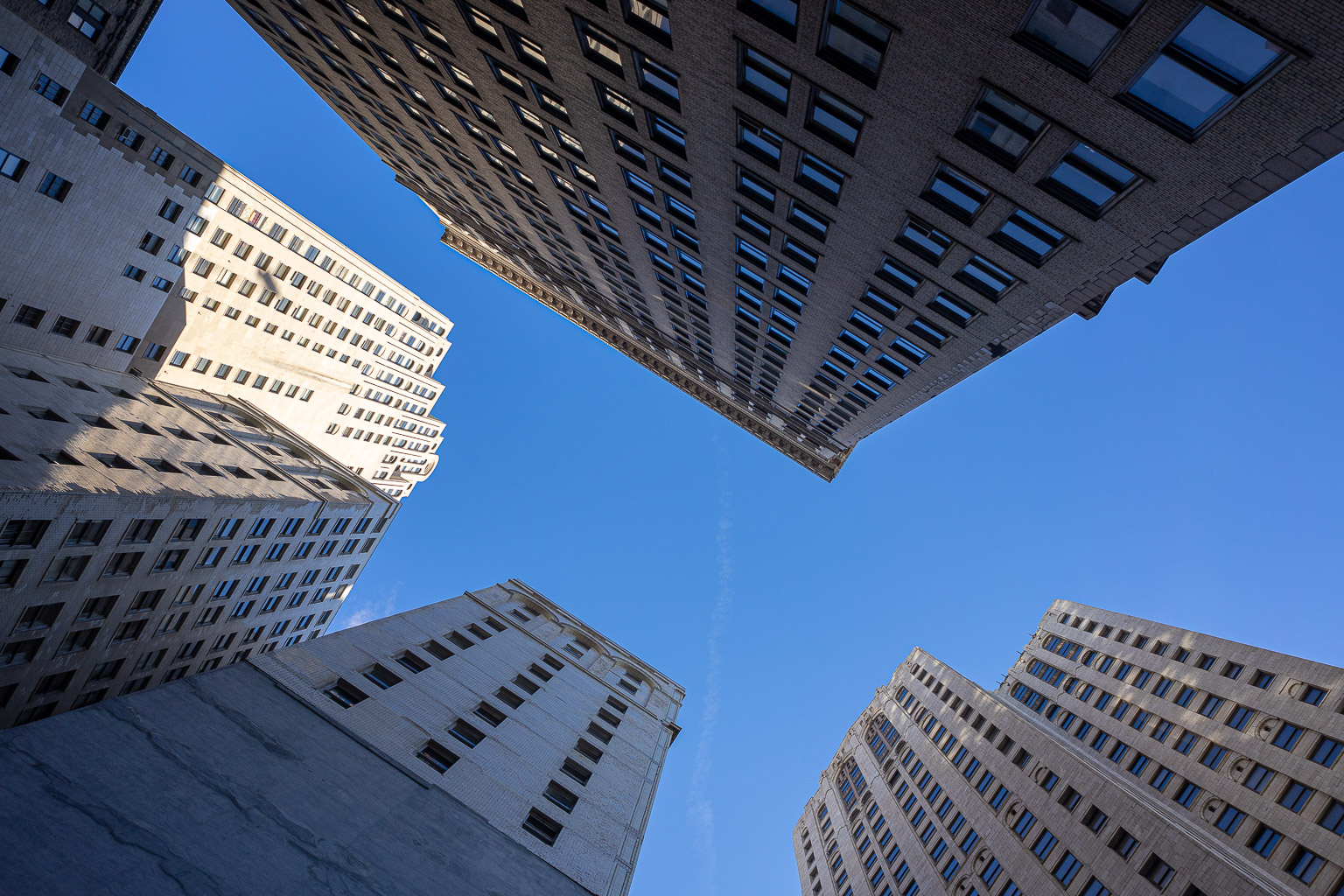
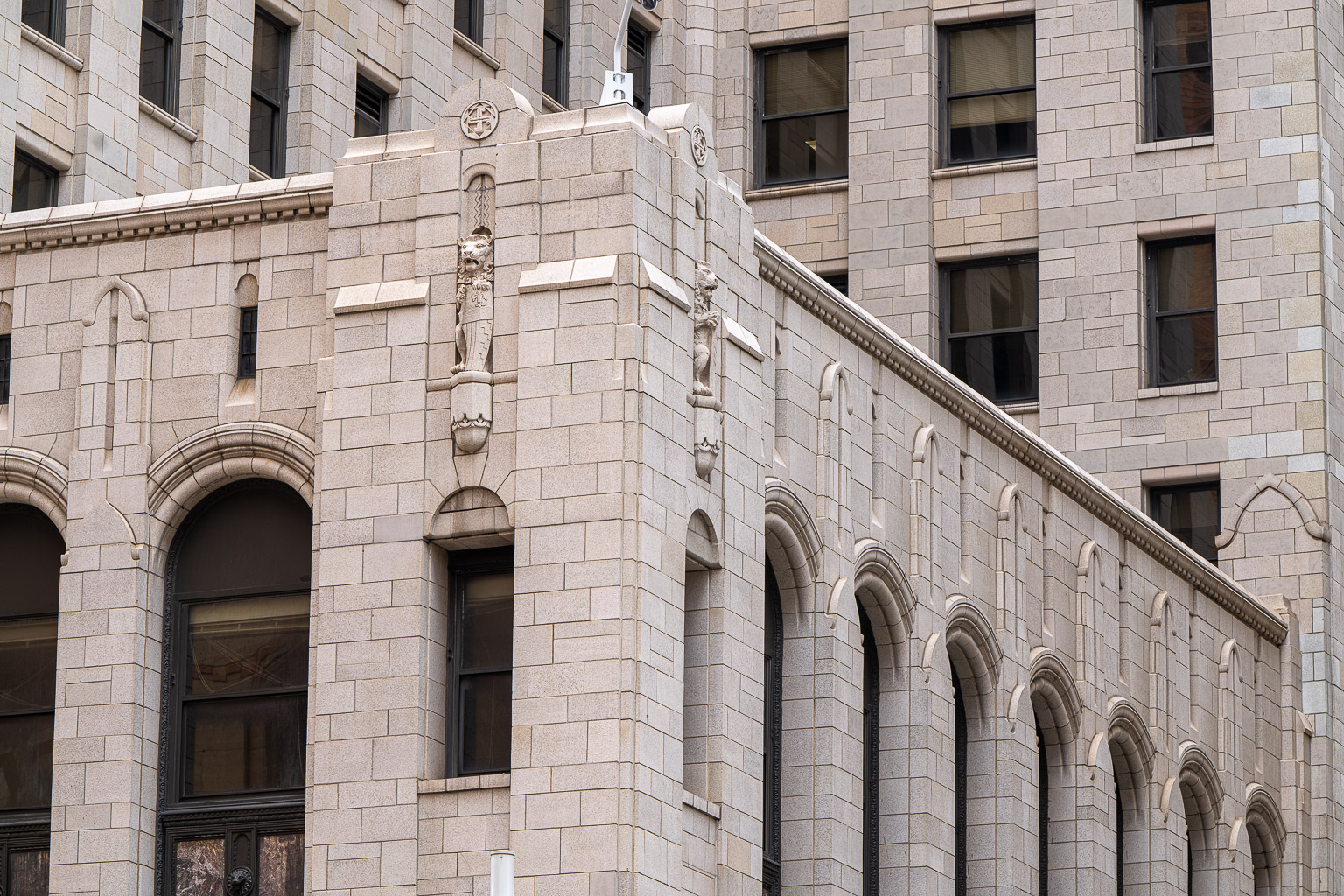
The plan of the upper office floors (floors five through twenty-six) is in the form of a Greek cross (1st through 3rd photos below). The services and elevators extend upward through the center of the cross, and short hallways radiate in all directions. This cruciform arrangement allows every office to have an outside window, along with eight corner suites on each floor. The wings appear to pass through the base; corners are emphasized by stout pylons. The piers rise from street level to the very top of the building, unifying the structure vertically and serving as its primary design element. On each corner of the building's base are massive pylons that project above the roof line of the base and contain a single column of windows, which, being narrower and more deeply inset than the structure's other windows, emphasize the pylon's bulk, and this design element also follows up into the floors above the base. The 2nd photo above best shows this effect in the pylons of the base. The 3rd photo below best shows this effect in the piers of the floors above the base. Do you see how the sky is less reflected in the outermost columns of windows? That's because they're set back deeper. Each wing is topped by a peaked parapet. A large central elevator service penthouse rises two additional stories above the building's gabled roofline (4th through 6th photos below). Rowland further harmonized the building's base with its top by essentially repeating on the top floors of the building the design appearing on the facade of floors two through four (again, 2nd photo above compared with 2nd photo below). Rowland was keenly aware of the effect distance has on perception and, as the top of the building was viewed from a greater distance than the lower floors, the decorative elements on the upper floors were exaggerated in size, bolder, and less detailed than those far below.
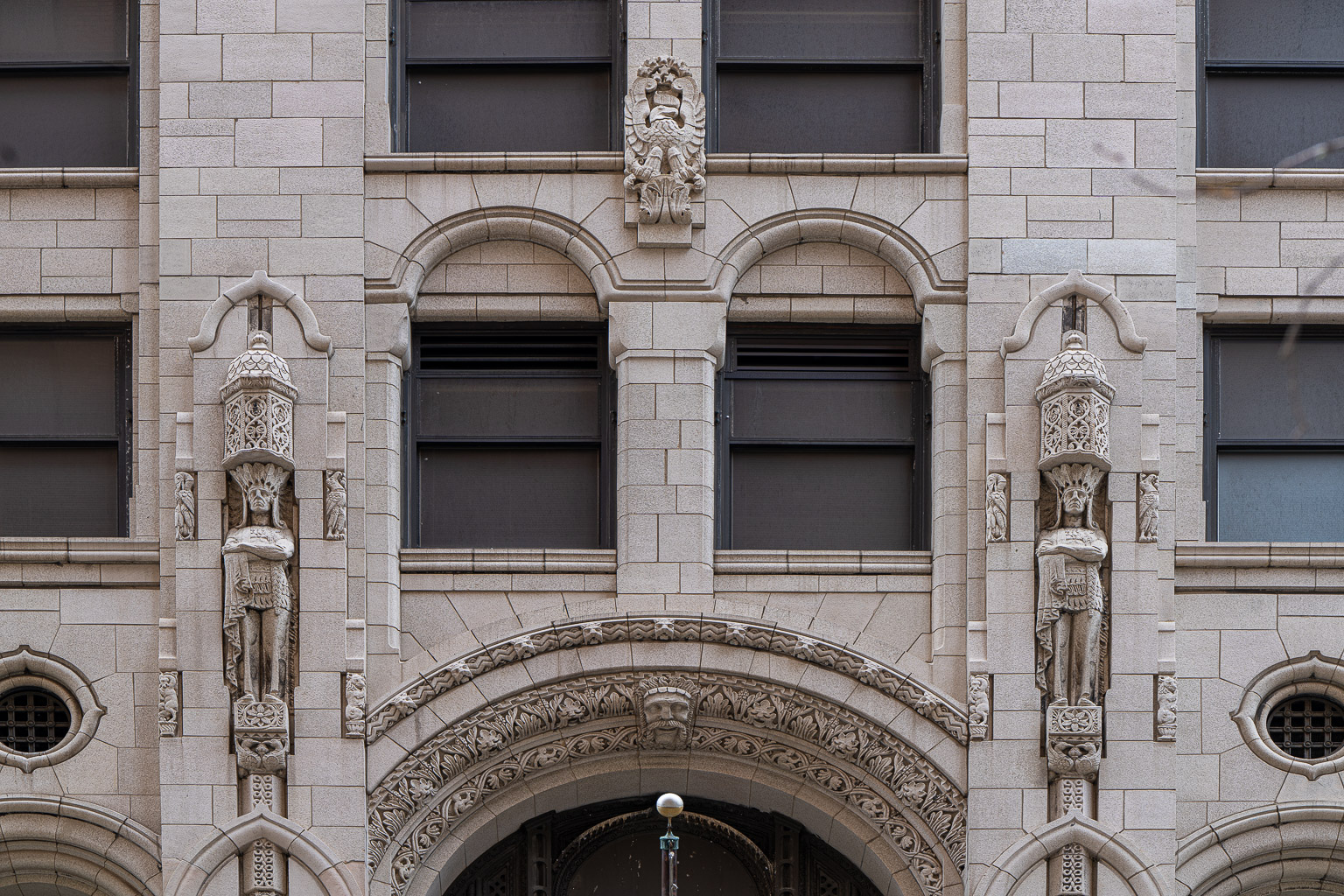
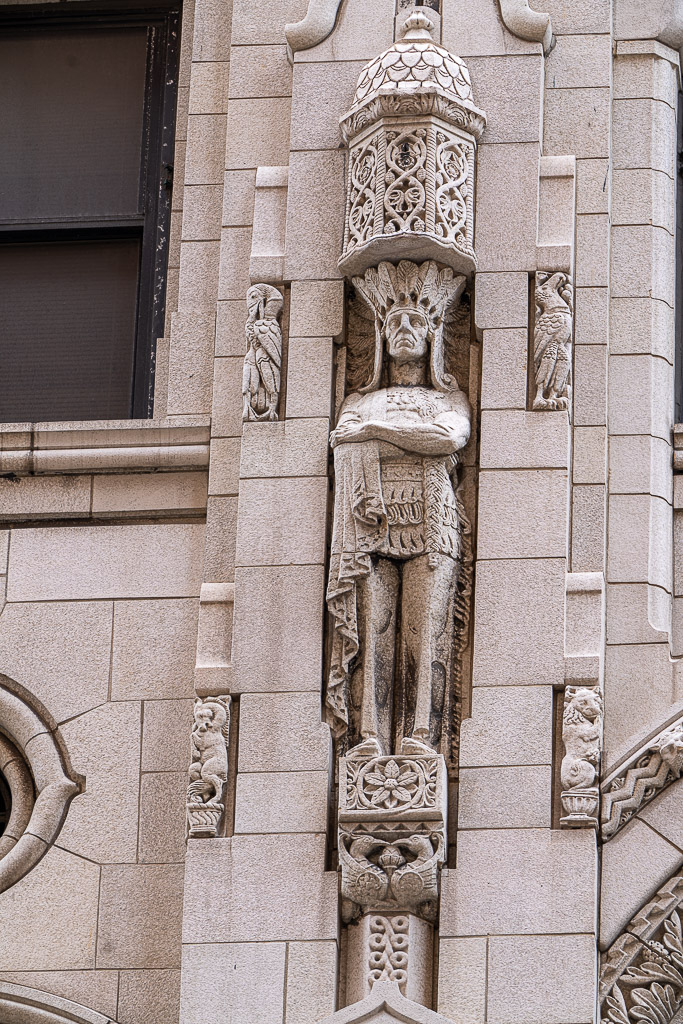
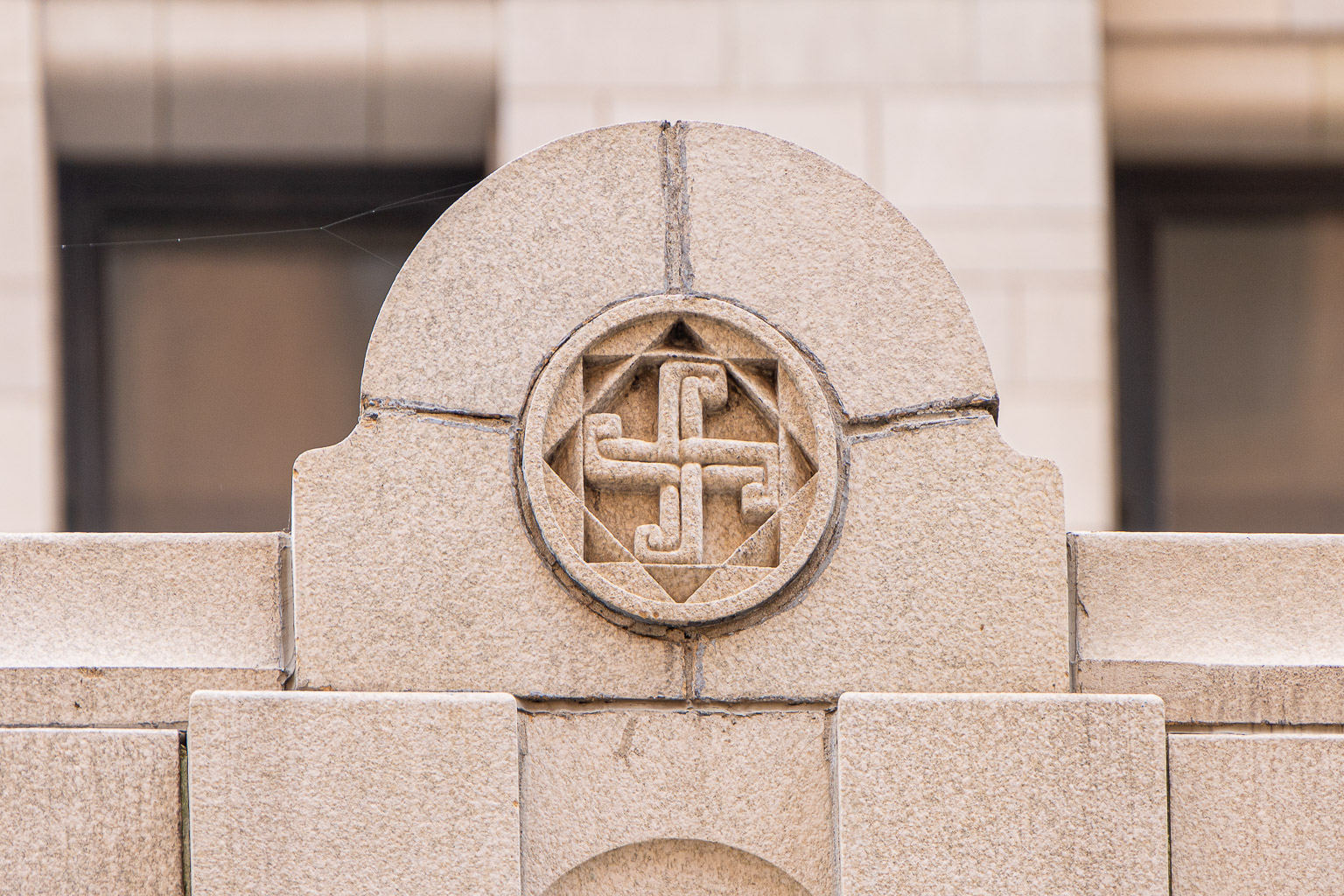
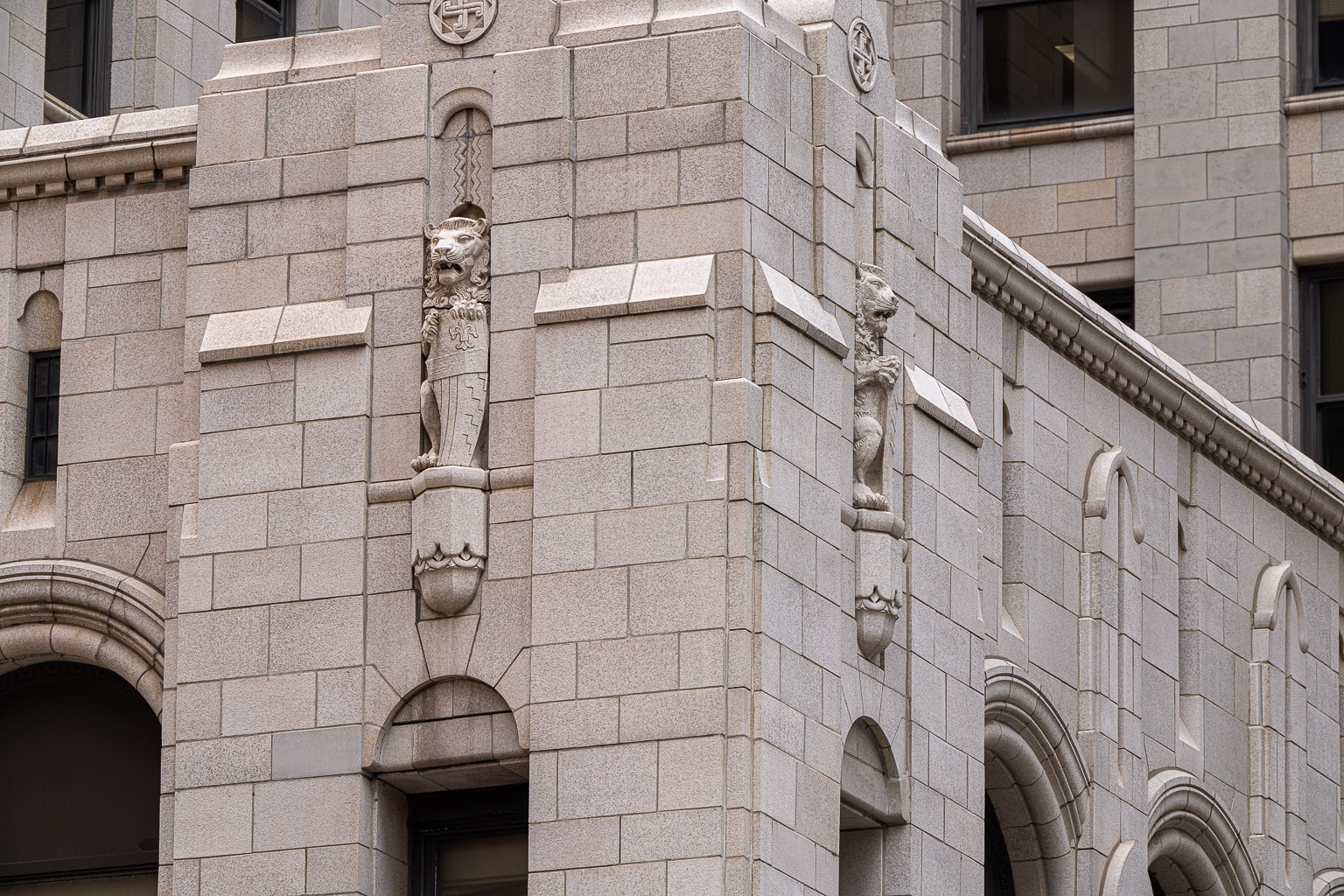
The exterior is a mixture of Romanesque and Gothic details all cast from models provided by sculptor Corrado Parducci (1st through 4th photos below). There are two clues as to the specific identity of the Native Americans carved above the entrance between the third and fourth floors (1st and 3rd photos below). The first clue is the feathered headdress, an article worn by Plains Indians. The second clue was a design used prominently on the building: the Native American symbol of the whirling wind, a form of the swastika. The whirling wind symbol appears atop each corner pylon of the Buhl building (4th and 5th photos below).
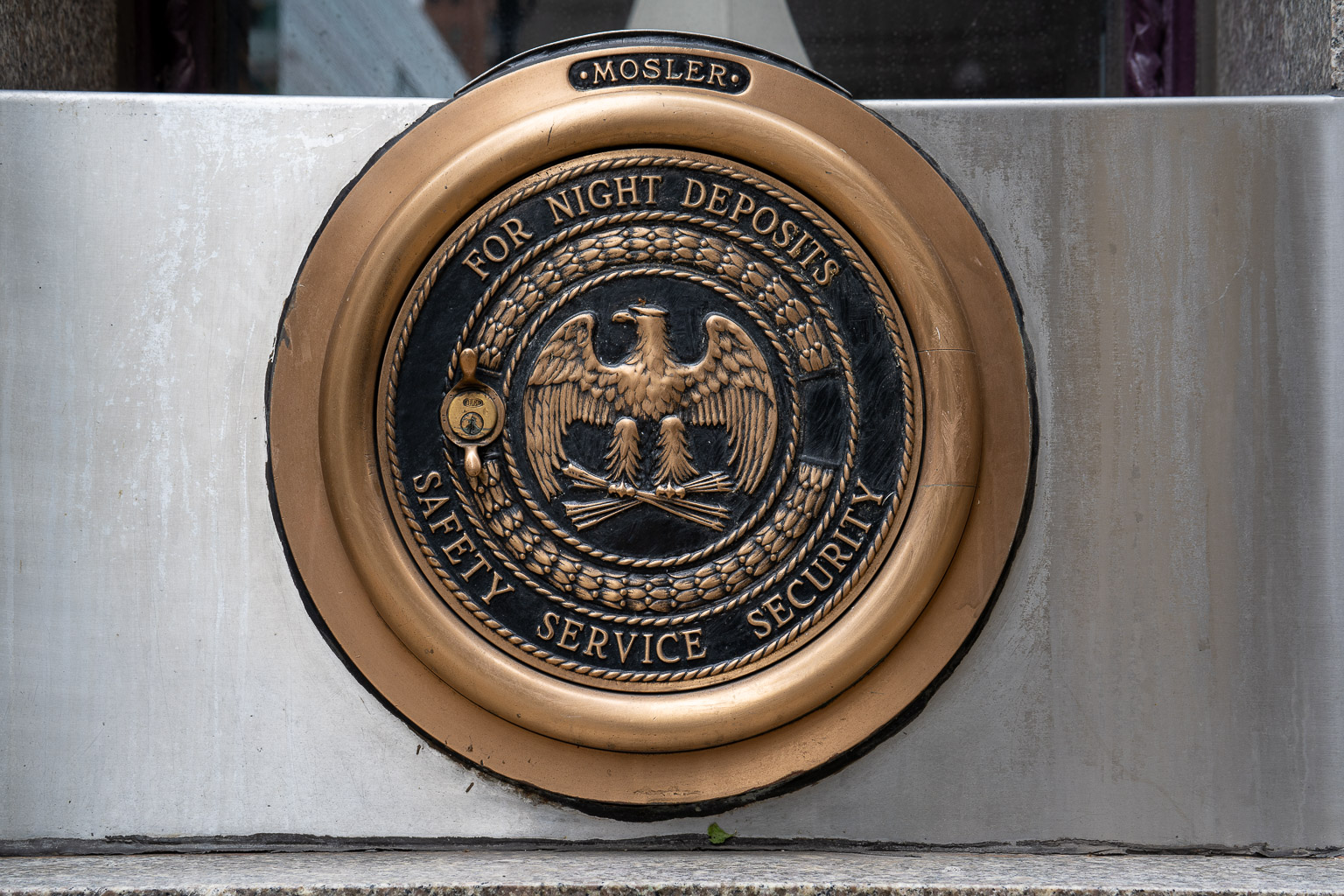
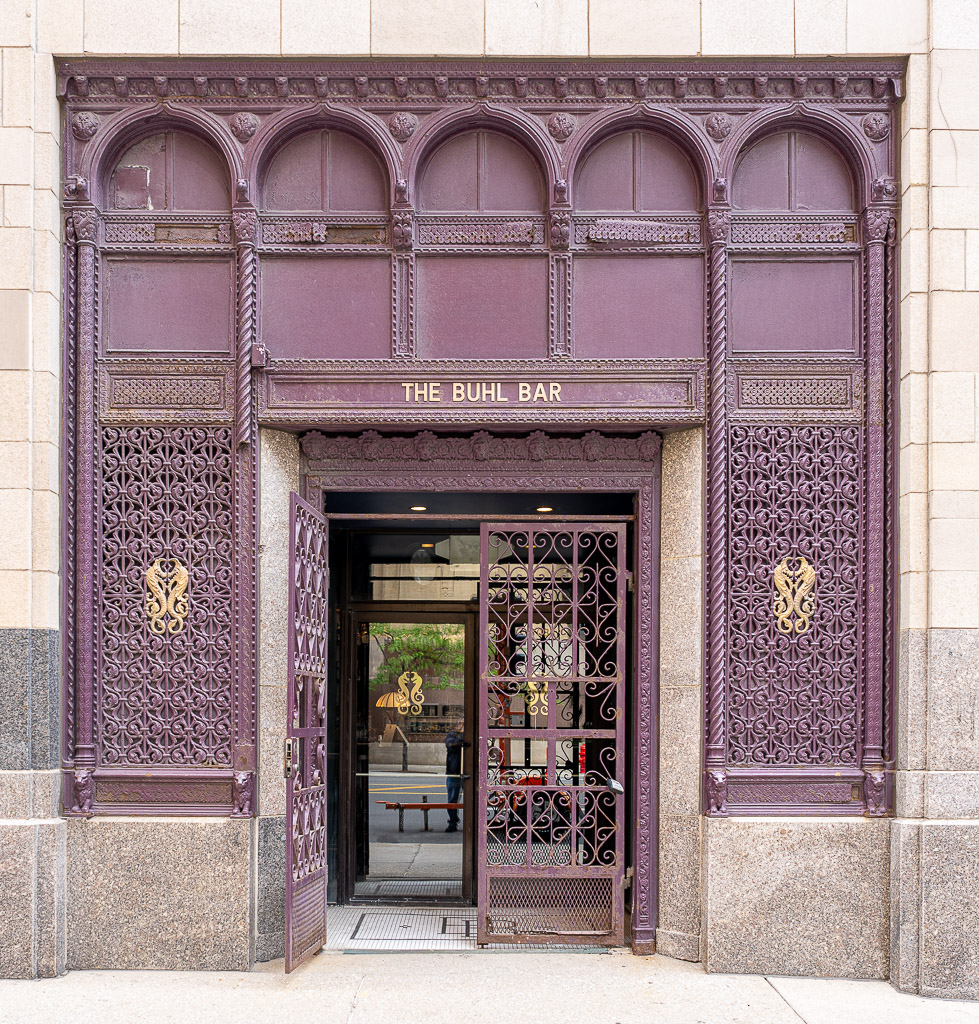
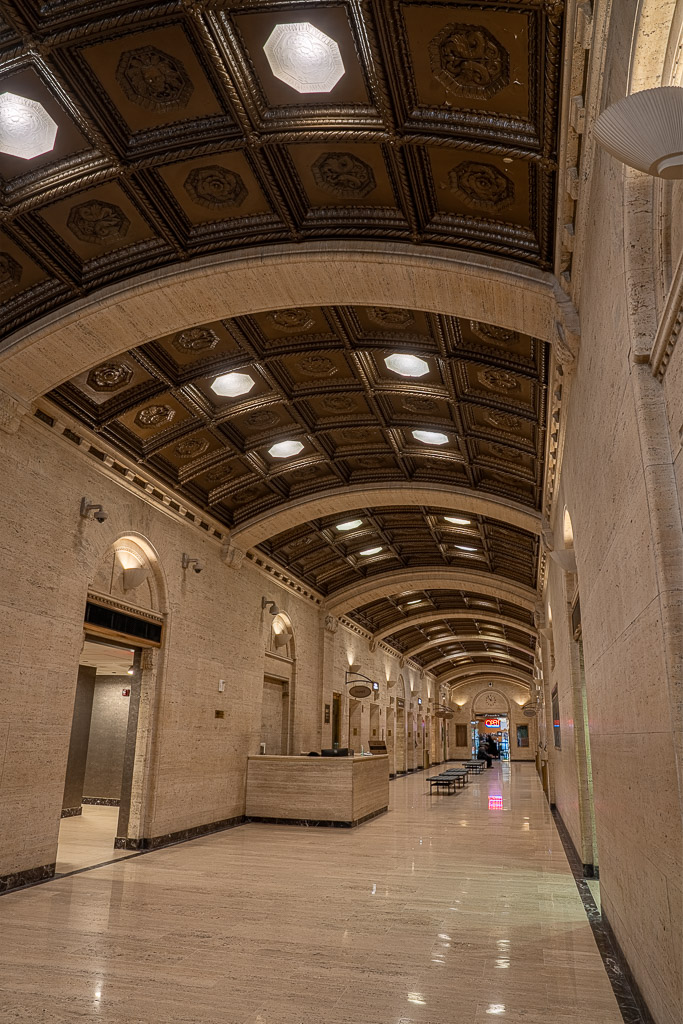
More details of the Buhl Building are shown in the photos below, such as the night depository for a ground floor bank shown in the 1st photo below and the entrance to the Buhl Bar in the 2nd photo below. The Congress Street entrance to the Buhl Building is shown in the 3rd photo below. An interior photo of the elevator banks just inside the Griswold entrance is shown in the 4th photo below.
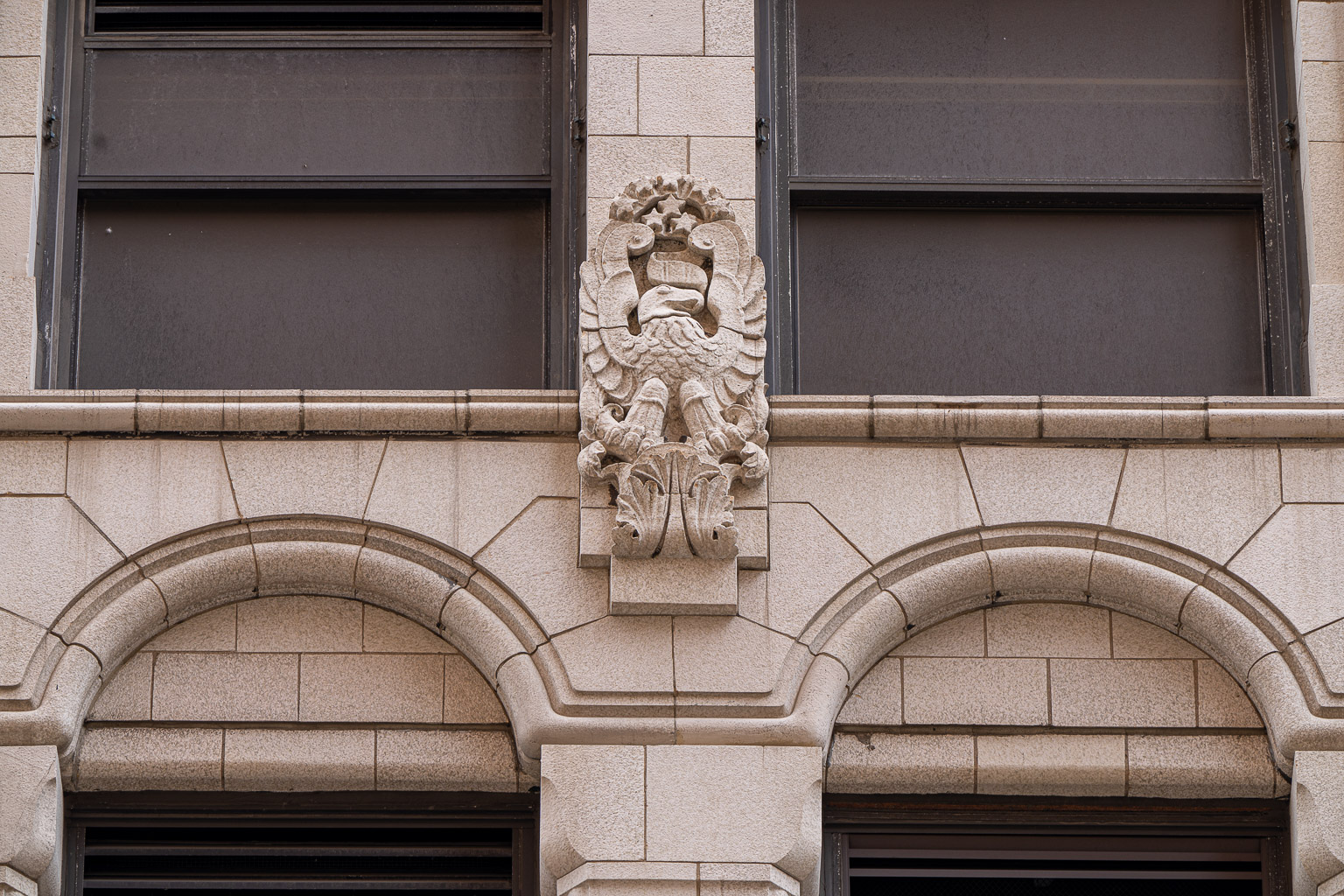
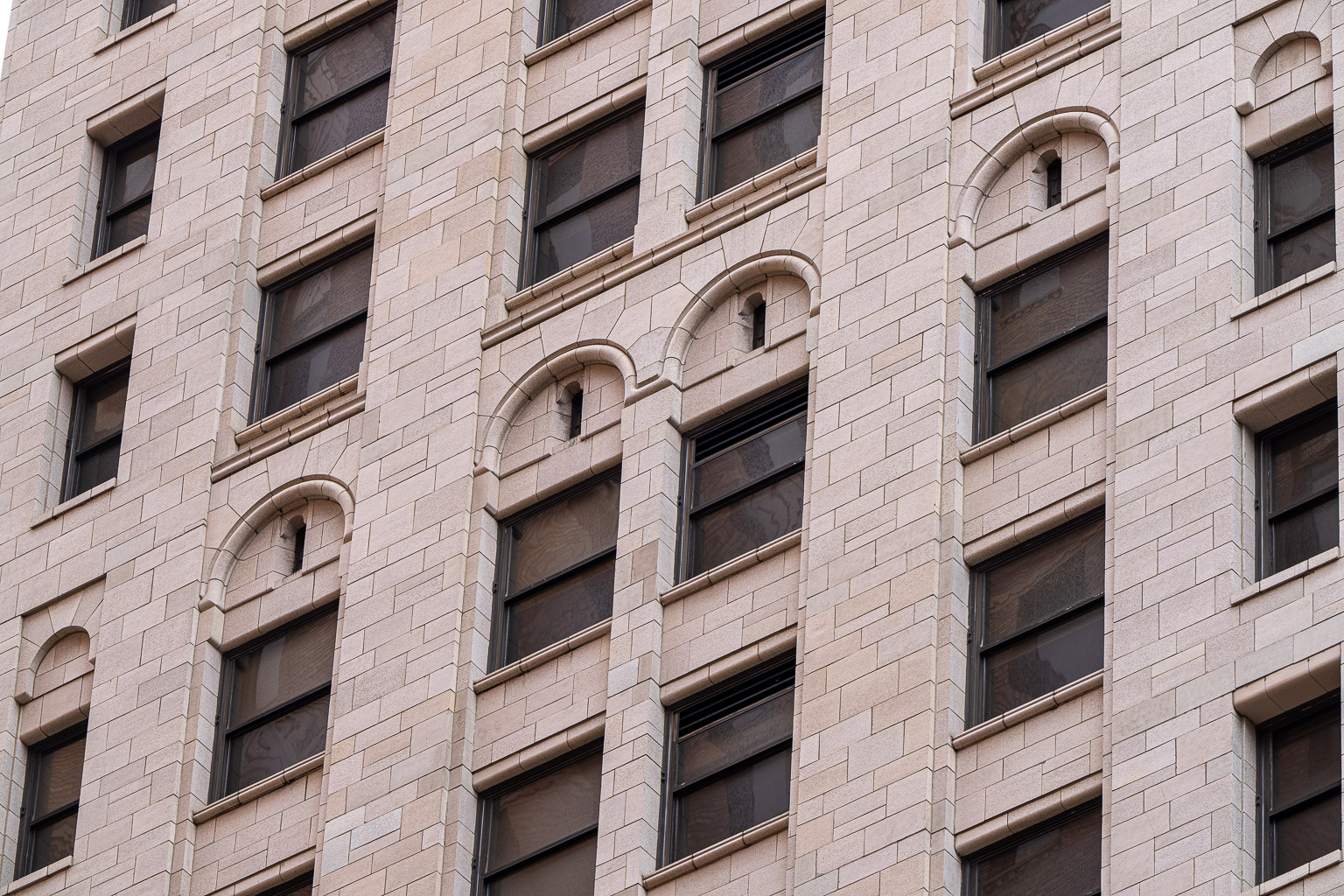
The row of arches above the building's fifteenth-floor windows (1st photo below) were not added only for decorative reasons. A five-foot-tall utility space was required below the sixteenth floor, leaving extra vertical space between the windows of the fifteenth and sixteenth floors. The addition of arches over the fifteenth-floor windows was the least distracting manner in which to treat the disparate spacing between floors. The detail at the top of the building (2nd through 4th photos below) includes sculpted eagles large enough to see from the street.
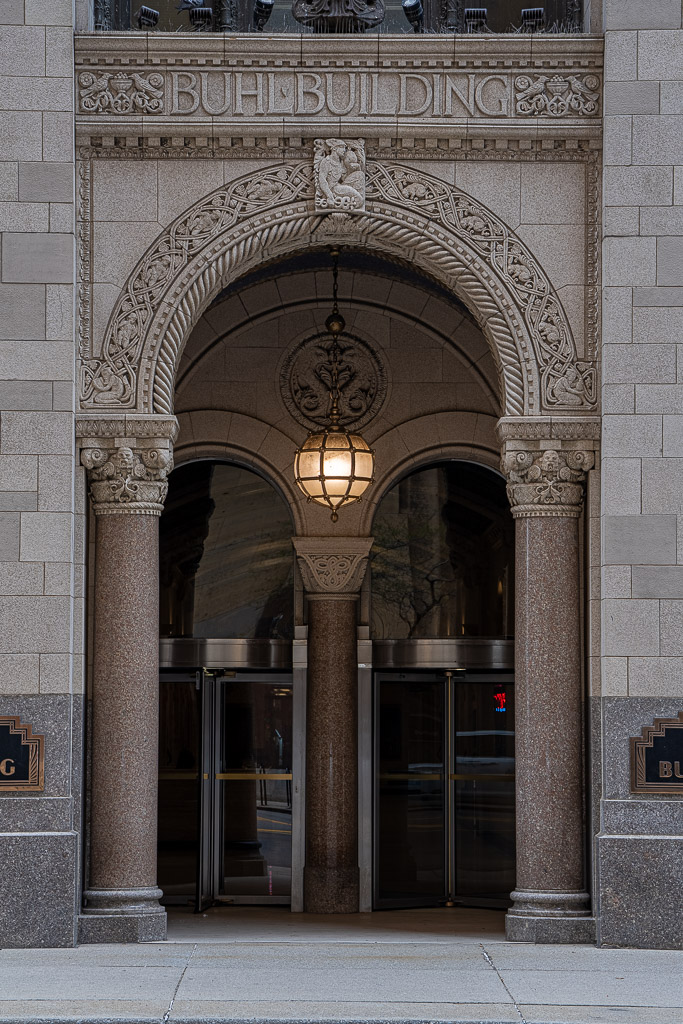
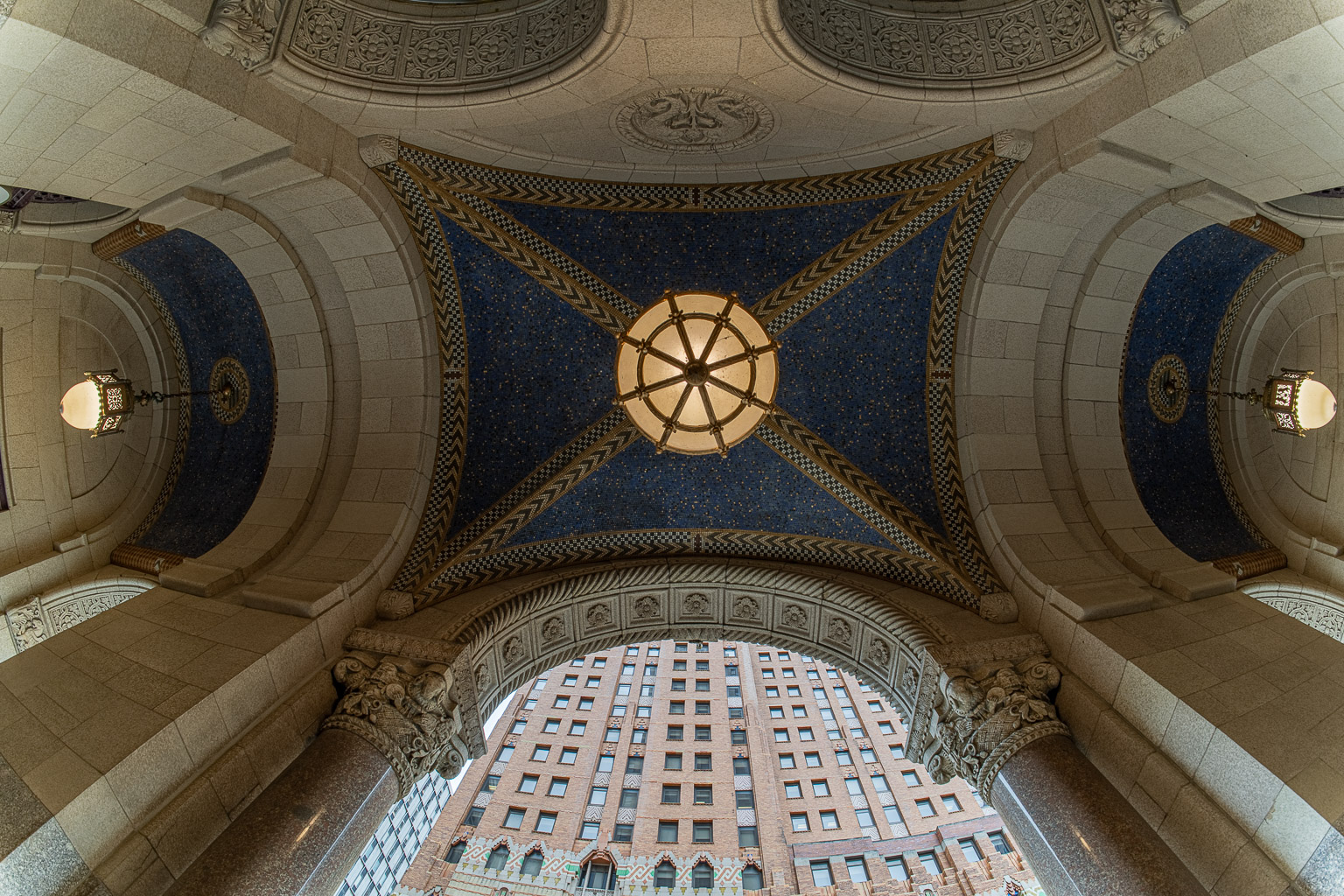
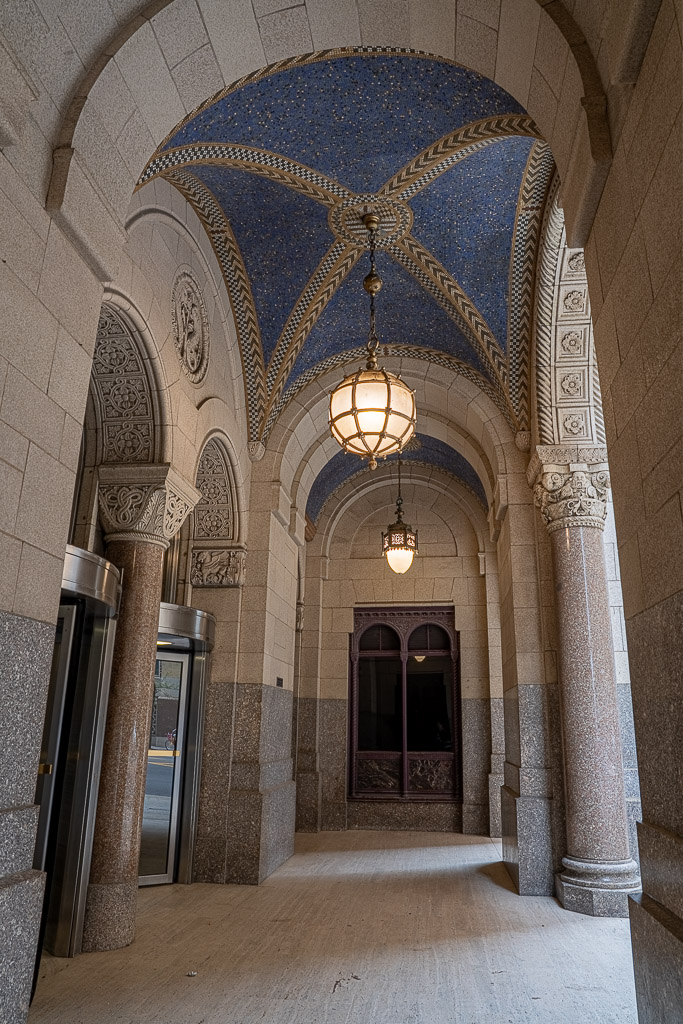
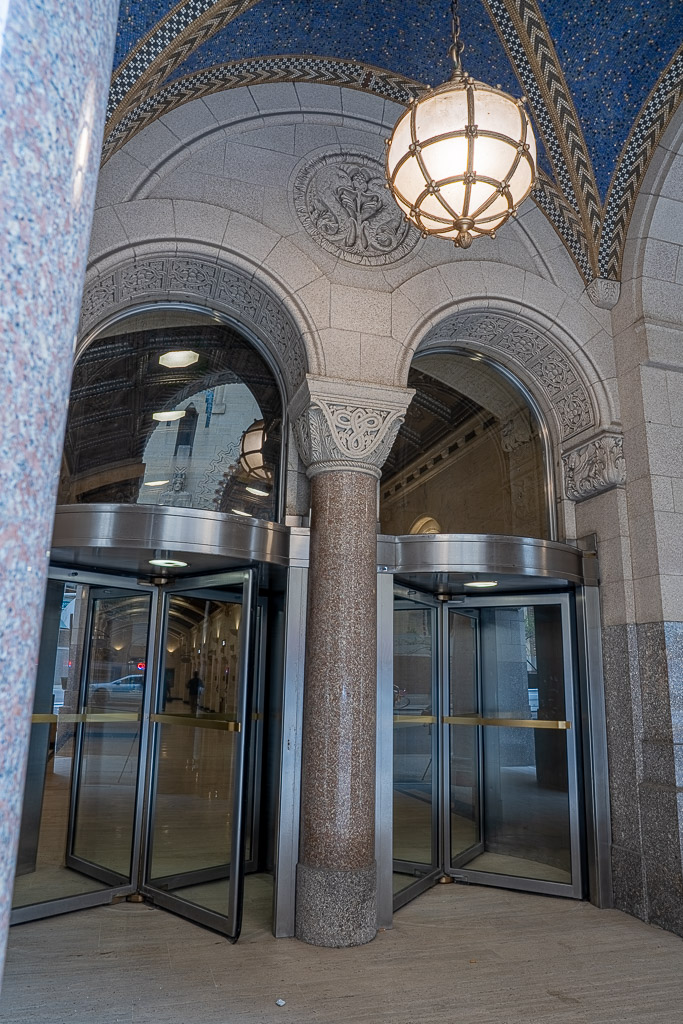
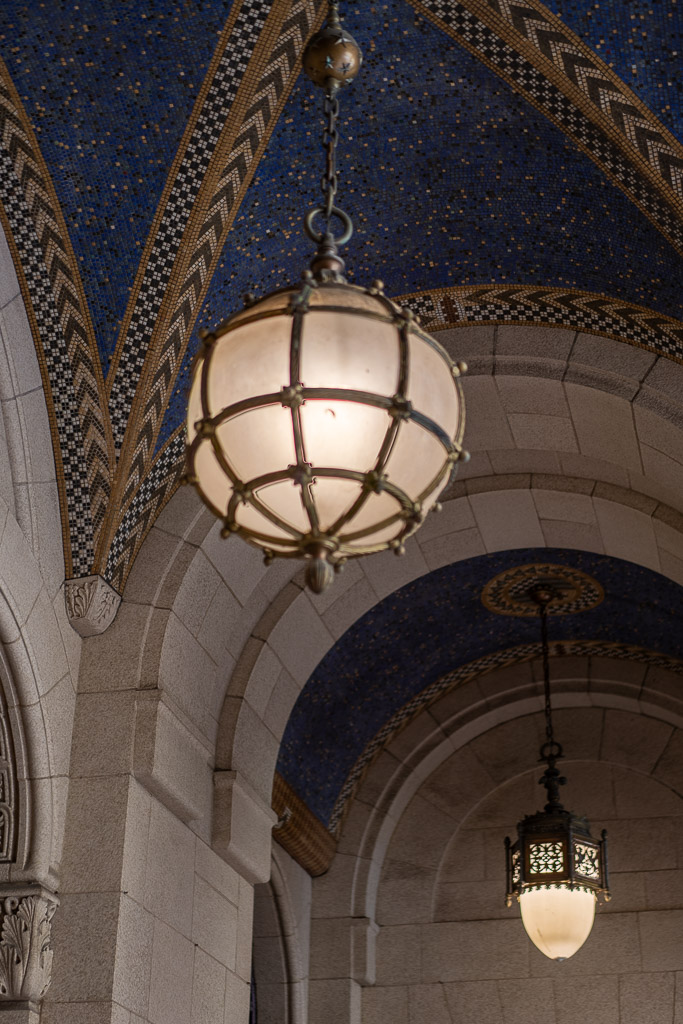
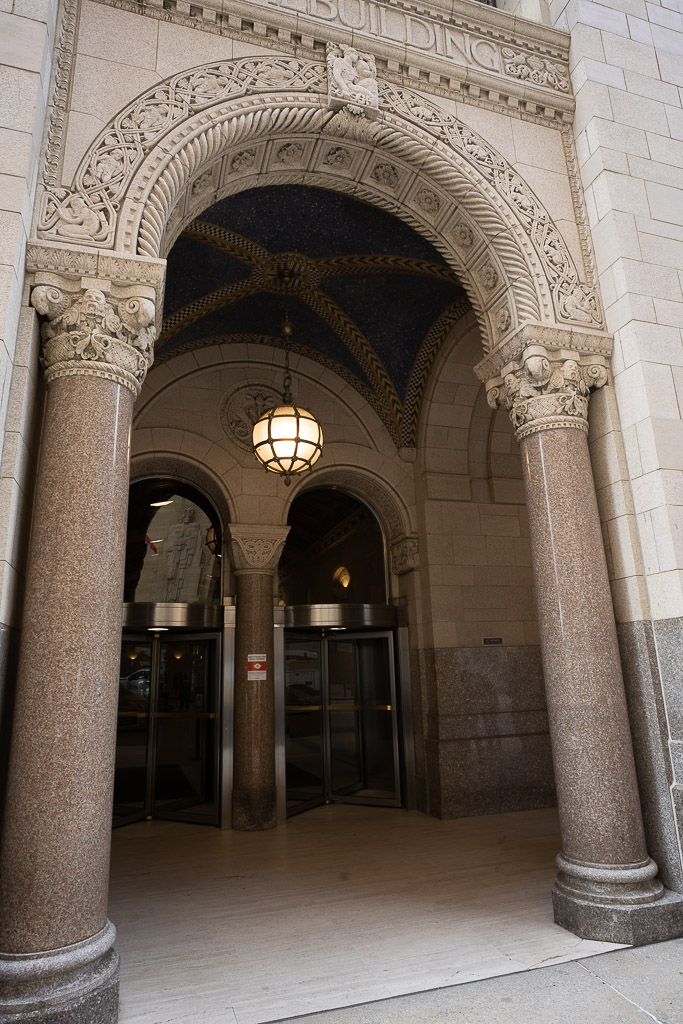
An outstanding feature is the Griswold Street entrance, set back into an arched recess decorated with Romanesque carving and a colorful mosaic-tiled ceiling. Rowland created a similarly grand entrance when designing the General Motors Building (now called Cadillac Place).
Tenants began moving into the Buhl Building on April 21, 1925, and the building opened with 50% occupancy (rather than the typical 30-35%) on May 1. In July 1925, the newly formed Guardian Trust Company opened its office on the ground floor of the building, its entrance graced by two bronze doors featuring the sculpted figures of a man holding a key and a woman with a horn of plenty—both modeled by Corrado Parducci. This company built the Guardian Building as its headquarters in 1928. Also in 1928, a private businessman's club named the Savoyard Luncheon Club (after the Savoyard Creek once on this site) was constructed on the roof of the building. In the four years following the Buhl Building’s opening, eight more large office buildings were completed in downtown Detroit (Michigan Building, Book Tower, Cadillac Tower, Industrial Bank Building, United Artists Theater Building, David Broderick Tower, Greater Penobscot Building, and Guardian Building). Despite this, the Buhl Building reported in May 1929 an occupancy rate of over 92 percent, a tribute to the structure’s superb design.
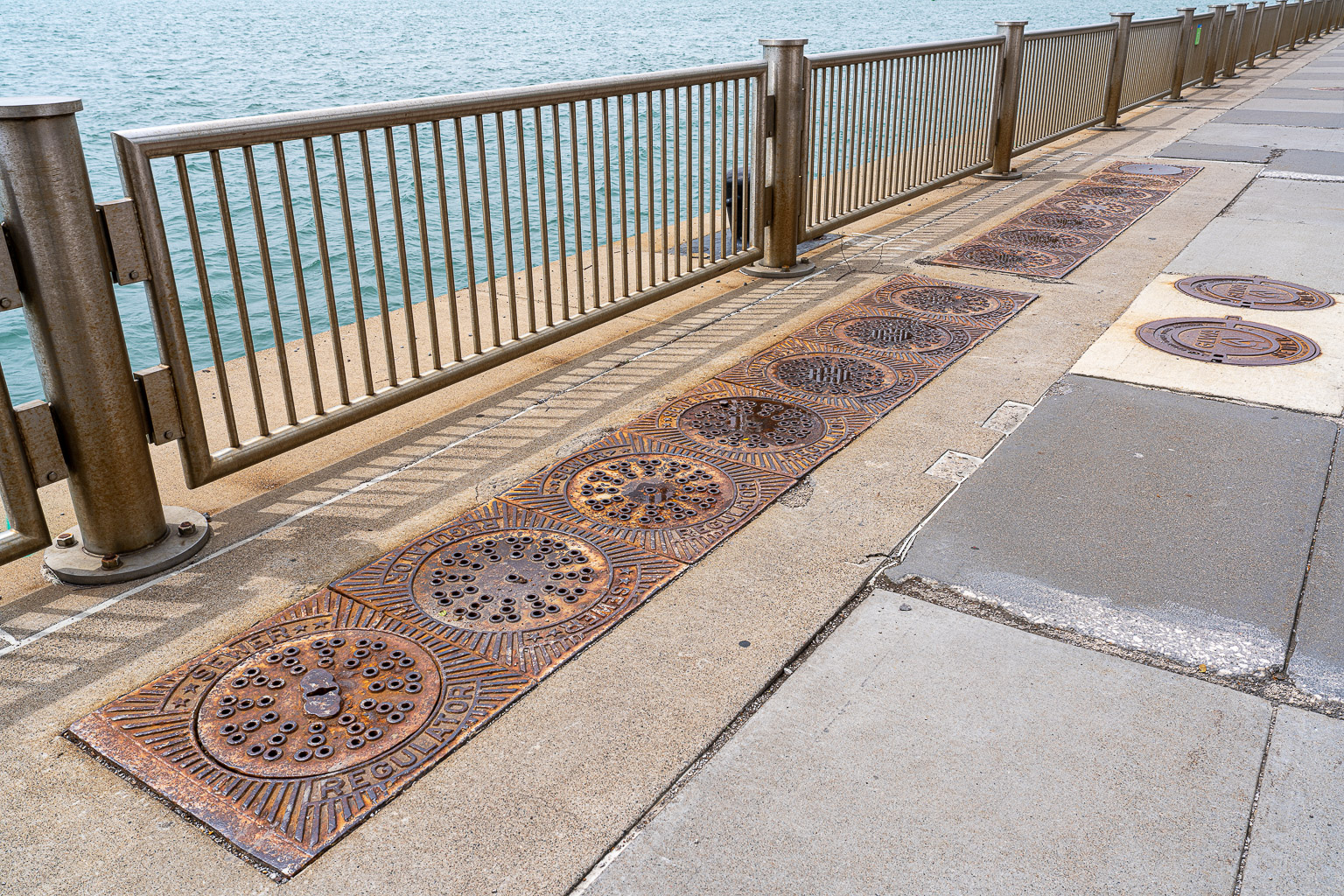
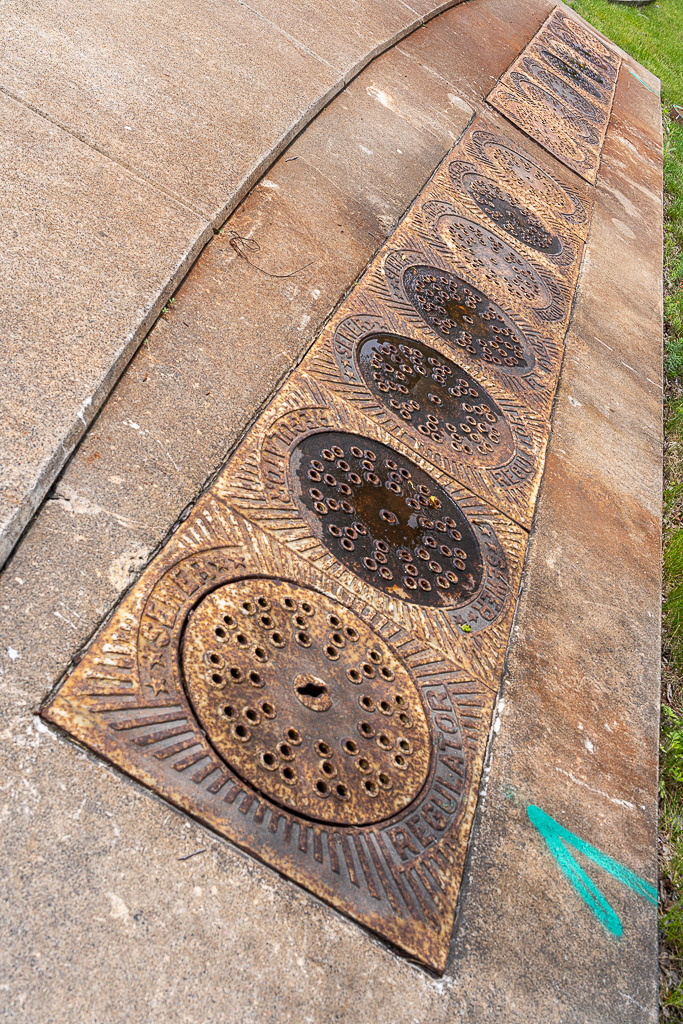
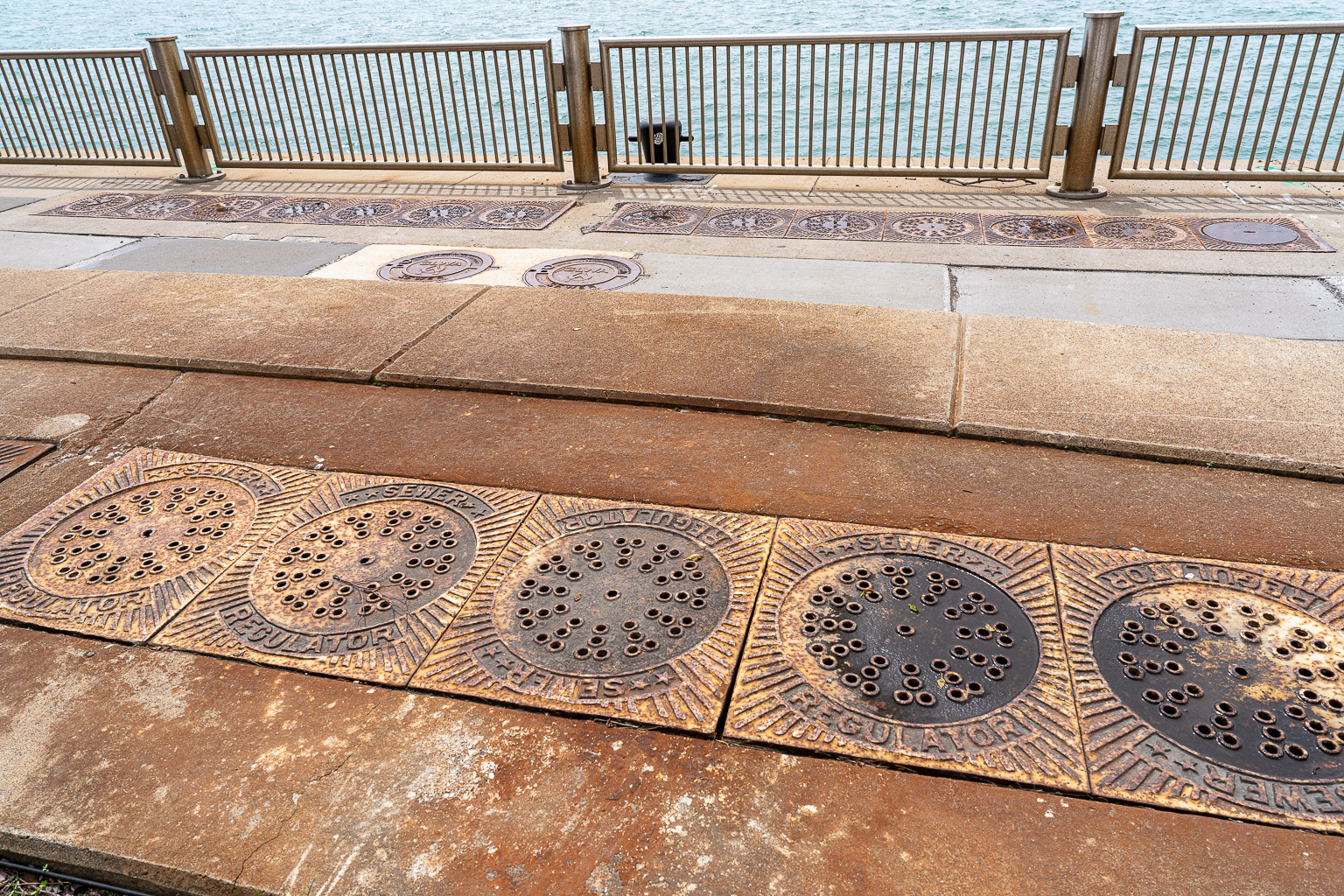
But what of the Savoyard Creek? Well, it was buried in the 1830s for public health reasons following several outbreaks of cholera. By the 1930s, the river had been channeled into Detroit's main sewer system, where it remains flowing today, deep beneath the dark recesses of a city, emptying into the Detroit River at the foot of First Street at this location. The 3 photos below show the manhole covers above this sewer outlet.
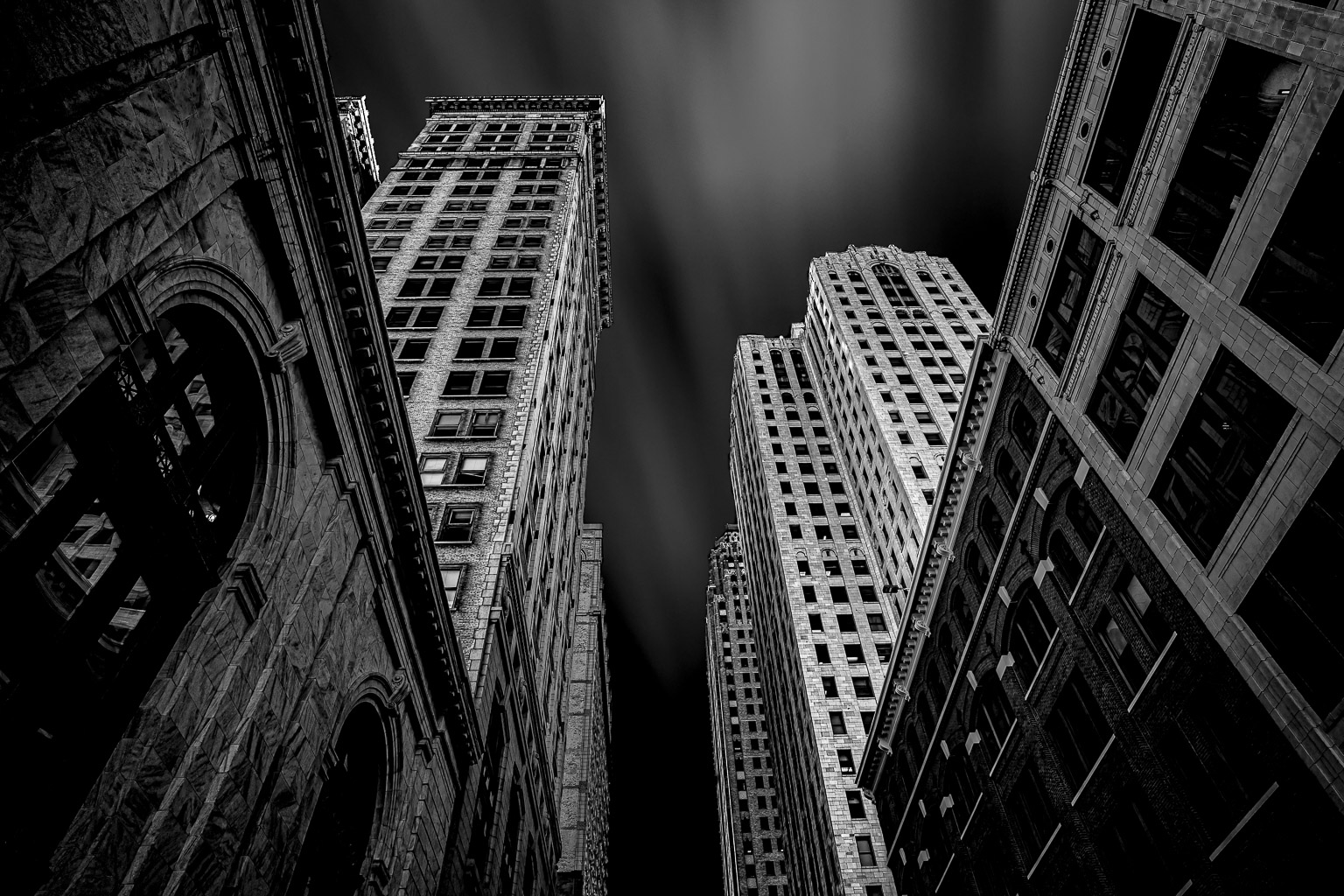
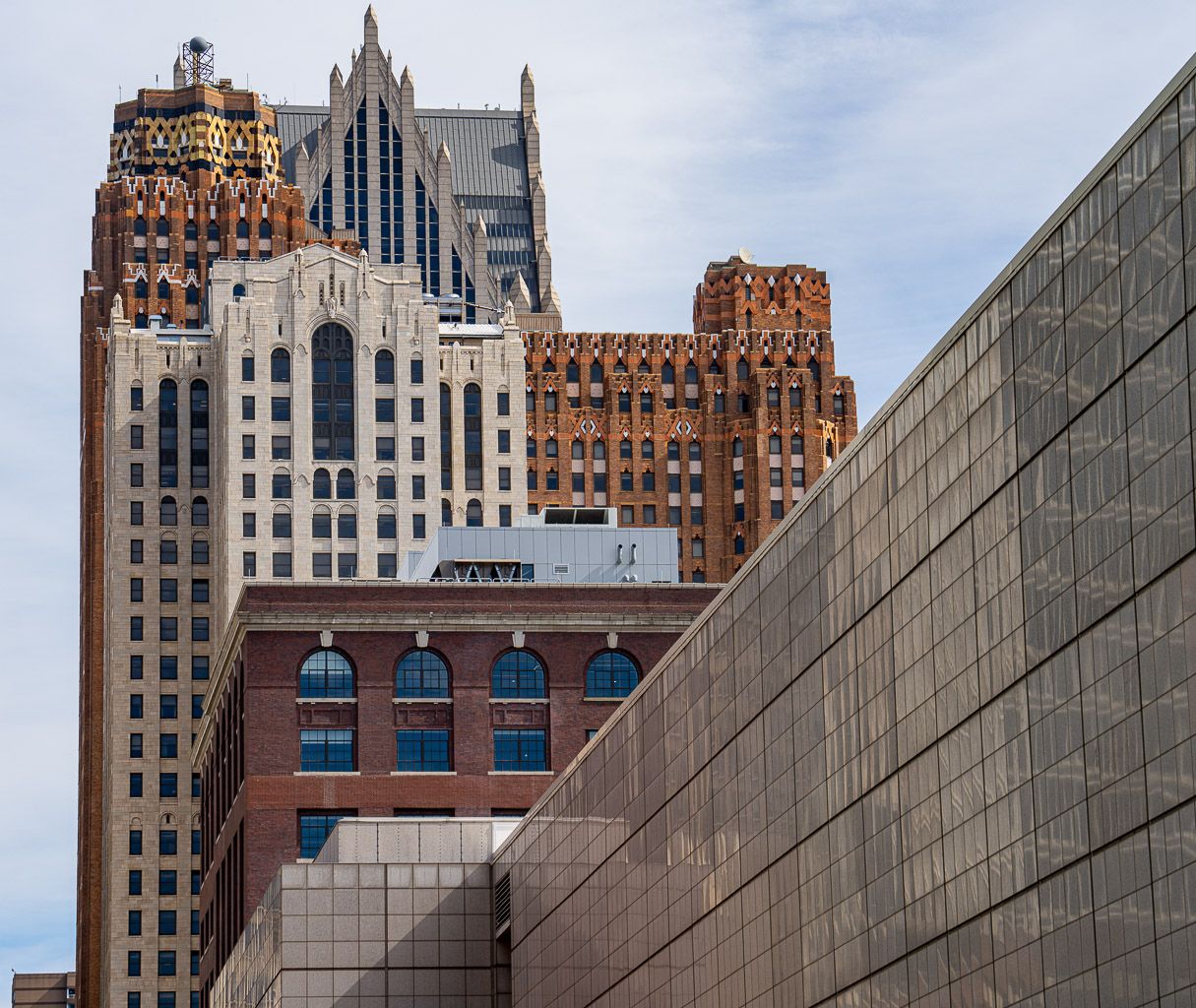
Finally, here are a few more photos of the Buhl Building with a more artistic intent.
More photos and more description of this building can be found at HistoricDetroit.org.