The Financial District Local Historic District is an oddly-shaped Historic District which encompasses the rectangle bounded by Washington Boulevard, West Lafayette Street, and Woodward Avenue from Campus Martius to Jefferson, but excluding Kennedy Square, and adding a rectangle bounded by Woodward, East Congress, Bates Street and Cadillac Square. You can read details about the district and its buildings in the The Proposed Historic Detroit Financial District Final Report (local copy), which I recommend highly to anyone interested in Detroit's history. A Wikipedia Page also describes the district.
Contents:
- 140-150 West Congress, New Penobscot Building, or Penobscot Annex
- 155 West Congress, Murphy Building (London Chop House)
- 205 West Congress, Bankers Trust Company Building
- 220 West Congress
- 243 West Congress, Marquette Building
- 131 West Fort, Penobscot Building
- 151 West Fort, State Savings Bank, Savoyard Center
- 160 West Fort, Federal Reserve Bank of Chicago Detroit Branch
- 201 West Fort, Detroit Trust Company Building
- 211 West Fort, Detroit Bank & Trust Tower
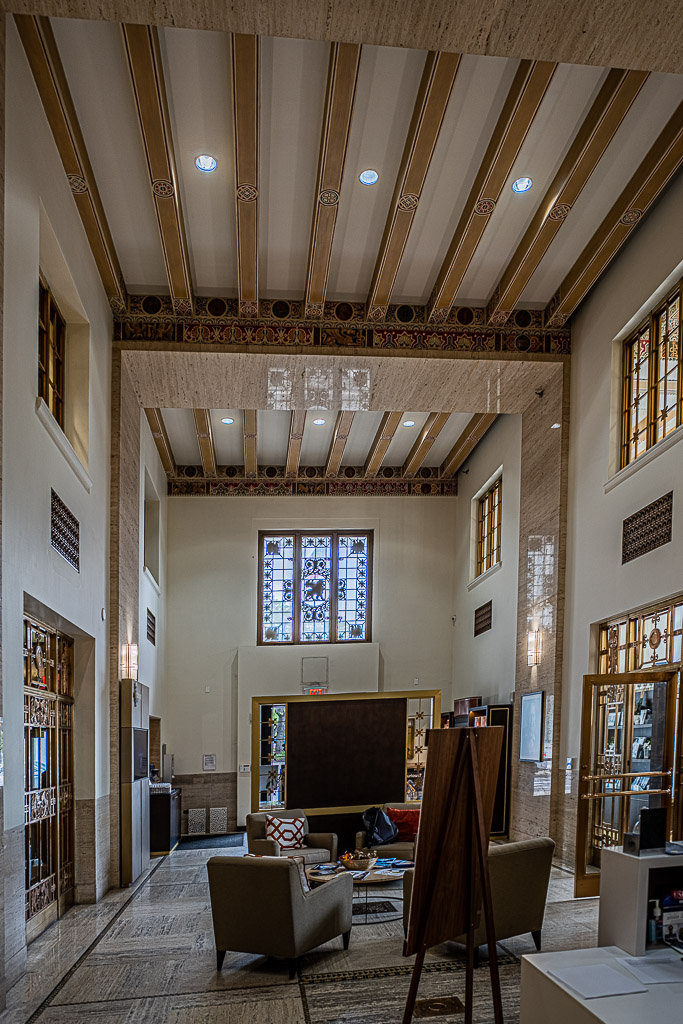
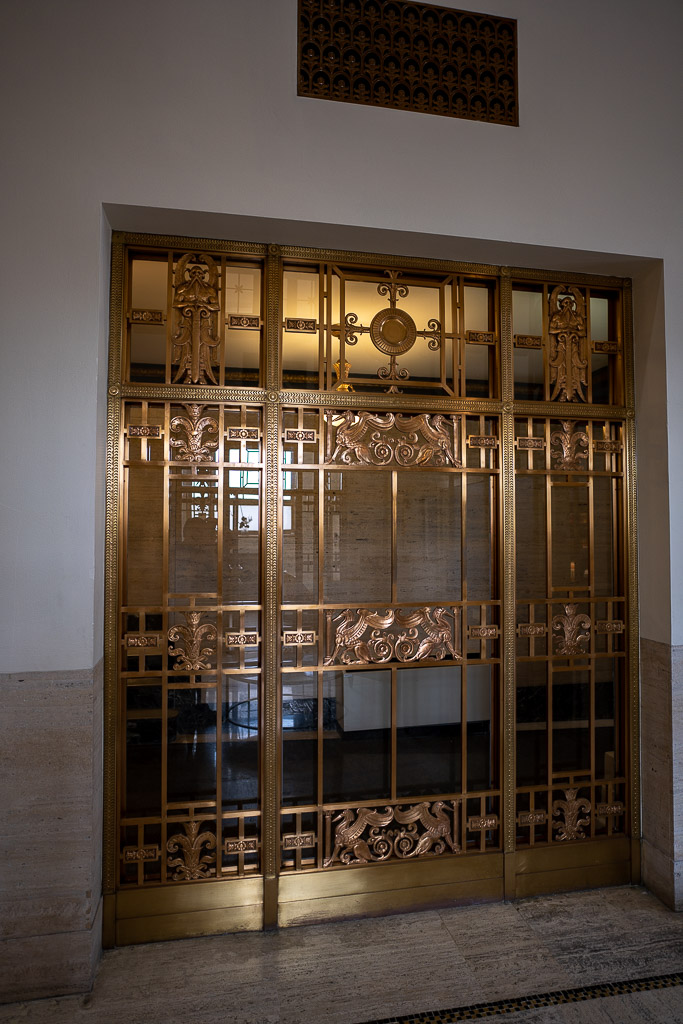
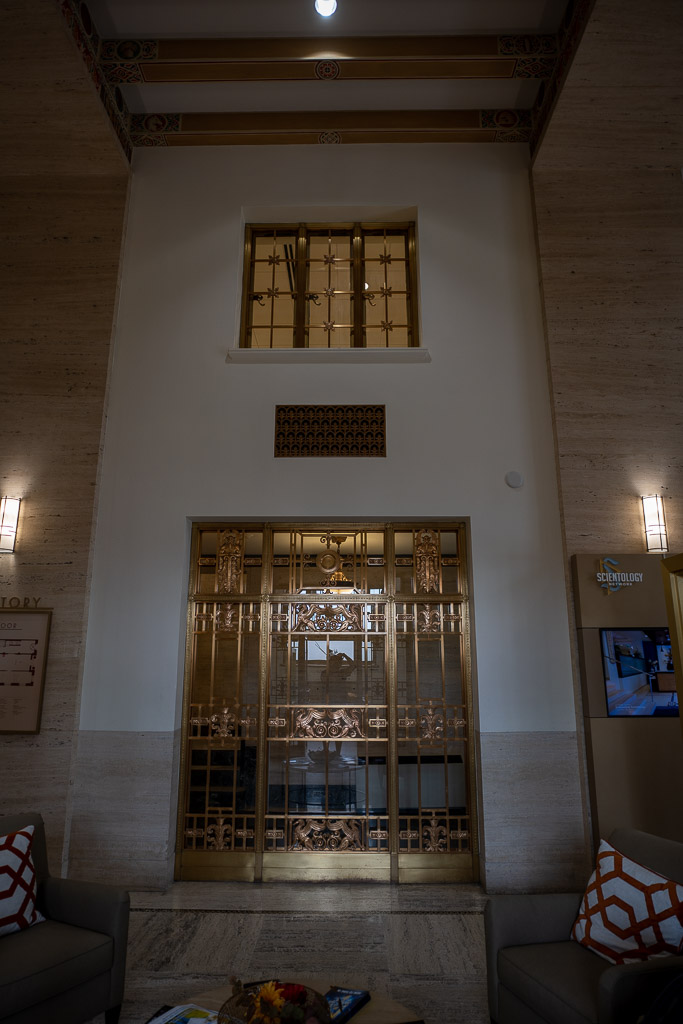
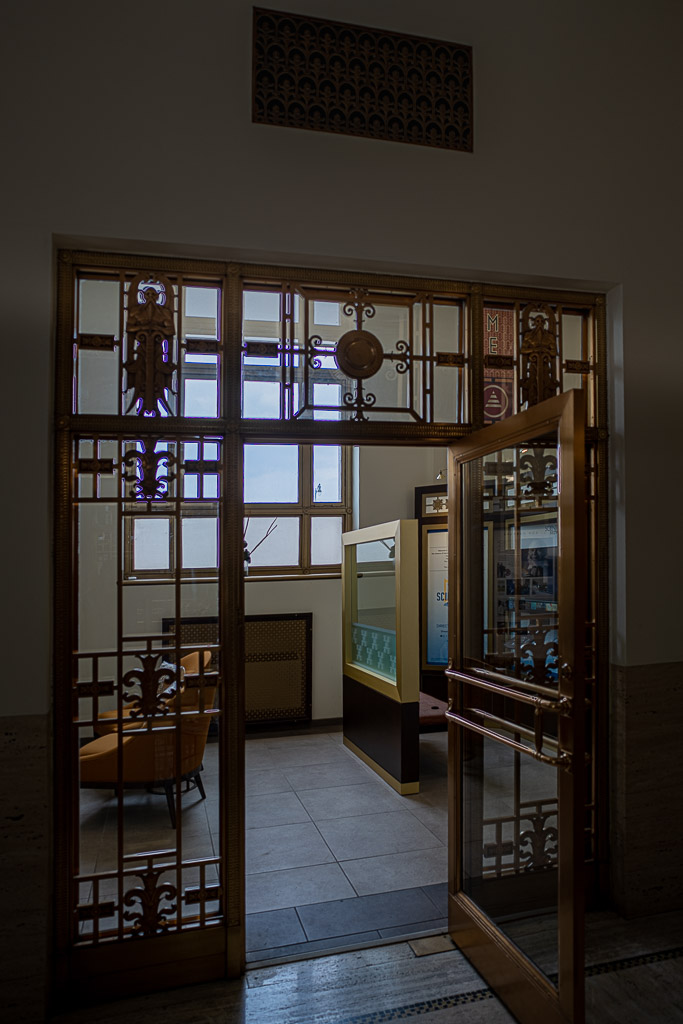
- 1 Griswold, Standard Savings Building, now Scientology
- 500 Griswold, Union Trust (Guardian) Building
- 535 Griswold, Buhl Building
- 615 Griswold, Ford Building
- 645 Griswold, Greater Penobscot Building
- 719 Griswold, Dime Savings Bank Building, now called Chrysler House
- 735 Griswold, Security Trust Company
- 751 Griswold, First State Bank, the Olde Building
- 231 West Lafayette, Federal Building, now Theodore Levin U.S. District Court
- 321 West Lafayette, Detroit Free Press Building
- 234 West Larned
- 250 West Larned, Old Detroit Fire Department Headquarters, now the Detroit Foundation Hotel
- 555 Shelby, Merrill Lynch Building
- 542 Shelby, Telegraph Building
- 607 Shelby, U.S. Mortgage Bond Building
- 625 Shelby, Detroit Fire and Marine Insurance Company
- 1 Woodward Avenue, Michigan Consolidated Gas Company Building, Fifth Third Bank, (now called One Woodward Avenue)
- 501 Woodward, Detroit Federal Savings and Loan Association, now Capitol One Cafe
- 611 Woodward, National Bank of Detroit (NBD) Building, now Chase Tower, or The Qube
- 660 Woodward, First National Bank Building
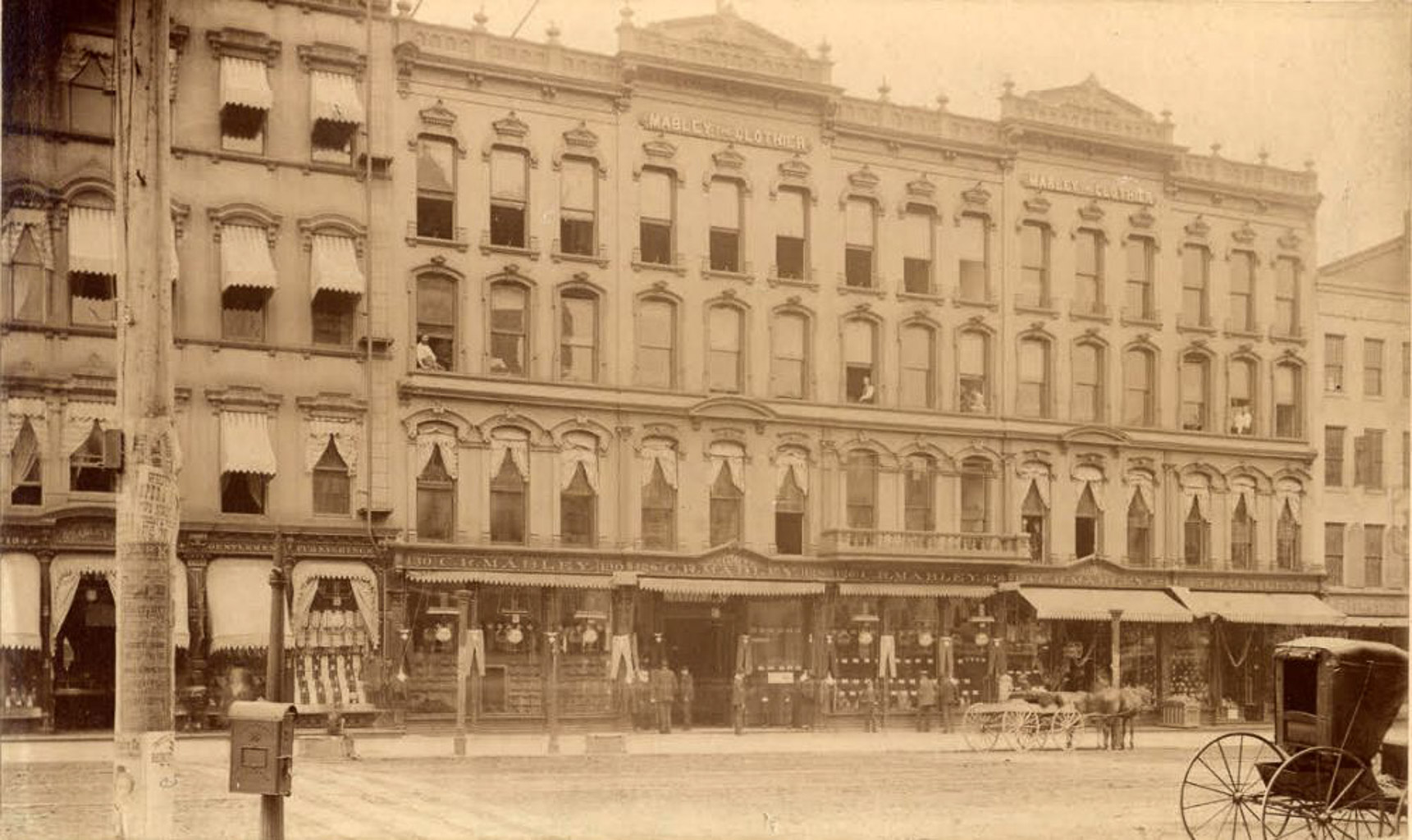
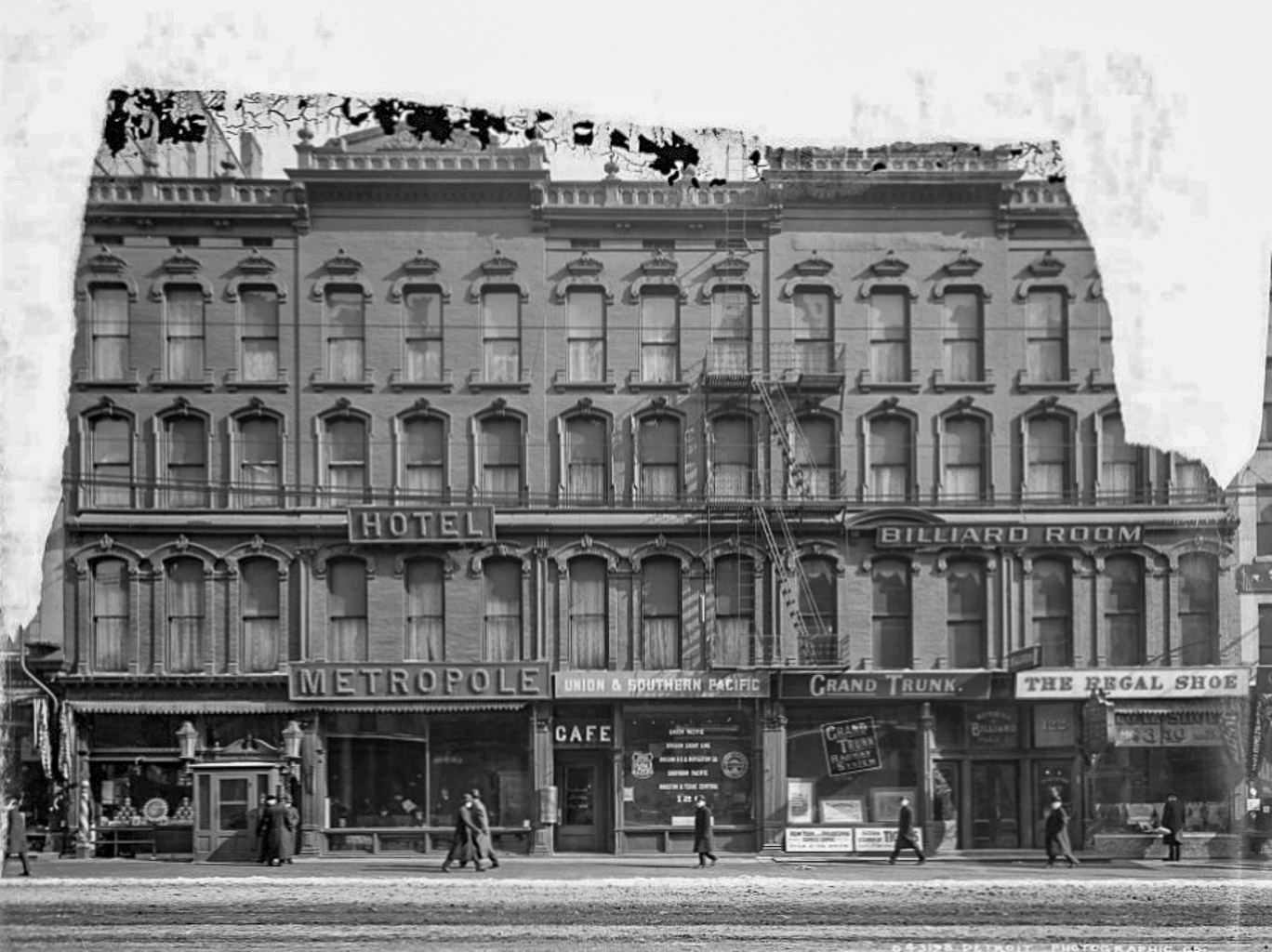
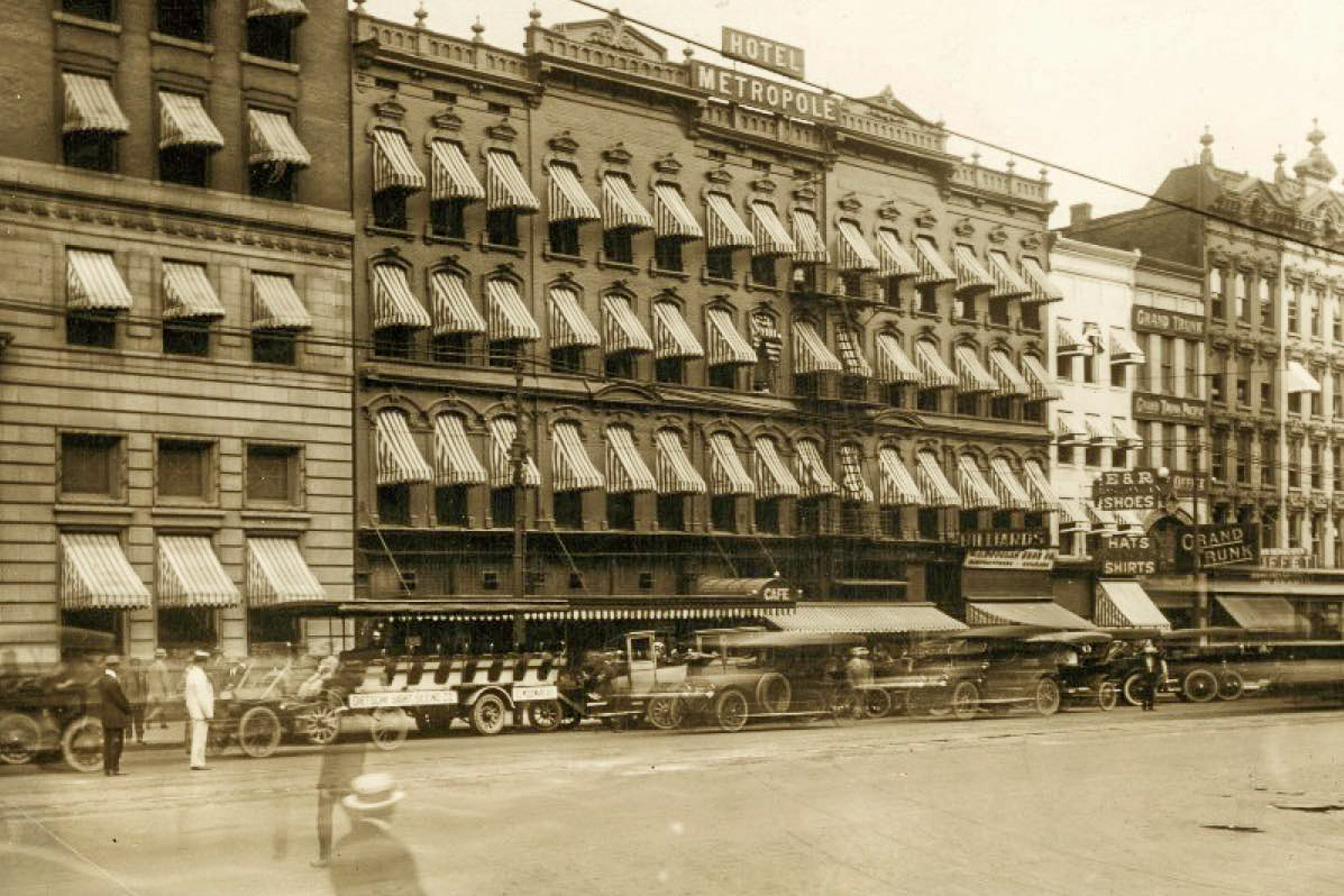
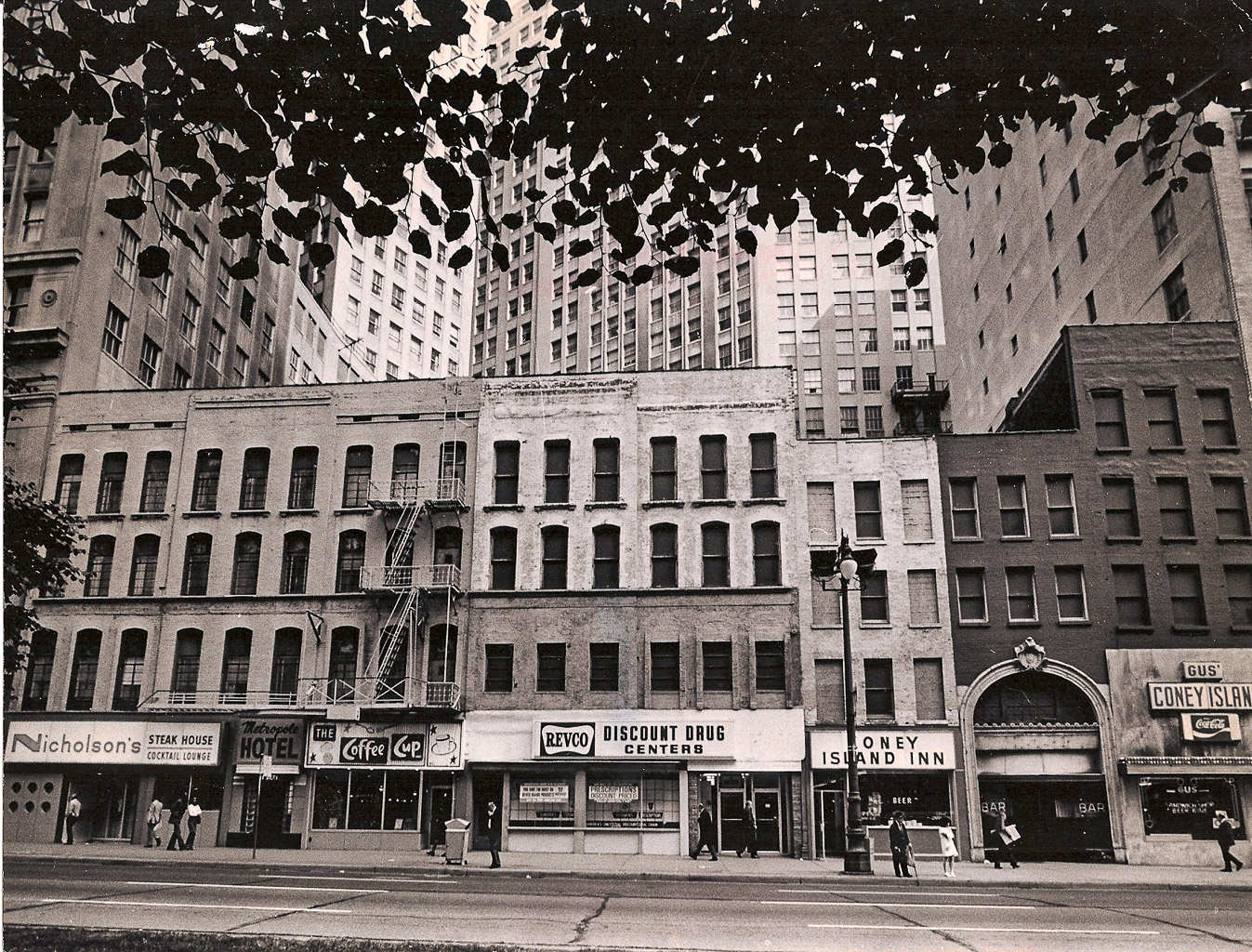
- 630-620 Woodward, Mabley & Company, Metropole Hotel, now Bedrock Offices, 1876-80
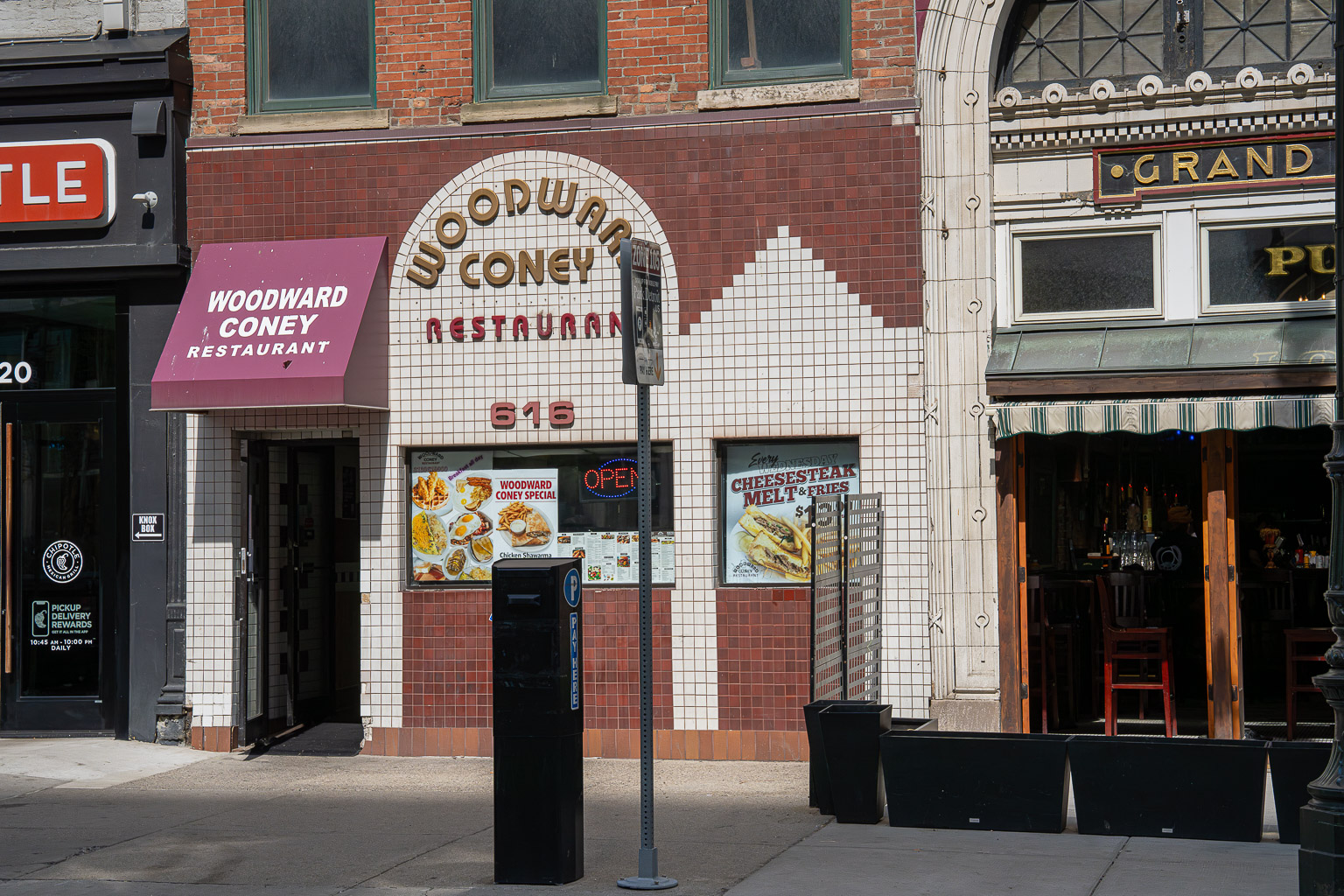
- 616 Woodward
- 612 Woodward, Traub Jewelry, Grand Trunk Pub
- 608 Woodward, Martin Limbach Hardware, The Whisky Parlor
- 600 Woodward, Vinton Building
Steel-frame twenty-four-story Art Deco skyscraper faced with granite and terra cotta (1916). Donaldson & Meier architects. Fronting eighty feet on West Congress Street, this second phase of the Penobscot Building was constructed as the New Penobscot Building. It extends back from West Congress to meet the original Penobscot Building on West Fort Street at the alley. The West Congress and eastern (alley) facade display a Renaissance-inspired decorative scheme. The street front is faced in gray unpolished granite in the five-story base and in light-hued terra cotta in similar coursed ashlar finish (but smaller blocks) above. The lower part of the facade contains broad triple windows, some with transoms. The side and upper front facades contain vertical banks of paired double-hung windows. A tall attic is capped with a projecting cornice with boldly oversized brackets and modillions and a dentil band. The West Congress entrance is located between two retail spaces' display windows and, inside, retail shops line the West Congress level entrance hallway. The upper four stories are delineated from the others by running bands of terra cotta, blind reliefs, corbelled details and the cornice. The roof is flat. The western building facade (alley facade) is faced in yellow common brick. The western (Shelby) facade is divided by a light court that allows for additional corner offices and greater ventilation. The building retains its original wood double hung windows.
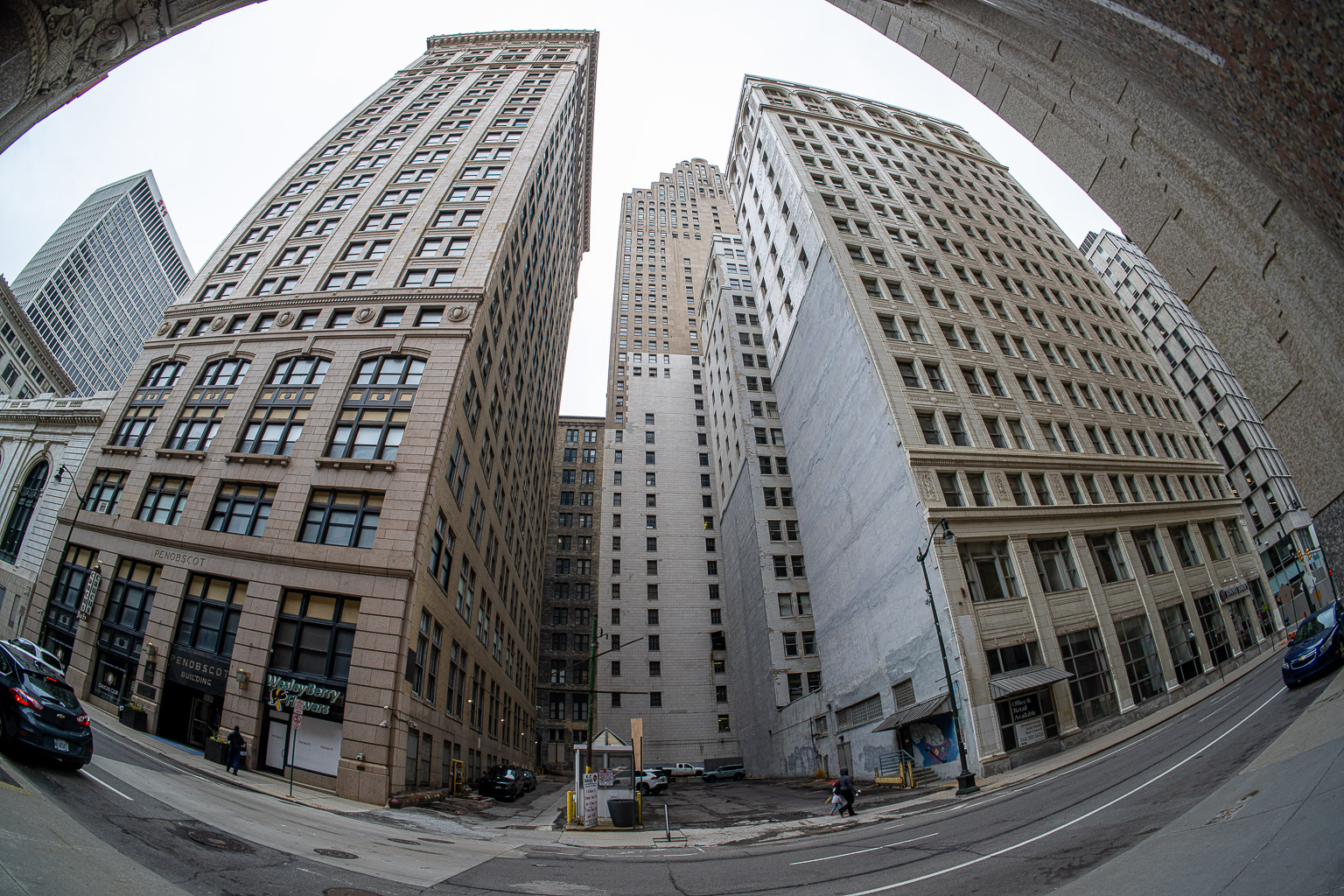
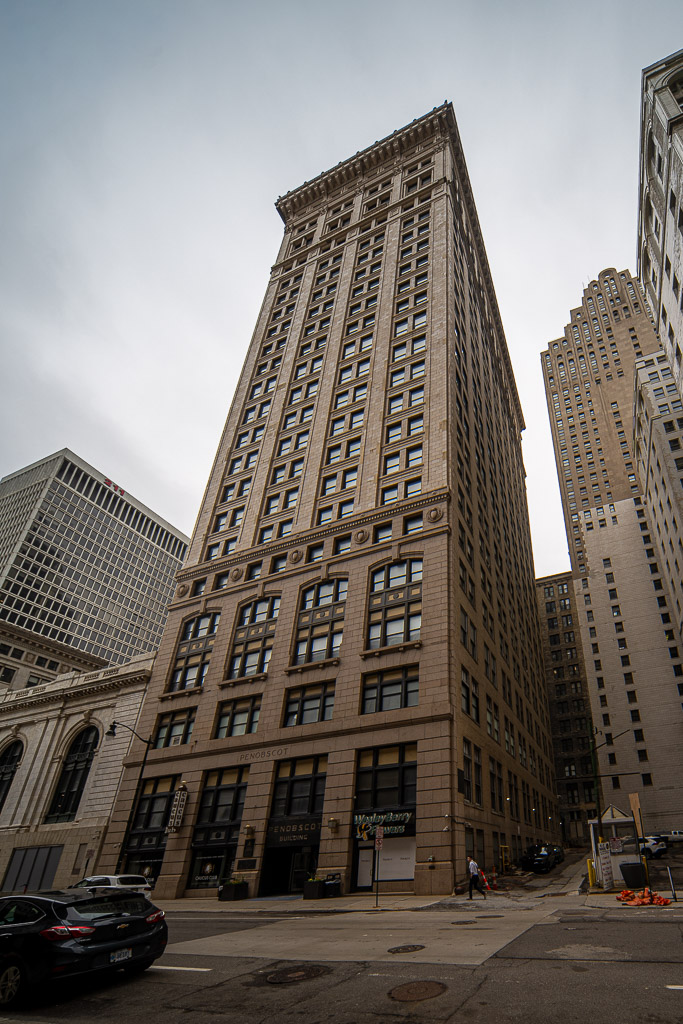
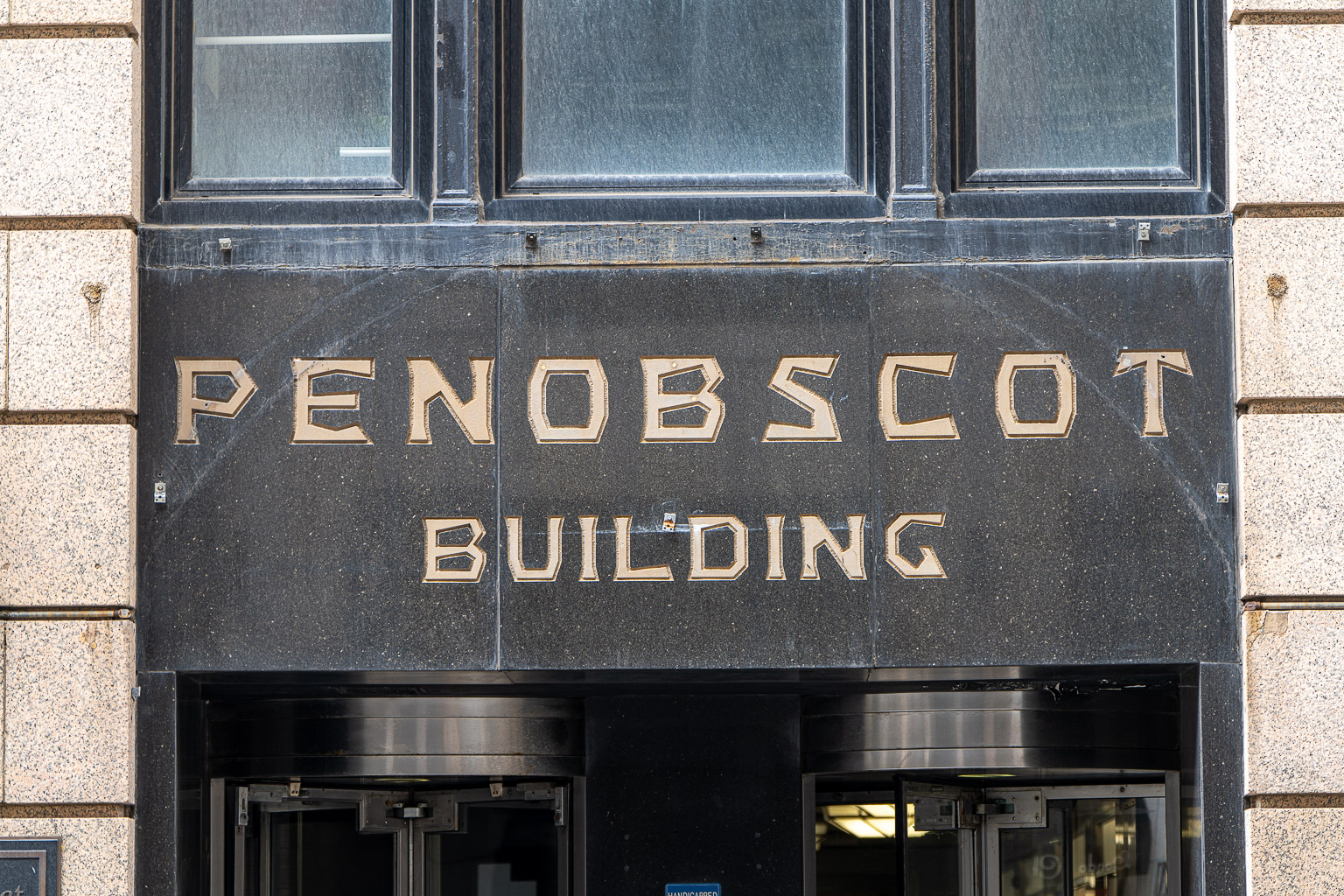
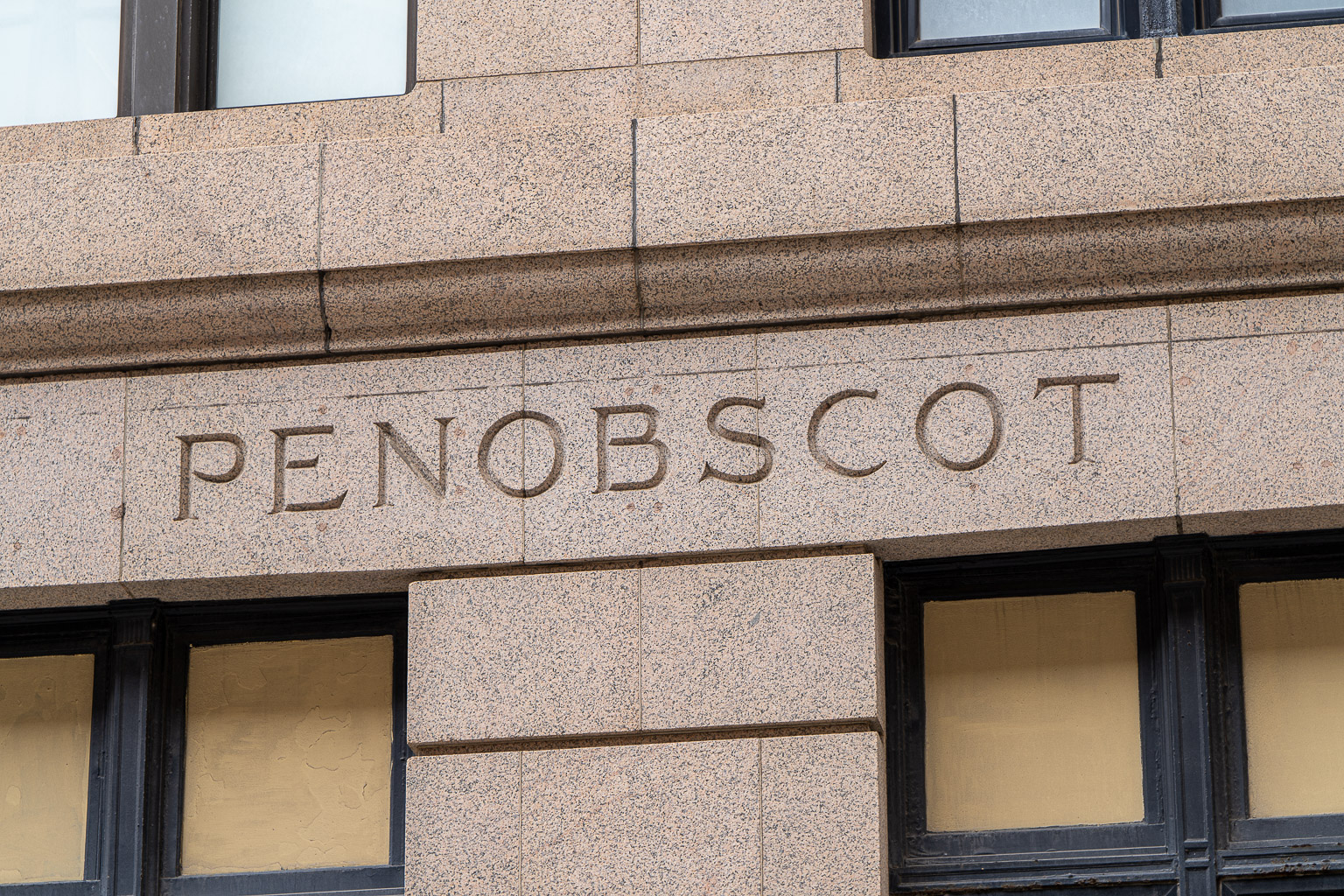
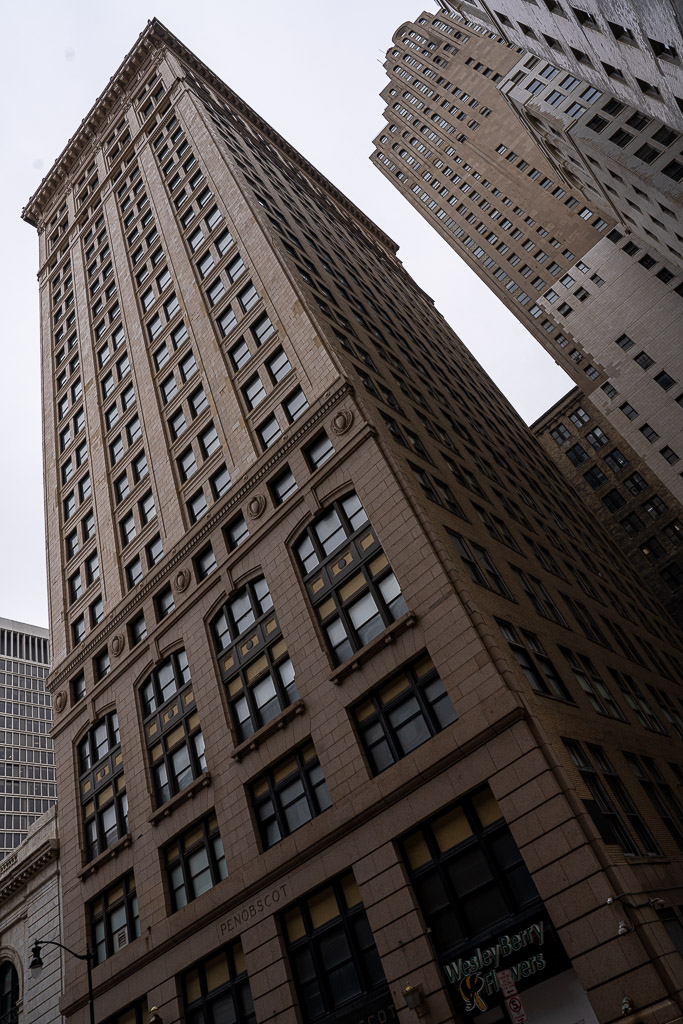
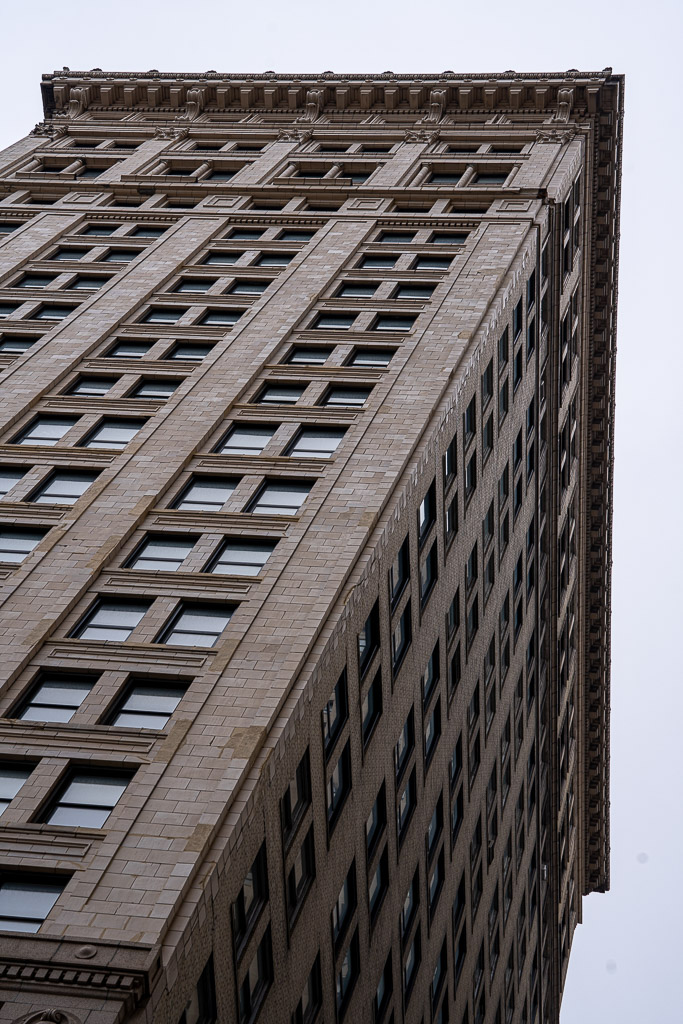
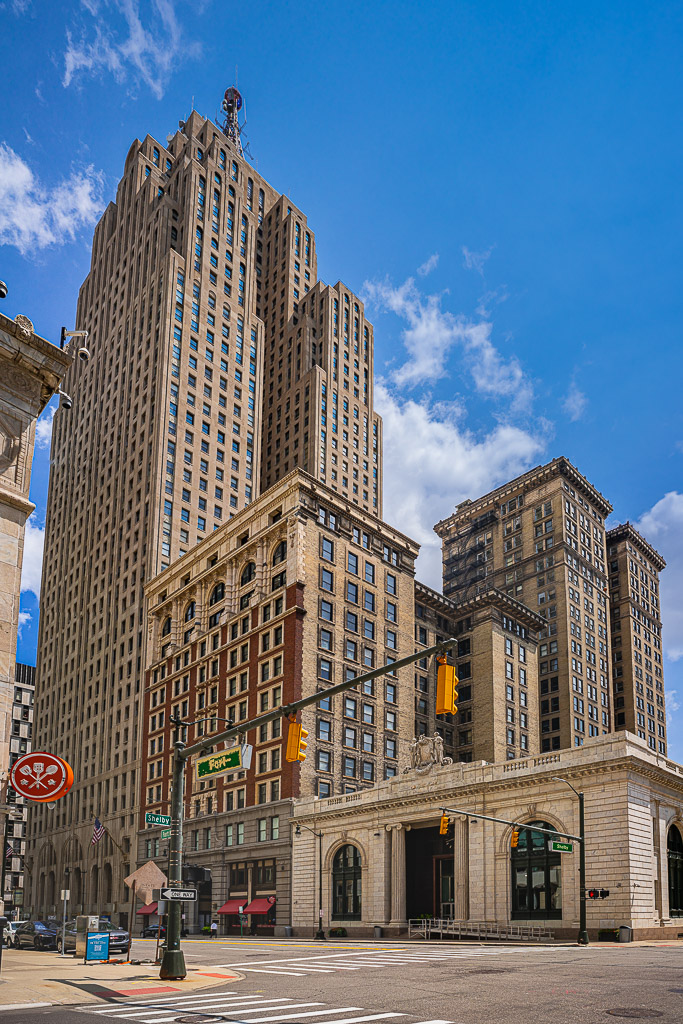
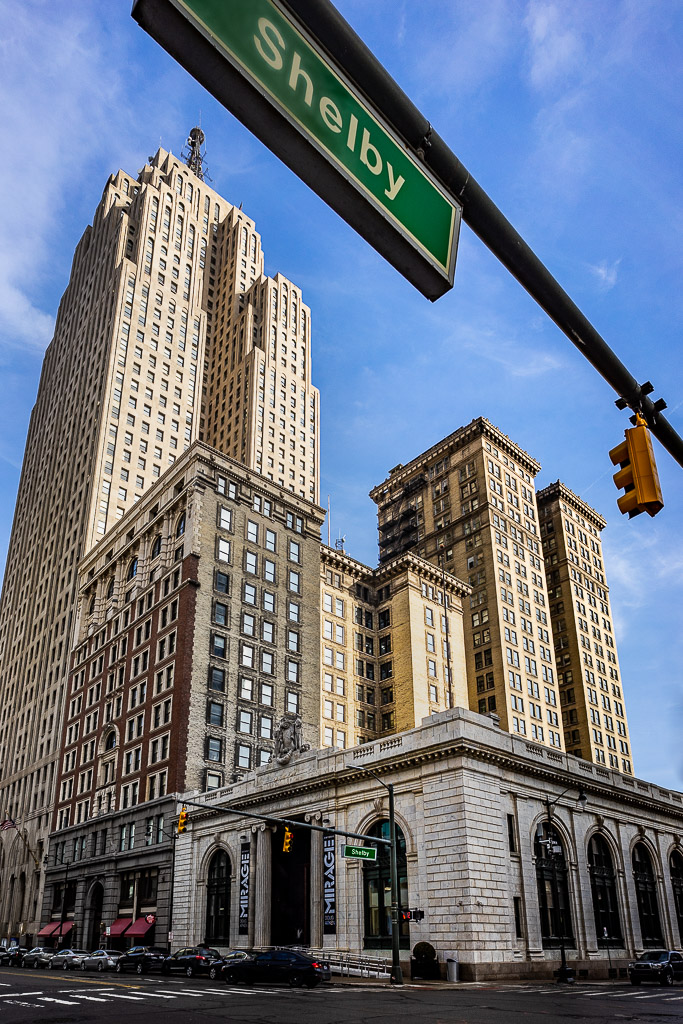
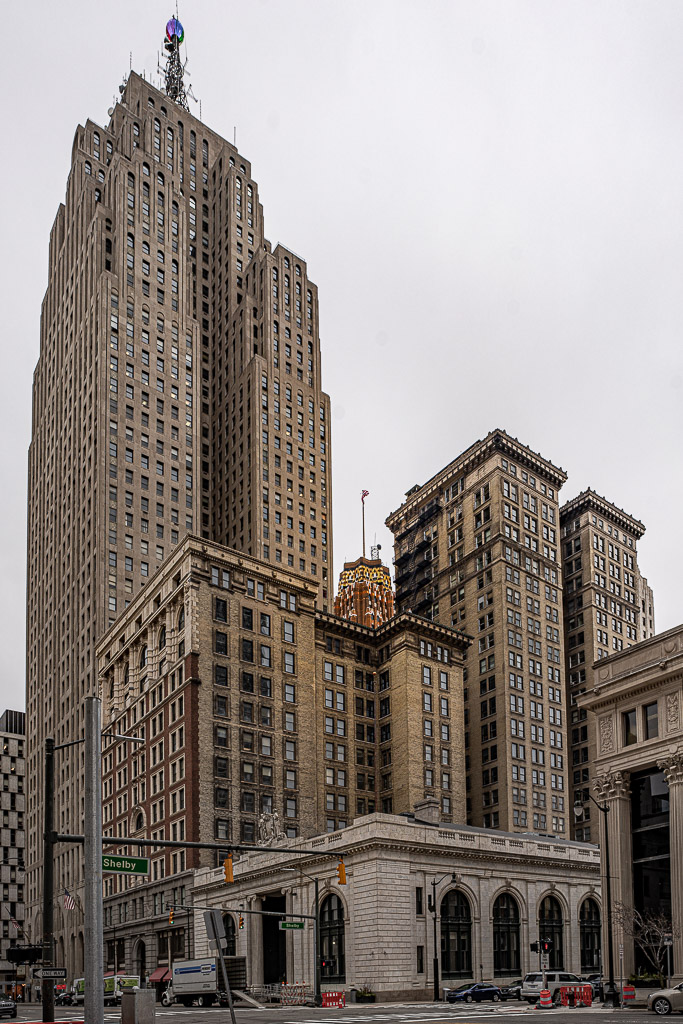
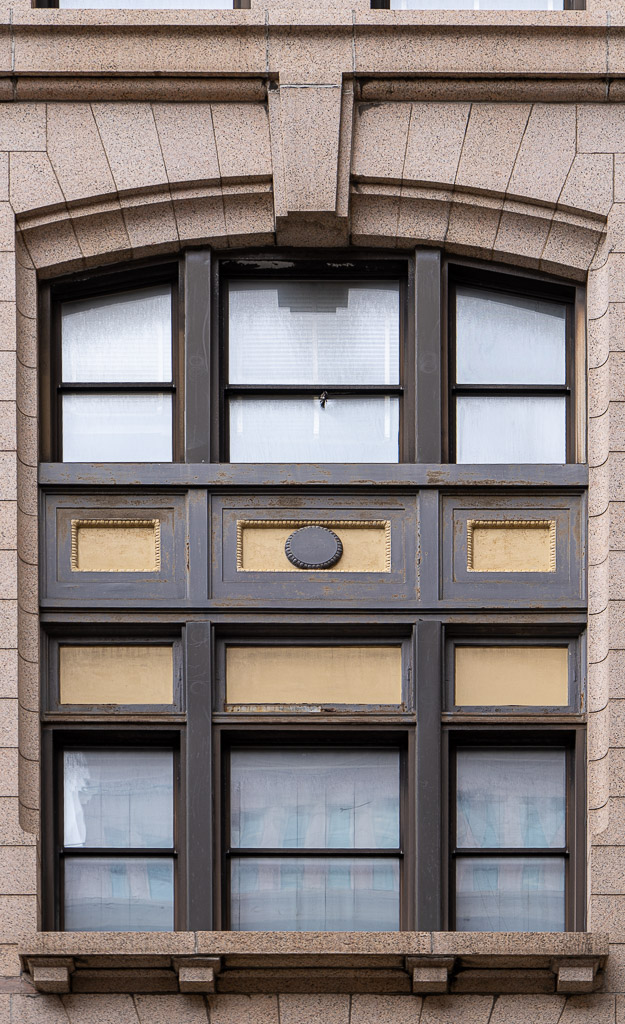
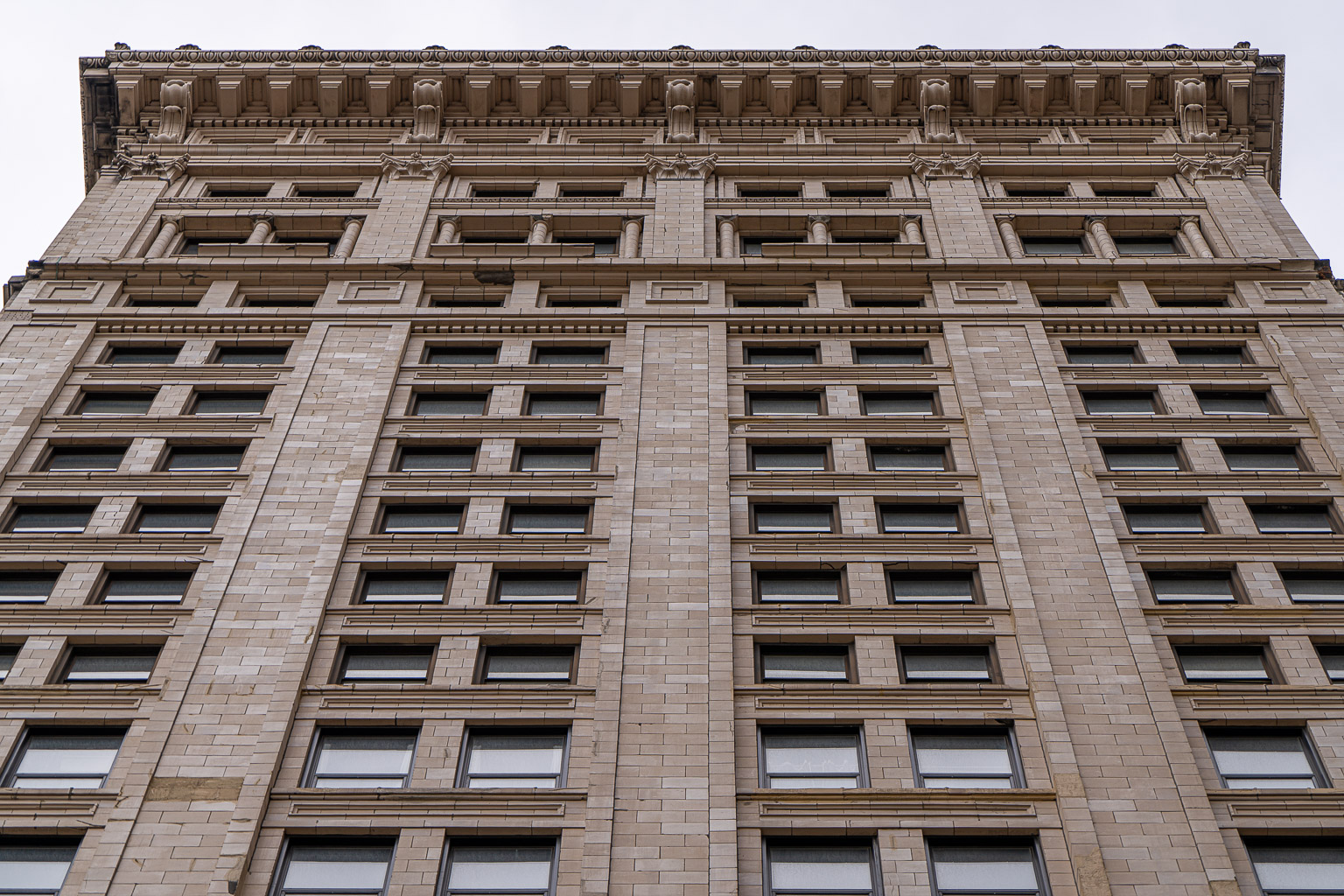
More photos and more description of this building can be found at HistoricDetroit.org.
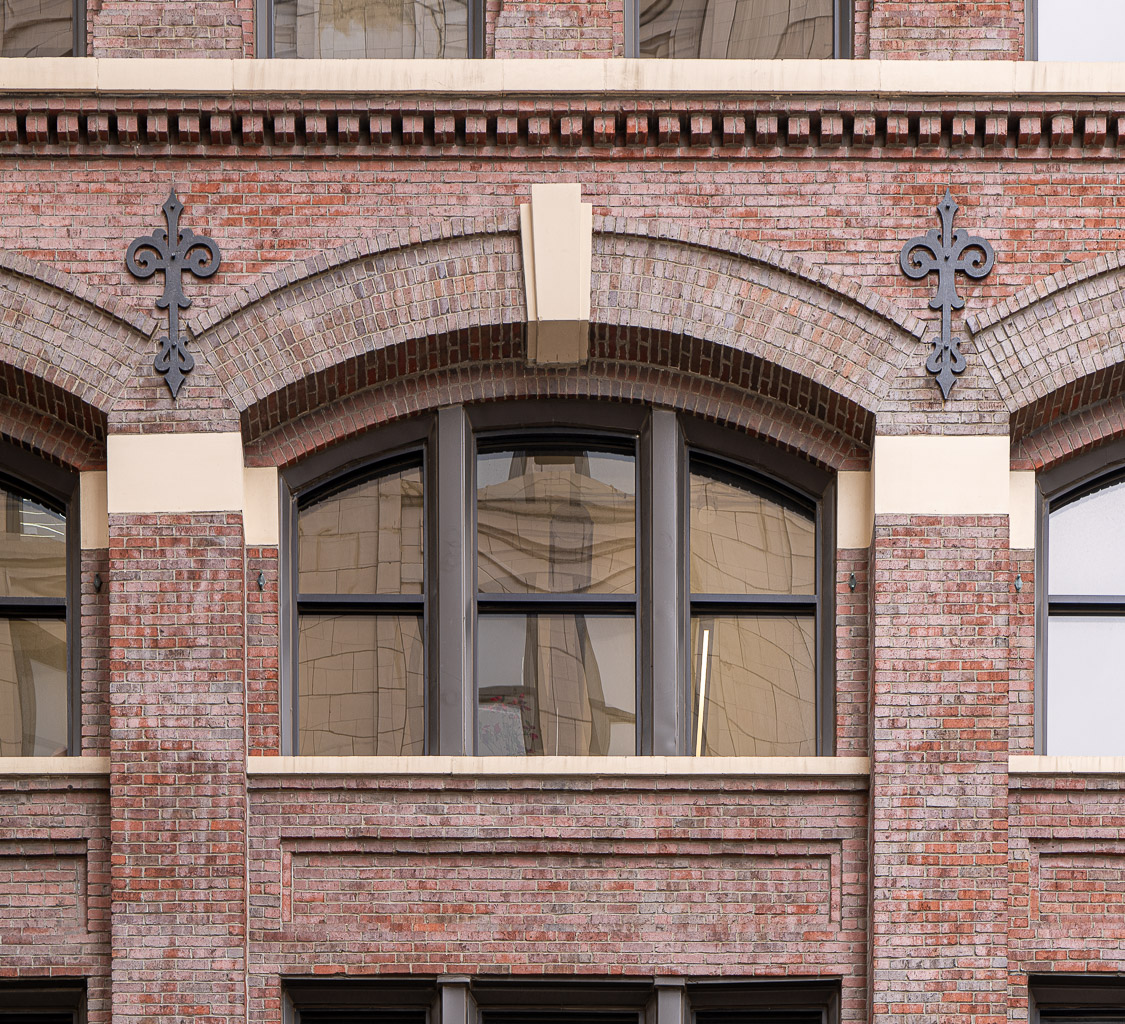
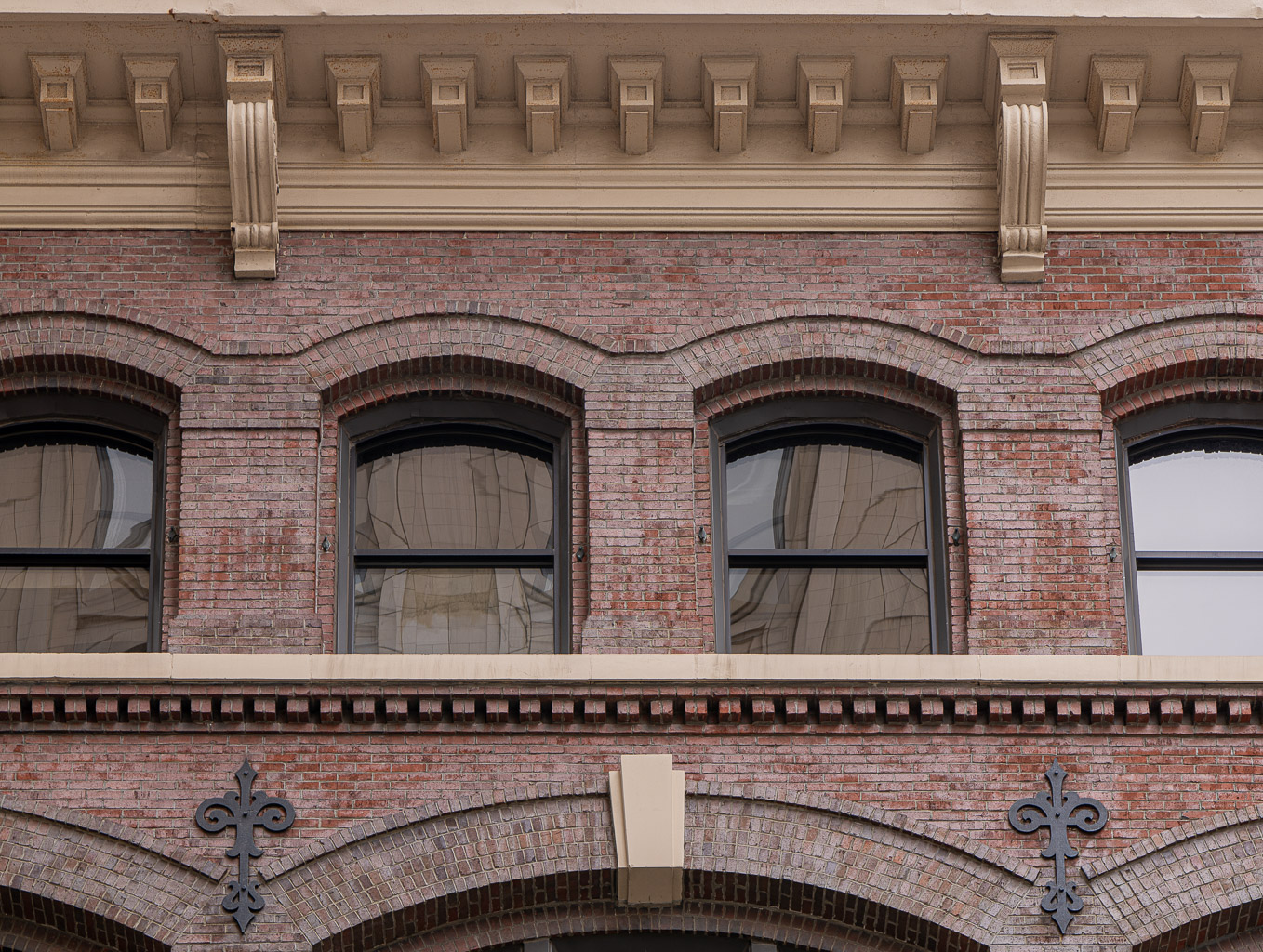
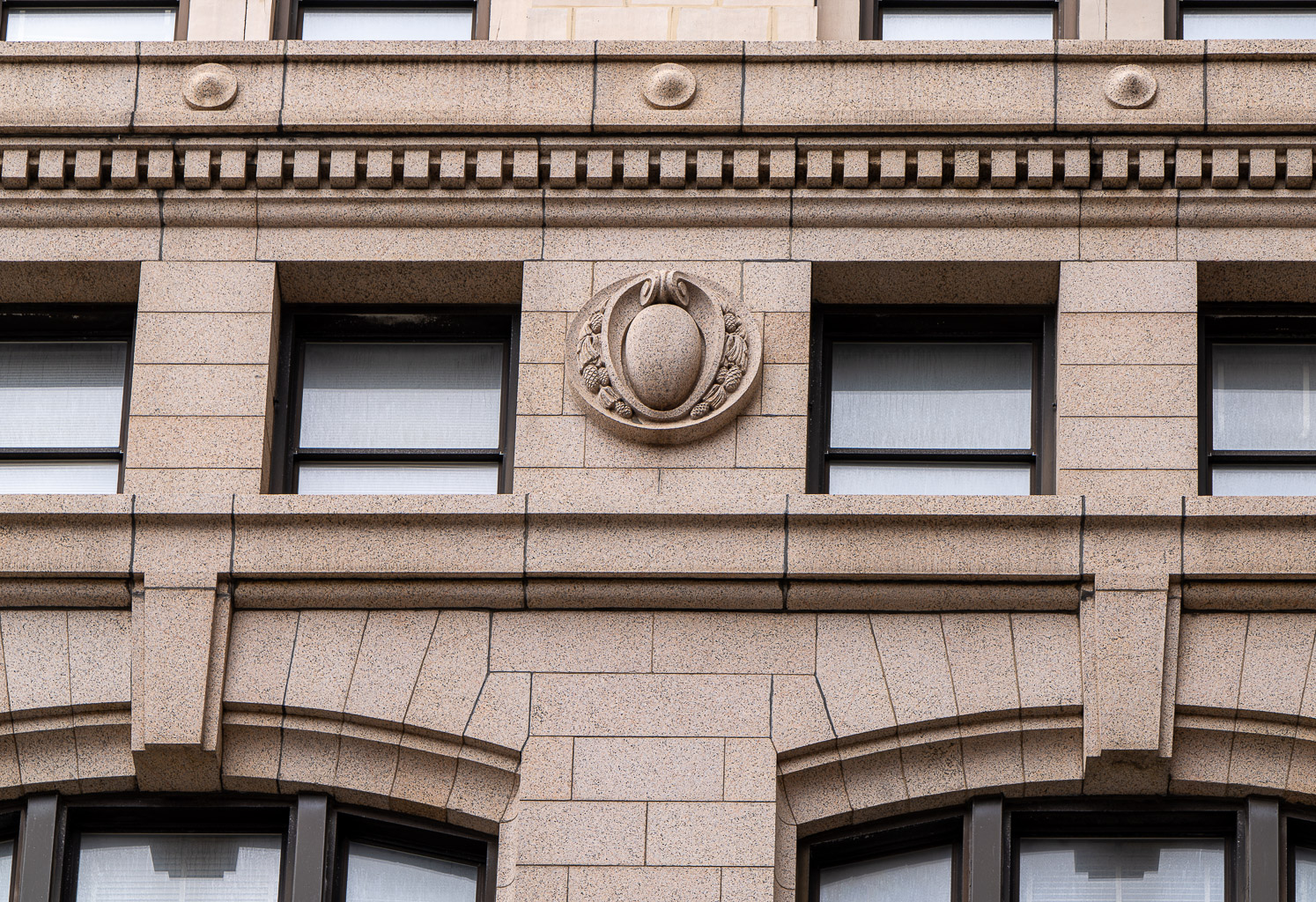
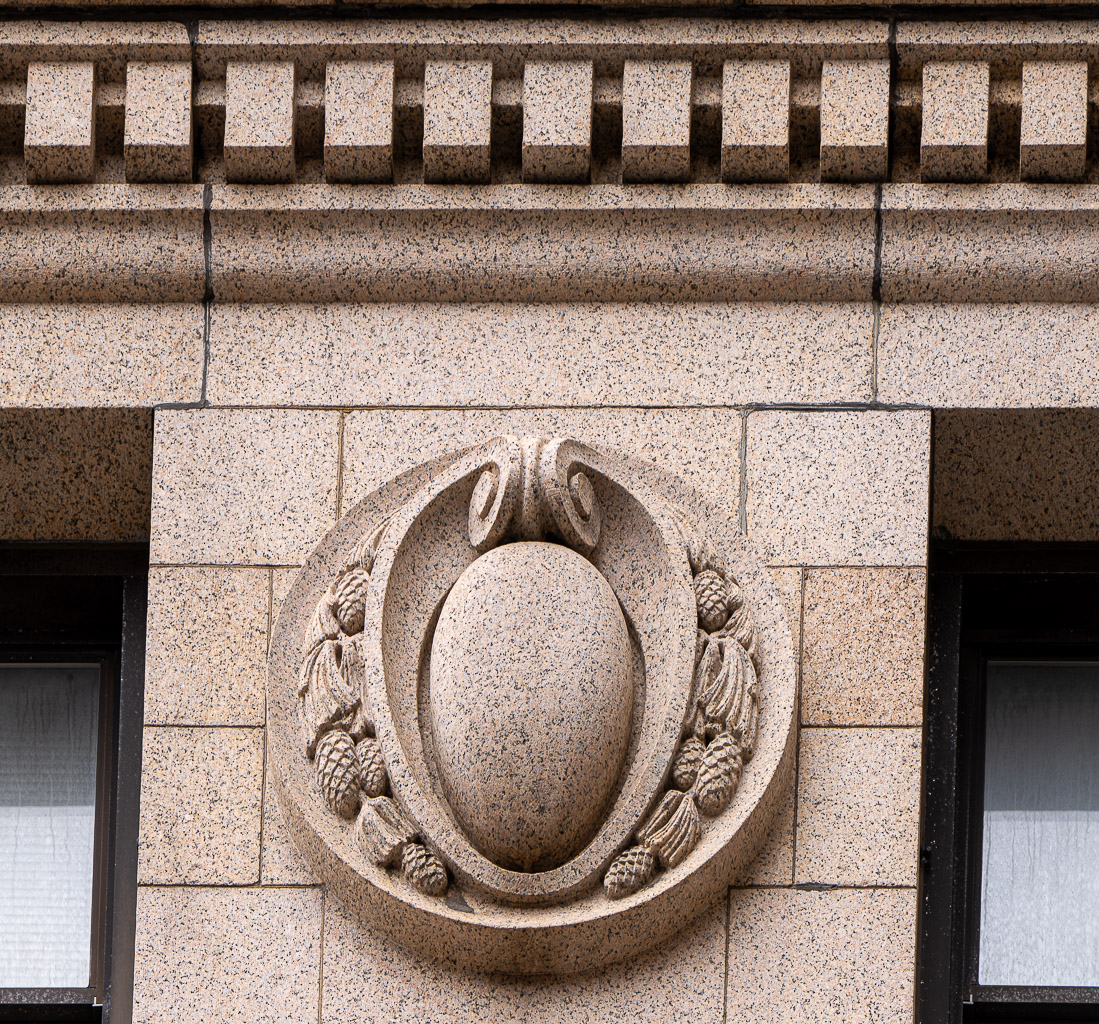
Steel-frame six-story brick and terra cotta commercial building (1903). The building was constructed for businessman Simon J. Murphy both to house manufacturing enterprises to whom space would be rented and, in the basement, a steam power and heating plant that would not only power the building's uses but also provide steam heating for a substantial part of the business district. The red brick facade of the Late Victorian building is divided into six bays marked by broad piers in the second to fifth stories and large brackets in the bracketed and modillion main cornice. In those stories the two end bays contain paired windows on each floor, while the four inner bays each contains a triple set of double hung windows. At the fifth floor level a shallow segmental arch with keystone caps each window bay, and a decorative metal detail was placed at each pier between the arches. A denticulated terra cotta belt course separates the fifth and sixth stories. The windows in the sixth story are double- hung segmental-arch-head singles. The roof is flat. The first floor retains its basic configuration, with an entry in the center of the left-hand five bays and an arched entry at the right, but the finishes are non-original and include mid-twentieth century grey granite bulkheads and center entrance surround. The western entrance, once that of a restaurant called the London Chop House, is finished in white marble panels surrounding a large inset arched entranceway. During a renovation, the Murphy and adjoining Telegraph Building were joined together to share a continuous floor plate and elevator core. The building was constructed for Simon J. Murphy and originally known as the Murphy Power Building. It initially housed a small power plant in the basement that provided power for business operations renting space in the building and also electric power and steam heating for buildings in a nearby service area. The 1903 directory shows the building then housing shoe and cigar manufacturing operations in addition to printing businesses. Succeeding directories through the later 1910s list primarily printing and publishing businesses.
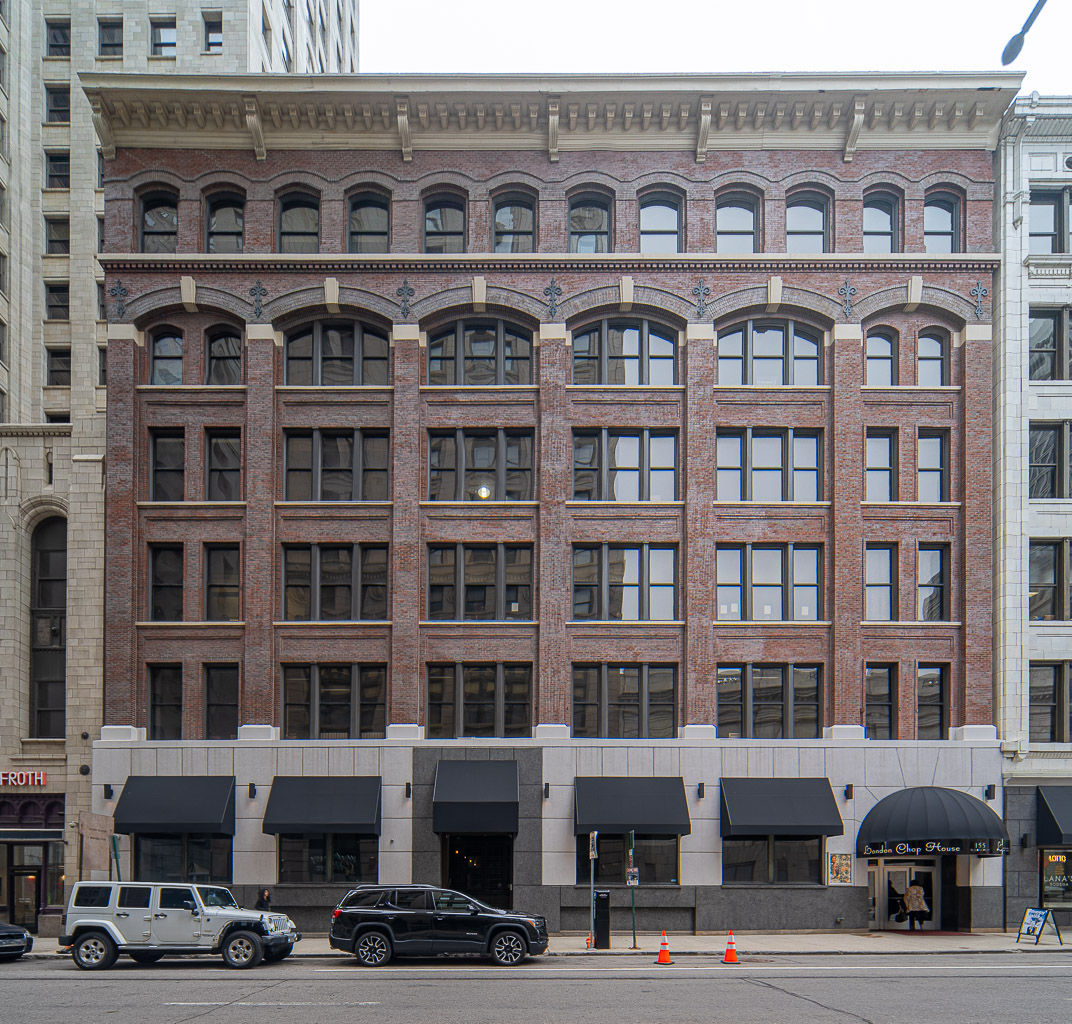
Here are a few photos inside the London Chop House.
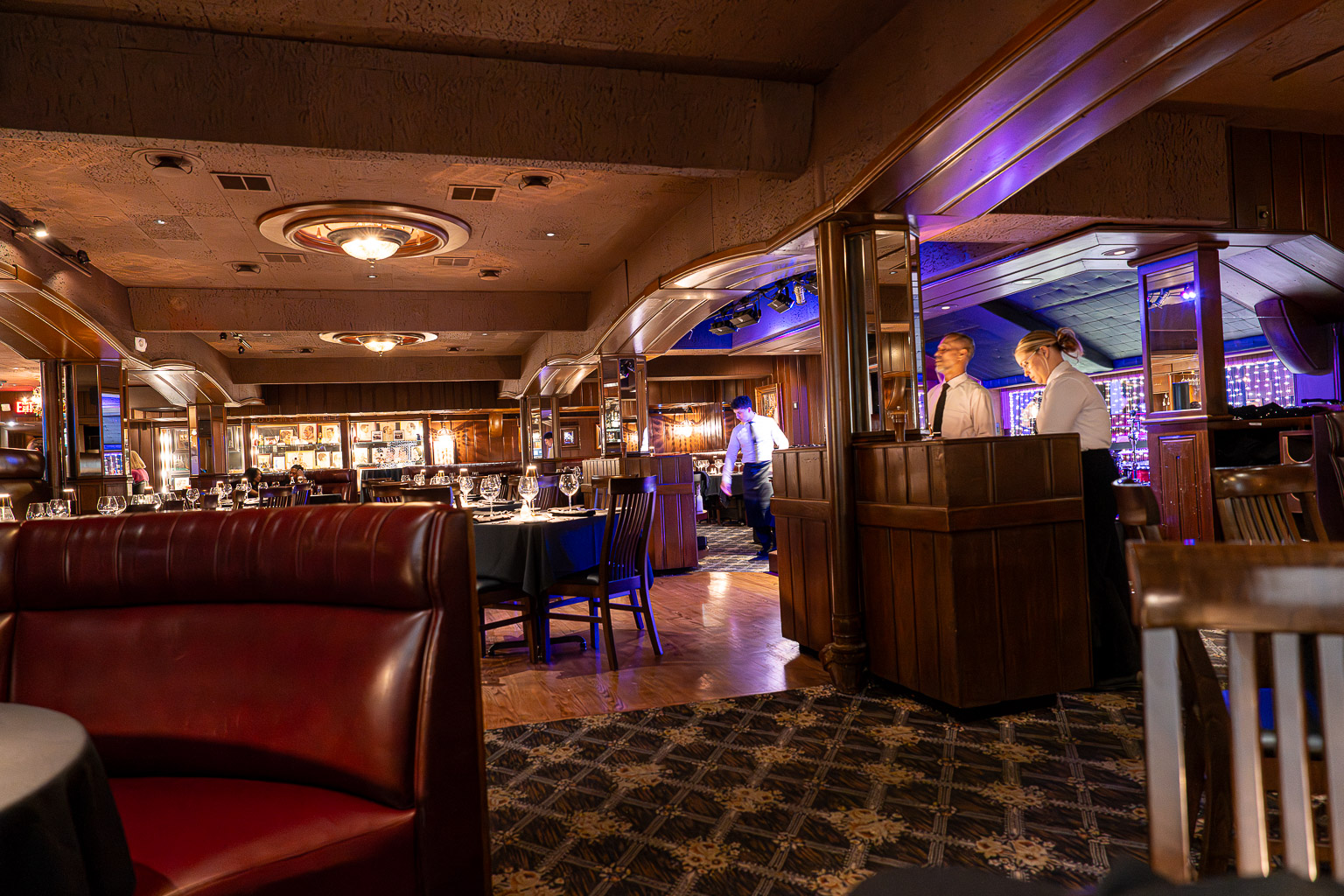
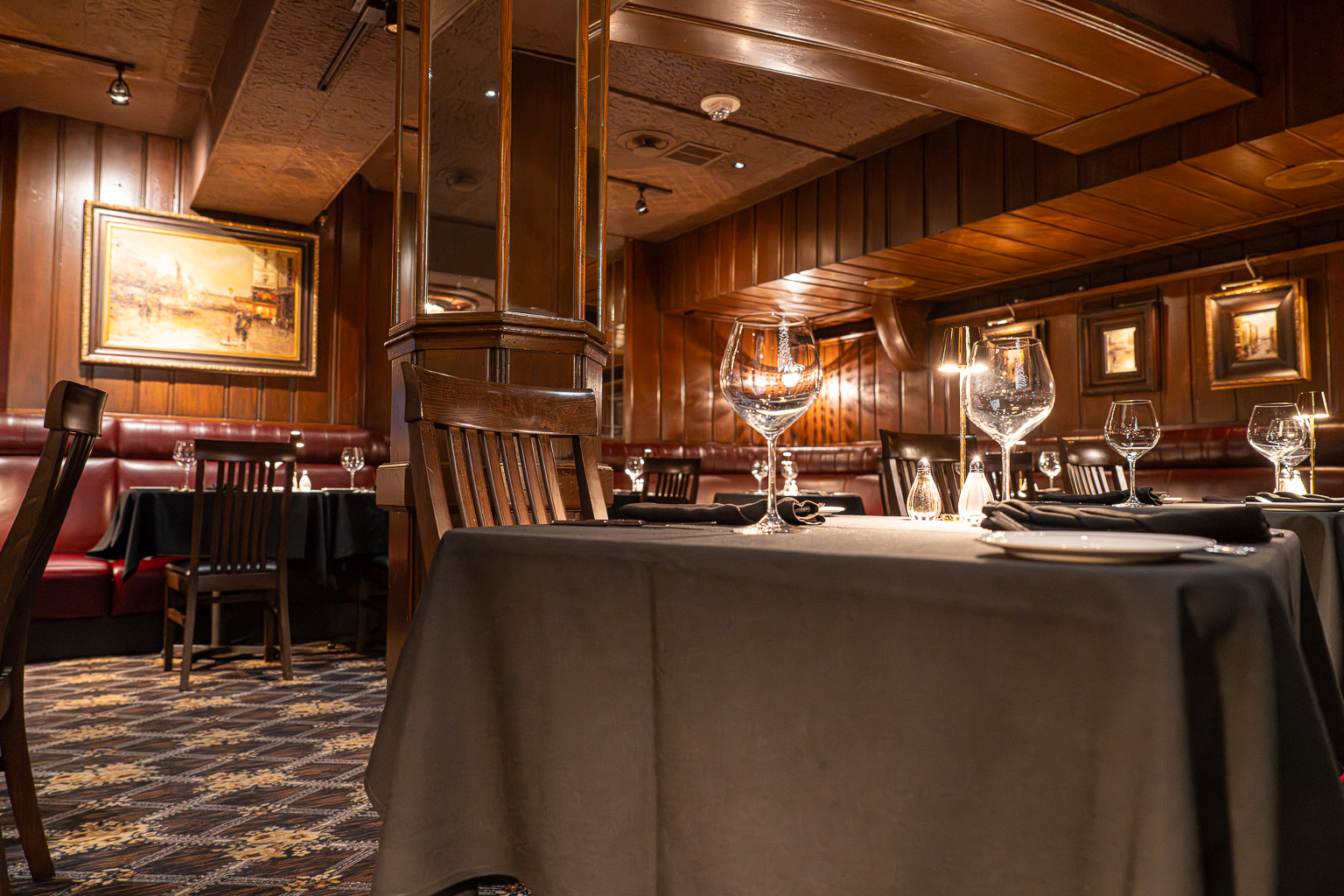
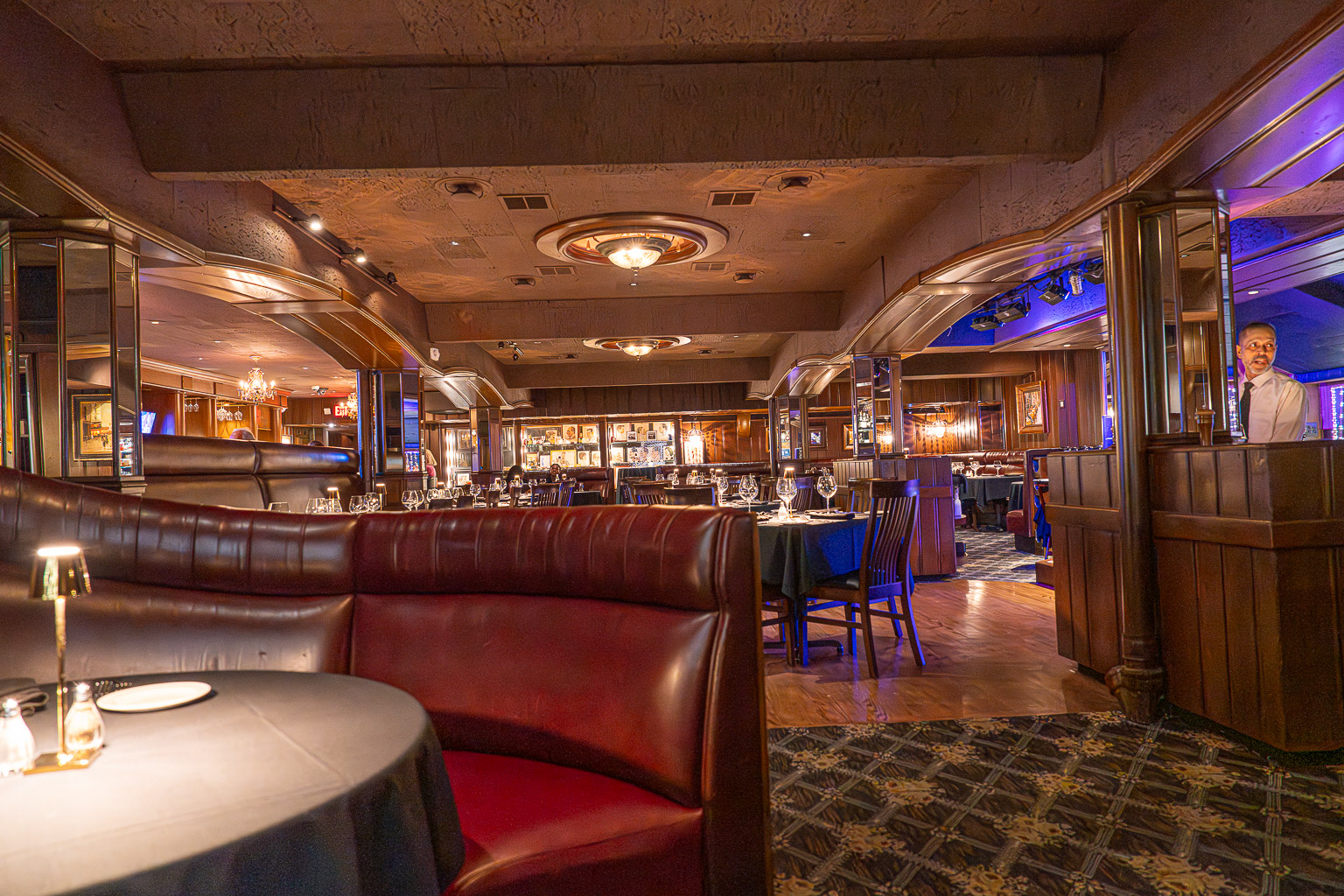
More photos and more description of this building can be found at HistoricDetroit.org.
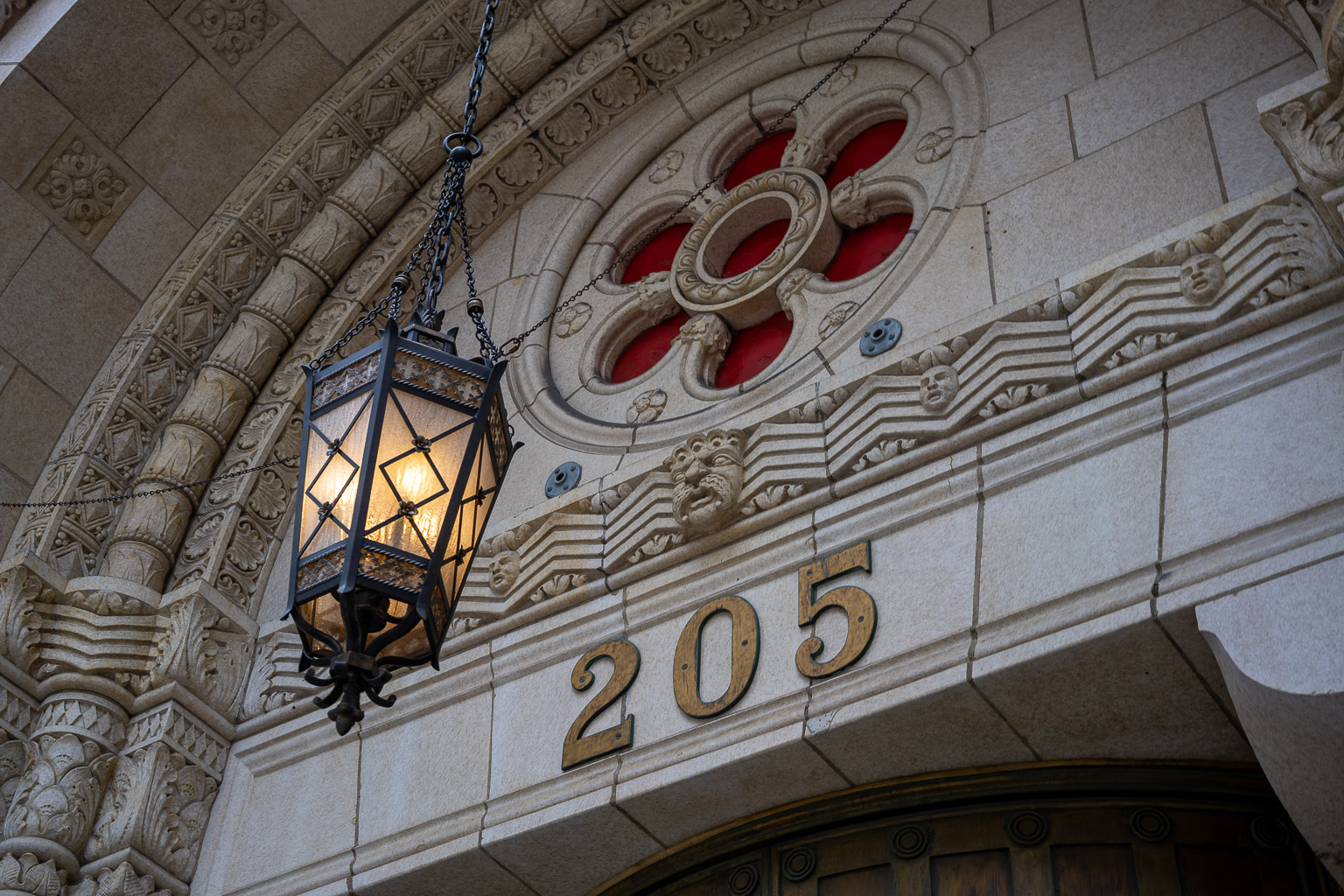
The Bankers Trust Company Building, at 205 W Congress Street (at the corner of Shelby Street), Detroit, Michigan was designed by Wirt Rowland in 1924 while he worked for Smith, Hinchman, and Grylls. Rowland enjoyed using Romanesque-inspired features on building exteriors, but knew they didn't work for tall buildings since only the bottom couple floors were close enough to see such details from the street. However, the three-story Bankers Trust Company Building provided the perfect opportunity for him to use such decorations.
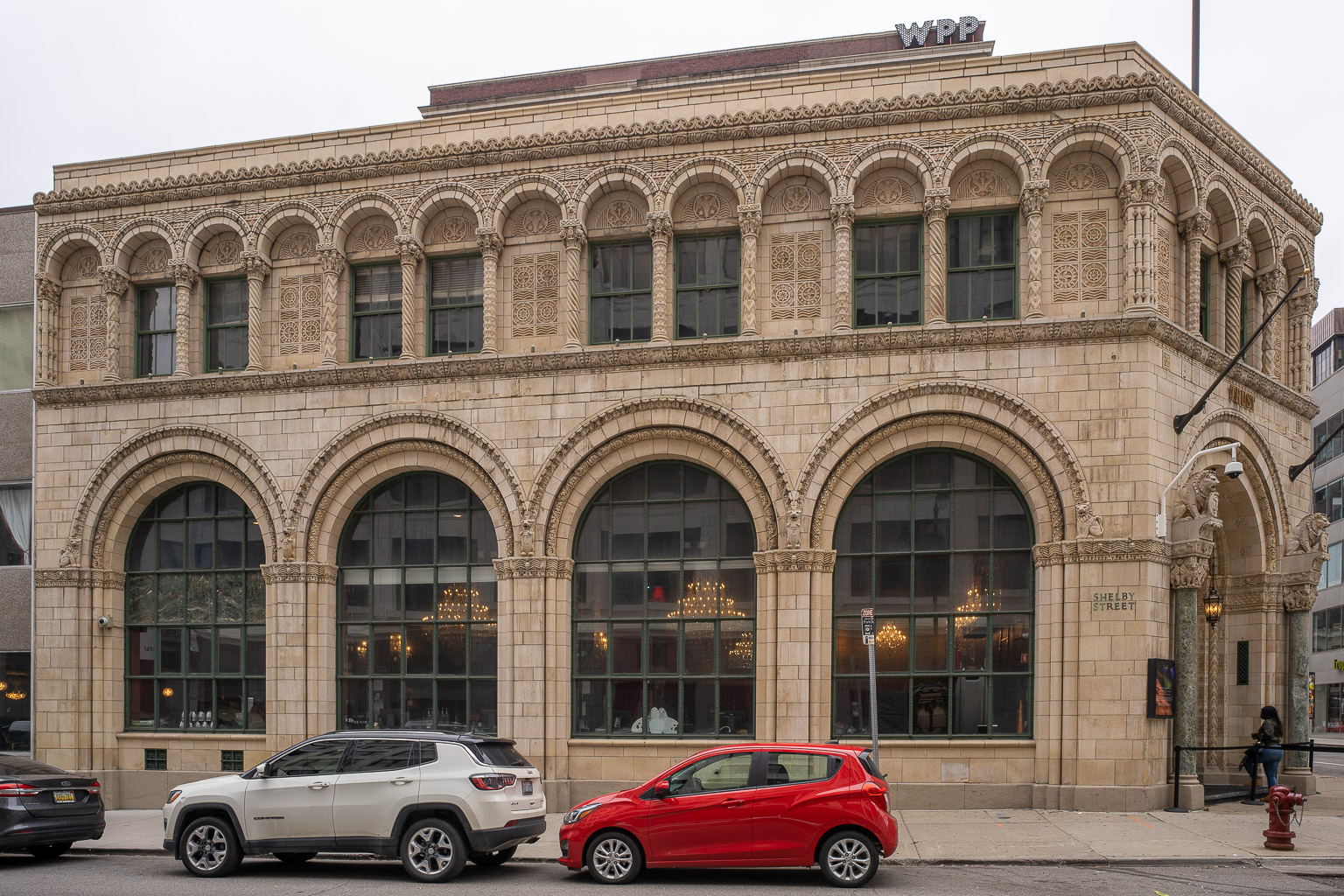
The building is located on a corner and has a corner entrance, which is rarely found on a building in downtown Detroit, especially a bank. The 1st photo below is from diagonally across the intersection, the 2nd photo below shows the Congress Street face, and the 3rd photo below shows the Shelby Street face. Most of the ground floor is two-stories in height, with a normal-sized third-floor above. The building's surface is made not from stone, but from terra cotta, a ceramic made from soft clay which is easily worked into complex patterns, then is fired at high temperatures to become a durable hard material, able to sustain Detroit summers and winters, and looking like intricately carved stone. The terra cotta patterns were designed by Rowland, made into moulds by Detroit's own architectural sculptor, Corrado Parducci, the same guy responsible for the two large Guardian Sentinels outside the Griswold Entrance of the Guardian Building. Northwestern Terra Cotta in Chicago produced tiles from the building from those moulds.
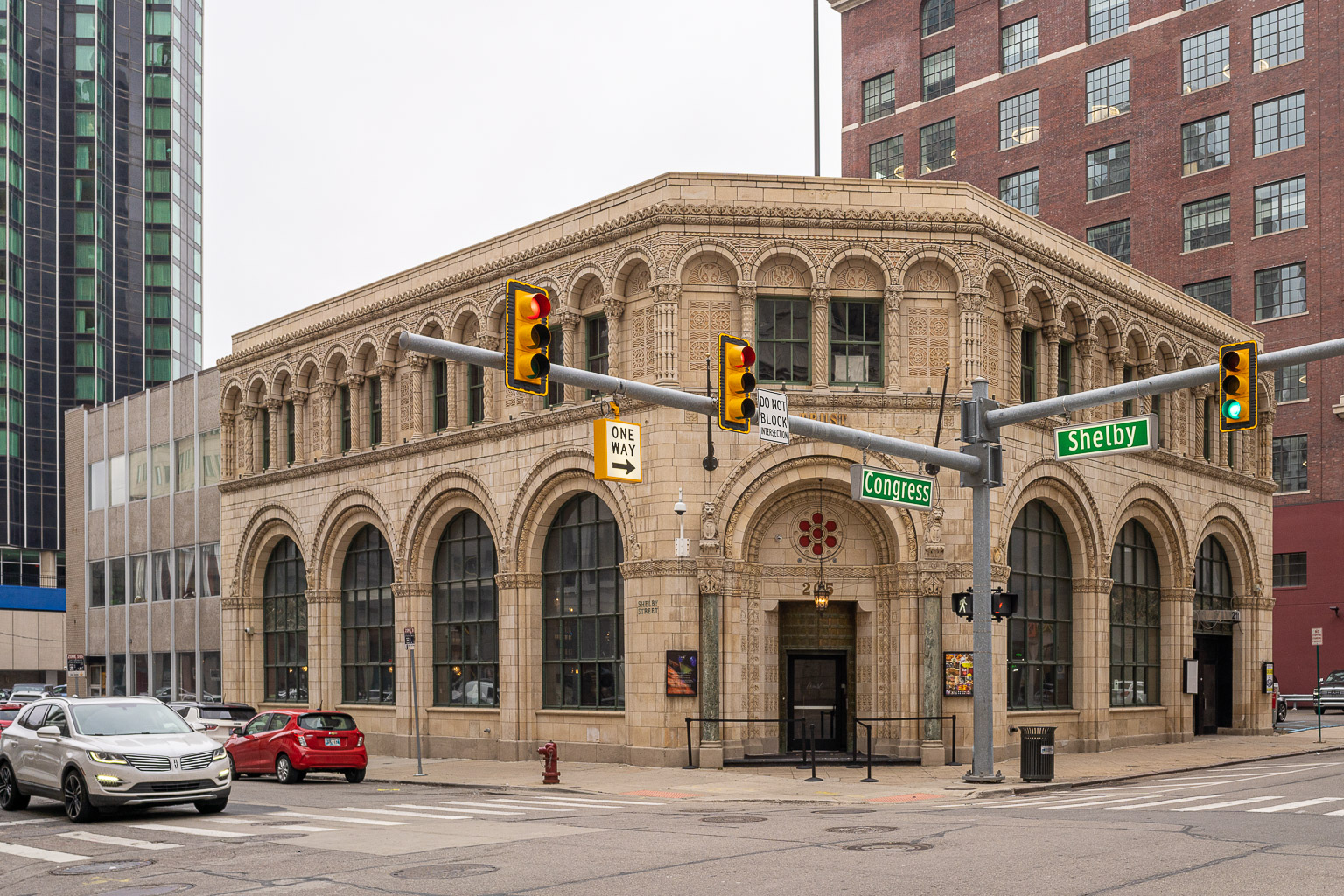
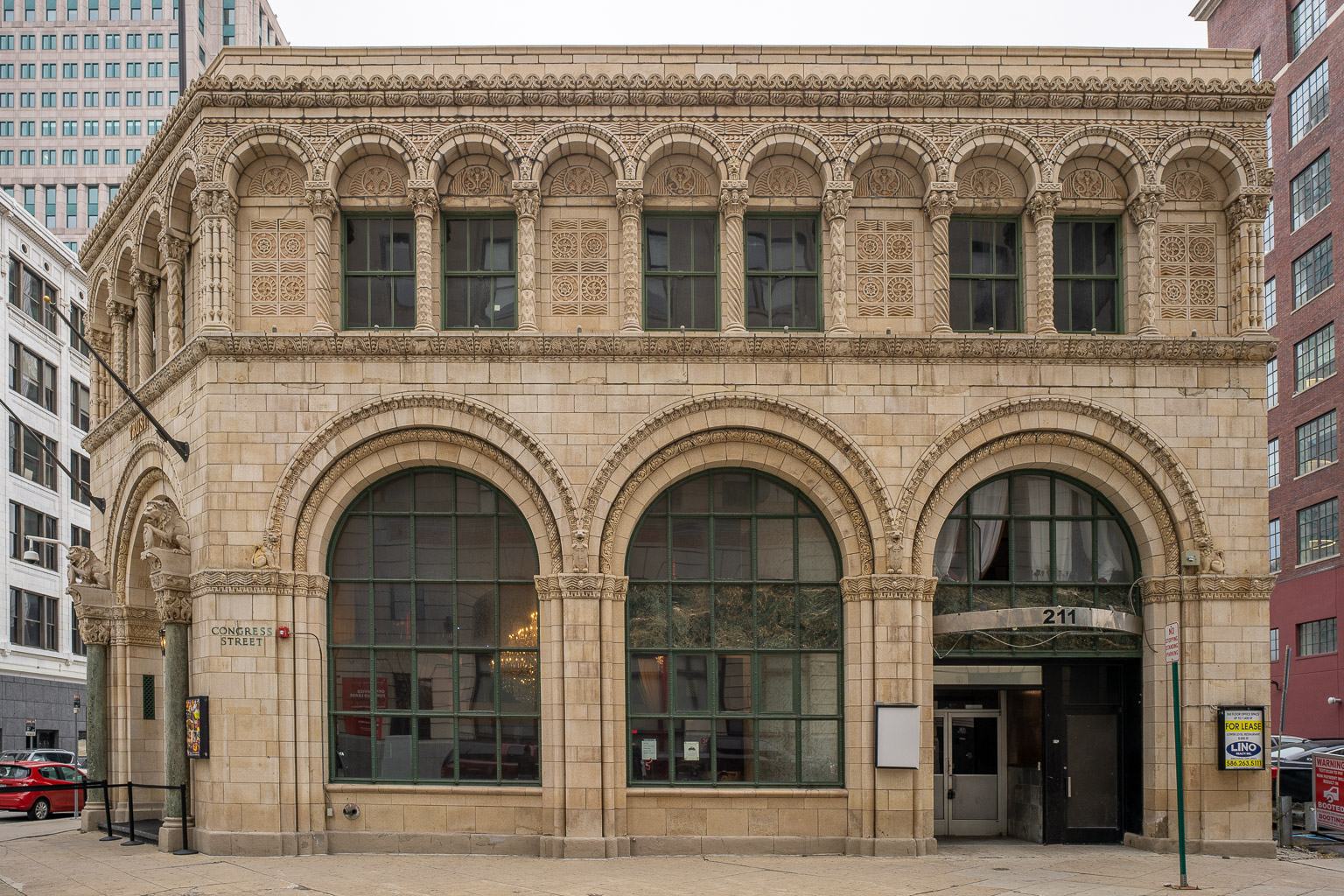
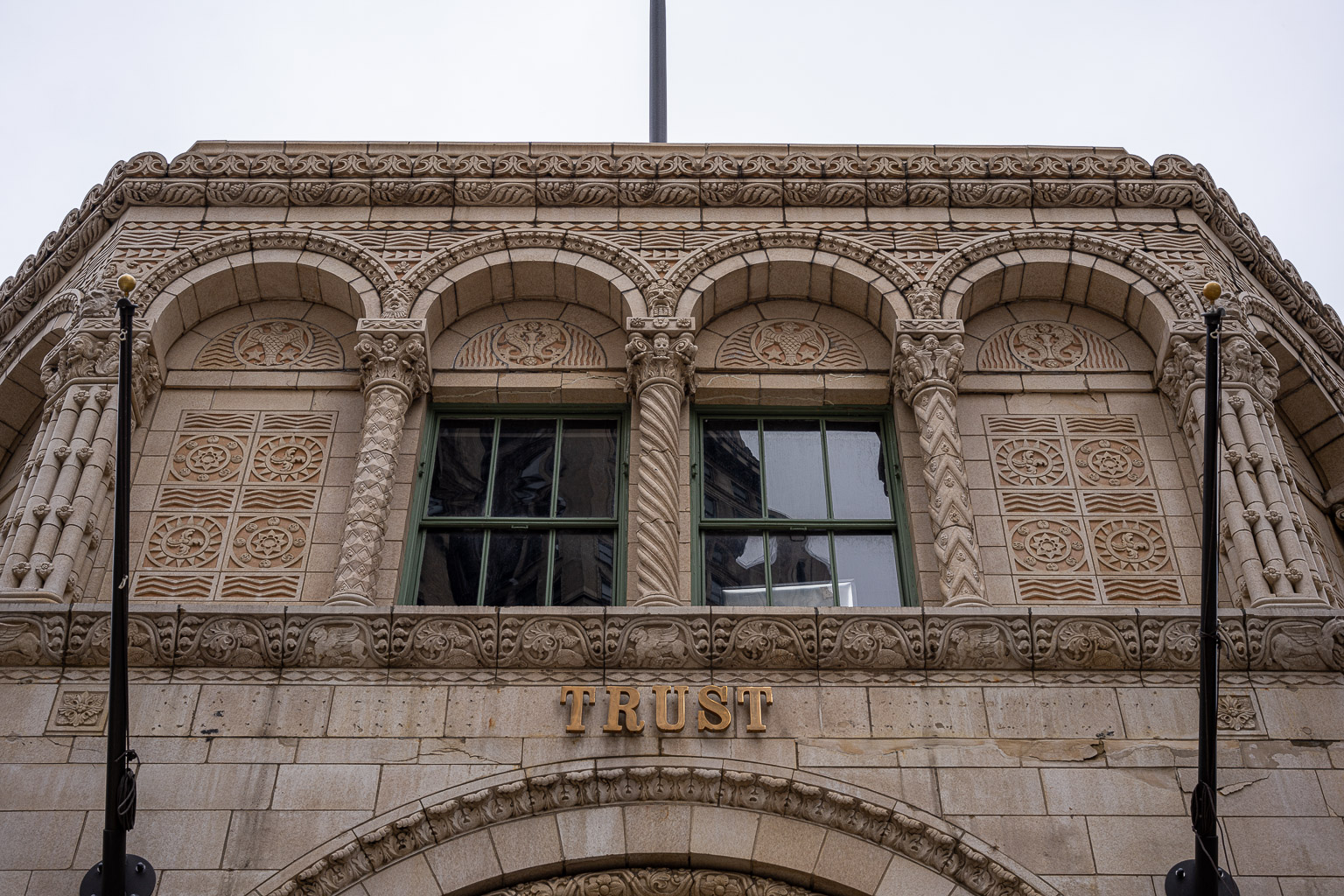
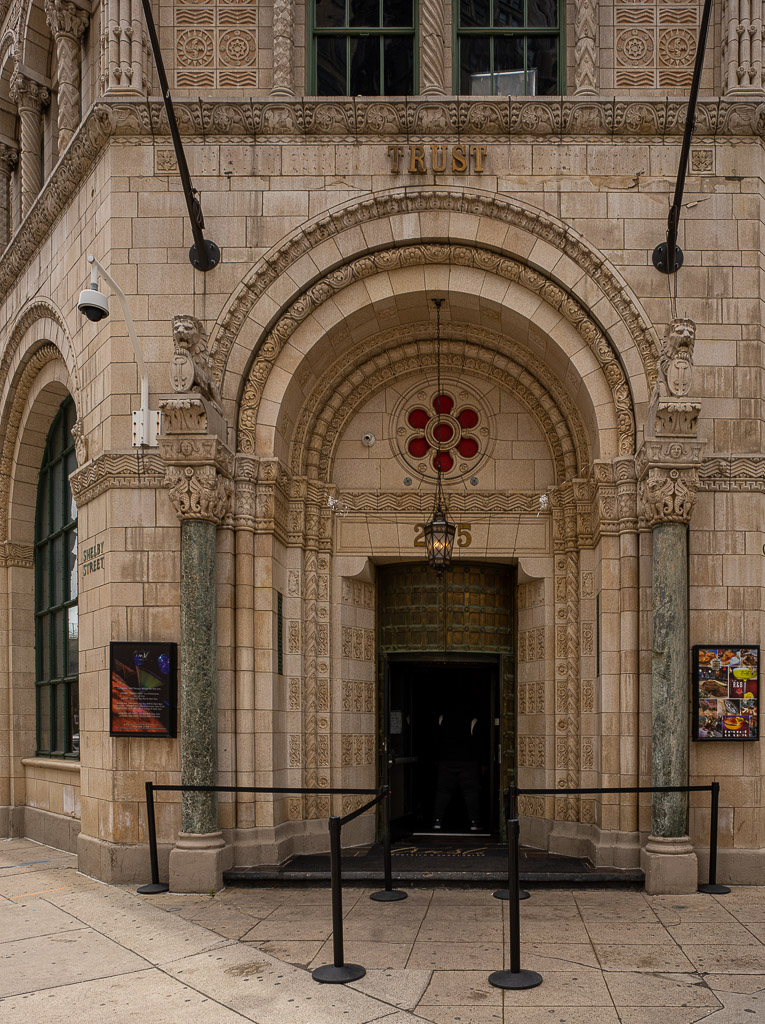
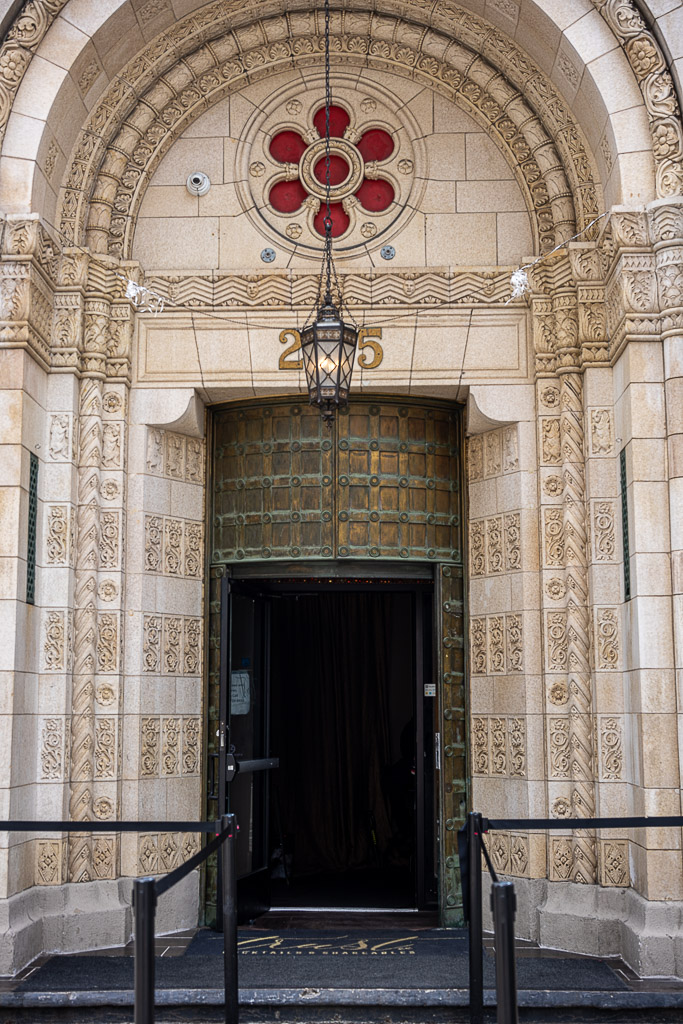
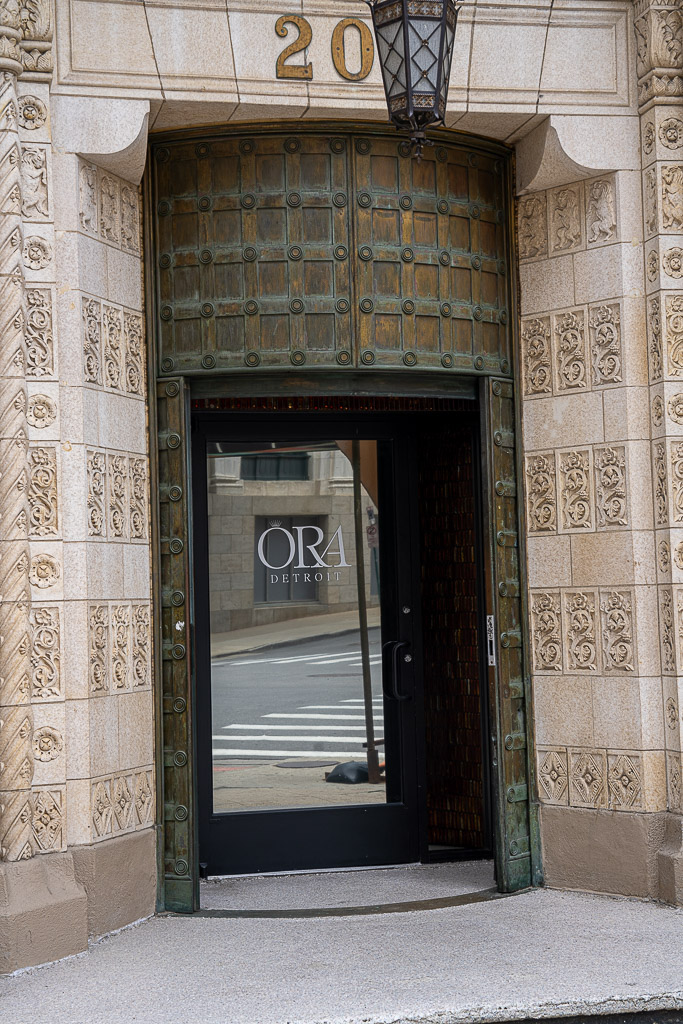
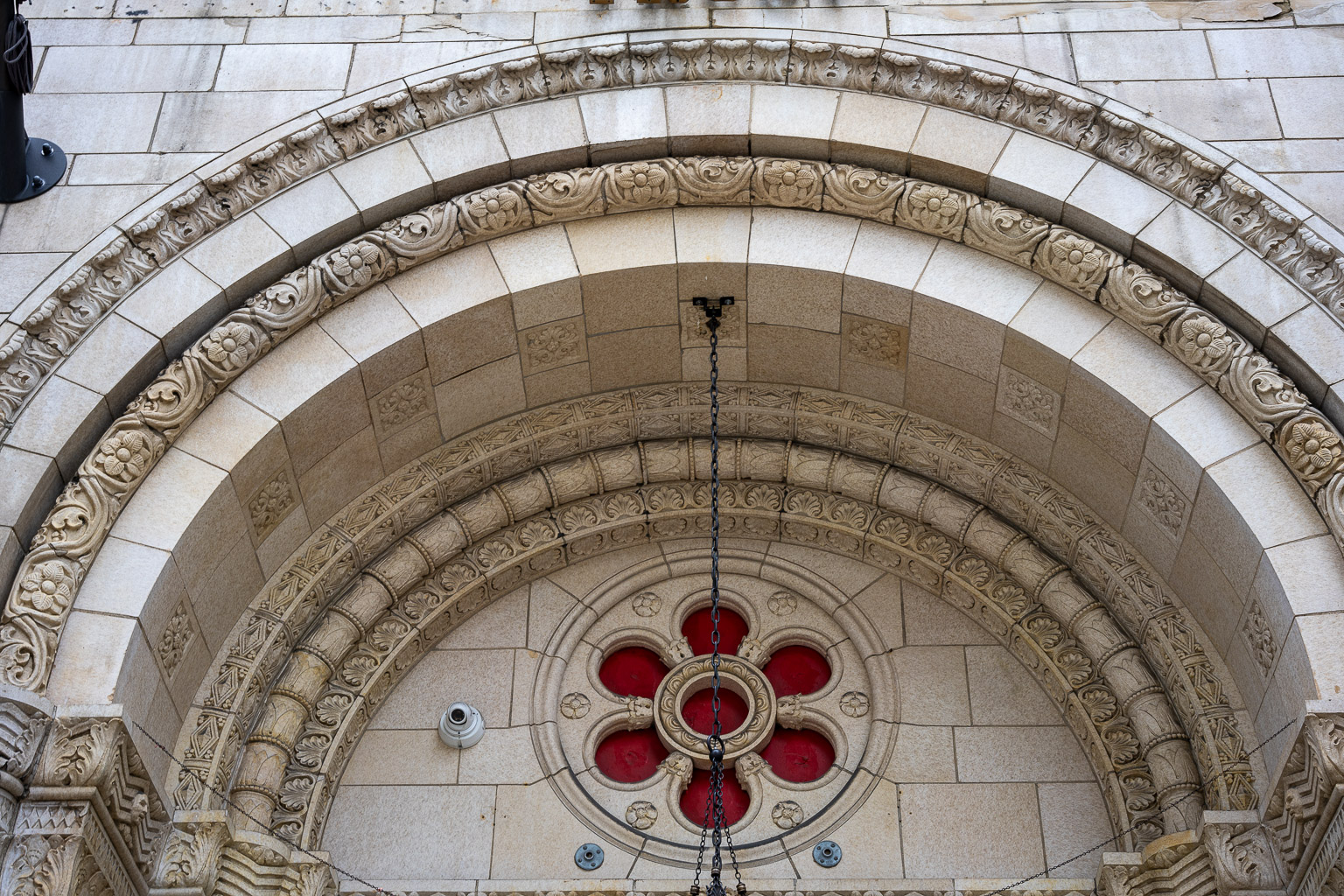
The corner door of the building is shown in closer detail in the 1st photo below. The letters above the corner door used to spell out Bankers Trust Company until a few years ago, but now are reduced to only Trust since this building is now used for Trust Cocktails, Shareables & Nightlife. The 2nd photo below shows the holes that once provided mounting for the words Bankers and Company, along with much of the fine detail of the third floor above. The arch around the doorway, featured in the 3rd photo below, is the same size as the window arches on the two street sides of the building, but its interior is set back quite a bit more than the windows. A green marble column stands on each side of the door, topped by extensive ornamentation. The 4th photo below is a closer-still look at the front door's inner mouldings, and the bronze clamshell that once housed a revolving door behind it. The revolving door has been removed, but the elaborate bronze outer door remains. Another photo of this doorway, now with a new front door after change of ownership, is in the 5th photo below.Just outside the clamshell the mouldings are vine leaves, and further out are scallops. Above it are chevron zigzags. The 6th and 7th photos below show details above the doorway.
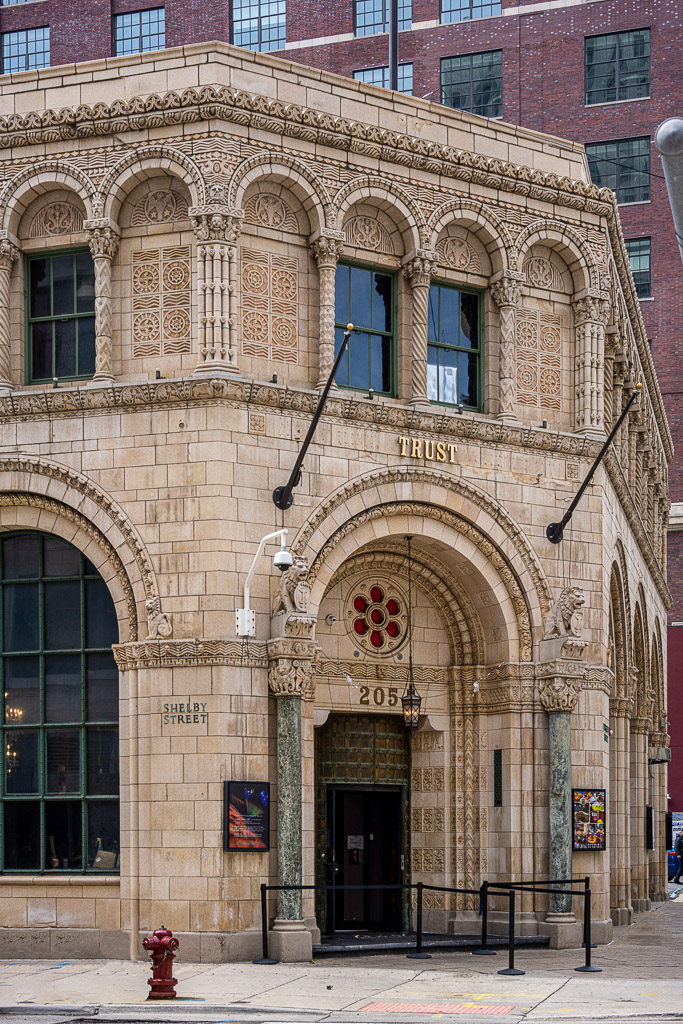
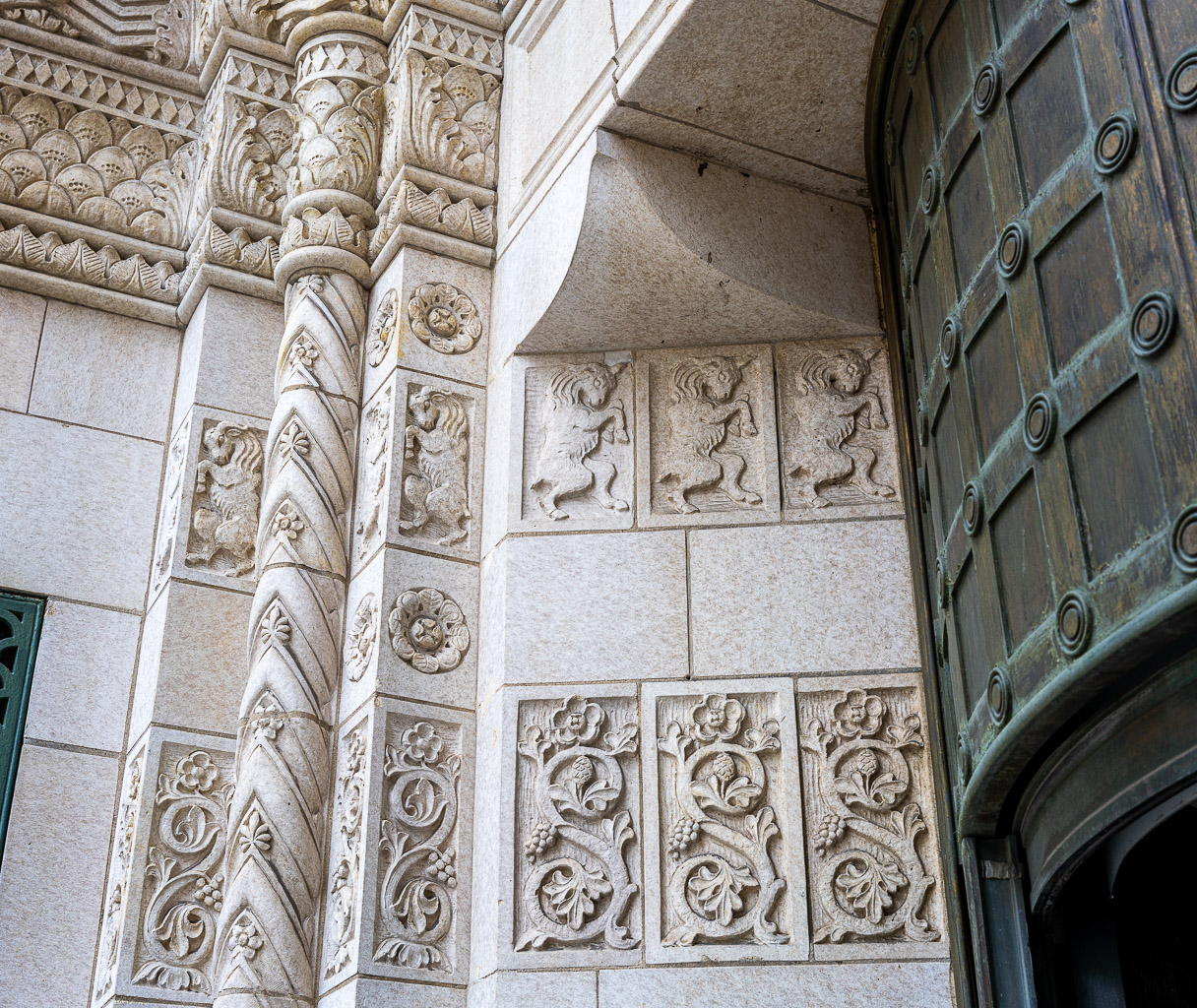
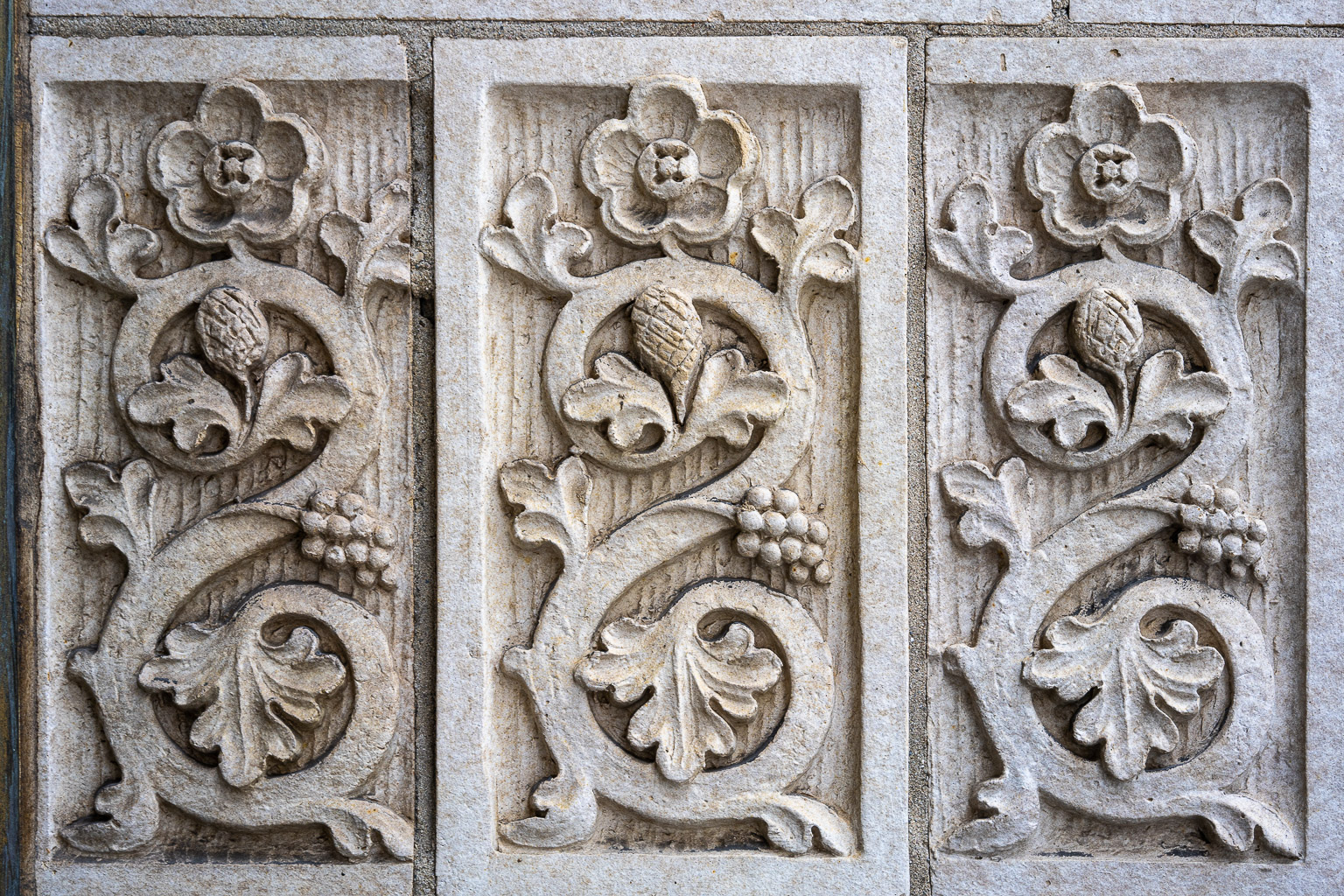
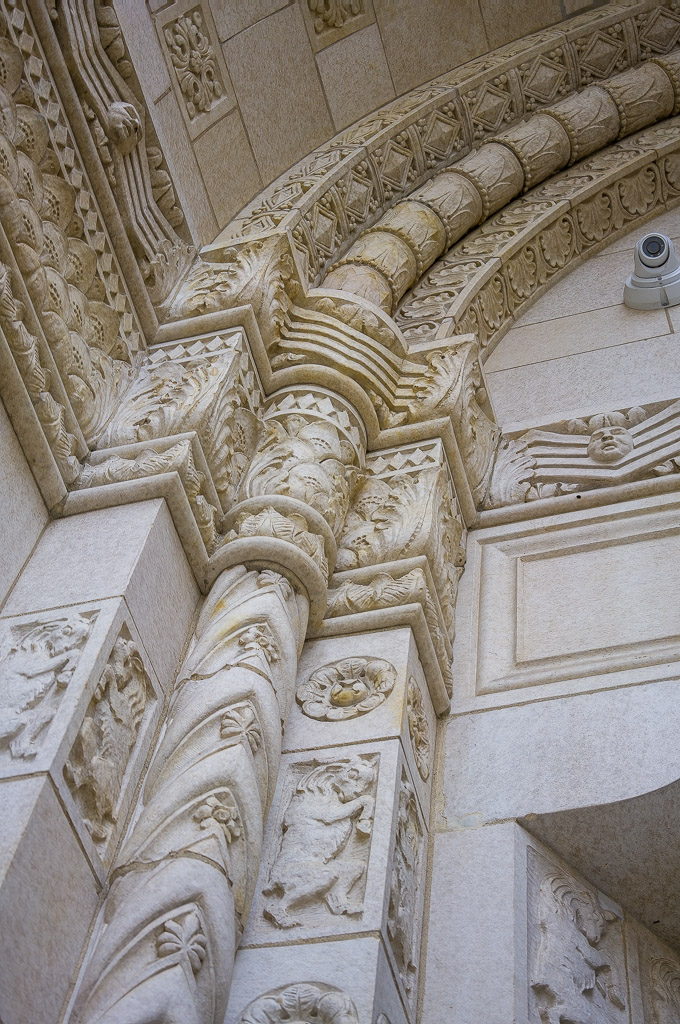
The details around the door are incredibly rich. The 1st photo below shows vines, horses, and other patterns beside the door. The 2nd photo below shows a close-up of a set of 3 vines. The 3rd photo below shows details of a corner beside the door, transitioning into the arch above it.
The top of the green columns on either side of the door have lots of fun details. The 1st and 2nd photos below show, from bottom to top, a green column, ferocious eagles, running dogs, and protective lions holding shields, all animals presumably protecting the money you deposit in the bank. The 3rd photo shows another view of the same, but also a smaller lion on either side of each arched window, and a chandelier in the restaurant occupying the space today (in 2023).
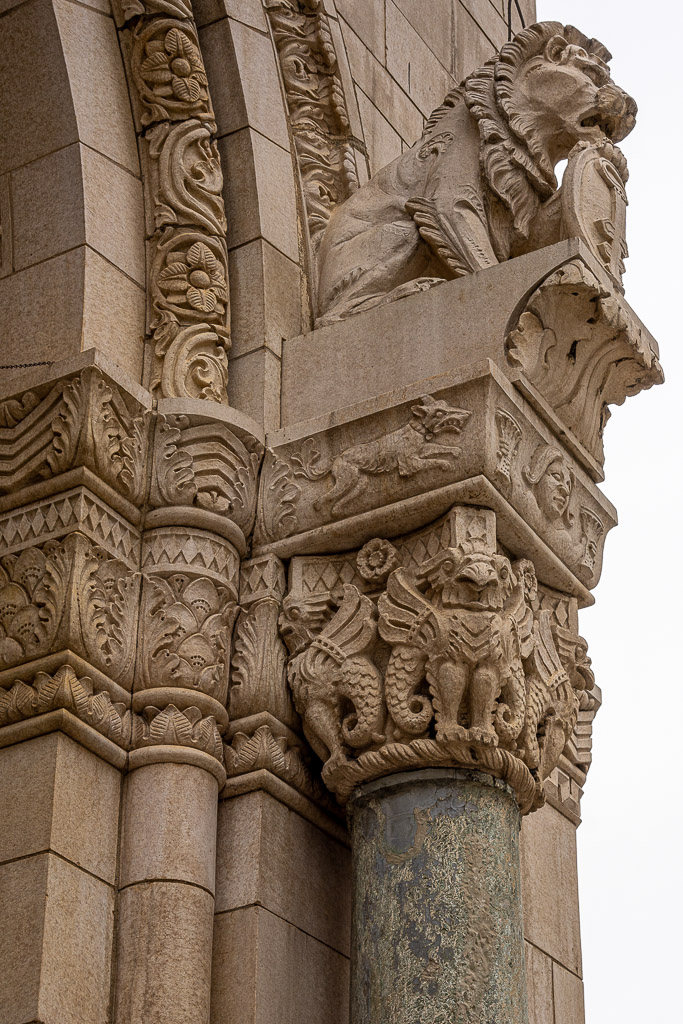
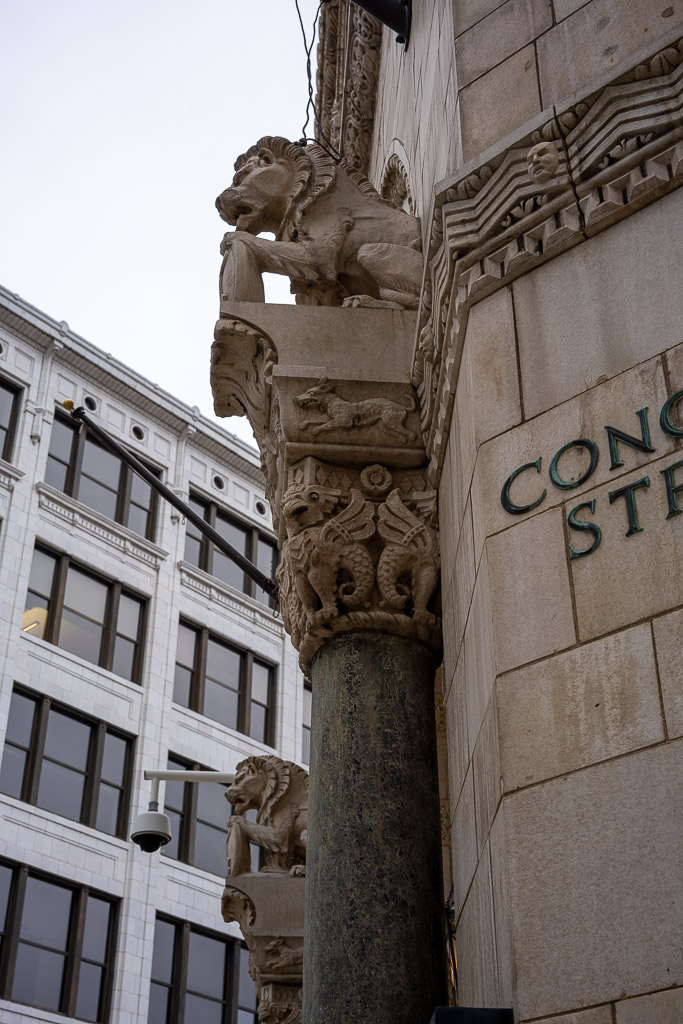
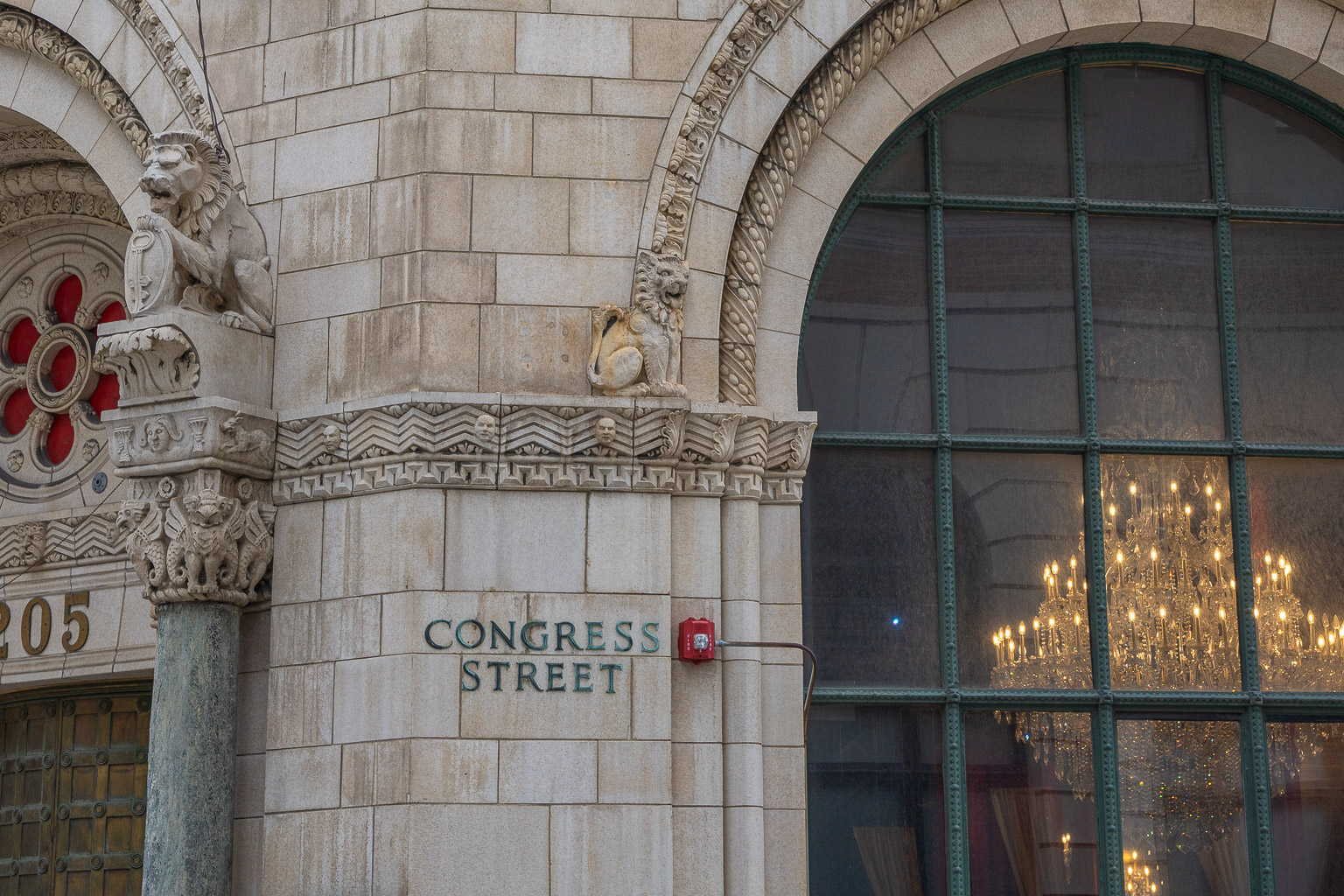
The window frames of the building are all green as well, matching the pillars beside the door. The green marble inserts in the left-most Shelby Street window (3rd photo at top) and right-most two Congress Street windows (2nd photo at top) hide the floor of a mezzanine level above the private bank offices which were single-story areas below those inserts. In two of the original windows (2nd and 3rd photos at top), original green marble panels are still in place in the center of the windows.
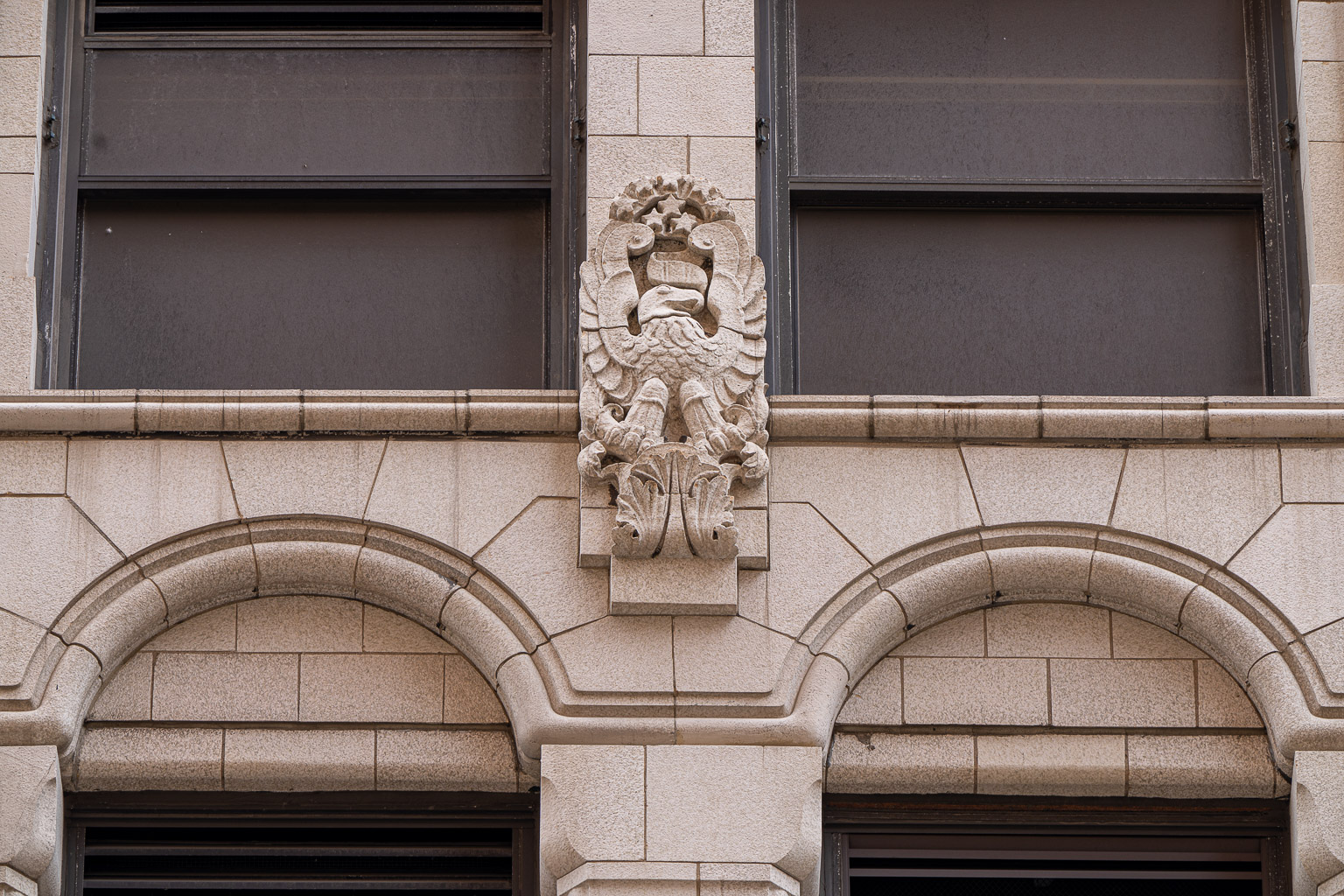
The arches, decorations, and windows used on the building are all deeply recessed in order to show dark shadows on days that are sunny, cloudy, or overcast. Remember that the building is surrounded by much taller buildings, so is usually in shade, but Rowland wanted the decorative patterns of the building to stand out regardless. The 1st photo below shows details around the third floor windows: stylized eagles with stars, representing the United States are above the windows, and a Native American revolving sky symbols of four spinning leaves within a sunburst (sometimes described as a whirling wind swastika) are between the windows. The pillars are embedded with designs, their capitols are sometimes standard Corinthian, sometimes containing a theater mask within them, sometimes morphing into stylized eagles. Square caps above the capitols have various designs on them, and above those caps are bearded faces. At the building corners, the 2nd and 3rd photos below show the 'Corinthian' capitols transformed into a Medusa face, squirrels holding nuts, and lions, with a stylized sun-face above the cap, and snake-bears (?) above the sun-face. The 4th photo below shows these incredible arches from an extreme angle. This third floor is finished with an arcaded treatment that uses columns in a variety of designs. The columns, their capitals, the wall surfaces and cornice above and the wall behind the arcade are respendent in detailing that leaves no surface there uncovered. The upper story windows that occupy the central pair of arches aligned over the arches below contain three-over-three original metal windows. The arches above the windows are also blind, filled with elaborate carving.
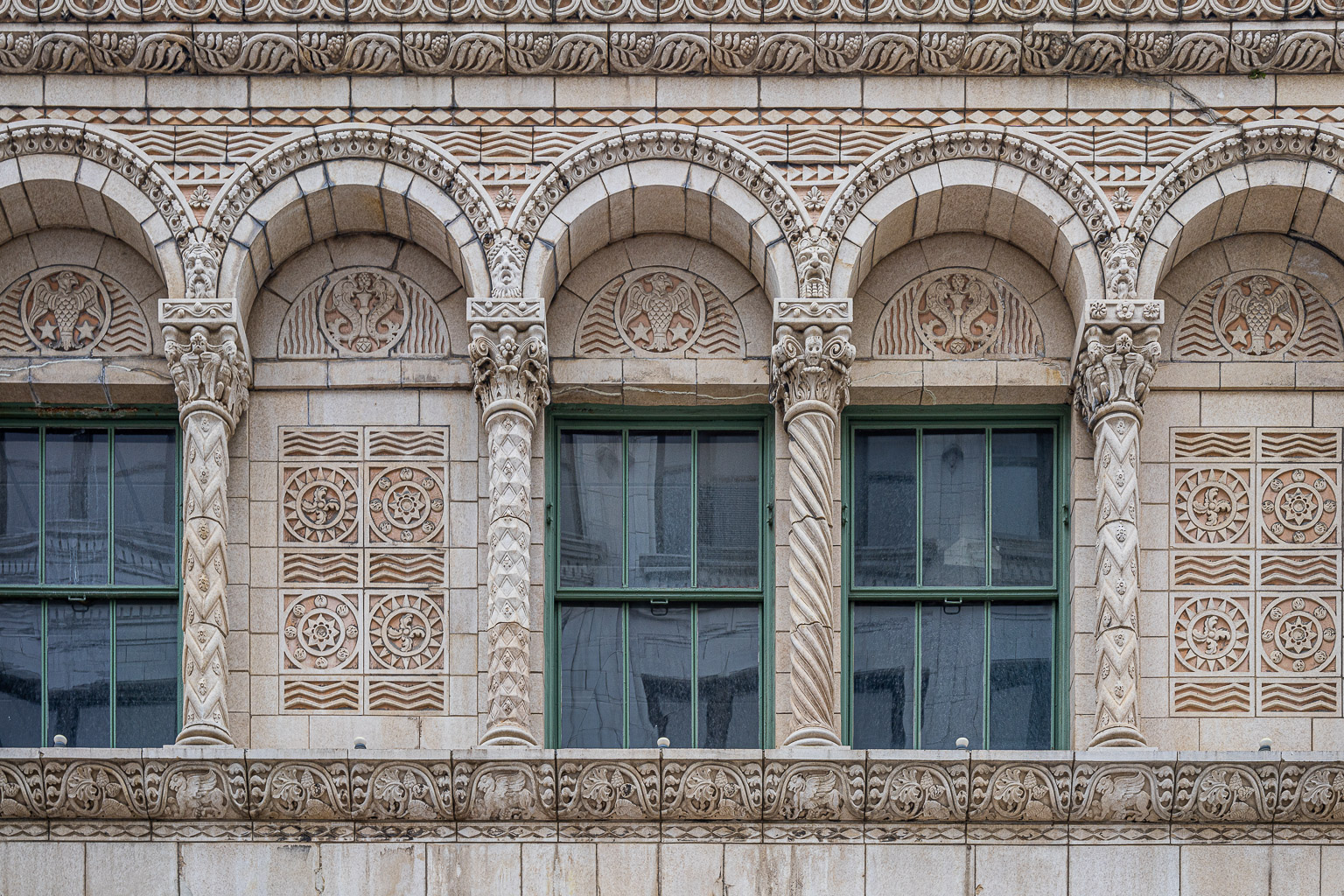
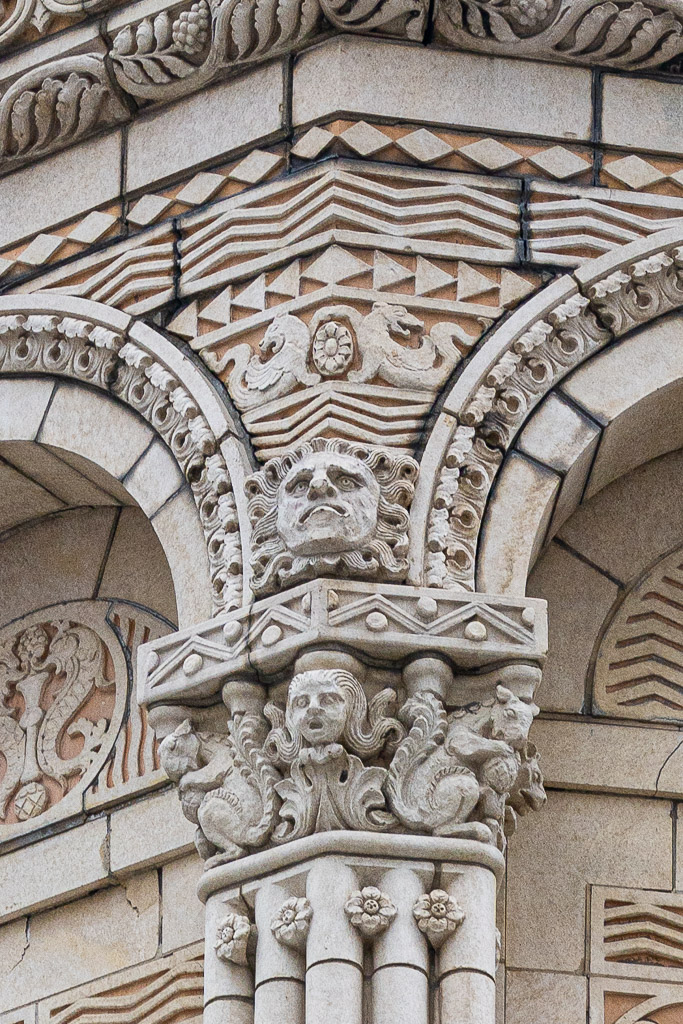
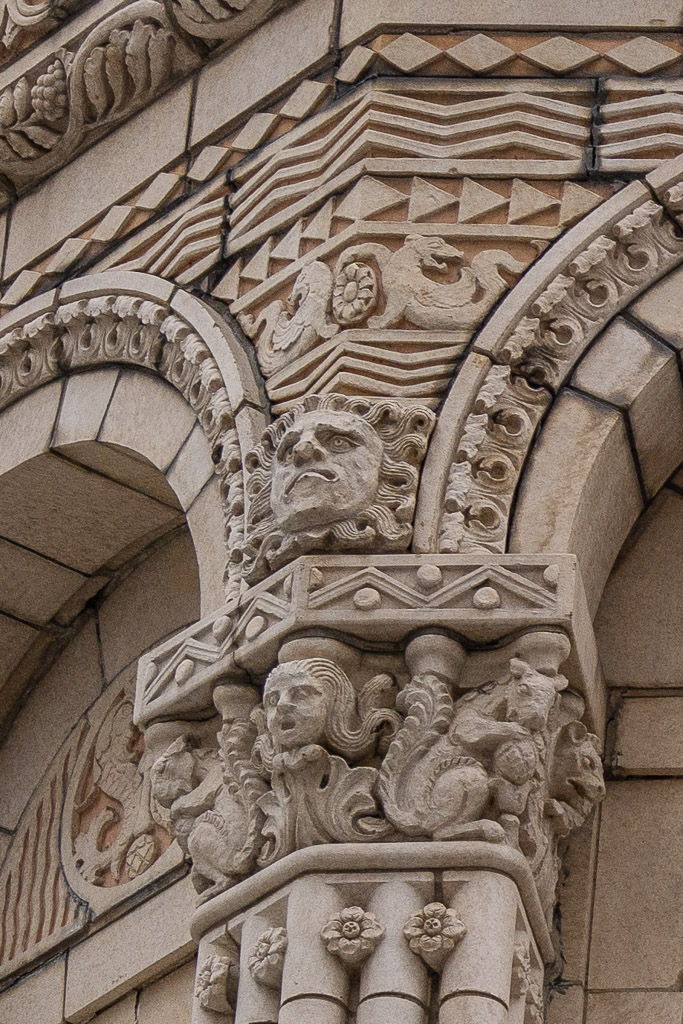
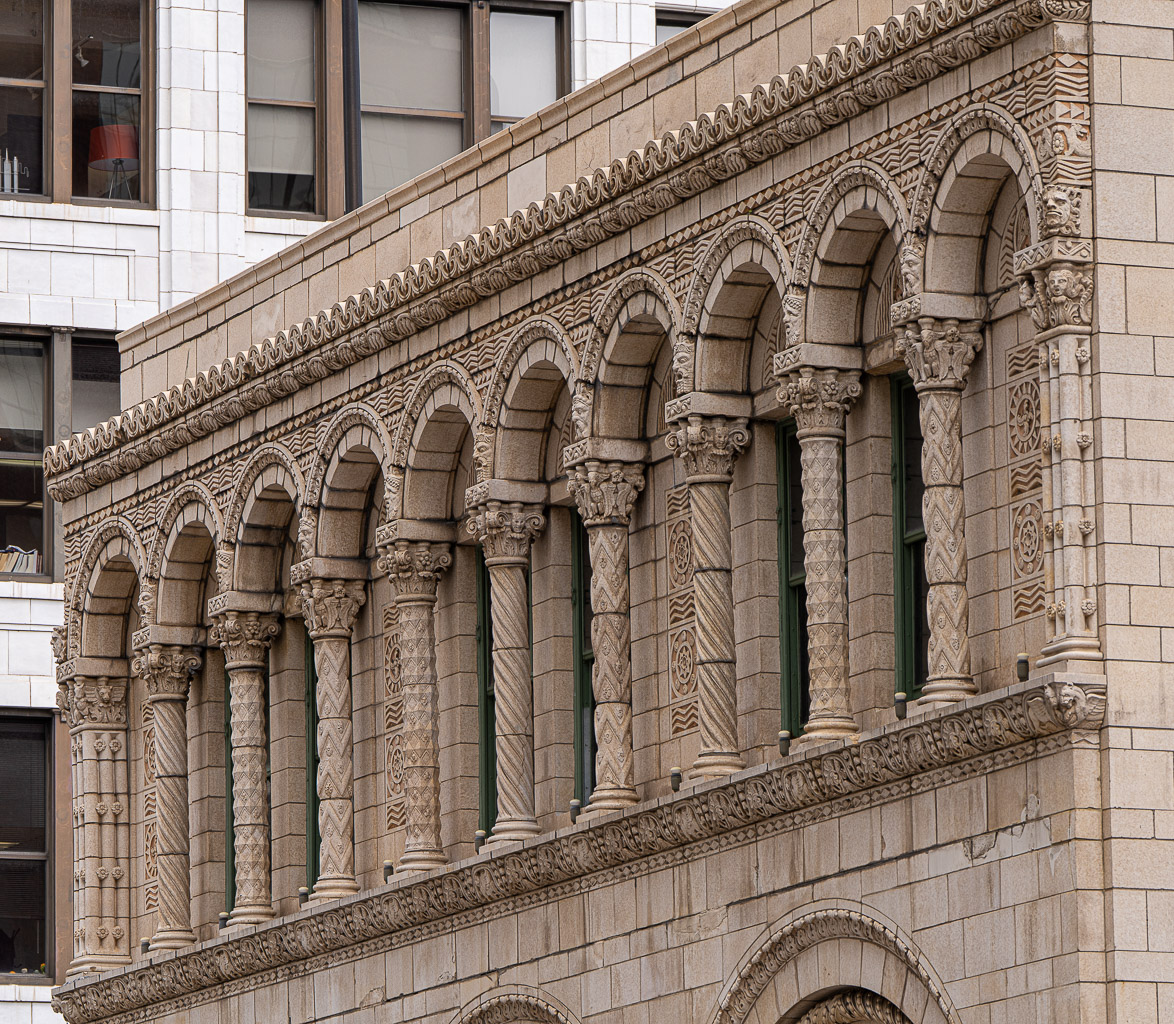
The interior has been rebuilt various times as uses changed from the bank to a brokerage, and then a McDonalds during the early 1990s. It is currently used as a nightclub and has recently (2026) been renamed as "Ora Detroit".
More photos and more description of this building can be found at HistoricDetroit.org.
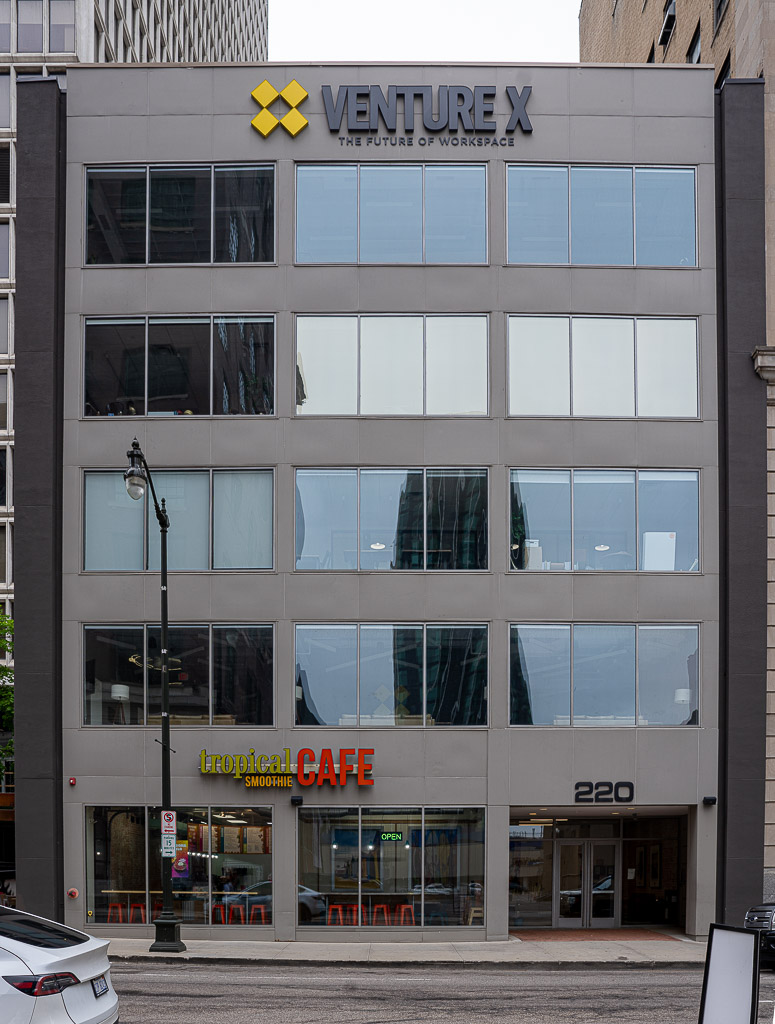
Noncontributing in its present exterior finish – Steel-frame five-story brick office building. Rectangular in plan, this former glove factory was completely refaced and renovated in the 1970s and no historic finishes are evident. Blue and cream-colored metal panels cover the street facades with dark plate glass windows aligned between the panels and a recessed entrance.
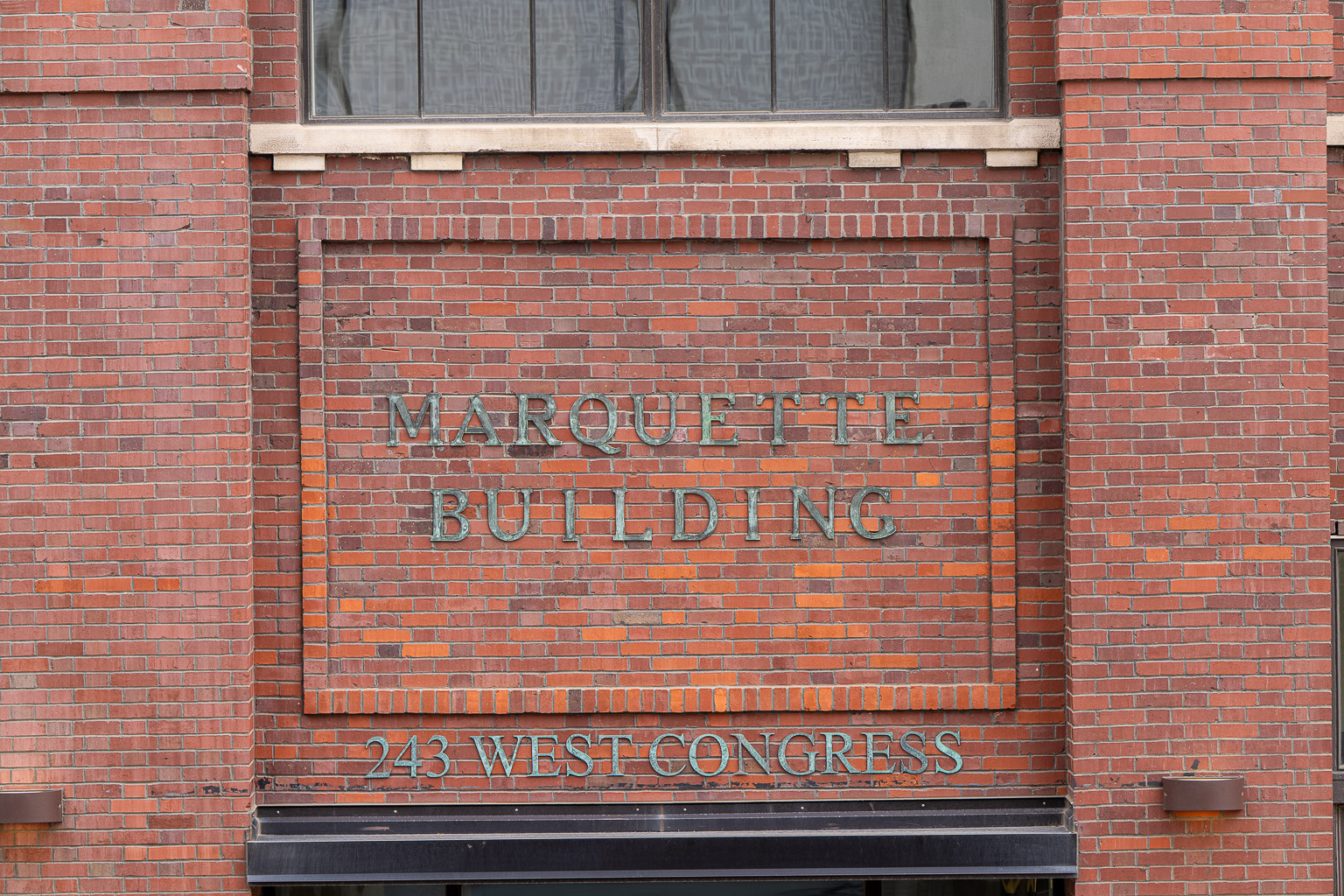
Steel-frame ten-story brick and terra cotta commercial office building. (1906, 1916). It fronts 150 feet on West Congress Street and 120 feet on Washington Blvd. Large windows on all four sides of the building allowed light and air for work purposes. The building is faced with red brick, and even retains its original first floor brickwork. A bulkhead of cast stone runs around the base of the building, and at the end of piers it is formed into column bases and plinths. A running band of beige terra cotta divides the second and third floors as well as the third and fourth floors. It is apparent that a running band or cornice was removed from between the eighth and ninth floors. The tenth-floor windows have round-arch heads and terra-cotta keystones. The windows are all two-over-two aluminum replacement windows. All the windows have a sill of white terra cotta. The cornice is a simple band of terra cotta. The roof is flat. Above the entrance doors on both the West Congress and Washington facades the name "Marquette Building" is applied in metal lettering.
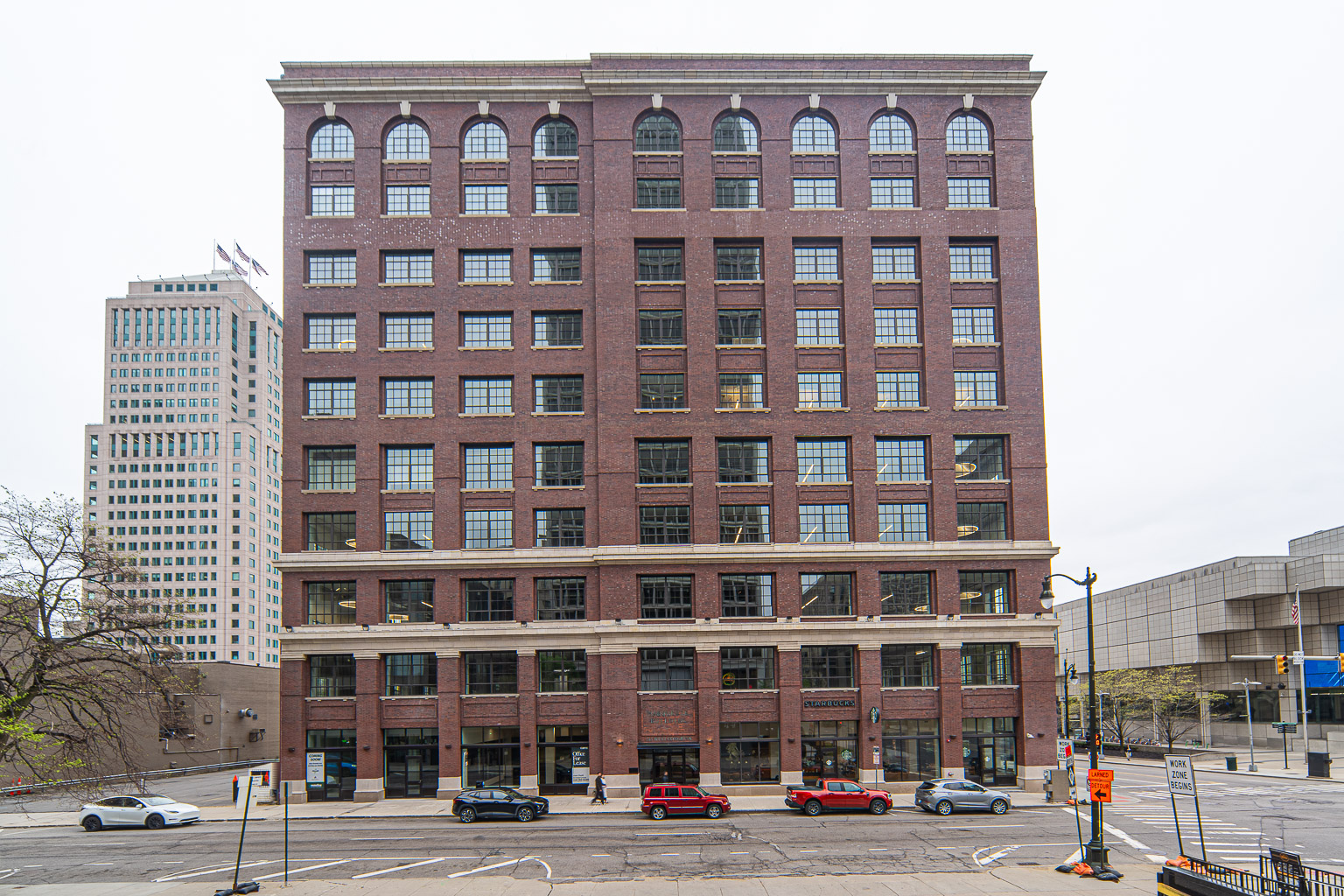
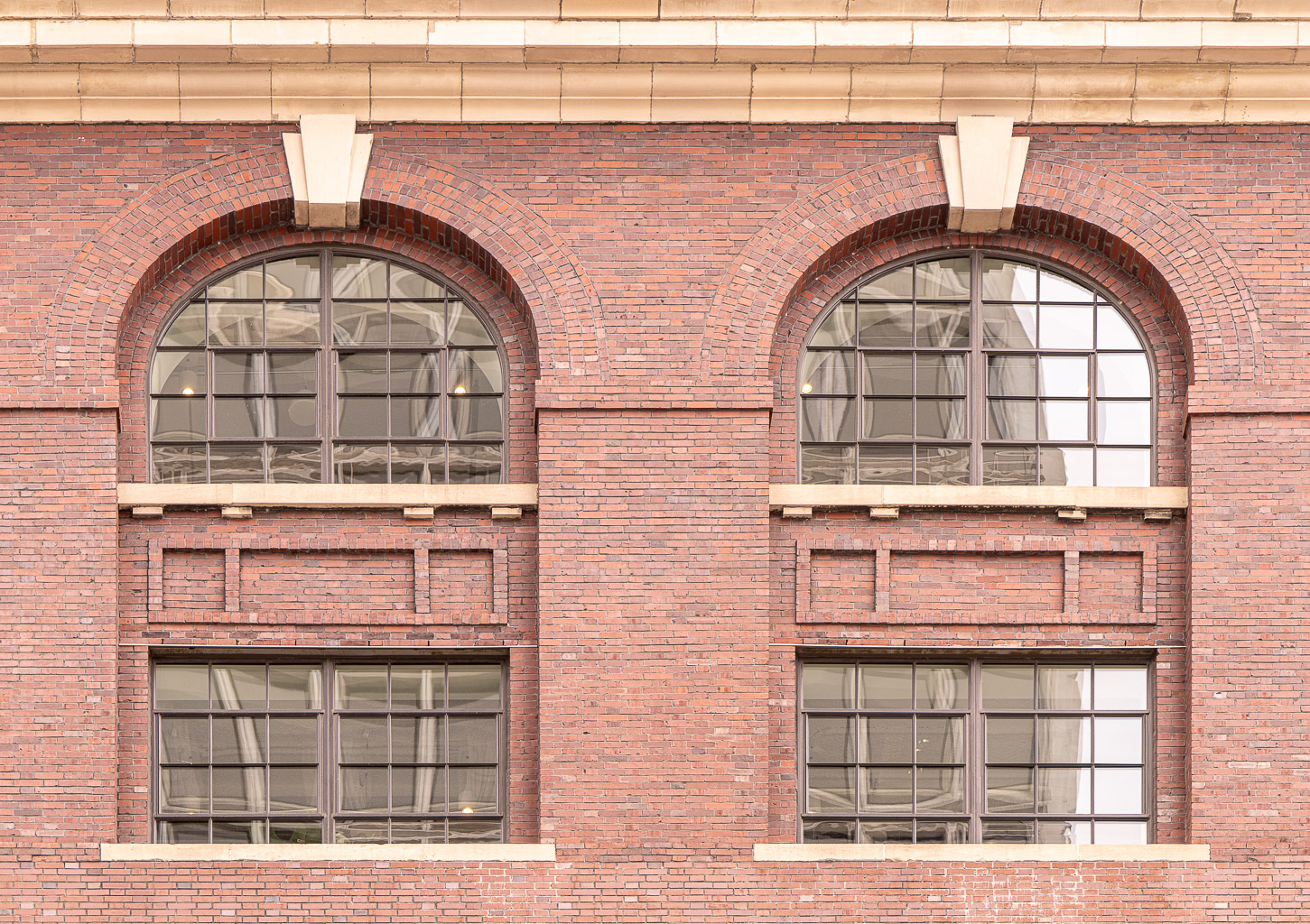
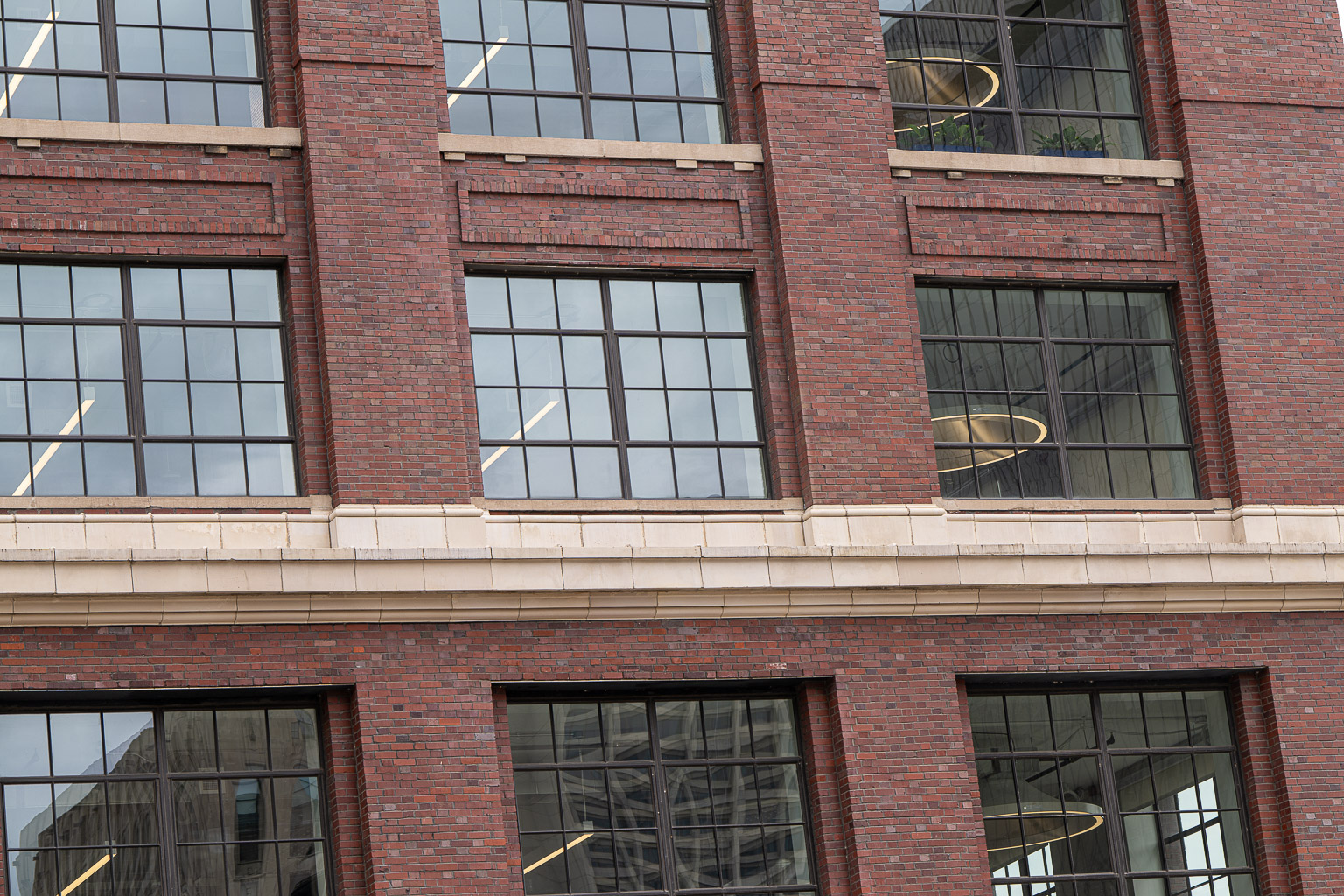
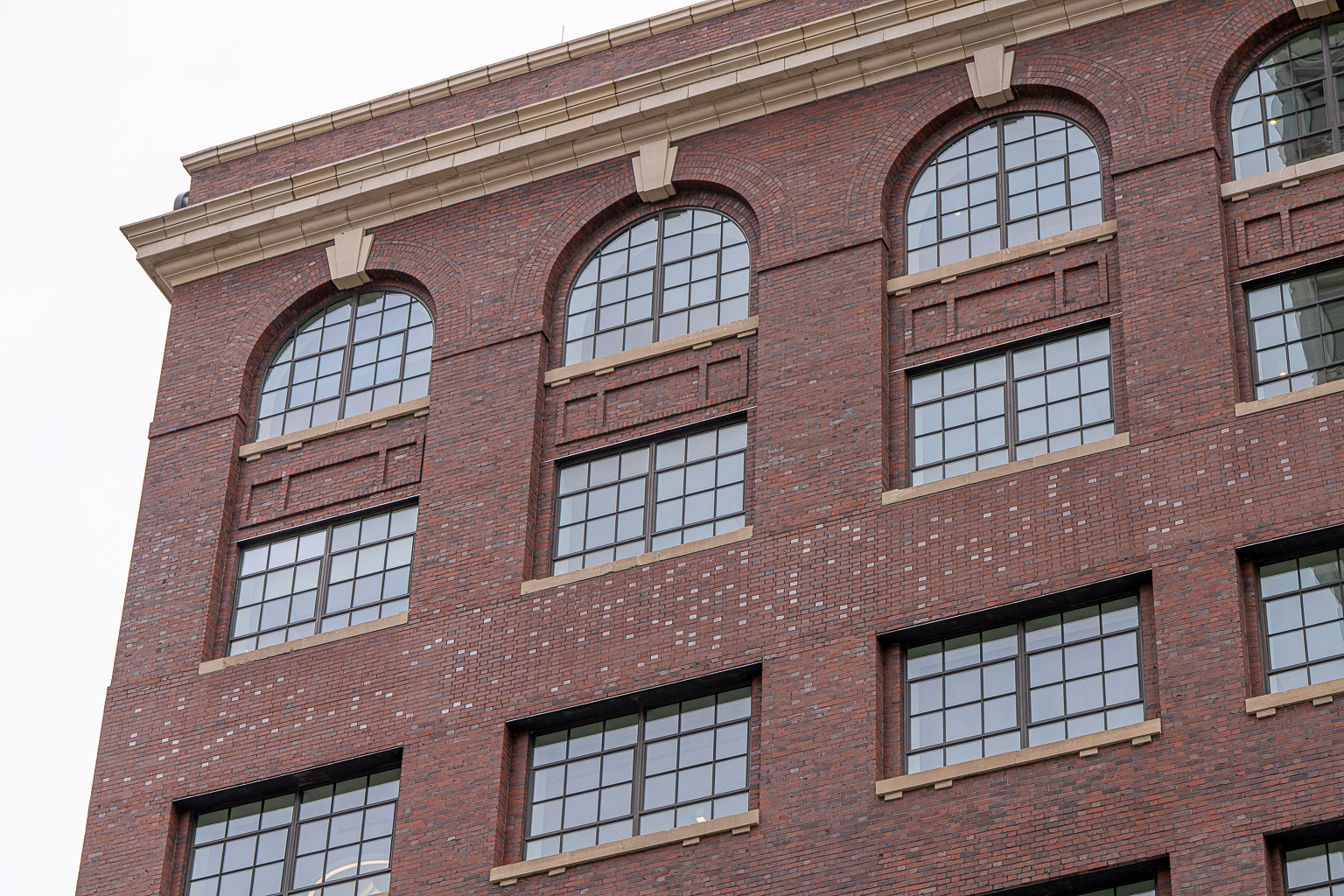
Like the 1903 Murphy Building to the east, this building was also built for the Simon J. Murphy interests and also initially bore the Murphy Power Building label. It was built in part to replace the 1903 building in providing electric power and steam heat to the nearby section of the downtown, since directories after 1907 list only it as housing the Murphy Power Company. The basement power plant also powered the Murphy Storage & Ice Company ice plant and cold storage – including a fur storage – that occupied part of the building. The Detroit Edison Company bought out the Murphy Power Company in 1914 and the storage and ice operation moved elsewhere and soon disappeared. With substantial renovations the building acquired the Marquette name about 1916. Although it was advertised in 1916 as offering space for small manufacturing operations, it soon became an office building. As built, the building displayed tall round-head windows in the first-second and fourth-fifth stories that may have fronted the spaces containing the generating equipment. A tall smokestack rose along the alley side. As part of the c. 1916 renovations large square-head windows in each story replaced the round-arch ones.
More photos and more description of this building can be found at HistoricDetroit.org.
Steel-frame thirteen-story brick, limestone and terra cotta building (1905-06). Donaldson and Meier, architects. The first of three Penobscot Buildings, this Renaissance-inspired office building has a frontage of 100 feet on West Fort Street, and originally only extended back one hundred feet to the alley behind it. In 1916 it was joined to an addition – the New Penobscot Building directly behind (south) that faces West Congress Street. In 1928 the third and final addition accessed the original building from a staircase on the eastern property line. The first three stories of the building's front are faced in a rusticated limestone and the seven stories above in red brick. The upper three stories are faced in cream-colored terra cotta. The facade is divided into five bays of paired double-hung windows. The eleventh and twelfth story facades are slightly recessed behind Corinthian column-detailed piers that separate the bays. The twelfth-story windows are round-arched and display corbel keystones flanked by swag details. The thirteenth or attic story is punctured by deeply recessed paired windows. The original cornice is intact. The building has a flat roof. The west side facade of the building is faced in yellow brick, and an undulating facade allows for corner offices with windows on two walls. The windows are the original wood frame double hung.
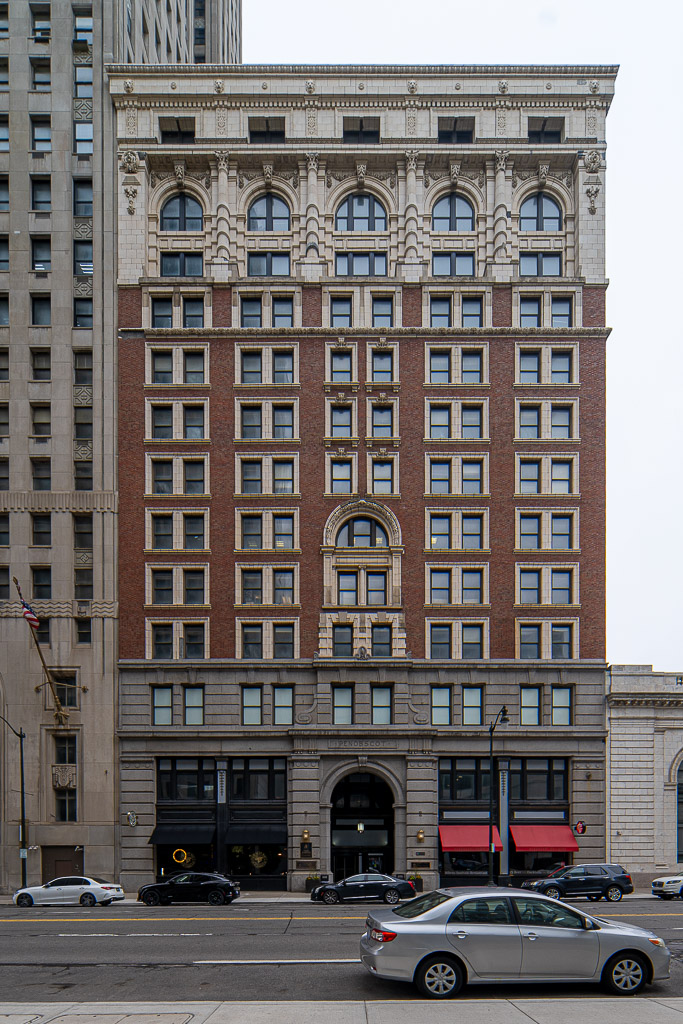
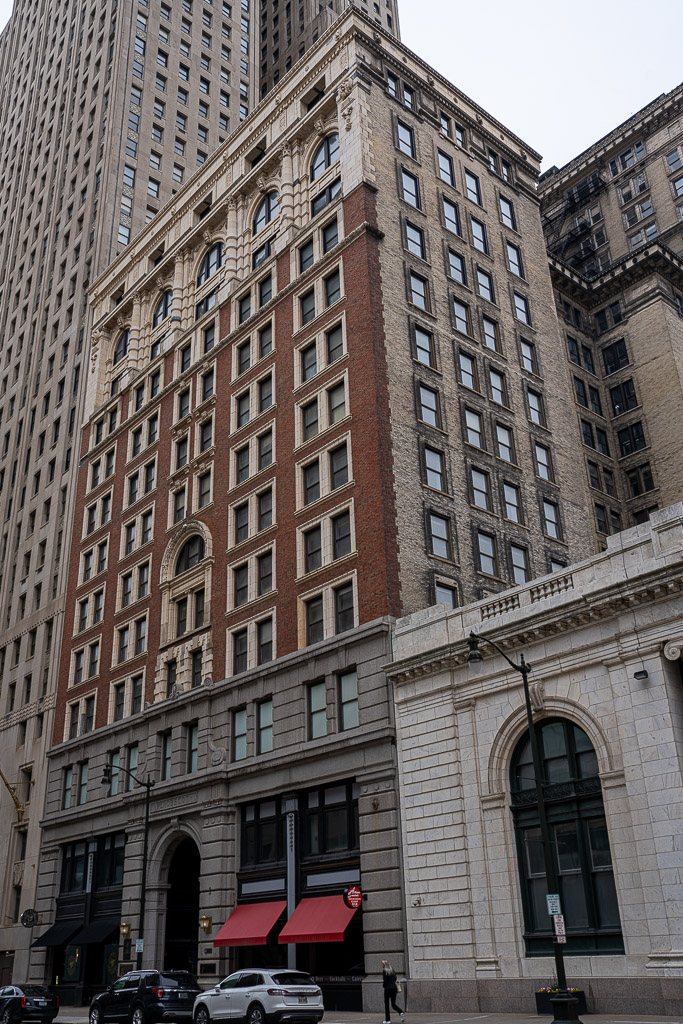
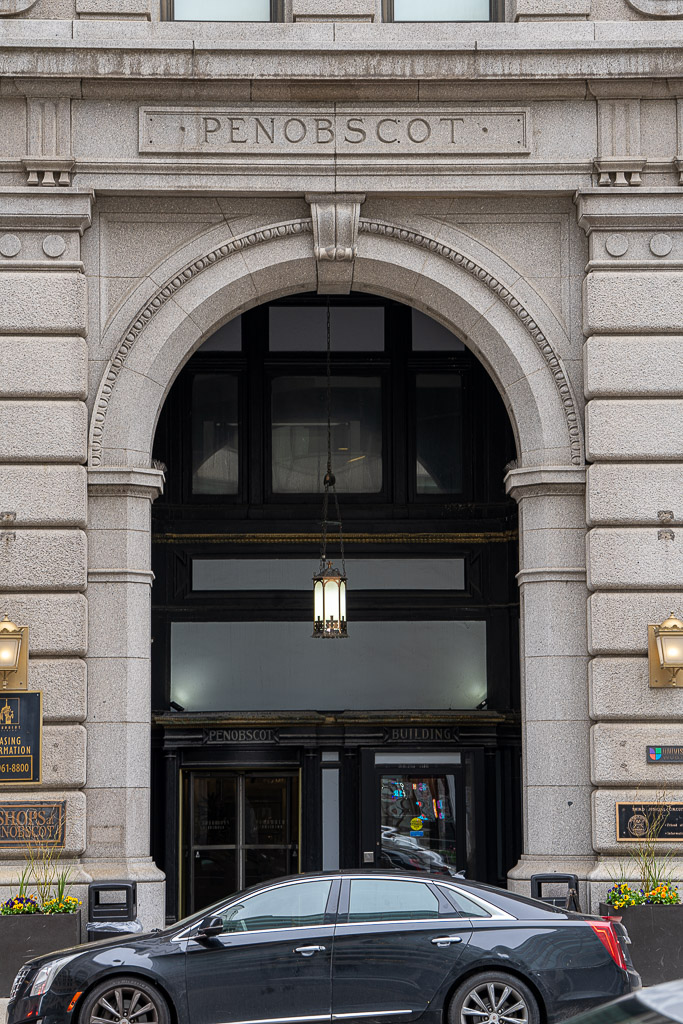
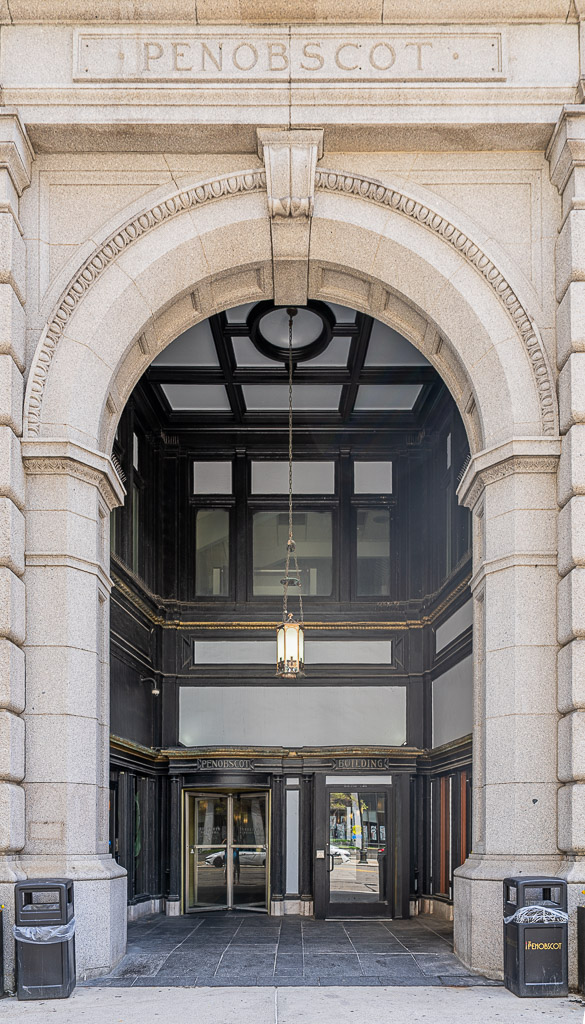
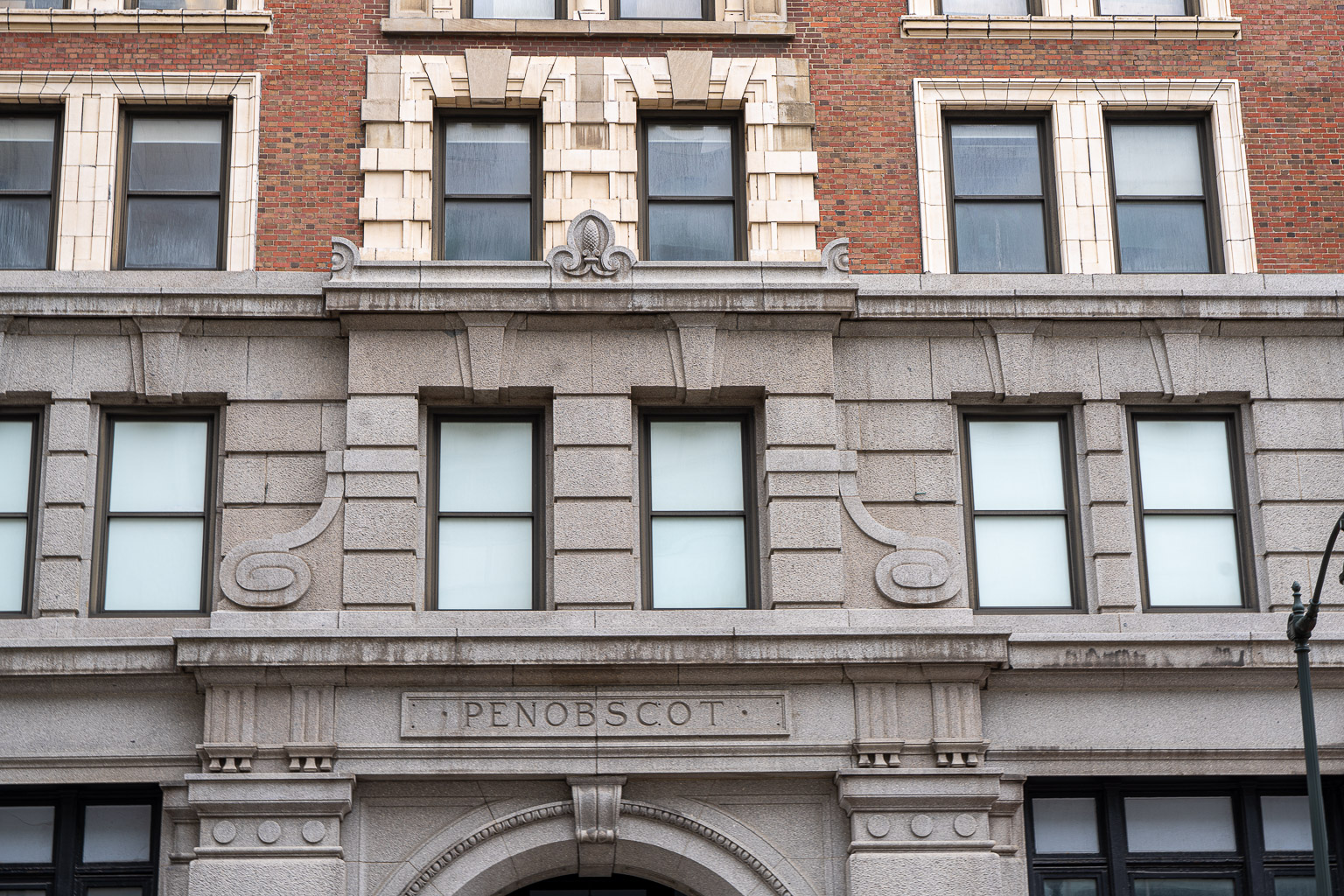
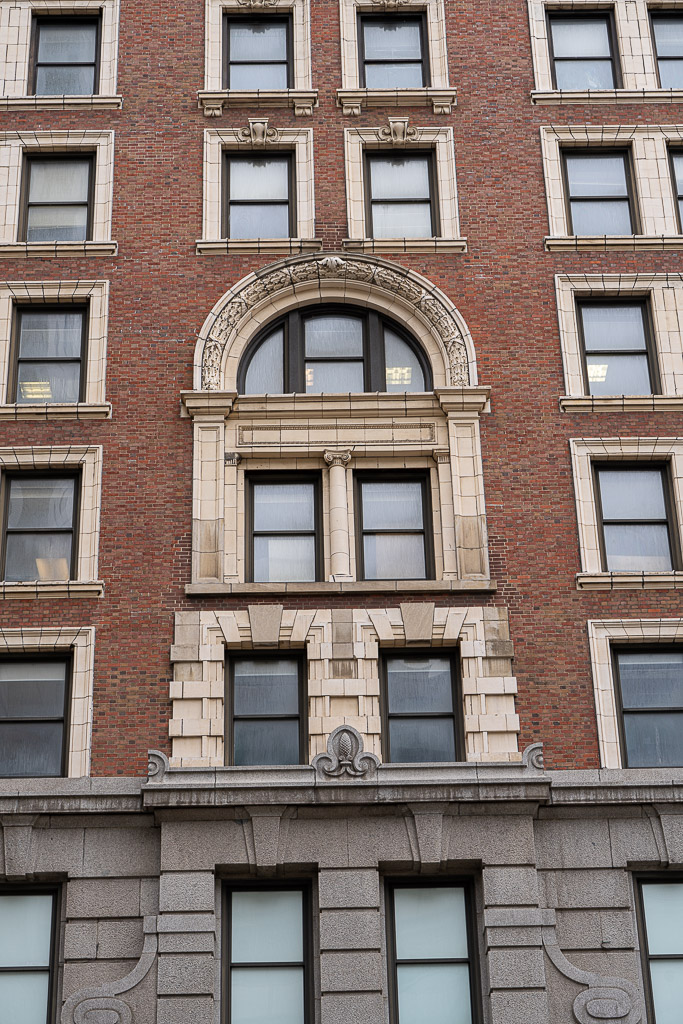
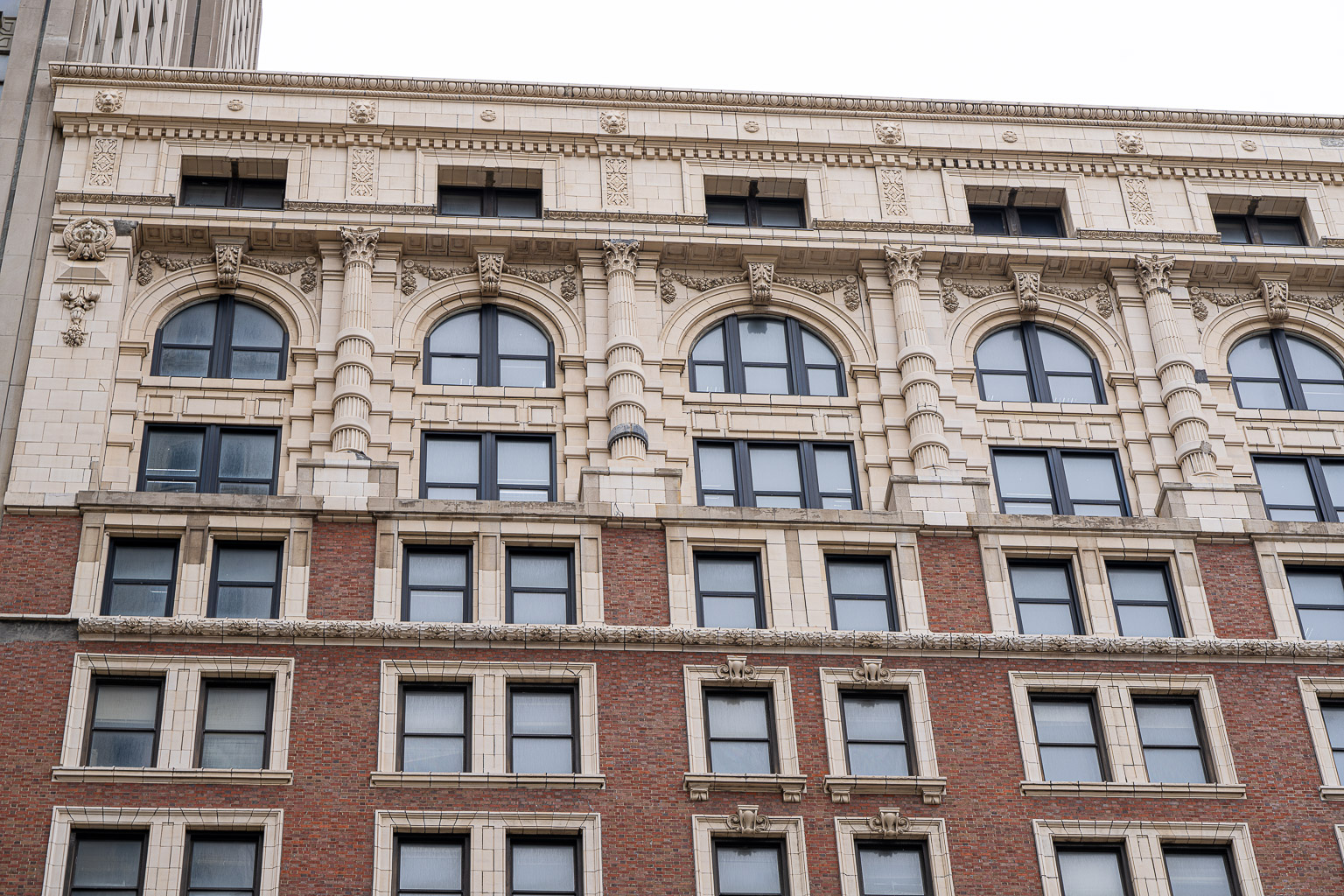
This and the subsequent two buildings also bearing the Penobscot name were all built for the Simon J. Murphy interests. Upon the building's 1906 completion, the Detroit Savings Bank occupied the first floor's west half, the Detroit Trust Company the east half.
Built in 1905 by William H. Murphy, the building was named by Murphy's father for the Penobscot River in his home state of Maine. This is an attractive building, with subtle ornamentation, handsome red brick, and a well-balanced design. It looks cheerful and welcoming, in contrast to the drab and heavy Greater Penobscot Building to its left. The building was designed by the Detroit architectural firm of Donaldson and Meier, founded in 1880 by John Donaldson (1854–1941) and Henry J. Meier (died 1917). In 1913, the firm designed a second Penobscot Building for Murphy - The Penobscot Annex, aka New Penobscot Building - on Congress Street, abutting this building to the rear across the alley.
More photos and more description of this building can be found at HistoricDetroit.org.
Steel frame, two-and-a-half-story Neoclassical bank building faced in white marble (1900, 1914). 1900 half fronting on West Fort designed by McKim, Mead & White; 1914 rear addition south to West Congress designed by Donaldson & Meier. National Register of Historic Places, State of Michigan Historic Marker, City of Detroit Historic District. This is the only Michigan building designed by McKim, Mead & White. The West Fort Street facade is divided into three bays, the two side bays featuring tall rounded arches. The center bay's recessed entrance is marked by two fluted Ionic columns. The classical cornice is topped by a central cartouche flanked by two female figures labelled as Industry and Commerce. The spacious interior is well-lit due to a broad west-facing arcade of bronze framed windows. The 1914 addition is so faithful in design to the original that it is difficult to detect where it begins. The building shares its eastern property line with the 1905 and 1916 Penobscot Buildings. The West Congress Street facade is also divided into three bays, with one for the center entrance. However, the entrance is a simple recessed street-level doorway, and the bronze frame windows above are flanked by pilasters. The building has a double hipped roof. At a mid-century date, a second-story pedestrian bridge was installed over Shelby Street connecting the State Savings Bank building to the building at 607 Shelby. A State of Michigan historic marker is displayed on the Shelby Street facade.
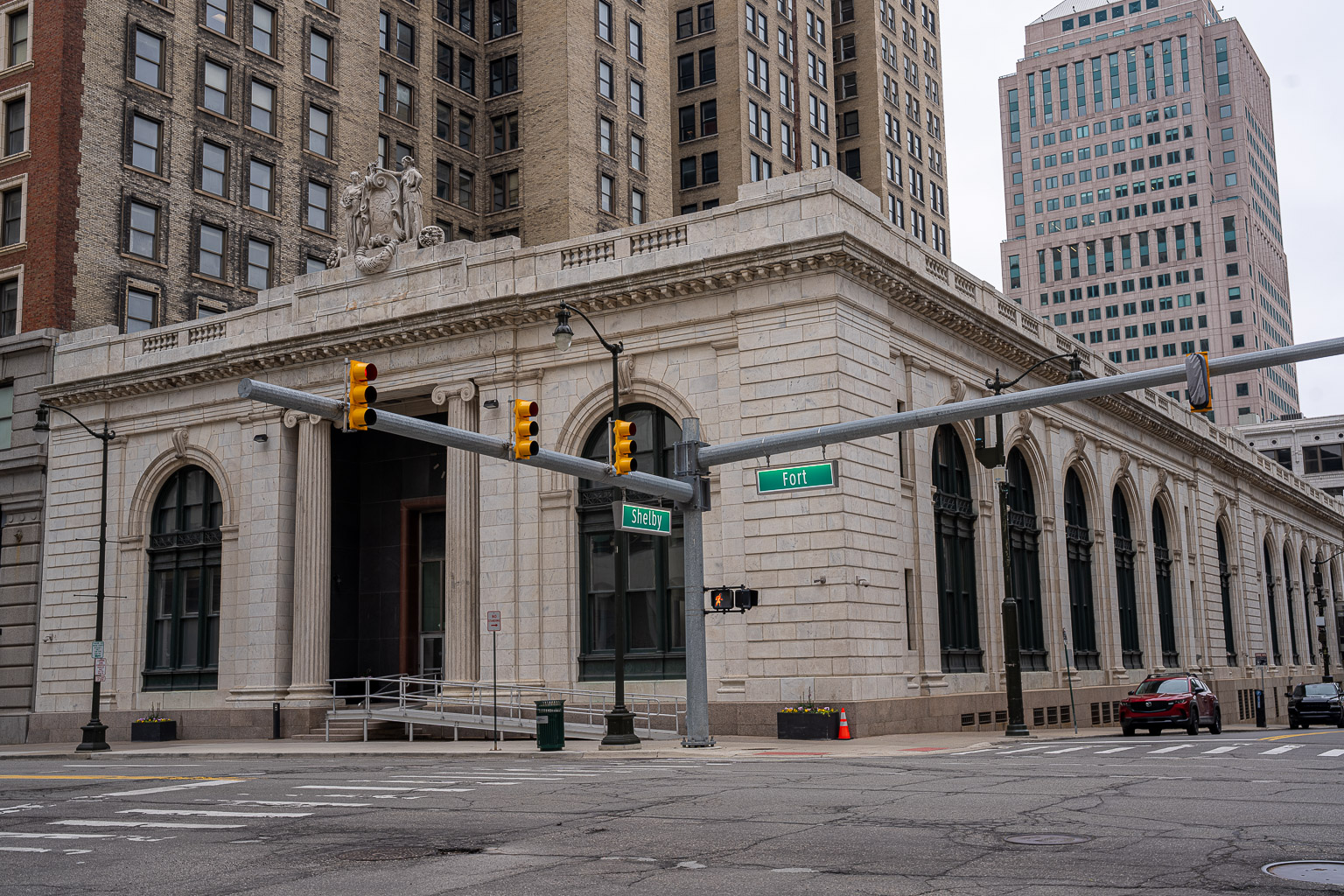
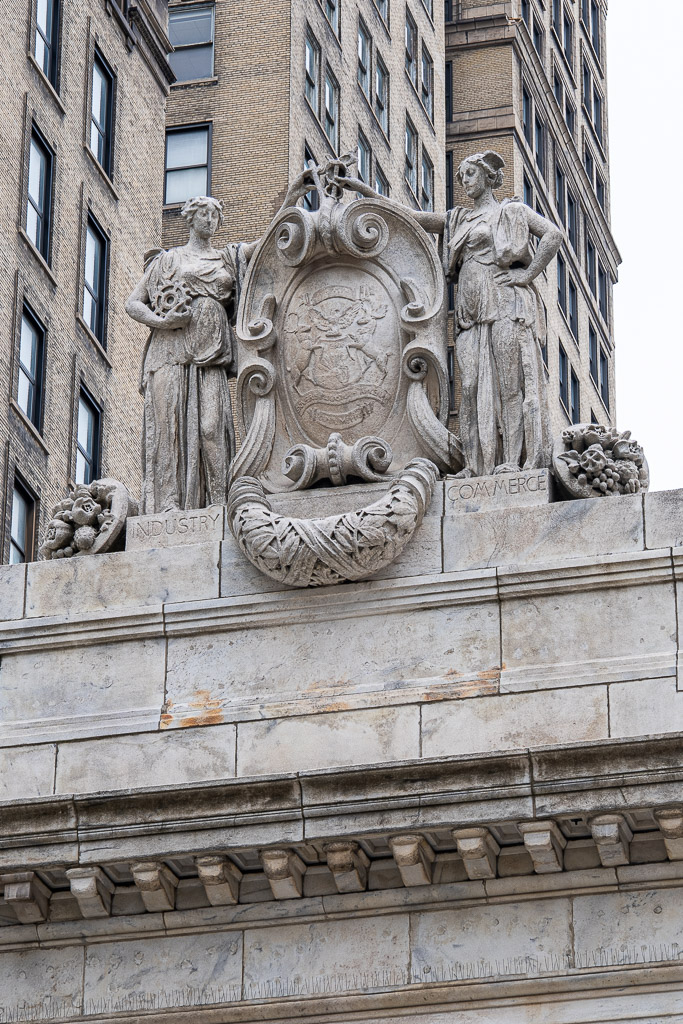
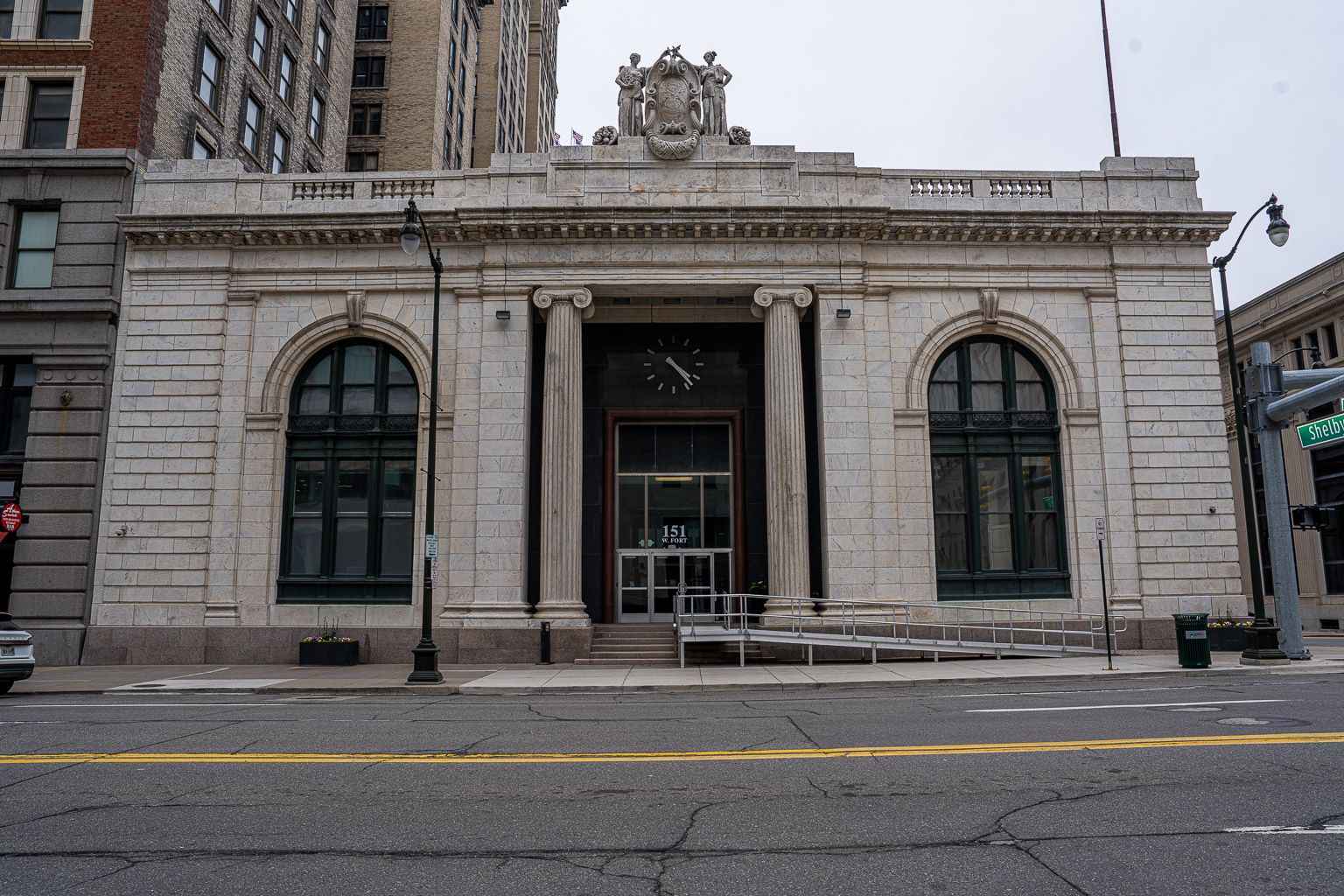
The State Savings Bank was established in 1883 by Kentucky capitalists David Hamilton and T. S. Anderson. In 1907 it merged into the Peoples State Savings Bank, established in 1872 by Francis Palms and other Detroit investors. Peoples failed in 1933 and the building stood empty until 1944 when the Manufacturers National Bank of Detroit occupied the building. Manufacturers moved out in 1977. Since then the building has housed commercial and office operations until opening as an event space in the early 2020s.
More photos and more description of this building can be found at HistoricDetroit.org.
Comprised of two attached and interconnected steel-frame structures: a three-and one-half-story marble-faced Neoclassical bank building standing at the Shelby corner and an eight-story International Style Annex extending east along West Fort (1926-27, 1949-51, 1951-53). Graham, Anderson, Probst and White, architects for 1926-27 building; Minoru Yamasaki, architect for 1949-51 expansion and 1951-53 renovation of 1926-27 building. National Register of Historic Places. The original building stands on the sidewalk line at the Fort/Shelby intersection, and the front of the eight-story Annex is set back from the front of the 1926 building behind a thirty-foot deep landscaped plaza. The Annex is an International Style curtain wall structure faced with alternating horizontal bands of tinted green glass and white marble panels supported by a stainless steel grid. The Annex contains the first-floor entrance to the banking area and office lobby. A plaza and raised planting beds in front of the Annex were planned to provide rare green space downtown. The floor plates of the two buildings are aligned, the original building's interior having been gutted and converted to three stories to align with the floor plan of the Annex when the Annex was built. The fourth floor of the original building was completely demolished and a penthouse atop it projecting from the Annex provides space for a cafeteria, meeting rooms and a terrace. Both buildings have flat roofs.
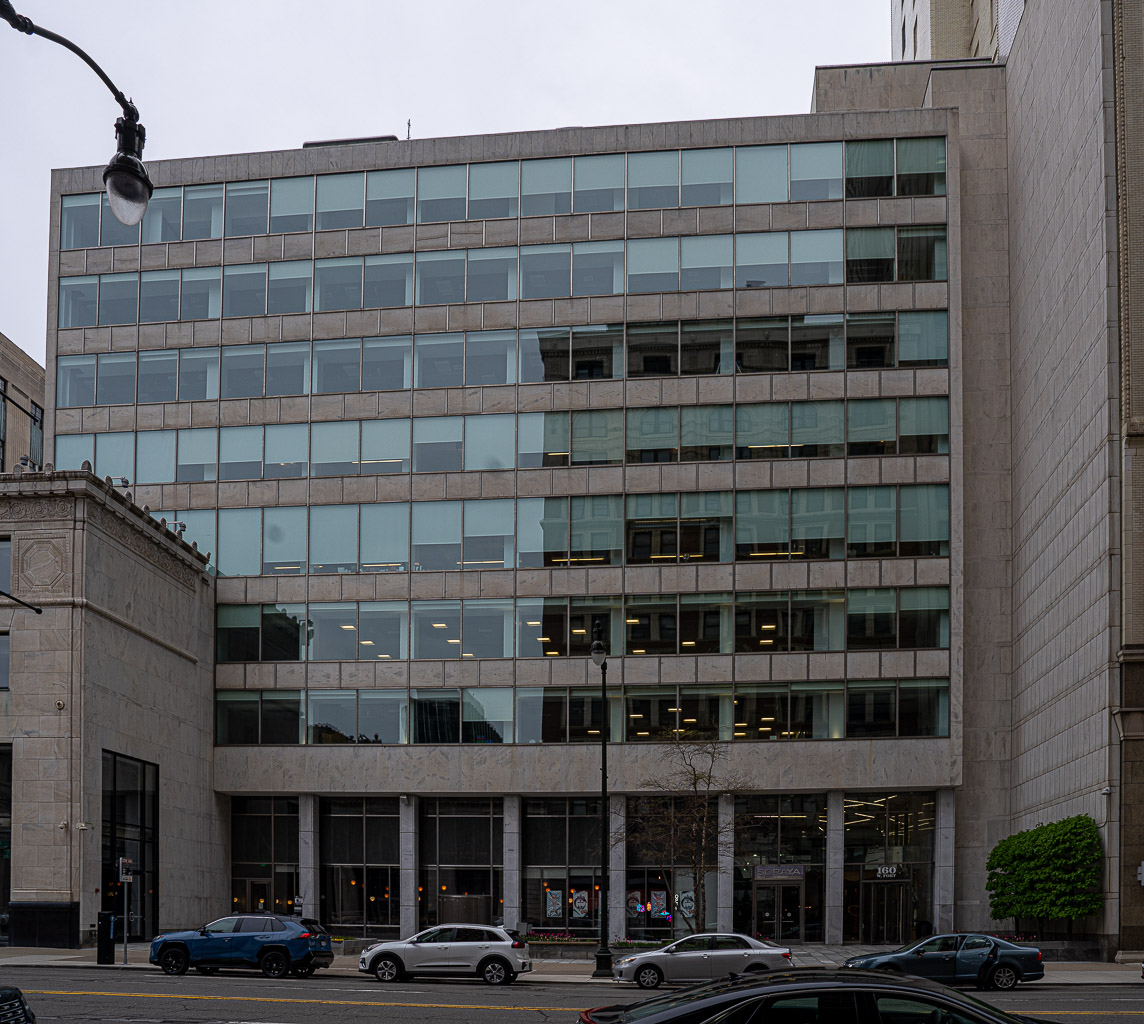
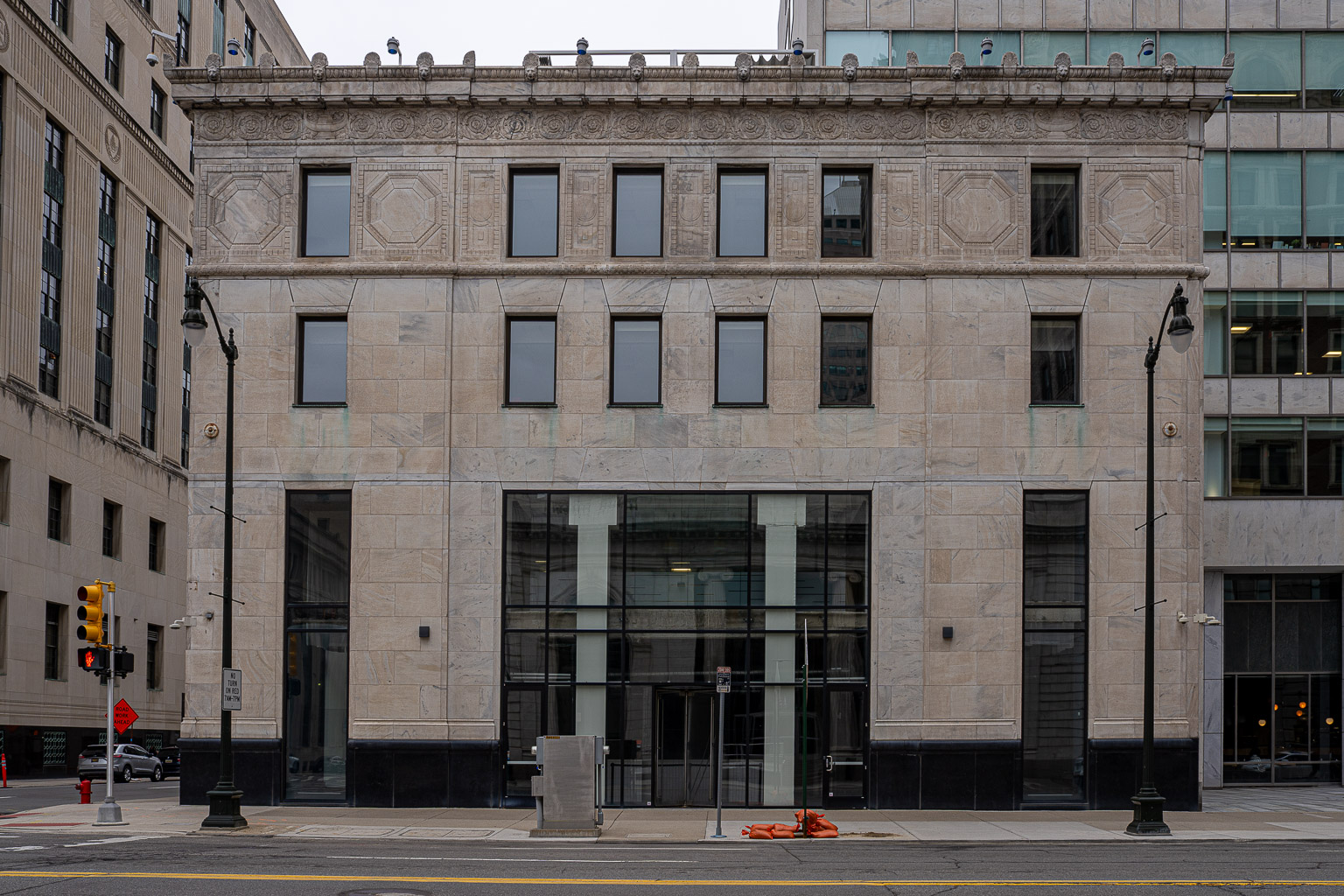
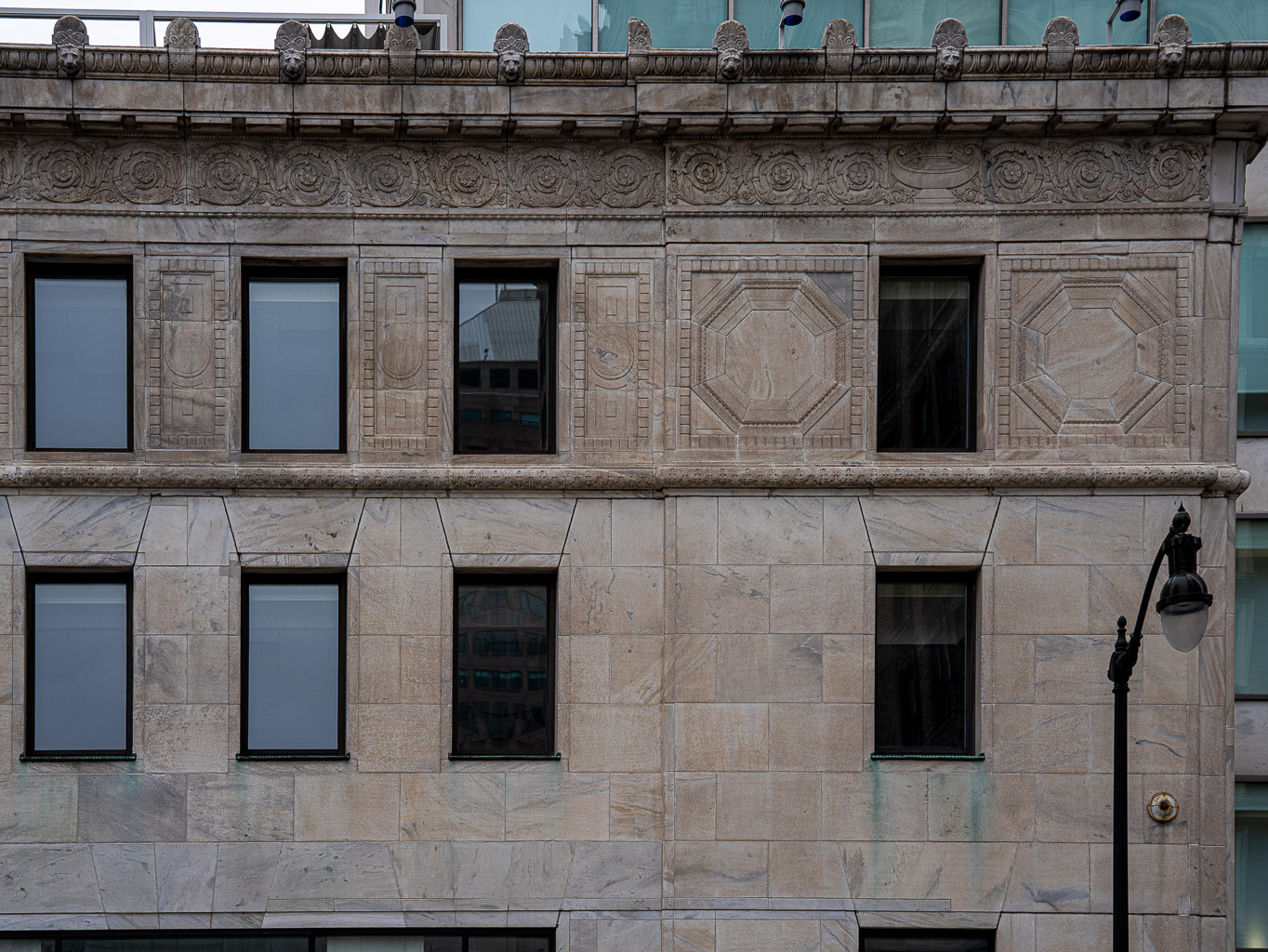
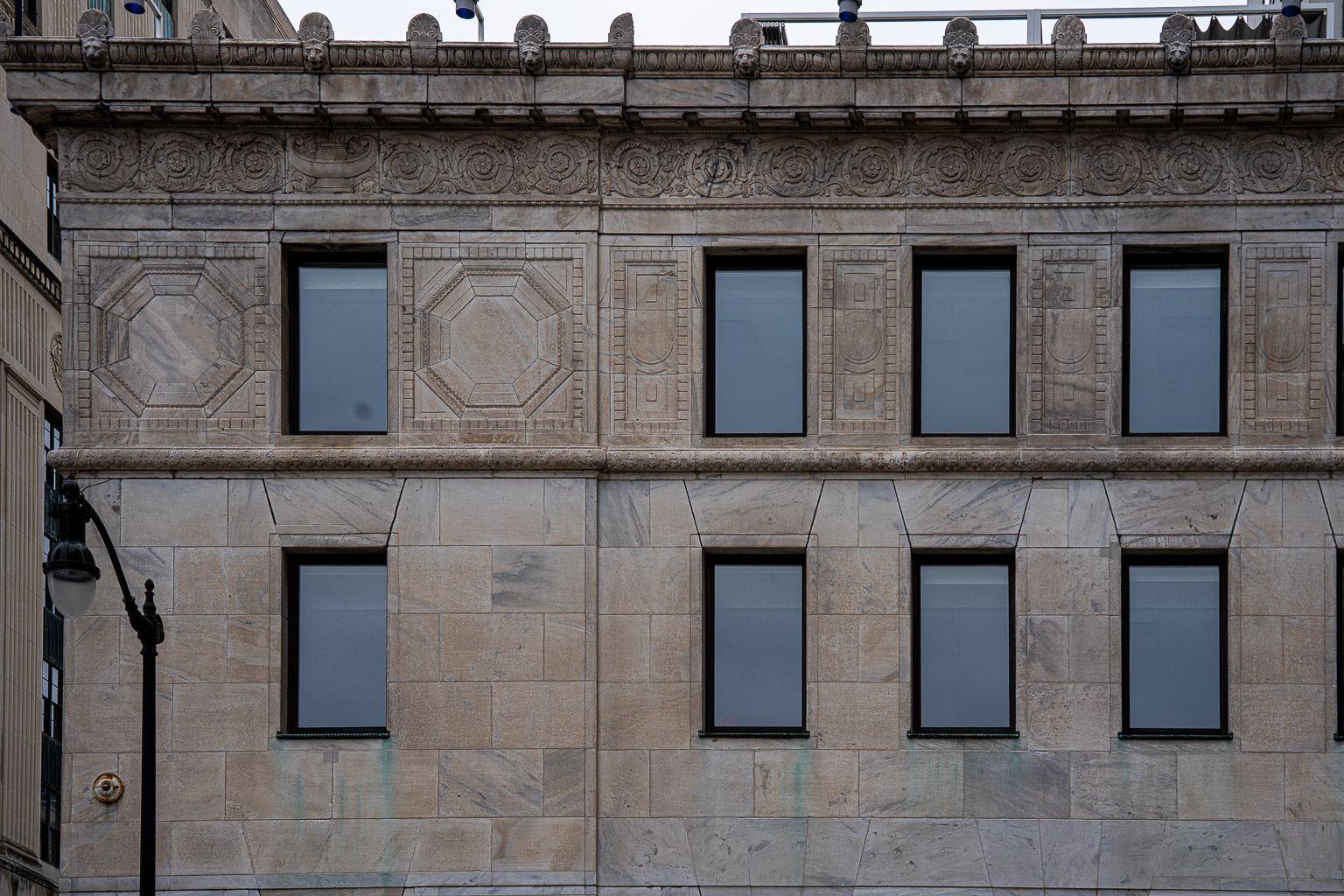
More photos and more description of this building can be found at HistoricDetroit.org.
Steel-frame two-and-a-half-story bank building faced in limestone (1915, 1925-26, 1964). Albert Kahn, Inc., architect. The original bank building, constructed in 1915, occupied a site at the corner of Shelby and West Fort Street. Ten years later, the same architect, Albert Kahn, was hired to greatly expand the building, adding one hundred feet (two-thirds of the present West Fort Street frontage) to the west. The Neoclassical building features slightly projecting end units flanking a broader recessed central section, each part below a one-story attic fronted by a shallow portico displaying massive fluted Corinthian columns between matching piers – two columns in the end sections and four in the central. A full attic story with plaques of foliated details set between paired windows and an upper cornice and setback parapet wall tops the facade. The building was thoroughly modernized in 1964 when the Detroit Bank and Trust expanded into the new 211 West Fort tower next door (the two buildings are connected by an enclosed hallway near West Fort Street). The front between the columns was rebuilt with the original bronze windows and spandrel panels replaced with dark brown plate glass held in place by steel frames and the original doors replaced with new steel frame revolving doors. The building occupies part of the site of Fort Shelby, and on its Shelby Street facade is displayed a State of Michigan historic marker describing Fort Shelby's history.
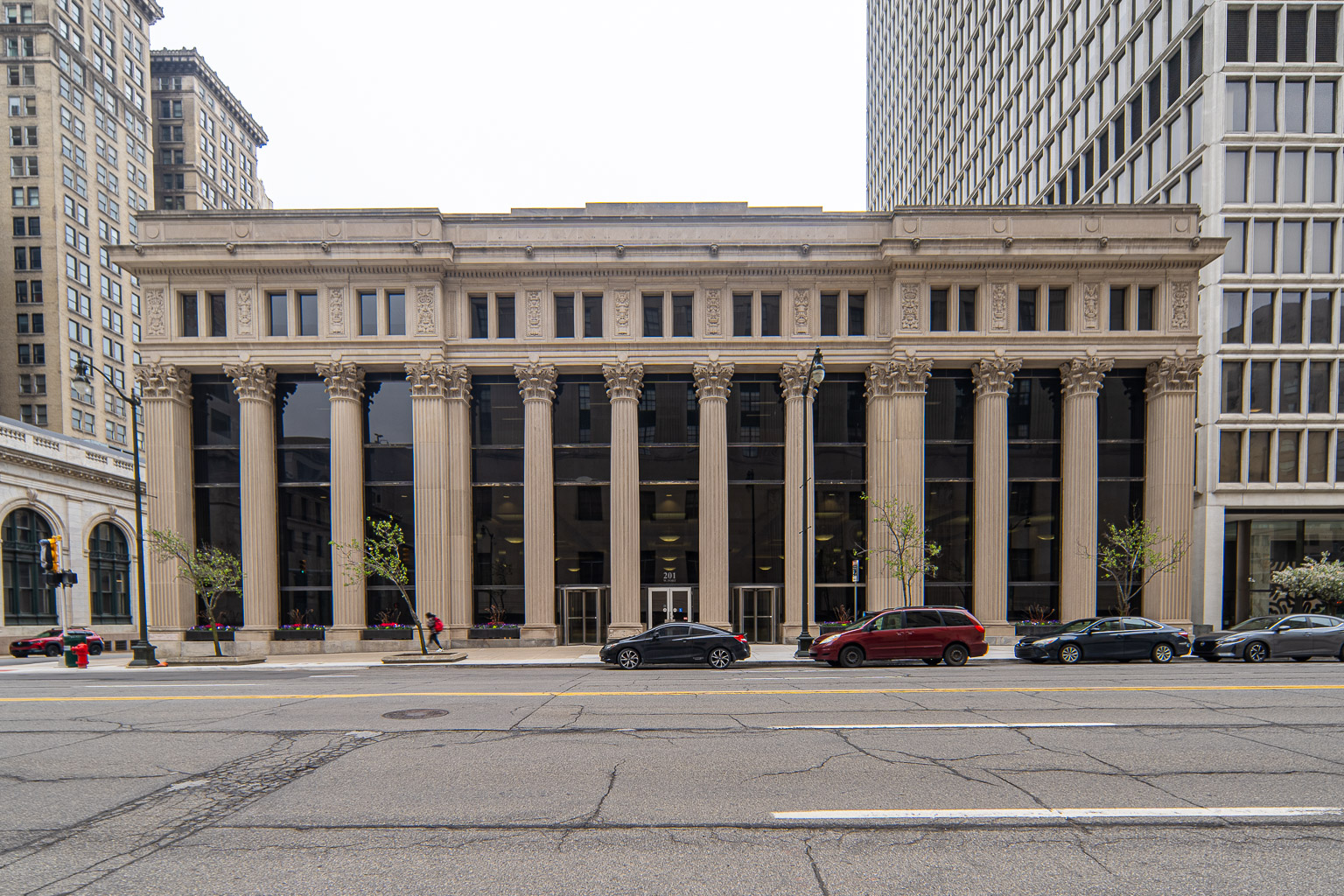
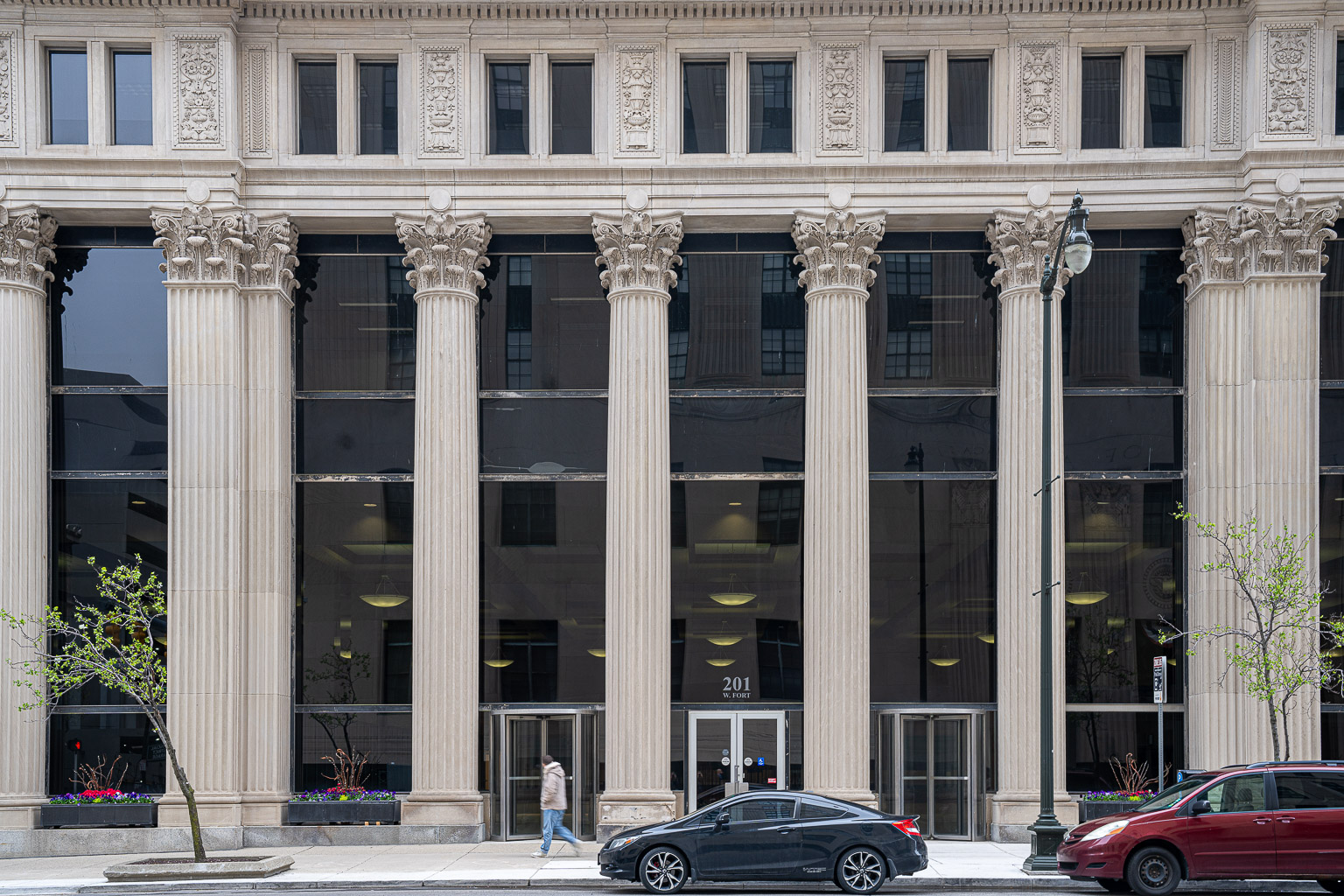
The Detroit Trust Company was established in 1900. Its first board of directors contained prominent businessmen from around the state including Theodore De Long Buhl, Ammi W. Wright, James E. Davidson, and lumbermen Henry Stephens, Rasmus Hanson, Frank W. Eddy, and John H. Avery. The firm moved into the corner unit of this building from the nearby first Penobscot Building in 1915 and expanded it in 1925-26. The bank merged with the Detroit Bank (former Detroit Savings Bank) in the 1950s to form the Detroit Bank & Trust Company When the bank occupied the lower floors in the new building at 211 W. Fort, they kept this building as banking quarters but modernized it. It remains an office of Comerica (the bank's name changed from Detroit Bank & Trust in 1982).
Steel frame twenty-eight story skyscraper (1963-64). Harley, Ellington, Cowin & Stirton, Inc., architects. This very large building fills the rectangular west half of a block bounded by West Fort on the north, Washington Blvd. on the west, and West Congress on the south. A box in form, it is faced with precast concrete frames outlining floor-to-ceiling plate glass windows that give a grid pattern to the building facades. The ground floor is set back beneath an arcade at ground level and the top of the building displays a two-story tall mechanical housing that fills out the box form. The building has a flat roof. The building is set back from West Fort Street to provide space for raised planting beds. The building connects to the historic Detroit Trust Company building at 201 West Fort Street.
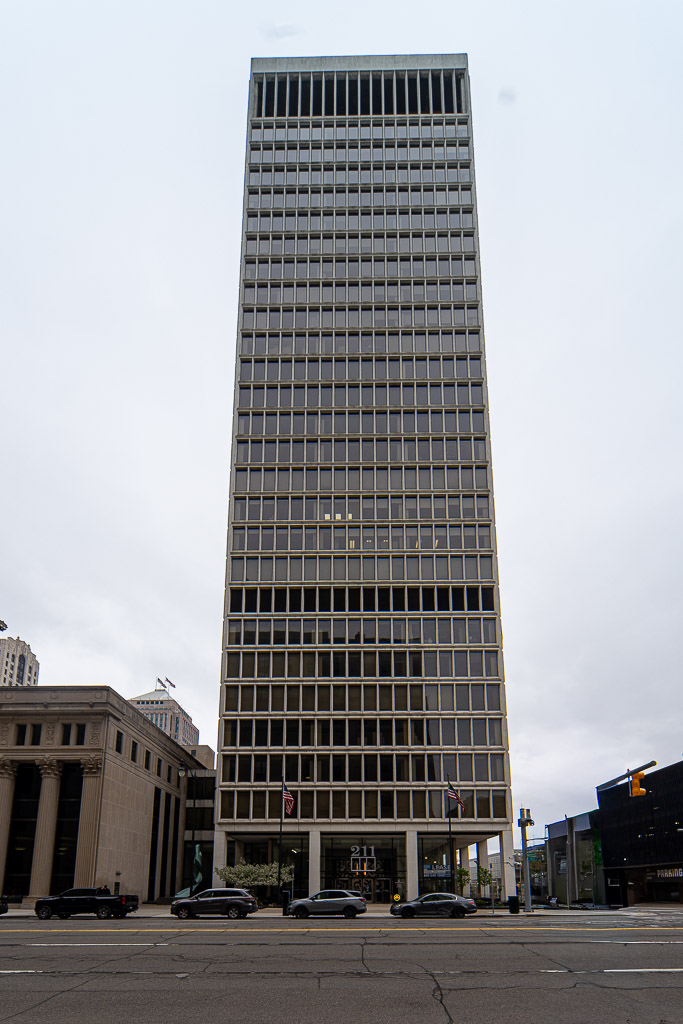
Detroit Bank & Trust occupied the lower floors of this building as its headquarters from 1964 until the early 1990s.
Steel-frame eight-and-a-half-story Neoclassical office building sheathed in limestone (1930). Corrado G. Parducci, sculptor. This structure fills the lot line at Griswold and West Jefferson's northwest corner. Originally built for the Standard Savings Bank, this building stands on a historic site documented by a historical marker as the site of Detroit's founding and the location of the first Ste. Anne's Church in 1701 – the city and Detroit's oldest church both founded by French explorer Antoine Cadillac. The building's windows are arranged in a grid pattern, five bays on the Griswold facade and twelve on the West Jefferson facade. The original windows have been replaced with single pane aluminum windows. The first floor lobby is a story-and-a-half tall, creating a pedestal for the building. On each side of the recessed main entrance door on Griswold, a black granite fluted Doric column stands to designate the entrance. The door is protected by original decorative metal gates, and a matching metal grill covers the transom window above the door. A two-sided chrome corner clock was added to the building in the middle of the century. The roof is flat. On the roof of the building is signage for the previous tenant, the Raymond James brokerage.
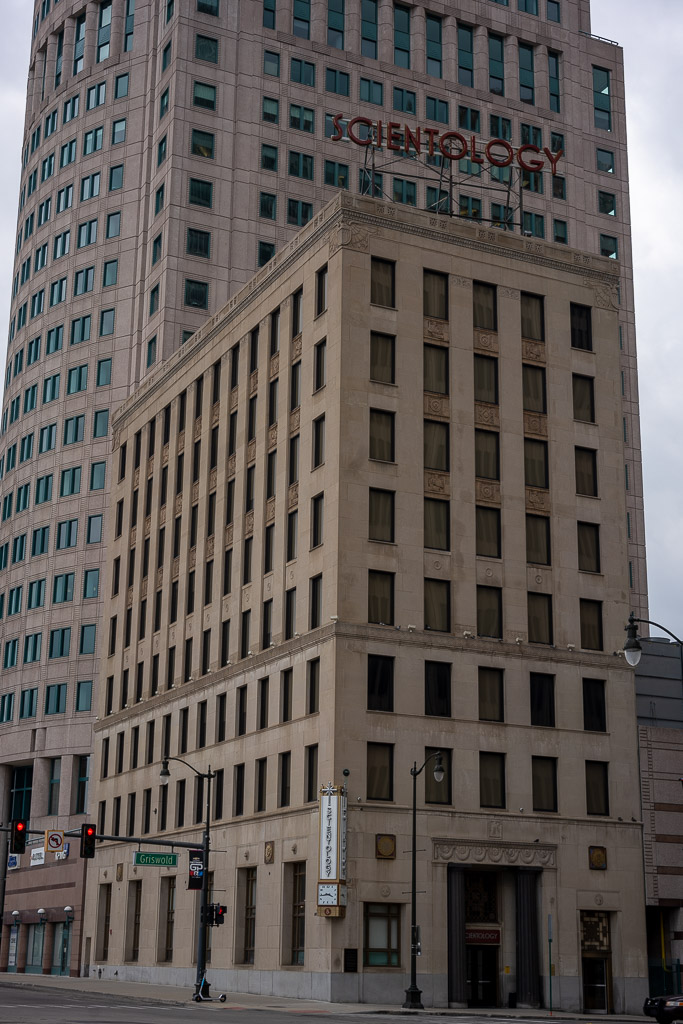
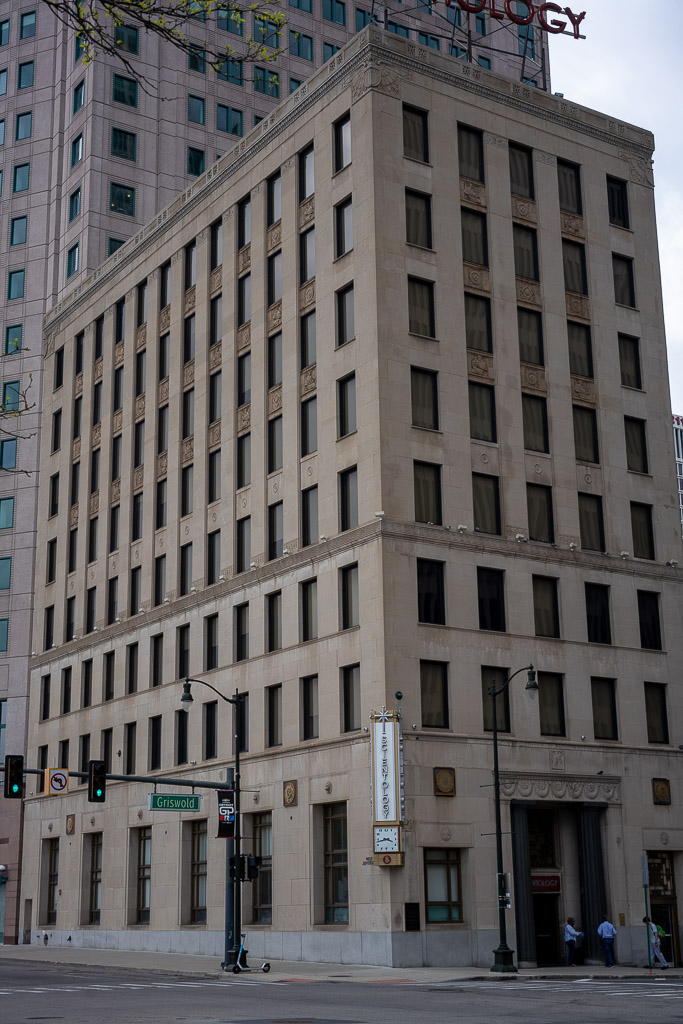
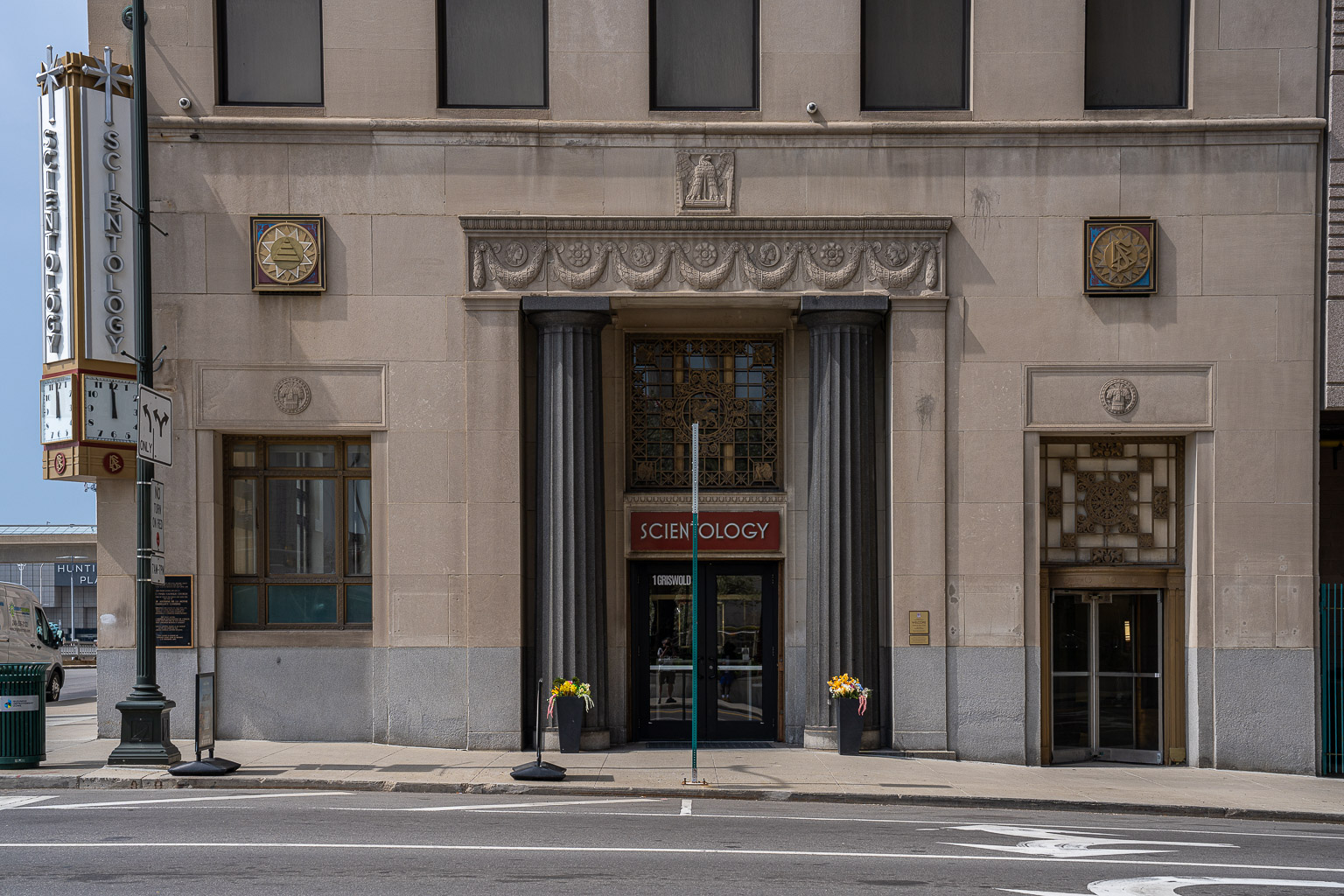
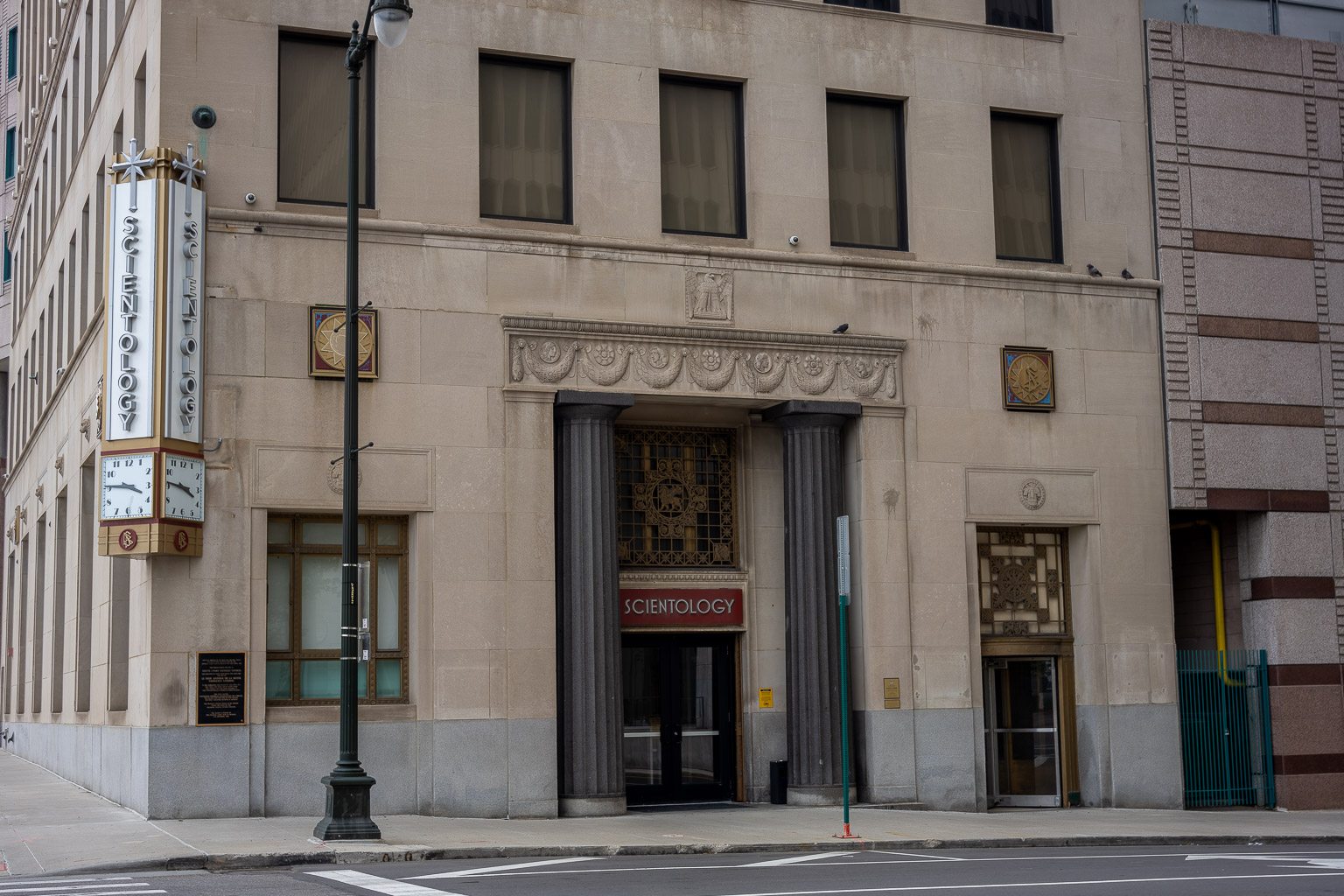
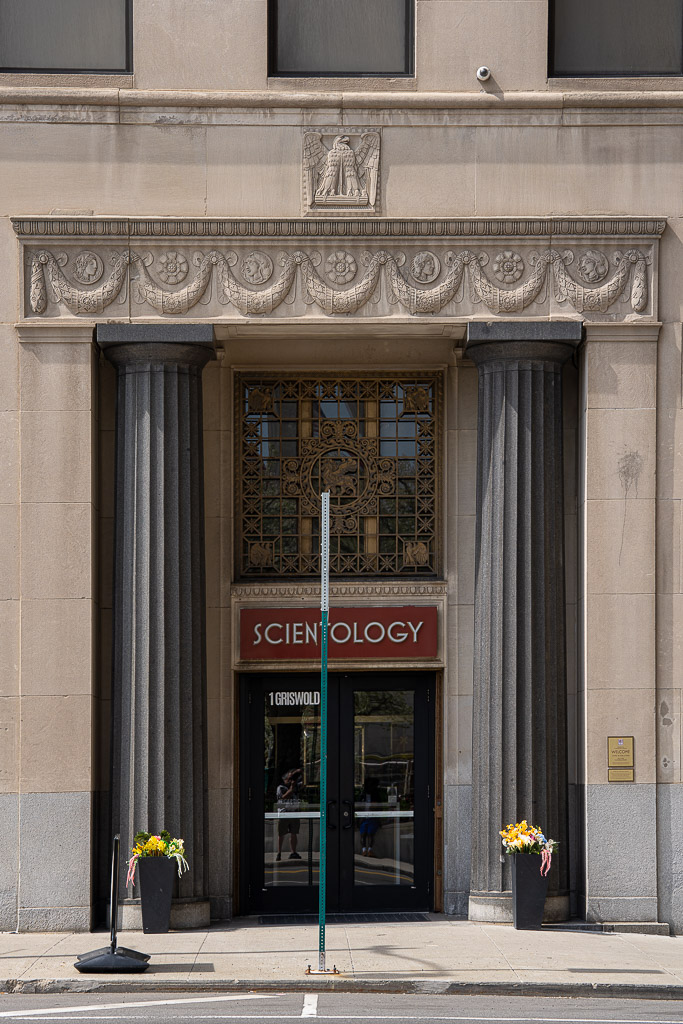
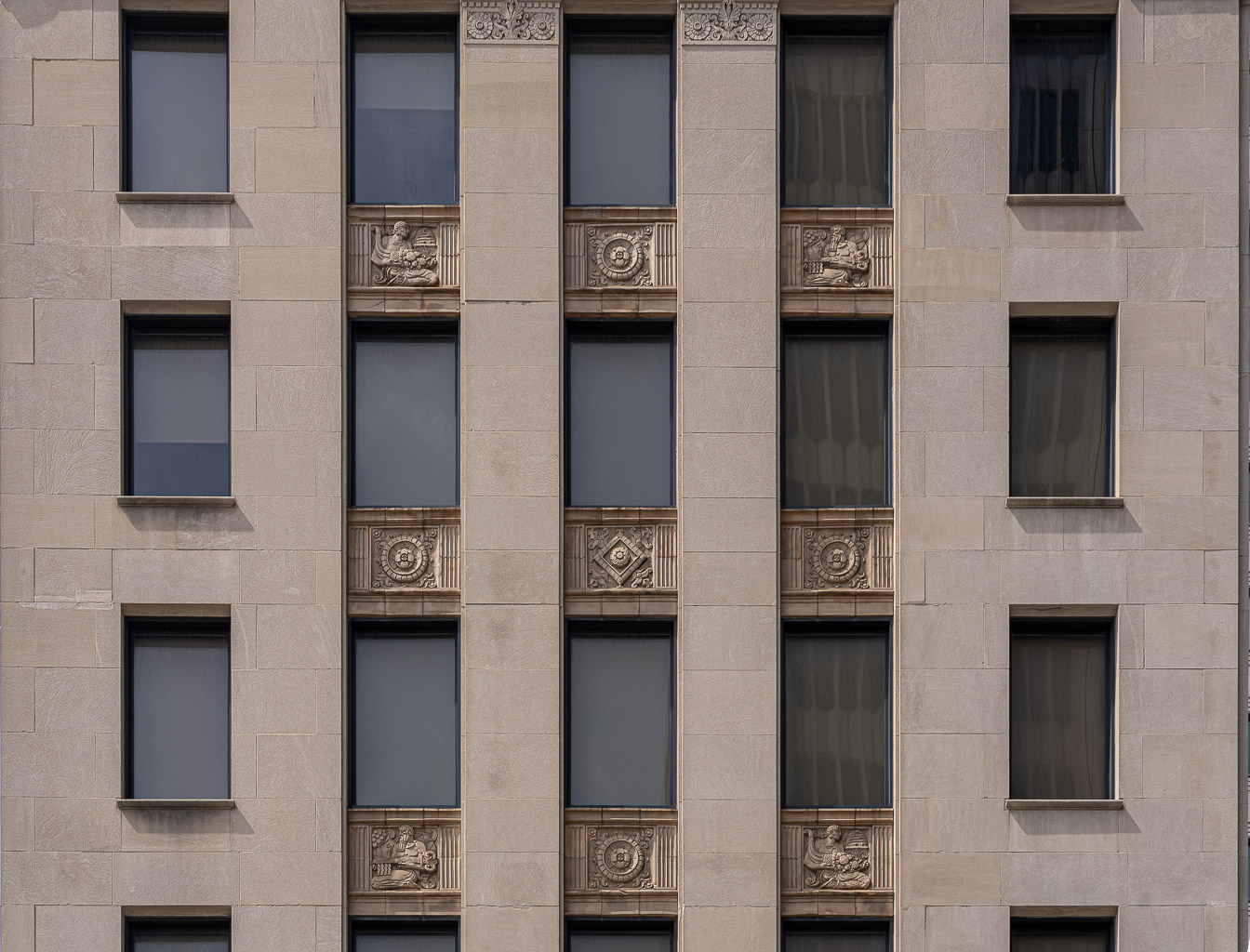
The Scientologists are quite secretive about their religion and how they use the building, but here are a few interior photos to give you a feel for the decor. Click each photo to view the caption, then click again to put it back.
I have written a comprehensive web page about The Guardian Building and hope you read and enjoy it.
In 1868, the Buhl brothers erected an office building at the corner of Griswold and Congress Streets that became an attractive location for prosperous law firms. It built directly above the Savoyard Creek on a site which in the early 1800s had been part of Fort Shelby. In the 1920s, a third generation of Buhls decided to make more profitable use of their prime downtown land by replacing their small office building with the current 26-story building.
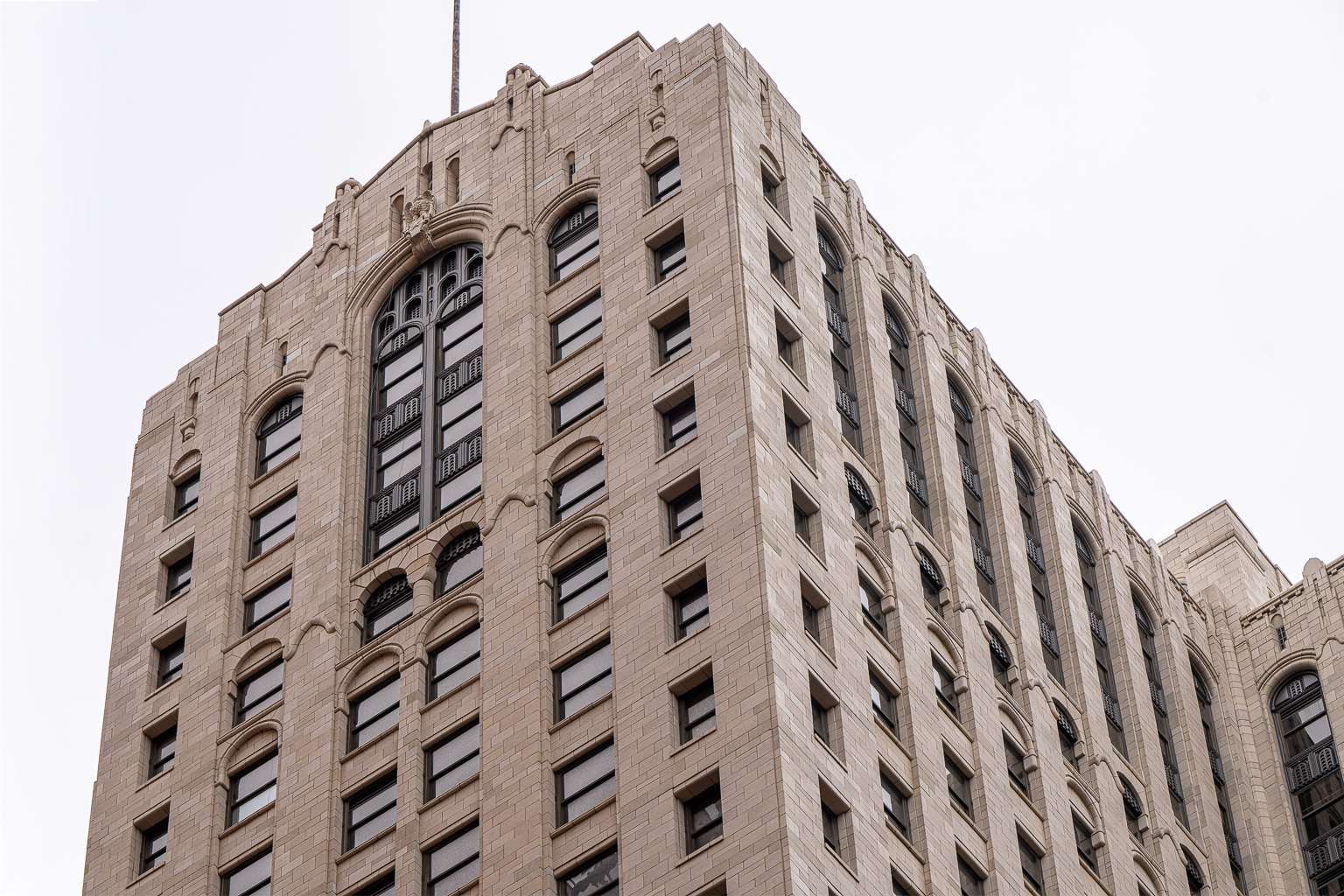
The Buhl Building is a 26-story steel-frame skyscraper faced in cream-colored terra cotta and granite, and built in 1925. Wirt C. Rowland of Smith, Hinchman & Grylls, the architect of the Guardian Building was chosen as architect, and Corrado G. Parducci was selected as its sculptor. It is located at the southwest corner of Griswold and West Congress Streets (1st photo below). The terra-cotta cladding was colored to resemble granite and cast in seemingly random-sized blocks, providing an attractive finish at moderate cost. This clever treatment was used previously on the Fyfe Shoe Store Building designed in 1918 by Smith, Hinchman, and Grylls, so, presumably, the idea did not originate with Rowland. The first four stories of the building have a rectangular footprint that fills the lot line (2nd through 4th photos below).
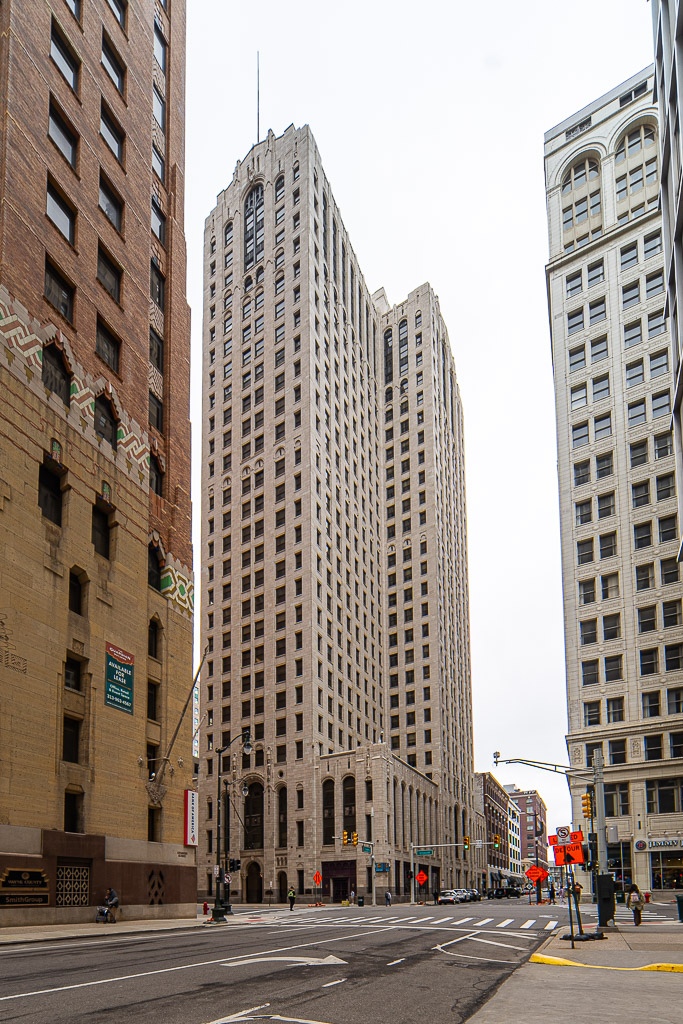
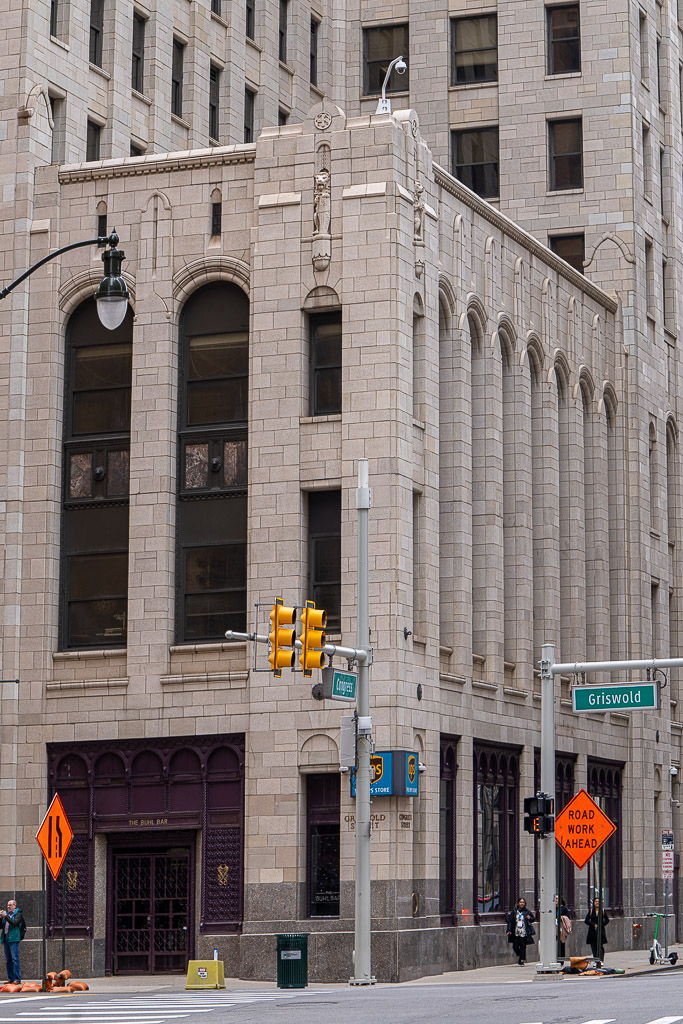
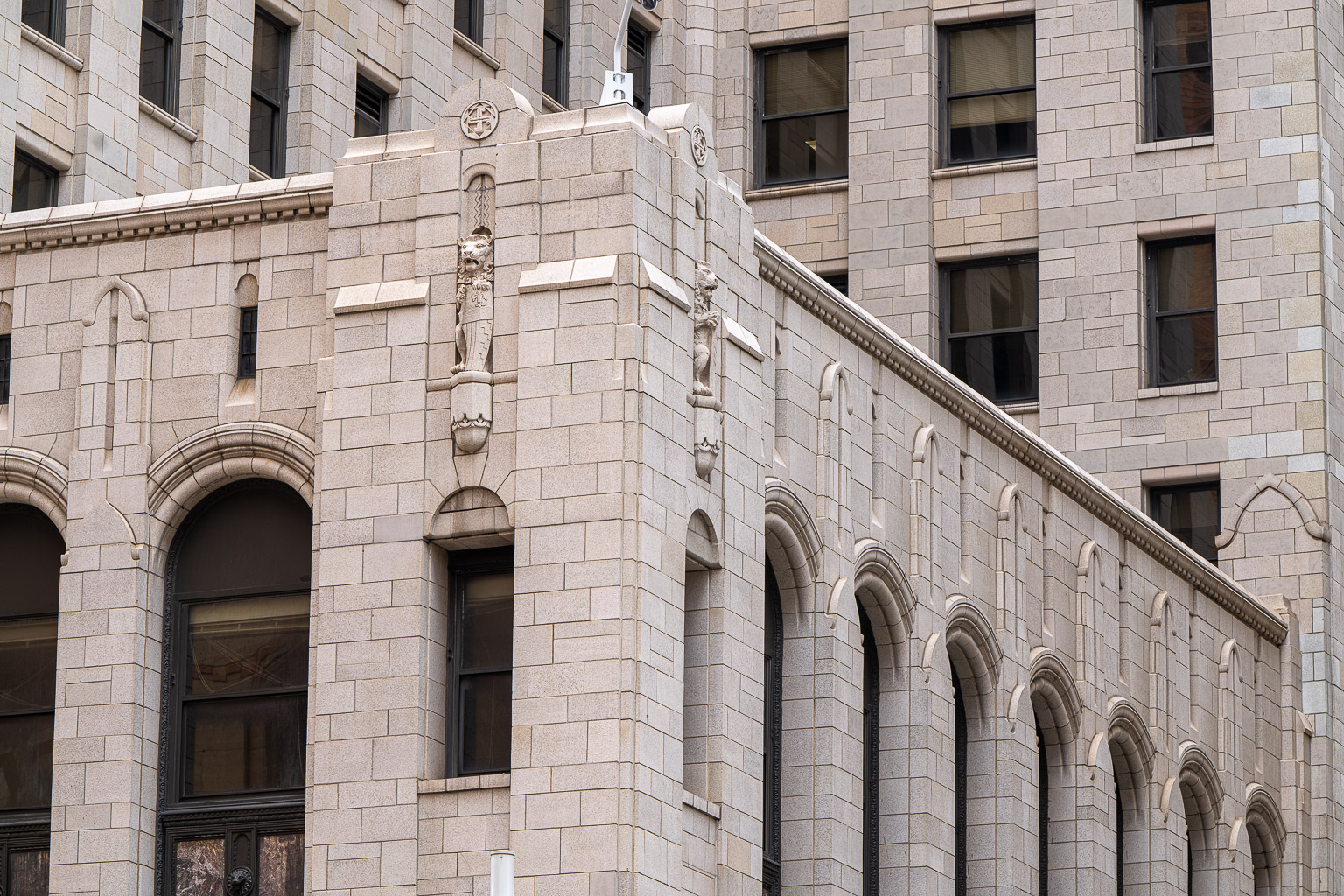
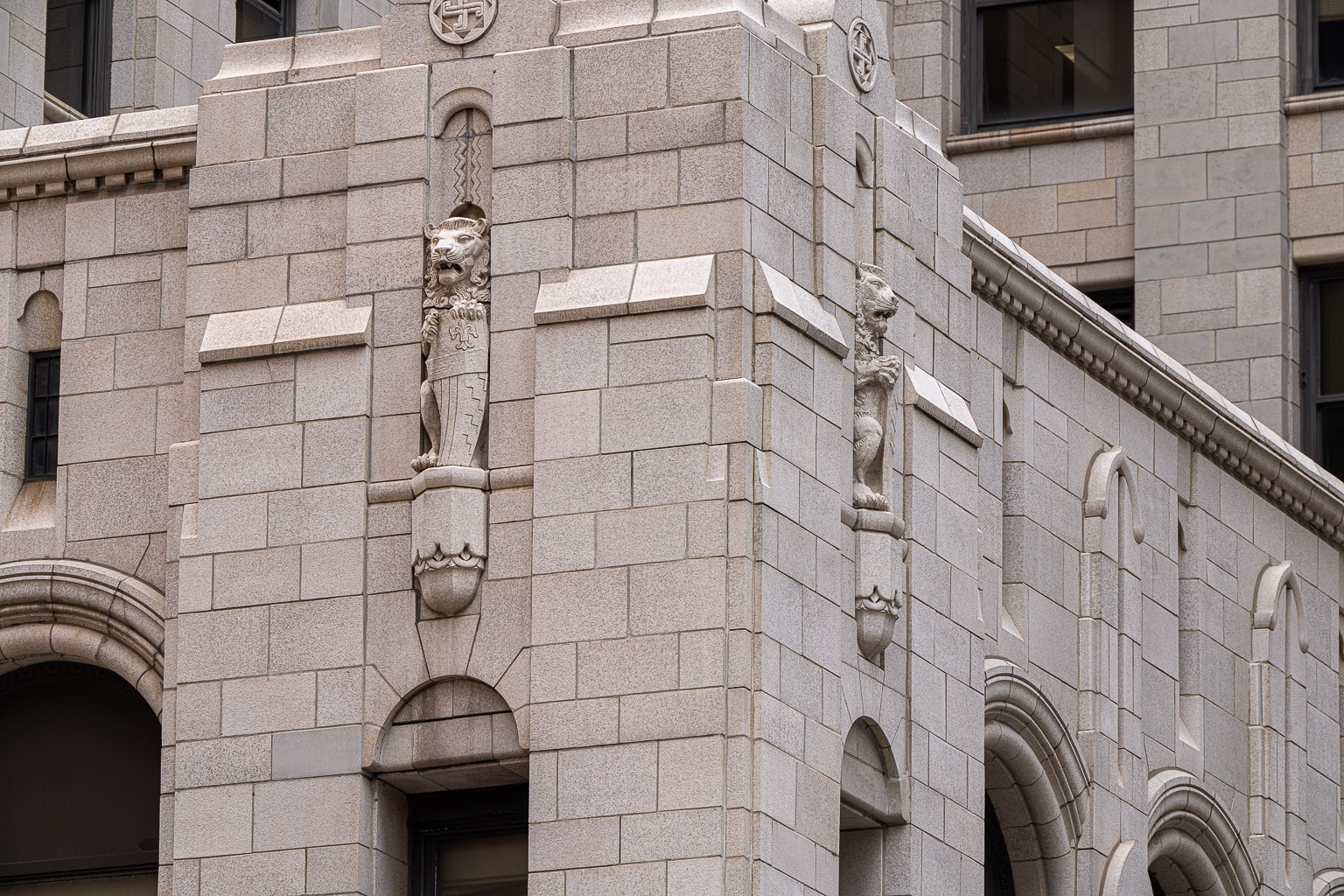
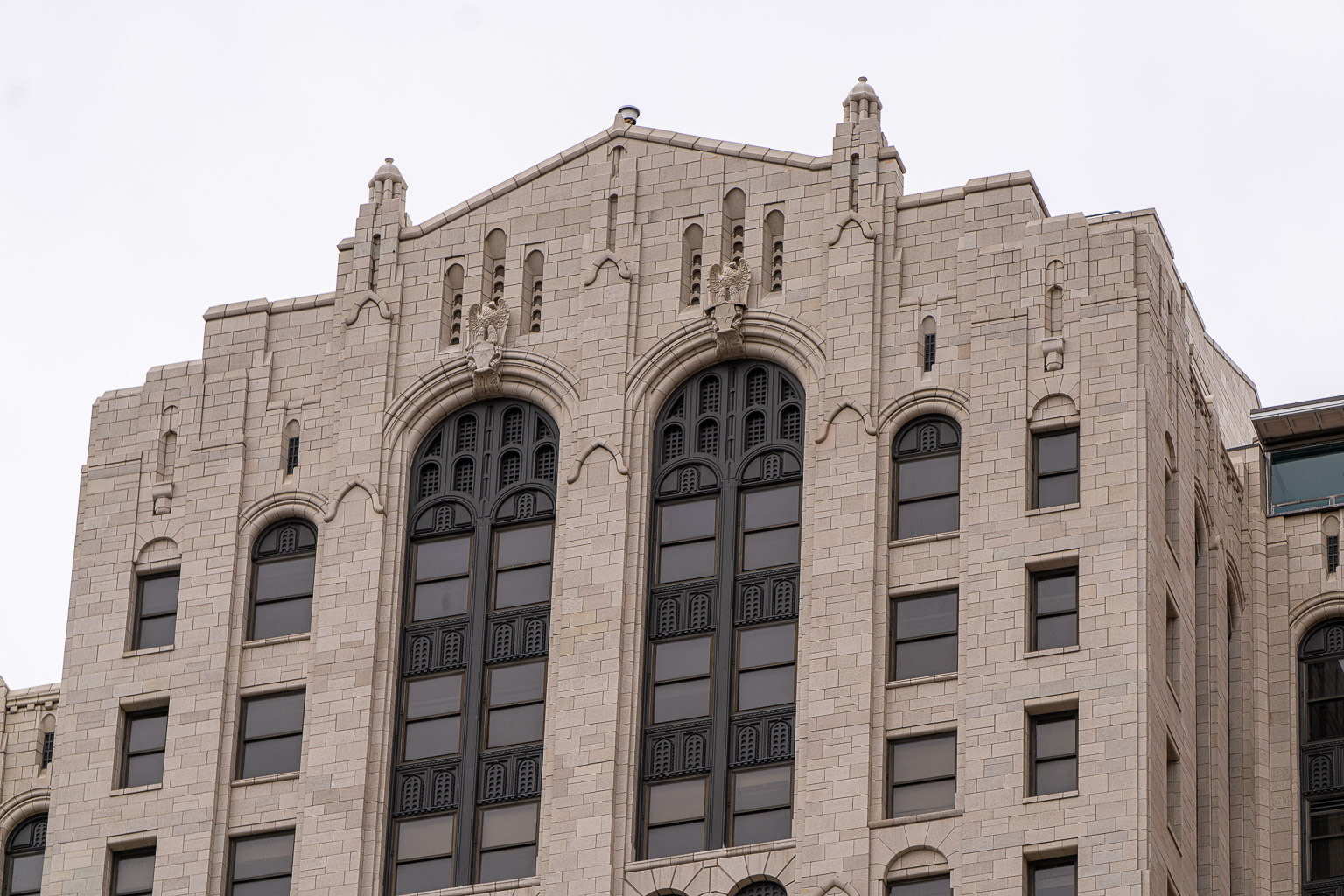
The plan of the upper office floors (floors five through twenty-six) is in the form of a Greek cross (1st through 3rd photos below). The services and elevators extend upward through the center of the cross, and short hallways radiate in all directions. This cruciform arrangement allows every office to have an outside window, along with eight corner suites on each floor. The wings appear to pass through the base; corners are emphasized by stout pylons. The piers rise from street level to the very top of the building, unifying the structure vertically and serving as its primary design element. On each corner of the building's base are massive pylons that project above the roof line of the base and contain a single column of windows, which, being narrower and more deeply inset than the structure's other windows, emphasize the pylon's bulk, and this design element also follows up into the floors above the base. The 2nd photo above best shows this effect in the pylons of the base. The 3rd photo below best shows this effect in the piers of the floors above the base. Do you see how the sky is less reflected in the outermost columns of windows? That's because they're set back deeper. Each wing is topped by a peaked parapet. A large central elevator service penthouse rises two additional stories above the building's gabled roofline (4th through 6th photos below). Rowland further harmonized the building's base with its top by essentially repeating on the top floors of the building the design appearing on the facade of floors two through four (again, 2nd photo above compared with 2nd photo below). Rowland was keenly aware of the effect distance has on perception and, as the top of the building was viewed from a greater distance than the lower floors, the decorative elements on the upper floors were exaggerated in size, bolder, and less detailed than those far below.
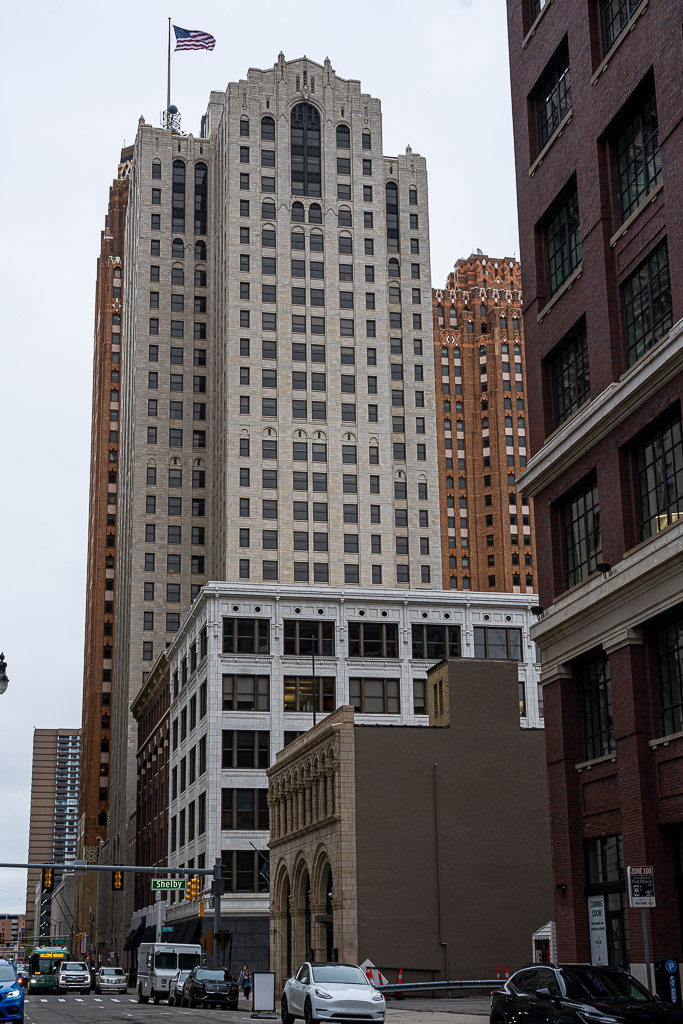
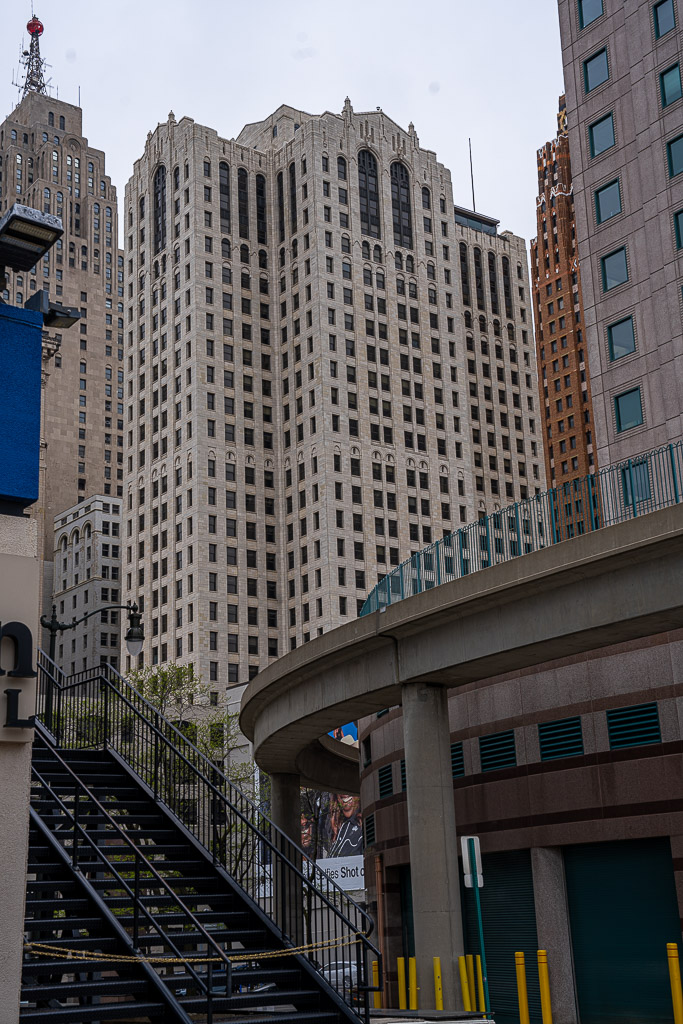
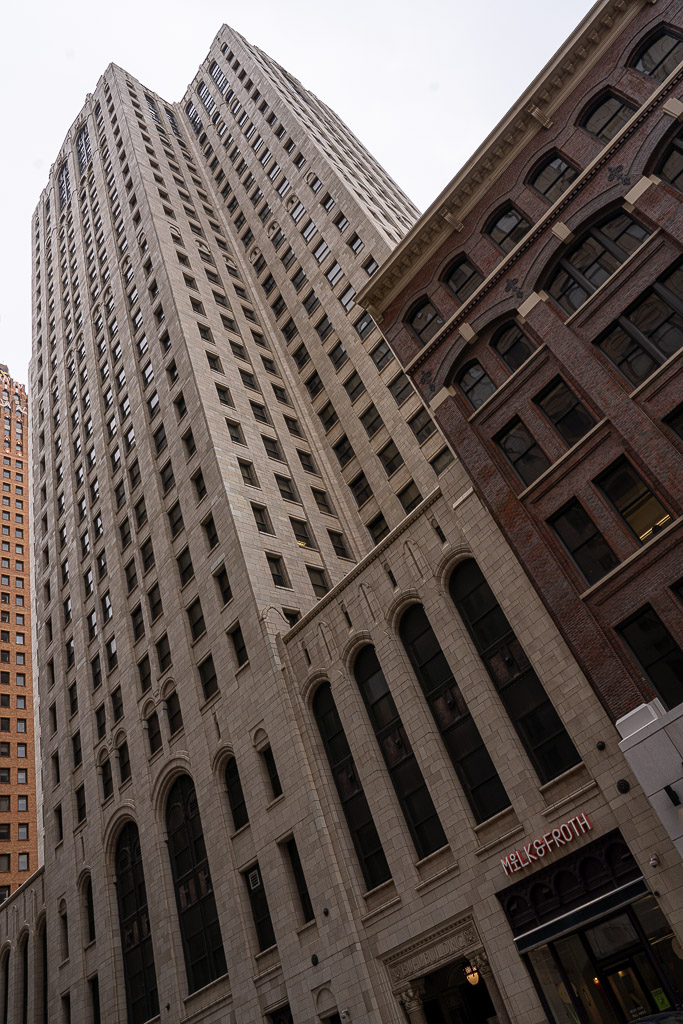
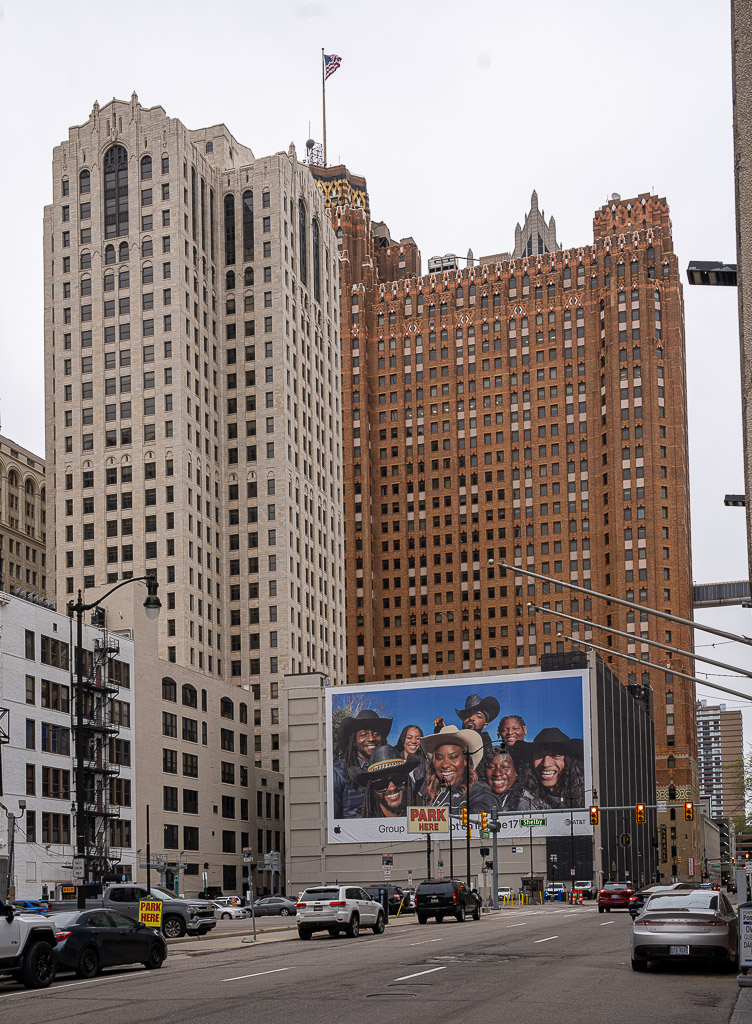
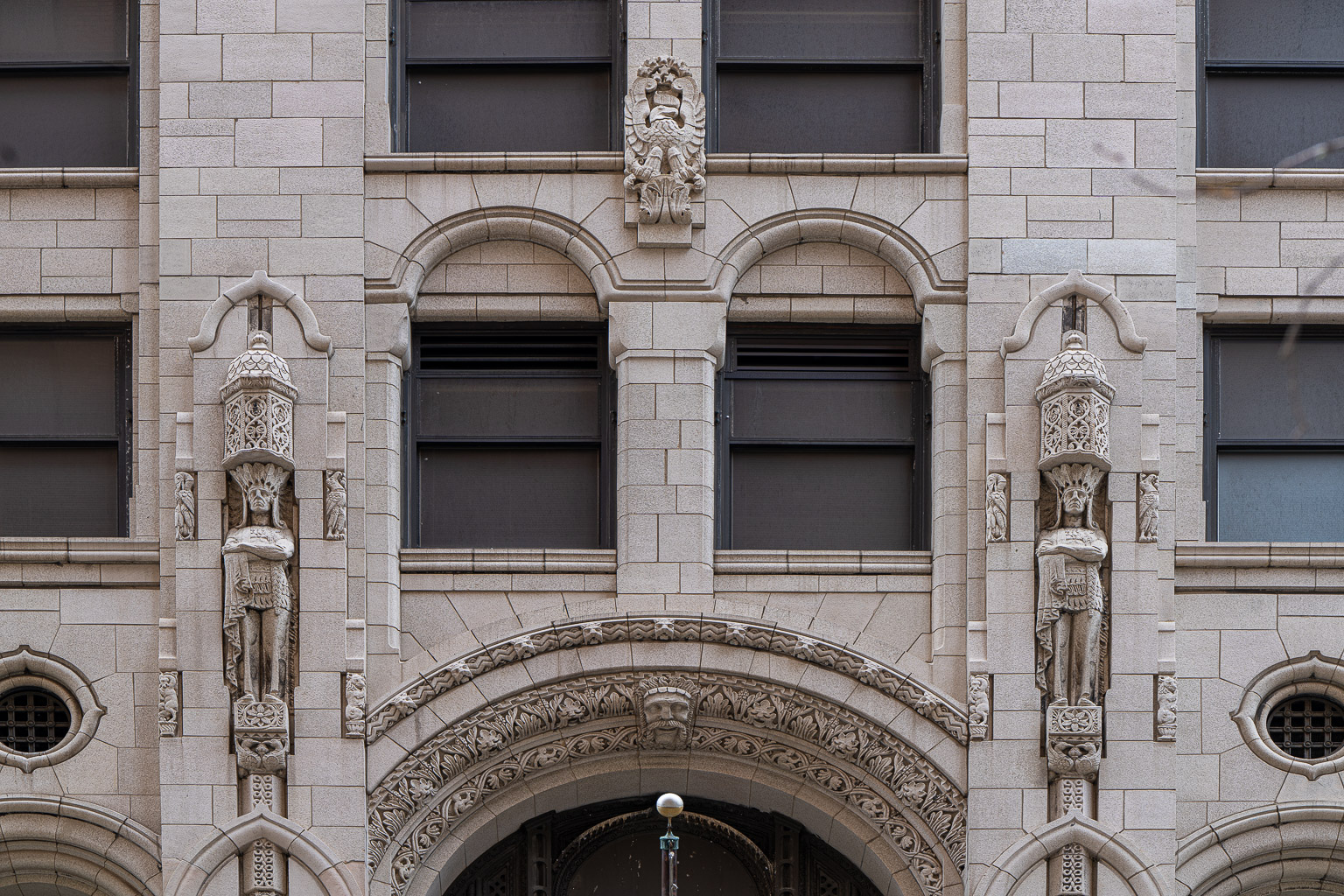
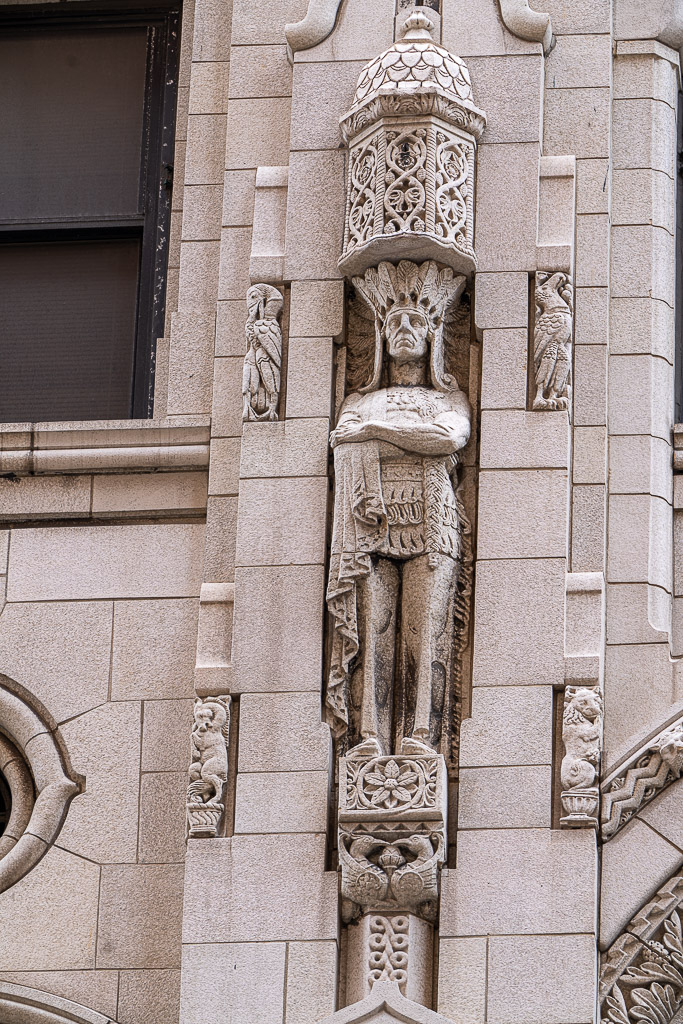
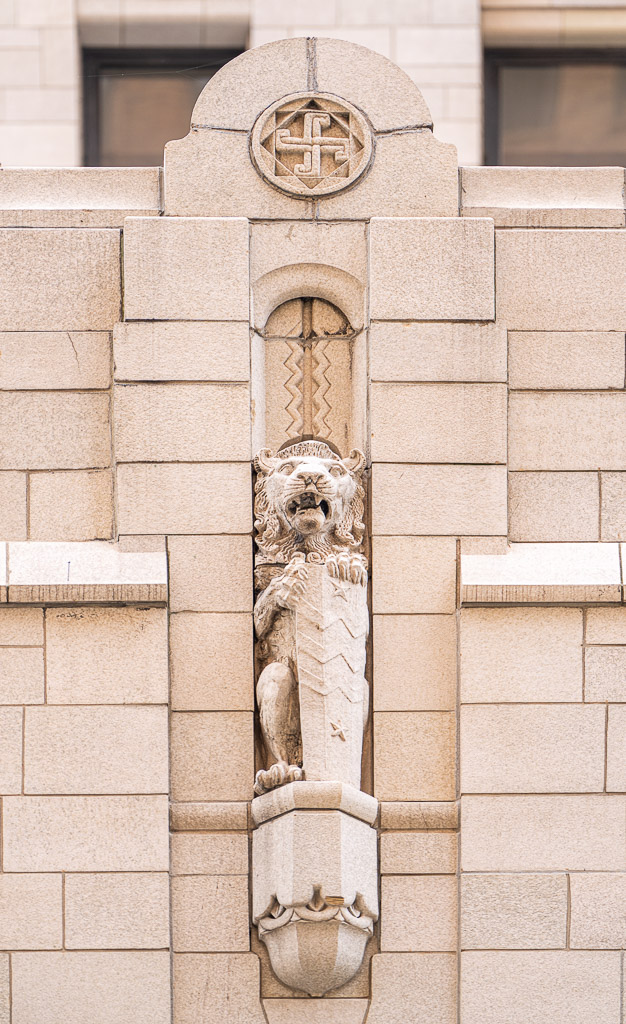
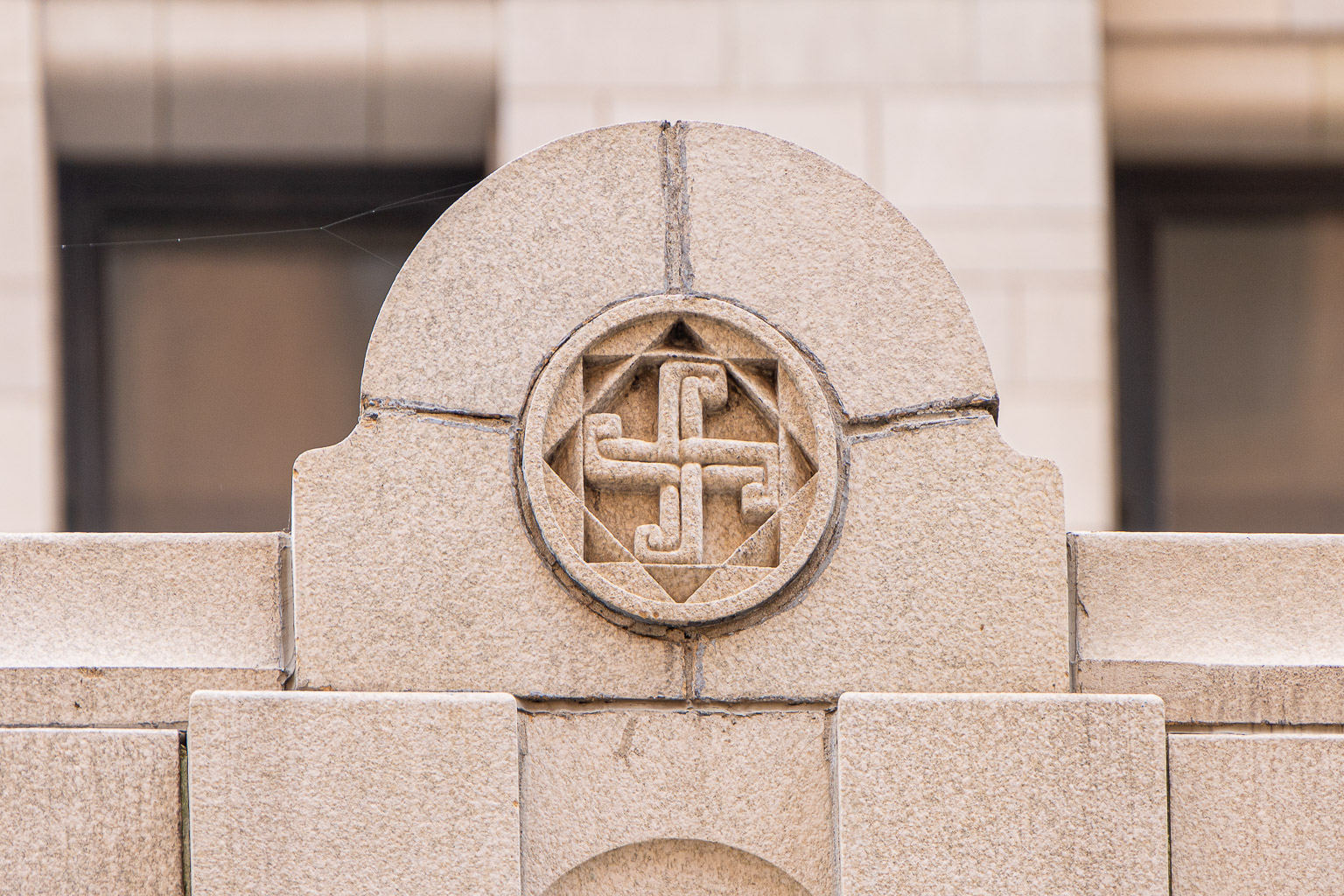
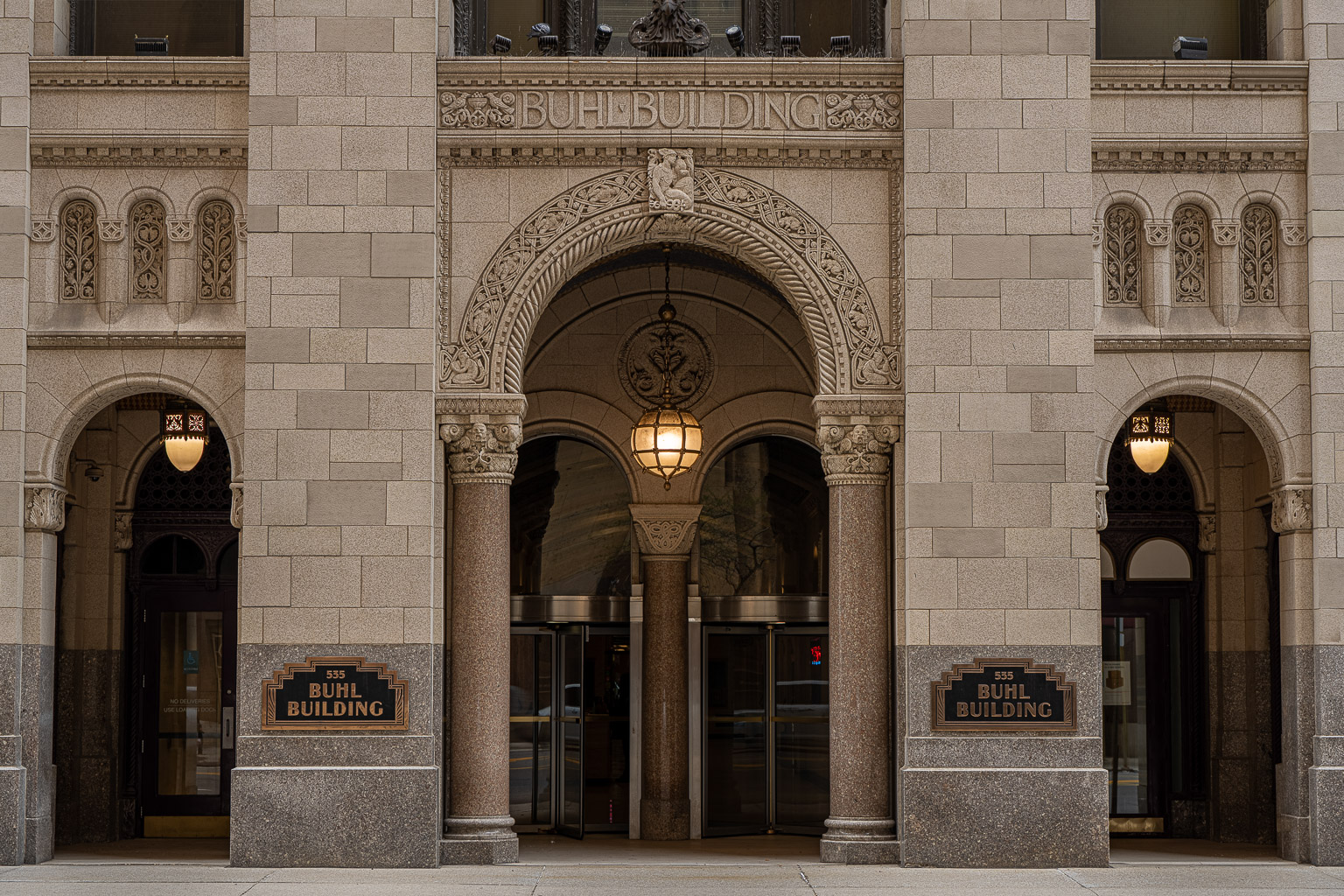
The exterior is a mixture of Romanesque and Gothic details all cast from models provided by sculptor Corrado Parducci (1st through 4th photos below). There are two clues as to the specific identity of the Native Americans carved above the entrance between the third and fourth floors (1st and 3rd photos below). The first clue is the feathered headdress, an article worn by Plains Indians. The second clue was a design used prominently on the building: the Native American symbol of the whirling wind, a form of the swastika. The whirling wind symbol appears atop each corner pylon of the Buhl building (4th and 5th photos below).
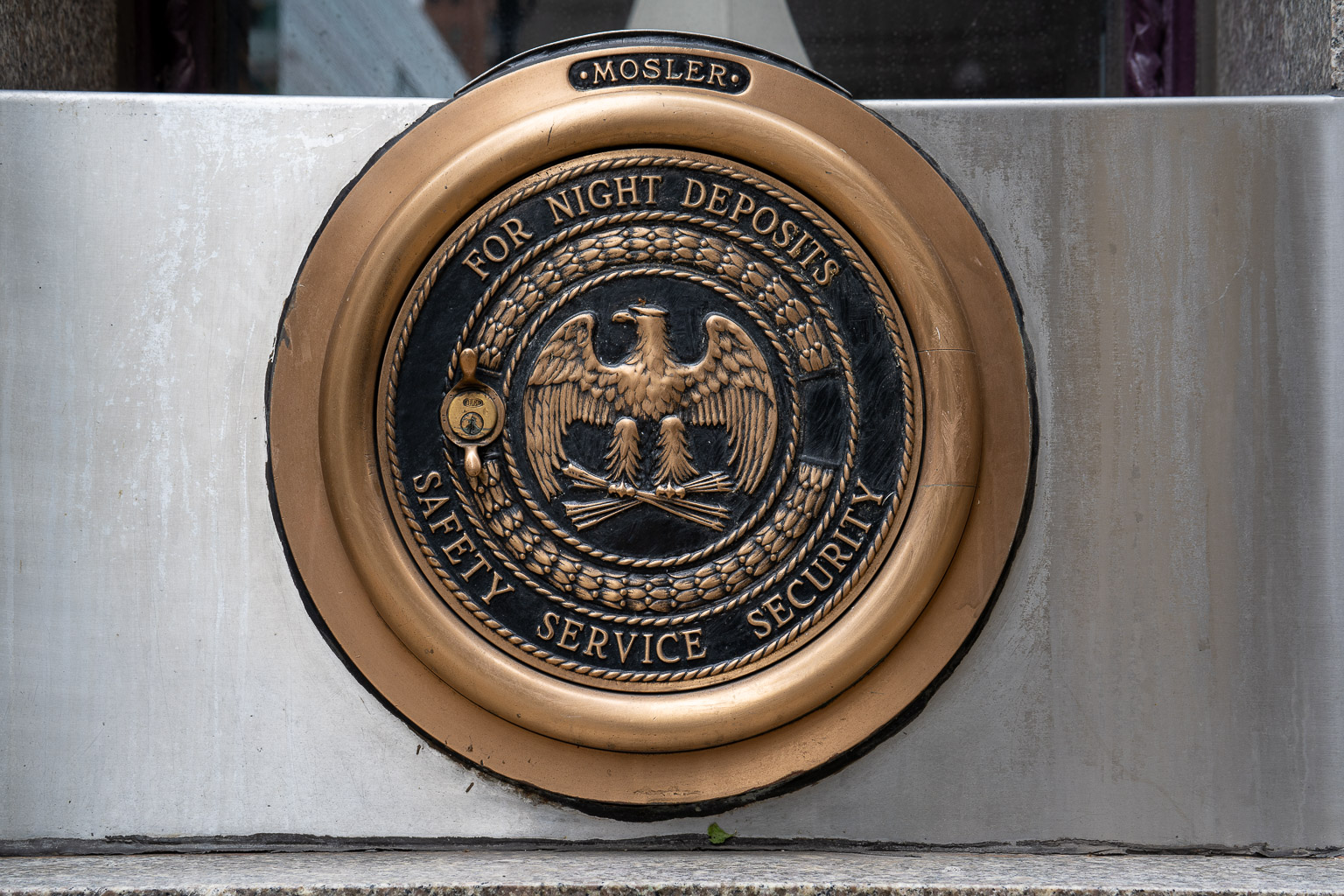
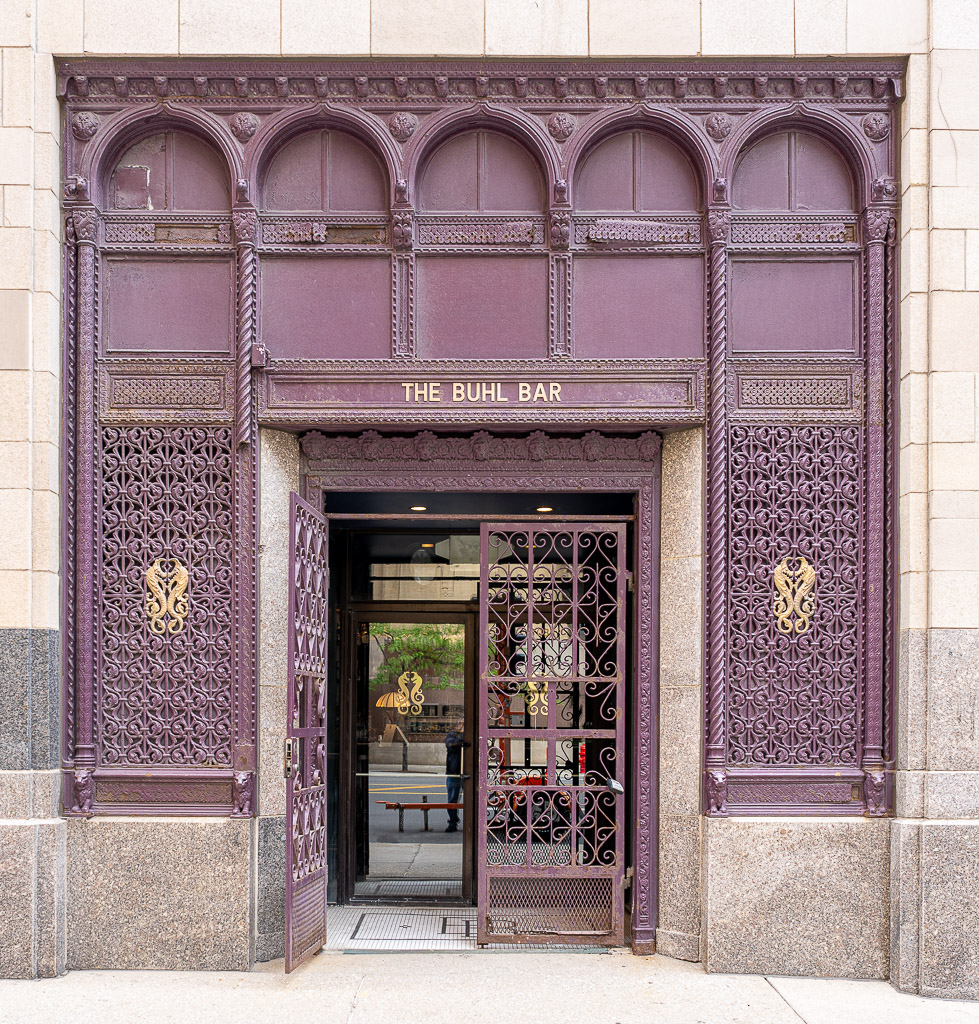
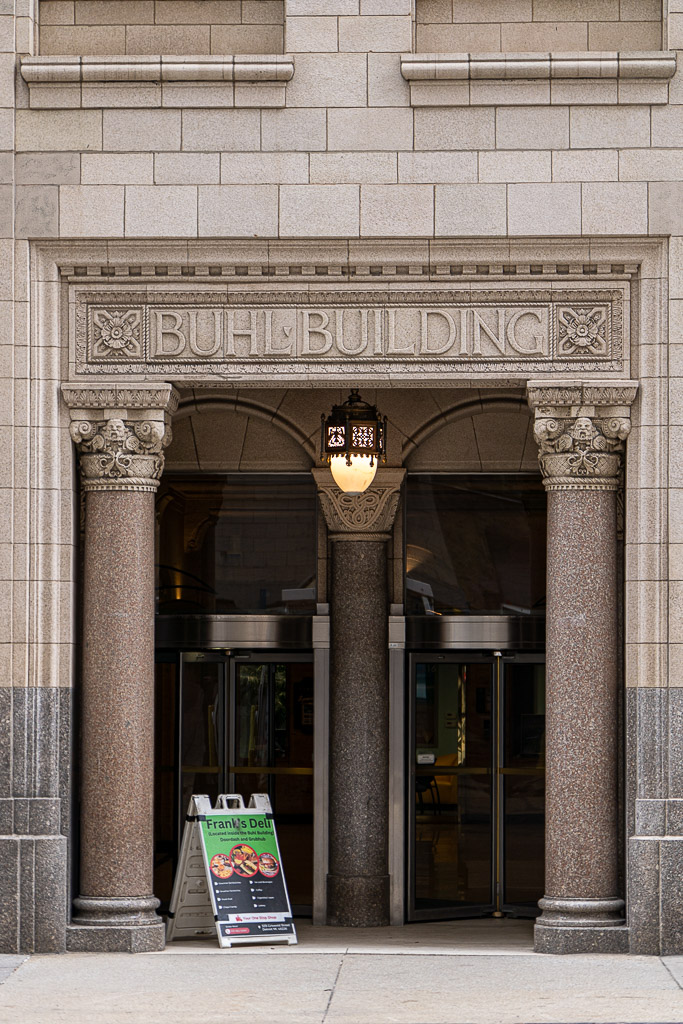
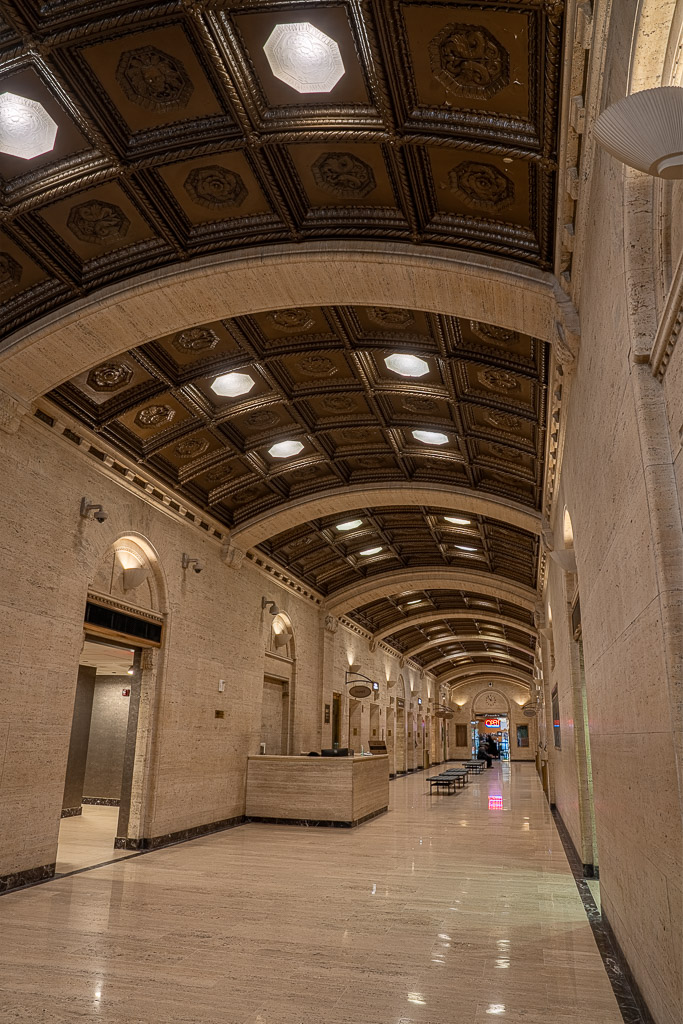
More details of the Buhl Building are shown in the photos below, such as the night depository for a ground floor bank shown in the 1st photo below and the entrance to the Buhl Bar in the 2nd photo below. The Congress Street entrance to the Buhl Building is shown in the 3rd photo below. An interior photo of the elevator banks just inside the Griswold entrance is shown in the 4th photo below.
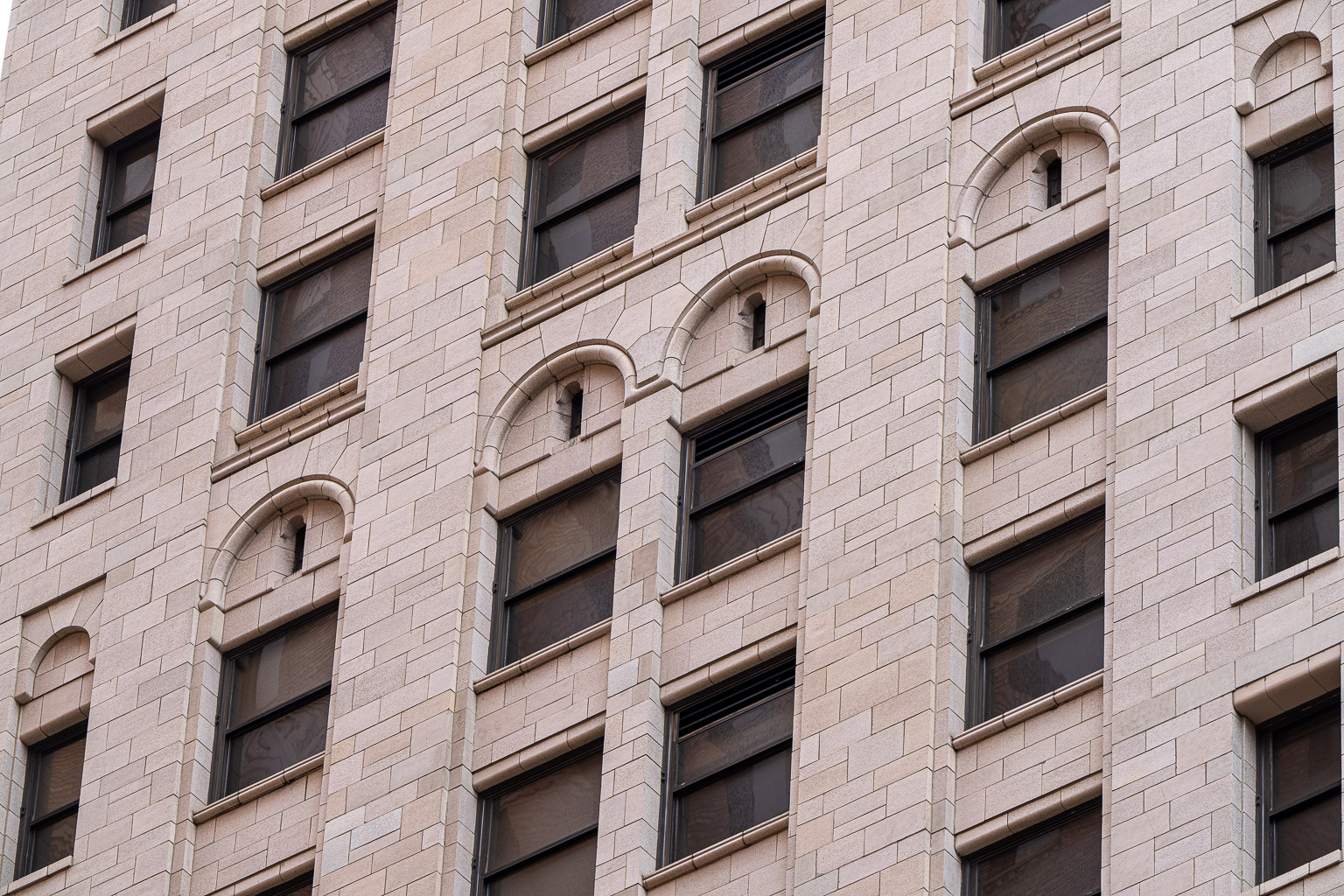
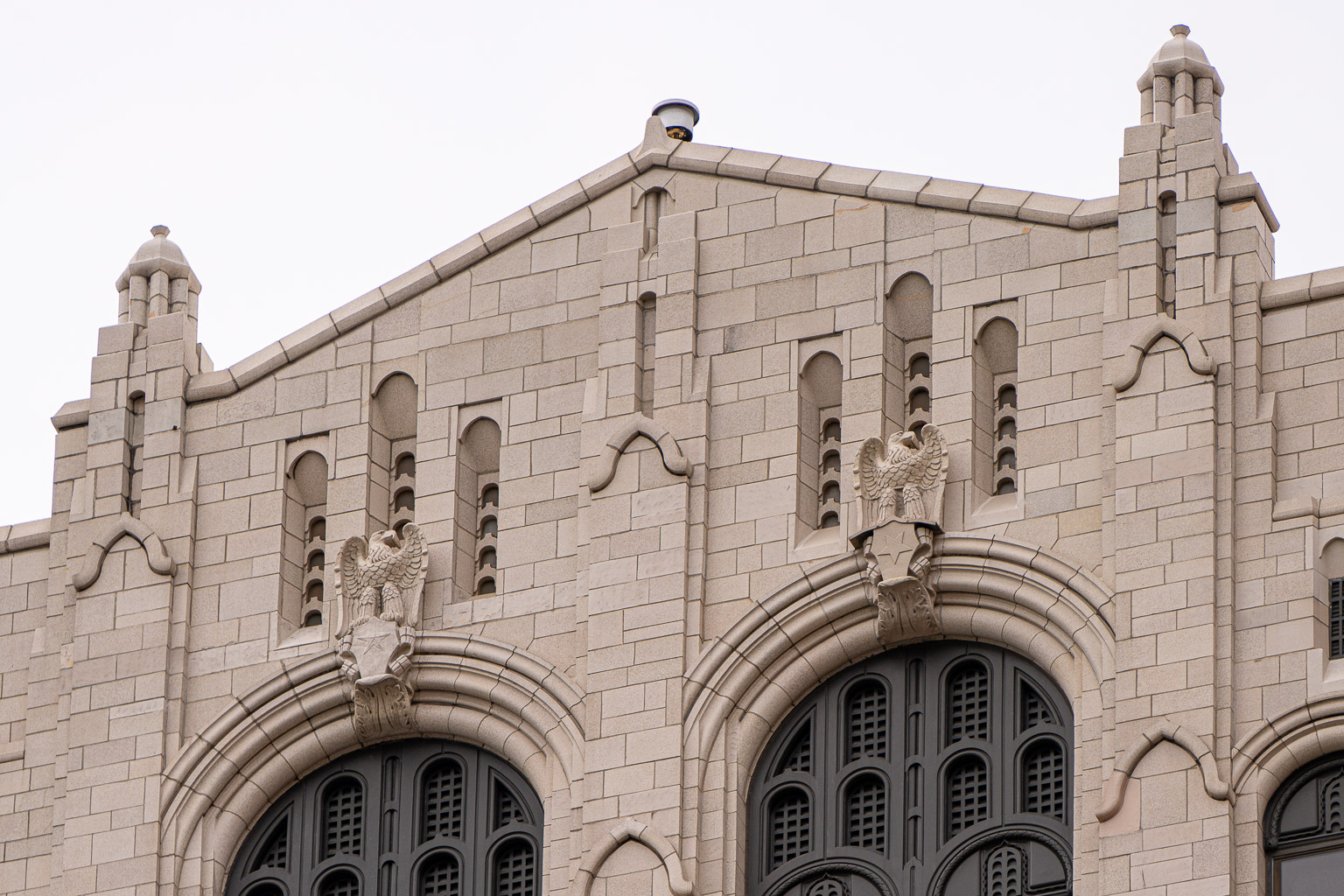
The row of arches above the building's fifteenth-floor windows (1st photo below) were not added only for decorative reasons. A five-foot-tall utility space was required below the sixteenth floor, leaving extra vertical space between the windows of the fifteenth and sixteenth floors. The addition of arches over the fifteenth-floor windows was the least distracting manner in which to treat the disparate spacing between floors. The detail at the top of the building (2nd through 4th photos below) includes sculpted eagles large enough to see from the street.
An outstanding feature is the Griswold Street entrance, set back into an arched recess decorated with Romanesque carving and a colorful mosaic-tiled ceiling. Rowland created a similarly grand entrance when designing the General Motors Building (now called Cadillac Place).
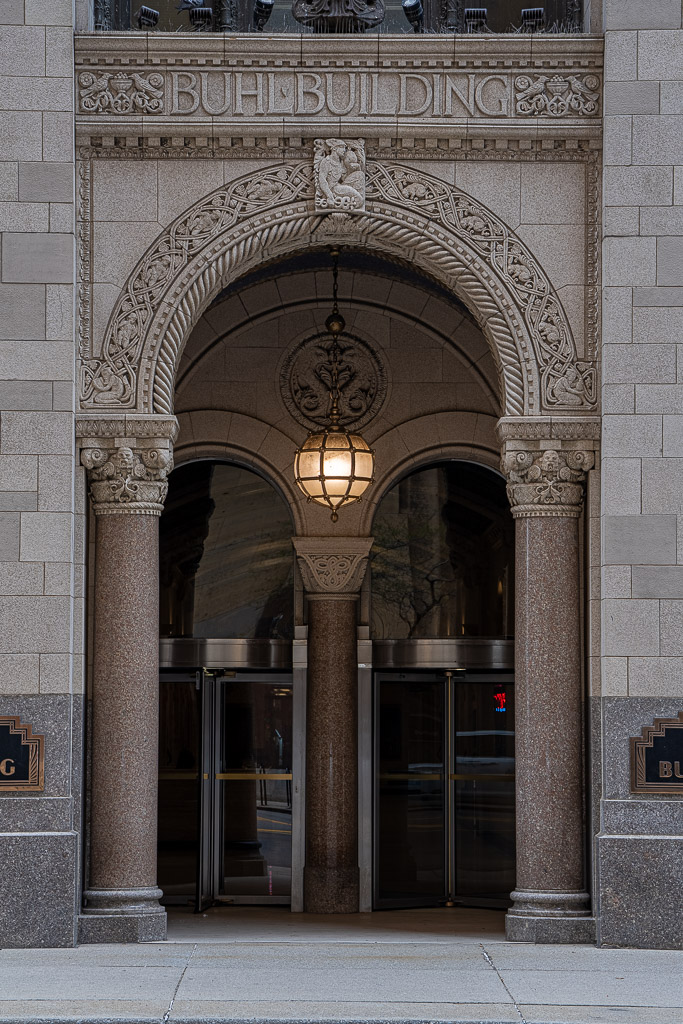
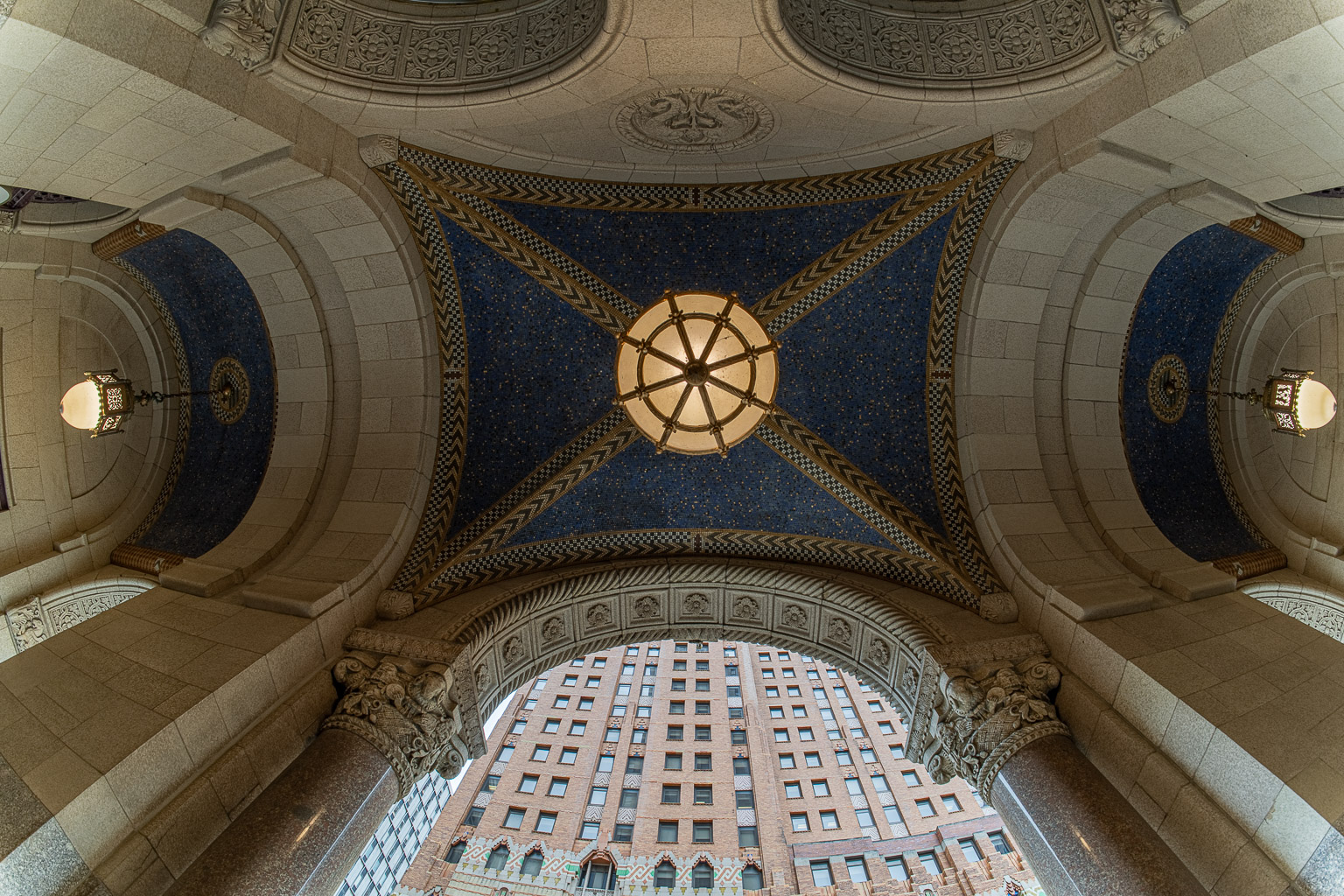
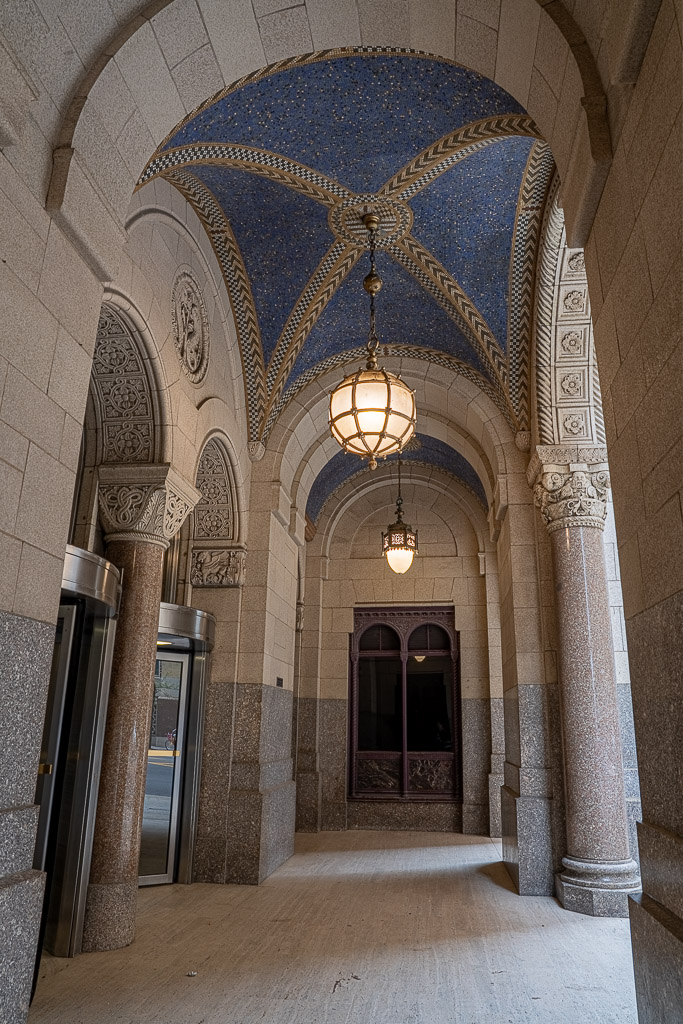
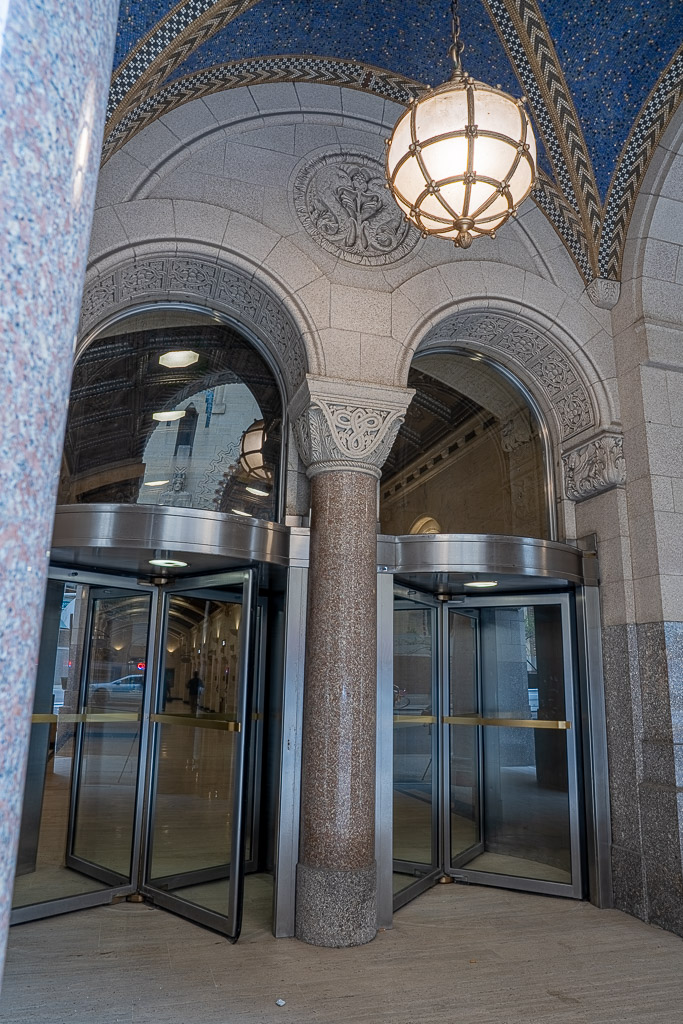
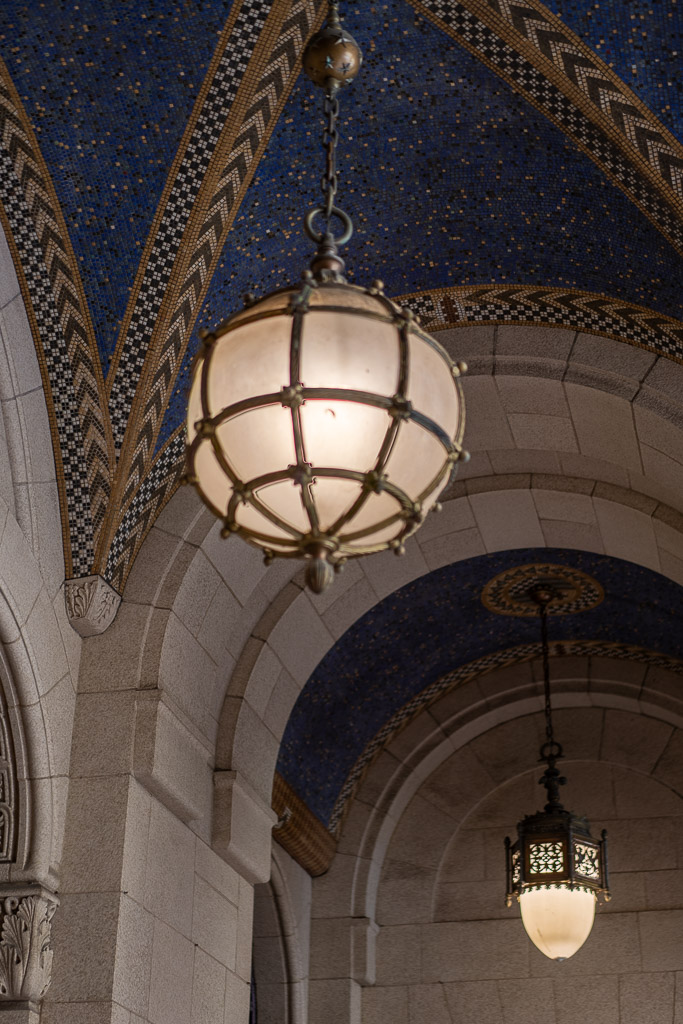
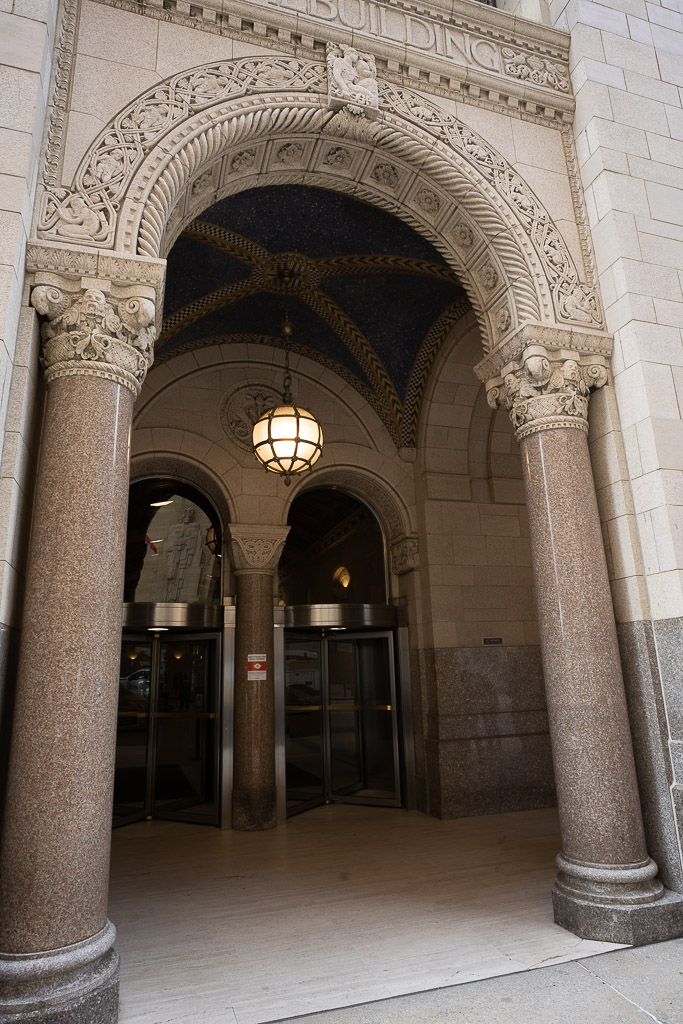
Tenants began moving into the Buhl Building on April 21, 1925, and the building opened with 50% occupancy (rather than the typical 30-35%) on May 1. In July 1925, the newly formed Guardian Trust Company opened its office on the ground floor of the building, its entrance graced by two bronze doors featuring the sculpted figures of a man holding a key and a woman with a horn of plenty—both modeled by Corrado Parducci. This company built the Guardian Building as its headquarters in 1928. Also in 1928, a private businessman's club named the Savoyard Luncheon Club (after the Savoyard Creek once on this site) was constructed on the roof of the building. In the four years following the Buhl Building’s opening, eight more large office buildings were completed in downtown Detroit (Michigan Building, Book Tower, Cadillac Tower, Industrial Bank Building, United Artists Theater Building, David Broderick Tower, Greater Penobscot Building, and Guardian Building). Despite this, the Buhl Building reported in May 1929 an occupancy rate of over 92 percent, a tribute to the structure’s superb design.
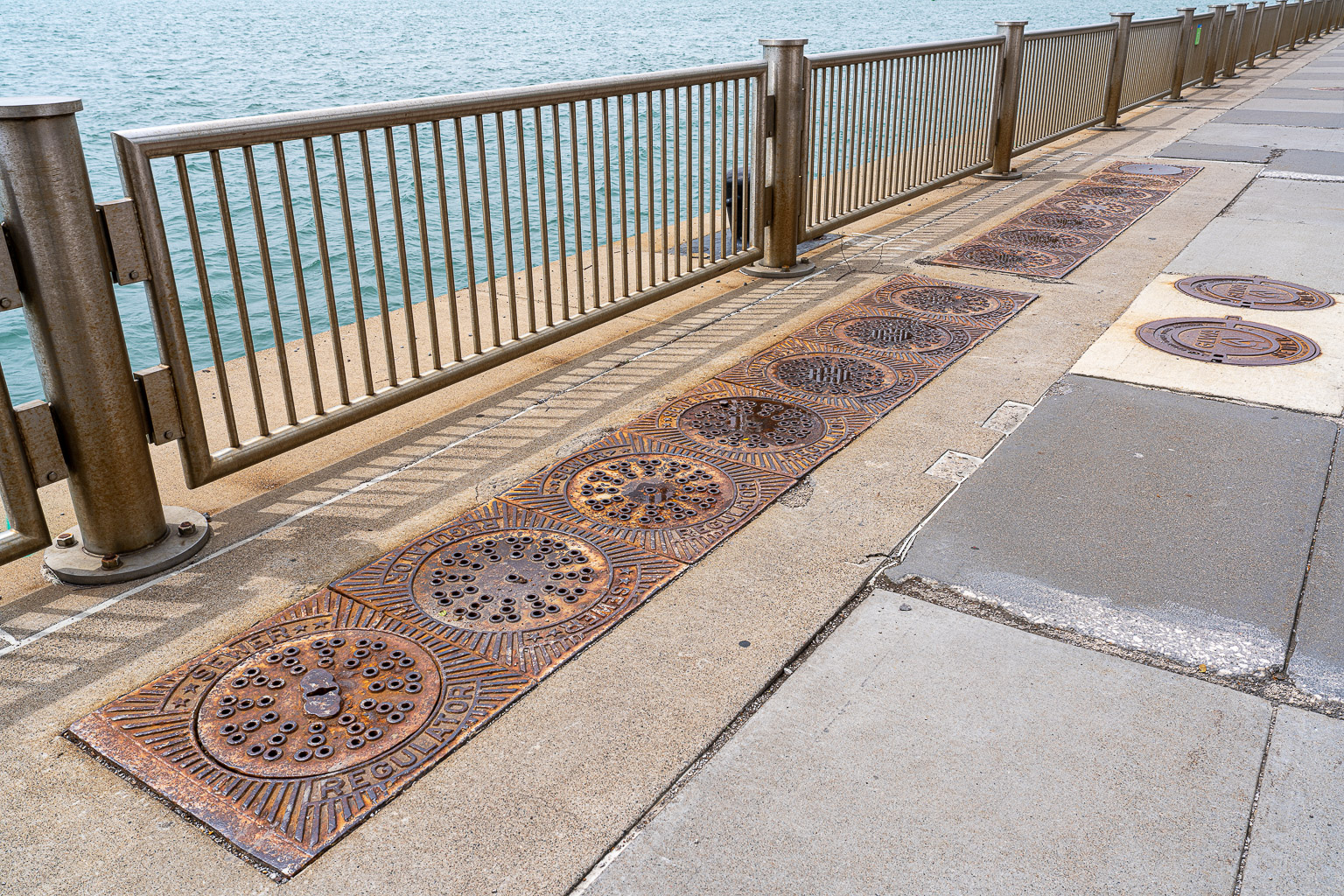
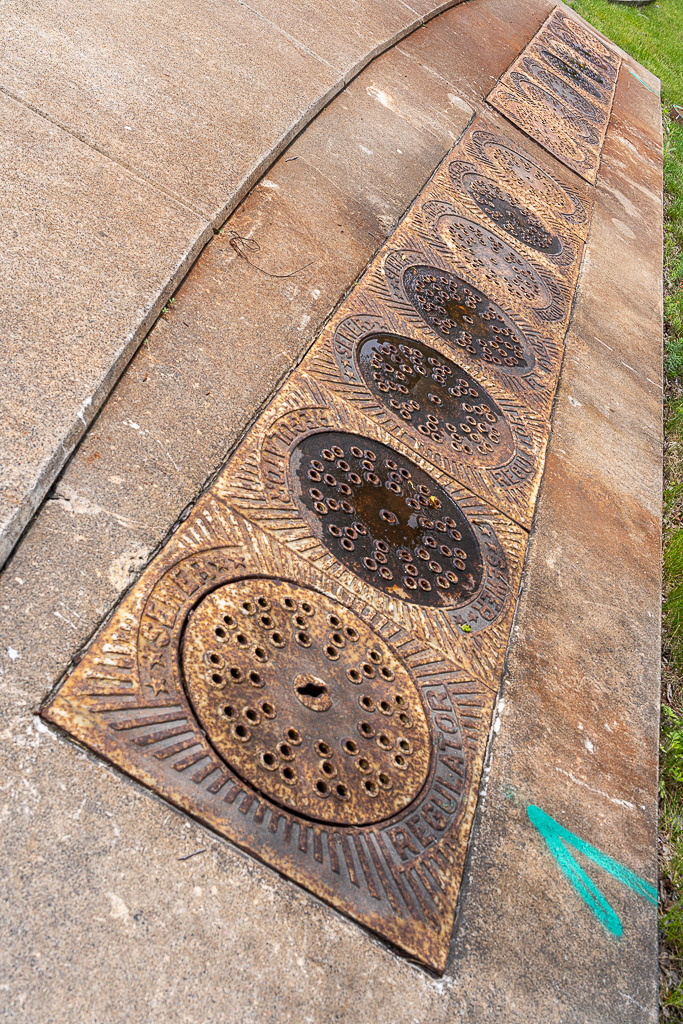
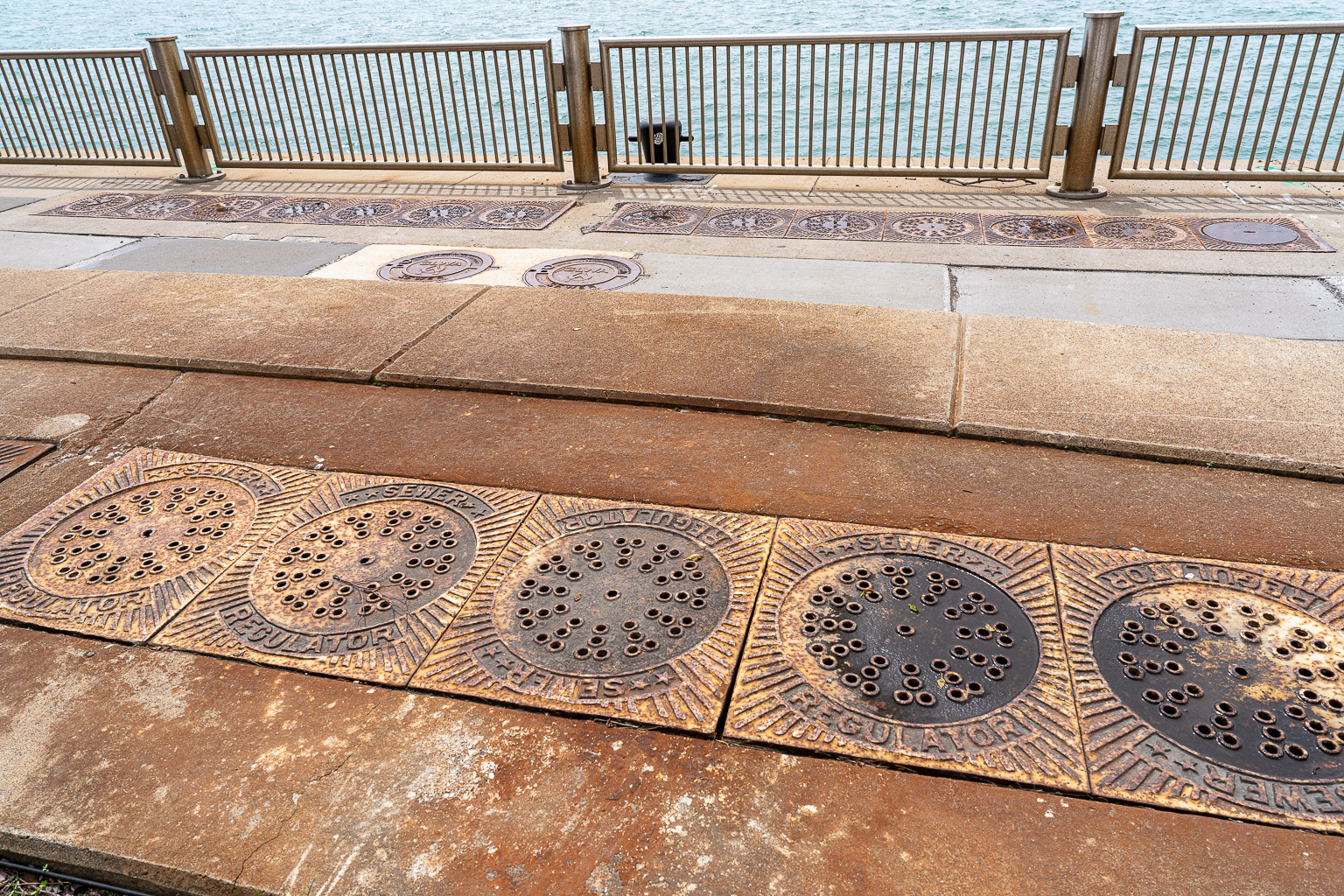
But what of the Savoyard Creek? Well, it was buried in the 1830s for public health reasons following several outbreaks of cholera. By the 1930s, the river had been channeled into Detroit's main sewer system, where it remains flowing today, deep beneath the dark recesses of a city, emptying into the Detroit River at the foot of First Street at this location. The 3 photos below show the manhole covers above this sewer outlet.
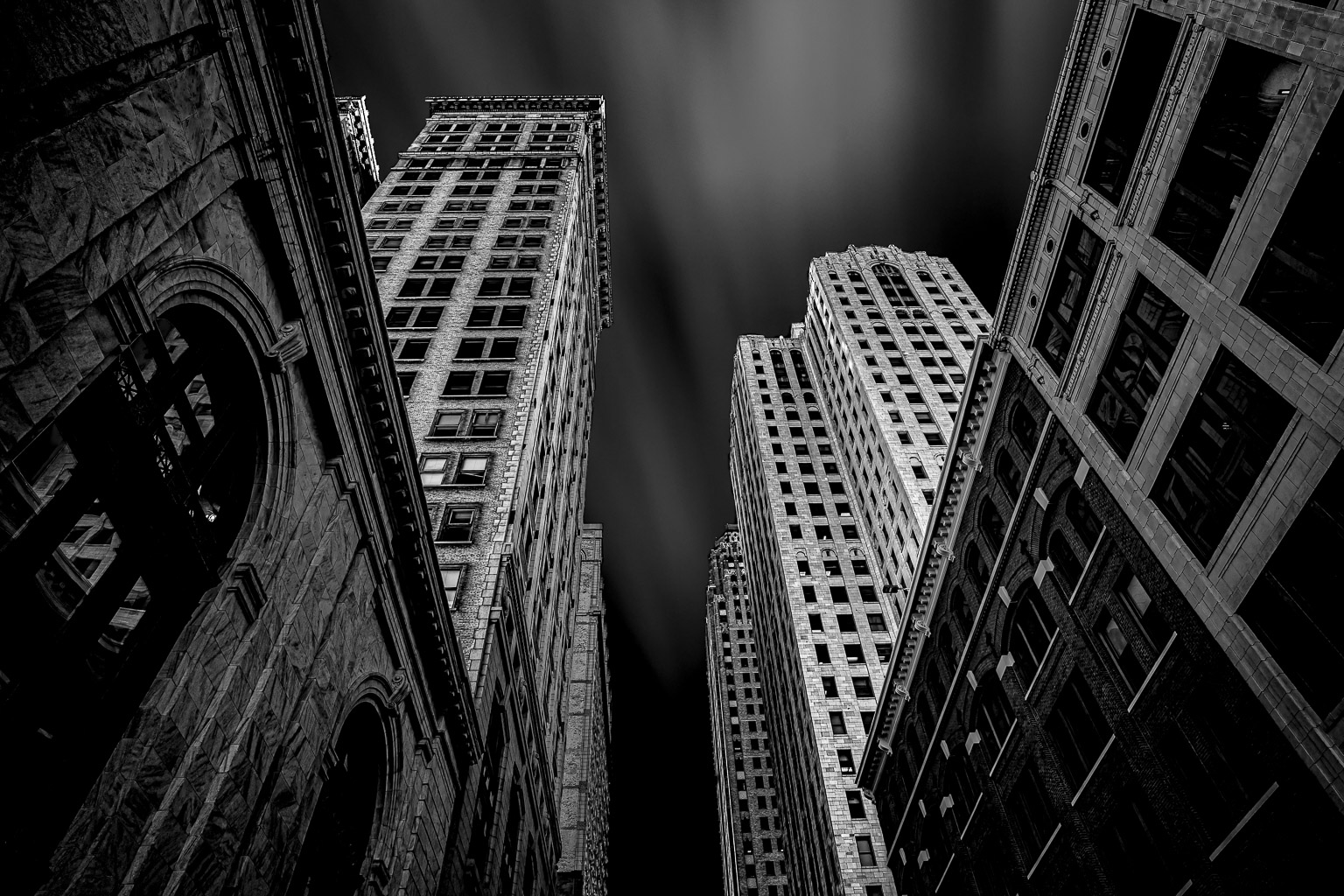
Finally, here are a few more photos of the Buhl Building with a more artistic intent.
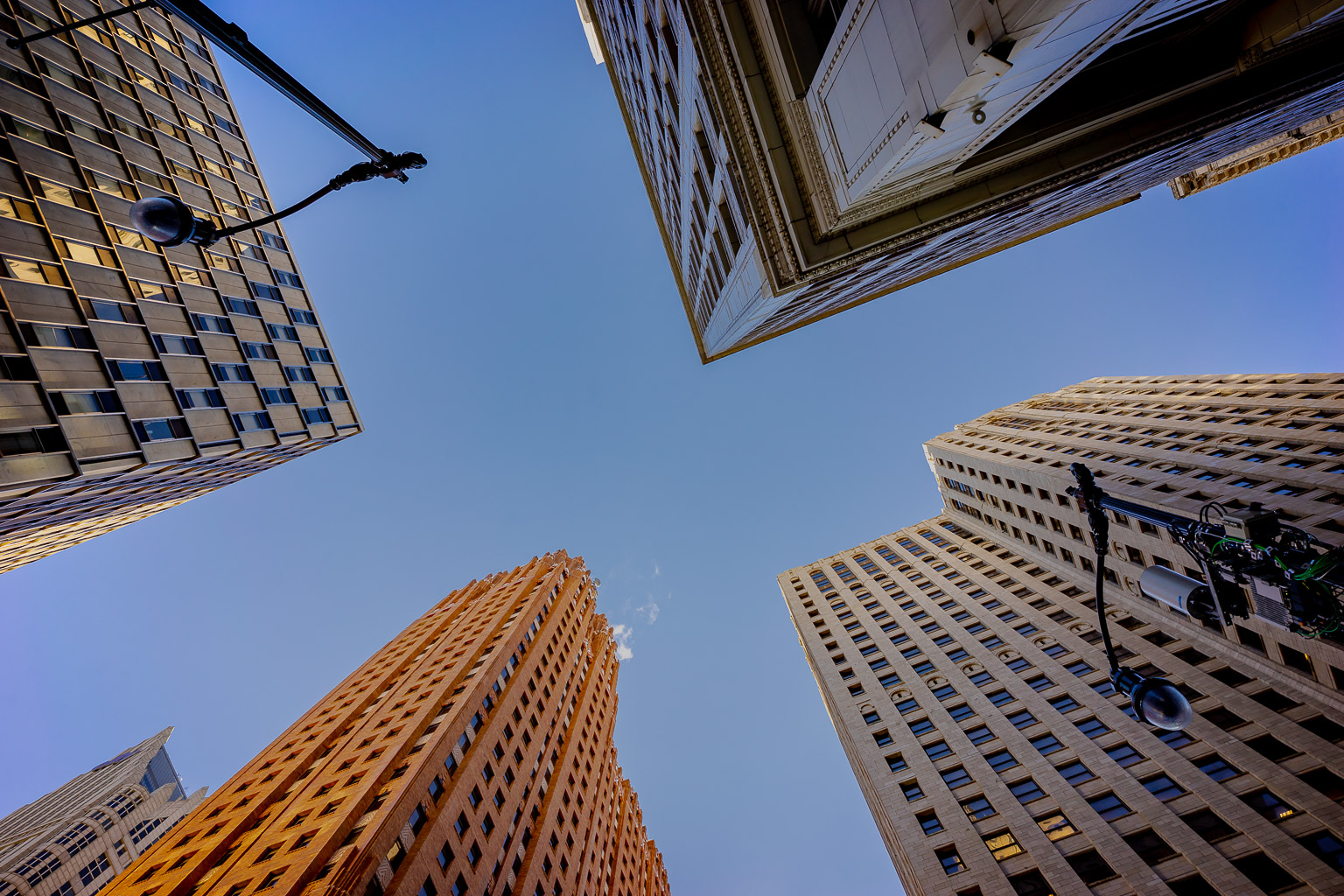
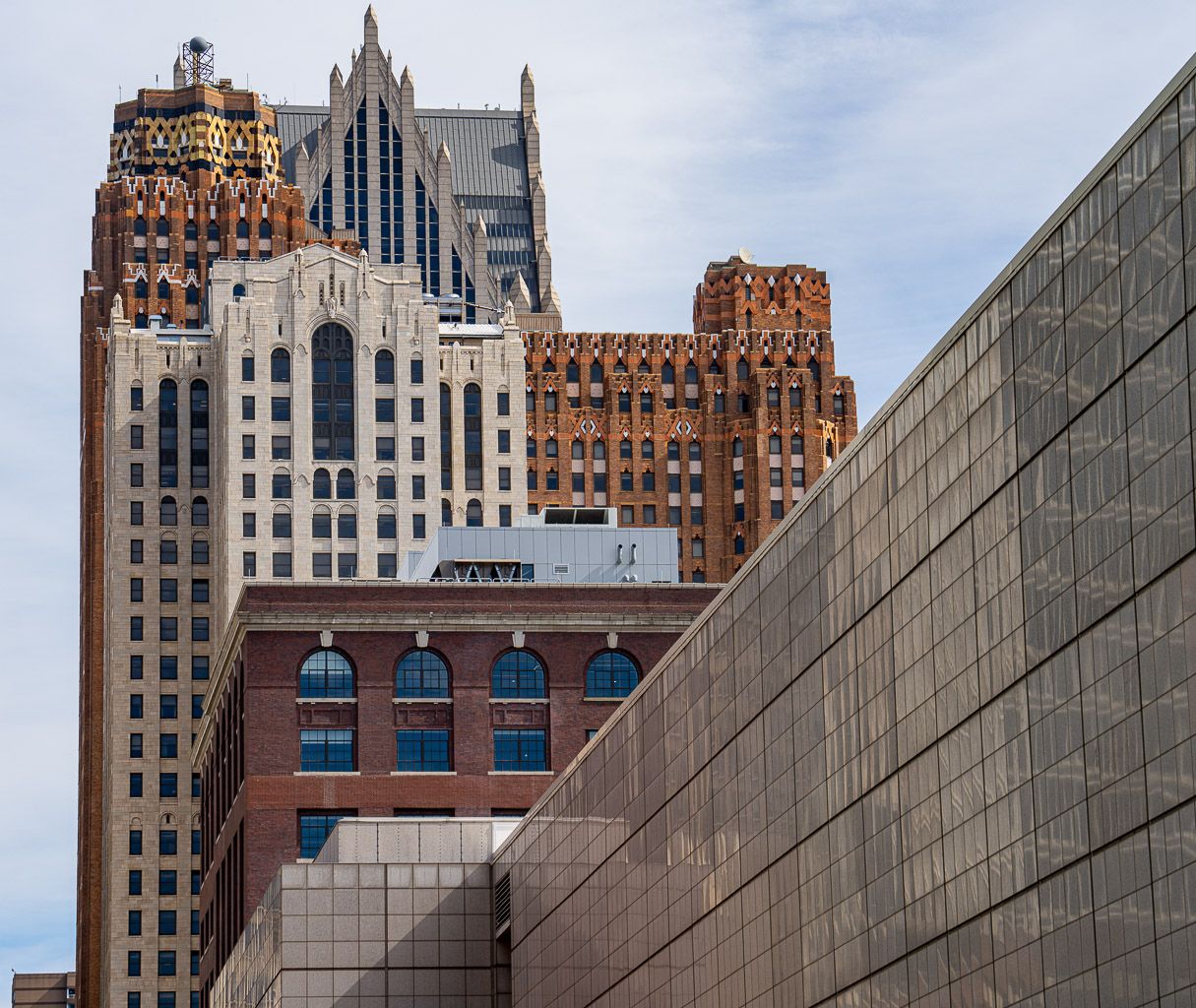
More photos and more description of this building can be found at HistoricDetroit.org.
Steel-frame eighteen-story office building faced in white terra cotta (1907-08) on a square property site at the northwest corner of Griswold and West Congress Street, D. H. Burnham & Company, architects. Toledo, Ohio, glass manufacturer Edward Ford from Toledo, Ohio, and his son, John B. Ford, general manager of the Fords' Wyandotte, Michigan, alkali plant, had this building constructed as investment property. At the time, it was Detroit's tallest. An article in the March 22, 1908, Free Press celebrating the building's approaching completion explained that the Fords turned to investing in Detroit only after becoming disgusted with some Toledo property owners who kept raising prices on them after they agreed to purchase.
The fenestration pattern of vertical banks of paired double-hung widows is identical on both the Griswold and West Congress facades. The building contains a light court through the alley (rear) facade in order to allow more light and air to interior offices. On the Griswold Street entrance, an overhanging marquee extends over the sidewalk. The terra cotta building facade is broken by bands running above and below the third floor. At the eighteenth floor, the top windows are arched. The seventeenth story is divided from the floors below by a band of terra cotta. The building displays Neoclassical detailing including a two-story base with piers and Ionic columns around a central entry and a two-story attic with piers supporting arches that span the uppermost window bays. The roof is flat, although a large elevator penthouse is located in the center of the building toward the Griswold side of the roof.
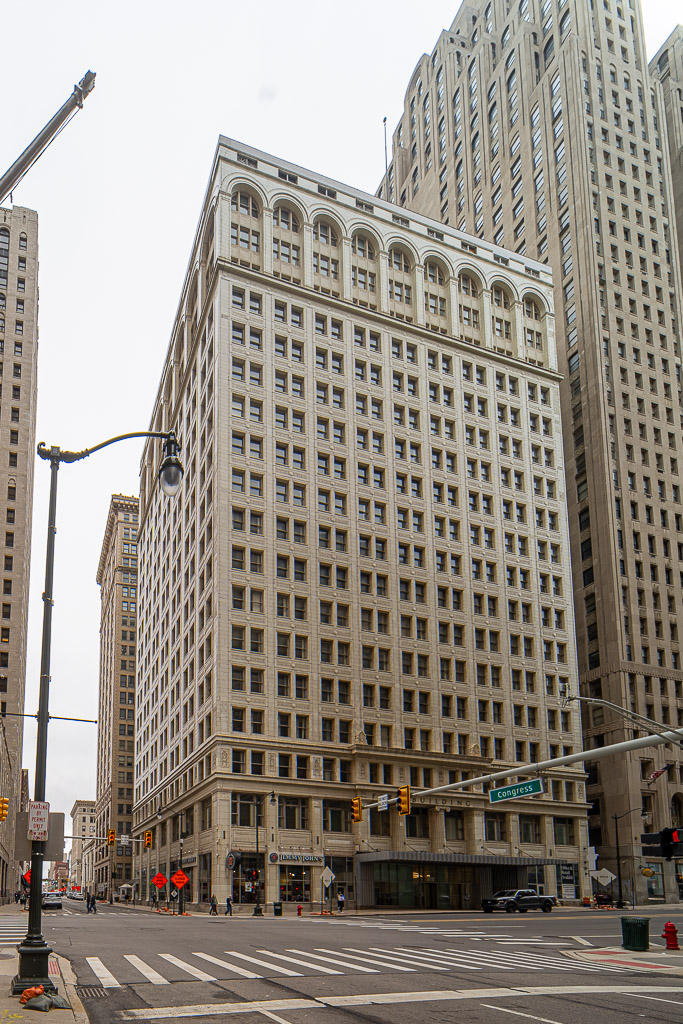
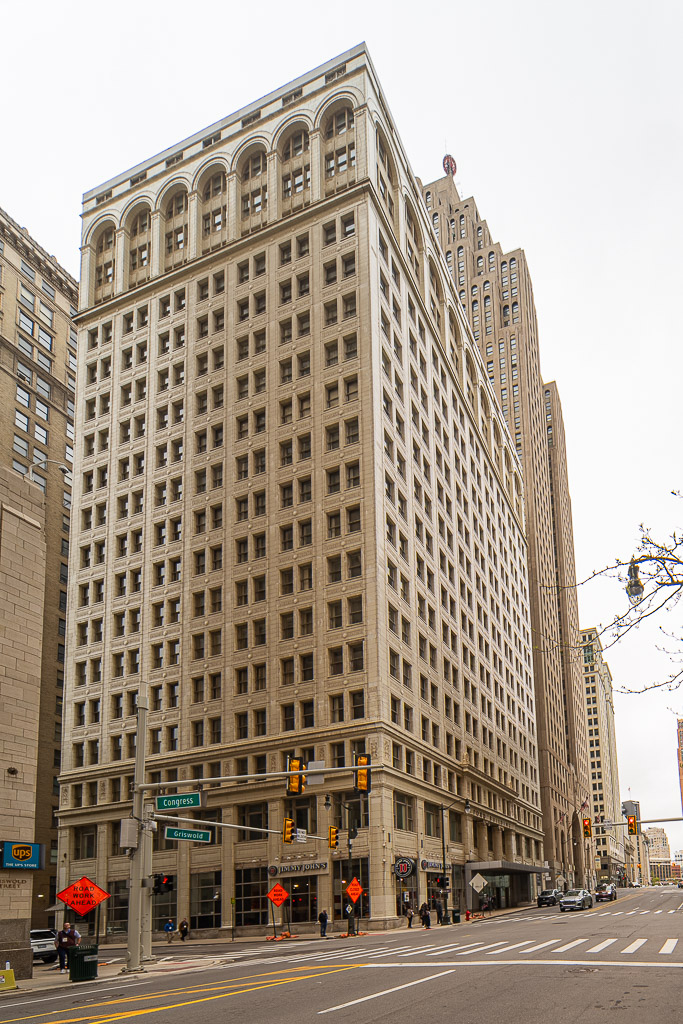
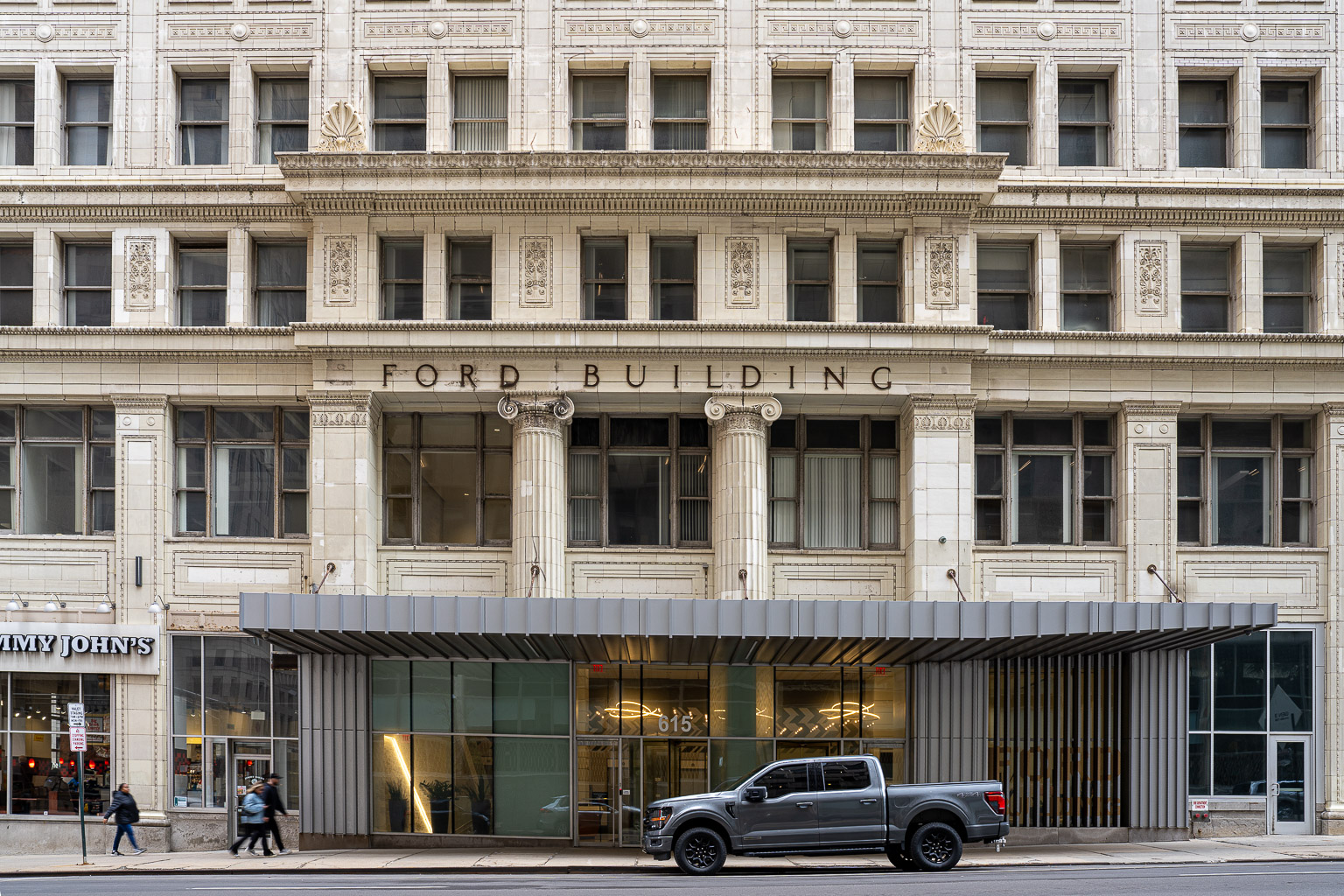
Here are some details on the Ford Building.
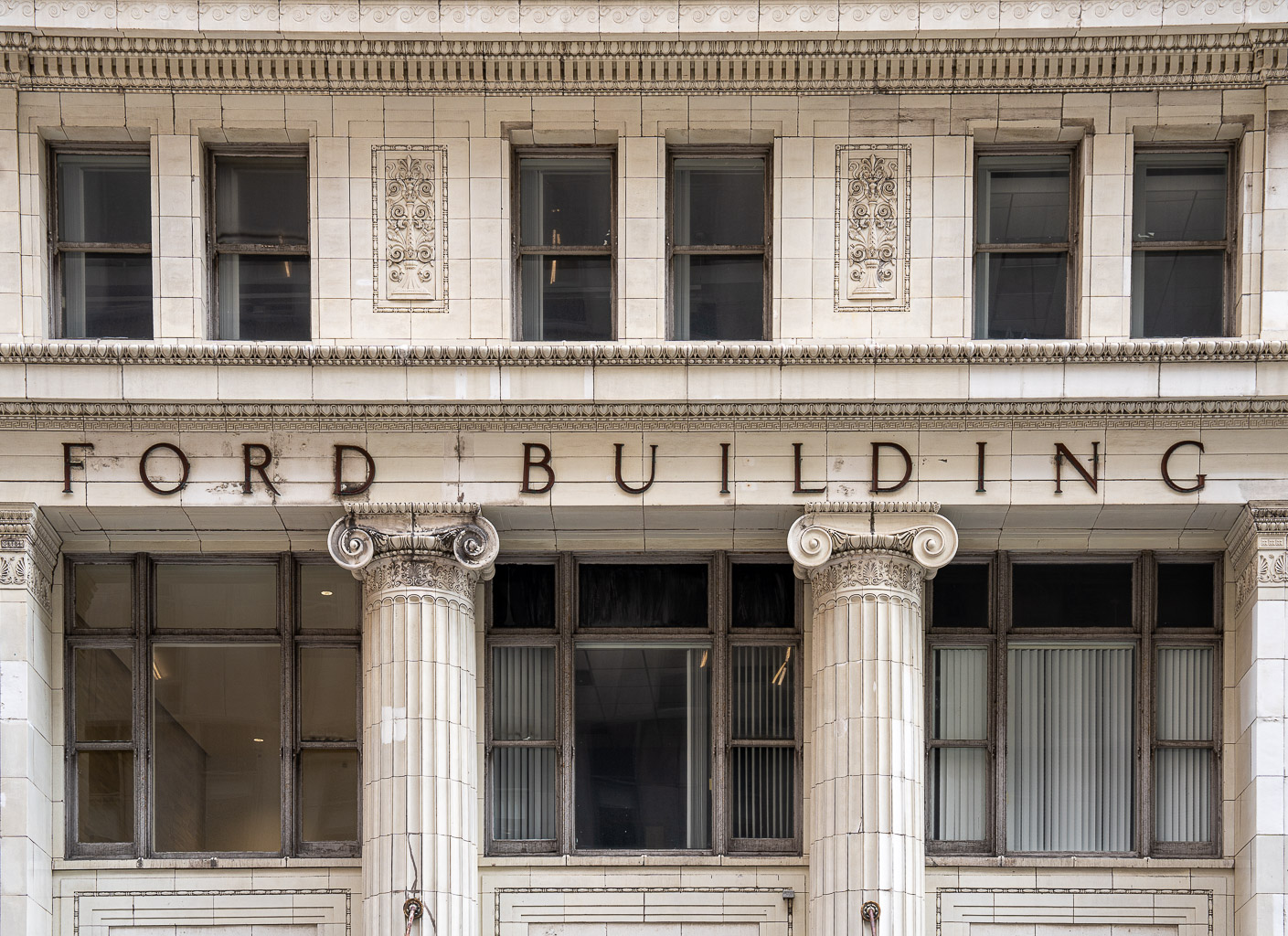
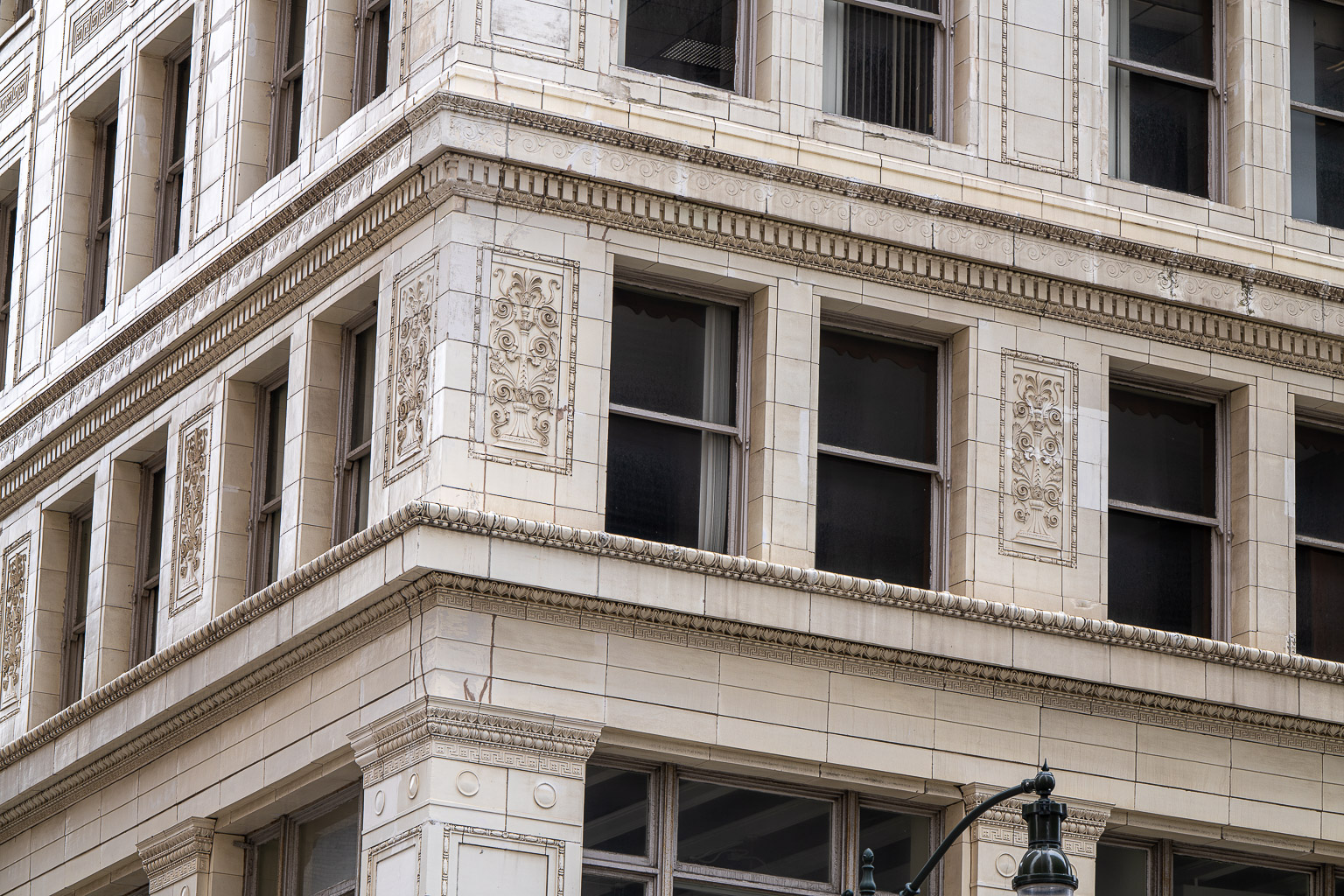
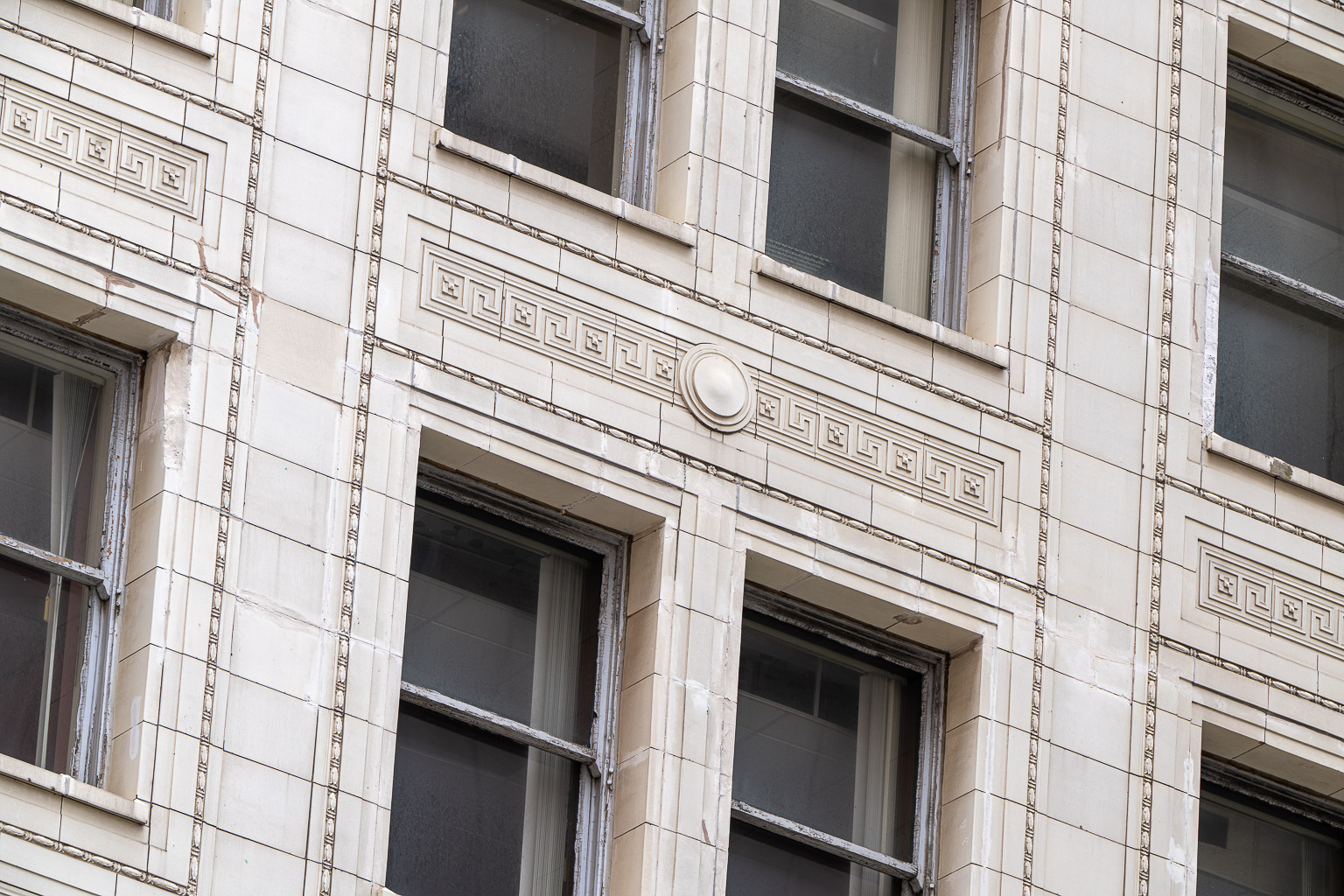
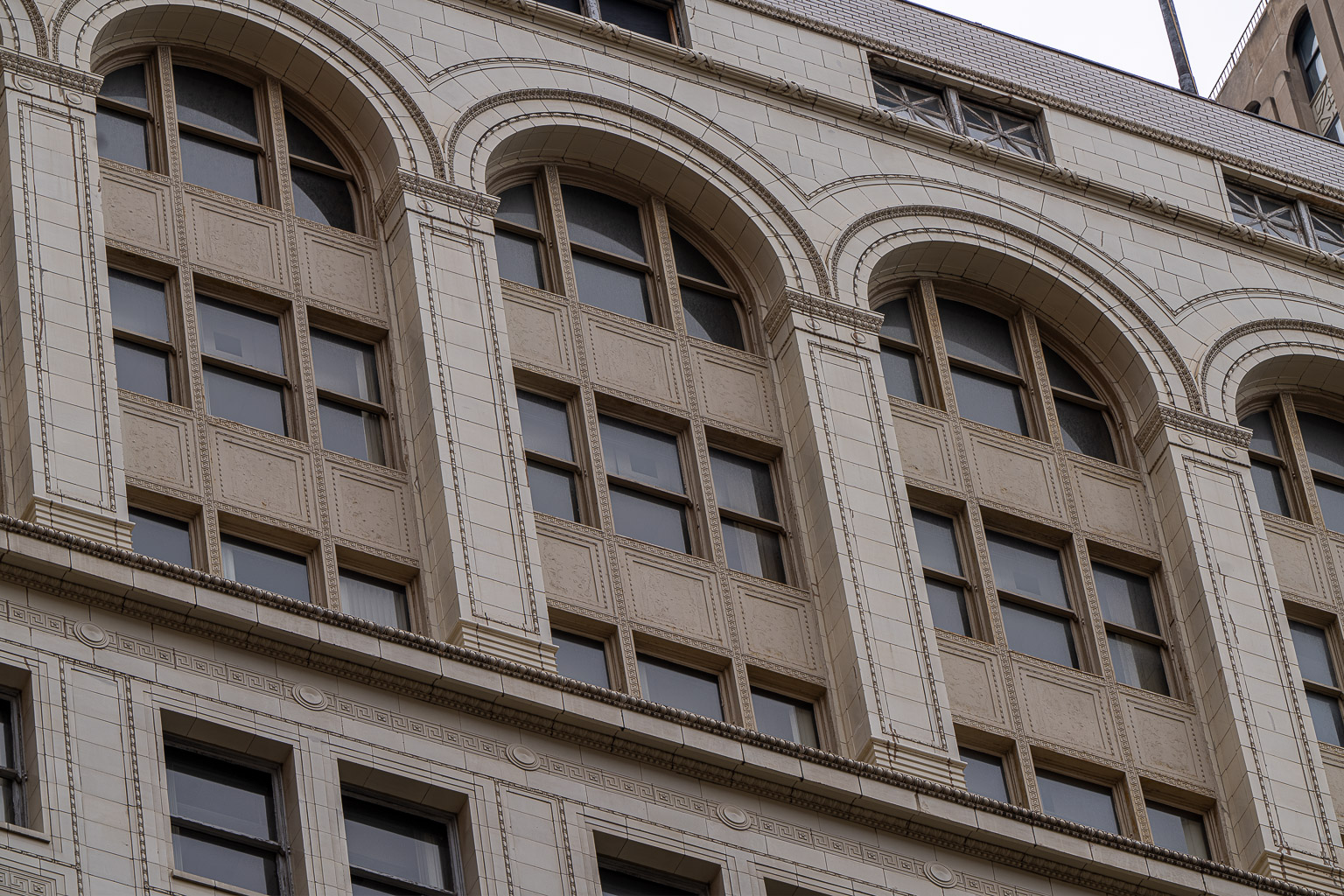
More photos and more description of this building can be found at HistoricDetroit.org.
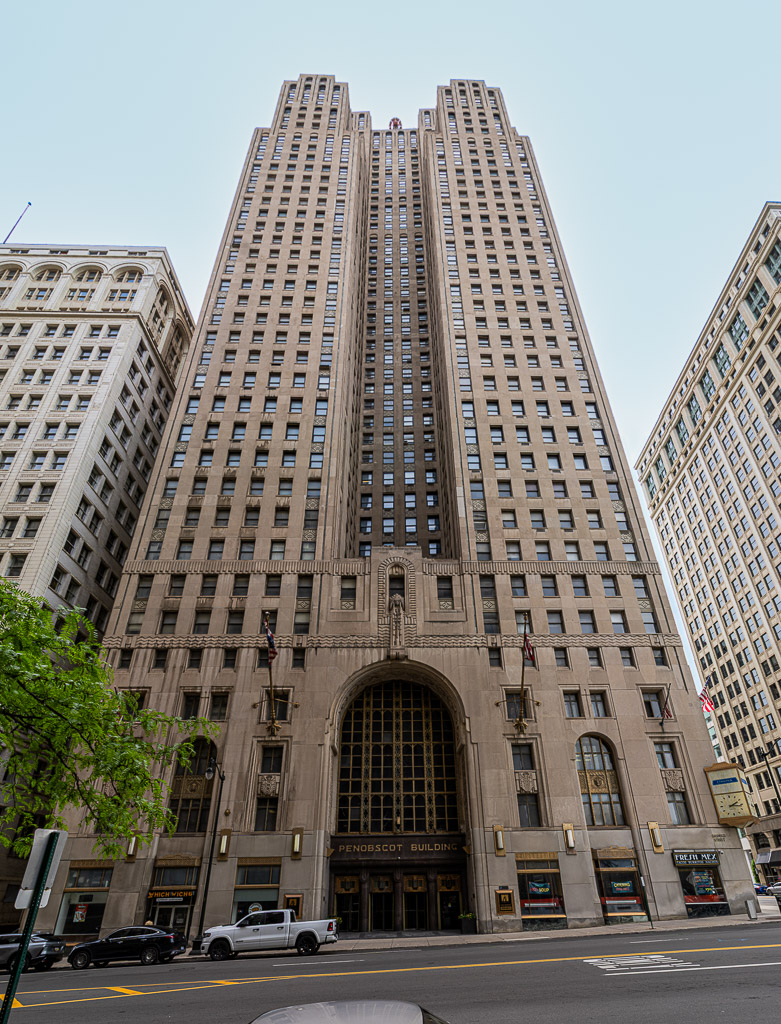
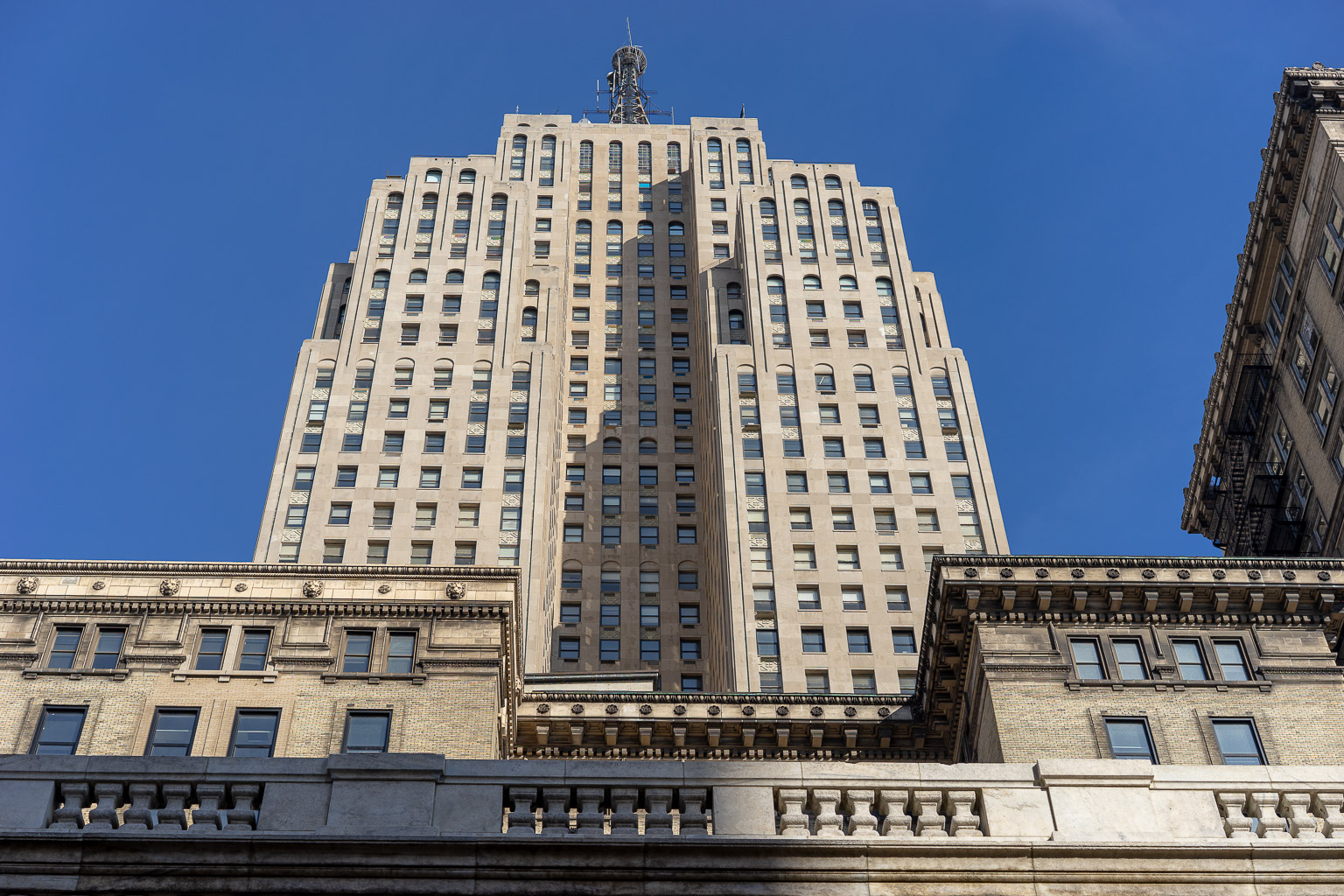
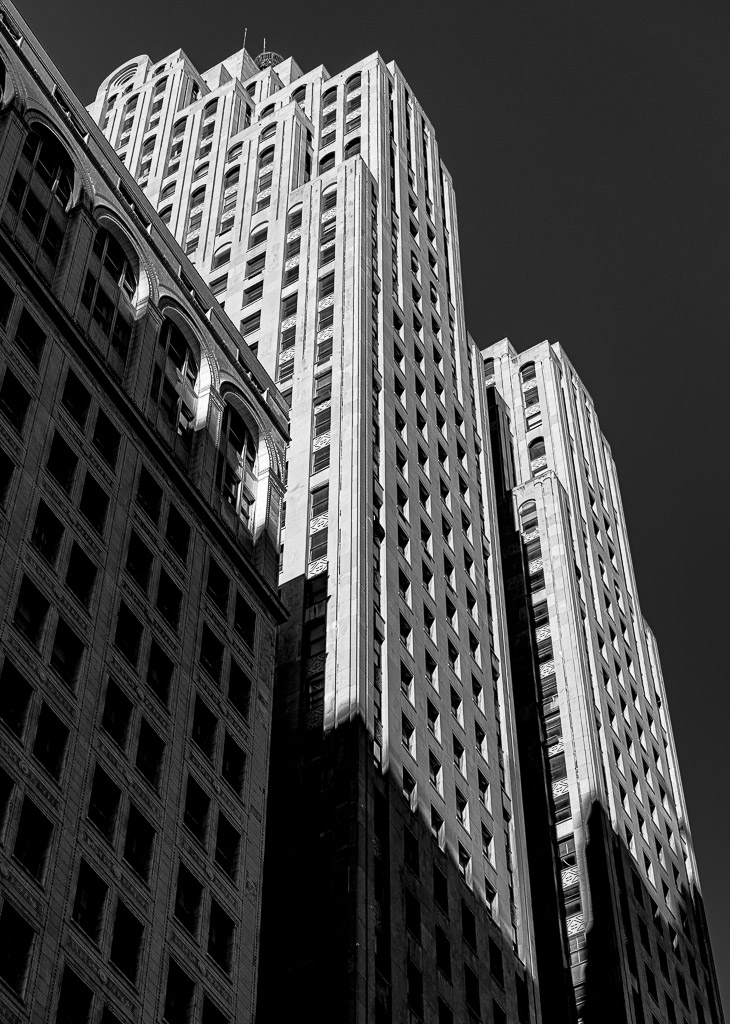
The Greater Penobscot Building (usually called simply "The Penobscot Building" is a steel-frame forty-seven-story skyscraper faced in granite and terra cotta, built in 1927-29. The architect was Wirt C. Rowland of Smith, Hinchman & Grylls, who was responsible for three of the five skyscrapers which constitute Detroit's financial district: Greater Penobscot, Buhl (1925), and Guardian (1929) buildings. The Ford Building (1909) and Dime Building (1912) were both designed by Daniel Burnham. Corrado G. Parducci was the sculptor for the Greater Penobscot Building. This is the third and largest component of a cluster of buildings that all bear the Penobscot name (see entries for 131 W. Fort and 140-50 W. Congress), named after the Penobscot River in Maine, which was named after the Penawapskewi American Indians of Maine and Canada. The 1928 Greater Penobscot Building connects to the 1905 and 1916 Penobscot Buildings via a hallway and staircase to the west side of the property.
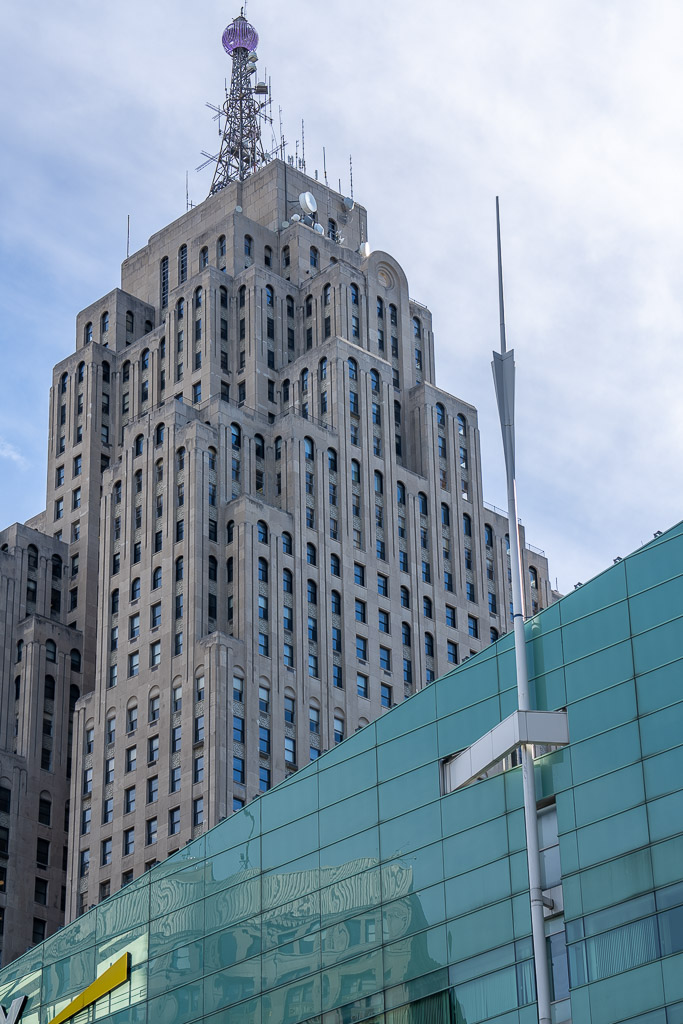
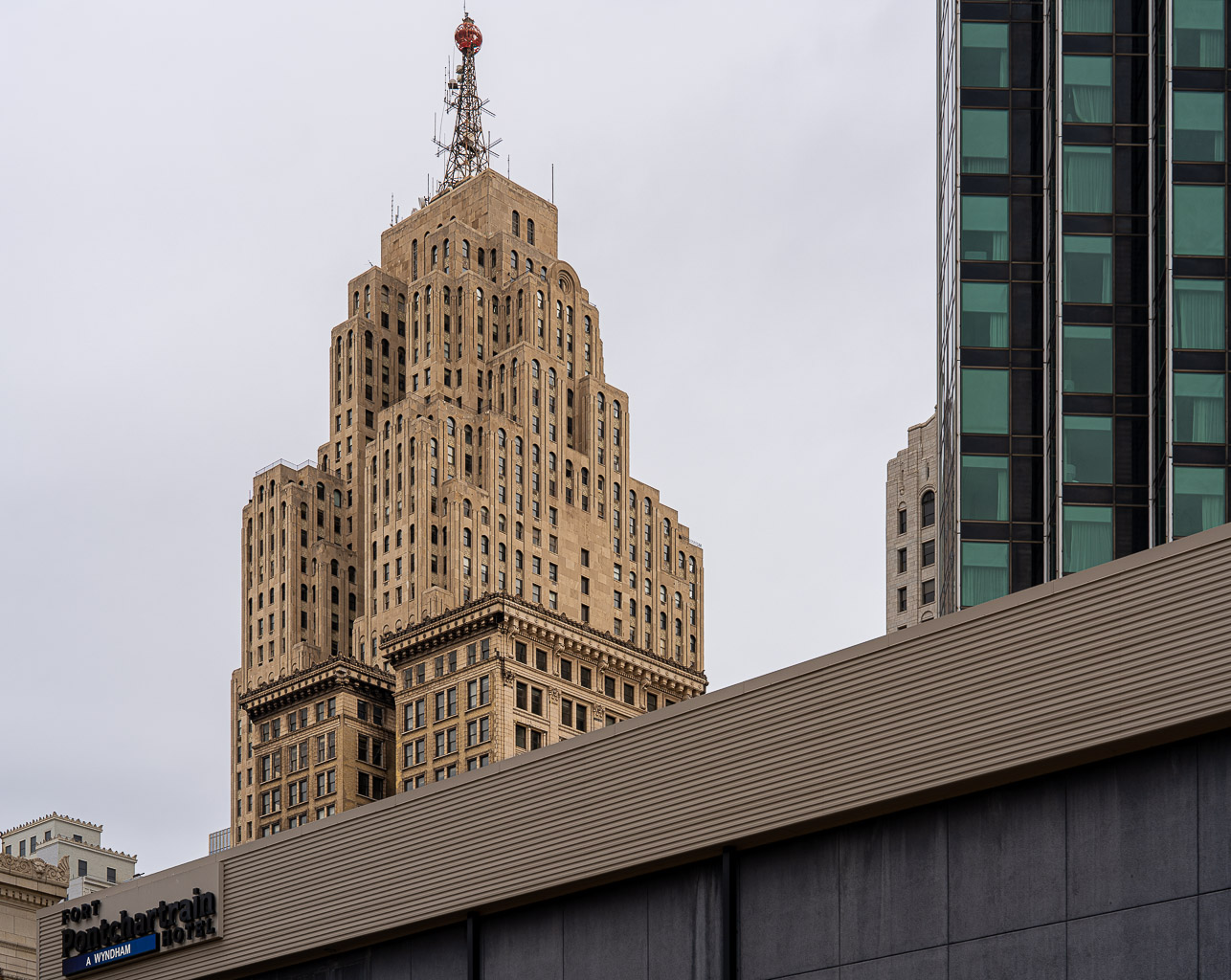
Standing at the corner of West Fort Street and Griswold, the Penobscot building fills the site to the alley to the south. The building is square in plan in its six-story base but then front and back light courts give the upper stories an H-shaped form almost to the top. This structure was the final addition to the Penobscot Buildings (2nd, 3rd and 4th photos below), and was the tallest building in Michigan for fifty years, until the Renaissance Center's 73-story hotel tower was completed in 1977. The Indiana limestone walls rise unimpeded to the top of the thirtieth story from a base of gray granite to a series of setbacks that terminate in an apex surmounted by a red neon beacon. The last 2 photos in this group illustrate the cubist effect of the Greater Penobscot Building.
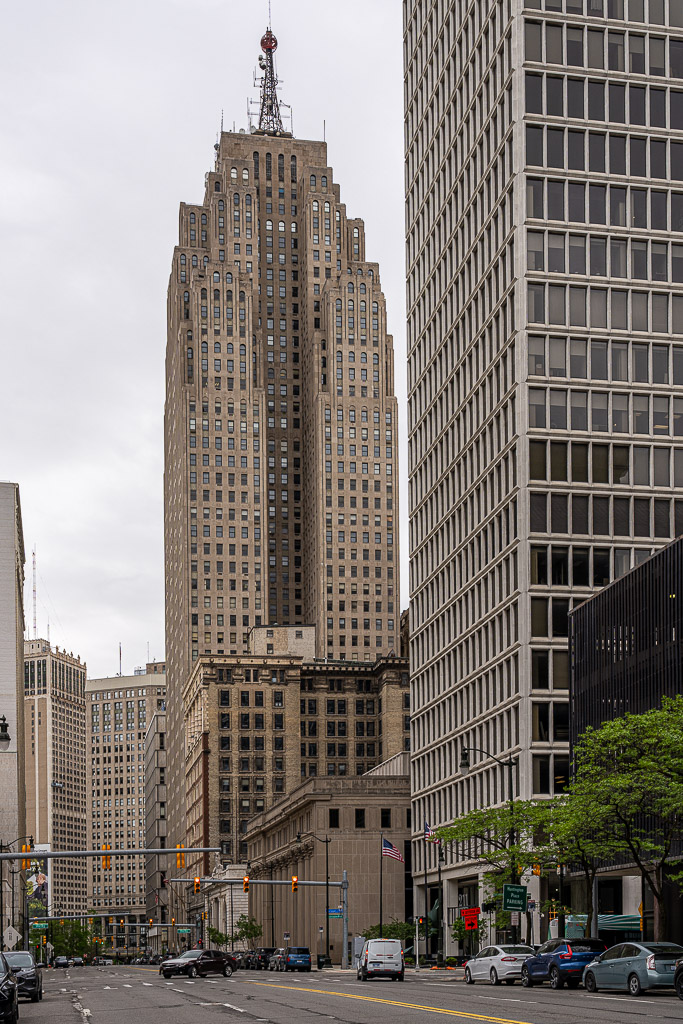
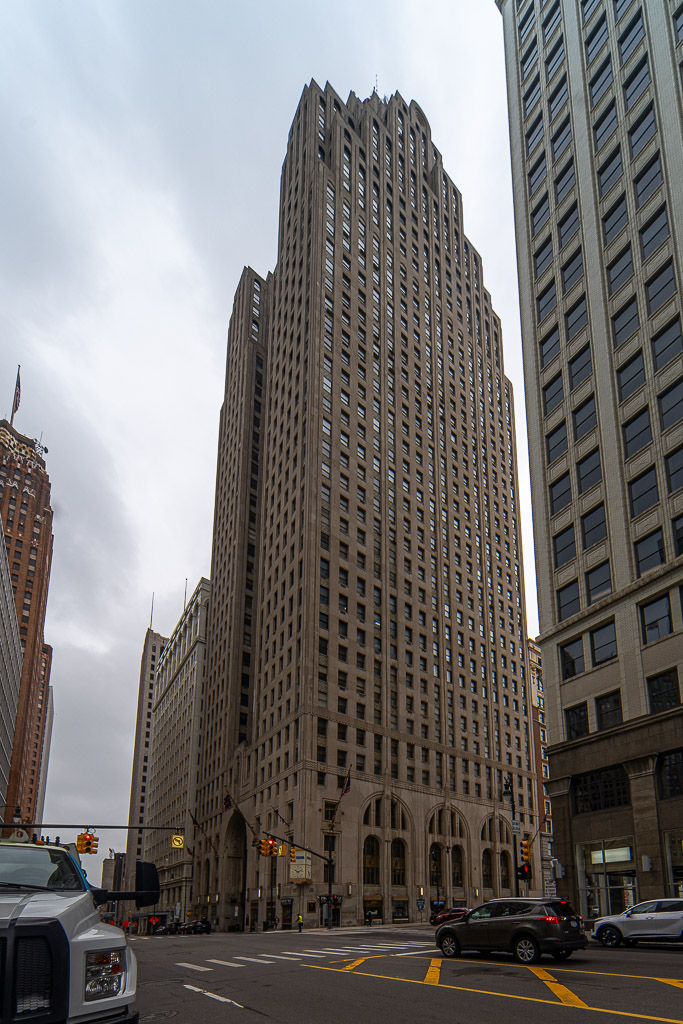
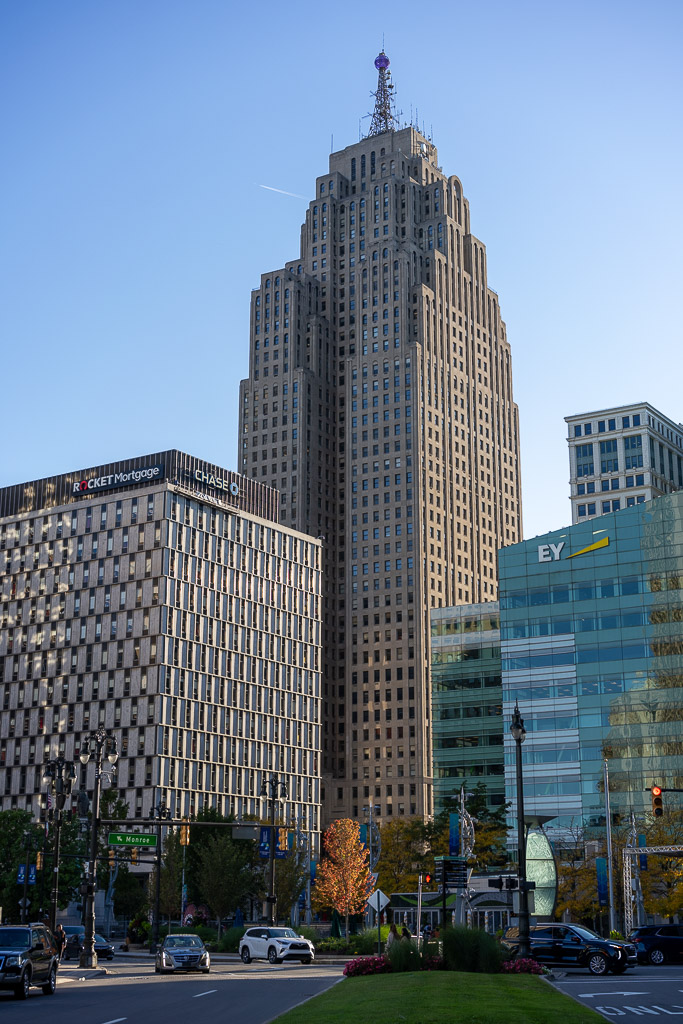
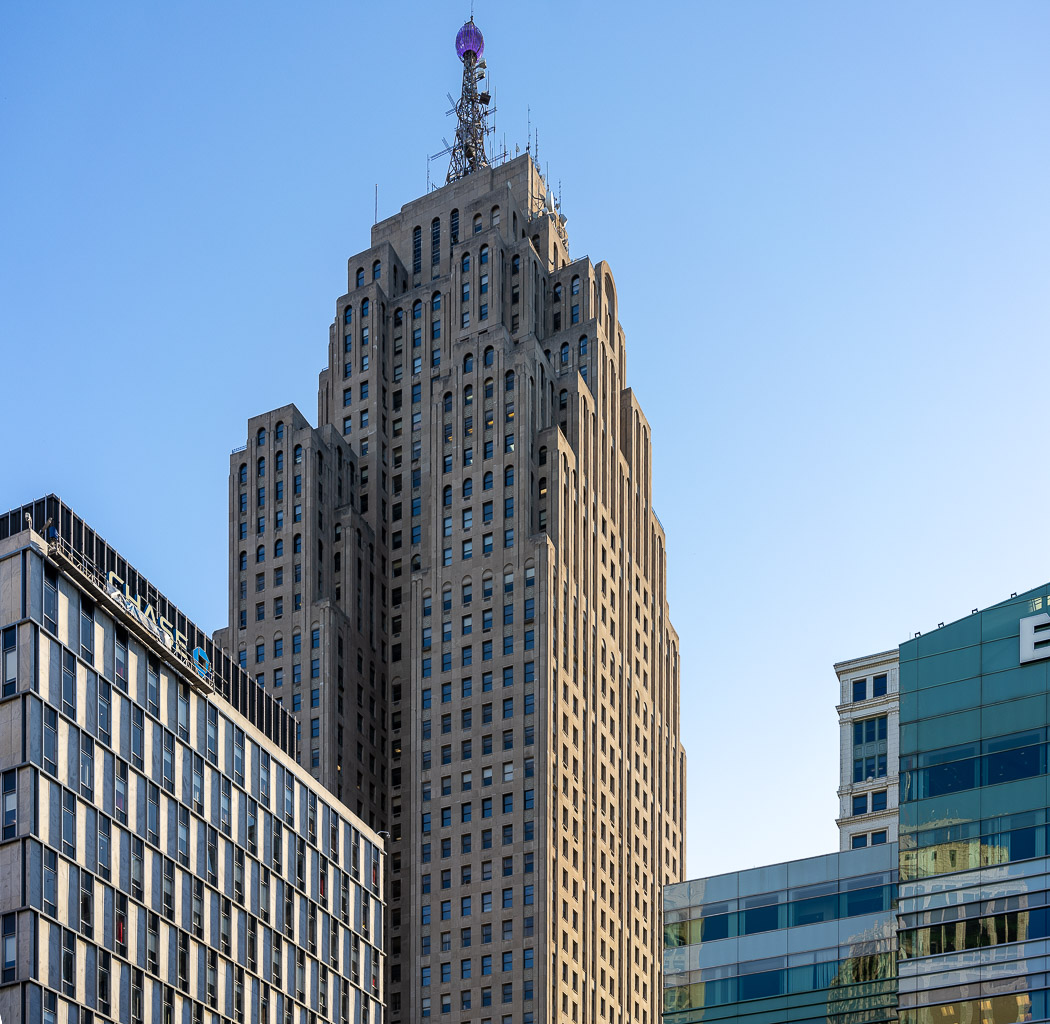
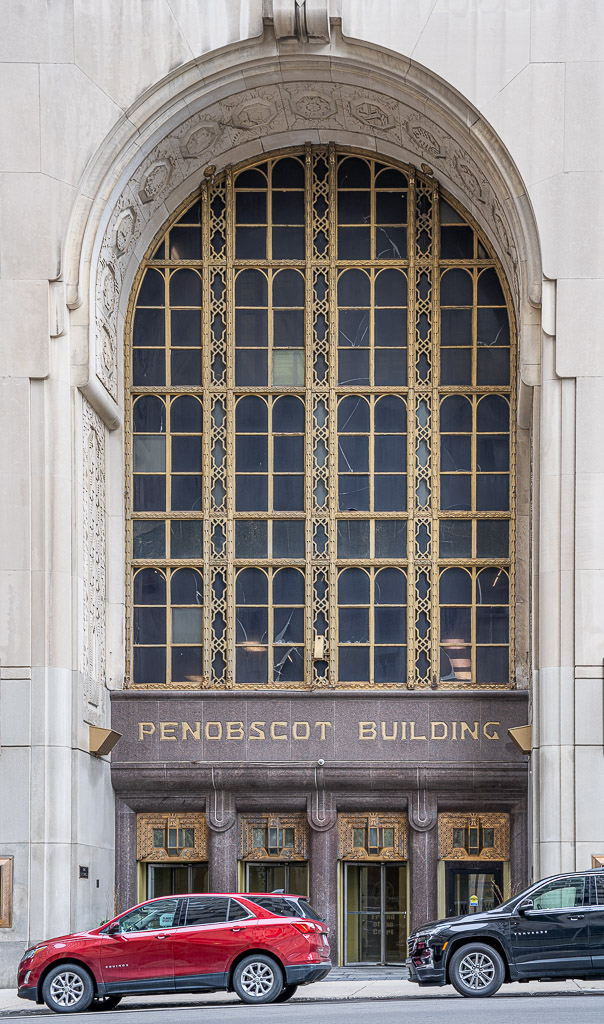
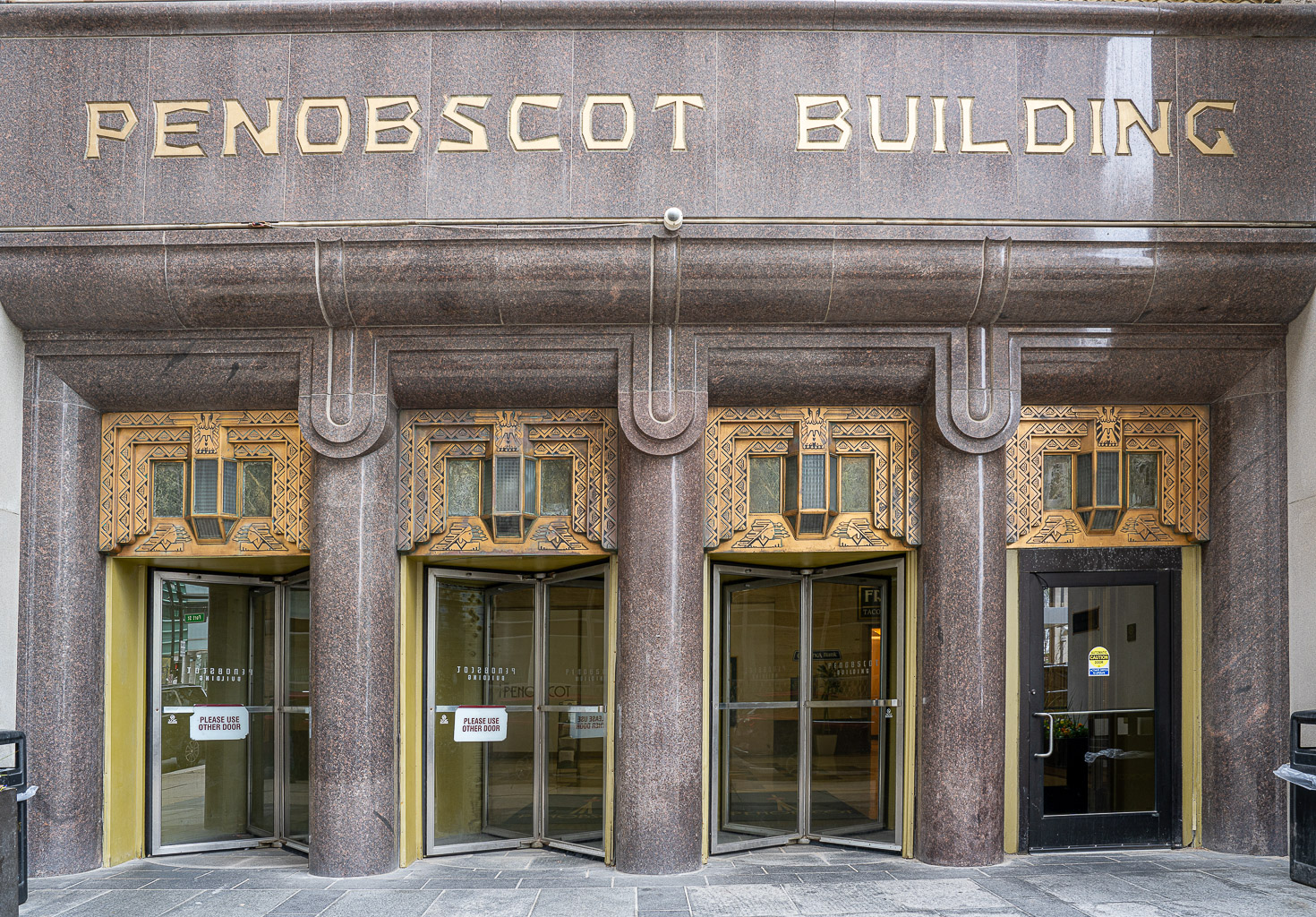
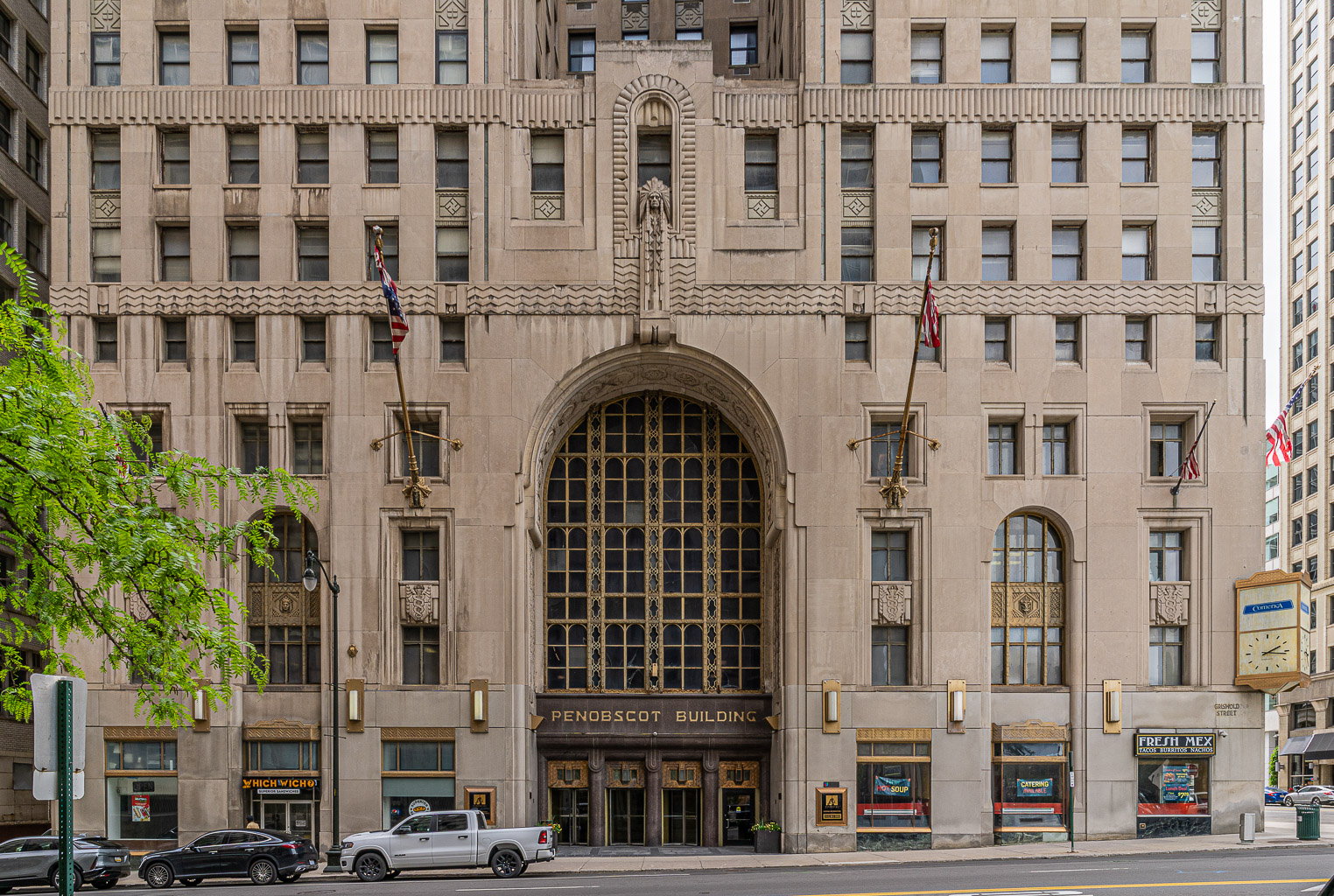
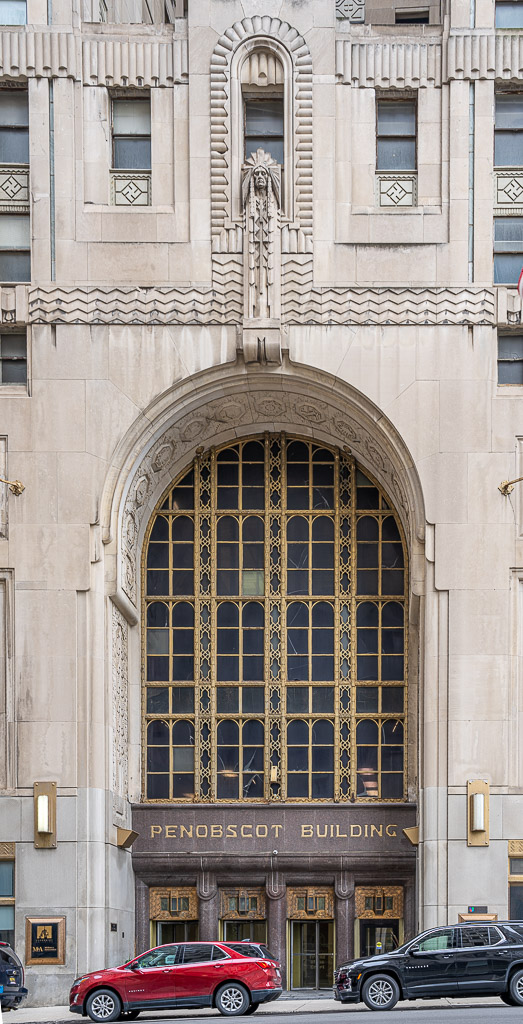
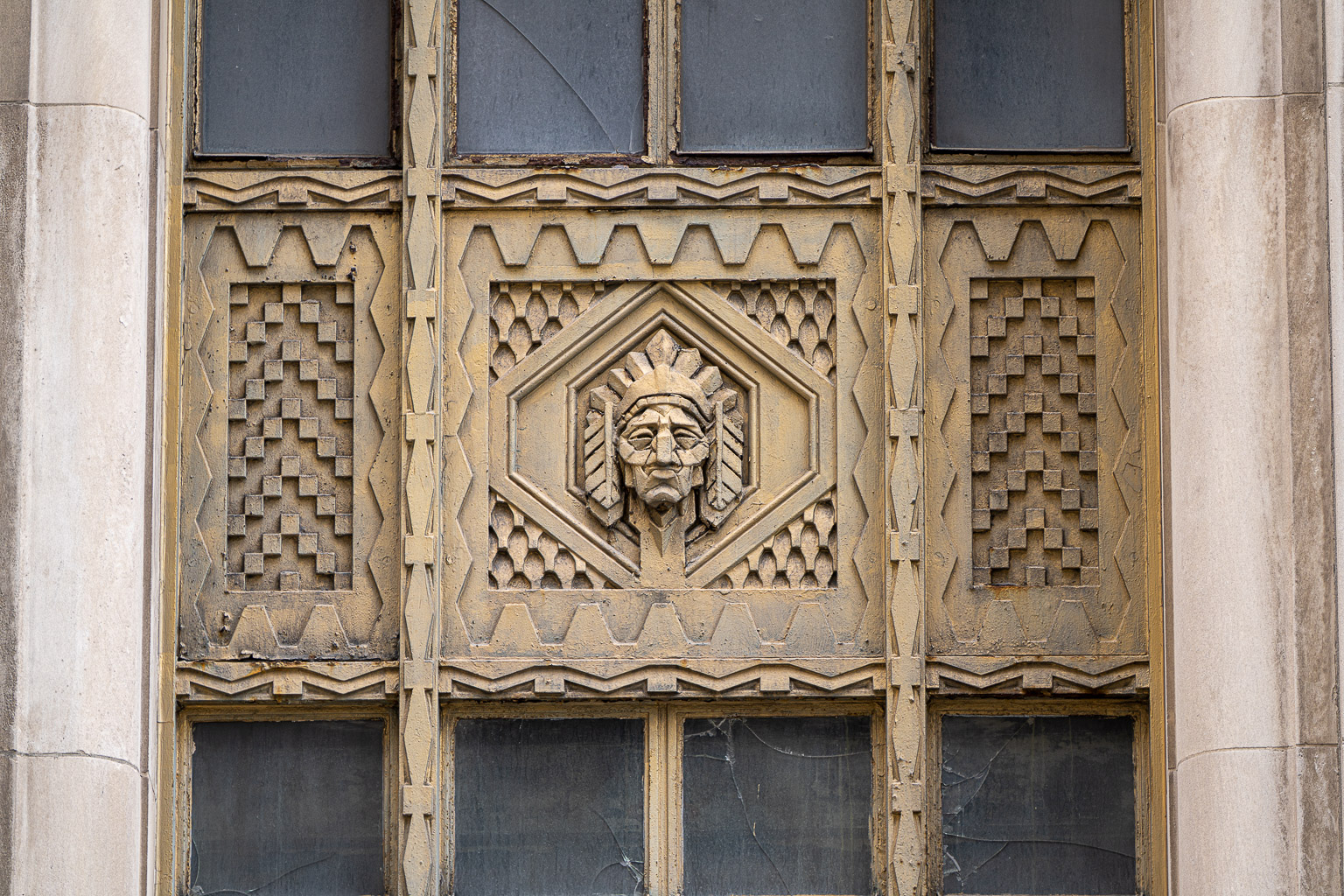
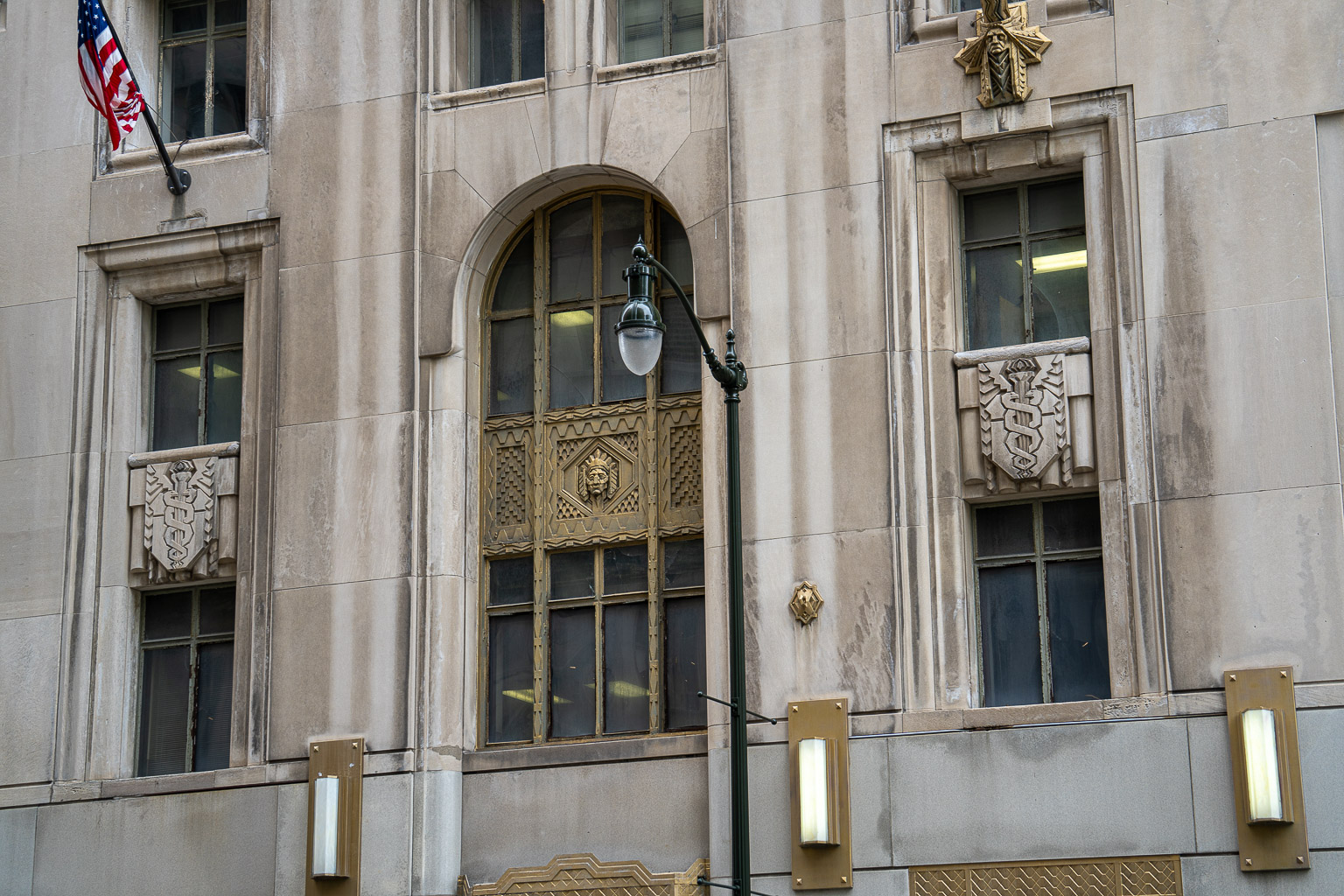
A grand 4-story mahogany granite entrance archway greets the visitor on Griswold Street (1st photo below). The doors are shown in the 2nd photo below. The brass insert above each of the 4 doors contain American Indians in art deco style (3rd photo below). The Griswold 3-story window is inset with art deco detailing as shown in the 4th through 6th photos below. With the grand 4-story entrance, Rowland introduced a second theme to contrast with the building's cubist effect - the half-round arch, which may be seen in various sizes all over the building's exterior. The half-round is introduced at the building's entrance, where the front doors are framed by half-round granite columns (2nd photo below), three of which are topped by carved downward-facing round features (also 2nd photo below). Above the entrance is a massive half-round archway (1st photo below) that frames individual windows, the uppermost in each grouping of six panes has a half-round top (also 1st photo below). We'll encounter more of these arches later. In 1929 the building's lower stories housed the Guardian Trust Company, Guardian Detroit Bank, and Guardian Safe Deposit Company, and the offices of the Guardian Detroit Group holding company. From 1933 to 1944 the Manufacturers National Bank of Detroit occupied the main second-floor banking space. Within the broad panel of granite above the doors of the Griswold Street entrance (2nd photo below) appear the words "Penobscot Building." However, the original granite panel contained an etched frieze depicting the signing of a treaty between settlers and Native Americans. In 1972, the building's name was changed to "City National Bank Building" and the panel was replaced by one carrying the new name. When City National Bank became First of America Bank around 1982, the original name of the building was reinstated and the words "Penobscot Building," in a typeface similar to the original, returned to the panel, but the frieze did not.
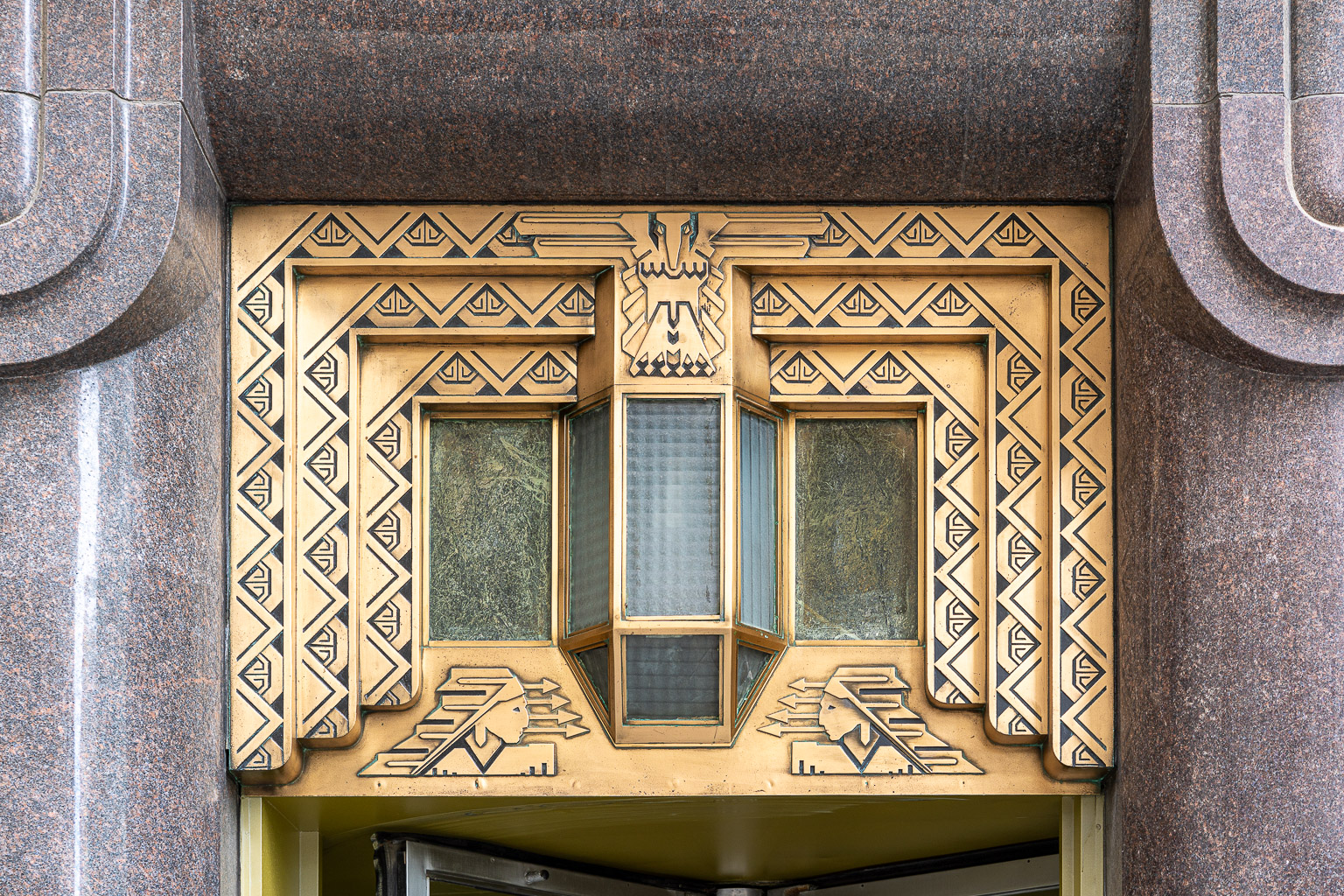
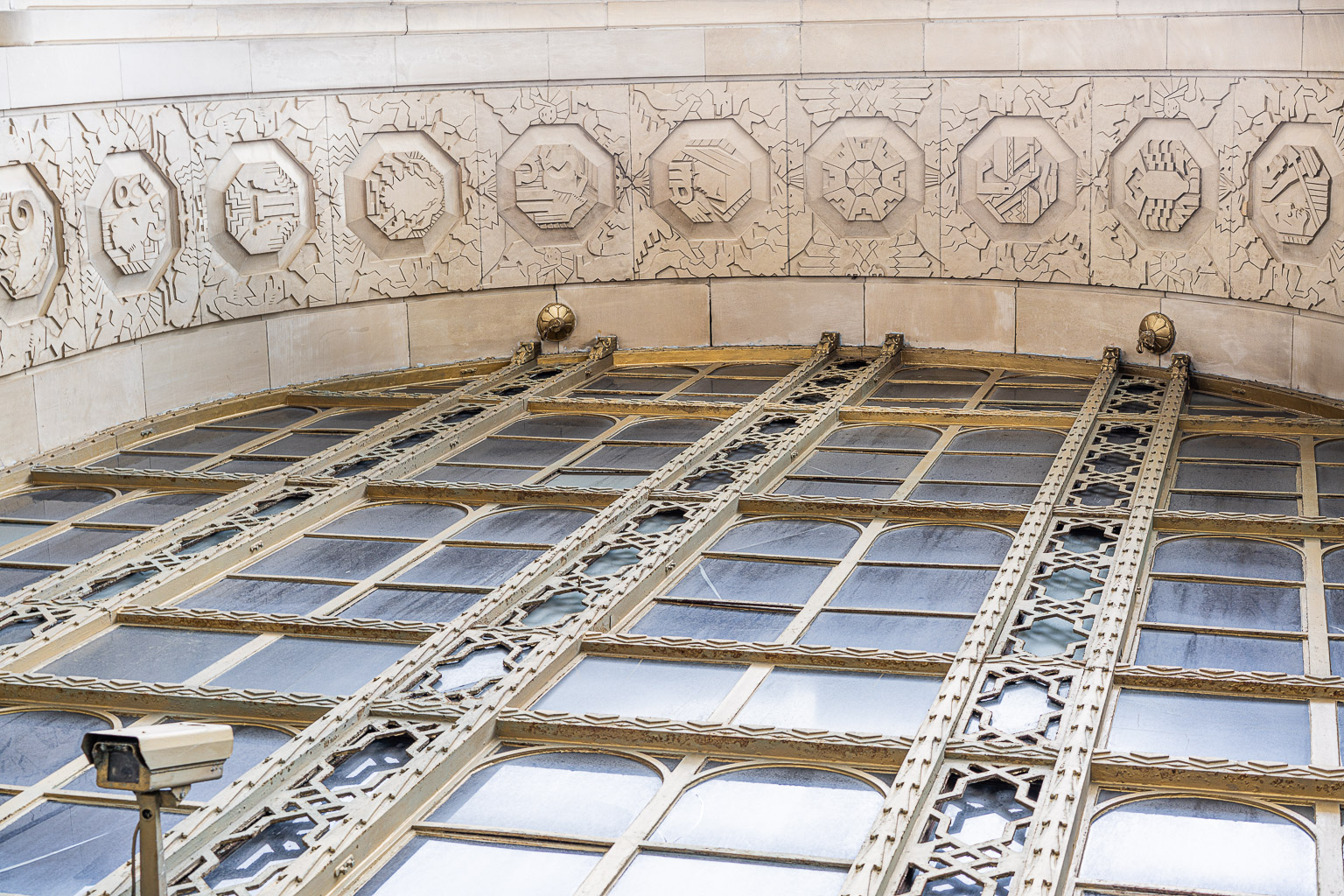
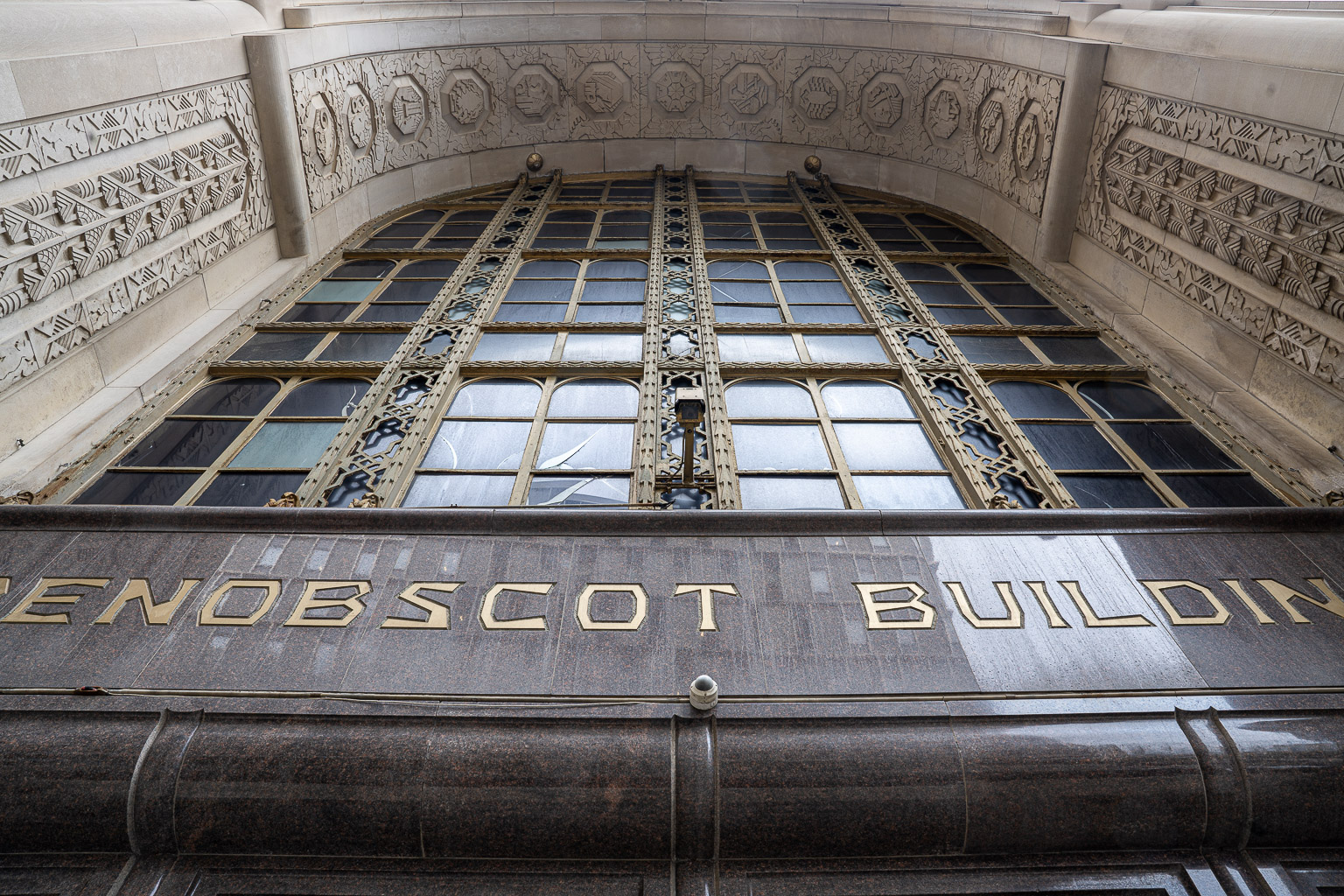
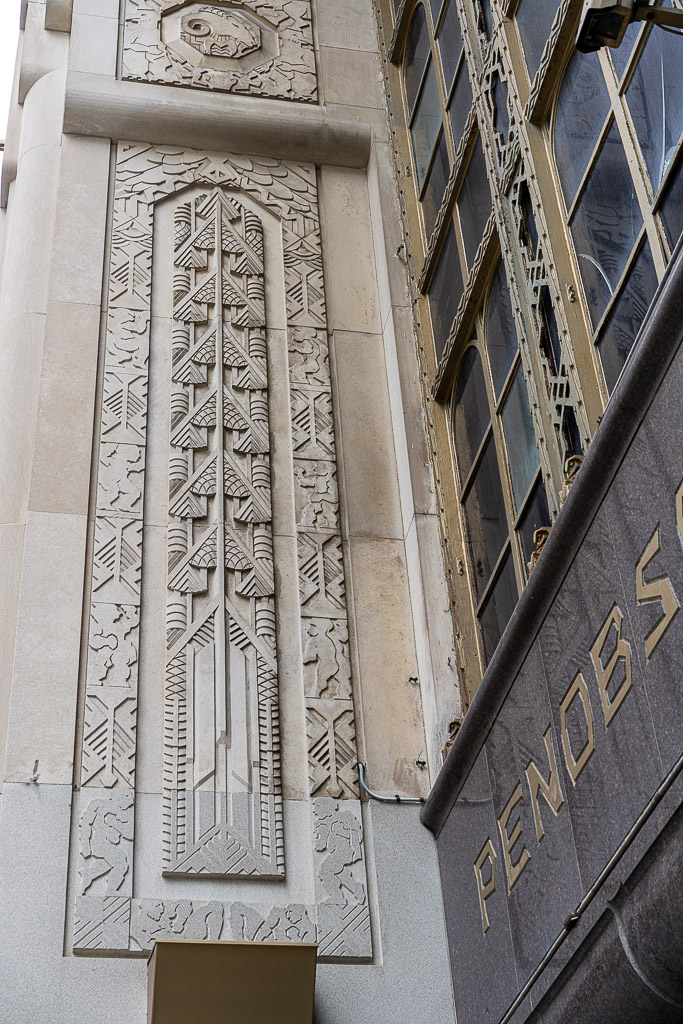
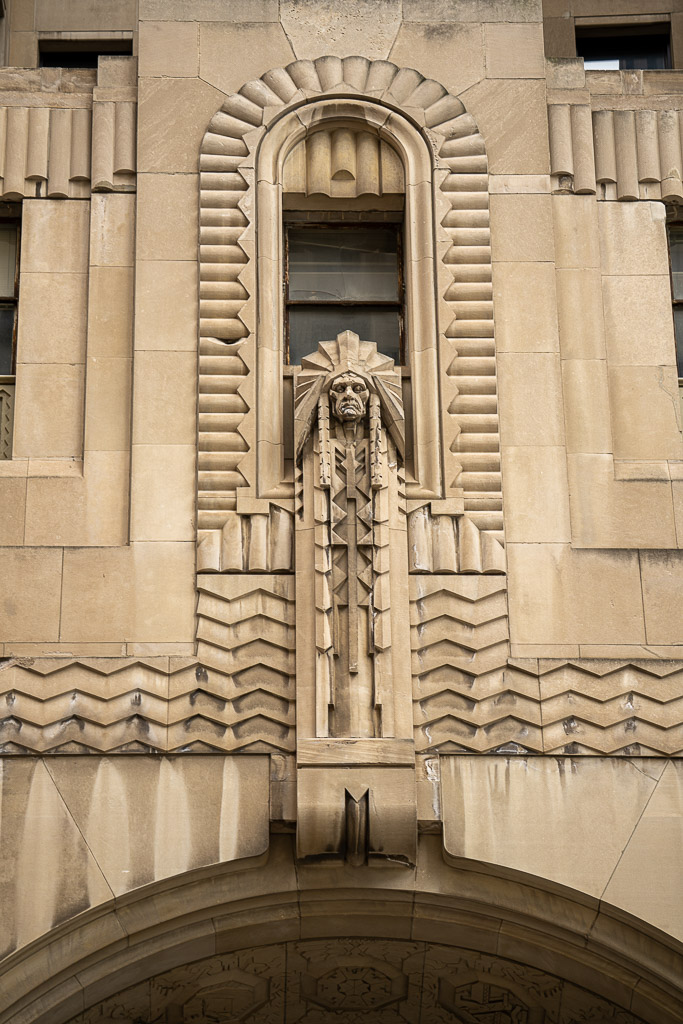
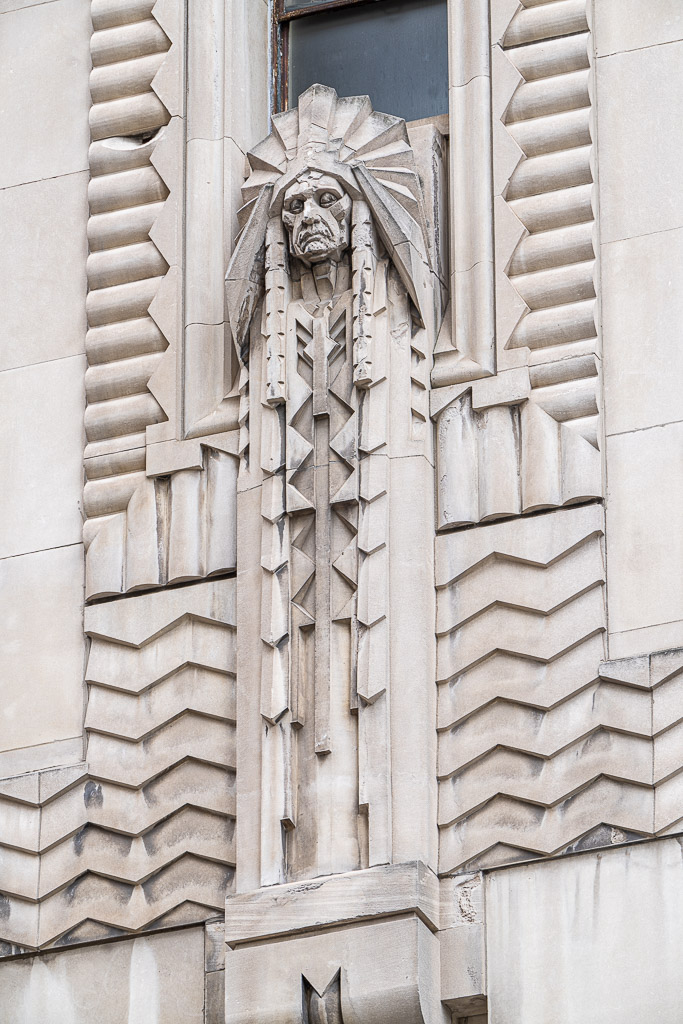
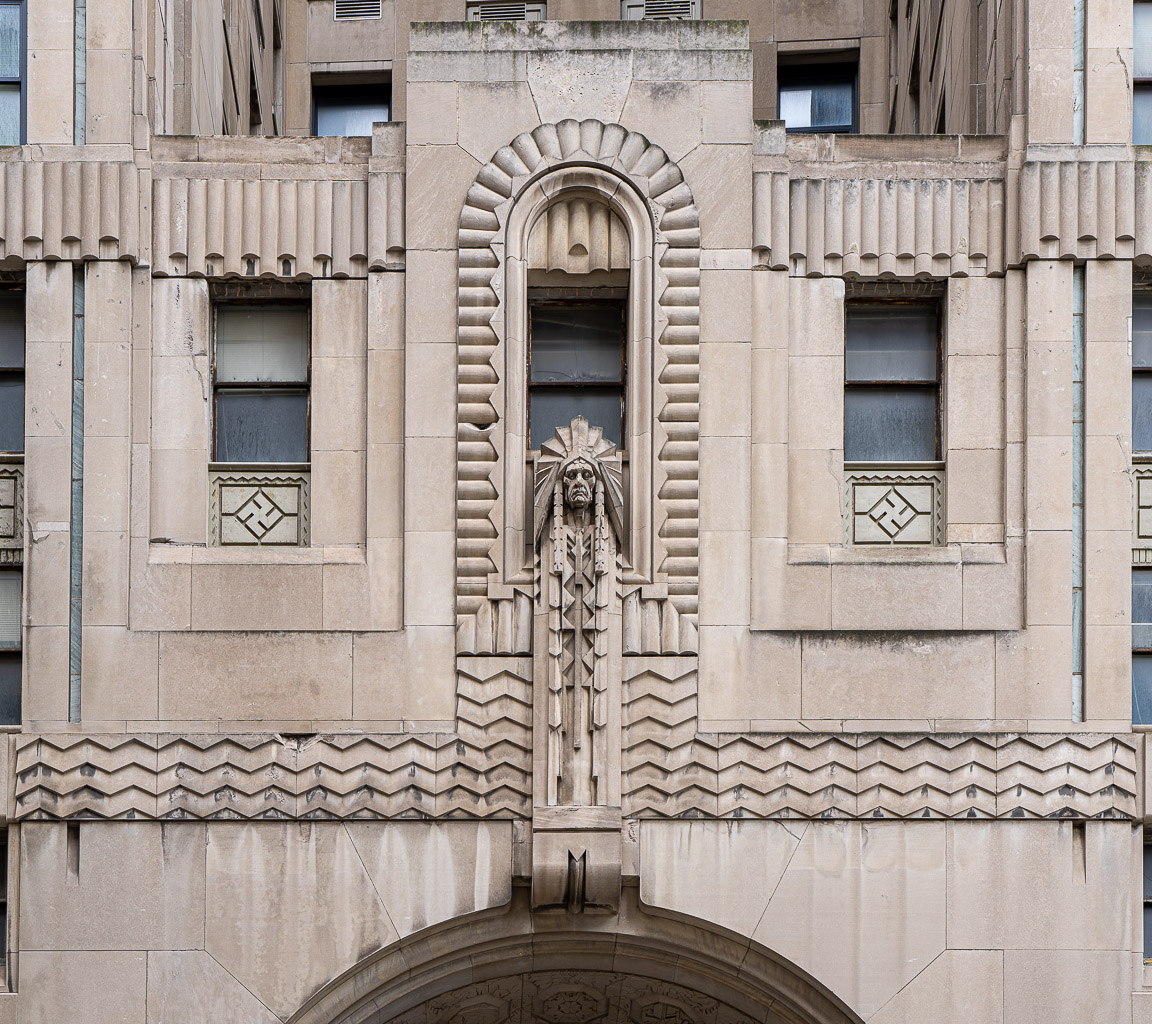
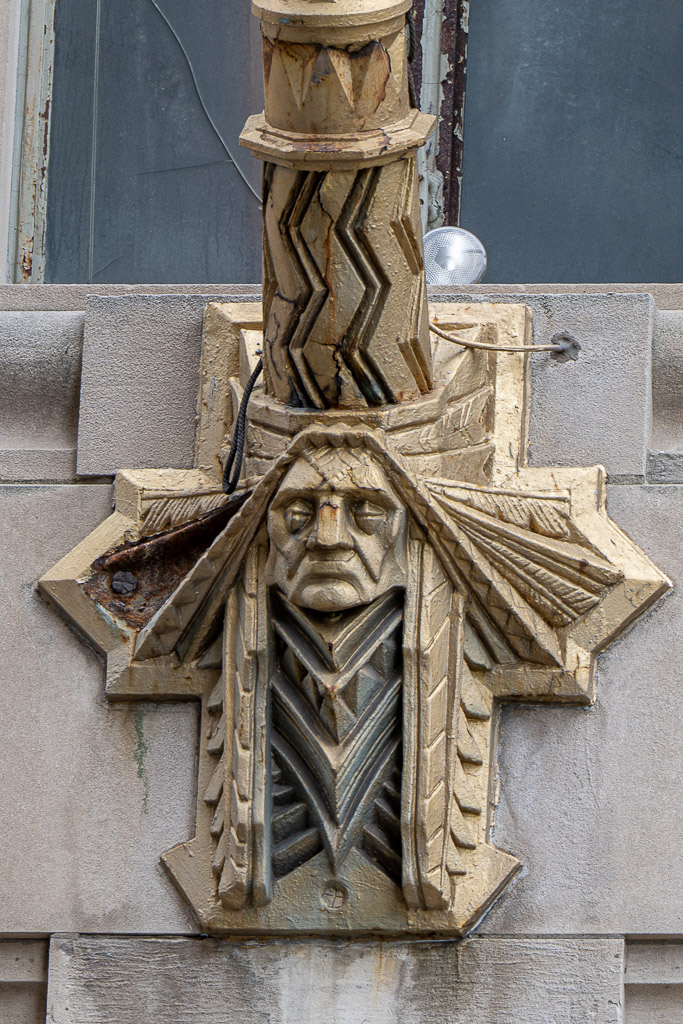
The entire Griswold Street face of the Greater Penobscot Building is shown in the 1st photo below. The lower 7 floors are shown in detail in the 2nd photo below. Above the grand 4-story entrance and archway is the premiere ornamentation of the building, an art deco Native American chief with feathers streaming down, forming the keystone of that entrance (3rd through 5th photos below). A half-round arch is right above him. On either side of that Native American is a whirling wind symbol, which looks a bit like a backward swastika (6th and 7th photos below), and is a Native American symbol. Native American figures also decorate the interior in the travertine marble of the main floor lobby and metalwork of the elevator doors. The large design on the lobby floor is composed of cut marble in a variety of shades and shapes. The central starburst-like pattern is surrounded by four stylized whirling wind or swastika symbols. The organ-pipe decorations above the 7th floor in the 2nd photo below were not seen in architecture before this building, and seem to have been invented by Rowland. He used them again in the Detroit Saturday Night Building. The zig-zag band between the 5th and 6th floors was used even during ancient times. But have a look at the grooves at each edge of the building, starting just below that zig-zag band. They appear on each side of the building, and are inlaid with slate, the darker color of which helps these recessed features contrast with the lighter surrounding limestone. They extend up to just below the first setback at the 31st floor, at which point new grooves begin.
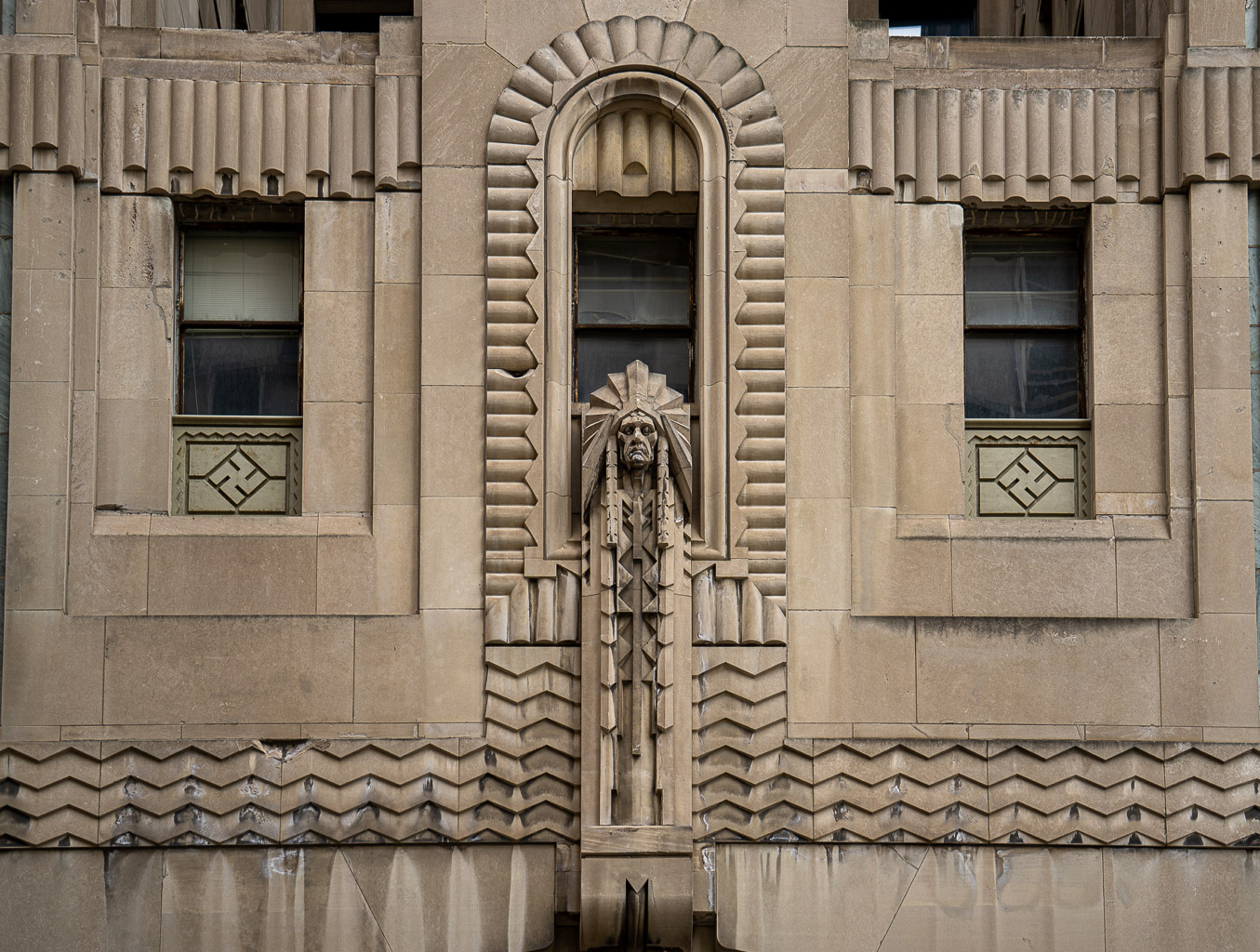
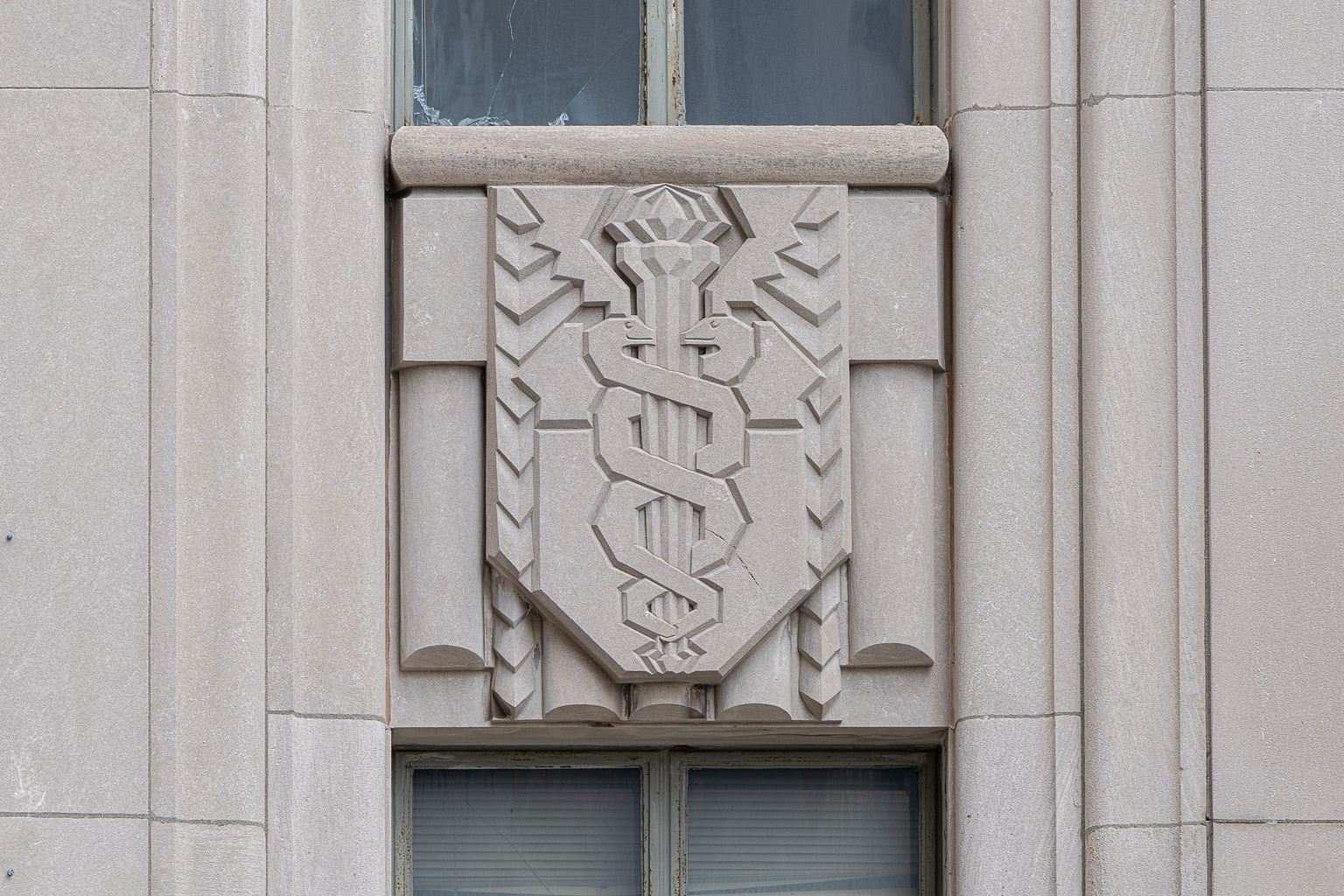
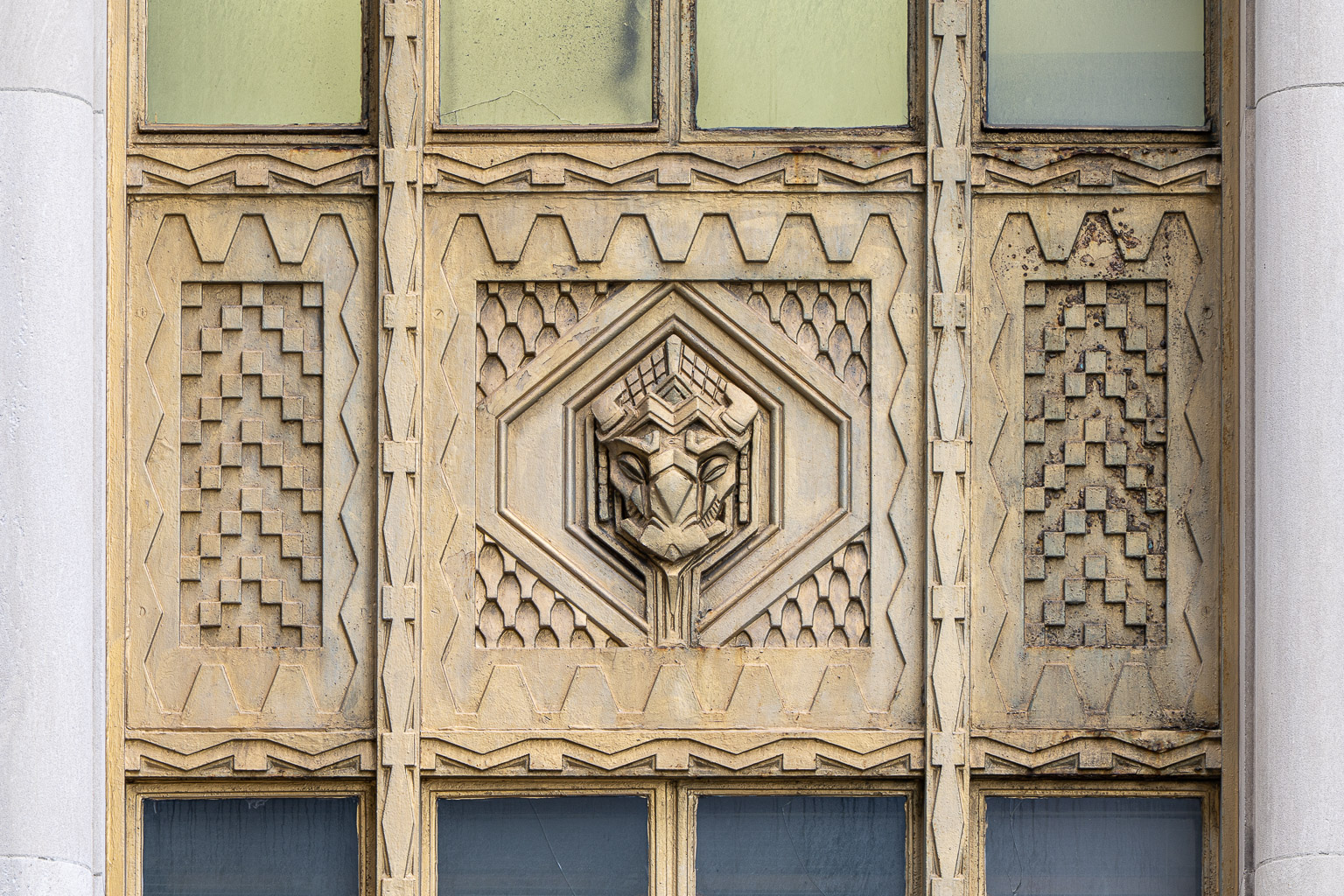
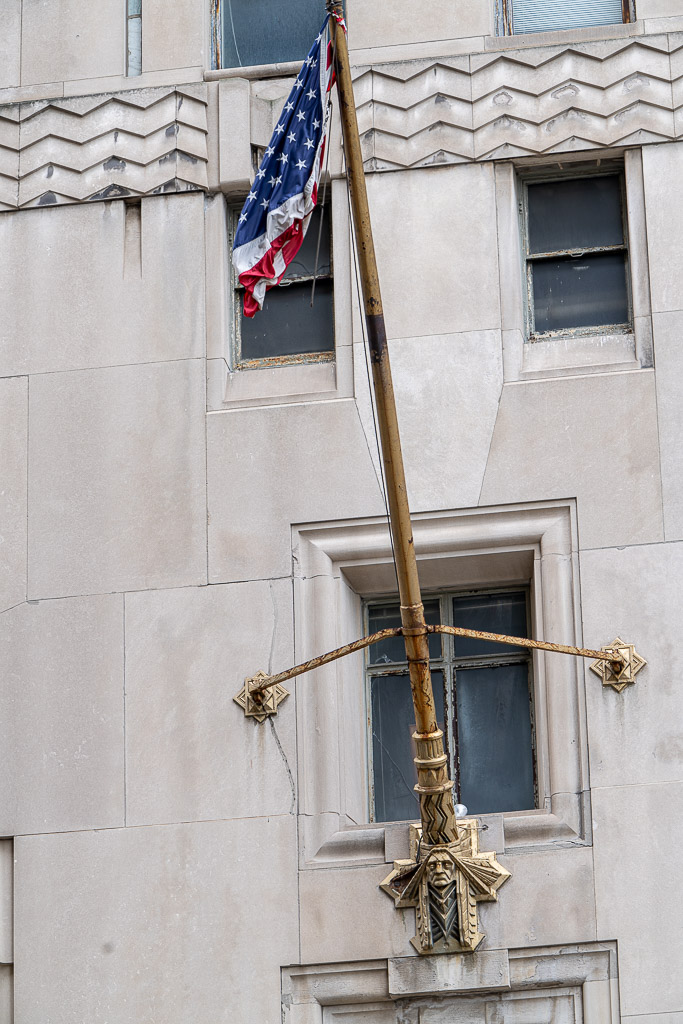
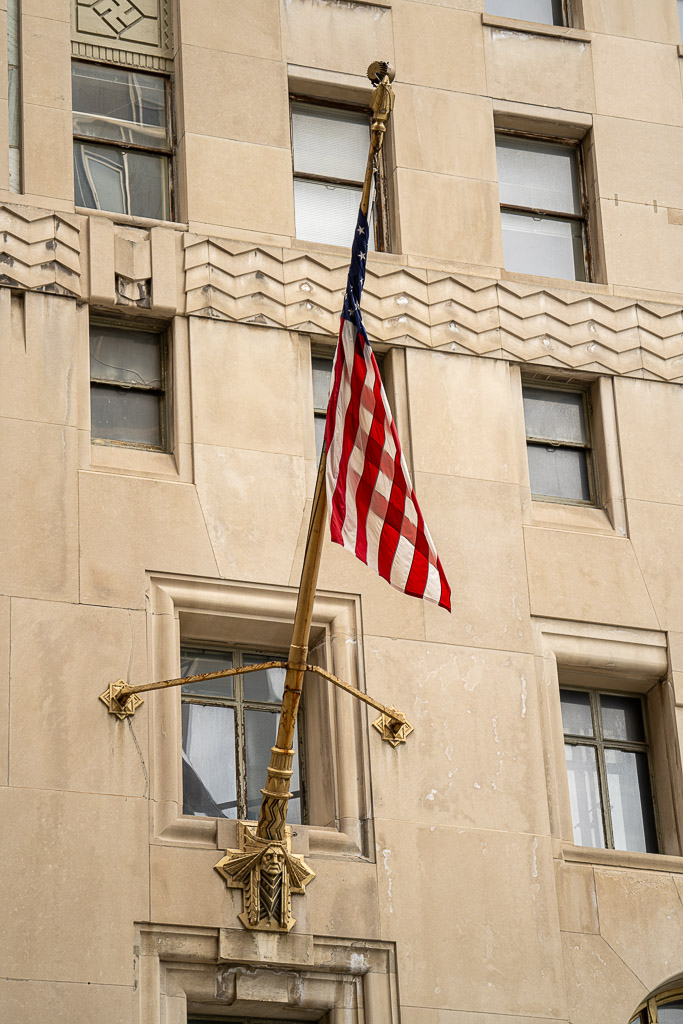
Spandrels between the 2nd and 3rd floor windows on the Griswold side are shown in the 1st through 3rd photos below. Flagpole details are shown in the 4th through 6th photos below. The relationship of several of these photos on the building is shown in the 7th photo below, which also shows a half-round arch.
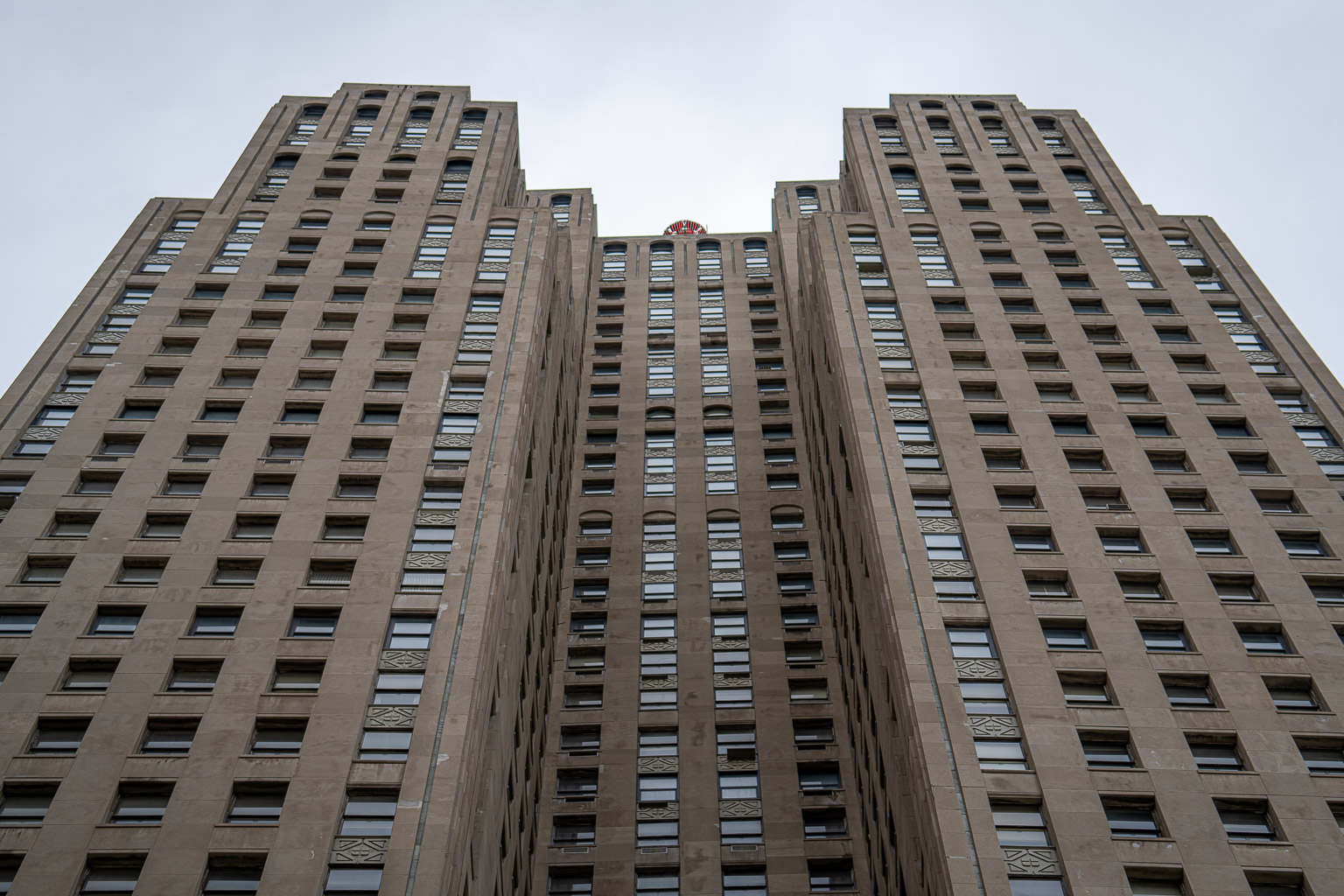
Above the base containing the lobby and shops on the first floor and banking quarters in the first five floors, an H-shaped floor plan accommodates office space. Above the 7th floor, the Greater Penobscot is starkly devoid of exterior decoration. A series of setbacks beginning at the 31st floor ascend in a masterly cubistic composition to the apex, concluding with a small chamber atop the 47th floor machinery penthouse. Each floor is 11 feet high, except the penthouse, which is 27 feet. The various roof levels are flat. Notice how the windows on the central tower of the building are arranged in 1-window, 2-window, 1-window groupings, similar to that used in Rowland's designs of the Michigan Bell and Western Electric Warehouse, the Guardian Building, and the Michigan Bell Madison Central Office.
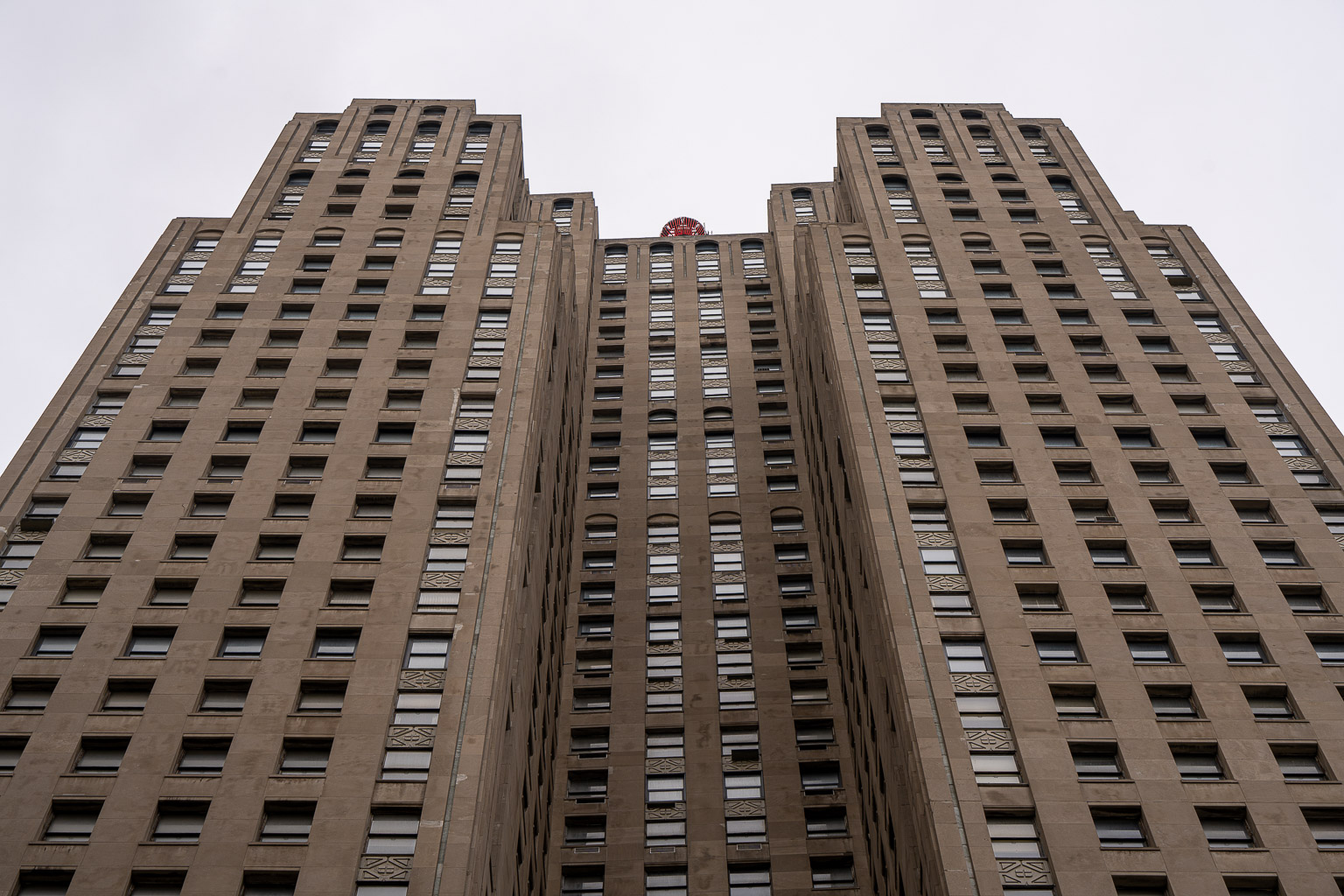
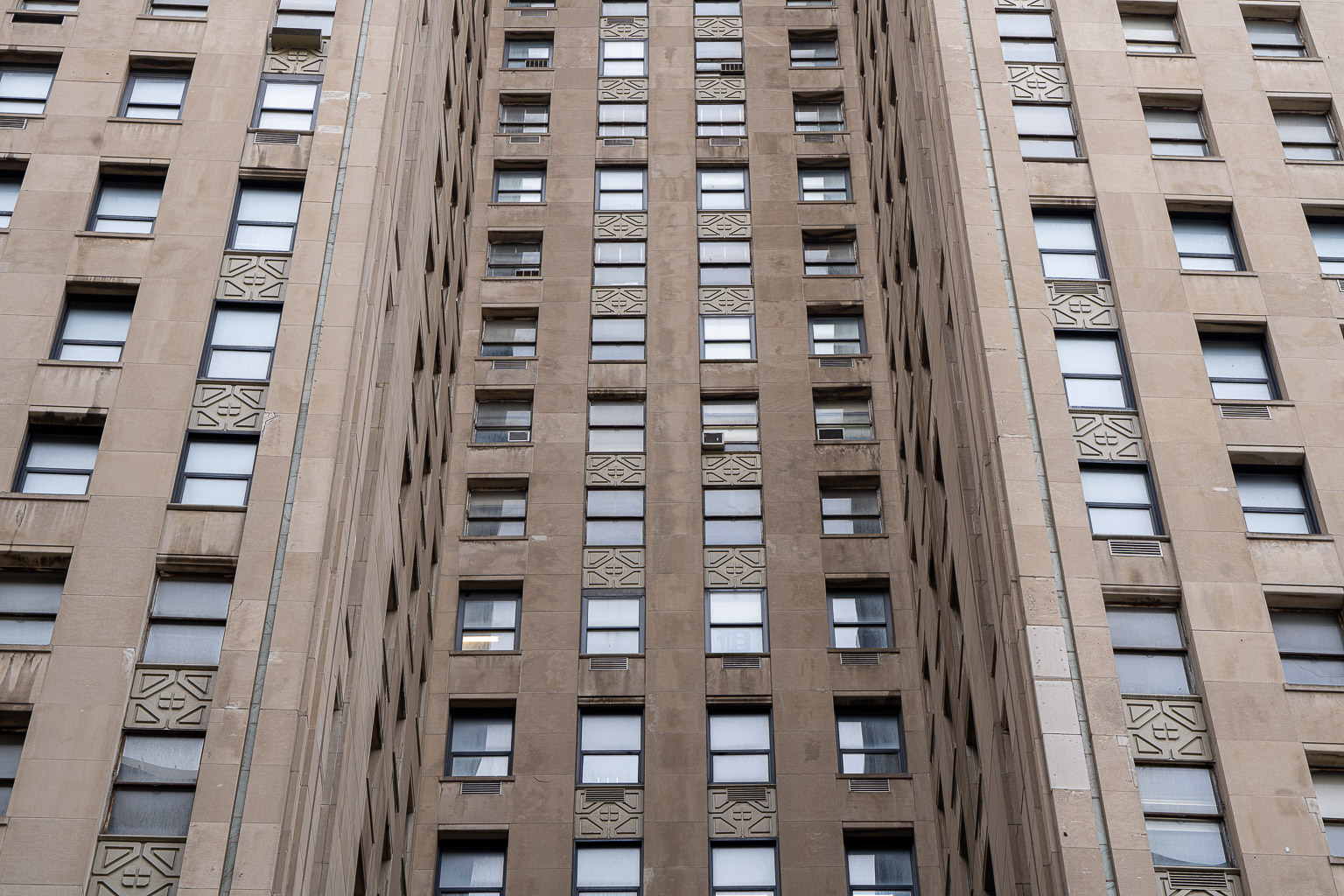
The north wall (Fort Street) is an unbroken expanse of windows, made interesting by different spandrels and different window groupings (1st and 2nd photos below). The lower 7 floors of the Congress Street facade of the Greater Penobscot Building is shown in the 3rd photo below.
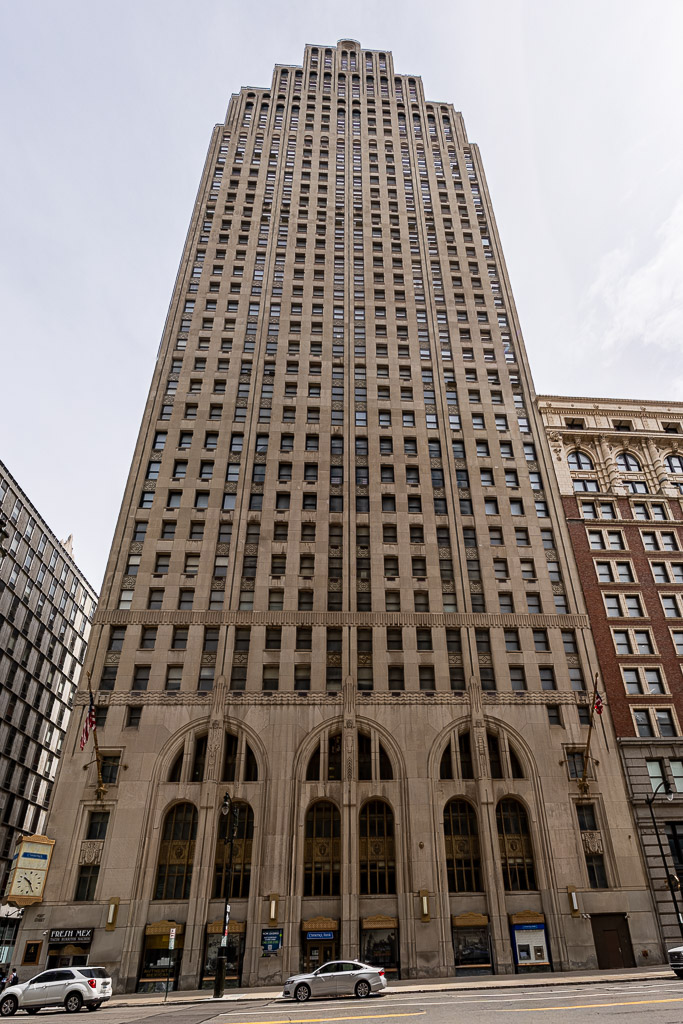
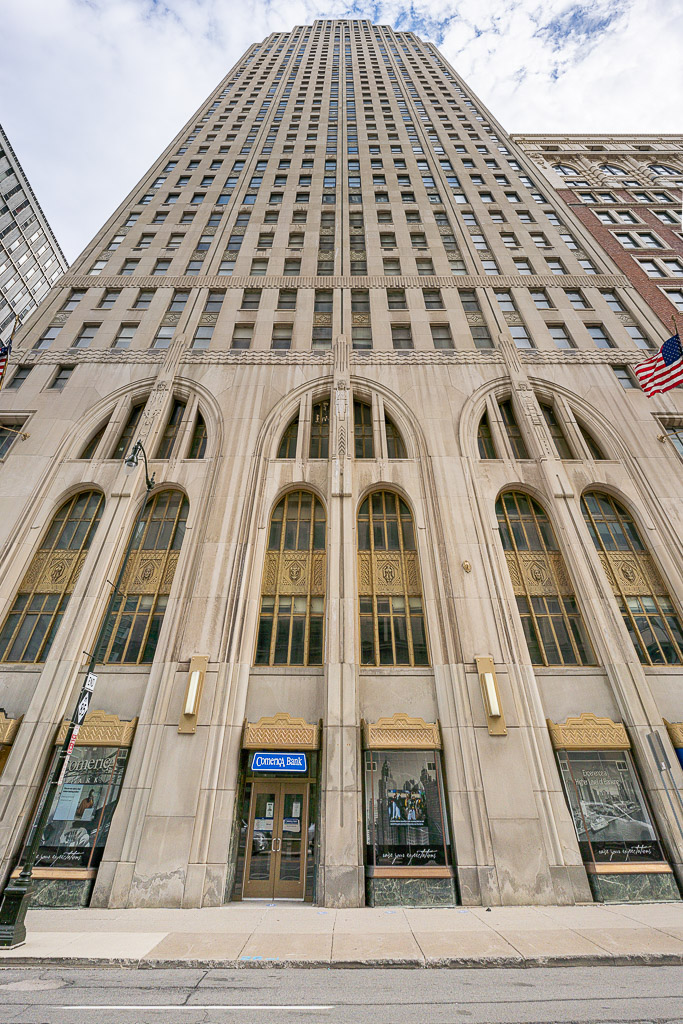
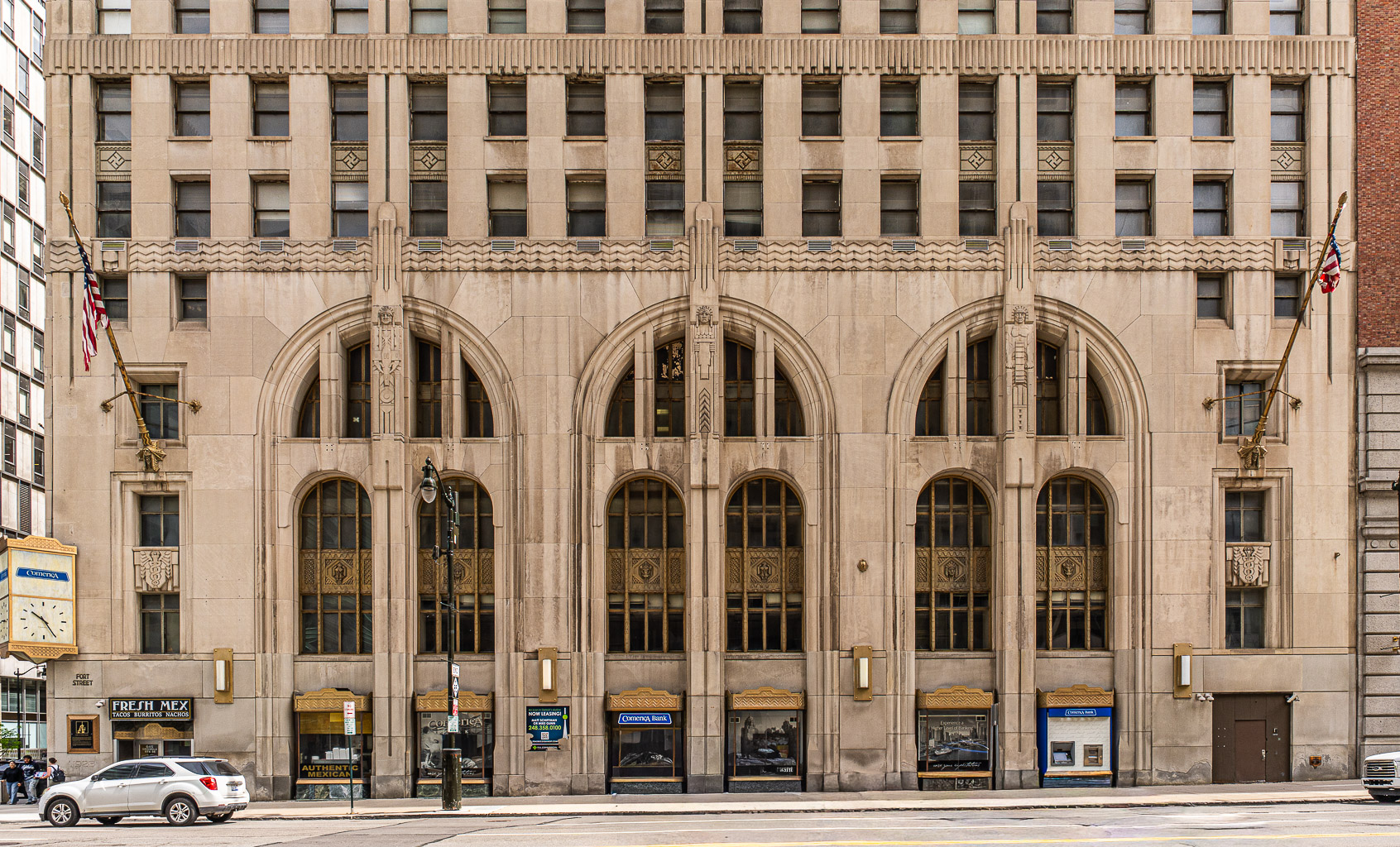
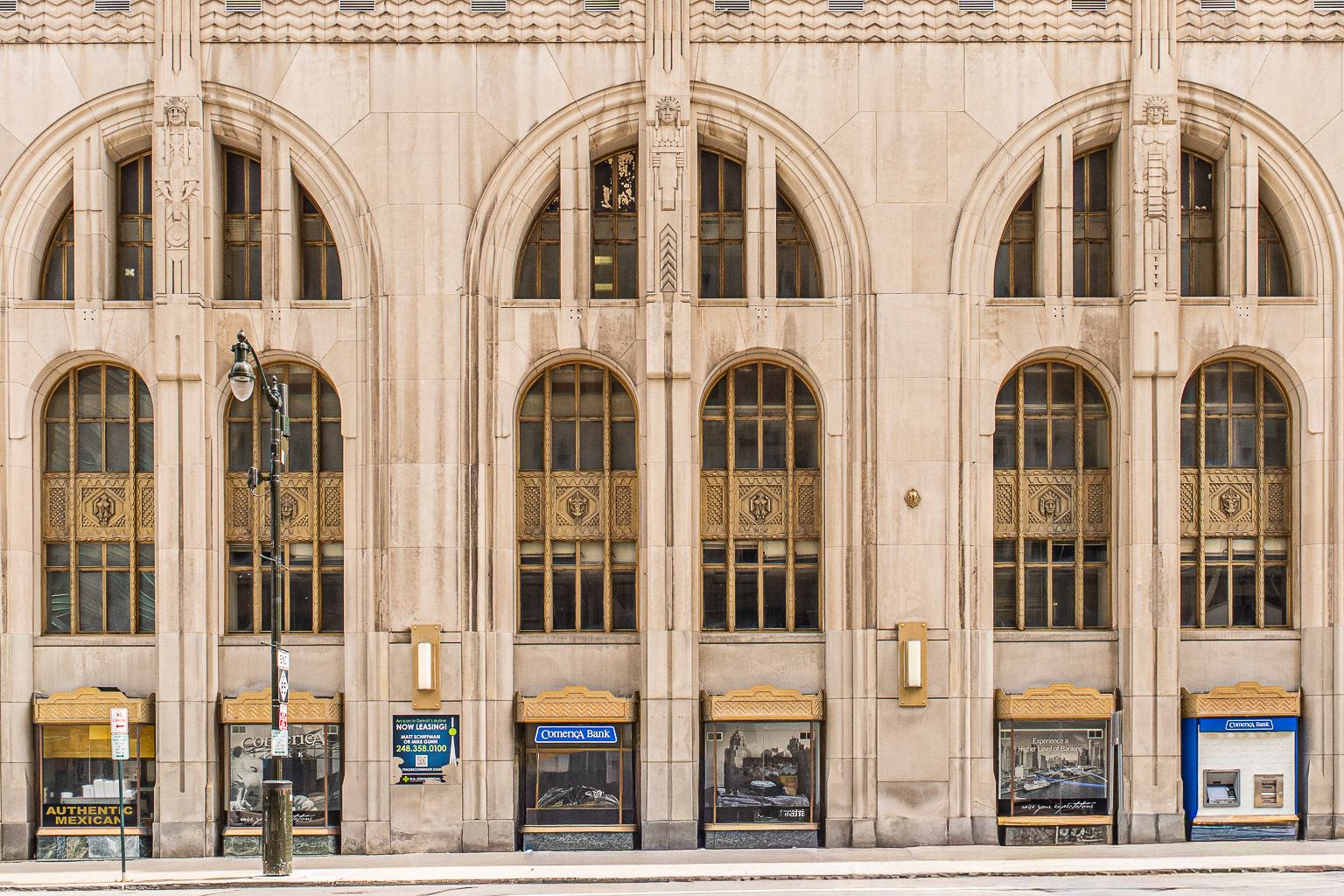
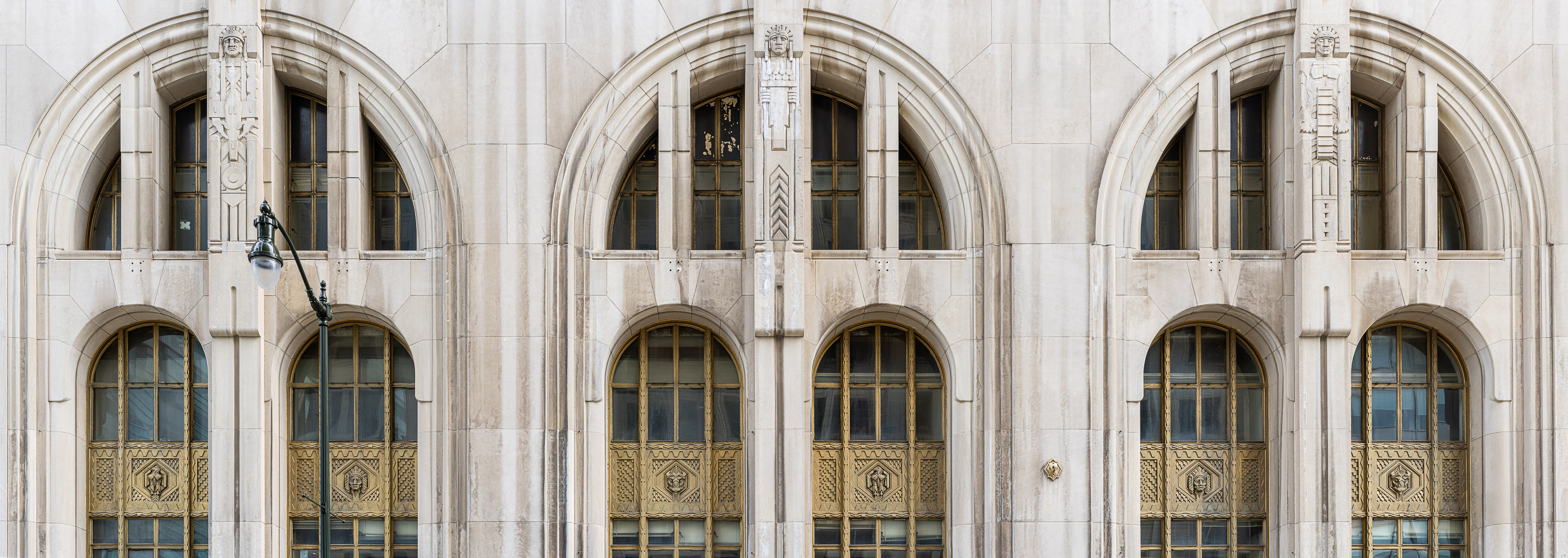
The 3 huge bays of windows on the first through fourth floors of the Fort Street side have some beautiful spandrels and keystones, shown in all of the photos below. Each of those bays includes a half-round arch at the top, and each encloses two smaller round arched windows. The spandrels between the windows of the second and third floors display sculpted Native American figures as well as symbols of commerce, industry, and prosperity.
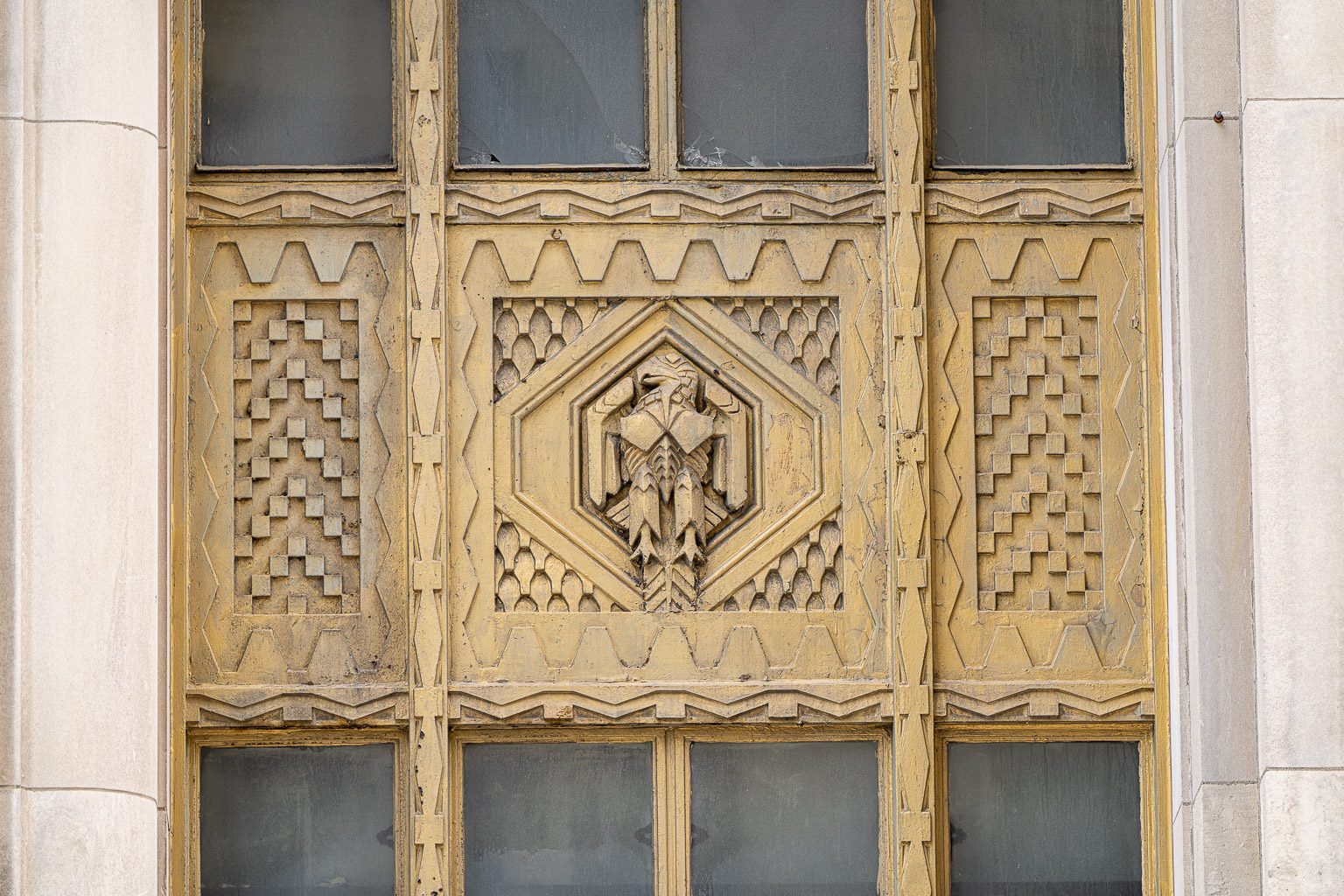
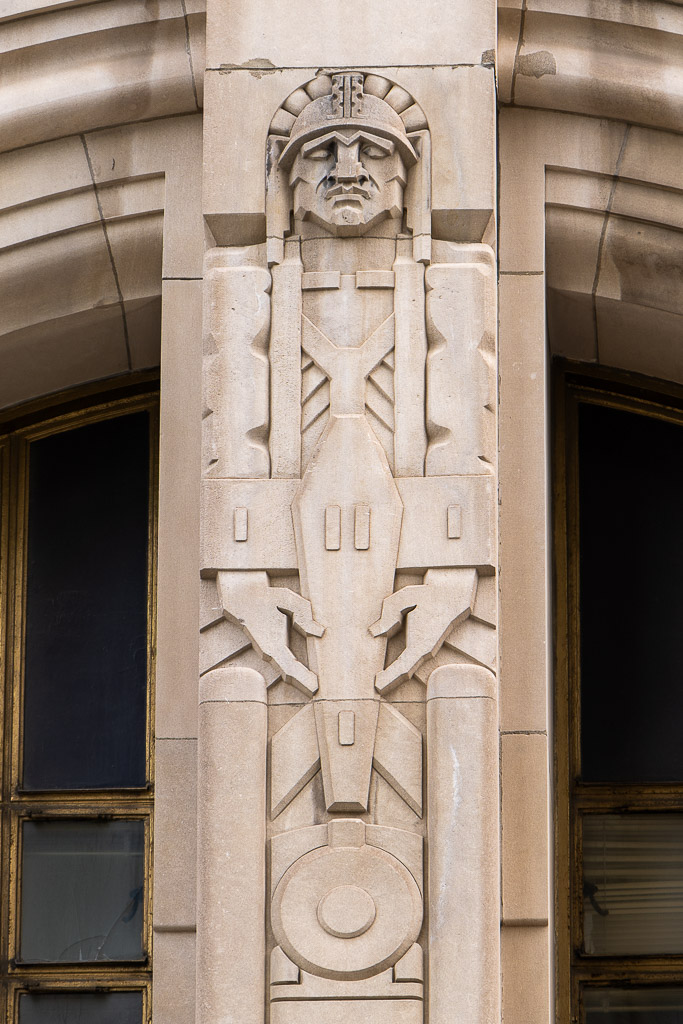
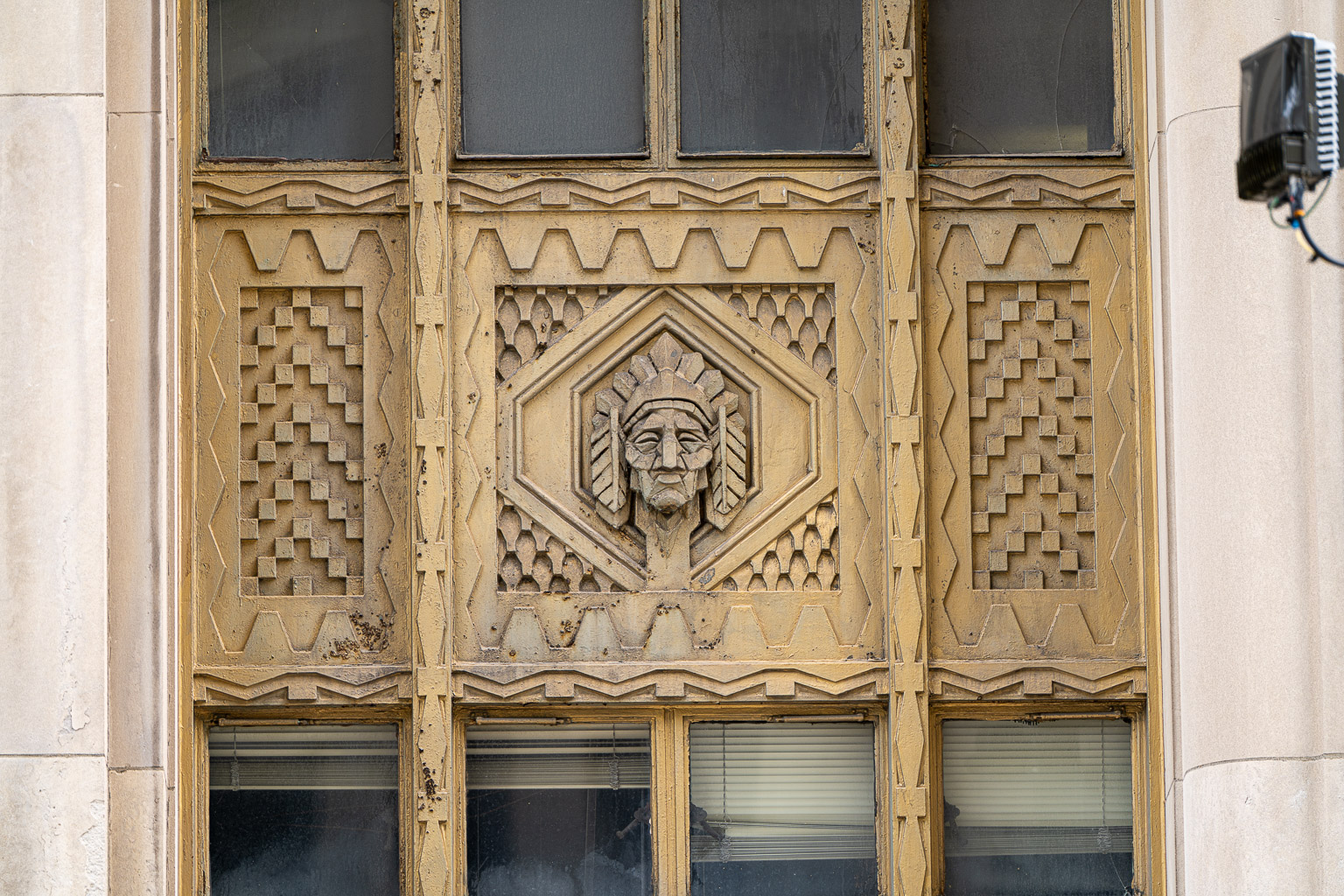
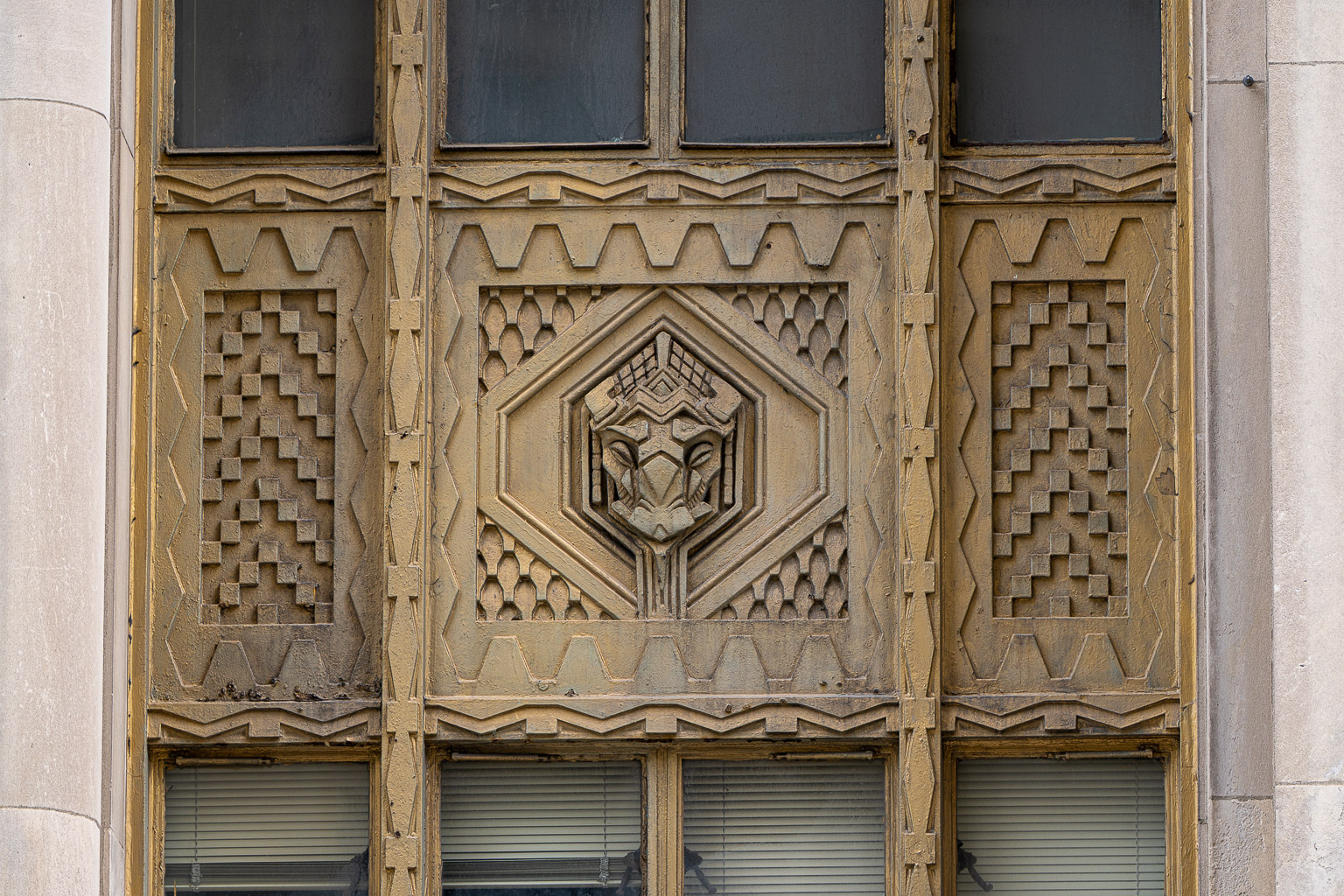
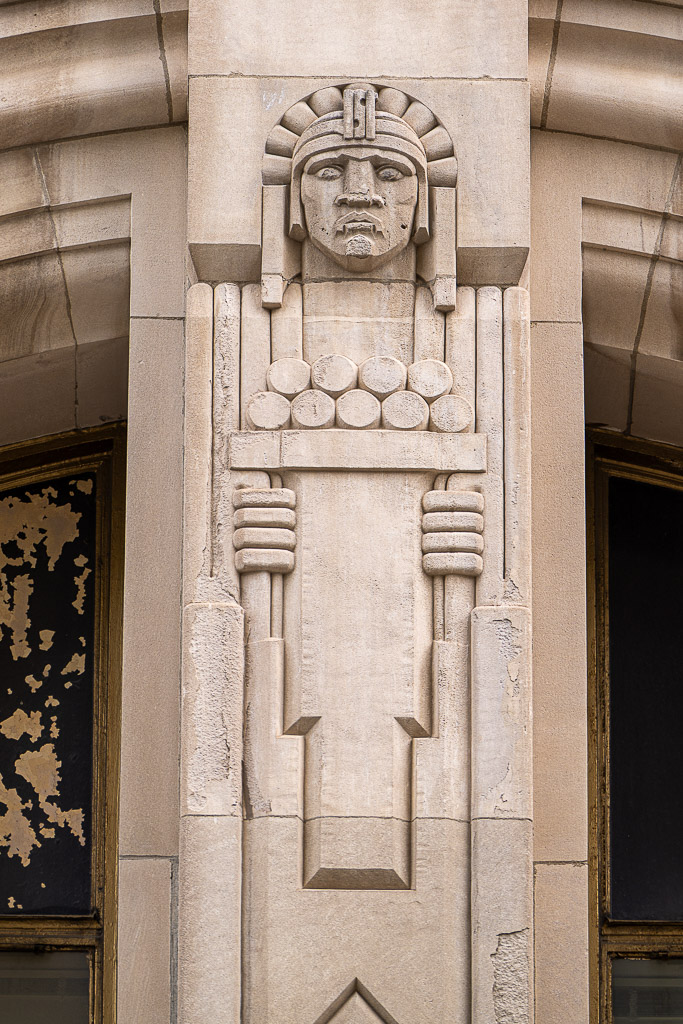
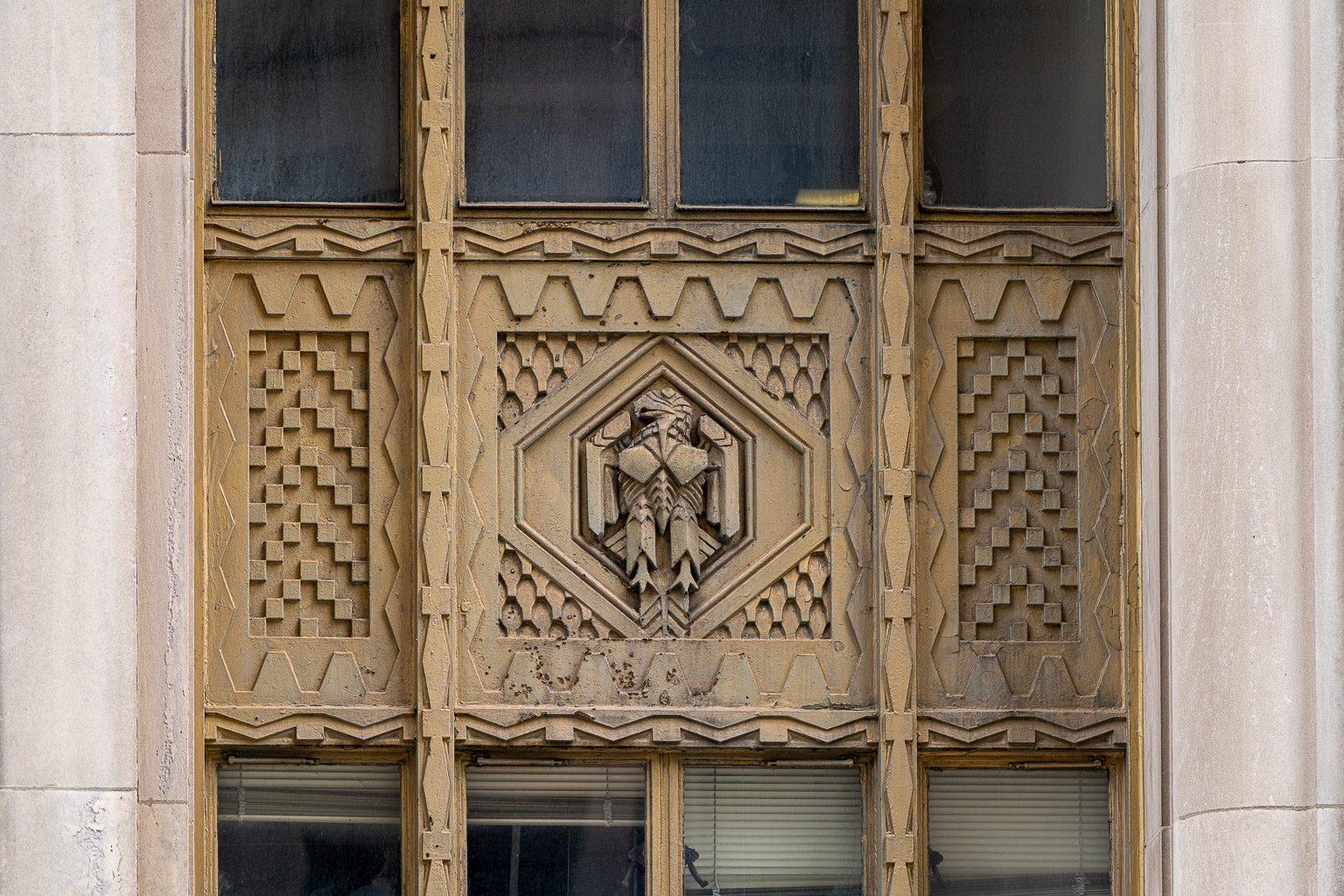
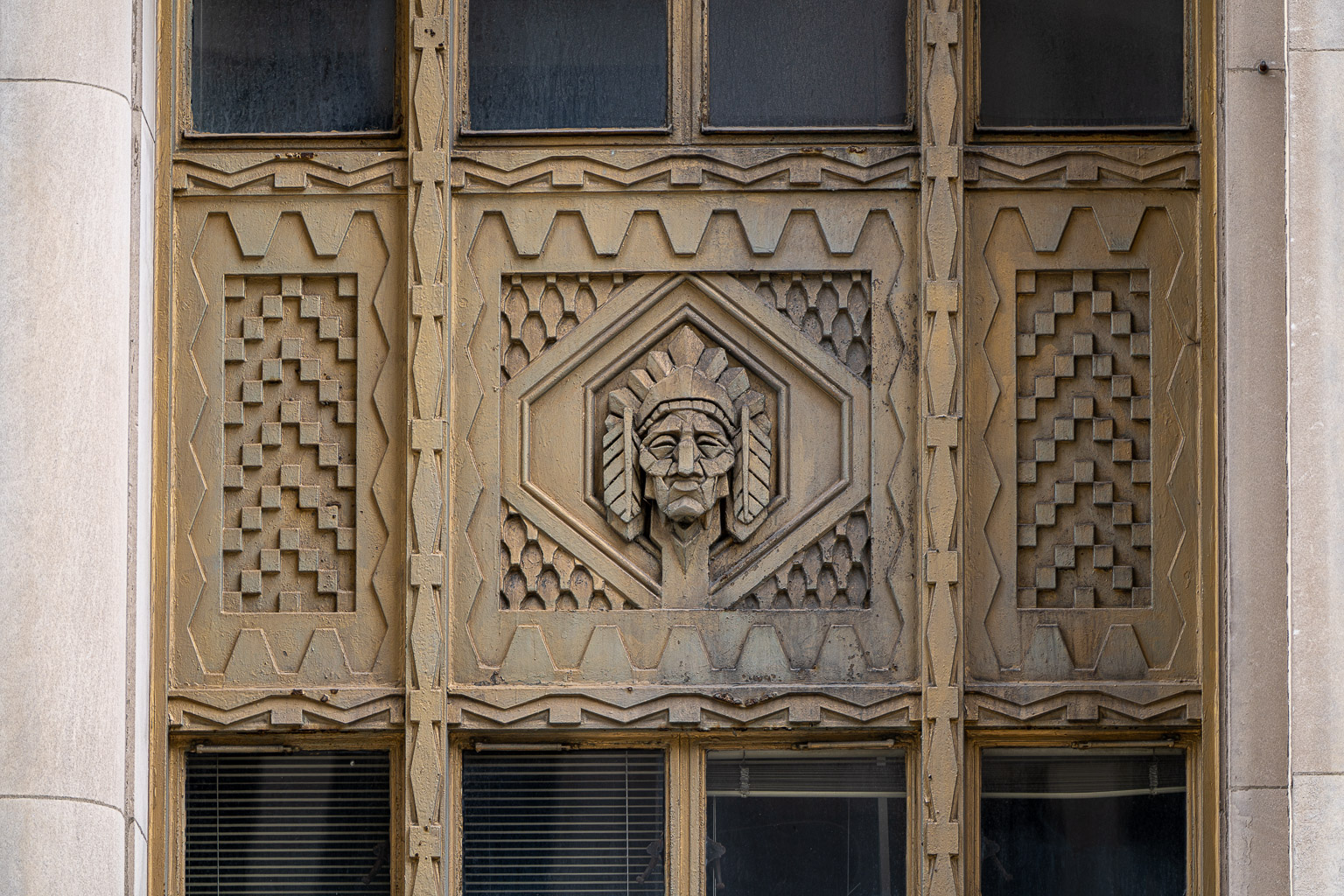
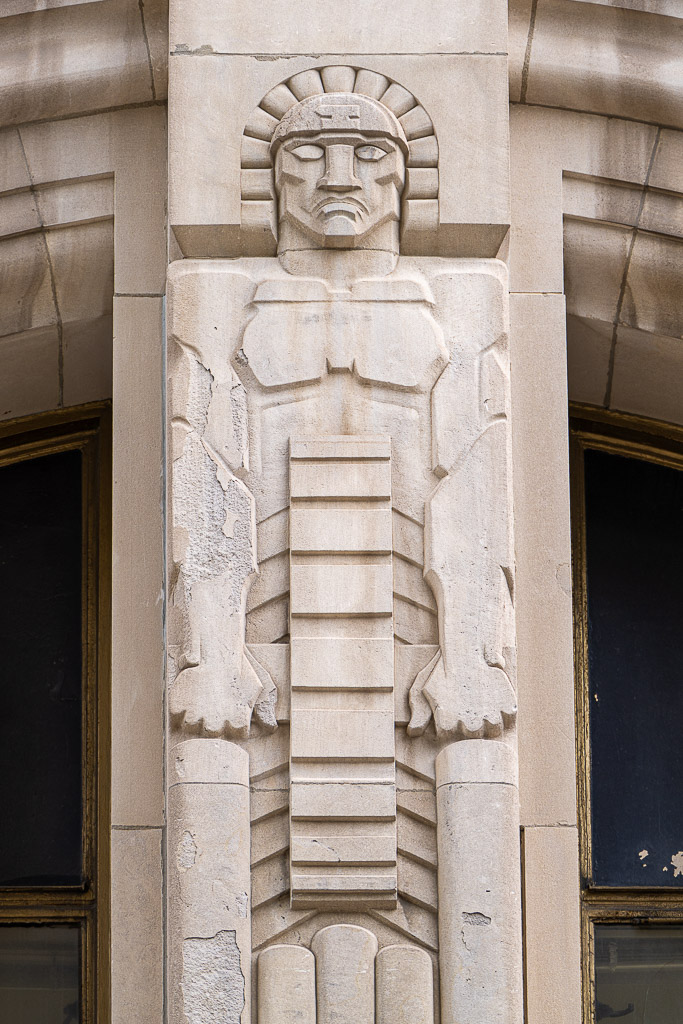
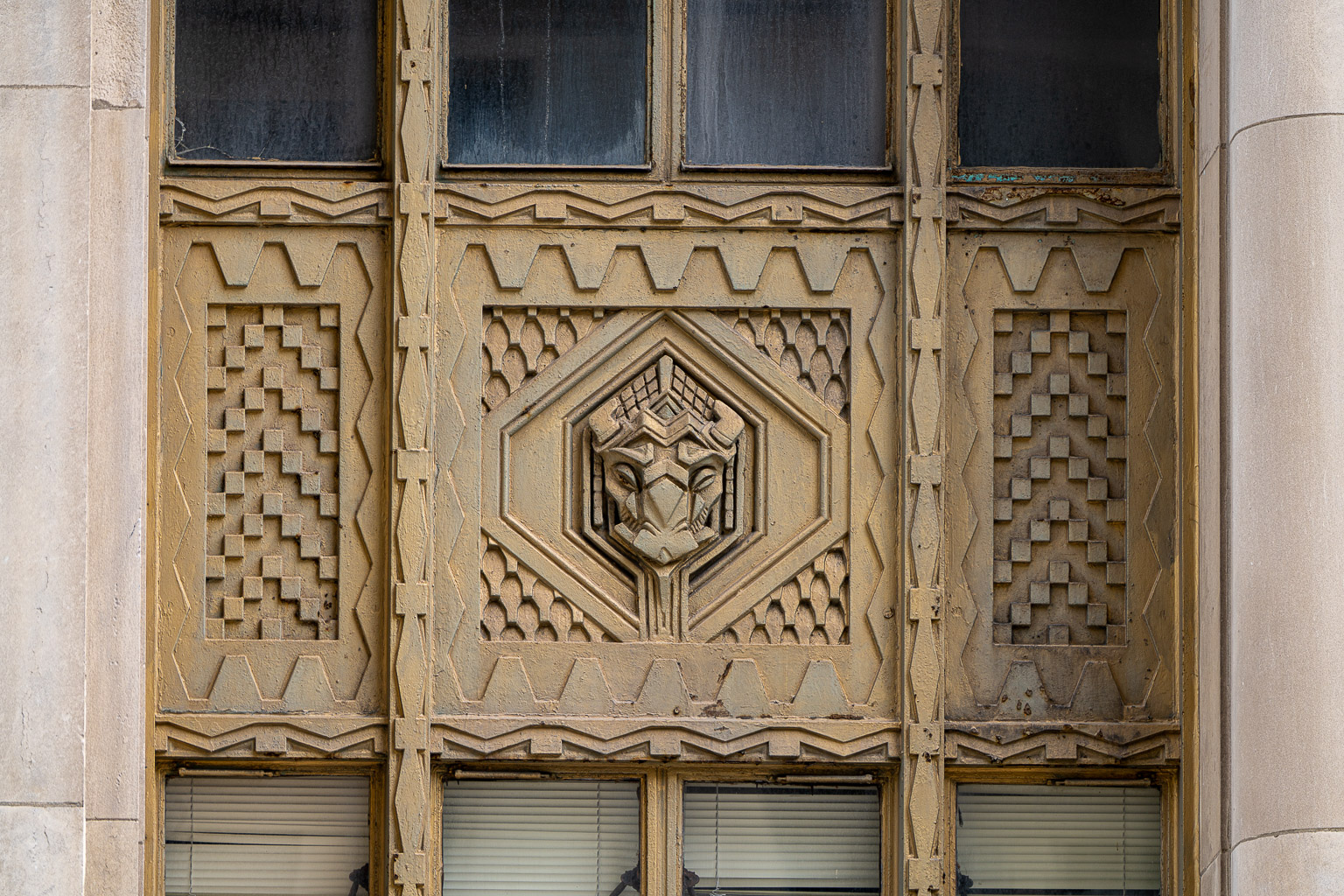
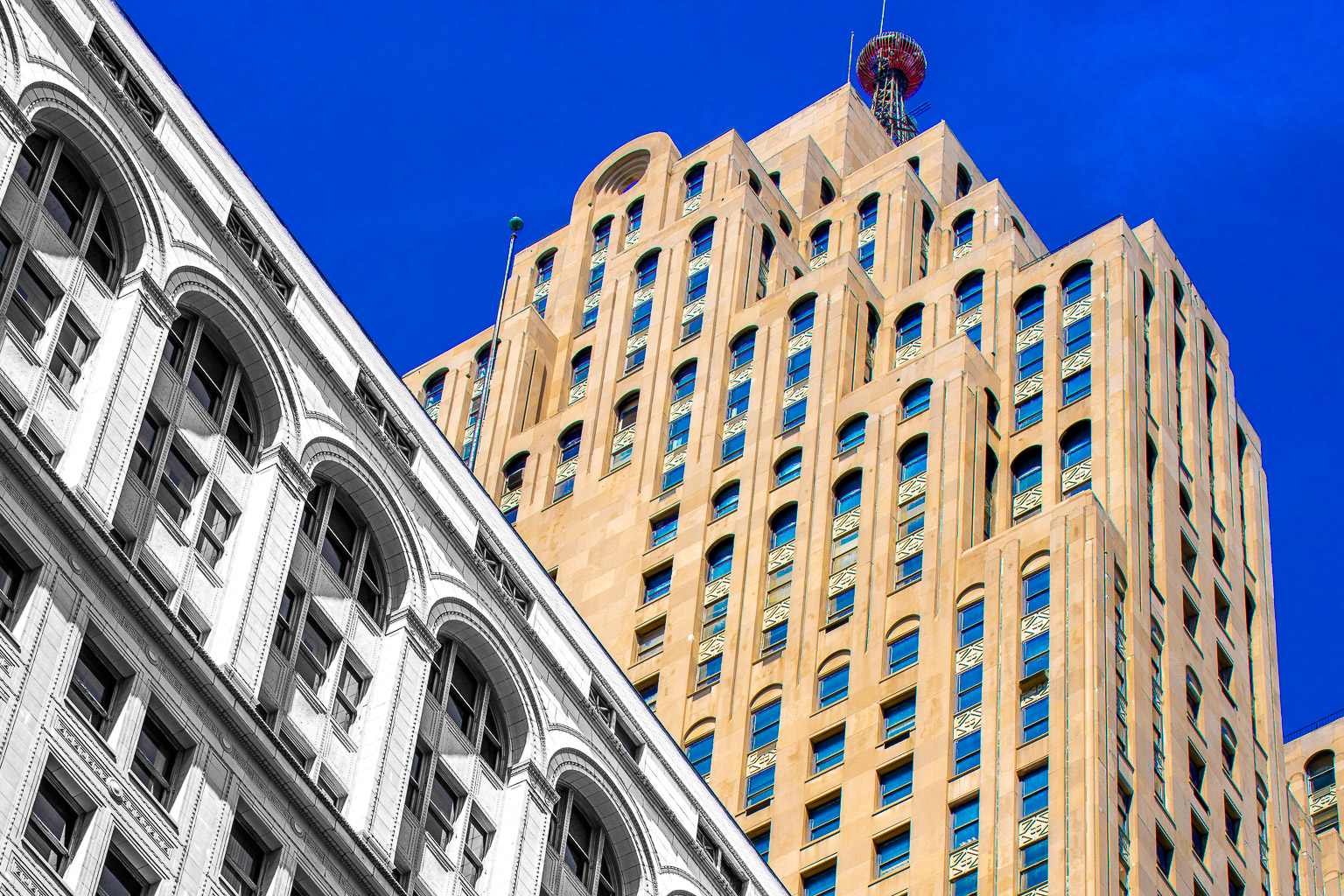
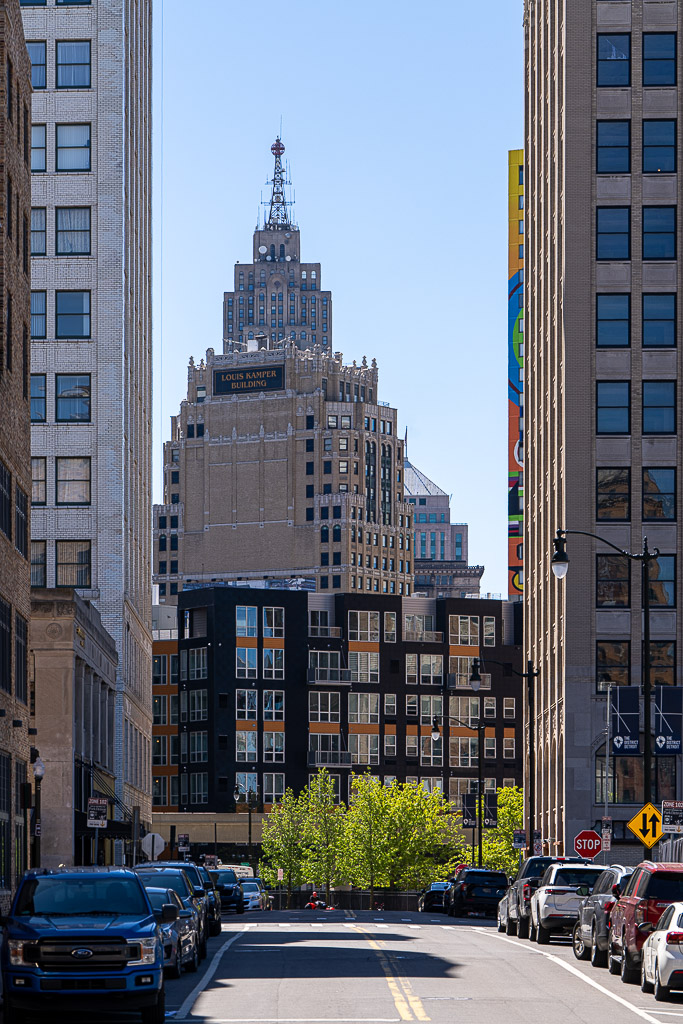
Finally, here are a few more photos of the Greater Penobscot Building with a more artistic intent. The photos which show the top of the building give another example of half-round arches.
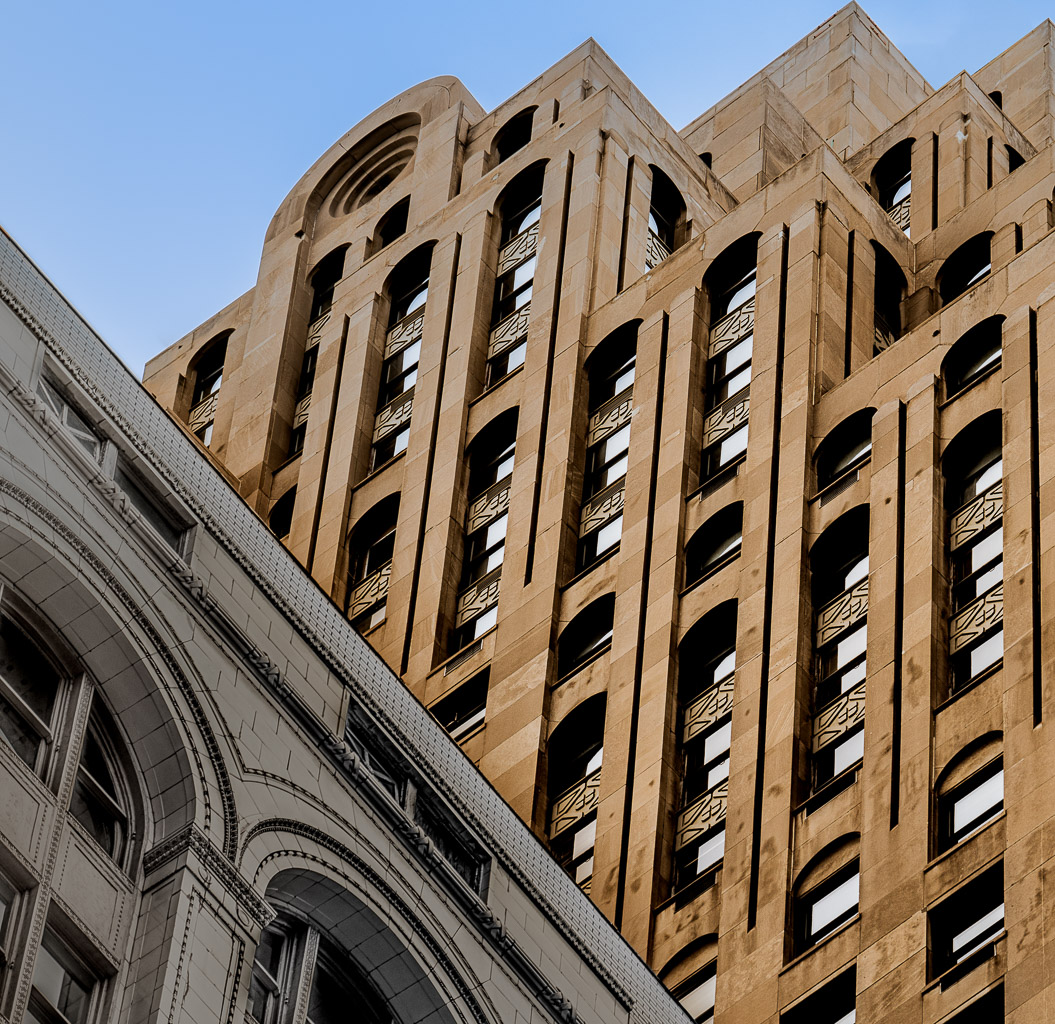
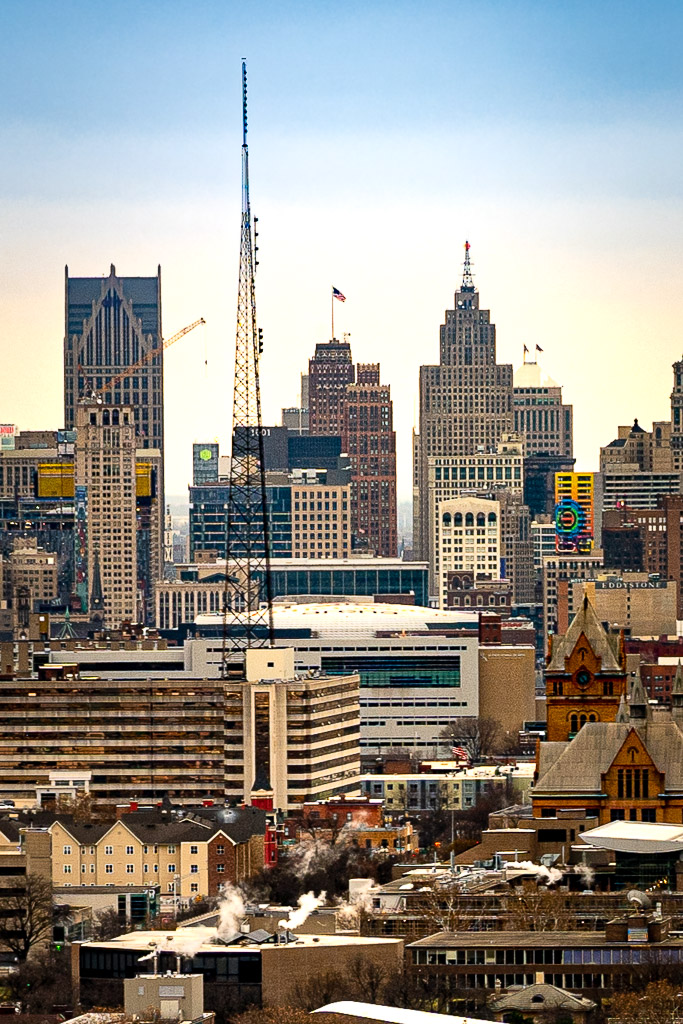
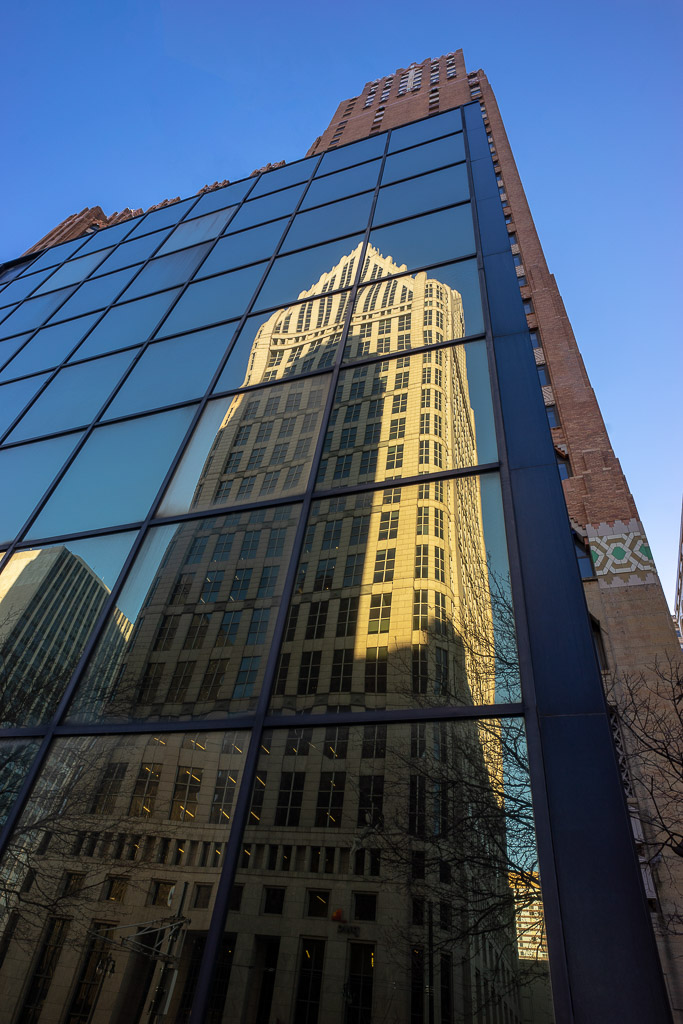
More photos and more description of this building can be found at HistoricDetroit.org.
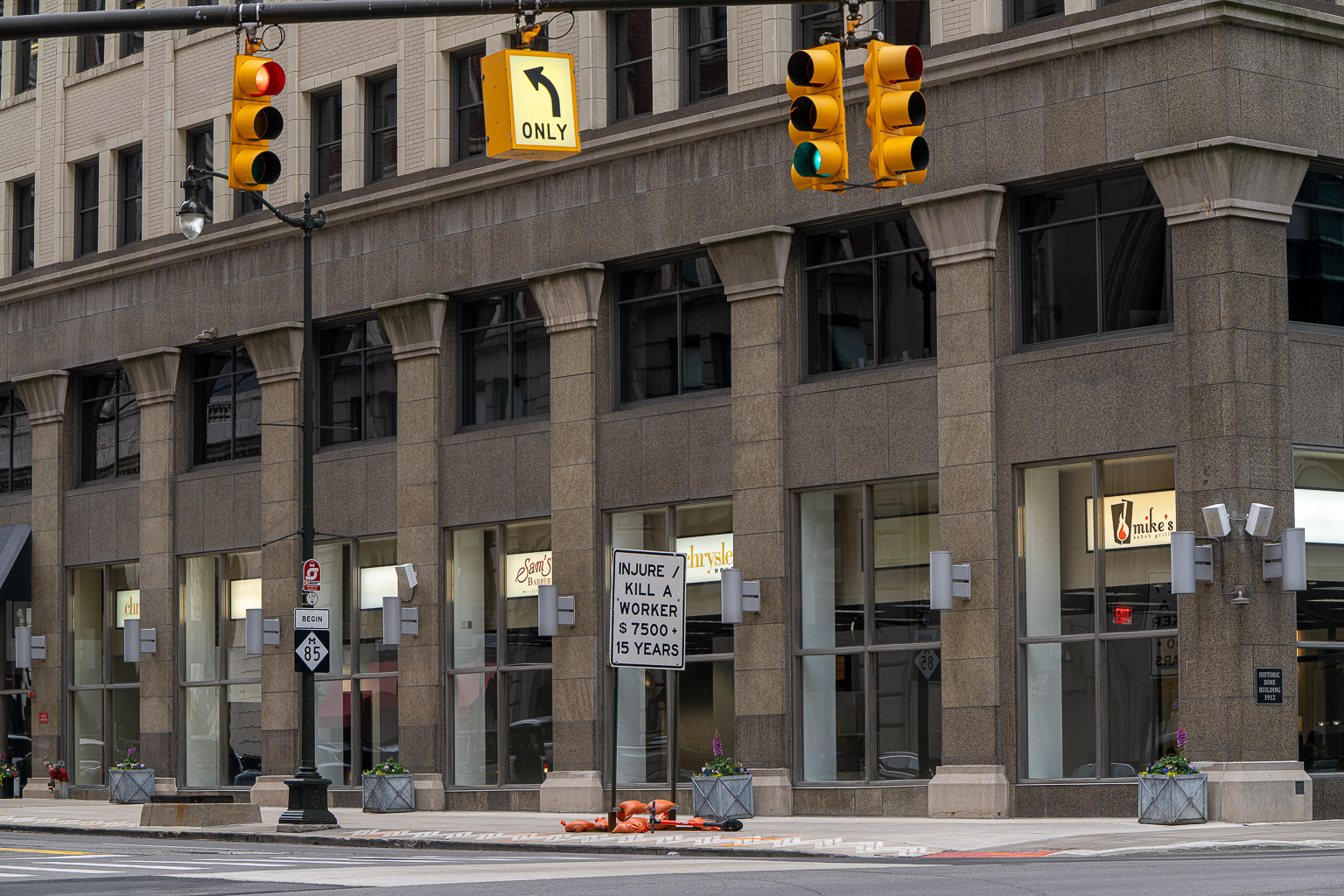
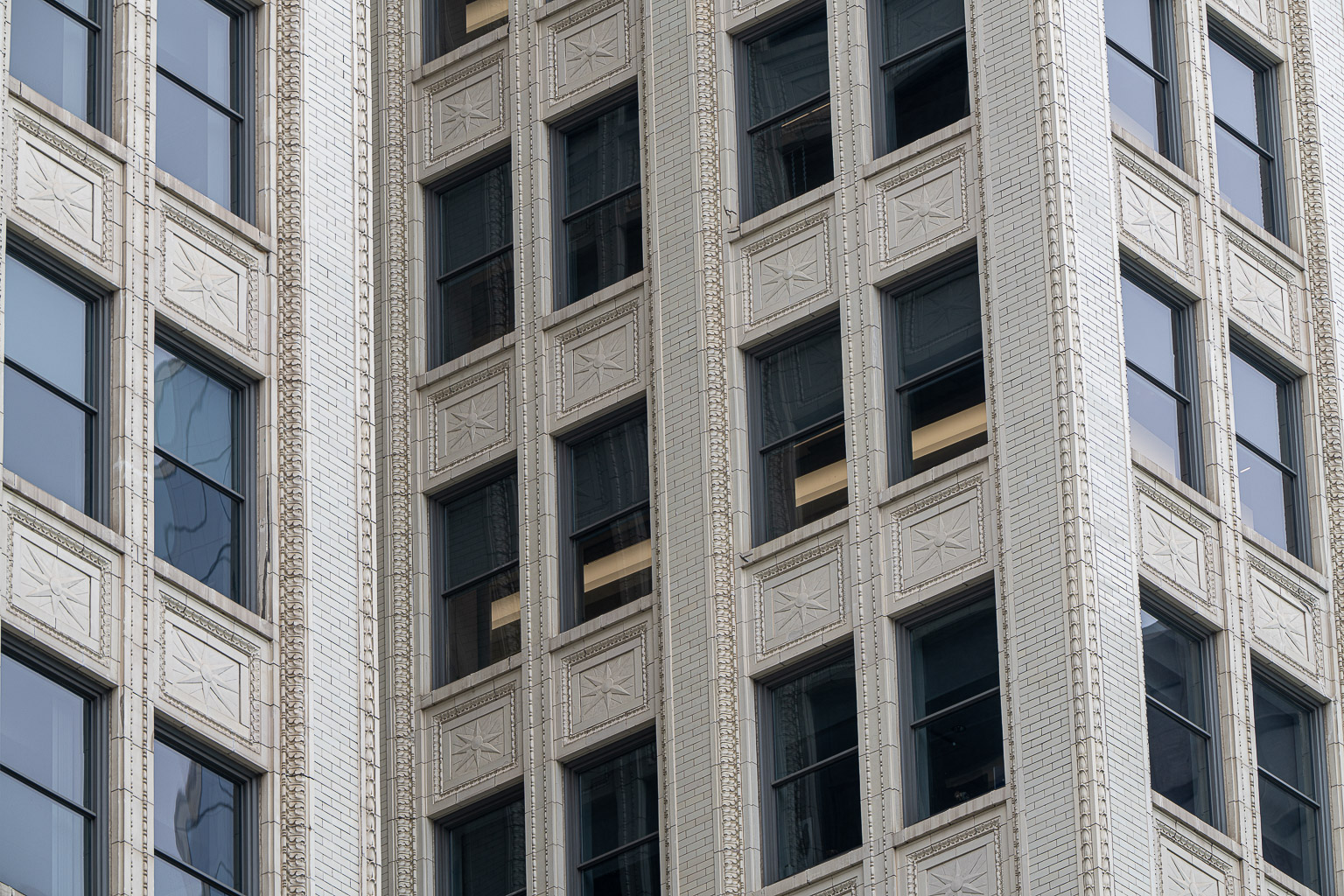
Steel-frame twenty-three-story skyscraper faced in white terra cotta (1913-14) – D. H. Burnham & Company and Graham, Burnham & Company, architects. Renovated by Barton Malow Design (2001). The Dime Building's U-shaped footprint, with the light well opening toward the street, allows natural light into the interior offices (1st and 2nd photos below). The open end of the U-shape plan facing Griswold Street begins above the third story floor plate. The first two stories were faced in brown granite during a renovation of the 1950s that removed the original terra cotta (4th photo below). Classical details (5th photo below) are applied to the terra cotta above the second floor.
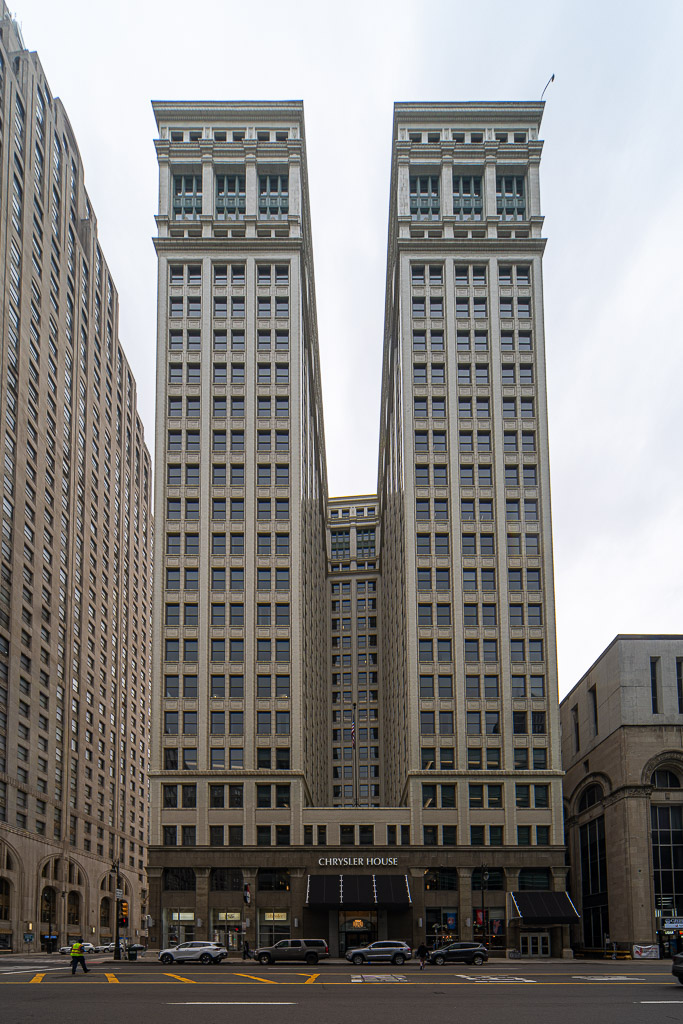
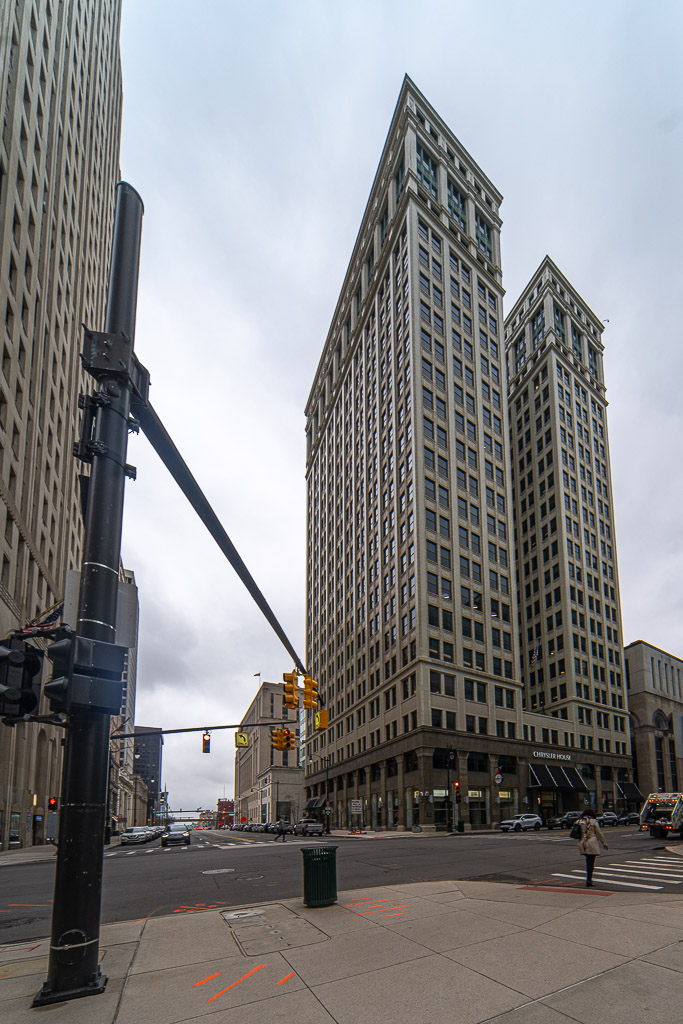
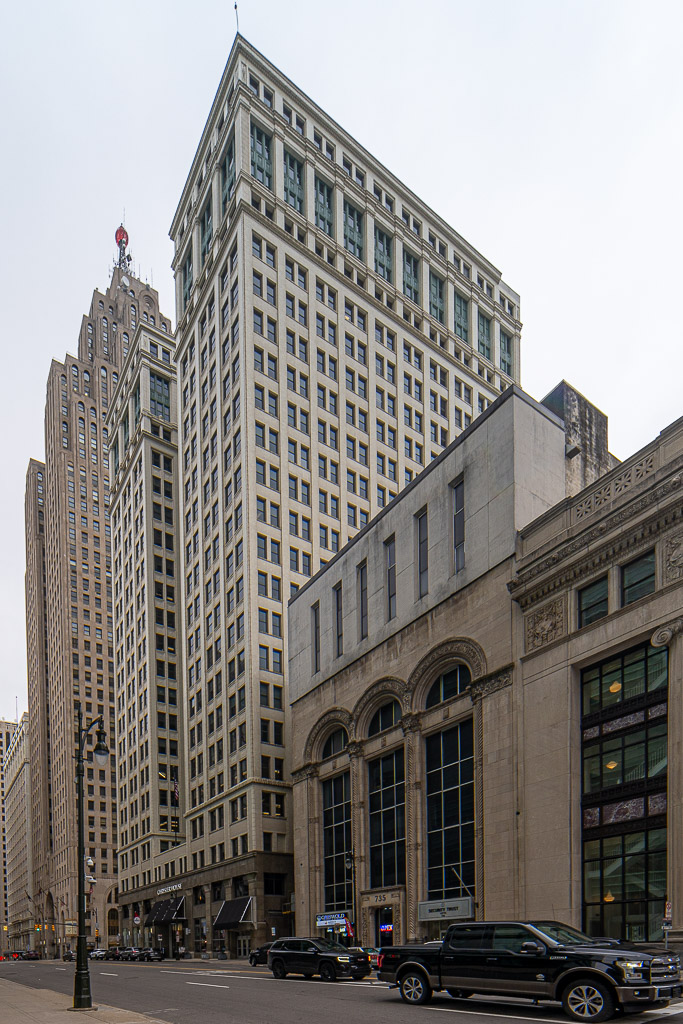
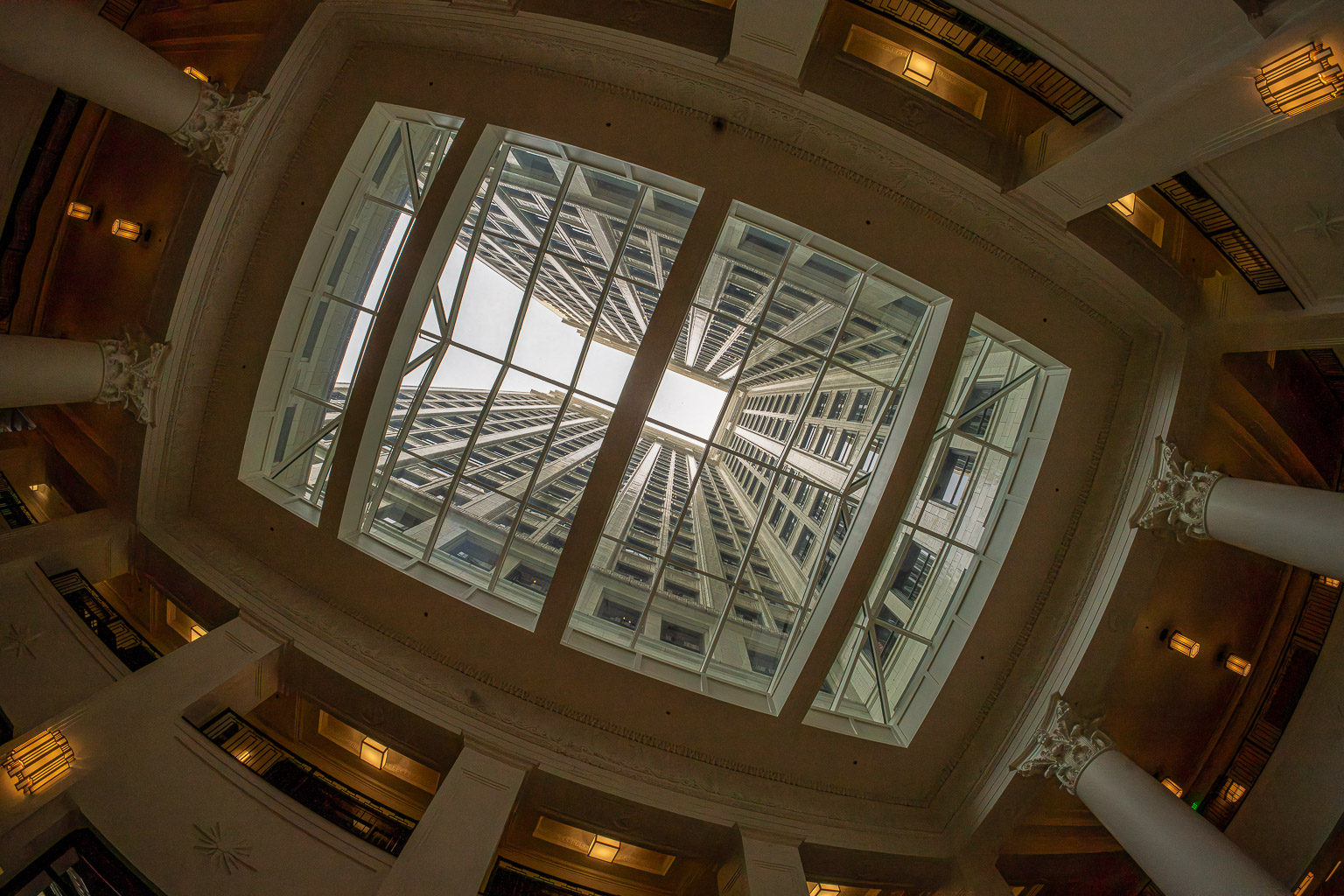
The two-story lobby has been renovated to include large Corinthian columns and new marble floors. Most impressive was the restoration of the skylight to the light court.
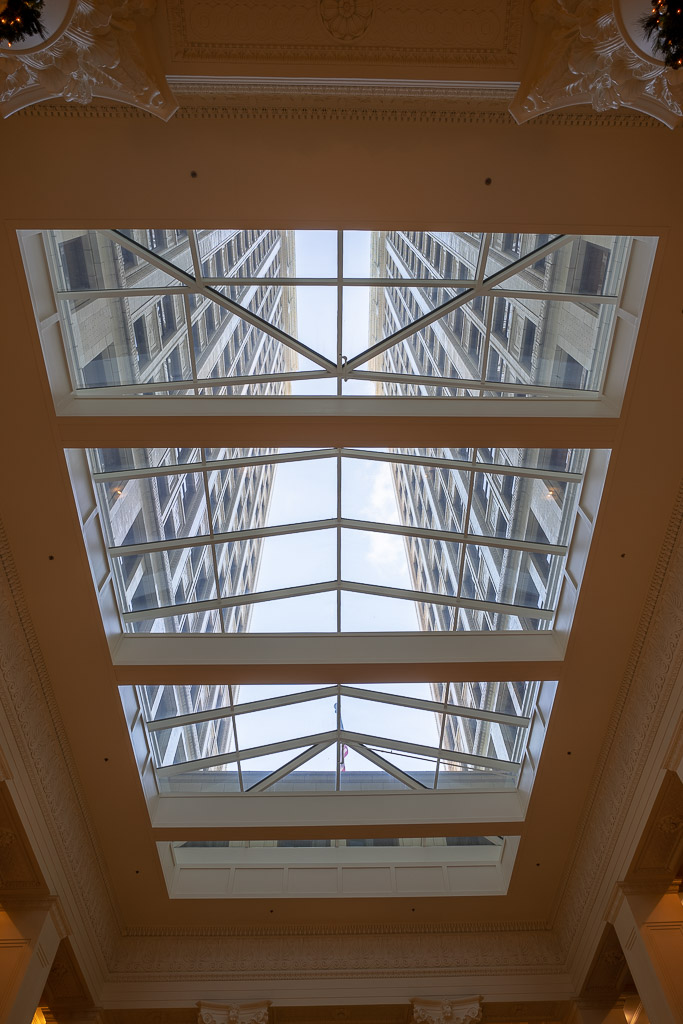
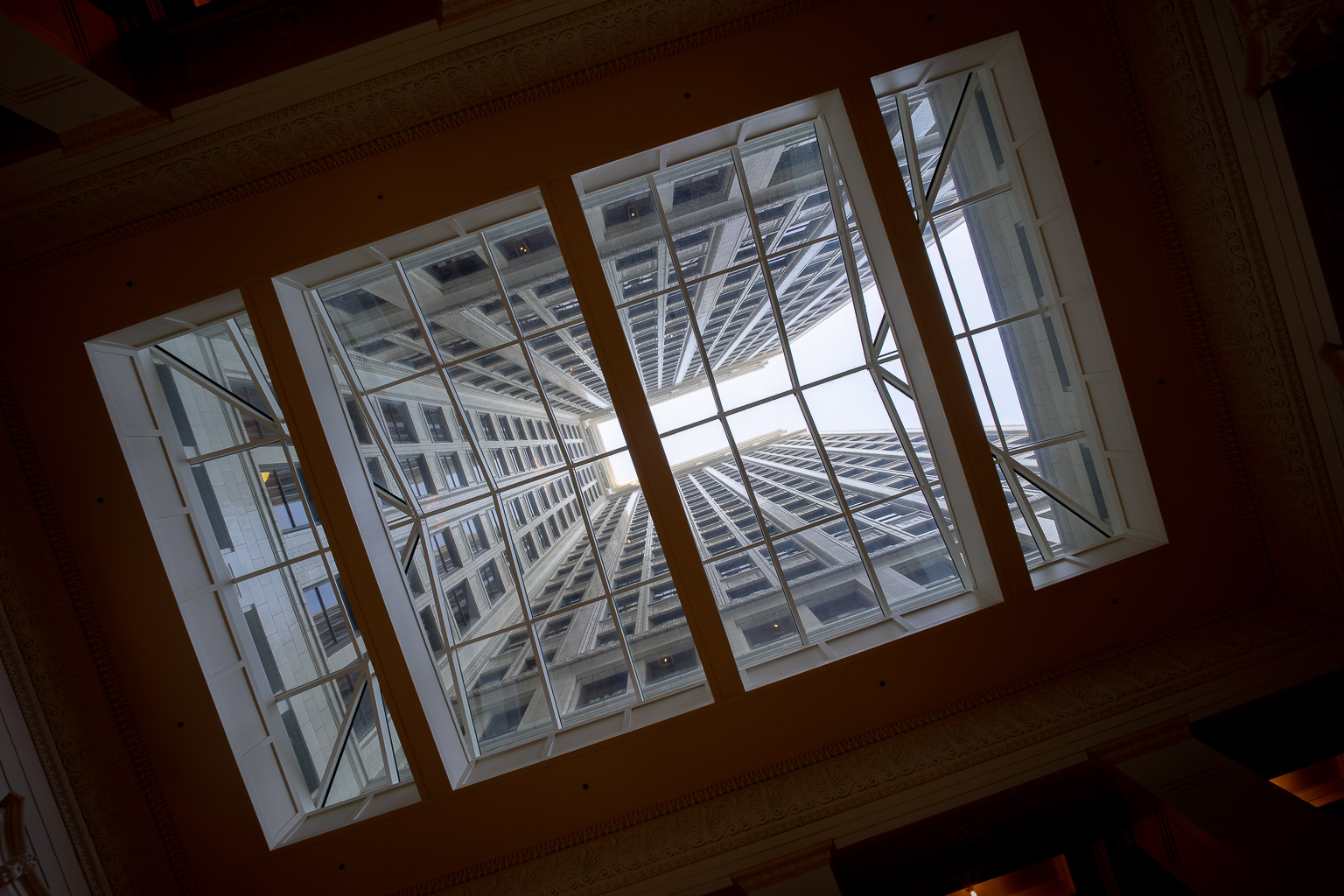
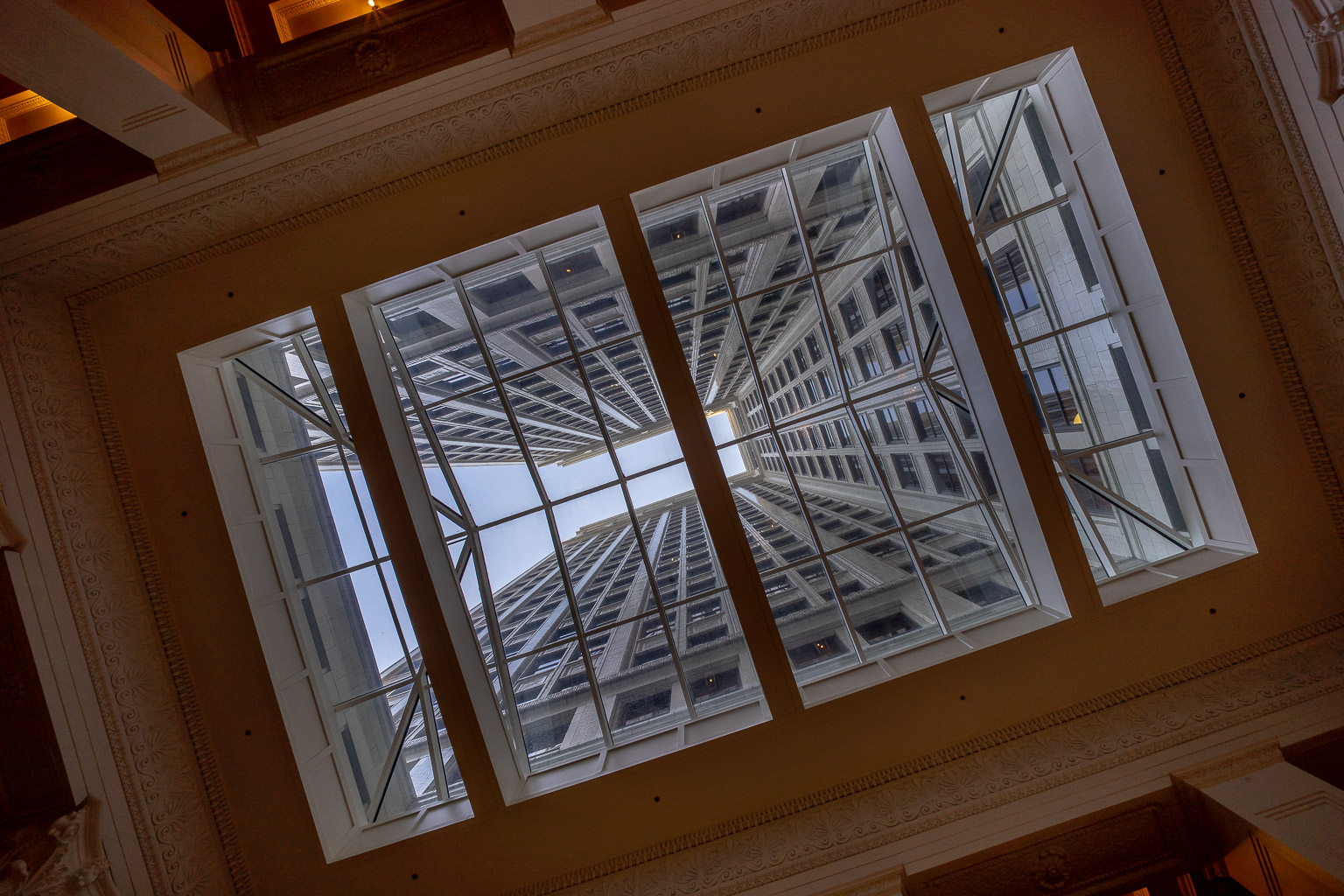
The upper three floors are distinguished from the building shaft by a separate treatment of the windows at the sixteenth and seventeenth floors. The windows are grouped between vertical spandrels.
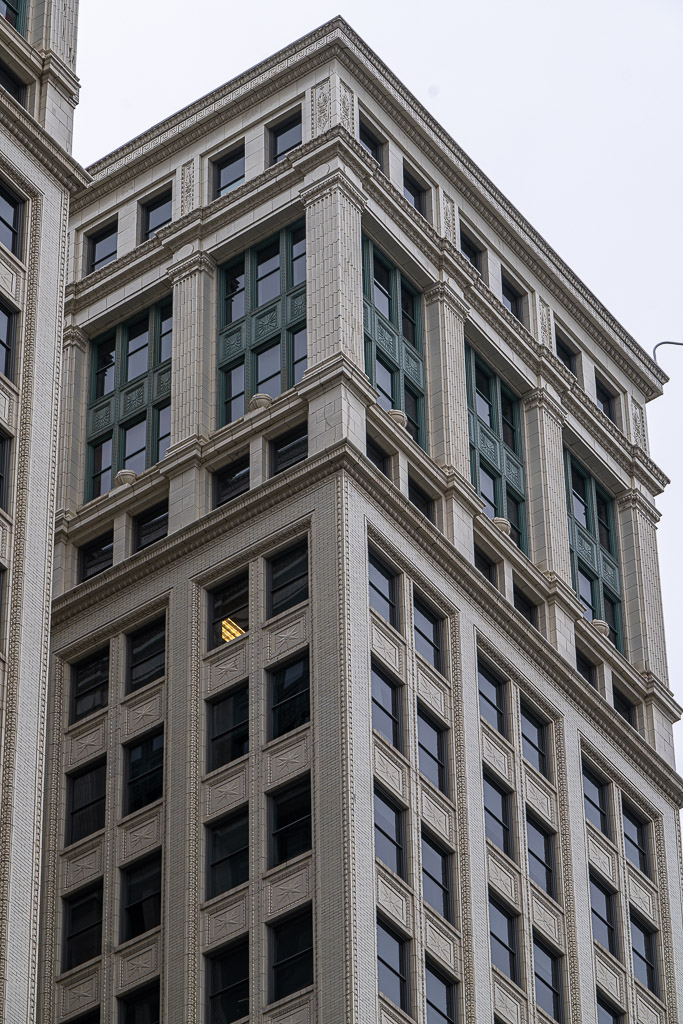
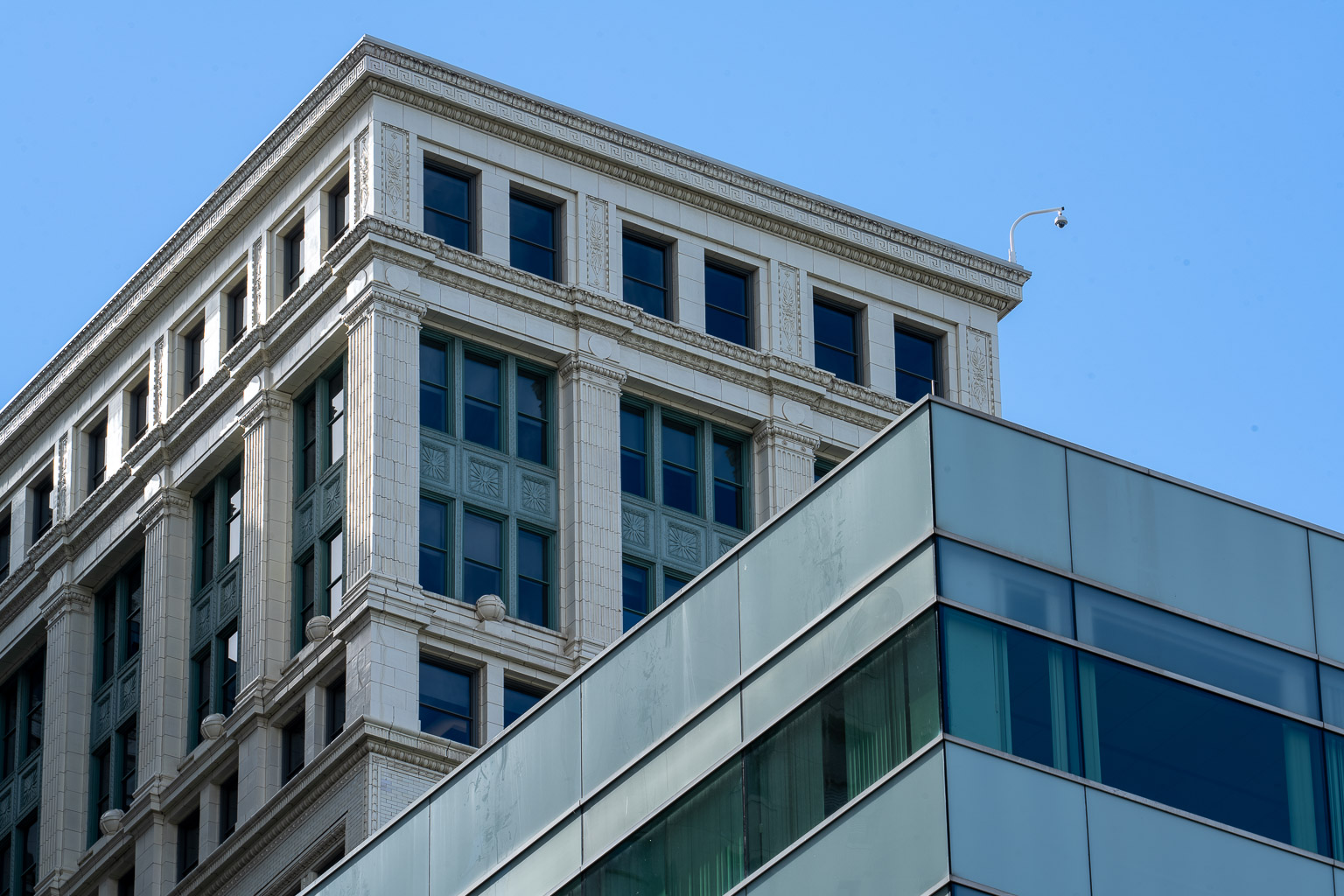
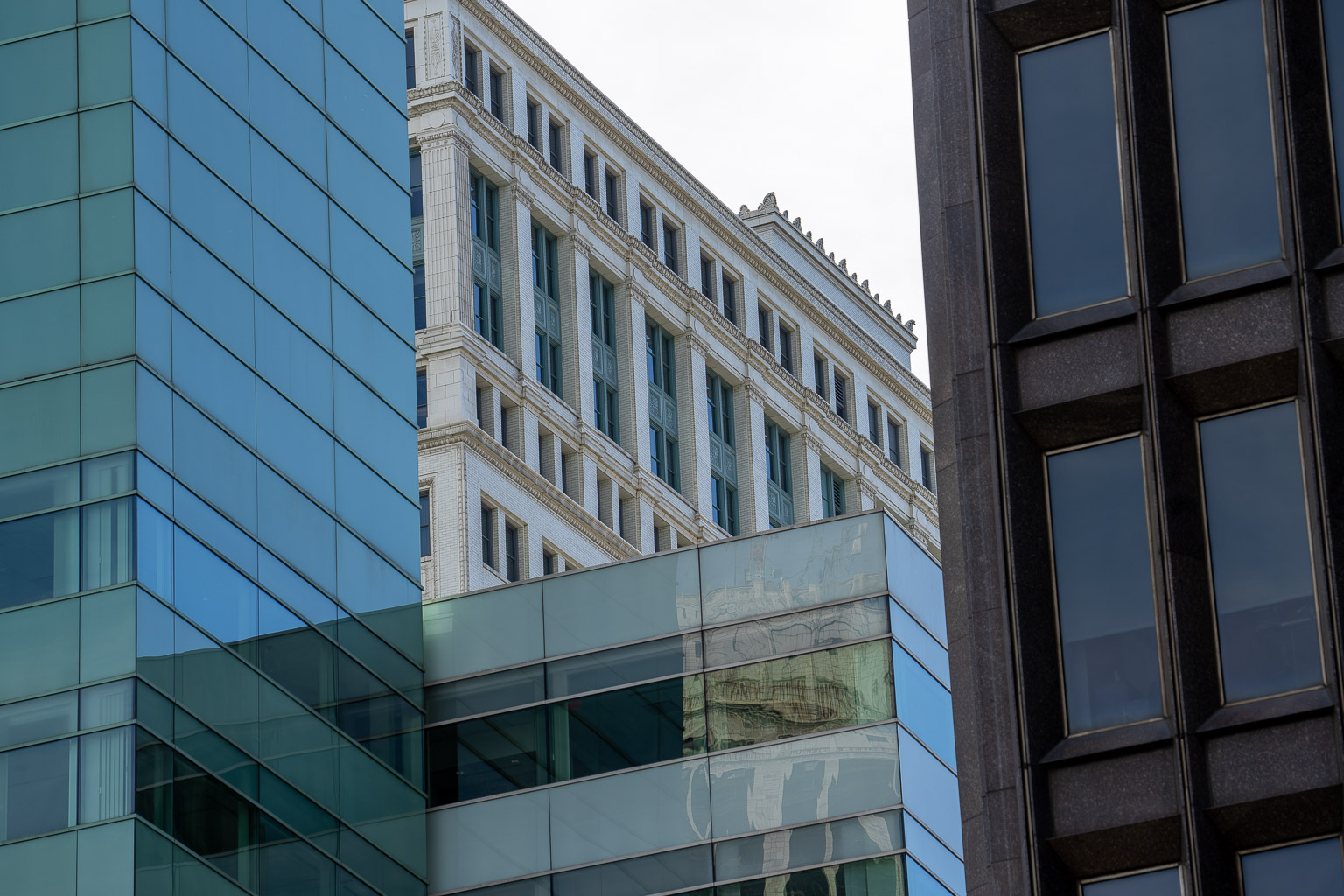
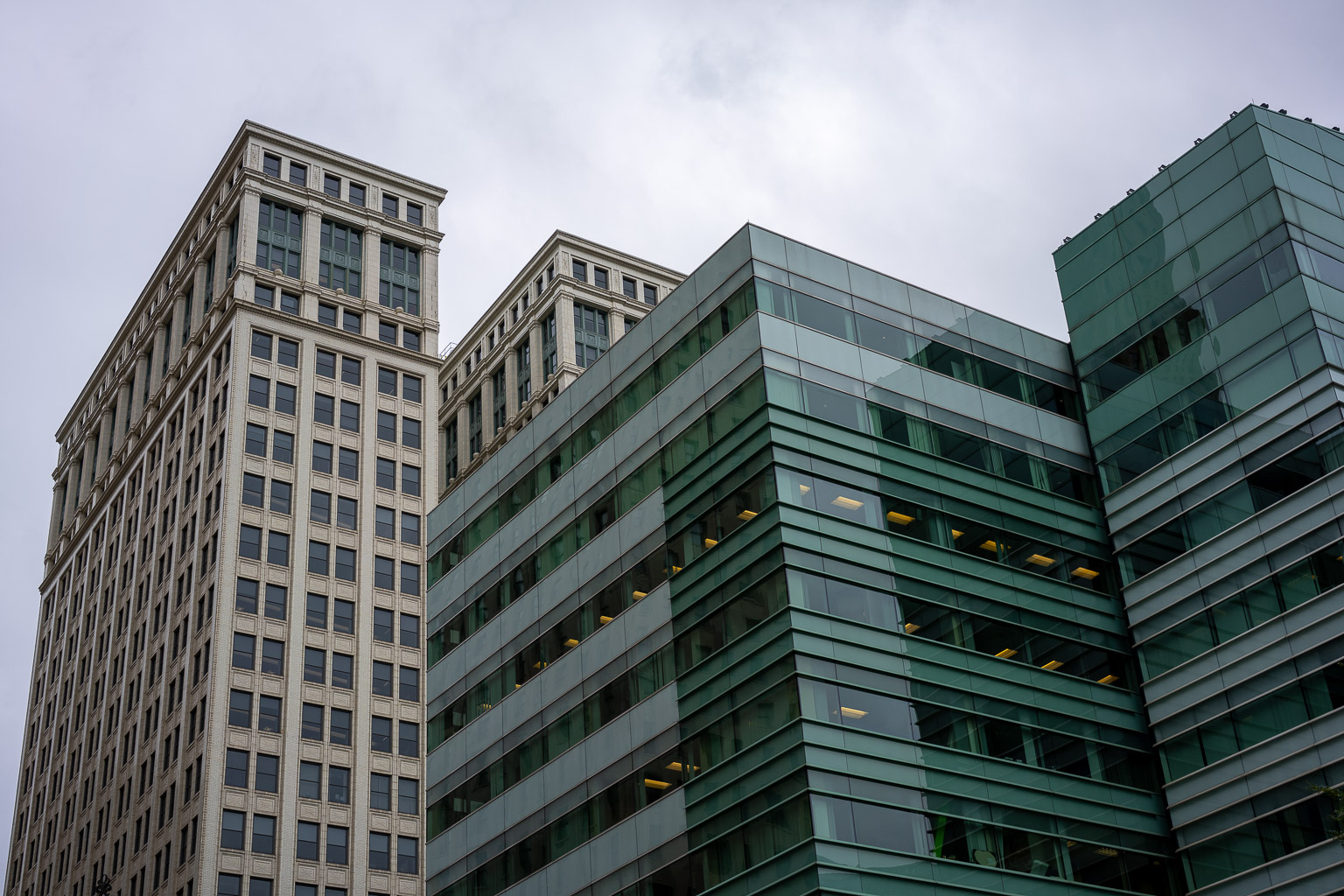
The roof is flat. A new awning projects from the Griswold entrance. Dime Savings was organized in 1884 with prominent Detroit businessmen such as J. L. Hudson and James E. Scripps among the directors. The bank occupied a temple-front three-story banking room in the center of the Griswold facade between the tower's two arms.
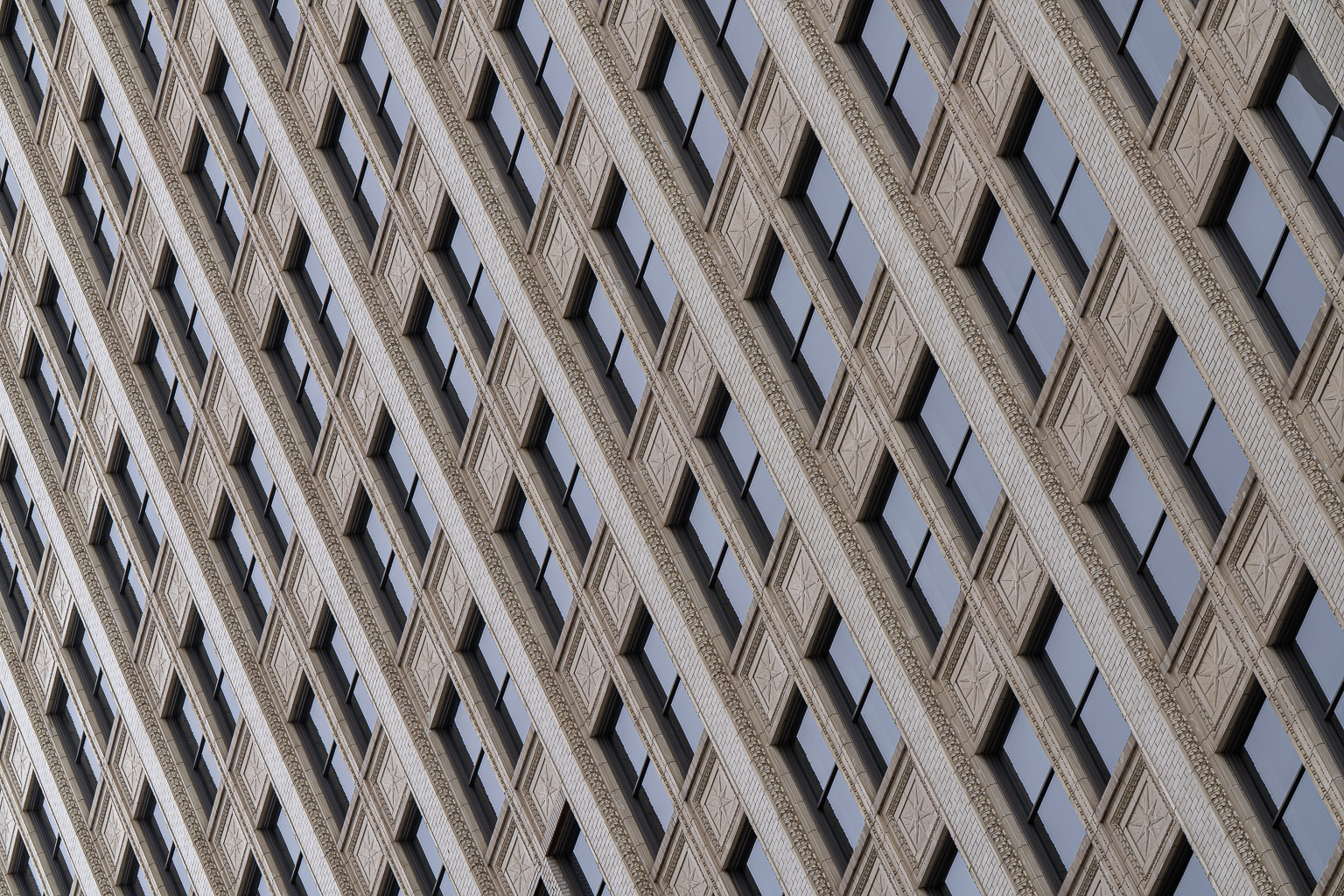
Finally, here are a couple more photos of Chrysler House with a more artistic intent.
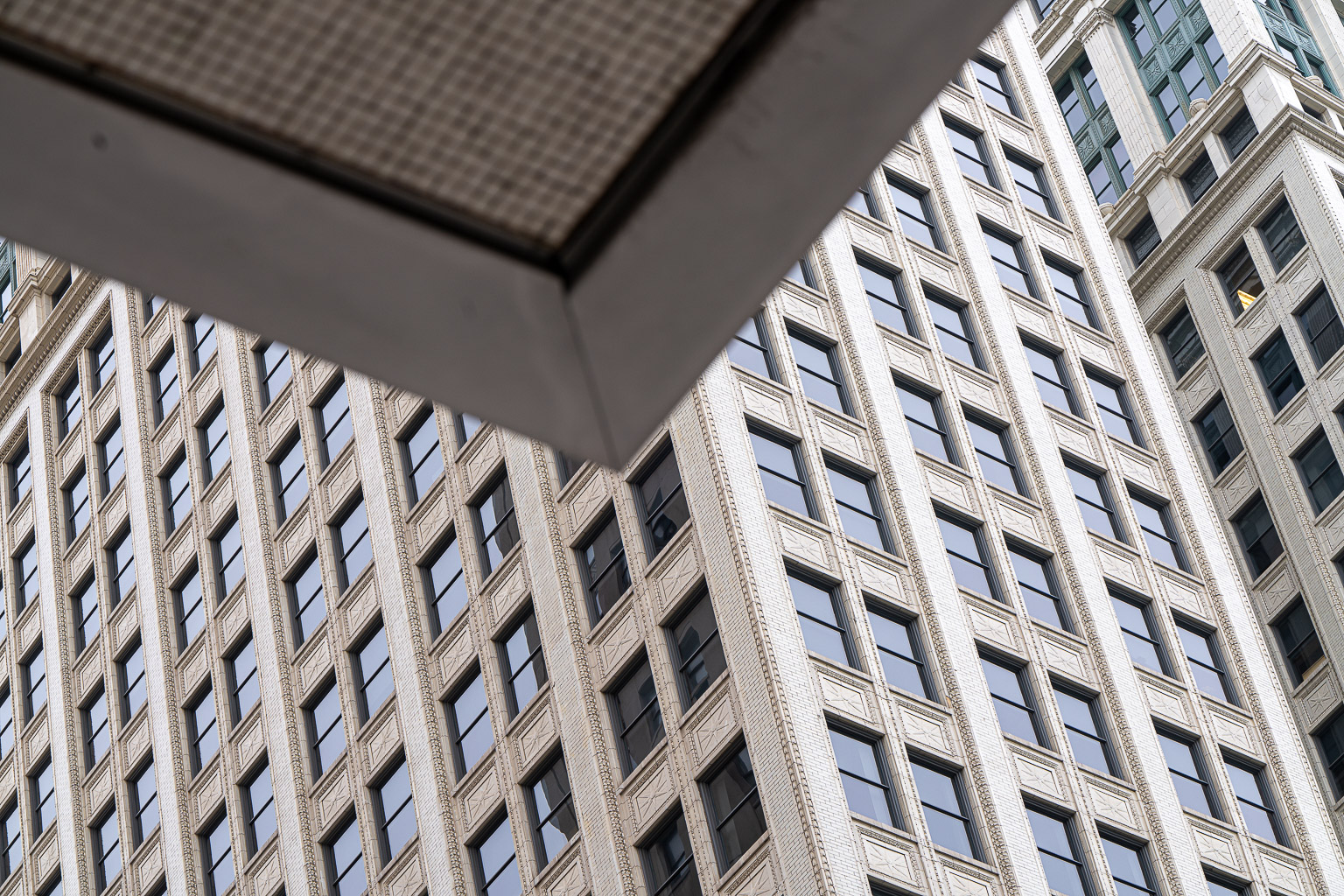
More photos and more description of this building can be found at HistoricDetroit.org.
Steel-frame seven-story bank building faced in limestone (1925), with 1964 alterations. Albert Kahn, Inc., architects. Corrado G. Parducci, sculptor. This bank building was constructed between the Dime Building's alley to the south and the First State Bank to the north (2nd photo below). Its Romanesque-inspired front is faced in grey Indiana limestone (1st photo below).
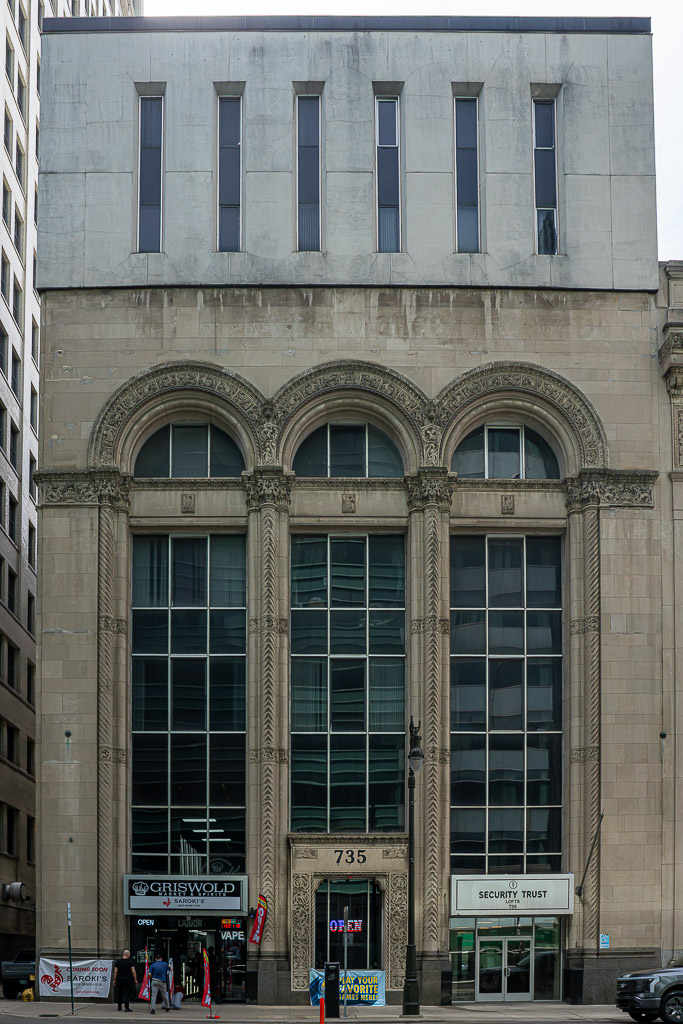
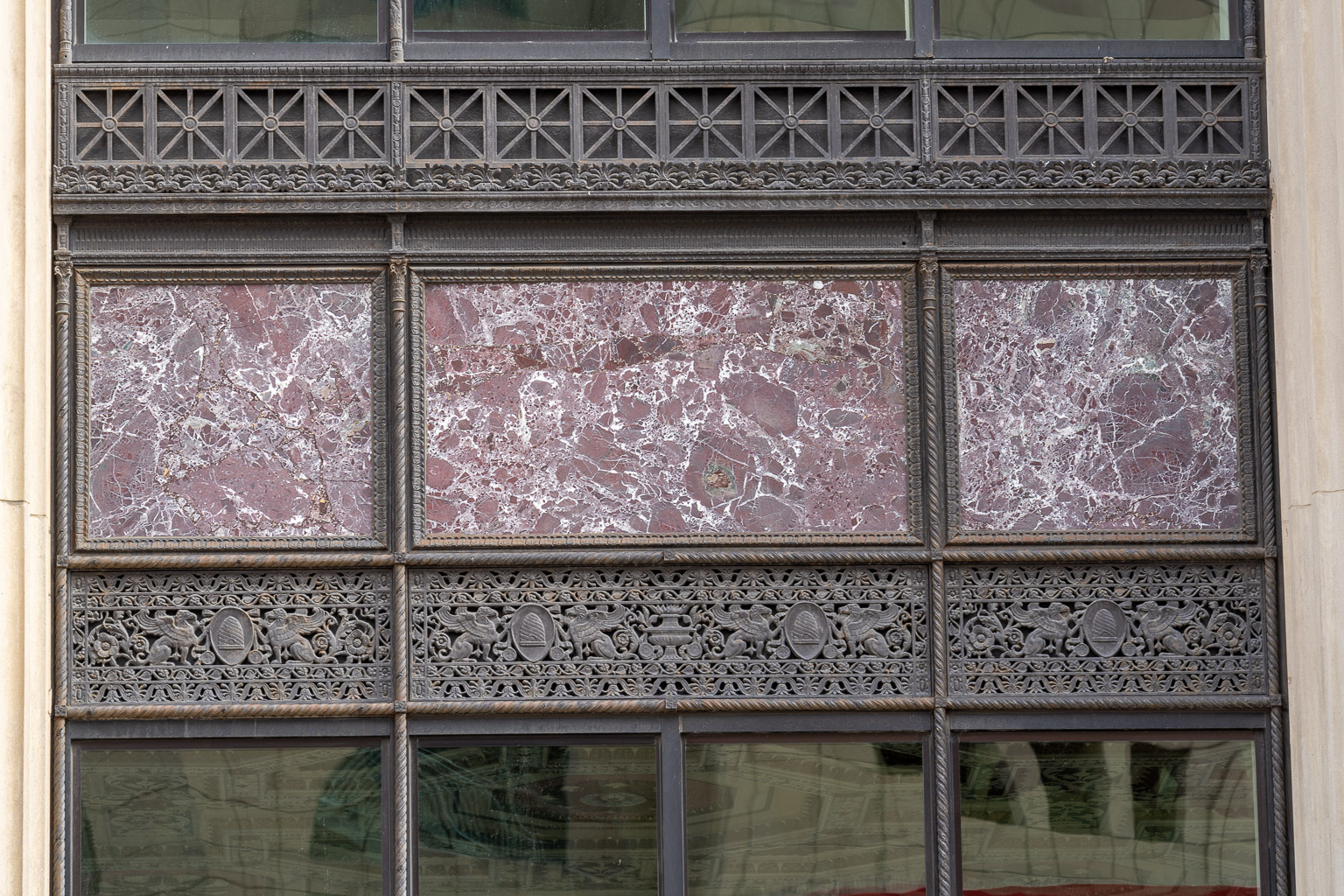
Rising above a gray granite base, the front displays three four-story tall side-by-side arches (1st photo above). The broad vertical openings are outlined by four-story engaged columns with spiral-patterned shafts and foliated capitols. The columns and their capitals and the arches are finished in limestone elaborately carved with representations of animal and human forms and other motifs (1st and 2nd photos below). Among the details carved in the voussoir blocks above the arches squirrel and beehive forms – suggestive of saving for the future – are recognizable.
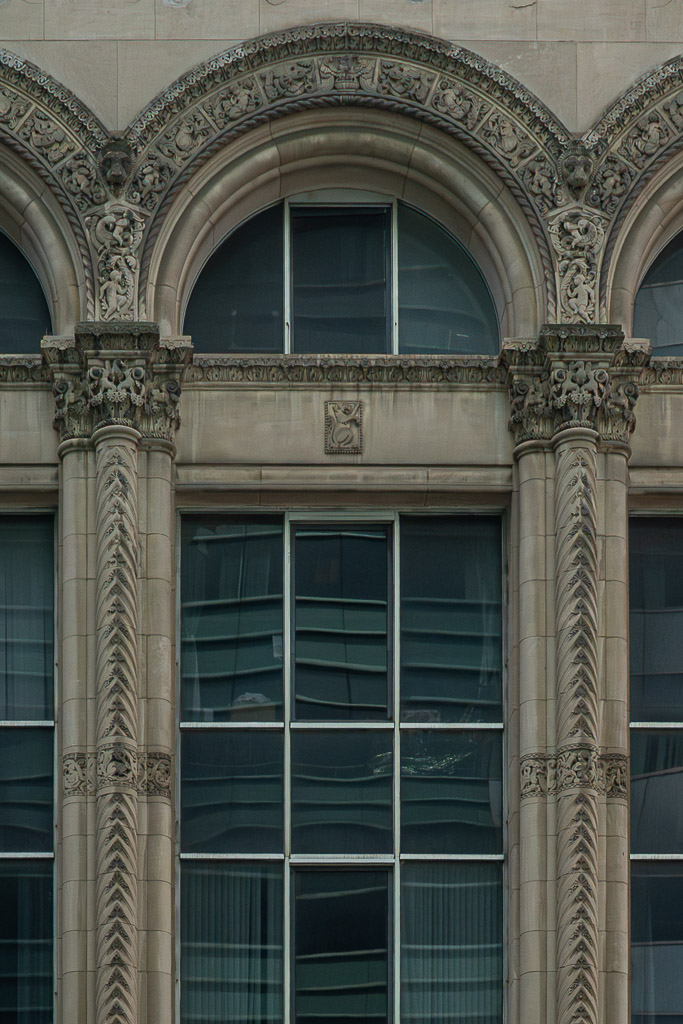
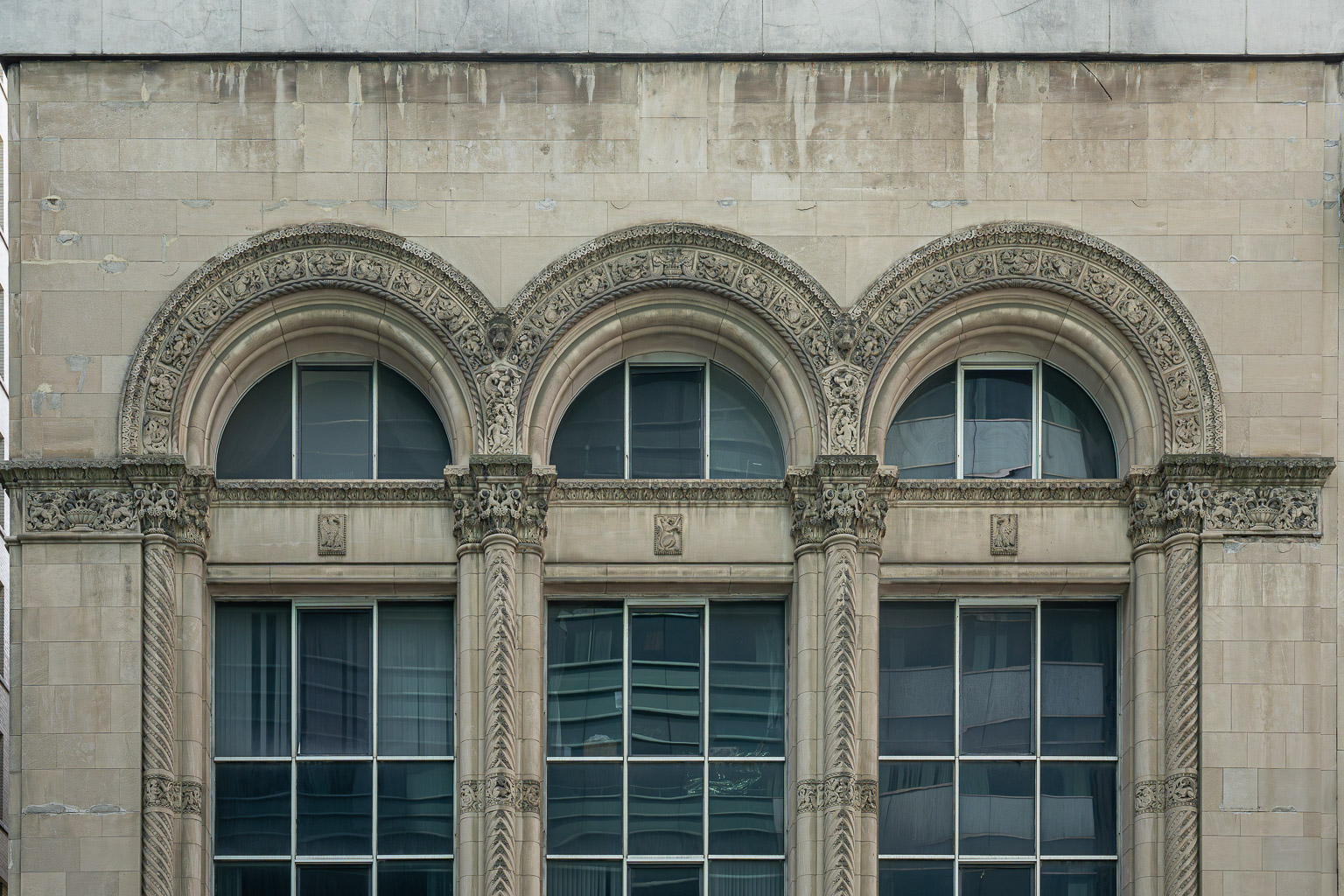
A now glassed-in central entry displays a limestone surround carved with vines and foliage, griffons and pelicans, human figures from classical antiquity, and other motifs, including more beehives.
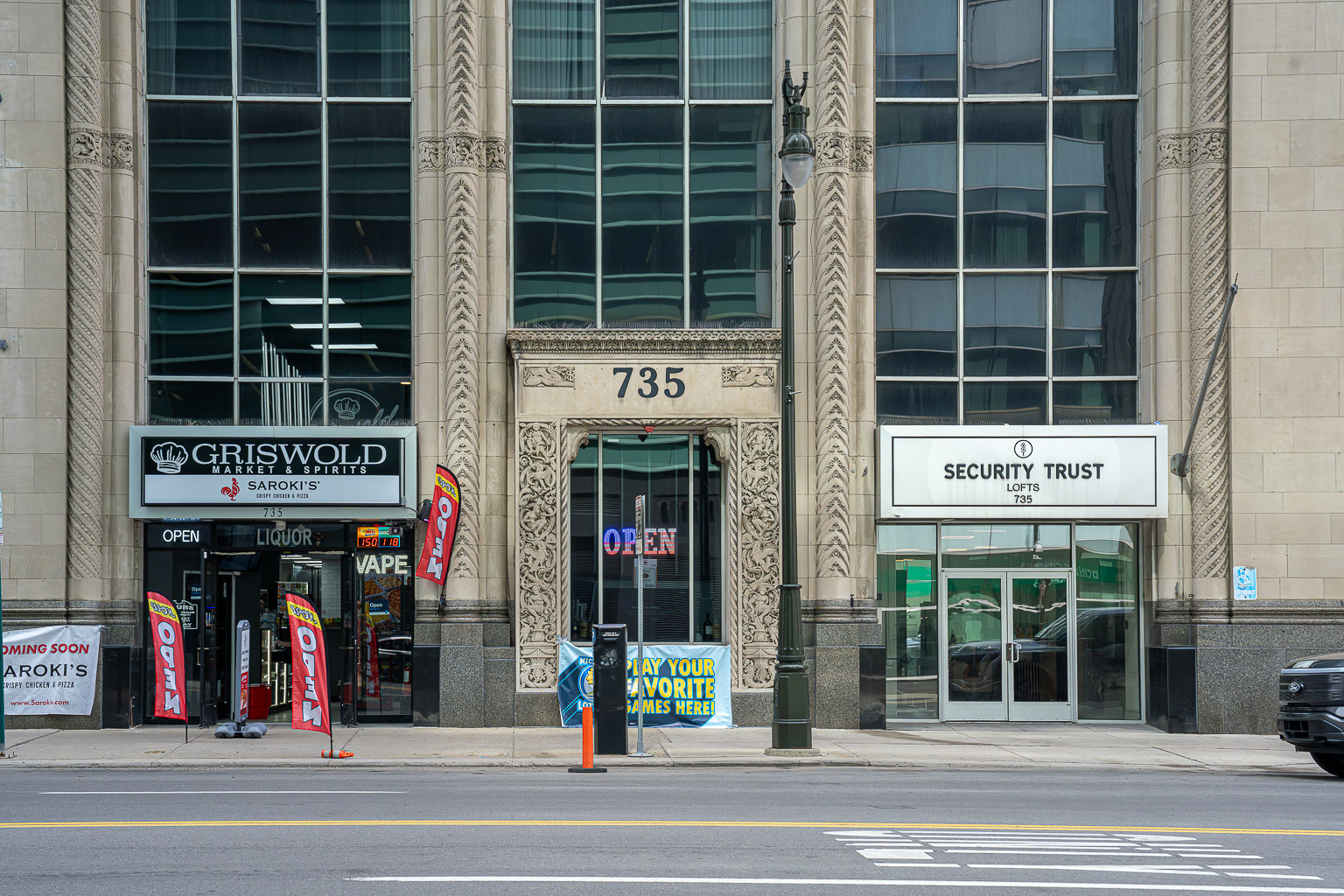
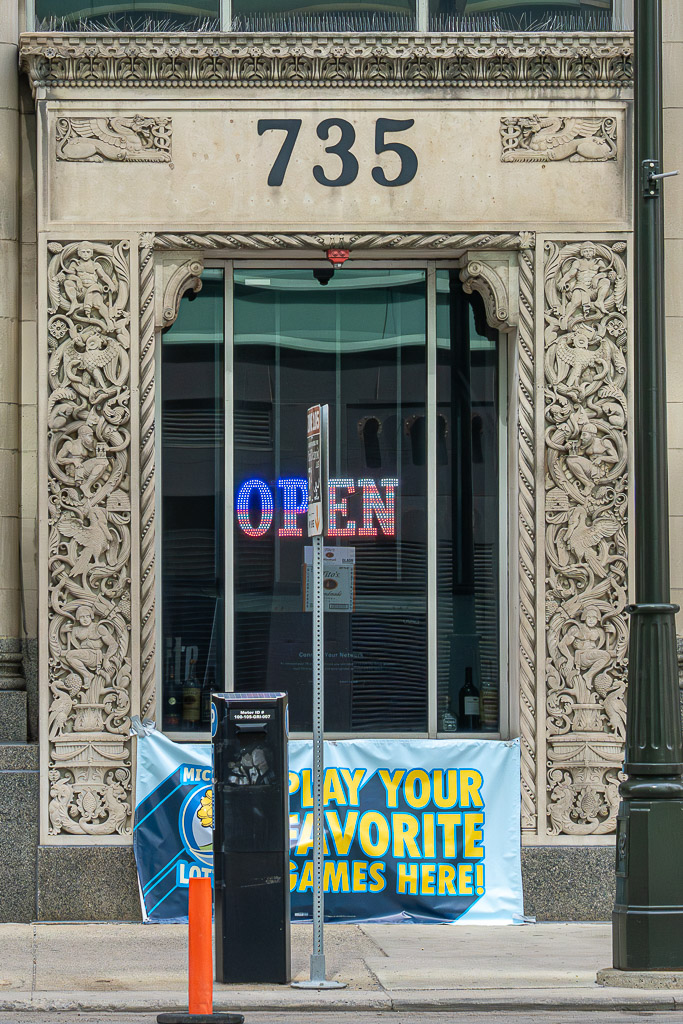
In 1964 a low gable that topped the facade was removed and replaced by a two-story flat-roof addition faced in white cast concrete panels, with a band of black at the roofline (1st photo at top of article). Light enters through six banks of narrow upper and lower windows separated by aluminum spandrels on the addition's Griswold front. At the same time the 1925 building's original front windows were replaced with aluminum-trim windows separated by aluminum spandrels and the building's center entrance converted to a window and two new entrances created in the north and south archways. Since the last bank use, the building has housed Olde Discount Corp. stock brokerage, the Lawton School, a private business school, and later the Detroit Public Schools' Jessie C. Kennedy Downtown Adult Education Center.
More photos and more description of this building can be found at HistoricDetroit.org.
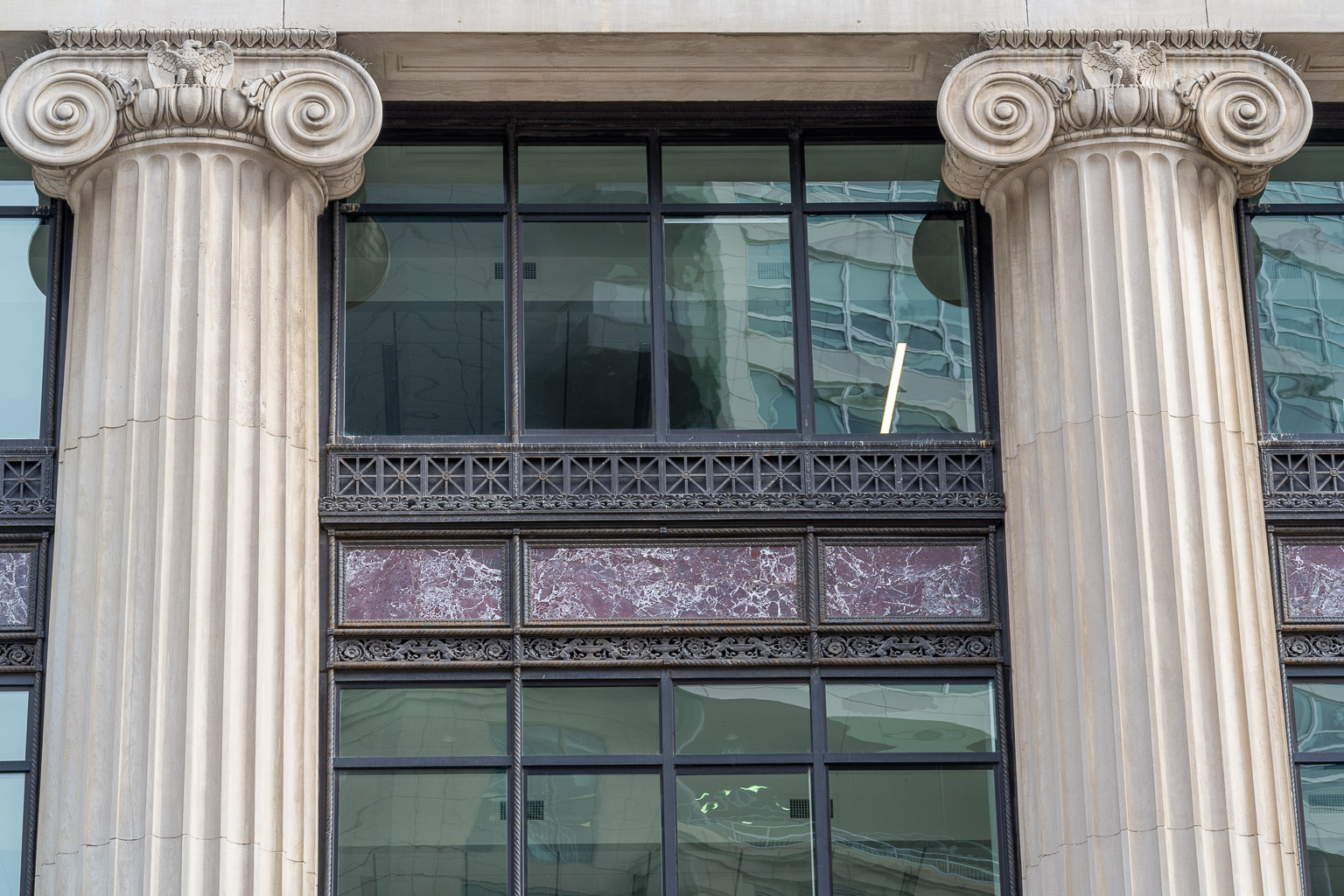
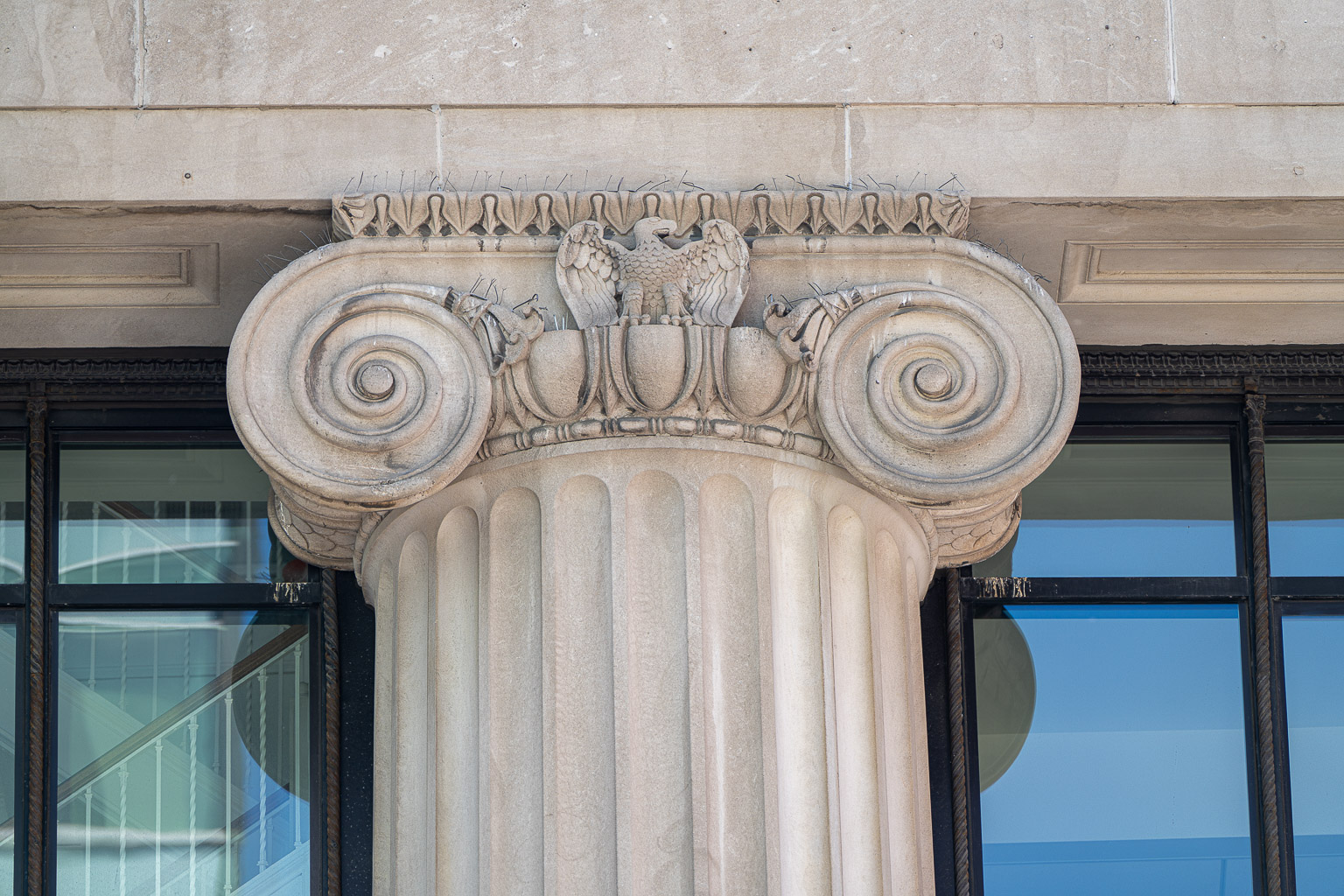
Steel-frame four-story bank building faced in limestone (1924-25). Albert Kahn, architect. Corrado G. Parducci, sculptor. Originally named the Olde Building, this bank headquarters building is designed in a Classical Revival style, faced in grey Indiana limestone, and sited prominently at the corner of Griswold and West Lafayette Streets (1st and 2nd photos below). This allowed for two facades each finished with three-story engaged, fluted Ionic columns between corner antae supporting a low attic story—two columns on Griswold flaking a central entrance (3rd photo below) and two more along the West Lafayette facade (4th photo below). The roof is flat. The first floor lobby is a story and-a-half tall.
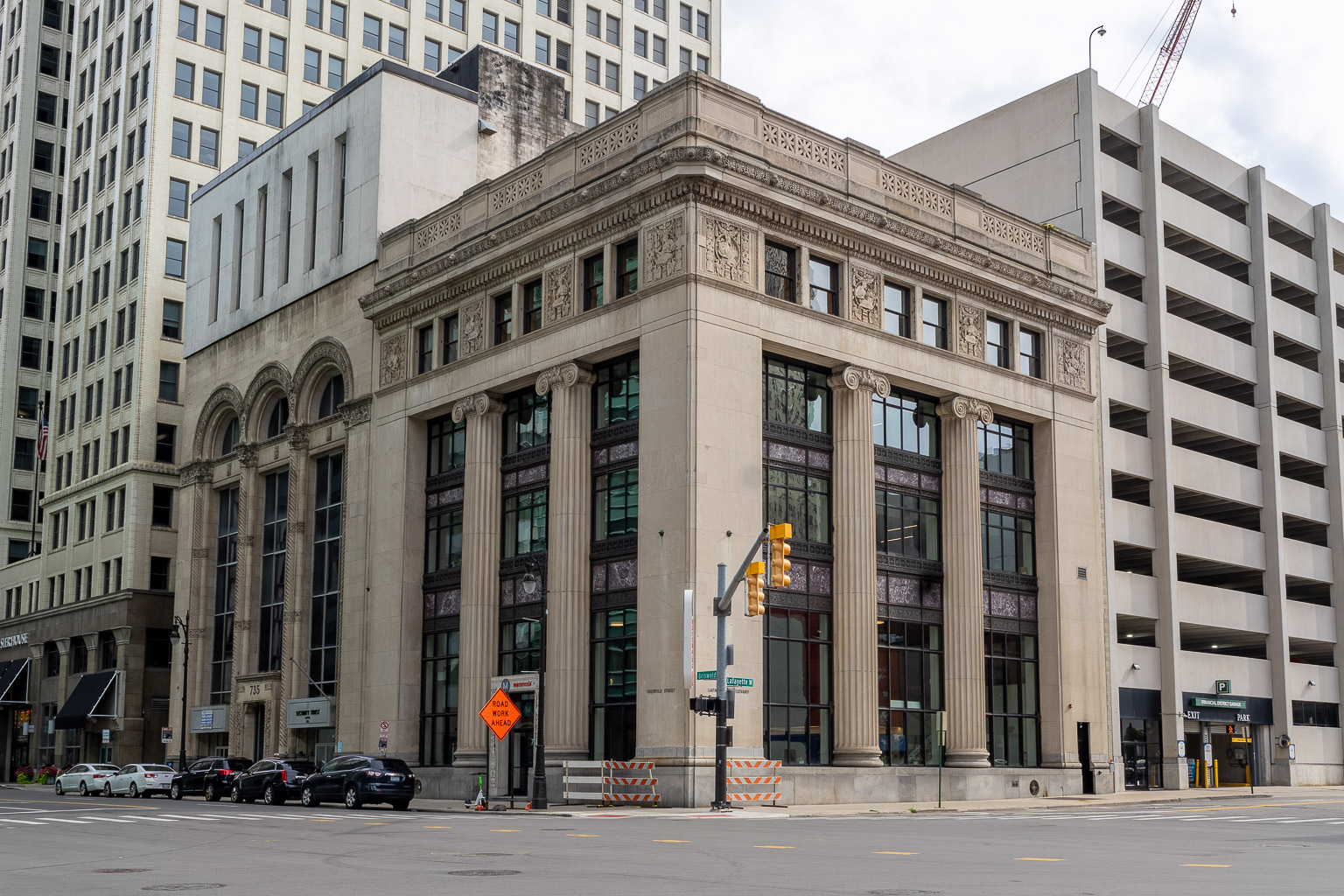
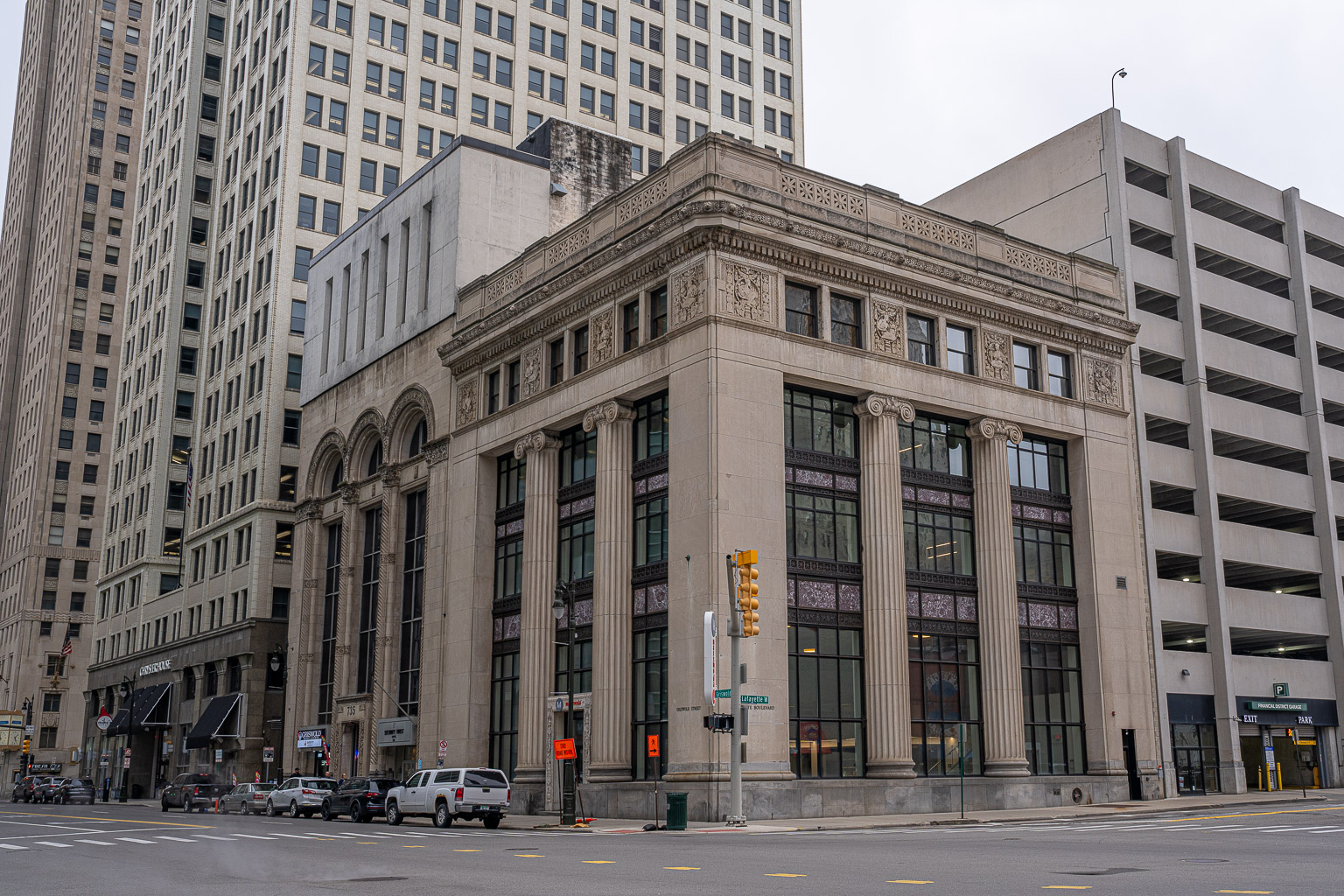
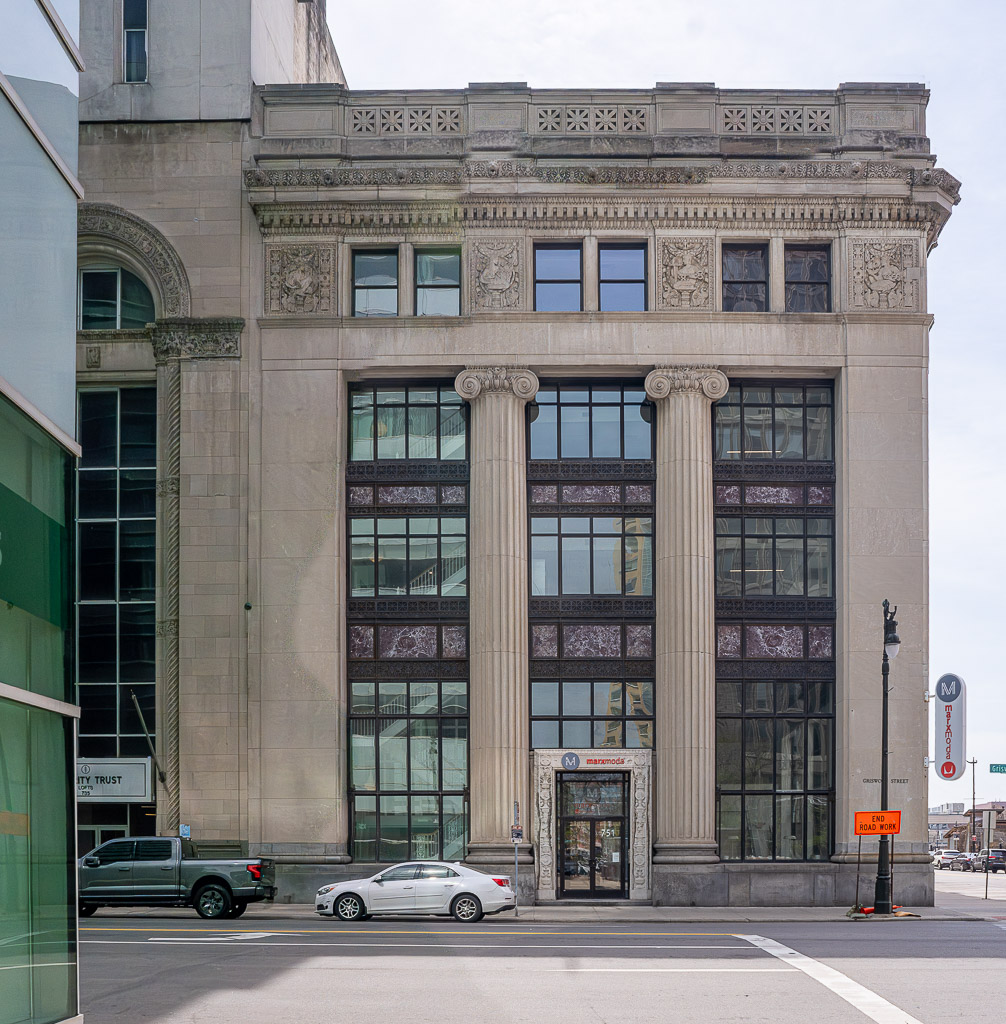
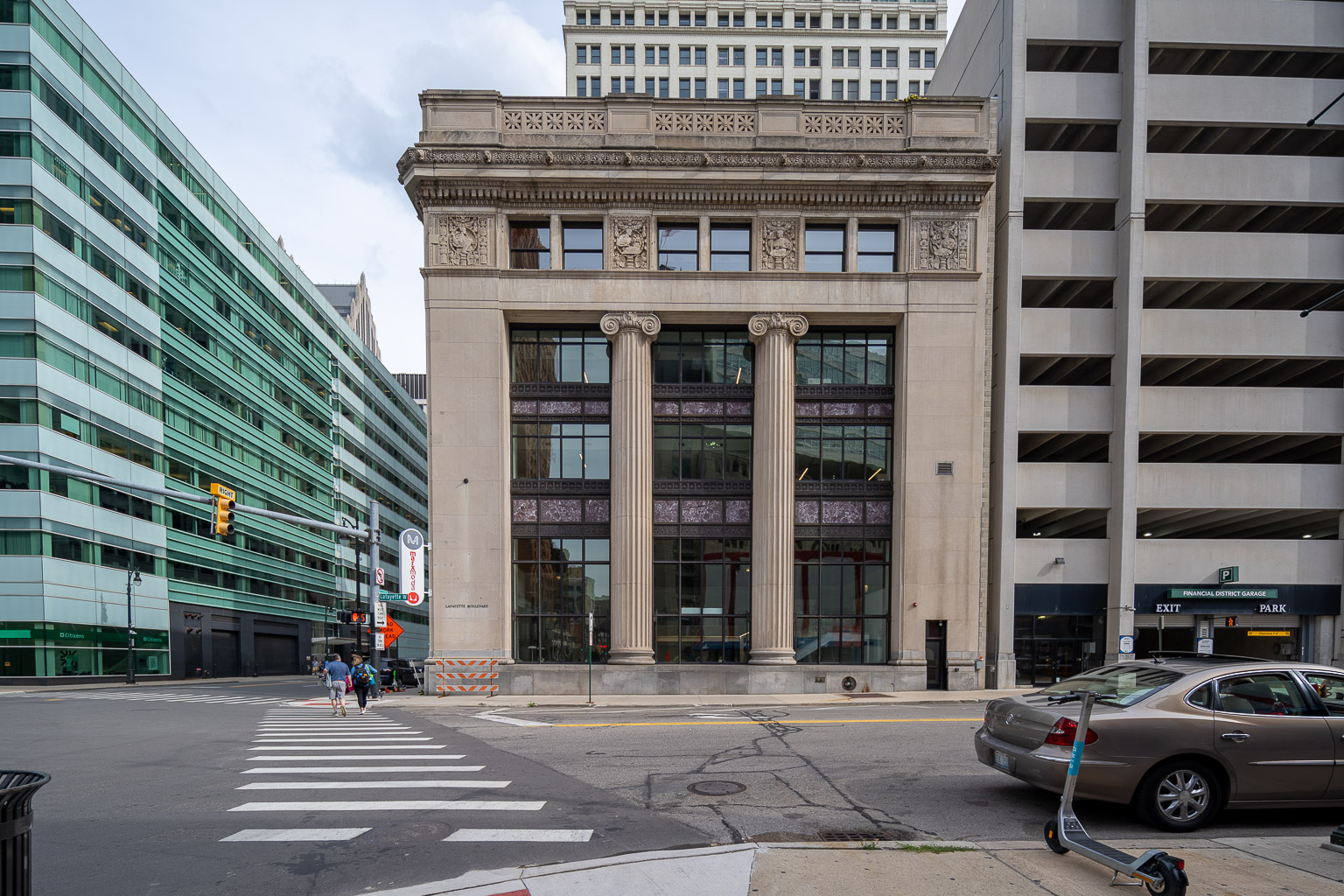
The main entrance door surround of Tennessee marble is filled with delicate carvings of animals, urns and foliate details (1st photo below). The original windows, encased in metal frames, still rest between spandrels of bronze and marble. A denticulate entablature separated the fourth floor attic story from the floors below (2nd photo below). The fourth floor windows are double hung and grouped in twos, separated by elaborate plaques with classical motifs. The roofline is emphasized by a parapet incised with decorative detailing.
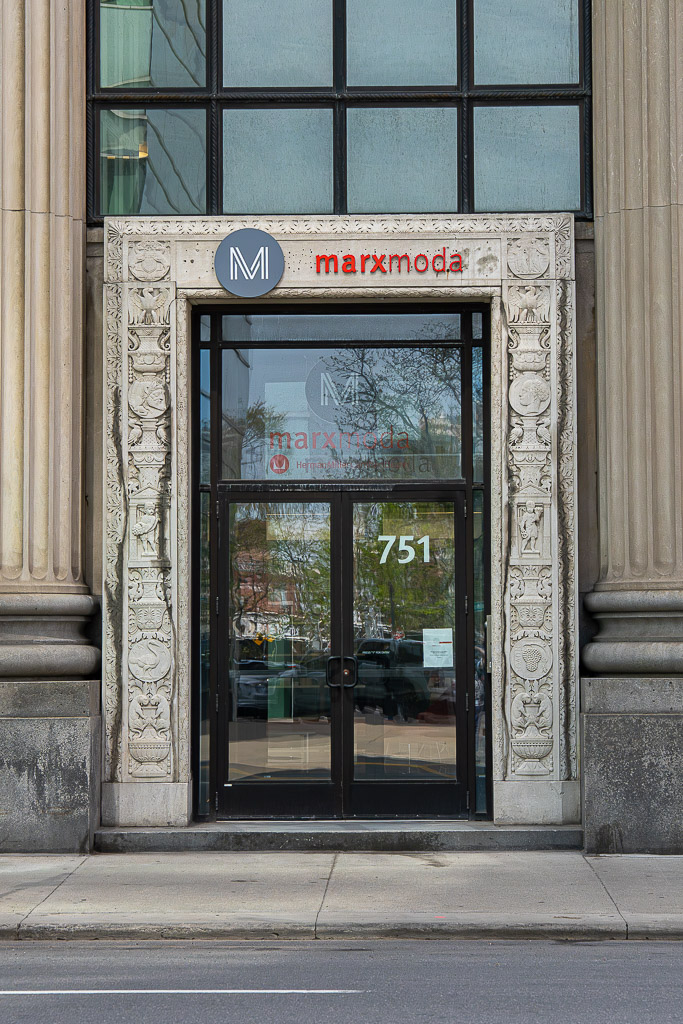
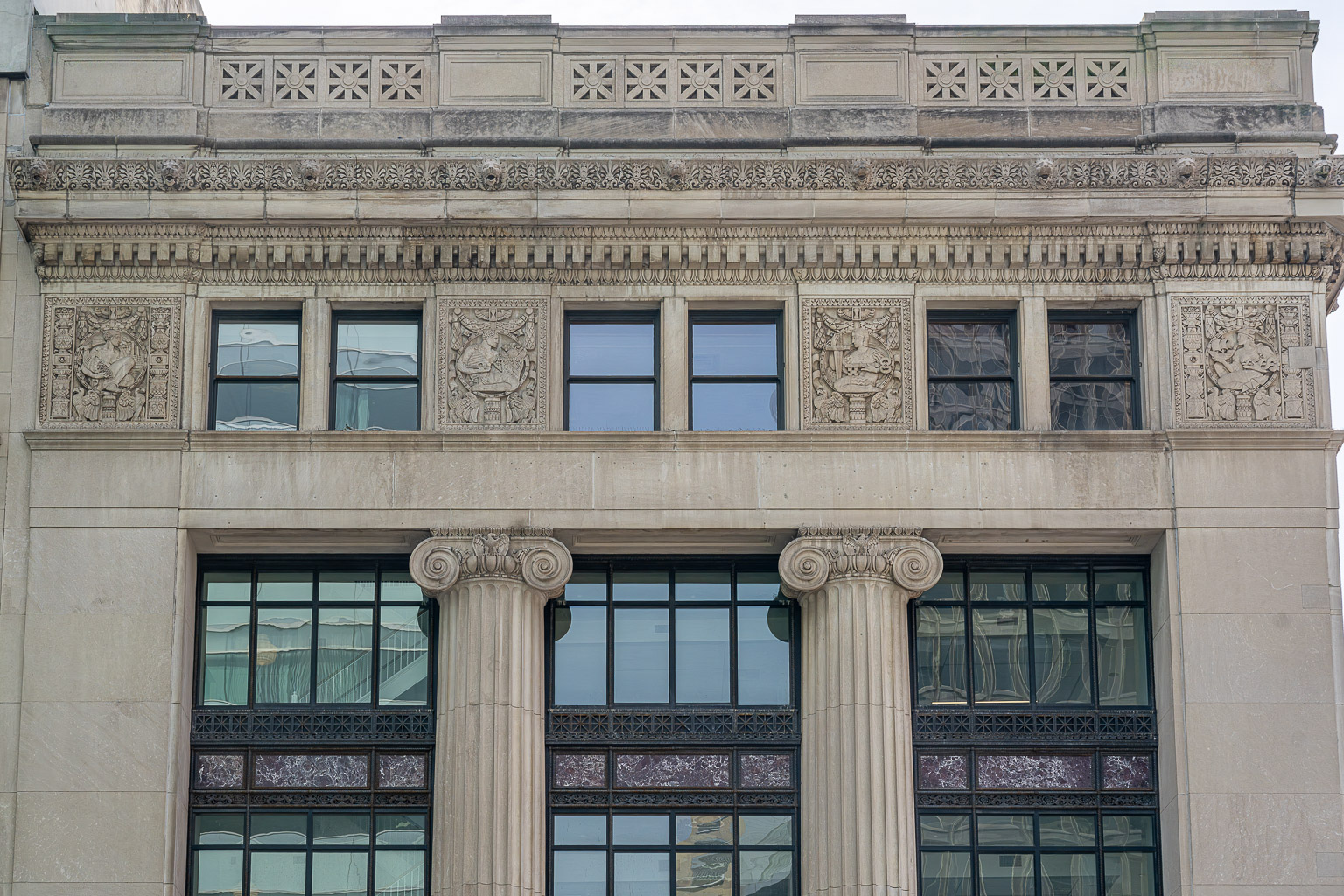
The photos below show details on the First State Bank Building.
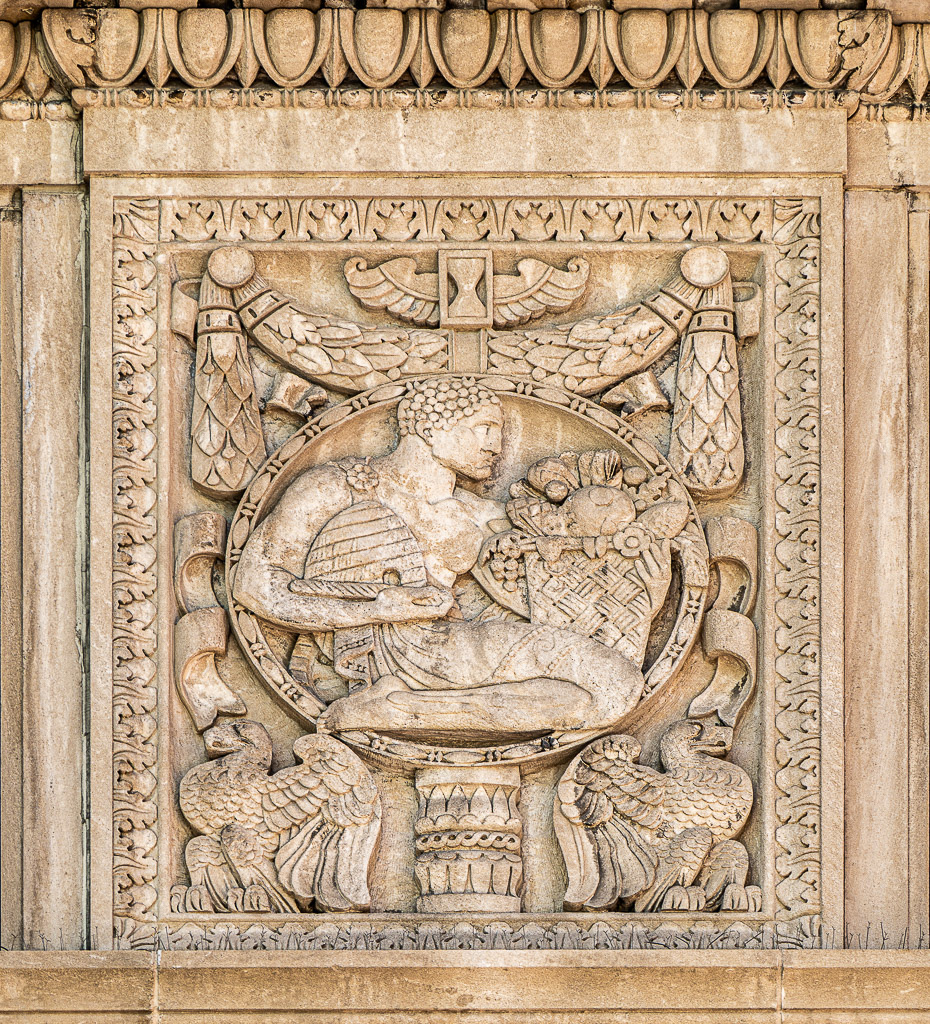
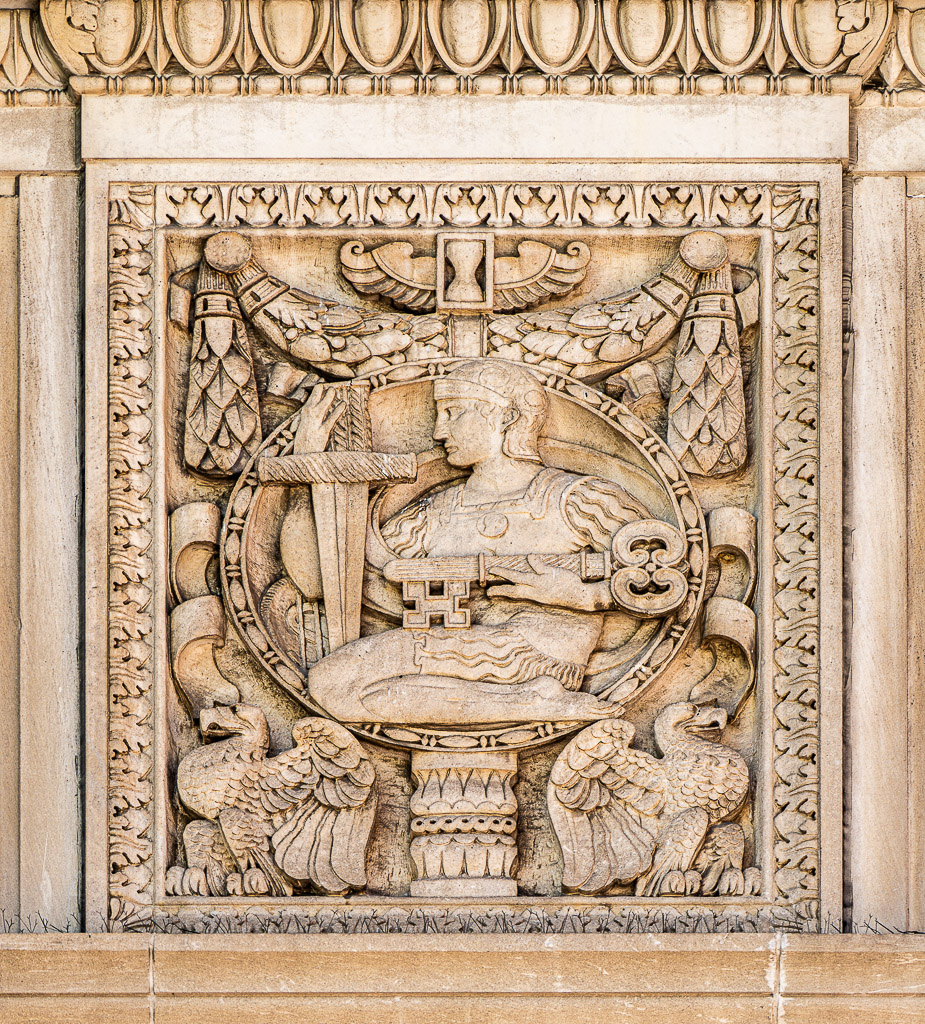
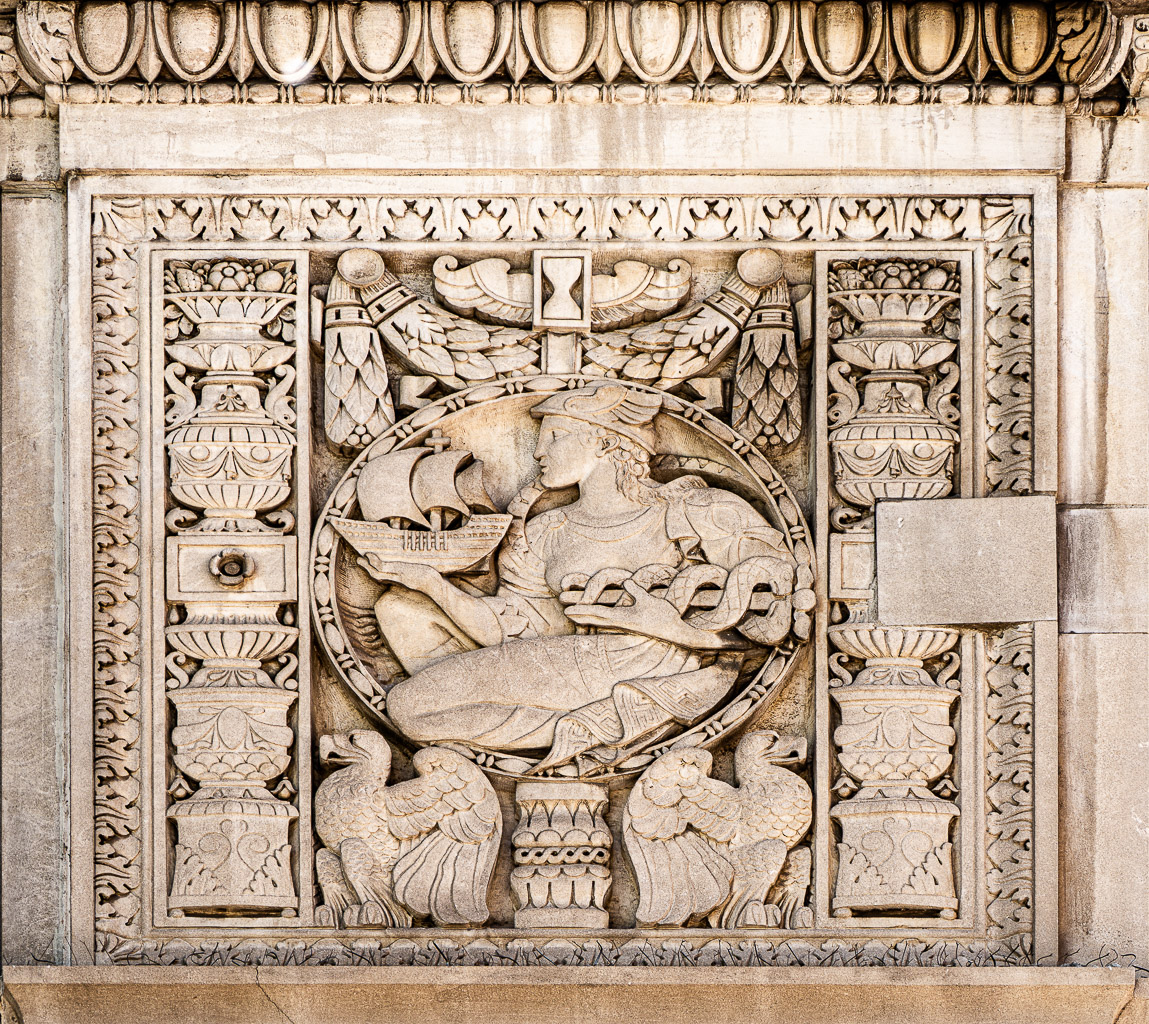
Below are the four medallions on the Lafayette side of the building.
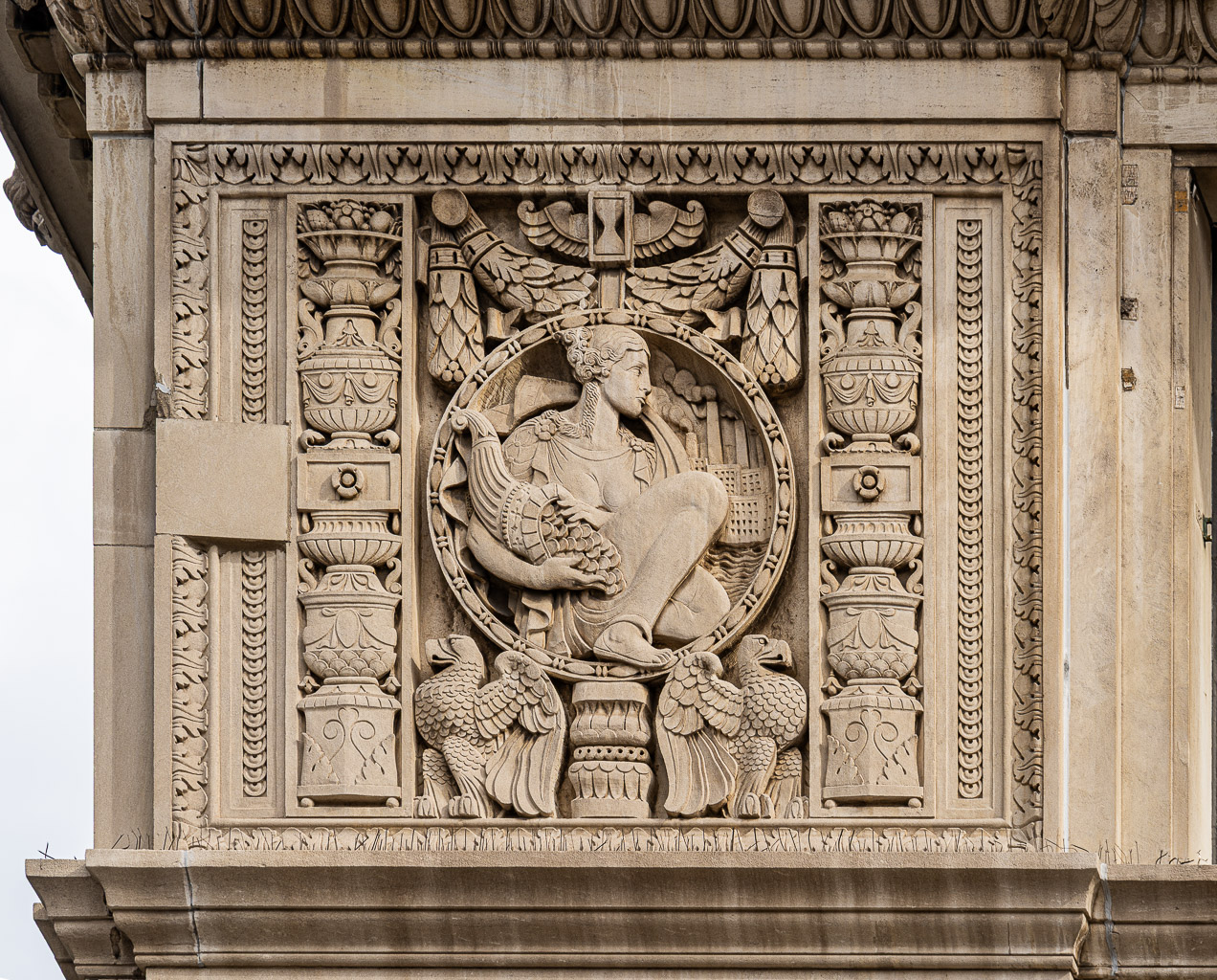
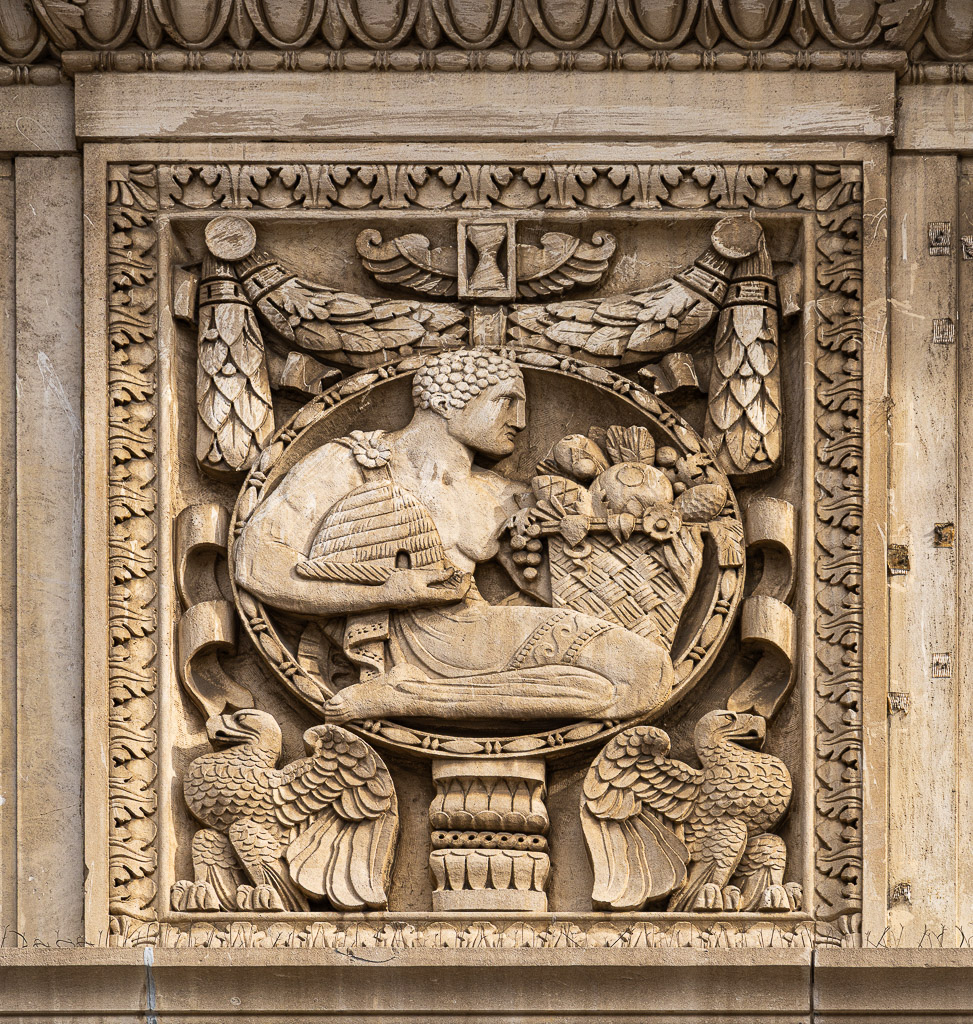
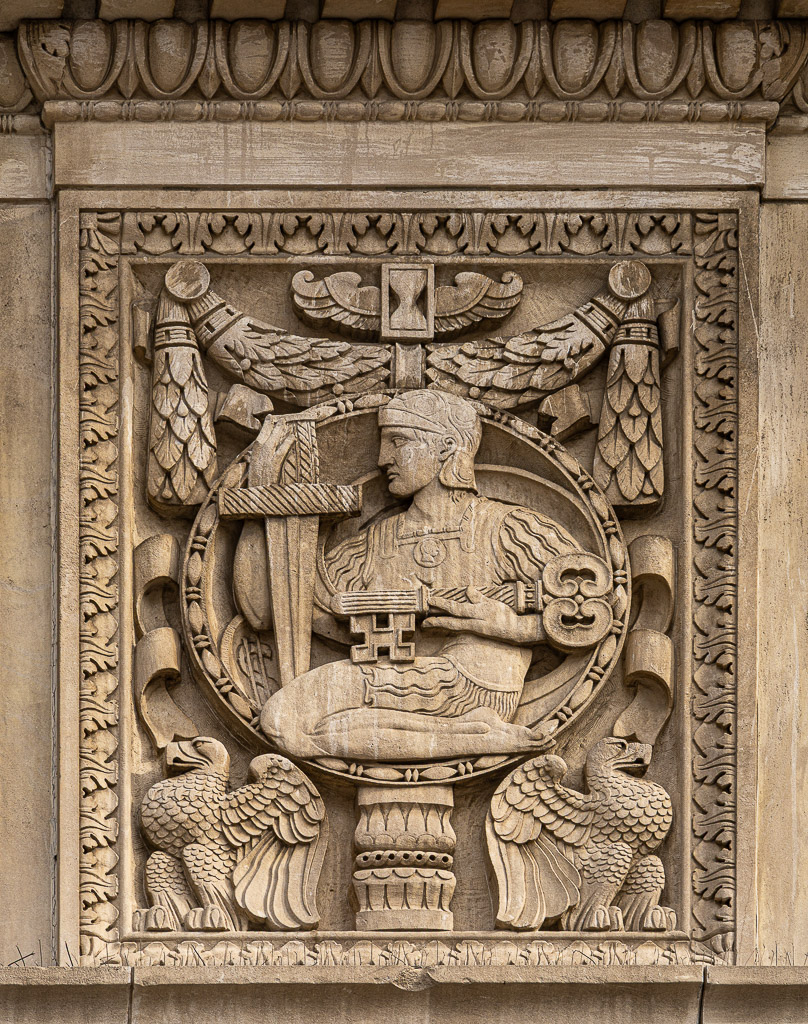
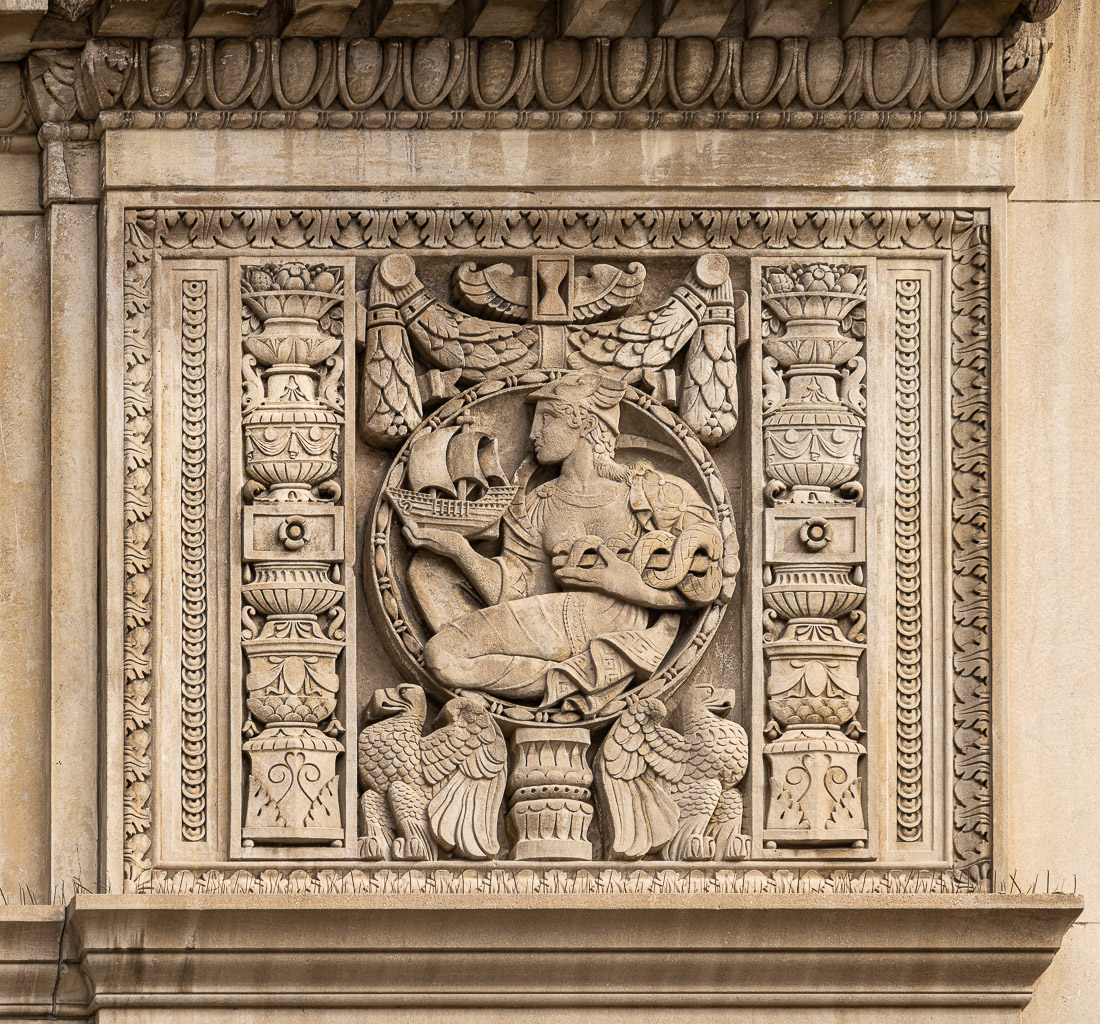
These are the same four medallions on the Griswold side of the building.
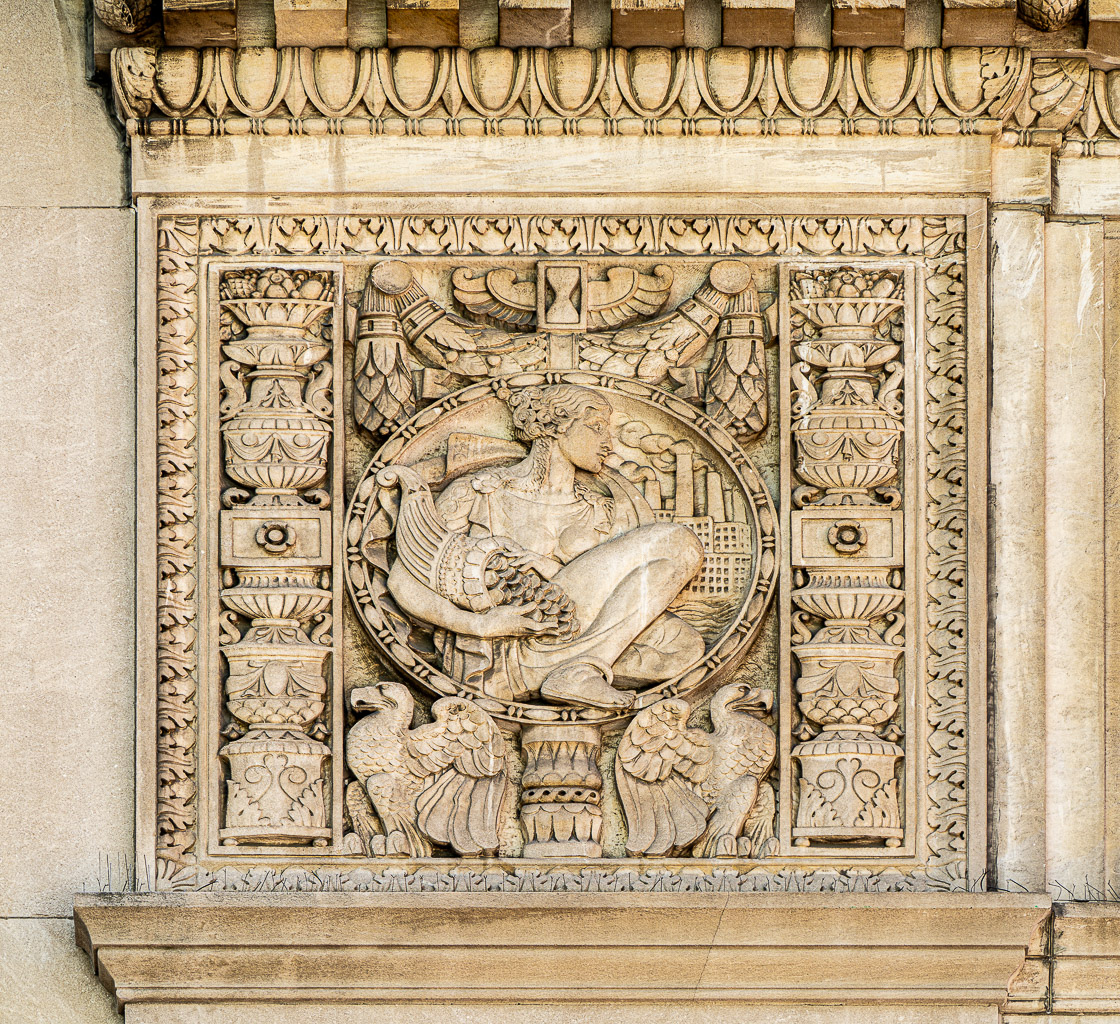
More photos and more description of this building can be found at HistoricDetroit.org.
Steel-frame, ten-story limestone-clad federal courthouse and office building (1932-34). B.V. Gamber of Robert O. Derrick, Inc., architects. Corrado G. Parducci, sculptor. The Levin District Courthouse takes up the entire city block bounded by West Fort Street, Washington Boulevard, West Lafayette Avenue, and Shelby Street. An Art Deco design that contains stylized references to Neoclassicism, the building stands on the site occupied by the previous Federal Building built in the 1890s.
Built on a black granite base, the rectangular building has an open central court above the second floor. Fluted pilasters mark the triple recessed entrances. Above the entrance, relief sculptures of eagles and emblems portray the building's governmental functions (3rd photo below). Highly stylized large fluted piers also rise through the central portion of the third to sixth floor facade to support a broad entablature with round sculptural plaques alternating with bands of fluting (center of 1st and 2nd photos below, and 4th photo below). The upper three stories below the flat roof are setback slightly from the lower part of the building.
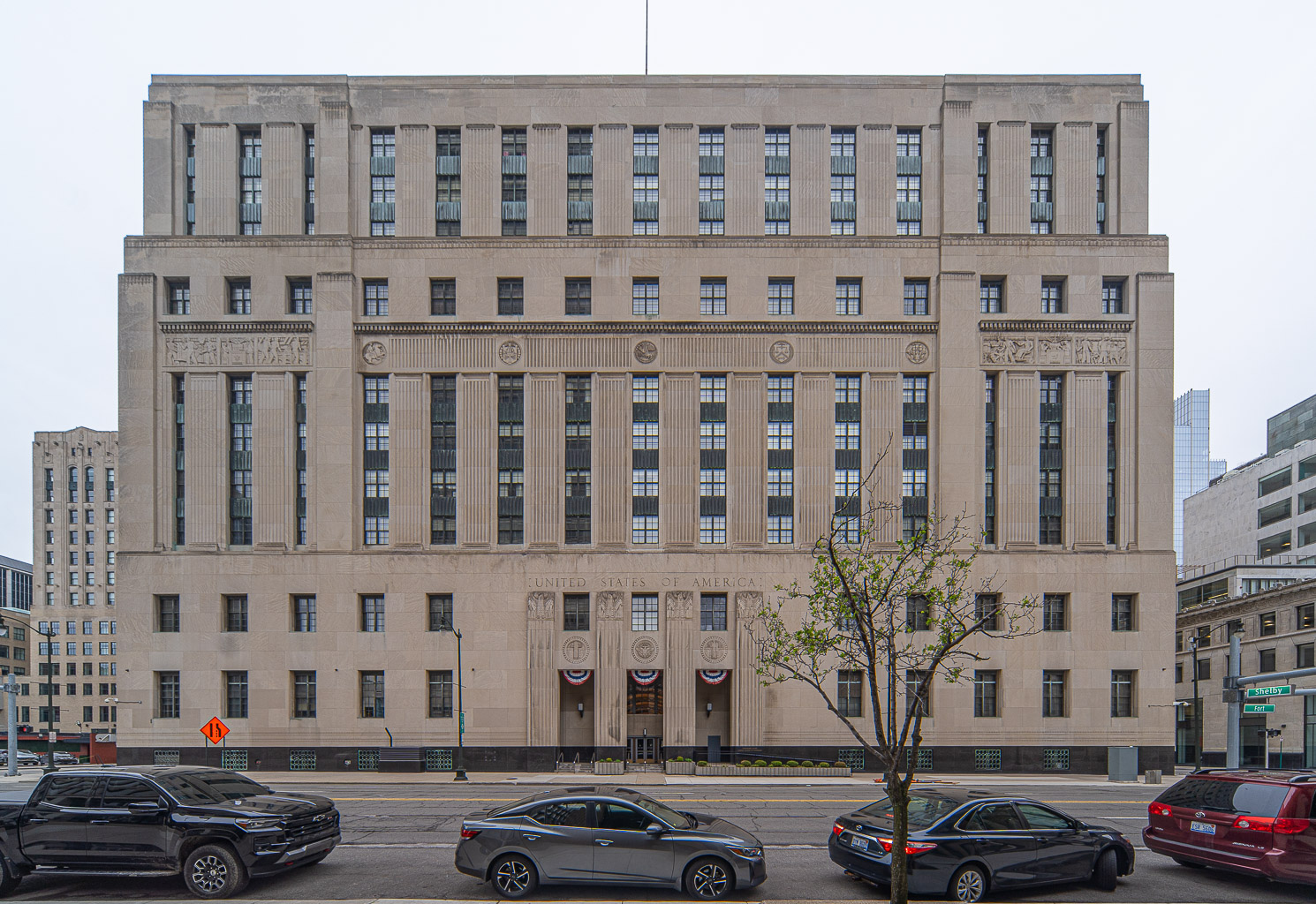
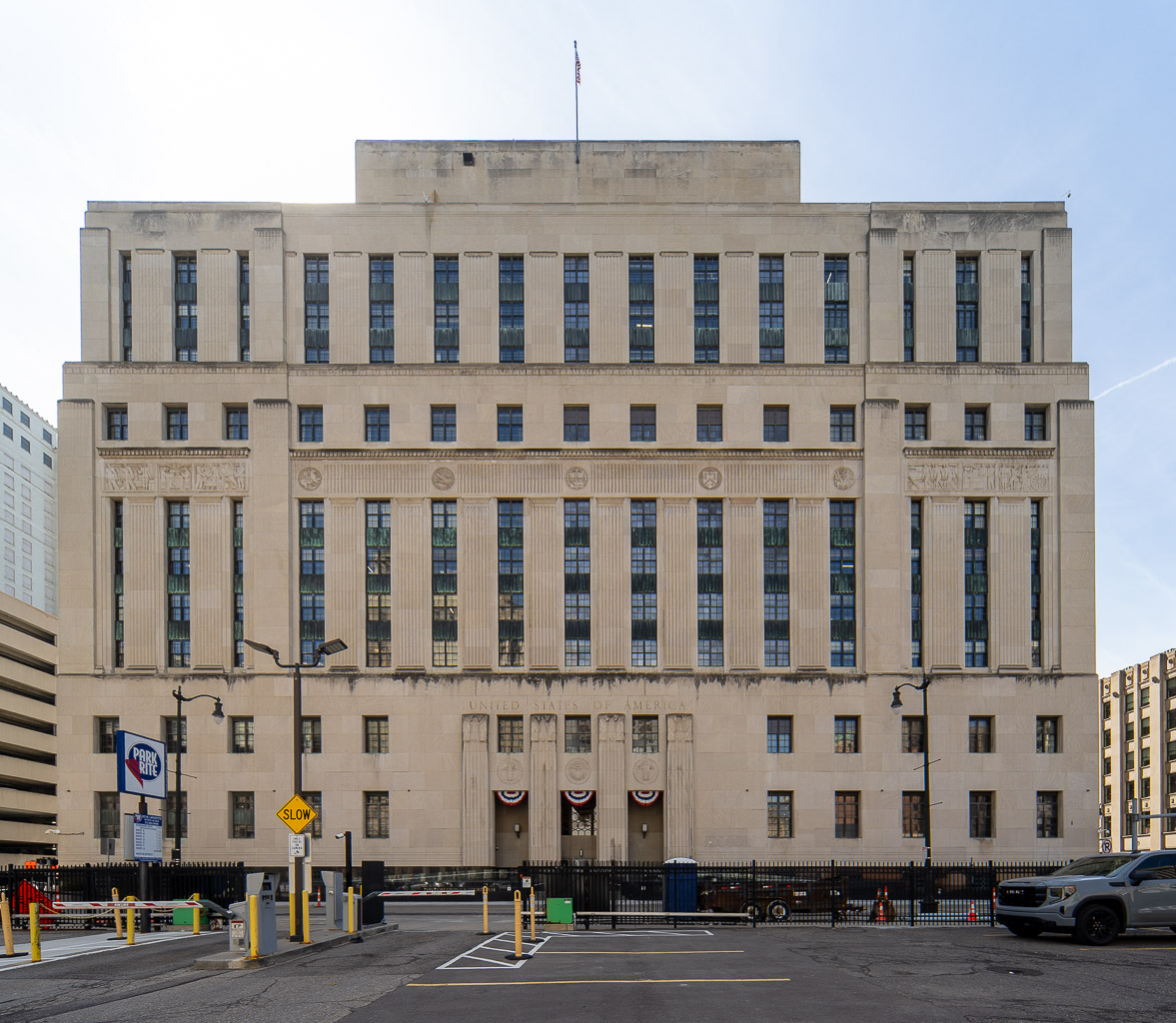
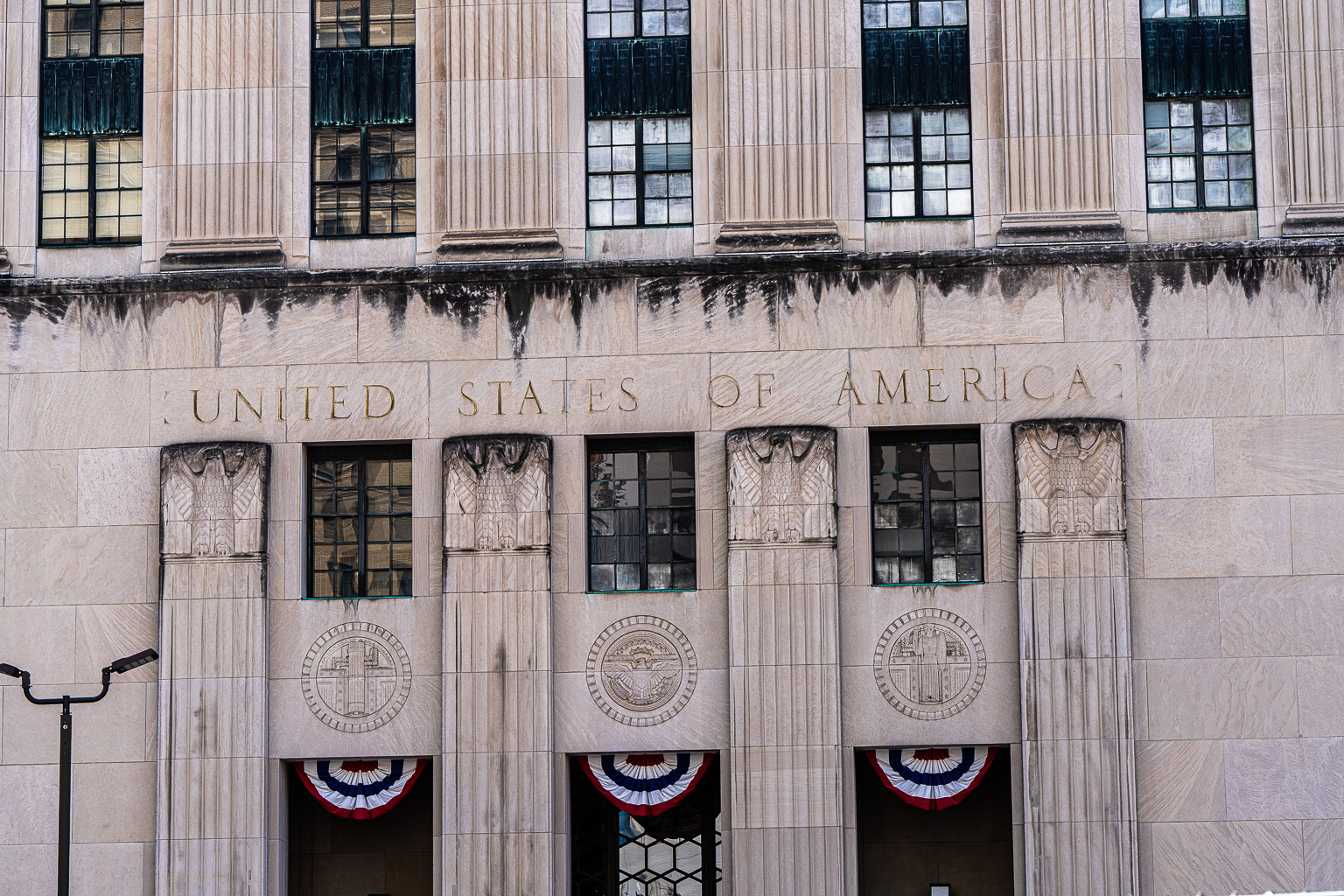
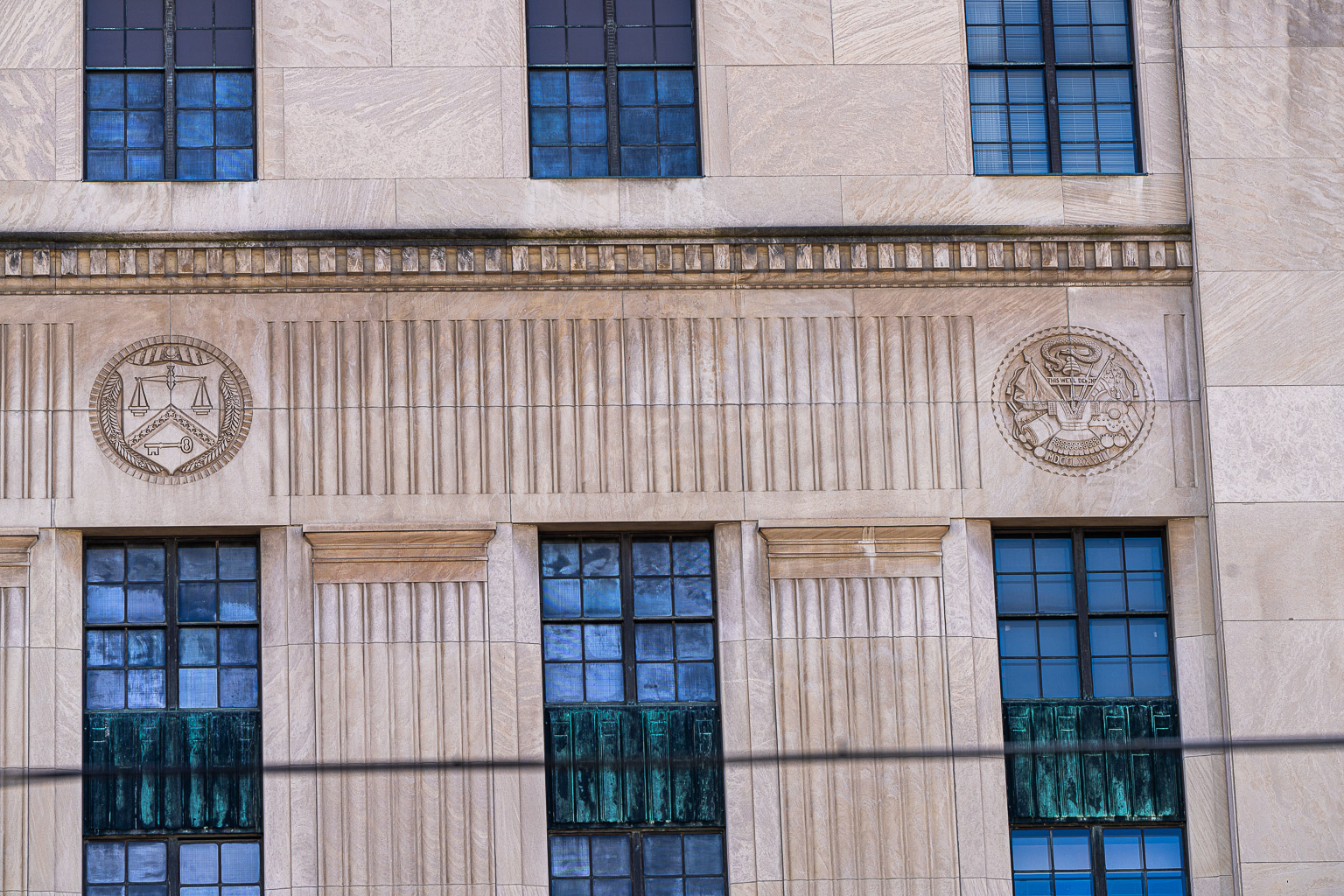
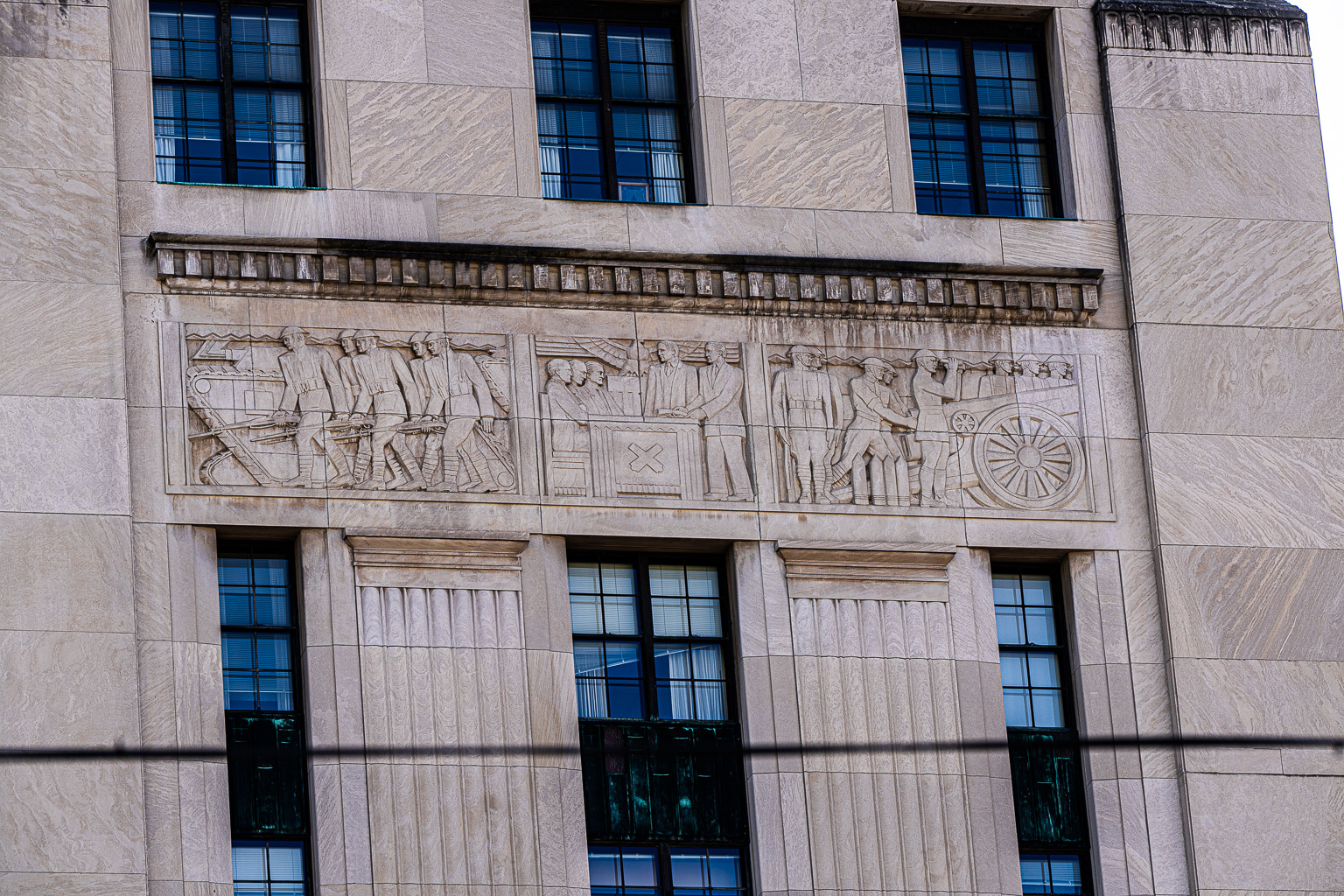
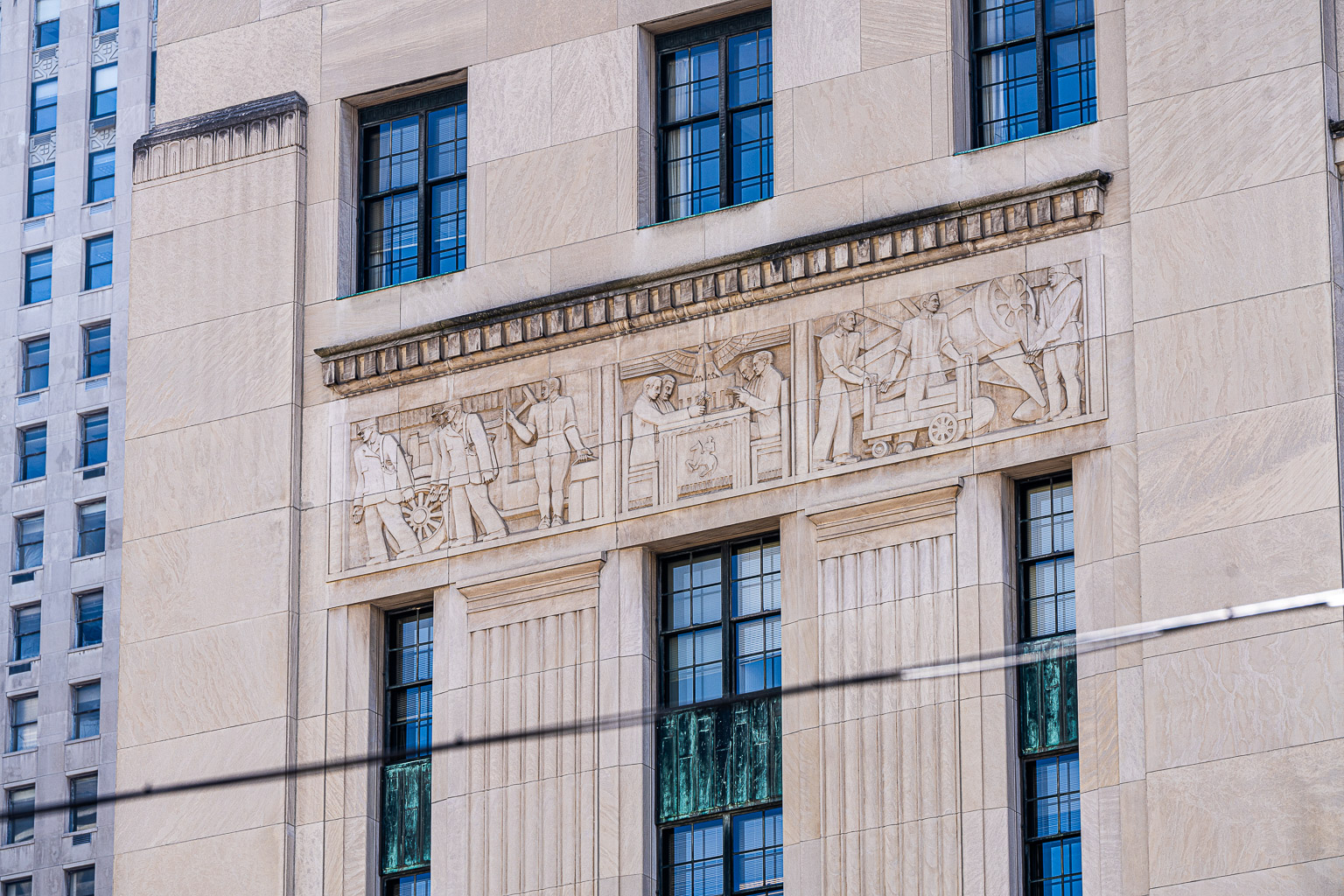
The interior is finished in high quality materials such as travertine marble and polished granite and displays plaster detailing that includes fine stencil work. Of particular interest is the U.S. District Courtroom Room 733. It contains the polished walls and other marble features and the mahogany judge's dais and other wood trim and furnishings that came from the former courtroom of Chief District Judge Arthur J. Tuttle in the old federal building. In 1931 when that building was to be demolished for this new structure, Judge Tuttle had his courtroom finish dismantled and reinstalled in his new courtroom.
More photos and more description of this building can be found at HistoricDetroit.org.
Steel-frame fourteen-story office building clad in limestone (1925). Albert Kahn, Inc., architect. Ulysses A. Ricci, sculptor. The building takes up the half city block fronting on Lafayette's south side between Washington Boulevard and Cass Avenue extending south to the alley. The design of the building is unusual in that the first three stories display rectangular floor plates, while two lights courts along the building's rear side give floors four through six E-shaped footprints (2nd photo below). A central front tower area contains floors seven through fourteen. The Detroit Free Press Building is not a Wirt Rowland creation, but the tower of the Michigan Bell and Western Electric Warehouse is perceived as a distinct eleven-story unit, rather than as a five-story extension atop a six-story building. In this respect, the Michigan Bell and Western Electric Warehouse may be compared to and contrasted with the Detroit Free Press Building, which exhibits a somewhat similar arrangement and was designed by Albert Kahn’s firm. The exterior design of the Detroit Free Press Building was implemented by Albert Kahn for many of his other large office buildings such as the Fisher Building. The piers between window bays brought forward to give the building a dramatic light and shadow play (1st photo below). The building retains its original double hung wood framed windows in many of the offices of the tower. The two-story arched main entrance at the front of the building is guarded by two historical figures (3rd and 4th photos below).
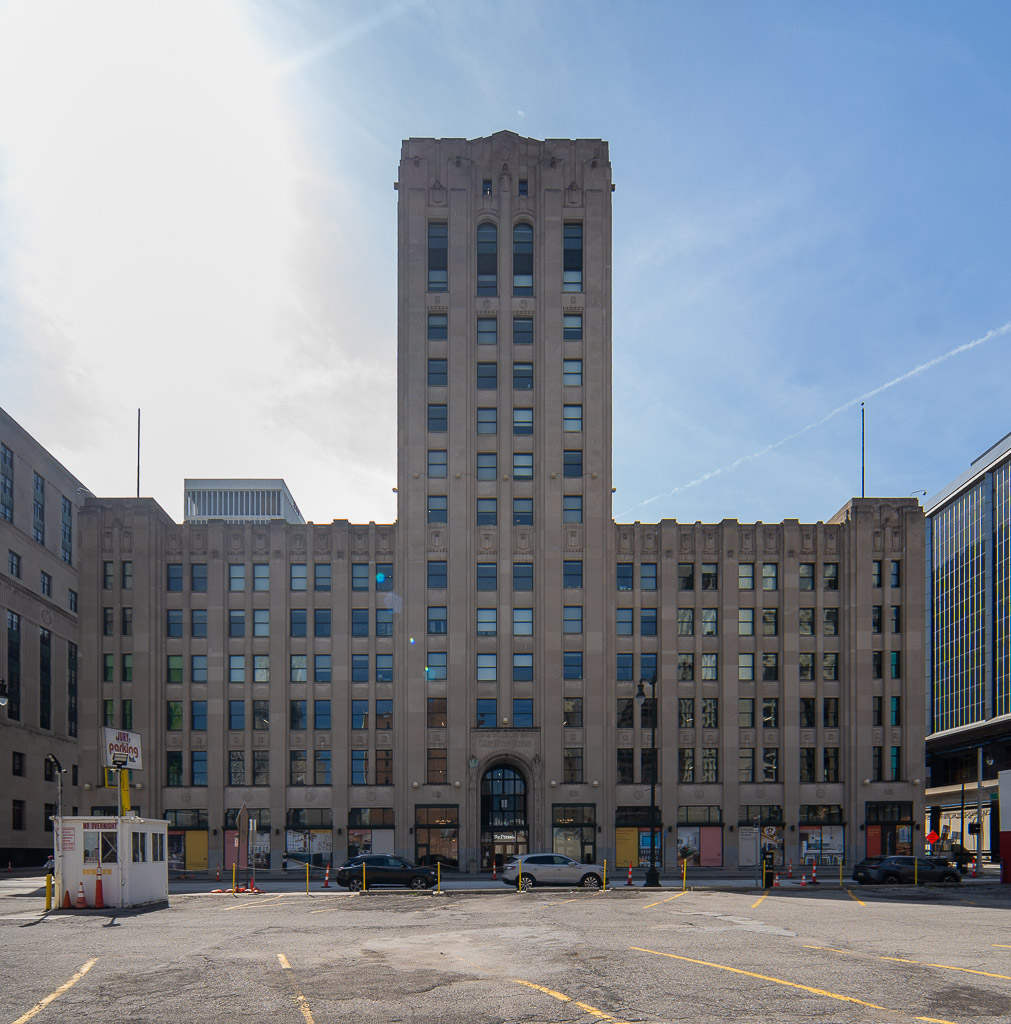
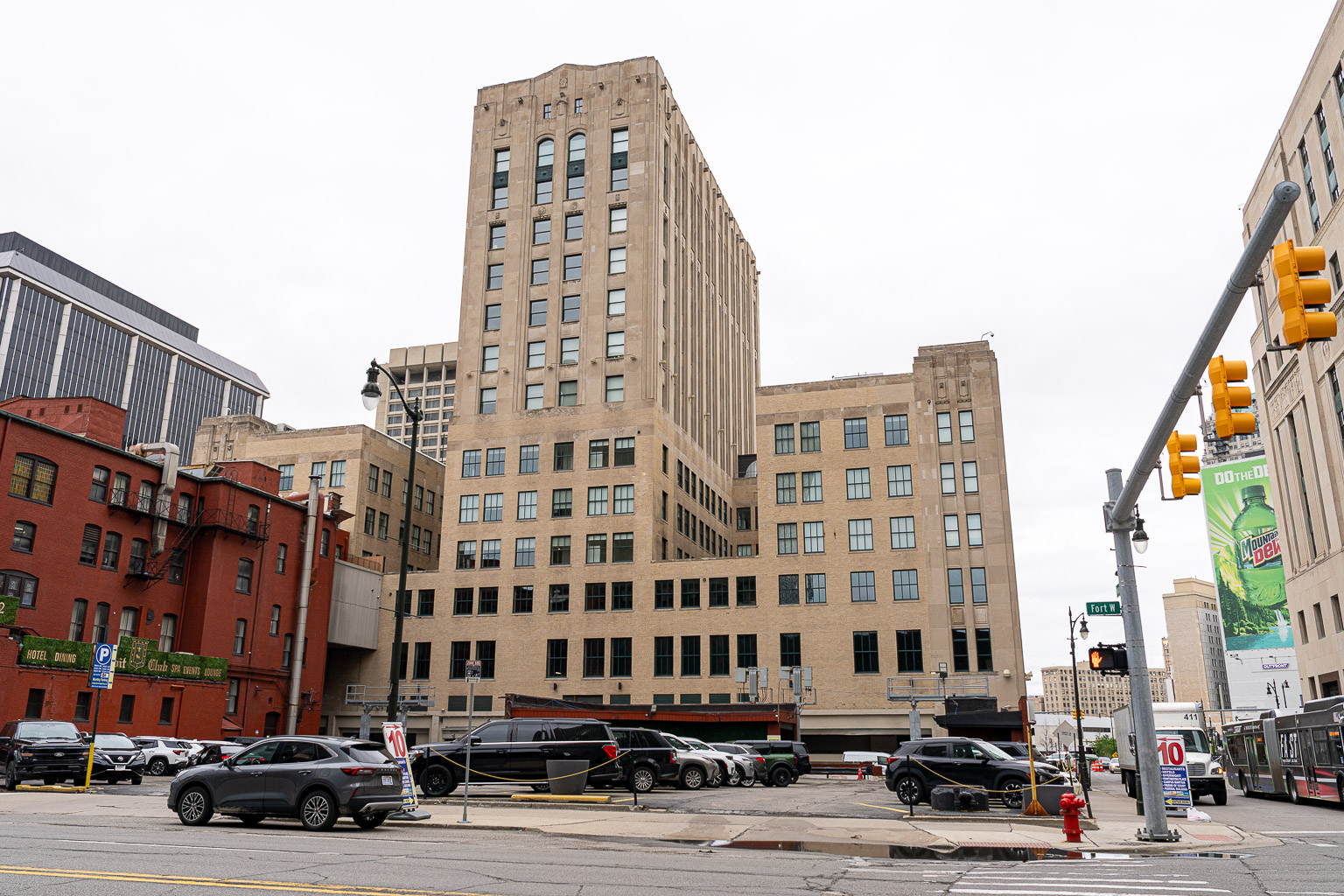
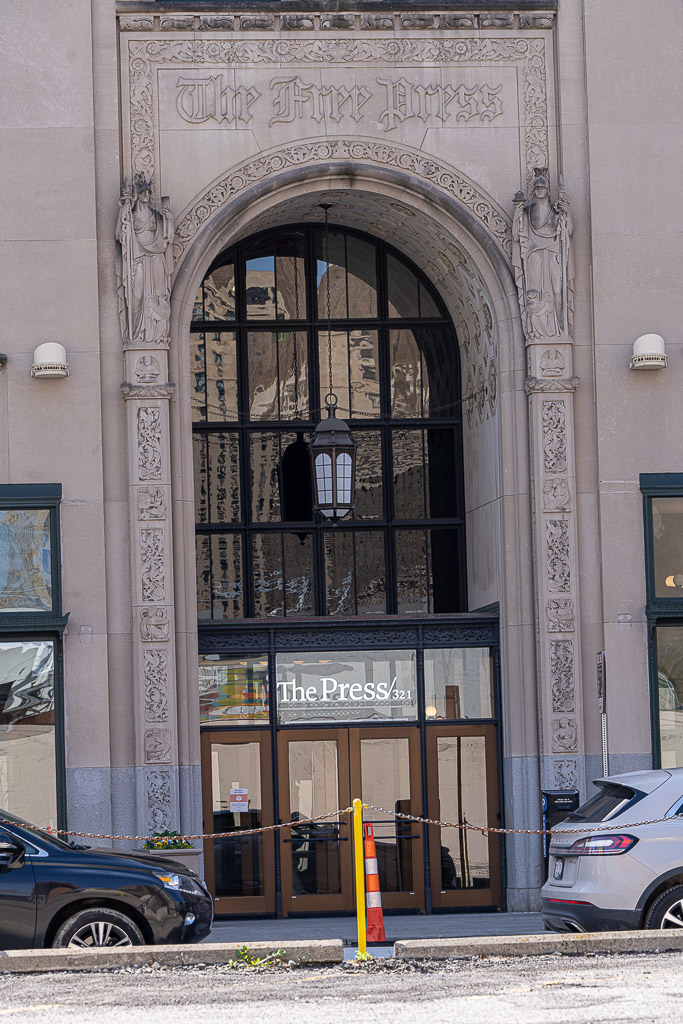
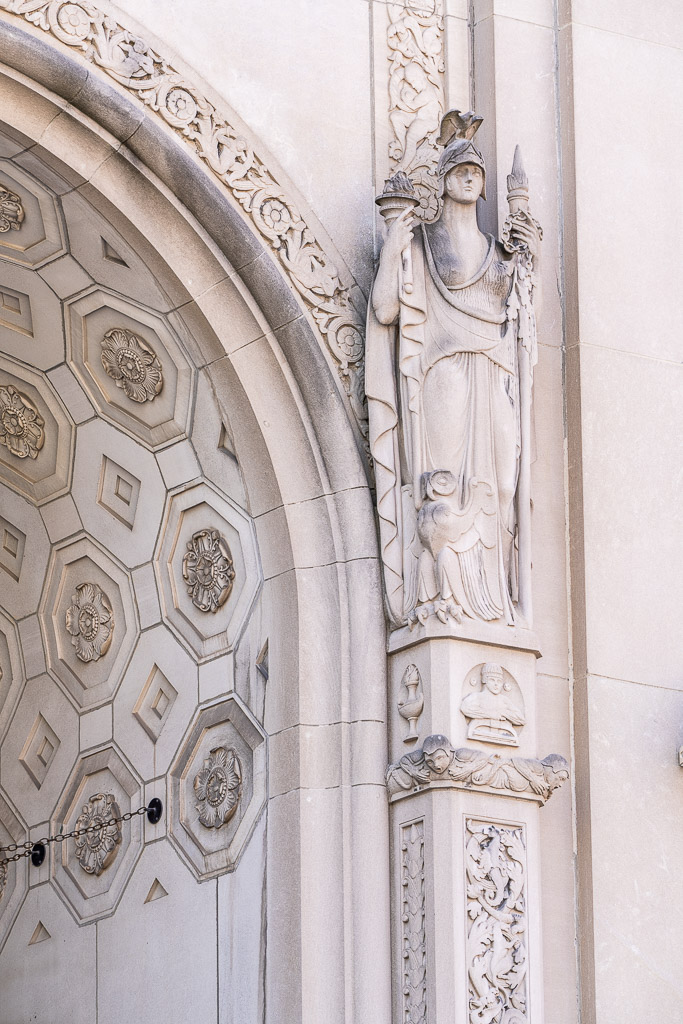
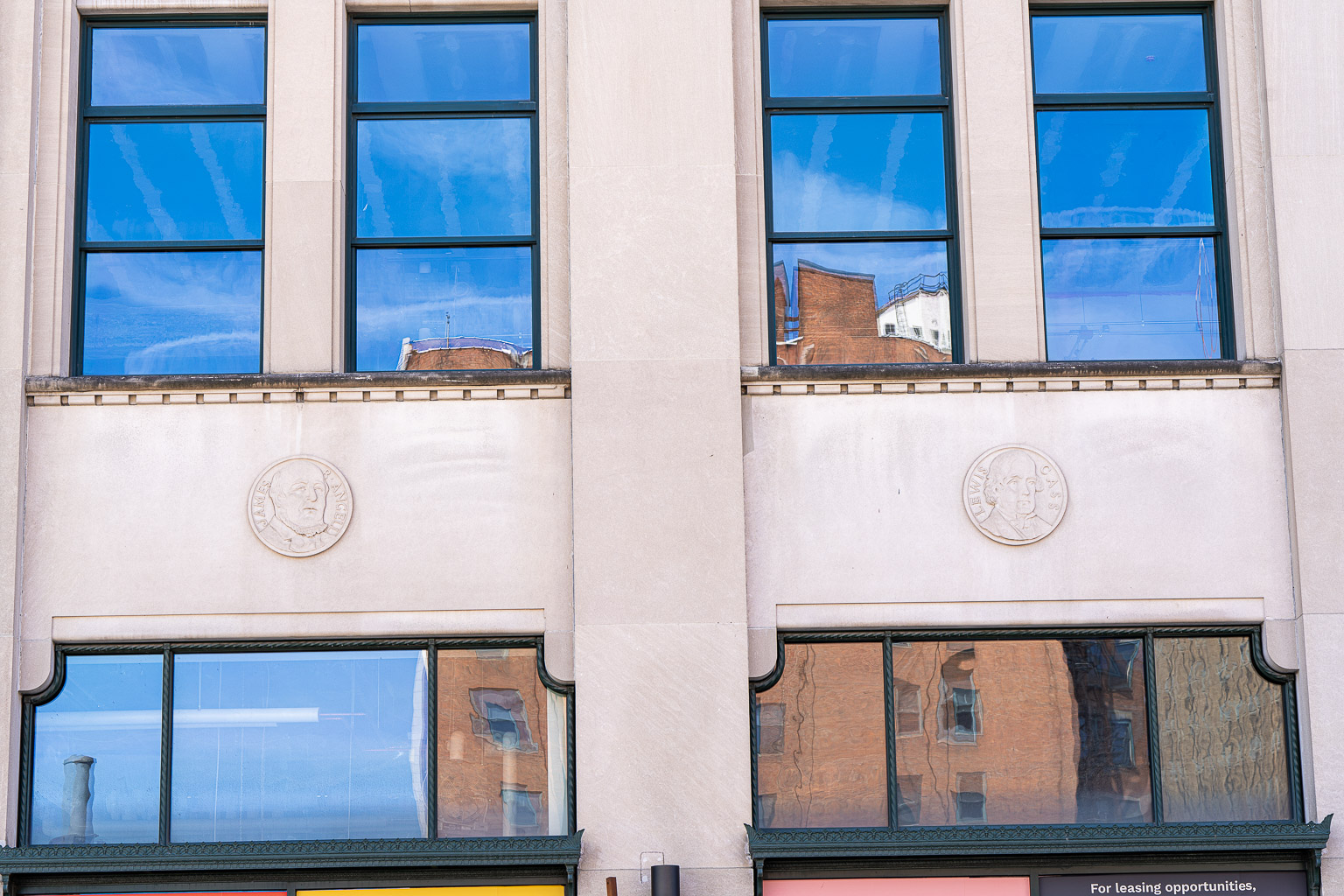
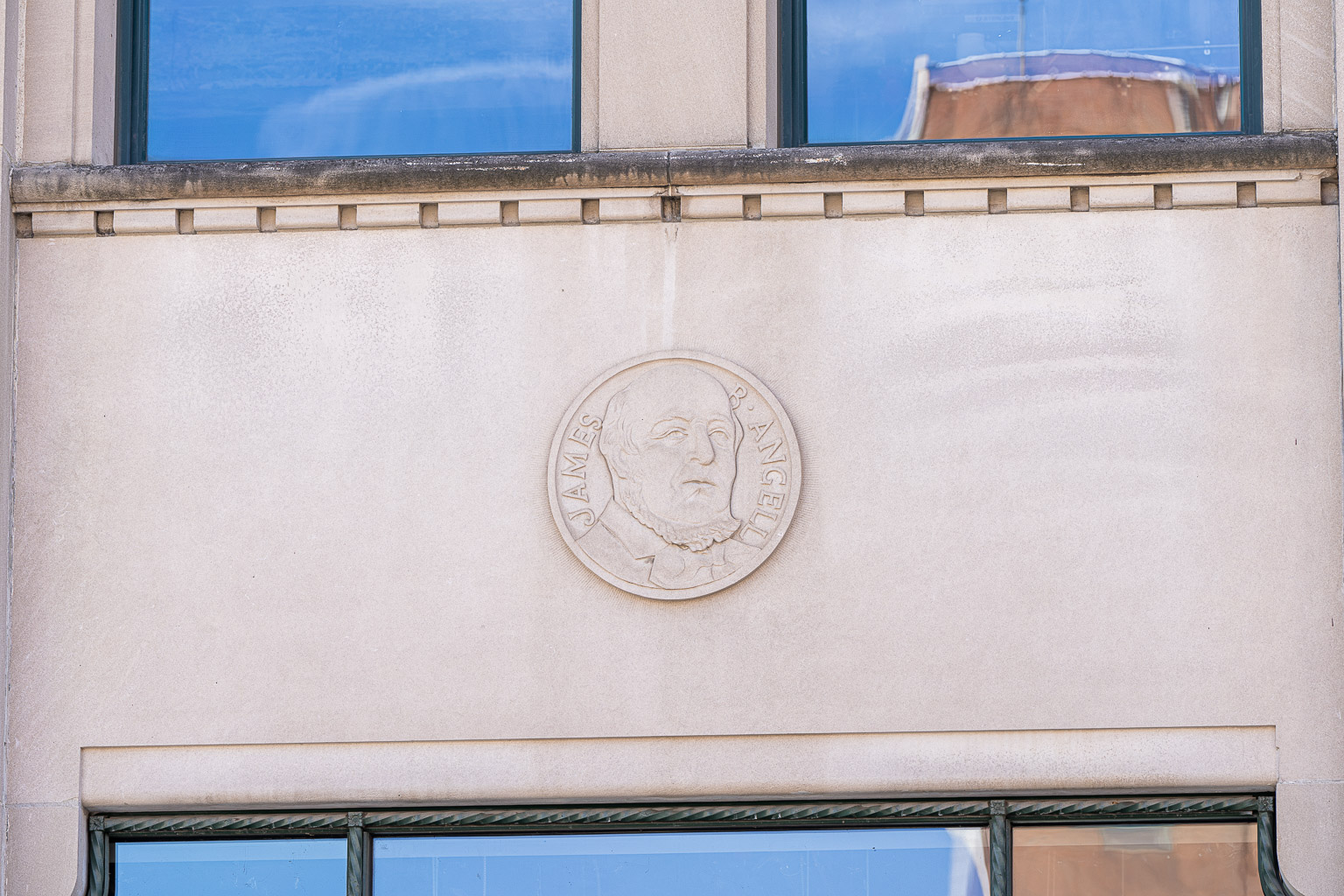
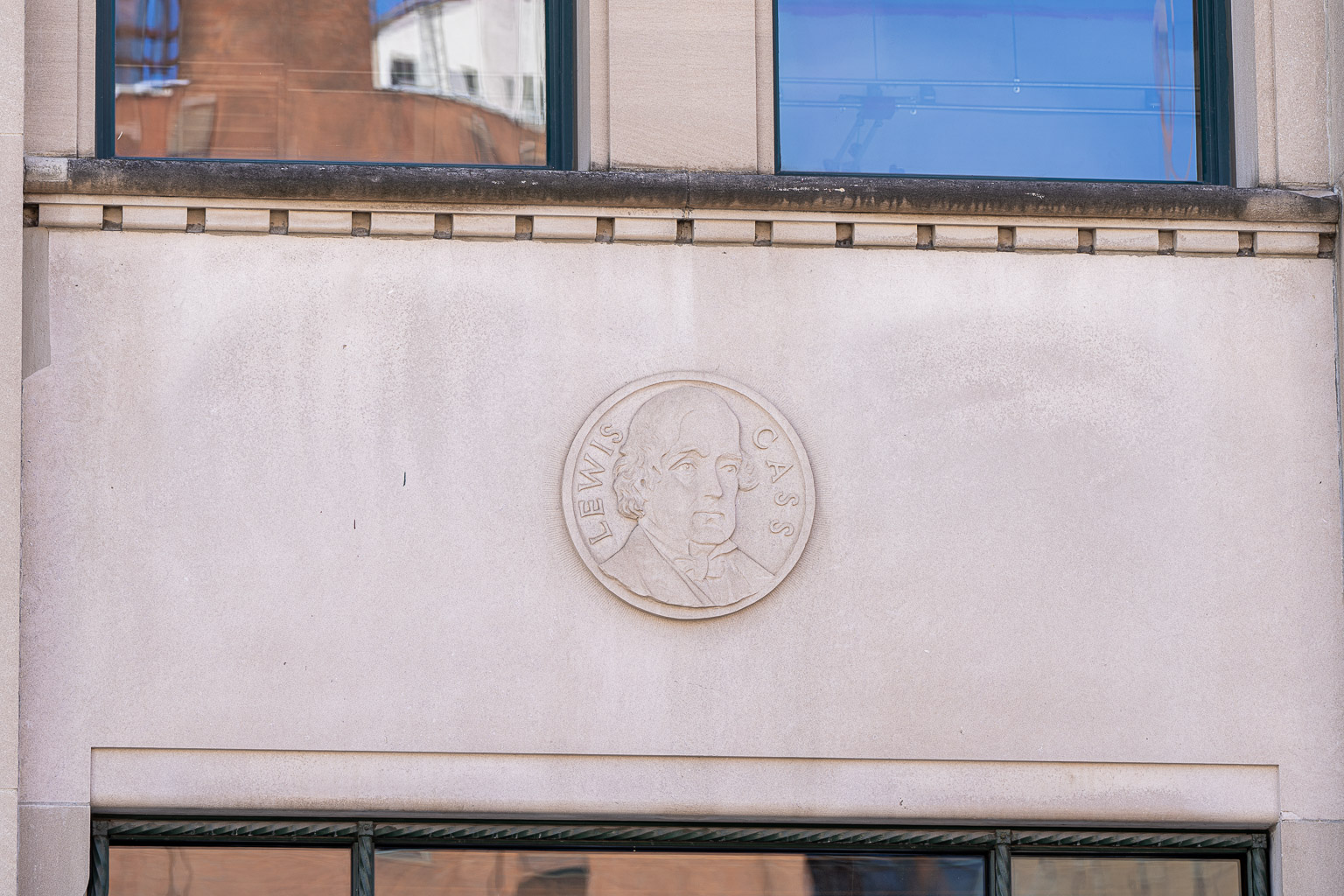
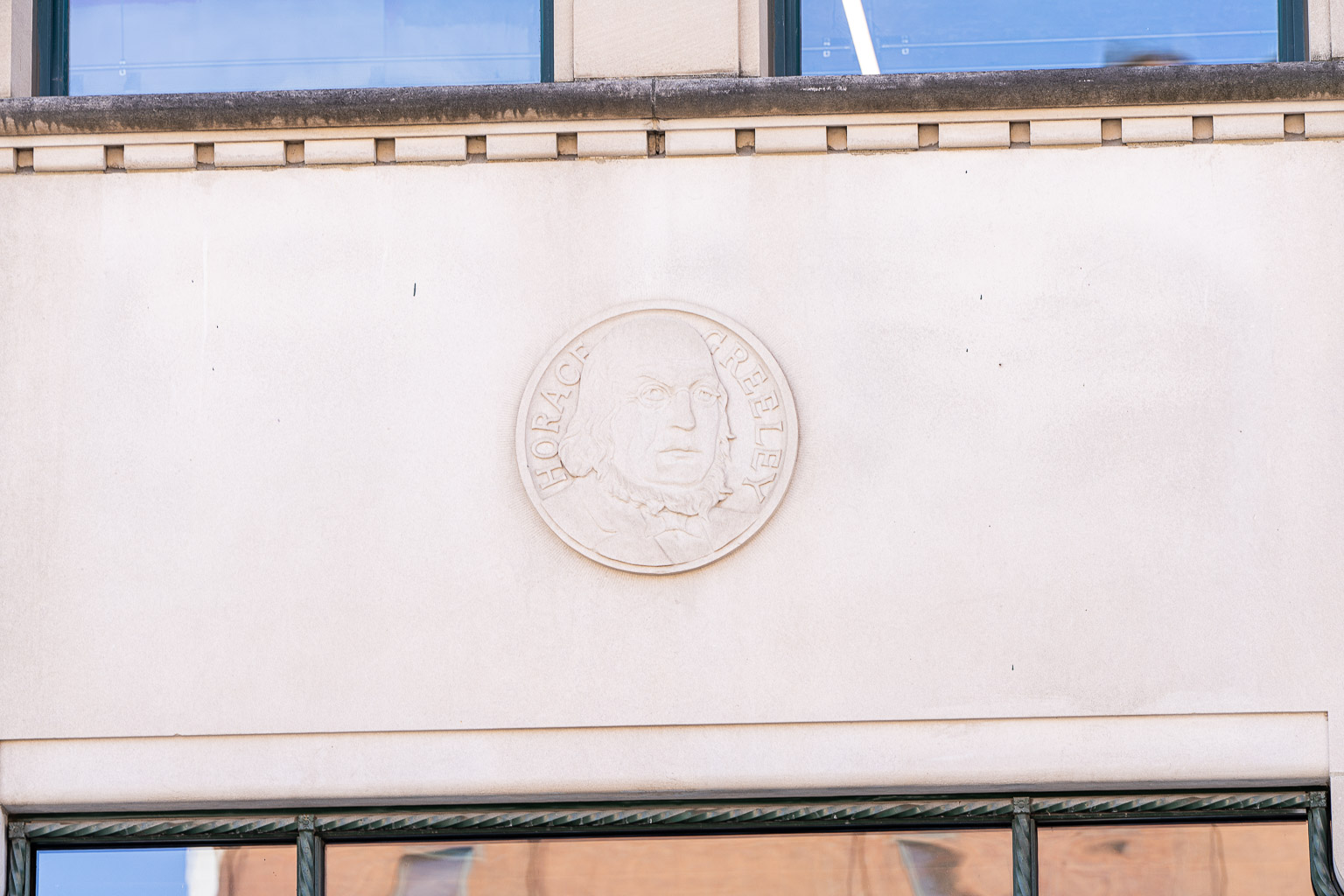
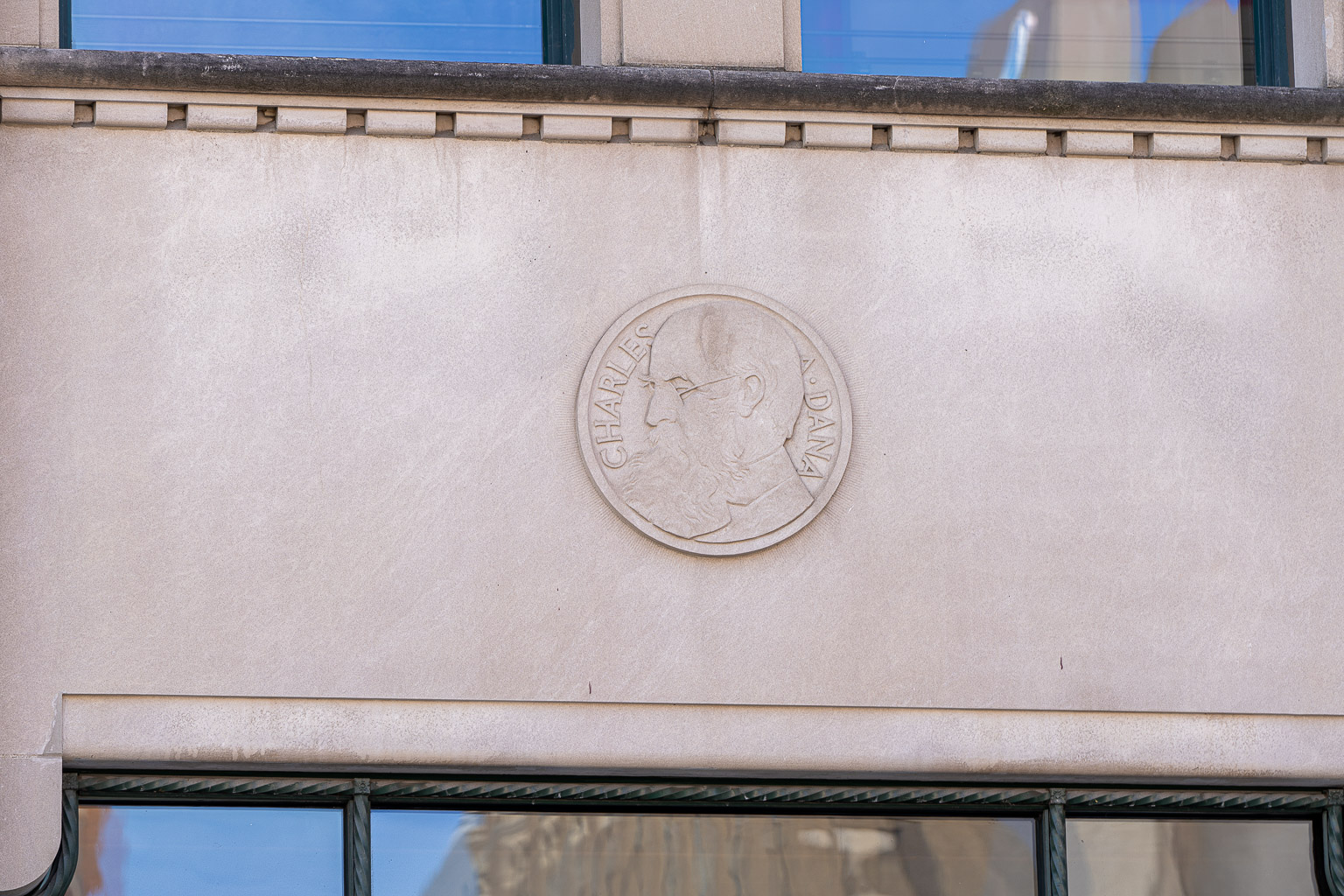
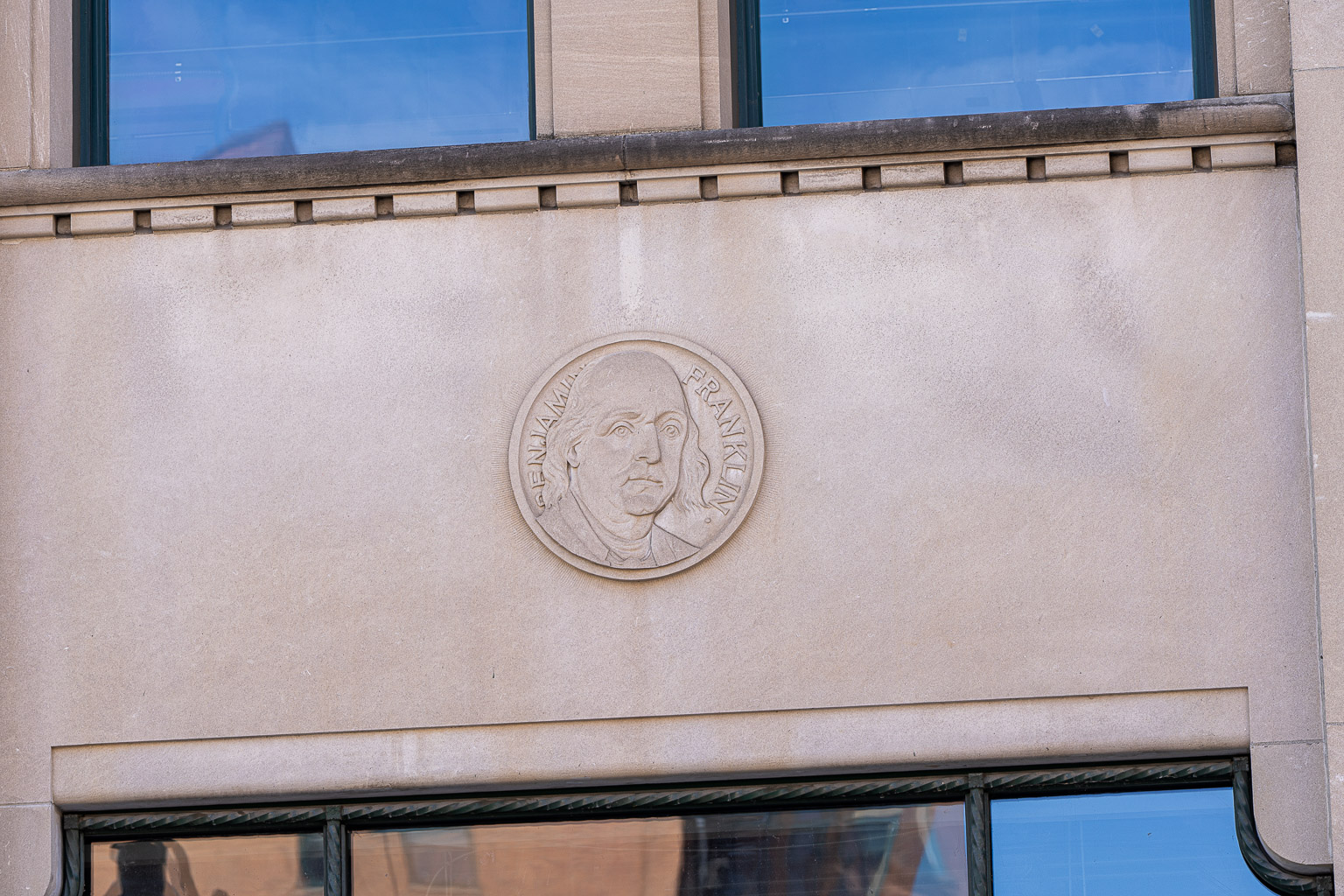
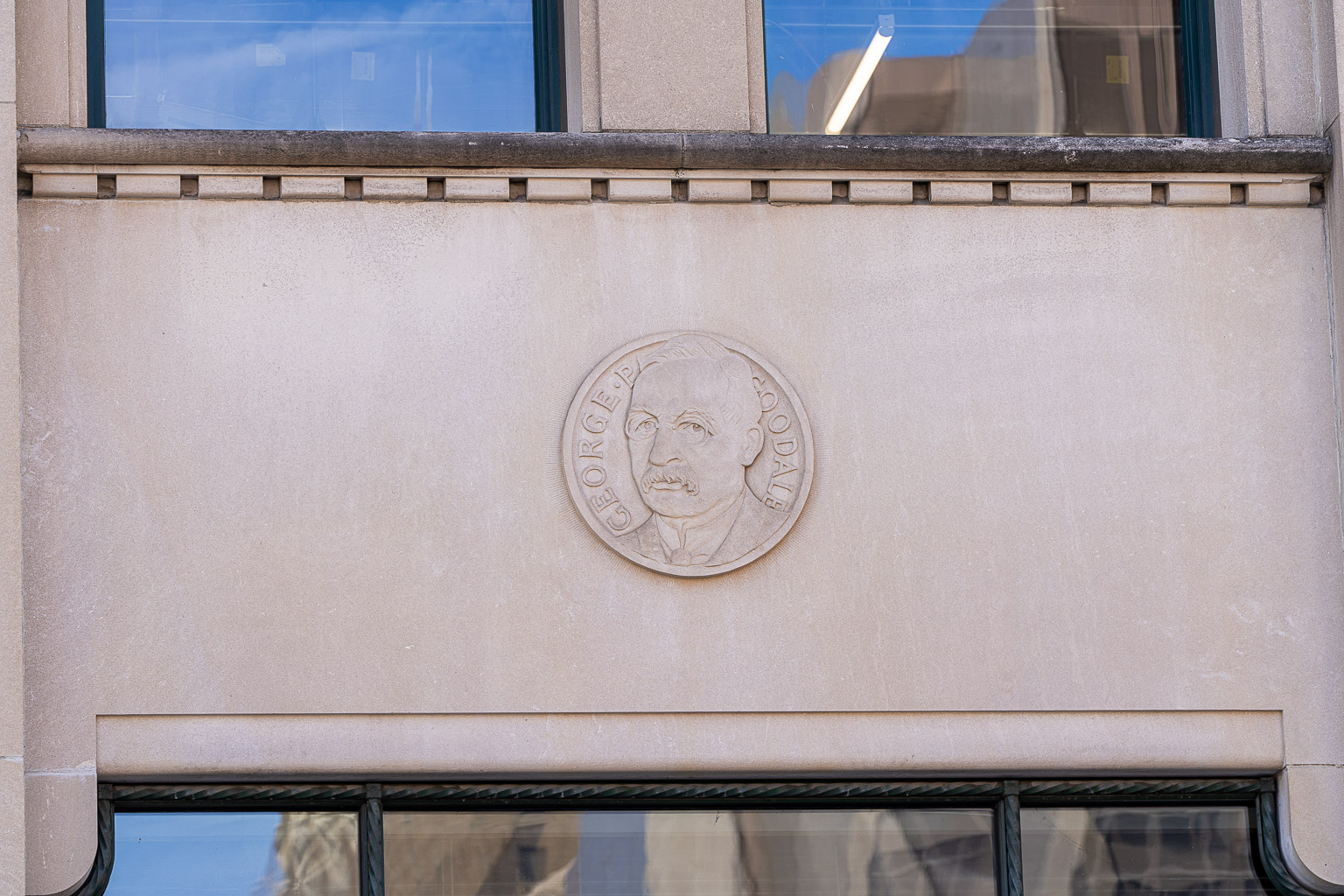
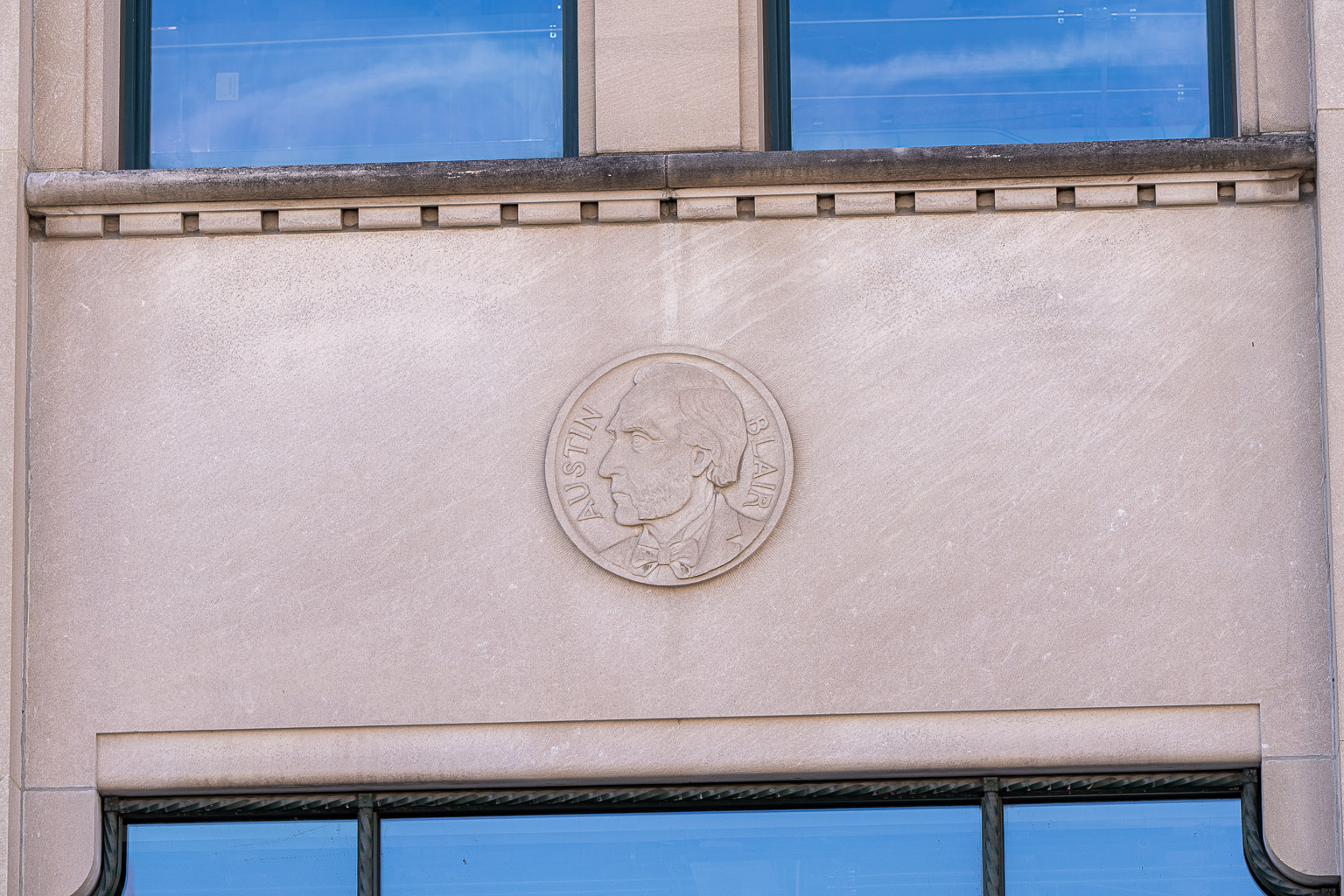
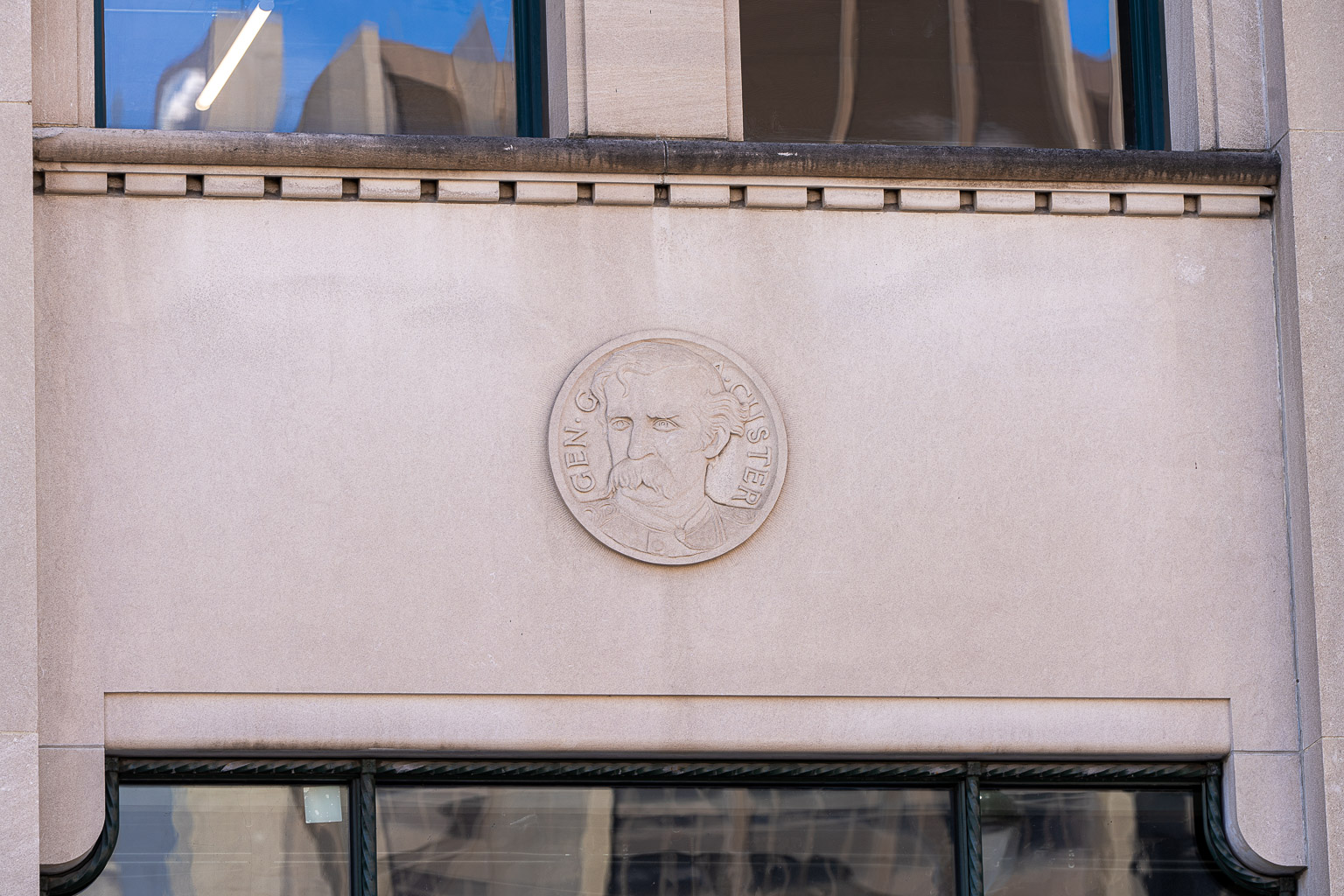
Medallions depicting historical newsmen decorate the building's exterior (all 9 photos below). For many years, two red neon signs for "The Free Press" stood on the roof of the building, but were removed in the late 1990's. The roof is flat.
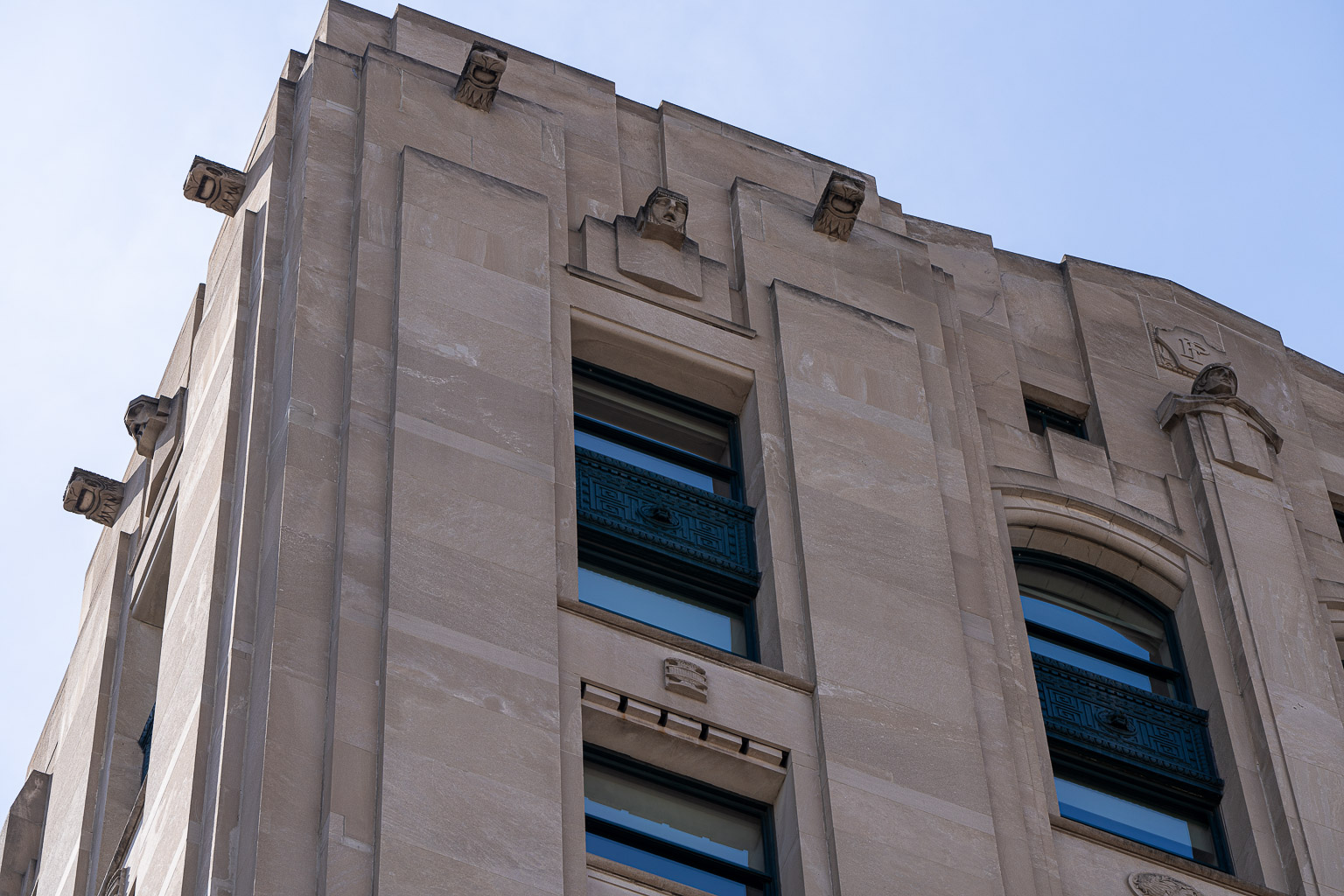
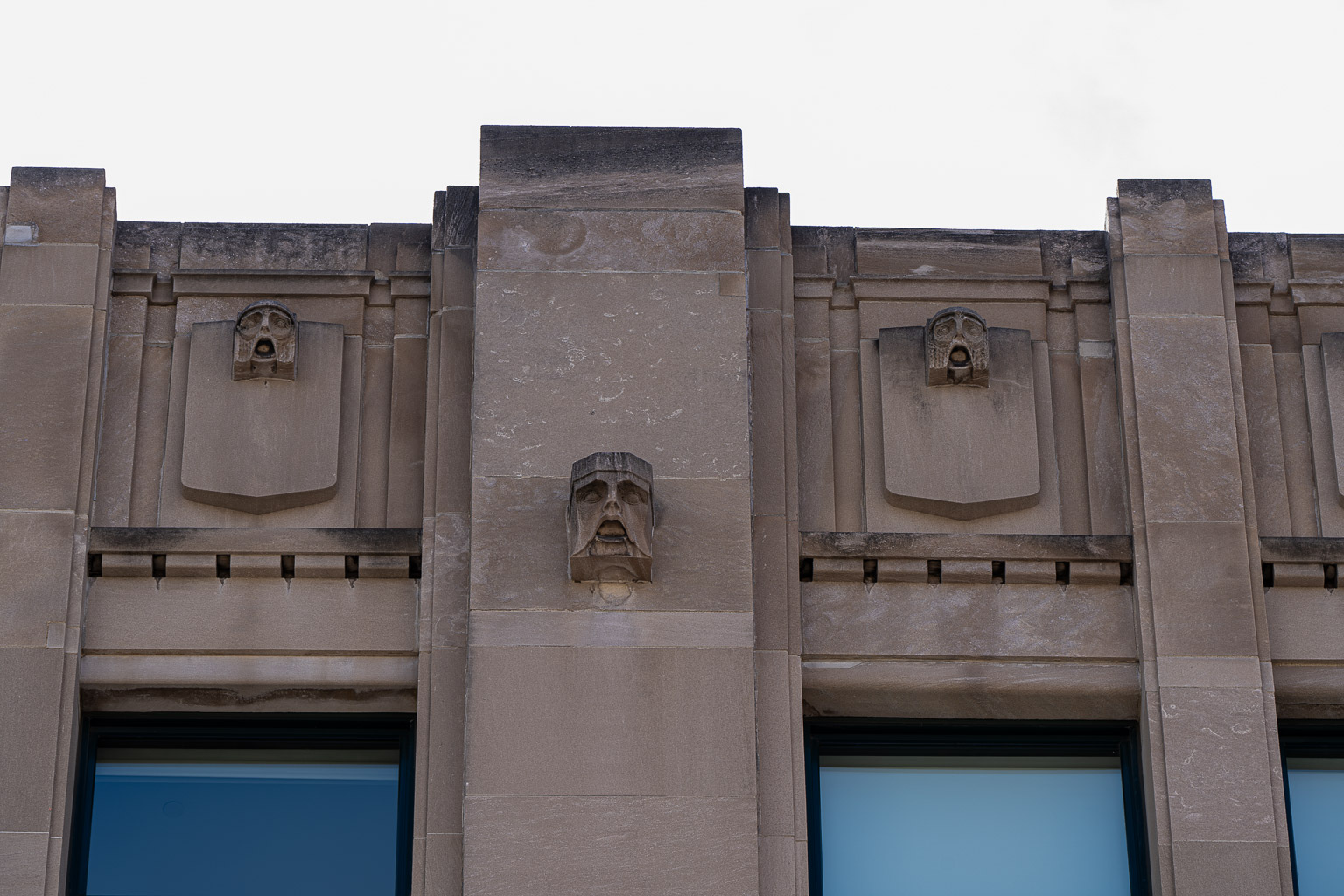
The top of the building is covered in gargoyles (all 4 photos below).
Inside the first floor, the central lobby features an elaborate arched plaster ceiling with rosette and classical details. A paneled conference room to the east is highlighted by murals by artist Roy C. Gamble depicting the growth of the City of Detroit. Also on the first floor inside the West Lafayette Boulevard facade are a restaurant and other retail spaces. The two basement levels once housed the printing facilities of the newspaper. A State of Michigan historic marker is displayed on the exterior of the building.
More photos and more description of this building can be found at HistoricDetroit.org.
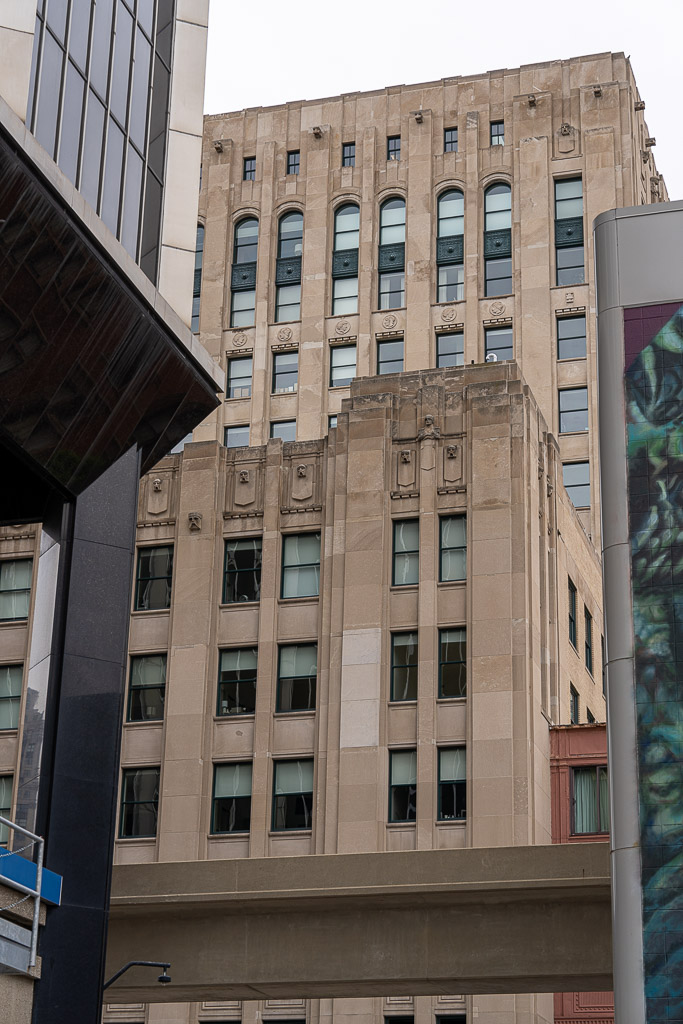
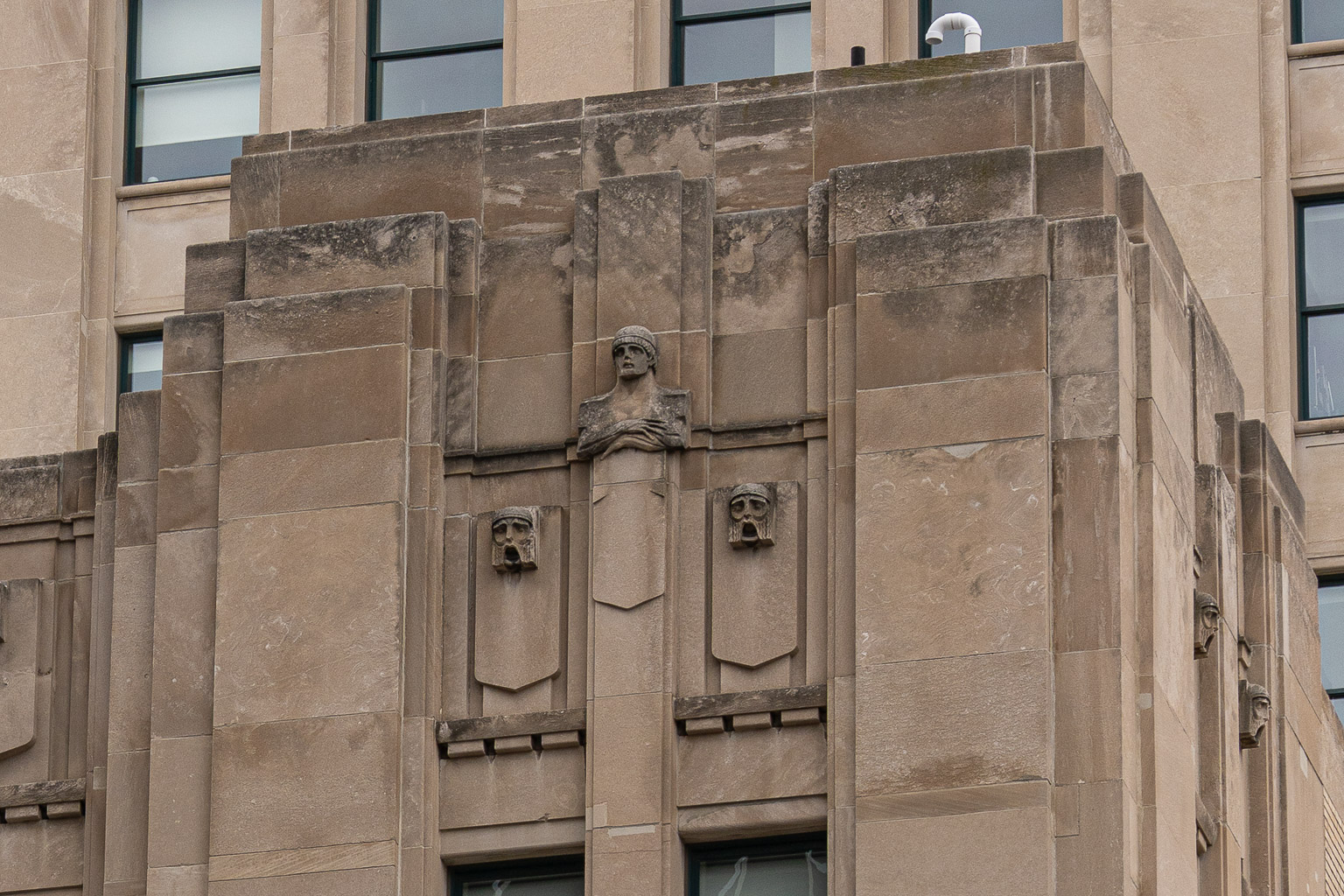
Four-story brick commercial building with terra cotta and cast stone trim (1882). Standing adjacent to the Fire Department Headquarters on the west and a surface parking lot to the east, this long and narrow building has about thirty feet of frontage on West Larned and extends back 100 feet to the alley behind. The second, third and fourth floors are finished in reddish brick with cast stone lintels and pier capitols. The piers display decorative terra-cotta blocks in the piers above the second and third stories. Old metal fire escapes remain in place in the upper-story front. The cornice has been removed. The windows are arranged in three bays separated by four brick pilasters. The original windows have been replaced with modern double-hung windows. The first floor storefront has been renovated and tiled with a contemporary tile but retains a few historic elements.
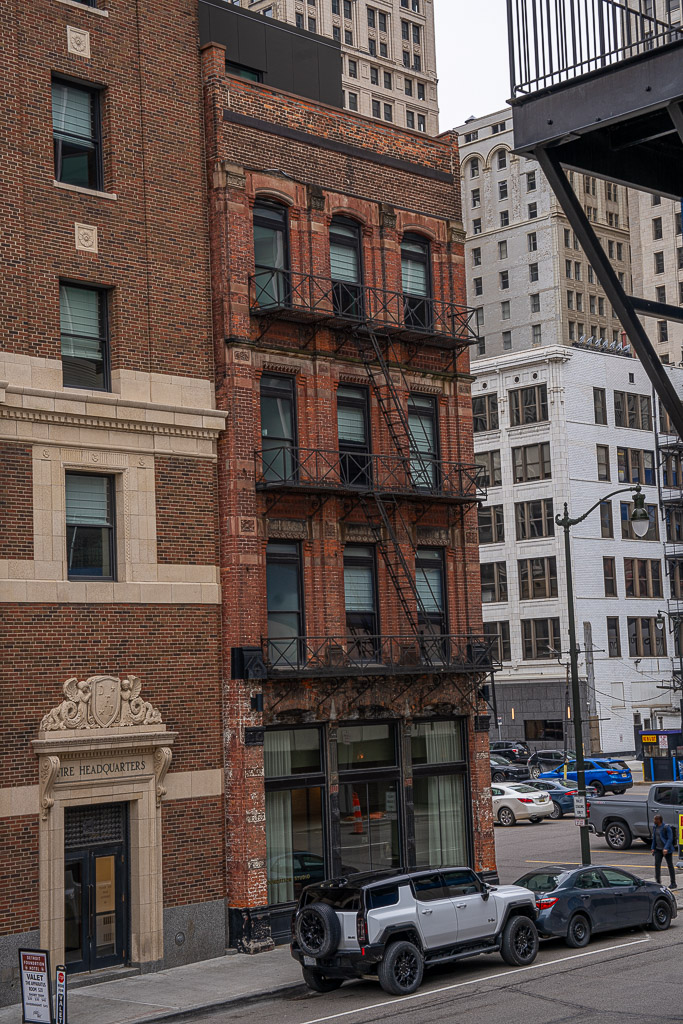
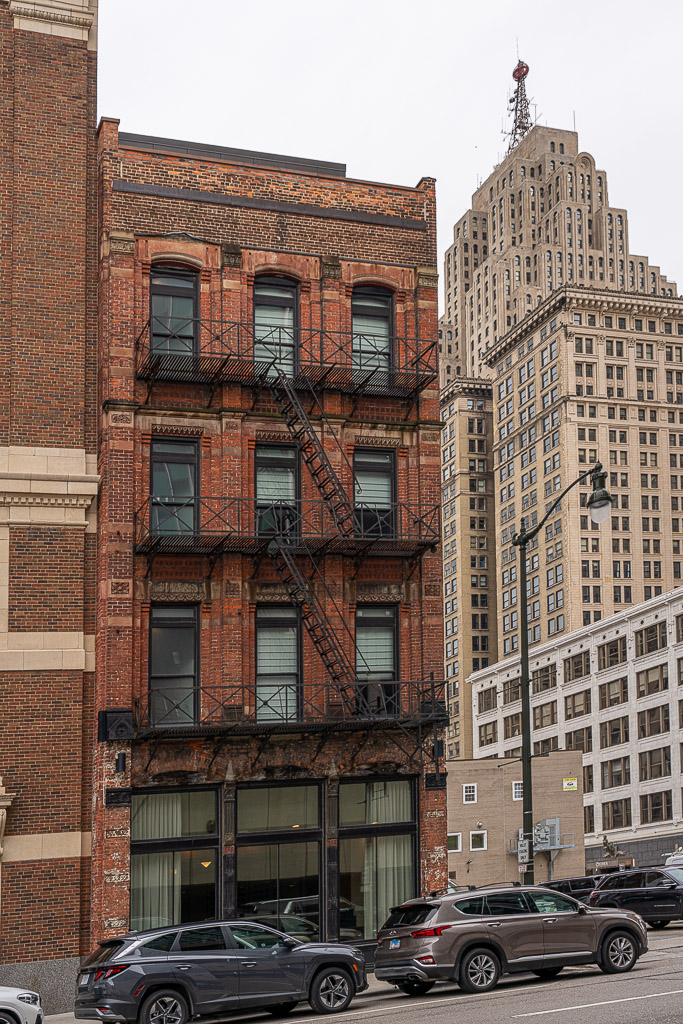
The part of the building's exposed eastern facade nearest the street displays a painted forty-two-foot square untitled mural. The mural was commissioned by New Detroit, Inc., and is an arrangement of transparent color planes floating on a white background, designed by Detroit artist Charles McGee in 1974.
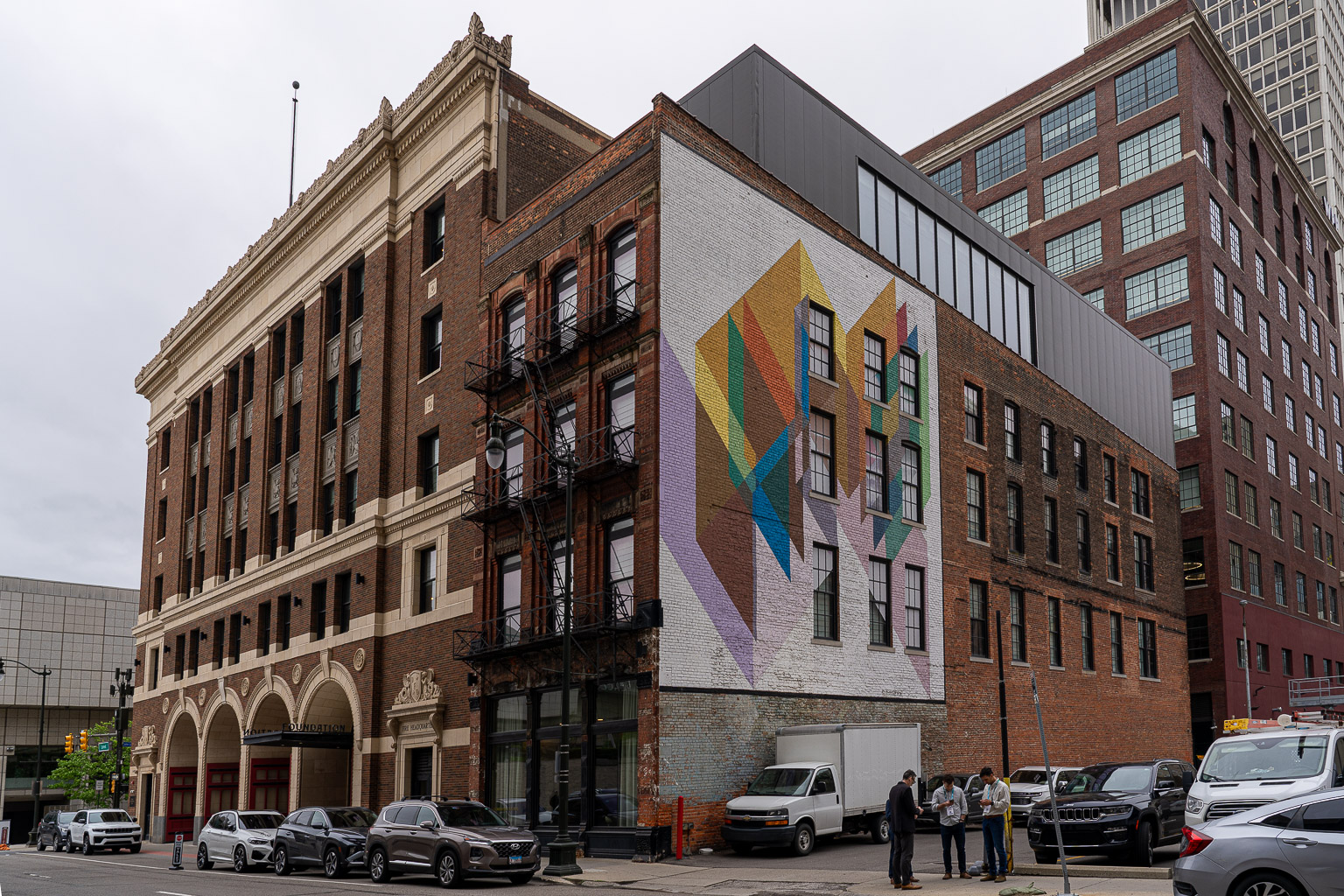
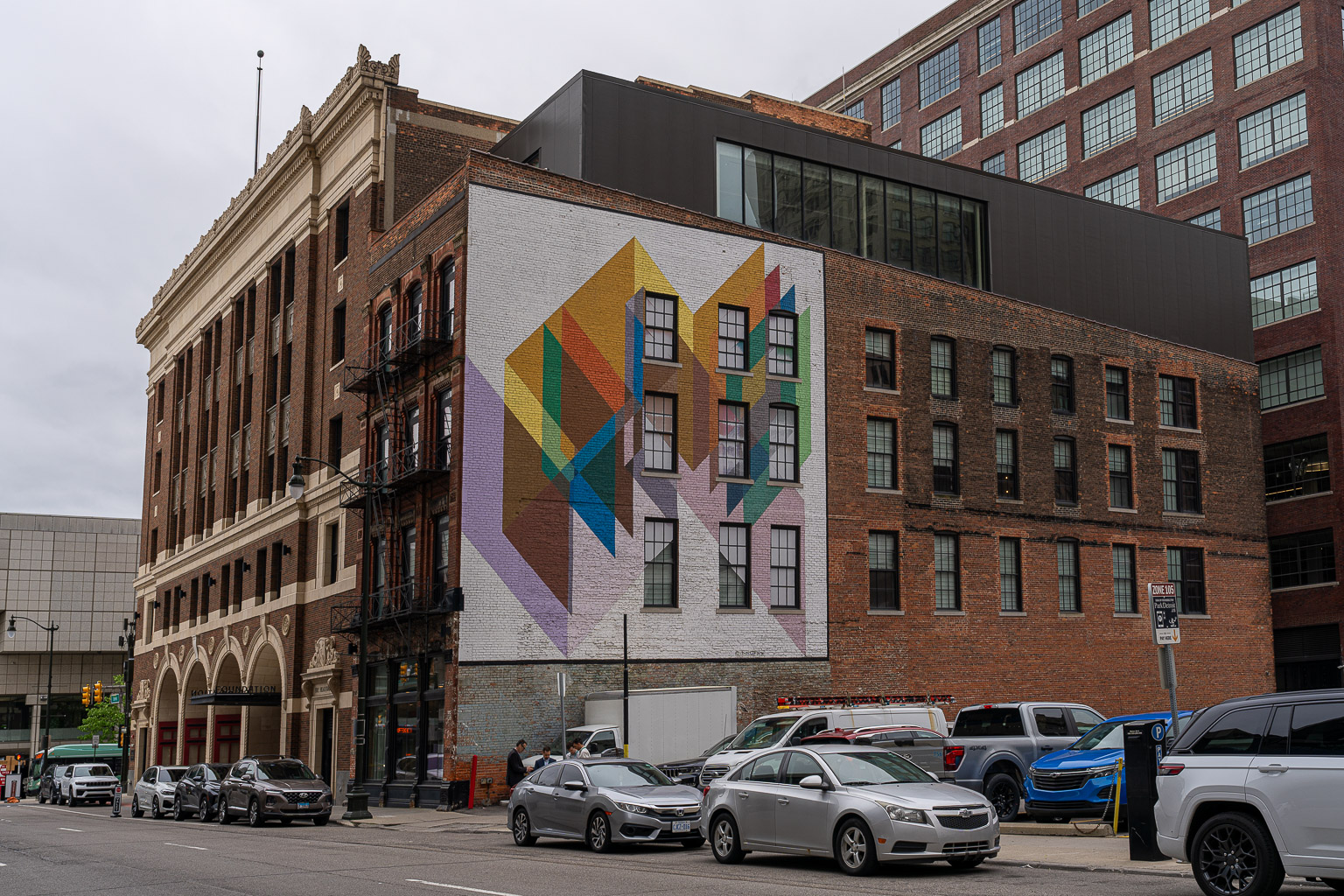
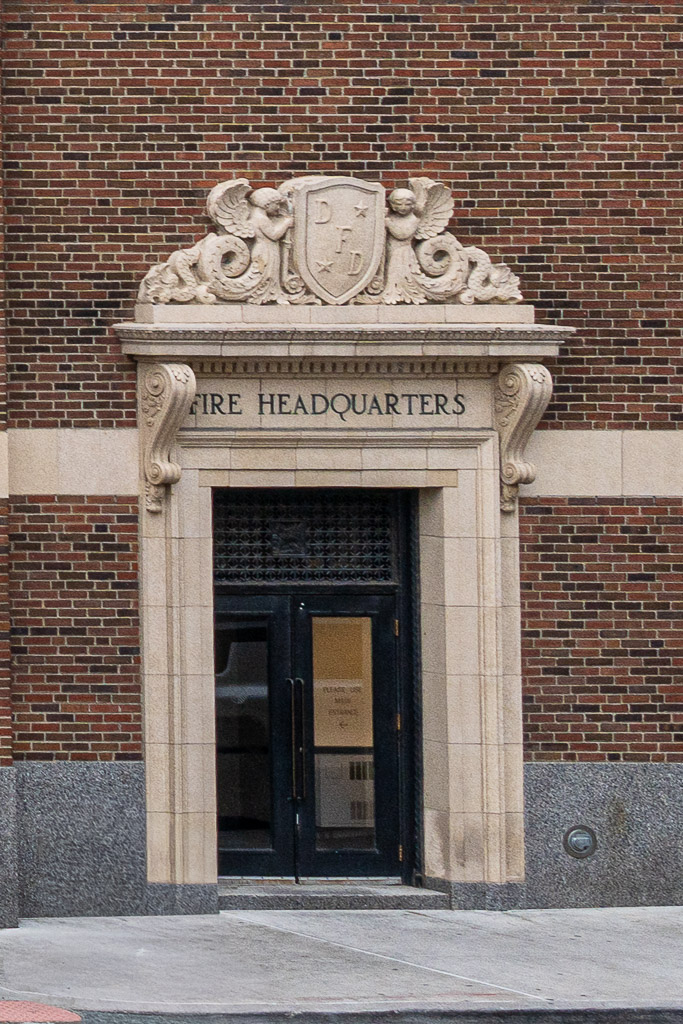
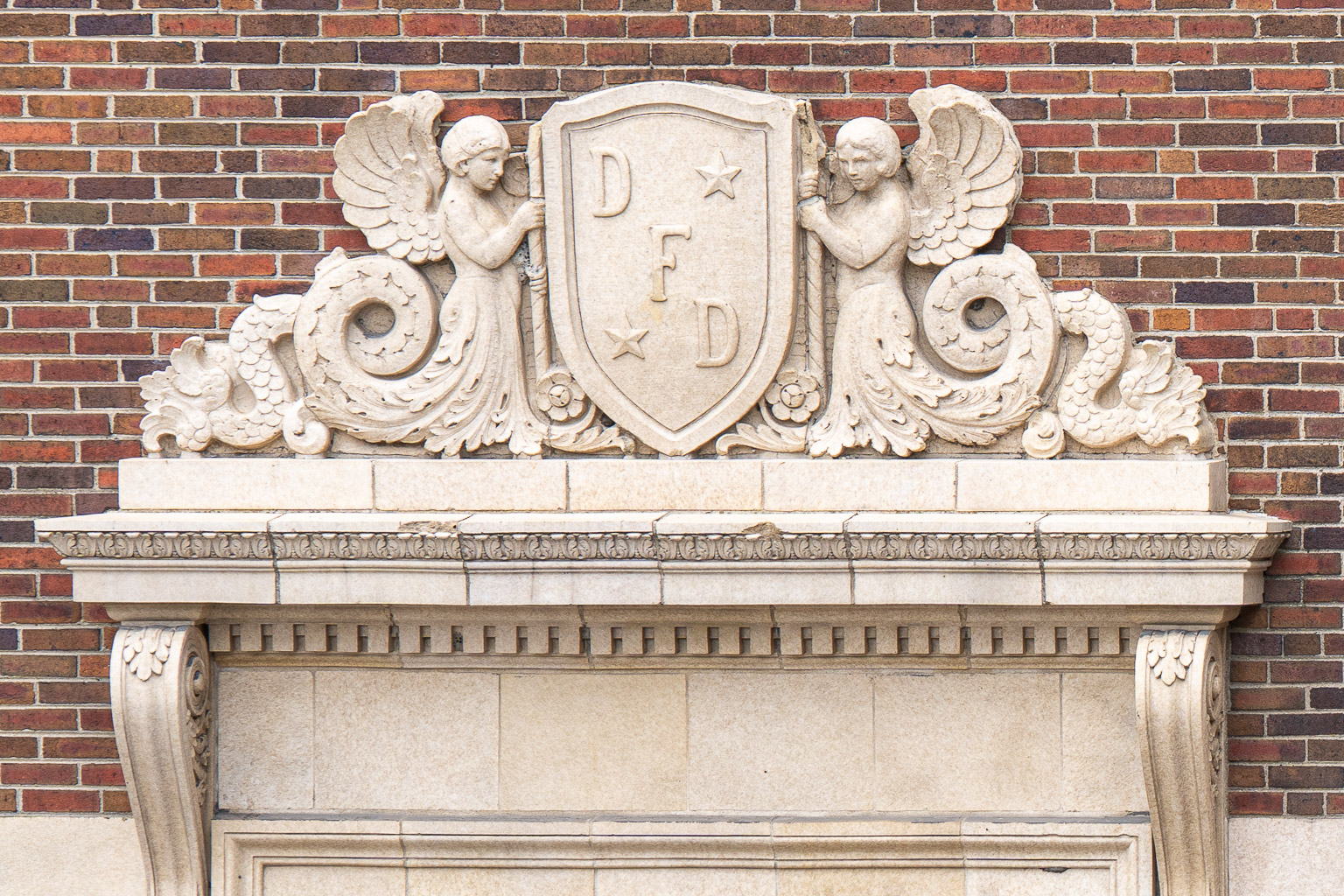
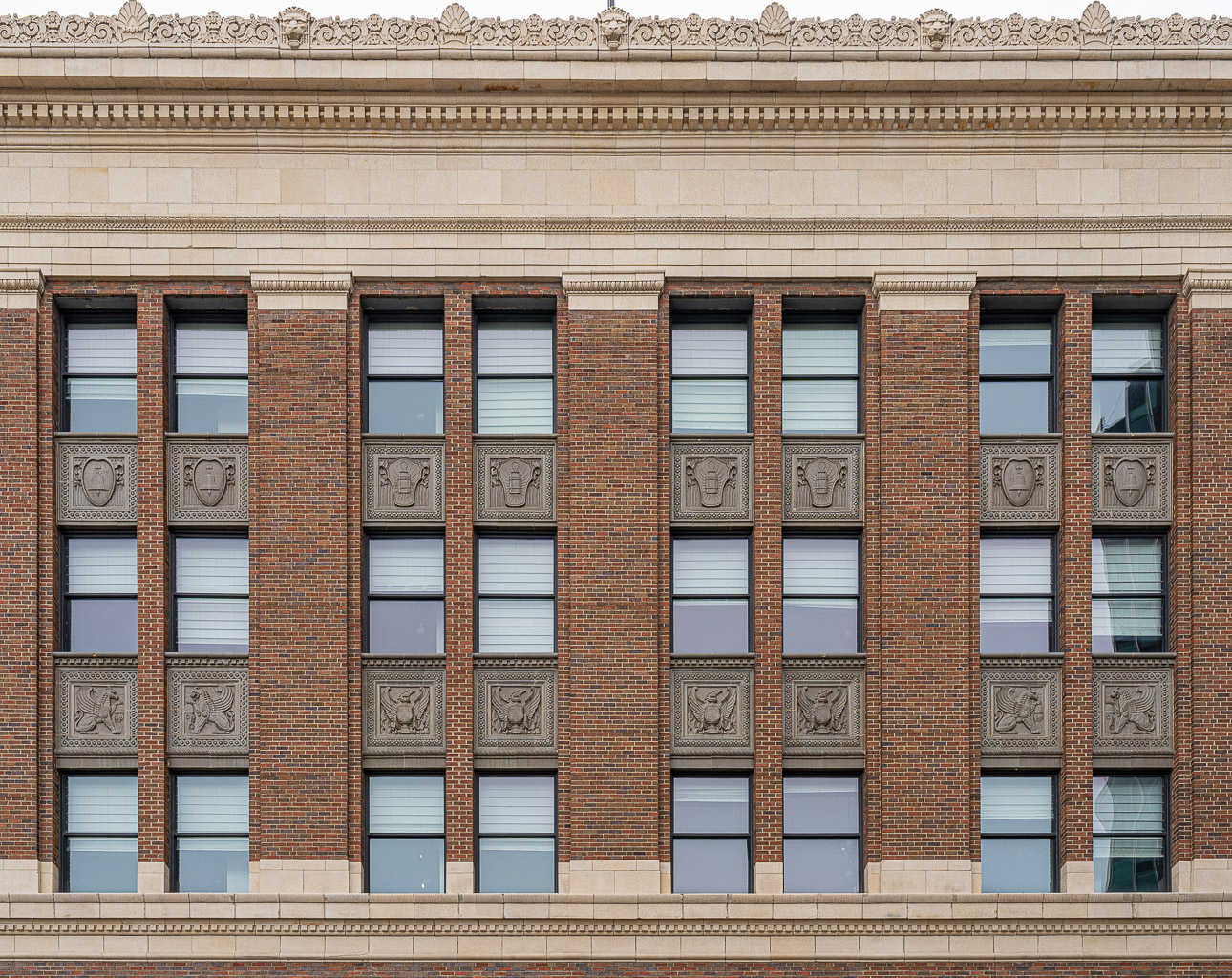
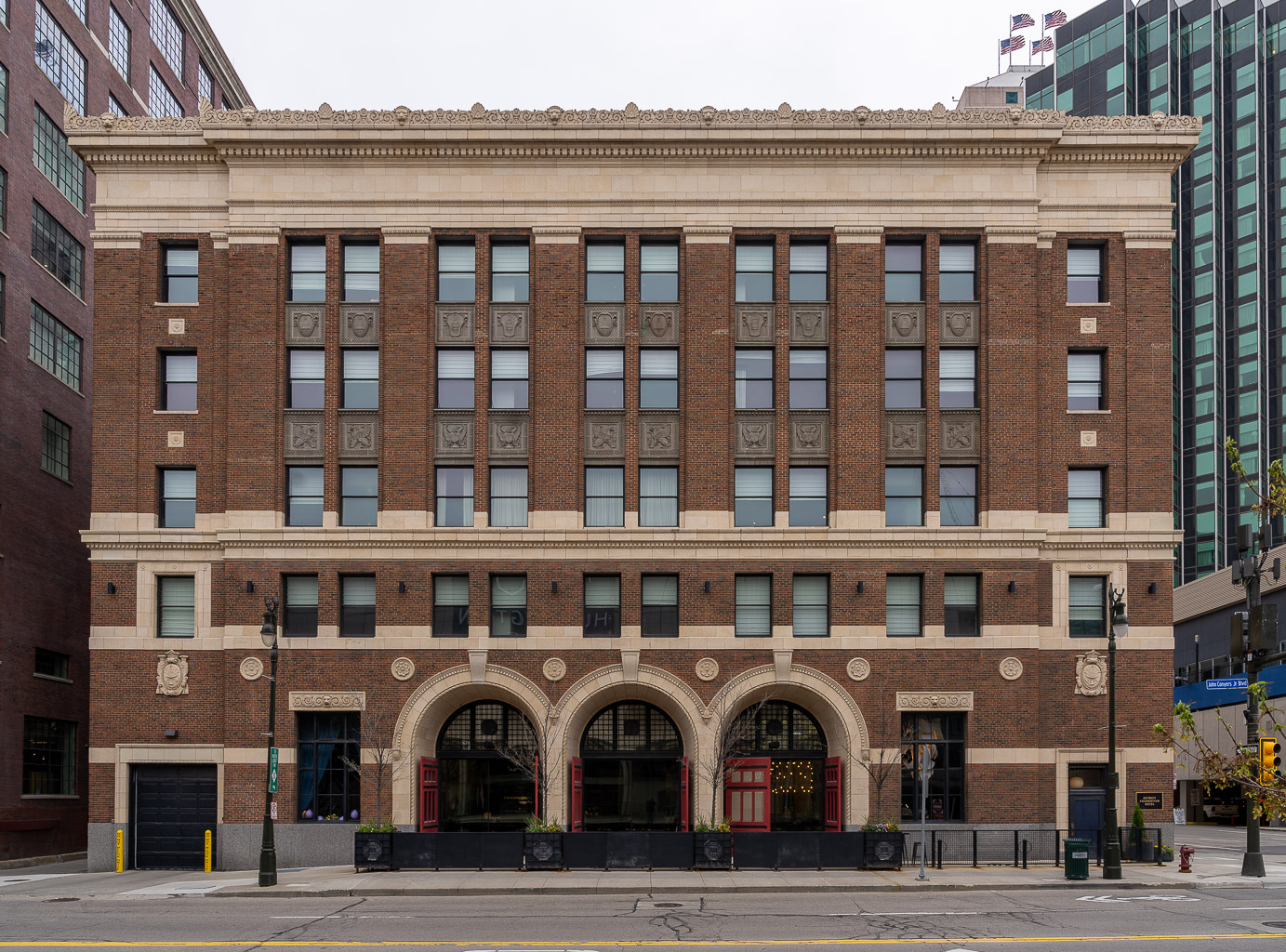
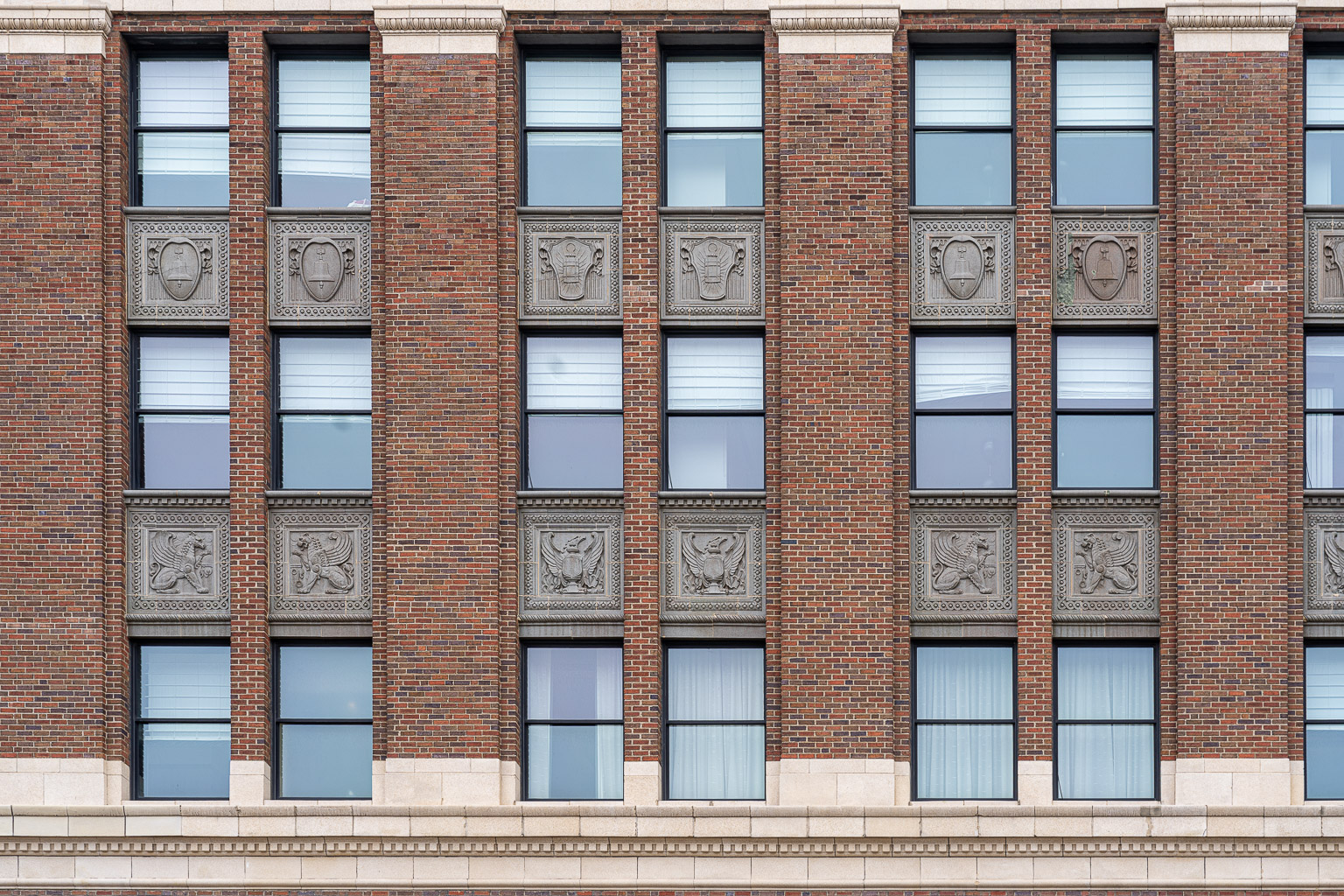
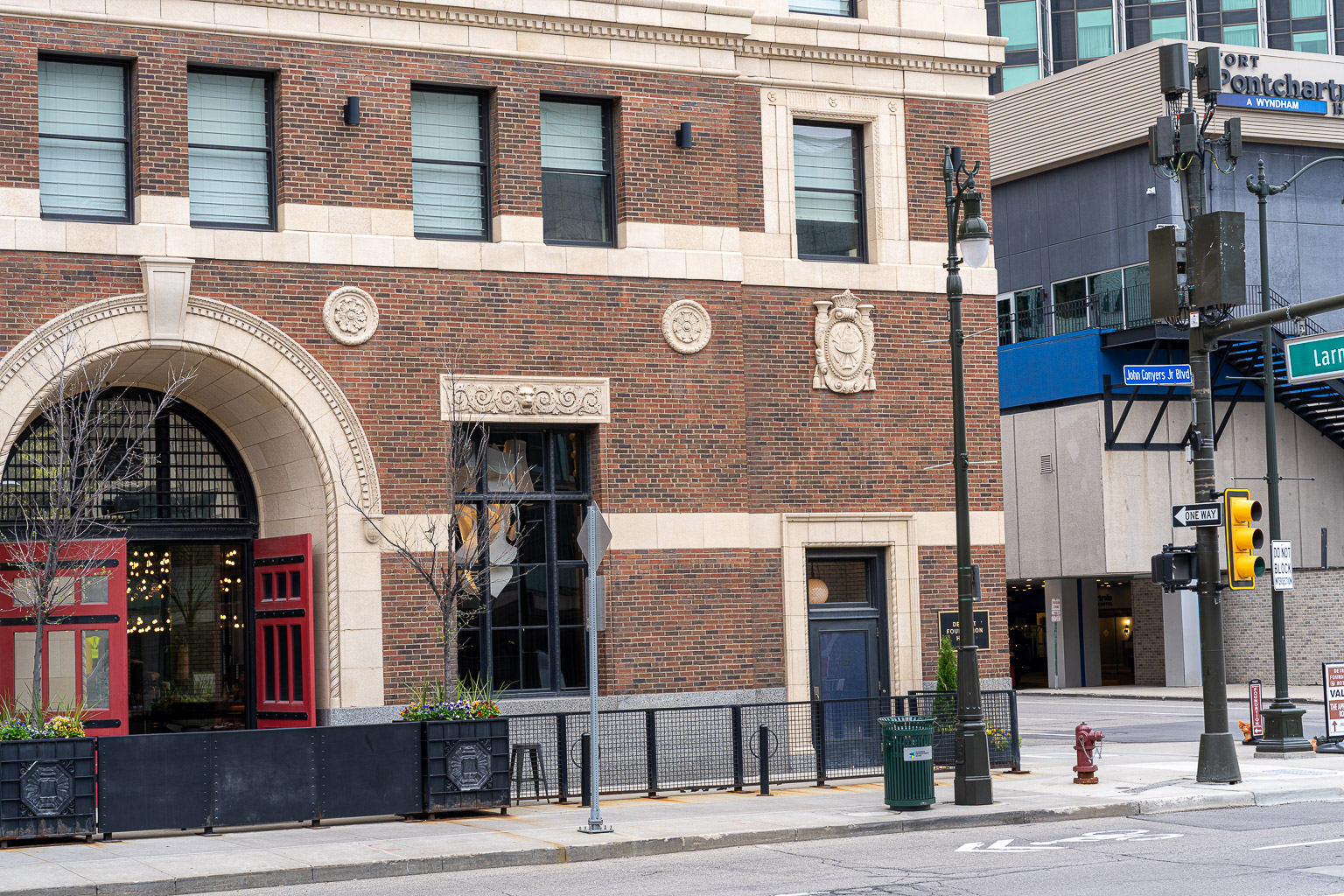
Steel-frame, five-story Neoclassical building faced in brick and terra cotta (1929). Hans Gehrke, architect. The long-time home of Michigan's oldest fire department, the massive square headquarters building stands at a site occupied by fire department facilities continuously since about 1840. The footprint of the building, located at the northeast corner of Washington Boulevard and West Larned Street, runs to the alley south of the Marquette Building and, on the building's east facade, to the building at 234 West Larned. The building is clad in dark red brick in a running bond pattern and trimmed in gray-buff terra cotta. A grey granite bulkhead rises about three feet in height. On the West Larned facade (1st photo below) the building is divided into six bays, with the four central ones slightly projecting. These central bays contain the arched, terra-cotta-faced portals to four engine bays with deeply recessed double doors. To the engine bays' right (east) is an entrance to the "Fire Headquarters" that displays a classical surround with console bracket-supported cap and, above it, a shield bearing the DFD initials flanked by angels, one holding an axe, the other a pike (2nd and 3rd photos below). An identical surround in the same location at the facade's opposite end outlines a window (4th photo below. The pedestrian doors are surmounted by terra cotta crests marked "DFD" for Detroit Fire Department.
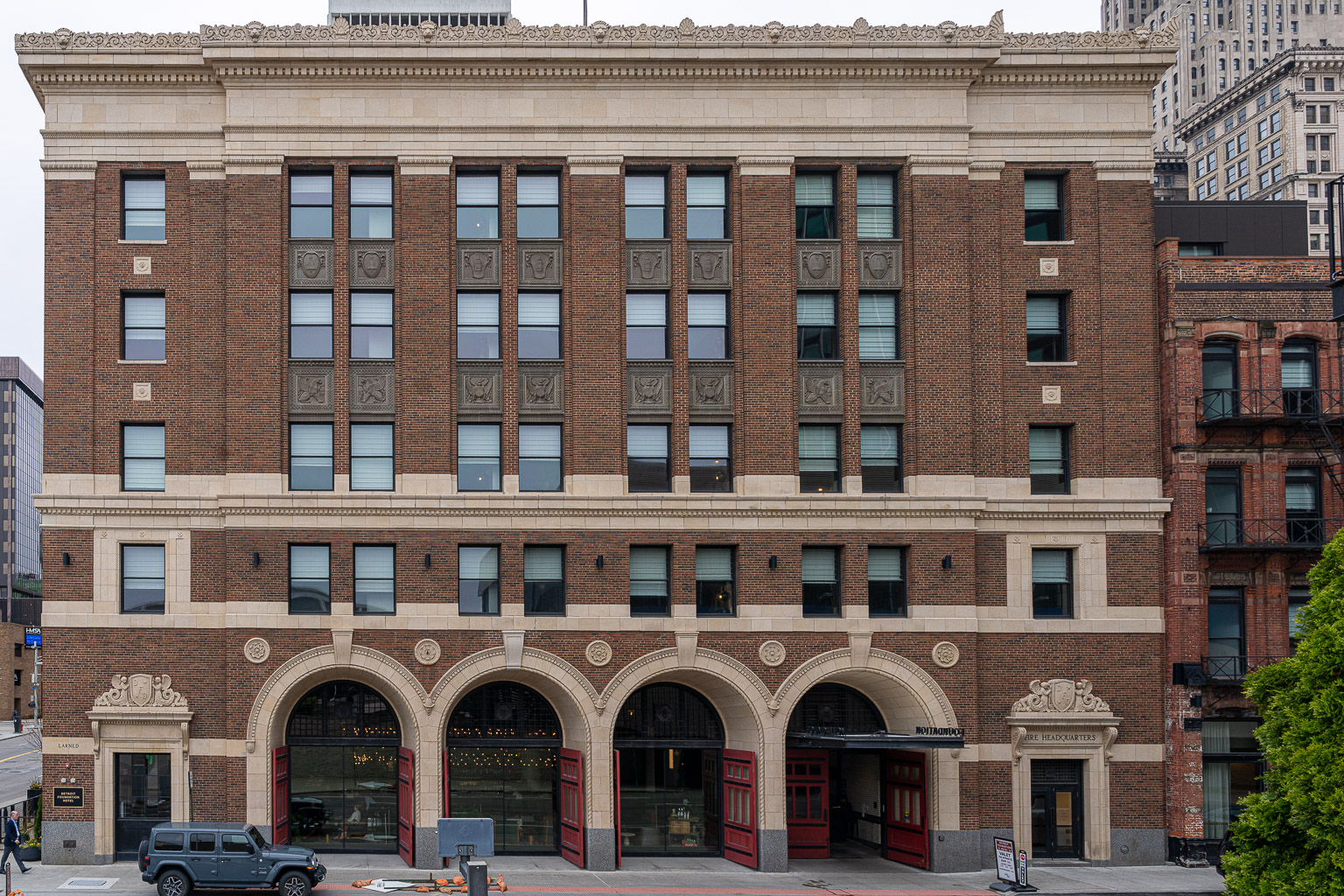
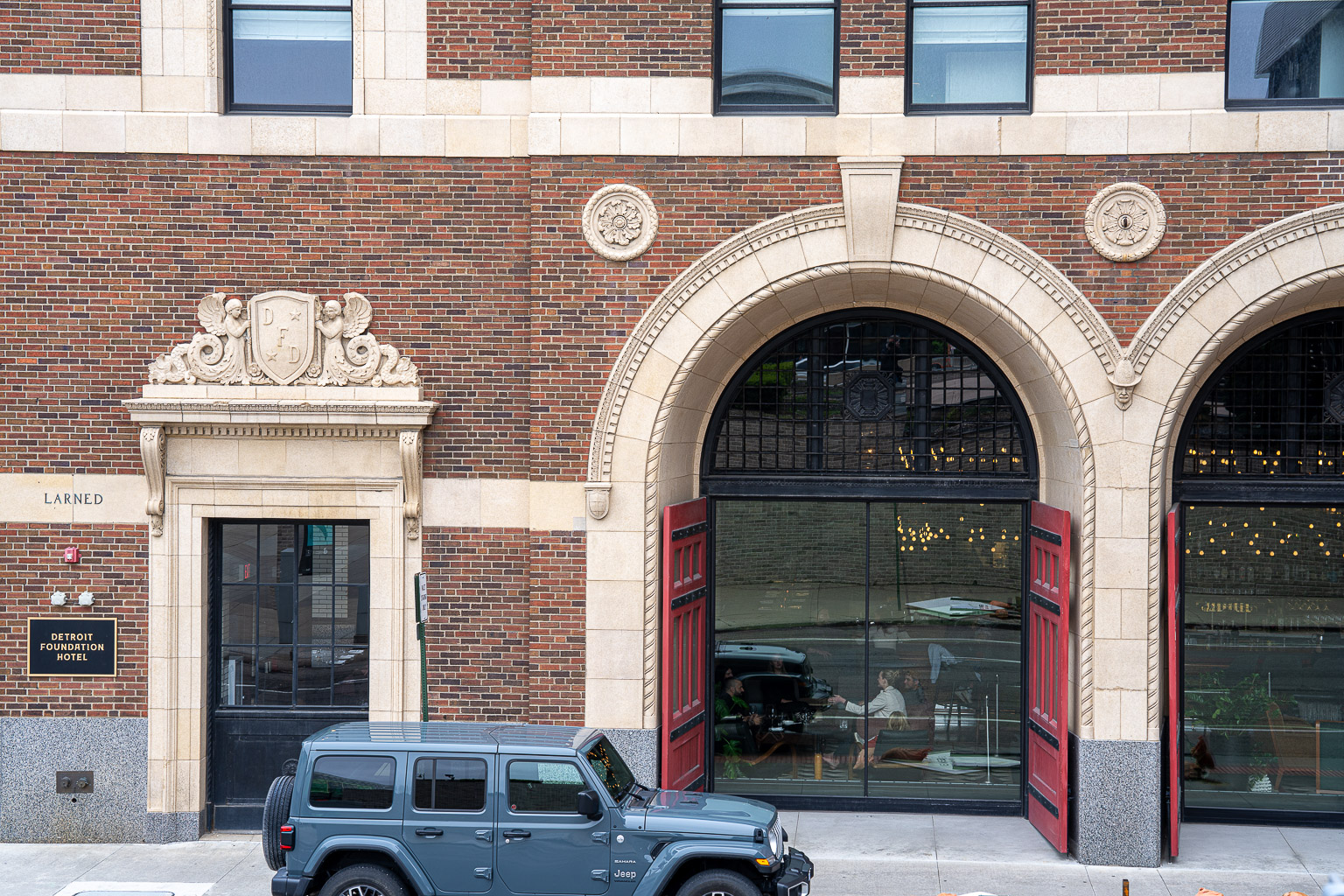
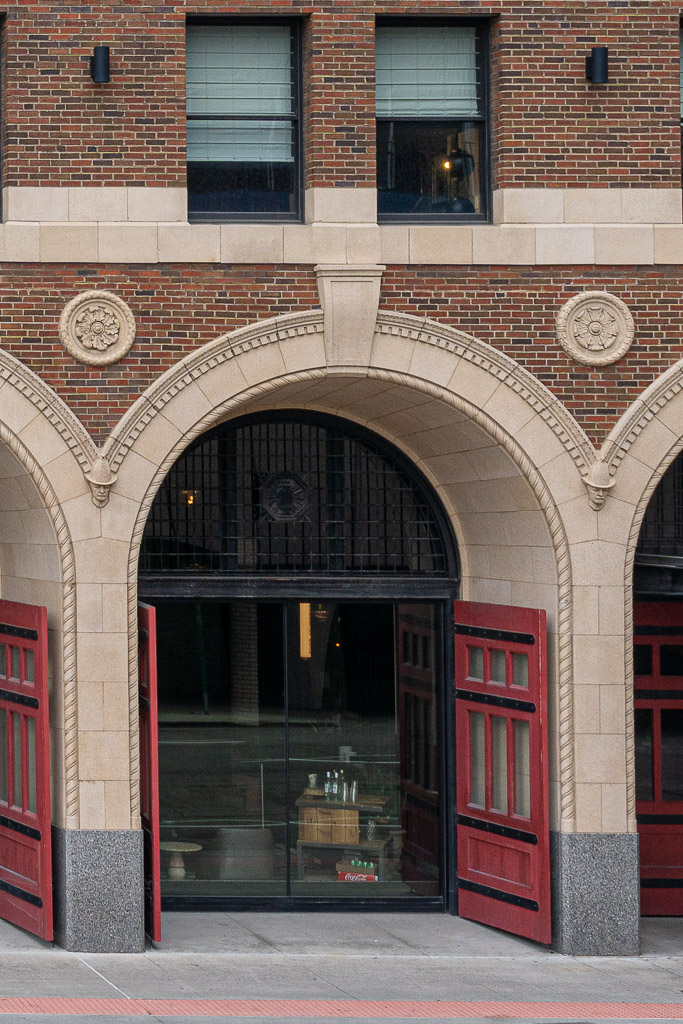
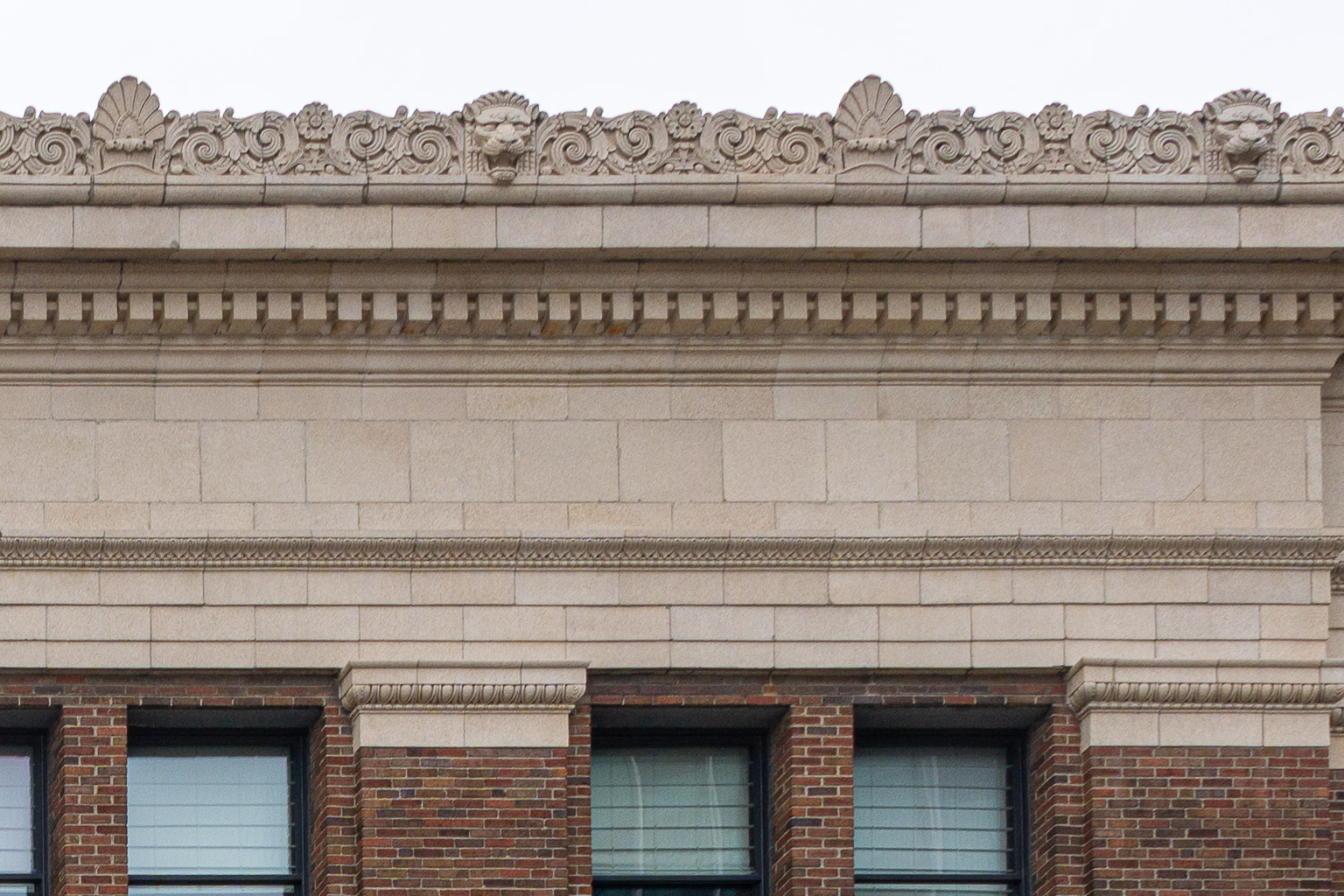
The four fire engine doors are outlined by terra-cotta-trimmed arches displaying rope moldings, dentiled lintels, and keystones (1st photo below). A rosette in a circle decorates each spandrel. The first level is a story and-a-half tall to accommodate the fire trucks. A terra-cotta beltcourse separates the first level from the second story above. The banks of windows above are set in closely spaced pairs above the engine bays and singly at the ends. The original wooden double-hung windows are still in place, many containing air conditioning units. Between the second and third stories appears another broad terra-cotta band containing a dentiled cornice. The walls above are demarcated into bays by broad and shallow piers that support a tall terra-cotta entablature with dentiled cornice topped by alternating anthemion cresting and griffins (2nd photo below). Metal spandrel panels separate the third and fourth-story and fourth and fifth-story windows in the center four bays (3rd photo below).
The Washington Boulevard facade (1st photo below) has much of the same detailing, but there are some differences. There are three engine bays in the center with a large window with griffin and spiral lintels (3rd photo below) at either end in the street level of the projecting center section of the facade and an entrance – pedestrian at the right and roll-down vehicular at the left – at either slightly recessed end of the facade. Above the north and south doors are cartouches containing firefighter horns and hats (3rd photo below).
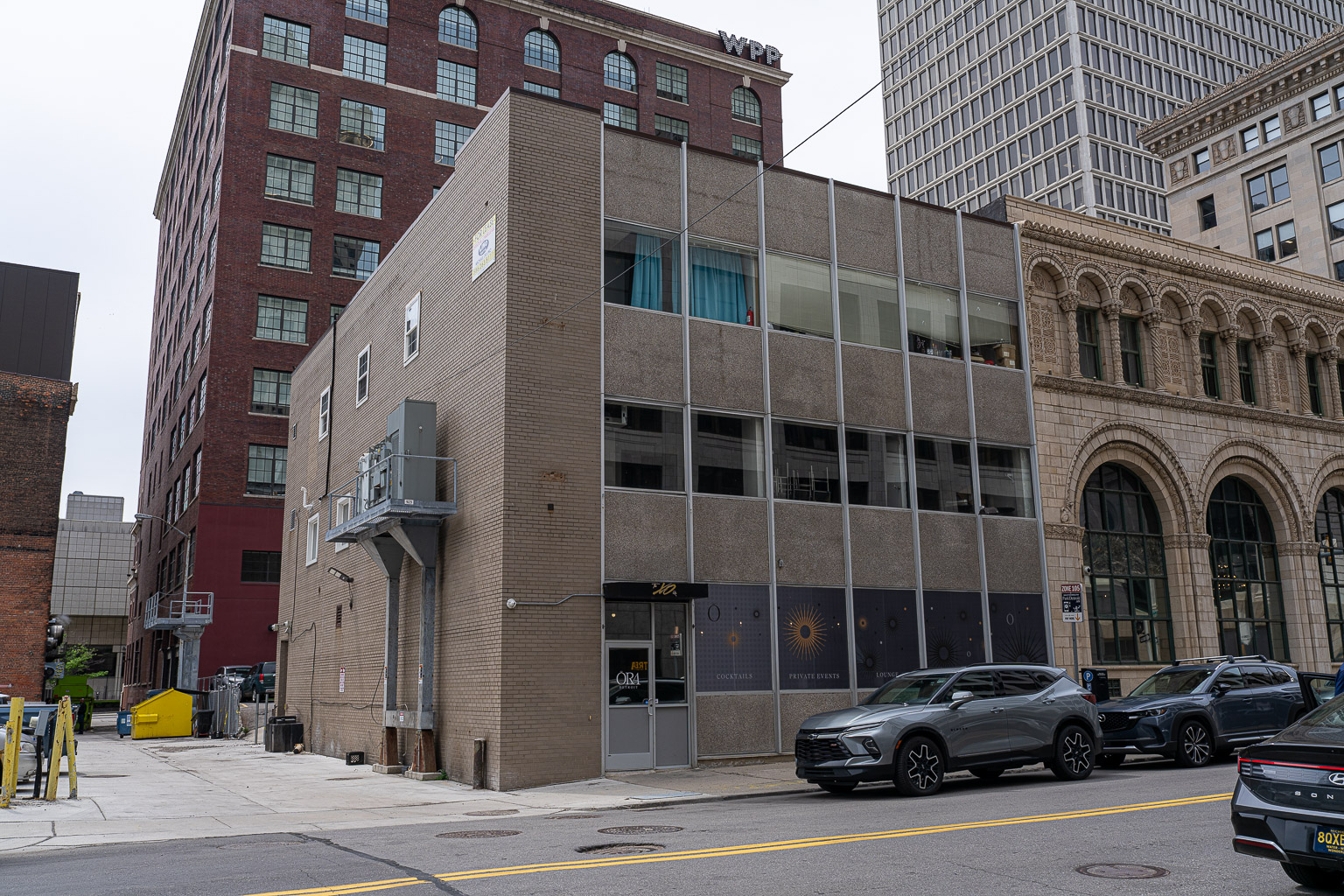
Steel-frame, three-story commercial building faced with stainless steel framework holding aggregate panels and plate glass windows (1960). The rectangular International Style building stands adjacent to the Bankers Trust Building at 205 West Congress. The building's southern side is brick and painted beige. The building was built as an annex to the adjacent building at 205 W. Congress, which at the time housed a Merrill, Lynch, Pierce, Fenner & Beane brokerage.
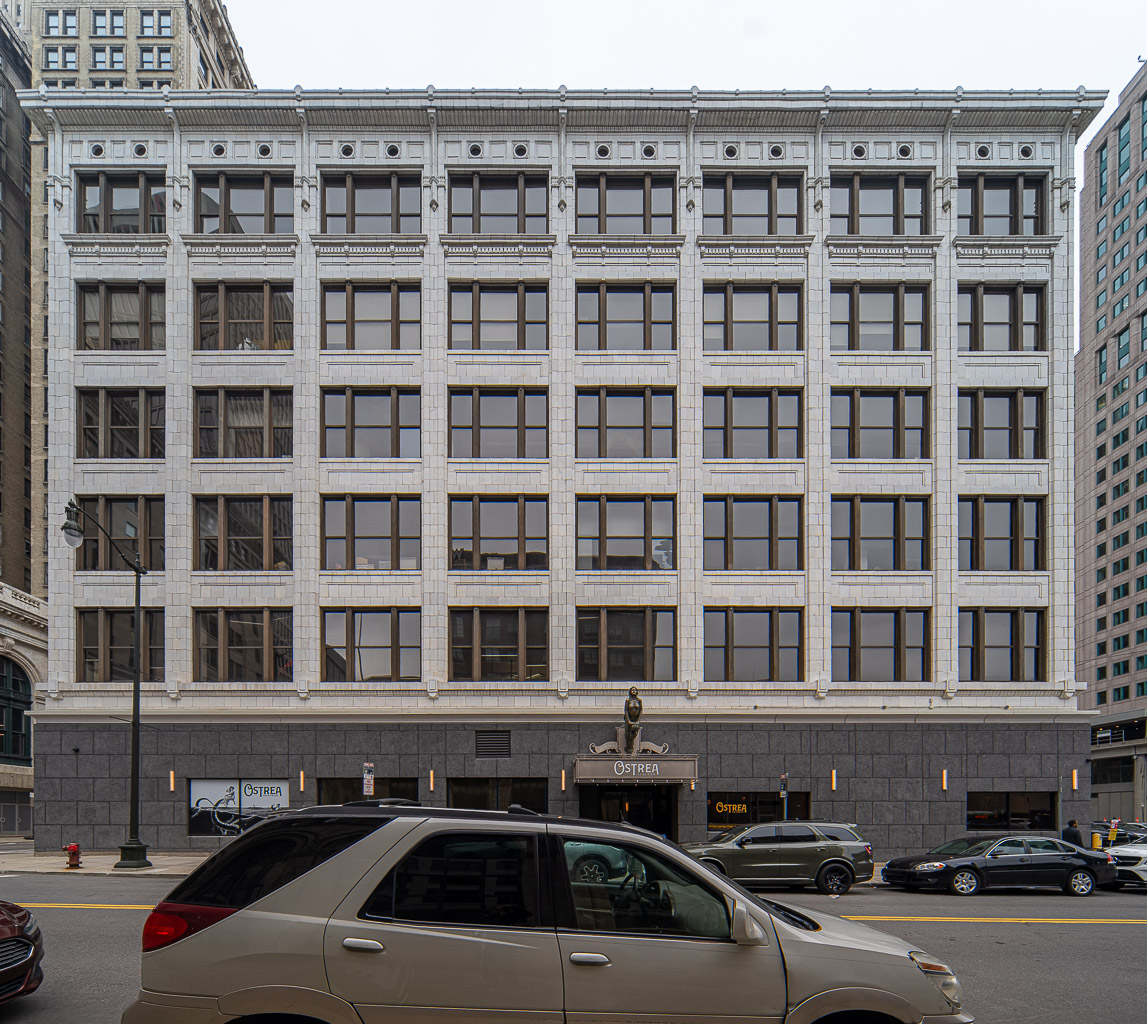
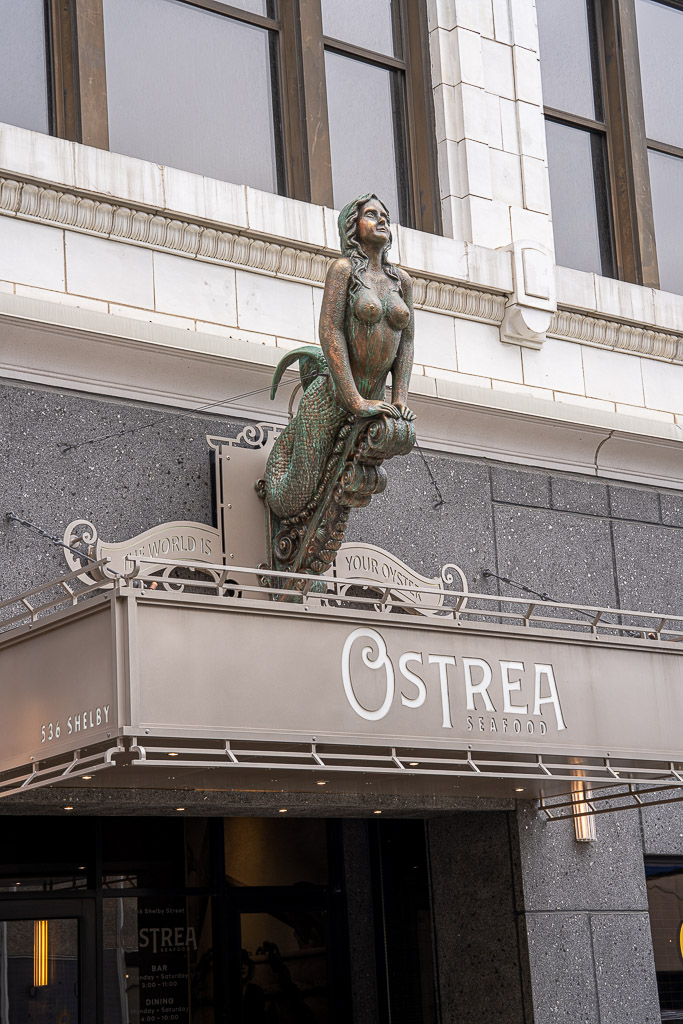
Steel-frame, six-story office building faced in white glazed terra cotta (1913). The Telegraph Building is located at the southeast corner of West Congress and Shelby Streets, and originally shared a party wall with the Murphy Building to the east. This building's white glazed terra cotta stands out from the red brick and beige terra cotta of the buildings nearby. The exterior walls around the street-level storefronts have been renovated with dark green mica-flecked cast panels up to mid-level and white marble panels above. Today green awnings shelter the shop windows. In the facades above the storefronts vertical "piers" that project only very slightly and low paneled horizontal bulkheads – all faced in terra-cotta blocks – frame the broad square-head windows that occupy nearly the entire space. The frieze below a simply detailed projecting cornice displays five panels corresponding with each window bay, with two small blind round windows centered over each window bay. The windows are arranged in four bays on the West Congress facade and eight on the Shelby facade. Although the windows, each a triple with narrow double-hung at each end flanking a broader double-hung in the center, are replacements, they are designed to look similar to the original Chicago-style windows. The building has a flat roof. The alley facade is faced in white glazed brick. During a renovation, the Murphy and Telegraph Buildings were joined together to share a continuous floor plate and elevator core. The interiors of both buildings have been completely renovated. Today the combined building is called the Murphy-Telegraph Building. The building originally housed Western Union's Detroit hub plus rental office space. Today (2026) it houses the newly-opened Ostrea seafood restaurant.
Steel-frame, nine-story office building faced in limestone and brick (1924-25). The U.S. Mortgage Bond Building is located at the northwest corner of West Congress and Shelby Streets. It is rectangular in plan, and is adjacent to the building to the west at 220 West Congress, as well as the building at 625 Shelby Street to the north. Faced on the street facades in grey Indiana limestone, the building takes after Italian palazzos in form but seems to mix Neoclassical and Renaissance Revival design elements. Resting on a base of grey granite, the lower stories are faced in grey Indiana limestone set in broad courses with the horizontal joints deeply sunk. The tall arched windows of the first and second floor are set in the original metal frames. A classical cornice of limestone separates the three-story lower section from the smooth-finished limestone upper facades. There are five window bays on the Shelby facade, and six on the West Congress facade. On each facade, the central windows are paired, with a single window on each end bay. The windows have all been replaced with aluminum frame windows. The original modillioned and dentiled cornice remains in place. Sometime in the middle of the 20th century, a pedestrian bridge was built at the second floor level connecting the U. S. Mortgage Bond Building to the State Savings Bank Building across Shelby Street.
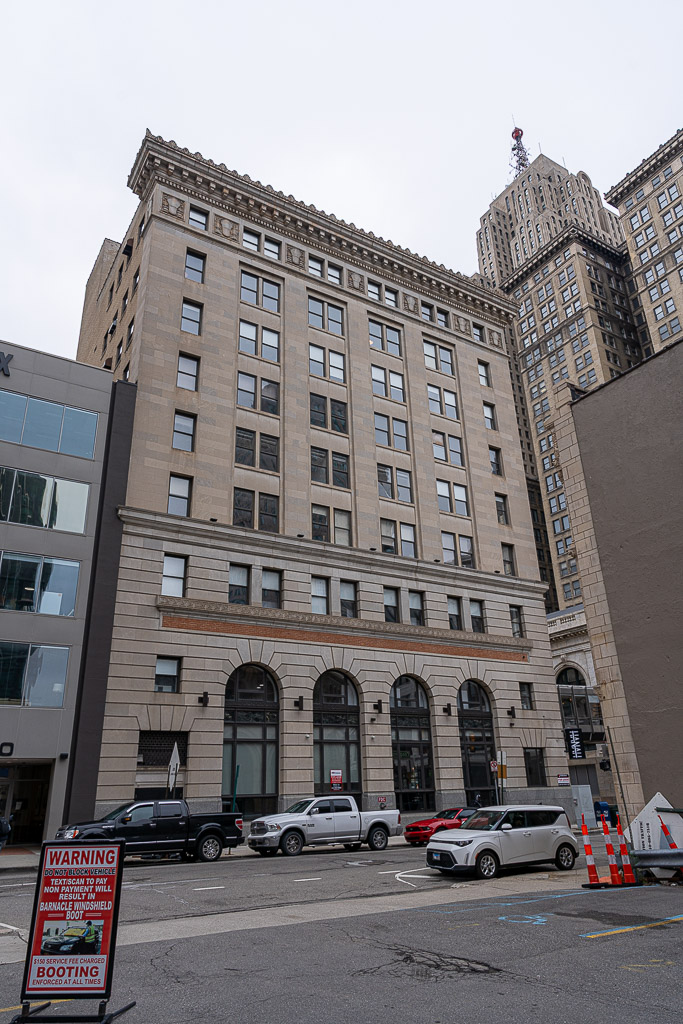
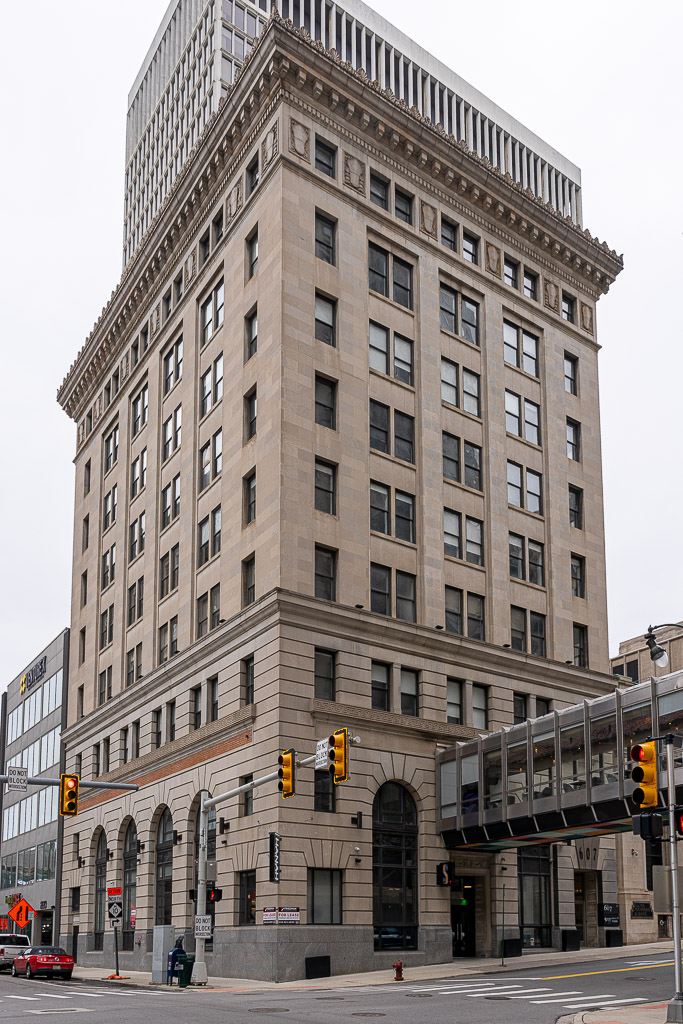
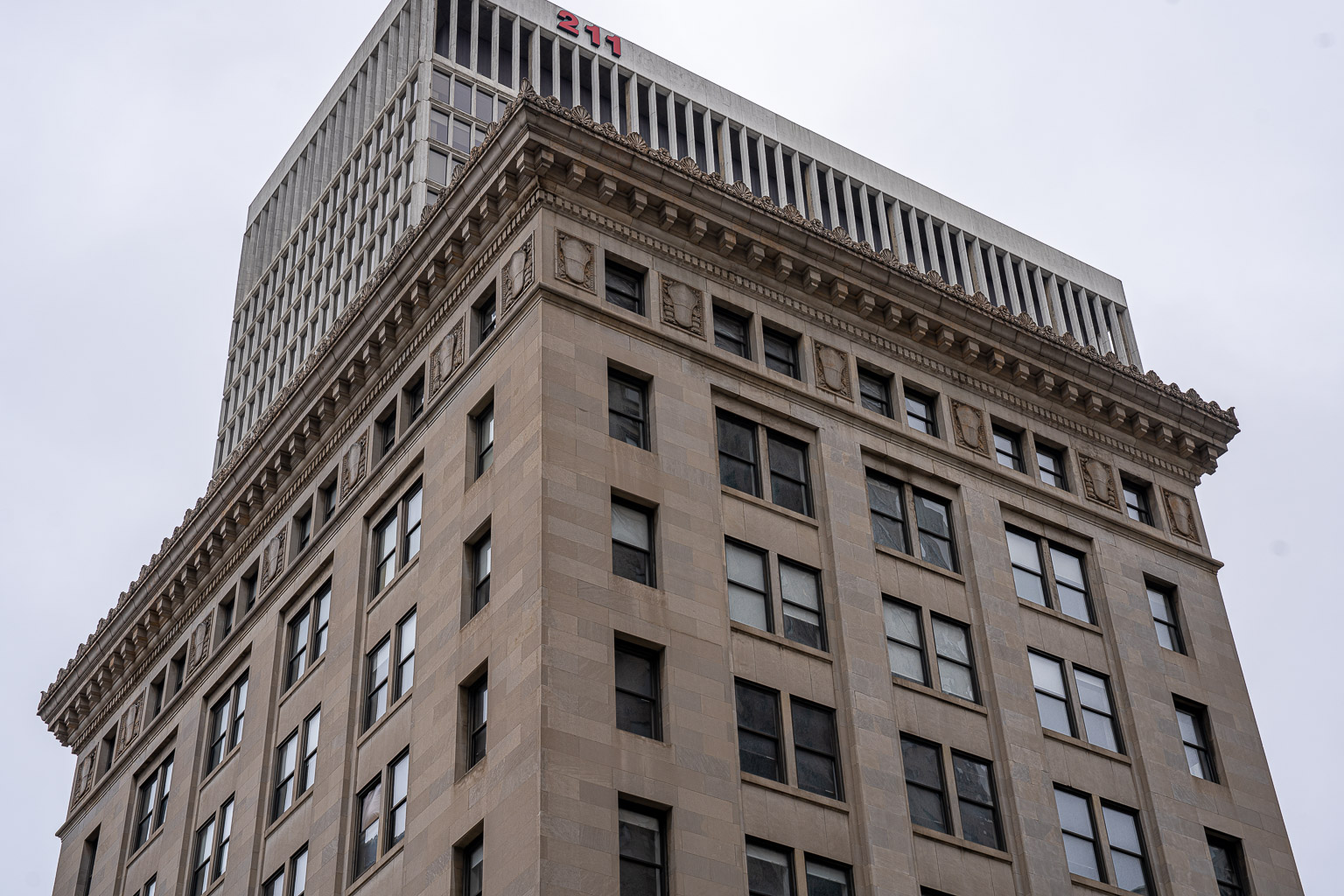
More photos and more description of this building can be found at HistoricDetroit.org.
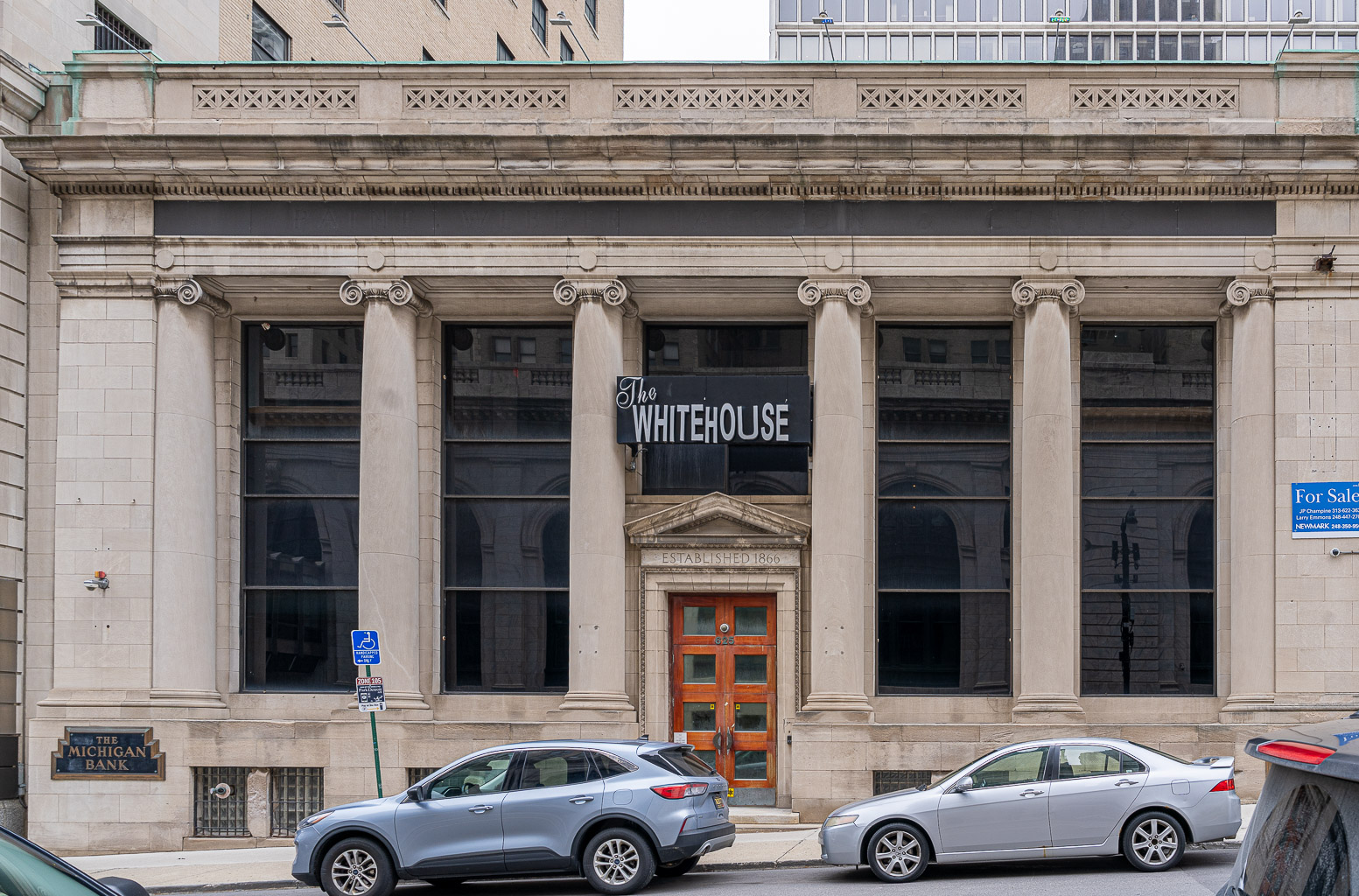
Steel-frame, two-story limestone and brick structure (1912). Located adjacent to 607 Shelby to the south and an alley to the north, the building is square in plan, with a broad and low front. The building's street and alley facades are faced in Indiana limestone. The Neoclassical building displays broad antae at the front corners and a screen of four unfluted Ionic columns (plus a half-column at each end) between that rests on a low base pierced by basement windows now filled with glass block. The pedimented classical entrance stands between the center two columns. The broad and tall window areas between the columns and above the door are now filled with dark reflective plate glass. An entablature with three-part architrave and a dentiled cornice, topped by a decorative balustrade, spans the facade and continues around the north (alley) side. The north side displays broad piers in place of the front's columns. The interior retains a great deal of original ceiling and wall plaster detailing. Today, signage for Elysium, the nightclub that uses the building, is centered over the door between two columns. Actually, as of 2026, this signage now reads "the WHITEHOUSE".
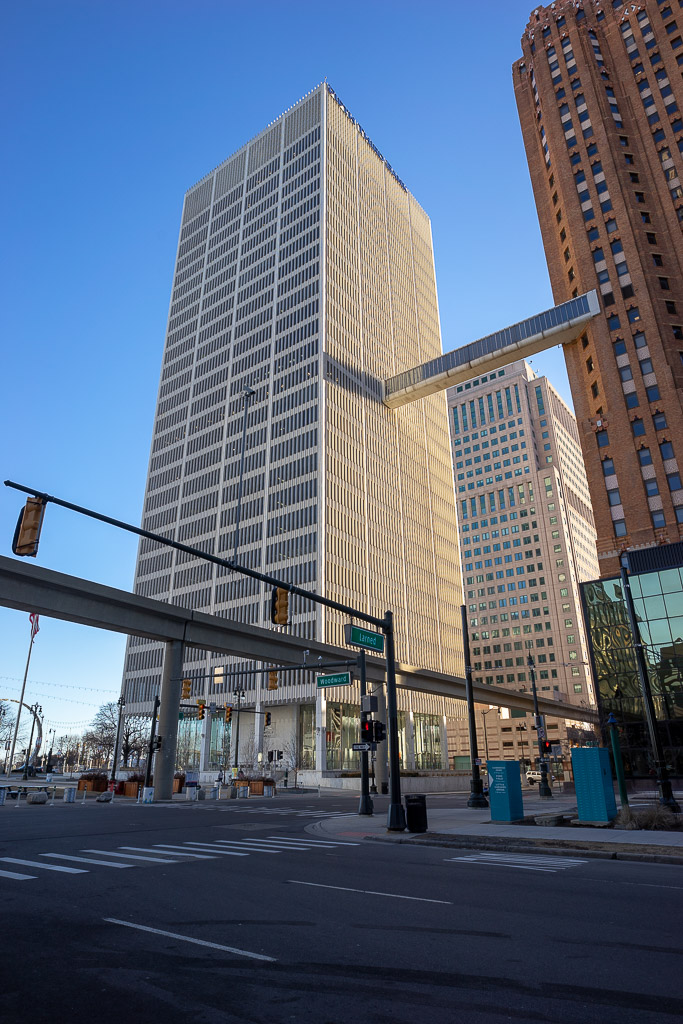
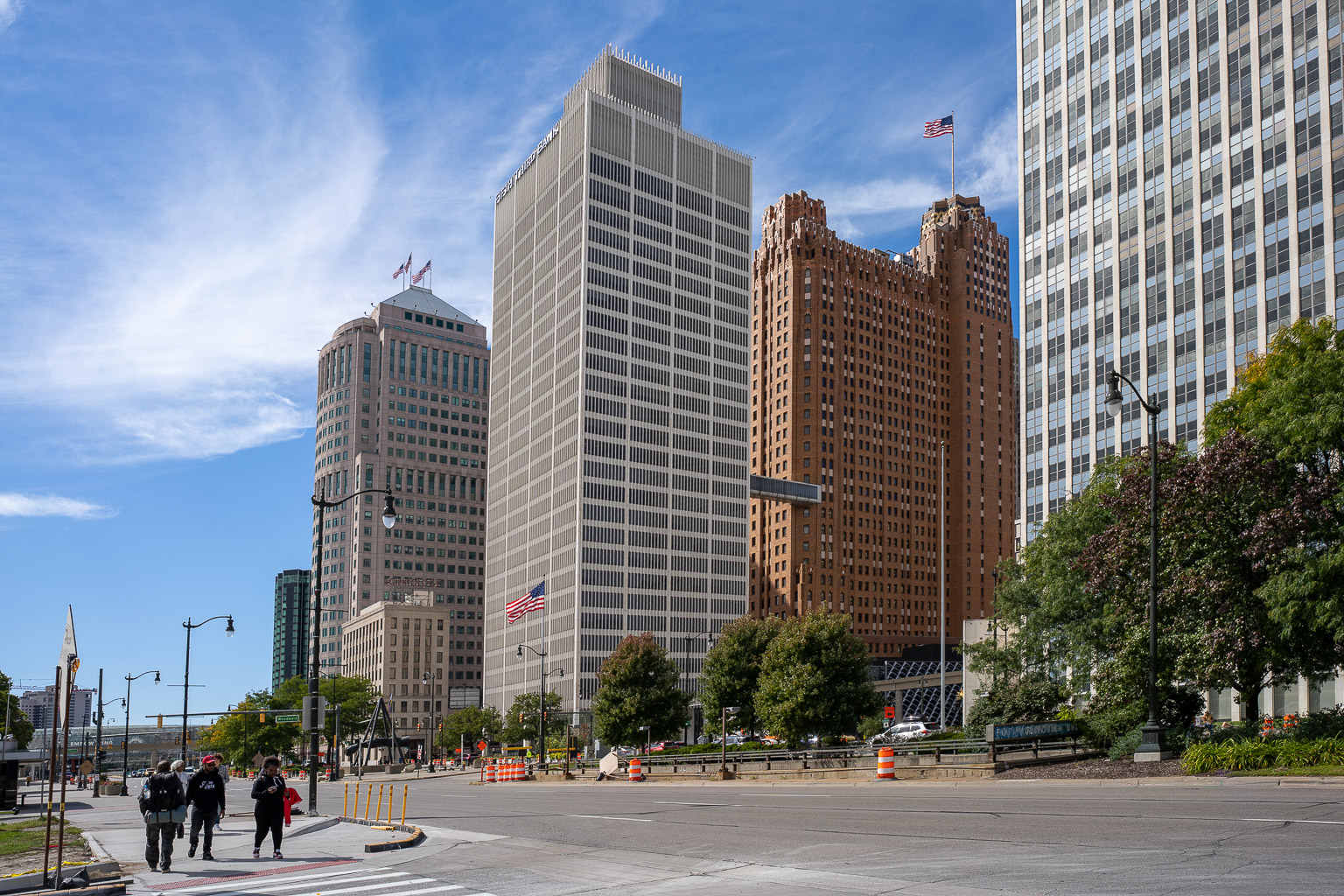
Steel-frame, thirty-two-story skyscraper (1960-62). Minoru Yamasaki Associates with Smith, Hinchman & Grylls, architects. Minoru Yamasaki was, of course, the architect of the two original World Trade Center towers in Manhattan, and due to this being his first skyscraper, and similar in appearance to the WTC, this building is often considered the forerunner of those WTC buildings.
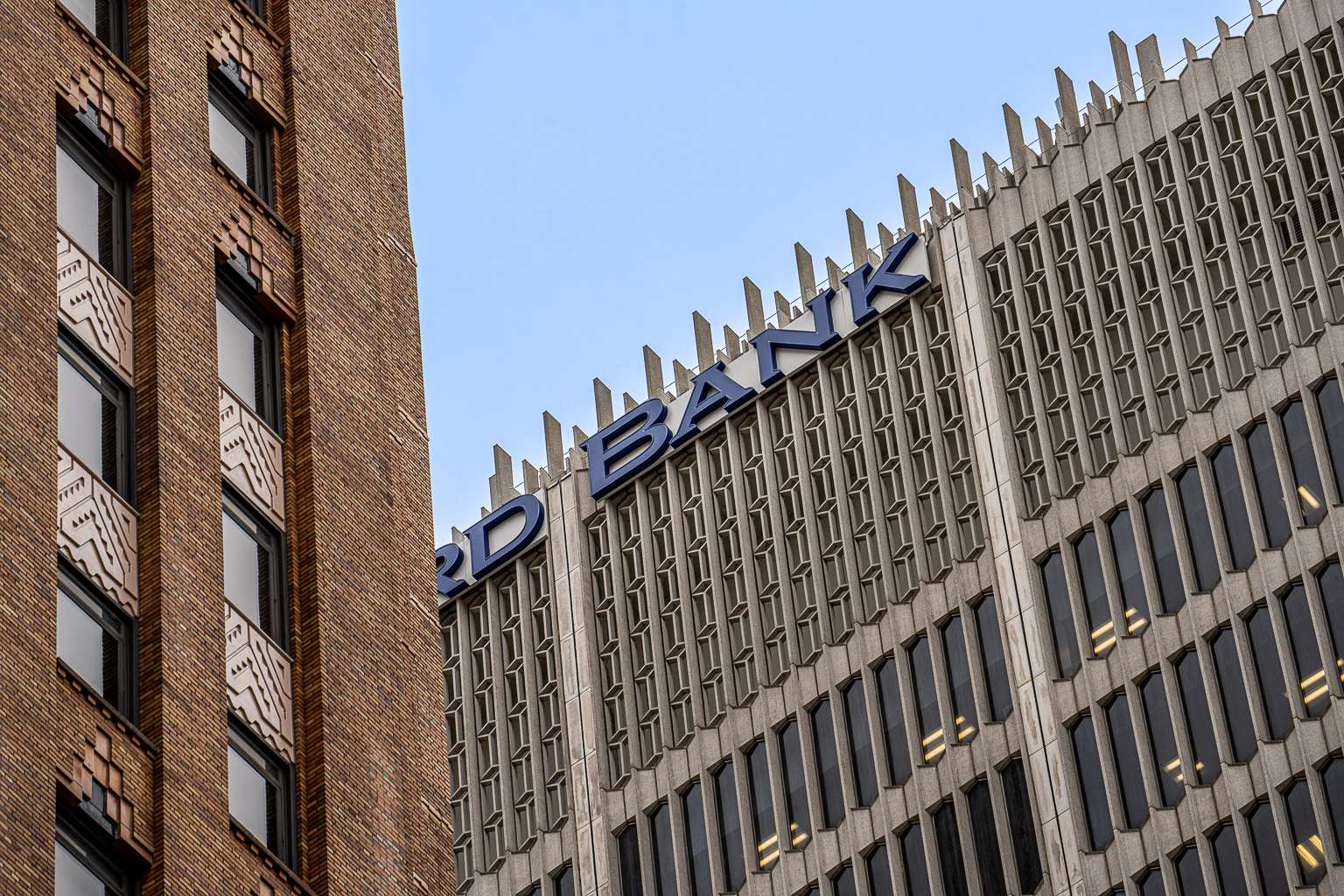
Located at the prominent intersection of the northwest corner of West Jefferson Avenue and Woodward Avenue, the MichCon Building is square in plan. The building's entrance staircases, fountain and former water pools lead up to a platform on which the building rests. The pools were later converted to flower beds. Pre-cast white concrete panels hold the vertical, hexagon-shaped windows in place on this landmark skyscraper. The lobby is a thirty-foot tall space illuminated by eighty-two glass panes on all four sides. The lobby columns and stairs are finished in white marble, and the railings and lobby ceiling details are of polished chrome. The top four floors terminate to a recessed square penthouse that contains the heating, ventilating and cooling systems. Both roofs are flat gravel roofs. At night the top four floors are illuminated by colored lights depending on the season. At the two rooflines, the concrete panels project upward past the roofline for a crenellated effect. A pedestrian bridge at the fifteenth floor connects to the Guardian Building across West Larned Street.
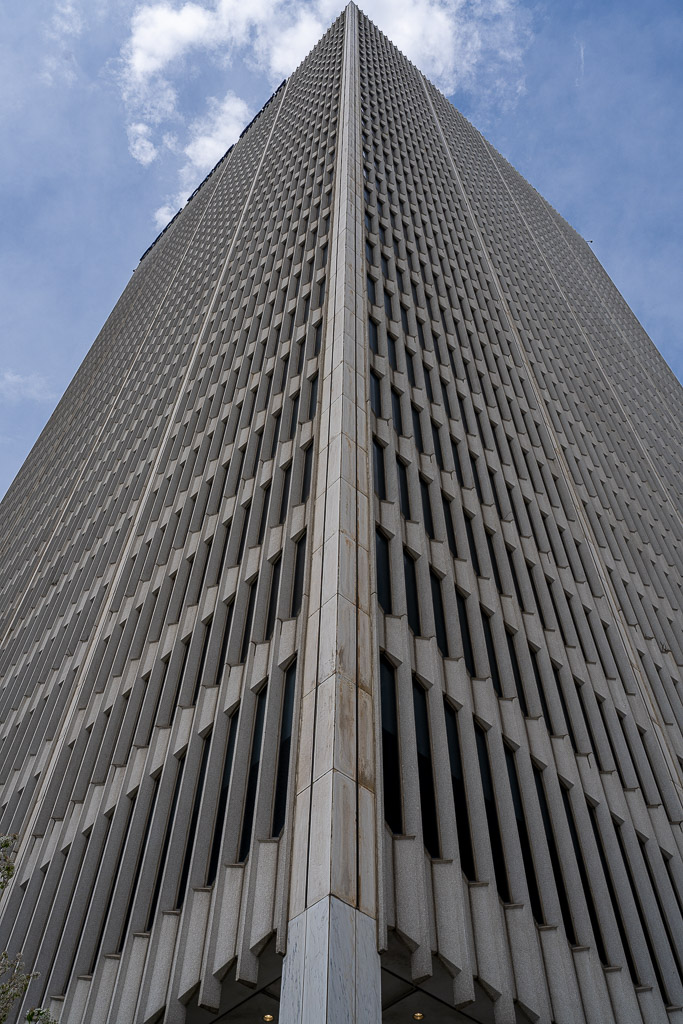
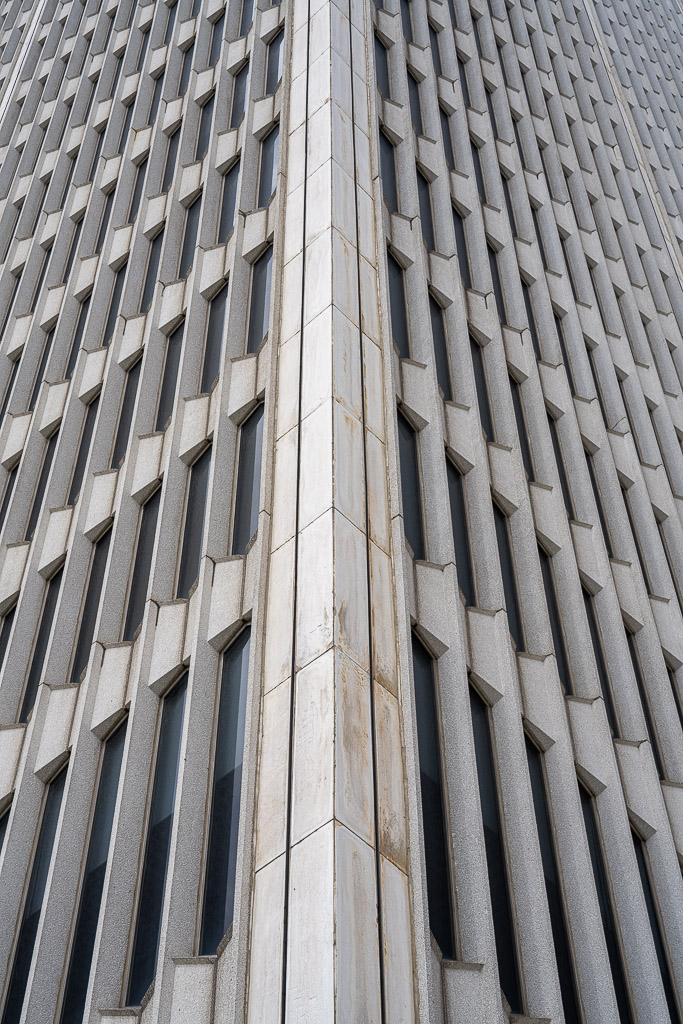
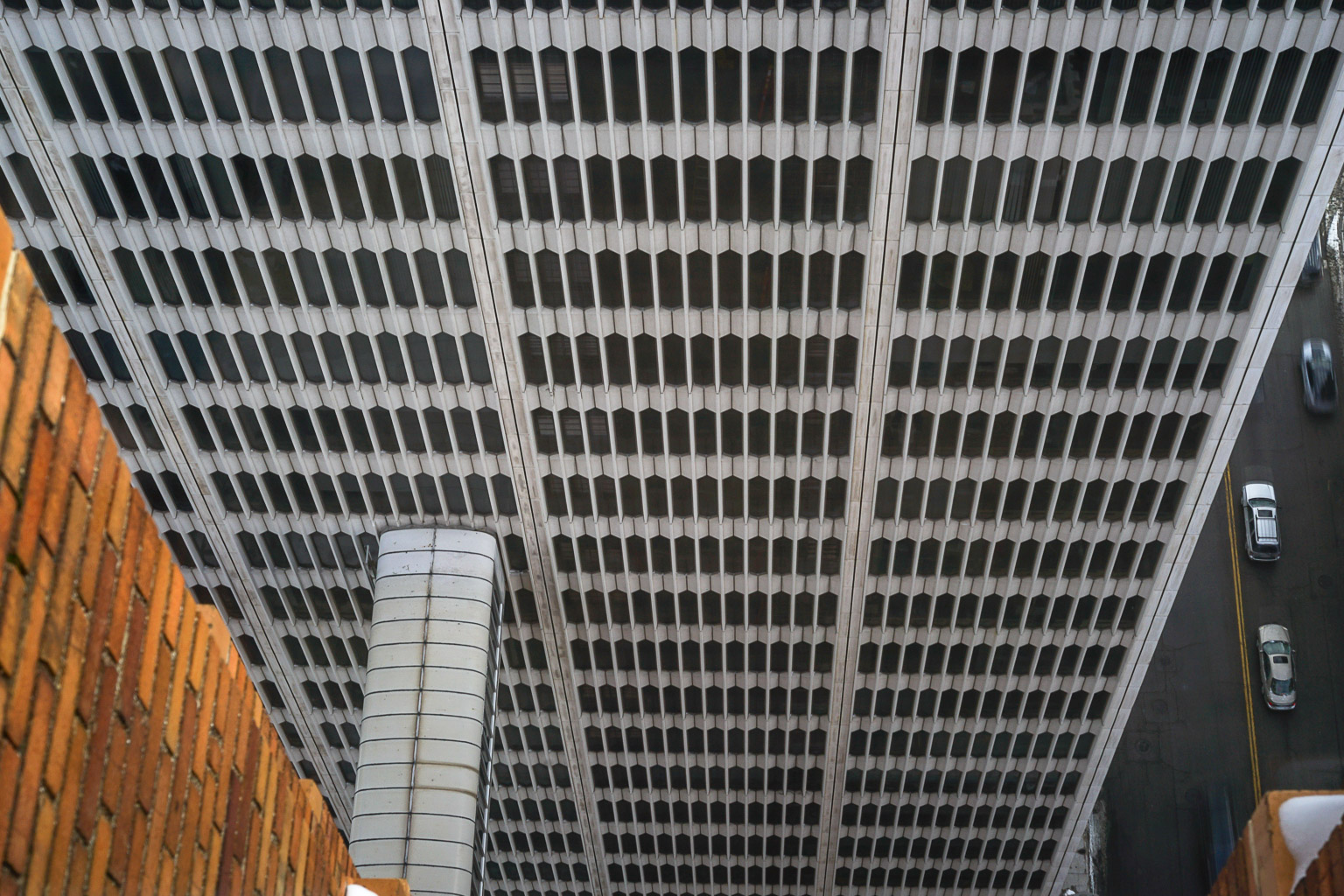
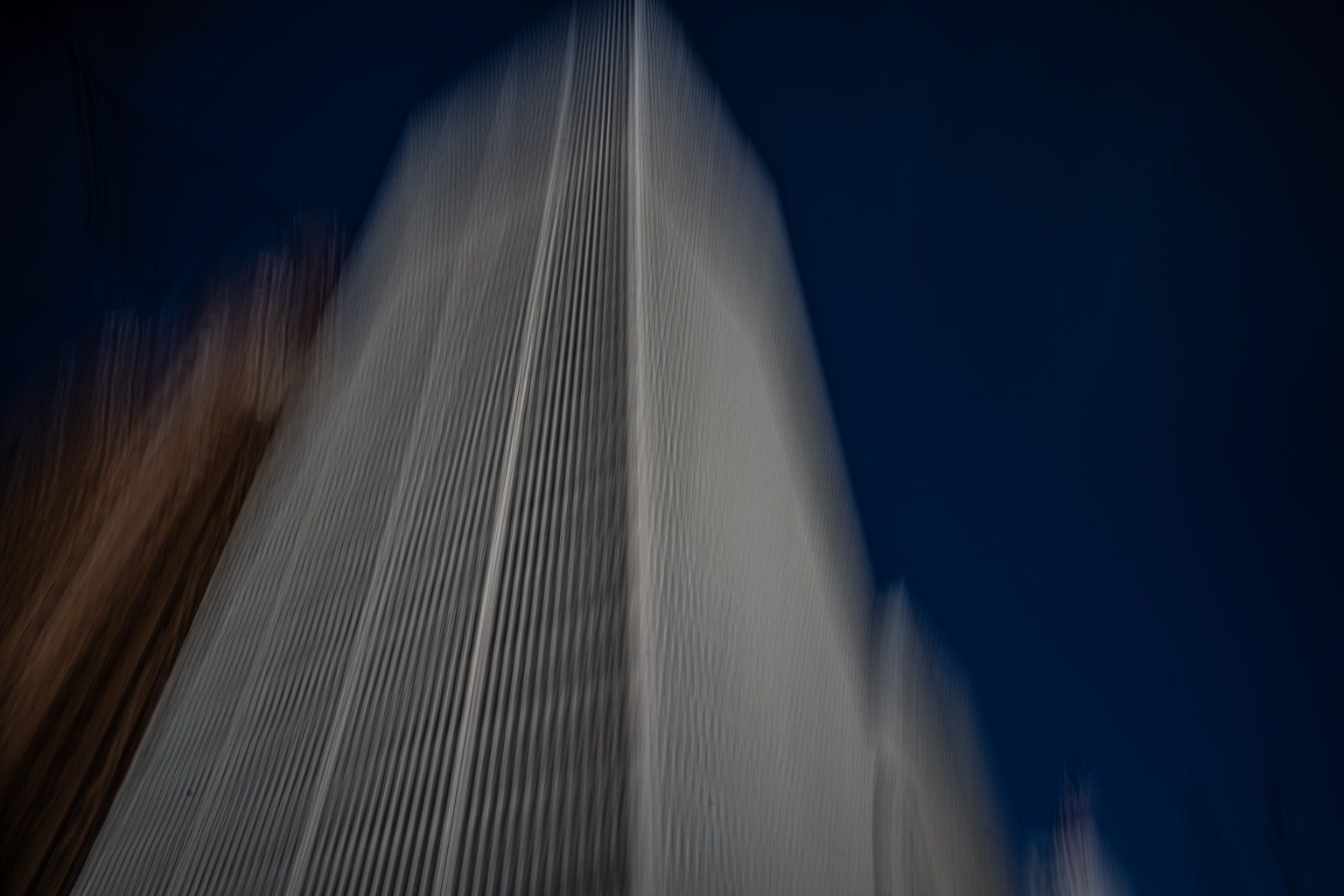
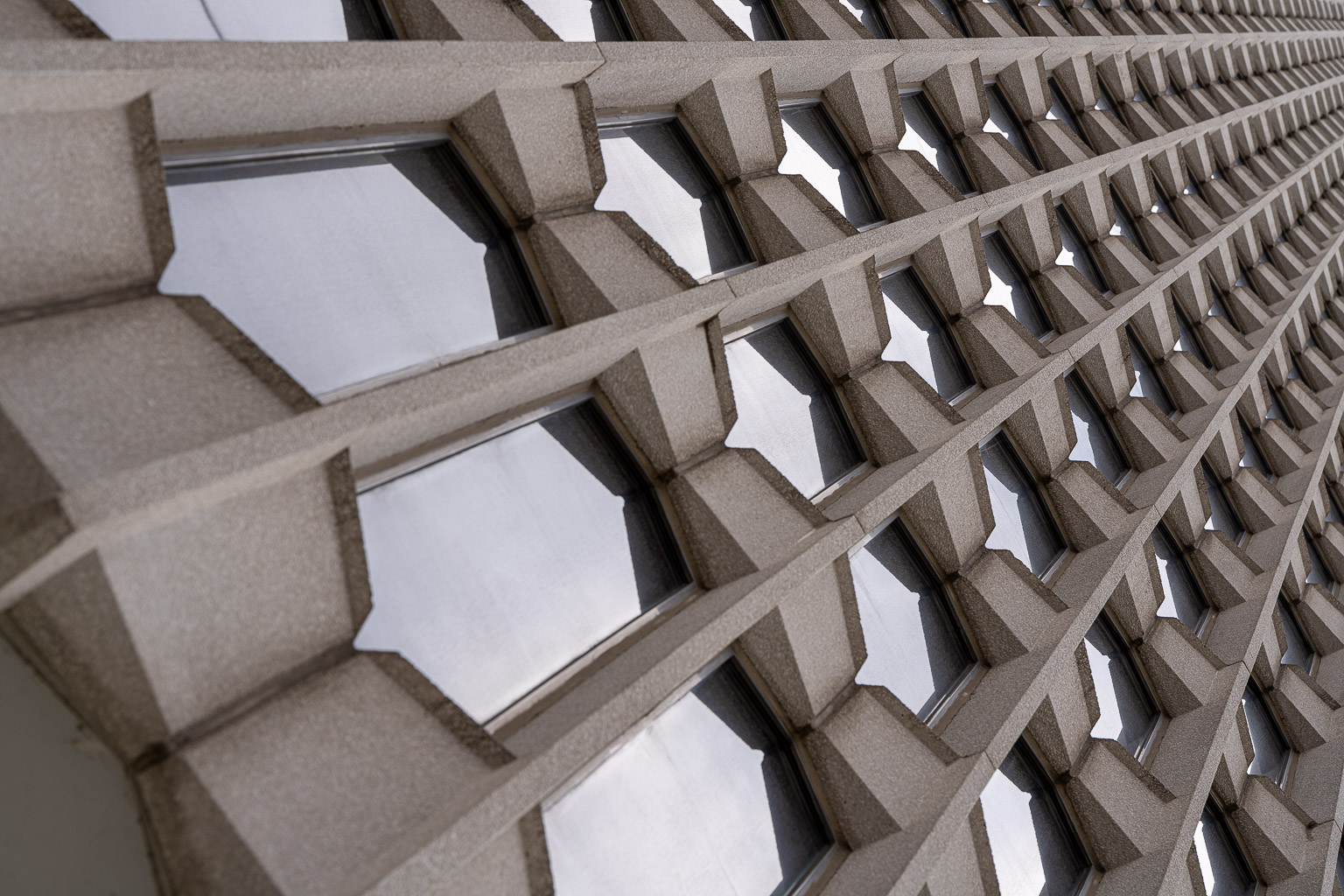
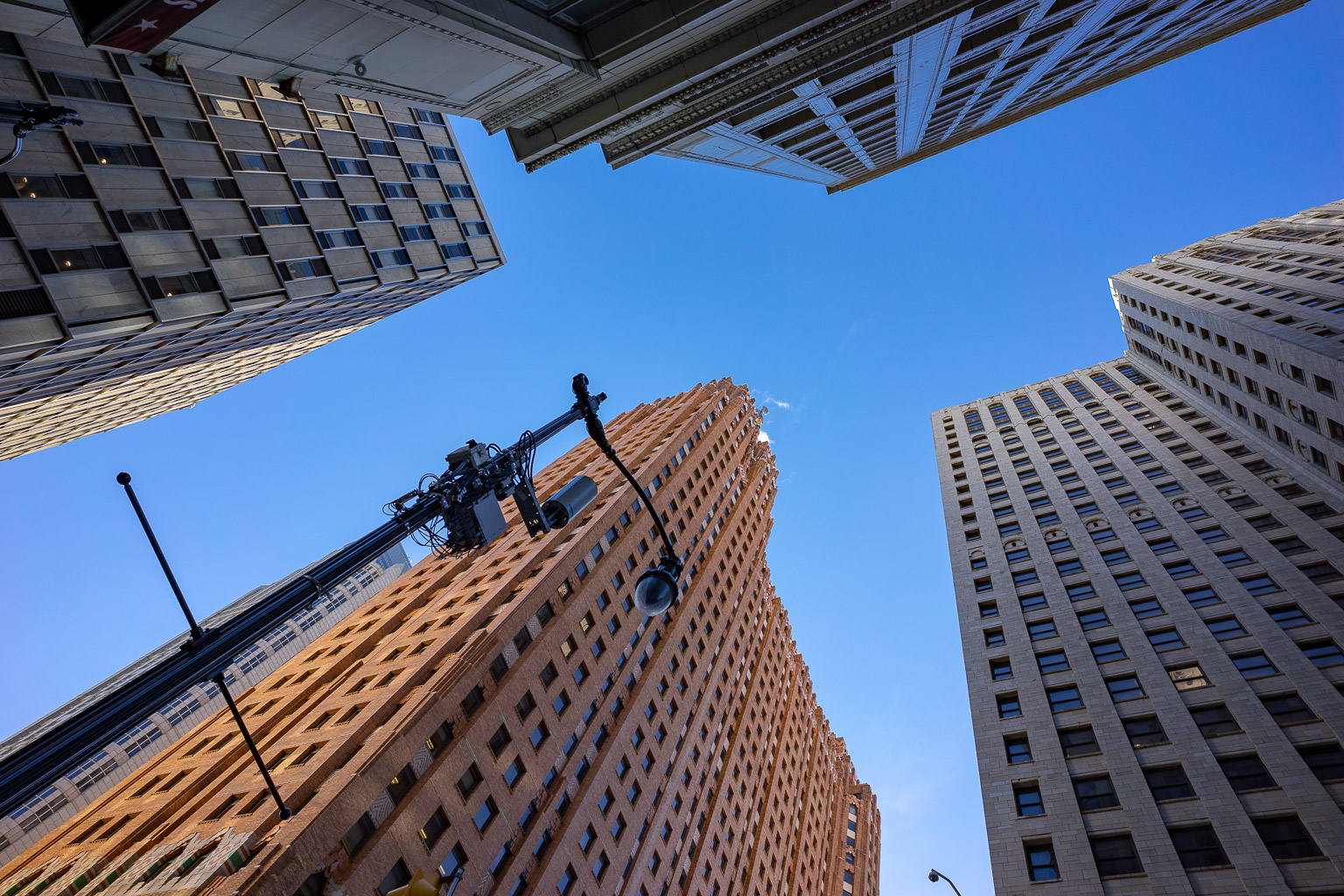
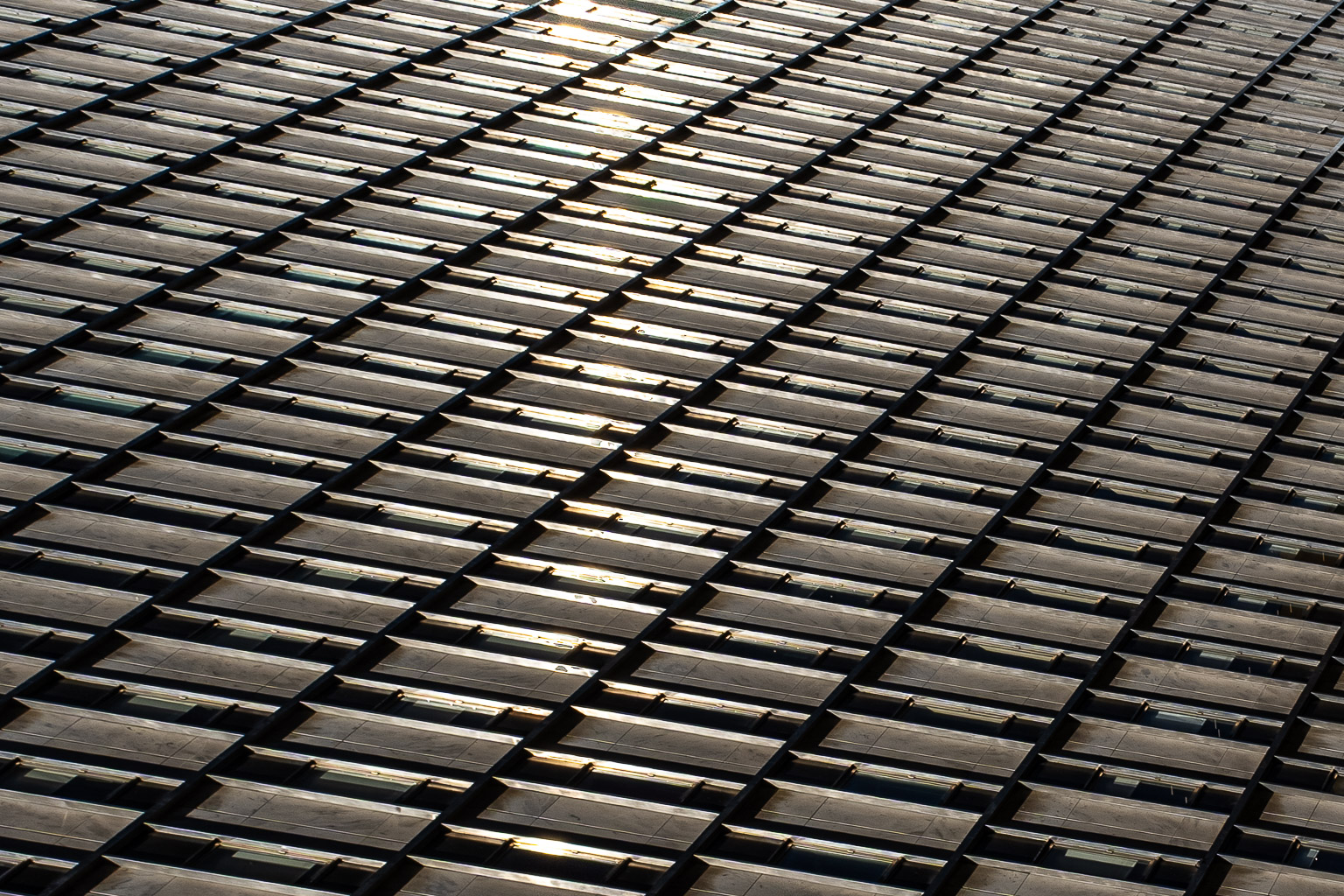
There is little ornamentation on One Woodward Avenue, but the gleaming white color, repeating pattern of windows, and columns from 4th floor to the top are mesmerizing, making this a beautiful building in its own right. It is especially interesting to a photographer by being a nearly-ideal subject for vertical intentional camera movement (1st through 3rd photos below).
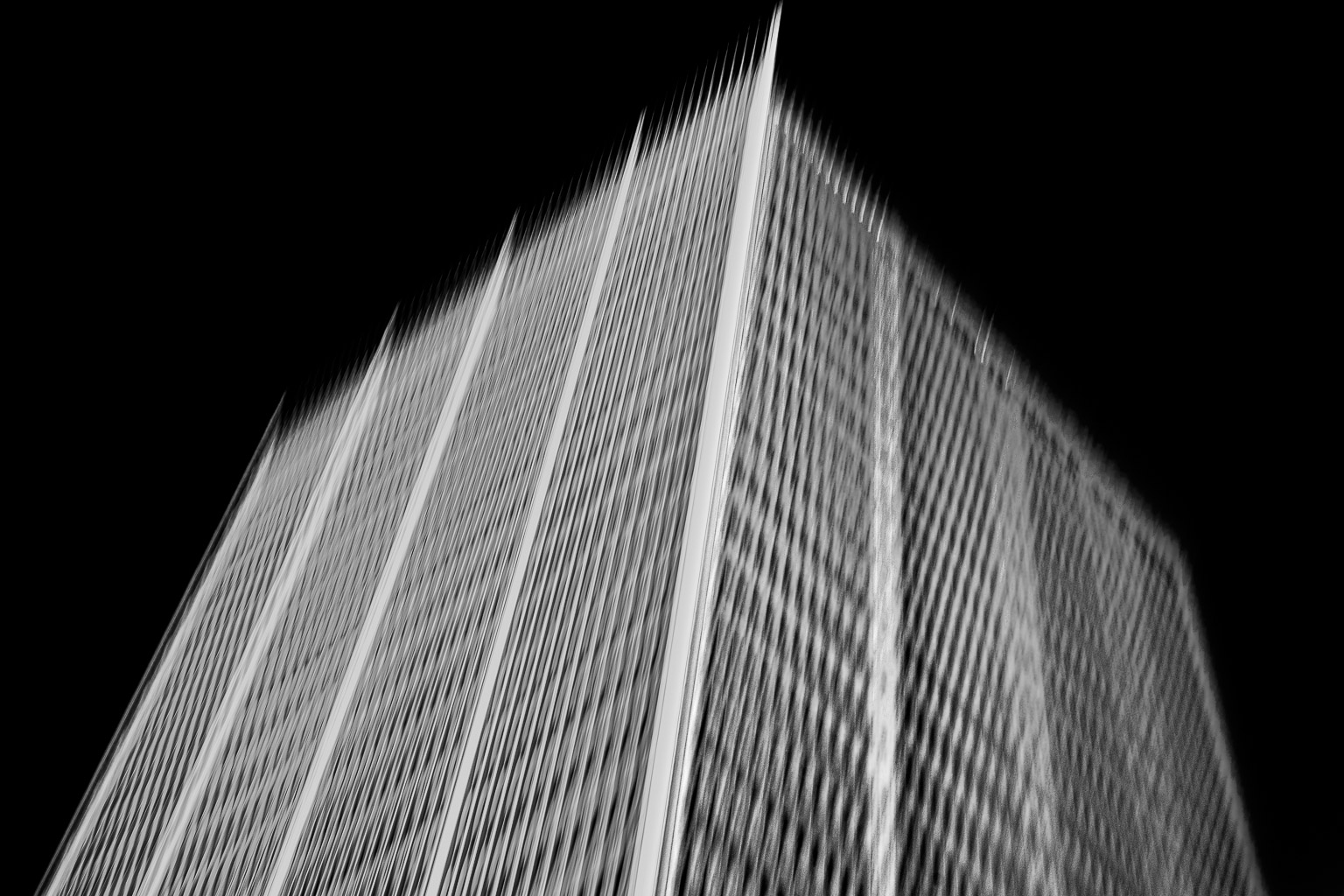
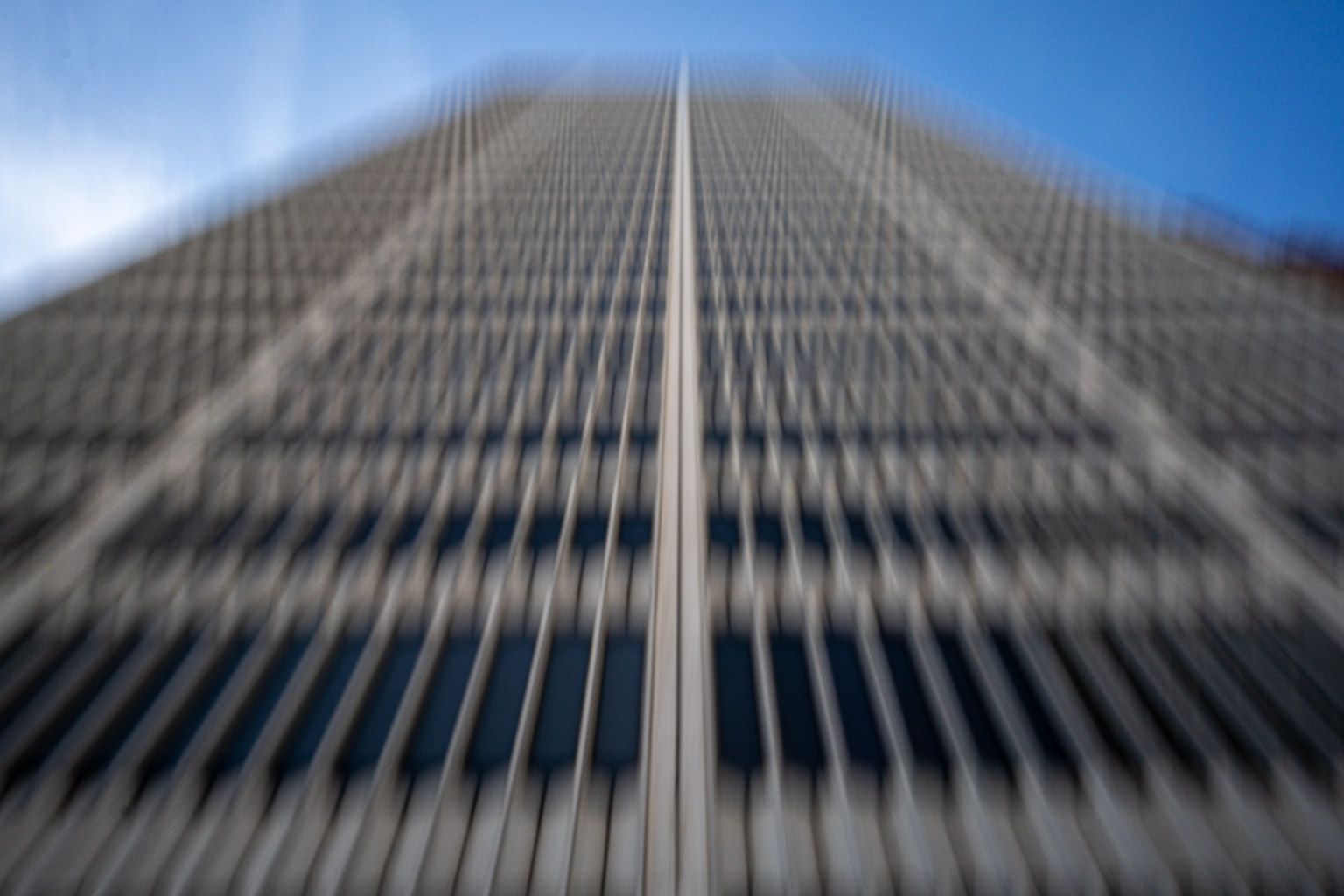
The ornamentation that I can find is in the top several floors, where the window pattern is narrowed significantly and broken into panes, which I find quite pretty. Unfortunately, this is so far from the ground and such small detail that it's difficult for my old eyes to make out with natural vision rather than the camera's zoomed sharpness.
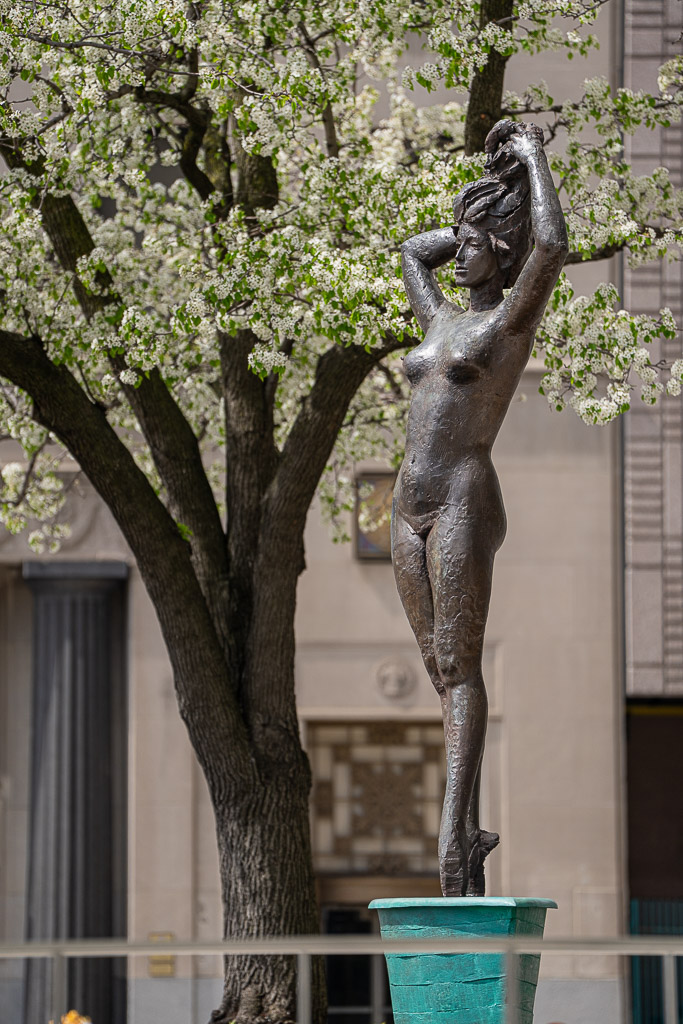
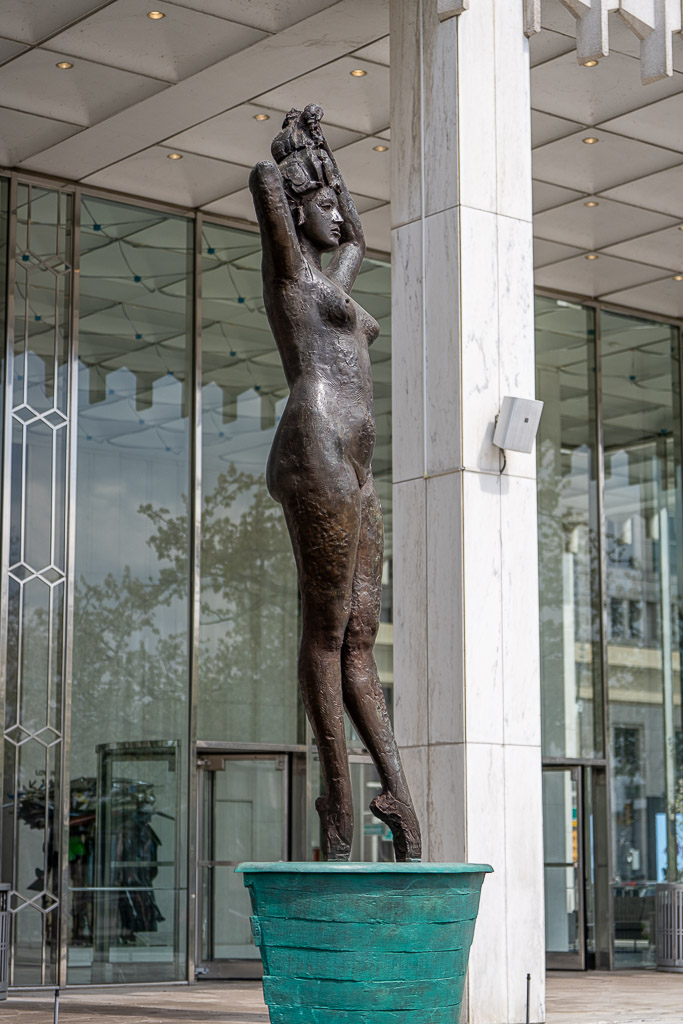
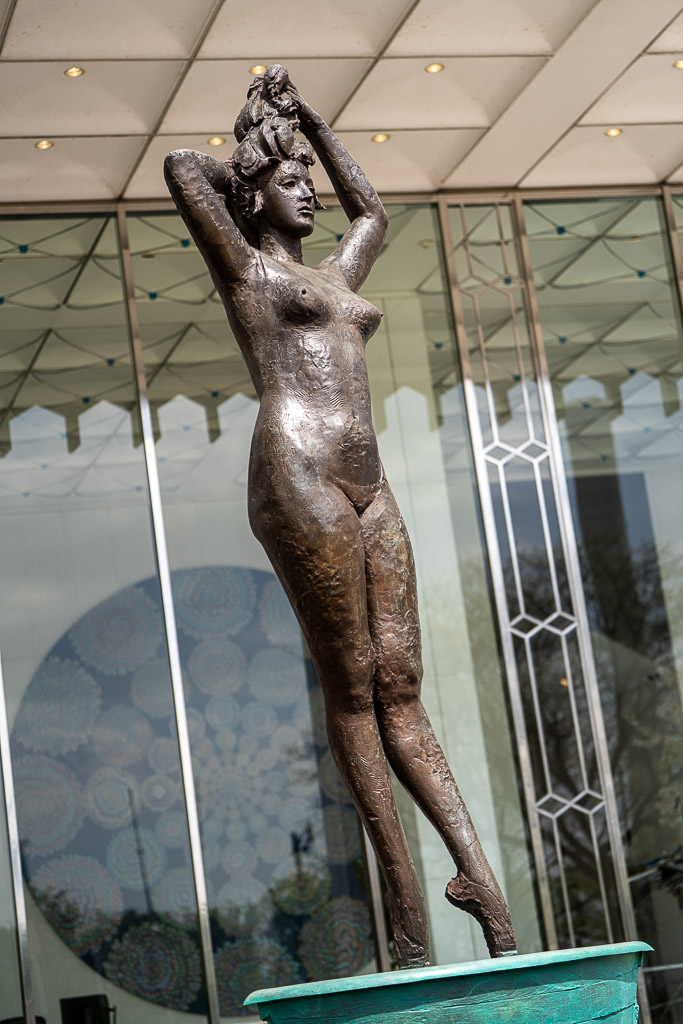
Standing in front of the building on Jefferson Avenue is the sculpture Passo di Danza (Step of the Dance), an 11-foot bronze sculpture of a poised nude ballet dancer. It was created in 1963 by Italian sculptor Giacomo Manzu, who modeled the figure after his wife, and was commisisioned by the architect Minoru Yamasaki to complement his modernist skyscraper design.
By now, you certainly know I enjoy presenting more artistic photos of the architecture of Detroit, and below are my attempts at capturing One Woodward Avenue artistically. Be sure to click the photos to enlarge them and see the captions, then click again to put them back onto the page.
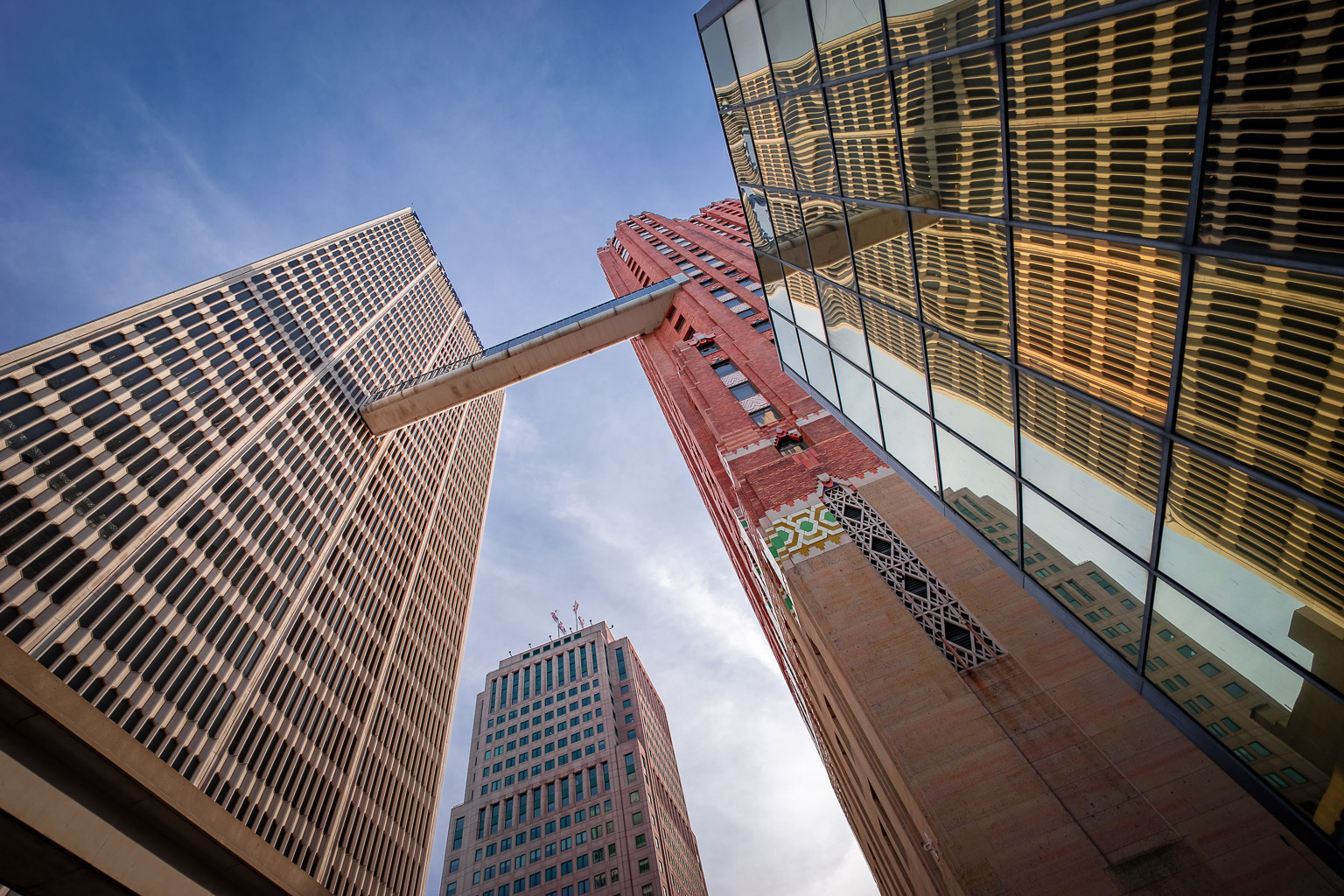
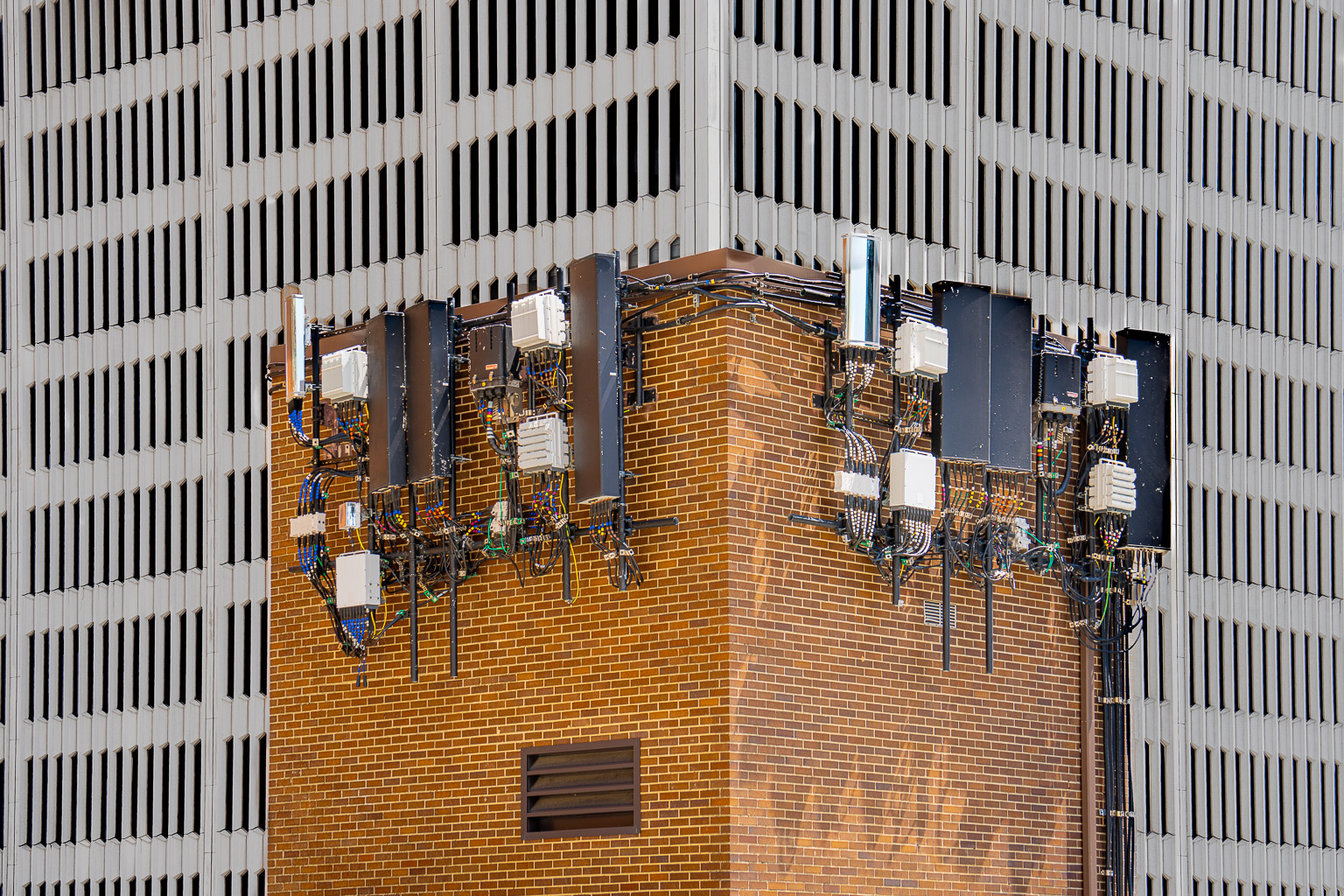
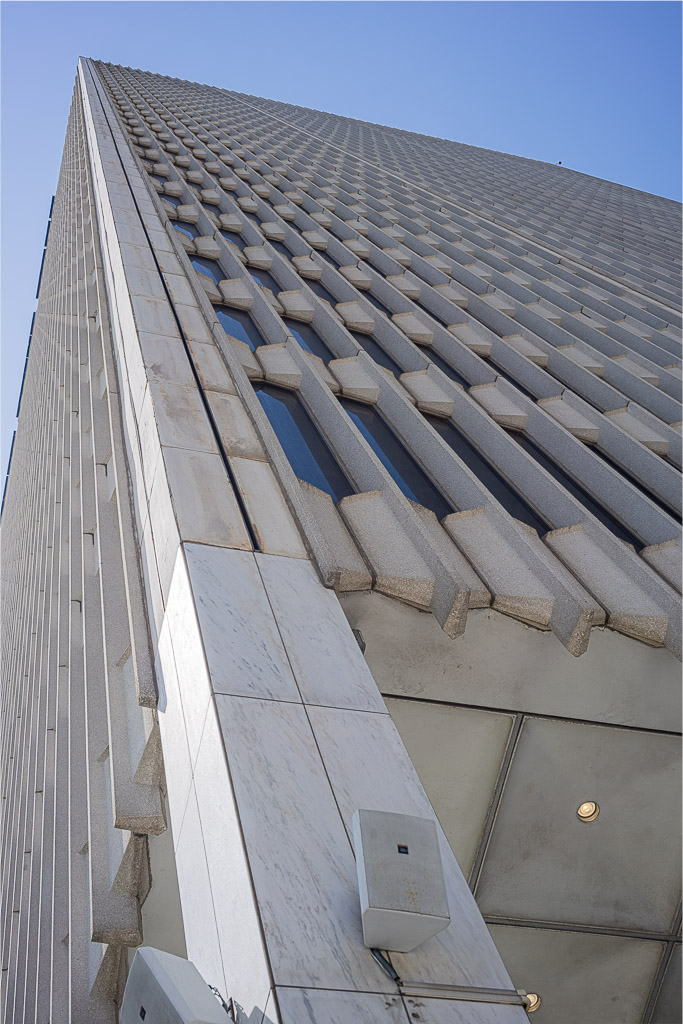
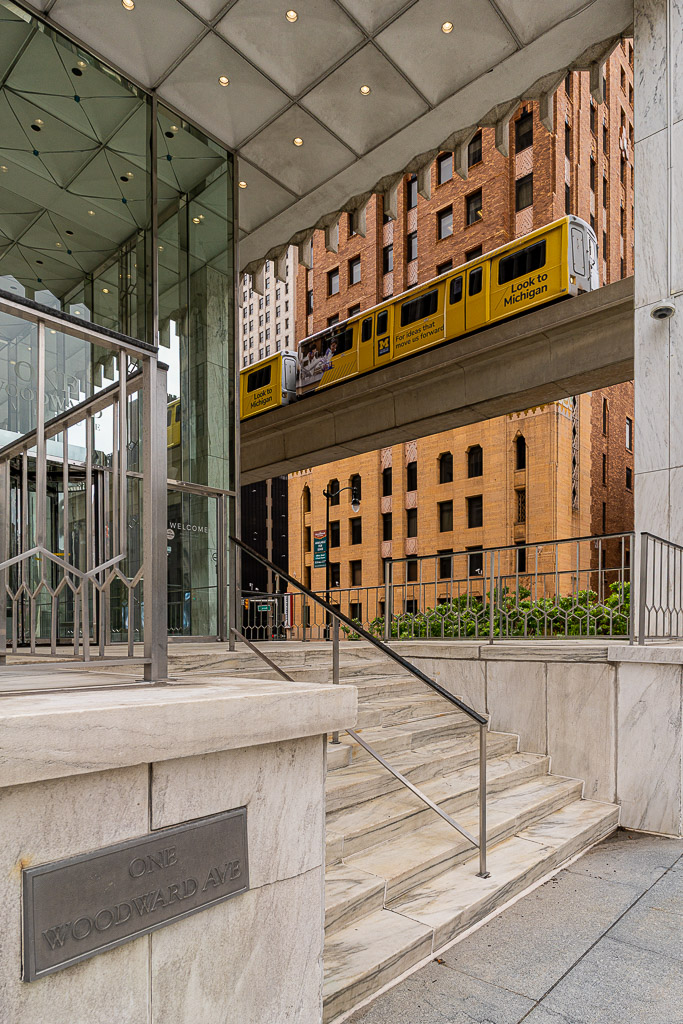
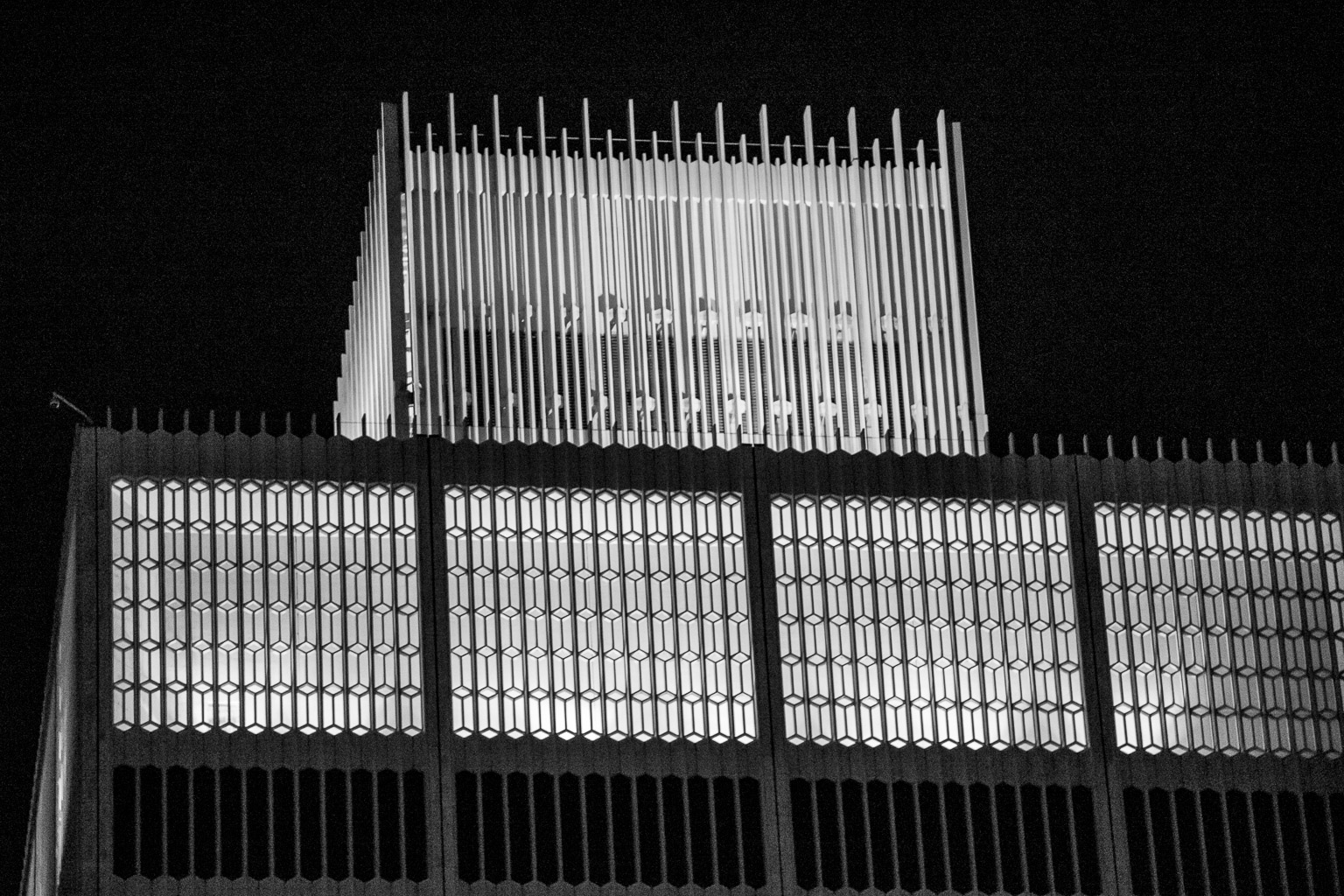
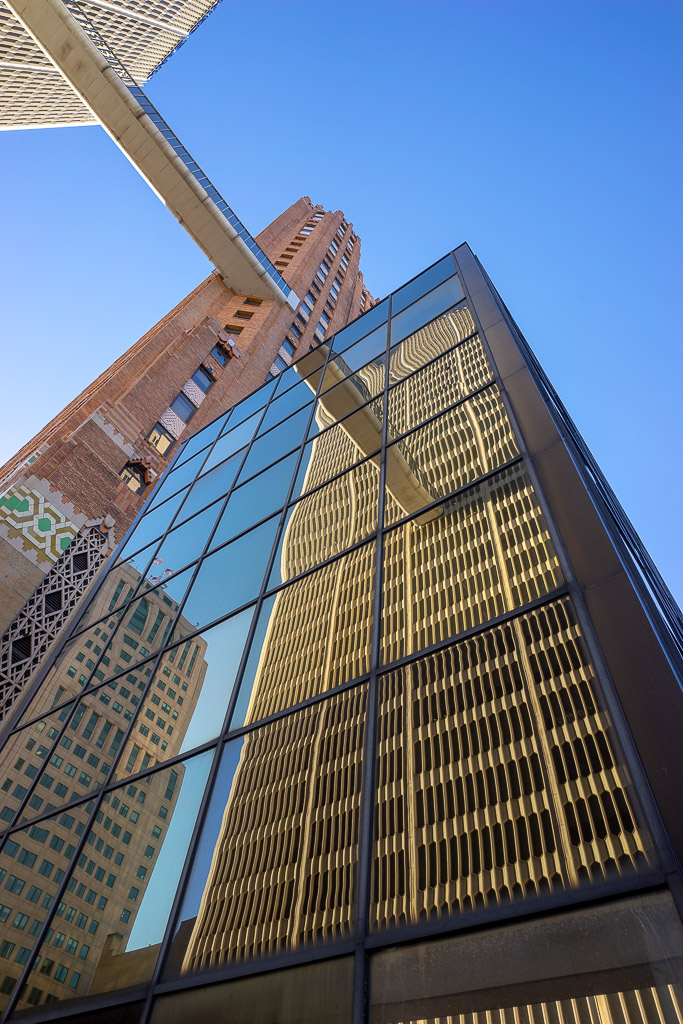
More photos and more description of this building can be found at HistoricDetroit.org.
Noncontributing.
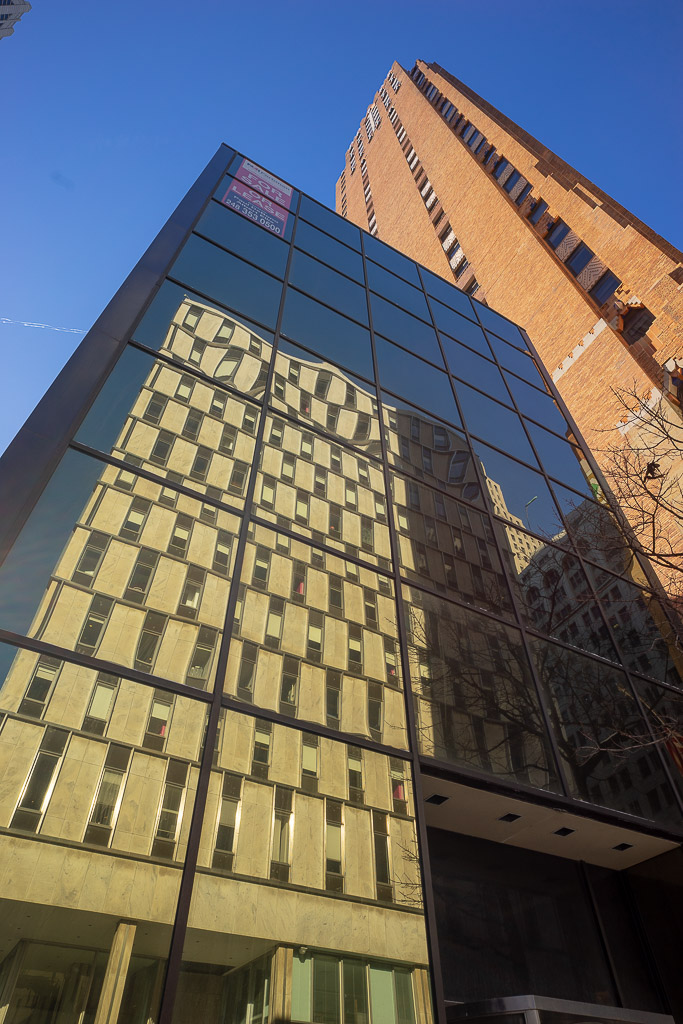
Steel-frame, five-story glass and steel bank building (1971) – Ted Rogvoy Assoc., architects. This narrow rectangular structure, vacant for the past fifteen years, stands across an alley from the Union Trust (Guardian) Building. Three sides of the facade are faced with reflective plate glass held in place by black metal frames. The base of the structure is comprised of red brick curved down to meet the sidewalk. The building is set back the same distance from Woodward as the former National Bank of Detroit (now Chase) building to the north. It has a flat roof that holds the heating and cooling systems of the Guardian Building, located to the west across the alley. In 2021, it was fitted with a modern artistic cladding on the front, and re-opened as Capitol One Cafe.
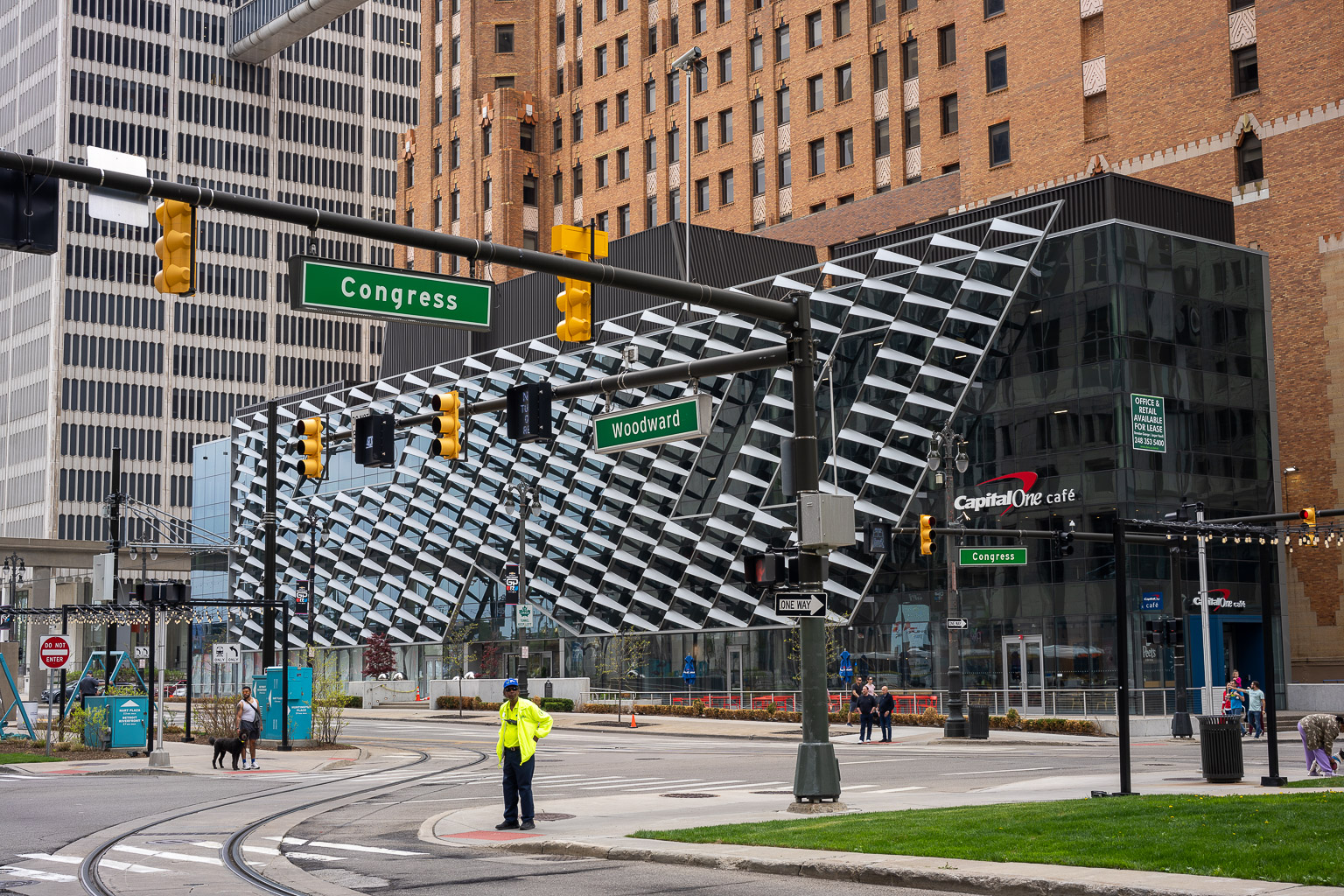
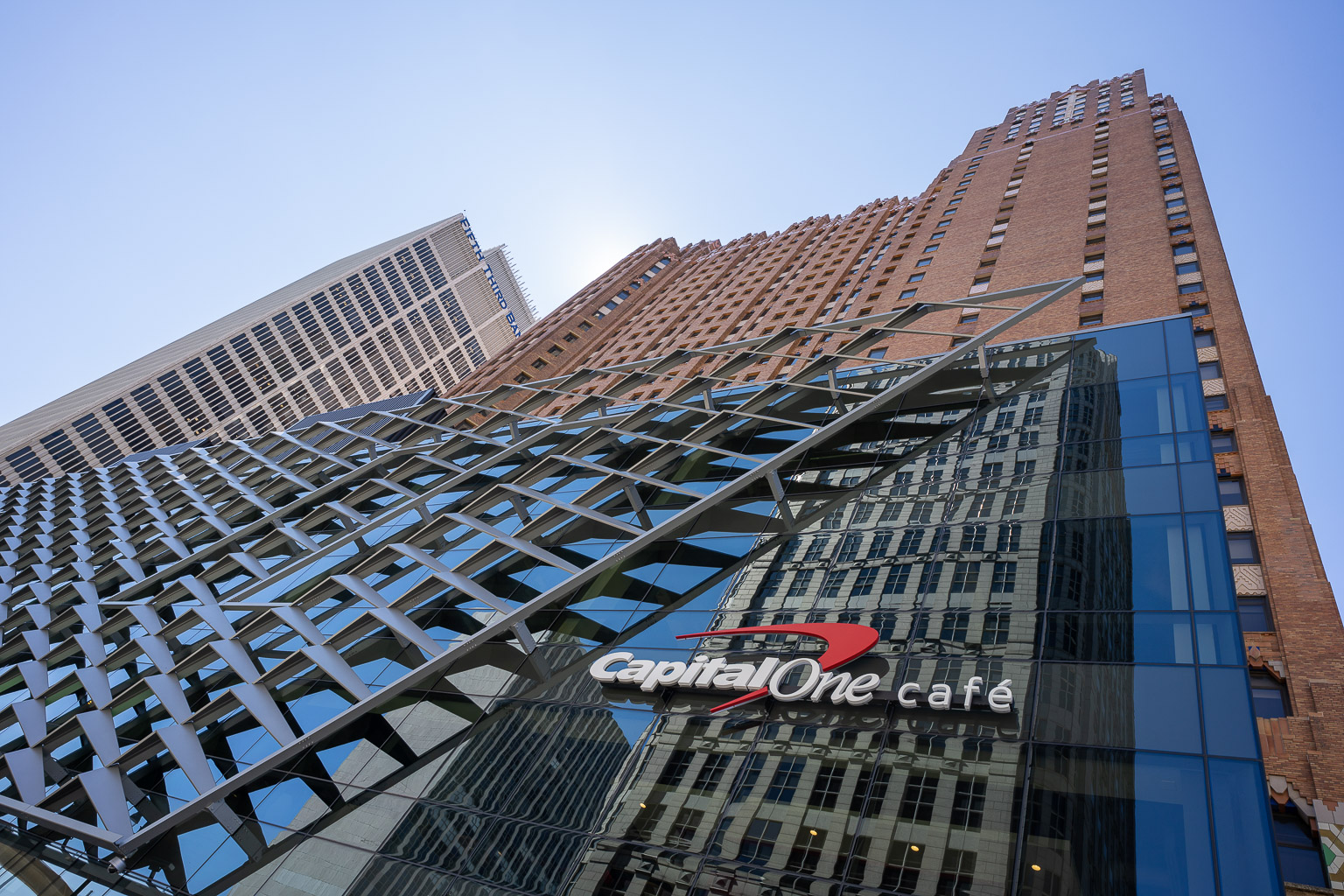
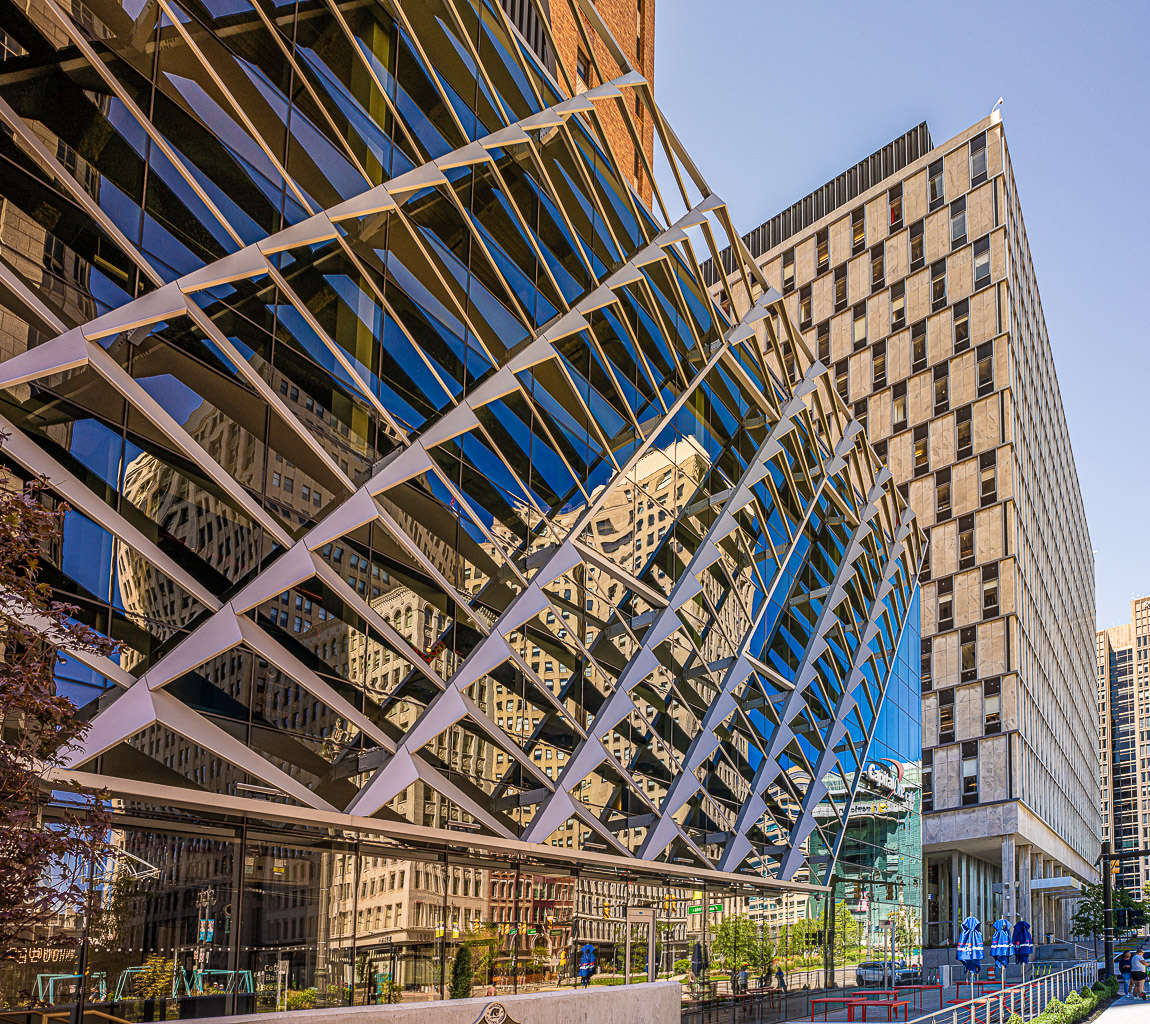
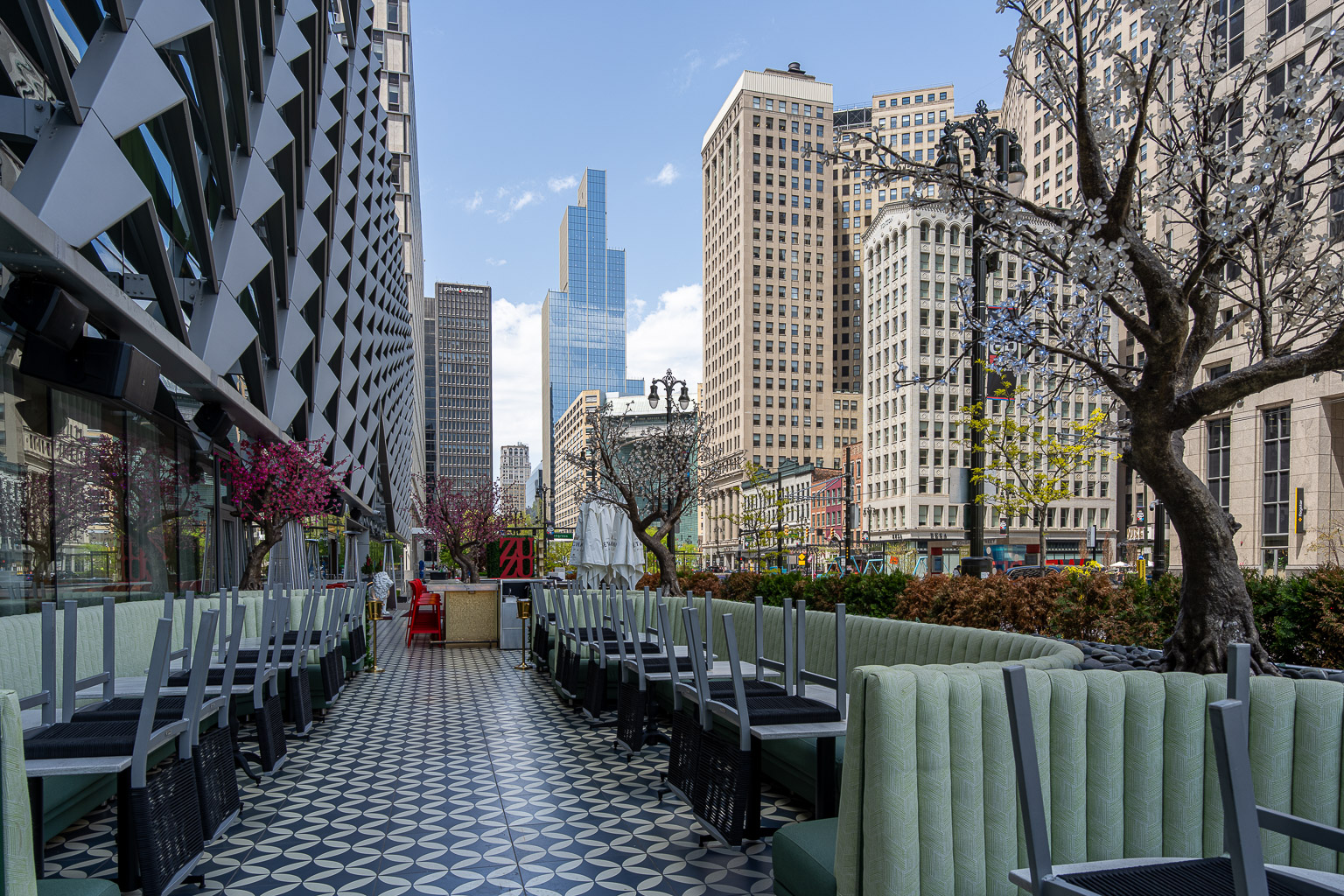
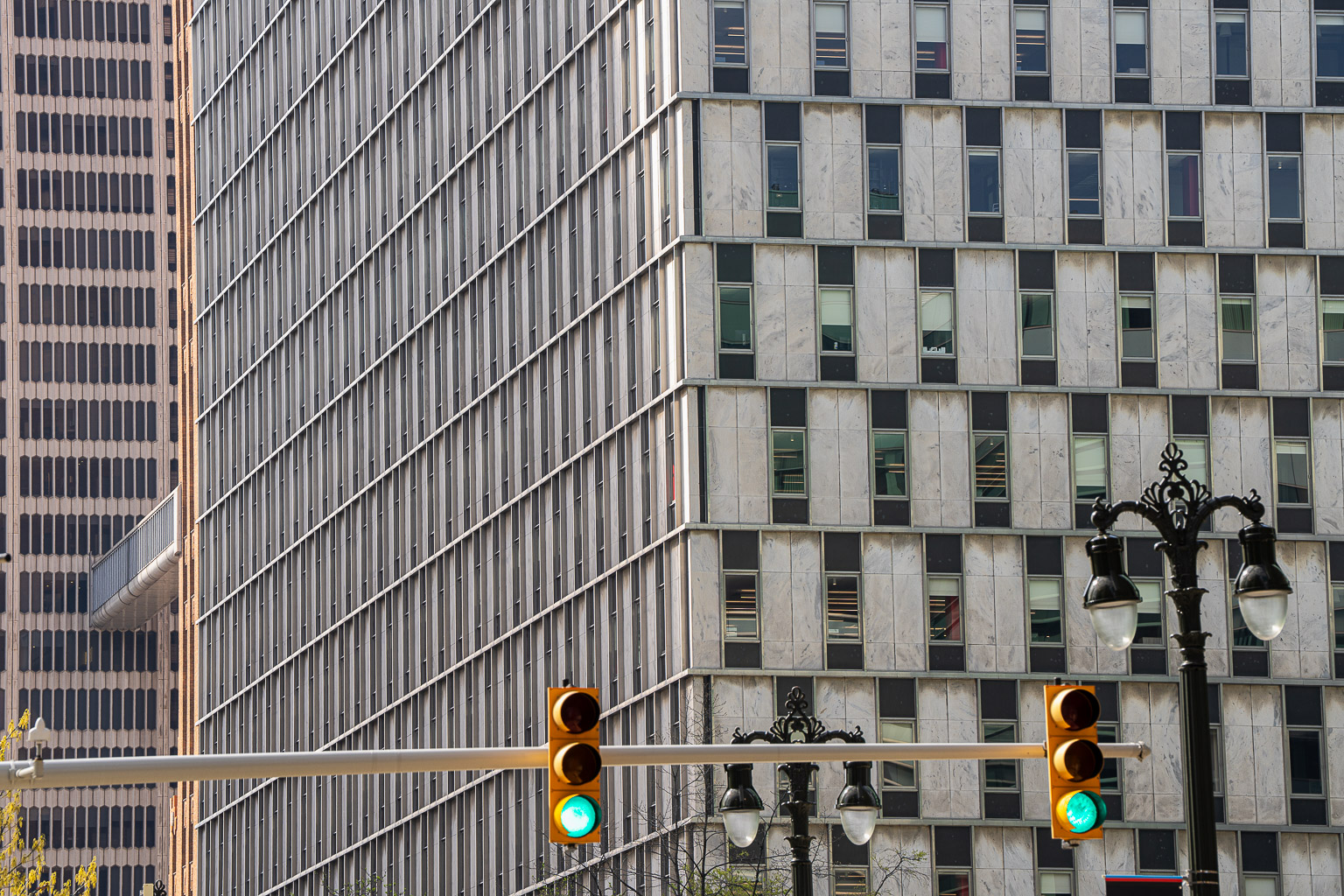
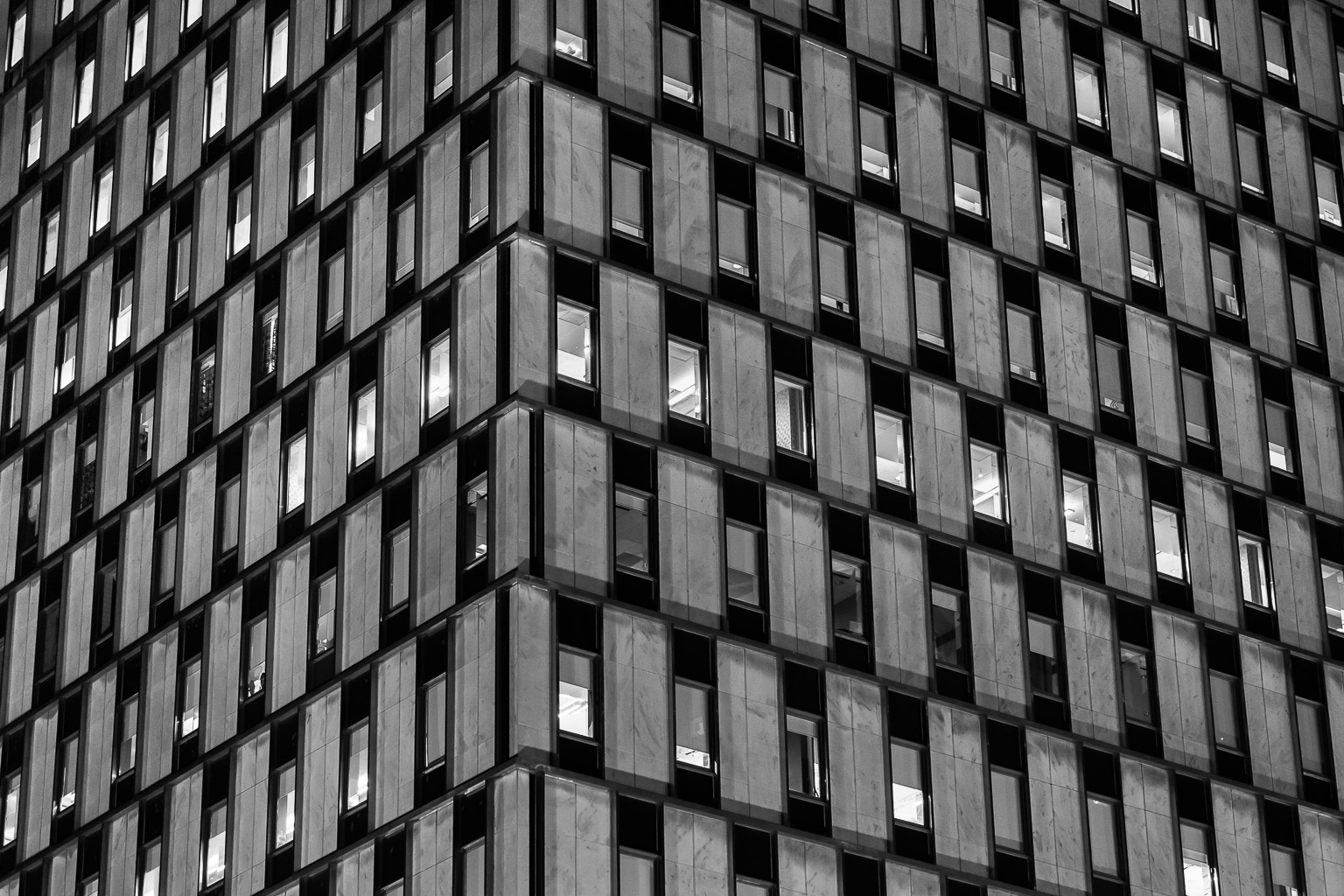
Steel-frame, fourteen-story building (1959) – Albert Kahn Associated Architects and Engineers, Inc., architects. The National Bank of Detroit Building fills the block bounded by Woodward Avenue and Griswold Street between West Fort Street and West Congress. A rectangular-shaped building measuring 281 feet by 130 feet, its entrance doors are on the Woodward side of the property. The Griswold side of the property is the rear of the site, and only one entrance point at the south end of Griswold is accessible.
The modern bank headquarters building is finished in a checkerboard curtain wall pattern of white Georgia Cherokee marble panels alternating with rectangles containing square windows outlined above and below by brown porcelain-enamel aluminum panels – the marble and windowed panels outlined in projecting stainless steel ribs. On the first floor the steel spandrel panels are a royal blue color. The building's upper stories form a box that rests on a taller recessed base surrounded on all sides by a loggia fronted by the outer square columns of the structural system. Structural columns are also spaced throughout the two-story lobby space. On top of the roof is a setback utility floor faced in brown metal louvers housing the heating and cooling system. The roof is flat.
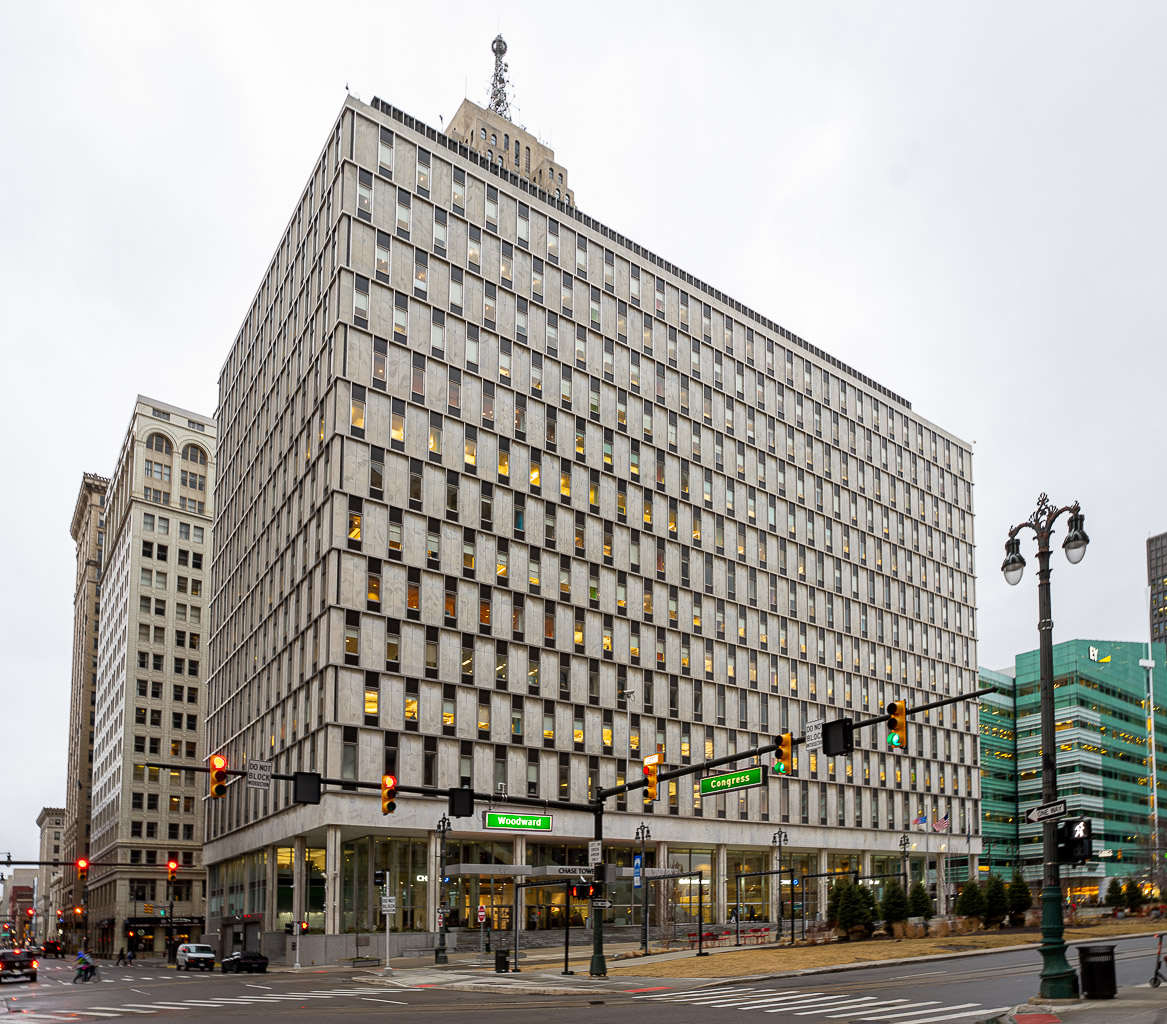
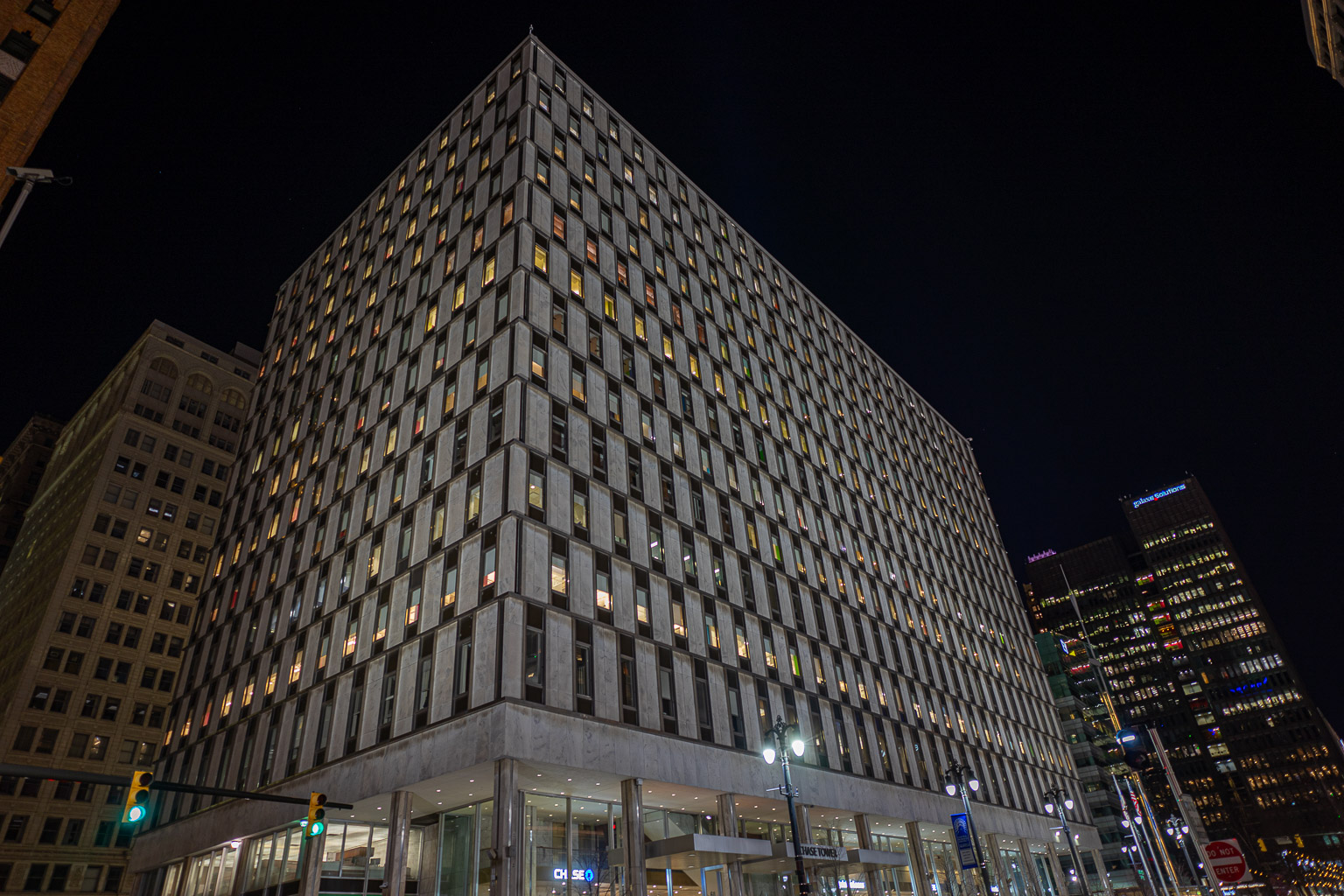
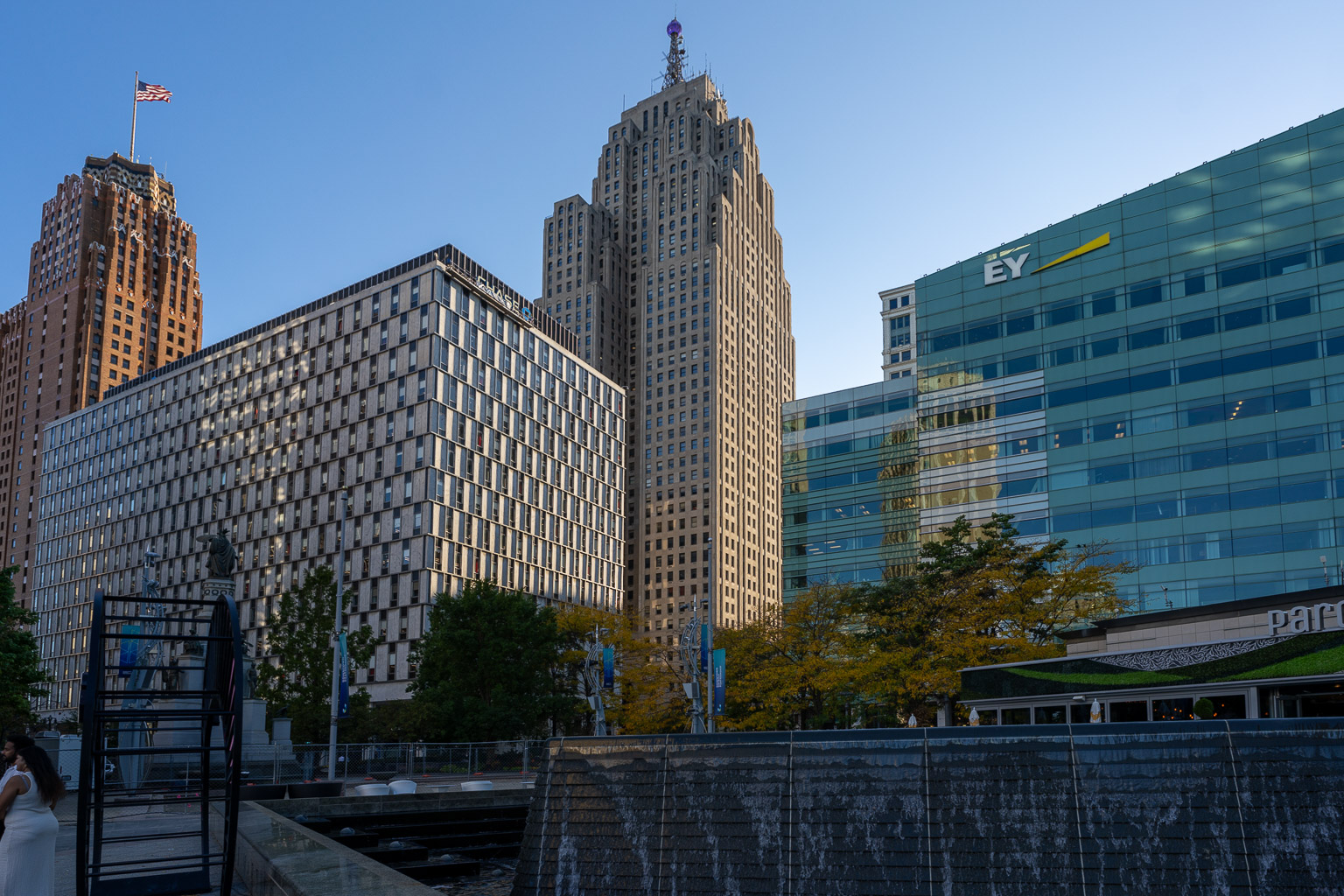
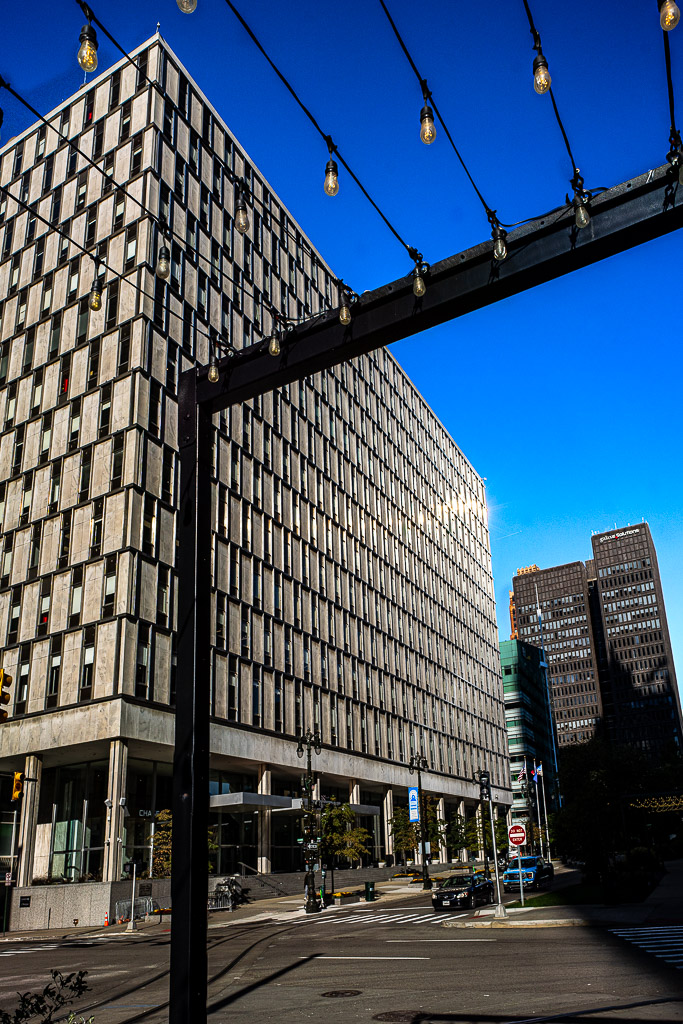
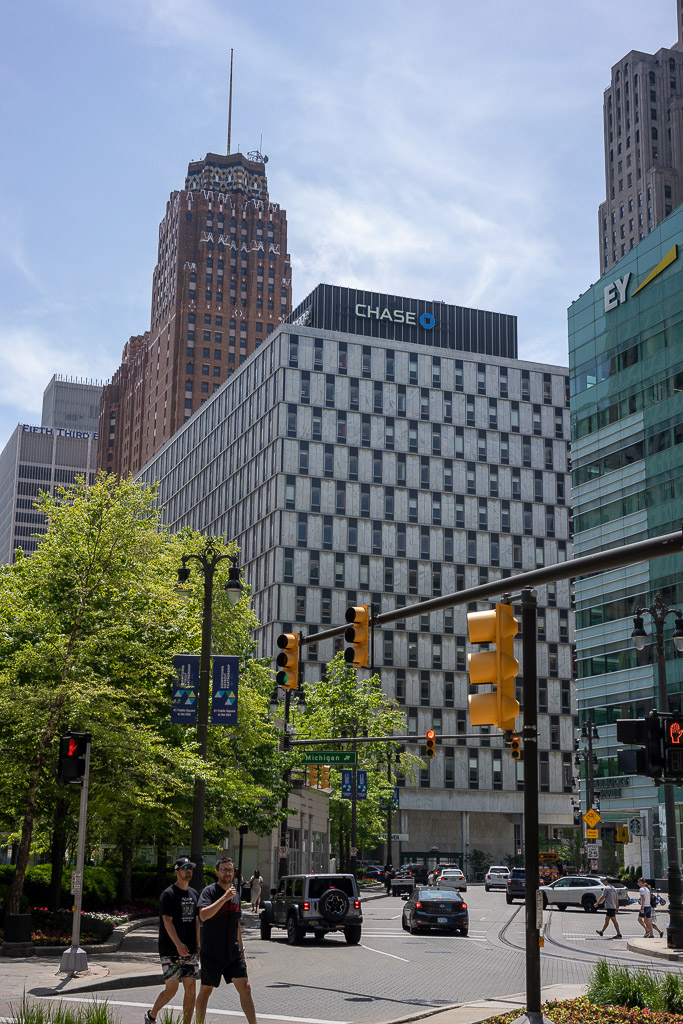
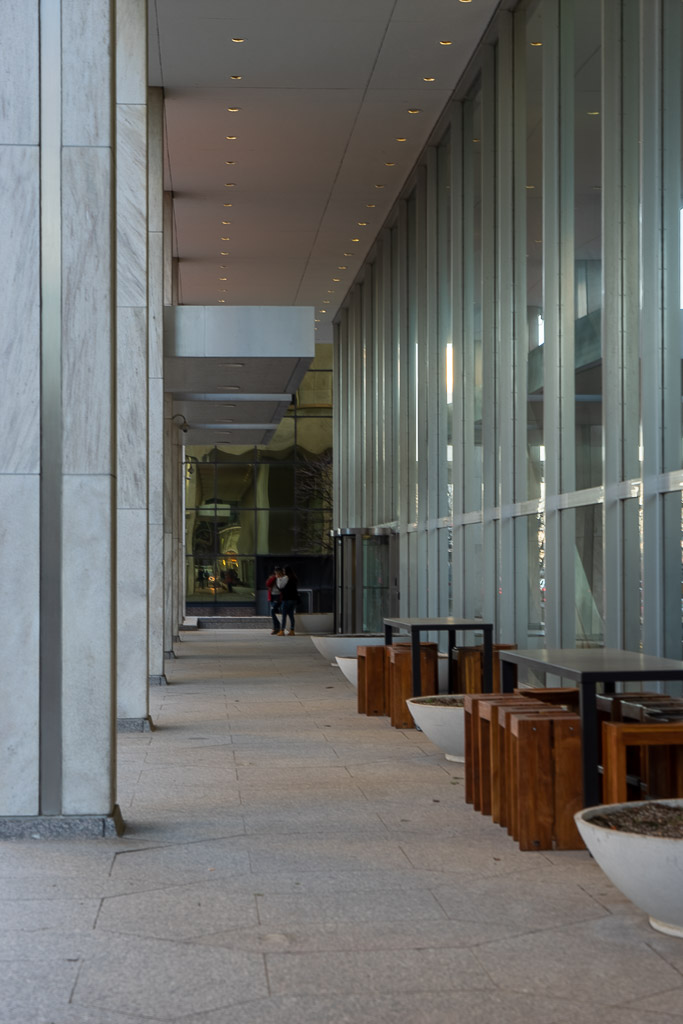
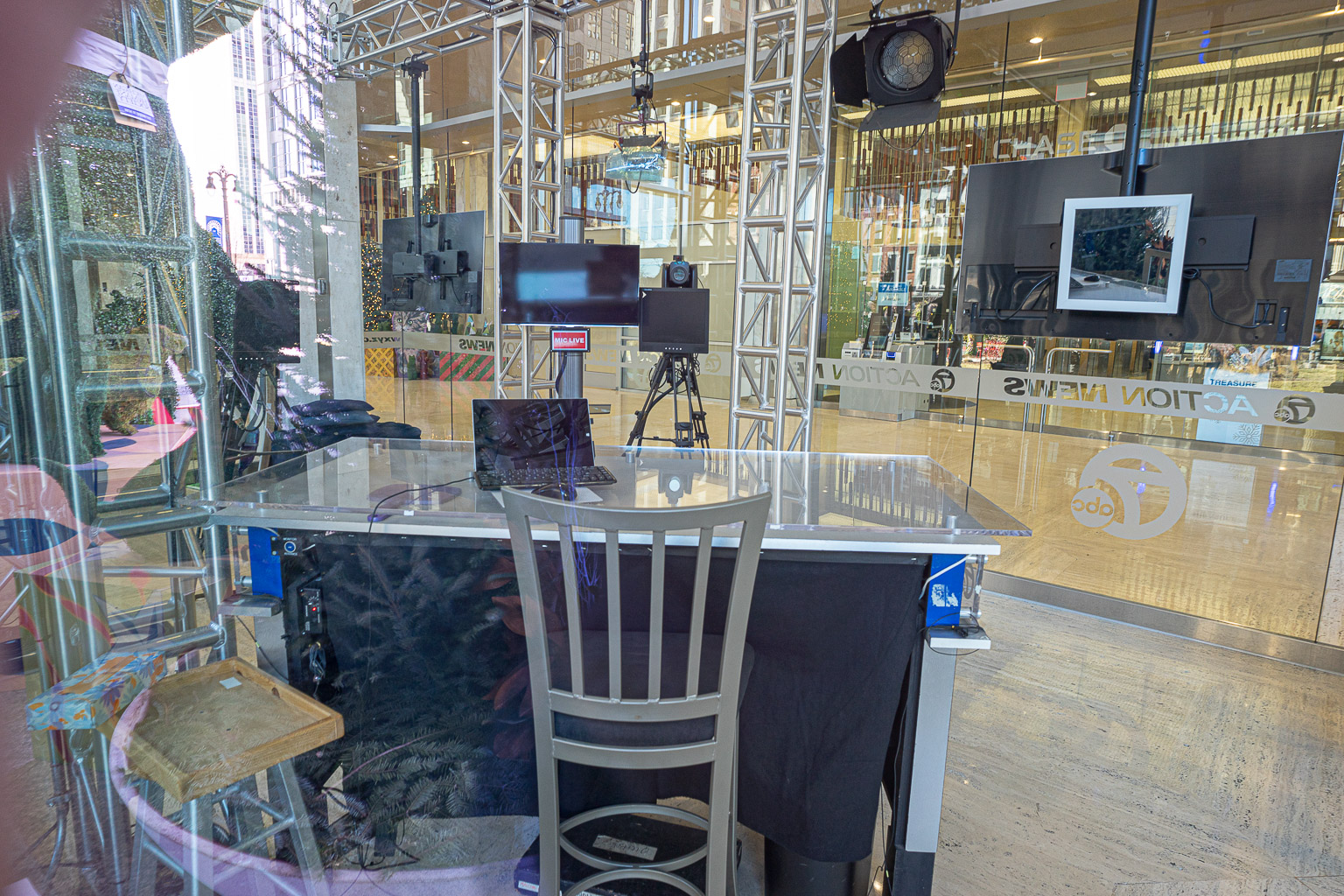
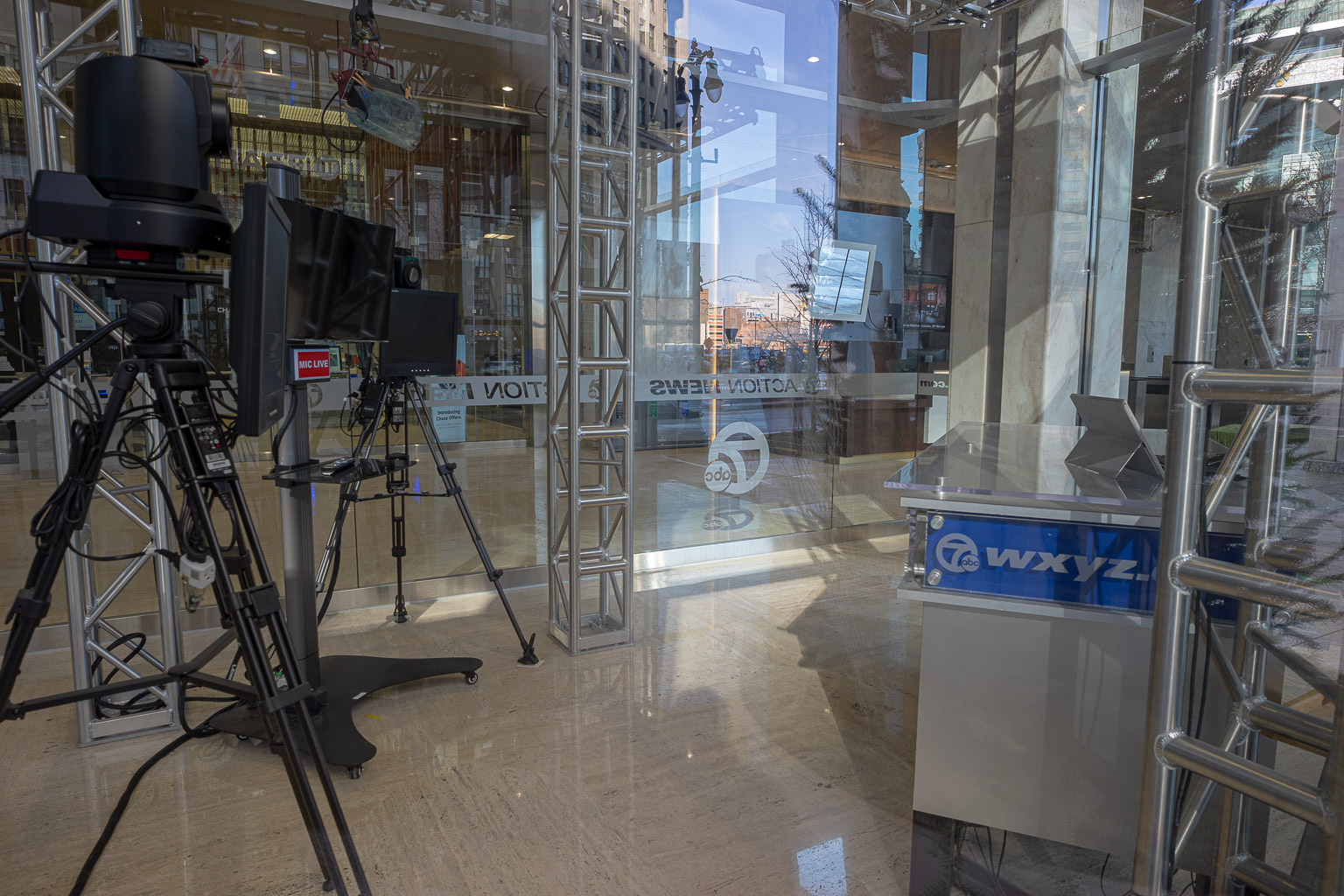
The rectangular- shaped building is set back from the street on all sides to create a generous walkway enhanced with planters on all sides. The lunchtime broadcast of Channel 7 WXYZ news is made from a studio in the Woodward-facing side of the Qube. The lobby interior was designed by W. B. Ford Design Associates.
Finally, here are a few more photos of the Qube with a more artistic intent.
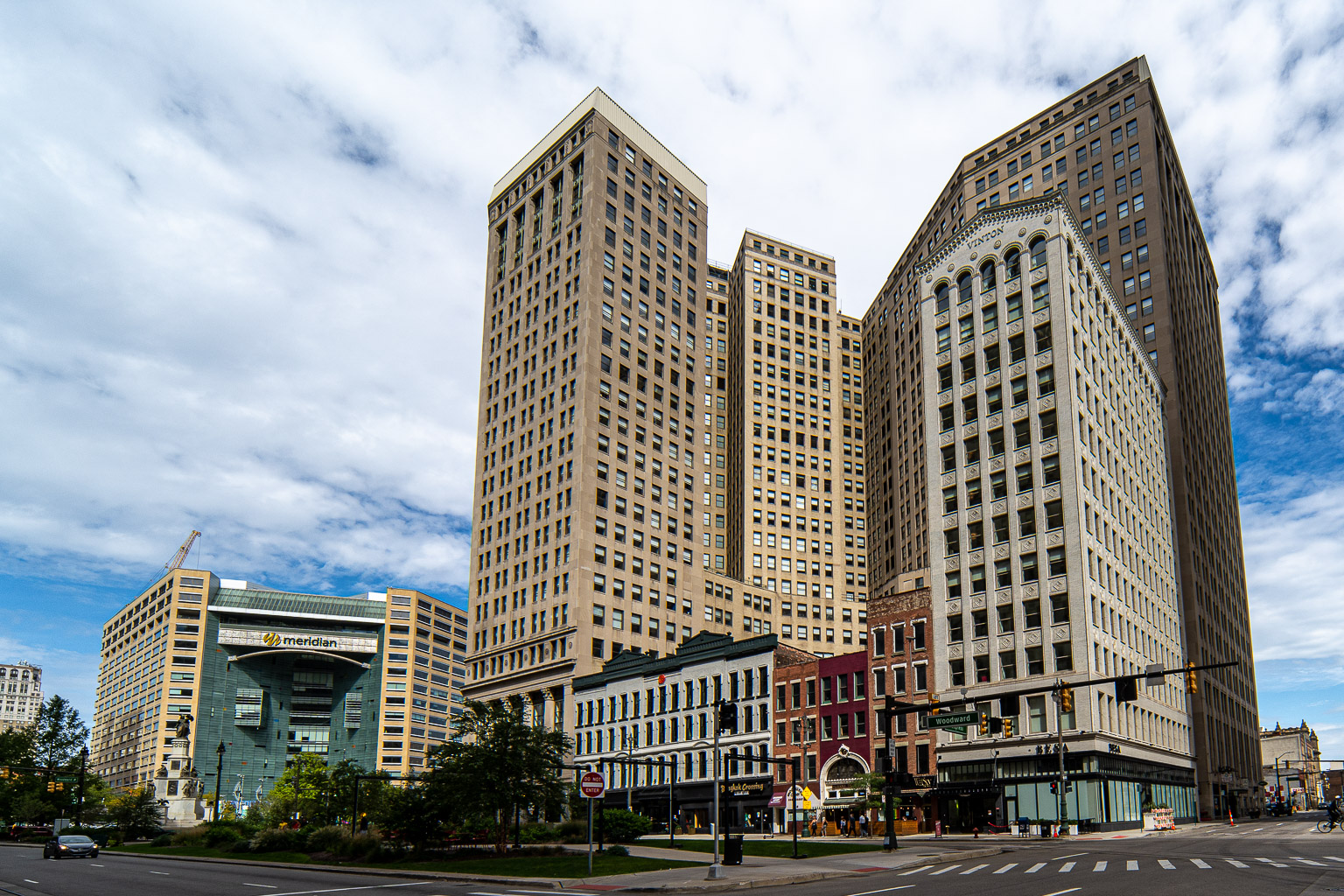
Steel-frame, twenty-four-story building faced in limestone (1920-22) – Albert Kahn, Inc., architect. Designed by Wirt Rowland, chief designer for Albert Kahn, the building is similar in appearance to the former General Motors Building (now called Cadillac Place) from the same time period. The building's plan is shaped to fit in a contorted site that zigzags through the middle of its block, emerging on East Congress' north side at the Bates intersection behind the Vinton Building (1st and 2nd photos below). It was constructed as two units: the Rowland-designed unit 1 is at the corner of Woodward and Cadillac Square, and occupies the same footprint as the original Hotel Pontchartrain, while unit 2 attaches to the end of the original building and continues on a snake-like path to Congress Street. The facades fronting on Woodward and Cadillac Square at the building's north end are sheathed in grey granite at the street-level base and in limestone above, while other facades are finished in buff brick. The three facades facing Woodward and Cadillac Square display massive Corinthian porticos in antis rising from above the street level up to the fifth-floor level (3rd through 5th photos below) – the porticos on the Cadillac Square and corner Woodward elevations fronting an arched-ceiling banking room, at the time, one of the five largest in the country. The Corinthian pillars are modelled on the Temple of Castor and Pollux.
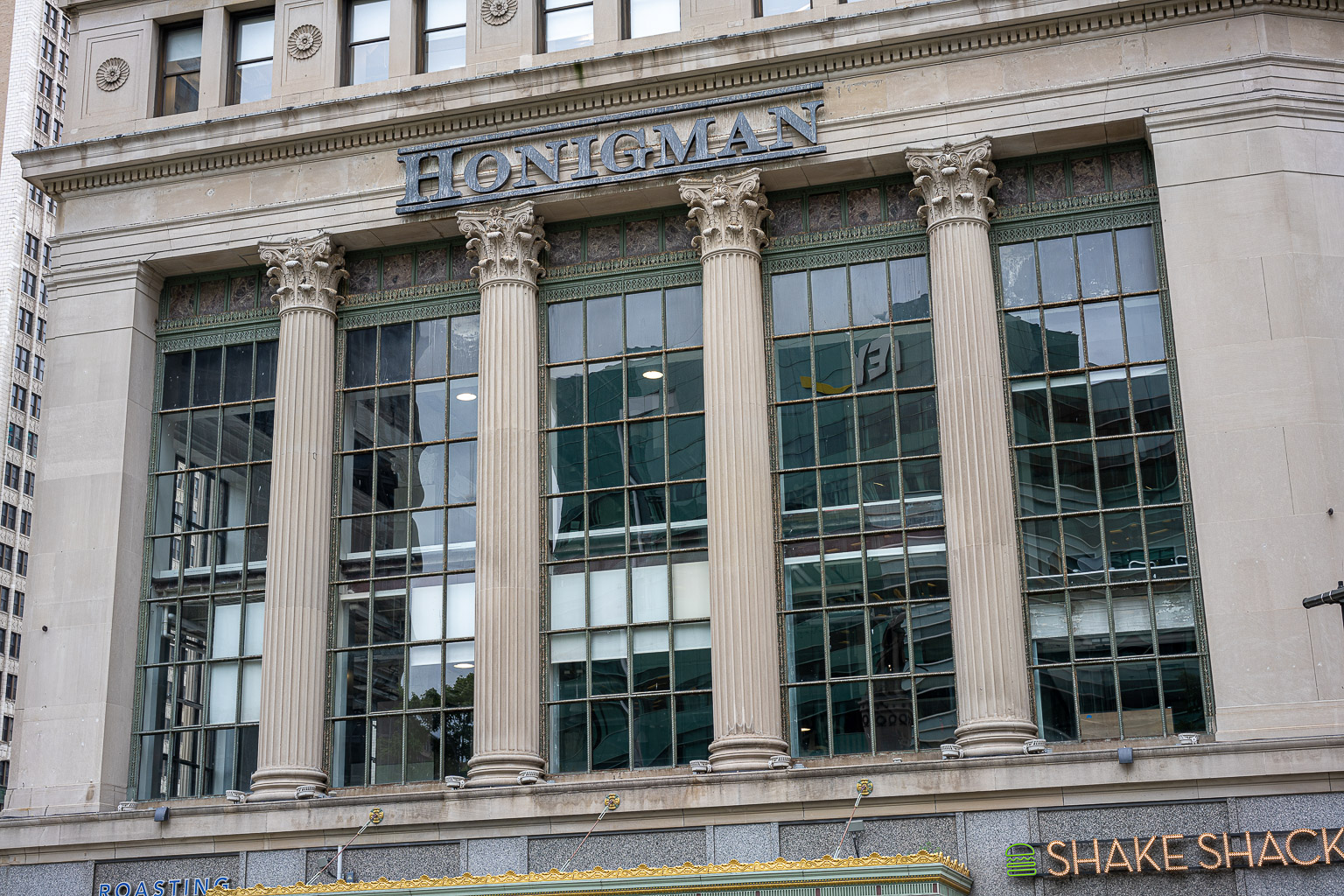
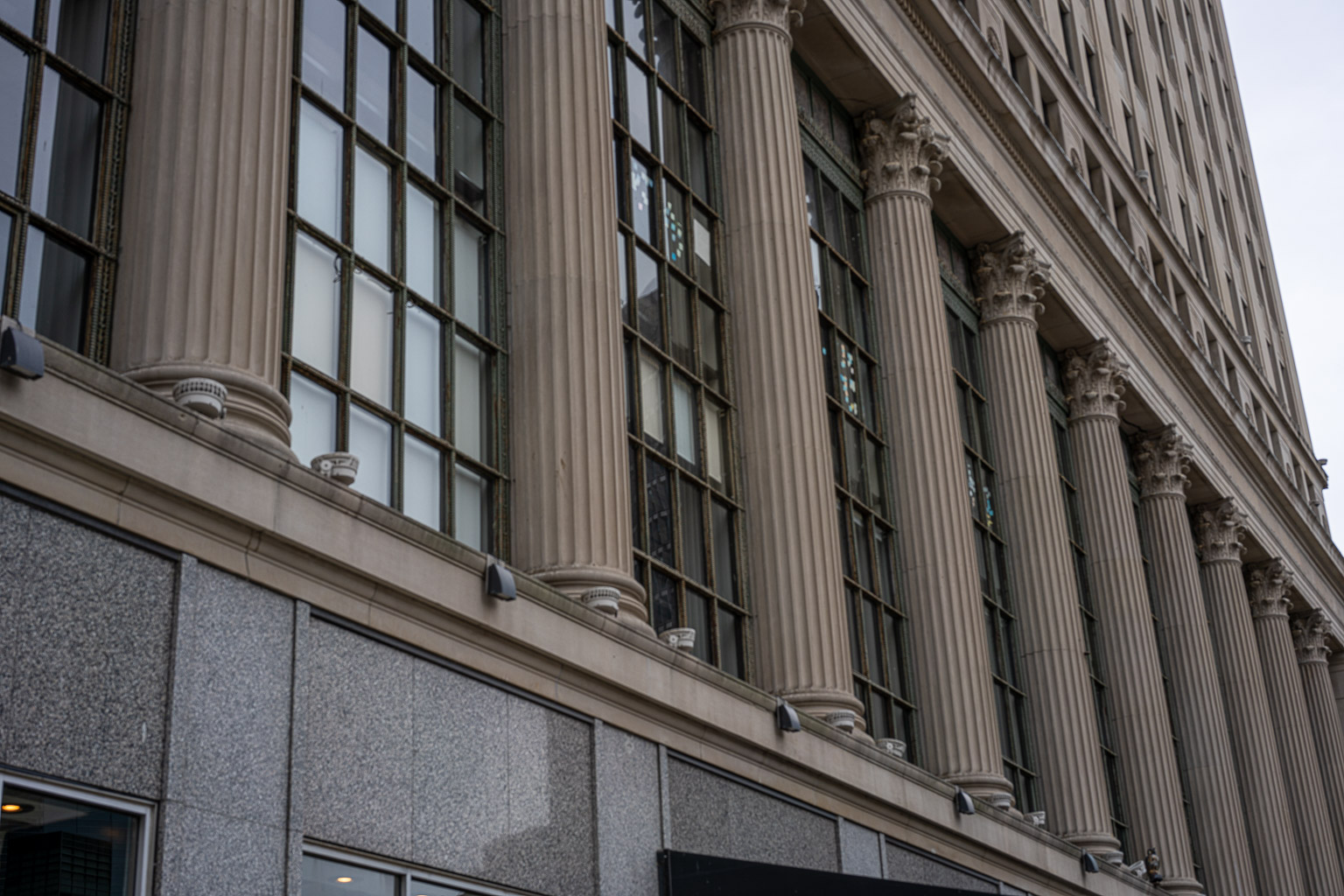
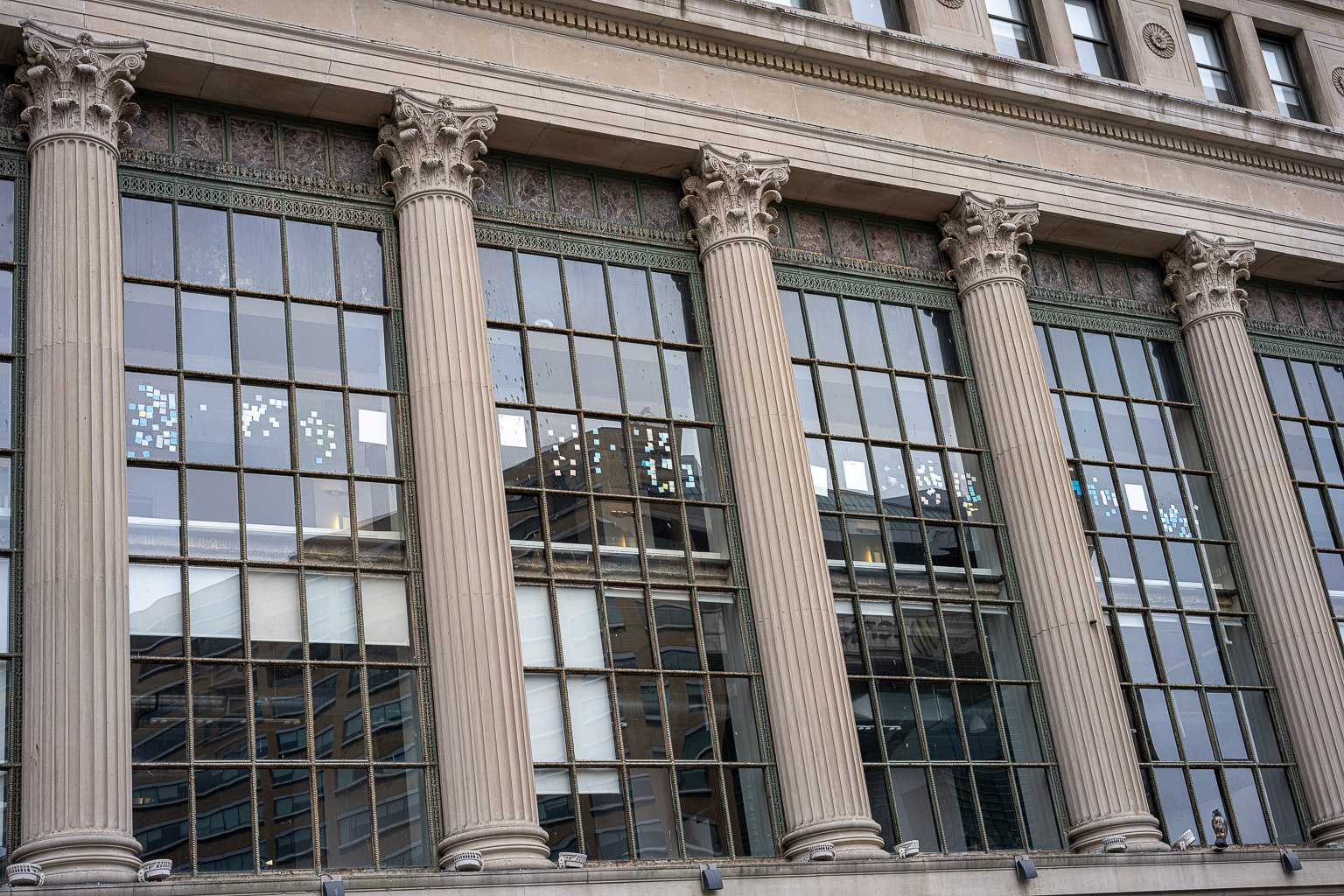
Above the porticos paired windows rise in vertical banks between broad and shallow piers up to a three-story high zone where, below a final story, metal panels replace the limestone spandrels. At the twenty-fourth (attic) floor, the window pairs are separated by decorative details, and there are cartouches marking the ends of each facade. An overscaled classical cornice with modillions and an acroteria band along the roofline have been removed. A portion of the building is constructed over a parking garage that faces Bates Street and East Congress Street. Above the parking garage is office space. The roof is flat. The first floor of the building contains retail store space, while the upper stories were designed for a bank tenant as well as commercial offices. The ground floor lobby features an interesting ceiling decoration (3rd and 4th photos below).
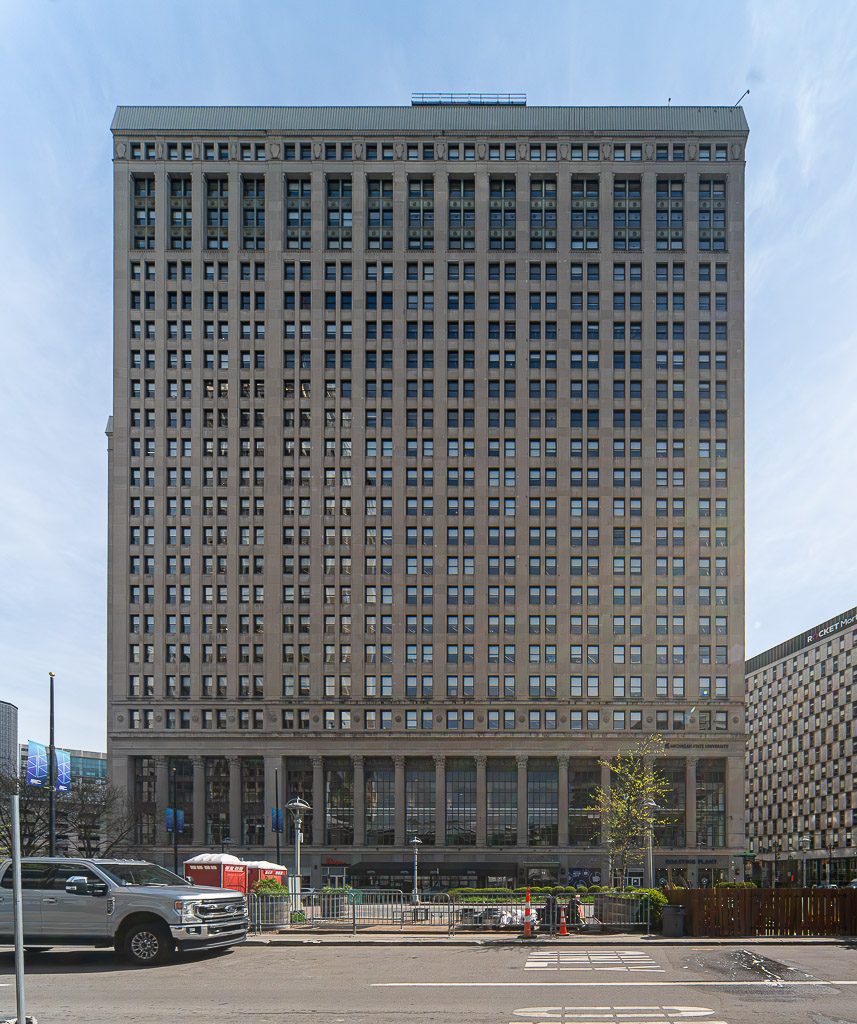
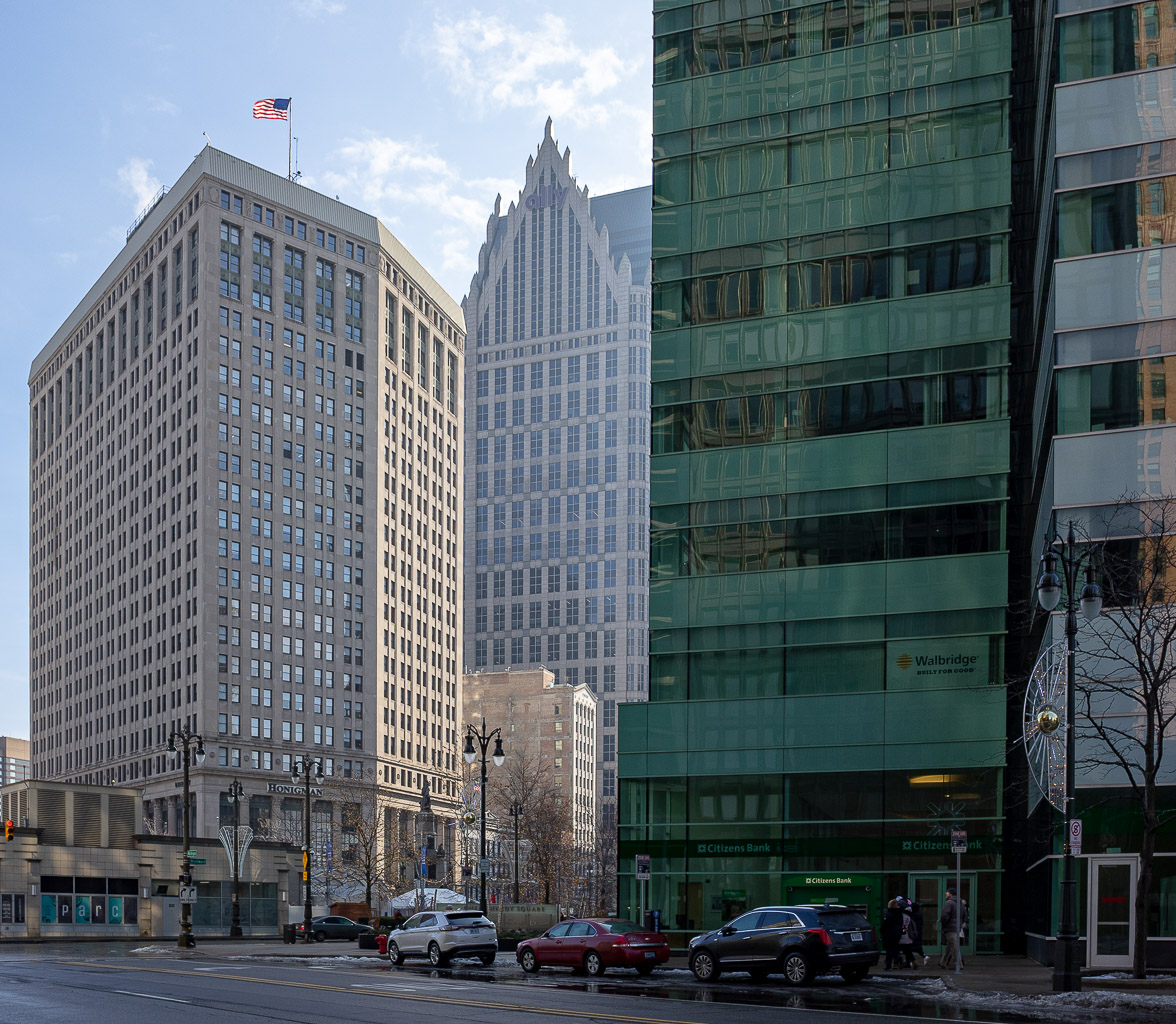
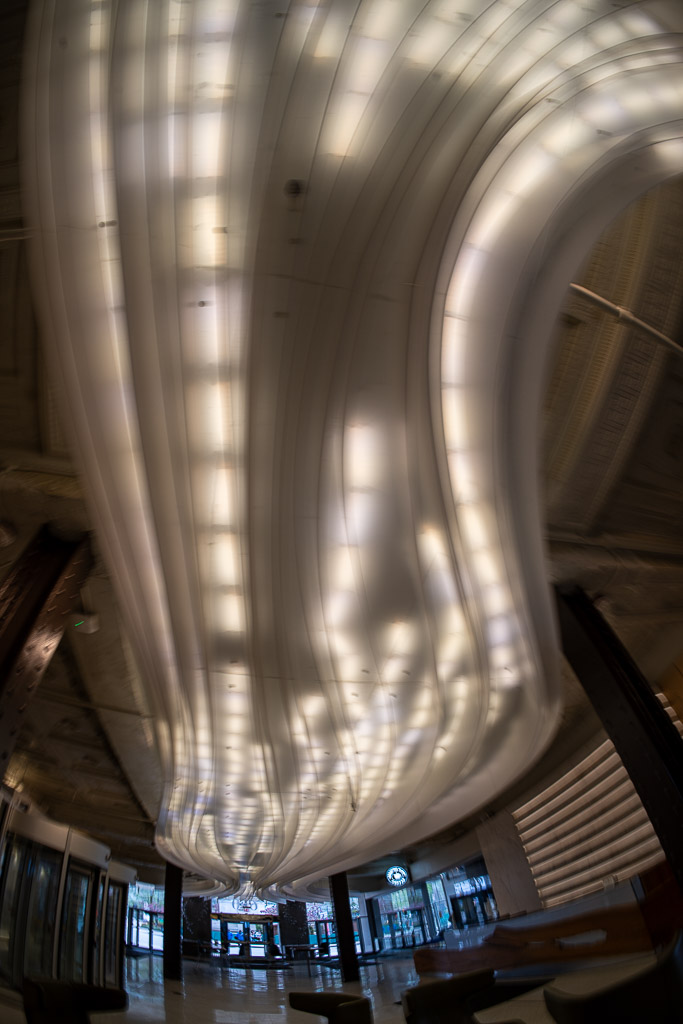
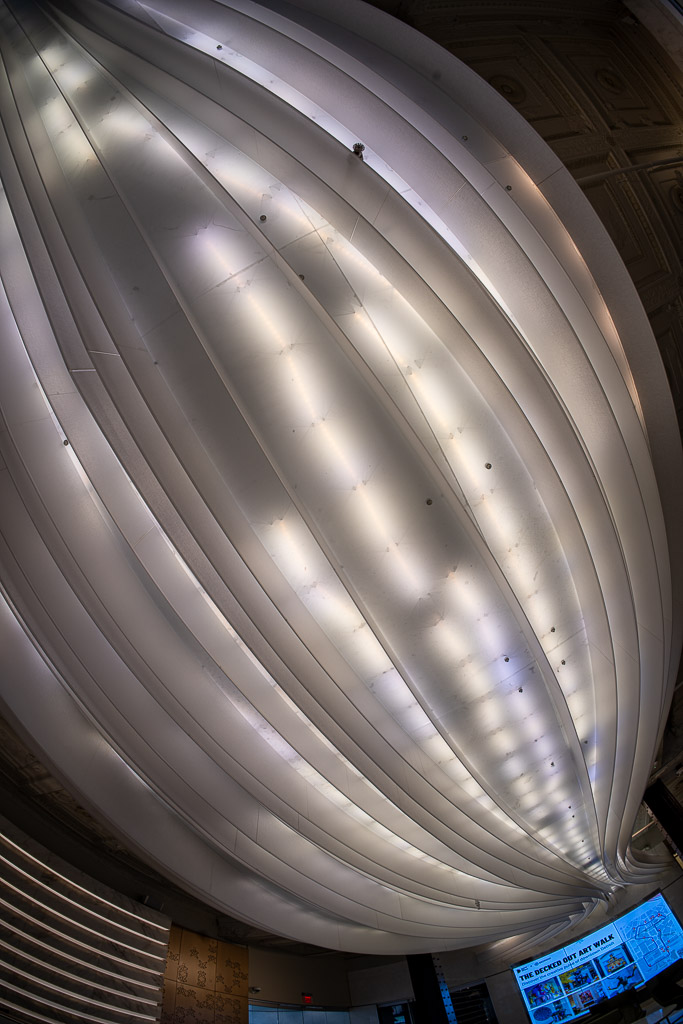
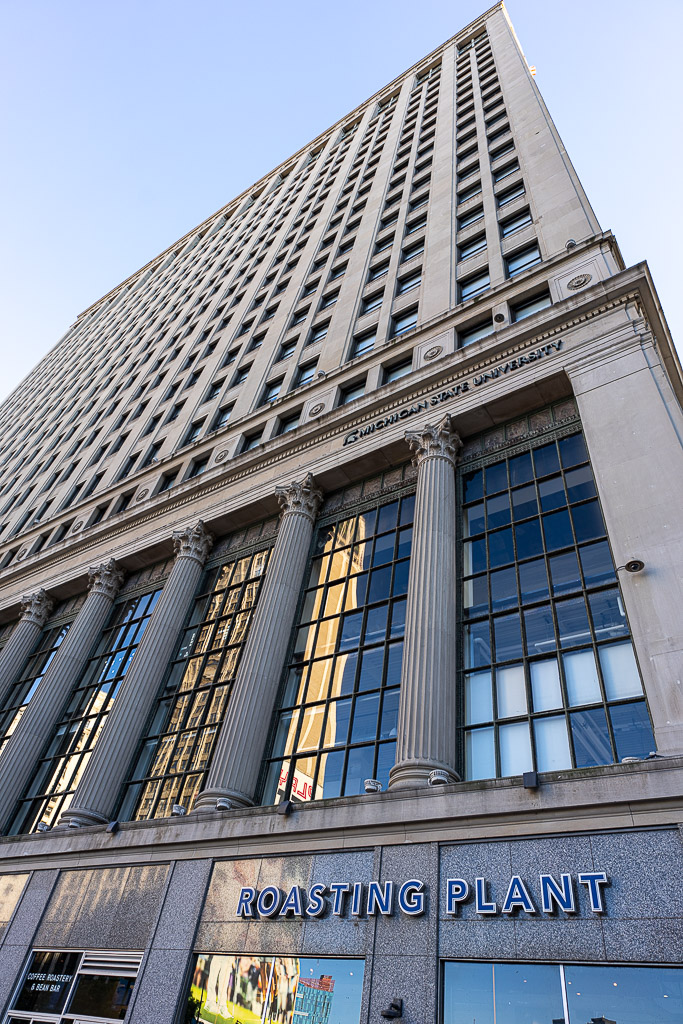
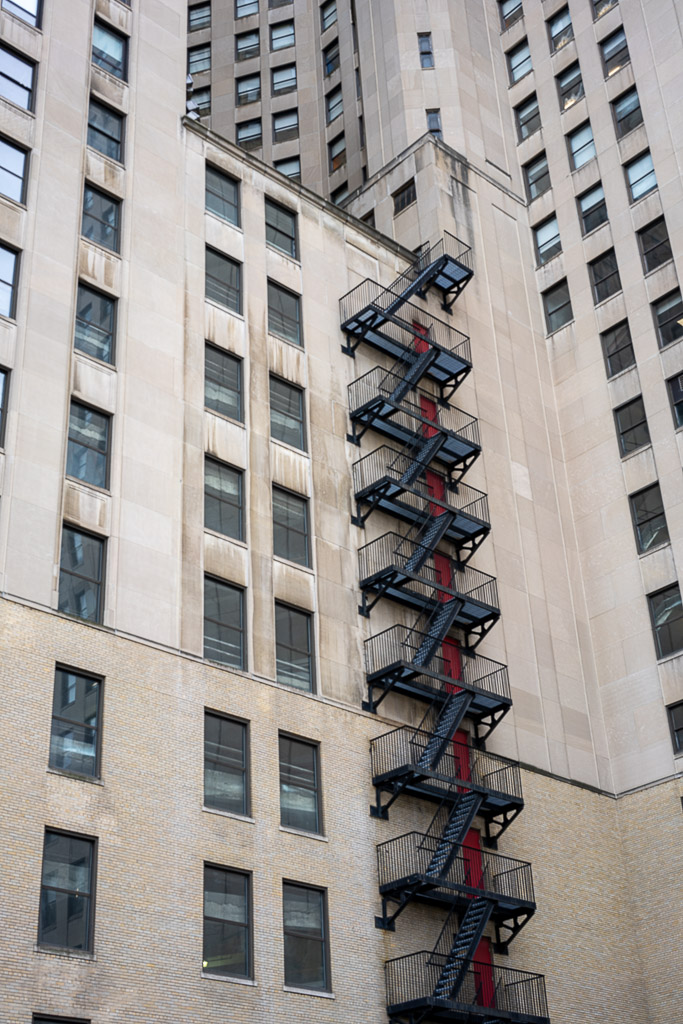
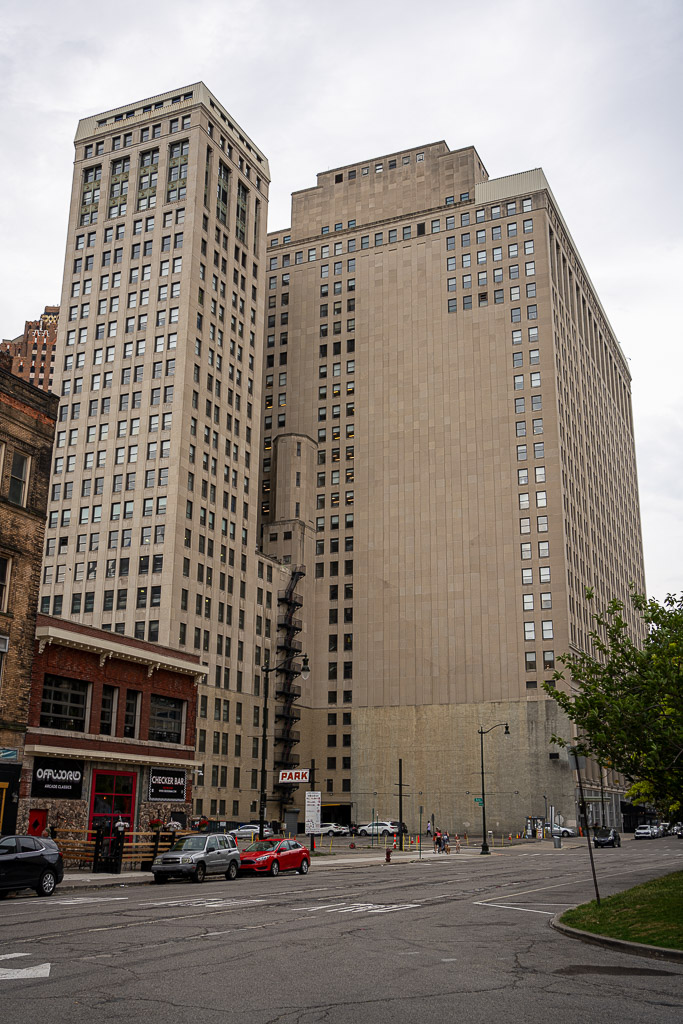
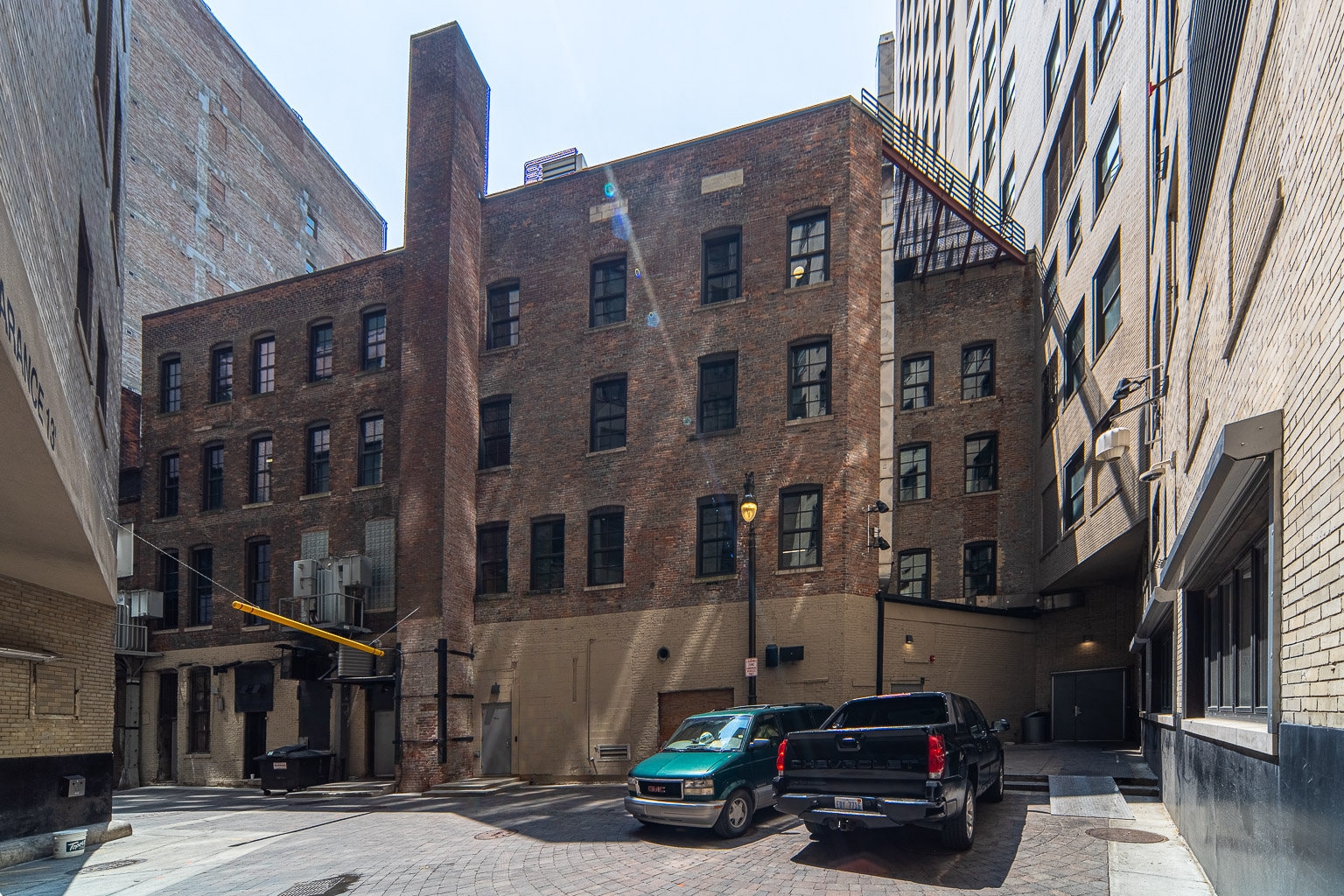
Photographed from Randolph Street, the building displays a nice fire escape on a nearly-featureless facade. There was apparently a pre-existing building next door (where there are no windows), but I don't know what it was, or when it was demolished.
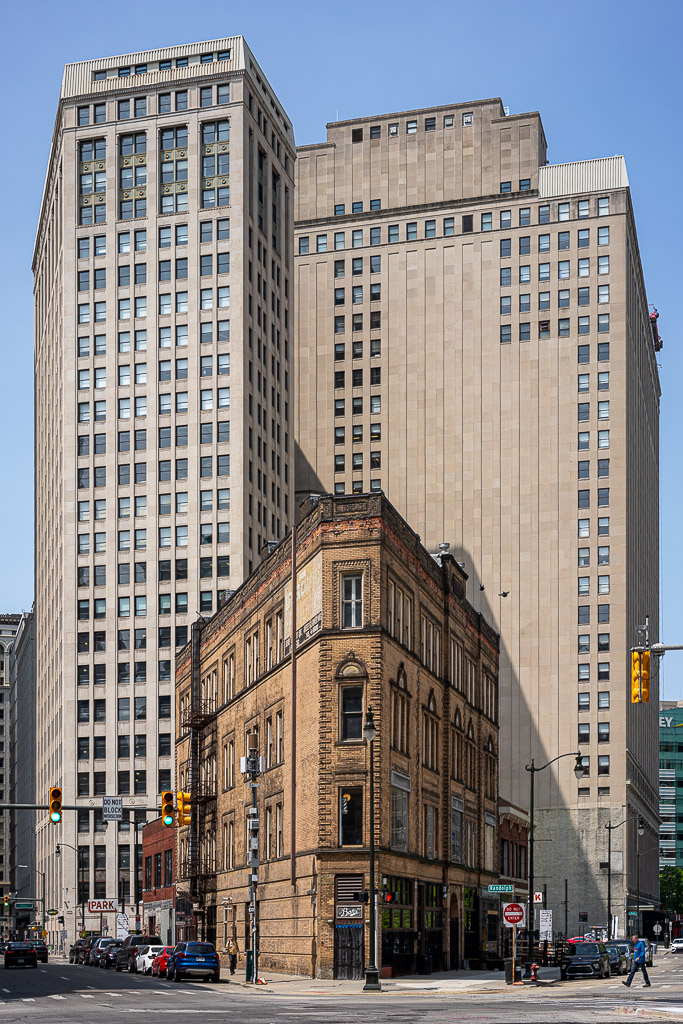
The First National Bank was established in 1863, shortly after the 1862 passage of the National Banking Act. A Second National Bank, founded shortly after First, with leading Detroit businessmen such as Christian H. Buhl, Eber Brock Ward, and James F. Joy as directors, merged with First National in 1914 as the First and Old Detroit National Bank. The bank occupied its new quarters in February 1922, then shortening its name to First National Bank. The bank went into receivership in 1933.
More photos and more description of this building can be found at HistoricDetroit.org.
We have now reached my absolute favorite block on Woodward Avenue, that on the east side of the road, between Cadillac Square at the north (left) and Congress at the south (right). The four buildings on Woodward between the left-most First National Building and the right-most Vinton Building at Congress, were built, between 1876 and 1880, so they're now (in 2016) at least 146 years old. I'll start with 3 photos of this range of buildings, with part of the First National Building on the left, and part of the Vinton Building on the right.
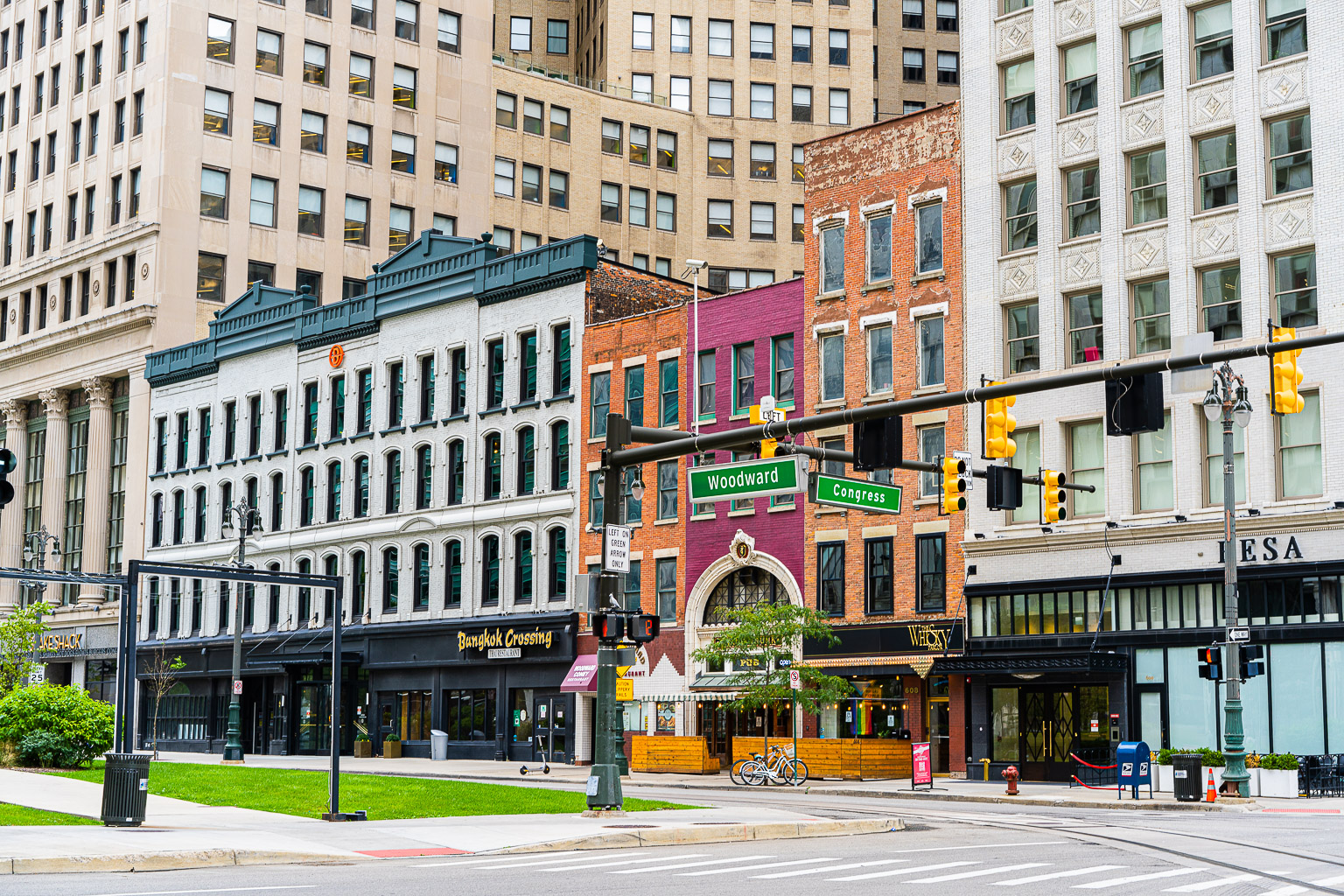
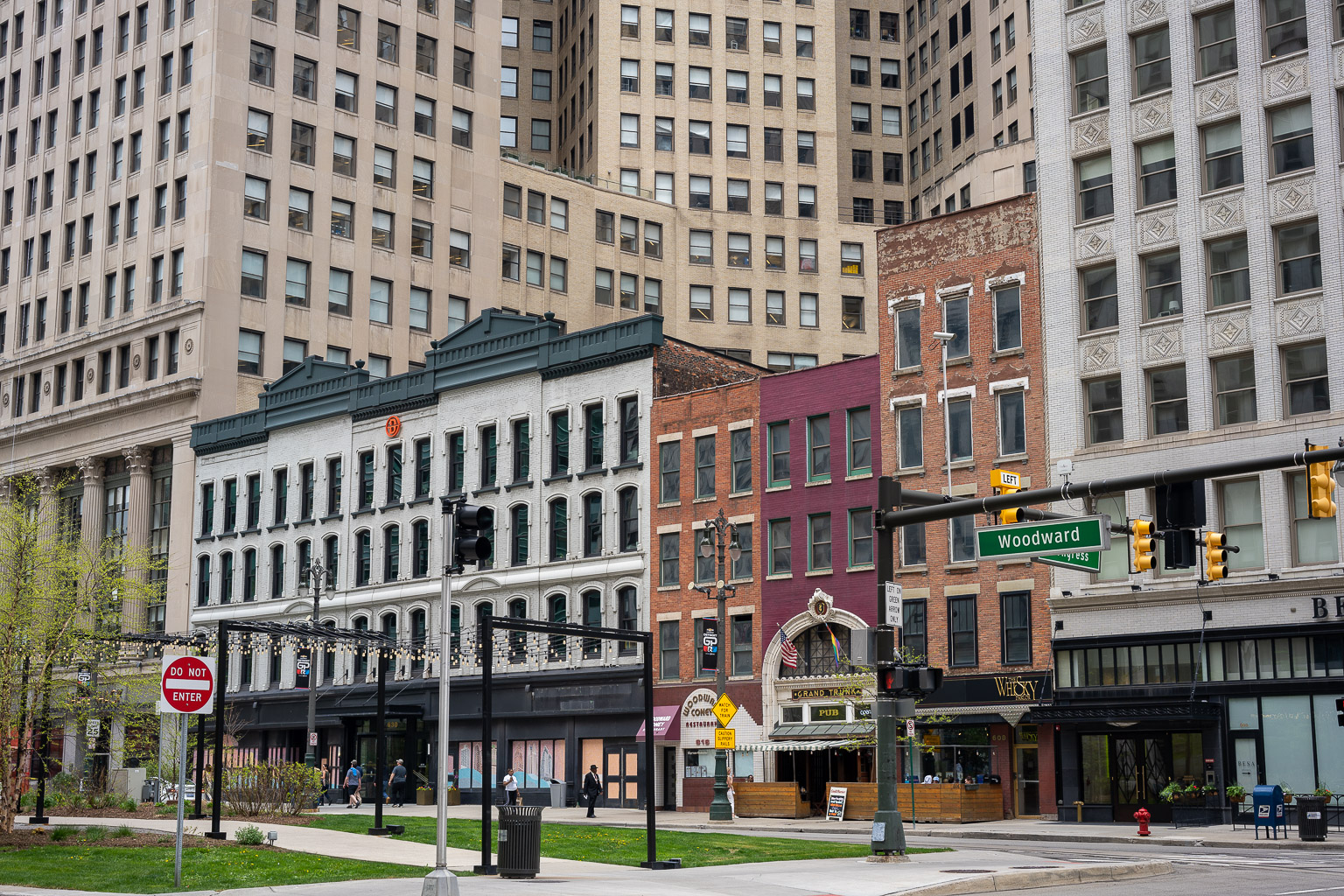
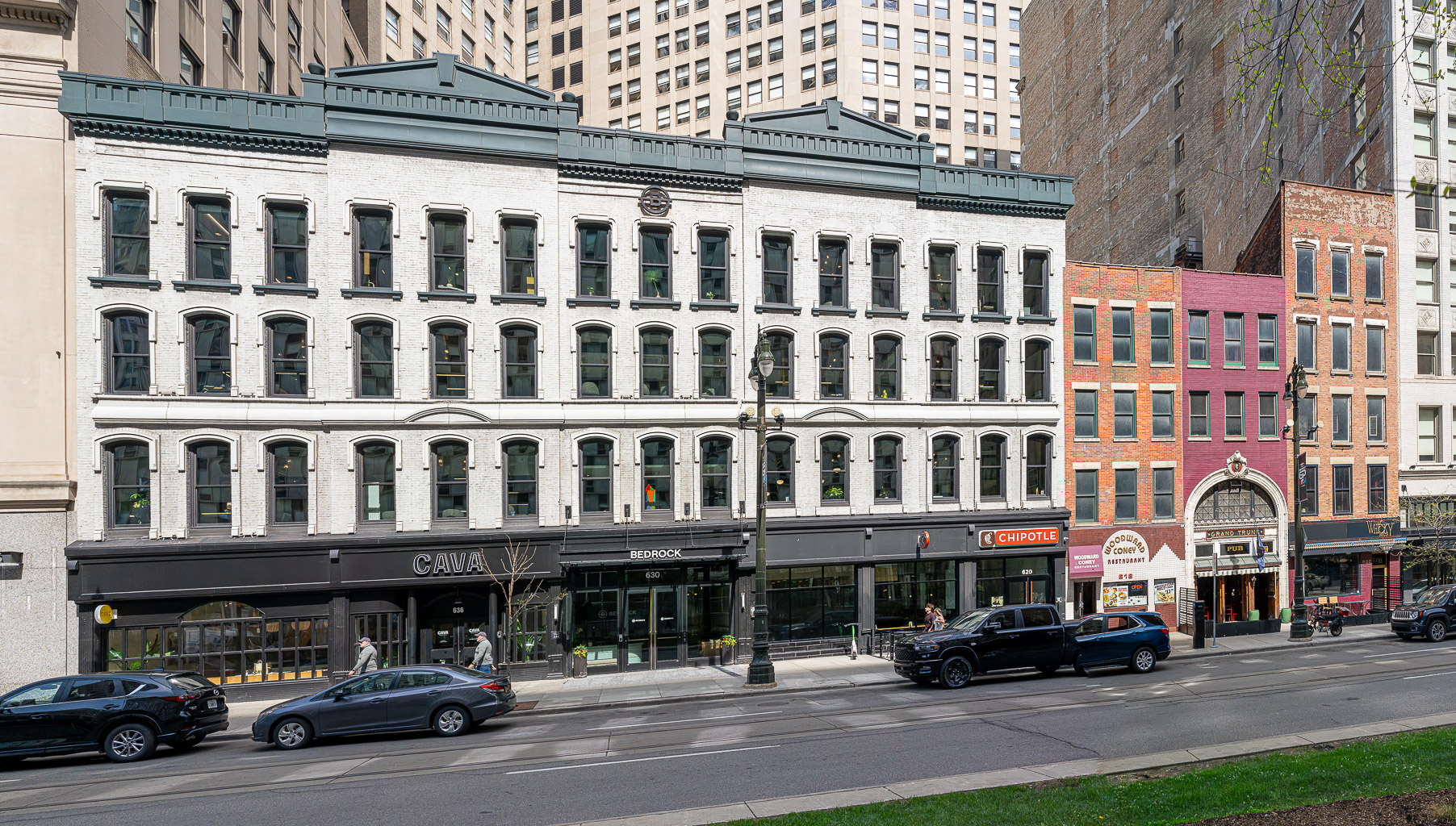
630 Woodward was originally 3 iron and wood-frame four-story brick buildings (1876-1880) that once housed the Mabley & Company department store. C. R. Mabley established the store in 1870 and it was incorporated in 1884. The exterior finish is identical to 620 Woodward, which forms the rest of the five-building row once housing the Mabley & Company department store. The first floor storefronts have been renovated, the original detailing has been removed, and the brick has been painted a cream color. The roof of 630 Woodward contains a large skylight.
620 Woodward is two now combined iron and wood-frame four-story brick commercial buildings (1876-80). Silas Farmer's History of Detroit and Wayne County and Early Michigan (1889) depicts a row of five buildings, with these two at its south end, as the "Clothing, hat, cap and furnishing stores of Mabley & Company, 122 to 134 Woodward Avenue, East side. Built in 1876-1880." The drawing (p. 771) depicts the row topped by a cornice and arched-motif balustrade, with low gabled treatments atop the second store in from each end. Along with all of this roofline ornament, hooded window trim and other detailing is now missing. City permit records indicate a major alteration occurred in 1918. The first floor storefronts have been renovated, and the brick has been painted a cream color.
Farmer (770-73) describes the Mabley & Company department store as then "the largest retail establishment in Michigan," occupying these five stores plus additional ones directly across Woodward (long since gone). Nos. 620-30 housed men's and boys' clothing and hats and caps, while the buildings across the streets offered women's clothing, boots and shoes, jewelry, toys, books, pottery, crockery, glassware, etc."
Well, apparently after Mabley & Company went under (it ran from 1881 - 1896) (1st photo below), then the 5-buildings merged into one building, namely, the Metropole Hotel in 1898. The 2nd photo below shows the Metropole Hotel (in the right-third of the photo) with the Russell House Hotel on the left. The Russel House was torn down in 1905 to allow construction, starting one month later, of the original Pontchatrain Hotel, which was subsequently demolished in 1920. That's only 15 years after construction! (2nd and 3rd photos below). Notice in the 2nd photo below, the Grand Trunk Ticket Office was in the 4th of the 5 original buildings, but in the 3rd photo below it had moved to what is now the Grand Trunk Pub. The 5th photo below shows the darkest days for this row of buildings.
 and Metropole (right) in 1910-Enhanced-SR-20240529.jpg "Click to enlarge")
The buildings were bought in June 2013 by Dan Gilbert and converted in 2017 into the new headquarters for his Bedrock family of companies. The renovation work included not only repainting the brick white but also re-creating the building's original cornice and restoring the storefronts, resulting in the photos below.
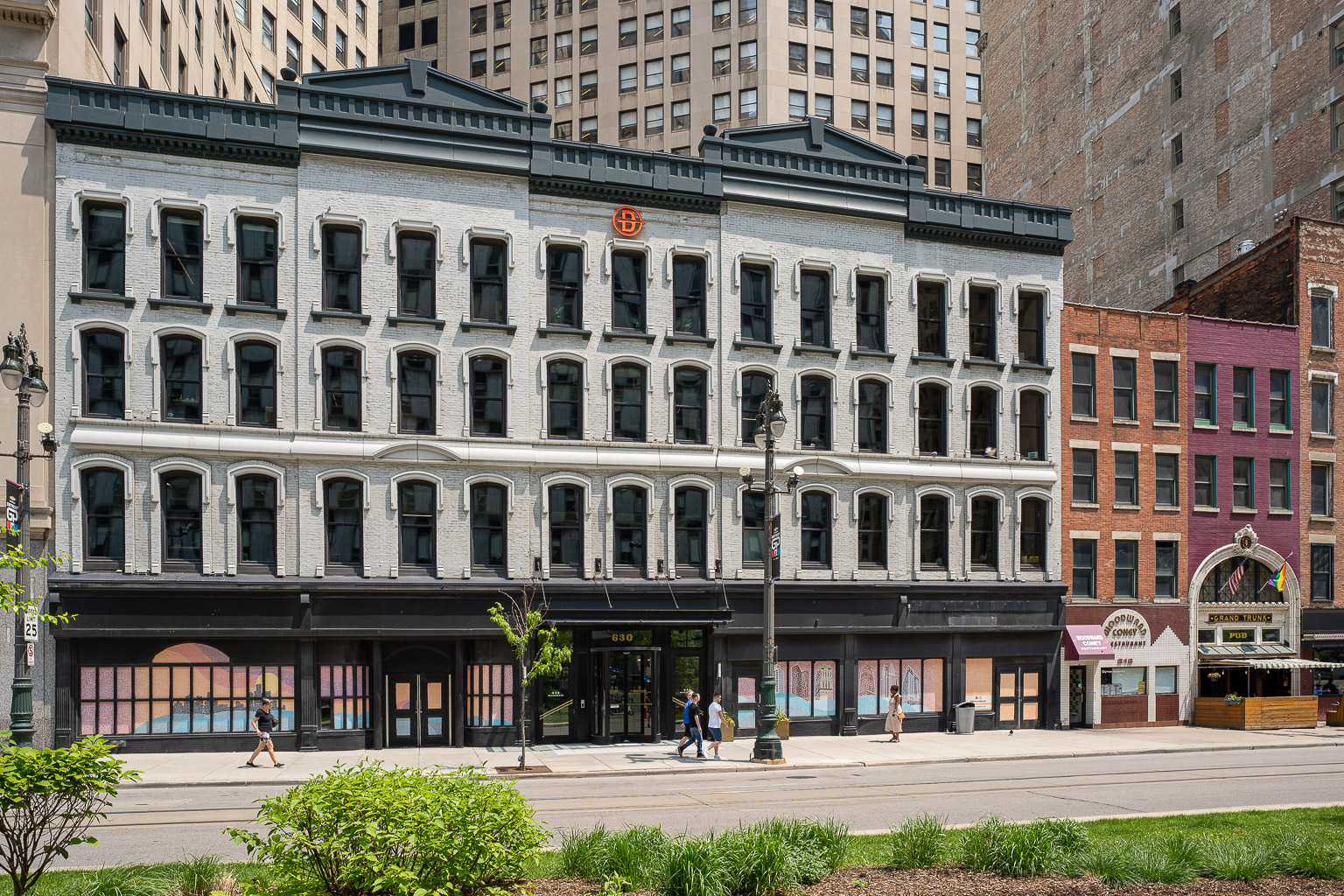
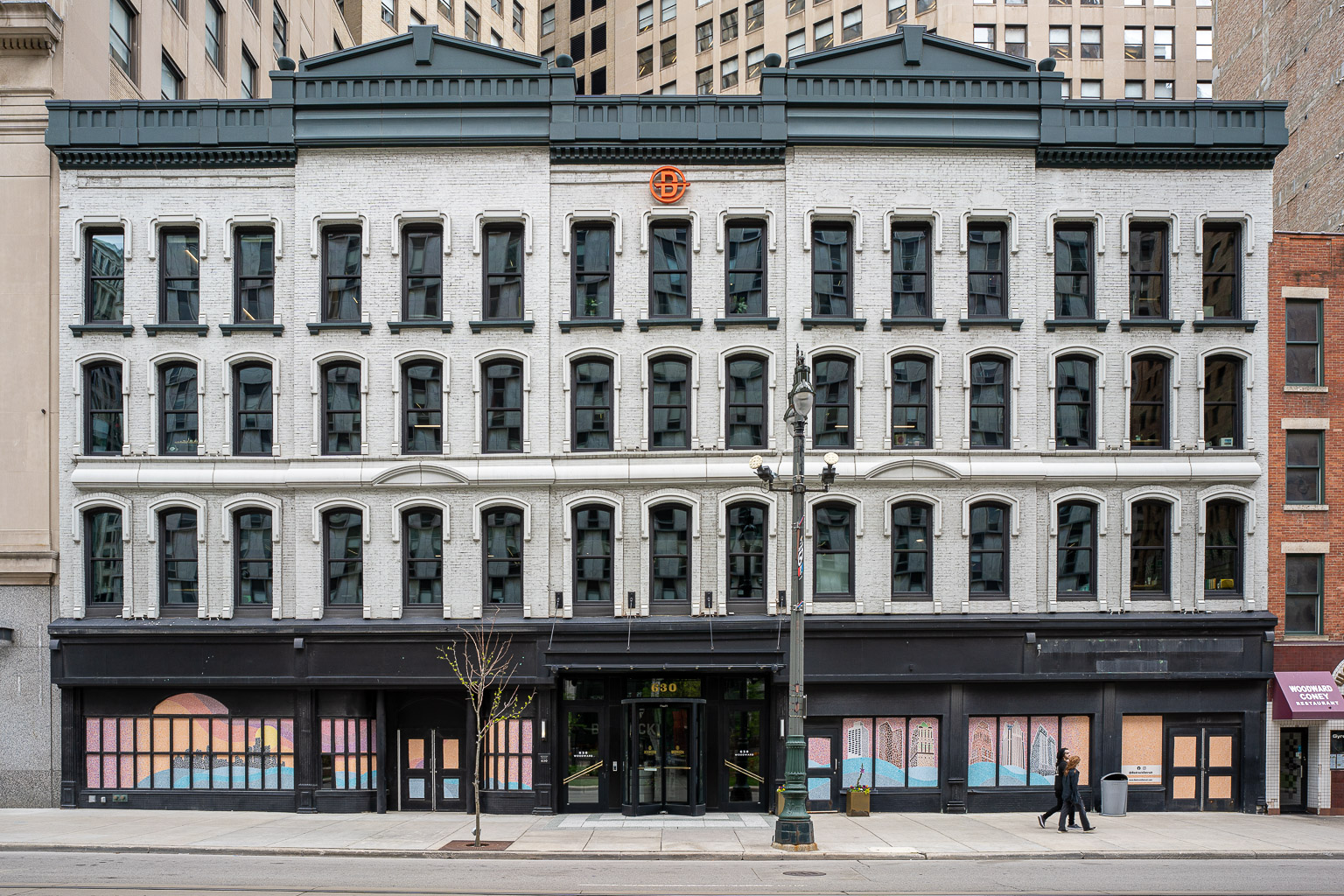
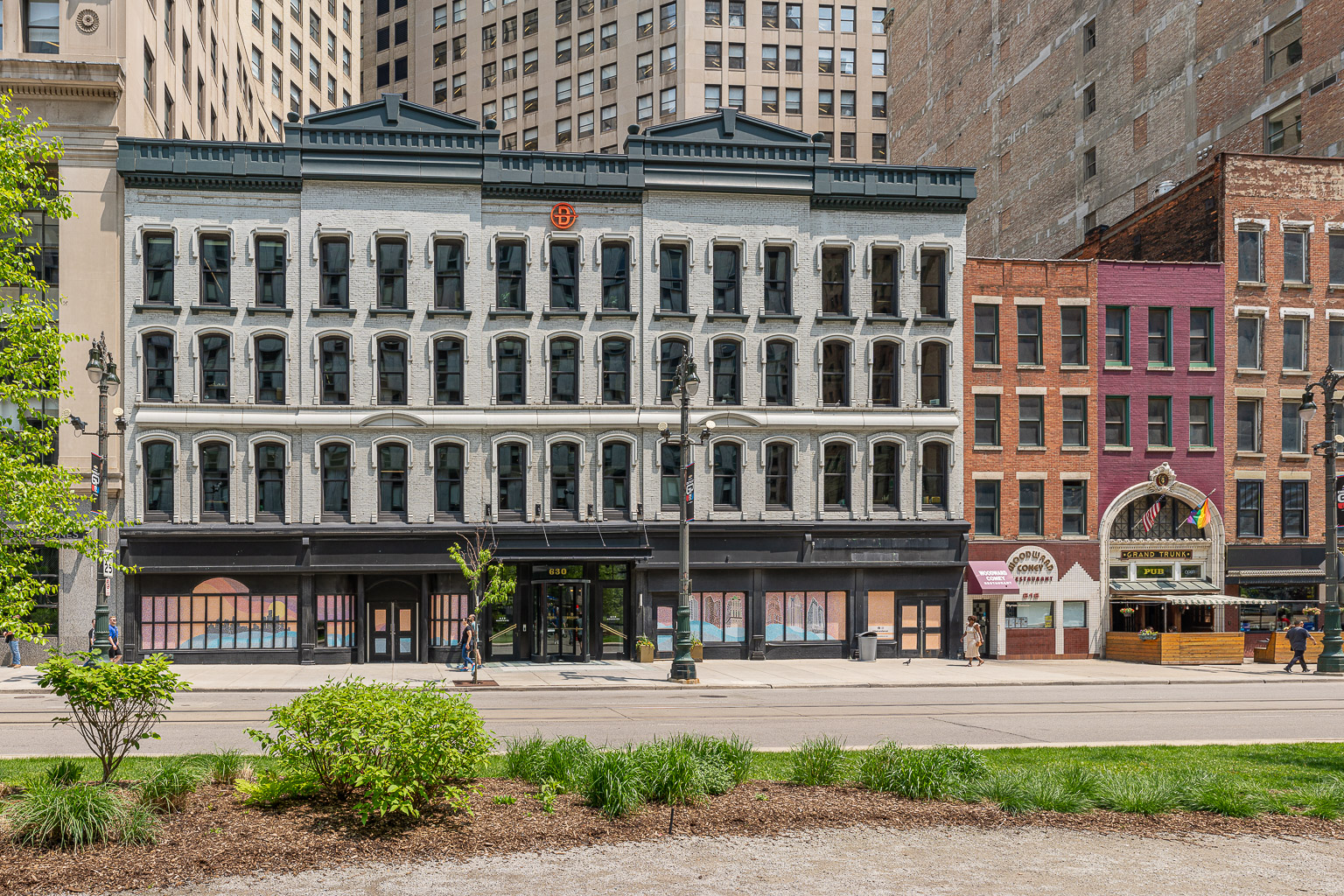
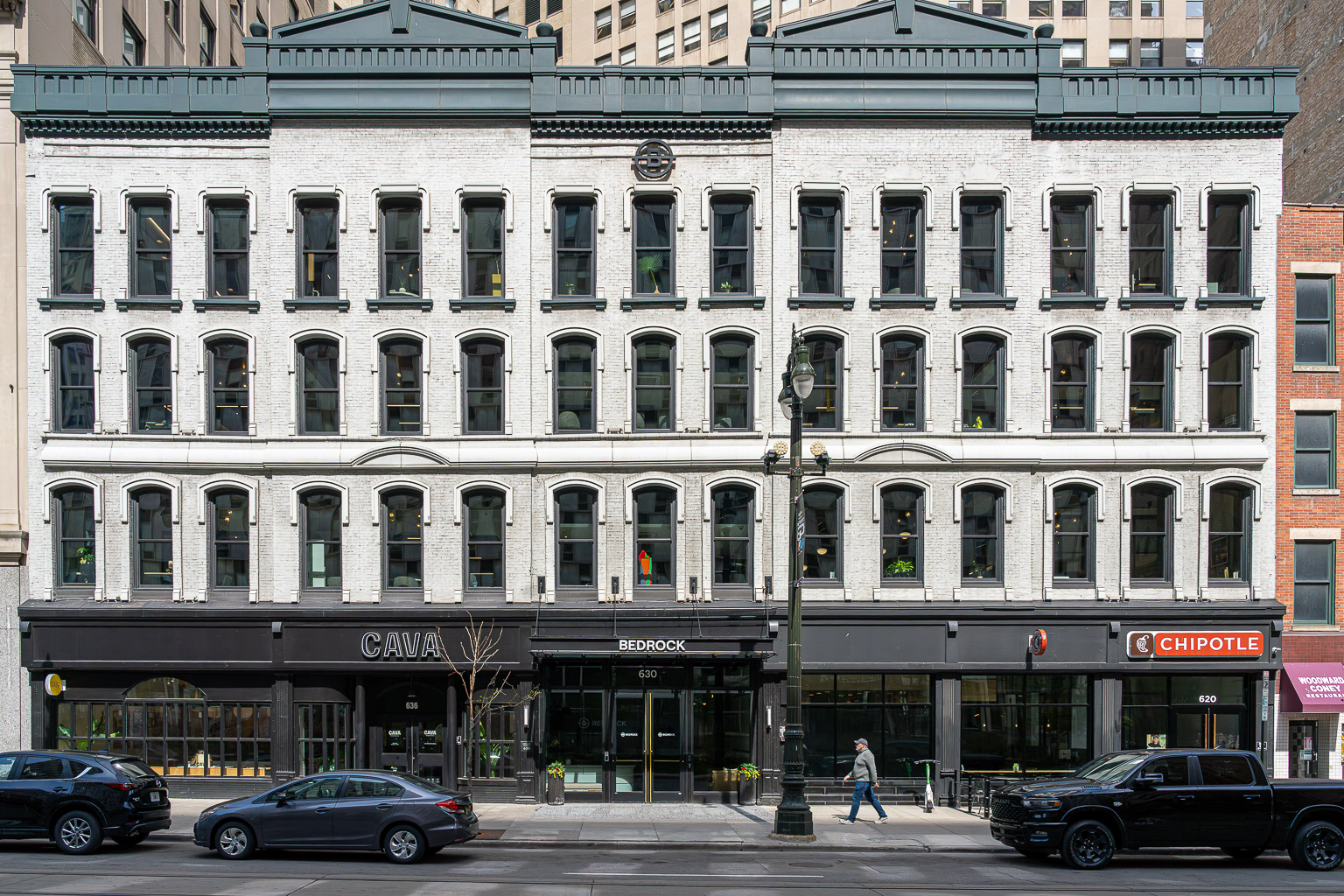
More photos and more description of this building can be found at HistoricDetroit.org.
Masonry, iron and wood-frame four-story three-bay brick commercial building (1880). This rectangular-shaped building is between two others on Woodward Avenue, and shares a party wall with the building to the south at 612 Woodward. The Woodward frontage is twenty feet wide. The original permit for this building was issued to the W. G. Vinton construction company and was used by the Vinton Company until they relocated to their larger building. This brick building has had a major first floor storefront renovation but the upper story windows still retain the original cast stone lintels and sills. The cornice has been removed, and the original windows likely been replaced. The roof is pitched. This building housed the Metrople Hotel in the 1930's and 40's (I don't have any evidence of this, suspect it might be wrong).
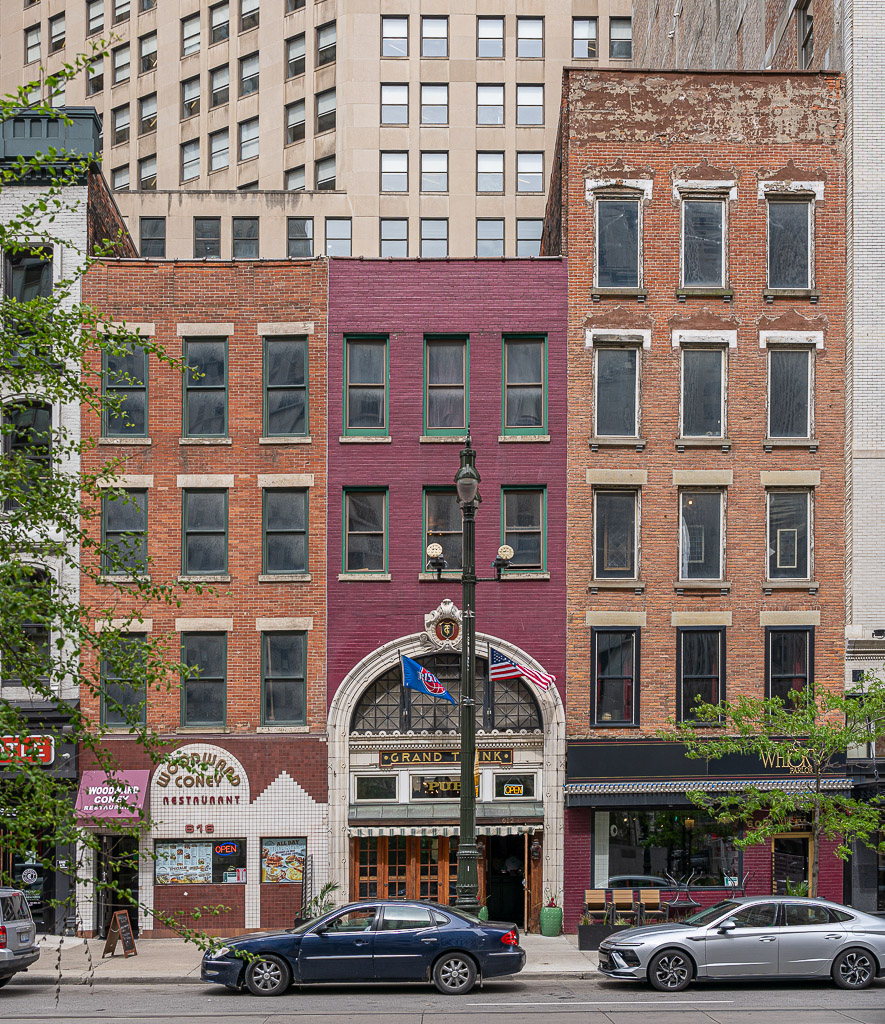
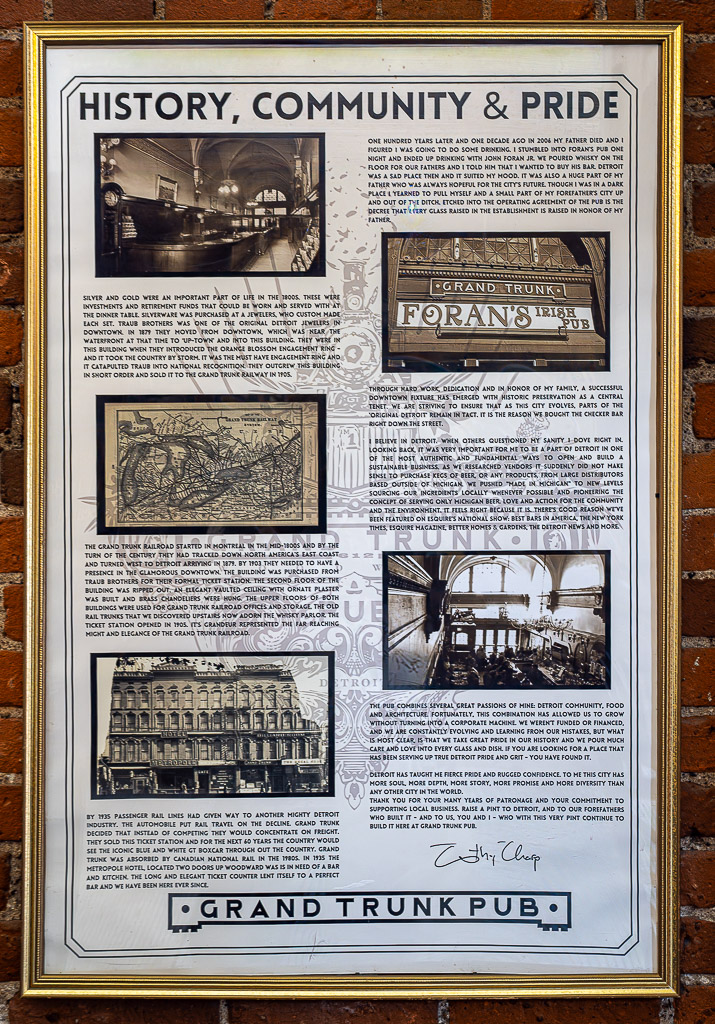
Masonry, iron and wood-frame four-story three bay brick commercial building (1879, 1911). Rectangular-shaped building between two others on Woodward, it shares a party wall with the building at 616 Woodward. The Woodward frontage is seventeen feet wide. First built for the Traub Jewelry Company when they relocated from East Jefferson Avenue. The building retains its original window openings in the upper two stories. The brick has been painted dark red. The roof is pitched. The lower two levels were renovated in 1911 for the Grand Trunk Railway's ticket offices. The renovation incorporated a terra cotta rounded arch inset with multi-paned windows on the second floor. The arch contains a crest displaying the initials GT, and an entablature contains the words Grand Trunk. The first floor storefront was recently renovated for Foran's Grand Trunk Pub.
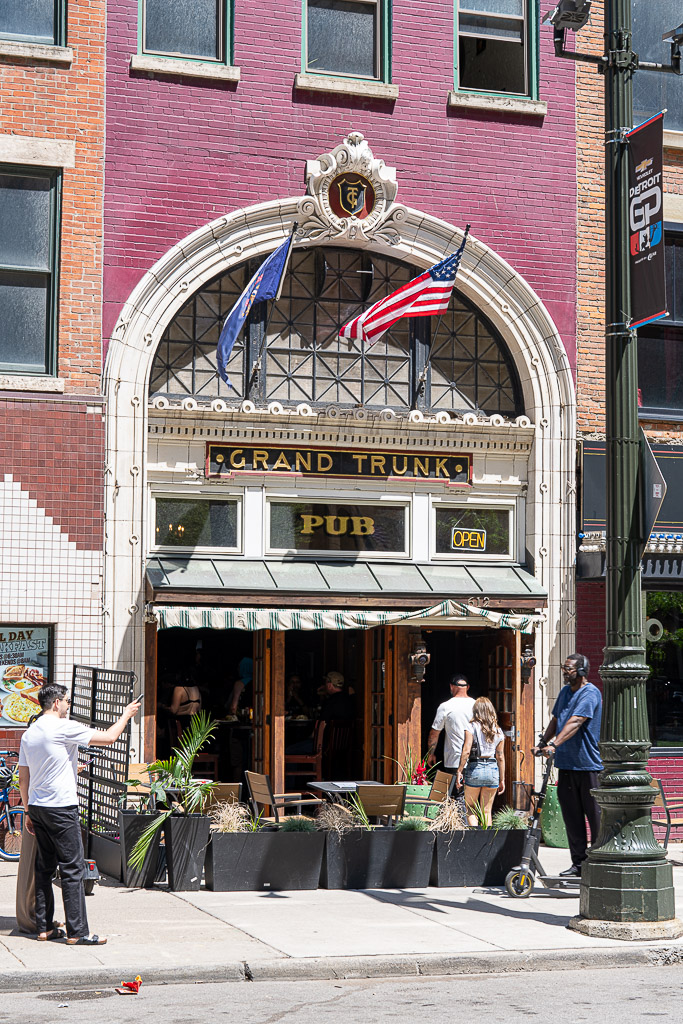
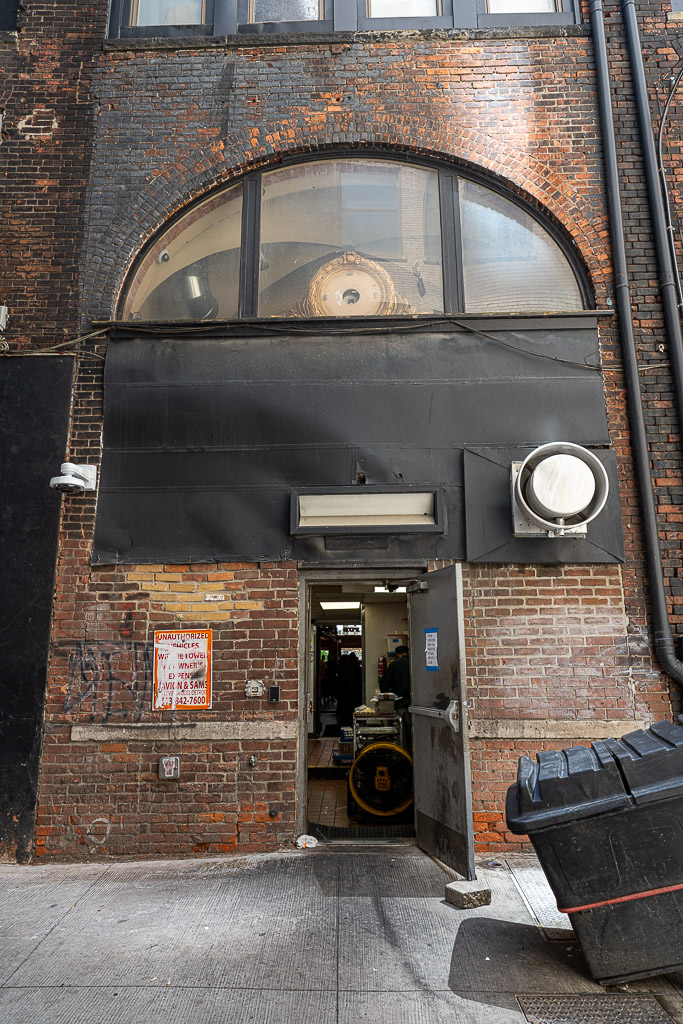
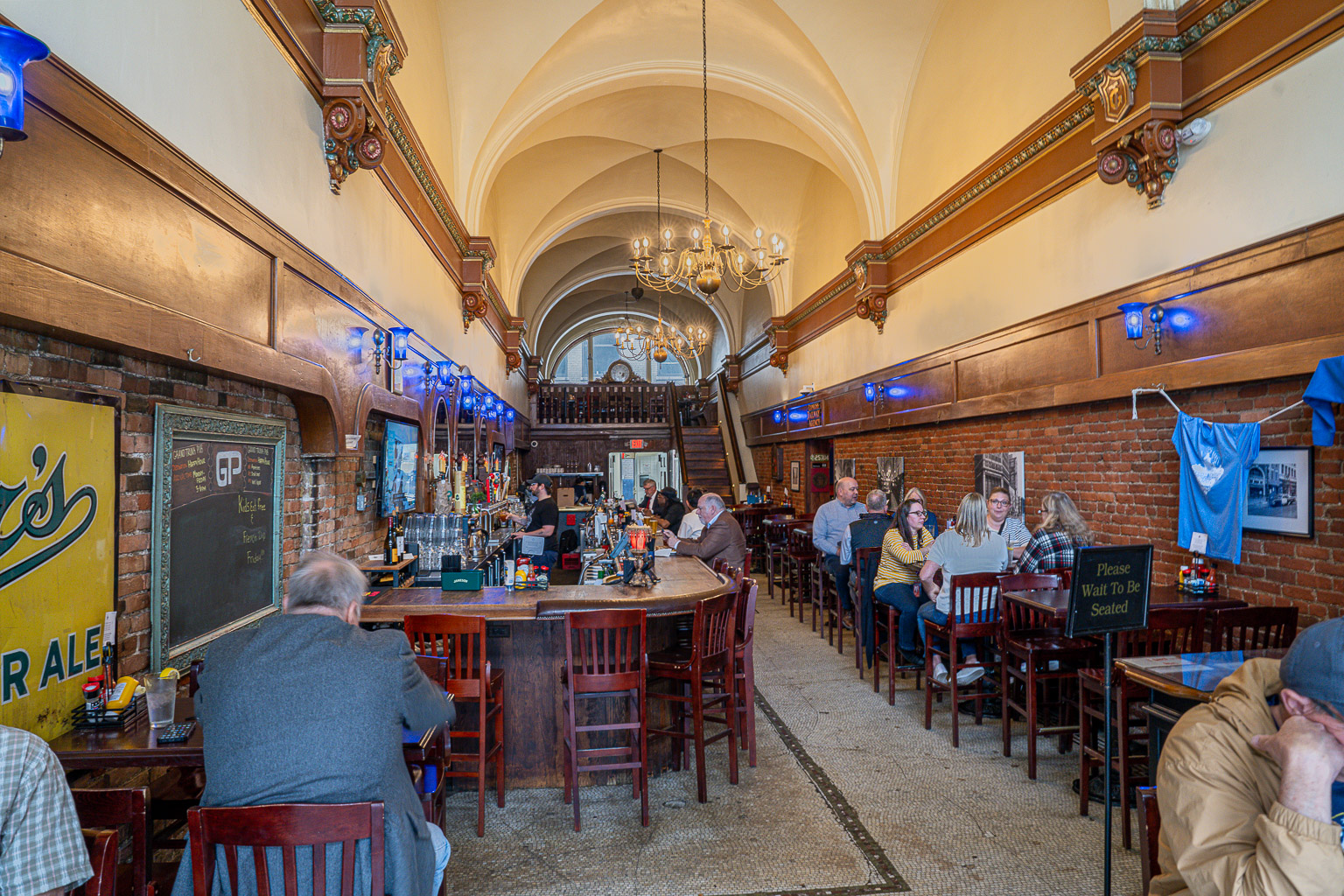
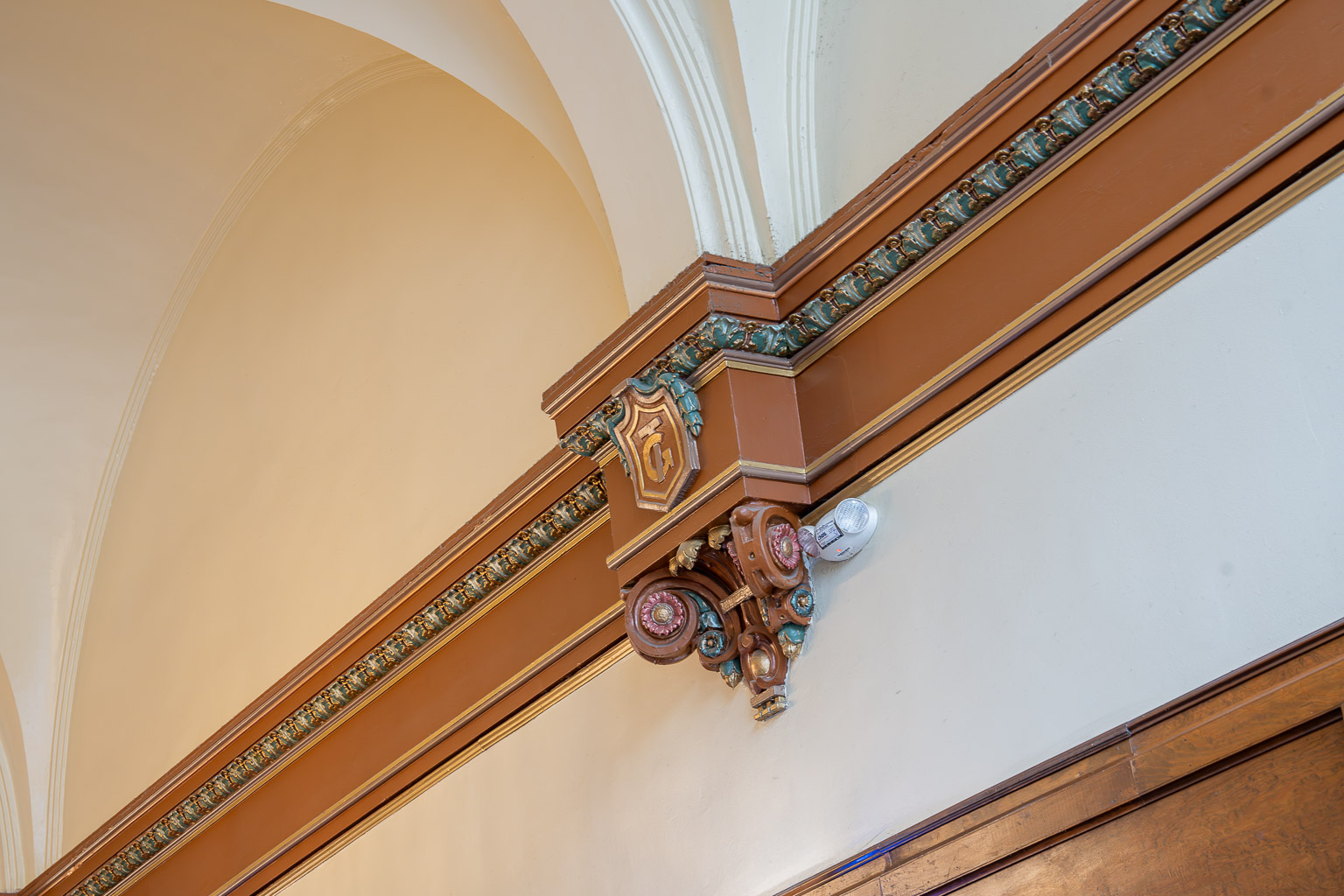
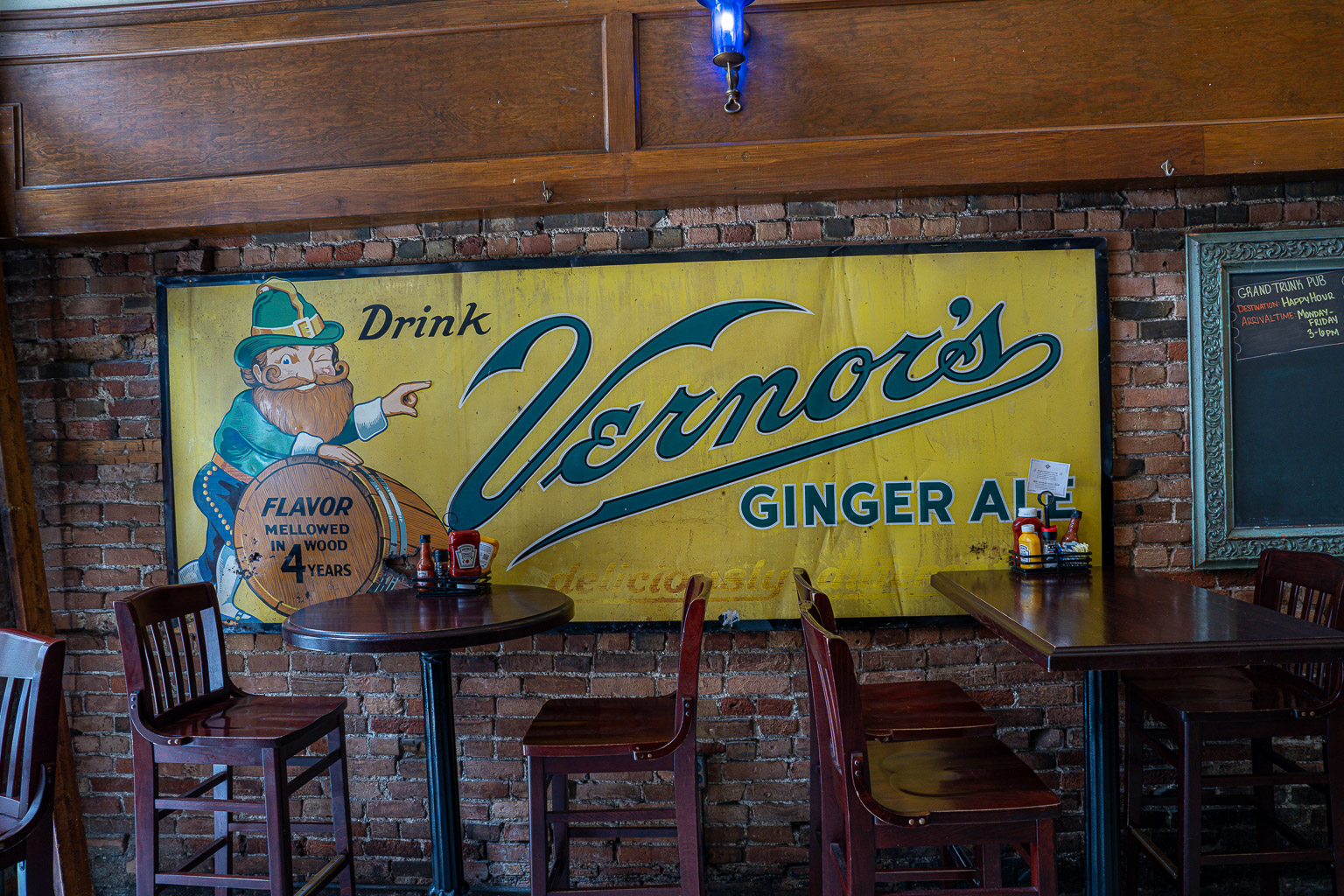
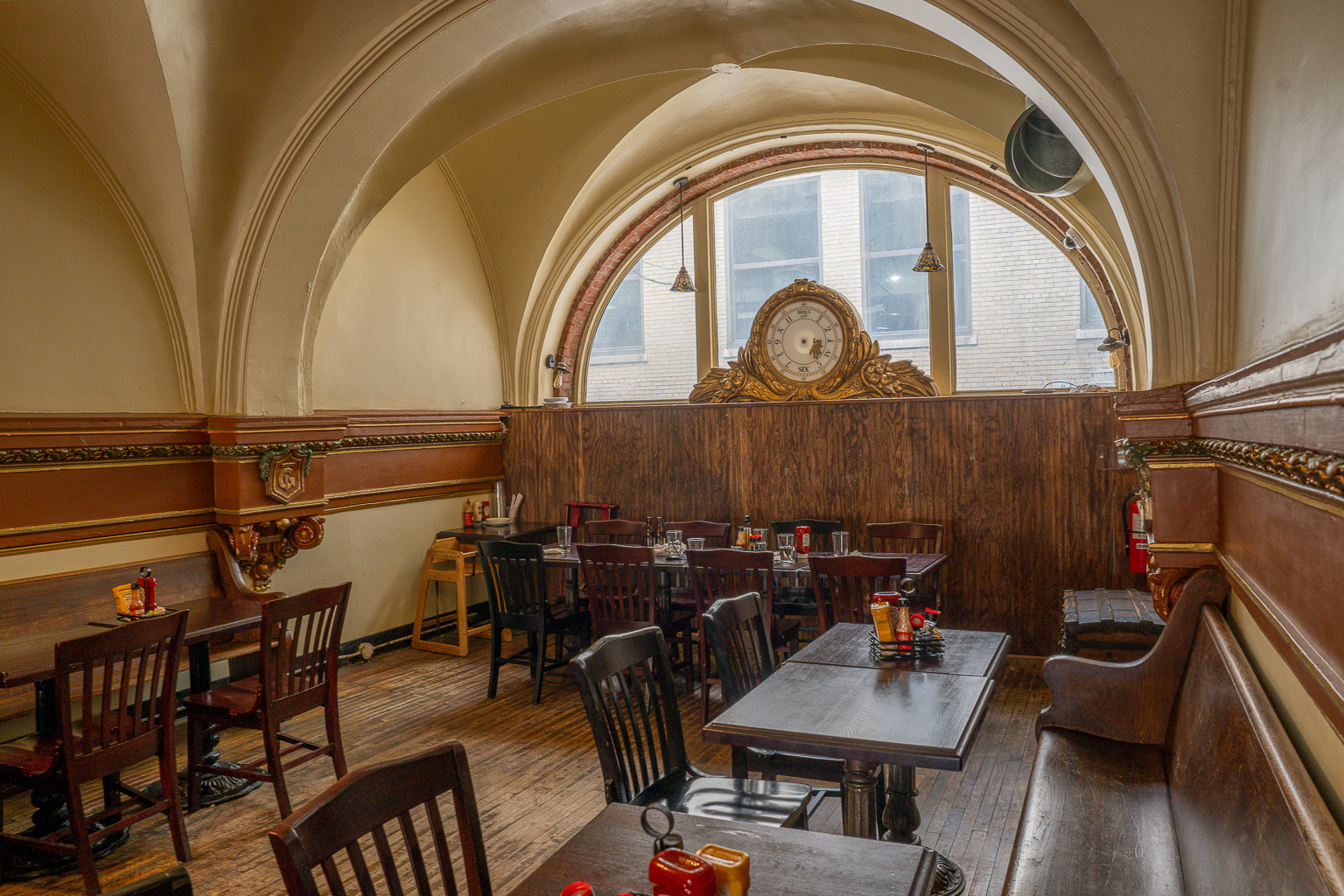
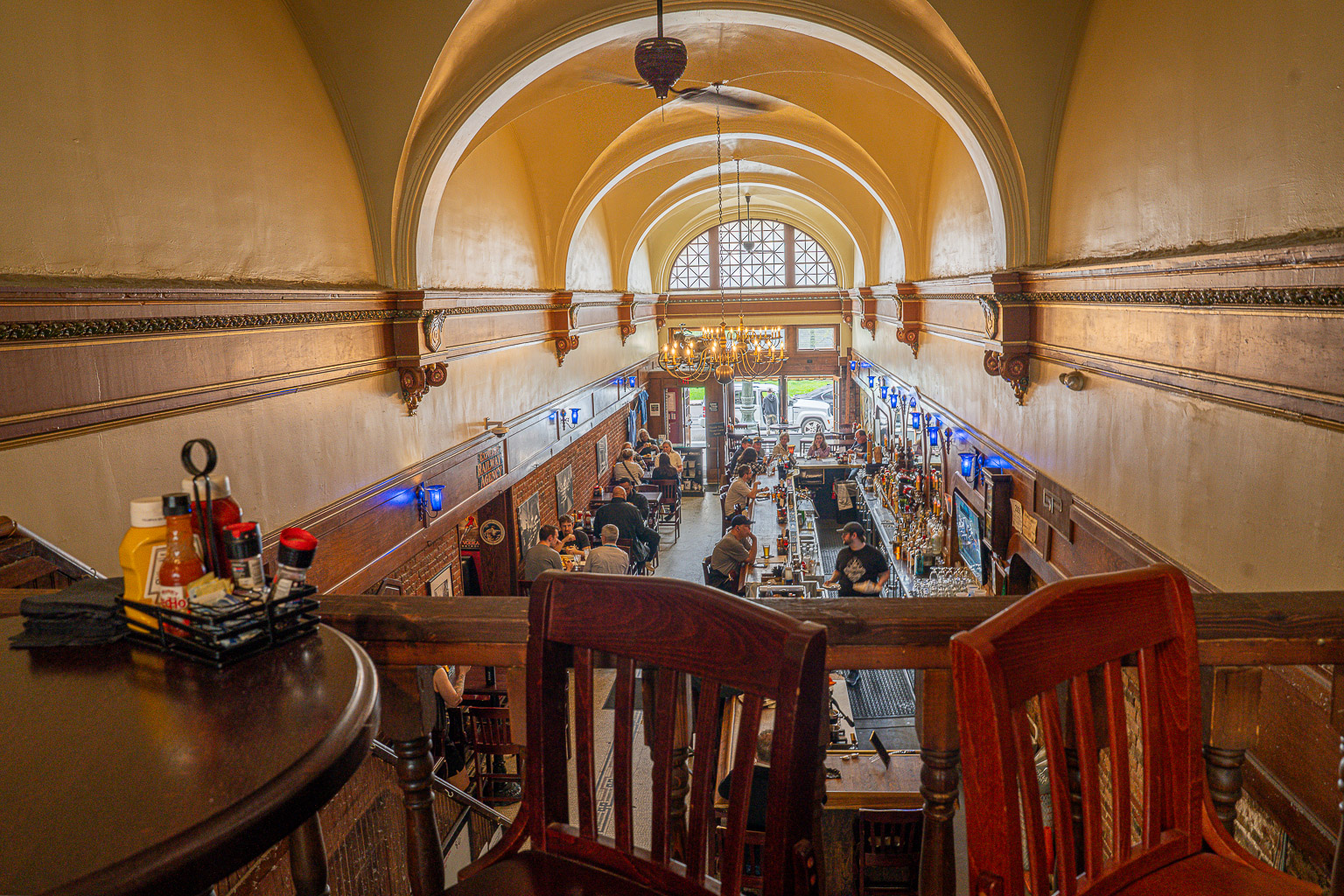
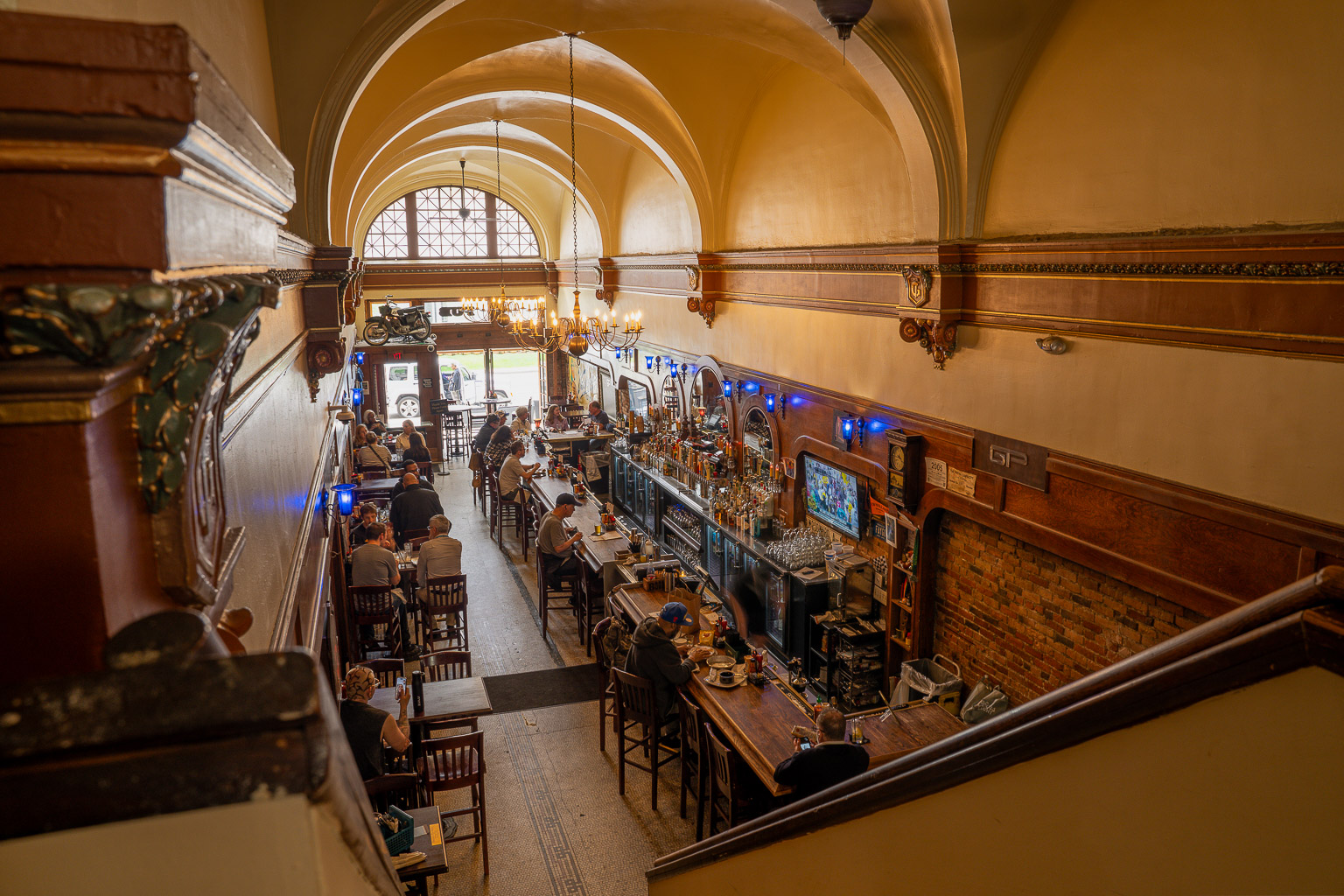
More photos and more description of this building can be found at HistoricDetroit.org.
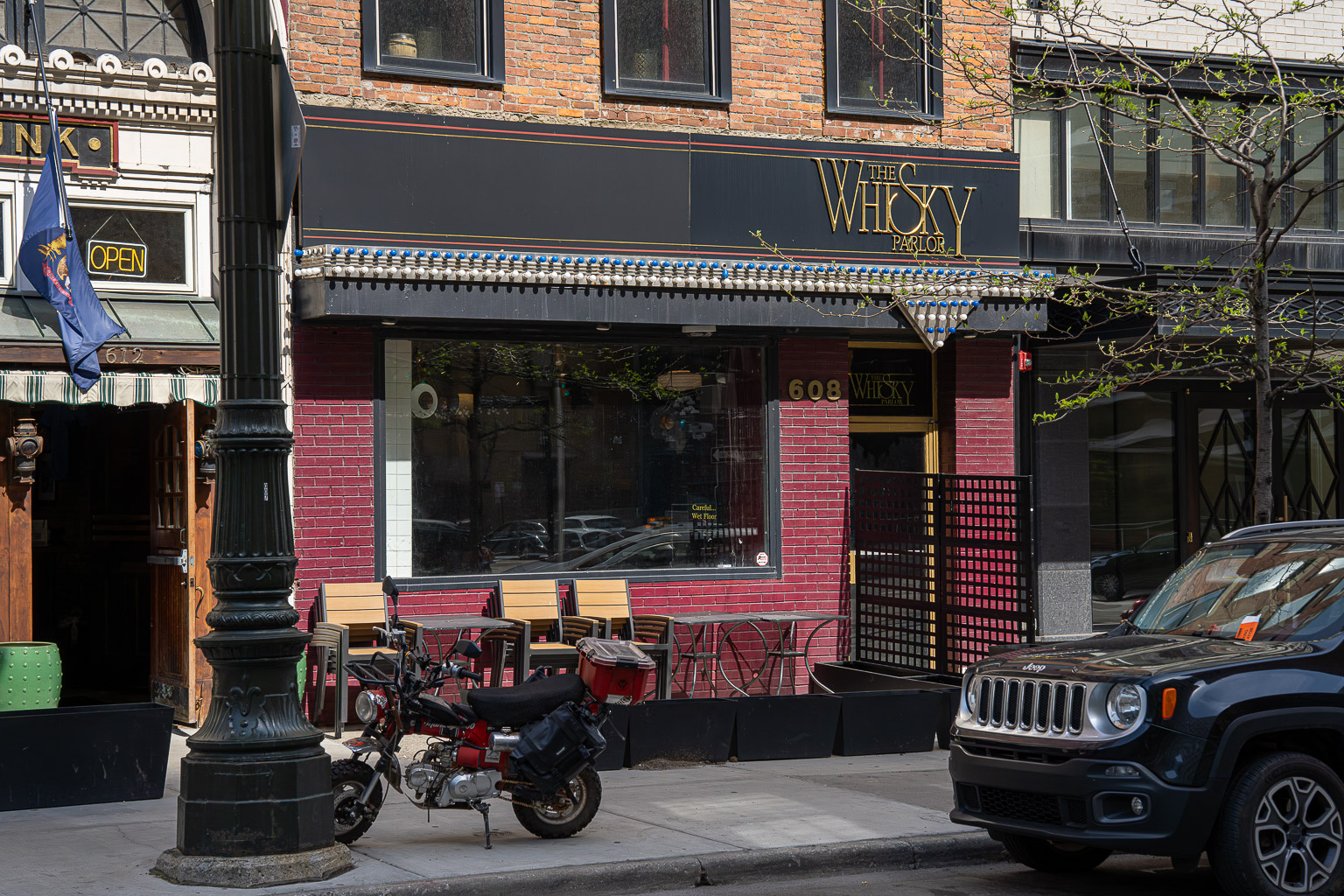
The Martin Limbach Hardware building (now the Whisky Parlor, part of Grand Trunk Pub) is the right-most of 3 buildings between the old white Metropole Hotel and the Vinton Building. Since I'm working south-to-north through this block, it's the first in the series.
Masonry, iron and wood-frame, five-story three bay brick commercial building (1877). Rectangular-shaped building located between the Vinton Building and 612 Woodward to the north originally built for the Martin Limbach Hardware Company. Three window bays divide the common brick facade. The two lowest story windows have cast stone lintels, while the upper two stories windows retain bracketed stone lintels. The shadow of decorative hood molding remains above these windows on the upper two stories. The first floor storefront has been renovated for a deli, and the upper cornice removed. (Actually, this is apparently old information (2026), as this is now part of the Grand Trunk Pub, connected to it through a large opening on the ground floor, and the 2nd floor Whisky Parlor, which I haven't yet been inside.)
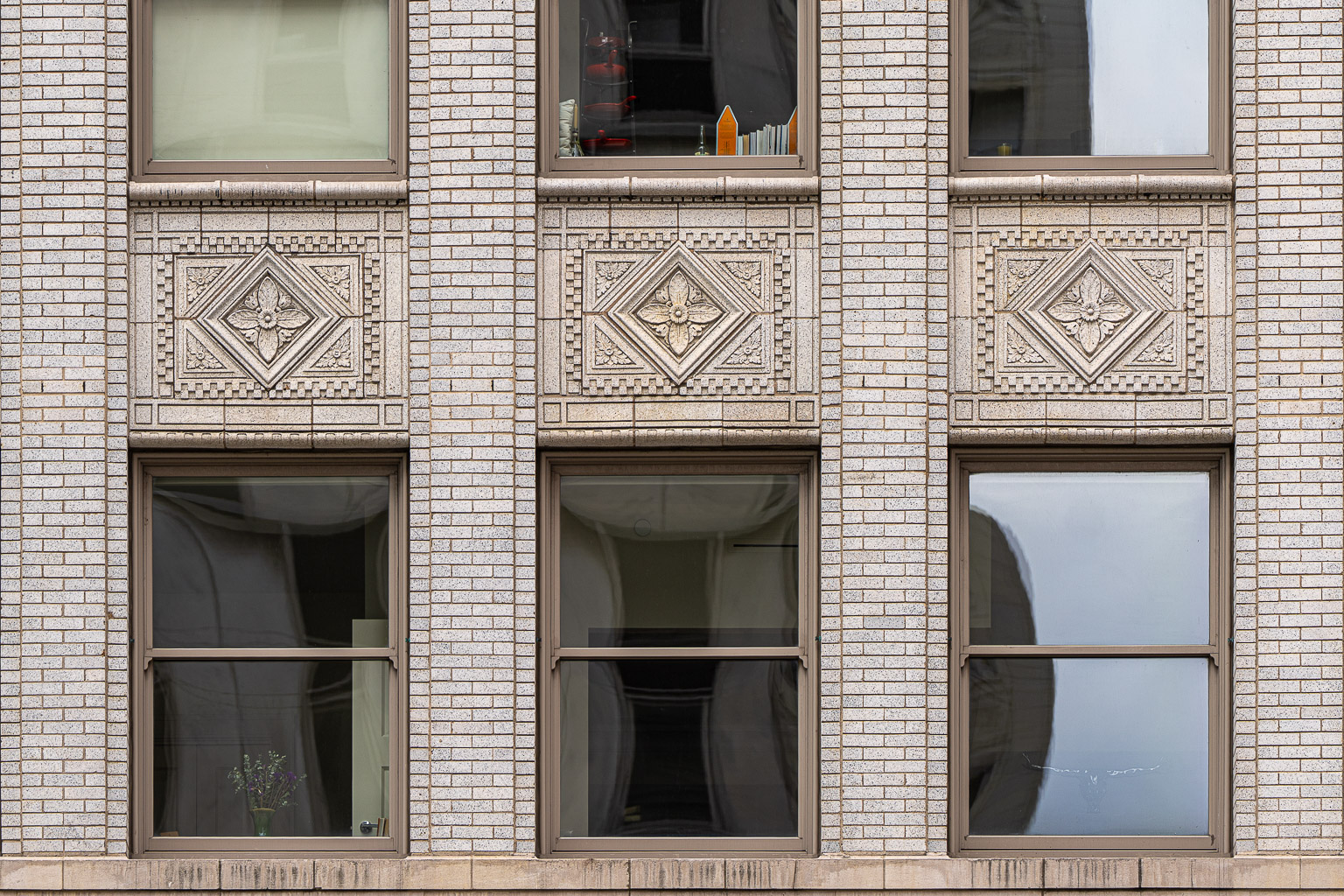
Steel-frame, twelve-story building faced in light grey glazed brick with terra cotta details (1917). Albert Kahn, Inc., architect. George A. Fuller Company, contractor. Already listed in the National Register. The building stands at the northwest corner of Woodward and East Congress and fills out its lot. The two street-facing facades are treated alike, with narrow vertical piers separating banks of single double-hung windows that fill most of those facades. The facades display an Arts-and-Crafts-influenced Commercial Style feeling, but with a modicum of Romanesque-inspired detailing. Terra-cotta spandrel panels contain foliage ornament set in a central lozenge outlined by triangles (4th photo below). The upper row of windows has arched heads (5th photo below). Attenuated twisted columns outlining the facade's edges run up to a shallow gabled treatment with an arcaded cornice above a rosette-decorated frieze. The Vinton name is displayed at the gable-shaped parapet. The roof is flat with the exception of an elevator penthouse and separate equipment storage shed. The alley facade is faced in common brick. The storefront was recently refurbished to something closer to its historic appearance than the former enameled metal panel one.
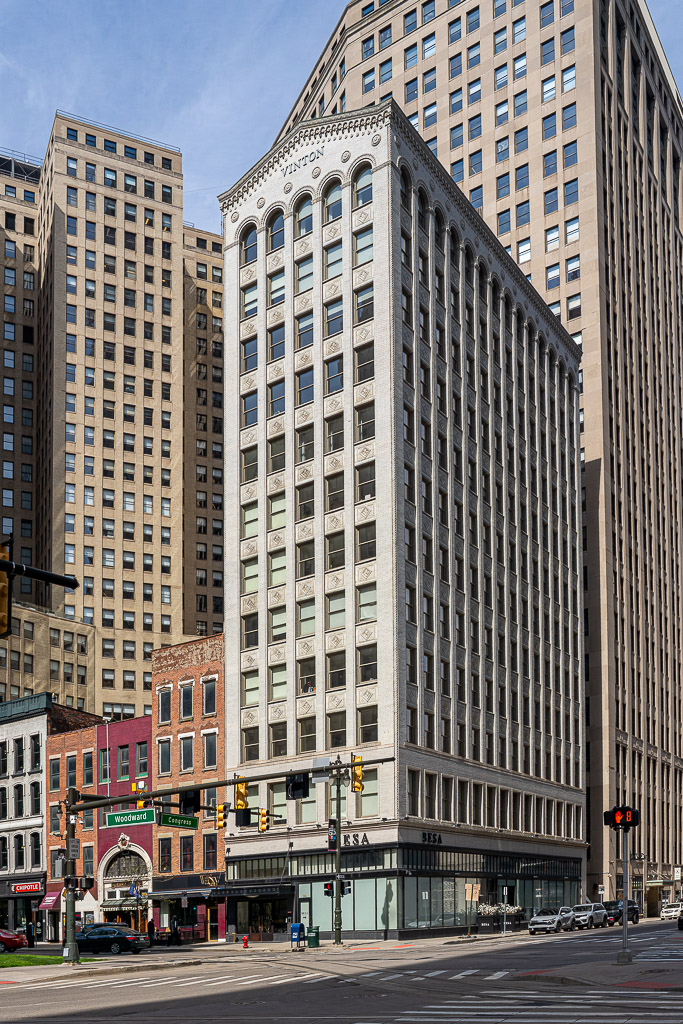
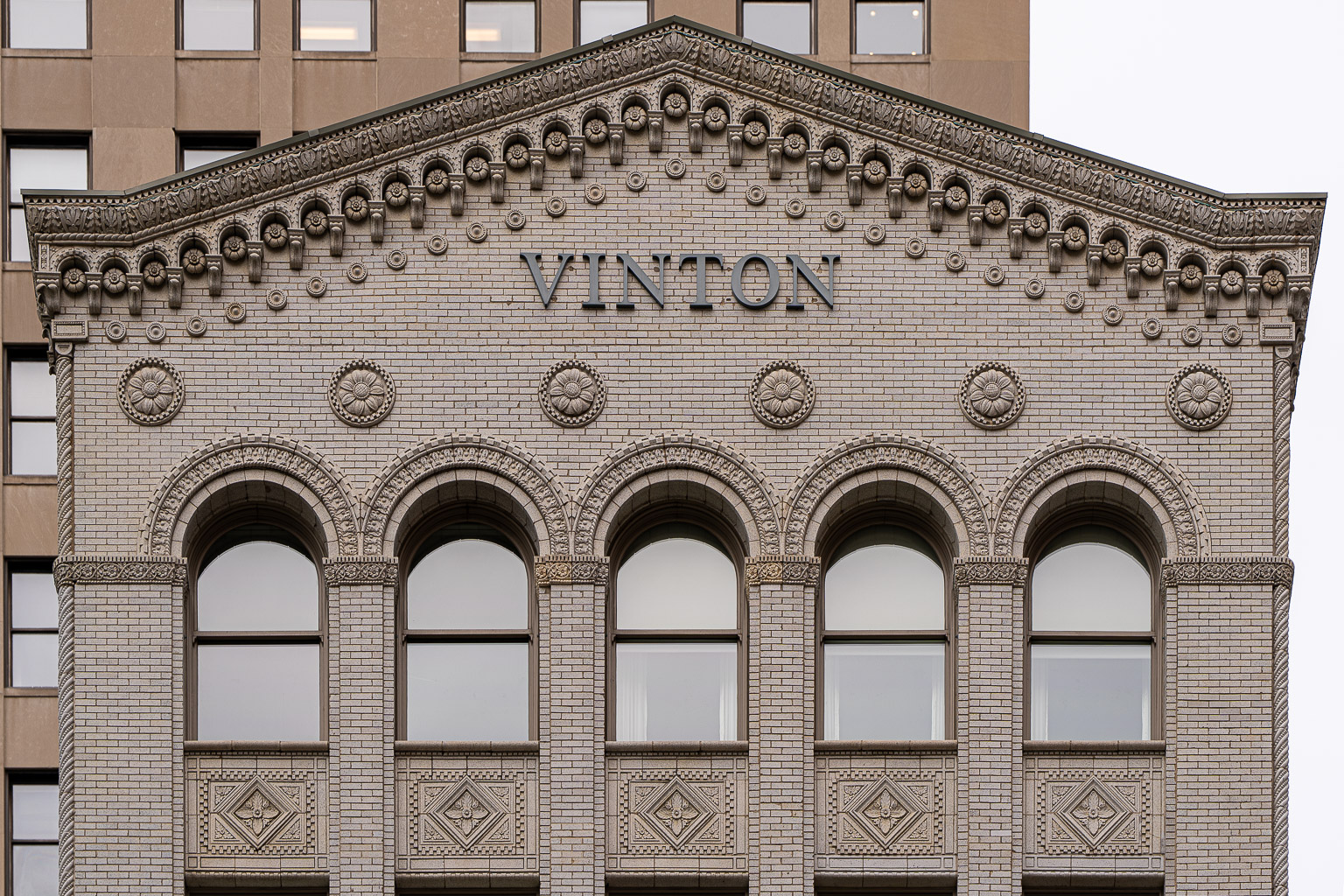
Robert K. Vinton, secretary-treasurer of the Vinton Company, general contractors, commissioned the building. The Vinton Company was by then Detroit's oldest building firm, founded in 1858 by Walter A. Vinton, Robert's grandfather. The Vinton Company initially had its offices on the eleventh floor of the office building. The Guaranty Trust Company bought the building by 1925 and by the end of the decade occupied the first and second stories. The bank was a casualty of the 1933 bank holiday.
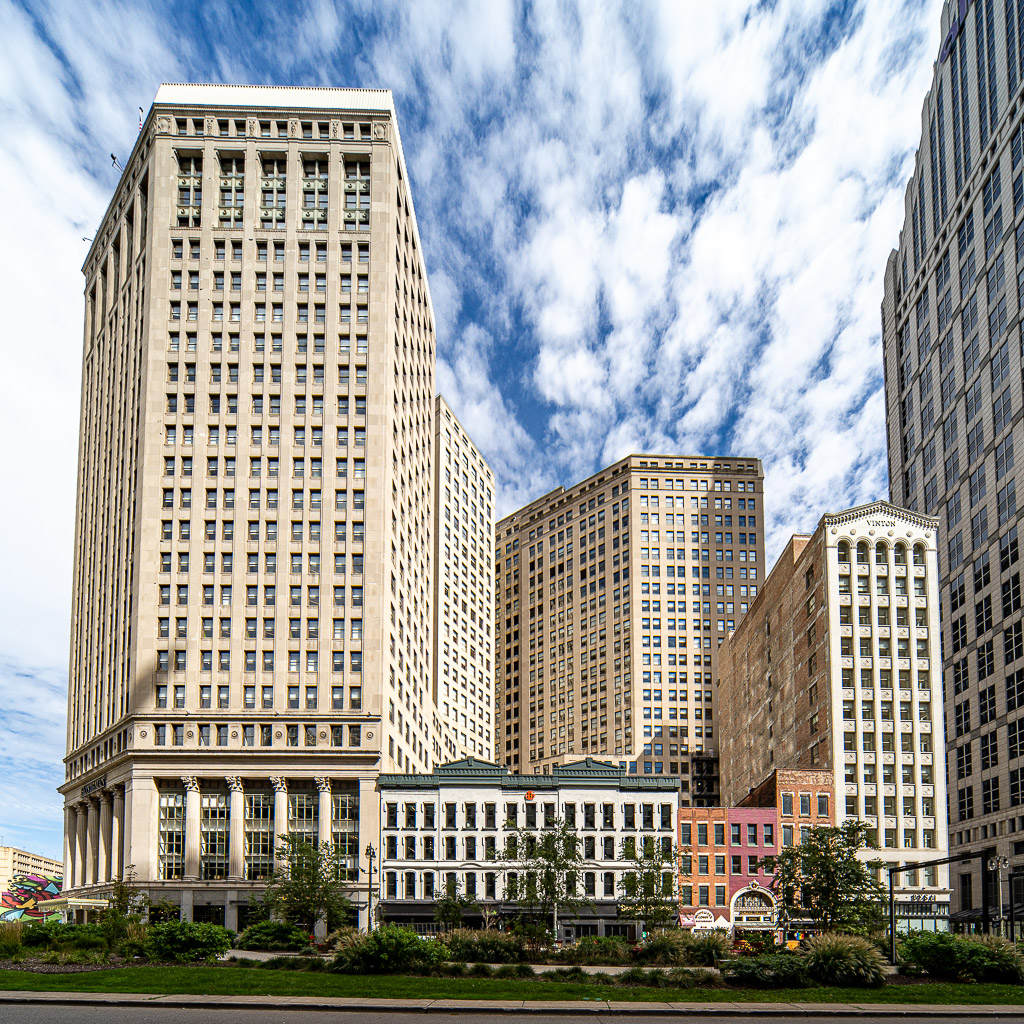
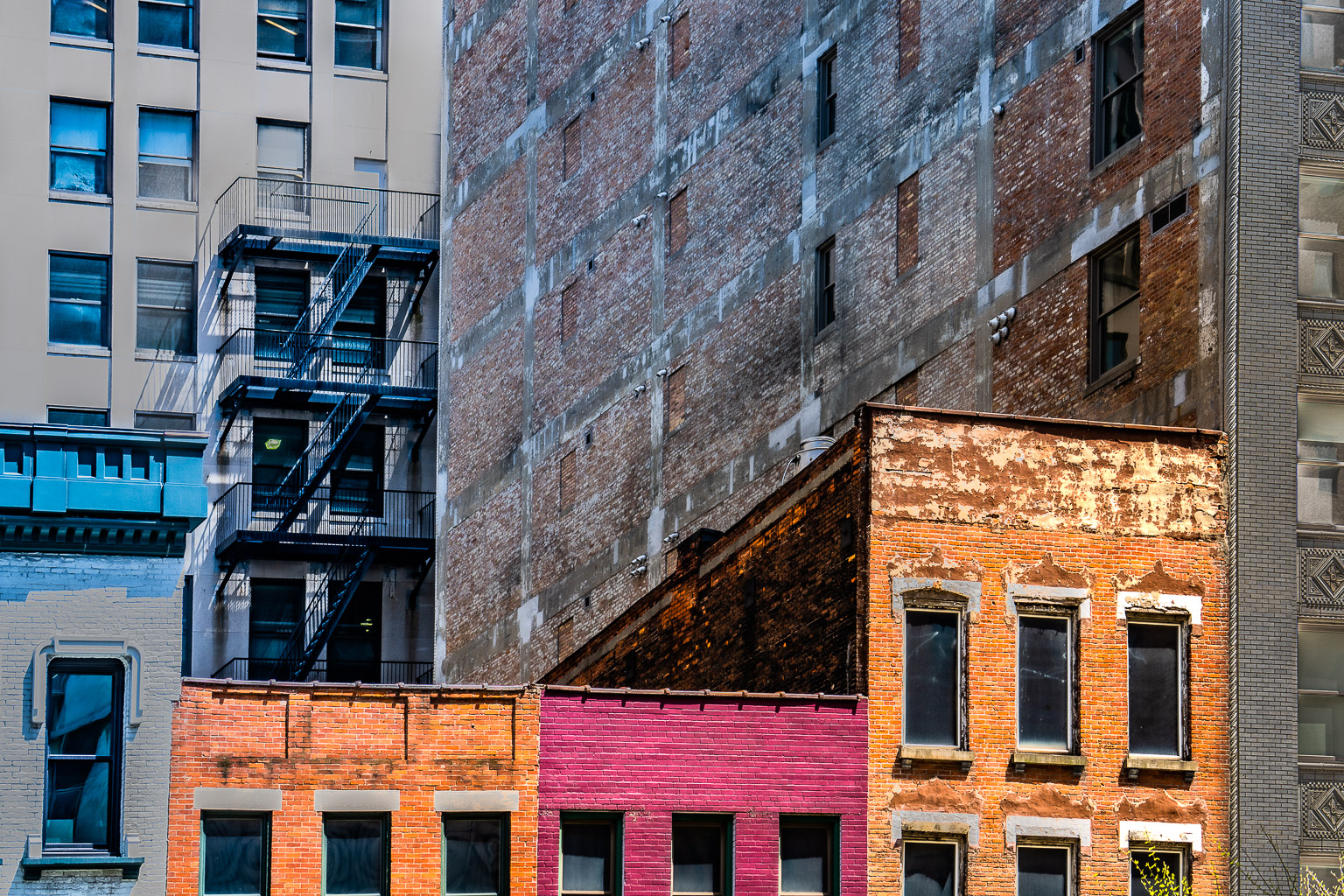
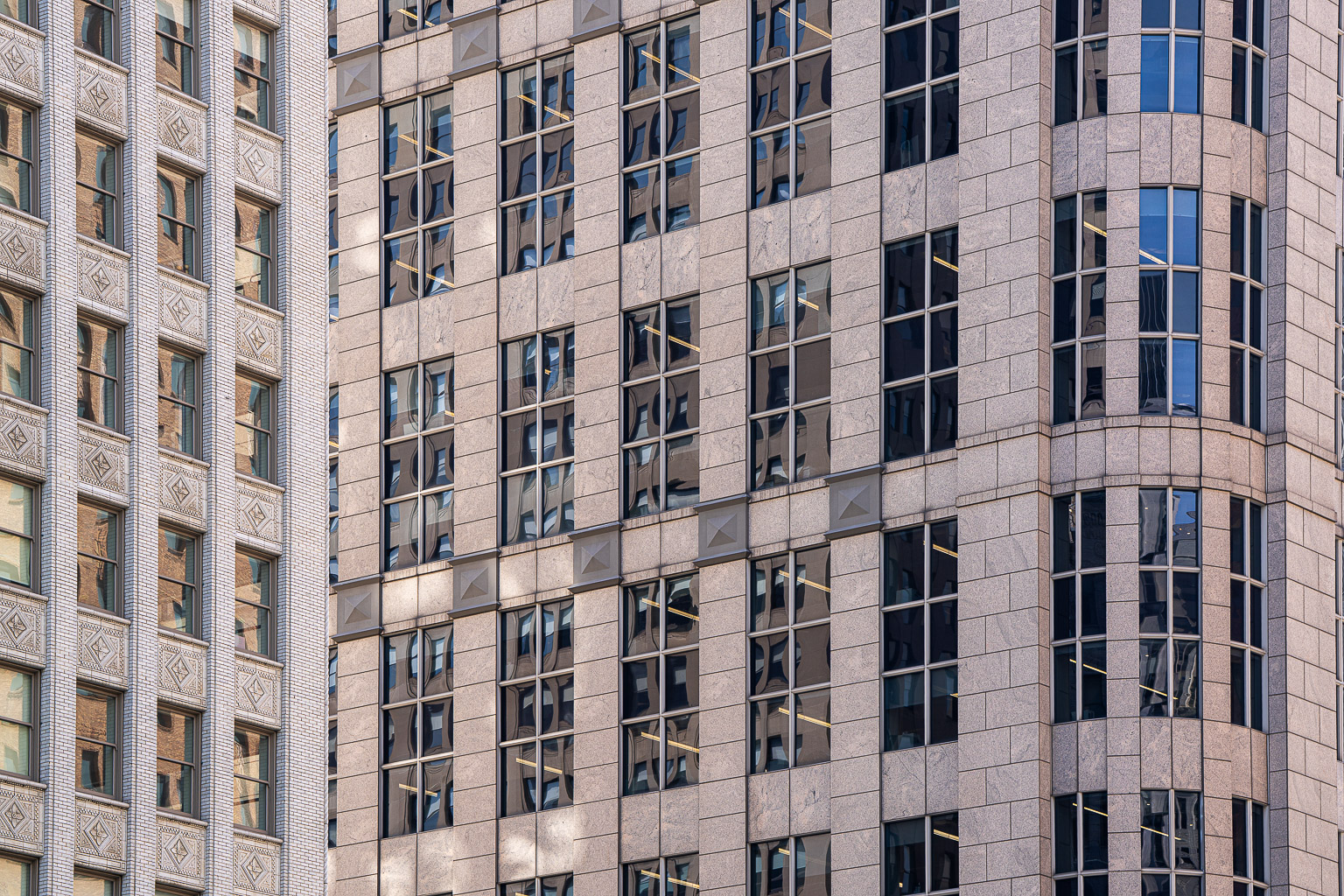
My artistic photo of this building is below, the Vinton Building is in the left quarter of the image, with One Detroit Center in the right 3/4. I like this photo because the Vinton angles down to meet One Detroit Center which angles upward, the swoops around its rounded corner.
More photos and more description of this building can be found at HistoricDetroit.org.